




Abstract
Few studies have explored mentorship's value in occupational safety and health (OSH) training that focuses on worker empowerment in blue-collar occupations. Through a university and union collaboration, we examined mentorship programs as a promising enhancement to ongoing OSH training to foster worker leadership development in organizations focused on worker empowerment. Union-based worker-trainers from 11 large manufacturing facilities across the United States and worker-trainers affiliated with 11 Latinx Worker Centers in the New York City area were interviewed. Rapid Evaluation and Assessment Methods informed study design. The themes that emerged, reflecting the value of mentorship in OSH training, were: characterizing the elements of mentoring, how mentorship can improve OSH training, and recommended practices for designing a program across two different work settings. We conceptualize the goals of mentorship within a broader social ecological framework, that is, to support OSH learning so workers will advocate for broader safety and health changes with credibility and a feeling of empowerment.
Introduction
Worker training is considered a fundamental component of a comprehensive occupational safety and health (OSH) program. 1 Training efficacy studies often focus on intermediate measures, such as changes in workers’ safety knowledge and behaviors as proxies for effectiveness in reducing workplace injuries and illnesses due to measurement challenges. 2 However, the effectiveness of OSH knowledge and behavior-focused training programs is limited due to a lack of comprehensive worker engagement strategies.3–5 To support worker engagement, Weinstock and Slatin 6 have emphasized the importance of examining measures of worker empowerment as reflected in workers’ ability to apply safety and health knowledge collectively in taking action to change unsafe working conditions. Measures involve developing strategies to support workers in speaking up directly to management about their concerns, acting through unions and other forms of collective initiatives, and/or by critically examining and challenging organizational and other systemic root causes.
Mentorship has been identified as one comprehensive approach to supplement traditional classroom learning, especially for adult learners, to develop and reinforce leadership skills 7 and to apply knowledge to problem-oriented work situations. 8 The mentoring experience, especially between peer mentors, facilitates transformational learning whereby pre-existing knowledge and ideas are challenged, and new learning is applied to solve a problem. 9 Mentorship is a form of leadership training that is applied to real life situations. As such, it can be a powerful adult learning approach that reinforces knowledge and messaging about creating change. It can contribute to the application of new knowledge to advocacy for specific workplace interventions to improve safety.
Few studies have explored workplace learning mentorship programs in blue collar occupations. We found only one relevant literature review, 8 which aimed to focus on the manufacturing sector. It included articles about business-oriented mentorship programs and one article 10 set in the construction industry as proxies for articles about mentorship programs in the manufacturing sector because no articles met the authors’ original criteria. Mentorship is an aspect of union apprenticeship and stewardship training programs with a wide variety of goals, for example, to enhance diversity, recruitment, and retention in construction, 11 and leadership development for women. 12 However, most apprenticeship and stewardship training programs are designed to support specific job-related tasks or worker–employer relations. Informal mentorship has been found to be important in delivering OSH information 13 but, to our knowledge, mentorship as a formal component has not been studied in OSH training programs that focus on empowering workers to advocate for their health, safety and well-being. Here, we add to this scant literature by presenting exploratory findings about how a formal mentorship program may enhance OSH training programs in empowerment-focused organizations to build leadership skills and advocate for improved safety and health conditions for workers in unionized manufacturing facilities and non-union laborers in the construction sector.
Theoretical Orientation and Study Aims
Our study conceptualizes the goals of mentorship within a broader social ecological framework (SEF) to improve the work environment.
14
The SEF is a useful conceptual tool which examines the need for successful public health interventions to consider the individual, interpersonal, institutional, and policy levels of change.15, 16 OSH training is thought to be part of a system with objectives that lead to higher levels of change in the workplace and worker communities. Therefore, mentorship integrated with OSH training can have an impact on organizations that goes beyond individuals or mentor-mentee dyads to build worker empowerment. Our research question asked: From the perspective of worker-leaders who have experienced informal mentorship in union and non-union settings, what are the common principles and practices of a potential mentorship program that could contribute to—
successful transfer of knowledge through OSH training, application of knowledge gained at the work site, leadership development, and impact contributing to worker empowerment throughout an organization?
Our research question was purposefully broad to guide our two aims—(i) to understand systematically how potential program participants understood mentorship in OSH training and what they wanted to gain by participating in such a program, and (ii) to generate practically and theoretically sound ideas for the purpose of implementing a new formal and centralized mentorship program across the two different settings.
Context
This study was initiated as a component of the Tony Mazzocchi Center for Health, Safety and Environmental Education (TMC) program, the training arm of the United Steelworkers union. Their training programs target a diverse group of workers including unionized workers in major industries such as oil, chemical, steel, paper and energy sectors as well as non-union Latinx immigrant workers affiliated with a national network of worker advocacy community-based organizations, known as a Worker Center. 17 Training programs also integrate leadership development by encouraging workers to become worker-trainers and to take active roles in OSH; as such, the training refers to them as “worker-leaders” and we use this term in this paper.
Through a research collaboration between Queens College, City University of New York and the TMC, we identified exploring a potential mentorship program to be implemented across these union and non-union settings as a promising enhancement to ongoing OSH training activities to bridge classroom learning with fostering worker leadership development.
The union-based OSH program is funded by the employer and has a stable funding stream due to fees that companies pay to obtain this specialized health and safety program that the TMC administers. The program is led by union members and is situated at twenty two sites across the United States in various industries, including paper mills, oil refineries and petrochemical plants. The non-union program is funded by the National Institute of Environmental Health Sciences (NIEHS) Worker Training Program and the TMC partners with thirteen New York and New Jersey area immigrant Latinx Worker Center organizations that provide OSH training to their members. The Worker Center-based training programs primarily serve construction day laborers working in non-unionized workplaces often located in New York City. Many of the program leaders and trainers are or were former worker-leaders. The type of work differs between the groups, as do training needs. Both factors undoubtedly influence how a mentorship program would be implemented. Nevertheless, the common thread of learning, adapting, and empowerment is one that ties the two groups together. OSH training, for these organizations, is assumed to be an entry point to organizing workers to empower themselves to take action in their workplaces and beyond. Mentorship is already practiced informally. The concept that mentorship could potentially enhance training and leadership development arose from separate conversations among leaders of each group and between TMC program staff, researchers, and leaders.
Methods
Design
TMC program staff requested the information quickly so they could use it to improve their OSH training programs, as such, we drew on Rapid Evaluation and Assessment Methods (REAM). 18 This method of inquiry is best suited for evaluation projects under time constraints but still maintains integrity in the research process.
Sampling and Recruitment
This project was designed to elicit input from two sub-groups of worker-leaders: unionized trainers working with the Triangle of Prevention (TOP) training program located in manufacturing facilities across the United States and trainers who are based in Worker Centers in the New York City metropolitan area. The TOP program was selected because it is a negotiated union-based health and safety program that integrates training and incident investigation to identify and correct workplace hazards. The Worker Center program was selected because it is a non-union worker training program that has successfully leveraged its partnership with the TMC to train thousands of construction laborers and other workers in need of OSH training since its inception. This training is through the Occupational Safety and Health Administration's (OSHA) Outreach Training Program (OSHA10 and 30-h). These courses are required for workers in construction in New York City. They provide safety and health hazard training whose content is mandated by OSHA. We used a purposeful sampling strategy because we wanted to explore formally the basis of the enthusiasm for the addition of a mentorship program as a component of the TMC's OSH training program. To meet the criteria for recruitment a person had to be (a) currently conducting or overseeing OSH training, and (b) providing OSH-related informal mentorship to workers or trainers. Participants were recruited via email or in-person.
Sample Description
Both groups of worker-leaders (union and non-union) participate in OSH training programs sponsored by the TMC and they each have leadership roles in their respective organizations. There were twenty two participants, from eleven union locals (n = 11), and from nine Worker Centers (n = 11). In the TOP program group, there were nine males and two females, all were U.S.-born, and six individuals were part of a cross-site advisory group. In the Worker Center group, there were five males and six females, three were U.S.-born and eight were non-U.S. born. Two individuals provided coordination and training across Worker Centers. Participants’ job titles varied. Titles included TOP representative, executive director, and lead organizer.
Data Collection
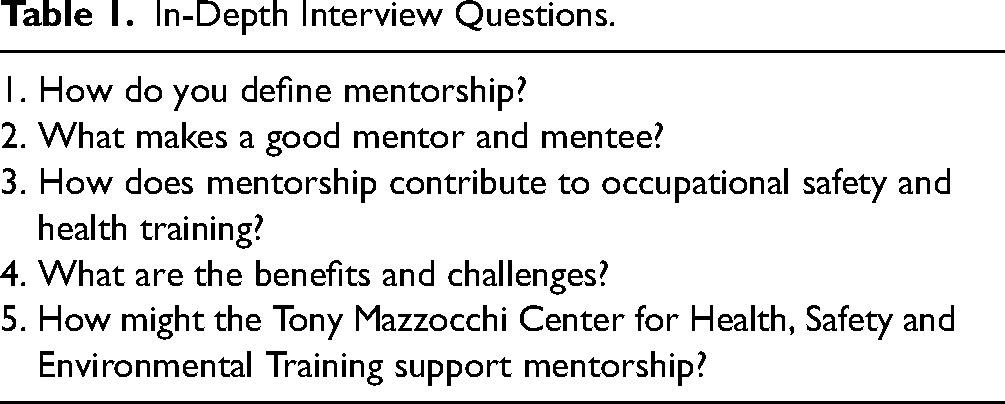
Between April and July 2019, we conducted in-depth interviews in-person and over the telephone. Table 1 shows the main interview questions. Following the interviews, we presented a summary of our findings separately to the union and Worker Center leaders to gain feedback. This study was approved by the Queens College, City University of New York's Institutional Review Board under protocol #2019-0171. Oral informed consent was obtained from participants, as the investigators had existing relationships with the participants and the content of the study was related to the regular conduct of business.
In-Depth Interview Questions.
Data Analysis
We applied REAM to yield common themes because our participant groups were informed by common OSH training experiences, goals, and informal mentorship practice. Nonetheless, we anticipated differences in program-related ideas because they work in different contexts. While there is disagreement as to the need for transcription to maintain transparency and contribute to trustworthy 19 p 290 data analysis, certain projects can benefit from the time saved when oral data are not fully transcribed. 20 We took the following steps to assure accuracy during the analysis process: Authors IC and SB were present in all interviews and took detailed notes. We summarized each interview and discussed interpretations in an iterative fashion after each interview, at the conclusion of data collection, and after feedback from each participant group and the TMC training. We organized interview notes into categories, and author IC listened to audio recordings to confirm notes and interpretation of results. 18 We conducted a matrix analysis of the categories to enable review within each participant group and then across groups to generate common themes. 21 We then transcribed quotes that illustrated our themes. Finally, a preliminary summary report was developed and discussed by all authors prior to finalizing the results.
Results
The OSH programs at the union sites and at the Workers Centers have distinct content and audiences. Nevertheless, results suggest that participants’ perspectives about a mentorship program are overarchingly similar because both participant groups approach OSH training as an entry point to develop leaders in their respective work contexts. Not surprisingly, these similarities are interpreted or applied differently because the contexts are different. Each theme represents the similarities we found. They are followed by nuanced comparisons of participants’ varying interpretations. This strategy, with illustrative quotes in tables, is intended to highlight the potentially unifying programmatic elements as well as the differences that could be considered in the implementation of mentorship programs to supplement existing OSH training in different settings.
Theme 1: The Value of Mentorship in OSH Training
Both union worker-leaders (UWLs) and Worker Center worker-leaders (WCLs) expressed enthusiasm for a mentorship program. This theme features the aspects of such a program that would add value to their respective OSH training programs (Table 2).
Theme 1—The Value of Mentorship in Occupational Safety and Health (OSH) Training.
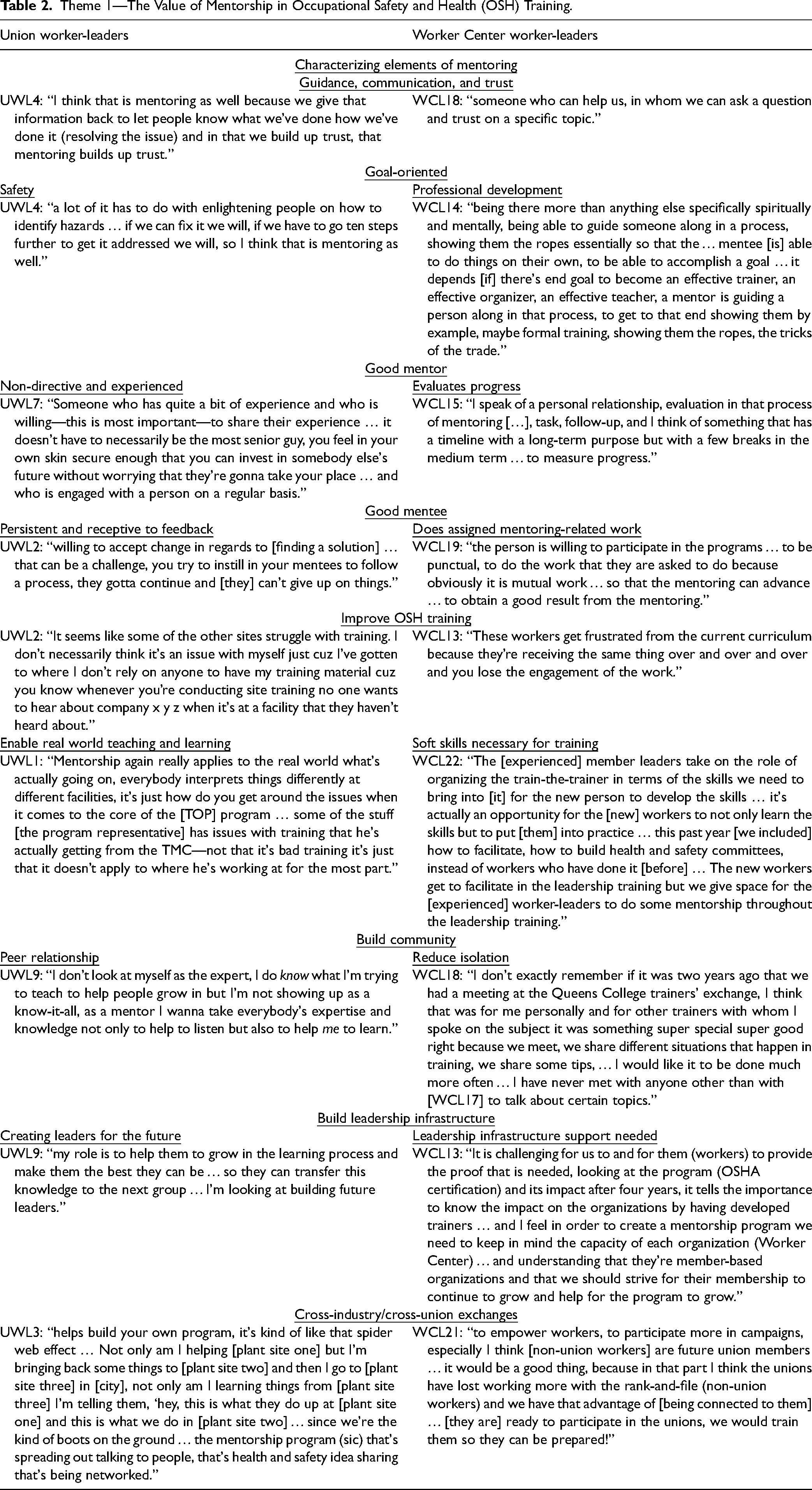
Characterizing elements of mentoring. About half the UWLs grew into their roles as informal mentors to fill a programmatic need to help the program run more efficiently. Most WCLs have leadership roles in their organizations and have been or are still trainers. Despite the differences in the types of organizations and roles, the two groups have similar perspectives about the desired elements of mentoring and qualities of mentors and mentees. Common elements included: exchange of information or knowledge between people, guidance over time to improve workers’ problem-solving skills, and becoming more effective. Some UWLs and WCLs explicitly indicate that building trust is necessary between mentor and mentee [UWL4, WCL18]. Both groups identified that mentoring should be goal-oriented, however, their specific goals differed. UWLs emphasized working toward an outcome of resolving safety issues and sharing effective strategies [UWL4]. WCLs tended to focus on a mentee's professional development [WCL14]. Some WCLs added affective qualities to describe the mentoring process, such as “with love,” “spiritual” support, and “holding a person's hand.”
When asked about the necessary characteristics of a mentor, both groups of worker-leaders mentioned that mentors should be accessible, trustworthy, patient, and resourceful. Being resourceful speaks to the recognition that they might not always have the answers to the issue at hand but that they are willing to work collaboratively and research a possible resolution. For the UWLs, guidance means providing non-directive advice that is broken down for increased understanding. They state that guidance should support a non-judgmental peer-to-peer relationship [UWL7]. Some UWLs mentioned the mentee may not agree to the advice but delivering the information non-judgmentally is essential for a functional peer relationship. WCLs indicated that mentors should teach mentees how to search for an answer and how to evaluate their understanding in light of a goal [WCL15]. They added that mentors should also be admirable, passionate, and committed to building leadership for capacity-building and organizational generativity, i.e., leaders would be encouraged to work or volunteer on a long-term basis to sustain or grow organizational initiatives. Extending mentors’ sense of commitment, their values should thus align to those of the organization for which they work and should be well connected to other types of organizations, including unions.
According to both groups, mentees should be active participants in the learning process. For UWLs, they should listen well, ask questions, be persistent, and receive constructive feedback well in order to solve problems [UWL2]. For WCLs, it was important that mentees do their “homework,” that is, follow through on guidance or specific tasks assigned by the mentor [WCL19]. In addition, some participants thought it important that mentees be committed to organizational capacity-building.
Mentorship can improve training. Worker-leaders felt that the mentoring exchanges would add dynamism to training programs that had become out-of-date over time [UWL2, WCL13]. Mentoring could function to ‘re-train’ workers to enhance their practice-based knowledge with new skills and information. UWLs might receive training only once a year, and WC-affiliated workers might do so only as required. The mentoring process could help a mentor identify where and how training curricula would need to be improved and updated.
Although the end goal is for training to help workers take action (to the extent possible) to improve working conditions, findings suggest that mentoring can strengthen training differently for union-based and Worker Center workers. In the unionized program, trainers’ recently acquired knowledge and skills in the classroom could be supported by informal “real time” opportunities on the shop floor to reinforce information. UWLs explain that they can apply the knowledge they learned to specific local circumstances and issues in real time rather than relying solely on training material [UWL1]. This process of exchange facilitates mentees’ understanding of the root causes and fixes during incident investigations. One of the main vehicles the program uses to improve workplace conditions is to investigate incidents and “near misses.” By identifying and correcting root causes, unsafe conditions are mitigated or eliminated.
As WCLs provide training for workers with non-traditional or less formal education, they focused on strengthening the credibility of trainers that is linked to their desire for professionalization and career advancement. The additional learning opportunities that mentorship affords could provide trainers with the “soft” mentorship skills enabling them to engage learners better and thereby improve their knowledge uptake. In one Worker Center's leadership trainings, more experienced WCLs collaborate with newer ones to determine the skills they would like to learn (e.g., building health and safety committees) and provide guidance throughout [WCL22].
Mentorship can build community. Participants in both groups reported feeling varying levels of isolation that current training initiatives were not addressing. UWLs often felt a lack of communication between workers within their plants and between themselves and worker-leaders in other TOP program work sites. WCLs shared that trainers also felt very isolated, as they do not share the same workplace with other trainers or worker participants.
Both groups indicated that a mentorship program could potentially build community, thereby enlivening the training program. The mentoring exchange could improve communication among trainers, across trainers and between trainers and other safety and health staff. For UWLs, community-building can be fostered through the ‘non-threatening conversations’ that equally enlighten both mentor and mentee and are seen as the site at which the most important and reciprocal learning takes place [UWL9]. The process of teaching helps mentors to continue to grow, making them better safety program representatives in their own facilities. It was important for UWLs that the dual learning be recognized as placing mentors and mentees on equal footing, which fosters a sense of peer camaraderie. While reciprocal learning would also occur for WCLs, building consistent contact through the mentoring exchange was stated to be essential to reduce trainer isolation because there is no common workplace among workers or trainers in which to locate a mentorship program [WCL18].
Mentorship can build OSH leadership infrastructure. In addition to improving the technical OSH skills of mentees, the process of mentoring is also seen as a process for building new leaders for both groups. Some WCLs varied on their thoughts about identifying workers who already have the skills and desire to become leaders, but they agreed that it was difficult to invest the time to support their development should they be found. UWLs also acknowledged the difficulty of identifying future leaders or mentors and the restrictions of time and other fixed resources to use to build upon the training program.
Although both groups of workers perceived that a mentorship program could help to support the continuous development of new leaders and trainers in safety and health [UWL9], WCLs were more focused on creating much needed support for an OSH leadership infrastructure, becoming a self-sustaining program, and further building the capacities of their respective organizations. A mentorship program would create a formal pipeline to infuse the training program with future trainers at unionized company sites or Worker Centers. These ideas build on existing views about the purpose of mentorship in the workplace. WCLs view providing the means to obtain and enhance their training credentials as critical because they conduct certification-based courses authorized by the OSHA Outreach Training Program (OSHA10 and 30-h) [WCL13]. Worker Centers have staff that support trainers, usually on an informal basis. Such staff could be another group to target in a mentorship program to provide important support for worker-leaders as they work to meet the strict criteria to become OSHA-authorized trainers. A mentorship program would include support activities that would gather workers consistently in the same physical space and also provide mechanisms to connect them for their OSH work. Such activities are essential to develop trainers and leaders for WCLs. Two organizations currently run co-occurring training and leadership development programs to create skilled leaders in OSH who function as de facto mentors to less experienced worker-trainee-leaders. As described by many WCLs, a mentorship program is an ensemble of processes that form a self-sustaining infrastructure for the ultimate goal of leadership development and organizational capacity-building. Worker-leaders who enhance their technical OSH skills and develop mentorship skills can actively participate in their respective organizations. In addition, they can participate in the health and safety movement, whose goal is to improve working conditions for all workers regardless of immigrant status or union affiliation.
Both groups also indicated the potential for leaders to mentor leaders in other TMC OSH training programs. TMC training programs reach diverse industries. UWLs report that their OSH training program would benefit from cross-industry mentoring exchanges [UWL3]. WCLs would like to exchange on a more regular basis with union health and safety leaders to strengthen the OSH movement. Two leaders went further and said it would be ideal for the non-union workers to be part of unions, and perhaps even in their leadership [WCL21].
Theme 2: Designing a Mentorship Program for OSH Training
A formal program for continued engagement. Participants were prompted to think about how to design a mentorship program that would be responsive to each of the group's working contexts. While one of the many advantages of mentoring is its informality, both groups adamantly agreed that a formalized program would be required to sustain the initiative, commitment, and supports for mentors, mentees, and organizations (Table 3). Common proximal goals were mentee engagement and commitment among mentors and mentees to develop OSH skills. Both UWLs and WCLs mentioned that while mentors must possess a set of characteristics described in the second theme, mentoring skills could be further developed for enhanced receptivity of the material to best engage workers [UWL7, WCL22].
Theme 2—Considerations for Designing a Mentorship Program for Occupational Safety and Health (OSH) Training.
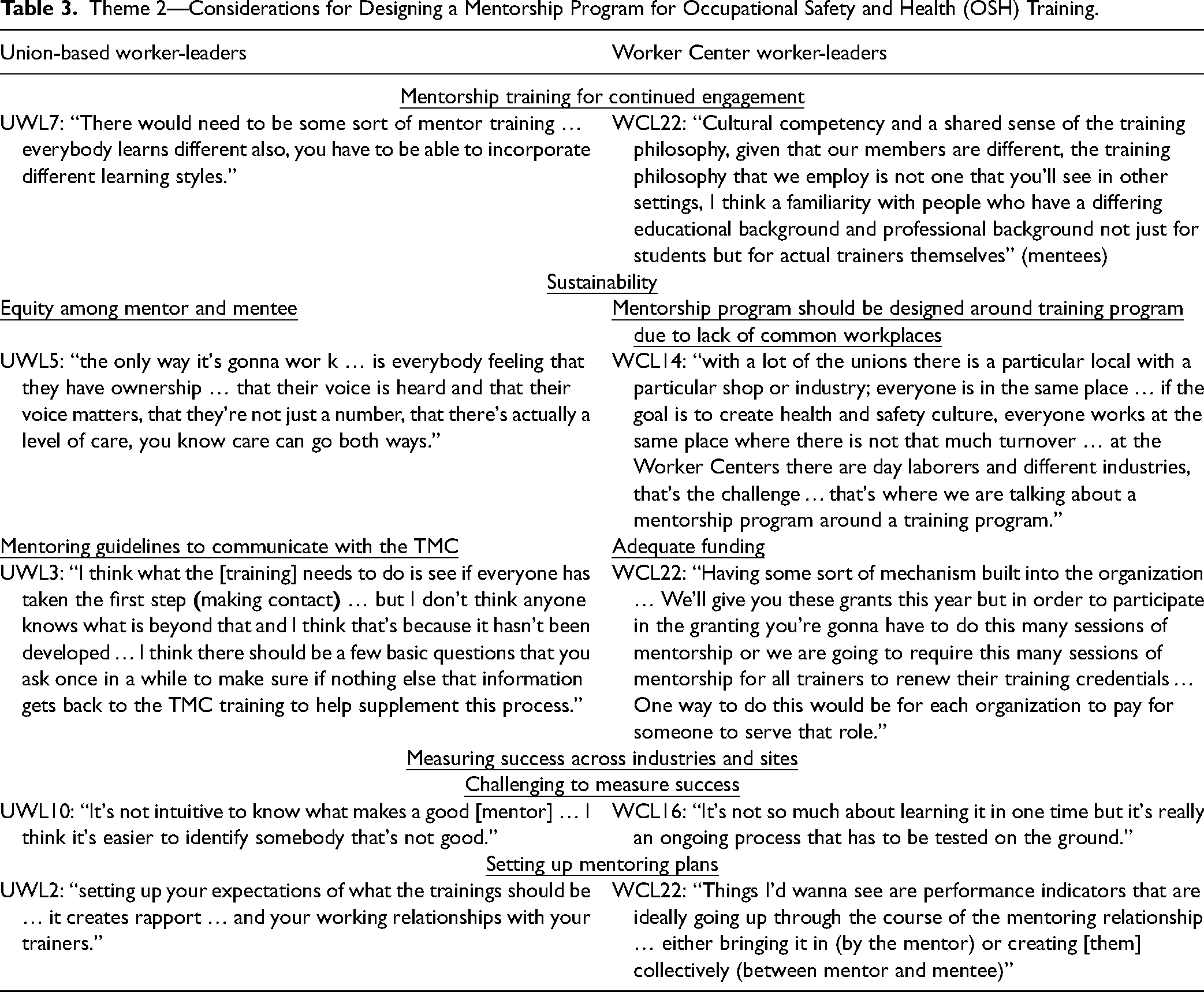
Program sustainability was important to both groups, however, mechanisms varied greatly between UWLs and WCLs due to their vastly different work environments and the availability of resources. Since the unionized work site-based program has a stable funding stream, UWLs’ concerns again centered on mutual and equitable commitment for the execution of a mentorship program [UWL5]. WCLs focused more of their ideas on setting up an infrastructure to sustain a mentorship program grounded in a training program due to a lack of common workplaces [WCL14].
UWLs also expressed the need for structured guidelines to know how to orient both the work of mentoring and communicate clear expectations for mentees. Where the teaching and reinforcing of documentation is necessary, they suggested that creating standardized templates and other methods for mentors across the company-based OSH program would help them more efficiently customize training or advice to each specific site. Similarly, “lessons for learning"-type stories should continue to be developed, as they were thought to be useful tools. Additionally, the UWLs mentioned the critical support from the training TMC gave them to help them improve the informal mentoring of other union-based worker-leaders. UWLs reported that the TMC is always accessible via telephone and email and there are regular monthly conference calls. As a result, UWLs thought it important for a mentorship program to establish guidelines along with good communication channels with the TMC [UWL3].
For WCLs, adequate funding for time and space resources would be essential because Worker Centers have little of either. They adamantly stated that the program would not work if mentors and mentees were not compensated because establishing good mentoring relationships and carrying out the process of mentoring are time intensive. Another suggestion was made that would tie program funding to mentorship requirements to be fulfilled by the organization, ensuring resources for the organization and accountability [WCL22].
Measuring success across industries and sites. We also guided participants to think about how to measure successes in a mentorship program. It was difficult for many from both groups of participants, as they explained that the mentoring dynamic is challenging to measure [UWL10, WCL16]. Nonetheless, some proposed metrics that reflect ideal program outcomes and impacts. For UWLs, direct mentee engagement was an outcome metric. They recommended tracking mentor-mentee contacts by number of calls and emails. To measure program impact, they suggested tracking mentee actions such as conducting “stop-works” and safety engagement meetings. WCLs suggested tracking the number of mentorship-related classes taught as a measurement of interest in the program and documenting the improved quality of existing OSH training classes, for example, by measuring trainees’ knowledge gains over time.
Some UWLs and WCLs stated mentors and mentees should generate individualized mentoring plans that include goals for mentees [UWL2, WCL22]. They also suggested that mentees be assessed as to whether they were meeting their goals and that needs for further assistance should be identified. Additionally, UWLs and WCLs stated that informing the TMC program staff of mentees’ goals would add a layer of accountability to track mentoring success, and also strengthen the program by making it possible for program staff to create or update mentorship and OSH training tools and templates. For example, the previously mentioned “lessons for learning” used in the TOP program could be documented or continuously updated via mentors’ reports of mentees’ needs and goals. WCLs reiterated that tracking whether mentees become actively involved in their organizations and whether they become mentors later would measure the program's ability to be self-sustaining. Tracking the ongoing exchanges or collaboration between Worker Centers and the union was also important for this group of leaders.
Discussion
This study drew on the experience of worker-leaders to explore the potential role for mentorship as part of a comprehensive approach to building worker leadership in safety and health training programs. We explored and contrasted the role in both union and non-union-based work settings with skilled manufacturing workers in the former and construction laborers in the latter. This study expands the scant literature on mentorship programs in OSH training that focuses on worker empowerment in blue-collar occupations. We focus on how mentorship programs might complement classroom training as a model to increase worker engagement and build safety and health leadership among workers. Though the OSH programs at the union workplaces and at the Latinx immigrant Workers Centers have distinct content and audiences, participants were remarkably similar in their enthusiasm and their ideas for mentorship programs. Both groups view OSH training as a vehicle through which to empower workers and they view mentorship as a viable mechanism that can link training and leadership development with change in the workplace. In this article, we identified common principles that reflect the value of mentorship in OSH training, by characterizing the elements of mentoring and the ways in which mentorship can improve OSH training. Practices for designing mentorship programs across two different work settings were recommended.
This study is consistent with the literature on mentorship in workplace learning programs. The only review of the literature of mentorship programs in blue collar occupations, which drew mostly on business-oriented mentorship programs as a proxy for programs in the manufacturing sector, found that previous studies explored definitions of mentorship, the characteristics of good mentors, and mentorship program structures 8 with many findings that mirror ours. However, previous mentorship literature across occupations often situates mentorship programmatic goals within a traditional organizational development and human resources paradigm, which aims at improved worker satisfaction, higher worker productivity and better retention of high performing employees.7,22–24 Our study expands on this perspective by conceptualizing the goals of mentorship within the social ecological framework (SEF) aimed at improving the work environment. 14 Thinking beyond the impacts on the mentor-mentee relationship, the TMC's OSH training programs aim to impart knowledge to workers so that they can advocate for broader safety and health changes at the institutional and policy levels. Below, we discuss results as they relate to the levels of the SEF.
Overarching similarities between the two groups of worker-leaders suggest that a formal mentorship program could contribute to the successful transfer of OSH knowledge and its application at work sites. We heard from everyone that the guidance, communication, and trust-building integral to the mentoring process are dynamic characteristics which could improve training. At the individual level of the SEF, a mentorship program can encourage worker-leaders and other workers to use their experience and build on their skills to take part in health and safety activities in their own workplaces. In a mentoring relationship, the knowledge and skills of workers, trainers, and mentors can be reinforced.
The perspectives of the two groups converge with respect to aspects of interpersonal and organizational levels of the SEF. At the interpersonal level, they agree that the mentoring process is a way to improve communication within individual mentoring pairs, and that a structured mentorship program would contribute to developing mentoring skills and fostering relationships. Workers are trained by mentored trainers, and mentors continuously apply their knowledge and skills in an iterative cycle of knowledge transfer. As noted earlier, reciprocal learning takes place through two-way communication that acknowledges each party's expertise and skills.25,26
At the organizational level, both groups also believe that a mentorship program could strengthen communication across workplaces, organizations, and the TMC. Firstly, a mentorship program could set up a consistent and reliable communication system among workers, trainers, mentors, and other key organizational staff. This would address the challenge of updating curricula by providing information about how curricula can be improved. The content of OSH training is often mandated by OSHA in both the union- and non-union based settings. Additionally, in the union-based settings, OSH courses are site specific, determined by workers’ needs, and negotiated with the employer. The broad array of workers’ needs at each site and changes in the manufacturing process complicate efforts to update training materials. In the non-union-based settings, the New York and New Jersey-based Worker Centers provide specific OSHA Outreach Training Program courses that the New York City Department of Buildings requires to be able to work on most city construction sites where many Worker Center-affiliated laborers work. These courses do not provide much time for additional content support or different topics.
Secondly, a consistent, reliable communication system can strengthen existing formal pathways for identifying and building leaders. Worker-leaders from both groups view a mentorship program as a viable opportunity to generate common principles for leadership development. Workers can become trainers and eventually mentors, which can help sustain and grow health and safety programs. The communication system involving workers, trainers, mentors, and program staff involved in a mentorship program is a characteristic of a learning organization, which is one that supports workers in growing personally and professionally and encourages collaboration for collective learning goals. 9 Weinstock and Slatin's 6 vision of worker empowerment in OSH training, which involves worker communication, critical reflection, and collective action in the workplace and beyond, could flourish in an organization that fosters individual and collective learning.
Understandably, implementation of a unified mentorship program based on common principles would need to consider the different contexts of the respective work settings. At the individual level, UWLs viewed mentors as non-directive, equal partners in learning. They emphasized the important role that mentorship plays in applying training knowledge to actual safety and health incidents occurring in real time to understand how best to intervene. For WCLs, mentors are credible, knowledgeable teachers. Mentorship can enhance trainer credibility and rigor in training and knowledge transfer. Opportunities for consistent, formal training for Worker Center-affiliated workers and trainers are fewer than for their union-based counterparts, suggesting that rigor and credibility provided through a formal program is tied to WCLs’ desire for professionalization and career advancement of trainers.
The two groups’ views diverge with respect to program implementation needs and challenges that are directly tied to institutional and policy level mechanisms. Institutional support is required to establish a mentorship program at the union-based sites. Institutional support is necessary to prioritize and encourage mentorship development and training, and to facilitate mentoring relationships that cross different plants and union locals. While the union-based TOP program in this study has a dedicated infrastructure within which a mentorship program could be created, other workplaces within the same union that are not part of the TOP program may face additional challenges that would need to be addressed. At the institutional level, WCLs indicated the importance of having programmatic resources to support staff time dedicated to mentorship. For a mentorship program to thrive as intended, the union-based program and the Worker Center-run OSHA Outreach Training Program must continue to be supported in the long-run. This iterative benefit could potentially enhance the reputation of unions and Worker Centers among their membership, and the community and governmental institutions that are necessary to promote worker and community health and safety. At the policy level, non-union worker organizations report that training programs have been important in building local leadership and organizational credibility. 27 This credibility can be used to advocate for new training programs and for access to existing safety and health enforcement programs. 28
Limitations
Due to its exploratory nature, our study did not address several important considerations. Future research in union and non-union settings could document best practices by evaluating the specific aspects of mentoring that contribute to OSH knowledge transfer, application, leadership development, and organizational impact for worker empowerment. Examining these settings’ cultural and historical contextual similarities and differences would also be important to further support the effectiveness of an OSH-based mentorship program. Additionally, we acknowledge that exploring the role of demographic characteristics is important in mentorship programs.11,12 Researching the influence of gender, race, ethnicity, and place of birth on mentorship would have required a different study design. UWLs were all U.S.-born and were predominantly male, and WCLs were predominantly first-generation immigrants and more than half were female. The WCLs’ immigrant background is integral to their styles of training, leadership development, and advocacy. A future study might involve Worker Centers that target the needs of different ethnic and immigrant groups. Another one could examine gender groupings across union and non-union-based settings in male-dominated blue collar occupations.
This study was informed by participants who initiated the idea that mentorship could be a viable supplement to current OSH training programs, where the latter are viewed as entry points for leadership development and eventual worker empowerment. We did not explore this concept in other settings that had not previously discussed or practiced it informally, or with managers in contexts potentially unsupportive to enhancing safety and health initiatives. As such, our findings may not fully apply in those cases. Future research could replicate the study in such alternative settings.
Conclusion
This exploratory study examined perspectives of worker-leaders about a potential mentorship program. These leaders are active participants in blue-collar OSH training programs focused on worker empowerment. Results related to mentorship's impact on mentors and mentees support findings from other mentorship-related studies with other kinds of workers. Assessing the advantages and challenges of this study's findings with the SEF illustrates the impacts that such an intervention would have at multiple levels on the individuals and worker-oriented organizations. These impacts would support empowered worker action for healthier and safer workplaces.
Footnotes
Acknowledgments
The authors wish to thank the participants of this study for their contribution, as well as the reviewers of previous versions of this manuscript for their generous time and thoughtful comments.
Author Contributions
All authors made a substantial contribution to the concept or design of the work, or acquisition, analysis or interpretation of data; drafted the article or revised it critically for important intellectual content; approved the version to be published; and participated sufficiently in the work to take public responsibility for appropriate portions of the content.
Declaration of Conflicting Interests
The author(s) declared no potential conflicts of interest with respect to the research, authorship, and/or publication of this article.
Data Availability Statement
The de-identified data presented in this study are available on request from the corresponding author. The data are not publicly available because consent for public sharing was not obtained from research participants.
Funding
The author(s) disclosed receipt of the following financial support for the research, authorship, and/or publication of this article: This article was written and produced in part by the United Steelworkers’ Tony Mazzocchi Center for Health, Safety and Environmental Education. It is supported by awards from the U.S. Department of Health and Human Services > National Institutes of Health > National Institute of Environmental Health Sciences under award numbers U45ES006175 and UH4ES009761. The content is solely the responsibility of the authors and does not represent the official views of the National Institute of Environmental Health Sciences. The funders had no role in the design of the study, in the collection, analyses, or interpretation of data, in the writing of the manuscript, or in the decision to publish the results.
