




Abstract
Background
The adoption of immersive simulations in surgical education marks a nuanced shift towards bridging virtual and real-world experiences. Introduced by Johan Huizinga and further explored by Edward Castronova, the “Magic Circle” concept serves as a metaphorical boundary within which the standard constraints of reality are temporarily lifted, allowing for the emergence of unique learning and interaction dynamics. This framework, while new to the field of surgical training, presents a theoretical potential for improving educational outcomes by merging simulated environments with actual surgical operations.
Aim
This study aims to critically assess the introduction of immersive simulations in surgical education, with a particular focus on the interplay between virtual scenarios and their real-world counterparts. It seeks to evaluate the potential of the Magic Circle as a novel conceptual framework for enhancing the educational journey within surgical disciplines.
Method
Through qualitative analysis, this research explores the application of immersive simulation technologies in surgical fields. It examines the Magic Circle concept's influence on these educational paradigms, especially regarding its effect on the efficiency of learning, the transferability of skills, and levels of learner engagement.
Results
This paper proposes that embedding immersive simulations within the Magic Circle framework could lead to improved understanding of surgical procedures and heightened acquisition of skills. This conceptualization suggests a promising avenue for enriching the educational matrix in surgical training, bridging theoretical knowledge with practical application through a novel lens.
Recommendation
The study advises a judicious integration of immersive simulation technologies within surgical training programs, guided by the principles of the Magic Circle. It calls for further empirical research to validate and refine this conceptual approach, with an emphasis on maximizing the utility of immersive learning tools, enhancing the effectiveness of skill transfer, and ensuring an equitable and effective educational experience for all surgical trainees.
Keywords
Introduction
The “Magic Circle” is a term that carries profound implications for many fields, including games, virtual environments, and educational contexts. Proposed by Dutch cultural historian Johan Huizinga in his pioneering work “Homo Ludens,” the Magic Circle represents a boundary space where ordinary rules and realities are suspended, enabling unique interactions and experiences (Huizinga, 1955). In this transformative space, participants engage in play, creativity, and experimentation. The founder of scholarly online game studies Edward Castronova further expanded the concept to illustrate the permeable boundaries between virtual and real-world environments (Castronova, 2005). In the realm of surgical education, the concept of the Magic Circle has found particular relevance with the growing use of simulation and virtual reality (VR) technologies, providing a powerful metaphor for understanding how these environments foster learning, skill development, and the transfer of competencies into real-world practice.
The Magic Circle in Surgical Simulation
Huizinga's original Magic Circle was conceptualized as a metaphorical playground, a self-contained area where games and play unfold (Larsen & Majgaard, 2019). The Magic Circle serves as a potent lens through which to view the use of simulation in surgical education. It is not, in itself, a platform but rather a theoretical construct that encapsulates the transformative potential of simulation environments. Within these metaphorical boundaries, ordinary constraints are suspended, fostering an atmosphere conducive to creativity, experimentation, and learning.
This framework is particularly relevant in surgical education, where simulation technologies offer a controlled and safe space, markedly distinct from the unpredictability of real operating theaters (Rasic et al., 2023). Surgical training is beset by a multitude of challenges, including the imperative for risk-free learning experiences across a diverse range of procedures, the ethical obligation to safeguard patient well-being, and the logistical hurdles limiting access to hands-on training opportunities (Golubkova et al., 2023). The Magic Circle, as a conceptual framework, elucidates how immersive simulations can be meticulously designed to navigate these challenges effectively.
First, the diversity and complexity of surgical cases constitute a formidable educational challenge (Apramian, Cristancho, Watling, Ott, & Lingard, 2016). Proficiency in surgery necessitates exposure to a wide spectrum of procedures, including those that are rare or complex. Viewing immersive simulations through the lens of the Magic Circle reveals how such technologies can facilitate exposure to a comprehensive array of surgical scenarios. This approach significantly expands the scope of surgical training, ensuring trainees develop a broad and deep skill set without compromising patient safety. An exemplary case is the use of VR simulation for training in the complex procedure of cerebral aneurysm clipping (Alaraj et al., 2015; Shono et al., 2018). In this immersive VR environment, trainees can navigate the intricate anatomy of the brain, interacting with highly detailed, dynamic 3D models that simulate the blood flow and pulsation of cerebral vessels. Trainees are exposed to various aneurysm scenarios – ranging from standard saccular aneurysms to more complex fusiform aneurysms – each requiring precise manipulation and decision-making skills. The virtual setting allows for repetitive practice and experimentation with different surgical approaches and techniques, all without any risk to patient safety. This intensive, realistic practice is invaluable in preparing neurosurgical trainees to handle the diverse challenges they will encounter in actual clinical settings, thereby bridging the gap between theoretical knowledge and practical skill in a controlled, immersive learning environment.
Second, ethical concerns are paramount in surgical education, highlighting the need for a training approach that enables skill development without adverse impacts on patients. The adage “see one, do one, teach one,” increasingly viewed as incompatible with modern ethical standards, underscores the necessity for alternatives (Scott, 2006). The Magic Circle conceptually supports the use of virtual simulations as such an alternative, providing an environment where trainees can engage in the decision-making process, perform procedures, and learn from errors without the ethical dilemmas associated with patient care.
Lastly, logistical constraints, including limited access to suitable cases and competition for operating room time, significantly impact the efficiency and equity of surgical training (Sutkin, Littleton, & Kanter, 2019). Through the Magic Circle framework, immersive simulations emerge as a scalable and accessible solution to these challenges, offering a practical pathway to augment surgical education and mitigate disparities in training opportunities. A concrete example of this application is the use of VR simulation for laparoscopic cholecystectomy training. This common procedure, often limited in training opportunities due to high demand in clinical settings and the variability in case availability, can be consistently practiced in a VR environment. Trainees can perform multiple, repeated laparoscopic procedures in a virtual setting that mimics the operating room, complete with realistic patient anatomy and variable clinical scenarios that might arise during actual surgery. This method not only enhances the surgical skills of trainees by providing ample, unhindered access to complex training scenarios but also ensures that educational opportunities are not constrained by physical and logistical limitations. Thus, immersive simulations, by extending the principles of the Magic Circle, effectively democratize the training process, making high-quality surgical education more uniformly accessible across different regions and institutions.
The Magic Circle thus serves as a valuable construct for understanding the application and potential of simulation technologies in surgical education. It highlights how thoughtfully designed simulation environments can address the educational, ethical, and logistical challenges of surgical training, facilitating a comprehensive, risk-free, and equitable learning experience (Agha & Fowler, 2015). Within this virtual Magic Circle, surgical trainees can experiment, take risks, and learn from their mistakes without real-world consequences. It's not merely the technology that creates this “magic,” but the thoughtful pedagogical design that establishes a supportive and challenging learning environment.
Figure 1 illustrates the Magic Circle concept in surgical simulation, highlighting the key aspects of both the virtual and real-world environments and their intersection, which fosters transformative learning and skill development. Comparative dynamics of virtual and real-world environments in surgical training. This diagram contrasts the 'Magic Circle' – a risk-free, controlled space fostering skill development through simulation – with real-world surgical settings marked by ethical, logistical, and unpredictable challenges. It illustrates how each environment contributes uniquely to surgical education.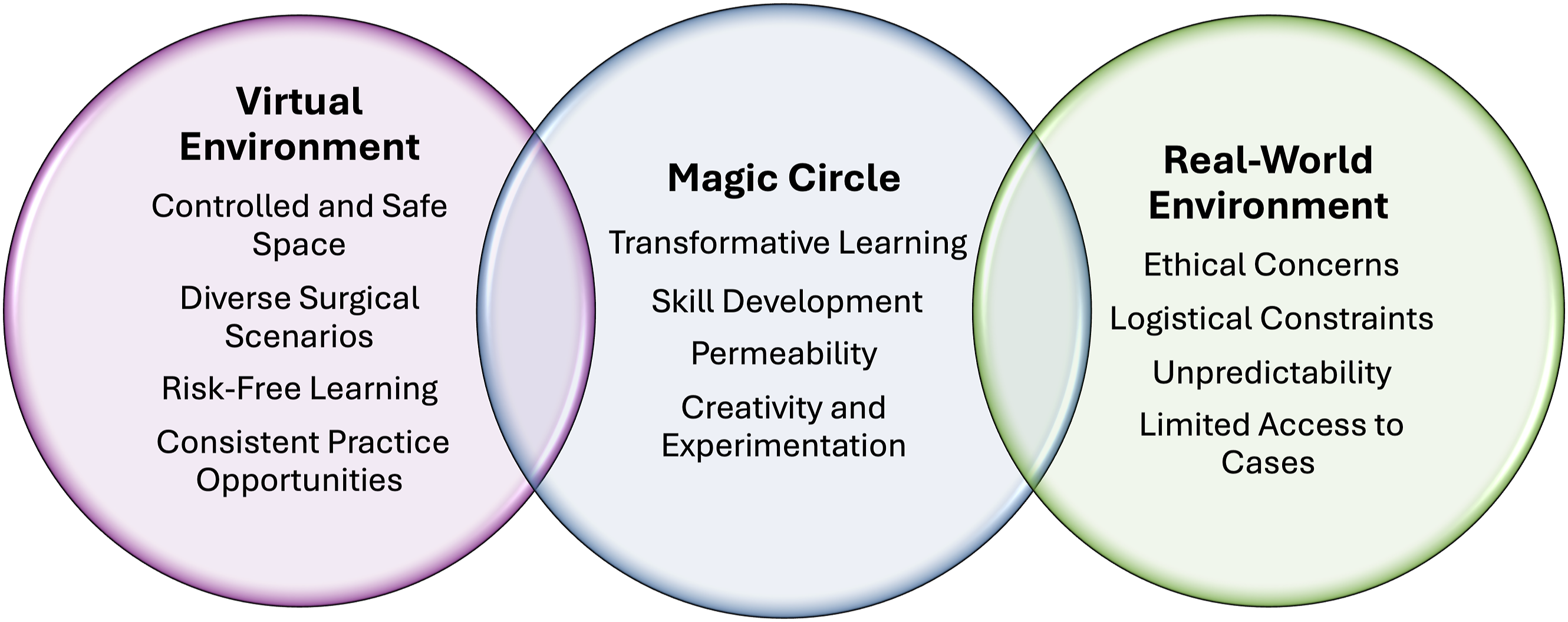
Distinguishing Gamification from Simulation Training within the Framework
In educational theory, the Magic Circle predominantly conceptualizes gameplay environments, where conventional realities are suspended, allowing for structured play and exploration. This concept provides a theoretical basis to distinguish between gamification and simulation training, particularly in contexts such as surgical education. Gamification refers to the integration of game mechanics into non-game settings to enhance engagement and motivation (Krath, Schürmann, & von Korflesch, 2021). This involves elements like point scoring, competition, and achievement badges, which are used to enrich traditional educational methods and incentivize learners. In contrast, simulation training is concerned with the replication of real-world tasks within a controlled environment, focusing on skill acquisition and competence (Lateef, 2010). It aims to provide an immersive experience that mimics real-life scenarios closely, facilitating deep learning and the development of practical skills. While both approaches leverage elements of the Magic Circle by creating an engaged learning space separated from real-world consequences, simulation training extends beyond engagement to encompass a comprehensive pedagogical strategy that includes detailed feedback mechanisms, performance assessment, and often, a higher degree of fidelity to actual practice. The application of the Magic Circle in simulation training thus not only serves to motivate but more critically, to transform theoretical knowledge into actionable skills in a risk-managed environment.
Virtual Worlds and the Magic Circle in Surgical Education
The alignment of virtual worlds with the evolving landscape of surgical education reinforces the relevance of the Magic Circle concept. Virtual reality technologies enable the creation of immersive, multimodal environments that are adaptable to individual learner needs (Suh, McKinney, & Siu, 2023). Such virtual worlds offer surgical trainees the chance to engage with a variety of clinical cases, from common surgical procedures to rare, complex operations that may otherwise be infrequently encountered (Abbas, Kenth, & Bruce, 2020; Dwivedi et al., 2022; Rogers, DeSantis, Janjua, Barry, & Kuo, 2021). For example, VR simulations used in orthopedic surgery training allow trainees to perform procedures like total knee arthroplasty – a procedure that, while common, involves numerous challenging techniques that vary significantly between patients (Schöbel et al., 2024). In the virtual environment, trainees can encounter and manage a wide array of anatomical variations and complications, which they might not frequently see in the early stages of their surgical careers (Cardoso et al., 2023). This exposure can enhance their readiness for real-world operations, providing a comprehensive, practice-driven learning experience. The breadth of experiences that the virtual Magic Circle can offer thus bridges the gap between theory and practice, promoting the development of well-rounded surgical skills.
Recent advancements in VR technology have significantly enhanced the fidelity, interactivity, and accessibility of surgical simulations (Deng, Xiang, & Pan, 2023; Ntakakis et al., 2023; Tang, Chau, Kwok, Zhu, & Ma, 2022). The integration of augmented reality (AR) and mixed reality (MR) within these environments introduces new dimensions to the Magic Circle, creating more immersive and complex training scenarios that closely mimic real-life surgical challenges (Bui et al., 2024; Suresh, Aydin, James, Ahmed, & Dasgupta, 2022). These technologies facilitate a broader spectrum of sensory feedback, including tactile and haptic feedback, thereby enriching the trainee's learning experience and improving skill acquisition (Gerup, Soerensen, & Dieckmann, 2020).
The Convergence of the Magic Circle and Immersive Technologies
Immersive environments extend the Magic Circle’s boundaries by enhancing the sensory experience, providing realistic visual, auditory, and tactile feedback that deepens the learner's engagement and facilitates a higher level of cognitive and psychomotor activity (Liu et al., 2023). This sensory immersion is crucial for suspending disbelief, allowing trainees to fully commit to the simulated scenario as though it were real. The immersive nature of these technologies ensures that learners are not merely passive recipients of information but are actively involved in a dynamically constructed educational experience that mimics real surgical environments.
Moreover, the permeability between these immersive simulated experiences and real-world surgical practice is a critical aspect of learning transfer. Incorporating the Magic Circle into surgical education through immersive technologies such as VR and AR provides a robust framework for understanding the shift in pedagogical methods from traditional to technology-enhanced learning environments (K. O. Lewis, Popov, & Fatima, 2024). The Magic Circle, originally conceptualized as a distinct boundary within which the normal limits and rules of the real world are suspended, finds a concrete representation in VR and AR settings. These technologies create encapsulated environments where surgical trainees can practice without real-world consequences, thus embodying the core characteristics of Huizinga’s theoretical space.
The immersive environments designed within the Magic Circle framework are not isolated from reality but are intricately designed to reflect and respond to the complexities and unpredictability of actual surgical procedures. This design ensures that skills and competencies developed within the virtual Magic Circle can be effectively transferred to the operating room, highlighting the practical utility of merging Huizinga’s concept with modern immersive technology in surgical training. This integration of the Magic Circle with immersive technologies can fundamentally transform surgical education, providing a robust, risk-free platform where theoretical knowledge is applied in realistic scenarios, fostering the development of essential surgical skills and competencies.
For example, VR training modules used in systems like the da Vinci surgical simulator allow for precise replication of surgical tasks, offering tactile feedback and high-definition visual simulations that mimic real-life tissue resistance and surgical scenarios (Hertz, George, Vaccaro, & Brand, 2018; Martinez Garcia et al., 2014; Tergas et al., 2013). This type of immersive simulation extends the boundaries of the Magic Circle by not only isolating the learner from real-world risks but also by intensifying the focus on specific learning objectives, such as the honing of fine motor skills and spatial awareness essential for surgery.
Similarly, AR technology, as demonstrated in applications like the Microsoft HoloLens, overlays detailed anatomical structures onto a surgeon’s field of view during a procedure (De Jesus Encarnacion Ramirez et al., 2024). This integration of digital and physical views facilitates a deeper understanding of complex surgical landscapes, enhancing cognitive integration of spatial and procedural knowledge (Yoon et al., 2018). Such applications underscore the Magic Circle’s relevance in modern surgical training, where the blend of real and virtual elements creates a permeable learning boundary that closely aligns with the dynamic conditions of actual surgical environments.
This sophisticated use of VR and AR in surgical education underscores the theoretical validity and practical utility of the Magic Circle, demonstrating its adaptability to contemporary educational technologies. By providing a controlled yet realistic practice arena, these immersive technologies not only reinforce the Magic Circle’s principles of separation and focused engagement but also enrich the trainee’s ability to transfer learned skills seamlessly to real-world operations. This alignment of theoretical constructs with advanced technological applications illustrates a mature integration of traditional game theory and cutting-edge educational practices.
The Permeability of the Magic Circle in Surgical Simulation
Castronova's examination of the Magic Circle's permeable boundaries is particularly relevant to both virtual and physical surgical simulation scenarios (Tekinbas & Zimmerman, 2003). This permeability refers to the dynamic interaction between the virtual and real environments, playing a crucial role in the design and facilitation of simulation experiences (Gaba, 2007).
Understanding permeability in this context means recognizing how simulation environments can reflect real-world surgical practices, ensuring alignment with actual procedures, guidelines, and patient needs. Here, the term “permeability” refers to the bidirectional influence between the simulated and the real, allowing for the seamless transfer of knowledge and skills (Lateef, 2010).
Factors Influencing Permeability
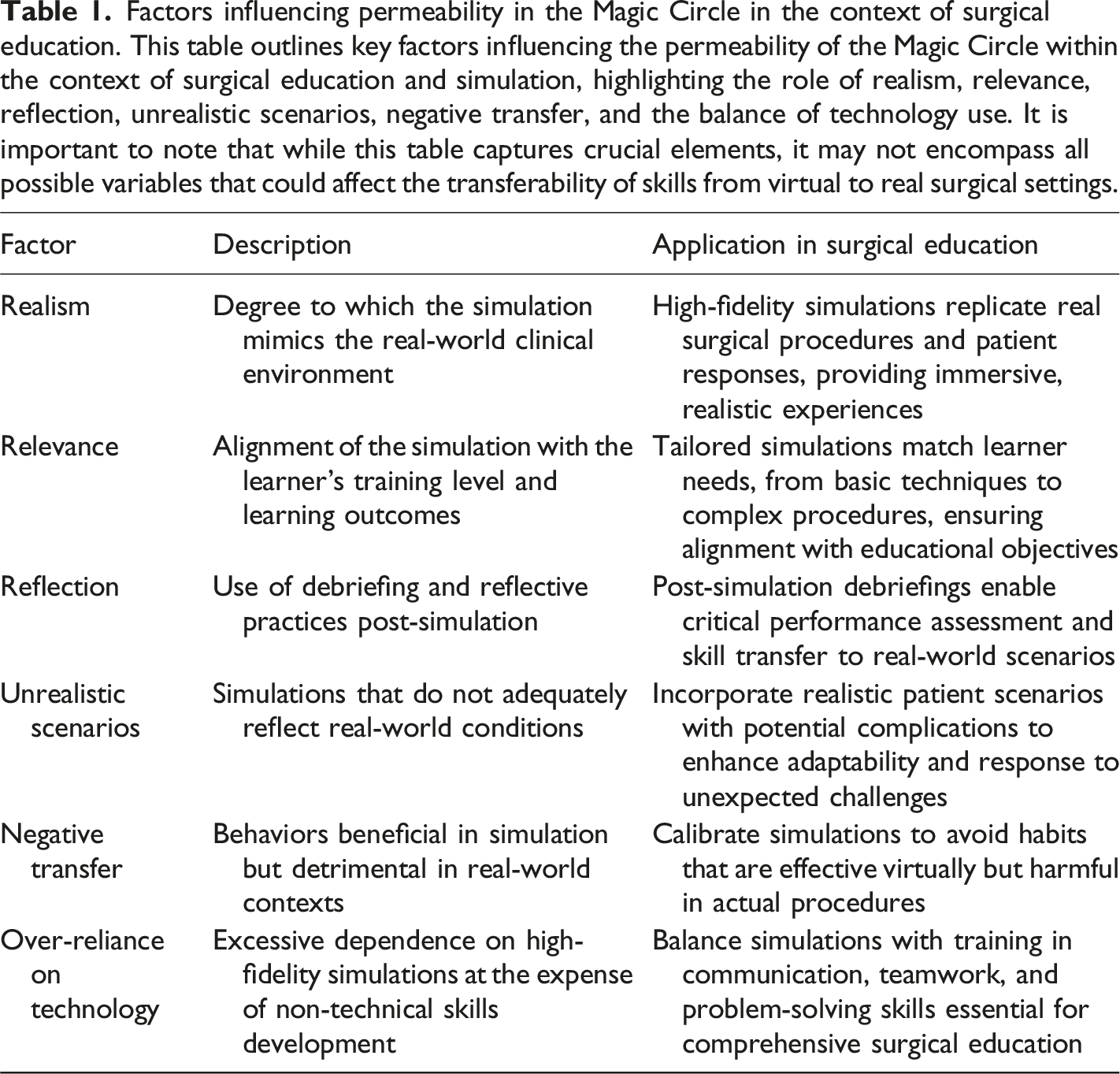
Factors influencing permeability in the Magic Circle in the context of surgical education. This table outlines key factors influencing the permeability of the Magic Circle within the context of surgical education and simulation, highlighting the role of realism, relevance, reflection, unrealistic scenarios, negative transfer, and the balance of technology use. It is important to note that while this table captures crucial elements, it may not encompass all possible variables that could affect the transferability of skills from virtual to real surgical settings.
Enhancers
1. Realism: High-fidelity simulations and immersive virtual reality experiences that closely mimic real-world surgical scenarios facilitate the transfer of learning (Lateef, 2010; Lowell & Tagare, 2023). 2. Relevance: Simulations that match the learner's level of training and intended learning outcomes enhance the transfer of surgical skills (Campain et al., 2017). 3. Reflection: Debriefing and reflection following simulation exercises enhance permeability, enabling learners to internalize their experiences and apply the lessons learned to real-world surgical practice (Abatzis & Littlewood, 2015; Burns, 2015).
Limiters
1. Unrealistic scenarios: Simulations that do not adequately reflect real-world surgical scenarios can limit permeability (Kneebone, 2016). 2. Negative transfer: Some behaviors beneficial in the simulated environment might be detrimental in the real world (Lavoie, Main, King, & King, 2020; Osman, 2008). 3. Over-reliance on technology: Over-emphasizing high-fidelity simulations may inhibit the development of essential non-technical skills, such as communication, teamwork, and problem-solving (Gawronski et al., 2022; R. Lewis, Strachan, & Smith, 2012).
It is acknowledged that the representation in Table 1 may not cover all factors affecting permeability. Future studies might explore additional variables such as cultural differences in learning styles, the impact of stress and pressure on learning transfer, and the role of interprofessional collaboration in simulation settings. These aspects could provide further insights into optimizing simulation-based education to enhance real-world applicability.
Two-Way Permeability in Surgical Education
Two-way permeability of the Magic Circle in surgical education. This table illustrates the concept of two-way permeability within the Magic Circle in the context of surgical education, demonstrating how real-world practices and guidelines influence virtual simulation design (“real affects virtual”) and, conversely, how experiences and skills acquired in virtual simulations impact real-world surgical performance and decision-making (“virtual affects real”).
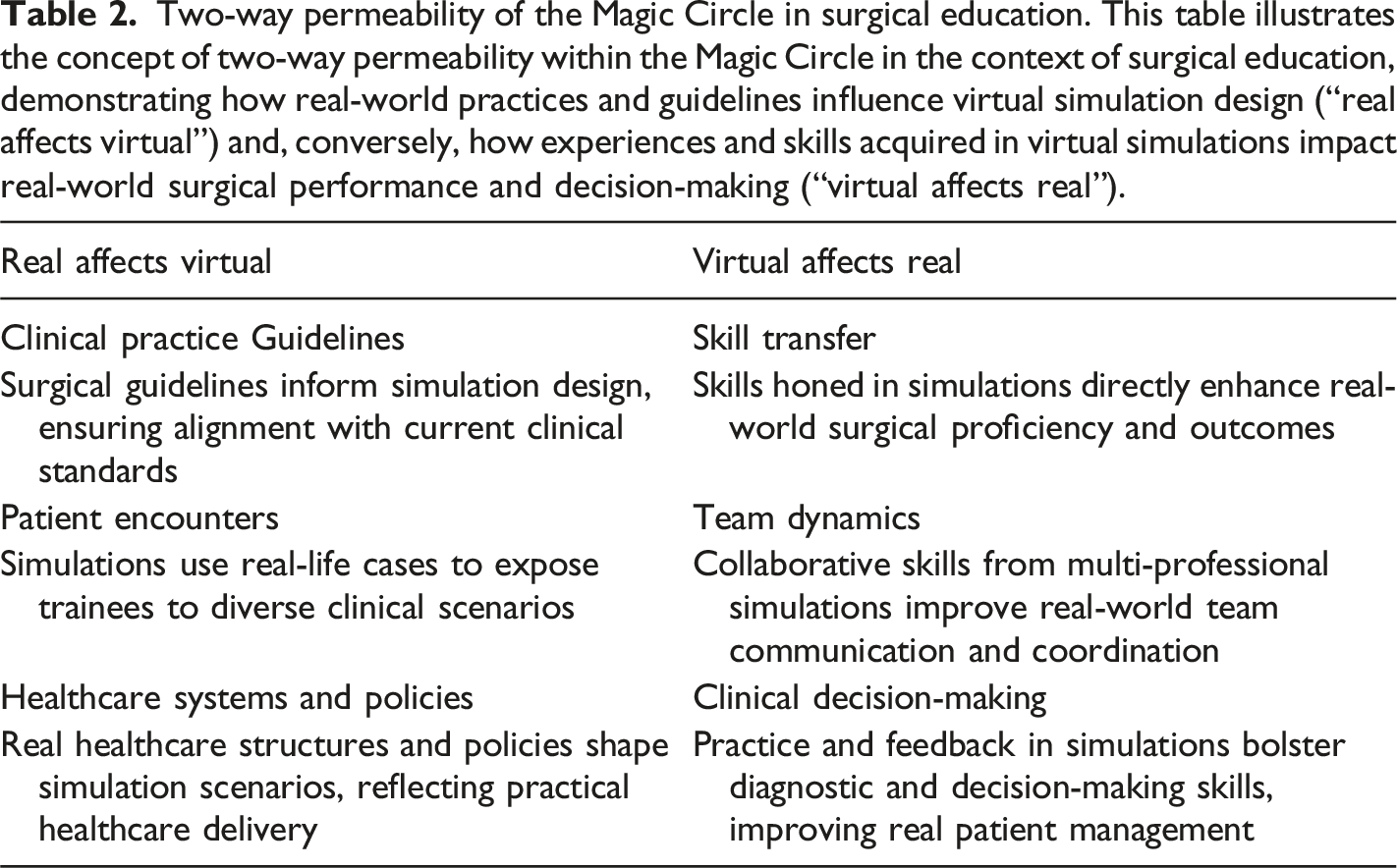
Real-world surgical guidelines, patient encounters, and healthcare systems and policies can directly inform the design of virtual simulation scenarios (Kononowicz et al., 2019). Conversely, the skills honed within these scenarios – from procedural techniques to team dynamics and clinical decision-making – can enhance performance in real operating theaters (Joyce et al., 2018; Nguyen, Elliott, Watson, & Dominguez, 2015; Seymour et al., 2002).
Optimizing Permeability Through Strategic Fidelity in Surgical Simulations
In the context of surgical simulations, the interplay between permeability and fidelity—both high and low—is critical in shaping the educational outcomes. Permeability refers to the dynamic flow of skills and knowledge between virtual environments and real-world surgical settings, influenced significantly by the fidelity, or realism, of the simulations.
High fidelity simulations enhance permeability by providing a realistic and comprehensive representation of surgical procedures. These simulations are detailed, including accurate anatomical models, physiological responses, and interactive elements that mimic the complexities of actual surgery. This level of detail ensures that the skills and decision-making capabilities developed within the virtual environment are directly applicable to the operating room, thereby enhancing the transferability of training.
However, low fidelity simulations also play a vital role in modulating permeability, particularly in the early stages of surgical training. While these simulations may lack the intricate details of high-fidelity environments, they are beneficial for foundational training, focusing on specific skills or procedural steps without the distraction of a fully immersive environment. This targeted approach allows learners to master basic skills in a stepwise fashion, which can be crucial for building confidence and competence before advancing to more complex scenarios. Additionally, low-fidelity simulations are often more accessible and less costly, allowing for more frequent and widespread use, which can increase the overall exposure to and repetition of certain surgical techniques.
Low fidelity can also enhance permeability by focusing on conceptual understanding and procedural knowledge, which are fundamental to surgical education. By simplifying the environment, trainees can concentrate on the core skills and theories without the added pressure of a high-stakes, realistic simulation. This can lead to a solid foundation of knowledge and skills, which can then be expanded upon as the learner progresses to high-fidelity simulations and eventually to real-world practice. The following strategies may prove useful in this regard: 1. Strategic use of low fidelity: Early in the training process, low fidelity can enhance learning by reducing complexity and focusing on essential skills. This strategic use helps build a strong base of knowledge and confidence, facilitating a smoother transition to more advanced training stages. 2. Progression to high fidelity: As trainees advance, incorporating high-fidelity simulations that provide realistic and challenging scenarios ensures that the skills and knowledge acquired are relevant and directly transferable to clinical practice. This progression is crucial for maximizing the permeability of learned skills into real-world settings. 3. Combining fidelity levels: An educational strategy that combines both low and high-fidelity simulations can optimize learning outcomes. Starting with low fidelity for basic skills training and gradually introducing high fidelity for complex, integrated scenarios can help ensure comprehensive training that covers both fundamental and advanced surgical competencies.
In summary, understanding and leveraging both high and low fidelity in surgical simulations are essential for enhancing the permeability of the Magic Circle. This dual approach ensures that surgical trainees develop a broad and deep skill set, appropriately paced and scaffolded to their learning needs, ultimately leading to better preparedness for actual surgical practice.
Implications for Surgical Training
The implications of the Magic Circle for surgical training extend from the foundational stages of medical education through to the nuanced complexities of specialist surgical practice. In undergraduate settings, the Magic Circle facilitates an initial engagement with surgical principles, providing a controlled environment where foundational skills can be developed without the immediate pressures and risks associated with actual surgical interventions. This early exposure is critical in cultivating a foundational understanding and confidence in surgical techniques, laying the groundwork for more advanced training.
As learners progress to postgraduate levels, the role of high-fidelity simulations becomes increasingly pronounced, offering scenarios that more accurately replicate the challenges and dynamics of real-world clinical environments. This progression not only aids in the refinement of technical skills but also in the development of critical non-technical skills such as decision-making, teamwork, and communication under pressure (Aggarwal, Black, Hance, Darzi, & Cheshire, 2006; Ohtake, Makiyama, Yamashita, Tatenuma, & Yao, 2021; Palter & Grantcharov, 2014). The ability of VR simulations to emulate complex patient interactions and surgical complications allows trainees to experience and navigate the multifaceted nature of surgical care, enhancing their preparedness for real-life clinical situations.
Moreover, the iterative nature of learning within the Magic Circle, characterized by the provision of instant feedback and the opportunity for repeated practice, supports a continuous learning cycle. This cycle facilitates the incremental improvement of skills and the deepening of clinical understanding, essential for the mastery of surgical competencies. The transition of skills from the virtual to the real environment is a testament to the permeability of the Magic Circle, illustrating its capacity to bridge the gap between theoretical knowledge and practical application.
Issenberg and colleagues highlight the crucial elements that make simulations effective educational tools (Barry Issenberg, McGaghie, Petrusa, Lee Gordon, & Scalese, 2009). They specifically point out that high-fidelity simulations provide immediate feedback and allow for repetitive practice – both key features of the Magic Circle in surgical education. This iterative process, where feedback is integrated into the learning cycle, enables learners to make continual adjustments and improvements in their skills. Moreover, Issenberg et al. stress that such simulations are designed to replicate clinical scenarios closely, thereby enhancing the transfer of skills from a simulated environment to real-world practice. This source effectively underpins the argument that the immersive and iterative nature of learning within the Magic Circle, characterized by high fidelity and the provision of immediate feedback, is critical for the deepening of clinical understanding and the mastery of surgical competencies.
Furthermore, the integration of VR simulations into surgical training programs underscores the importance of adaptive learning environments (Elendu et al., 2024; Howard, Iyengar, Vaishya, & Ahluwalia, 2023). Tailoring simulation scenarios to individual learning needs and progress levels ensures that each trainee's educational journey is optimized for maximum benefit, aligning simulation experiences with personal learning curves and specific educational goals (Mao et al., 2021).
Accordingly, the Magic Circle's application within surgical education represents a transformative approach to developing surgical competencies, from the acquisition of basic skills to the mastery of advanced techniques. By offering a scalable and adaptable framework for learning, it enables a seamless integration of theoretical knowledge with practical skills, preparing the next generation of surgeons for the challenges and advancements of modern surgical practice.
Critical Perspectives on the Magic Circle in Surgical Training
Integrating the Magic Circle concept into surgical training presents both significant advantages and notable challenges. While this concept creates a focused and safe environment for learning, it can inadvertently lead to a learning experience that is too detached from the complexities of actual surgical practice (Fried et al., 2005). For instance, an overemphasis on simulation fidelity may cultivate technical skills at the expense of developing critical soft skills such as communication, teamwork, and adaptability, which are indispensable in a real-world surgical setting (Bongers, Diederick van Hove, Stassen, Dankelman, & Schreuder, 2015). Moreover, simulations might not always capture the full spectrum of rare or unpredictable clinical scenarios, potentially leaving a gap in a surgeon’s preparedness for unusual or complex cases (Deban et al., 2023). Therefore, it is essential to maintain a careful balance in surgical education, ensuring that the immersive environments of the Magic Circle are complemented by opportunities to apply and test these skills in varied and uncontrolled real-world conditions. This approach will help in crafting a more rounded educational experience that prepares trainees not only technically but also holistically for the demands of modern surgical practice.
Ethical Considerations
Within the domain of immersive surgical simulations, ethical considerations warrant meticulous examination, encompassing not merely the representation of patient avatars and the simulation of high-risk procedures but also delving into privacy concerns, the psychological impact on trainees, and the ethical frameworks guiding the design and implementation of virtual simulations (Parsons, 2021; Slater et al., 2020). As the fidelity and complexity of these simulations increase, they engage with ethical dimensions that transcend technical capabilities, demanding judicious scrutiny and governance.
Privacy concerns emerge prominently as simulations incorporate increasingly detailed patient scenarios (Sun, He, & Li, 2023). The imperative to achieve realism must be balanced against the imperative to safeguard patient confidentiality, necessitating a robust anonymization of patient data utilized in simulations. Beyond anonymization, ethical considerations also encompass the necessity of a transparent consent process regarding the use of de-identified patient scenarios for educational purposes, underscoring the need for ethical oversight by review boards (Cumyn et al., 2019).
The psychological impact on trainees participating in these immersive environments also constitutes a significant ethical concern. The verisimilitude of virtual simulations, especially those depicting traumatic or critical medical situations, poses a risk of engendering stress or psychological discomfort among learners (Laine, Rastas, Seitamaa, Hakkarainen, & Korhonen, 2024). This underscores the importance of integrating psychological support and structured debriefing into simulation-based education to address and mitigate potential adverse effects on trainee well-being. Additionally, the potential for desensitization to patient suffering or the trivialization of medical errors within the virtual environment warrants careful attention and mitigation.
Consequently, the formulation of ethical guidelines for the creation and application of virtual simulations requires a nuanced approach (Ziv, Wolpe, Small, & Glick, 2003). Such guidelines should address the safeguarding of patient privacy, the maintenance of patient dignity, and the mental health of trainees. They must be adaptable, evolving in response to technological advancements to preemptively address emerging ethical challenges. The establishment of multidisciplinary ethics committees, comprising ethicists, educators, clinicians, and legal experts, is advocated to ensure comprehensive oversight of these ethical dimensions.
In summary, the advancement of surgical education through virtual reality necessitates parallel progress in ethical considerations. It is imperative that the pursuit of educational advancement through simulation technology is continuously aligned with stringent ethical standards, ensuring that the drive towards technological innovation is matched by an unwavering commitment to ethical integrity.
Future Research Directions
Future research on the Magic Circle framework in surgical training should focus on enhancing the integration of non-technical skills within this structured learning environment. While the framework effectively develops technical proficiency through high-fidelity simulations, there is a need to incorporate scenarios that also foster critical skills such as communication, teamwork, and leadership. Designing simulations that require collaborative problem-solving and interdisciplinary decision-making can better reflect the complex dynamics of real surgical practice, thus providing a more comprehensive training experience. Additionally, optimizing feedback mechanisms within the Magic Circle by employing sophisticated, real-time systems utilizing artificial intelligence could offer trainees personalized, actionable insights, enhancing the continuous improvement of their skills.
Moreover, research should prioritize the scalability and accessibility of the Magic Circle framework. Investigating cost-effective solutions while maintaining high fidelity can expand the availability of these advanced training environments. Hybrid models that integrate virtual and augmented reality could provide immersive yet affordable training options. Longitudinal studies are also crucial to assess the long-term retention and transferability of skills developed within the Magic Circle, offering insights into the framework's impact on actual surgical outcomes. Furthermore, exploring the adaptability of the Magic Circle for remote and distributed learning environments can bridge geographic and logistical gaps, facilitating continuous and flexible learning opportunities. Concentrating on these areas will significantly advance the application and utility of the Magic Circle framework in surgical training, ensuring it remains a vital tool for developing proficient and well-rounded surgeons.
Practical Tips for Simulation Trainers on Utilizing the Magic Circle Concept
To effectively incorporate the Magic Circle concept into surgical training simulations, trainers should consider the following practical tips: 1. Balance realism and relevance: Ensure that simulations are high in fidelity, accurately reflecting real-world surgical environments and procedures. Tailor these simulations to match the trainees' current skill levels and learning objectives, progressively increasing complexity to align with their development. 2. Integrate reflective practices: Incorporate structured debriefing sessions after each simulation exercise. Encourage trainees to reflect on their performance, discuss what went well, identify areas for improvement, and apply these insights to future practice. 3. Encourage realistic scenarios: Design simulations to include a variety of clinical scenarios, from common to rare and complex cases. This variety will help trainees build a broad skill set and prepare for unexpected challenges in real surgical settings. 4. Avoid negative transfer: Be mindful of creating simulations that foster behaviors beneficial in virtual settings but detrimental in real life. Continuously evaluate and adjust scenarios to ensure they promote best practices that are transferable to actual surgical environments. 5. Foster non-technical skills: While focusing on technical proficiency, ensure that simulations also address critical non-technical skills such as communication, teamwork, and decision-making under pressure. Incorporate scenarios that require trainees to collaborate and solve problems collectively. 6. Utilize mixed fidelity approaches: Use a combination of low and high-fidelity simulations to cover different aspects of surgical training. Low-fidelity simulations can be effective for basic skill acquisition and procedural knowledge, while high-fidelity simulations are essential for complex, integrated scenarios. 7. Align with clinical guidelines: Design simulations based on current surgical guidelines and best practices. This alignment ensures that the training is up-to-date and relevant, enhancing the transfer of knowledge and skills to clinical practice. 8. Promote continuous learning: Encourage trainees to engage in repeated practice and continuous improvement. Use the Magic Circle as a safe space for iterative learning, where mistakes are viewed as learning opportunities without real-world consequences.
By applying these tips, simulation trainers can effectively leverage the Magic Circle concept to create immersive, impactful, and comprehensive surgical training programs that bridge the gap between theoretical knowledge and practical application.
Conclusion
While the Magic Circle may initially appear to be merely a virtual environment concept, it is fundamentally distinct due to its structured approach to creating an immersive, rule-bound space that facilitates both technical and non-technical skill development. Unlike typical virtual environments, the Magic Circle integrates high-fidelity simulations with critical pedagogical practices such as tailored training, real-time feedback, and reflective debriefing sessions. This comprehensive framework not only replicates realistic surgical scenarios but also emphasizes the iterative learning process and ethical considerations, ensuring that trainees develop a well-rounded set of skills that are directly transferable to real-world clinical settings.
The Magic Circle concept offers valuable insights for the design and implementation of simulation-based surgical education. As the landscape of surgical training continues to evolve, the role of virtual worlds and the permeable boundaries between the real and the simulated will become increasingly vital. By leveraging a deeper understanding of the Magic Circle and its permeable boundaries, surgical educators can better prepare future surgeons for the intricacies and challenges of surgical practice.
Footnotes
Author’s Contribution
All authors contributed substantially to the present work, meeting the ICMJE criteria for authorship. They have reviewed and approved the final version of the manuscript and agreed to be accountable for its content.
Declaration of Conflicting Interests
The author(s) declared no potential conflicts of interest with respect to the research, authorship, and/or publication of this article.
Funding
The author(s) received no financial support for the research, authorship, and/or publication of this article.
Ethical Statement

Data Availability Statement
All data generated or analyzed during this study are included in this published article. No additional data are available.