




Abstract
Background
Fantasy sports are a rapidly growing complement to the sports industry and recent research has explored the
Aim
This study aimed to test the findings from two such studies (Wilkins et al., 2021; Wilkins et al., 2023).
Methods
Questionnaire data measuring depression, anxiety, stress, positive mood, negative mood, problematic behaviour, and functional impairment from 635 fantasy football players were analysed using one-way ANOVAs.
Results
Amongst the significant results were the findings that: i) more experienced players reported less anxiety than less experienced players, and ii) players who engaged more with the game, made more
Conclusion
Engagement levels play an important role in determining the wellbeing experience of fantasy football participants. These findings also lend support to the ‘
Keywords
Introduction
The intersection of sports fandom and mental health has been a subject of growing interest in recent years (Su et al., 2022). Researchers have explored the emotional and psychosocial connections that individuals develop with their favourite teams or athletes, shedding light on the deep-seated identities and communities that often emerge within fan cultures (Katz et al., 2019). As technological advancements continue to redefine the ways in which individuals engage with sports, the emergence of fantasy sports introduces a new dimension to these discussions. This study focuses specifically on the impact of participating in fantasy football (“soccer” in some parts of the world) on individuals' mental health, aiming to uncover the potential effects of this novel form of sports engagement.
Fantasy football (FF) involves participants creating virtual teams comprised of real-world soccer players and competing based on these players' actual performances in live matches. Participants make decisions regarding player selection, formations, and tactical choices, imbuing the experience with an interactive and strategic element that extends beyond mere spectatorship. Alongside this, there are often financial and social comparison aspects to the game, with many individuals playing for money or for a desire to compete with and outperform others. This level of engagement raises questions about the emotional investment, stress, and satisfaction that participants experience as they navigate the highs and lows of their fantasy teams' performances.
While existing research has investigated the broader effects of sports fandom on mental well-being (e.g., Wann et al., 2017), less attention has been directed towards the specific impact of FF engagement. One of the only studies to date exploring FF and user experience is the work by Columb et al. (2020). In this study, 684 participants completed a questionnaire concerning FF characteristics, internet use, and a screening instrument for internet addiction. The authors found that between 17.5% and 24.9% of individuals in the cohort reported internet addiction, which is on the higher end of expected internet addiction. Given the research associating internet addiction with negative mental health, this may provide initial evidence of the potential negative affect of FF on mental health.
Building on the work by Columb et al. (2020), two studies have been produced by Wilkins and colleagues in recent years; the first taking a quantitative approach to explore the topic (Wilkins et al., 2021) and the second taking a qualitative approach (Wilkins et al., 2023). In the first of these, 1,995 FF players completed a survey measuring their low mood, anxiety, everyday functional impairment, and problematic behaviour in relation to the game. Whilst the majority of players did not report experiencing these mental health concerns, prevalence rates were still meaningful for what is designed to be a form of entertainment, with 25% experiencing at least mild levels of low mood, 20% experiencing at least mild levels of anxiety, and 14% experiencing at least some functional impairment because of the game. More noteworthy were the group differences that were found. First, those with low experience playing FF reported significantly more low mood and anxiety compared to those with high experience. Second, those who played in six or more FF leagues reported significantly more low mood, anxiety, functional impairment, and problematic behaviour than those who played in fewer leagues. Third, those with higher engagement (as measured by time spent playing, researching, or thinking about FF) reported significantly more low mood, anxiety, functional impairment, and problematic behaviour than those with lower engagement.
These findings present a perhaps alarming picture of FF participation; however, it is important to acknowledge some caveats with the study. Data was collected in the spring of 2021, during the global COVID-19 pandemic, and therefore player responses may have been skewed more negatively than usual (Wilkins et al., 2021). The study also did not present data exploring the potential positives of FF participation. It is conceivable that whilst the game may indeed have a negative impact for some individuals, this could be balanced out or even superseded by potential positives of the game. Finally, the study utilised the General Anxiety Disorder-7 (GAD-7) and Patient Health Questionnaire-9 (PAQ-9) to measure low mood and anxiety, respectively, yet these may not be the best questionnaires to differentiate between these two similar but conceptually distinct emotions (indeed, Wilkins et al., 2021, reported a very high correlation of .79 between the two). Addressing these points may provide a different and/or more nuanced picture from which to view FF participation, or alternatively, may provide support for the work of Wilkins and colleagues (2021).
The qualitative paper by Wilkins et al. (2023) involved the interviewing of 15 experienced FF players about their overall experiences playing the game; specifically, the perceived positives, perceived negatives, and potential solutions to improve the experience. Thematic analysis of the data identified four meta-themes (‘Potential Positives’, ‘Potential Negatives’, ‘Mediating Factors’, and ‘Future Game Play’), the second of which included sub-themes such as ‘Anxiety-provoking’, ‘Addictive’, ‘Impacts on Mood’, ‘Disappointment and Regret’, and ‘Impinging on Life’ that supported their earlier quantitative work. Based on these findings, the authors also proposed the ‘Framework of Hypothesised Factors Leading to Predominantly Positive or Negative Experiences in FF’ (FFLPNE; see Figure 1 below). This framework highlights eight mediating factors, which can be considered as three categories: 1) engagement levels (‘able to maintain a healthy emotional balance’, ‘time invested does not impinge on other aspects of life’, and ‘not excessive online involvement’), 2) social comparisons (‘successful performance’, ‘acceptance of the rollercoaster ride’, and ‘doesn’t see success as a reflection on football acumen’), and 3) financial involvement (‘if anything, seen as a positive alternative or addition to gambling’). Taking this perspective, one would hypothesise that lower levels of engagement, reduced prioritisation of social comparison factors, and less financial involvement would lead to more positive experiences of FF, which would in turn be reflected by lower levels of reported mental health concerns (i.e., depression, anxiety, stress, etc.) and higher levels of positive mood. The present study aims to test this. Wilkins et al.’s (2023) Framework of Hypothesised Factors Leading to Predominantly Positive or Negative Experiences in FF.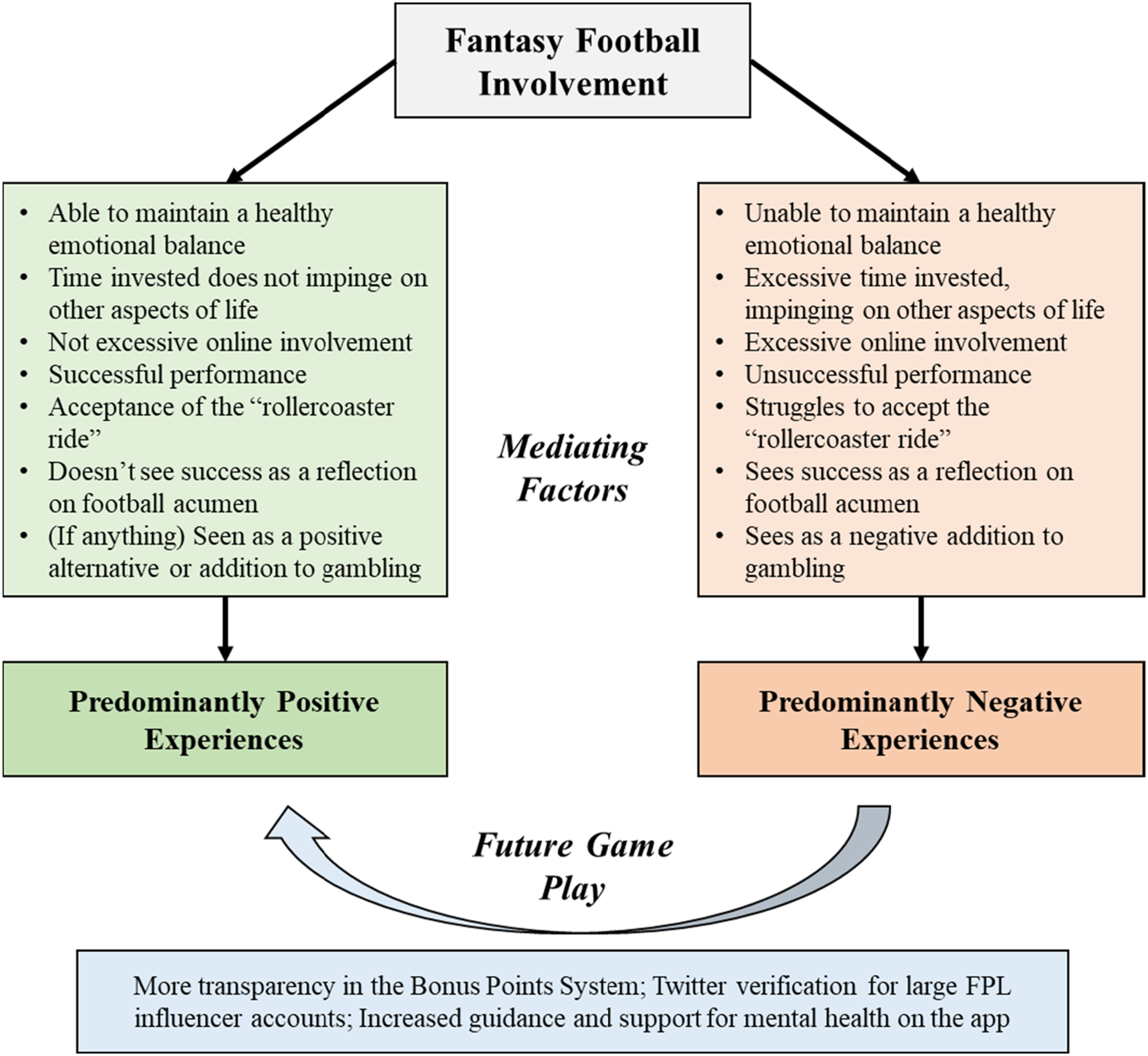
The idea that financial involvement could be a key driver in the experiences of FF players has considerable support from research on other fantasy sports. A wealth of studies have linked gambling and involvement in fantasy versions of that sport, such as fantasy American football (e.g., Dwyer et al., 2018), fantasy baseball (e.g., Dwyer et al., 2011), fantasy cricket (e.g., Rai et al., 2023), and fantasy sports generally (e.g., Martin et al., 2016). Wilkins et al.’s (2023) framework, however, may be the first to propose a potential positive connection between fantasy sports participation and financial involvement, thus necessitating further examination. The idea of social comparison being influential has less support, though a very much related concept – that of competition – does appear regularly in the fantasy sports literature. Indeed, in their systematic review of motivations for participation, Martin et al. (2020) listed competition as one of the four most often reported reasons for why individuals play fantasy sports. Furthermore, there are several studies which have associated engagement levels in fantasy sports with gambling behaviour. For example, Martin et al. (2018) explored the fantasy sports engagement and gambling-related behaviours of 941 college students at three US institutions. Firstly, the authors found that those engaging in fantasy sports and those paying to enter were more likely to gamble than those that did not engage in fantasy sports. Furthermore, those that participated in the daily fantasy sports format (more regular engagement than traditional fantasy sports formats) endorsed more of the DSM-5 (Diagnostic and Statistical Manual of Mental Disorders, 5th ed.) gambling disorder criteria than those who did not. They suggest that engaging in fantasy sports could be a form of gambling for some individuals, especially if it is frequent and requires paid entry. Therefore, whilst there is some research exploring the role of engagement levels in fantasy sports with gambling behaviour, little research exists which explores how engagement with the games directly impact the positive or negative experiences of participation (outside that of Wilkins et al., 2021, discussed earlier). Thus, whilst the FFLPNE is based upon empirical data and sound reasoning, more work is needed to corroborate it.
The present study has two aims. First, we want to semi-replicate Wilkins et al.’s (2021) quantitative work by re-examining FF participants’ reported anxiety, depression, functional impairment, and problematic gaming with the inclusion of a positive mood measurement and using a questionnaire that has been found to clearly discriminate between anxiety and depression (Lovibond & Lovibond, 1995). We also want to do this outside of a global pandemic, which may have produced non-normal results. Second, by including additional measures of FF behaviour, we want to test the validity of Wilkins et al.’s (2023) FFLPNE.
Mental health will be measured using six negative mental health variables (depression, anxiety, stress, negative mood, problematic behaviour, and functional impairment) and one positive variable (positive mood). FF experience and behaviour will be measured using five variables (years of experience, number of leagues competing in, engagement level, number of social comparisons made, and extent of financial involvement). The hypotheses below are framed within these five FF experience and behaviour variables: 1. FF Experience: the low experience group will have significantly higher depression, anxiety, stress, and negative mood scores than the high experience group. There will be no group differences in positive mood, problematic behaviour, or functional impairment. 2. FF Leagues: the most leagues group will have significantly higher scores on all negative mental health variables and significantly higher scores on positive mood compared to the fewest leagues group. 3. Engagement Levels: the highest engagement group will have significantly higher scores on all negative mental health variables and significantly higher scores on positive mood compared to the lowest engagement group. 4. Social Comparisons: the highest social comparisons group will have significantly higher scores on all negative mental health variables and significantly higher scores on positive mood compared to the lowest social comparisons group. This will apply to both measures of social comparisons (team comparisons and rank checks). 5. Financial Involvement: the highest financial involvement group will have significantly higher scores on all negative mental health variables and significantly higher scores on positive mood compared to the lowest financial involvement group.
Hypotheses one, two and three address the first aim of the study (re-examining Wilkins et al., 2021), whilst hypotheses three, four, and five address the second aim of the study (testing Wilkins et al.’s, 2023, FFLPNE). Our findings should help to optimise the experiences of FF participants, which is of increasing importance given the continued growth of the game (Wilkins, 2023).
Methods
Participants
1,794 individuals clicked on the study link and started completing the questionnaire. Of these individuals, 1,159 were subsequently removed for either not completing 90% of the questionnaire or for reporting their age to be under the required criteria of 18 years. Therefore, the following data analyses were carried out on the remaining 635 individuals. Of these, 610 (96%) identified as male, while the remaining 25 (4%) identified as female. The mean age of the participants was 34.51 (SD=12.21) with a range of 18-75. Ethical approval for the study was provided by the last author’s academic institute (reference ID: UWL/REC/PSW01367, 30/07/2022).
Procedure
The study was advertised via social media and through two well-known FF websites between 23/08/2022 and 15/11/2022. A link was provided in the advertisement that led directly to the study. After clicking on the study link, participants were presented with an information sheet and consent form. As part of the consent process, participants were asked to confirm that they were an active Fantasy Premier League (FPL) player. This requirement was included to ensure that all participants were active FF players, and that all participants shared the experience of playing at least one specific FF game collectively. FPL is a version of FF specific to the English Premier League and is considered the most popular in the world, with over 11 million players during the 2022-2023 season (Fantasy Premier League, n.d.). Participants were then asked basic demographic questions before being asked to complete the measures described below. After completing the measures, participants were presented with a debriefing form, which thanked them for their participation in the study.
Measures
Several measures used in the current study were taken directly from, or slightly modified from, the measures used by Wilkins et al. (2021). The other measures described below, that were not used by Wilkins et al. (2021), were created specifically for use in the current study. Rather than create custom questionnaires to measure mental health and mood as they are related to FF, Wilkins et al. (2021) instead modified well validated and reliable pre-existing measures of these variables from domains such as clinical psychology. They did so by amending the wording of these measures so that they directly addressed FF. We took the same approach in creating the two measures of mental health and mood used in the current paper which were not used by Wilkins et al. (2021). These modifications were essential in ensuring alignment with our study objectives and deemed necessary to enhance clarity and relevance of the items for the participants, whilst preserving the core constructs. These alterations were kept minimal to maintain the integrity of the instruments.
FF Experience and Behaviour
Classification of FF experience and behaviour groups.
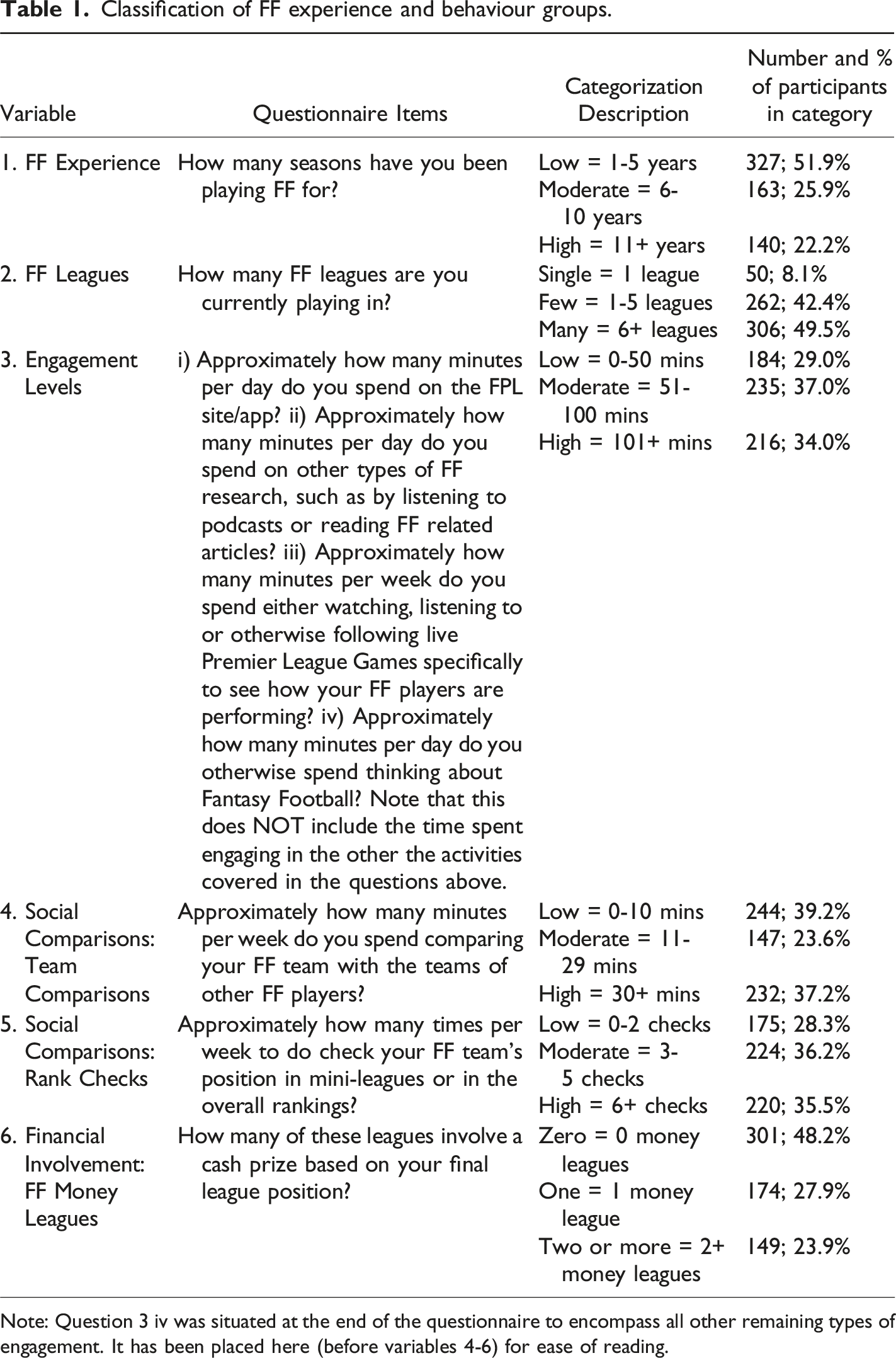
Note: Question 3 iv was situated at the end of the questionnaire to encompass all other remaining types of engagement. It has been placed here (before variables 4-6) for ease of reading.
Depression, Anxiety and Stress Scale–21 (DASS-21)
A modified version of the DASS-21 (Lovibond & Lovibond, 1995) was used to measure the distinctive conditions of depression and anxiety. This questionnaire also measures stress, which could conceivably be experienced by FF players and therefore does not warrant excluding. The DASS-21 is composed of 21 items and produces three sub-scales, the depression subscale (DASS-D), the anxiety subscale (DASS-A) and the stress subscale (DASS-S). In the modified version of the DASS-21 used in the current study, each subscale comprises of seven items that are scored from 0 (‘did not apply to me at all’) to 3 (‘applied to me very much, or most of the time’), with participants asked to choose how much each item applied to them over the previous two weeks. Means for each of the three sub-scales were calculated, with higher scores reflective of higher levels of depression, anxiety, or stress in relation to FF. To ensure relevance to FF, the wording of the items was amended. For most items, this amendment simply involved including the words “fantasy football” and stating that this was the cause of the symptom of depression, anxiety, or stress described in the item. For example, in the original DASS-21, the first item in the questionnaire used to measure stress is phrased “I found it hard to wind down”, while in the modified DASS-21 used in the current study this item was phrased as “Fantasy football has made it hard for me to wind down”. In the current study, the reliability of the modified DASS-D (α=.85), DASS-A (α=.78) and DASS-S (α=.87) subscales were acceptable to good.
The Positive and Negative Affect Schedule (PANAS)
A modified version of the PANAS (Watson et al., 1988) was used to measure general positive mood and general negative mood in relation to FF. The PANAS is composed of 20 items and produces two sub-scales, positive mood (PANAS-P) and negative mood (PANAS-N). In the modified version of the PANAS used in the current study, each subscale comprises of 10 items that are scored from 1 (‘very slightly/not at all’) to 5 (‘often’), with participants asked to rate how much FF had caused them to feel the emotion referred to in each item. Means for each of the two sub-scales were calculated, with higher scores reflective of higher levels of positive mood or negative mood, respectively, in relation to FF. To ensure relevance to FF, the wording of the items was amended. For all items, this amendment simply involved including the words “fantasy football” and stating that this was the cause of the specific positive mood, or negative mood, referred to within the item. An example of a positive mood item used in the modified PANAS used in the current study is, “How often has fantasy football caused you to feel excited?”, while an example of a negative mood item is “How often has fantasy football caused you to feel upset?”. In the current study, the reliability of both the modified PANAS-P (α=.88) and PANAS-N (α=.89) subscales were good.
Problematic Online Gaming Questionnaire Short-Form (POGQ-S)
Wilkins et al. (2021) used a modified version of the POGQ-S (Demetrovics et al., 2012) to measure problematic FF behaviour across six dimensions: preoccupation, immersion, withdrawal, overuse, interpersonal conflicts, and social isolation. Wilkins et al’s (2021) modified version of the POGQ-S was employed in the current study. The modified version of POGQ-S comprises of 13 items that are scored from 1 (‘never’) to 5 (‘always’), with participants asked to rate how often they experience certain emotions, thoughts, or experiences due to FF. An example item is, “How often do you argue with your parents and/or partner because of Fantasy Football?”. The mean score of all items in the questionnaire was calculated, with higher scores reflective of higher levels of problematic FF behaviour. In the current study, the reliability the modified version of the POGQ-S (α=.88) was good.
Work and Social Adjustment Scale (WSAS)
Wilkins et al. (2021) used a modified version of the WSAS (Marks, 1986) to measure everyday functional impairment due to FF, and the same measure was employed in the current study. The modified version of WSAS comprises of five items that are scored from 0 (‘not at all’) to 8 (‘very severely’), with participants asked to rate to what extent FF effects the individual’s ability to function across five domains: work activities, home management, social leisure activities, private leisure activities, and relationships. An example item is, “Because of Fantasy Football my ability to work is impaired”. The mean score of all items in the questionnaire was calculated, with higher scores reflective of higher levels of functional impairment due to FF. In the current study, the reliability of the modified version of the WSAS (α=.85) was good.
Data Analysis
Data were analysed using SPSS version 28. First, the correlations between all six FF experience/behaviour variables measured in the current study with all seven mood and mental health variables were calculated and observed. Pearson’s correlation analysis was performed, and two-tailed significance was specified. Where an FF experience/behaviour variable was found to correlate significantly with either a mood or mental health variable, a one-way ANOVA was performed, where the FF experience/behaviour variable was specified as the independent variable, and where the mood or mental health variable was specified as the dependent variable. The levels of the relevant independent variable are the groupings specified in relation to the independent variable in Table 1. Where a significant main effect was found, Bonferroni post-hoc tests were performed to examine potential group differences. A significance value of p<.05 was used throughout.
Results
Correlations between FF experience and behaviour, mental health and mood variables.
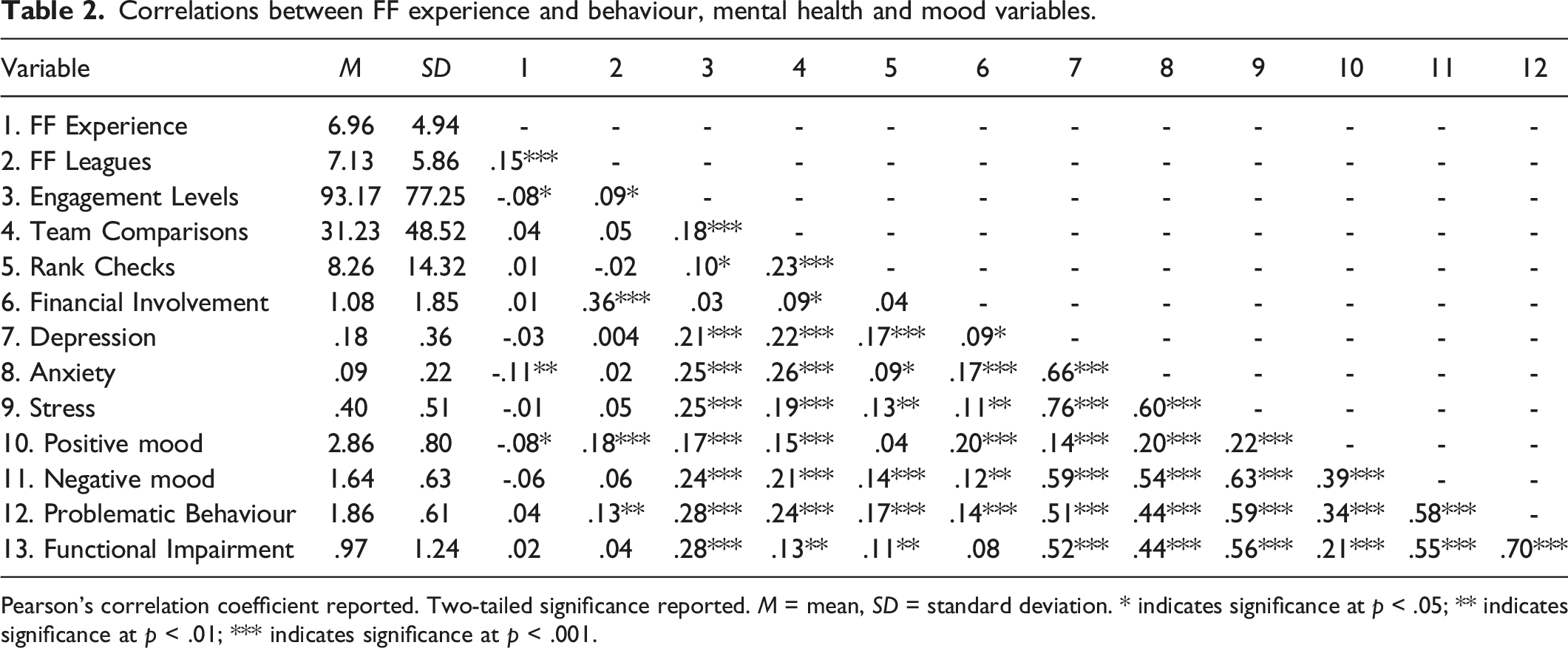
Pearson’s correlation coefficient reported. Two-tailed significance reported. M = mean, SD = standard deviation. * indicates significance at p < .05; ** indicates significance at p < .01; *** indicates significance at p < .001.
Means (and standard deviations) for mental health and mood variables for each FF experience/behaviour group.
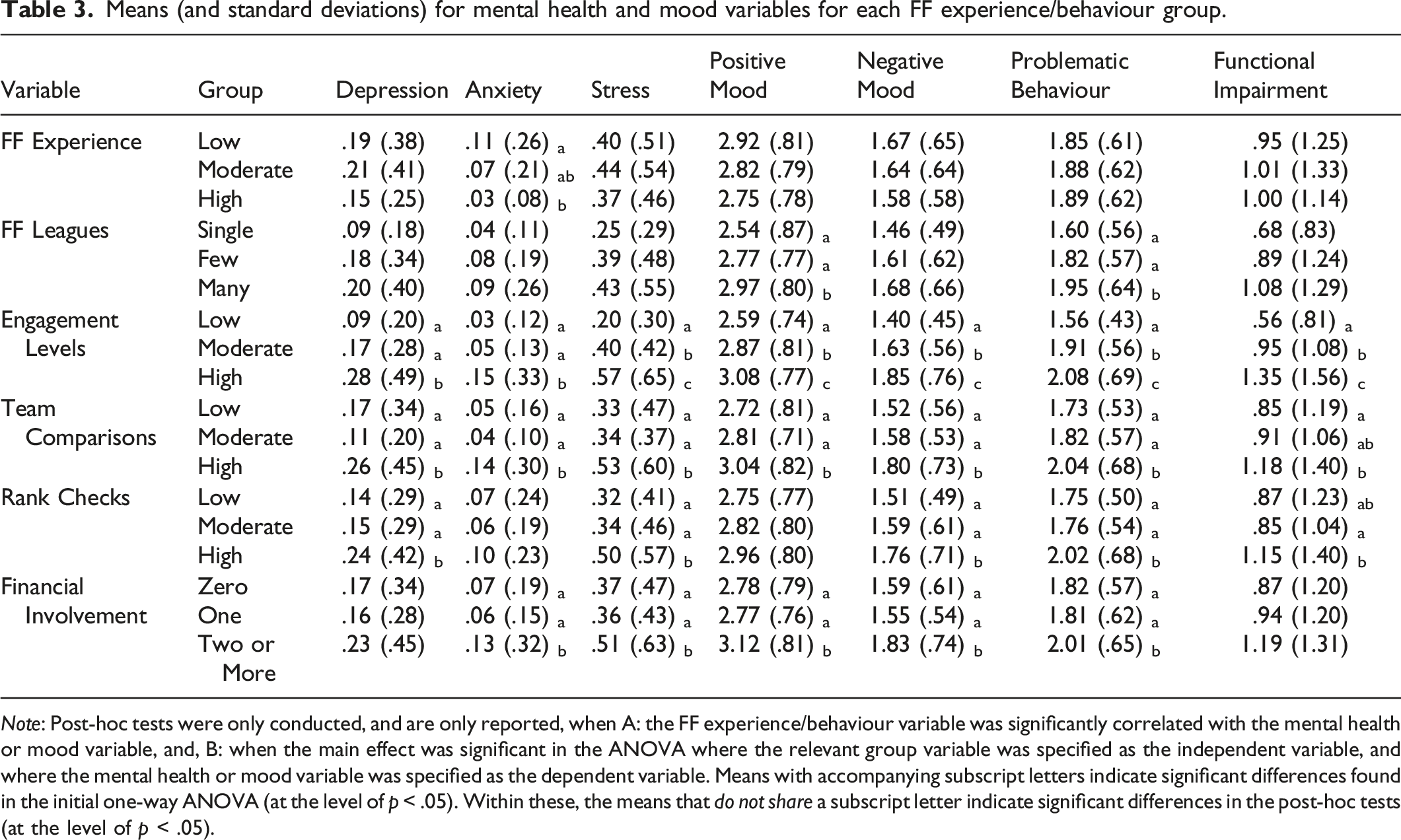
Note: Post-hoc tests were only conducted, and are only reported, when A: the FF experience/behaviour variable was significantly correlated with the mental health or mood variable, and, B: when the main effect was significant in the ANOVA where the relevant group variable was specified as the independent variable, and where the mental health or mood variable was specified as the dependent variable. Means with accompanying subscript letters indicate significant differences found in the initial one-way ANOVA (at the level of p < .05). Within these, the means that do not share a subscript letter indicate significant differences in the post-hoc tests (at the level of p < .05).
FF Experience
FF Experience was significantly negatively correlated with two mental health/mood variables: anxiety and positive mood. There were significant group differences in anxiety (F[2,627]=5.36, p=.005, η2=.02) for FF Experience but not for positive mood (F[2,627]=2.44 , p=.09, η2=.01).
Post-hoc analysis revealed that the low experience group reported significantly more anxiety than the high experience group (p=.004) and that neither group differed significantly from the moderate experience group.
FF Leagues
FF Leagues was significantly positively correlated with two mental health/mood variables: positive mood and problematic behaviour. There were significant group differences in positive mood (F[2,615]=8.52 , p<.001, η2=.03) and problematic behaviour (F[2,615]=8.20, p<.001, η2=03) for FF Leagues.
In relation to positive mood, those in many leagues reported significantly more positive mood than those in few leagues (p=.01) and those in one league (p=.001). In relation to problematic behaviour, those in many leagues reported significantly more problematic behaviour than those in few leagues (p=.04) and those in one league (p<.001).
Engagement Levels
Engagement Levels was significantly positively correlated with every mental health/mood variable measured in the current study. There were significant group differences in depression (F[2,632]=15.32, p<.001, η2=.05), anxiety (F[2,632]=18.97, p<.001, η2=.06), stress (F[2,632]=27.74, p<.001, η2=.08), positive mood (F[2,632]=19.69, p<.001, η2=.06), negative mood (F[2,632]=27.47, p<.001, η2=.08), problematic behaviour (F[2,632]=40.71, p<.001, η2=.11), and functional impairment (F[2,630]=21.77, p<.001, η2=.07) for Engagement Levels.
In relation to depression, the high group reported significantly more depression than the moderate group (p=.003) and the low group (p<.001). Additionally, the moderate group was on the borderline of reporting significantly more depression than the low group (p=.05). In relation to anxiety, the high group reported significantly more anxiety than the moderate group and the low group (p<.001). In relation to stress, the high group reported significantly more stress than the moderate group (p=.001) and the low group (p<.001). Additionally, the moderate group reported significantly more stress than the low group (p<.001). In relation to positive mood, the high group reported significantly more positive mood than the moderate group (p=.01) and the low group (p<.001). Additionally, the moderate group reported significantly more positive mood than the low group (p<.001). In relation to negative mood, the high group reported significantly more negative mood than the moderate group (p<.001) and the low group (p<.001). Additionally, the moderate group reported significantly more negative mood than the low group (p<.001). In relation to problematic behaviour, the high group reported significantly more problematic behaviour than the moderate group (p=.005) and the low group (p<.001). Additionally, the moderate group reported significantly more problematic behaviour than the low group (p<.001). In relation to functional impairment, the high group reported significantly more functional impairment than the moderate group (p=.001) and the low group (p<.001). Additionally, the moderate group reported significantly more functional impairment than the low group (p=.003).
Social Comparisons: Team Comparisons
Team Comparisons was significantly positively correlated with every mental health/mood variable measured in the current study. There were significant group differences in depression (F[2,620]=7.97, p<.001, η2=.03), anxiety (F[2,620]=12.04, p<.001, η2=.04), stress (F[2,620]=12.14, p<.001, η2=.04), positive mood (F[2,620]=10.20, p<.001, η2=.03), negative mood (F[2,620]=12.07, p<.001, η2=.04), problematic behaviour (F[2,620]=15.85, p<.001, η2=.05), and functional impairment (F[2,618]=4.41, p=.01, η2=.01) for Team Comparisons.
In relation to depression, the high group reported significantly more depression than the moderate group (p<.001) and the low group (p=.02). In relation to anxiety, the high group reported significantly more anxiety than the moderate group (p<.001) and the low group (p<.001). In relation to stress, the high group reported significantly more stress than the moderate group (p<.001) and the low group (p<.001). In relation to positive mood, the high group reported significantly more positive mood than the moderate group (p=.02) and the low group (p<.001). In relation to negative mood, the high group reported significantly more negative mood than the moderate group (p=.004) and the low group (p<.001). In relation to problematic behaviour, the high group reported significantly more problematic behaviour than the moderate group (p=.002) and the low group (p<.001). In relation to functional impairment, the high group reported significantly more functional impairment than the low group (p=.01) but not the moderate group.
Social Comparisons: Rank Checks
Rank Checks was significantly positively correlated with every mental health/mood variable measured in the current study apart from positive mood. There were significant group differences in depression (F[2,616]=5.62, p=.004, η2=.02), stress (F[2,616]=8.93, p<.001, η2=.03), negative mood (F[2,616]=8.45, p<.001, η2=.03), problematic behaviour (F[2,616]=14.46, p<.001, η2=.05) and functional impairment (F[2,614]=3.81, p=.02, η2=.01) for Rank Checks but not for anxiety (F[2,616]=1.99, p=.14, η2=.01).
In relation to depression, the high group reported significantly more depression than the moderate group (p=.01) and the low group (p=.01). In relation to stress, the high group reported significantly more stress than the moderate group (p=.002) and the low group (p<.001). In relation to negative mood, the high group reported significantly more negative mood than the moderate group (p=.02) and the low group (p<.001). In relation to problematic behaviour, the high group reported significantly more problematic behaviour than the moderate group (p<.001) and the low group (p<.001). In relation to functional impairment, the high group reported significantly more functional impairment than the moderate group (p=.04) but not the low group.
Financial Involvement
Financial Involvement was significantly positively correlated with every mental health/mood variable measured in the current study apart from functional impairment. There were significant group differences in anxiety (F[2,621]=5.67, p=.004, η2=.02), stress (F[2,621]=4.98, p=.007, η2=.02), positive mood (F[2,621]=10.90, p<.001, η2=.03), negative mood (F[2,621]=9.56, p<.001, η2=.03), and problematic behaviour (F[2,621]=6.10, p=.002, η2=.02) for Financial Involvement but not for depression (F[2,621]=1.84, p=.16, η2=.01).
In relation to anxiety, those in two or more money leagues reported significantly more anxiety than those in one money league (p=.01) and those in zero money leagues (p=.007). In relation to stress, those in two or more money leagues reported significantly more stress than those in one money league (p=.02) and those in zero money leagues (p=.01). In relation to positive mood, those in two or more money leagues reported significantly more positive mood than those in one money league (p<.001) and those in zero money leagues (p<.001). In relation to negative mood, those in two or more money leagues reported significantly more positive mood than those in one money league (p<.001) and those in zero money leagues (p<.001). In relation to problematic behaviour, those in two or more money leagues reported significantly more problematic behaviour than those in one money league (p=.009) and those in zero money leagues (p=.004).
Summary of Hypotheses (blue) and Results (orange/green).
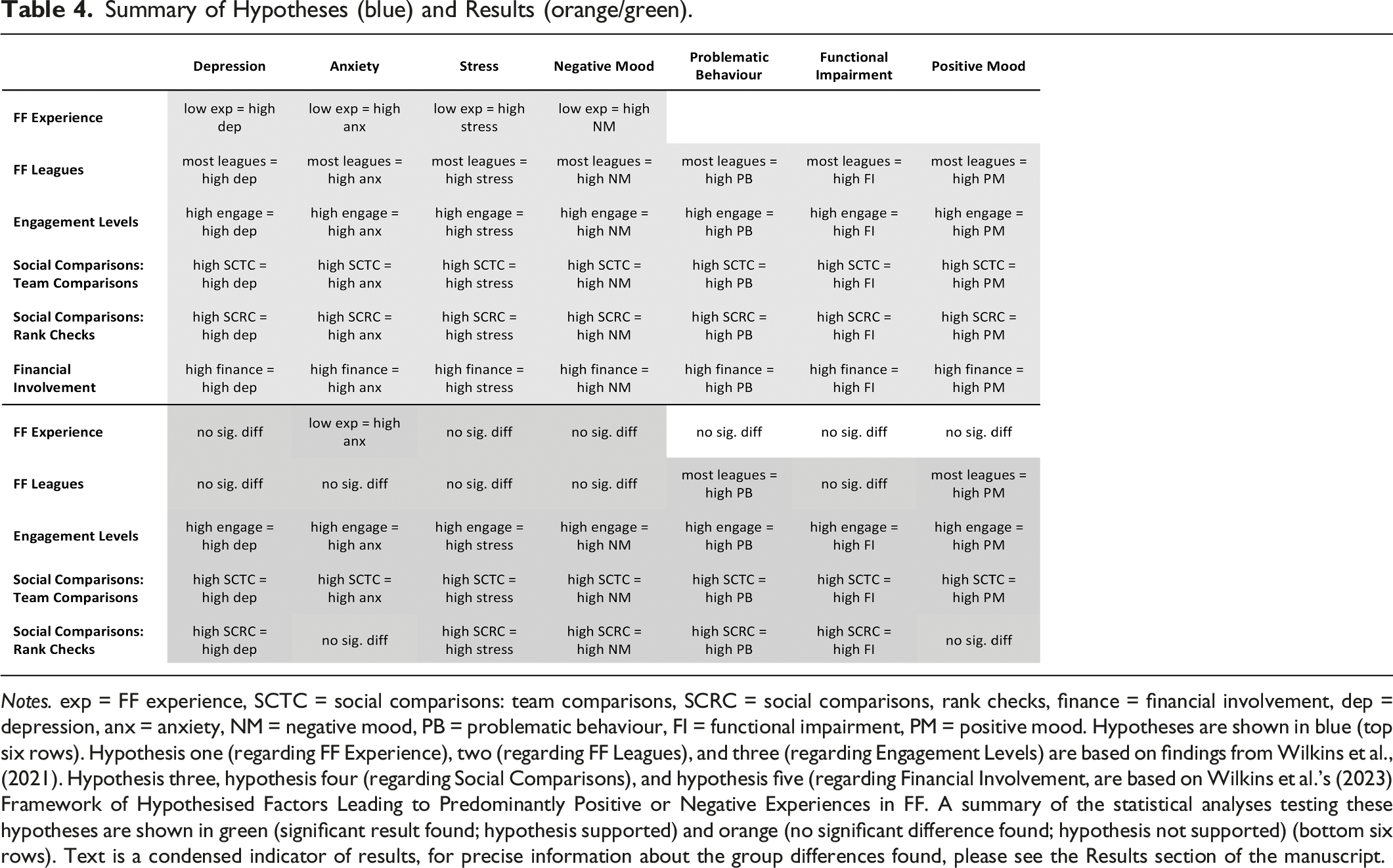
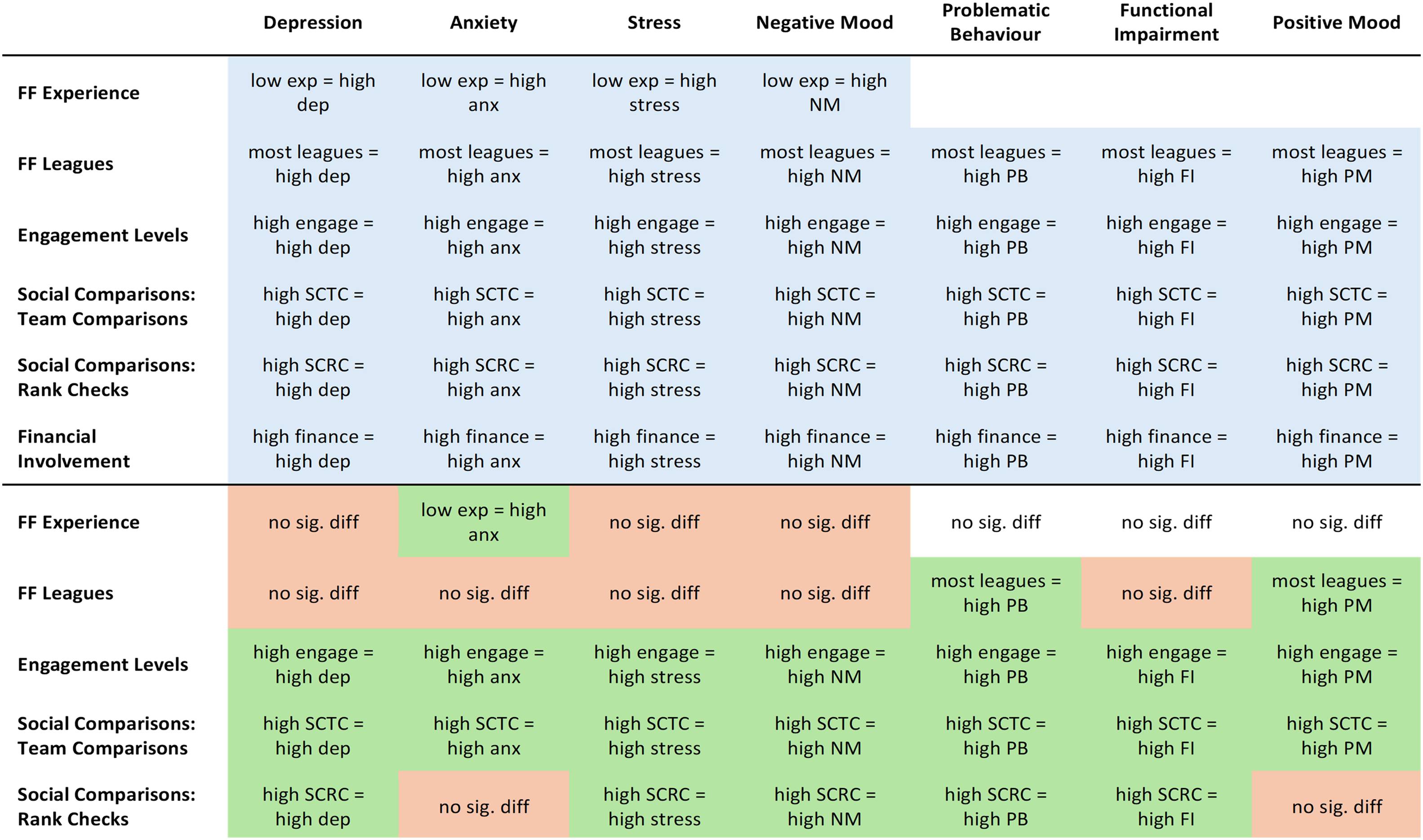
Notes. exp = FF experience, SCTC = social comparisons: team comparisons, SCRC = social comparisons, rank checks, finance = financial involvement, dep = depression, anx = anxiety, NM = negative mood, PB = problematic behaviour, FI = functional impairment, PM = positive mood. Hypotheses are shown in blue (top six rows). Hypothesis one (regarding FF Experience), two (regarding FF Leagues), and three (regarding Engagement Levels) are based on findings from Wilkins et al., (2021). Hypothesis three, hypothesis four (regarding Social Comparisons), and hypothesis five (regarding Financial Involvement, are based on Wilkins et al.’s (2023) Framework of Hypothesised Factors Leading to Predominantly Positive or Negative Experiences in FF. A summary of the statistical analyses testing these hypotheses are shown in green (significant result found; hypothesis supported) and orange (no significant difference found; hypothesis not supported) (bottom six rows). Text is a condensed indicator of results, for precise information about the group differences found, please see the Results section of the manuscript.
Discussion
The present study aimed to test the findings of Wilkins et al. (2021) by re-examining the impact that FF participation has on mental health using an improved methodological design (i.e., inclusion of a positive mood measurement; distinct measures of anxiety and depression; additional FF behaviour metrics; and data collection completed outside of a global pandemic). Additionally, the present study sought to test the FFLPNE proposed by Wilkins et al. (2021).
Moderate support was found for hypothesis one in that more experienced players reported less anxiety than less experienced players with there being no group differences in positive mood, problematic behaviour, or functional impairment. However, depression, stress, and negative mood did not differ as predicted. Partial support was found for hypothesis two, with players who take part in the most leagues reporting more positive mood and higher problematic behaviour than those taking part in fewer leagues, though no differences were found for the remaining five variables as expected. Hypothesis three was fully supported, as players with the highest engagement levels reported significantly higher scores on all six mental health concerns but significantly more positive mood than players with lower engagement levels. Strong support was found for hypothesis four, as players who demonstrated highest levels of social comparison behaviours reported higher scores on all six mental health concerns but significantly more positive mood than players who demonstrated lower levels of social comparisons (except for rank checks, where anxiety and positive mood did not differ). Finally, strong support was also found for hypothesis five as players who had the greatest financial involvement reported significantly more anxiety, stress, negative mood, problematic behaviour, and positive mood compared to players with less financial involvement; though unlike as predicted, there were no differences in depression or functional impairment.
Replication of Wilkins et al. (2021) and Testing of Wilkins et al. (2023)
Hypotheses one, two, and three addressed the first aim of the present study; the re-examination of Wilkins et al. (2021). Thus, moderate support was found as the most engaged players reported significantly higher scores than the moderately engaged and least engaged players on all six of the negative mental health measures, but also reported significantly greater positive mood. Interestingly, the moderately engaged players also reported significantly higher scores than the least engaged players on four of the six negative mental health measures, as well as significantly greater positive mood. Thus, it seems that the more one invests in FF (both emotionally and behaviourally), the more extreme the emotions experienced. Whilst it is reassuring, in the light of the findings by Wilkins et al. (2021), that participation in FF seems to correlate with positive experiences, the negative impact of what is designed as an entertaining hobby remains a concern. FF is a game in which failures are inevitable over the course of the season (if we assume that the ultimate success is to be ranked number one globally) and one in which the player never has full control over the outcome of their performance. This makes it distinct from self-regulated and (generally) non-competitive hobbies such as reading, gardening, or playing a musical instrument, for which a negative impact on mental health is unlikely; and more akin to the domain of sports, where research has regularly found a negative impact on mental health to be a distinct possibility (see Rice et al., 2016, for a review). The two factors of success/failure and external locus of control have been shown to adversely affect the mental health of athletes (e.g., Hammond et al., 2013 for success/failure and Watson, 2016, for locus of control). Thus, it is perhaps not surprising that the present study finds greater engagement in FF is related to higher scores for mental health items such as depression and stress, given the characteristics of the game.
Also as expected, and in-line with Wilkins et al. (2021), the present study found that the most experienced FF players reported significantly lower anxiety than the least experienced FF players. Other negative mental health measures did not differ between experience levels, somewhat similar to Wilkins et al. (2021) who found no differences in problematic gaming or functional impairment, though they did for low mood. The distinction between the two studies in how experience impacts low mood/depression may be due to the differing measurement approaches (GAD-7 vs DASS-21). If the DASS-21 is better able to discriminate between the similar concepts of anxiety and depression (Lovibond & Lovibond, 1995), then it would suggest that anxiety has a unique relationship with FF experience not shared by other mental health conditions or positive mood. It may be that anxiety is experienced more frequently or intensely than other emotions (indeed, Wilkins et al., 2023, found it to be the most commonly cited sub-theme within ‘Potential Negatives’ theme) and/or that coping strategies developed over time playing the game are more effective towards feelings of anxiety; with depression, stress, functional impairment, and problematic behaviour more resistant to change. Nevertheless, the present findings regarding experience lend good support to that of Wilkins et al. (2021), and future research should now look to explore the mechanisms underpinning such differences. For instance, the aforementioned authors offered a number of possible explanations for the impact that FF experience has on mental health, including that for players with the greatest experience, the novelty of the game may have worn off over the years, resulting in feelings of emotional numbness in response to negative outcomes; or that the experienced players may have developed coping mechanisms in order to respond effectively to the possible negative events associated with FF. For example, one possible tool that players may have developed is self-distancing, which empowers the individuals to detach themselves from the immediate emotional situation and see the bigger picture (Guo, 2022). Turning the focus of research towards potential coping mechanisms would have considerable implications for future participation rates and experiences in FF.
As previously mentioned, the present study aimed to build on the work of Wilkins et al. (2021) by including a positive mood measurement to ascertain if there was a positive effect of FF on the players. The findings suggested that participants had significantly more positive mood when they: were more engaged, were involved in more leagues, made a greater quantity of team comparisons, and had more financial involvement in the game. It should be noted, though, that these factors that led to higher levels of positive mood in the present study also led to significantly greater anxiety, stress, and negative mood, with some of these also demonstrating significantly greater depression. It appears that an increase in positive mood is usually met with an increase in many of the negative mental health factors too, and that the present sample did not solely experience positive mood in relation to FF. As previously discussed, these results suggest that many of the more engaged FF players experience the highs and the lows to equally high extents, perhaps due to their increased desire to perform well. However, this may not be specific to FF, but may represent hobbies in general, especially those in which one surrenders control over the outcome. Indeed, the Theory of the Cycle of Emotions – a recent theory of emotions in competitive sports by Jekauc et al.’s (2021) – encompasses this emotional rollercoaster, with the authors explicitly stating that “because athletes often pursue personally relevant goals with uncertain outcomes, extreme states of positive and negative emotions can occur” (pp 1). It is not unreasonable to think that FF elicits the same responses. The coexistence of these conflicting emotions underscores the complexity of experiences in fantasy football and highlights the need for further research to better understand the nuanced interplay between positive and negative emotional states in such contexts.
Social Comparisons
With the advent of social media and the FF communities that have been built within these applications, there is no surprise that a reasonable percentage of the present sample spend a high quantity of time comparing their performance with others. Early research by Festinger (1954) suggested that people often favour downward social comparisons to individuals that are believed to be worse off in the pertinent category, in an attempt to boost self-esteem and feelings of self-worth. However, it is conceivable that in a performance-based hobby such as FF, where ranking updates are made weekly on global leaderboards via the tool of social media, individuals may unwittingly make upward social comparisons which are likely to negatively affect feelings of self-worth and may lead to poor mental health (Warrender & Milne, 2020). One possible FF-specific explanation for the high social comparison groups demonstrating significantly worse mental health scores on all six of the variables, is akin to the concept of survivorship bias. At the end of each gameweek, it is common practice to post one’s score for that week on social media. However, those with high scores are much more likely to post than those with low scores. As a result, there can often be an inflated, false representation of how well the average player has done in that week, and therefore the social comparisons that one makes are usually with the highest achievers. This could possibly lead to negative feelings, especially if one has had an objectively poor week too.
Financial Involvement
The individuals involved in two or more money leagues reported significantly higher scores on four of the six negative mental health measures than those in one or zero money leagues, as well as significantly greater positive mood. The negative mental health prevalence is supported by previous research, with fantasy sport players five-times more likely to demonstrate gambling-related problems than non-players (Martin & Nelson, 2014). These authors also found those that participated in fantasy sports for money were significantly more likely to demonstrate one or more gambling-related problems than fantasy sport players than did not play for money. Regarding the current measures in place to address these negative effects, FPL have made known that participation in cash leagues a direct breach of the rules for the game. This acts as a positive first step to mitigate the potential negative effects of financial involvement in FF. However, with there being multiple additional versions of FF beyond FPL, this deterrent is unlikely to address the root cause of the problem.
Furthermore, it is worth drawing attention to the novel finding that those with increased financial involvement in FF also reported significantly greater positive mood. However, the positive relationship between gambling and self-reported positive mood is not new. Previous ‘dream function’ literature has suggested that gambling may enhance subjective feelings of well-being and happiness by offering a route of escapism, as well as selling a dream and the idea of hope (Simon, 1998). As well as increased financial involvement in FF potentially improving positive mood, Wilkins et al. (2023) found that FF may offer a healthier alternative to traditional gambling, acting as a method to reduce the need to gamble by replicating feelings of escapism, distraction, and adrenaline rush. If this is the case, and FF offers a safer alternative to traditional gambling for some individuals, perhaps advising people to reduce their financial involvement in the game would create more issues than it would solve. The role of gambling in FF is a topic that warrants further research to increase our understanding.
These findings with regards to Engagement Levels, Social Comparisons, and Financial Involvement address hypotheses three, four, and five, and therefore the second aim of the present study; the testing of Wilkins et al.’s (2021) FFLPNE. Thus, strong support has been found that these hypothesised factors do differentiate positive experiences (e.g., positive mood) and negative experiences (e.g., mental health variables) in FF.
Further Applied Implications
Interestingly, the group with the most frequent rank checks (i.e., finding out how well one is doing in relation to other players globally or within their leagues) demonstrated significantly higher scores on five of the six mental health scores, but no significant difference in positive mood. This has very important practical implications, as there are an increasing number of FF websites which now offer the ability to check ‘live ranks’ throughout the week and often encourage their users to keep tabs with their live ranks. These findings suggest that this is unlikely to have a positive effect on players’ moods and may be leading to worse mental health in relation to the game. Whilst further research is required to corroborate these findings, FF websites and companies should consider where they place the live rank checks within their website, and possibly place some form of disclaimer before the user accesses their rank too. At the very least, users should have the ability to turn off live rank updates if they do not wish to have access to this information.
Limitations and Future Directions
One possible limitation of the present study stems from the nature of the game. Participants filled in this questionnaire once, at a single time point. In FF, whilst players have a running points total throughout the season, they also receive a score every week which results in a green arrow (improved rank) or a red arrow (worsened rank). It is likely the case that performance in that specific week would skew one’s response to most questions regarding mood and mental health, due to both recency bias and difficulties with self-distancing. Therefore, it is conceivable that the same participant would answer in a different manner dependent upon their performance in the given week. The cross-sectional approach employed in the present study lacks the ability to establish causality, as it only captures a snapshot of variables without tracking changes over time. Giving another example, our findings are not able to ascertain whether FF engagement causes poor mental health, or whether poor mental health leads to high engagement in FF. If it is the latter, then our results may actually be understating the relationship between the two given that illnesses such as depression have been found to reduce one’s involvement in leisure activities (Nimrod et al., 2012). Future research should explore a longitudinal approach to data collection, whereby participants answer the questionnaire at multiple time points across the season. It may also be pertinent to collect information surrounding their performance within the game, to see if performance is correlated with mental health across a longer period.
It may also have been beneficial to collect data about the participants which could influence their engagement levels or mental health. For instance, employment status (Allen et al., 2014) and financial resources (Lund et al., 2011) have been strongly linked to the presence or absence of mental health disorders, whilst it is conceivable to think that they may also impact FF engagement too. Interestingly, this could be in both directions. That is, unemployment and low financial resources could lead to greater FF engagement because the individual has more time available, and FF is (in most cases) a free-to-play game. Conversely, it may be that employment and high financial resources encourage more FF engagement because the workplace provides an additional avenue for FF participation through workplace leagues and/or the individual is able to spend money on FF research tools such as website memberships or podcast subscriptions. In a similar manner, whilst the present study did collect data on gender and age, these variables were not the primary focus of the paper and therefore were not analysed statistically. Future research could look to examine whether gender and age mediate the relationship between FF engagement and mental health by purposefully adopting a recruitment strategy that generates a more balanced sample of participants (i.e., more females and more older adults).
Whilst the present study explored the key element of social comparisons, it is critical that future research explores if there is a direct impact of social media participation on FF engagement and the mental health of the users. There is already literature that reports social media usage having a negative effect on depression and anxiety in users (Shaw et al., 2015; Tandoc et al., 2015; Pine et al., 2020), however, it would be useful to explore this specifically in relation to FF. The Official Fantasy Premier League X account has 5.7 million followers, therefore, if social media does indeed have a negative effect on the mental health of FF players, it would be important to ascertain the reason for this, as well as exploring how it can be improved. Equally, if there are elements of social media that have a positive effect on FF players’ mental health (e.g., Wang et al., 2014), it would be important to highlight and draw attention to these elements.
Conclusion
This study has corroborated the findings of Wilkins et al. (2021) by demonstrating the presence of negative mental health in many of the FF users in relation to the game. However, it has also confirmed and extended this work by demonstrating that FF has a positive influence on players’ positive mood, thereby supporting that the game can be beneficial for the wellbeing of its players. More specifically, the present study found that more experienced players reported less anxiety than less experienced players, and players who engaged more with the game, made more social comparisons, and had greater financial involvement generally reported more mental health concerns and more positive mood than other players. The study has also provided strong support for Wilkins et al.’s (2021) FFLPNE, which should be used to guide strategies aimed at optimising the playing experience of FF that can, in turn, ensure the continued growth of the game. In addition, the findings from this study also provide fantasy football websites with evidence that promoting frequent monitoring of one’s performance could be a leading cause for negative responses to fantasy football. The hope is that this will encourage developers to consider the prominence of performance-monitoring features on their sites, or at least offer the ability to hide or remove these features, in order to prioritise the mental health of their users. Further research is required to explore the relationship between social media usage, FF engagement, and mental health, as well as the role of gambling/financial involvement in FF and how this impacts the users. In particular, it would be interesting to directly explore the role of social media in promoting social comparisons within fantasy football, and how this may affect the user’s positive and negative experiences.
Footnotes
Declaration of Conflicting Interests
The author(s) declared no potential conflicts of interest with respect to the research, authorship, and/or publication of this article.
Funding
The author(s) received no financial support for the research, authorship, and/or publication of this article.

Author Biographies