




Abstract
Background
Social learning generates reframing when individual and collective values are reflected. This reframing enables community members to move from personal to collective views and actions, resulting in valuable outcomes that improve the community's functioning. This research aims to enhance the development of reframing with the help of role-playing games (RPG), given that digital games are considered particular communities.
Method
A relationship model was constructed to identify which game features generate reframing and how much they promote reframing. The model’s validity was tested using experts’ feedback and a game experience test (GET). The factor analysis results interpret that the features tested impact reframing.
Results
The study proposes that RPGs can promote reframing and identifies reframing associated with particular game features (such as game stories).
Conclusion
Students, game designers, related teachers and researchers can benefit from using the model to encourage reflection using games or require a model to bridge game features with social learning.
Introduction
Reframing, the ability to adjust individual and collective viewpoints through interactions, is central to social learning (Wenger et al., 2011; Mezirow, 1990; Muro & Jeffrey, 2008). Social learning theory emphasizes learning through interpersonal interactions (Bandura, 1977), the key to community functioning and addressing diverse perspectives (Fabricatore et al., 2020; Conklin, 2005). Social learning fosters reframing when individual and collective values are contemplated (Wenger et al., 2011). This reframing empowers community members to transition from personal to collective perspectives and actions, resulting in valuable outcomes that enhance community functioning (Wenger et al., 2011; Mezirow, 1990; Muro & Jeffrey, 2008). Since digital games are akin to specific communities (Tardini & Cantoni, 2005), this research endeavours to amplify reframing development through role-playing games (RPGs). Previous research highlights games’ positive impact on social learning (Dhiman, 2023; Medema et al., 2016), yet it’s unclear which game features facilitate reframing (Voulgari & Komis, 2011). This study formulates a model of game features likely associated with reframing in role-playing games (RPGs) to address this research gap. The model identifies which game features engender reframing and how much they promote it, validated through experts’ feedback and a game experience test (GET). The factor analysis results elucidate the impact of the tested features on reframing. The findings of this study will not only enrich the understanding of how game features can promote reframing and social learning but also benefit students, game designers, teachers, and researchers (Gao et al., 2023a) by furnishing them with a model for fostering reflection through games and connecting game features with social learning.
This article is organized as follows. Section 2 presents the theoretical underpinnings of this study, elucidating in detail what reframing is, why it is crucial, and how it can be assessed. The detailed aims and research questions guiding this study are discussed in Section 2. Sections 3 and 4 present the study’s methodology and the findings, respectively. Finally, Section 5 presents the discussions and considerations for this study’s limitations.
Literature Review
The Nature of Reframing
For this study, we conceptualized reframing as a person’s ability to reflect, reconsider and redefine their values, aims, strategies, and success criteria based on observing and interacting with other people and the environment (Wenger et al., 2011; Conklin, 2005; Brown, 2010; Mezirow, 1990). Accordingly, we conceptualized the value of reframing based on the value creation framework proposed by Wenger et al. (2011). In their work, the authors examined social learning in the context of networked communities, i.e., more or less divided groups made up of people who share certain interests and are connected by affordances that stimulate and facilitate joint action and creation of relevant knowledge (e.g., relationships, shared problems, information flows, and technological linkages). In this context, the authors highlighted reframing as one of the critical values that social learning should foster. It enables community members to move from individual points of view and actions to collective ones, which gives useful results to improve the functioning of the whole community. It can therefore be argued that reframing represents a twofold value. For individuals, it signifies an enhanced ability to reflect critically, question personal worldviews, interact with others, and acquire knowledge that individuals could not attain independently (Bandura, 1977; Mezirow, 1990). For the collective, reframing means developing new, shared worldviews and collective actions, representing a crucial development for the community (Bandura, 1977; Muro & Jeffrey, 2008; Conklin, 2005). Such dual value makes reframing pivotal for all learning processes, including group inquiry, both inside and outside formal education (Pedaste et al., 2015; Conklin, 2005). Additionally, reframing has also been emphasized as a central component of critical thinking, which is a key facilitator for other kinds of learning (e.g., problem-solving) in contexts requiring critical examination of non-trivial scenarios (e.g., Mamede et al., 2008; Brookfield, 2015; Saric & Steh, 2017; Howard, 2003).
Furthermore, reframing has been deemed essential in corporate environments, wherein managers must continuously adjust their viewpoints to address the needs of heterogeneous stakeholders, including customers, employees, investors, and other government agents (e.g., Freeman, 2010). Reframing is also considered central to promoting the sustainable development of our global society (Brown, 2010). This is because current societal issues represent complex, multi-stakeholder problem scenarios, demanding collective processes of definition and pursuit of shared goals that can only be attained if the involved actors can continuously question, modify, and ultimately harmonize their viewpoints (Brown, 2010; Conklin, 2005). The multifaceted relevance of reframing makes it a critical educational priority and motivates us to focus our studies on it.
Promoting Reframing Through RPGs
The games utilised in this study fall under the RPG genre, as they incorporate RPG elements defined by Hitchens and Drachen (2008). These elements necessitate players to control characters with specific roles, develop role-specific skills, and cultivate attributes by interacting with other characters and the environment to achieve the game’s objectives.
The RPGs examined include multiplayer role-playing (MRPGs) and stand-alone RPGs. MRPGs possess significant potential for fostering social learning by providing players with interpersonal gameplay experiences, engaging them in pursuing shared goals within meaningful scenarios (Fabricatore et al., 2020; Squire, 2008). This engagement allows players to develop various skills and attitudes, such as communication, problem-solving, adaptability, resourcefulness, and empathy (Barr, 2017; Fabricatore et al., 2020; Qian & Clark, 2016). Stand-alone RPGs are indirectly associated with social learning, as their interactions manifest within the playing community (Tardini & Cantoni, 2005). Actual players’ identities interact, for instance, by collaboratively overcoming in-game challenges with virtual characters’ identities (Tardini & Cantoni, 2005). According to the concept of reframing, interactions within the playing community of stand-alone RPGs are likely to trigger reframing ability, particularly individual reframing. Reframing, in this context, is considered an outcome of social learning. Consequently, this study regards stand-alone RPGs as facilitators of a community promoting reframing abilities.
According to the concept of reframing, interactions within gaming communities can cultivate reframing abilities. Multiplayer Role-Playing Games (MRPGs) serve as an optimal platform for nurturing reframing skills due to their ability to engage players in collaborative tasks, promoting social learning processes that develop shared knowledge, skills, and attitudes (Fabricatore et al., 2020; Bakhanova et al., 2020; Den Haan & Van der Voort, 2018). MRPGs require players to pursue objectives within immersive settings collectively, assuming diverse roles corresponding to various and potentially conflicting needs and actions (Salvini et al., 2016; Hwang et al., 2015). The expansive nature of collective gaming, facilitated by modern networking technologies, enables millions of players to participate in complex interpersonal gameplay (Fox et al., 2018), fostering robust virtual communities (Tardini & Cantoni, 2005). For instance, collaborative goal pursuit in these games can enhance skills such as dialogue, negotiation, and collaboration and introduce new strategies and perspectives (Fabricatore et al., 2020; Johnson & Mayer, 2010; Medema et al., 2016).
Besides, reframing can also be encouraged through interactions within the gaming environment facilitated by gaming communities. Studies (e.g., Squire & Barab, 2004; Apperley & Beavis, 2011; ) suggest that gaming communities, including those in RPGs, provide environments conducive to individual reframing, such as simulating biases and inaccuracies (Squire & Barab, 2004) or through non-visual and non-textual elements of gameplay (Apperley & Beavis, 2011). Furthermore, the slower pace of RPG gameplay allows for more substantial opportunities for reflection (Squire & Barab, 2004). Specific game mechanics such as points, badges, and leaderboards commonly found in RPGs can also trigger individual reframing (Skinner, 1965). Therefore, the potential of RPGs to facilitate reframing led us to focus on this genre in our study to model game features conducive to reframing through RPG tasks.
Reframing Assessment through a framework of value-creation
This study relied on the value creation framework introduced by Wenger, Trayner, and De Laat (2011) to promote and assess the value generated by social learning in networked communities (Wenger et al., 2011). We used this framework to identify and evaluate game features that promote reframing in RPGs. The framework has been examined and adopted by a growing body of research, confirming its relevance in identifying and evaluating the benefits of social learning in networked communities, as well as the conditions suitable for promoting these benefits (e.g., Booth & Kellogg, 2015; Smith et al., 2017; Van Amersfoort et al., 2012).
Wenger and colleagues (2011) argued that a shared interest in specific topics and joint problems defines a networked community. Accordingly, community members engage in social learning to further their understanding of the shared domain of interest, enhance their ability to act upon it, and ultimately achieve effects desirable for individuals as much as for the whole community. In this sense, the authors suggested that social learning can generate different types of value for the entire community through five interdependent value creation (VC) cycles: (1) Immediate VC: carrying out activities/interactions immediately beneficial to the actors involved (e.g., helping others solve a problem; signposting resources to others). (2) Potential VC: co-creating or conveying knowledge capital prospectively valuable for the community (e.g., teaching something to someone; producing academic research). (3) Applied VC: applying and integrating knowledge capital in practice, generating changes or innovations suitable to improve performance (e.g., using knowledge capital to produce new tools or update community policies). (4) Realized VC: examining effects engendered by applying knowledge capital and assessing their immediate and potential value to achieve what matters to multiple community stakeholders (e.g., identifying and assessing impacts of new policies, both expected and unforeseen). (5) Reframing VC: reconsidering stakeholders’ priorities and success criteria based on realized value, leading to the adjustment of existing strategies, goals and underpinning values, and the possible formulation of new goals, performance metrics and methods.
Indicators of value generated by enhanced reframing capabilities (adapted from Wenger et al., 2011).
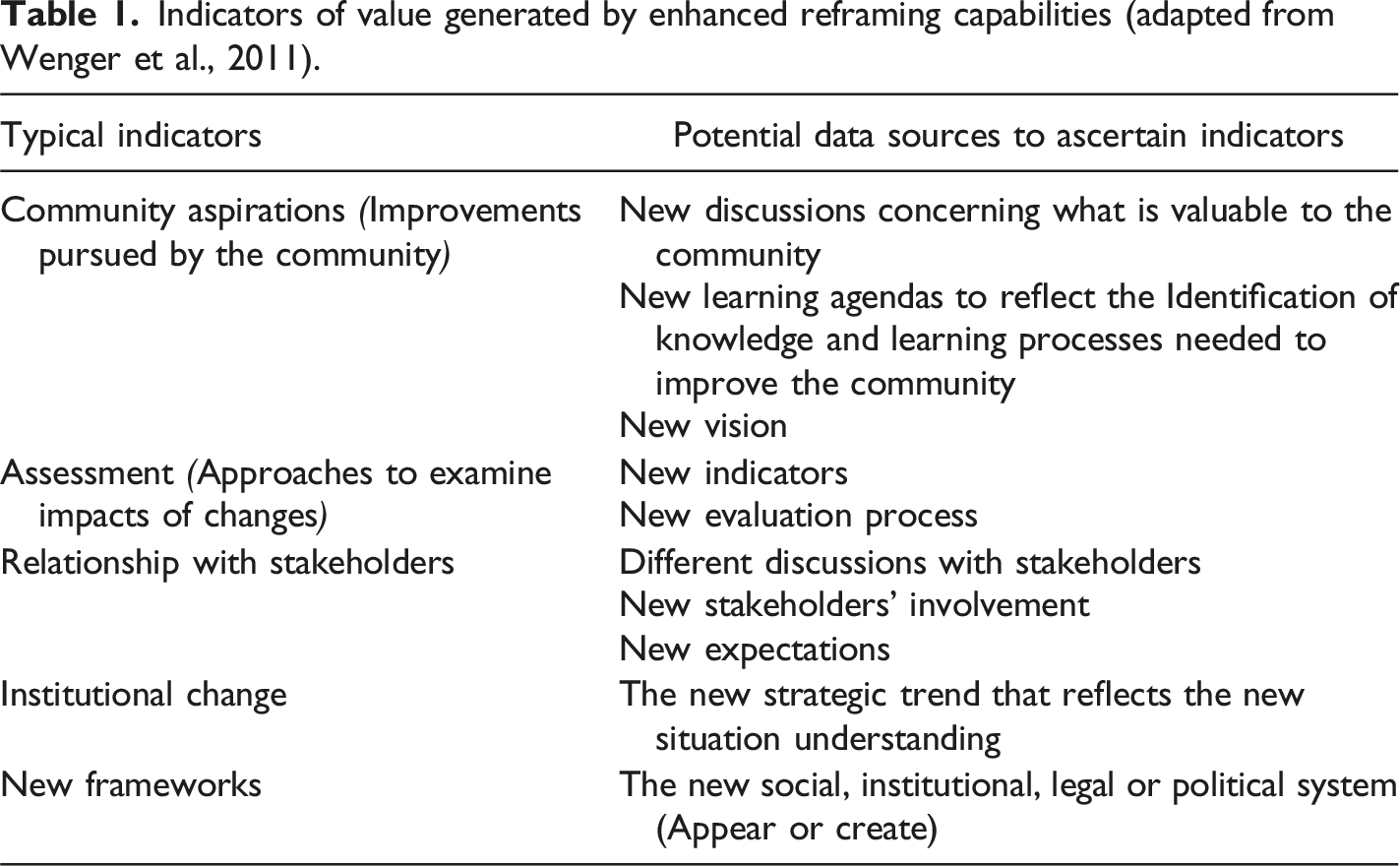
The indicators of ‘institutional change’ and ‘new frameworks’ are combined as values, as they are often used together to evaluate reframing in the same situation. For instance, Spilker et al. (2020) used these indicators to assess an inspiring discussion with experts at a conference, which can lead to reframing by adopting new development strategies. Similarly, games can provide similar discussion situations (e.g., forums), where game developers can receive new approaches through conversations with players. In this study, the two indicators of institutional change and emerging frameworks are used together to evaluate players’ comments more easily. As a result, the typical indicators from Table 1 are divided into four parts: Promoting reflection, The change in evaluation, Generating new assessments for other people, and Suggestions for community development.
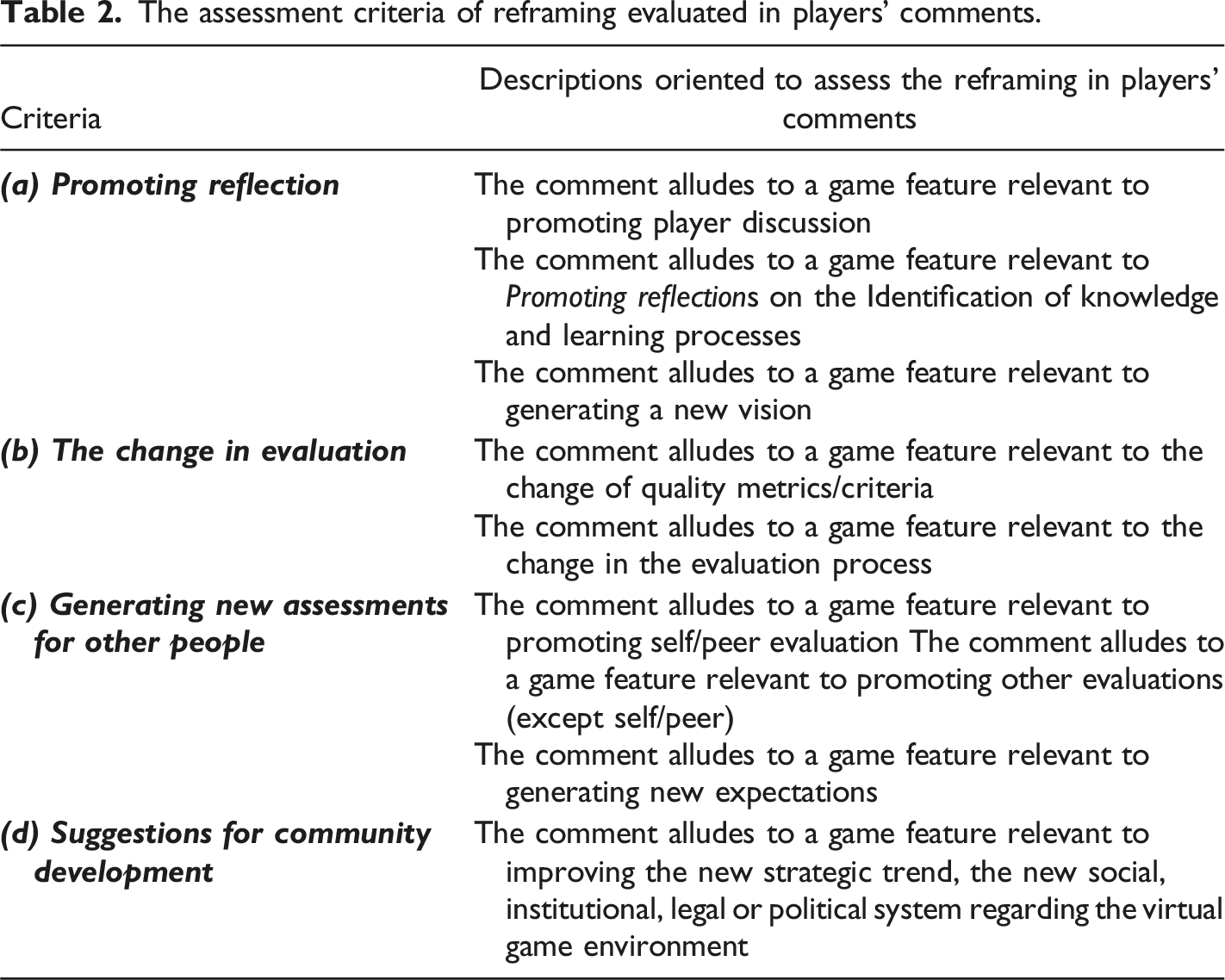
The assessment criteria of reframing evaluated in players' comments.
Research Question
The model was developed using a mixed-method research approach (qualitative and quantitative) by Wa Mungai (2022), which involved analysing direct player opinions that reflect their experiences with relevant RPGs. This research responds to the general call for more empirical studies on the potential impacts of social game-based learning and the game features that can facilitate these impacts, as highlighted by Voulgari & Komis (2011) and Den Haan & Van der Voort (2018).
The following research questions guided our study: (1) What game features contribute to reframing in RPGs? (2) How effectively do these specific game features promote each of the four dimensions of reframing?
Method
This research was divided into two stages: (1) modelling the game features and (2) validation of the model. Each stage was articulated and carried out as described below.
Modelling of the Game Features
Sampling of Video Games
This study examined RPGs, utilising the China Games Weight Rank (CGWR) as our primary criterion for game selection. CGWR was chosen due to its widespread recognition in China, covering online game products across major markets such as Europe, the United States, Japan, Korea, and China itself. (https://baike.baidu.com/item/CGWR/7331514?fr=ge_ala [in Chinese]) This choice was made to ensure the inclusivity and representativeness of our selection, minimizing potential biases.
The CGWR ranking we utilised was last updated on August 13th, 2019. To ensure rigour in our selection process, two analysts worked independently to identify suitable games based on predetermined criteria: (i) Game genre: RPGs were focused specifically as they align with the objectives and scope of our research. (ii) Platform: the selection was narrowed to games available on IOS mobile platforms, namely Apple iPhone and iPad. This decision was made to streamline evaluation processes and was necessitated by technology availability constraints. (iii) Sample size: the study opted to include the top five IOS RPG games as per the CGWR ranking. This choice allowed us to concentrate on the most popular games while also considering practical limitations regarding available human resources for analysis.
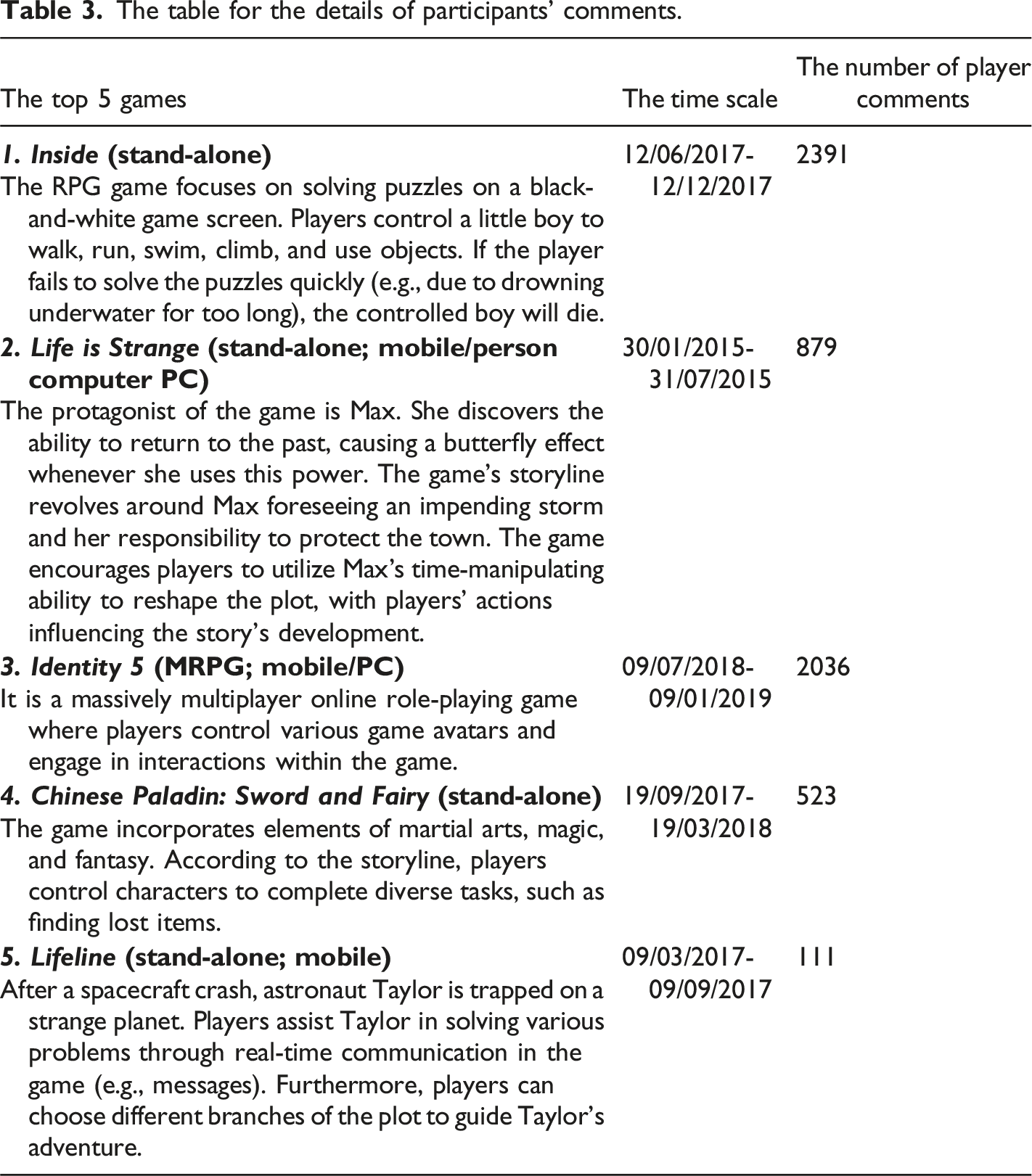
The table for the details of participants' comments.
(https://ios.97973.com/ios/hotlist?f=0_11_0_0_0&f2=0_0_11_0_0&platform=iphone; https://ios.97973.com/ios/hotlist?f=0_11_0_0_0&f2=0_0_11_0_0&platform=ipad [in Chinese]).
Sampling Players’ Comments
For each of the five sampled games, two analysts collaboratively sampled player comments for later analysis, aiming to identify evidence of game features suitable for affecting reframing. Player comments were primarily selected from online forums on the video game digital distribution service and storefront Steam. (Steam is one of the largest platforms for global digital game distribution services, and it enables players worldwide to purchase, download, upload and share games and software, especially by providing discussion forums (https://en.wikipedia.org/wiki/Steam_(service)).) Hence, sampling comments from Steam ensured the availability of player data unaffected by region limitations. The following criteria were used to sample comments: (i) Player comments were first sought on the dedicated Steam forums for each sampled game. (ii) If no comments were found on Steam forums, comments were then sampled from the game’s official website forums. (iii) If no comments were found on either Steam forums or the official game website forums, the game was excluded from the sample. For example, this was the case for the game Hunter4. (iv) Sampled comments included both: (a) comments autonomously posted by players, regardless of whether they initiated a discussion, and (b) comments posted by players in response to others’ comments within forum discussions. (v) For each game, comments were collected within a specific timescale of six months which started from the first comment posted in the game's forums (e.g., for the game Lifeline, the first comment was on March 9th, 2017; therefore, the sample included comments published between March 9th, 2017, and September 9th, 2017). Due to the timeframe, it was established to sample all comments published within six months after a game was released.
The two analysts identified the same comments. Table 3 details the comments sampling timescale and the number of sampled comments for each game.
Identification of Reframing-Related Statements
Two analysts were tasked with examining and coding player comments extracted from various games, specifically identifying instances of reframing encouraged by the games. A hybrid approach, integrating both inductive and deductive methods, was adopted for coding the comments and conducting analysis using qualitative thematic analysis techniques proposed by Fereday & Muir-Cochrane (2006). Thematic analysis, as delineated by Daly et al. (1997), was employed to explore significant topics for understanding the phenomena evident in player comments.
Table 2 was constructed as a coding rubric to structure the coding process, drawing from the research questions and the theoretical framework outlined by Wenger et al. (2011). This facilitated the identification of four core code categories or themes: Promoting reflection, altering evaluation, generating new assessments for other players, and suggesting community development. These categories were interpreted within the context of “game features.”
The coding process followed a systematic approach, mirroring Graneheim and Lundman’s (2004) qualitative method. For instance, when analysing a player’s comment discussing strategic improvement and the significance of mastering kiting and using palaces effectively, the comment was distilled to its essence (e.g., improving strategy), categorized into a sub-theme based on Table 2 (e.g., change in evaluation process), and the overarching theme was identified considering the context (e.g., change of evaluation). Following the recommendation by Gentles et al. (2015), both coders employed open and axial coding techniques to ensure consistency of information.
Following each coding round, memos were documented outlining various player-generated strategies focused on game improvement (e.g., proposing modifications to game timing), and discussions were undertaken to reach a consensus on generative themes relevant to the study. This collaborative process facilitated agreement on the interpretation of coded data and ensured the reliability of the findings.
Extrapolation of Game Features
In the third stage of the process, reframing comments were identified, serving as the basis for extrapolating game features. These comments, as outlined by Graneheim and Lundman (2004), provided insights into latent content. For instance, one comment suggested exploring the significance of a potential secret ending wherein the protagonist was under external control throughout the game. Here, the term ‘secret ending’ symbolized latent content, which, in the context, hinted at a possible game feature—multiple endings.
The coding process involved collaboration between two coders, who resolved differences through discussion, adhering to Graneheim and Lundman’s (2004) methodology. In instances of disagreement, the coders referred to relevant literature about the game’s features, thereby aligning latent content with manifest content. This collaborative approach ensured a comprehensive understanding of the game’s potential features, distinct from the process of identification and justification.
Validation of the Game Features Model
This model was constructed to assist students, game designers, related teachers, and researchers (Gao et al., 2023a) in utilizing games to promote reframing or as a template to link game features to social learning. Hence, experts (teachers and game designers) and students were chosen to participate in the evaluations to ensure a broad coverage of tester types.
Expert Evaluation
The investigation aimed to assess the content validity of the game features model by capturing experts’ attitudes towards each presented game feature. This was achieved through an expert evaluation method, drawing on the approach outlined by Gyaurov et al. (2019). These experts were selected based on their familiarity with gameplay theory concepts, ensuring competence in assessing the model’s alignment with mechanisms supporting reframing, as per the model.
A questionnaire was formulated to gather expert reviews. In line with Gay and Diehl (1992), who suggest a minimum of 30 subjects for correlational research, the questionnaire aimed to elicit comprehensive feedback from a significant number of respondents. Furthermore, selecting experts was crucial, following De Jans et al. (2017), emphasizing recruiting professionals from pertinent fields. Thus, 39 Chinese experts were recruited, including individuals from primary and high school education sectors and game companies in the Fujian province.
The composition of the expert group was tailored to ensure diverse perspectives. Thirty participants were seasoned teachers with over ten years of experience in game-based learning, bringing deep insights into educational applications. Additionally, nine engineers with extensive experience exceeding five years in game design and testing were included, enriching the evaluation with technical expertise.
The rationale behind this approach lies in the necessity to leverage a broad spectrum of expertise. Drawing on experienced educators and industry professionals ensured a comprehensive evaluation of the model’s suitability for educational and gaming contexts. By separating expertise based on teaching and technical backgrounds, the evaluation aimed to capture nuanced insights from distinct perspectives, enhancing the robustness of the findings. This deliberate selection process was pivotal in achieving a comprehensive evaluation, aligning with the overarching objective of ensuring the content validity of the game features model.
Game Experience Test (GET)
This research aimed to analyse the model’s construct validity to uncover the relationship between game features and reframing, a dimension not fully addressed by expert assessment alone. To achieve this, exploratory factor analysis (EFA) was employed, recognised as a robust statistical method for assessing construct validity (Jokiniemi et al., 2021). EFA is widely utilised to unveil latent structures within data (De Winter et al., 2009). To develop an assessment scale, this study introduced a game experience test (GET) tailored for evaluating regular RPGs, encompassing both MRPGs and stand-alone RPGs. Modelled after Chertoff et al.’s virtual experience test (VET) (2010), the GET was designed considering the practicality demonstrated by previous studies such as Valkov and Flagge (2017), Palomba (2020) and Turchet et al. (2012). These studies indicated the efficacy of the VET in assessing relationships, including sensory, affective, and cognitive factors, within virtual environments such as games (Chertoff et al., 2010).
The operational steps were as follows:
The study designs
The study aimed to examine the relationship between reframing and game features. So, sensory content or consistency of sensory information about game features and reframing was not the primary focus. The VET (Video game Experience Test) provided a framework, with 17 questions selected (excluding seven sensory questions) to guide the GET items across four dimensions: relational, affective, cognitive, and active.
Classification of game features
Game features were classified into different dimensions based on their attributes.
Following Chertoff et al. (2010), features related to storytelling (game stories, rank system, game avatar, multiple endings, emotional tasks, real NPC image) were grouped under relational, affective, and active dimensions. Other features (game design, tools, problem-solving tasks, game mode) were linked to player assistance and classified under the cognitive dimension.
Item development
Items described relationships between game features and reframing criteria, considering mechanisms through which game features promote reframing.
Scoring system
Testers rated items on a five-point Likert scale (1: “strongly disagree”; 5: “strongly agree”) regarding the 17 items of the GET.
Participant recruitment and characteristics
Following de Winter et al.’s (2009) suggestion, a sample size of 50 was set as a reasonable absolute minimum for Exploratory Factor Analysis (EFA). Such 223 students from 16 provinces and universities in China were randomly chosen to participate in the GET via an online questionnaire application, WJX (WJX: is a China company servicing questionnaires, votes, and examinations https://zh.wikipedia.org/wiki/%E9%97%AE%E5%8D%B7%E6%98%9F). Participants included both regular and non-regular digital game players. Testers completed the questionnaire after playing two specific games for three days.
Chertoff et al.’s (2010) Virtual Experience Test (VET), crafted initially for interactive story-based games, proves particularly effective for assessing RPGs, given their shared emphasis on narrative and character development. The VET offers a comprehensive framework to evaluate user engagement within virtual environments, integrating five key dimensions: sensory, cognitive, affective, active, and relational. These dimensions encompass the engagement from sensory interaction to mental, emotional, and social involvement within the game. Precisely, the sensory dimension captures how players utilise their senses in the virtual environment; the cognitive dimension focuses on the mental effort and engagement required; the affective dimension addresses the emotional responses elicited by the game; the active dimension evaluates the player’s personal connection and empathy towards characters or scenarios; and the relational dimension looks at the social interactions within the game, such as collaboration. Each dimension is measured using specific heuristics, rated on a five-point Likert scale, to gauge how well a virtual environment promotes engagement across these varied aspects (Chertoff et al., 2010).
The study selected two RPGs, ‘Chinese Paladin: Sword and Fairy 3’ and ‘World of Warcraft,’ for analysis. This selection was based on several criteria: i) both games encompass extracted game features identified in the research, ii) they represent different types of RPGs, from stand-alone to massively multiplayer online games, and iii) their widespread popularity. Chinese Paladin: Sword and Fairy 3, a stand-alone RPG developed by Dayu Company and released in China in 2003. It was voted the most popular RPG in China, with players controlling characters to participate in events, battle monsters, and complete quests. According to Chinese web statistics, World of Warcraft, a multiplayer RPG by Blizzard Company, was selected for its massive player base, with approximately 900,000 logins in a single day in January 2020. The plot is built on the real-time strategy game “Warcraft,” which allows players to play as various characters like magicians and elves, exploring, adventuring, and completing tasks in a virtual world. The selection of these two RPGs demonstrates the versatility of Chertoff et al.’s VET in evaluating different types of RPGs, from stand-alone to massively multiplayer online games, making it a valuable tool for assessing RPGs across various platforms and player experiences.
Results
The presentation of the research findings is divided into three sections: the game feature model and expert evaluation findings, as well as the GET findings.
The Model of Reframing Promoted
the relationship model of reframing ability promoted.

Most of the game features supported Suggestions for community development (n=6) and promoted reflection (n=7). Three features—game stories, game tools, and game avatars—broadly promoted reframing, which includes Suggestions for community development, Promoting reflection, and changes in evaluation. The top 5 games covered a range of game features, with the lowest number found in Lifeline (n=1), and the highest numbers in Identity5 (n=6) and Life is Strange (n=8).
Based on the frequency of game features supporting related criteria, as reflected in players’ comments, this research found that the presence of some game features was highly significant. This finding suggests that these game features positively promote related criteria of reframing. For instance, two game features—game stories, affected by 43 comments, and the game design of a particular style, involved in 93 comments—supported the promotion of reflection. Suggestions for community development were most influenced by game avatars (75 comments), and the change in evaluation was most impacted by tasks for problem-solving (82 comments). Generating new assessments of other people was promoted by game avatars (22 comments); however, “game avatars” were the only feature that promoted Generating new assessments for other people, indicating that game features had a limited impact on this criterion of reframing.
Factors not directly related to game features also triggered players’ rethinking, involving promoting Suggestions for community development and reflection. For example, players suggested that the developer use only one English name for the game “Chinese Paladin: Sword and Fairy.” This suggestion could help customers recognize the game across different platforms, aiding community development. The overall game experience of Identity5 boosts players’ confidence, prompting them to rethink their values and share their experiences with others in the same community, thus Promoting reflection.
The Findings of Expert Evaluation
The findings from the expert evaluation revealed that the feedback from 39 experts validated the model’s content. The average percentage of responses that were either “agree” or “strongly agree” was 87.6%, indicating that the experts confirmed the efficacy of all game features in promoting related reframing values. These features include multiple game endings, tasks with emotional experiences, a realistic non-player character (NPC) image, a distinctive game design, compelling game stories, engaging game avatars, problem-solving tasks, the game’s ranking system, versatile game tools, and various game modes.
The Findings of the GET
To confirm that two RPG games tested in the GET encompass the ten features of the model, we calculated the response rate (RR) of “agree” and “strongly agree” among 223 testers. The results indicate that the selected games are appropriate, as they encompass all the extrapolated game features, with RRs for the ten features exceeding 80% (the lowest RR being 80.27%, and the highest RR being 95.52%).
Factor analysis was initially employed to assess the suitability of the research data for such analysis, following Kaiser’s method (1958). The Kaiser-Meyer-Olkin measure of sampling adequacy was high (0.838), and Bartlett’s Test of Sphericity reached statistical significance (p=0.000), indicating the data’s appropriateness for factor analysis (Kaiser, 1958; Bratt et al., 2020).
The data were then subjected to varimax rotation, a method for maximizing the variance of the factor loadings. This analysis revealed strong correlations between factors and study items, effectively interpreting item information as indicated by high common factor variances (ranging from 0.673 to 0.901, all above 0.400). Factor loadings ranged from 0.42 to 0.921, all exceeding the 0.400 threshold, demonstrating that the factors correspond closely to the items (Bratt et al., 2020).
Discussion
Further Discussion of the Findings
Promoting Reflection
By incorporating these game features into game design and encouraging players to engage with them, designers can create an environment that promotes reflection and deeper engagement with the game experience. Based on this, some suggestions are presented to enhance reflection by using game features further. 1) utilise game tools to promote reflection. Encourage players to use in-game tools creatively to solve problems or overcome challenges. For example, in “Inside,” players could be encouraged to use the shock wave tool not just for gameplay purposes but also to trigger divergent thinking, such as considering how to use the decibel scale to measure sound. 2) Incorporate moral dilemmas. Integrate moral dilemmas or complex interpersonal situations into the game narrative. Allow players to make choices that have consequences, prompting them to reflect on the motivations and emotions driving their in-game actions. 3) Empathy through character perspective. Introduce mechanics like “Mimicry Masks” to temporarily allow players to adopt characters’ characters’ perspectives. This can foster empathy and perspective-taking as players reflect on the motives and experiences of various characters within the game world. 4) Encourage player feedback. Continuously solicit feedback from players regarding game mechanics, narrative elements, and design details. This feedback loop can improve the overall quality of the game and demonstrate a commitment to excellence and player satisfaction, fostering reflection on the part of both developers and players.
Generating New Assessments of Other People
Avatars serve as extensions of players, reflecting their emotions and behaviours within the game. This mirroring effect encourages players to reflect on their actions and how others perceive them. It leads to a deeper understanding of personal conduct and interaction, competition, and cooperation dynamics. Games like “Identity5” and “Life is Strange” utilize avatar behaviour to promote self and peer evaluation, establishing new expectations for behaviour and interaction. This reflective process can lead to reframing how players view themselves and others, both in virtual spaces and potentially in real life. Using game avatars, some potential strategies can be considered to promote reframing. 1) Engaging the community by allowing them to share their views on character development strengthens their connection to the game. This shared investment can lead to innovative solutions for community issues as players feel more responsible for the game environment and social dynamics. 2) By allowing players’ decisions to influence avatar behaviour and story outcomes significantly, games can create a more immersive experience that mirrors the real-life consequences of actions. This can encourage players to think critically about problem-solving and the impacts of their actions, both in and out of the game. 3) Utilising feedback from players about inconsistencies or suggestions for character development, as seen in “Life is Strange,” can lead to a more engaging and realistic game environment. This also helps developers identify and solve problems within the game, which can translate to improved problem-solving strategies among the players. 4) Encouraging players to reflect on their avatars’ actions and the resulting narrative outcomes can foster a deeper understanding of personal values and decision-making. This reflection can extend to real-life scenarios, where players may apply the problem-solving skills, they have developed in-game. 5) In “Identity5,” the player’s suggestion to use the hunter’s tentacle summon skill at the beginning of a battle shows how games can encourage strategic thinking and problem-solving. This approach can be expanded to encourage players to think critically and develop new strategies based on their experiences and feedback.
By integrating these strategies, game developers can foster environments where players engage more deeply with the game and develop and refine problem-solving skills that can be applied outside the gaming world.
Suggestions for Community Development
Implementing player suggestions into game development, such as adjusting gameplay features based on community feedback, can lead to a more engaged and reflective gaming community. The example provided is “Identity5,” where a proposal to add more players to prevent camping could, if implemented, lead to changes in how players engage with the game and each other, thus fostering a community-oriented approach to problem-solving and game design. This research highlights the role of player feedback and suggestions in game development, such as introducing game tools like “Mimicry Masks” (Inside), underscoring the dynamic relationship between players and game developers. This has significant implications for game development, suggesting that incorporating player feedback can lead to more engaging and balanced games and be more reflective of diverse player experiences and needs. For research, this emphasizes the importance of studying player communities and the feedback mechanisms that best support productive dialogue between players and developers.
The Change in Evaluation
As a criterion for reframing, The change in evaluation focuses on how players alter their judgments or valuations regarding game strategies, character choices, or narrative paths. This could be tied to how players evaluate game mechanics, decisions within the game, or narratives after being exposed to different outcomes or perspectives. For Tasks for problem-solving, this feature, affecting The change in evaluation, suggests that engaging players in complex problem-solving within the game can lead to reassessing strategies or solutions. This might involve reconsidering the best approaches to overcoming challenges based on game outcomes or feedback and encouraging players to adapt and think critically about their choices. This study suggests incorporating player feedback into game development, such as adjusting game mechanics or narrative elements based on community input. That can significantly influence players’ evaluations of the game. This participatory design process makes players feel valued and encourages them to reconsider their assessments of game features, leading to a dynamic evaluation process that evolves with the game. In summary, the “change of evaluation” criterion underscores the dynamic nature of player engagement with video games. Through problem-solving tasks and incorporating player suggestions, games can foster an environment where players continually reassess and reevaluate their approaches, strategies, and perceptions, contributing to the broader concept of reframing within gaming experiences.
(5) Additionally, the findings of this study show that certain game features appear exclusively in standalone or MMORPG games to promote reframing. This suggests that game classification may influence reframing. For instance, multiple endings in standalone RPGs positively affect reframing by Promoting reflection. Similarly, the ranking system and game modes in MMORPGs are designed to promote reframing, with Suggestions for community development. This finding is significant because it suggests that game designers, educators, and researchers should consider the impact of game classification when using games to encourage reframing.
Limitations and Future Directions
This study, while providing insightful observations on the cultural impact of RPGs in the Chinese market, acknowledges several limitations that pave the way for future research. Firstly, the focus on the iOS platform and a limited sample of top-ranking RPGs restricts the generalizability of our findings. The gaming landscape is vast and diverse, with numerous platforms and genres that cater to different demographics and cultural backgrounds. Therefore, our conclusions may not fully represent the broader gaming culture and its nuances.
Another limitation stems from the inherent challenges of cross-cultural studies, including the potential for misinterpretation of cultural nuances (Gyaurov et al., 2019) and the difficulty of capturing the full spectrum of cultural diversity within game design and player experience. Additionally, the reliance on rankings may introduce a bias towards more commercially successful games, potentially overlooking indie games or niche titles that might offer unique cultural insights.
To address these limitations, future research should consider a more inclusive approach to sample selection, expanding beyond the iOS platform to include games from Android systems, PC platforms, and console games. This expansion would not only increase the diversity of game samples but also allow for a more comprehensive analysis of gaming culture across different platforms.
Moreover, incorporating qualitative research methods, such as player interviews and participatory observations (Consalvo & Dutton, 2006; Denzin & Lincoln, 2011), could enrich the understanding of how cultural differences influence gaming experiences and preferences. These methods can provide deeper insights into the psychological and social dynamics at play in game communities.
There is also a need to explore the development and impact of game prototypes designed for educational purposes, as mentioned in our study. Investigating the effectiveness of such prototypes in various cultural contexts could offer valuable information on how to design games that support learning and cognitive engagement across diverse populations.
Finally, future studies could benefit from a multidisciplinary approach, integrating insights from psychology, sociology, and game design to create a holistic understanding of games as complex cultural and psychological phenomena (McGonigal, 2011; Gee, 2003). This approach would not only address the limitations of the current study but also contribute to the development of more nuanced, culturally sensitive game design practices that promote meaningful engagement and learning.
Footnotes
Declaration of Conflicting Interests
The author(s) declared no potential conflicts of interest with respect to the research, authorship, and/or publication of this article.
Funding
The author(s) received no financial support for the research, authorship, and/or publication of this article.
Ethical Statement
Informed Consent
Confirm all participants informed consent for participation in the study. This survey was finished through an online platform, where all participants were informed research aim. They participated voluntarily.
Appendix
1. Based on your experience of playing the two games (World of Warcraft and Chinese Paladin: Sword and Fairy 3), If the games can cover the following game features: (Multiple choice question). See Table 5.
The RPG game experience testing.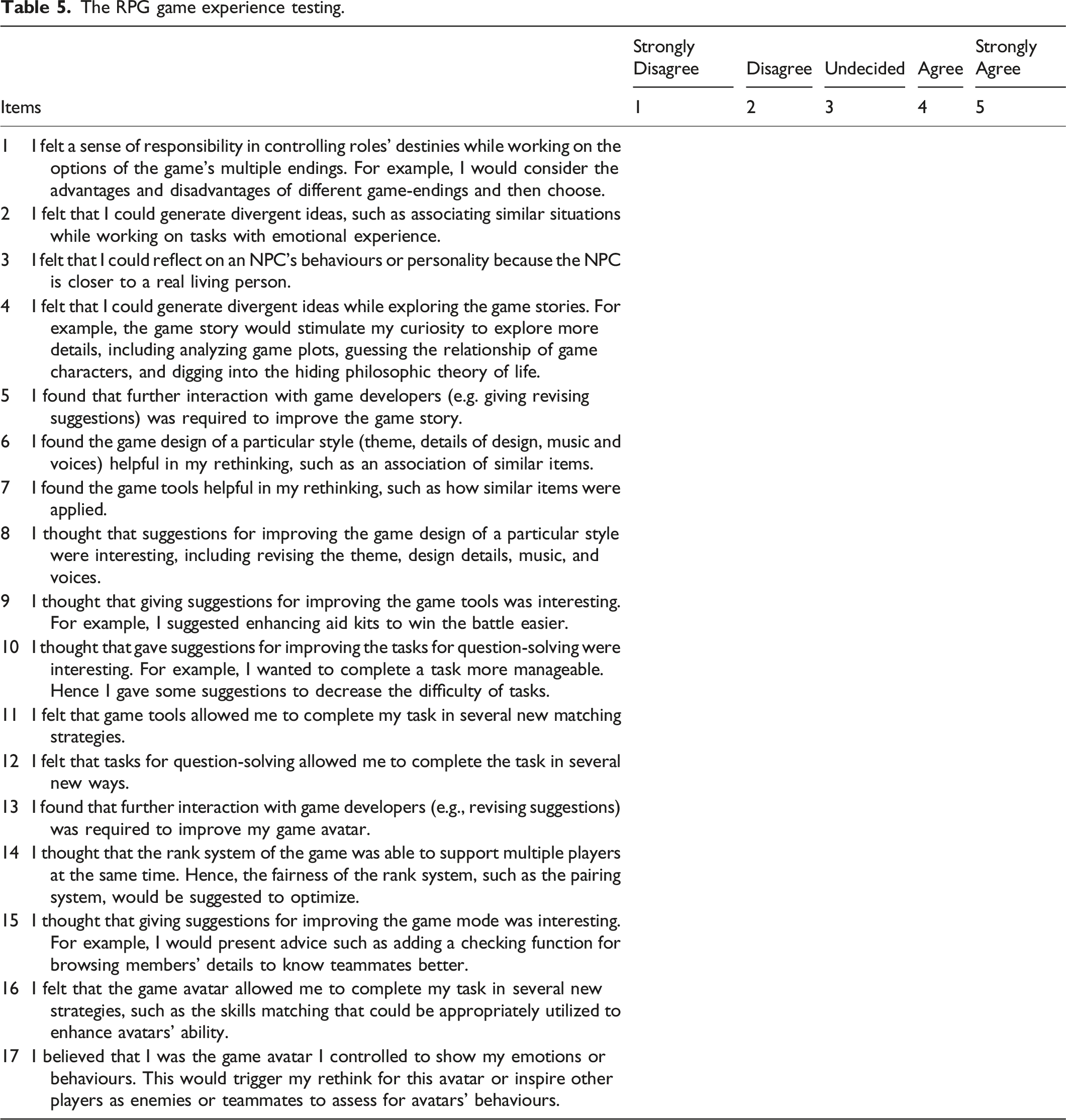
Items
Strongly Disagree
Disagree
Undecided
Agree
Strongly Agree
1
2
3
4
5
1
I felt a sense of responsibility in controlling roles' destinies while working on the options of the game's multiple endings. For example, I would consider the advantages and disadvantages of different game-endings and then choose.
2
I felt that I could generate divergent ideas, such as associating similar situations while working on tasks with emotional experience.
3
I felt that I could reflect on an NPC's behaviours or personality because the NPC is closer to a real living person.
4
I felt that I could generate divergent ideas while exploring the game stories. For example, the game story would stimulate my curiosity to explore more details, including analyzing game plots, guessing the relationship of game characters, and digging into the hiding philosophic theory of life.
5
I found that further interaction with game developers (e.g. giving revising suggestions) was required to improve the game story.
6
I found the game design of a particular style (theme, details of design, music and voices) helpful in my rethinking, such as an association of similar items.
7
I found the game tools helpful in my rethinking, such as how similar items were applied.
8
I thought that suggestions for improving the game design of a particular style were interesting, including revising the theme, design details, music, and voices.
9
I thought that giving suggestions for improving the game tools was interesting. For example, I suggested enhancing aid kits to win the battle easier.
10
I thought that gave suggestions for improving the tasks for question-solving were interesting. For example, I wanted to complete a task more manageable. Hence I gave some suggestions to decrease the difficulty of tasks.
11
I felt that game tools allowed me to complete my task in several new matching strategies.
12
I felt that tasks for question-solving allowed me to complete the task in several new ways.
13
I found that further interaction with game developers (e.g., revising suggestions) was required to improve my game avatar.
14
I thought that the rank system of the game was able to support multiple players at the same time. Hence, the fairness of the rank system, such as the pairing system, would be suggested to optimize.
15
I thought that giving suggestions for improving the game mode was interesting. For example, I would present advice such as adding a checking function for browsing members' details to know teammates better.
16
I felt that the game avatar allowed me to complete my task in several new strategies, such as the skills matching that could be appropriately utilized to enhance avatars' ability.
17
I believed that I was the game avatar I controlled to show my emotions or behaviours. This would trigger my rethink for this avatar or inspire other players as enemies or teammates to assess for avatars' behaviours.

□Multiple endings of the game
□Task with emotional experience
□A real no-play character (NPC) image
□The game design of a particular style
□Game tools
□Tasks for problem-solving
□Game avatars
□The rank system of the game
□Game mode
□Game stories

Data Availability Statement
The data supporting this study's findings are available from the corresponding author upon reasonable request.