



Abstract
Introduction
In recent years,
Research Objectives
Our study investigated market investors’ perceptions, needs and expectations regarding the integration of
Methodology
We conducted an online survey with n=413 participants, including experienced market investors and people who are interested in cryptocurrency. Within the survey, we presented the mock-ups of two cryptocurrency learning interventions: a gamified cryptocurrency learning application, and a cryptocurrency learning video game.
Results
From market investors’ perspectives, our study revealed the benefits and drawbacks of incorporating gamification and game design principles to facilitate learning cryptocurrency. We identified the need to develop dynamic, accessible, reliable, and community-building gamified and game-based cryptocurrency learning interventions.
Conclusion
From our findings, we propose guidance for the integration of gamification and games in cryptocurrency education, and we provide design recommendations for investor-specific cryptocurrency learning interventions.
Introduction
The rapid rise of cryptocurrencies has captivated the global financial scene, spawning a convergence of economic ideas, creative technology advances, and novel modalities of asset exchange. Investment in cryptocurrencies purposes has rapidly surged, with approximately 5.8 million active cryptocurrency wallet users worldwide in 2017 (Hileman & Rauchs, 2017). This number has grown exponentially, estimated to reach 994 million users by 2027 (Statista.com, 2023). Although millions of people have embraced cryptocurrency, many others remain skeptical or uncertain about investing in this emerging asset (Voskobojnikov et al., 2021). Some novice investors have suffered losses due to insufficient knowledge of the risks involved (Abramova et al., 2021), highlighting the importance for investors to have a sufficient understanding of cryptocurrency and associated risks before investing.
Prior research has identified the necessity of offering investor education before and during their involvement with cryptocurrency (Hadan et al., 2023). Studies in education indicated that using gamified and game-based learning interventions positively affects learners’ motivation, knowledge retention, and practical application of knowledge learned by providing an immersive learning experience (Domínguez et al., 2013; Filsecker & Hickey, 2014; Krath et al., 2021). Gamification involves incorporating game design elements and mechanics into non-game settings (Deterding et al., 2011), while game-based learning uses comprehensive games to teach practical subjects (e.g., military wargames (Simms, 2022)). We believe such learning interventions are a good match for the specific needs of cryptocurrency market investors, as they offer interactive and immersive investment simulations for novice investors to gain practical investment experience without the fear of real financial losses. However, it is unclear how market investors perceive gamified or game-based learning interventions and whether they would adopt such approaches for cryptocurrency education, given the unique aspects of cryptocurrency such as market volatility, financial risks, and developing regulations (Arsi et al., 2021; Hadan et al., 2023; Katsiampa, 2019). Therefore, to ensure market investors learn effectively and comprehensively through properly designed gamification and game-based learning interventions, we believe it is essential to investigate their attitudes, concerns, and needs for these learning interventions.
Our paper investigates the market investors’ perceptions on the integration of gamification and game-based learning interventions in cryptocurrency education. We conducted an online survey and gathered insights from n=413 participants, including experienced cryptocurrency market investors and people who were interested in cryptocurrency investment but lacking prior experience in this field. Our survey presented participants with mock-ups of two cryptocurrency learning approaches based on gamification and game-based design principles. We inquired about participants’ attitudes, concerns, needs, and perceived benefits and drawbacks of these two learning approaches. The diverse sample with varying levels of cryptocurrency knowledge and experience allowed us to explore perceptions and develop implications based on experienced investors’ cryptocurrency expertise and potential investors’ motivations and barriers to cryptocurrency learning.
Our participants’ responses revealed three recommendations for integrating game design elements into cryptocurrency education interventions: 1) tailoring learning interventions to according to individual needs and knowledge level, 2) integrating AI technologies for dynamic learning activities and up-to-date learning content, and 3) balancing between enjoyment and the serious nature of cryptocurrency investments. Furthermore, we identified two requirements for designing cryptocurrency investor-specific learning interventions: 4) ensuring learning content credibility and 5) fostering a sense of community.
Our research makes several
Literature Review
In this section, we summarize the theoretical foundation of gamification, the commonly used game design elements, and their application in education, and we discuss gamification in cryptocurrency.
Game Elements, Gamification, and Game-based Learning
Gamification has been applied for educational purposes to make learning more engaging, motivating, and enjoyable. Thus, learners achieve better learning outcomes (Antonaci et al., 2019; Çulha, 2022; Domínguez et al., 2013). Gamified learning involves incorporating game design elements and mechanics into non-game applications (Deterding et al., 2011). Game-based learning involves enhances learning experience using video games (Prensky, 2003), such as commercially titled motivating and attractive games (e.g., MinecraftEdu 1 ) (Cózar-Gutiérrez & Sáez-López, 2016), serious games (Michael & Chen, 2005) that are specially developed for training and education (e.g., wargames to train U.S. troops (Simms, 2022)), and student-developed games to build skills such as problem solving and game design (Van Eck, 2006). Both gamification and game-based learning are designed to promote learning and motivate learners using game elements (Kapp, 2012, p.16).
Various studies have classified game elements for gamification and game-based learning (e.g., Deterding et al., 2011; Dicheva et al., 2015; Sailer et al., 2017; Zichermann & Cunningham, 2011). While literature has summarized the basic design elements (e.g., Antonaci et al., 2019; Hamari et al., 2014; Nah et al., 2014), no standardized classification exists (Bai et al., 2020). Therefore, our study focuses on game elements that have been extensively described in education contexts instead of adopting particular classification schemes of design elements from prior work.
Commonly used game elements in education includes Badges, Leaderboards, Points, Challenges, Feedback, Levels/Stages, Progress Bar, and Storyline/Narrative (Antonaci et al., 2019; Hamari et al., 2014; Nah et al., 2014). Leaderboards enable users to understand their performance in relation to others. Levels give users a sense of progression by breaking tasks into achievable steps (Nah et al., 2014). Challenges are missions within the levels, usually appearing in the form of problems to be solved (Nah et al., 2014). Points serve as a numerical representation of player success (Antonaci et al., 2019) and a form of investment for future progression towards the goals (Nah et al., 2014). Badges are awards for the accomplishment of particular goals, while Progress bars are representations of learners’ overall goal progression. The information delivered to users regarding their progress, achievements, issues, or other aspects of their activities is Feedback (Antonaci et al., 2019). Storyline is the narrative story that games use to provide context information and intrigue players (Antonaci et al., 2019). It helps learners achieve an interest curve and stay motivated throughout the learning process (Nah et al., 2014).
Theoretical Foundations of Gamification and Game-based Learning
Previous research has adopted different theories to explain how game elements support motivation (e.g., Bai et al., 2020; Krath et al., 2021; Ryan & Deci, 2000). For instance, customizable levels and avatars address the need for autonomy (Kim et al., 2015; Ryan & Deci, 2000), feedback such as progress bars, levels, points and badges foster players’ sense of competency (Peng et al., 2012; Sailer et al., 2017). Leaderboards serve the need for relatedness by allowing players to compete (Bai et al., 2020). The increased sense of autonomy, relatedness, and competency (as specified in the self-determination theory) increases players’ behavioural and emotional engagement, and motivates further engagement (Kim et al., 2015; Peng et al., 2012; Ryan & Deci, 2000; Skinner et al., 2008). Points, badges, and progress bars are also employed to promote self-efficacy (Bandura, 1982), as they offer feedback on players’ performance (Gnauk et al., 2012). In addition, the experience of complete engagement in an activity (i.e., flow theory (Mirvis, 1991; Nakamura & Csikszentmihalyi, 2009)) is enabled by badges and progress bars that provide immediate feedback on performance and progress (Bai et al., 2020; Hamari & Sjöblom, 2017) and levels that allow players to choose appropriate challenges (Bai et al., 2020; Nakamura & Csikszentmihalyi, 2009; Shernoff et al., 2003). Flow is closely related to players’ motivation (Krath et al., 2021) because people who are completely engrossed in an activity tend to perceive the activity itself as a source of intrinsic reward and are motivated to pursue it for its own sake, rather than being solely driven by the desire to achieve the ultimate objective (Csikszentmihalyi & Larson, 2014).
Prior studies have found theories that explain how gamification influences players’ knowledge construction. For instance, constructivist learning theory suggests that players engage in the process of knowledge construction through their experiences, interactions, and reflections with the game environment, its rules, and its challenges (Jonassen & Rohrer-Murphy, 1999; Tsai et al., 2007). In this context, experiential learning theory emphasizes that knowledge acquisition occurs through personal experiences in an iterative learning cycle, rather than pre-defined instruction (Kolb, 2014). Situated learning theory postulates that the acquisition of conceptual knowledge is intimately connected to the context in which it is learned and applied (Brown et al., 1989). All these theories encourage to design of learning environments that closely mirror real-world scenarios with problem-solving contexts to enable learners to assimilate new information by linking it to their prior knowledge (Hou & Li, 2014; Hwang et al., 2015).
Other theories focused on explaining the players’ behaviour in gamification. For instance, the application of technology acceptance model (Davis et al., 1989) and theory of planned behaviour (Ajzen, 1991) in gamification suggests that players’ positive attitudes, acceptance and intention of adopting gamified interventions are closely related to their performance, perceived usefulness, and perceived ease-of-use (Bourgonjon et al., 2013; Rai & Beck, 2017; Vanduhe et al., 2020).
Overall, research suggests that game design elements can enhance learners’ experience by providing learning contexts that promote the feeling of enjoyment, foster learners’ interests, engage them in the overall and subsequent learning objectives, motivate them to advance their knowledge, and allow them to learn from “real-life” experience (Domínguez et al., 2013; Hamari et al., 2014; Krath et al., 2021; Nah et al., 2014).
The Application of Gamification and Game-based Learning in Cryptocurrency
Compared to other learning subjects, only a limited number of gamification and game-based learning studies focused on cryptocurrency and related concepts. Literature primarily focused on using gamification and game features for teaching students about blockchain technology (Suvajdzic et al., 2020), cryptocurrency as a part of software engineering (Çulha, 2022), and macroeconomics in cryptocurrency investments (Zhu et al., 2023). Apart from classroom learning, gamification has been used in cryptocurrency mining (M. Parizi & Dehghantanha, 2018) and trading crypto-like digital cats (Serada et al., 2021). However, little attention has been paid to market investors’ education or facilitating their cryptocurrency trading.
Connection to Our Project
While existing studies have proven the effectiveness of gamification and game-based learning in learning about different subjects, several gaps remained. First, only limited studies focused on learning about cryptocurrency using gamification or game-based learning. These studies primarily targeted students in academic environments (e.g., Çulha, 2022; Suvajdzic et al., 2020; Zhu et al., 2023), neglecting the needs of market investors who require a much deeper understanding of cryptocurrency and associated concepts. Our study bridges this gap by exploring market investors’ attitudes, concerns and needs regarding the application of games and gamification in cryptocurrency education. Second, previous studies have outlined the advantages and weaknesses of gamification and game-based learning in contexts such as higher education (Jayasinghe & Dharmaratne, 2013). To determine the best educational approach for market investors, we believe it is essential to analyze both gamified and game-based learning approaches from the perspective of market investors.
In this study, we proposed mock-ups of two learning approaches, including a gamified learning application and a video game, aiming to support engagement, motivation, and comprehension in learning cryptocurrency. Our participants included experienced market cryptocurrency investors and people who were interested in investing in cryptocurrency in the future (see Table 1). We inquired about participants’ perceptions of both approaches, their perceived advantages and shortcomings of each, and their needs regarding effective cryptocurrency learning interventions. Our contribution can serve as a guideline for the research, design, and development of future cryptocurrency learning interventions that cater to the unique requirement of market investors.
Proposed Learning Interventions
We presented mock-ups of two distinct approaches to enhance the learning experience of market investors on cryptocurrency, as depicted in Figure 1. The first was a game-based learning approach that depicts a role-playing game (RPG) specifically designed for cryptocurrency learning. Players take on the role of cryptocurrency enthusiasts, exploring a virtual world inhabited by non-player characters (NPCs). As they progress in the game’s story, players can learn and earn points by assisting NPCs with their dilemmas in cryptocurrency investments, and can solidify their knowledge through test questions. The second was a gamified learning approach that incorporates game design elements in a learning application. Users can learn through reading informative content and can enhance their understanding by completing practice tasks. Both approaches integrated the same set of game elements, including points, levels, badges, a progress bar, and a leaderboard. To ensure clarity, we provided participants with descriptions of each game element and how it functioned within the game or gamified application (see Figure 1). The descriptions for both approaches were nearly identical, with only slight modifications to match the context of either gamification or game-based learning. That way, participants could focus on the difference between the two approaches rather than the presence of individual game elements. As our primary objective was to assess the perception of market investors regarding the use of these approaches in cryptocurrency education, rather than focusing on video game design, we anticipated that employing mock-ups adequately serves the purpose of our study. Example mock-ups. From left to right: 1) screenshots of a cryptocurrency learning video game, 2) screenshots of a gamified cryptocurrency learning application.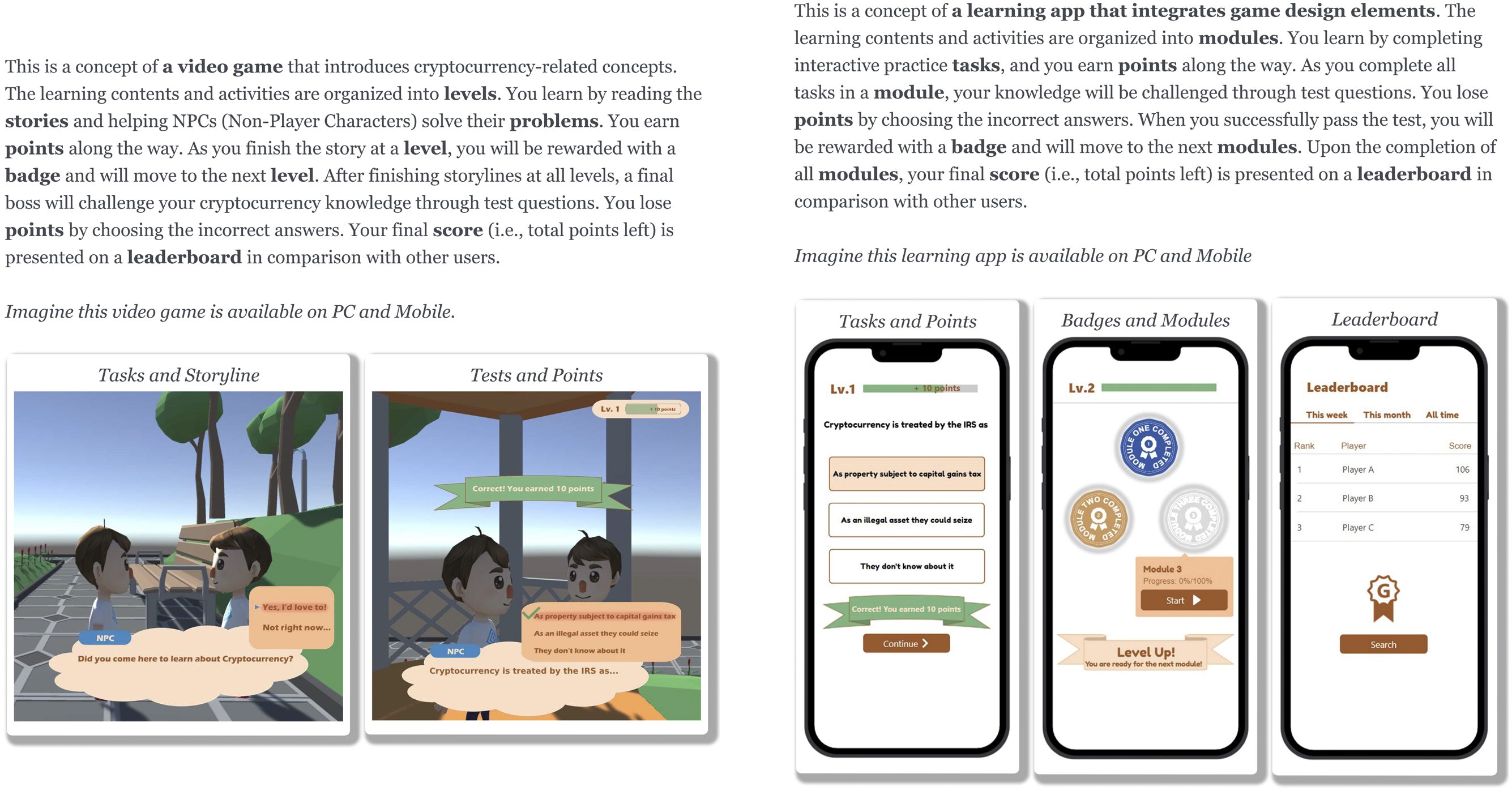
Methodology
Our study investigated the needs and expectations of experienced market investors and potential future investors regarding the integration of gamification and games in cryptocurrency education. We focus on three primary Research Questions (RQs):
What are cryptocurrency market investors’ attitudes toward gamification and game-based learning?
What concerns do cryptocurrency market investors express regarding game-based learning and gamified learning for learning about cryptocurrency?
What needs do cryptocurrency market investors have for effective learning interventions? We selected an online survey as our method for two primary reasons. First, the survey method allowed us to incorporate mock-ups, thus enabling participants to visually understand and experience the integration of gamification and games in learning cryptocurrency. Second, since cryptocurrency is a globally used token (Hileman & Rauchs, 2017), the survey method allowed us to reach a diverse and globally distributed audience within a time-efficient manner (Evans & Mathur, 2005).
Survey Design
Figure 2 presents the flow of survey questions. Our survey examined investors’ and potential investors’ attitudes, concerns, and needs toward the game-based and gamified learning interventions for cryptocurrency learning. Survey flowchart.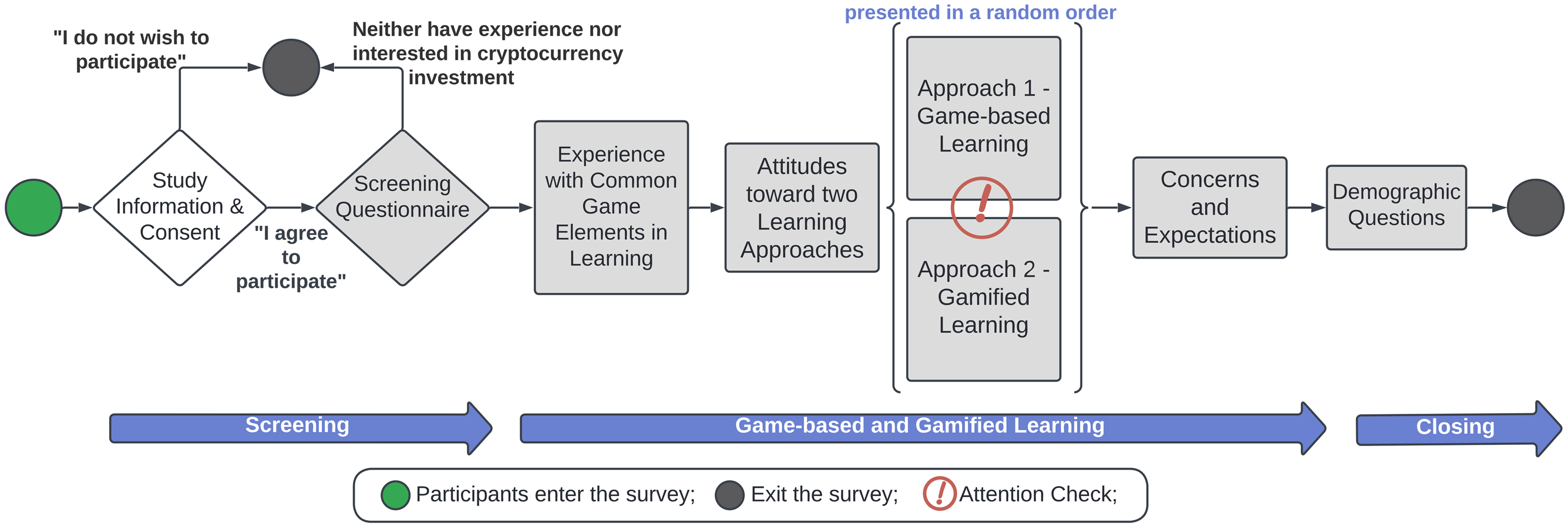
Survey Content
Our survey began with a study information letter, a consent form, and a screening questionnaire. Since our research explores gamification and game-based cryptocurrency learning from market investors’ perspective, we only recruited participants who had experience buying and selling cryptocurrency or expressed interest in cryptocurrency trading in the future. Upon completing the screening, participants were first presented with a description of gamification and images of common game elements such as points, progress bars, levels, and badges. This way we could avoid our results being skewed by misconceptions of gamification and related concepts. We then inquired about participants’ prior experience with game elements in general education contexts because prior experiences with gamification can influence learners’ attitudes towards using them in learning (An, 2020).
In addition, participants were presented with mock-ups of our proposed two learning approaches. To eliminate the possible order bias, the mock-ups of the two approaches were presented in a random order. Within each approach, we encouraged participants to elaborate on their attitude towards the approach (
We gathered participants’ demographic information at the end of the survey. In addition, we included one attention check question, presented in a random position between the two learning approaches, to ensure that participants were paying attention to our questions.
Participant Recruitment (n=413)
Through a power analysis using G*Power (Faul et al., 2009), we determined that a n=356 sample size was needed. We received the university ethics clearance (REB) in August 2022. We recruited 465 Prolific 2 participants and 18 investors from a cryptocurrency exchange platform. These participants were at least 18 years old, either had experience trading cryptocurrency or were interested in cryptocurrency investment in the future. We did not limit participants to specific countries because cryptocurrency users are widely spread around the world (Hileman & Rauchs, 2017).
We received a total of 483 responses. We removed 53 incomplete responses and 17 responses that failed the attention check. Therefore, our results were based on the analysis of a total of
Data Analysis
We analyzed closed-ended questions and scale questions using R (ver.4.2.1). All Likert-scale data were non-parametric (based on Shapiro-Wilk Test (Peat & Barton, 2008)) and were encoded into binary values, with 0 representing negative responses (e.g., “strongly disagree”, “somewhat disagree”, “never”) and 1 representing neutral and positive responses (e.g., “strongly agree”, “somewhat agree”, “always”, “neutral”).
The open-ended responses were analyzed using the thematic analysis open-coding method, following established procedures outlined by Braun & Clarke (Braun & Clarke, 2012). Through several iterations, we employed affinity diagramming (Scupin, 1997) to categorize data segments, and we used the collaborative qualitative data analysis tool, Dovetail 3 , to support these analytical processes.
Results
In this section, we detail our findings, beginning with an overview of our participants’ demographics and their prior experience with game elements in educational contexts. We then present the results for each research question (RQ).
Participants
Our participants were primarily young, and most had full-time employment. Sixty-six percent of participants had cryptocurrency investment experience, and 34% were interested in investing in cryptocurrency in the future. The majority of participants (>70%) had high familiarity with games, game elements, and gamification in general and in educational contexts.
Demographic Information
Table 1 displays the demographic information of our participants (n=413). 199 participants identified as women, 207 as men, 5 as non-binary or third gender, 1 chose to self-describe, and 1 did not disclose their gender. Participants fell within the age range of 18 to 64 years, with an average of 25 years. A significant portion of the participants had full-time (46%) or part-time employment (19%), and came from 23 different countries.
Participants Demographic Information.

Note. *“Other” includes 19 countries, each had fewer than four participants: Argentina, Austria, Bahamas, Belgium, Czech Republic, Denmark, Finland, Germany, Ghana, Ireland, Latvia, Morocco, Netherlands, Nigeria, Philippines, Singapore, Slovenia, Spain, Sweden.
Prior Experience with Game Elements
Participants’ Experience with Gamification and Game Elements in General and in Educational Contexts.
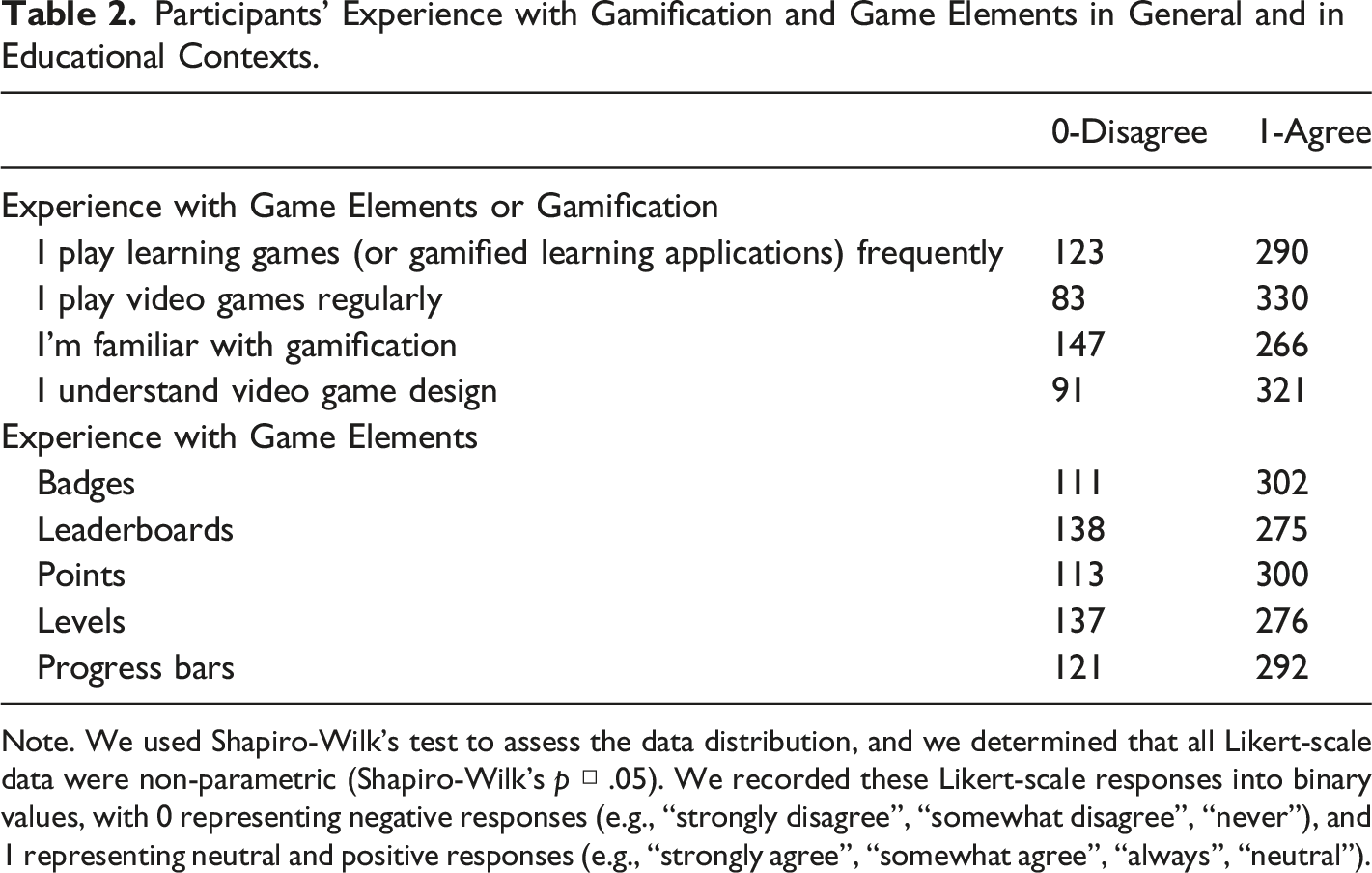
Note. We used Shapiro-Wilk’s test to assess the data distribution, and we determined that all Likert-scale data were non-parametric (Shapiro-Wilk’s p □ .05). We recorded these Likert-scale responses into binary values, with 0 representing negative responses (e.g., “strongly disagree”, “somewhat disagree”, “never”), and 1 representing neutral and positive responses (e.g., “strongly agree”, “somewhat agree”, “always”, “neutral”).
RQ1: What are cryptocurrency learners’ attitudes toward gamification and game-based learning?
We employed open-ended questions to evaluate participants’ attitudes and perceptions towards both the gamified learning and the game-based learning approaches for cryptocurrency education (Appendix Q3). A large majority of participants (>82%) believed that both approaches can be motivating, productive, and effective in delivering positive learning outcomes. Participants further elaborated on the reasons behind their attitudes (see Figure 3). From top to bottom: participants’ attitudes toward the use of 1) game-based learning approach, 2) gamified learning approach, and 3) game design elements in cryptocurrency education. Open-ended questions. Total percentage >100%.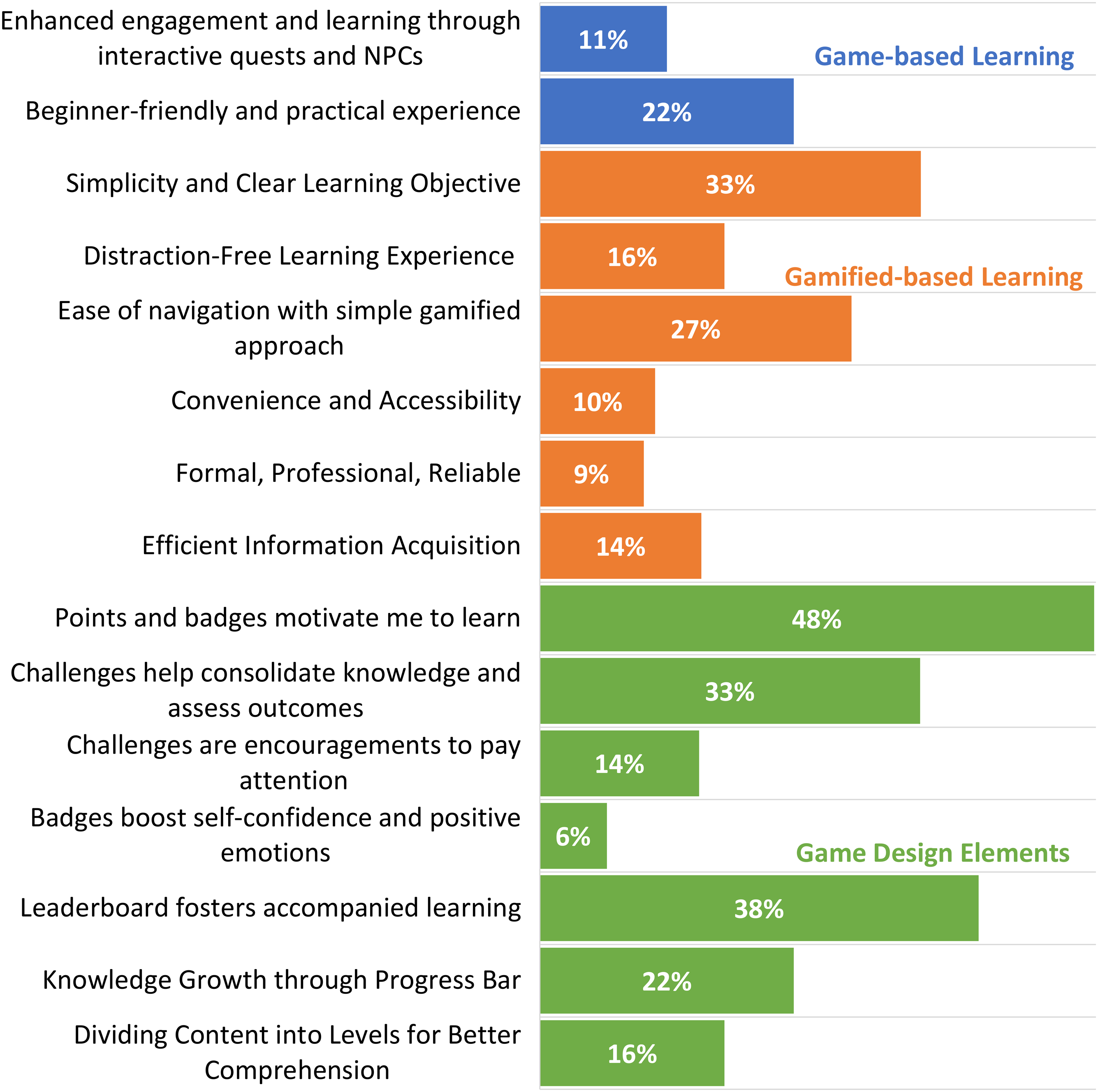
Game-Based Learning Can be Enjoyable, Insightful, and Supportive for the Safe Practice of Risky Investments
Participants viewed cryptocurrency as a complex learning topic, and using the game-based approach would lessen the burden of learning and render the learning process more relaxed and enjoyable. Many participants (11%) found game content like quests and human-like NPCs appealing, believing these would provide a sense of learning from “real” peer experiences. They assumed that progressing through the game and discovering more content and levels could help maintain learners’ attention over an extended period, especially for gamers and young people.
In addition, 22% of the participants perceived the game-based approach as an effective method for teaching beginners about cryptocurrency. They believed that a game could visually simulate real-life situations such as a safe and supportive environment for learners to practice cryptocurrency investments while enjoying themselves.
In summary, our participants believed that the game-based approach would be a creative way for cryptocurrency learning, offering a unique opportunity for market investors to gain practical insights and real-world experience in a risk-free environment
Gamified Learning Can be Intuitive, Accessible, and Distraction-Free
Participants (33%) highlighted that gamified learning could provide simplicity in learning and present clear learning objectives. Sixteen percent of participants believed that gamified learning could provide a distraction-free learning experience (as opposed to game-based learning), ideal for committed learners. Twenty-seven percent of participants believed that a simple and intuitive gamified approach would allow beginners to navigate among the complex cryptocurrency topics easily. Ten percent of participants believed that gamification could also provide learners with an accessible and convenient learning experience, allowing them to access the material at any time, anywhere.
Some participants (9%) also felt that the clean, simple, and intuitive structure of the gamified approach gave it a professional appearance, making it appear trustworthy. These characteristics enabled learners to acquire a substantial amount of information quickly, which resulted in a time-efficient learning process (reported by 14% of participants).
In general, our participants perceived the gamified approach as simple, easy to follow, and distraction-free, demystifying the complexity of cryptocurrency knowledge, making it more accessible to novice investors.
Game Elements Can Enhance Motivation, Knowledge Building, Self-Confidence, and Sense of Community
Forty-eight percent of participants viewed points and badges positively. They believed that earning points and badges can lead to a sense of achievement, motivating them to learn more. As reported by participants, the challenges associated with earning points can encourage them to pay attention to details (14%), consolidate their knowledge and assess their learning outcomes (33%). Furthermore, participants (6%) believed that obtaining badges can boost their self-confidence for future investments, positively impact their emotions, and help them build a positive mindset to cope with the stress of trading cryptocurrency in real life.
Approximately 38% of the participants highly valued the competitiveness from the leaderboard, believing it can foster a sense of community. They mentioned that studying with others would make them feel accompanied in learning this complex topic and would motivate them to outperform other learners and achieve a higher rank. Many participants (22%) believed that the progress bar could enable them to feel their growth in knowledge. Sixteen percent of participants also believed that dividing the learning content into levels would make it more digestible and comprehensive, which might be beneficial for people who are unsure where to begin, especially given the diverse topics within cryptocurrency.
RQ2: What Concerns do Cryptocurrency Learners Express Regarding Game-Based Learning and Gamified Learning for Learning About Cryptocurrency?
We incorporated open-ended questions to collect the participants’ concerns about each learning approach and their concerns about the general integration of game elements into cryptocurrency learning (Appendix Q4) (see Figure 4). From top to bottom: participants’ concerns toward the use of 1) game-based learning approach, 2) gamified learning approach, and 3) game design elements in cryptocurrency education. Open-ended questions. Total percentage >100%.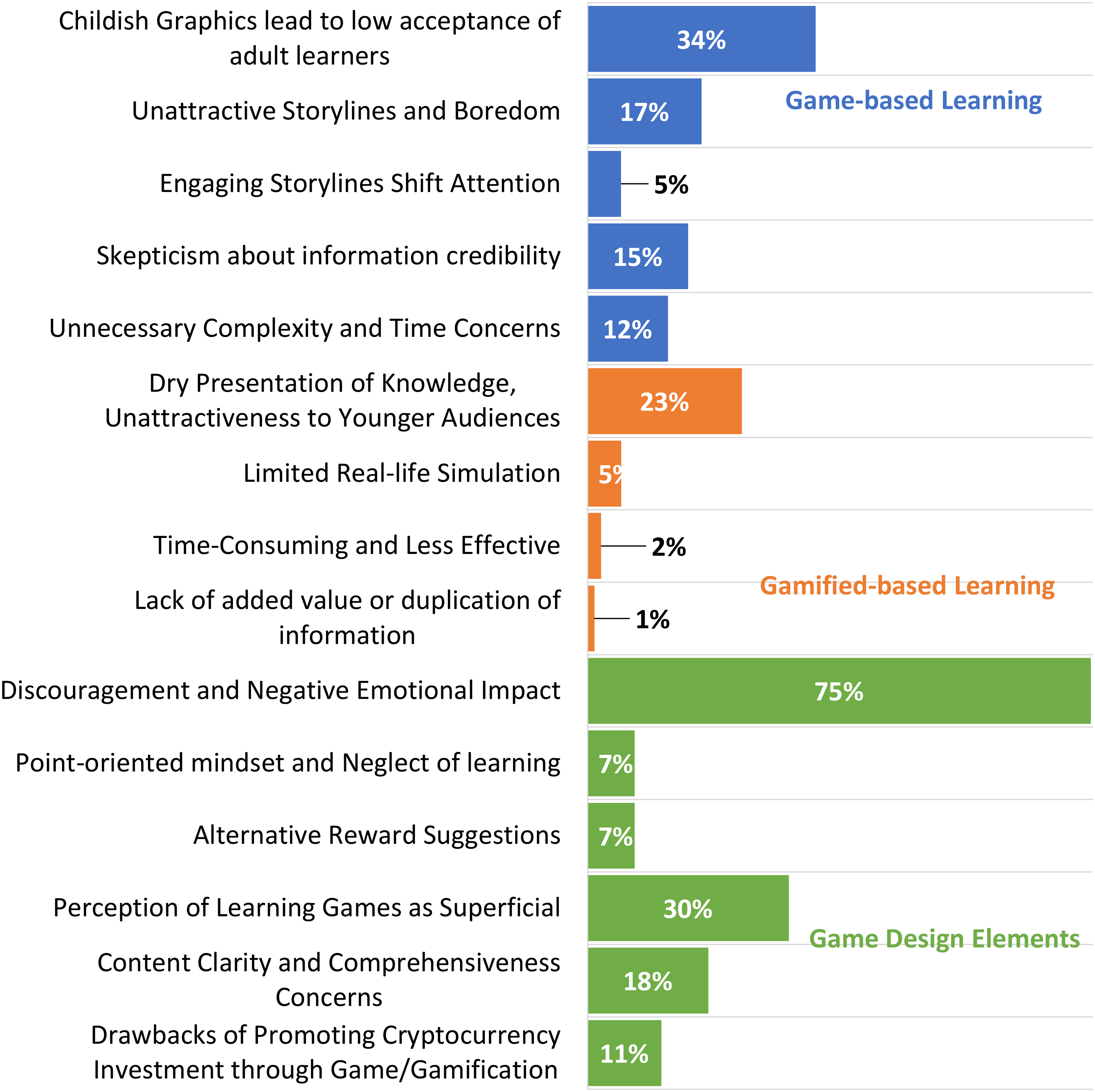
Concerns Toward Game-Based Cryptocurrency Learning
Thirty-four percent of participants indicated that the graphical style could affect the acceptance of game-based cryptocurrency learning among adult learners. They expressed concerns about “childish” graphics that could discourage them from playing in public. In addition, 17% of participants said that long or unattractive storylines could quickly make in-game interactions boring. In contrast, 5% of participants expressed concerns about engaging storylines diverting attention from learning content.
Fifteen percent of the participants expressed skepticism about the credibility of the information provided by the game, perceiving it as a less serious learning method. They mentioned that such skepticism could cause learners to underestimate the potential risks associated with real-world cryptocurrency trading. Furthermore, 12% of participants felt that game-based learning could add unnecessary complexity, including navigating the game interface and the time required for learning. This latter point is particularly relevant for people with full-time jobs who prioritize time efficiency.
Concerns Toward the Gamified Cryptocurrency Learning
A crucial concern about the gamified approach was its lack of engagement. Some participants (23%) perceived the presentation of knowledge as “dry,” resulting in an uninteresting learning experience, especially to younger audiences. Compared to game-based learning, participants perceived gamified learning as simpler and less interactive. Consequently, 5% of them were concerned that this approach was too simplistic and incapable of simulating complex real-life situations that could provide them with practical investment strategies.
In addition, 2% of participants believed that gamified learning might be time consuming, because it involves going through numerous materials, deeming it less effective than online reading or video tutorials. A few participants (1%) stated that all the information about cryptocurrency can be found online, so they were reluctant to download an application that duplicated the information available online.
General Concerns Toward Using Game Elements in Cryptocurrency Learning
Participants expressed concerns about the use of game elements in cryptocurrency learning, specifically regarding points and leaderboard. Seventy-five percent of participants found losing points and having a low position on the leaderboard discouraging, possibly causing feelings of shame or pressure. They assumed that experienced investors would occupy higher ranks on the leaderboard by using the learning intervention as a way of confirming their knowledge, which could discourage beginners from learning about cryptocurrency. Moreover, 7% of participants worried they could become too focused on gaining points and climbing the leaderboard instead of learning the actual knowledge. These factors might result in both beginners quitting their learning journey and people prioritizing points over knowledge.
Seven percent of participants believed that badges could appear dull and not worth their time. They suggested that to substitute digital badges with cryptocurrencies or Non-Fungible Tokens (NFTs) to better incentivize cryptocurrency learners.
Thirty percent of participants worried the general use of games in the learning intervention. They believed that the appearance of games might give the impression that the intervention lacks in-depth information, potentially discouraging people from adopting it. A number of participants (18%) were also concerned about the accuracy, practicality, and comprehensiveness of the learning content offered through game-based and gamified approaches. They pointed out that to make the intervention engaging and enjoyable, the learning intervention might not be able to uncover the complex aspects of cryptocurrency. Such a design could downplay the seriousness of cryptocurrency and promote the feeling of over-confidence in the topic, leading to irresponsible trading behaviours or careless decisions.
Some participants (11%) highlighted the potential drawbacks of promoting cryptocurrency investment through games and gamification, given the controversial nature of this topic. They pointed out that such learning interventions can lead to excessive attention in society, which may not be desirable.
RQ3: What Needs do Cryptocurrency Learners Have for Effective Learning Interventions?
Beyond expressing their concerns, many participants expressed their expectations that future gamification or game-based cryptocurrency learning interventions should consider (Appendix Q5) (see Figure 5). Participants’ expectations for future gamified or game-based cryptocurrency learning interventions. Optional open-ended question. Total percentage <100%.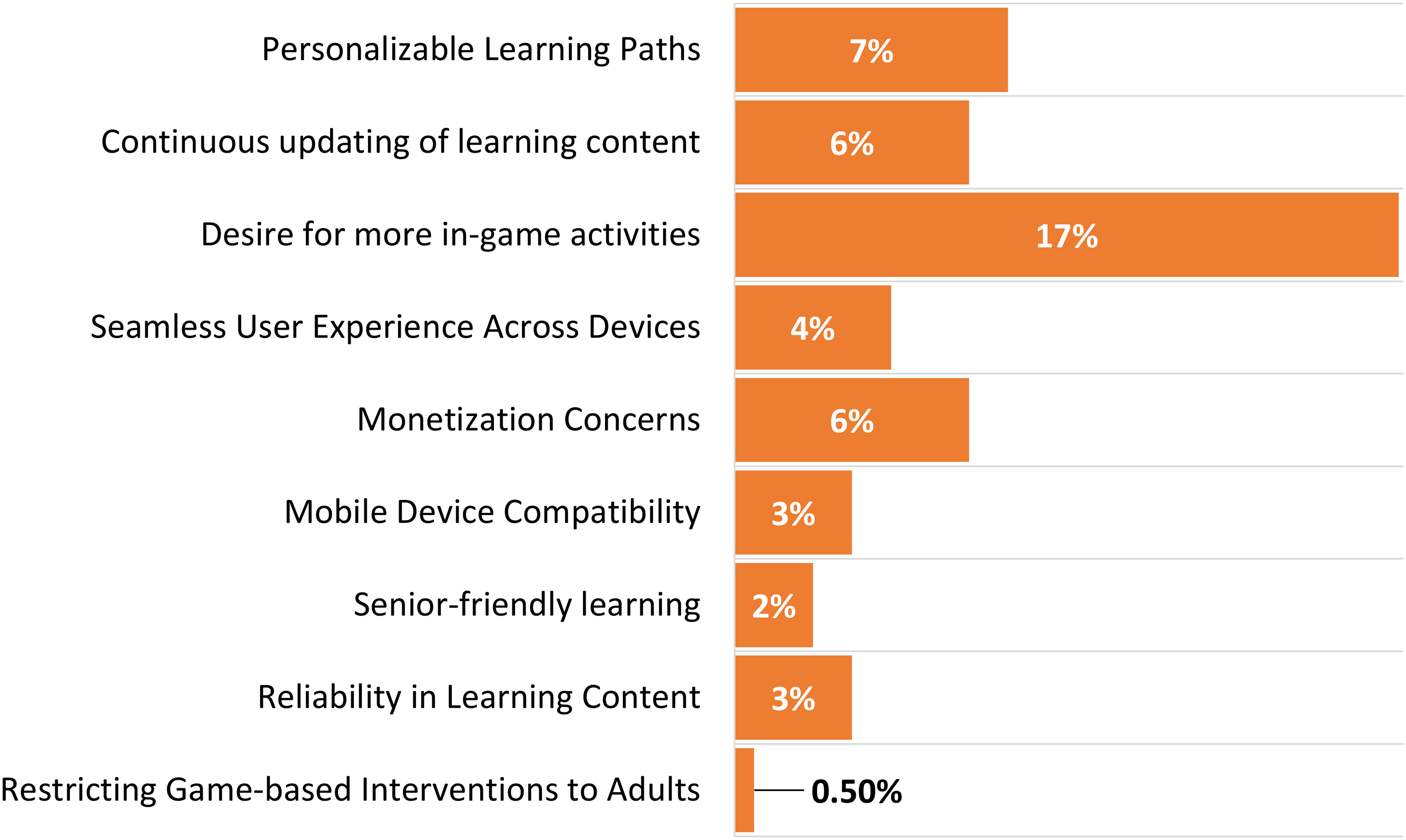
Personalizable Learning Paths, Long-Term Knowledge Reinforcement, and Continued Knowledge Update
Participants (7%) expressed a desire to customize learning topics for their needs. They highlighted that learning interventions should cater to both new and experienced investors because spending time on known topics was not useful. They also hoped for a “replay” option to refresh their knowledge because retaining newly learned information in the long term could be challenging.
The domain of cryptocurrency and related topics is vast and expanding at a rapid pace. Thus, participants (6%) emphasized that continuously updating the learning content should be a major consideration for cryptocurrency learning interventions. These participants also suggested that integrating a chatbot or other type of conversational functionality would be beneficial.
More activities and Supports, and no Monetization
Although some participants were concerned that the use of game could downplay the seriousness of cryptocurrency investment, many also (17%) expressed a desire for various in-game activities. For instance, minigames that simulate cryptocurrency investments through an exchange interface could help learners practice real-life trading skills that cannot be acquired through reading online materials. In addition, offering options for avatar customization could generate a sense of ownership and increase engagement in the learning process. In-game items like hats, sunglasses, and cryptocurrency-themed cosmetics could be provided as rewards to showcase players’ achievements.
In addition, 4% of participants emphasized the importance of a seamless user experience on various devices, such as PCs, mobile phones, and gaming consoles, without requiring sophisticated hardware or complex configuration procedures. They suggested that the learning material should be available in multiple languages to reduce entry-barriers for learners around the world.
Six percent of participants worried about the possible integration of monetization tactics. These participants believed that disruptive advertisements and microtransactions involving in-game currency could become excessive and bothersome, eventually diminishing the pleasurable experience of the game.
Accessibility, Reliability, and Safety
Three percent of participants expressed a need for mobile device compatibility, as they would like to learn about cryptocurrency while on the go. Two percent of participants also demanded senior-friendly game-based learning. They highlighted the fact that adults and older adults constitute the primary demographic among cryptocurrency investors; thus, the design of cryptocurrency learning interventions should meet their specific needs and preferences. They believed that young people who are interested and have the ability to play the game might have limited ability and interest in learning about cryptocurrency.
Furthermore, participants (3%) expressed the need for reliability in learning content. As the content is likely created by the intervention’s internal teams, it is important to ensure that the content is not unintentionally biased or purposefully manipulated. This is extremely important for new investors, as the information learned can greatly impact their investment decisions. They expressed concern that content creators may withhold key information to take advantage of learners. To address this concern and improve credibility, one participant suggested that content creators should seek approval or warranty from government agencies or trusted financial organizations.
Lastly, to prevent young people from getting involved in cryptocurrency investing too early, two participants (0.5%) recommended limiting future game-based cryptocurrency learning interventions to adults.
Discussion
Research indicated that gamification and learning games can effectively support academic learning (Cózar-Gutiérrez & Sáez-López, 2016; Domínguez et al., 2013; Filsecker & Hickey, 2014). Our study aimed to explore market investors’ and potential future investors’ perceptions of using these approaches to learn about cryptocurrency. As the first study focusing on market investors outside of academic environments, our findings can inform the development of future cryptocurrency learning interventions that incorporate gamification and games for both experienced and novice investors.
Our participants were positive about using gamification and game-based approaches for cryptocurrency learning, believing that the presentation of learning content through game design elements enhances engagement and motivation, aligning with previous research on the use of these approaches in the learning of other topics (Antonaci et al., 2019; Çulha, 2022; Domínguez et al., 2013). We identified game elements that participants particularly perceived to be beneficial, such as immediate feedback through points, progress tracking through the progress bar, and the use of badges as incentives. These findings reinforce the importance of incorporating these elements into learning interventions to enhance their effectiveness (Bai et al., 2020; Sailer et al., 2017). On the contrary, some participants felt that the game elements could add unnecessary distractions, echoing the findings of Bai et al. (2020) and Hew et al. (2016).
Participants who expressed a positive attitude towards gamified learning tended to provide detailed reasons for why they did not favour the game-based approach for learning about cryptocurrency. This result suggests that they may have disliked the game-based approach and the gamified approach may have been a more familiar format for them.
In the following, we discuss the implications of our findings.
Implication #1---Tailor Learning Tools to Individual Needs
We identified diverse views on the game-based approach. While some participants recognized the value of the game-based approach in maintaining learners’ engagement, while others worried the graphics being too childish for professional investors and potentially diminishing the seriousness of cryptocurrency investments. Similarly, opinions varied on the gamified learning approach. While some participants preferred the intuitive design of this approach, others questioned its ability to provide practical knowledge. These contrasting points of view highlight the need to tailor such interventions to meet learners’ varied learning preferences and needs. For example, adults or professional investors who value time efficiency and prefer a straightforward layout may find gamified learning more appropriate. Young people or casual investors who enjoy games and a relaxed learning pace may be better suited for game-based learning.
In addition, it is crucial to offer learning options that support the learners’ learning environment. For instance, people who prefer to learn during their daily commute might opt for gamified learning on their smartphone, which is a more portable and convenient option.
Finally, learners’ access to different devices should be considered. For example, for people who have gaming equipment, such as high-end smartphones, gaming laptops, or consoles, the immersive nature of the game-based approach, coupled with high-quality graphics and interactive gameplay, can provide them with an enjoyable and effective learning experience. On the other hand, people who rely on older devices may find gamified learning more practical and viable.
Implication #2---Maintain up-to-Date and Dynamic Learning Content
Given the vast and rapidly-evolving nature of cryptocurrency and related topics, participants indicated that learning content must be actively kept up-to-date (see Section 5.4.1). One potential solution could be to integrate learning with artificial intelligence (AI). For instance, rather than relying on NPCs with pre-defined conversations, using adaptive AI chatbots (e.g., GPT-4 4 ) may offer a more engaging learning experience. These AI-powered chatbots can learn and adapt over time (OpenAI, 2023a), and thus have the potential to learn from publicly available cryptocurrency-related information and provide continuous learning experiences with up-to-date knowledge. Moreover, AI chatbots can analyze the learners’ interactions and performance data, identify areas where they need additional support, and provide personalized feedback and guidance (OpenAI, 2023b). These capabilities allow learners to focus on the areas that are most challenging for them, and accelerate their learning progress.
In fact, some popular gamified learning applications, such as Duolingo (OpenAI, 2023b) and Khan Academy (OpenAI, 2023c), have already started to integrate GPT-4 to deepen the learning experience. However, some questions regarding AI integration still remain, such as how to maintain dynamic experiences while ensuring that learning conversations remain on the topic, and how to ensure the accuracy and appropriateness of the AI-generated learning contents (e.g., addressing the problem of hallucinating facts) (OpenAI, 2023a).
Implication #3---Highlight the Seriousness of Cryptocurrency Investments in Game-Based Learning
Participants were concerned that game-based learning can downplay the seriousness of cryptocurrency investments and lead to irresponsible investment behaviour (see Section 5.3.1). Learning interventions should therefore ensure that learners understand the risks and implications of real cryptocurrency investments. Furthermore, as noted in Section 5.3.3, participants were concerned that the enjoyment provided by game-based and gamified learning interventions could detract from the depth and complexity of learning content. Thus, it is essential to design game-based cryptocurrency learning interventions that balance enjoyment and learning outcomes and provide guidance to emphasize the real-world consequences of cryptocurrency investments.
Implication #4---Improve Trustworthiness and Reliability of Learning Content
Our participants highlighted potential issues regarding the credibility of the content creator and the learning content, particularly if the learning content is produced by cryptocurrency exchange platforms (see Section 5.4.3). The credibility of learning content is directly linked to the safety of their investments. Indeed, the decentralized nature of cryptocurrency and the largely unregulated cryptocurrency market produce opportunities for fraud and scams (Vasek & Moore, 2015). Therefore, cryptocurrency investors are required to pay more attention to the information they receive. Hence, building trust among learners and ensuring the reliability of cryptocurrency-related learning content are critical steps to encouraging adoption of the learning intervention.
One solution, as proposed by our participants, is to obtain verification from government agencies or trustworthy third-party organizations. However, it is unlikely that government agencies would be directly involved in verifying the learning content developed by private sectors. Instead, using their guidelines as references to support the learning content might be more feasible. Public sectors from multiple countries have provided resources and information for cryptocurrency investors (e.g., the U.S. Securities and Exchange Commission (SEC) (SEC, 2023) , the Canadian Securities Administrators (CSA) (CSA, 2022).
Another solution is to improve trust through design. People’s trust is closely tied to the perceived quality of the product (Christine Roy et al., 2001; David & Glore, 2010). Thus, people are more likely to view information as trustworthy when the cryptocurrency learning intervention is of high-quality design with good aesthetics, while they are more likely to be skeptical of information presented in a poorly designed intervention.
Implication #5---Foster a Sense of Community
Cryptocurrency investors like to engage in online forums and social groups (Bohr & Bashir, 2014; M. et al., 2021). The social trust among and between investors and online communities is a main reason that led to the (non-)adoption of cryptocurrency (Craggs & Rashid, 2019; Knittel et al., 2019; Sas & Khairuddin, 2015). Our participants also mentioned the sense of community as a motivator for learning (see Section 5.2.3). Therefore, cryptocurrency learning interventions should consider fostering learners’ sense of community. The integration of leaderboards is one way, although they received controversial opinions among our participants. A sense of community can also be fostered through other methods, such as incorporating discussion forums, and creating opportunities for collaborative learning (Antonaci et al., 2019). A sense of community can positively impacting learning performance (Antonaci et al., 2019).
Limitations
Despite our valuable contributions, some limitations remain in our study. First, our results relied on self-reported responses. Participants’ self-awareness and honesty are inevitably biasing factors. However, this is a common challenge in empirical research that cannot be completely resolved. Second, we presented mock-ups of gamified and game-based learning to help participants envision how these approaches could look in practice before they answered questions. However, these mock-ups could bias our results through their graphical style. Lastly, the majority of our participants were recruited on Prolific, which limits the perspectives of people who do not use this platform. We encourage future researchers to consider using various tools and interventions to reach out to cryptocurrency investors and people who are interested in cryptocurrency for a more comprehensive analysis.
Conclusion
In recent years, game-based learning and gamification have gained popularity for their ability to improve engagement, motivation, and learning outcomes. As technology continues to advance, these approaches provide opportunities to educate cryptocurrency investors and those interested in the topic. Our study offers insights into the integration of these approaches into cryptocurrency learning from the perspectives of investors and potential investors. Our results identified the advantages and pitfalls of incorporating gamification and game design principles to facilitate the learning of cryptocurrency. Based on these results, we propose design implications for developing dynamic, accessible, reliable, and community-building gamified and game-based cryptocurrency learning interventions and content. We believe that these design implications will motivate investors to learn about cryptocurrency before investing and to raise general awareness of this new technology.
Supplemental Material
Supplemental Material - Gamification and Gaming in Cryptocurrency Education: A Survey with Cryptocurrency Investors and Potential Investors
Supplemental Material for Gamification and Gaming in Cryptocurrency Education: A Survey with Cryptocurrency Investors and Potential Investors by Hilda Hadan, Leah Zhang-Kennedy, Lennart Nacke,and Ville Mäkelä in Simulation & Gaming
Footnotes
Declaration of Conflicting Interests
The author(s) declared no potential conflicts of interest with respect to the research, authorship, and/or publication of this article.
Funding
The research was supported by the Mitacs Accelerate funding program (#IT30275) for Gamified Learning about Cryptocurrency project, in partnering with Steam Exchange Inc. Any opinions, findings, and conclusions or recommendations expressed in this material are those of the authors and do not necessarily reflect the views of Mitacs, the Steam Exchange Inc, and the University of Waterloo.
Disclosure
In accordance with our ethical obligation as researchers, we are reporting that Mitacs Accelerate (#IT30275) funds this research project in partnering with Steam Exchange Inc. This financial support does not conflict with our obligations as researchers. We have disclosed those interests fully to the Simulation & Gaming Journal, and we have in place an approved plan for managing any conflicts arising from that involvement.

Supplemental Material
Supplemental material for this article is available online.
Notes
Author Biographies
References
Supplementary Material
Please find the following supplemental material available below.
For Open Access articles published under a Creative Commons License, all supplemental material carries the same license as the article it is associated with.
For non-Open Access articles published, all supplemental material carries a non-exclusive license, and permission requests for re-use of supplemental material or any part of supplemental material shall be sent directly to the copyright owner as specified in the copyright notice associated with the article.
