




Abstract
Background
Serious games (SGs) have emerged as promising tools for life science education, providing interactive learning experiences that bolster accessibility and engagement. In the context of genetics education, which emphasizes hands-on problem-solving, SGs offer a potential platform to augment learning.
Aim
This article presents the detailed design of a new educational SG, titled Punnett Farms, along with a pilot evaluation of the game. Designed to help students learn the fundamentals of Mendelian/molecular genetics, the game offers a colorful virtual world with embedded educational content aimed at cultivating interactive learning and engagement.
Methods
Development of Punnett Farms was guided by principles of educational game design models. The game was implemented in Unity and C#. A pilot study was conducted with community college students (n = 22) to assess the game’s strengths and areas for improvement. Pre-/post-intervention knowledge assessments, along with questionnaires inspired by the GEM and MEEGA+ frameworks, were used to obtain insights into participants’ interest, enjoyment, and short-term learning outcomes.
Results
Participants exhibited possible short-term knowledge gains after playing Punnett Farms, as reflected by improved quiz scores. In questionnaire responses, participants also reported improved content understanding, interest towards the subject, and overall enjoyment in learning genetics. Additionally, players rated the game highly for presentation and educational utility.
Conclusion
By integrating educational game design principles, Punnett Farms aims to provide an immersive environment that supports learning of essential Mendelian genetics topics. Results from the pilot study were positive, suggesting the game has potential to be a helpful resource for genetics learners. Future efforts will focus on continuing to improve and evaluate the game across different contexts.
Keywords
Background
Serious games (SGs) are those designed for educational, rather than purely entertainment, purposes, and can take either computerized or table-top formats. SGs have gained recognition as valuable assets across a variety of settings, offering experiential learning opportunities that foster accessibility and engagement (Majuri et al., 2018). A well-designed SG is one that effectively blends engaging gameplay with clear learning objectives to create an enjoyable experience that drives knowledge acquisition (Krath et al., 2021). With applications across diverse fields ranging from classroom education to medical training to military simulation, potential opportunities abound for use of SGs as both instructional aids and standalone learning tools (Brandão et al., 2012; Checa & Bustillo, 2020; Dicheva et al., 2015; Graafland et al., 2012; Wang et al., 2023; Zhonggen, 2019).
By catering to different learning preferences, well-designed SGs can enhance learning effectiveness and potentially benefit students who struggle in traditional classroom settings (Gloria et al., 2014). The educational value of computerized SGs has been further accentuated amidst widespread adoption of remote learning formats during the COVID-19 pandemic, where instructors have searched for tools to foster engagement (Adam Stefanile, 2020; Williamson et al., 2020). This has accompanied a broader implementation of Education 4.0, an ongoing instructional paradigm shift promoting student-centric instruction through digital platforms (Almei̇da & Si̇moes, 2019).
In the context of genetics education, SGs hold great promise as supplementary learning resources due to the subject's emphasis on visual examples and hands-on problem-solving processes, such as Punnett squares (Williams et al., 2021). Punnett squares are fundamental, graphical/grid-based probability tools used to simulate and predict genotypes (genetic makeup) of offspring based on known parental information, thereby visually representing possible hereditary outcomes (Newman et al., 2021). This subject matter lends itself well to an interactive simulation approach, especially considering genetics is often a challenging yet core subject across biology curricula. Previous efforts have created SGs for genetics in specific contexts, such as plant genotyping and cancer biology (Flutre et al., 2019; Nosek et al., 2007). While commendable, these games do not explicitly focus on cultivating foundational understanding of Mendelian genetics, nor do they feature aesthetic and other design elements accessible to diverse student audiences.
To help address this gap, we developed Punnett Farms, an educational SG designed to drive learning of Mendelian genetics through captivating visuals and a thematically-cohesive virtual world, which are valuable ingredients for driving immersion and appeal of SGs (Boyle et al., 2016; Caserman et al., 2020). In this article, we focus on presenting design considerations that guided the implementation of Punnett Farms. Additionally, we present findings from a pilot study providing insights into the game’s use by a small group of participants at a junior/community college (institutions providing two-year associate degrees or vocational training). Finally, we explore study limitations and potential future directions.
Design of Punnett Farms
The primary aim of this study was designing a single-player digital SG to drive learning and interactive engagement with concepts of Mendelian genetics, under the guidance of pedagogical models. Punnett Farms is a game-based learning environment with 3 primary objectives: (1) enhancing players’ knowledge of Mendelian genetics, (2) motivating increased interest in the subject of genetics, and (3) providing an enjoyable learning experience. A pilot study was conducted at a community college to gain insight into Punnett Farms’ effectiveness in achieving these objectives. We hypothesized that playing Punnett Farms would be both enjoyable and conducive to knowledge transfer of core Mendelian genetics principles, while also cultivating greater student interest in this subject.
Design Frameworks
Despite substantial heterogeneity in educational game development, a common consensus is the need for solid pedagogical foundations and positive user experiences that foster learning. To achieve the 3 primary objectives outlined above, Punnett Farm’s development was guided by methodologies from the literature, including the game flow model proposed by Paras & Bizzocchi (2005) and the multifactorial player experience model described by Ibrahim & Jaafar (2009). These models are briefly introduced in this section, while their specific applications within the design of Punnett Farms are described in greater detail in the next section.
Game Flow
The game flow model integrates multiple elements to drive flow, defined as a state of complete focus and enjoyment in an activity (Csikszentmihalyi, 1990; Kiili et al., 2014; Paras & Bizzocchi, 2005). Flow is a prominent concept for understanding optimal engagement, particularly in digital learning contexts, where it is linked to intrinsic motivation. Under this model, flow-state learning and intrinsic motivation can be promoted in educational games through a combination of interaction, goals, and feedback. Also driving flow are factors such as Immersion (entailing the presence of compelling visuals, audio, and gameplay) and Endogenous Fantasy (referring to when content is seamlessly embedded within the virtual world such that lines between gameplay and educational content become blurred), both of which play vital roles in inspiring intrinsic motivation (Rieber, 1996).
Player Experience
The player experience model considers the elements that drive an overall positive learning experience and has been previously employed to guide design of other SGs (Ibrahim & Jaafar’s, 2009; Galgouranas & Xinogalos, 2018). This system addresses 3 core pillars: game design, pedagogy, and learning content modelling. Game design focuses on creating an enjoyable experience and includes sub-elements such as usability, multimodality (degree of interaction available), and fun. These components are essential for engaging users. Pedagogy addresses instructional functionality and involves components such as learning outcomes, motivation, self-learning, and problem-solving to cultivate a productive educational environment for players. Finally, learning content modelling centers around curriculum structuring and is further divided into syllabus matching (alignment with external curricula) and scaffolding (opportunities for progressive learning), which drive well-organized content.
Game Design and Overview
Before diving into discussion of specific application of the two design models, this section begins with a broad overview of the game’s features. Punnett Farms is a 2D home building/management game that integrates fully-animated lesson modules, thematically-integrated interactive exercises, contemporary vector-art visuals, and assorted characters that illustrate heredity concepts (Figure 1). To support learning, the game adopts a single-player framework aimed at promoting intrinsic motivation. This design choice was largely supported by some studies suggesting that single-player modes can enhance accessibility in the absence of a facilitator (enabling students to use the game as a learning tool even outside the classroom), reinforce player self-efficacy through autonomy, and limit extrinsic motivation associated with competition (Alonso et al., 2018). The game’s standalone design encourages players to be motivated by their own enjoyment and desire to enhance their genetics understanding, rather than outperforming others (Hainey et al., 2011). Punnett Farms features an interactively immersive virtual world revolving around genetics.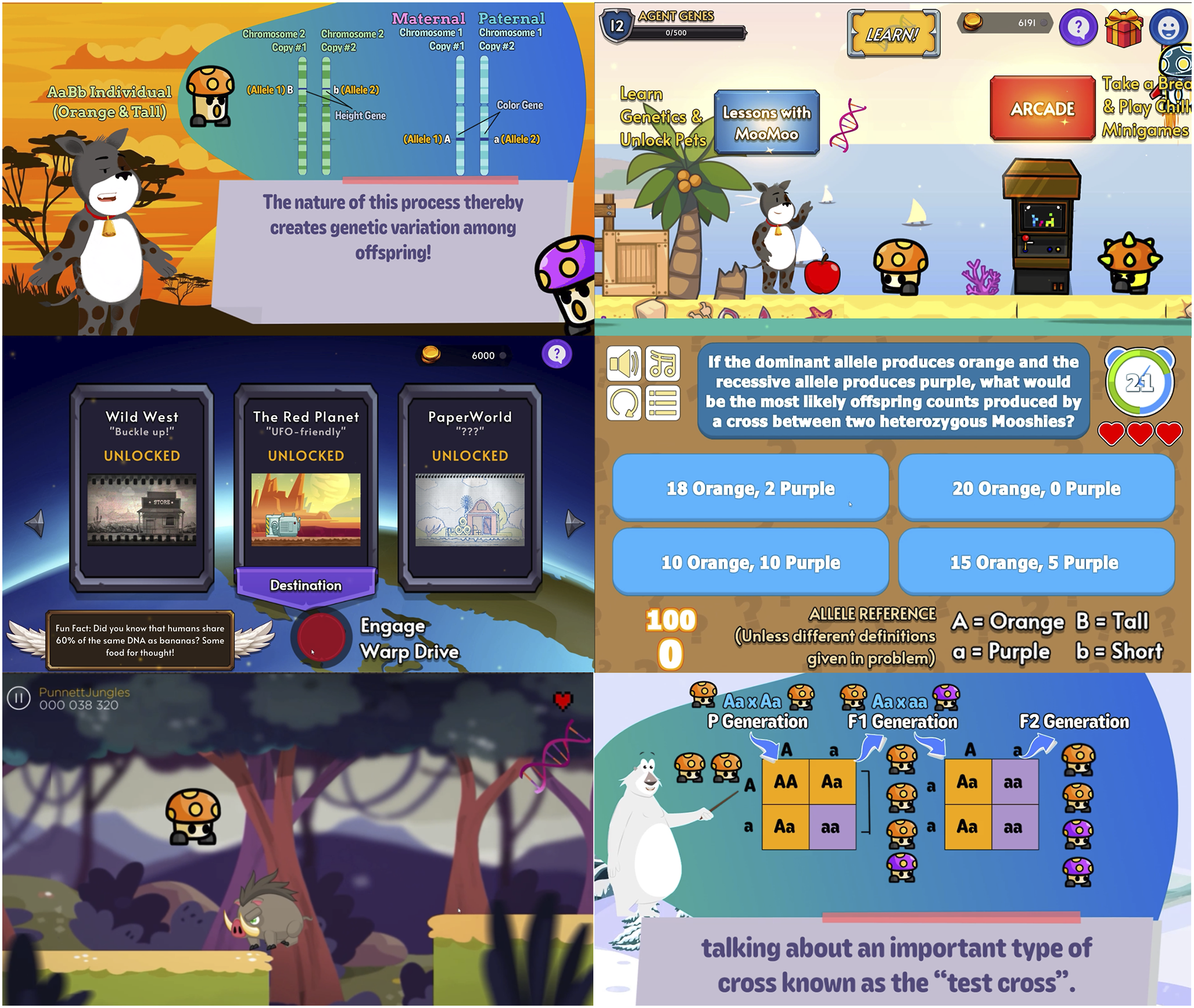
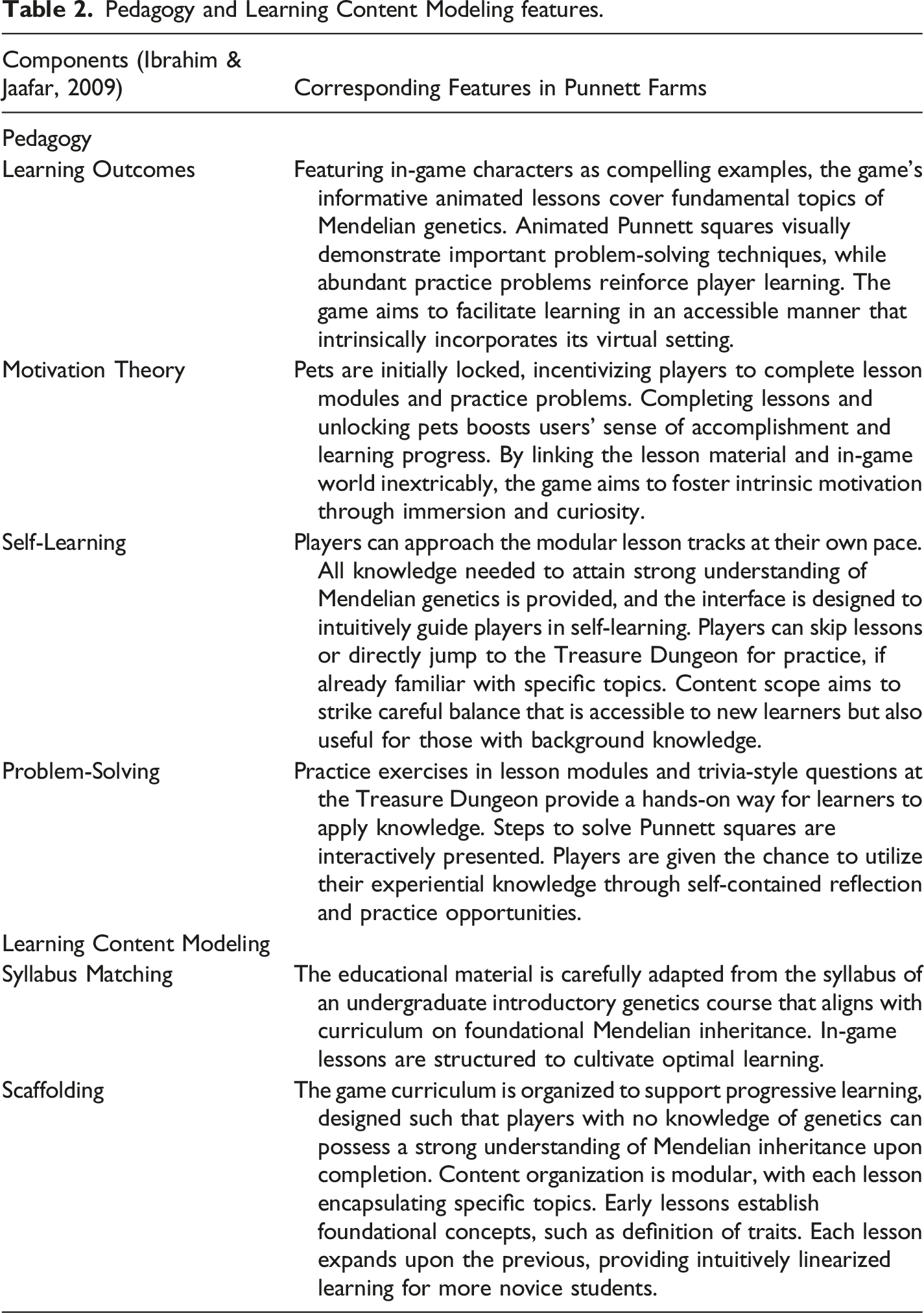
The core gameplay loop of Punnett Farms consists of completing lesson modules, embedded with interactive exercises, to recruit new pets and gain progress in expanding/customizing the player’s virtual farm. Utilizing in-game characters to demonstrate heredity concepts, the lessons’ simulated scenarios (e.g. specific breeding situations) provide an immersive framework for players to visualize step-by-step genetics processes, such as solving Punnett squares. Between modules, players are able to explore their farms and inspect the pattern-driven phenotypes (physical traits) of pets, reinforcing concepts encountered in lessons. This interactive and colorful visual format seeks to address several challenges that students often experience when learning genetics under traditional pedagogical approaches, such as visualizing differences between abstract but closely related concepts (e.g. alleles vs chromosomes) and following along with procedures involving numerous steps (e.g. calculating Mendelian probability) (Klymkowsky, 2023; Williams et al., 2021).
Regarding its pedagogical approach, Punnett Farms embraces student-centric learning, allowing players to progress at their own pace. The game was carefully designed to support learners with no prior genetics knowledge and help them acquire a foundational understanding of Mendelian genetics. However, the game is also designed to remain useful for more advanced learners as well and includes features allowing players to focus on specific topics they want to consolidate. Because the lesson track is modular, advanced learners have the flexibility to skip ahead to later segments. In this manner, the game strives to be accessible for students from diverse educational backgrounds, covering a wide range of content from basic definitions to introductory college biology material. The main lesson series can generally be completed within 1-2 hours, though there are also extensive optional practice opportunities afterwards.
To mitigate influence of extrinsic motivational factors, Punnett Farms aims to cultivate flow and intrinsic motivation in accordance with the game flow model (Paras & Bizzocchi, 2005). Under this paradigm, effective learning in educational games can be achieved through four primary components: Play (provides interactivity that promotes curiosity), Immersion (offers an engrossing environment), Endogenous Fantasy (integrates learning goals into the game world), and Reflection (facilitates active learning and self-assessment). The structure of Punnett Farms is schematically depicted in Figure 2, in accordance with this model. The game structure optimizes the learning experience and flow through four components: Play, Immersion, Endogenous Fantasy, and Reflection.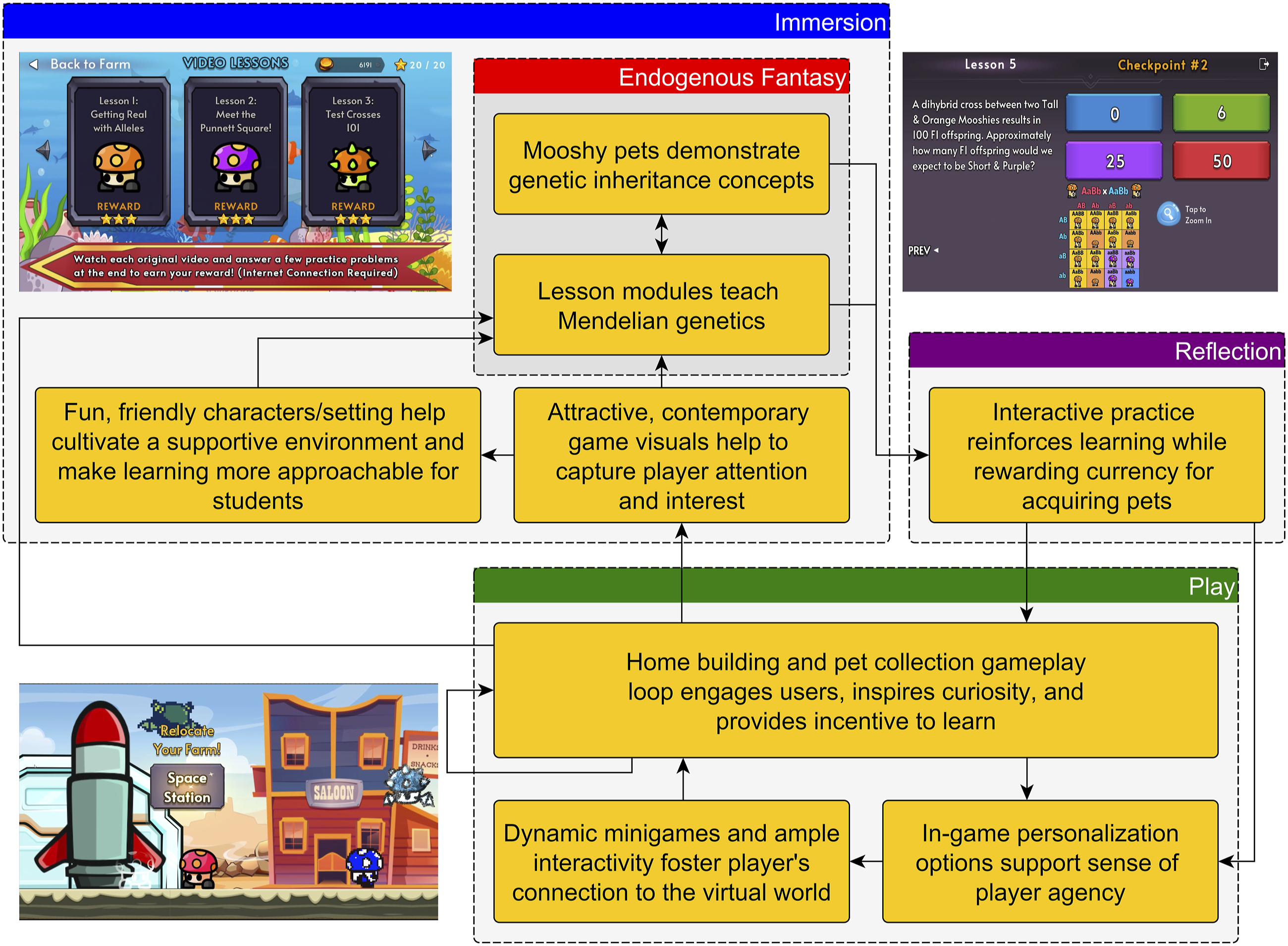
Notably, the Play component is present throughout Punnett Farms, inspiring curiosity that motivates players to explore the game. From the beginning, players are tasked with establishing a farm and raising Mooshies, mushroom creatures with diverse traits that exhibit Mendelian inheritance patterns. From the tutorial and beyond, players are advised by MooMoo, a conversational calf that acts as a guide and instructor. Incorporating narration, animated diagrams that colorfully demonstrate problem-solving approaches, and practice opportunities, the lesson modules feature Mooshies as applied examples to illustrate topics, such as the relationship between genotype and phenotype (Figure 3). Game characters exemplify concepts in a thematic and educationally consistent manner.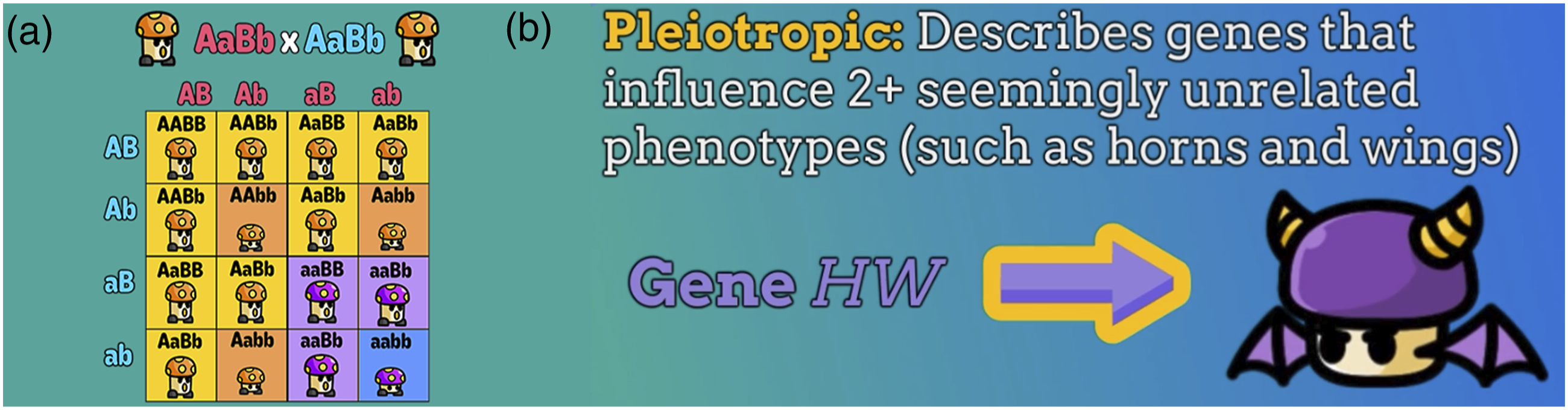
Such features are also vital to establishing Immersion and Endogenous Fantasy, as defined under the game flow model (Paras & Bizzocchi, 2005; Rieber, 1996). Players not only collect and interact with Mooshies on their farm but continuously encounter them in lessons and practice. The result is an authentic world in which the laws of Mendelian genetics are consistent and essential to the game environment. This helps players step inside the “magic circle,” a term coined by Tekinbas & Zimmerman (2003) to describe a psychological space where players unconditionally accept the rules of the virtual world, thereby permitting full engagement with endogenously presented content. This approach contrasts with exogenous fantasy, in which game settings are disconnected from learning goals, consequently disrupting the flow experience (Paras & Bizzocchi, 2005).
To further drive Immersion and Play, Punnett Farms includes world-building elements such as diverse biomes, entertaining instructor characters, in-game transportation systems, and town shops procuring Mooshies created with CRISPR-Cas9 gene editing technology. Players can also interact with their pets in various minigames, while genetics facts are scattered around the farm. Though not all of these features directly drive genetics learning, they are included to enhance interactivity and foster a sense of player connection with the virtual world, both necessary components for Immersion and enabling full participation in the game’s learning space (Ha & Jenson, 2004). Moreover, a varied selection of customization options empowers player personalization and agency, which can help support flow (Lakhmani & Bowers, 2011).
To promote Reflection, each module presents concise summaries and interactive exercises aimed at stimulating reflection on each lesson’s main ideas, thus providing single-player debriefing opportunities. Multiple-choice exercises, revolving around simulated Mooshy breeding scenarios, are carefully crafted to highlight the most important ideas. This practice offers immediate feedback, detailed explanations, and thorough diagrams to clarify answer reasoning. Moreover, players can attempt these questions as many times as needed, without penalty for incorrect responses, an approach that aims to nurture player confidence, which is a prerequisite for intrinsic motivation (Keller, 2010). For additional practice, players can visit the Treasure Dungeon, a trivia-style question bank that tracks life counts based on correct responses. By reintroducing missed questions, this feature incorporates spaced repetition principles to reinforce understanding (Tabibian et al., 2019). Through it, players can earn more Mooshies, reiterating the Play aspect. As recommended by the game flow model (Paras & Bizzocchi, 2005), all practice opportunities are embedded in the context of the virtual world, reinforcing Endogenous Fantasy in conjunction with Reflection. This ensures that learners view practice as objectives linked to the game setting, which again helps preserve Immersion and flow experiences.
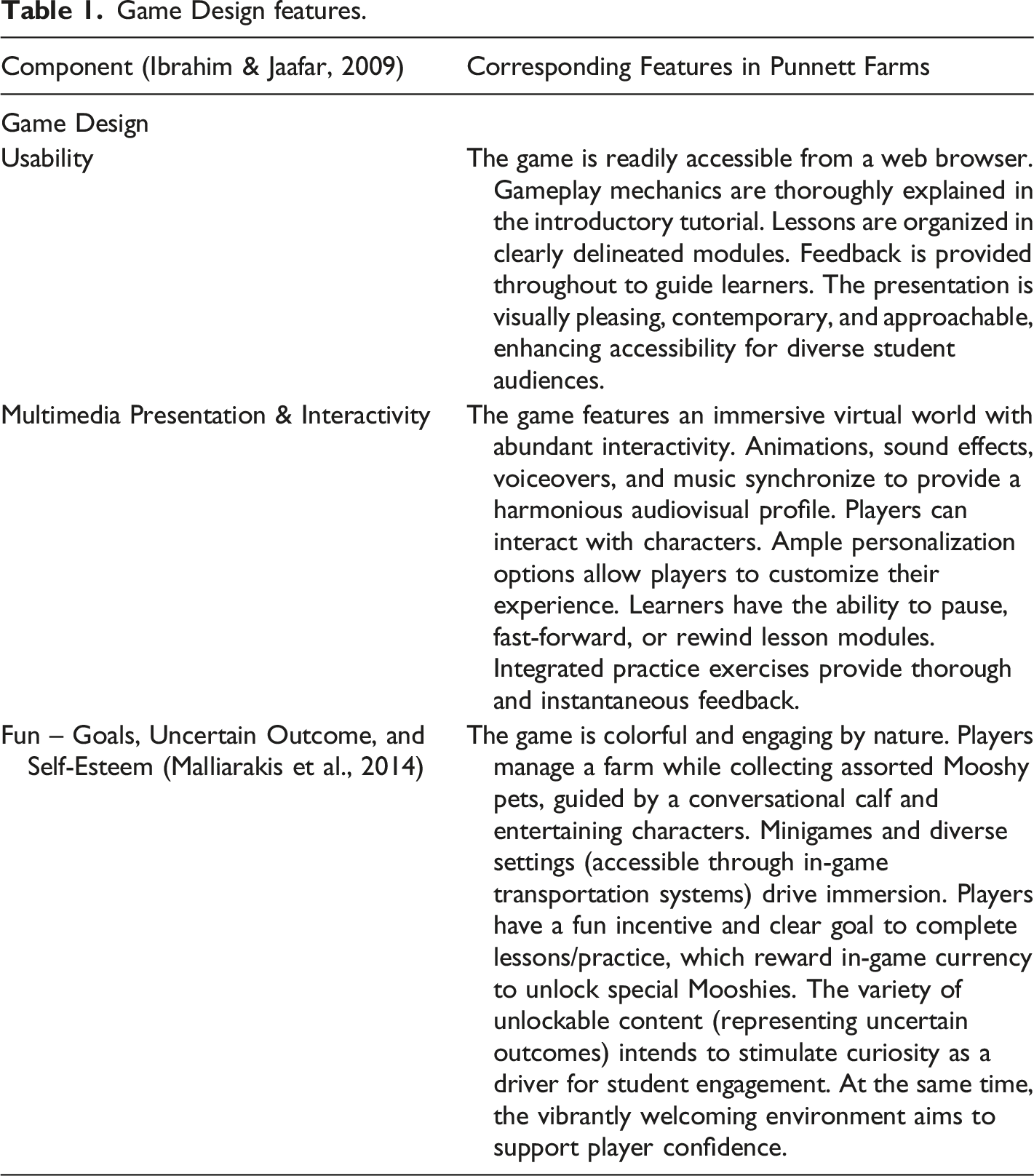
Game Design features.
Pedagogy and Learning Content Modeling features.
Program Implementation
The game was developed on the Unity Engine. Core gameplay and interface mechanics were built with C# code. Game textures consist of original artwork/spritesheets, along with public assets from OpenGameArt.org and FreePik. Audio assets are from Freesound.org and Pixabay. Punnett Farms is available as both a native desktop application and as a browser-accessible WebGL applet. Educational material in the game was based on foundational concepts in Mendelian genetics curriculum from an undergraduate introductory genetics course (taught by one of the authors) at UC Davis.
Exploratory Evaluation of Punnett Farms
A pilot study was conducted at a community college to obtain insights into Punnett Farms’ usefulness in driving learning and engagement. The potential of SGs for undergraduate education is promising in the setting of community colleges, which enroll significant numbers of students who face educational barriers or come from disadvantaged backgrounds (Goldrick-Rab, 2010). Notably, compared to counterparts in four-year undergraduate programs, community college students are much less likely to obtain bachelor's degrees, especially in STEM majors (Meza, 2019). Given these challenges, SGs represent potentially valuable supplementary resources to help foster learning among community college students and reinforce their motivation to succeed, via dynamic and interactive environments that align with preferences of today’s digitally-oriented learners (Landers & Callan, 2011).
Participants
22 students (ages 18-25) were recruited via snowball sampling from Sierra College, a two-year community college serving the greater Sacramento region in California, for this study approved by the UC Davis Institutional Review Board (IRB #1986546-1). All individuals gave voluntary consent to participate. Participants were 54.55% (12/22) female and 45.45% (10/22) male, which closely reflects overall gender demographics across the California community college system (Oakley, 2021). All participants stated that they played video games on at least an occasional basis (once a month or more). To better evaluate the game’s primary audience of new learners, all participants were non-biology majors. Moreover, prior to playing, they each took a topic-specific knowledge assessment and recorded their perceived level of pre-existing subject familiarity, as described below.
Methodology
The study was conducted in a quiet library setting over several weeks, with each student participating individually, on account of the game’s single-player format. The evaluation process consisted of multiple stages. First, participants completed a 16-question pre-test multiple choice quiz to assess their initial knowledge of Mendelian genetics topics. Subsequently, participants were given one hour to engage with Punnett Farms, completing six lesson modules at their own pace while exploring the game. Afterwards, the 16-question quiz was readministered as a post-test, alongside a comprehensive questionnaire, to evaluate short-term learning outcomes following usage. Finally, participants had opportunities to share optional open-ended feedback.
Questionnaires
The questionnaire and knowledge assessment were inspired by two frameworks, the Game-Based Evaluation Model (GEM) and the Model for the Evaluation of Educational Games Plus (MEEGA+).
The GEM framework assesses effectiveness of educational games by evaluating multiple dimensions, including learning transfer and emotional-motivational axes (Oprins et al., 2015). In our study, the pre-/post- intervention knowledge assessments aimed to assess learning transfer, whereas the questionnaire focused on emotional-motivational indicators including self-efficacy, motivation, and engagement. For the purposes of this study, we created a questionnaire inspired by these emotional-motivational dimensions of the GEM model, featuring 10-point Likert-scale questions to measure the following: (1) perceived comprehension of Mendelian genetics before/after using Punnett Farms (self-efficacy; 2 questions), (2) interest in learning about genetics before/after (motivation; 2 questions), and (3) enjoyment of learning through Punnett Farms compared to traditional resources like textbooks (engagement; 2 questions). Descriptive statistics were calculated using the paired t-test (for the knowledge assessment scores) and the Wilcoxon Signed-Rank Test (for the ordinal Likert-scale questionnaire responses) to assess significant differences based on sample size.
MEEGA+, a framework with documented construct validity in assessing educational games, was adapted as a tool in this study to serve as the basis for evaluation of the overall player experience associated with Punnett Farms (Galgouranas & Xinogalos, 2018; Konstantara & Xinogalos, 2018; Petri et al., 2017). 5-point Likert-scale questions, based on the MEEGA+ model and carefully refined to reflect the game’s objectives, were used to gauge strengths and areas for improvement within Punnett Farms. Specifically, 9 questions evaluated 4 elements encompassing game usability (aesthetics, learnability, operability, accessibility), while 23 questions measured 7 elements pertaining to player experience (challenge, satisfaction, organization, fun, focused attention, game relevance, perceived learning).
Results from Pilot Study
Results from the pilot evaluation were largely positive. The pre- and post- intervention knowledge assessments suggested increases in participants’ short-term knowledge of Mendelian genetics after one hour of playing Punnett Farms. On the 16-question multiple choice assessment, all participant scores increased after playing, with participant post-intervention scores (M=86.6%, Mdn=87.5%) being 25.3% higher than pre-intervention test scores (M=61.4%, Mdn=62.5%) (Figure 4a; p < 0.001). When calculated relative to their initial scores, participants experienced an average 53.8%. increase. Whereas the lowest pre-intervention score was 25.0%, the lowest post-intervention score was much higher at 62.5%. Interestingly, improvements were more pronounced among students with lower initial scores, and a negative correlation was observed between initial score and magnitude of improvement (Figure 4b; r(22) = -0.7589, p < 0.001). Change in knowledge assessment scores after playing the game. (a) Average pre-test score (red; (M=61.4%, Mdn=62.5%) and average post-test score (blue; (M=86.6%, Mdn=87.5%). (b) Plot of correlation (dashed line) between pre-test score (x-axis) and percent change in post-test score (y-axis), r(22) = -0.7589, p < 0.001.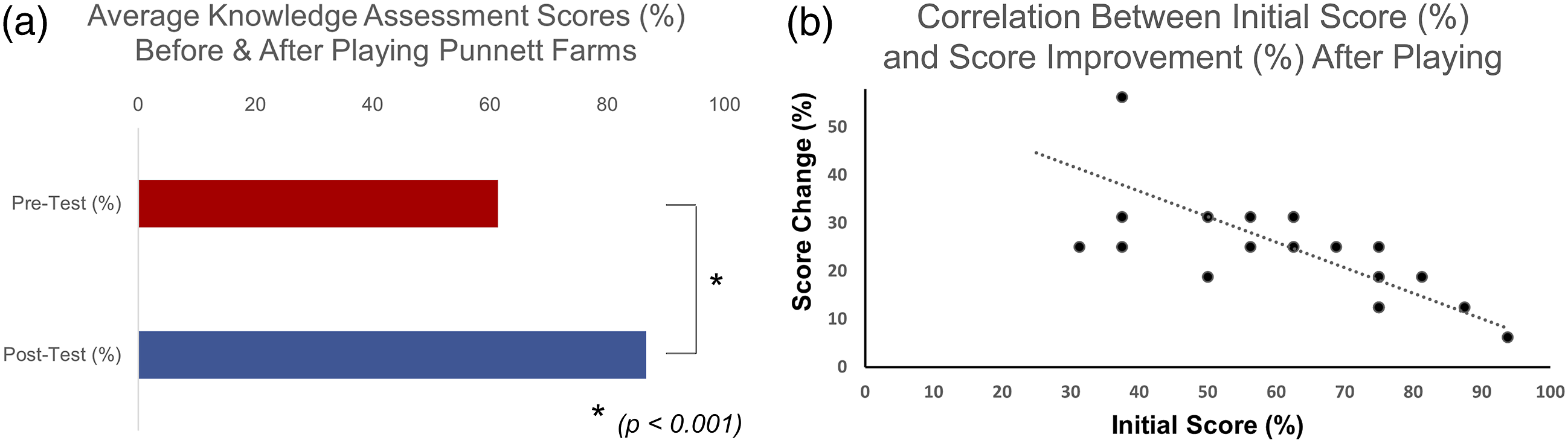
Across the 6 questions measured on a 10-point Likert scale, increases in participant ratings were observed, relating to the game’s impact on self-efficacy, motivation, and engagement in accordance with the GEM framework (Figure 5). When participants were asked how well they understood Mendelian genetics before and after using Punnett Farms (Figure 5, Q1.2 and Q1.2), there was a 78.1% increase in self-reported topic understanding, with post-intervention ratings (M=7.8, Mdn=8) displaying an average 3.4-point improvement compared to pre-intervention ratings (M=4.4, Mdn=4), p < 0.001. Surprisingly, participants' reported interest in learning genetics also showed a 79.5% increase, with post-intervention ratings (M=7.2, Mdn=8) surpassing pre-intervention ratings (M=4.0, Mdn=3) by a 3.2-point average, p < 0.001. Additionally, participants reported a greater level of enjoyment in learning through Punnett Farms (M=8.3, Mdn=8) compared to traditional resources (M=3.1, Mdn=3), as reflected by a 5.1-point and 163.8% difference, p < 0.001. Participants responded to a questionnaire inspired by the GEM framework.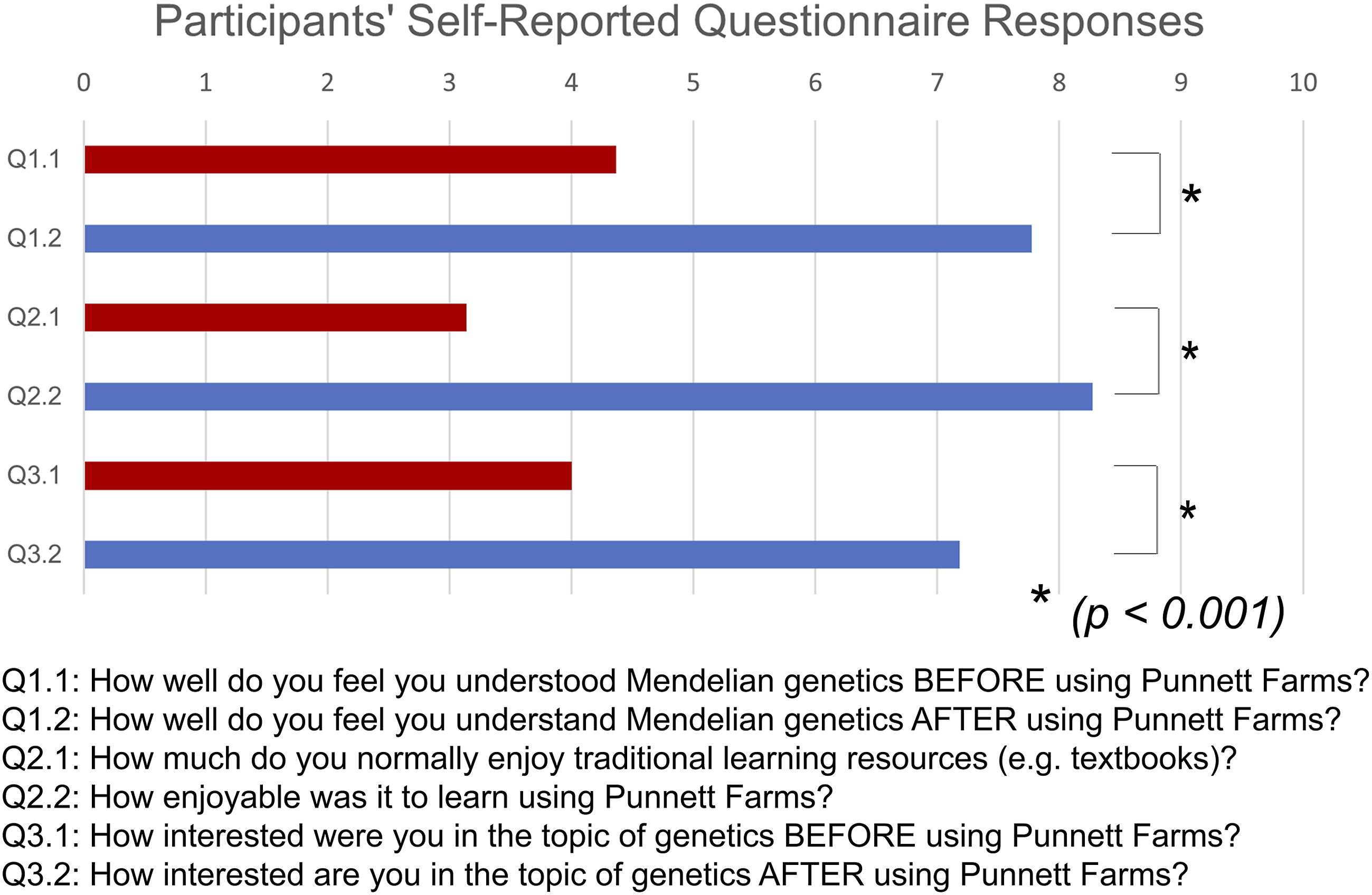
To gain insights into player satisfaction towards different aspects of Punnett Farms, participant responses to the MEEGA+ survey were evaluated for consensus based on the median score for each of 33 survey statements (Figure 6). The scoring system assigns a value of 2 for strong agreement, 1 for agreement, 0 for neutral opinions, -1 for disagreement, and -2 for strong disagreement. Student evaluations of different dimensions of ease of use.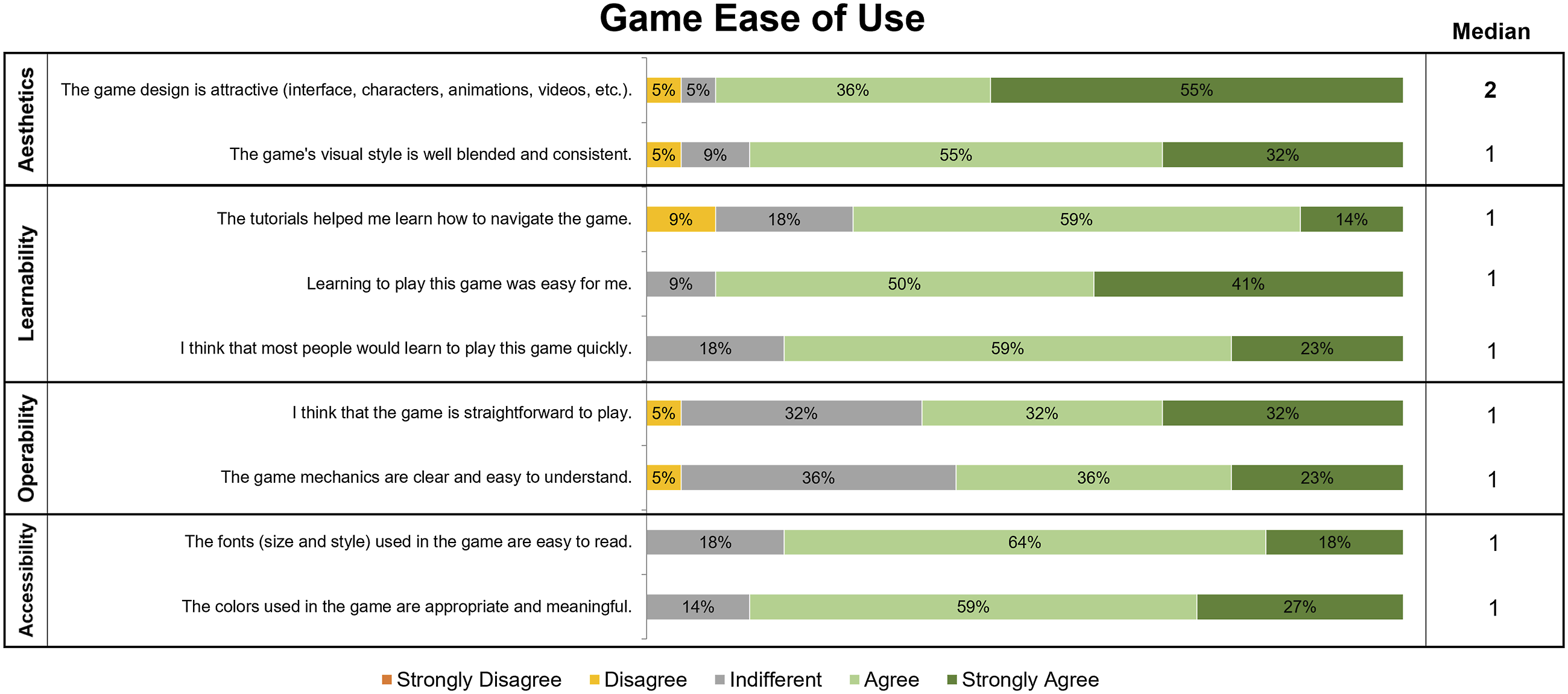
Regarding ease of use (Figure 6), players strongly agreed that the game’s presentation is visually appealing. Participants also generally agreed that the game has positive learnability (how easy it is to learn gameplay), operability (how straightforward game mechanics are), and user accessibility (how well game manages font/color).
An additional 24 MEEGA+ statements evaluated the general player experience (Figure 7). Overall, Perceived Learning, Content Relevance, and Content Organization were all rated highly positively (indicated by statements with Mdn=2). The consensus of participant responses generally rated the game as useful and engaging for learning Mendelian genetics. Participants also largely agreed with the remainder of statements, giving positive ratings for statements encompassing Fun, Satisfaction, Challenge, and Focused Attention. Two statements (pertaining respectively to the game’s capacity for avoiding monotony and its ability to maintain player attention over the entire session) were exceptions, both gathering comparatively neutral responses (indicated by Mdn=0). Additionally, one other statement (the first in the Challenge category, relating to the game’s ability to improve learning confidence) received a positive response overall (indicated by Mdn=1), but nonetheless had a relatively high proportion (about 45%) of neutral responses. Student evaluations of different dimensions of the player experience.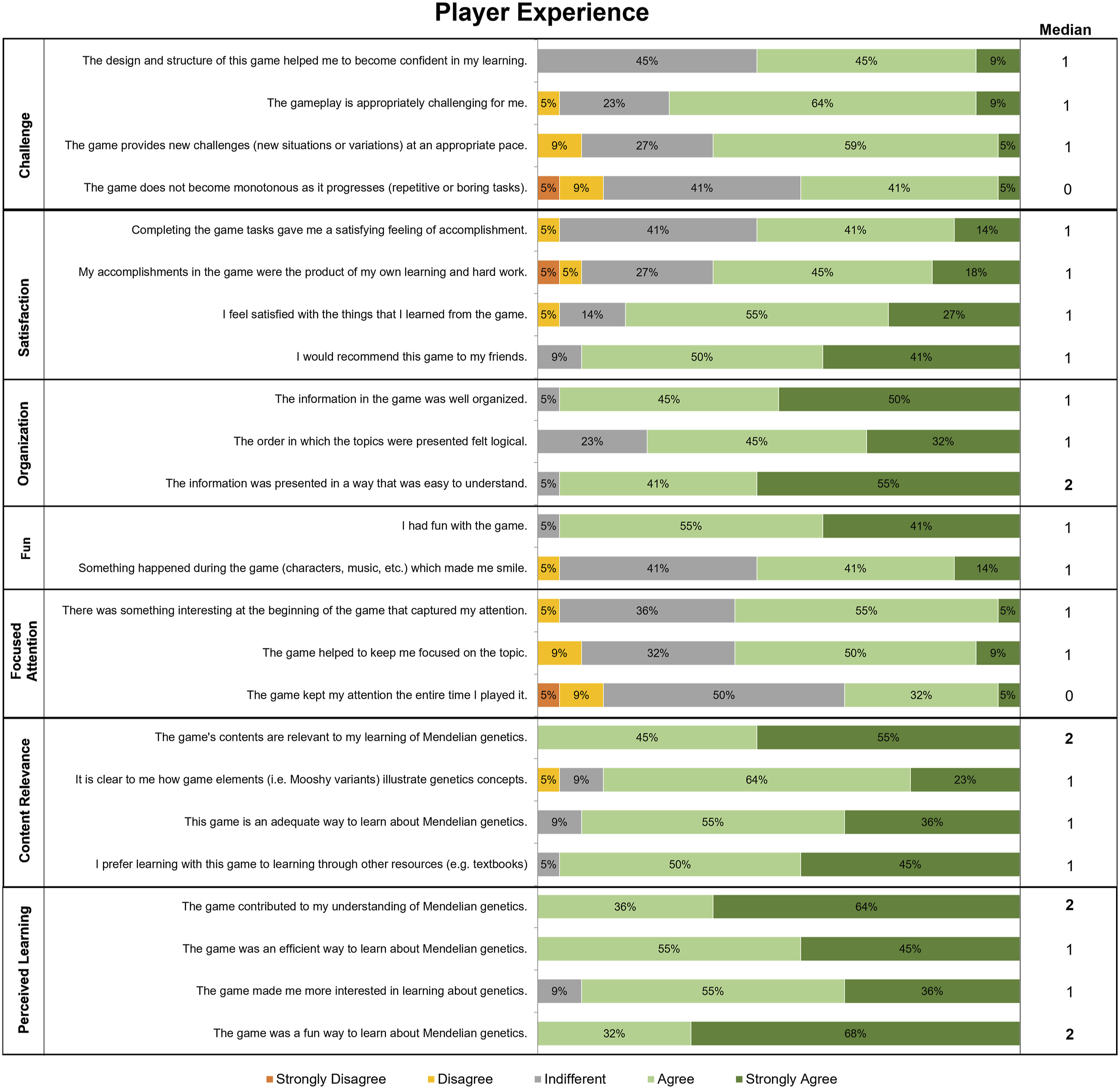
Discussion of Pilot Study
Pedagogical principles proved instrumental in guiding the design elements of Punnett Farms, as described earlier. Meanwhile, results from the pilot evaluation conducted at a community college highlight the game’s potential utility as a tool for supporting Mendelian genetics learning. Overall participant feedback was highly positive for both player experience and ease of use. The process of playing the game appeared to significantly increase participant knowledge of the topic, as indicated by the pre-/post-intervention assessment scores. Knowledge gain was observed across all 22 participants, regardless of initial level of familiarity with Mendelian genetics. Notably, in parallel with knowledge gains, participants reported high levels of enjoyment and increased interest in the topic of genetics from playing Punnett Farms.
The greatest increases in knowledge assessment scores and self-perceived understanding were observed among participants with lower initial scores, most likely because the knowledge assessment had a fixed difficulty ceiling. But it may also hint at Punnett Farms’ particular benefits for first-time learners or those reintroduced to the material after a hiatus (e.g. students taking introductory college genetics courses who previously studied biology in high school). Since the game’s positive effects on knowledge, enjoyment, and interest were observed across all participants though, this suggests that Punnett Farms may also be valuable for consolidating more advanced learners’ understanding, which is key for concepts that pose particular challenges to students, such as the allele-chromosome relationship (Kindfield, 1991).
What is notable is that, although the game does admittedly involve several extrinsic motivational factors (such as unlockable rewards), participants nonetheless reported an increased interest in genetics after playing, suggesting possible presence of intrinsic motivation. This was likely due to the game design’s fundamental integration of Endogenous Fantasy, which helps convert extrinsic elements into reinforcers of intrinsic motivation, allowing players to immerse in an interconnected virtual world where in-game rewards inherently reflect genetics concepts. Interestingly, this finding correlates with another study which observed that extrinsic gamification elements resulted in increased intrinsic motivation among genetics students (Funa et al., 2021). Considering that traditional approaches for increasing learners’ intrinsic motivation (such as relevance interventions, which aim to relate learning objectives to students’ daily lives) have experienced mixed success, Punnett Farms might have potential to help supplement this effort in genetics education (Albrecht & Karabenick, 2018).
On the MEEGA+ questions, users rated Punnett Farms especially highly for its educational value, aesthetics, and intuitive presentation of concepts. These findings underscore the game's effectiveness in delivering engaging and enjoyable learning experiences for participants. When asked for open-ended feedback during the interview segment, participants frequently praised Punnett Farms for its creative setting, entertaining characters, and polished presentation. Participants particularly appreciated how effective the game was in helping them understand abstract genetics concepts. Nearly all found the thematically-integrated examples (i.e. Mooshy phenotypes) helpful for making learning connections and deepening understanding.
Taken together, these findings appear to provide some evidence supporting the notion that, for those who had the chance to use it, Punnett Farms might foster an immersive learning environment conducive to flow experiences, facilitating the objectives proposed by the game flow model (Paras & Bizzocchi, 2005). Additionally, Punnett Farms seems to provide a positive user experience, in line with the player experience model (Ibrahim & Jaafar, 2009), successfully merging elements of game design, pedagogy, and learning content modeling to provide a useful educational experience. However, a larger future study is needed in order to draw firm conclusions regarding its effectiveness.
While the majority of feedback was positive, participants did also identify areas for improvement. Some players mentioned the modular lesson format began feeling repetitive by the final lesson, making it harder to focus as the session went on, which explains the relatively neutral attitudes reflected in the corresponding MEEGA+ items. Implementing new features to fully engage the player for an extended duration may help improve focused attention and further reinforce flow states. Players also identified some issues with navigating certain menu items in the user interface. This feedback is helpful for further improving the game.
Limitations
The pilot study conducted has some limitations. The primary aim of this article was to present the design of Punnett Farms as a SG implementation for genetics learning, as well as to convey insights regarding the game’s strengths and areas for improvement via a small study. It does not aim for generalized conclusions about the SG medium or the game’s effectiveness relative to traditional classroom approaches. Also, because the knowledge assessments were re-administered in the same session (after participants played Punnett Farms), the study only evaluates short-term knowledge retention.
Additionally, although the study results showcase Punnett Farms’ potential utility as a standalone educational resource, a future investigation of its effectiveness as a supplementary instructional tool integrated into classroom settings over an academic term may be valuable. While the current version of Punnett Farms could be employed in a social classroom context, its single-player design means that additional features to enhance interaction between players (e.g. visiting another player's "farm") would be needed to better facilitate social support (a dimension of flow) and provide more comprehensive debriefing opportunities beyond what is possible in a single-player setting, though care should be taken to limit competition as a potential motivator (Caserman et al., 2020). Given the game’s modular structure, it is also possible to collaborate with other educators to develop new lessons that further cultivate the social component of Punnett Farms. Adding such features and conducting larger longitudinal studies is thus a future direction for this work.
Conclusion
Punnett Farms is a single-player educational game designed with the aim of helping players learn fundamental Mendelian genetics concepts. Carefully implemented to reflect principles from established educational game design models, Punnett Farms’ unique features include a pet-collecting gameplay mechanic, thematically-integrated animated lesson modules, interactive practice, vibrant contemporary aesthetics, and an immersive virtual world that seamlessly integrates genetics concepts. The game’s pedagogical content is meticulously adapted from an undergraduate introductory genetics course for content accuracy and relevance. Meanwhile, lesson modules are curated and organized in a scaffolded manner intended to help make material accessible to players with no prior knowledge, yet still useful for advanced learners.
The game’s design approach appeared to support knowledge transfer and was evaluated positively during a pilot study involving 22 community college students. Possible knowledge transfer was observed both in individuals with limited prior knowledge of genetics and those with pre-existing knowledge. Moreover, players reported increased interest and enjoyment in learning genetics, with participant responses suggesting a possible presence of intrinsic motivation. Overall, this work suggests Punnett Farms holds promise as a single-player educational resource to support student learning in genetics, a STEM discipline that often challenges students and features conceptually abstract topics. Future directions will focus on improving, expanding, and evaluating Punnett Farms in larger long-term studies, with the ultimate goal of helping make genetics education more fun, interactive, and accessible for all.
Supplemental Material
Supplemental Material - Punnett Farms: An Immersive Cross-Platform Educational Game for Learning Genetics
Supplemental Material for Punnett Farms: An Immersive Cross-Platform Educational Game for Learning Genetics by Henry G.H. Low and Marina Ellefson in Simulation & Gaming
Footnotes
Declaration of Conflicting Interests
The author(s) declared no potential conflicts of interest with respect to the research, authorship, and/or publication of this article.
Funding
The author(s) received no financial support for the research, authorship, and/or publication of this article.
Supplemental Material
Supplemental material for this article is available online.
Author Biographies

References
Supplementary Material
Please find the following supplemental material available below.
For Open Access articles published under a Creative Commons License, all supplemental material carries the same license as the article it is associated with.
For non-Open Access articles published, all supplemental material carries a non-exclusive license, and permission requests for re-use of supplemental material or any part of supplemental material shall be sent directly to the copyright owner as specified in the copyright notice associated with the article.
