



Abstract
Intro
This paper reports the demographics of a large sample of board gamers and their in-game motivations and preferences.
Methods
We report the specific preferences of 1603 board gamers (i.e. preferred platform, mechanics, style, theme, player count and game length) and player demographics, i.e. age, gender, education level as well as neurodivergence in this population. Participants were sampled via board game groups and game distributor mailing lists.
Results
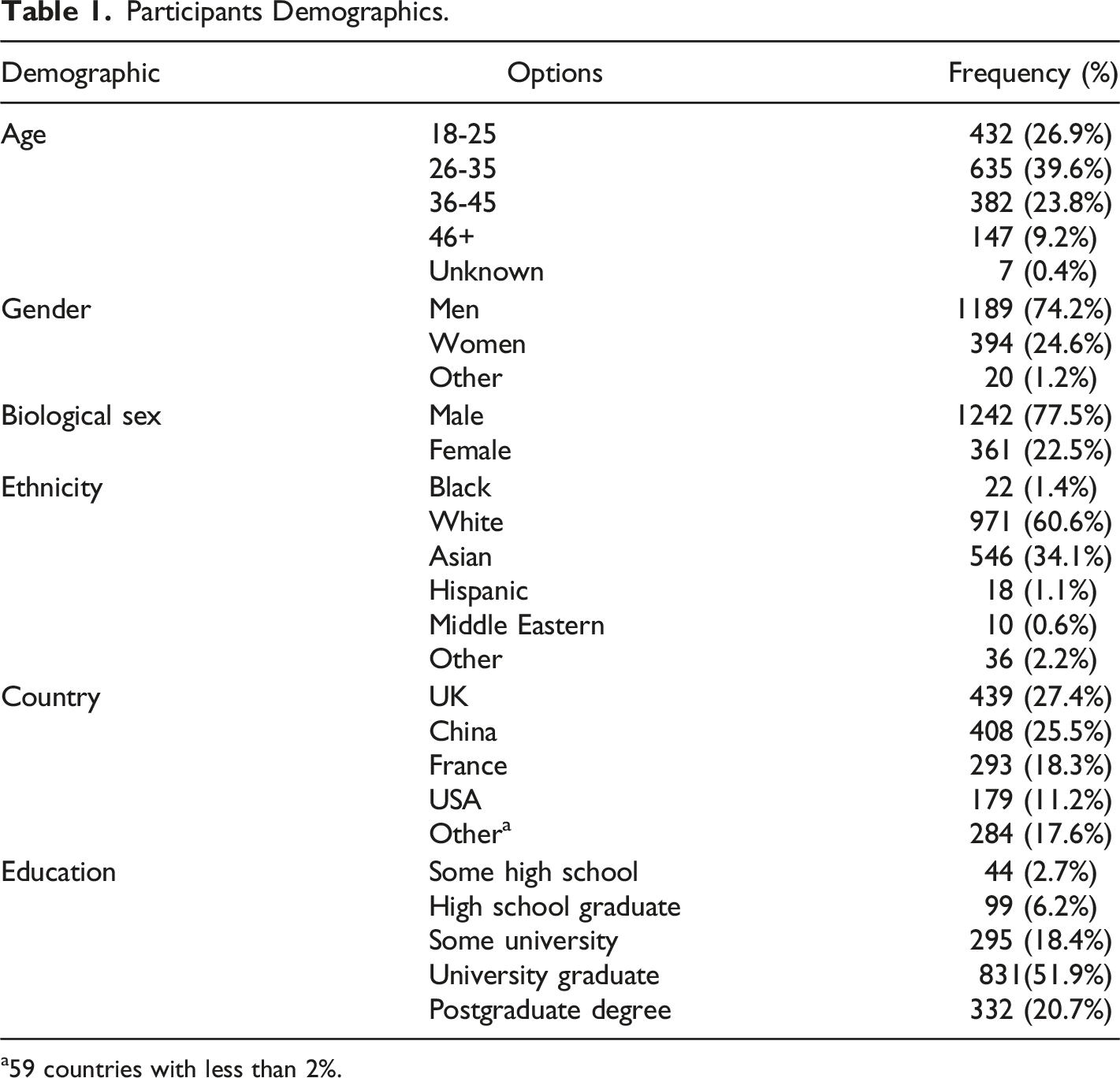
Findings confirmed previous assumptions that board gamers are primarily middle-aged, university/college-educated, white males. We show that most gamers identify as mid-core/core with a preference for shorter, competitive Euro games. They tend to prefer in-person play with 3-4 players. However, a sizeable portion of the sample did not fit this description, showing a more complex picture.
Discussion
Results describe the population's demographics and detailed description of gamers preferred, mechanics, themes, components, preferences and motivations. An anonymised version of this data set is provided alongside this work for game designers and academics to explore further and cross-reference relationships between demographics and preferences/motivations. Considering that a quarter of the sample were neurodivergent (i.e. reported at least one mental health or neurodevelopmental condition) the dataset could also help clinicians who use board games as interventional tools. We hope this dataset (https://osf.io/tu8yq) will be helpful to board game designers, clinicians, educators, teachers, therapists and researchers interested in utilising board games to make informed choices about which games they use.
Keywords
Over the last twenty years, board games have achieved unparalleled popularity and commercial success. In 2016, The Guardian reported on ‘The Rise and Rise of Tabletop Gaming', citing related social and design factors underpinning this surge in interest. Aritzon's market study predicts an annual growth rate of more than 9%, with an excess of $12 billion. Scholars such as Booth (2015) and Arnaudo (2018) suggest that we are in a period of board game revival and that we are living in a golden age of board gaming (Konieczny 2019). A trend that has grown even more since the covid-19 pandemic, as the world has looked for other forms of entertainment (Tighe, 2022). This increase in popularity may also be due to a broader range of available games and the internet providing individuals with greater access to board gaming resources (Sargeantson, 2022). Sites such as BoardGameGeek, an extensive database and forum for gaming, have 18 million users visiting annually (Similarweb, 2023). The flagship boardgame conference, Essen Spiel, boasts around a quarter of a million attendees yearly (Spiel Messe, 2023), again showing the growing importance of boardgames in the cultural zeitgeist (see Sousa & Bernardo, 2019).
We should state that this movement is not a revival of older or mass-market board games. Different design elements characterise these “modern” games, mainly their mechanics but also intricate physical components, as well as the way the narratives emerge and how they allow players to interact with each other and the game system (Rogerson et a1., 2016; Sousa et al., 2021b). In recent years games have moved from a leisure activity into the ‘serious' domain of intervention. For example, Spiel now hosts Educator's Day, where academics, educators, designers and clinicians who work with or do research using modern board games present their experiences and findings. Some argue that games have a long and rich history of being used for purposes beyond entertainment (Wilkinson, 2016). A recent meta-analysis by Zhonggen (2019) indicates that games are being used to improve educational outcomes more than ever. Another by Lau et al. (2017) found that serious games can lead to a moderate improvement in mental health symptoms. See Atherton & Cross (2021) for a review of research exploring the uses of games for various neurodevelopmental conditions, such as autism or attention deficit hyperactivity disorder (ADHD)
Analogue versions of games may offer specific benefits for improving the lives of players when compared to other activities (Estrada-Plana et al., 2021; Vi ta-Barrul et al., 2022). However, it is essential to define these practices. One of the first steps to achieve this is to understand this population, both the demographics of board gamers and individuals' motivations for and preferences in this hobby. Currently, there is very little research on this topic. This paper fills this gap by surveying over 1600 board gamers on these facets and making the data freely available to researchers, educators, clinicians and designers of serious games.
Serious games can be created or adapted from commercial games (Sousa, 2021; Rosa et al., 2021). Games that aim to deliver serious objectives (Dörner et al., 2016) demand serious evaluation. For one, the physicality of an analogue game allows for a tactile experience that may be therapeutic by its very nature (Rogerson et al., 2016). That said, Yuan et al. (2021) found that digitising board games, including remote play necessitated by the pandemic, preserved many of the social benefits inherent to board game play. Perhaps this is because the ‘form of conversation' that occurs not only through the player's actions but also interactions with opponents and the changing state of the game board and other artefacts can be primarily preserved in online settings (Rogerson et al., 2018). When choosing a game format or between various mechanics or themes for a specific population, having access to a large data set of individual preferences for given elements allows for more personalised and therefore optimal choices.
Linking mechanics to outcomes is vital so that ‘game designers can predict and understand the process by which players interact with the game system and what is experienced by players (Sousa et al., 2021a). This can be seen as a bottom-up approach in the game design process and follows from the Mechanics, Dynamics and Aesthetics influences (Hunicke et al., 2004; Walk et al., 2017), where the designers combine mechanics to deliver dynamic experiences to players and collect their feedback. In the particular case of analogue games, the importance of mechanics is even higher due to the lack of automation, users must manually activate all the game mechanics for the game to function (Duarte & Battaiola, 2017). Suppose we desire to detail analogue games even more. In that case, we can consider the mechanisms as subparts of the mechanics (Sousa et al., 2021b). The mechanisms may be the smallest mechanical elements of the game system, but they are the building blocks of game design (Englestein & Shalev, 2022). Indeed, BoardGameGeek is now using game mechanisms instead of mechanics to characterise a game's mechanical system. Players and designers are starting to adopt this terminology, although, despite this, both the literature and most users still refer to mechanics. In this paper, we will use the term mechanics and mechanisms as synonymous and follow the definitions on the BoardGameGeek website.
Alongside designers of board games, those utilising games for educational and interventional purposes would also benefit from access to information relating to board gamer demographics and preferences. For example, board games are used in educational and therapeutic settings for people who are neurodiverse, such as those with autism and ADHD (Atherton & Cross, 2021). Board games are used to improve mental health (Baker et al., 2022), social interactions (Fang et al., 2016), and skills such as reading and numeracy (Hu et al., 2018). Despite the proliferation of board games in the broader sector, there is a shortage of information available to practitioners, therapists, educators, and researchers that may help professionals tailor their choice of games to a specific audience (Noda et al., 2019), a gap this paper and the accompanying data set aims to fill.
The objectives of the current study were to first explore and detail the demographics and preferences of this population and compile and make openly available a comprehensive dataset of 1) gamer demographics (age, gender, educational level and neurodiversity) and 2) gamers' motivations for and preferences in (preferred play style, game length, game type, mechanics, themes) games. We were particularly interested in capturing the proportion of the population that regularly plays board games and is involved in the board gaming community. For this reason, we specifically recruited using board gaming social media sites and mailing lists and offered as compensation a free Steam key for an online board game, which would be an incentive that would be particularly attractive to board gamers. This data is freely available alongside this paper to all interested parties at https://osf.io/nfr7d/. This data set will be helpful to those who wish to design games for specific populations or tailor gamified interventions or educational tools for said populations. With this data, teachers and clinicians can search for games in databases like BoardGameGeek , choosing games to adapt or be inspired by implementing the mechanisms to build their own games or game-based approaches (e.g., gamification, serious games). Game designers may also use this data when making game design choices for specific populations.
Methods
Participants & Sampling
A total of 1603 individuals completed the questionnaire via Qualtrics after consenting to participate. The sample included 1242 males and 361 females aged between 18 and 73 (mean age = 32.38; SD = 9.21). Edge Hill University's ethics committee granted full ethical approval, and all participants gave full informed consent. Participants were recruited from special interest groups for board gamers on social media to capture active participants in this hobby. Board gaming-specific sub Reddits, board gaming forums, and board gaming Facebook groups were targeted. All identified groups were approached, and those moderators who approved the post were utilised. The link was also advertised via a large game distributor (Asmodee) on social media and company mailing lists. This call was explicitly addressed to those already involved in the hobby. Due to the incentive (a free online board game), posts shared initially by the researchers were likely cross-shared on different platforms (considering the size of the sample). Though no specific geographic region was targeted, efforts were made to capture as broad and representative geographic regions as possible.
Measures & Procedure
This study utilised a survey design. A target sample of 1500 board gamers was aimed at, and data collection was left open for two months. Each participant was given a digital copy of a board game through Steam in return for participation. Respondents were surveyed on their demographics and their gaming preferences. All measures and response formats are reported briefly below. A full copy of all questions and answers can be found in the Supplementary Materials. All questions were presented in English.
This survey was designed in consultation with board game players, designers and distributors, as well as academics and clinicians who use games in their work. This initial consultation was done online, in person, individually, and in small focus groups (2-6 people). Individuals involved came from the UK, Europe and the USA, individual consultation sessions lasted 30-60 minutes, and a total of around 15 hours were spent in consultation. These sessions focused on what individuals would find helpful in such a data repository and which relevant game types, distinctions, mechanics, themes and motivations should be included in the survey. In addition to these primary consultations, the findings of a Delphi panel (Manera et al., 2022) of academics and clinicians were also consulted and incorporated into the design. This consultation informed the types of information gathered and the terms and classifications used. The most popular classifications, terminology, typologies, taxonomies and examples from BoardGameGeek were used where available. Although there is literature about board game mechanisms and typologies (Englestein & Shalev, 2022), game designers and players still follow BoardGameGeek definitions because they emerge from the collective crowdsourcing dynamics of that platform (Calleja, 2022).
Respondents were first asked to report gender, biological sex assigned at birth, age, ethnicity, nationality, educational level, and whether they had a medical diagnosis of both mental health and neurodevelopmental conditions. These were answered using drop-down sections using the standard Qualtrics pre-sets. After this, respondents were asked about their general experiences playing board games. These questions included their experience and expertise (novice – hardcore/expert), average hours played per month, and their preferred platform (online, in person). For these responses, participants were asked to choose their preferred or favoured choice from the available options (see results).
Then participants were asked to rate their enjoyment of several gaming elements such as preferred: player counts; game length, pieces (i.e., cards, dice etc.), style (competitive, cooperative etc.), classification (Euro, Ameri, Hybrid), and type (gateway, party, heavy, etc), on a slider scale from not at all – very much. Next, respondents were asked to rate their preferences on how much they enjoyed specific board game mechanics (i.e., worker placement, player elimination, etc.) again from not at all – very much. Twenty-eight mechanics were listed, five per page, alongside definitions and example games. Following this, respondents rated their enjoyment of the 14 most popular board gaming themes (as indicated by BoardGameGeek, i.e., war, crime, farming) on the same slider scale. Respondents then indicated (via similar sliding scales) how important (not important – very important) several aspects were when choosing a game (i.e., theme, components, mechanics etc) and what motivates them to play a game (competition, socialising, escapism, etc.). We included role-playing board games (inspired by classic TTRPG) since they are becoming popular among modern board games, like Tainted Grail, Etherfields, Gloomhaven, etc. Respondents then indicated how important gaming was for their social life and how important it was to feel like a part of the board gaming community. The information gathered, examples and terminology used were all designed on the recommendations of the consultations of players, industry professionals, and researchers described above.
All slider scales regardless of anchor points displayed, generated a number from 0-100, which was not visible to participants and were presented with the starting position centred in the middle of the scale, which needed to be moved before the page could be progressed. Definitions of all relevant terms and example games were provided alongside each question. These can all be found in the supplementary materials and examples of each category.
Results
This section details the pattern of board gamer demographics alongside gamer motivations and preferences. Further breakdowns and comparisons amongst specific populations on the various dimensions (i.e. preferences of gamers with various conditions or backgrounds) can be utilised from this large dataset to understand specific gamer preferences.
Demographics
Participants Demographics.
a59 countries with less than 2%.
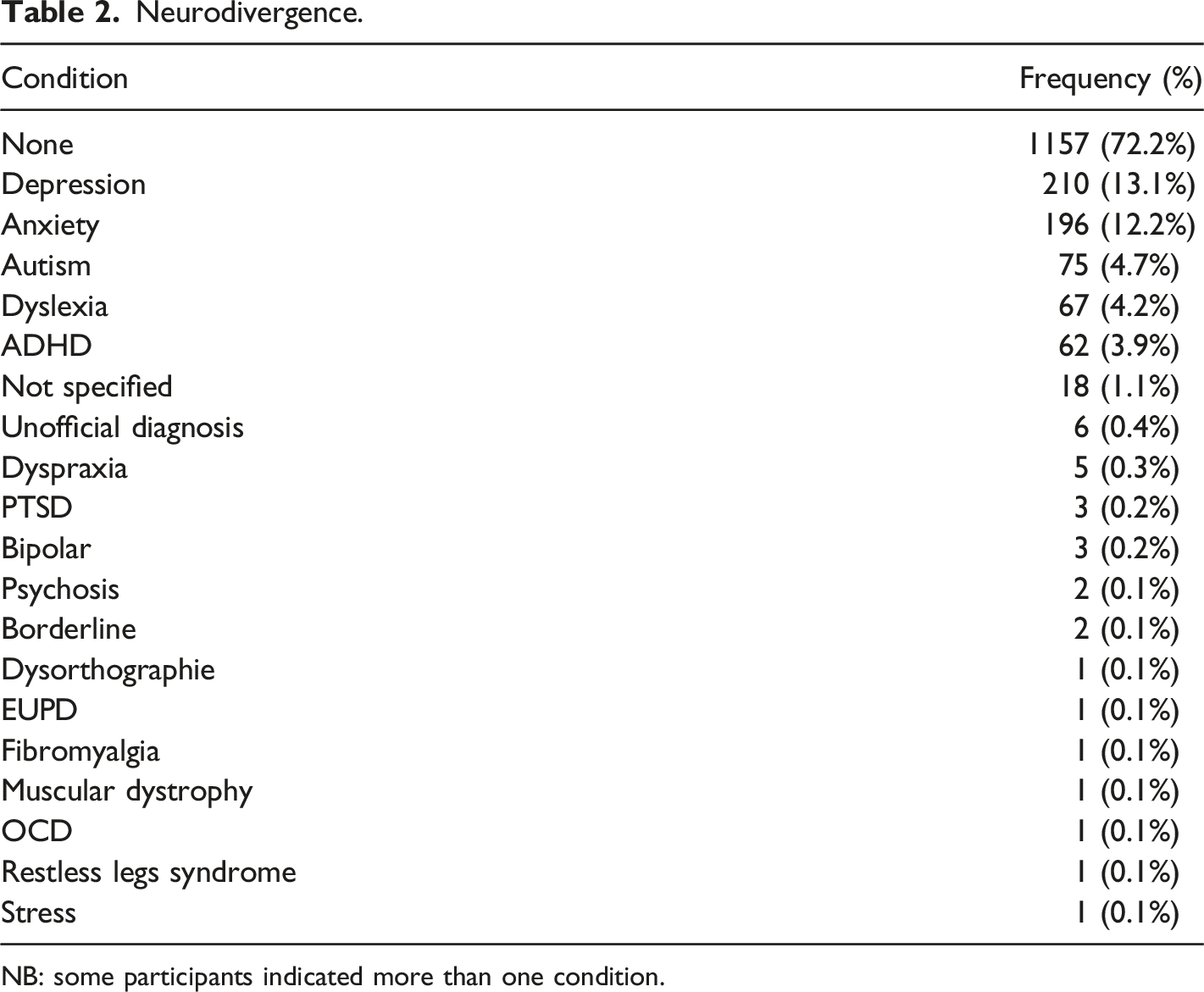
Neurodivergence.
NB: some participants indicated more than one condition.
Gamers’ experiences
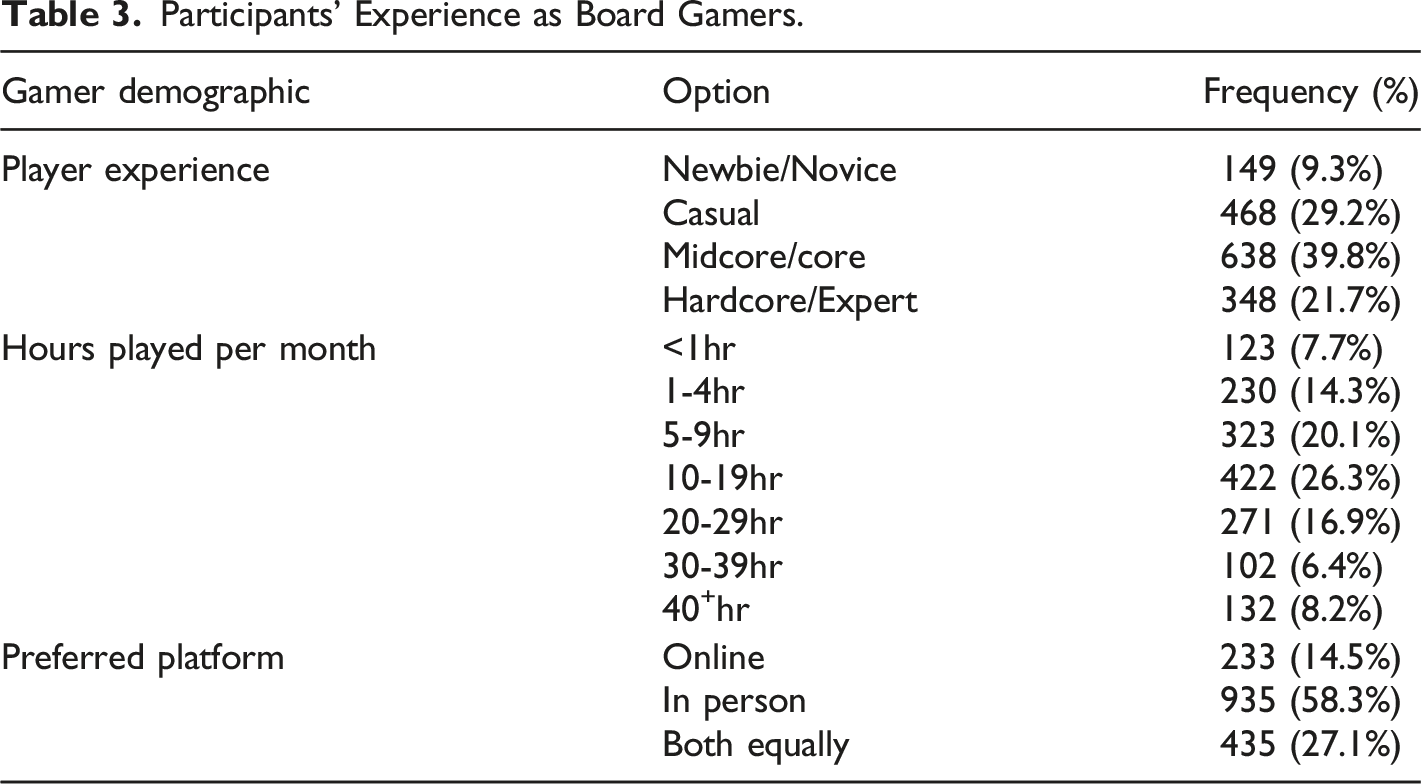
Participants’ Experience as Board Gamers.
Game preferences
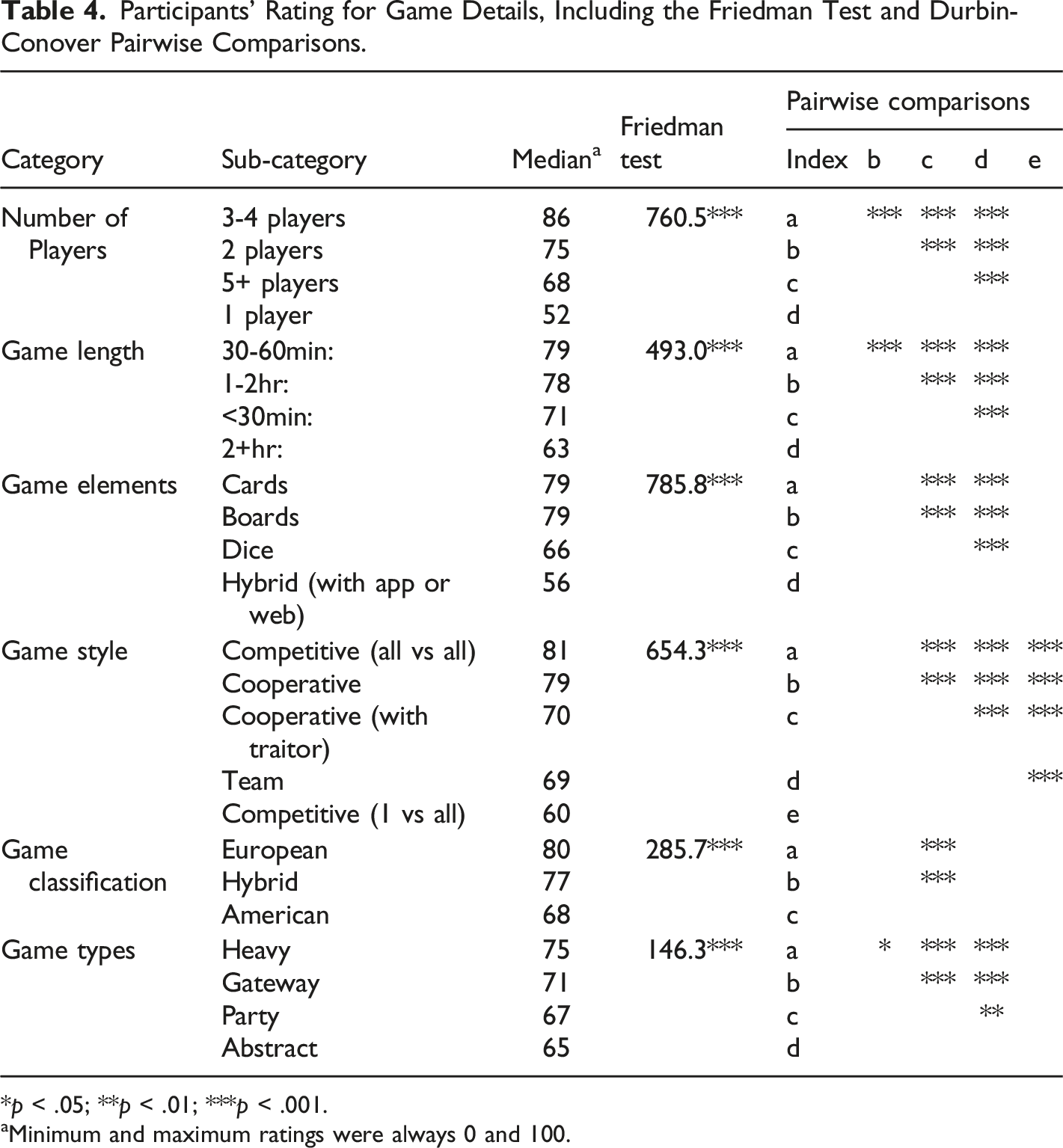
Participants’ Rating for Game Details, Including the Friedman Test and Durbin-Conover Pairwise Comparisons.
*p < .05; **p < .01; ***p < .001.
aMinimum and maximum ratings were always 0 and 100.
Regarding the number of players, participants indicated that they preferred games with 3-4 players the most, followed by games with two players, 5+ players and one player, which was the least preferred (all differences were significant: ps < .001). Regarding the game length, they also preferred games lasting 30-60 minutes the most, followed by those lasting 1-2 hours, less than 30 minutes and 2+ hours, which was the least preferred (all differences were significant: ps < .001). Regarding the game elements, participants equally preferred games that include cards and boards the most, followed by dice and then hybrid games (all differences were significant: ps < .001, except cards-boards p >.05). Regarding the game style, participants equally preferred competitive (all vs all) and then fully cooperative games the most, followed by traitor games, team games and one vs all games (all differences were significant except competitive (all vs all-cooperative: ps < .001). Regarding the game classification, European and hybrid games were preferred over American ones (ps < .001). There was no significant difference between preferences for European and hybrid games (p >.05). Regarding the game types, heavy games were preferred the most, followed by gateway games, party games, and abstract games, which were least preferred (all differences were significant: ps < .05).
Mechanics
Figure 1 shows the participants' median ratings for game mechanics. Friedman tests indicated that participants' ratings were significantly different across game mechanics (X
2
F
(27) = 3554, p < .001). Participants preferred board games with action point allowance, deck, bag and pool building and worker placement the most. In contrast, player elimination was the least desired game mechanic, and memory was the second to last. Median ratings for board game mechanics.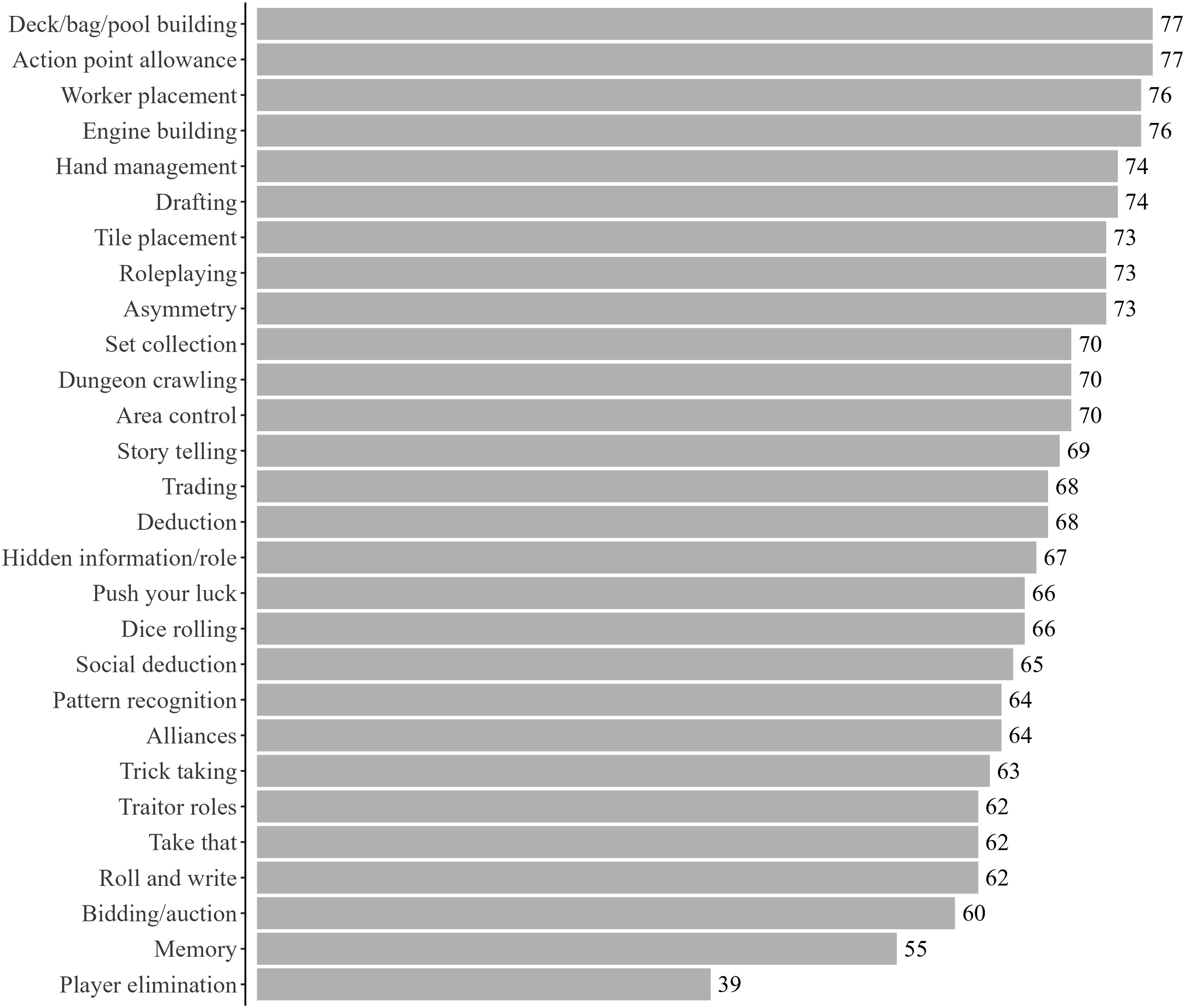
Themes
Figure 2 shows participants' median ratings for board game themes. Friedman tests indicated that participants' ratings were significantly different across game themes (X
2
F
(13) = 1784, p < .001). The fantasy theme had the highest ratings, and the sci-fi and adventure themes had similar ratings in the second position. In contrast, the war theme had the lowest ratings, and the horror and train transport themes were in the second to last position. Median ratings for board game themes.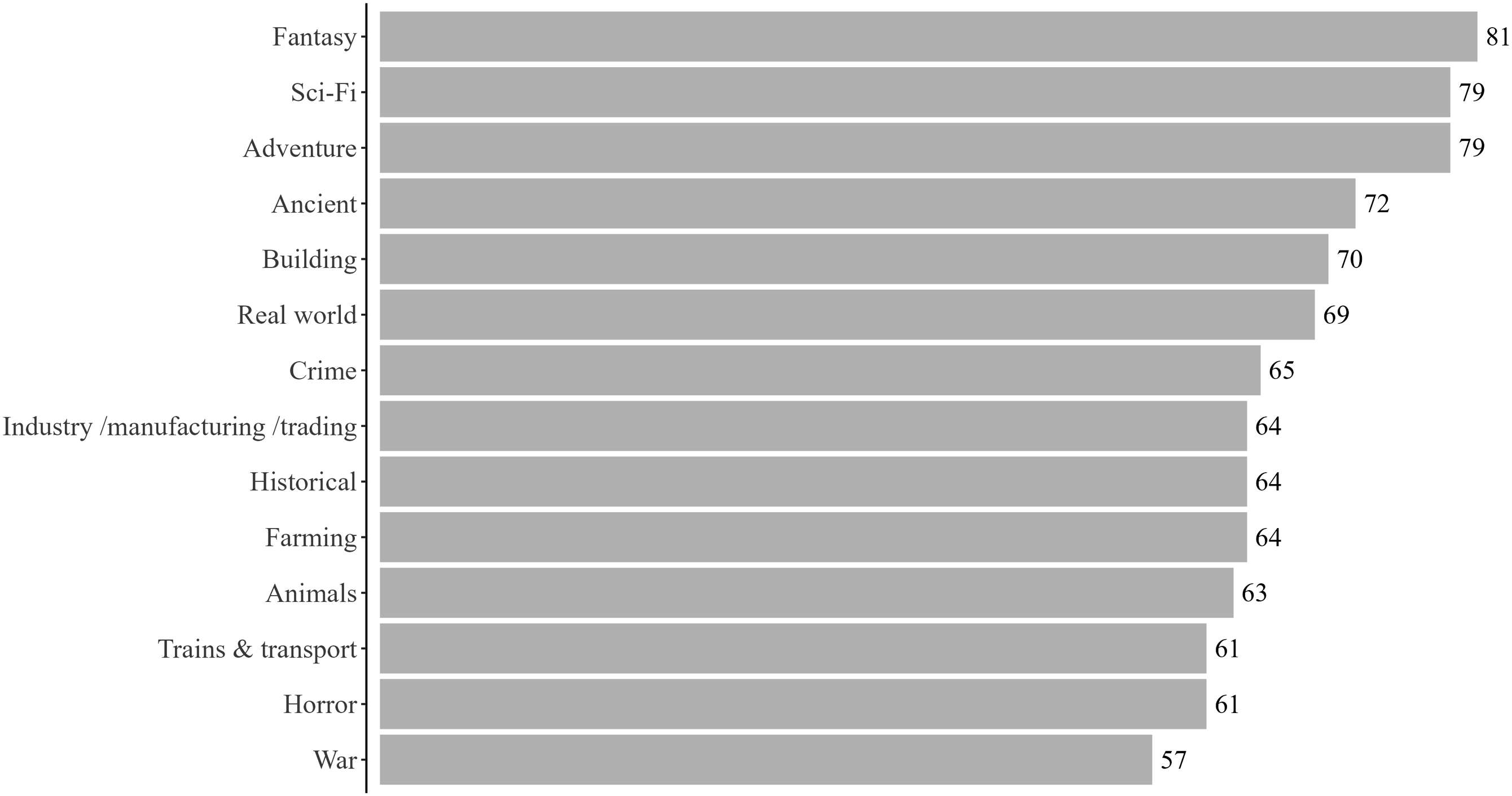
Game choice and motivation
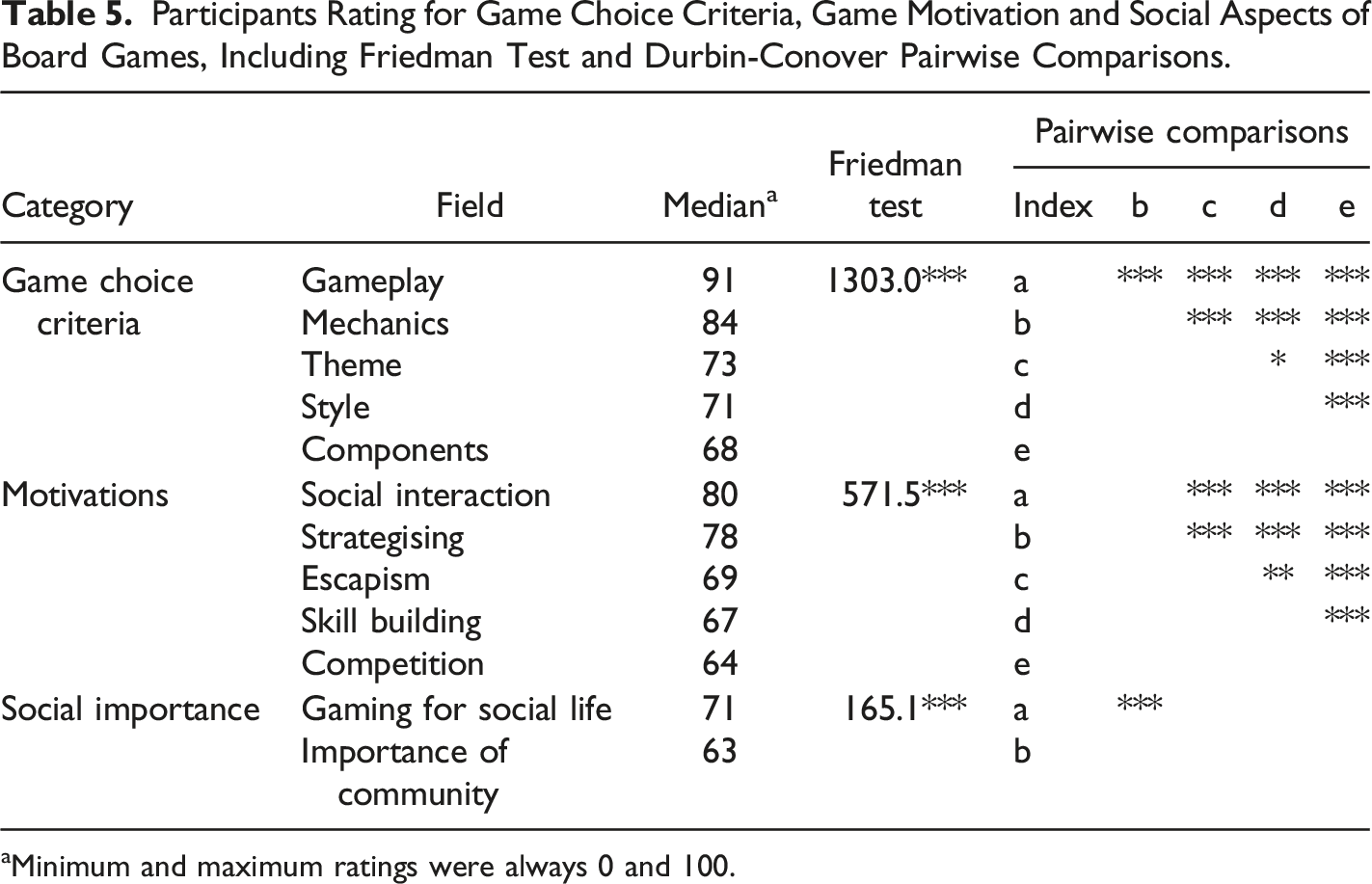
Participants Rating for Game Choice Criteria, Game Motivation and Social Aspects of Board Games, Including Friedman Test and Durbin-Conover Pairwise Comparisons.
aMinimum and maximum ratings were always 0 and 100.
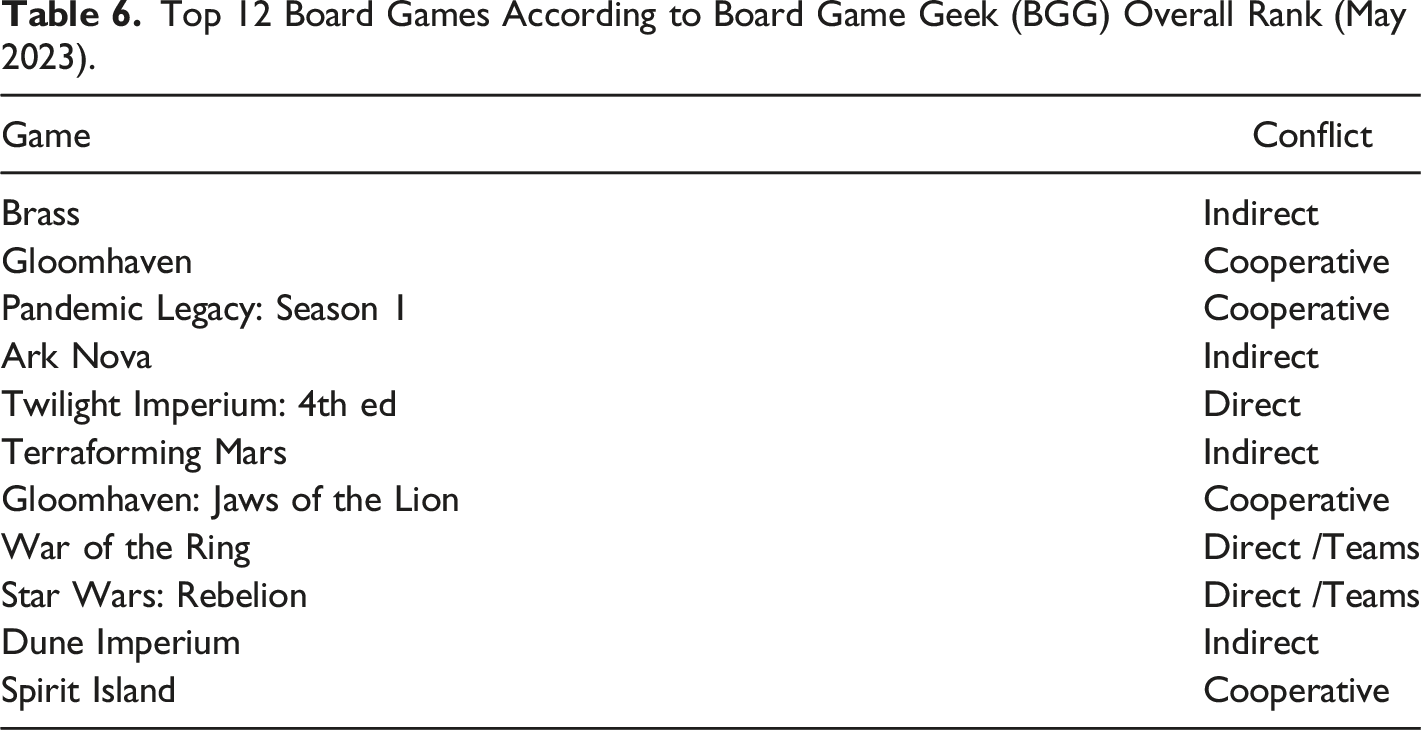
Regarding the game choice criteria, participants indicated that for the game choice, the gameplay is the most important aspect, followed by its mechanics, theme, style, and finally, its components, which were the least important aspect for the game selection (all differences were significant: ps < .05). Regarding what motivates participants to play board games, they indicated that social interaction and strategising were the most important motivations, followed by escapism, skill building, and competition, which was the least important motivation (all differences were significant except social interaction- strategising: ps < .01). The importance of having an engaging game system that fosters face-to-face socialisation, supported by physical game components, is reflected in the literature (Booth, 2019; Kosa & Spronck, 2019). Although significant groups of players enjoy conflict in board games (Martinho & Sousa, 2023), our survey show that player elimination is the least enjoyed game mechanism (Figure 1), and War is the least enjoyed game theme and narrative (Figure 2). These specific game features and typologies fit Eurogames: board game design where conflicts are indirect, and player elimination is avoided. These types of modern board games have influenced the state of the art of game releases.
Top 12 Board Games According to Board Game Geek (BGG) Overall Rank (May 2023).
Discussion
The range of data collected here offers a valuable resource for academics, educators, clinicians, and game designers and developers. While the results section summarises the global population demographics and their motivations and preferences in the hobby, the level of granularity available in the data is much greater, affording opportunities for interested parties to cross-reference via various facets to explore relationships between individuals' demographics and game preferences, we have highlighted a few key comparisons below to stimulate uses for this data, broadly split into two sections, gamer characterisation and health findings.
Gamer Characterisation
In summary, most gamers categorised themselves as midcore, followed by casual, hardcore, and newbie. Most gamers tended to play between 5-29 hours per month, strongly favouring in-person gaming over online. Social interaction was the strongest motivation for gaming, with competition being the least important. This suggests that a primary purpose for gaming may be as a vehicle for social interaction and a social outlet. Participants provided the highest ratings for board games with 3-4 players that lasted from 30 to 60 minutes. Cards and boards were the game elements with the highest ratings.
Meanwhile, games using a website or app had the lowest rating. The least liked game type was abstract (such as Azul, Sagrada, and Santorini). Highest rated mechanics included deck building, action point allowance, worker placement and engine building, with player elimination rated least favoured, followed by memory and auction. Fantasy, sci-fi and adventure themes were rated the highest, while war was the lowest, followed by horror and transport. This data can be surprising because we could expect heavier games to be preferred when analysing the top-ranked games on BoardGameGeek. There seems to be a distortion towards heavier games when users classify them. Complex games have a high correlation with higher BoardGameGeek ranks (Samarasinghe et al., 2021). These games tend to have durations above 60 minutes, some reaching 3 hours plus. The gamers in our sample fit into the mid-weight hobby gamers, enjoying games with innovative mechanisms, a combination of components like cards, boards and dice, strategy, and defined themes, although avoiding the longest and most complex games available in the market. This might mean that the users recognise these complex games as the best products but prefer to play more straightforward games in their daily play habits. By separating and comparing these data points, this information can help choose the complexity when choosing and developing games for the introductory public, more seasoned players or specific populations.
The most important aspect for gamers was gameplay, and the least so, components, although the most successful games on Kickstarter are those that deliver high-quality components (Booth, 2019). The game styles with the highest ratings were all vs all and cooperative. Meanwhile, the game style with the lowest ratings was one vs all. Participants also provided higher ratings for the European or mixed style than the American style. This was somewhat predictable since Eurogames contributed to the revival of board game activities outside the heavier game communities, with games like Catan, Carcassone, and Ticket to Ride being among the most popular mass-marketed games in the main shops. Though it should also be noted that 40% of our respondents were from Europe and the UK compared to 11% from the USA, which may also explain this finding, although separate analysis indicated that although American games were the least preferred by both Americans (median 74) and Europeans (71), Americans rated European style lower (83) than Europeans (87.5).
Finally, board gamers preferred heavy games, which involve significant time and energy investment, compared to more relaxed types, such as party and gateway games. A preference for heavier games is typical of the modern board game hobby movement, where players seek constant novelty, new experiences, new game mechanisms and narrative development (Arnaudo, 2018; Booth, 2019; Woods, 2012). As mentioned, this tendency to play heavier games might represent the easier and most played modern board games. Players may recognise that heavier games deliver the best experiences; however, getting these to the table is more difficult due to the learning curve, preparation and duration (Rogerson & Gibbs, 2018).
Participants' demographics mirrored widely held Western assumptions regarding most board gamers, notably that they are male, identify as men, and are ethnically white with a university-level education. The predominance of highly educated white males in the North American board game community is the subject of contemporary research made available on Kotaku and The Conversation (Pobuda, 2022). This work mirrors these findings in a much larger and more representative dataset. This work extends these findings to other cultures; notably, our sample contains 25% Chinese board gamers. This enables further investigations into whether board game demographics regarding gender and age in East Asia mirror those demographics obtained in the West. Chinese gamers seem to be younger (Chinese mean age: 25.29, British, Americans and French mean age: 35.87) and more predominantly identify as men (Chinese men: 93.9%, British, Americans and French men: 69.7%) compared to Western countries.
Next Moves
Population and experiential demographics can now be mapped against the preferred number of players, game length, elements, style, classification and types. For example, to explore a game length, style and theme that would suit a population over 50. For example, the data shows that over 50 's particularly dislike 1-player games (median >50: 28.5, median <50: 52) and seem to be motivated more by competition (>50: 74, <50: 63). This population also particularly like themes such as Sci-Fi (>50: 91, <50: 78), fantasy (>50: 88.5, <50: 80), ancient (>50: 82.5, <50: 72) and industry (>50: 79, <50: 64). Select game mechanics and themes can be mapped similarly. This data can be charted alongside choice criteria, motivations, and social importance. For example, by using this dataset, it is possible to see that, compared to those identifying as women, compared to men particularly like gateway (women: 80, men: 68) and abstract (women: 72, men: 63) games with animal themes (women: 72, men: 60) and with tile placement (women: 79, men: 71), pattern recognition (women: 70, men: 62), roll and write (women: 67, men: 60), and memory (women: 62, men: 54) mechanics. A better understanding of these questions will allow a deeper understanding of the variances between gamers from different backgrounds.
This dataset allows users that wish to utilise analogue games to cross-reference the information with the available game database like BoardGameGeek. In this specific case, they can follow Mechanics, Dynamics and Aesthetics principles or similar game design frameworks (Sousa et al., 2021a), starting by identifying the mechanisms they wish to use in a game based on previous recommendations. The BoardGameGeek website uses links games by mechanisms and themes, classifying them by many other characteristics like themes, types of components, duration, complexity, etc. This allows users to find games, analyse them through informed play and then decide if or what they need to modify in the original game for clinical usage. In this case, if the users wish to build a new game, for example, by following serious game design principles, they can be inspired by the identified game elements to create new games, following the standard design processes of creating, playtesting and correcting the game through continuous design interactions. This design sequence fits the literature on game design courses (Brathwaite & Schreiber, 2009; Fullerton, 2014; Ham, 2015). Cross-referencing with this dataset will allow users to target and identify whatever elements of a game are preferred by specific subpopulations.
Moving to a Health Focus
Currently, there is little detailed knowledge of the landscape of gamers' mental health beyond anecdotal evidence that board games can contribute, in vague ways, to improving psychological well-being (Kinne, 2022a). Although 72.9% of board gamers surveyed here reported no mental health or neurodevelopmental condition, with 0.4% indicating an unspecified condition, over 25% were neuro-diverse. The most commonly reported were Depression (13.1%), Anxiety (12.2%), Autism (4.7%), Dyslexia (4.2%) and ADHD (3.9%). The prevalence of depression, dyslexia and ADHD is consistent with that found in the general population (Lim et al., 2018; Polanczyk et al., 2007; Shaywitz & Shaywitz, 2005). However, the prevalence of anxiety and autism is significantly higher than the estimated global prevalence, which is 7.3% for anxiety (Baxter et al., 2013) and 1% for autism (Zeidan et al., 2022).
These findings enable researchers to trace the distribution of responses for neurodiverse board gamers and map these against gamer experiences, motivations and preferences. This granularity provides essential information for academics researching practices of board game consumption, clinicians determining population-appropriate games, and game designers' intent on developing games for specific populations or to appeal to a particular demographic. For example, by separating participants with and without depression, we can see that people with depression are more motivated to play for escapism (depression: 80, no-depression: 67) rather than competition (depression: 59, no-depression: 64). People with depression also dislike war-themed games (depression: 48.5, no-depression: 58) with player elimination (depression: 29, no-depression: 40) mechanics, but they prefer horror games (depression: 66.5, no-depression: 60) and games with worker placement (depression: 82, no-depression: 75) and storytelling (depression: 76, no-depression: 68) mechanics.
The results enable clinicians and game designers to select or design games with an understanding of how long players with different diagnoses prefer to engage in gaming activity. By cross-referencing data obtained regarding mental health and neurodevelopmental conditions, clinicians and designers can also determine the level of engagement in populations with specific needs. In this context, a clinician – for example – will be able to identify the relationship between players reporting autism, their level of experience, and their preferred playing time across a month. The dataset enables clinicians to make informed choices regarding how and how long populations can be engaged through board games as part of any therapeutic approach to improving quality of life. Data concerning gamer preferences can, in turn, be mapped onto participant demographics, mental health conditions and participants' experiences resulting in a high degree of specificity obtainable from the dataset.
Limitations
Though it is important to note that this method will have only captured those formally diagnosed, a relevant point considering the growing number of undiagnosed cases, especially in older adults (Atherton et al., 2022). It is also worth noting that caution should be applied when generalising findings made from this data; although we present a sufficiently large dataset, it is not without its limitations and restrictions. Respondents will have been skewed by various factors, including online presence and competency in English, to name two.
Another point of note is the unequal split of genders in our sample, it is interesting to note that the male-skewed sample here contrasts the typical female-skewed samples seen in online research and surveys (for a review, see Keusch, 2015). Indeed some research suggests an unequal split between the genders in the hobby, with men being overrepresented compared to women and non those with non-binary genders (Booth, 2019; Pobuda, 2018). Using data about preferences based on a predominantly male population may bias game designers to continue producing games favoured by men over women or non-binary people, thus reinforcing this uneven split in the hobby. Although adding this data set will allow those interested in portioning out the data of their targeted population, though we had a higher men-to-women ratio, our data still provides information about the preferences of 361 gamers who identify as women. This generous sample allows for meaningful statistical analysis. This dataset will offer valuable insight to choosing or designing games for a female audience. Future work may want to explore how well the preferences of female gamers map onto existing games and how to use these preferences to design games that would interest female gamers and perhaps market these games to female consumers. Notably, non-binary gamers only accounted for 1% of our sample. Future work will want also to understand the experiences of non-binary gamers and how to improve inclusion in gaming spaces for such individual. Therefore future research may want to focus exclusively on non-binary board gamer preferences and gather data to understand how nonmales can be more included in the hobby, both through the game design process and, more broadly, in gaming communities.
Conclusion
In conclusion, this dataset can help clinicians and educators to tailor game selections to the preferences of relevant populations (such as those with depression). The dataset will save game developers considerable research and development time when making decisions about games designed for specific subpopulations. This is especially pertinent for those small or independent developers who wish to appeal to audiences different from the largest perceived market. Developing games with a more focused, specific appeal is now possible. While this will likely lead to smaller market returns for the developer, its cultural and reputational effects and consequences on player experience and well-being can only be positive. Our findings provide game design relevant information, like the type of mechanism, themes, and experiences that are useful to develop and choose when applying therapeutic tabletop games (Bean et al., 2020; Eladhari, 2018; Vita-Barrull et al., 2022). With readily available crowdfunding opportunities to mitigate financial risk, the use of social media to target specific markets, and the possibilities offered by electronic distribution and/or print-on-demand, games companies can confidently diversify their portfolios and target their games, especially now there is a dataset freely available to inform creative and commercial choices. The dataset may also draw together scholars, clinicians, and designers, facilitating a free-flowing exchange of ideas regarding clinical approaches, interventions and game design, producing hitherto unexplored potentialities in treatment and game development.
Supplemental Material
Supplemental Material - Your Move: An Open Access Dataset of Over 1500 Board Gamer’s Demographics, Preferences and Motivations
Supplemental Material for Your Move: An Open Access Dataset of Over 1500 Board Gamer’s Demographics, Preferences and Motivations by Liam Cross, Andrea Piovesan, Micael Sousa, Peter Wright, and Gray Atherton in Simulation & Gaming.
Footnotes
Acknowledgements
The authors would like to thank the editor and the 7 reviewers for their thoughtful and constructive comments and critiques in refining this work, all of the individuals who took part in initial consultation, GameInLab (especially Micha) for funding this work and donating steam keys, and all 1603 people who took the time to complete this survey.
Declaration of Conflicting Interests
The author(s) declared no potential conflicts of interest with respect to the research, authorship, and/or publication of this article.
Funding
The author(s) disclosed receipt of the following financial support for the research, authorship, and/or publication of this article: This work was supported by a Game in Lab grant awarded to LC & GA.

Supplemental Material
Supplemental material for this article is available online.
Author Biographies
References
Supplementary Material
Please find the following supplemental material available below.
For Open Access articles published under a Creative Commons License, all supplemental material carries the same license as the article it is associated with.
For non-Open Access articles published, all supplemental material carries a non-exclusive license, and permission requests for re-use of supplemental material or any part of supplemental material shall be sent directly to the copyright owner as specified in the copyright notice associated with the article.
