




Abstract
Who is a gamer? What kind of people are perceived to be gamers? And finally – who perceives themselves as a gamer? In this article the authors attempt to answer these three questions from a multinational perspective.
Background. Games are nowadays one of the most frequently encountered forms of entertainment and constitute an ever-increasing part of many people’s day-to-day lives. With the rising popularity of
Methods. The quantitative study was conducted in two countries –
Results. The results show that there are both similarities and differences in the meaning of gamer identity between Poland and the United States. People who consider themselves gamers generally spend more time playing games than non-gamers regardless of the country. However, some differences can be spotted between Poland and the U.S. concerning among others types of games played, used platforms or different styles of playing video games.
Limitations and further research. The main problem in the study was the limited age range in the sample. In the future it seems valuable to include people of different age groups to broaden the study of self-identified gamer identity.
Video games have become one of the most common ways to spend free time and constitute an ever-increasing part of many people’s day-to-day lives, regardless of age. Games are one of the most frequently encountered forms of entertainment in modern society. Adults today spend more time playing video games than previous generations have (Williams et al., 2008), and this is likely due to the fact that most adults grew up playing video games (Wulf et al., 2018).
According to the Entertainment Software Association (2019), in the year 2018 the total video game sales almost reached $45 billion worldwide. It is estimated that over 65% of adult Americans play video games on average approximately 5 hours a week. Male players constitute a little bit more than a half of all the people regularly playing video games . Some differences can be observed between different groups of players – males and females, younger and older players etc. For example, in the United States of America, men tend to use consoles typically whereas women play mainly on mobile phones (Entertainment Software Association, 2019). In other countries, for example in Poland the statistics are quite similar. According to the research conducted by Forbes, around 50% of adult Poles play video games and the most common device for these players is the mobile phone (Kowalik & Kanraszewski, 2018). However, according to the report State of the Polish Video Game Industry more gamers in Poland use their personal computers to play games than in other countries (Bobrowski et al., 2017).
Understanding the Term “Gamer”
When many people think of a gamer they picture a young white man (Dill & Thill, 2007) and research has shown that, historically, gamers have fit this description (McClure & Mears, 1984). According to Williams (2005), a gamer is thought to be an “isolated, pale-skinned teenage boys (sitting) hunched forward on a sofa in some dark basement space, obsessively mashing buttons” (p. 5). People often consider gamers as nerds, being overly intellectual, obsessive, spending too much time indoors, and socially awkward, although these associations occur more frequently for men than women (Storla, 2011; Taylor, 2012). Although, this stereotypical image of a person spending a lot of time playing games seems to be changing in recent years (Paaßen et al., 2017; Williams et al., 2008), a recent study (Amby et al., 2020) found that individuals who were not gamers stereotyped gamers as lazy, violent, introverts, irresponsible, but smart. The gamer image seems to remain strongly associated with being male (Shaw, 2010), although recent research indicates that most people do not believe in the teenage isolated and pale-skinned image anymore (Kowert et al., 2014). However, surveys of MMO players (Griffiths et al., 2004; Yee, 2006) found evidence that the players are older and more social than the stereotypes suggest.
Claims about the sex of a gamer are also contradictory to the results of large-scale polls which indicate that around half of the players in different countries are women (Entertainment Software Association, 2019; Kowalik & Kanraszewski, 2018). But sometimes gamers who know that women play games, do not consider them as true gamers because of the genres and platforms that they prefer (Juul, 2009; Paaßen et al., 2017; Shaw & Chess, 2016; Vanderhoef, 2013). Women more often play so called casual games (e.g., Candy Crush Saga or Farmville) on casual platforms such as smartphones (Kuittinen et al., 2007). Women also report that they spend less time playing games (Hartmann & Klimmt, 2006; Poels et al., 2012; Terlecki et al., 2011). An important consideration of both the rise of casual games and the fewer hours played on such games is how that affects the profitability of games (Consalvo & Paul, 2019) and shifts them from “premium” to “freemium” (Shaw & Chess, 2016). Furthermore, women have been visually present in the growing eSport and mobile gaming community (Ćwil et al., 2019). What is interesting is the fact that the majority of avatars in the games are aggressive men, whereas female characters are hyper-sexualized in many games (Dill & Thill, 2007). This differential socialization impacts the way people (especially women) identify themselves with those avatars (Behm-Morawitz & Mastro, 2009; Downs & Smith, 2010; Williams et al., 2009). As a result women often have a lesser connection with the character that represents them in the video game.
There is no singular definition of a gamer. In some studies, the factor that is the most important when considering somebody as a gamer is the average time that the person spends playing games (Hartmann & Klimmt, 2006; Paaßen et al., 2017; Poels et al., 2012; Terlecki et al., 2011; Vermeulen et al., 2011). However, there is as least one serious drawback to this solution – the findings are most often based on self-reported game time, which is subject to the under-reporting effects especially for women (Kahn et al., 2014; Paaßen et al., 2017; Williams et al., 2009). For example, in the research conducted by Williams et al. (2009) it was found that women underestimated their weekly play time by more than 3 hours while men underestimated their weekly play time by about 1 hour.
Women’s gender identity often conflicts with gamer identity (Storla, 2011; Taylor, 2012). For example, Kowert et al. (2012) found that among self-identified gamers studied only 14.4% were female and according to Burch and Wiseman (2015) only 35% of female adolescents identified themselves as gamers, whereas almost 70% of young men did so. Notably, Gamergate began in 2014, (Snyder, 2019) in between these two studies, and the number of women that identified as gamers more than doubled from 14.4% in Kowert et al. (2012) to 35% in Burch and Wiseman (2015). Perhaps the spotlight shone on women game developers allowed more female adolescents to feel at ease identifying with the term gamer. However, most of the research on gamers has been conducted in the United States, and it is therefore both essential and interesting to compare these findings to other countries. Some researchers use the genre of preference to determine gamers and non-gamers. Gamers and non-gamers often differ on the game genres that they both prefer and play (Vanderhoef, 2013; Vermeulen et al., 2011). Individuals playing first-person-shooters, massive-multiplayer-online, and strategy games are more often considered gamers (Paaßen et al., 2017) than those that play social or casual games (Bosser & Nakatsu, 2006; Consalvo, 2011).
Another way to distinguish gamers and non-gamers while conducting a research is to ask participants to self-identify (Kowert et al., 2012). According to some researchers the subjective identification with a group can be a better predictor of this person behavior and the group attitudes than more objective measures like time spent playing video games (Jetten et al., 2001; Turner, 1984). The self-identification is based on one’s sense of belonging to a certain group and therefore reflects people feelings regarding their self-awareness and belonging. Grooten and Kowert (2015) note that a choice to self-identify oneself as a gamer is a different process of gamer categorization than an assignment from an outside source, such as a researcher assigning gamer status based on hours played. Research has shown that women consider themselves as gamers less often than men (Howe et al., 2019), but this is due to a variety of factors including avatar depiction (Dill & Thill, 2007), social issues like Gamergate (Shaw & Chess, 2016), as well as the stereotypical depiction of men as gamers (McClure & Mears, 1984; Williams, 2005). We conclude that, although there are multiple approaches to determine who is and who is not a gamer, the best way to determine if a participant identifies as a gamer or not is to ask the participant.
Theoretical Framework
In this study the authors used a social identity approach to understand why individuals identify, or not, as a gamer. Social identity approach refers to two intertwined but distinct psychological theories – self-categorization theory and social identity theory (Postmes & Branscombe, 2010; Tajfel et al., 1979; Turner, 1999). The social identity theory approach tries to mitigate against the tendency to distinguish and conflate the two theories (Brown, 2000; Haslam et al., 2010). Social identity is the state of people thinking about themselves inside of social groups and social surrounding. Self-categorization means that people think in the categories of groups and give a meaning to the distinguished categories in order to understand the task of the group in the specific situation. Social identification is the process by which people match themselves to one or a few of those categories on the basis of their gender, age, religion, hobbies, education and other factors. Social identity is derived primarily from group memberships and interaction with other members of a group (Brown, 2000). People belonging to one group share some characteristics and begin thinking about themselves in the context of the group, assigning group characteristics to themselves. The closer personal characteristics of a person are to other members of a group, the more a person feels that they belong to that community and behave more similar to other members (Postmes & Branscombe, 2010).
Not everyone who plays video games considers themselves a gamer (Howe et al., 2019; Shaw, 2010). Similarly, not everyone who plays sports identifies as an athlete or everyone who sings as a musical artist. Factors such as time (Paaßen et al., 2017), financial incentives (Alexander, 2014; Shaw & Chess, 2016), socialization (Dill & Thill, 2007), demographics (McClure & Mears, 1984), and more combine to form individual motivations that may or may not lead to a player identifying as a gamer. Additionally, in the case of gamers, not only can we describe their social identity but also consumer identity. Gamers purchase games and in-game content to fulfil their needs. Understanding people self-identification with the group of gamers can be beneficial not only to understand people belonging to a certain social group but also to recognize their buying patterns and behaviors.
As not all of the people who play video games identify themselves as belonging to the social group of gamers, the following seem to be interesting questions to answer – who matches themselves to a group of gamers? Who perceives themselves as a gamer and think in the categories of belonging to this social group? It would be enlightening to study the differences between people who identify as a gamer, or not, as well as contrast these findings between people from different countries, as what may drive Americans to identify as a gamer may not be what drives individuals from other countries to identify as a gamer.
Proposal of Research Questions and Hypotheses
On the basis of literature review the research questions and hypothesis were proposed. The authors aimed to study and compare the gamer identity in Poland and the United States during this research. The factors that were included in the analysis were the following: games genres, time of play, technology used and biological sex of the player. Four research questions were outlined:
RQ1: Who identifies themselves as a gamer in Poland and the United States? Are there any differences in matching yourself to the group of gamers between those two countries?
RQ2: How, if at all, do video game players in Poland and the United States differ on the games they prefer?
RQ3: How, if at all, do video game players in Poland and the United States differ on the amount and types of hours they play?
RQ4: How, if at all, do video game players in Poland and the United States differ on the technology they use to play video games?
In order to answer the mentioned research questions in more detail, specific hypotheses were proposed, concerning characteristics such as biological sex, time spent playing video games, types of games played, and technological devices used. Previous literature has overwhelming found that men identify as gamers more often than women and we therefore proposed that:
H1: Men in both a) Poland and b) the United States identify themselves as gamers more often than women.
Hours of gameplay has been linked to gamer identification in previous literature and we therefore propose:
H2: Gamers in both a) Poland and b) the United States play more hours of video games than non-gamers.
Gaming genre has been conceptually associated with gamer identity, although not always supported by empirical data, yet we still offer the following hypothesis:
H3: Gamers in both a) Poland and b) the United States prefer first-person shooters (FPS), massively multiplayer online games (MMO), sports and role-playing games (RPG) more often than non-gamers.
It would be also interesting to find out if those who play the genres listed above consider themselves as gamers more often in comparison to people playing other games, for example social ones.
H4: Non-Gamers in both a) Poland and b) the United States prefer social, strategy, simulation and retro games more often than non-gamers.
Research on gamer identity, to date, would lead us to believe that gamers prefer to play on consoles and it is therefore proposed that:
H5: Gamers in both a) Poland and b) the United States prefer to play on consoles more than any other device.
These hypotheses were taken into consideration while preparing a questionnaire for further quantitative analysis.
Method
In order to research gamer identity a questionnaire was designed, specially for the purpose of this study. The same set of questions was used in both countries – Poland and the United States, however two language versions were used – Polish and English one. The questionnaire consisted of questions concerning self-identification as a gamer, time spent playing video games, types of games played and platforms used. There was also one open-ended question in the survey about the main motivation for playing games.
Participants
A total number of 223 participants took part in the research, around half of them being from Poland, half of them from the United States of America. The researchers used purposive sampling for the need of this research. The precondition to take part in the designed research was that each of the participants needs to play any kind of video games. People who do not play video games were not included in the further analysis. The main reason to make the exclusion was the fact that the researchers wanted to conduct a deeper analysis of the types of games, platforms or ways of playing and to do so only people playing games have knowledge of the type of games they prefer and how they play these games. Furthermore, individuals that do not play video games have been found to hold negative attitudes and beliefs about games (Amby et al., 2020; Kort-Butler, 2020) that could alter the results based on stigma and not gamer identity. The results were collected between March and June 2019.
A total number of 104 participants from a large Polish university completed the online survey. The research was approved by our institution’s Institutional Review Board. The age of the participants in this sample ranged from 18 to 45 (M = 24.91, SD = 4.63). In the Polish sample the majority of the sample consisted of men, only 35% of respondents identified as women. Almost 50% of participants identified themselves as gamers (48 out of 96 people who answered this question). Most participants reported being from Poland (71) and other countries represented were: Ukraine (14), France (7), China (3), Belarus (1), India (1), Malaysia (1), and Serbia (1); 5 participants did not provide their country of origin. Regarding race, 97 participants identified as white and 6 identified as Asian. Most participants had finished at least two years of college (70.4%).
The United States sample was collected from a large public mid-south-western university undergraduate communication pool, in the US, after IRB approval. Participants received research credit for their participation to use in communication courses. A total of 119 participants from the United States completed this survey. The age of participants ranged from 18 to 27 (M = 19.98, SD = 1.47). In the United States sample only around 33% of the respondents identified as women, with 80 out of 119 participants of the research being male. Among the American sample 40% of the respondents identified as gamers (48 out of 119). Regarding race or ethnicity, participants identified as white (96), black or African-American (11), American Indian or Alaskan Native (3), Asian (12), Latinx (5), and Middle Eastern (1). Participants were allowed to select more than one race/ethnicity with which they identified. Most participants had finished at least two years of college (73.1%).
The demographic makeup of the samples from two different countries were similar in age, gender and education, although there were expected differences in race, ethnicity and nationality.
Data Collection
After participants agreed to be part of the study and provided informed consent, they completed an online questionnaire that included questions about demographic information, gamer identity, hours of gameplay, technology of gameplay, genre of gameplay, and motivations for gameplay.
Gamer Identity
As previously mentioned, gamer identity may best be assessed by asking participants if they identify as a gamer or not (Kowert et al., 2012). The term gamer may have both stigma and pride attached to it and therefore the authors conclude that a willingness of a participant to accept the label of gamer and self-identify as a gamer may be a better representation of who is and who is not a gamer than other novel practices.
Hours of Gameplay
Participants were asked how many hours a week they played alone, co-present, and online. These hours were then summated to create an overall hours played variable as well as retaining unique measures for hours played alone, co-present, and online.
Technology of Gameplay
Participants were first asked to specify all the technologies and consoles they use to play video games, and then to identify which one they use most often. The respondents could choose from the following options: XBOX, PlayStation, Nintendo, Personal Computer and Cell Phone.
Genre of Gameplay
Eight genres of video games were then presented to participants and included: first-person shooter (FPS), massive multiplayer online (MMO), role-playing game (RPG), strategy, social, sports, retro, and simulation. In the questionnaire for each of the genres a few examples of games were presented to make it easier for participants to assign their favourite games to one of the given genres. Participants were asked to order these genres from their most favorite to their least favorite genre. Although it is acknowledged that some games such as Battlefield 4 could fit in multiple genres because users play the same game in differential ways (Howe & Lee, 2018). However, the way the player enjoys the game the most is likely indicative, or at least highly correlated, with their most preferred genre. For further analysis a variable of genre preference was created with the genre that the participant preferred the most as a nominal variable.
Data Cleaning
All data was analyzed using SPSS v. 25. The data was first examined to see if data was systematically missing. According to Little’s MCAR test data was not systematically missing but was missing completely at random (χ2 = 43.50, 53, p > .05). Data were also examined for skewness and kurtosis and no issues were noted.
Results
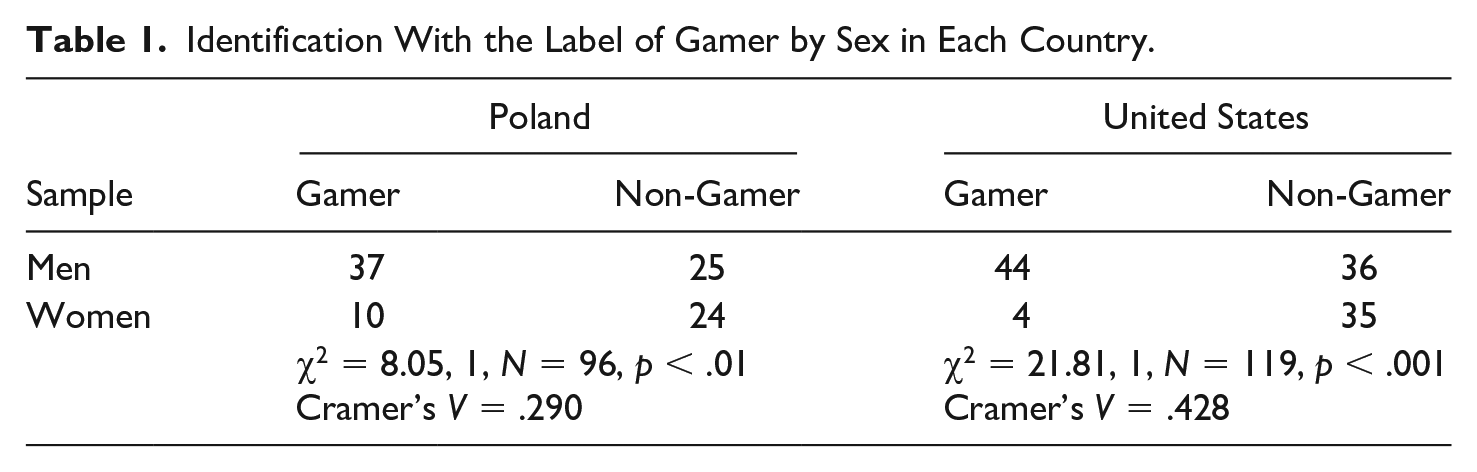
To test H1, that men in both a) Poland and b) the United States identify themselves as gamers more often than women, a chi-square analysis was conducted with results split by country. H1 was fully supported as men in Poland (χ2 = 8.05, 1, p < .01) and men in the United States (χ2 = 21.81, 1, p < .001) identified as gamers more often than women. It is worth noting that only 4 of the 39 female US participants identified as a gamer whereas 10 of the 35 female Polish participants identified as a gamer. The strength of association is higher in case of the American sample (Cramers’ V = 0.428) than Polish sample (Cramers’ V = 0.290). Please see Table 1 for full statistics.
Identification With the Label of Gamer by Sex in Each Country.
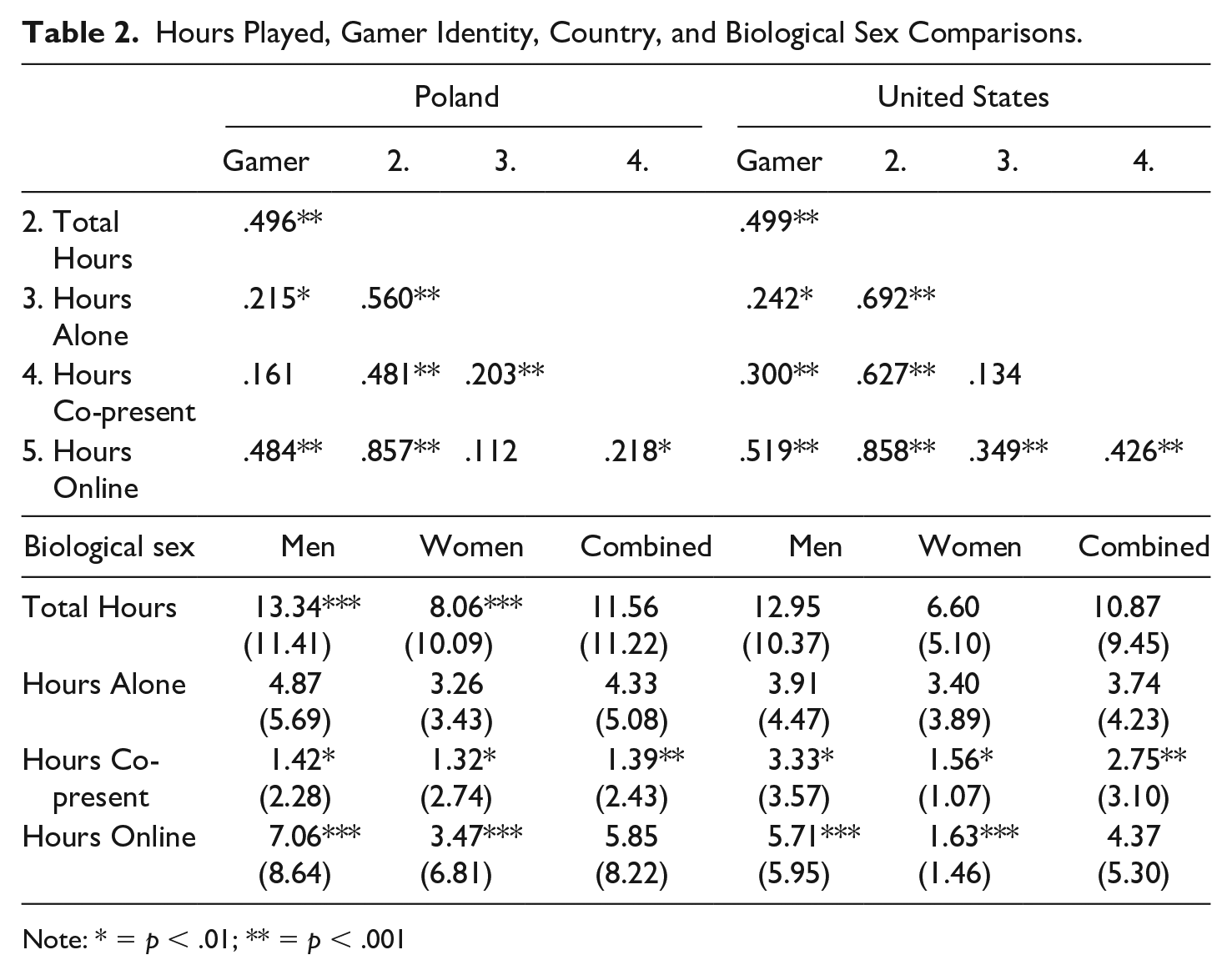
To test H2, that people who consider themselves gamers in both a) Poland and b) the United States play more hours of video games than non-gamers, a test of bivariate correlations was conducted to further examine these relationships. In Poland individuals that identified as a gamer played more hours alone (r = .215, p < .05), more hours online (r = .484, p < .001), and more hours overall (r = .496, p <.001) than those that did not identify as a gamer. However no significant difference was found regarding hours of games played in a co-present manner. At the same time, playing games with other people co-present is the least popular manner of playing video games in Poland – for both self-identified gamers and non-gamers.
The United States sample had similar, but stronger, results. Individuals that identified as a gamer played more hours alone (r = .242, p < .01), co-present (r = .300, p < .001), online (r = .519, p < .001), and overall (r = .499, p <.001) than those that did not identify as a gamer. Importantly playing with others was significantly associated with identifying as a gamer in the United States sample, but not in the Polish sample.
A MANOVA was then conducted to see if there were any significant differences between how many hours individuals in Poland and the United States played. Results revealed that there were significant differences between gameplay of Poles and Americans (F(3, 214) = 4.60, p < .001, η² = .061). Of the four types of hours played only playing co-present was significantly different in that Americans played more hours co-present (F(1, 216) = 7.34, p < .01, η² = .033). This MANOVA also tested differences between hours of gameplay between men and women. Significant differences were found (F(3, 214) = 6.14, p < .001, η² = .079). Further analysis revealed that men played significantly more hours co-present (F(1, 216) = 5.48, p < .05, η² = .025), online (F(1, 216) = 16.50, p < .001, η² = .071), and in total (F(1, 216) = 16.57, p < .001, η² = .071), than women did. No significant interaction between country and biological sex were found. Please see Table 2 for full statistics.
Hours Played, Gamer Identity, Country, and Biological Sex Comparisons.
Note: * = p < .01; ** = p < .001
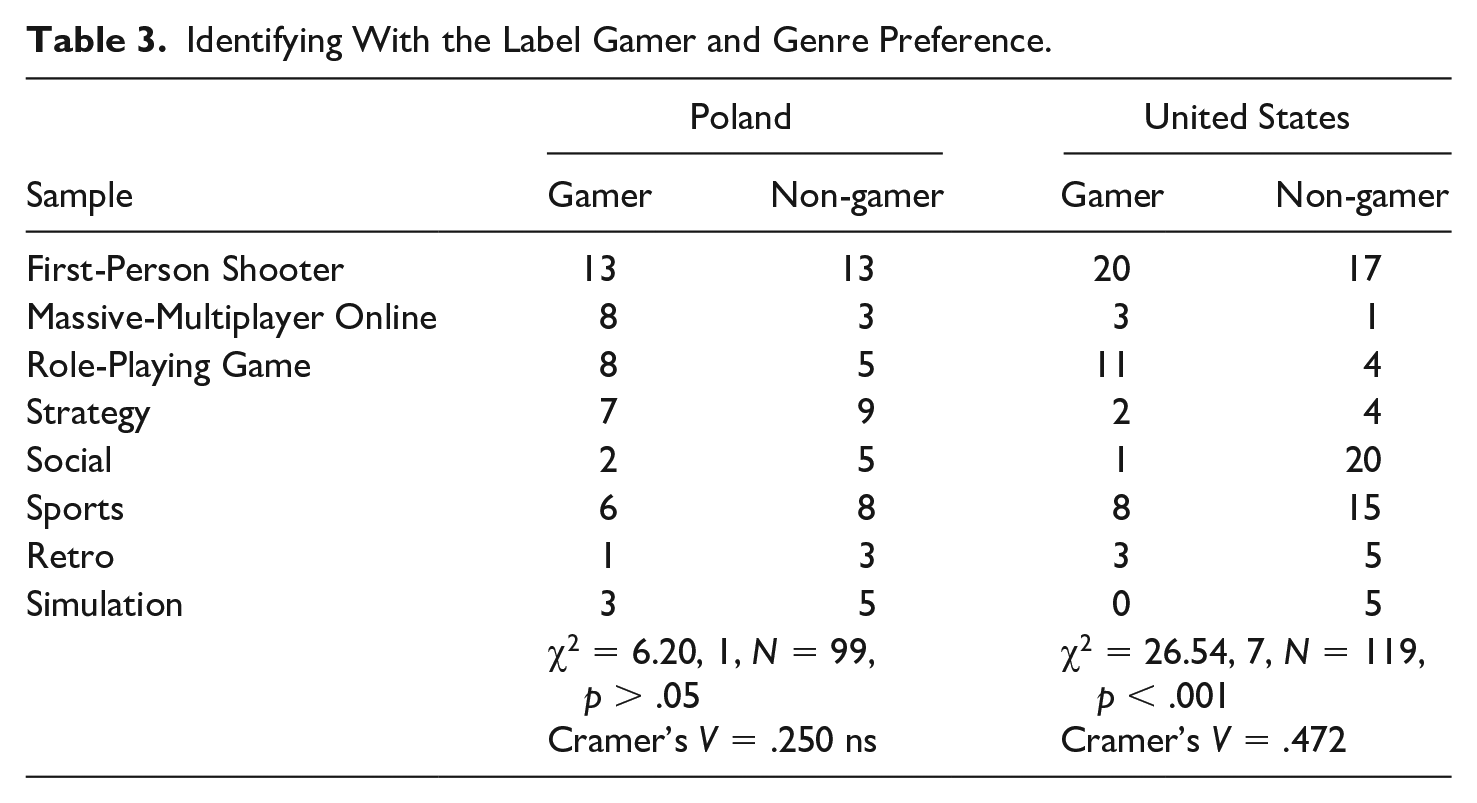
In order to properly assess, H3: gamers in both a) Poland and b) the United States prefer first-person shooters (FPS), massively multiplayer online games (MMO), sports and role-playing games (RPG) more often than non-gamers and H4: Non-Gamers in both a) Poland and b) the United States prefer social, strategy, simulation and retro games more often than non-gamers, participants identification of their preferred genre was dummy-coded in a dichotomous manner so that 0 equaled any response other than “most preferred” and 1 equaled “most preferred”. The data was then analyzed using a chi-square analysis of gamer and most preferred genre. Results revealed that in the U.S. sample there were statistically significant differences between gamers and non-gamers regarding genre preferred (χ2 = 25.54, 7, N = 119, p < .001). Gamers rated the genres of FPS, MMO, and RPG games as most preferred more often than non-gamers. At the same time, non-identified gamers rated all other genres as most preferred more often in comparison to self-identified gamers. The biggest differences can be seen taking into consideration social, sports and simulation games. Results of the Polish sample indicated no significant relationship between genre preferred and self-identifying as a gamer (χ2 = 6.20, 7, N = 99, p > .05). The similar number of people in both groups – gamers and non-gamers – chose each of the genres as their favourite genre. In total, among both Polish and American respondents the most popular genre was First-Person Shooter. Please see Table 3 for full statistics.
Identifying With the Label Gamer and Genre Preference.
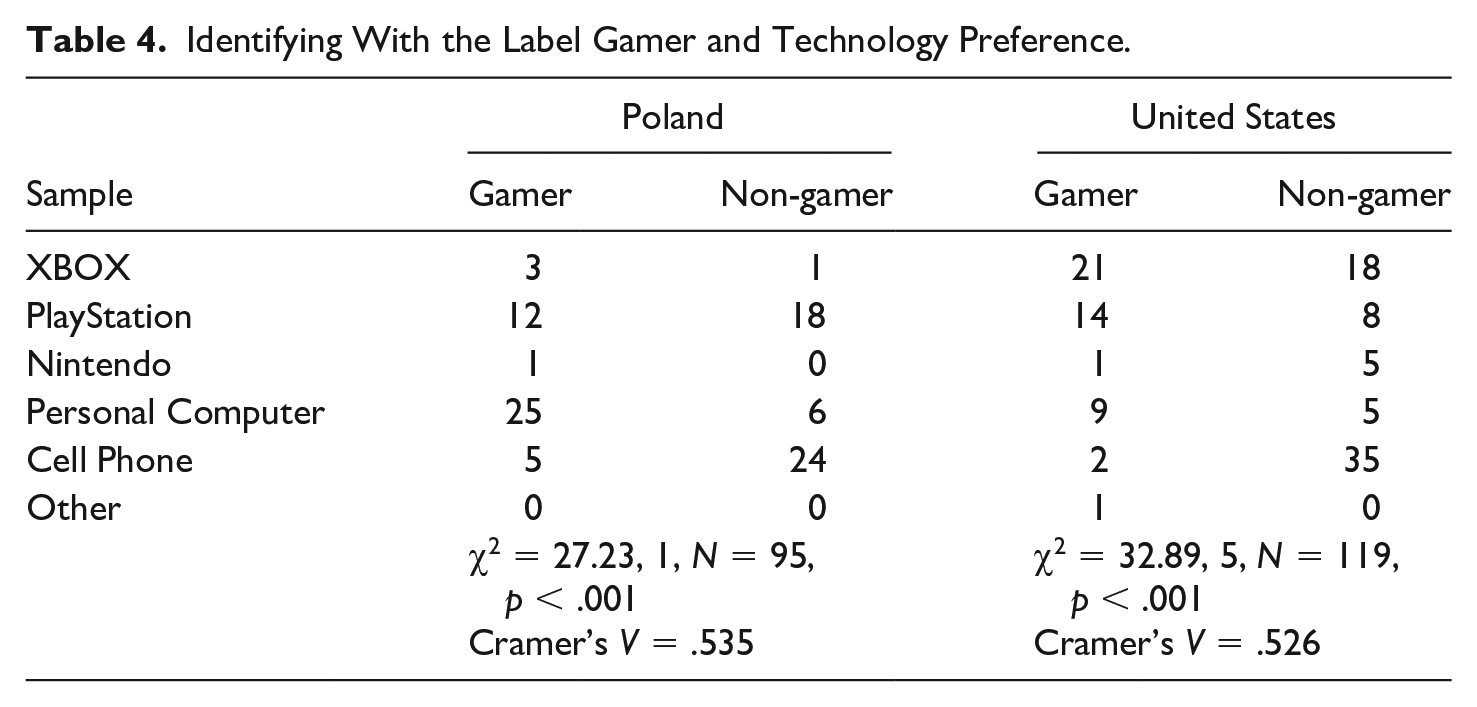
An additional chi-square analysis was run to examine H5, gamers in both a) Poland and b) the United States prefer to play on consoles more than any other device. Results revealed that gamers in Poland had different technology preferences than non-identified gamers (χ2 = 27.23, 4, N = 95, p < .001). In the United States gamers also preferred different technology than non-identified gamers (χ2 = 32.04, 5, N = 119, p < .001), but they preferred different technology than Polish gamers as well. In Poland gamers tend to prefer playing games using their personal computer, while non-gamers use most often cell phones. Results from the US sample indicate that in this country non-gamers also prefer cell phones, but gamers play mostly using consoles - XBOX and PlayStation. What can be concluded from this analysis is the fact that the most popular platform in Poland is undoubtedly PlayStation (among gamers and non-gamers), while in the United States the highest number of people choose XBOX. The full statistics are presented in the Table 4.
Identifying With the Label Gamer and Technology Preference.
Discussion
The results of the conducted research show that there are both similarities and differences among gamers and in the meaning of gamer identity between Poland and the United States. In both countries among people who play video games men identify themselves as gamers more often than women, whereas this difference is more prominent in case of the US. In this country only around 10% of women who took part in the research identified themselves as gamers, while almost 60% of men did so. These results are in accordance with Entertainment Software Association research (2019).
People who consider themselves gamers generally spend more time playing games than non-gamers, which is not surprising. However, in Poland no statistically significant difference was found between time spent playing games by gamers and non-gamers who do it co-present. In both countries the biggest difference between gamers and non-gamers can be observed in the case of online gaming. People who perceive themselves gamers spend much more time playing games online than people who doo not identify themselves as gamers. It can be concluded that spending a lot of time playing games online is one of the characteristics that distinguish gamers from non-gamers.
Gamers in the United States were found to play significantly more hours of co-present games. There can be various explanations of this phenomenon. Firstly, the rise of sporting games (e.g. Madden, FIFA, PGA Tour) (Sicart, 2013) in the United States and the number of women playing such sports games (Consalvo, 2013) likely has contributed to more co-present gaming. Secondly, the rise of eSports as games could facilitate more local play on mobile games as well as on console games (Wardaszko et al., 2019). Finally, in Eastern European countries video game consoles became popular much later than in the US. First consoles were introduced on the American market in the early 1970s and with time became more and more popular whereas in Poland this technology gained popularity and got affordable only at the turn of the century (Kluska, 2008). At this time computers were already commonly used by people playing video games and made it possible to play online with other players instead of playing co-present.
During the research the authors also found that although men and women did not differ on how many hours they played alone, they did differ in the number of hours played co-present, online, and in aggregate. These trends are in line with previous research, however, in this study we were able to tease out the specific ways that men play more hours than women. Future studies should examine any differences between the genre choices of men and women as well as technology preferred.
As far as game genres are concerned, in Poland it seems that self-identified gamers and non-gamers play the same types of games, while in the US statistically significant differences can be spotted. There, gamers choose to play role-playing games much more often than non-gamers, while non-gamers prefer playing social or sports games. It is interesting to note that this kind of distinction cannot be seen in the case of Polish gamers. There is a slight difference in FPS and MMO preferences in favour of gamers and in strategy games in favour of non-gamers. This result is contridactory to what was expected after the literature review (Vanderhoef, 2013; Vermeulen et al., 2011).
In both of the researched countries, there is a relation between identifying yourself with the label gamer and platform preference. In Poland and the US non-gamers much more often use cell phones for the purpose of playing games than people who perceive themselves as gamers. In both countries gamers in comparison to non-gamers prefer playing using their personal computers, however this difference is more vivid in Poland than in the United States which is consistent with the report State of the Polish Video Game Industry (Bobrowski et al., 2017). What is interesting, the use of consoles (XBOX, PlayStation, Nintendo) for playing games in Poland is similar between gamers and non-gamers whereas in the US these platforms are more often used by self-identified gamers. Moreover, the most popular console in Poland is PlayStation, whereas in the US it is XBOX, among both gamers and non-gamers.
The results of the conducted research show that there are cross-cultural differences between the US and Poland with regard to gamer identity, platforms used, types of games preferred and styles of playing games (online, co-present, alone). It is important and interesting as a large part of the research concerning games and gamers is conducted in the US and as the results of the study show – when describing gamer culture the differences between countries and cultures should not be ignored. Therefore, it is justified to broaden the research on gamer identity to other countries and cultures.
The conducted study is not without limitations. One of the main drawbacks relates to the nature of the sample which consisted of college students and is not representative for the whole society. The result was that most of the participants were in their early twenties which made it impossible for researchers to compare people belonging to different age cohorts. In the future study it seems to be valuable to include people of different age groups to verify the hypothesis concerning the age of gamers and non-gamers. Given that many adults have grown up playing video games, it may be fruitful to examine the demographic, genre preferences, and technology use of older adults to more fully understand who identifies as a gamer. It would also be of interest how individuals from the global south identify with the label of gamer.
Footnotes
Declaration of Conflicting Interests
The authors declared no potential conflicts of interest with respect to the research, authorship, and/or publication of this article.
Funding
The authors received no financial support for the research, authorship, and/or publication of this article.

Author Biographies
Contact:
Contact: