




Abstract
Background.
Revealing
Methods.
This study uses a
Results.
The results from playing
Conclusion.
The educational value of this study is that it helped entrepreneurs in understanding complex real-life situations.
Keywords
Introduction
Polanyi (2009, p. 4) discussed extensively why tacit knowledge can be defined by the statement “we can know more than we can tell”, in contrast to knowledge that is known and explicit. Making tacit knowledge explicit becomes relevant when people are unable to explain or reproduce what they were doing, why and how they were performing specific activities and why and how they made decisions that influence their own future and that of other actors in their environment. Many entrepreneurs value tacit knowledge as a strategic capability and competitive advantage (Haldin-Herrgard, 2000; Riedel & Hauge, 2011). Tacit knowledge founds its origin in personal experience and is thus by its very nature subjective and difficult to explicate (Nonaka et al., 2000). In gaming simulations personal learning experiences and knowledge are often modelled to be the main cornerstones of design and the methodological approach deployed (Kriz, 2009). Some studies in which undergraduate students participated, show that gaming simulation sessions can be used to acquire cognitive skills like systems thinking and active participation through carefully sequenced explicit instructions (Akcaoglu & Green, 2019; Assaraf & Orion, 2005). This study uses a participatory design process and the application of a board gaming simulation to extract tacit knowledge, based on the question: Can we design and develop a gaming simulation to capture tacit knowledge?
Participatory Design
Gaming simulations designed and developed for capturing tacit knowledge are not widely spread nor tailored to specific fields or processes. Some literature discussed the role games can have in turning the implicit nature of tacit knowledge into something transferable (Steinkuehler et al., 2012). To enable participants change from the state of being unaware and unable to reproduce knowledge towards the state of generating knowledge, Chu et al. (2019) distinguished four social learning dimensions that occur in the gaming simulation sessions and debriefings: (1) knowledge acquisition and sharing information (cognition) during gaming simulation sessions and debriefing, (2) identification and experience of knowledge gaps (reflection), (3) interaction and communication with other participants (collaboration) and (4) expression of emotions (affection).
The gaming simulation was based on a participatory design. A participatory design is defined as a process in which users and designers in co-creation strive to learn the realities of the users’ situation (Simonsen & Robertson, 2012, p. 2). Studies that focussed on developing gaming simulations for capturing tacit knowledge distinguished three design conditions related to participatory design. These three design conditions of gaming simulations in a participatory design were: (1) replication of reality, (2) commitment and active participation of participants matches and (3) a good relation between researchers, designers, and participants.
The replication of real situations (Friedrich & Van Der Poll, 2007; Gubbins et al., 2012). Studies which focussed on the process of capturing tacit knowledge described the need of simulating the reality to enable transfer of tacit knowledge and discussed the suitability of gaming simulations (Borro-Escribano et al., 2014; Friedrich & Van Der Poll, 2007). Participants’ engagement can be intrinsically driven by changes in reality and by recognition of this reality in a gaming simulation (Garris et al., 2002). The design of a gaming simulation should have enabled participants to use knowledge and behaviour from the real world in the design of a gaming simulation.
Commitment and active participation of participants (Foos et al., 2006; Gubbins et al., 2012; Nonaka et al., 2000). Gaming simulations in a learning environment used participatory tools to explicate tacit knowledge that is passively reproduced (Kriz, 2009). The reproduction and active engagement of participants, is effectively fostered by Game-Based-Learning, storytelling and participation in the creation of simulated environments (Isomursu et al., 2004; Pappa & Pannese, 2010). The ability to modify the design of a gaming simulation and control the simulated reality in order to have it studied, had the potential to increase motivation and commitment of participants (Niehaus & Riedl, 2009; Sauvé et al., 2007).
A good relation between researchers, designers and participants (Borro-Escribano et al., 2014; Foos et al., 2006). A good relation between researchers or designers and participants is relevant for the interaction needed to exchange information about the reality of users’ situations (e.g. explicate tacit knowledge, replicate explicit knowledge) during participatory design.
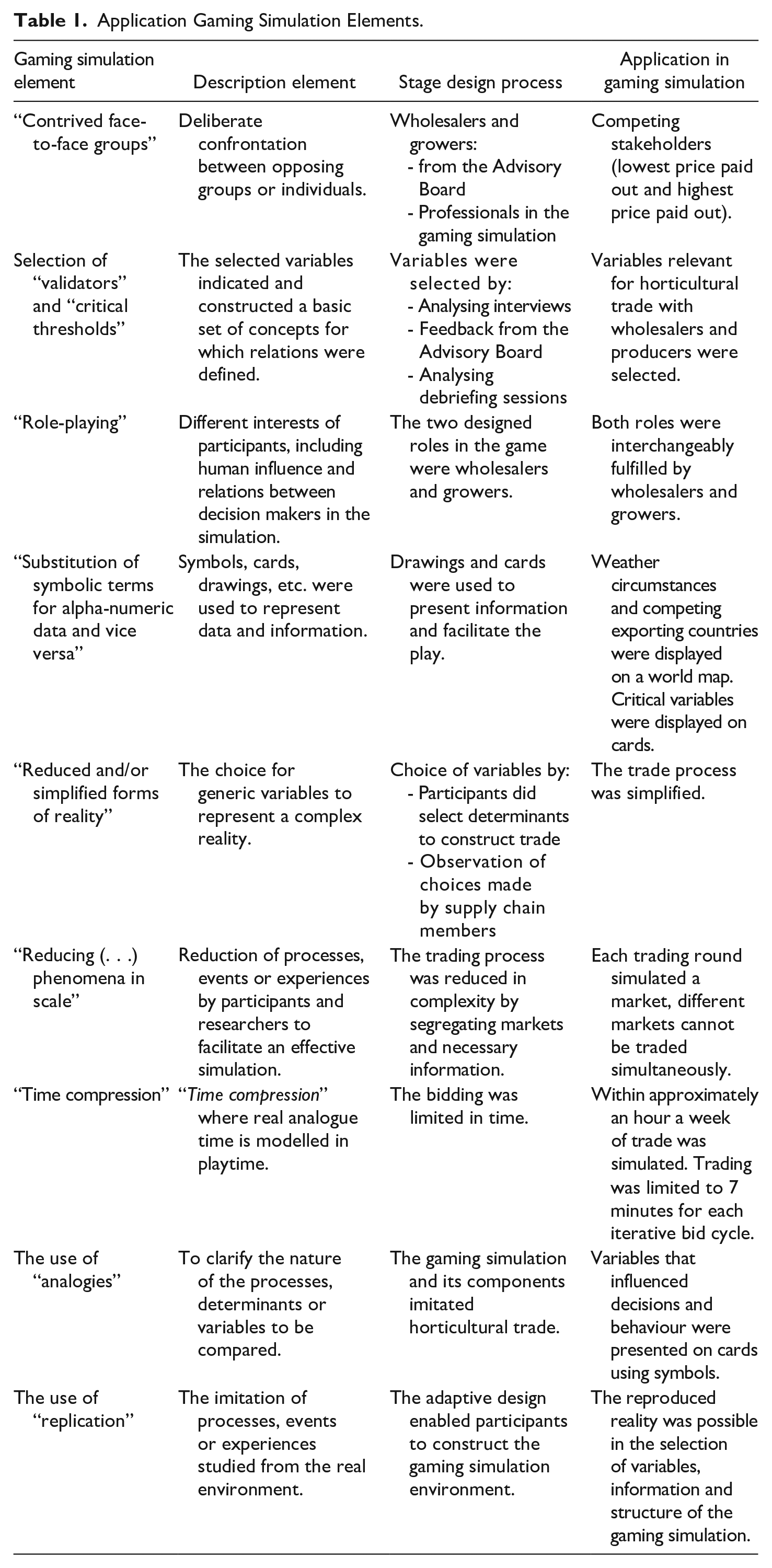
These three design conditions are reflected in a set of nine design elements derived from gaming simulation theory, see Table 1 (Richard D Duke & Geurts, 2004, p. 11; Guetzkow et al., 1963, pp. 26–220). These design elements are applied to the case of trade in horticulture, which is explored in this study.
Application Gaming Simulation Elements.
Case Study: Trade in Horticulture
Trade in horticulture is at the heart of the SamenMarkt® project (www.samenmarkt.nl), that was launched to contribute to the creation of a sustainable distributed horticultural market. Understanding how trade in horticulture is established, which factors affected the decision to trade, which strategies and tactics were applied, is essential to this endeavour, for which little information is currently unavailable in literature and in the prevailing business environment. Support from the industry was large: 90% of all producers and traders in the greenhouse vegetable market in the Netherlands support this project.
The horticultural supply chain consists of four main actors: producers (growers), cooperatives (collectives of growers), wholesalers and retailers. Where in the past the supply chain was characterised by a conventional structure in which the growers were represented in the Commodity Board of Horticulture in the Netherlands. Auctions where supply and demand were transparent functioned as the main market mechanism, which has changed into a wholesaler-oriented system where growers and cooperatives depend on wholesalers for the provisioning of market information. A similar situation has been observed after the abolishment of agricultural commodity boards in other countries. As a result trusted relationships among growers (colleagues whom are now often regarded as competitors) have changed (Diederen, 2004; Tykhonov et al., 2008) and trade information is fragmented and no longer transparent.
These social and economic developments, together with the market situation itself, characterized by 80% export, have increased the recent pressure on growers. The gaming simulation in this study, aimed to clarify and compile a detailed understanding of the trade process and the interaction between different stakeholders. In four interactive gaming simulation sessions, participants, designers, and researchers explored how trade emerges.
Gaming Simulation Design
The methods applied provided input for the gaming simulation design, within a domain specific context.
Introduction
To foster interaction between participants, the gaming simulation was implemented as a board game. The board game design focused on knowledge acquisition for which market circumstances are represented to enable trade between two cooperatives and two wholesalers. Cooperatives, representing growers, sold their produce to wholesalers, their goal being to achieve the highest price. Growers sold their produce to cooperatives. A wholesaler bought the produce to resell later to retailer(s) with the objective to maximize profits. As the exchange of prices and volumes of produce in the market predominantly take place between cooperatives and wholesalers, this was the focus of the simulation. Note that trade between growers and cooperatives, and between wholesalers and retailers is less contentious: the trade between growers and cooperatives is well-defined, as is the trade between wholesalers and retailers with many partnerships between the two. Within the gaming simulation participants have predefined positions representing functions of participants in the supply chain (buyer as wholesaler – seller as cooperative).
The gaming simulation itself is divided into three different stages: In the first stage or pre-stage, participants select the information necessary to fulfil their role with which they defined the variables that were to be used in the simulated scenarios (see Figure 1). These variables were implemented on cards presenting relevant information mentioned in the box ‘Add information’.
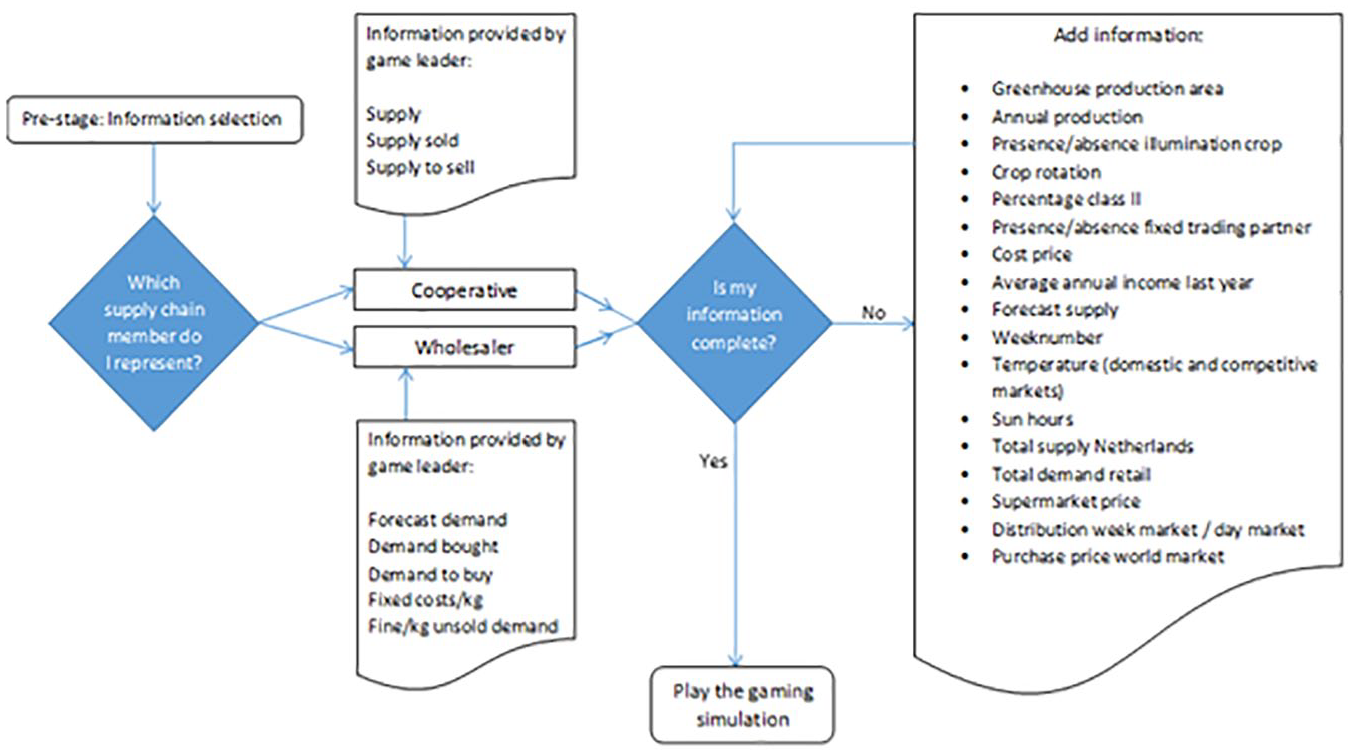
Pre-stage: Information selection.
In the second stage participants play the gaming simulation (see Figure 2). For a cooperative the trade is based on the prognosis of the volume that can be sold, made by producers. For a wholesaler, the demand of retailers determines the traded volume and price. The market circumstances under which the trade is established can be divided into (1) trade based on weekly contracts and (2) trade based on daily contracts. Weekly contracts are agreed one week ahead and include the sale of (part of) the production. Daily contracts are used to sell unsold production where wholesalers purchased the missing volumes of tomatoes to meet the demand from retailers. Participants and the Advisory Board characterized the daily market as uncertain with fluctuations in price and strong fluctuations in volume. According to Challinor et al. (2013) uncertainty can be seen as the “lack of predictive precision due to a lack of inherent limitations to predictability” (in this case: due to unknown supply from abroad) “or to a lack of predictive skill” (in this case: errors in forecasting a growers’ production). Dice were used in this simulation to introduce the element of uncertainty in the gaming simulation. Growers and wholesalers are under time pressure to fulfil their obligation to have delivered the quantity agreed. To simulate this pressure trading time was limited to 7 minutes.
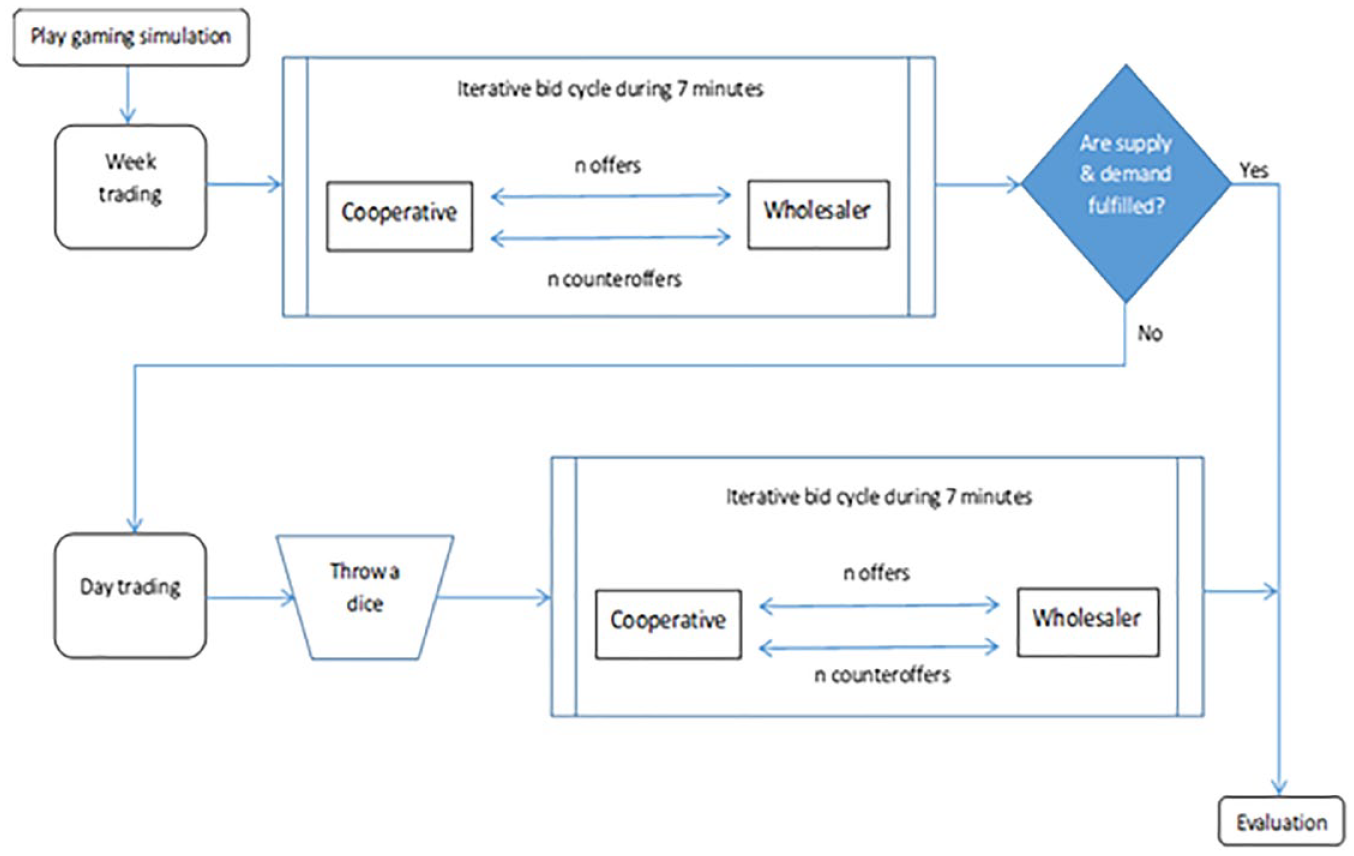
Play of the gaming simulation.
In the third stage the performance of each role is evaluated; two cooperatives and two wholesalers fulfil different roles in the supply chain and have conflicting objectives (see Figure 3).
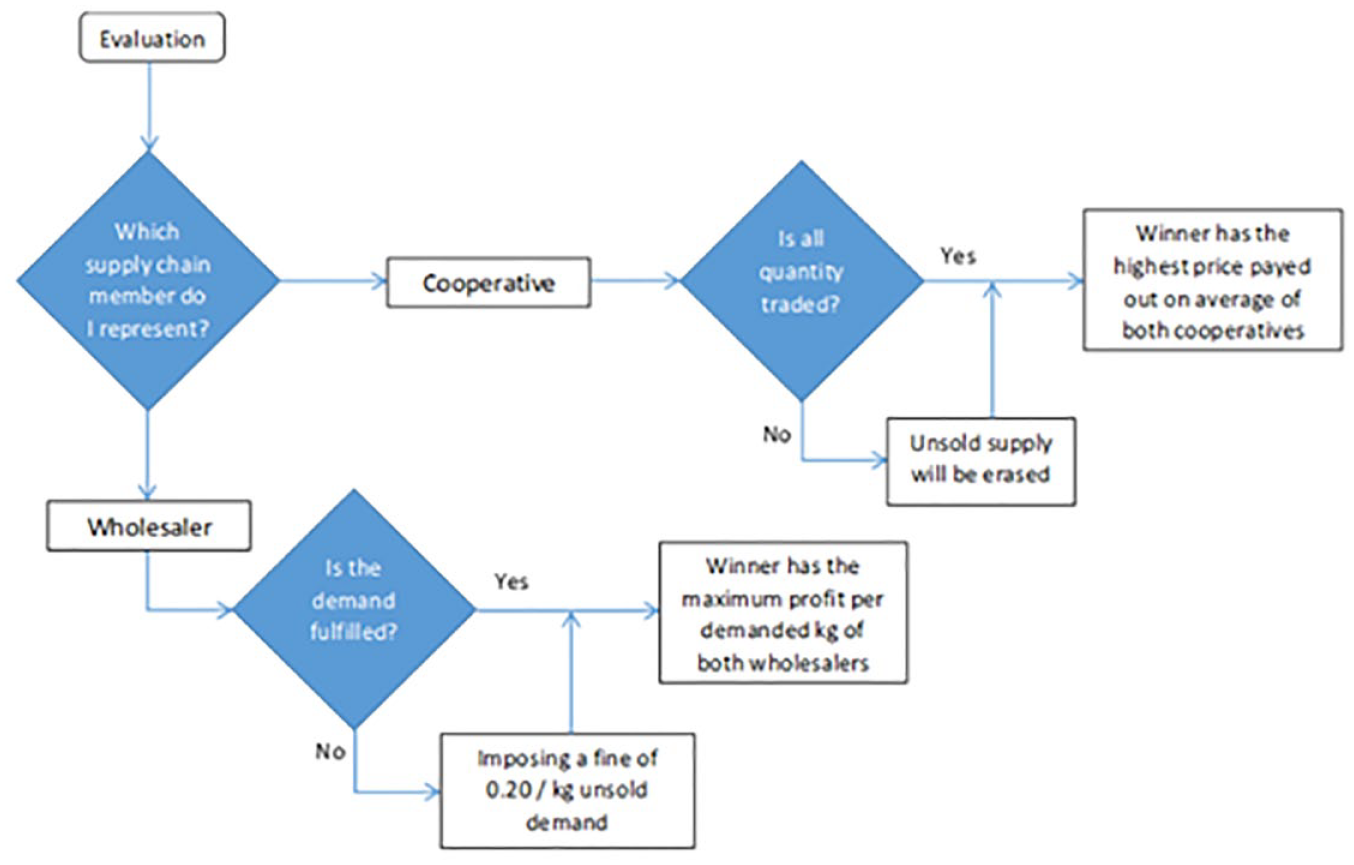
Evaluation of the simulation results.
Rules of the Gaming Simulation
The gaming simulation starts by asking each participant which role they want to fulfil (see Figure 1). Based on the chosen role, participants receive information about their goals by the game leader. Participants choose which additional information they wish to know by choosing the appropriate cards from the table (on which the information is printed).
The play of the gaming simulation takes place in two rounds, one for each contract type (week contracts, day contracts). After negotiations, supply leftover from the week market is traded in the second round in the day market. In each round, participants could accept, amend or refuse an (counter)offer, and place as many offers as preferred, differing in volume and price, in the 7-minute slot assigned. In the day market round, the dice determines the volume traded (1 = −10%, 2 = −5%, 3 = 0%, 4 = +5%, 5 = +10%). After a few minutes, the wholesaler and cooperative received an external offer, provided by the game leader in both rounds. The volume of this external offer could be traded between participants and game leader.
The results (see Figure 3) were compared between cooperatives and between wholesalers. Cooperatives needed to sell the supply from growers. Untraded supply, that had not been sold after both rounds of negotiations, was erased. The cooperative that acquired the highest price on average over all the quantity sold in the week market and day market won. Wholesalers primarily needed to fulfil the agreed demand between a wholesaler and retailer. When the wholesaler failed to fulfil this demand, in line with the is common practice, a fine was paid. The wholesaler with the maximum profit per demanded kg won the gaming simulation.
In the fourth simulation session a time limit for negotiations of 7 minutes was strictly applied for each market (week and day) to have the time pressure participants experience in real trading exemplified.
Methods
The explication of tacit knowledge was fostered by the methodological and organisational approach used develop the gaming simulation.
The Setting: SamenMarkt
The organisational structure of the SamenMarkt project included an Advisory Board. The Advisory Board represented the interests in the field with 4 growers who are members of a cooperative, 2 wholesalers and 2 independent growers, and 2 consultants. These representatives of the field were selected by iterative peer nomination based on relevant expertise and reputation in Dutch horticulture. The only incentive for participants was that they might gain knowledge from the project regarding trade.
The Advisory Board met with 3 senior researchers from TU-Delft and Wageningen University, 2 lecturers in horticulture from Inholland, 1 game developer and 3 students (with horticultural roots) on a regular basis to discuss the project’s focus, progress and plans.
Experimental Procedure
The methods deployed in this study included interviews and evaluation, simulation sessions and debriefings, as briefly described in the section Instruments. An overview of the applied methods and outcome is displayed in Figure 4, in which the arrows depict the chronological sequence of methods applied. The results include a list of variables that influenced trading decisions, indicative scenarios, rules of game, and insights on trade and trade relations. This research was reviewed and approved by TU-Delft’s Human Research Ethics Committee.
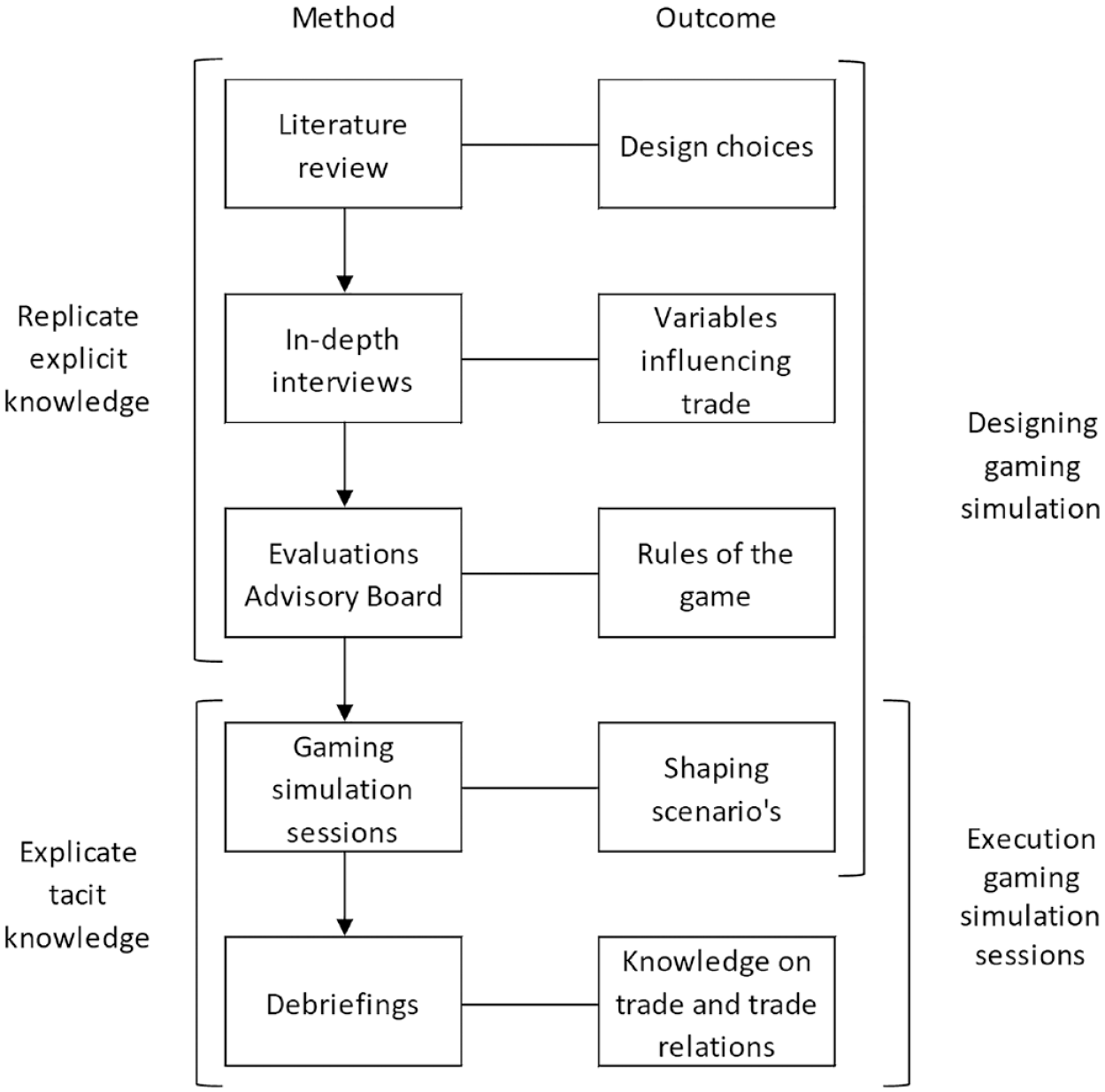
Applied methods and outcome in the gaming simulation design process
Design Choices
A gaming simulation provided a unique means to address the contextual multi-actor complexity of the horticultural supply chain in compatibility with the individual competences (skills, attitudes and knowledge) of its actors (Kriz, 2009; Niehaus & Riedl, 2009). The gaming simulation was designed with the explicit goals of acquiring insight in what cooperatives and wholesalers know and think about trade, while having conflicting goals: e.g. cooperatives want to receive the highest possible price and wholesalers want to pay the lowest possible price. The interpretation of each design element, where and how they are applied is described in Table 1.
Participants
Representatives from all four supply chain members (growers, cooperatives, wholesalers, retailers) were invited to participate in this study. Representatives of retailers did not accept the invitation. In the first stage of the research, the pre-game stage 22 representatives (all male: 6 wholesalers, 5 cooperatives and 11 growers) were interviewed individually. The results of the interviews were interpreted and evaluated within the Advisory Board, resulting in a list of variables to be included in the gaming simulation design.
In four gaming simulation sessions: four growers and one wholesaler participated in the first session, four growers and two wholesalers in the 2nd, three growers and one wholesaler in the 3rd and 4th session. The sessions not only evaluated the validity of the interaction, but also the (relative) importance/criticality of the
Instruments
The most common tools to capture tacit knowledge are interview techniques and focus groups, with causal mapping sometimes added to these techniques (Ambrosini & Bowman, 2001). The results from the gaming simulation were discussed in the debriefing sessions and visualized in cognitive and causal maps.
In the first debriefing (November 24th, 2015), participants critically appraised the chosen factors made by the Advisory Board. Participants discussed whether the factors selected in the pre-stage played a direct or indirect role in the decision to trade. Participants were asked to write down why selected factors were used, to discuss their choices made. The participants attributed the selected factors to one or more supply chain member. Additionally, participants mentioned factors that were not included but were experienced to influence decisions to trade. The exact role the different selected factors fulfilled was not discussed.
The second debriefing (January 14th, 2016) focused on the extent to which the factors selected by participants influenced trade.
The third debriefing (March 10th, 2016) focused on how factors are expected to influence each other, and trade visualised by participants in causal maps.
The fourth debriefing (May 11th, 2016) focussed on tactics and strategies that influence these factors.
Cognitive and causal mapping were used to represent participants’ views on reality and additionally causal mapping provided a focus on actions and procedures taken by participants (Ambrosini & Bowman, 2001; Huff & Jenkins, 2002).
Results
This section presents the results: the results of interviews, meetings of the Advisory Board and the gaming simulation sessions.
Interviews
Interviews in the field revealed that actors (i.e. supply chain members) were unable to answer questions about the way in which they performed trade in practice. The tacit nature of their knowledge was emphasized in their answers in personalized and situated anecdotes about their achievements, skills, and assumptions. From transcriptions of interviews researchers selected 19 variables named by the growers, 26 variables by the cooperatives, and 27 variables by the wholesalers. These variables could potentially play a role in a decision to trade. The variables were categorized in external and internal variables for each supply chain member (wholesaler, cooperative, producer). External variables were defined to be variables that change without any human influence. Internal variables could be influenced by one or more of the supply chain members. After duplicates were erased, the lists of variables (including e.g. cost price, temperature, expected demand) were presented to the Advisory Board, as depicted in Appendix 1.
Conclusion
The variables named in the interviews provided insight in the factors that played a role from the perspective of the actors’ own companies/organisations and their position in the chain. These variables could potentially have played a role in the willingness or the decision of these stakeholders to trade. At this point it was unclear if and how these variables influenced the trade itself.
Meetings Advisory Board
The variables distinguished in the first pre-game phase were evaluated on their importance and relevance to the field and the most relevant were selected during meetings with the Advisory Board. Nine internal variables, and 8 external variables were selected. The result of this process is depicted in Figure 1 under ‘Add information’. The Advisory Board’s selection of variables is presented in Table 2 of Appendix 1 (e.g. weather conditions, production volume, retail price). These internal and external variables provided the basis for the design of the gaming simulation: a board game.
Conclusion
The variables were considered to be related to trade on the basis of the interviews and the meetings with the Advisory Board provided the basis for the gaming simulation design, to be tested in the gaming simulation sessions.
Gaming Simulation Sessions
Four different gaming simulation sessions were held to increase shared understanding of the factors that play a role in trading decisions.
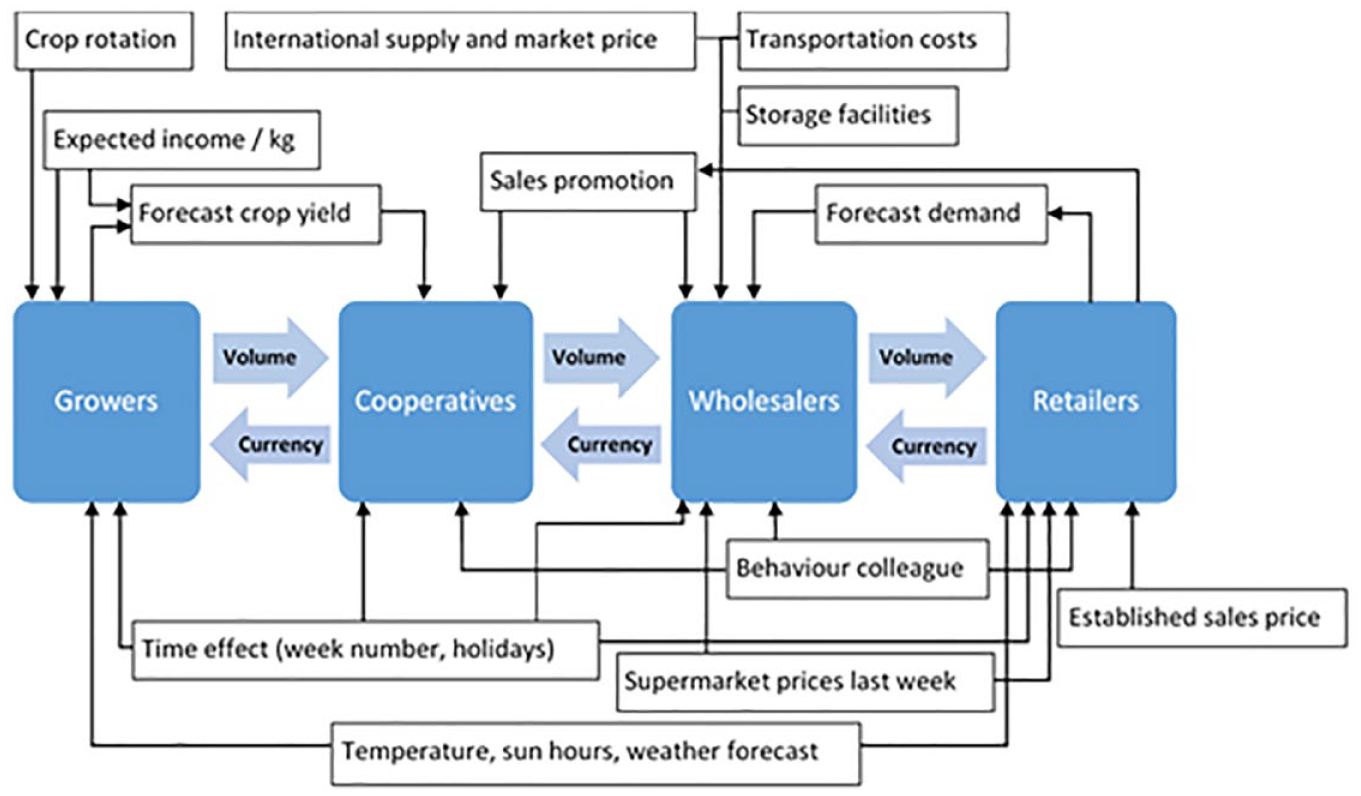
Chosen factors by participants from the selection made by the Advisory Board
In
Some factors were declared missing: the specific crop, for example, that influenced the forecast of the yield and the quality of the volume sold.
Participants memorized numbers and factors exactly during the game and in the debriefing. During the debriefing participants quoted the values of all turned cards by heart, of which some were appraised to be more realistic than others.
Some participants experienced changes in volume of the day market (caused by rolling the dice) to be unrealistic. A maximum change of 30% was favoured over 10%.
The debriefing ended with an engaged discussion by all users about the relations between the different variables for each supply chain member in the previous session. Conclusion: The result showed that participants were able to structure the factors involved in decisions to trade.
Growers indicated a gap between the forecast of production and the forecast of supply. Participants explained that for growers a combination of factors was used to predict crop yield. Some participants explained the difference to be caused by the inclusion of financial expectations (expected income), comparisons with the past (week number crop) and organizational aspects (end of the crop/crop rotation). Some participants indicated that this gap existed due to a lack of predictive precision of the yield and unpredictability of climate conditions.
Cooperatives declared that the yield prediction differed from the prognosis received from growers. Cooperatives assessed additional aspects that could increase demand (sales promotion, holidays) and the performance of other cooperatives in offering supply to wholesalers. This supply is translated into weekly contracts. Additional supply, that arose from deviations in the forecast of the production, were sold per day on a free market (day market). The prices at the day market were experienced to be lower than the prices arranged in weekly contracts. A high supply at the day market is expected to cause fewer contracts to be closed in the following week, depending on the storage facilities of supply chain members. Participants also expected that if the price on the daily market rises towards the end of the week, the prices of the weekly contracts for the week thereafter are higher than the week before.
Wholesalers included information on volume available through storage or from foreign markets and sales promotions to be expected when they determined the supply to buy. Wholesalers also received the forecast of demand from retailers. To establish the trading price between wholesaler and cooperative, wholesalers used the supermarket price of last week as a reference price as well as the performance of other wholesalers. A retailers’ forecast could change due to weather circumstances or sales promotions. When a deal is made either the desired price plus the margin is larger than the counteroffer, or one of the trading parties took their loss by relying on the chance to compensate for this later. Wholesalers could also bet on buying volume at the day trade to fulfil the demand of retailers.
Retailers (supermarkets) acted the same as wholesalers in establishing the trading price with wholesaler: the price of last week is the reference price in the following week, together with factors as temperature and sales promotion. The demand of consumers is expected to increase with an increase in temperature. Retailers assessed the performance of other retailers when setting prices to wholesalers.
At the end of the debriefing the influence of the quality traded was introduced by the game leader. Participants declared that the quality of commodities is commonly a presupposition between cooperative and wholesaler before actual negotiations took place. The results of the debriefing are displayed in Figure 6.
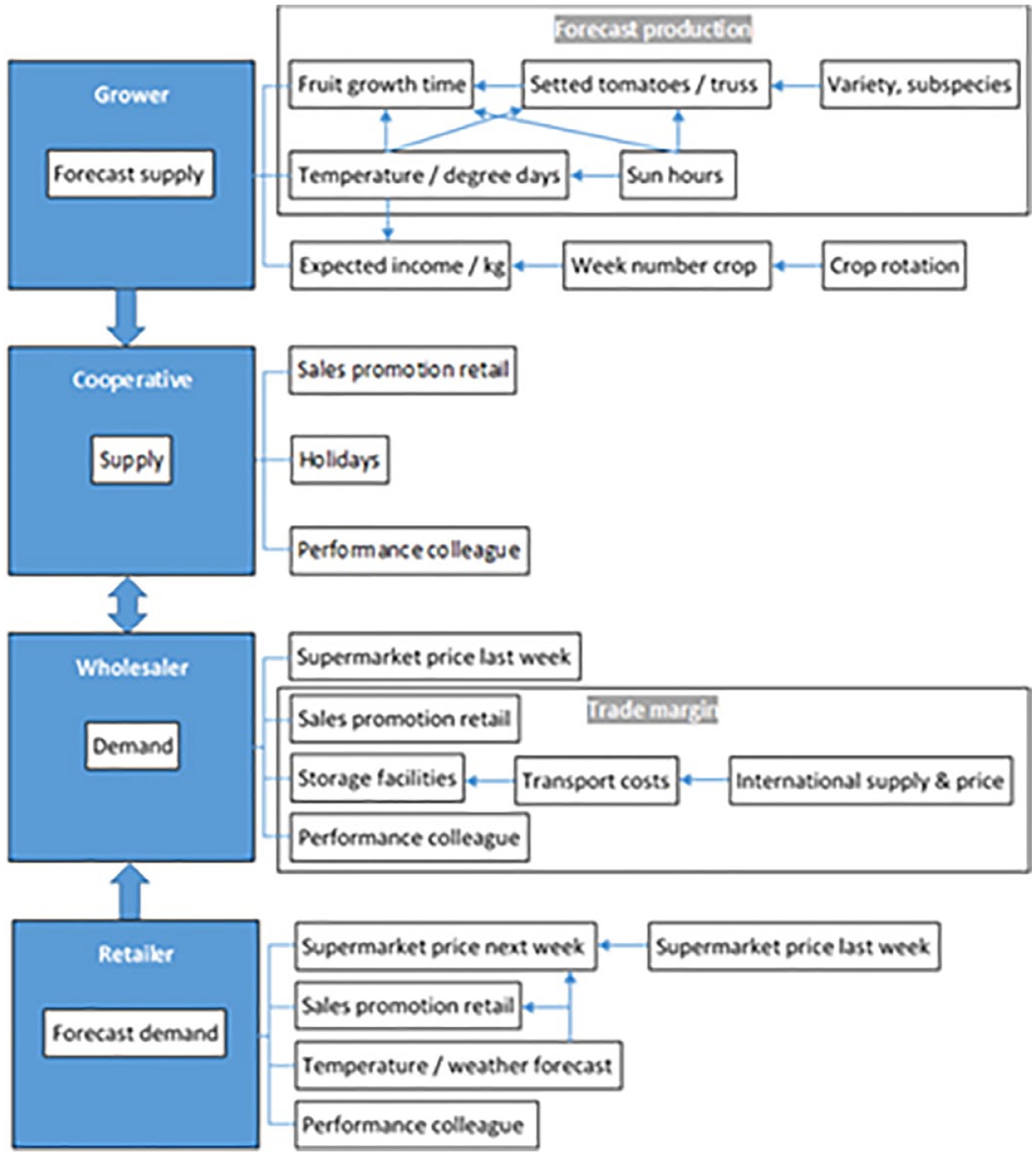
Factors included in the decision to trade and their inter-associations.
Conclusion
The type of information on volumes and prices used/needed differed between actors in the supply chain and between different markets (week and daily). The influence of different variables on a desired trading price was topic of discussion and revealed participants’ knowledge on how these factors were inter-associated.
Deliberate communication of a lower supply than expected to cooperatives, store products and sell them little by little during the week or at once by the end of the week.
Volume bought from the market and store it to create a temporary shortage and coerced cooperatives to refuse week contracts. This results in an increase in daily contracts, oversupply in the week after and a lower price paid out for growers. Wholesaler declared fines, for not delivering the agreed quantity, have more effect on the strategy than storage facilities. Most wholesalers and retailers traded a virtual stock by buying volumes on week and day markets interchangeably rather than a physical stock.
With a reference price (sometimes the first price offered) participants roughly estimated the desired outcome of negotiations. Participants mentioned that prices were often a result of strategic choices and behaviour by cooperatives and wholesalers, often based on perceptions of how volume would fluctuate in the market.
The behaviour of participants was often based on interpretation of the behaviour of colleagues. The traded volume depended on the perception about price development in the international and domestic market for the coming week. A demand expected to increase, or supply expected to decrease, caused participants to buy volume from the market to benefit from future price increases.
Conclusion: This gaming simulation was played with growers and wholesalers fulfilling both the roles of wholesalers and cooperatives. The outcome was that growers were satisfied as soon as profit was made, and costs were covered (in case of fulfilling the role of a wholesaler). Wholesalers, fulfilling both roles displayed, on the contrary, more competitive behaviour and strived for the highest price received and a maximum profit.
Discussion
Board gaming simulations are rarely developed to capture tacit knowledge and more infrequently for problem identification. Most gaming simulations are designed to transferring knowledge and to enable learning processes (Mayer et al., 2004). This section discusses the application of this gaming simulation based on the proposed theoretical framework concerning the following themes: Design of the gaming simulation, learning perceptions and limitations.
The Design of the Gaming Simulation
The goal to replicate realistic factors and figures by participants, increased the validity and reliability of this gaming simulation. During the play of the gaming simulation participants explicitly evaluated and analysed the effect and reality of figures and input factors used to shape scenarios in the simulation. Participants indicated that the prices and volumes presented on the cards were too favourable. Based on interviews and feedback from the Advisory Board, researchers selected a maximum deviation of 10% supply, of which a deviation of more than 30% was mentioned to be more according to reality. In structured debriefings, tactics and strategies were discussed, requiring participants to apply their tacit knowledge to answer the questions posed, making their own tacit knowledge explicit. The design of this gaming simulation offered a multilogue tool for communication between competing groups of participants (producers versus wholesalers) and between participants, designers and researchers, exactly as described by Duke (2014). The use of gaming simulations (design-in-the-small) as a learning environment for individual and social interpretation of the complex multi-actor reality (design-in-the-large) as discussed by Kriz (2003), was effectuated.
Commitment of participants has been fostered by a participatory design method. Participatory design has insolubly been related to the study of explicating tacit knowledge for decades (Spinuzzi, 2005). This makes it very likely that board gaming simulations have been developed to explicate tacit knowledge, although a search in literature did not reveal other board gaming simulations. Although the use of game design mechanisms (e.g. competition, the reward of winning, storytelling) is mentioned in literature to affect participants’ motivation and increase user engagement (Ejsing-Duun & Karoff, 2014 ; Ott & Tavella, 2009), in this study these were essential for revealing the strategic and tactical choices participants made.
The interaction between researchers and participants was vital for the design and development of this gaming simulation, similar to findings of other studies (Gubbins et al., 2012; Sauvé et al., 2007). Participatory design made it possible to elicit tacit knowledge on trade in the supply chain, explore key factors and scenarios to this purpose during interviews and sessions with the Advisory Board. The structure of the gaming simulation design allowed both researchers and practice to learn how trading processes evolved with respect to knowledge, skills and strategies in the real trading environment.
Participants’ Learning Perspective
Participants learned from their own experience and from conversations with others. The learning results can be summarized as the ability to narrow down anecdotic behaviour to a few factors, understanding the dynamic character of these factors, their inter-relations, and the ability to identify underlying mechanisms. These results with adults (entrepreneurs) were comparable with the cognitive learning results achieved by undergraduate students who participated in educational gaming simulations (Akcaoglu & Green, 2019; Assaraf & Orion, 2005).
This type of knowledge is extremely relevant to work processes, as it steers actions and behaviour of people without them actively thinking about it. A gaming simulation enables participants to take on realistic roles in a realistic and highly engaging environment and encourages participants to reflect on their actions and choices. Valid or realistic gaming simulations are able to translate acquired knowledge and experiences from one system to the other – from reality to the gaming simulation, and from the gaming simulation back to reality (Peters et al., 1998). This process of reflection and transfer explicates the implicit knowledge to all participants, makes it accessible to others, and translates this knowledge to more abstract concepts and insights. Participants moved on from a narrative perspective towards the selection, structuring and analysis of decision factors and related structural problems (i.e. production output uncertainty, information asymmetry). This gaming simulation could therefore be categorized as Integrating-Action-Knowledge according to with Crookall and Thorngate (2009).
During the first gaming simulation session participants were unable to explicate or had a limited understanding of how trade was established, and their behaviour was not always rational (in line with results from behavioural game theory that actors do not behave rationally in such complex situations (Camerer et al., 2004)). The factors that influenced trade margin mentioned by wholesalers and the factors that influenced the supplied volume for cooperatives, can be possible stressors for the trading process, basically related to matching price and volume. These stressors were topics of conversations in negotiations during the game play but also a source of irritation when the reality differed from what was expected. These stressors clearly influenced the emotional engagement of cooperatives and wholesalers. After narrowing down the anecdotic behaviour to factors, participants were able to indicate how these factors were related, to explore how these relate to trade barriers, and to explain which tactics are applied during trade. In the third session, the inter-relations between these factors derived from different supply chain members with respect to their influence on price and volume, were made explicit. The uncertainty that is caused by these inter-relations was the source of strategic behaviour by all participants as indicated in the fourth session. The third and fourth sessions indicated that participants developed a perception of the dynamic and multiple relations between different factors. In this study growers showed to be satisfied as soon as profit was made and costs were covered, in line with other research (Bunte & Roza, 2007). Current research on strategies focussed on long term survival actions (Verhees et al., 2012; Wijnands, 2001). Studies on tactics and strategies applied in horticultural trade are largely absent in the current literature.
Participants also described the possible underlying mechanisms that influenced changes in variable values. Discussions on the game play with respect to the deviations in supply and on the information provided for specific roles (cooperative, wholesaler), resulted in two possible mechanisms that may play a role: (1) production output uncertainty and (2) information asymmetry:
Growers communicate supply to cooperatives (owned by growers) that deviated from the forecast of production, because they are unable to create a more accurate prognosis. Growers also are aware of accurate market prices and can adapt their own supply accordingly without necessarily informing others, to create a better income. Both reasons explain why tactics that influence supply are mentioned in the debriefings.
Information asymmetry is used as a strategic tool by wholesalers. Wholesalers protect their position by making it difficult for retailers to estimate the supply in the market. Wholesalers also can store volume to create a temporarily shortage of supply. Retailers sometimes receive offers from different wholesalers that refer to the same supply (from the same cooperative or grower). Wholesalers also do not often communicate information from retailers with cooperatives. Like cooperatives, wholesalers also deal with uncertainty in supply, but additionally they experience uncertainty in the expected demand. Participants could not indicate to which extent the forecast of demand deviated from the actual demand. The behaviour of participants and the current communication structure of the supply chain predisposes and conserves asymmetric information levels, strategic behaviour and weakens participants’ position.
Information asymmetry (with adverse selection) can create situations (desired or undesired) in which the forces (stressors) and results on the trade are unpredictable and where retailers determine market prices. Together with the conflicting aim of cooperatives who aim to achieve the highest price and wholesalers whom want to maximize their own profits, a Nash equilibrium seems not within reach at short notice.
Limitations
The focus of this study went beyond explicating tacit knowledge to design a gaming simulation in which entrepreneurs define their own scenarios. The findings from gaming simulation sessions and debriefings in this study relied on observations and self-reports of participants. It should be noted that the experience of participants in playing gaming simulation sessions could have raised awareness during the process.
This gaming simulation provided a basis for a wider range of applications where it contributes to select relevant information for other scientific fields, i.e. financial and business studies. The ability of the gaming simulation to capture knowledge, skills and strategies on trading could be validated in another study.
Conclusion
This gaming simulation bridges theory and practice to obtain and transfer knowledge by actions through reflection. Gaming simulation theory provided a general framework for the design. Together with the methodological approach and participatory perspective, the results of this study indicate that gaming simulations are a suitable tool to capture tacit knowledge.
The design of the gaming simulation resulted in a realistic gaming simulation. The gaming simulation design elements distinguished in this article provide a frame of reference to simulate trade in horticulture, to capture tacit knowledge, and to identify problems stakeholders experience in trading. Participants’ engagement in the development process of the gaming simulation provided them with insights in the information that influenced trade decisions and enabled them to identify several circumstances they experienced as dilemmas in trade. The trade dilemmas to which all participants are subjected include: information asymmetry in the supply chain, production output uncertainty, and strategic behaviour.
The findings of this study confirm that gaming simulations are a promising direction to explicate tacit knowledge in other environments. Involving stakeholders from the field in the design, development and execution of the gaming simulation (sessions) enables explication of tacit knowledge from participants, independent of the field of application.
Supplemental Material
sj-pdf-1-sag-10.1177_1046878120927048 – Supplemental material for Do Gaming Simulations Substantiate That We Know More Than We Can Tell?
Supplemental material, sj-pdf-1-sag-10.1177_1046878120927048 for Do Gaming Simulations Substantiate That We Know More Than We Can Tell? by M. A. van Haaften, I. Lefter, H. Lukosch, O. van Kooten and F. Brazier in Simulation & Gaming
Footnotes
Acknowledgment
The authors thank the members of the Advisory Board for sharing knowledge and insight: Peter Duijvesteijn, Jos Looije, Martin van der Sande, Dirk van der Kaaij and Ruerd Ruben. We thank Bob Dijkhuizen, Luuk van Koppen and Niels Wäckerlin for their contribution to the design and collecting of information. Michel Oey, we thank for guiding the development of the design. We thank the participants in the gaming simulation sessions for sharing time and knowledge.
Authors’ Note
H. Lukosch is also affiliated to University of Canterbury, Christchurch, New Zealand.
Declaration of Conflicting Interests
The authors declared no potential conflicts of interest with respect to the research, authorship, and/or publication of this article.
Funding
The authors disclosed receipt of the following financial support for the research, authorship, and/or publication of this article: This research was made possible through funding from Regieorgaan SIA/RAAK. Authorship was partly funded by the Netherlands Organization for Scientific Research (NWO), Doctoral Grant for Teachers.

Author Biographies
Contact:
Contact:
Contact:
Contact:
Contact:
References
Supplementary Material
Please find the following supplemental material available below.
For Open Access articles published under a Creative Commons License, all supplemental material carries the same license as the article it is associated with.
For non-Open Access articles published, all supplemental material carries a non-exclusive license, and permission requests for re-use of supplemental material or any part of supplemental material shall be sent directly to the copyright owner as specified in the copyright notice associated with the article.
