



Abstract
This study investigates the mechanical behavior of modified honeycomb structures, focusing on auxetic behavior, characterized by a negative Poisson’s ratio (NPR). Finite element analysis (FEA) was employed to evaluate the effects of various design parameters on Poisson’s ratio and Young’s modulus across three types of unit cell: hollow-wall, hybrid, and solid-wall. The influence of geometric variations and material stiffness was analyzed to assess their impact on auxetic behavior and structural stiffness. Results show that hollow-wall unit cells exhibit the highest auxetic response. Conversely, filling the side cuts with base materials reduces rotational deformations and diminishes auxetic effects. However, filling with stiffer materials enhances auxetic behavior by acting as rigid constraints, amplifying rotational and bending deformations in adjacent flexible regions. Strain energy density (SED) analysis reveals that hybrid unit cells can maximize elastic strain energy density during deformation by balancing flexibility and stiffness, indicating their suitability for energy absorption applications. Additionally, while increasing the stiffness of the filler material initially enhances auxetic behavior and elastic strain energy storage, further increases yield negligible effects. These findings provide valuable insights for optimizing cellular structures in applications requiring tailored mechanical performance, such as structural reinforcement, enhanced auxetic behavior, and improved energy absorption.
Keywords
Introduction
Poisson’s ratio is a dimensionless property that quantifies the deformation behavior of materials when subjected to external forces. It represents the ratio of transverse strain to axial strain, providing insight into how materials contract or expand perpendicular to the direction of applied stress (Saxena et al., 2016). While most conventional materials exhibit a positive Poisson’s ratio, a unique class of materials known as auxetic materials displays a negative Poisson’s ratio (NPR), meaning they expand laterally when stretched and contract when compressed (Carneiro et al., 2013; Evans et al., 1994).
The term “auxetic” was first introduced in the scientific literature by Evans (1991), though auxetic materials have been recognized for over a century. The first naturally occurring auxetic material was identified in 1882 as iron pyrite nanocrystals, exhibiting an estimated Poisson’s ratio of −1/7 (Love, 1944). The first synthetic auxetic material was a foam structure developed by Lakes (1987), initiating extensive research into materials with NPR properties. Based on classical elasticity theory, the Poisson’s ratio of three-dimensional isotropic materials ranges from −1 to 0.5, while in two-dimensional isotropic materials, it can vary from −1 to 1 (Wojciechowski, 1987, 1989).
Research into auxetic materials has revealed a range of advantageous properties, including enhanced shear resistance and overall stiffness (Alderson et al., 2000; Evans and Alderson, 2000; Peliński et al., 2020), improved fracture toughness (Choi, 1996), and superior indentation resistance (Yang et al., 2018). Additionally, auxetic structures demonstrate enhanced damping capacity (Scarpa et al., 2004b), sound absorption (Howell et al., 1994; Scarpa et al., 2004a), and crashworthiness (Scarpa et al., 2002), making them highly desirable for engineering applications. These include biomedical materials (Yahia, 2018), energy absorbers (Imbalzano et al., 2017), and components within the automotive (Wu et al., 2021), military, and aerospace industries (Ren et al., 2019).
In addition to their remarkable mechanical performance, auxetic materials are valued for their unique combination of properties, which are difficult to achieve with conventional structures. Their counterintuitive deformation allows engineers to create systems where flexibility and strength coexist, such as wearable protective gear, sports equipment, and adaptive medical devices (Alderson et al., 2004). At smaller scales, auxetic designs have been implemented in smart materials and sensors, where localized deformation improves both sensitivity and durability under repeated loading (Dirrenberger et al., 2013). This versatility arises not only from the material itself but also from structural design. Geometries range from re-entrant honeycombs and rotating rigid-unit systems (Grima et al., 2005) to chiral and origami-inspired configurations (Ren et al., 2018). These diverse designs give engineers the ability to tailor mechanical properties, enabling multifunctional systems that combine lightweight efficiency with excellent energy absorption, durability, and adaptability (Yang et al., 2018).
Energy absorption is a critical factor in the study of cellular and auxetic structures, particularly because of its role in impact mitigation and crashworthiness. Research has shown that the geometry of these structures plays a crucial role in their performance. Designs such as re-entrant honeycombs and origami-inspired architectures can significantly increase energy absorption. For instance, waterbomb origami tubes have been shown to outperform conventional tubular designs, demonstrating higher specific energy absorption and greater crush force efficiency (Wei et al., 2021). Similarly, hierarchical honeycombs and multiscale origami-based architectures enhance platform stress, specific energy absorption, and overall structural resilience under dynamic loading (Chen et al., 2015; Li et al., 2018; Zhang et al., 2019). More recent studies have explored how auxetic and gradient-hierarchical configurations affect crashworthiness and dynamic response. These include studies on the in-plane behavior of symmetric re-entrant tetrachiral auxetic metamaterials, where three innovative configurations with mirror-symmetric cells were developed by modifying conventional tetrachiral honeycomb cells (Guang et al., 2025), as well as investigations into the crash performance of asymmetric gradient-hierarchical bi-hexagonal tubes using theoretical and numerical methods. The results indicate that, under equal wall thickness conditions, the proposed asymmetric gradient-hierarchical bi-hexagonal tube achieves higher specific energy absorption and crushing force efficiency than the conventional bi-hexagonal tube (Fu et al., 2025).
Advances in crashworthiness design and lattice optimization have also highlighted the usefulness of elastic strain energy density (SED) as a predictive tool for energy absorption under nonlinear loading. In structural crashworthiness, internal energy density is frequently used as a surrogate objective in topology optimization, based on the idea that maximizing elastic energy before buckling or plastic collapse can enhance post-yield energy absorption (Kim and Tovar, 2014). This approach has been applied to lattice materials, where elastic finite element descriptors from linear simulations help guide unit cell topology design, resulting in improved experimental performance under nonlinear loading (Park and Min, 2022). More recent work confirms that lattice structures optimized using elastic energy criteria maintain superior energy absorption even during dynamic impacts (Liu et al., 2024). These findings establish elastic SED as a reliable and computationally efficient metric that links a structure’s elastic behavior to its overall crashworthiness and energy absorption performance.
Honeycomb structures are widely recognized for their excellent strength-to-weight ratio and are used in various engineering applications. By altering the geometry of unit cells, these structures can exhibit auxetic behavior. This behavior is often achieved through re-entrant honeycomb designs, where the cell walls are angled inward, forming a concave shape (Lakes, 1987). The design parameters of unit cells can significantly alter the mechanical properties of cellular auxetic structures, such as Poisson’s ratio and Young’s modulus (Afshar and Rezvanpour, 2022; Masters and Evans, 1996). Recent studies have explored the impact response of re-entrant hierarchical honeycombs, demonstrating that varying the substructure angle can influence the platform stress and energy absorption capacity of the honeycomb structures (Lian and Wang, 2023). It has also been shown that honeycombs with variable-thickness cell edges exhibit enhanced compressive mechanical properties compared to conventional honeycombs (Duan et al., 2018). The variable cross-section design can enhance Young’s modulus, plateau stress, and specific energy absorption of the honeycomb structures (Ou et al., 2020).
Hybrid-material unit cells combine different materials within the same structure to leverage the distinct mechanical properties of each material. These hybrid structures can be engineered to exhibit auxetic behavior with a negative Poisson’s ratio, while also optimizing other properties like strength, flexibility, and toughness (Zhang et al., 2021). By incorporating materials with varying stiffness, thermal conductivity, or electrical properties, these unit cells can be tailored for specialized applications. For example, combining a soft elastomer with a rigid polymer or metal within the same auxetic cell allows for more controlled deformation and improved energy absorption capabilities (Hu et al., 2024). Hybrid-material auxetic unit cells offer significant advantages in industries like defense applications and aerospace, where multifunctional performance such as lightweight, impact resistance, and adaptive behavior is crucial (Nguyễn et al., 2023). Recent studies have also explored the development of hybrid materials with auxetic phases, demonstrating their potential for tailoring material properties, such as maximizing the elastic modulus or achieving a zero-value effective Poisson’s ratio (Zawistowski and Poteralski, 2024). These advancements demonstrate that hybrid auxetic structures, optimized through additive manufacturing and machine learning, can surpass traditional designs in mechanical performance, particularly for applications requiring enhanced energy absorption and multifunctional properties (Afshar and Wood, 2020; Hasanzadeh, 2024).
With advances in computational methods, machine learning (ML) has become an essential tool for filtering and selecting optimal design parameters in unit cell optimization, significantly improving the efficiency of the design process. Traditional approaches to parameter selection often rely on exhaustive simulations and heuristic methods, which can be computationally expensive and time-consuming. By contrast, ML techniques such as feature selection, dimensionality reduction, and surrogate modeling allow for the identification of key parameters that have the most significant impact on performance metrics while discarding less influential variables (Mobarak et al., 2023). Among these methods, mutual information gain (MIG) analysis is a specific feature selection approach that quantifies the dependency between input variables and output properties, providing insight into which input parameters most strongly influence the outputs. These methods help streamline the optimization process by reducing the design space without compromising accuracy, enabling faster convergence to optimal solutions. Additionally, ML-driven filtering approaches can incorporate real-world manufacturing constraints, such as geometric tolerances and material inconsistencies, ensuring that the selected parameters produce feasible, high-performance designs (Zeqing et al., 2020). In the present work, MIG analysis was employed to quantify the relationships between design variables and the mechanical properties of unit cells, including Poisson’s ratio and Young’s modulus.
This study investigates the impact of geometric design and material variations on auxetic behavior and stiffness in honeycomb cellular structures. By examining the effects of side cut configurations and material stiffness, we aim to provide valuable design insights for tailoring the mechanical properties of honeycomb structures. These findings could be instrumental in optimizing honeycomb designs for advanced applications, including enhanced auxetic behavior and energy absorption, improved load-bearing efficiency, and the development of lightweight yet durable structural components.
Materials and methods
Unit cell design
The design parameters of unit cells play a critical role in determining their mechanical properties, including stiffness, and deformation behavior. In the case of the modified honeycomb unit cell, the design parameters are P1, P2, P3, P4, P5, P6, and P7. These parameters, illustrated in Figure 1, represent different geometric aspects of the unit cell, such as cell size, wall thickness and cutouts, and the angles of the structural elements. Each parameter has a unique impact on the overall mechanical performance, and small variations in these parameters can lead to significant changes in properties like Poisson’s ratio and Young’s modulus.
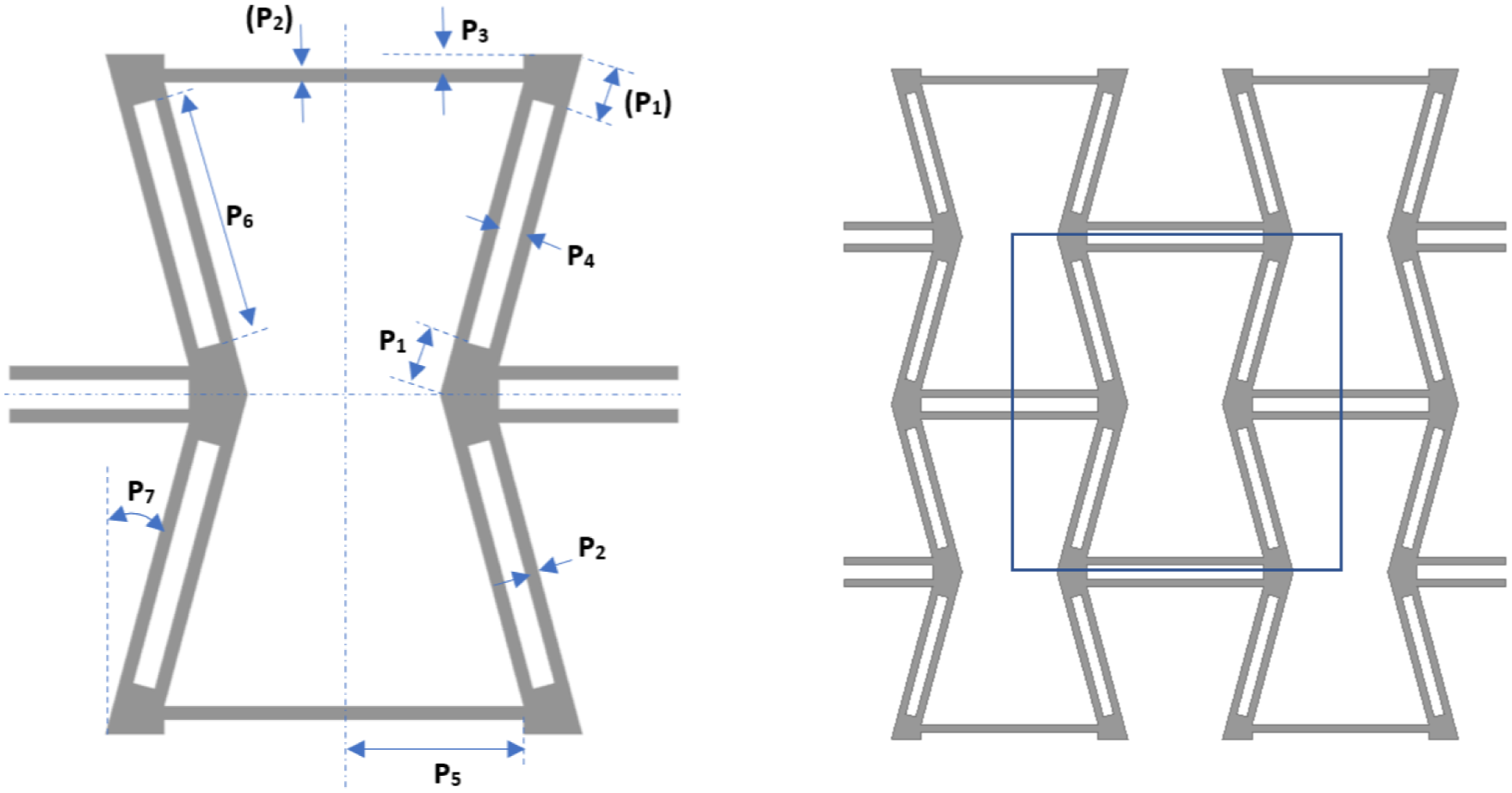
Design parameters of the modified honeycomb unit cell.
Finite element analysis
In the finite element analysis conducted in this study, small deformations were assumed, and all materials were modeled as linear elastic. Poisson’s ratio and Young’s modulus of the unit cell were determined through finite element analysis using Ansys 2023. 3D solid tetrahedral elements with a quadratic element order were employed to mesh the unit cells. The unit cell has length L and width L’, as illustrated in Figure 2(a). The L and L’ can be calculated based on design parameters as


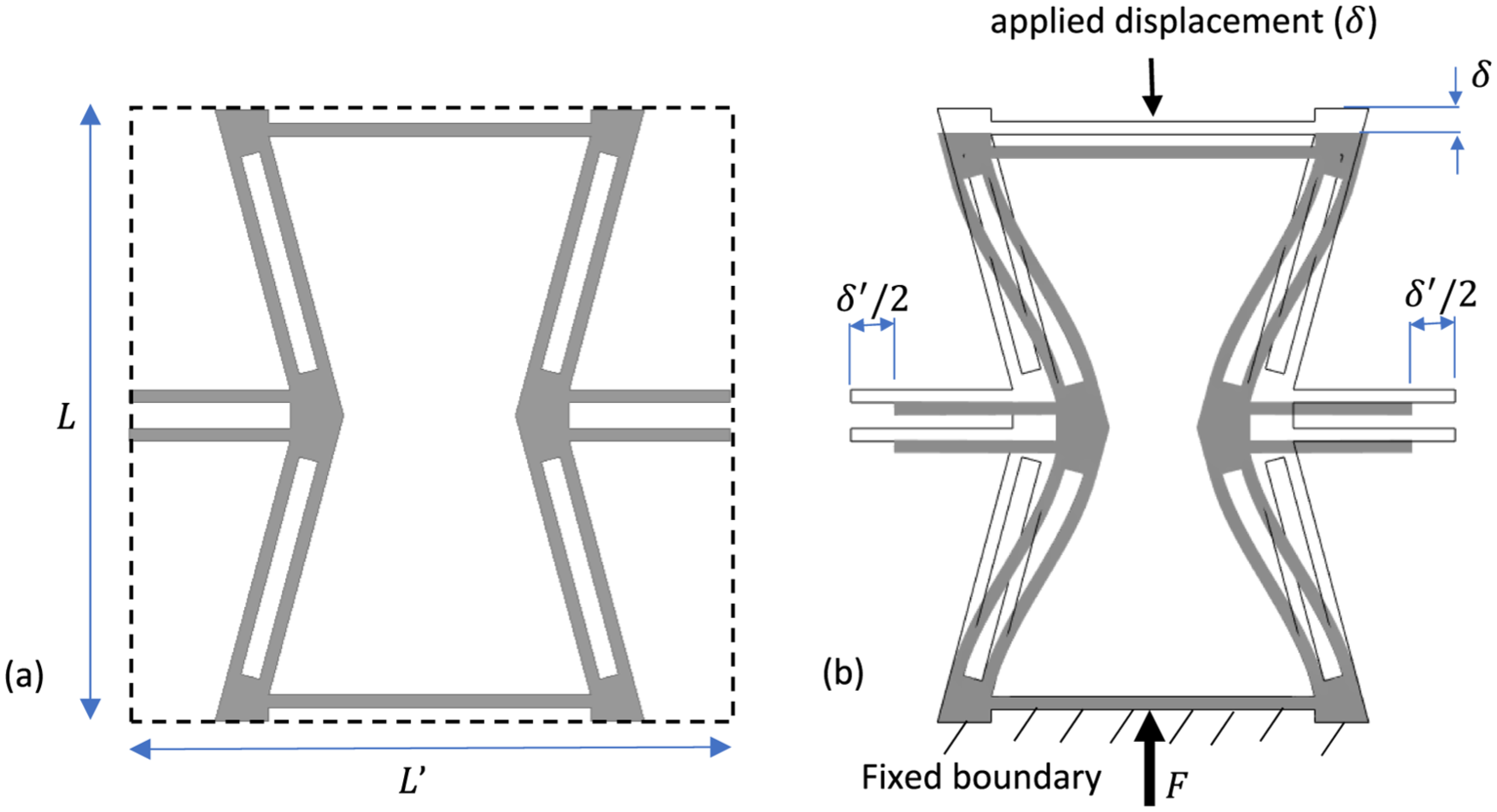
(a) Undeformed unit cell. (b) Illustration of NPR effect.
The auxetic behavior of the unit cell is illustrated in Figure 2(b). The bottom surface of the unit cell was fixed, while a uniform longitudinal displacement (δ = 1 mm) was applied to the top surface to simulate uniaxial compression, as depicted in Figure 2(b). The maximum total lateral deformation, δ’, was obtained from the finite element simulation. Consequently, the strains along the length ε and width ε’ of the unit cell are defined as:

The Poisson’s ratio ν is calculated as

To determine the Young’s modulus E of the unit cell, the reaction force F at the bottom of the unit cell is first obtained from the finite element simulation. The stress σ developed in the unit cell, given its lateral cross-sectional area at the bottom surface (fixed surface) is A, is then calculated as

Young’s modulus of the unit cell is subsequently determined as

Three types of unit cell
Three types of unit cells are considered in this analysis: the hollow-wall unit cell, the hybrid unit cell, and the solid-wall unit cell, as illustrated in Figure 3. For all unit cells, the reference design parameters are defined as P1=8 mm, P2=3mm, P3 = 2 mm, P4 = 3 mm, P5 = 25 mm, P6 = 35 mm, and P7 = 15°, with the Young’s modulus of the base material set to
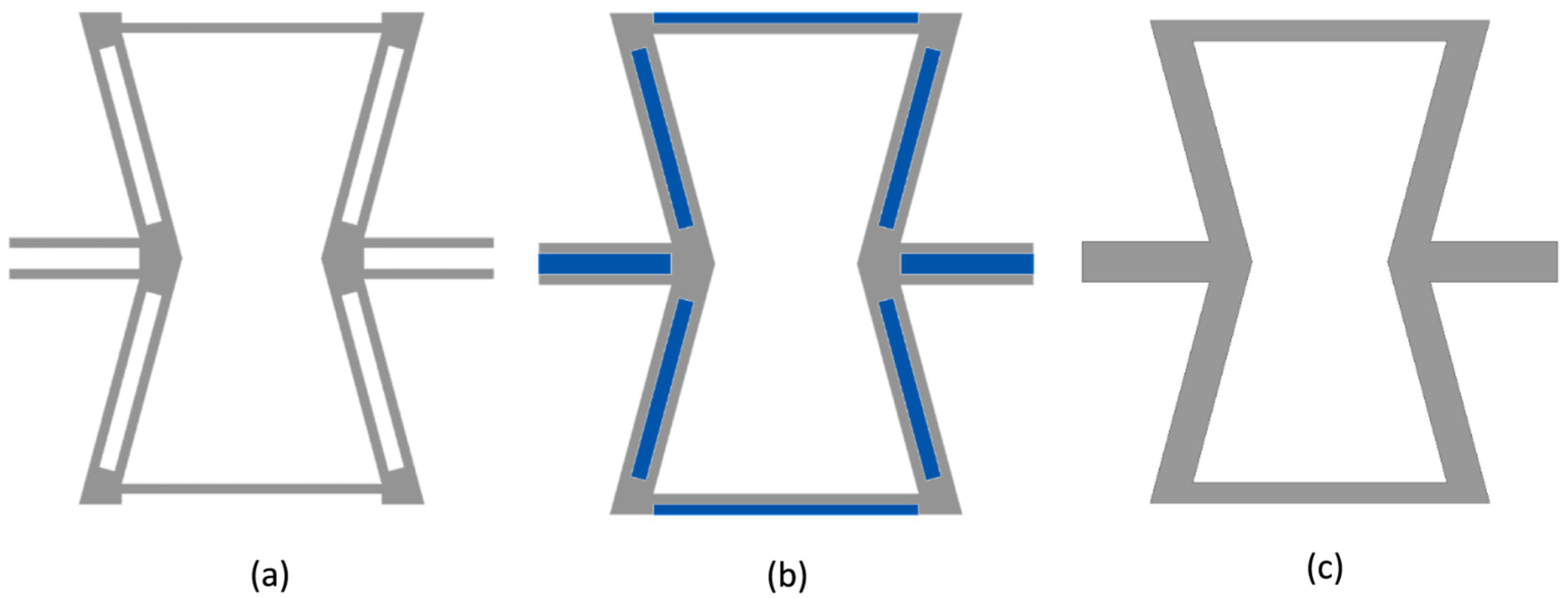
(a) Hollow-wall unit cell. (b) Hybrid unit cell. (c) Solid-wall unit cell.
In the hybrid unit cell, the wall cuts are filled with a stiffer filler material with a Young’s modulus of
In the solid-wall unit cell, the wall cuts are filled with the same base material (
Each of these unit cell types influences the mechanical properties, allowing for a comparison of how different filling materials and wall cut configurations affect properties such as Young’s modulus and auxetic behavior of the unit cell.
Dataset creation
To comprehensively explore the relationships between unit cell design parameters and material properties, an extensive dataset was generated. The variations in the unit cell parameters were defined as follows:



For dataset creation, each design point was defined within the specified parameter ranges, with each combination representing a distinct unit cell geometry. Geometries were modeled in Ansys DesignModeler, with all dimensions related to the design inputs treated as parameters rather than fixed values. FEA results, including lateral deformation (δ’) and reaction force (F) were also parameterized and used to compute output properties such as Poisson’s ratio and Young’s modulus, as described in Finite Element Analysis Section of Materials and Methods.
A total of 3000 design points were randomly generated using a Python script and imported into Table of Design Points in Ansys Workbench. Finite element analysis was then conducted for all design points for both hollow-wall and hybrid unit cells to obtain Poisson’s ratio and Young’s modulus for all generated geometries.
Selection of key design parameters
To investigate the relationships between design parameters and Poisson’s ratio and Young’s modulus of the unit cell, a mutual information gain (MIG) analysis was performed on the computationally created dataset. MIG quantifies the amount of information shared between input variables and output properties, helping to identify the most influential design parameters.
This approach was applied to both hollow-wall and hybrid unit cells. The solid-wall unit cell was excluded, as it can be considered a special case of the hybrid-wall unit cell in which the filler material has the same properties as the base material.
From this analysis, it was found that for both types of unit cells, Poisson’s ratio and Young’s modulus exhibited stronger dependencies on specific design parameters, particularly P2, P5, P6, and P7. These parameters demonstrated a more significant impact on the material behavior, as depicted in Figure 4.
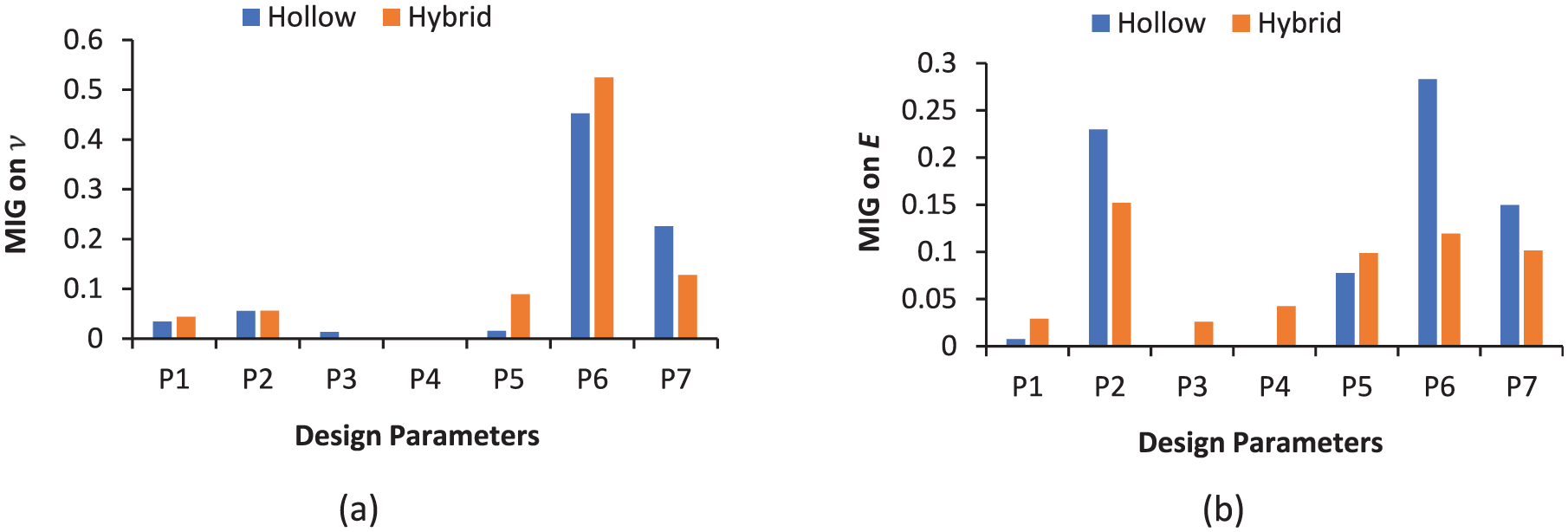
Mutual information gain of design parameters with respect to (a) Poisson’s ratio and (b) Young’s modulus.
Results and discussion
Poisson’s ratio
Since P2, P5, P6, and P7 have the greatest influence on Poisson’s ratio according to the MIG analysis, their effects were examined for all three types of unit cell and are presented in Figure 5. In this analysis, all parameters were kept at their reference values except for the parameter being investigated. Figure 5 shows that all design parameters significantly affect the Poisson’s ratio of each unit cell type. Consistent with the MIG analysis, the Poisson’s ratio of unit cells is strongly dependent on P6 and P7.
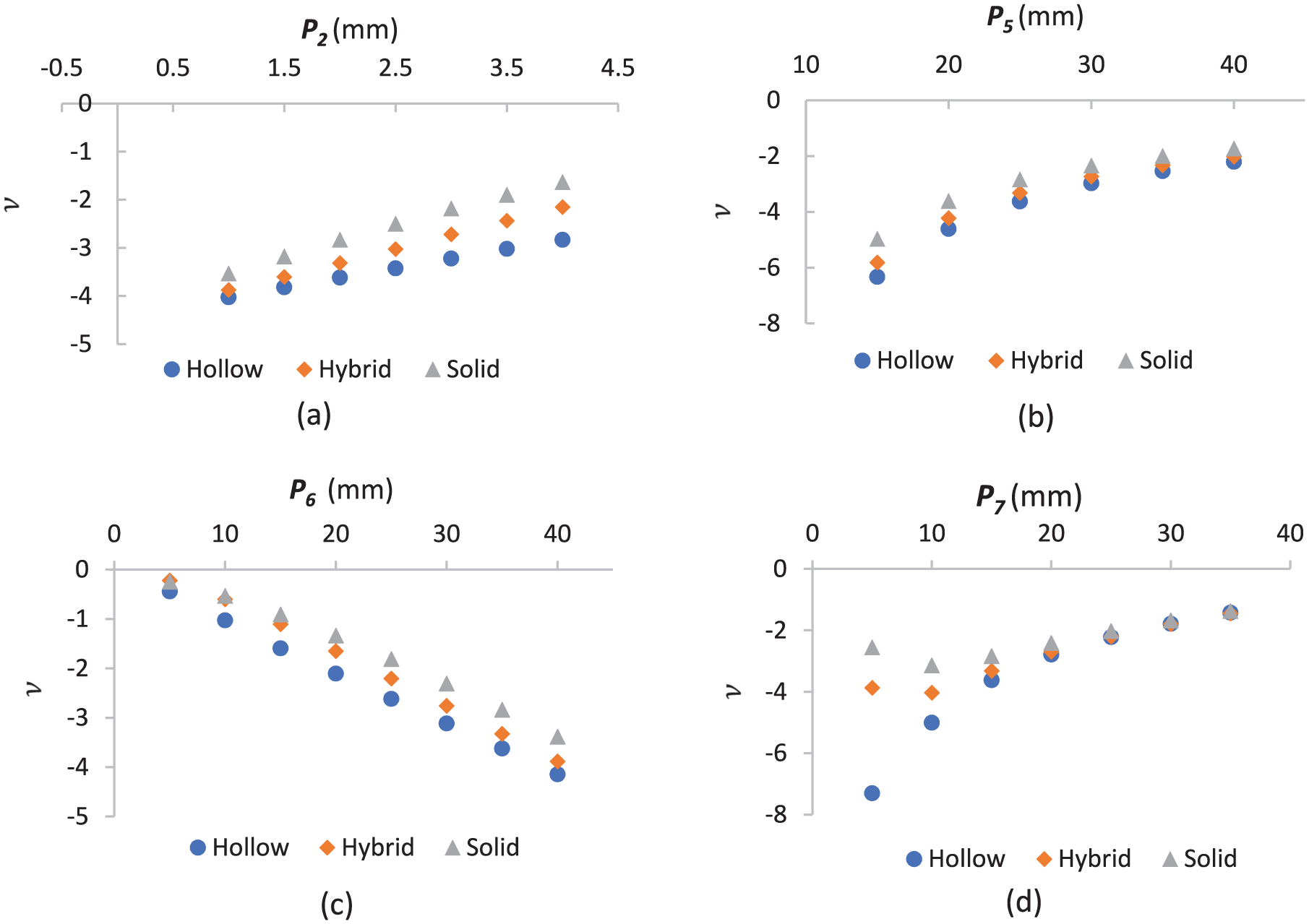
Effect of design parameter (a) P2 (b) P5 (c) P6 (d) P7 on Poisson’s ratio of the three types of unit cells.
Figure 6 shows the lateral deformation of the hollow-wall unit cell when one of the parameters is set to its minimum or maximum value within the defined range, while all other parameters remain at their reference values. As shown in Figure 6(a), increasing the wall thickness P2 reduces the auxetic effect by limiting flexibility and restricting the rotational mechanisms responsible for a negative Poisson’s ratio. Figure 6(b) shows that increasing the unit cell size P5 decreases the magnitude of the negative Poisson’s ratio. Although the lateral deformation remains almost the same, the increased width of the unit cell yields a smaller transverse strain, thereby reducing the auxetic effect. In contrast, increasing the cutout height P6 enhances auxetic behavior (i.e., makes the Poisson’s ratio more negative) by promoting localized rotational and bending deformations, as observed in Figure 6(c). Figure 6d shows that increasing the sidewall angle P7 reduces the auxetic response, as the walls become more self-supporting and less able to rotate or deform freely, thereby diminishing the auxetic behavior.
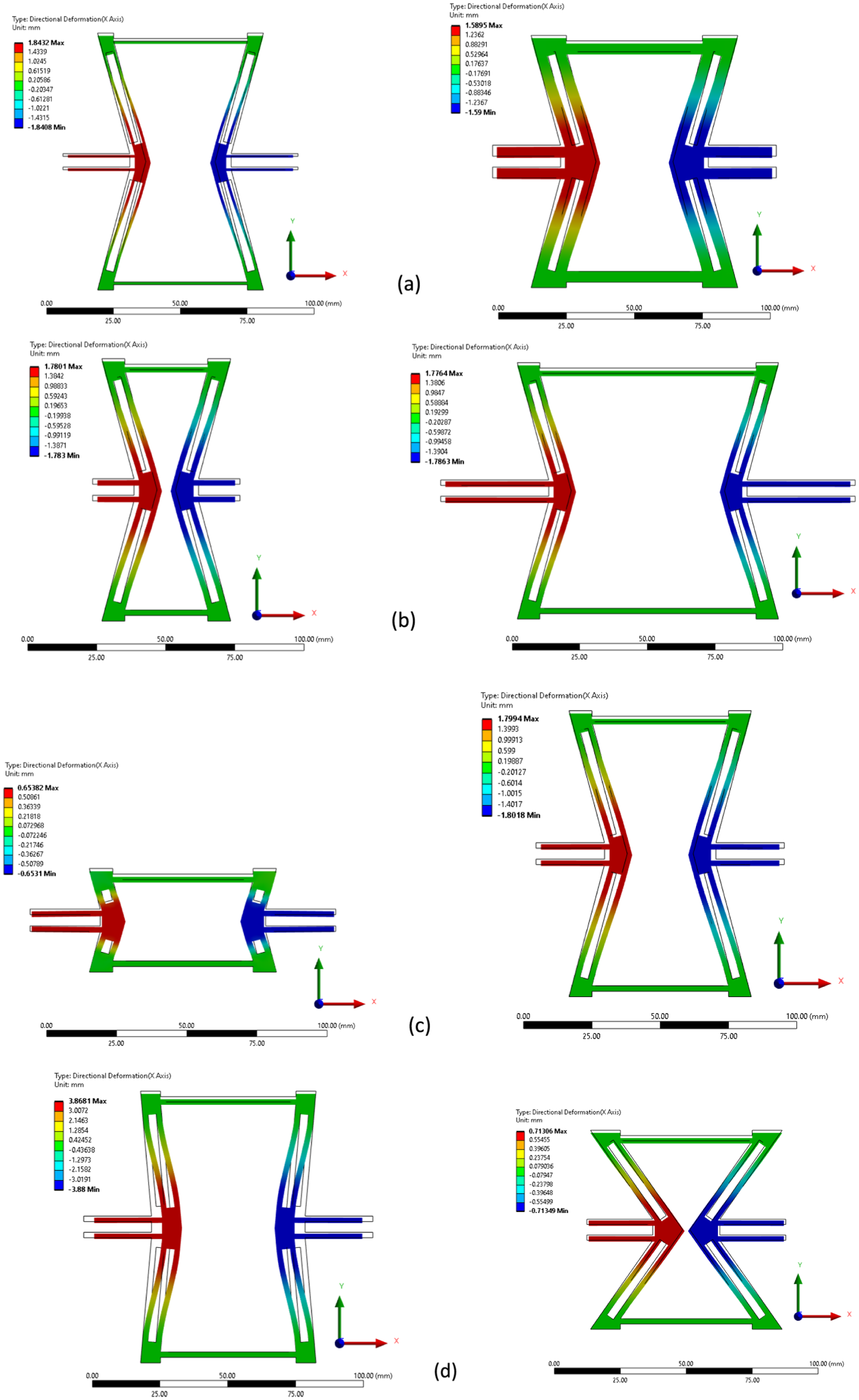
Lateral deformation of the hollow-wall unit cell when (a) P2 (b) P5 (c) P6 (d) P7 is at its minimum or maximum within the defined range.
The hollow-wall unit cell exhibits notably higher auxetic behavior compared to the hybrid and solid-wall unit cells across all variations of design parameters, as shown in Figure 5. When the side cuts are left hollow, they function as natural flexure points, allowing adjacent regions of the structure to undergo rotational and bending deformations. These localized deformations play a crucial role in amplifying the structure’s lateral contraction during axial compression. The absence of material in these regions facilitates stress redistribution and more localized stress concentrations at fixture points, leading to enhanced auxetic behavior as presented in Figure 7(a).
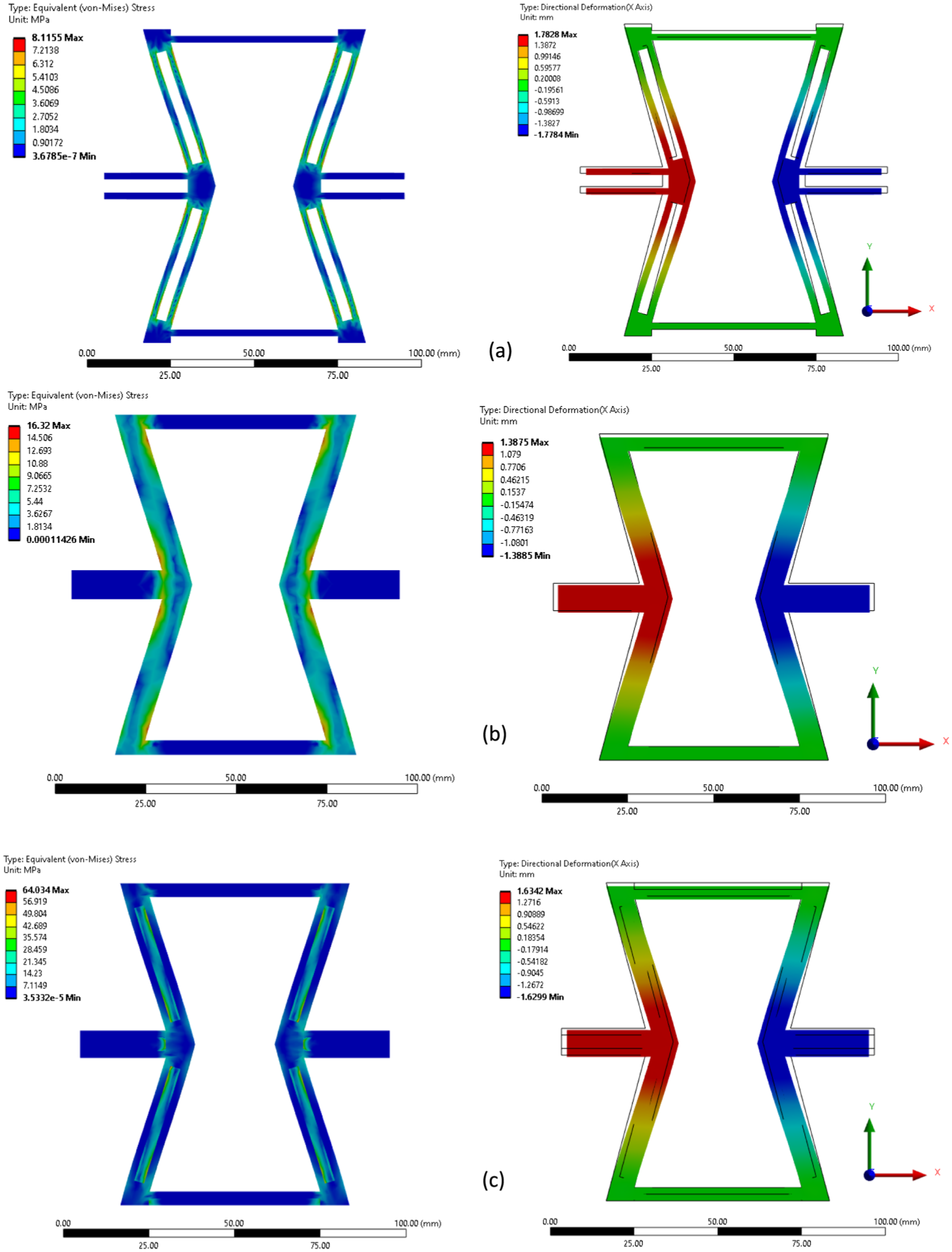
Stress contours (von Mises) and lateral deformations of the deformed unit cells for (a) hollow-wall unit cell, (b) solid-wall unit cell, and (c) hybrid unit cell.
The solid-wall unit cell shows the lowest auxetic behavior among the various unit cell types for all design parameter variations. Filling the small side cuts with the same material as the base structure reduces the overall auxetic effect because the filled regions no longer act as flexure points, and their deformation becomes more uniform with the rest of the structure, as shown in Figure 7(b). This homogeneity minimizes the rotational mechanism which is critical to auxetic behavior. Furthermore, the stress distribution becomes more uniform across the structure, further suppressing the localized deformations necessary for achieving strong auxetic effects.
Filling the side cuts with stiffer materials enhances auxetic behavior compared to using the same material. The stiffer fillers act as rigid constraints, magnifying rotational and bending deformations in the adjacent flexible regions. These localized stiff regions serve as leverage points, forcing the neighboring material to deform more significantly, thereby amplifying the overall auxetic behavior. Additionally, the stiffness contrast introduced by the filler creates high-stress intensity around the stiffer regions, directing deformation toward areas where auxetic mechanisms are most effective, as illustrated in Figure 7(c). The increase in filler stiffness enhances the auxetic behavior, with a significant initial effect that gradually diminishes as the Young’s modulus of the filler increases, as presented in Figure 8. To better demonstrate the effect of stiff fillers on auxetic behavior, the stress contours and lateral deformation of hybrid unit cells with two different filler moduli, E f = 2 GPa and E f = 20 GPa, are presented in Figure 9. The stiffer filler generates localized high-stress regions around the reinforced areas, driving the sidewalls inward and thereby enhancing the auxetic response of the unit cell, as illustrated in Figure 9.
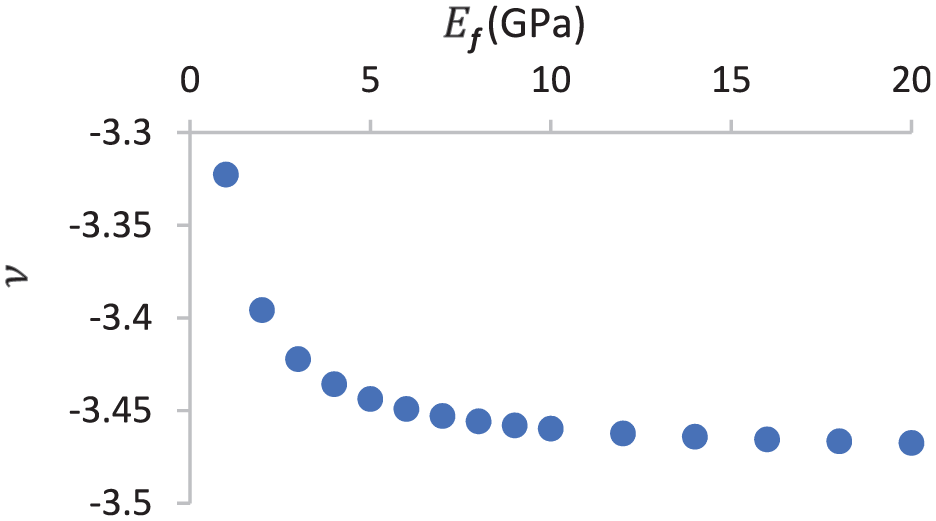
Effect of filler modulus on Poisson’s ratio of the hybrid unit cell.
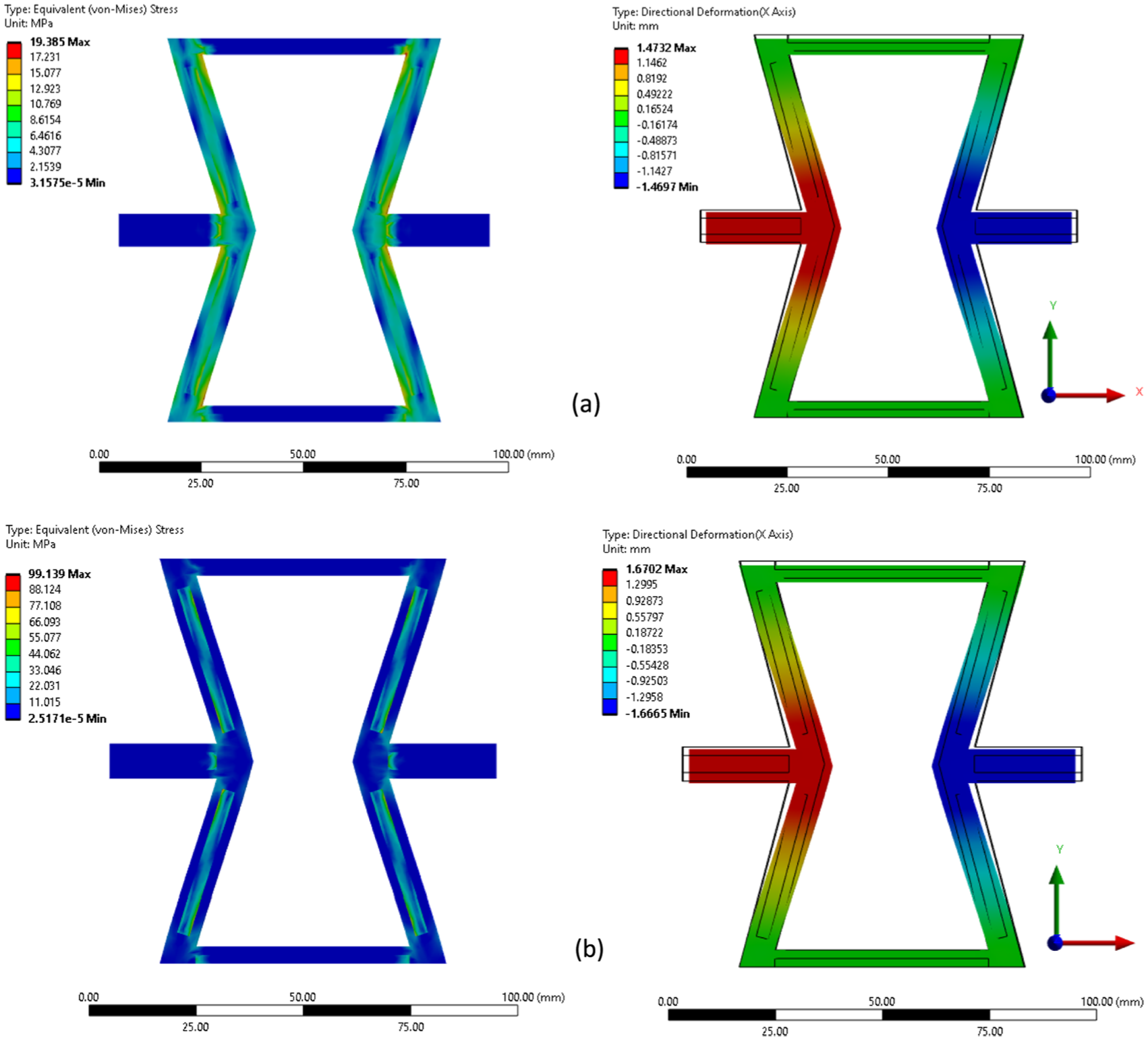
Stress contours (von Mises) and lateral deformation of hybrid unit cell with two different filler moduli: (a) E f = 2 GPa and (b) E f = 20 GPa.
Young’s modulus
The effects of P2, P5, P6, and P7, which have the greatest influence on Young’s modulus according to the MIG analysis, were analyzed for all three types of unit cell, as shown in Figure 10. For this analysis, each parameter was varied individually while all other parameters were fixed at their reference values. Figure 10 demonstrates that all design parameters significantly affect Young’s modulus across the different unit cell types. Consistent with the mutual information gain analysis, Young’s modulus is most sensitive to variations in P2 and P6.
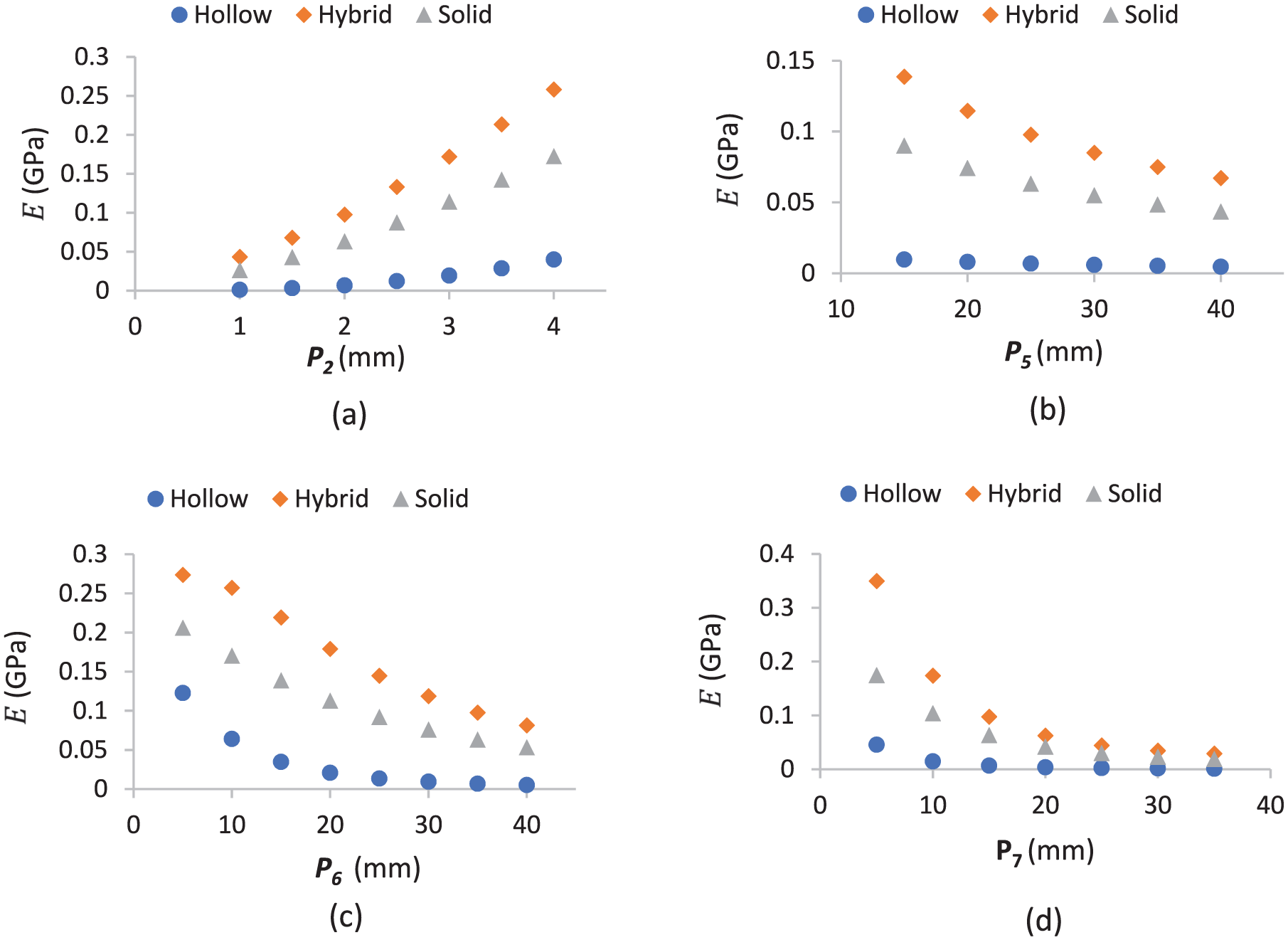
Effect of design parameter (a) P2 (b) P5 (c) P6 (d) P7 on Youngs’s modulus of the three types of unit cells.
Increasing wall thickness P2 enhances the modulus by reducing flexibility and making the structure stiffer. Increasing unit cell size P5 increases the porosity of unit cells, reducing the relative load-bearing cross-sectional area and consequently decreasing the effective stiffness of the unit cell. increasing the cutout height P6 decreases the modulus due to increased flexibility. A larger sidewall angle P7 increases the inclination of the side walls, causing more of the applied load to be absorbed through bending and rotation rather than direct axial compression. Since bending-dominated deformations contribute less to stiffness than axial deformations, the overall effective modulus decreases.
As shown in Figure 10, the modulus of the hollow-wall unit cell tends to be smaller compared to a solid, uncut structure. The hollow side cuts create regions of lower stiffness, which increase compliance and enhance the structure’s ability to undergo bending and rotation, thereby reducing the overall stiffness and elastic modulus. When the side cuts are filled with the same material as the base structure, the overall stiffness and modulus increase because the filled regions no longer act as highly flexible zones, resulting in more uniformly rigid behavior.
Figure 11 illustrates the effect of filler modulus on the Young’s modulus of the hybrid unit cell. Filling the cuts with stiffer materials increases the overall modulus, with greater stiffness achieved as the rigidity of the filler material increases. However, at higher stiffness levels, further increases in the Young’s modulus of the filler have a negligible effect on enhancing the Young’s modulus of the unit cell.
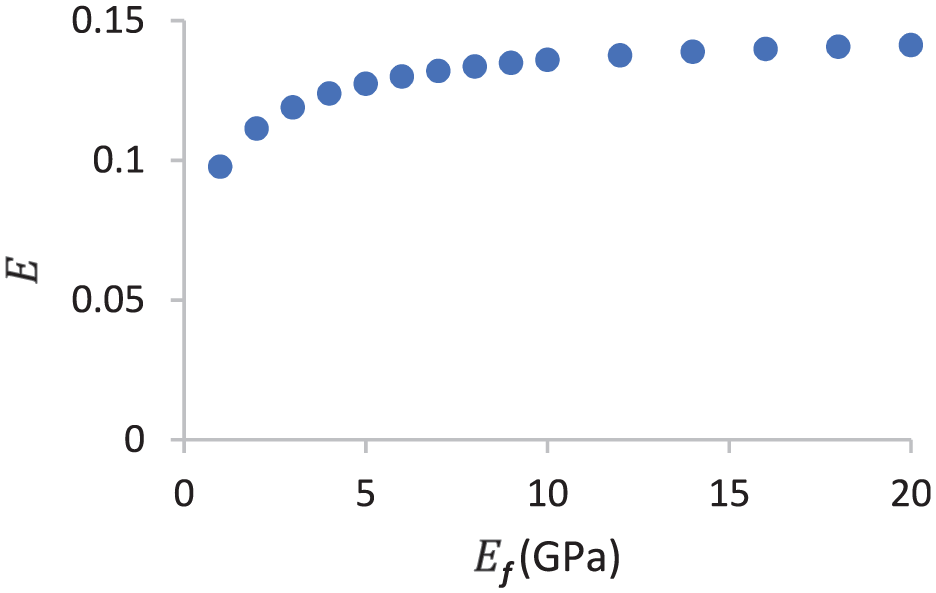
Effect of filler modulus on Young’s modulus of the hybrid unit cell.
Strain energy density
Strain energy density (SED) is a fundamental metric for evaluating the impact resistance of cellular structures, as it quantifies the energy stored per unit volume under applied deformation. In this study, elastic SED, representing the recoverable energy stored within the material, is employed to assess the relative energy storage capacity of different unit cell designs. As noted in the introduction, unit cells with higher elastic SED are expected to exhibit enhanced energy absorption once nonlinear mechanisms such as plastic deformation or buckling occur.
The elastic SED can be calculated as:

where U is the total strain energy and

where E is the Young’s modulus, ε is the strain, and V is the volume of the body under consideration.
The volume of the unit cell can be calculated as:

where L and L’ represent the length and width of the unit cell, respectively, and D denotes its depth.
In this study, a constant deformation (δ = 1 mm) was applied to assess the influence of design parameters on the elastic SED. The total strain energy of the unit cell due to the applied deformation was computed using finite element analysis in Ansys.
As shown in Figure 12, hybrid unit cells exhibit the highest strain energy density, followed by solid-wall and hollow-wall unit cells across all design parameters and variations. While increased flexibility leads to a higher Poisson’s ratio and greater strain, it also significantly reduces stiffness. As described in equation 9, these factors compete in determining the SED of unit cells. Although the solid-wall unit cell is less flexible, its larger modulus has a more significant impact on energy storage than deformation. As a result, the solid-wall unit cell exhibits higher SED than the hollow-wall unit cell. The hybrid unit cell, which combines a high modulus with increased deformation capacity, stores the most energy during elastic deformation. Overall, an increase in Young’s modulus appears to have a more substantial influence on SED than increased flexibility and strain.
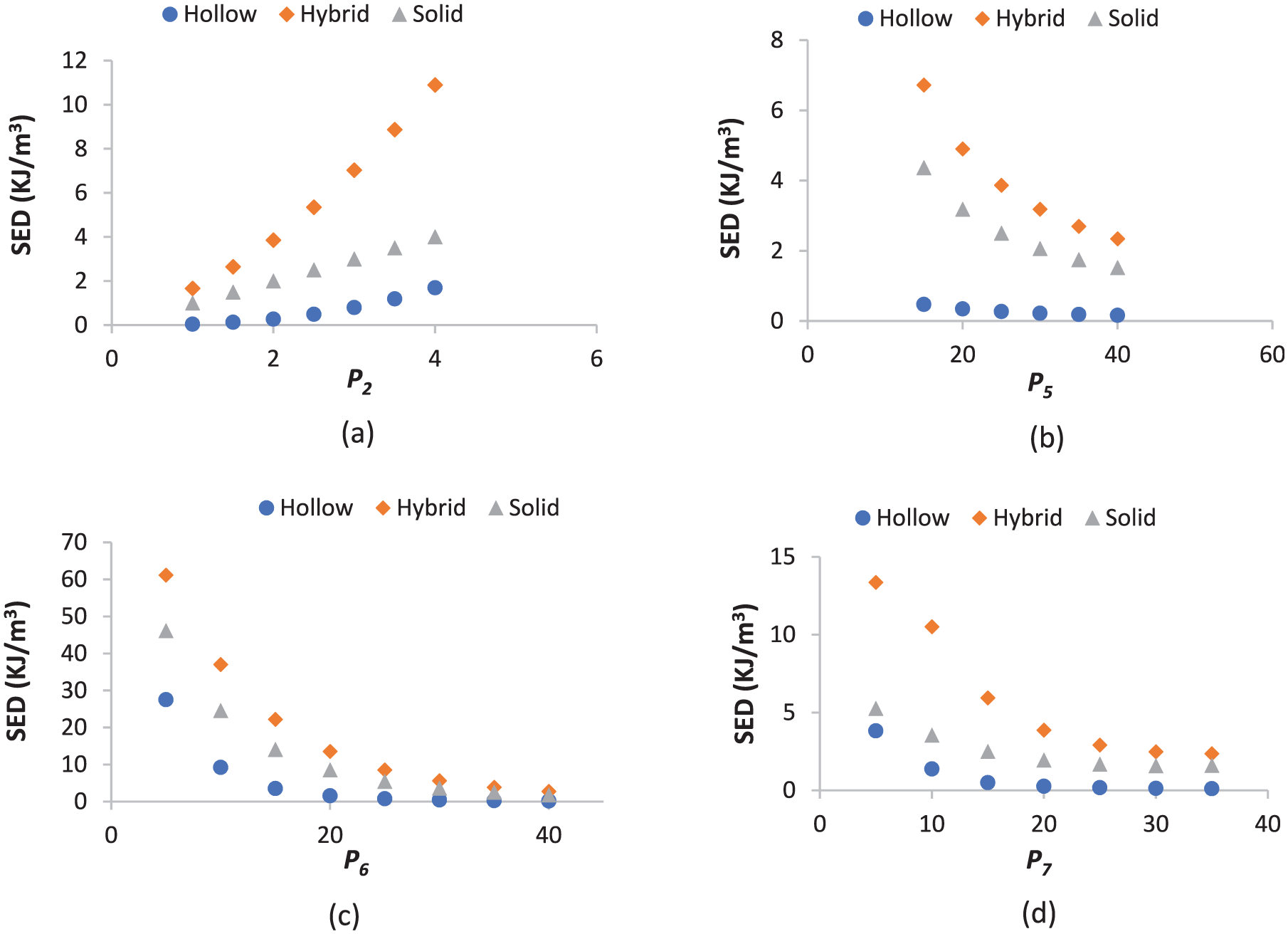
Effect of design parameter (a) P2 (b) P5 (c) P6 (d) P7 on strain energy density of the three types of unit cells.
Since elastic energy storage is strongly correlated with energy absorption, the hybrid design is expected to offer superior impact resistance under dynamic loading.
The effect of filler modulus on the strain energy density of the hybrid unit cell is shown in Figure 13. It can be observed that increasing the filler modulus leads to an increase in strain energy density; however, this effect diminishes for stiffer filler materials. Adhesion can be compromised when there is a significant contrast in stiffness between materials, particularly in hybrid structures. Therefore, the stiffness of filler materials should not be excessively high if it does not provide a substantial improvement in the unit cell’s energy storage capacity. Therefore, selecting hybrid unit cells with optimized filler stiffness to reduce stiffness contrast will yield the optimal unit cell design for energy absorption.
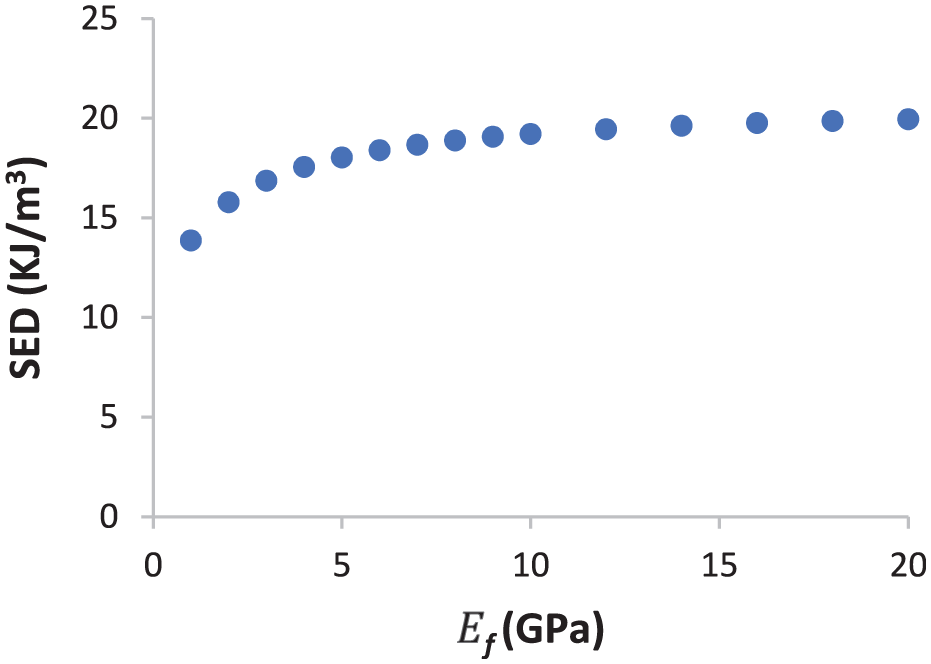
Effect of filler modulus on strain energy density of the hybrid unit cell.
Conclusions
This study presents a comprehensive computational investigation into the auxetic behavior of modified honeycomb unit cells, analyzing the effects of material stiffness and geometric variations. The results demonstrate that unit cells with hollow-wall designs exhibit the highest auxetic response due to localized flexural deformations, while solid-wall unit cells significantly suppress auxetic behavior by limiting rotational mechanisms. hybrid unit cells, where wall cuts are filled with a stiffer material, enhance auxetic effects by acting as rigid constraints that amplify localized deformations in adjacent flexible regions. Additionally, increasing the stiffness of the filler material initially improves the auxetic response, but beyond a certain threshold, further increases in stiffness have a negligible impact. The study also highlights the critical role of design parameters in determining the mechanical performance of auxetic unit cells. Variations in P2 (wall thickness), P5 (unit cell size), P6 (cutout height), and P7 (sidewall angle) significantly influence Poisson’s ratio and Young’s modulus of the unit cells. The results suggest that hybrid unit cells offer an optimal balance between flexibility and stiffness, making them suitable for applications requiring energy absorption and mechanical adaptability. In future work, the analysis will be extended to nonlinear regimes, and experimental validation will be performed to further establish the auxetic performance of the proposed unit cells and their effectiveness in energy absorption applications.
Footnotes
Acknowledgements
The author gratefully acknowledges the support of this work by Mercer University through a SEED grant.

Funding
The author received no financial support for the research, authorship, and/or publication of this article.
Declaration of conflicting interests
The author declared no potential conflicts of interest with respect to the research, authorship, and/or publication of this article.
Data availability statement
The data supporting the findings of this study are available from the corresponding author upon reasonable request. All relevant data generated or analyzed during this study have been included in the article.