



Abstract
Superelastic NiTi Shape Memory Alloy (SMA) rebars have emerged as compelling materials for structural engineering applications in concrete bridge piers, owing to their superior superelastic and energy dissipation properties. Incorporating NiTi SMA rebars enhances structural resilience against seismic loads by enabling effective earthquake energy dissipation while minimizing structural damage. However, under tension-compression cyclic loads, NiTi SMA rebars are subjected to strain reversals, leading to buckling and potential low cycle fatigue (LCF) failure. This study investigates the LCF behavior of NiTi SMA rebars under tension-compression cyclic loading, considering various strengths, diameters, and slenderness ratios (L/D). The findings indicate that NiTi SMA rebars with higher slenderness ratios experience accelerated LCF failure due to buckling, leading to deteriorated mechanical properties after fewer cycles compared to rebars with lower slenderness ratios. Moreover, the study reveals that total energy dissipation and residual strain of NiTi SMA rebars are influenced by strain amplitudes and slenderness ratios. Specifically, increasing the slenderness ratio and strain amplitude results in decreased total energy dissipation and increased residual strain, underscoring the significant impact of inelastic buckling on the LCF behavior of NiTi SMA rebars. Finally, equations are presented for the prediction of energy dissipation and residual strain of NiTi SMA rebars with different slenderness ratios under tension compression cyclic loading with different strain amplitudes.
1. Introduction
In recent years, researchers have tried to introduce various innovative systems and technologies to improve earthquake energy dissipation, reduce destructive structural damage and residual displacement under extreme loading. Among these, shape memory alloys (SMAs) stand out as a cutting-edge technology for use as reinforcing rebar in RC structures (Mohammadgholipour and Billah, 2023). SMAs are of great interest to structural engineers due to their unique flag-shaped hysteresis, distinct thermomechanical characteristics, and high energy dissipation capabilities (Mohammadgholipour and Billah, 2023; Muntasir Billah et al., 2022). These materials can undergo significant strains and return to their original shape without residual deformation, making them highly effective in dissipating earthquake energy when structures are subjected to seismic loads. For bridges, since it is required to make existing and new ones more resilient under extreme loading conditions, the applications of SMAs are ideal due to their two promising properties: superelasticity (SE) and shape memory effect (SME). SE is defined as the capability of the material to recover its original shape after unloading and SME is the ability of material to recover its original shape after being heated. SME property of SMA has been used in retrofitting older bridges to enhance the load-carrying capacity. On the other hand, the SE property of SMA has been used to limit the permanent drift, which shows post-earthquake functionality and reparability of structural systems (Muntasir Billah et al., 2022).
Previous studies showed excellent strain recovery and energy dissipation capacity of NiTi SMA rebars as a reinforcing rebar in plastic hinge region of concrete columns and piers (Cruz et al., 2021; Rahman and Billah, 2020; Saiidi and Wang, 2006; Varela and “Saiid” Saiidi, 2016). The low-cycle fatigue behavior of SMA rebars is important since during seismic events, the longitudinal rebars at the critical zones of concrete members, such as plastic hinge zones, experience strain reversals (Aldabagh and Alam, 2021; Mohammadgholipour and Billah, 2023; Tripathi et al., 2018). Strain reversals lead to damage accumulation in longitudinal rebars in critical zones of concrete elements, and they might fail suddenly when subjected to severe cyclic loading. This type of failure is defined as low-cycle fatigue failure. Several studies (Aldabagh and Alam, 2021; Kashani et al., 2018; Tripathi et al., 2018) have investigated the LCF behavior of different types of reinforcing rebars and developed an LCF life model to predict the fatigue life of the reinforcing rebar. However, only a limited number of studies have investigated the LCF behavior of NiTi SMA rebars (Maletta et al., 2014; Yang et al., 2021). Maletta et al. (2014) considered cyclic tensile loading with different strain amplitudes to investigate the LCF behavior of 1.5 mm superelastic Ni-Ti alloy sheets. They observed that as the number of loading cycles increased, the energy dissipated per cycle decreased, which was attributed to a reduction in the stress-strain loop area. This decline was more significant at larger strain amplitudes. It was also concluded that the permanent strain of superelastic Ni-Ti alloy sheets increases with an increase in the number of loading cycles. Yang et al. (2021) evaluated the LCF behavior of NiTi SMA strands subjected to cyclic tensile loading with different strain amplitudes. They found that as the number of cycles increased, the dissipated energy per cycle of NiTi SMA strands decreased due to a decrease in the area of the stress-strain loops. They also concluded that the maximum tensile stress decreased with an increase in the number of cycles. Some studies have focused on the LCF investigation of Cu-based and Fe-based SMAs (Fang et al., 2021; Ghafoori et al., 2017; Hong et al., 2024; Wang and Zhu, 2022). Hong et al. evaluated the LCF behavior of CuAlMn SMA rebras at various temperatures. They concluded that the energy dissipated by the rebar per cycle decreased when the number of loading cycles increased. Ghafoori et al. (2017) demonstrated that Fe-SMA rebars exhibited excellent LCF behavior under cyclic loading conditions. Their study revealed that the fatigue life of Fe-SMA rebars exceeded 2,000,000 cycles, which is a significant finding for applications in structures subjected to repeated loads, such as bridges and other civil infrastructure. Fang et al. (2021) studied the LCF response of Fe-SMA rebars under both monotonic and cyclic tension-compression loadings. They concluded that Fe-SMA rebars have a superior LCF life compared to conventional steel rebars. Hong et al. (2024) comprehensively assessed the behavior of 18 mm Fe-SMA before and after actuation (thermal simulation). They concluded that Fe-SMA showed high ductility and LCF resistance at different temperatures from −40°C to 50°C. Wang and Zhu (2022) examined the cyclic performance of Fe-SMA bars equipped with a buckling-restrained device subjected to tension-compression cyclic loading. Their study considered various strain amplitudes and loading protocols, providing insights into the material’s behavior in different conditions. The results exhibited excellent LCF behavior of Fe-SMA bars, thereby offering a desirable solution for the development of a high-performance seismic device. Zhang et al. (2022) investigated the LCF behavior of Fe-Mn-Si SMA U shaped dampers (FMS-UD) and concluded that the LCF life and energy dissipation of the FMS-UD was up to seven times higher than normal steel dampers.
Furthermore, previous earthquakes and experimental studies have shown that the buckling of the rebar in RC shear walls and columns is one of the common failure modes in RC structures with flexure-dominated behavior (Dhakal and Maekawa, 2002b; Dhakal and Su, 2018; Mander et al., 1994; Tripathi et al., 2019, 2020a, 2020b). Buckling in longitudinal rebars occurs because of the spalling of concrete cover and inadequate lateral restraint provided by transverse reinforcement (Tripathi et al., 2019). The buckling phenomena made many researchers interested to investigate the causes and consequences of reinforcing rebars’ buckling (Kashani et al., 2016; Nojavan et al., 2017; Zong, 2010). The current design methods, however, cannot prevent the buckling of reinforcement rebars in structures dominated by flexure. It is important to note that the buckling of reinforcing bars can result in their failure, either from LCF or from the crushing of the core concrete. This depends on the level of axial strain achieved in the plastic hinge regions and the strain history that the reinforcing bars have undergone during the earthquake (Tripathi et al., 2018). Several experimental studies showed inelastic buckling followed by premature failure of reinforcing rebars in RC columns and walls (Dashti et al., 2017; Dazio et al., 2009; El-Bahy et al., 1999; Lehman et al., 2004).
As discussed, the LCF fracture of rebars and buckling of reinforcing rebar are two main issues of longitudinal rebars in concrete members. Since the application of NiTi SMA rebars has increased in structures to mitigate earthquake damage due to their superplastic effect and energy dissipation, it is necessary to find the effects of LCF loading on mechanical properties, superelasticity capability, and energy dissipation capacity of NiTi SMA rebars. However, no studies have been conducted to investigate the LCF behavior of NiTi SMA rebar under tension-compression cyclic loading (Wang and Zhu, 2018). This is a significant obstruction for the application of NiTi SMA-reinforced concrete members subjected to repeated static and dynamic loadings (e.g. earthquakes; Mohammadgholipour and Billah, 2023). For the application of NiTi SMA rebars in a concrete member in seismic-prone regions, the fatigue behavior of NiTi SMA rebar would be critical since the concrete element is subjected to tension compression cyclic loadings. The cyclic tension-compression loads have the potential to degrade the rebar’s strength and stiffness, leading to potential failure. Tension-compression cyclic loading would also affect NiTi SMA rebars’ superelasticity and energy dissipation features of NiTi SMA rebars. Therefore, it is necessary to comprehensively understand the LCF behavior of NiTi SMA rebars under tension-compression cyclic loading (Mohammadgholipour and Billah, 2023).
This study numerically investigates the LCF behavior of NiTi SMA rebars with various strengths, diameters, and slenderness ratios under tension-compression cyclic loading. It examines changes in mechanical properties, residual strain, and dissipated energy of NiTi SMA rebars with different slenderness ratios under different strain amplitudes to understand the combined effects of LCF and buckling on NiTi SMA rebars. Furthermore, since superelasticity and energy dissipation capacities of NiTi SMA rebar is important, equation is proposed to estimate the residual strain and dissipated energy of NiTi SMA rebars. These equations can be used to estimate the residual strain, and the amount of energy dissipated by NiTi SMA rebars with different slenderness ratios under tension-compression cyclic loading under different strain amplitudes.
2. Numerical simulation
Many studies (Aldabagh and Alam, 2021; Hawileh et al., 2010; Kashani et al., 2015, 2016; Tripathi et al., 2018) investigated the LCF behavior of reinforcing rebars through experimental studies to find crack initiation, crack growth, and LCF fracture of the rebar under cyclic loading accurately. Therefore, it is necessary to evaluate the LCF behavior of NiTi SMA rebars through experiments. However, this is an expensive, complex and time-consuming endeavor due to the high cost of NiTi SMA rebar and the investigation of various parameters. It is difficult and economically infeasible to investigate all combinations of parameters and their interdependencies using only experimental investigations. For this purpose, this research employed numerical simulations using finite element software to investigate the mechanical behavior of NiTi SMA under tension-compression cyclic loading conditions.
2.1. NiTi SMA model characterization
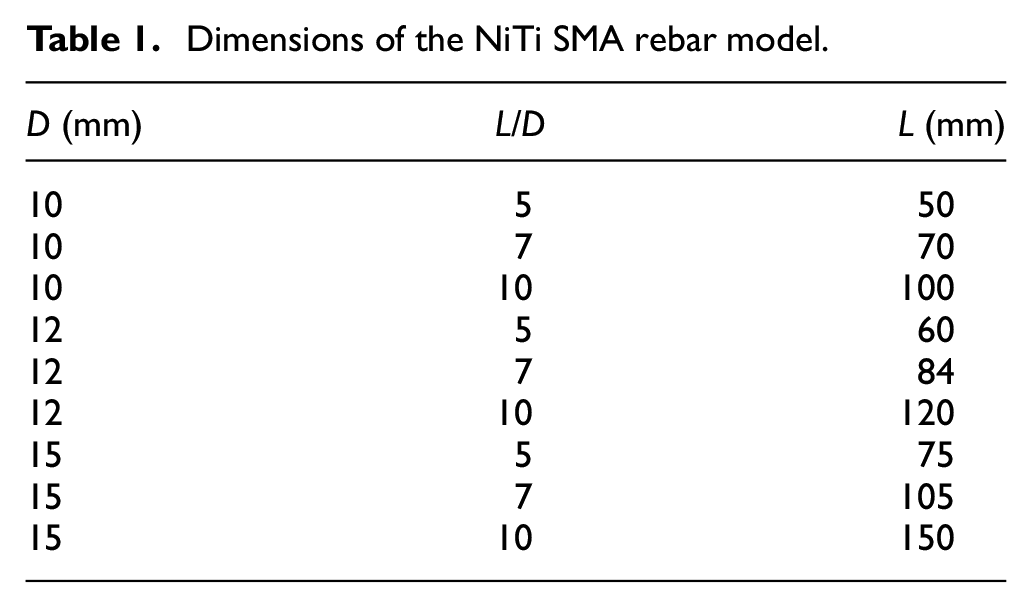
This section describes the characteristics of NiTi SMA rebar models with different diameters and lengths. The LCF behavior of 10, 12, and 15 mm NiTi SMA rebars were evaluated under cyclic loading with constant strain amplitudes. To consider the combined effects of inelastic buckling on the LCF behavior of NiTi SMA rebars, rebars with different slenderness (L/D) were considered. The L/D ratios considered in this study are 5, 7, and 10. Details of SMA rebars for numerical studies are shown in Table 1.
Dimensions of the NiTi SMA rebar model.
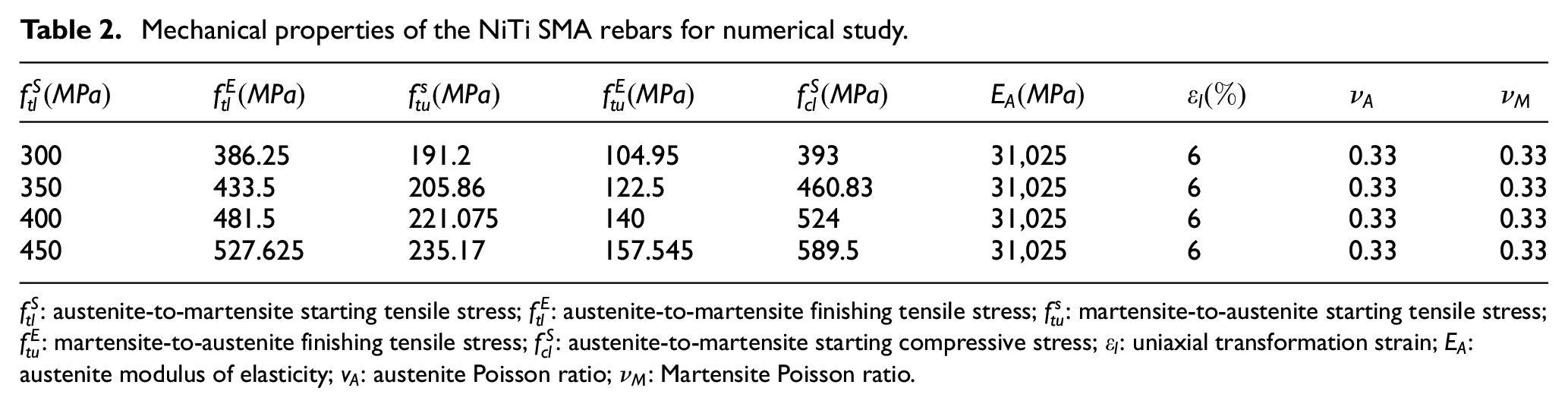
Furthermore, NiTi SMA rebars with different mechanical properties and strengths were employed in this study to find the LCF behavior NiTi SMA rebars. The definition of mechanical properties parameters is shown in Figure 1. The stress-strain curve initially exhibits elastic behavior, characterized by the slope corresponding to the austenite elasticity modulus (
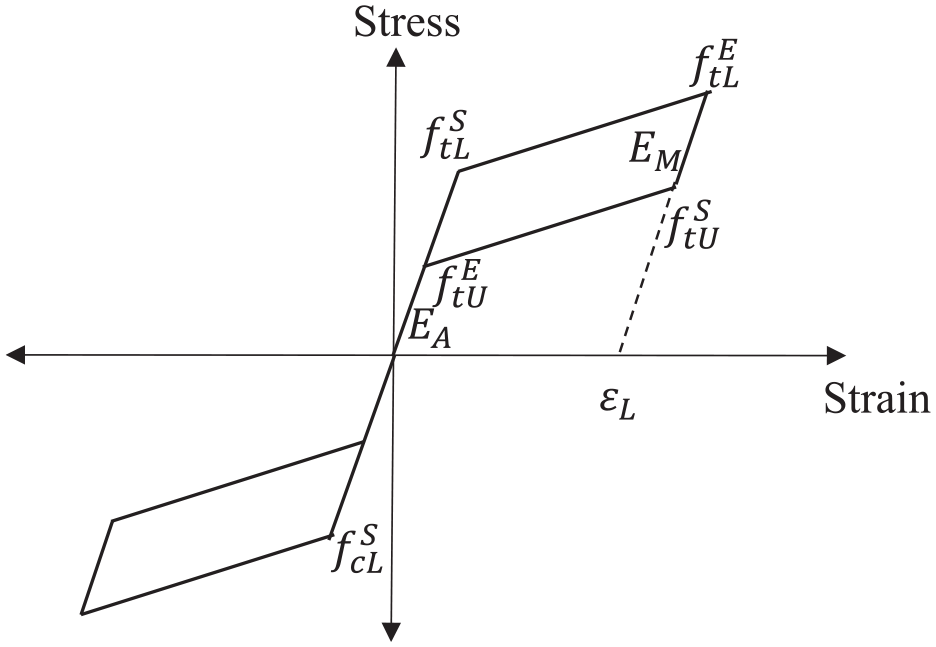
Definition of mechanical properties of NiTi SMAs.
Mechanical properties of the NiTi SMA rebars for numerical study.
2.2. Finite element model
ABAQUS (2011) finite element software was used for numerical simulation for investigating the LCF behavior of NiTi SMA rebars. A total of 160 FE models were created for investigating the LCF behavior of NiTi SMA rebars under tension-compression cyclic loading.
The NiTi SMA rebar was modeled using a solid element employing the constitutive model presented by Auricchio and Taylor available in Abaqus (2011). A 3-dimensional 8-node solid element with reduced integration (C3D8R) was chosen for the mesh. From the mesh sensitivity analysis, an optimum mesh size of 2 mm was adopted considering accuracy in predicting experimental response and computational time. The model boundary conditions, and the mesh density of the model are shown in Figure 2. In the FE model, the total bar length was simulated. The NiTi SMA bar was constrained at both clamping ends. At one end all degrees of freedom were fixed while at the other the same were restrained, except for the displacement along the length of the bar. A displacement reference point was set up on one side, with the reference point and the bar’s surface being linked using continuous distribution coupling. Displacement control loading was applied on the rebar to capture the post-peak behavior of the NiTi SMA rebar. The Newton-based solution method was employed.
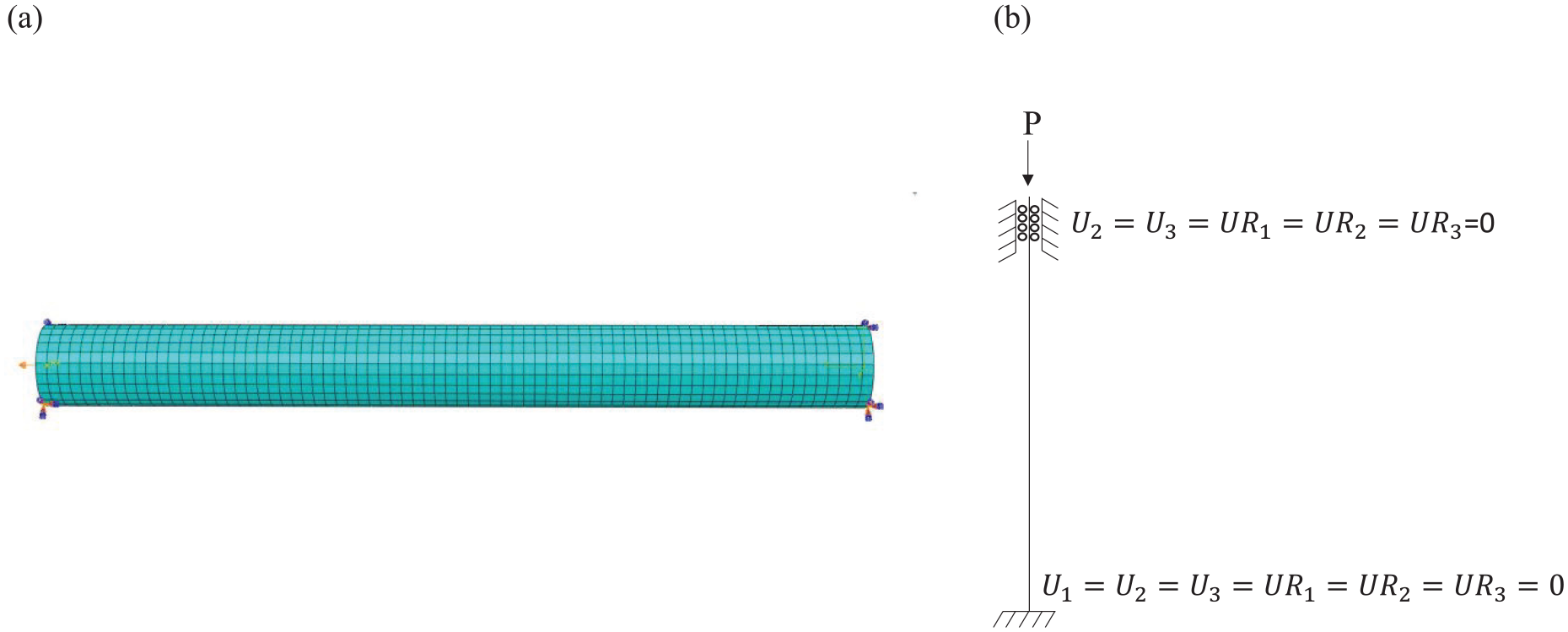
Finite element model (a) mesh density (b) boundary condition applied to the rebar.
In order to validate the precision of the FE modeling methods implemented in ABAQUS for the present investigation, outcomes from experimental investigations conducted by DesRoches et al. (2004) and Wang and Zhu (2018) were used for verification. Figure 3 illustrates a comparison of the ABAQUS simulation results and experimental results. As shown, the simulation result fit the result from experimental studies with acceptable accuracy. It is interesting to note that according to Figure 3(a; DesRoches et al., 2004) a residual strain of 0.65% can be observed from the stress-strain curve of the NiTi SMA tested, while Figure 3(b; Wang and Zhu, 2018) shows a negligible residual strain. This is because of the strain amplitude that the NiTi SMA rebar experienced. According to DesRoches et al. (2004), the average residual strain exhibits a gradual increase, rising from 0.15% after a 3% strain to an average of 0.65% after four cycles at a 6% strain. Wang and Zhu (2018) tested NiTi SMA rebars only upto 4% strain while DesRoches et al. (2004) conducted the test upto 6% strain. It has been observed in other experimental studies that below 4% strain, NiTi SMA shows negligible residual strain while it increases beyond 4% strain. The amount of dissipated energy under cyclic loading for the NiTi SMA rebar tested by DesRoches et al. (2004) is 0.04317
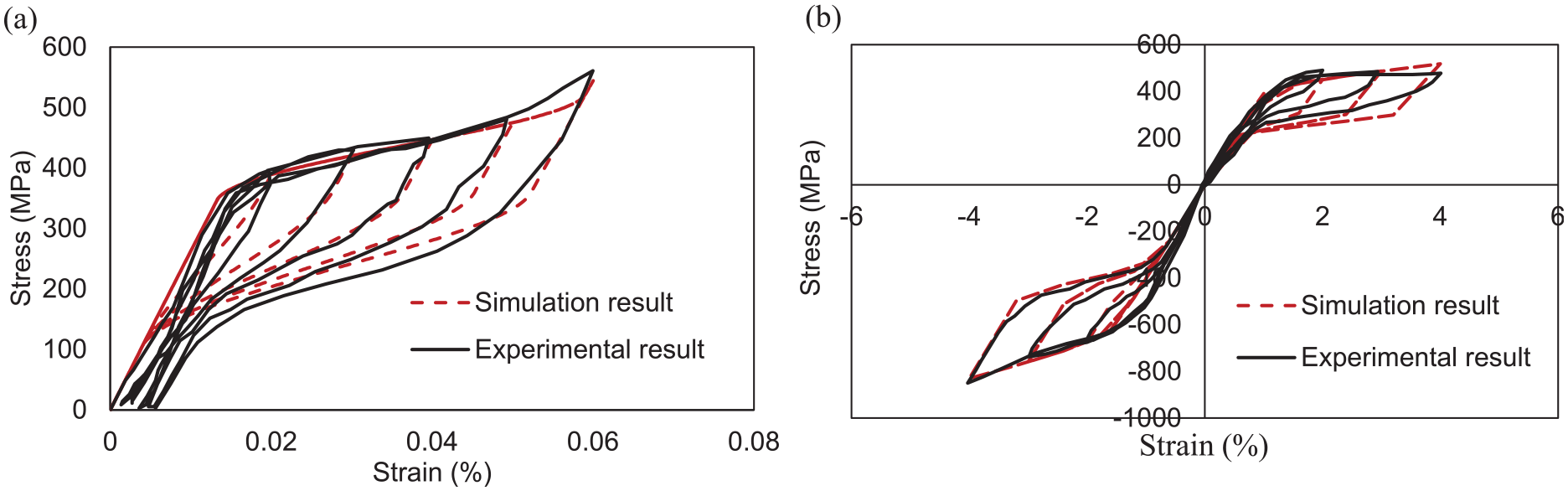
Comparison of the simulation results with experimental results: (a) DesRoches et al. (2004) and (b) Wang and Zhu (2018).
Low-cycle fatigue (LCF) loading, an experiment was conducted on a 12 mm NiTi SMA rebar. The specimen was machined into a dog-bone shape, reducing the diameter to 8 mm to ensure that failure would As no prior studies have investigated the cyclic behavior of NiTi SMA rebars under tension-compression occur within the 56 mm gage length. The rebar was tested under tension-compression cyclic loading at a strain amplitude of 4%. The experimental results were then used to verify the FE model. Figure 4 presents a comparison of the ABAQUS simulation results with the experimental data, demonstrating good agreement. The experimentally measured dissipated energy of the NiTi SMA rebar was approximately 1.2363
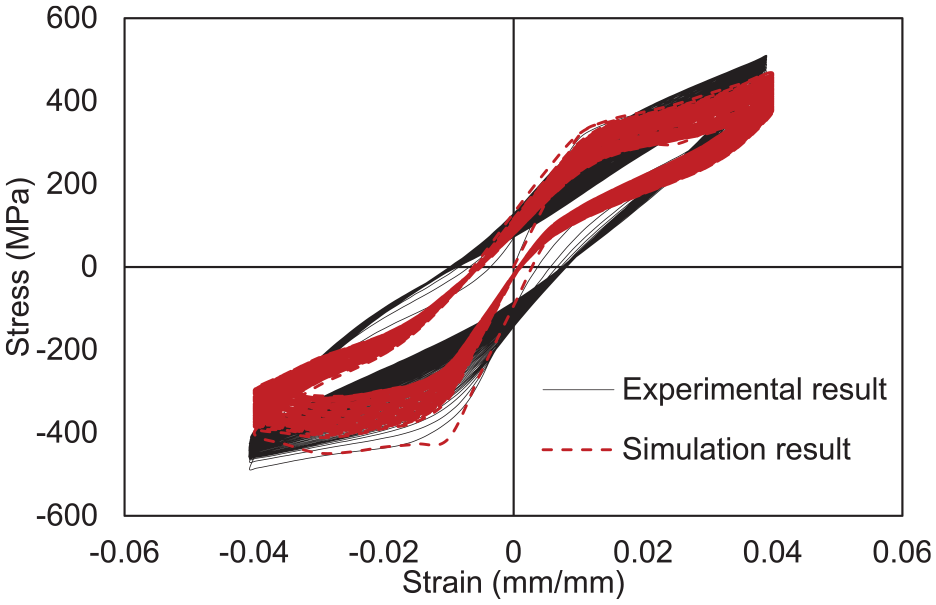
Verification of the simulation results with experimental results under cyclic loading.
3. Low cycle fatigue analyses on NiTi SMA reinforcing rebars
As discussed previously, the low cycle fatigue analyses have been conducted using FE software, ABAQUS. Ten, 12, and 15 mm NiTi SMA rebars with different slenderness ratios (L/D) have been analyzed under tension-compression cyclic loading with constant strain amplitude.
As discussed, the impact of buckling on the LCF behavior of NiTi SMA reinforcing bars is evaluated by increasing the length and considering various slenderness ratios. It should be noted that in RC members, the reinforcing bars are restraint by multiple tie spacings, and this behavior is influenced by the effective lateral restraint provided by the transverse reinforcement (Dhakal and Maekawa, 2002a). Thus, the LCF analyses have been conducted on NiTi SMA rebars of different lengths and slenderness ratios (L/D = 5, 7, and 10) under constant strain amplitude loading with the total strain amplitudes of 2%, 4%, 6%, 8%, and 10%. In this study, the slenderness ratios are selected to reflect the typical buckling lengths observed in ductile reinforced concrete (RC) structures that are designed and detailed according to seismic codes.
The NiTi SMA rebars have been analyzed under tension compression cyclic loading protocol as shown in Figure 5. The LCF analyses have been conducted with a constant mean strain ratio (R) of −1, where R is defined as:

In which,
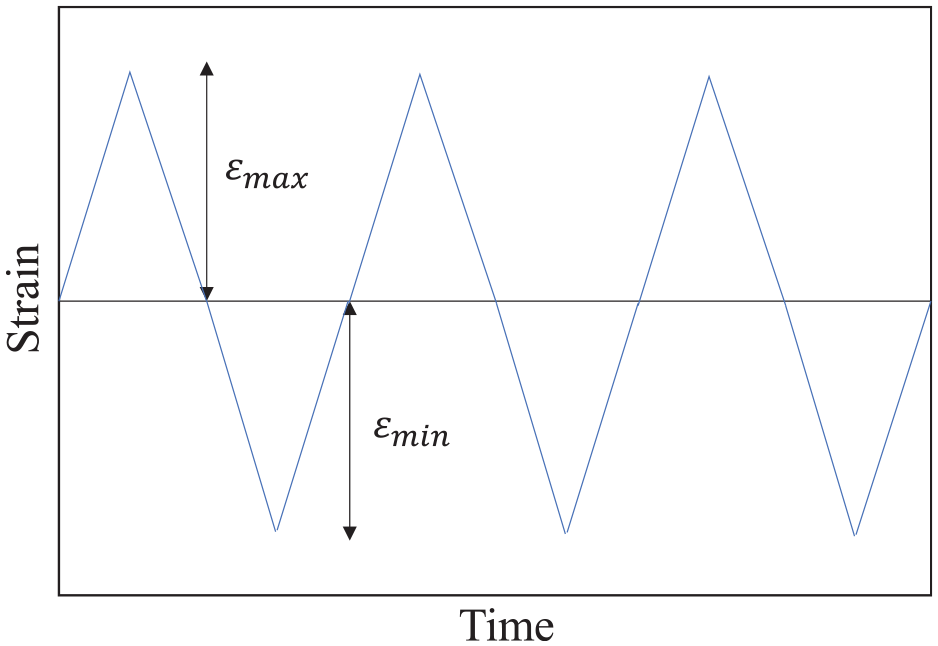
Tension-compression cyclic loading pattern.
3.1. Failure criteria
To investigate the LCF behavior and fatigue life of NiTi SMA rebars, it is necessary to consider some failure criteria. Three failure criteria were considered in this study. The analyses have been continued until one of the failure criteria listed below has been satisfied. The failure criteria are presented in Figure 6.
The tensile strength reaches 50% its strength as shown in Figure 6. When the tensile strength of a rebar degraded by 50%, it cannot perform efficiently (Aldabagh and Alam, 2021).
The branch of the stress-strain curve in compression reaches 0 as shown in Figure 6(b). It shows the failure of the rebar.
The area of stress-strain curve become a line and the dissipated energy becomes negligible as presented in Figure 6(a).
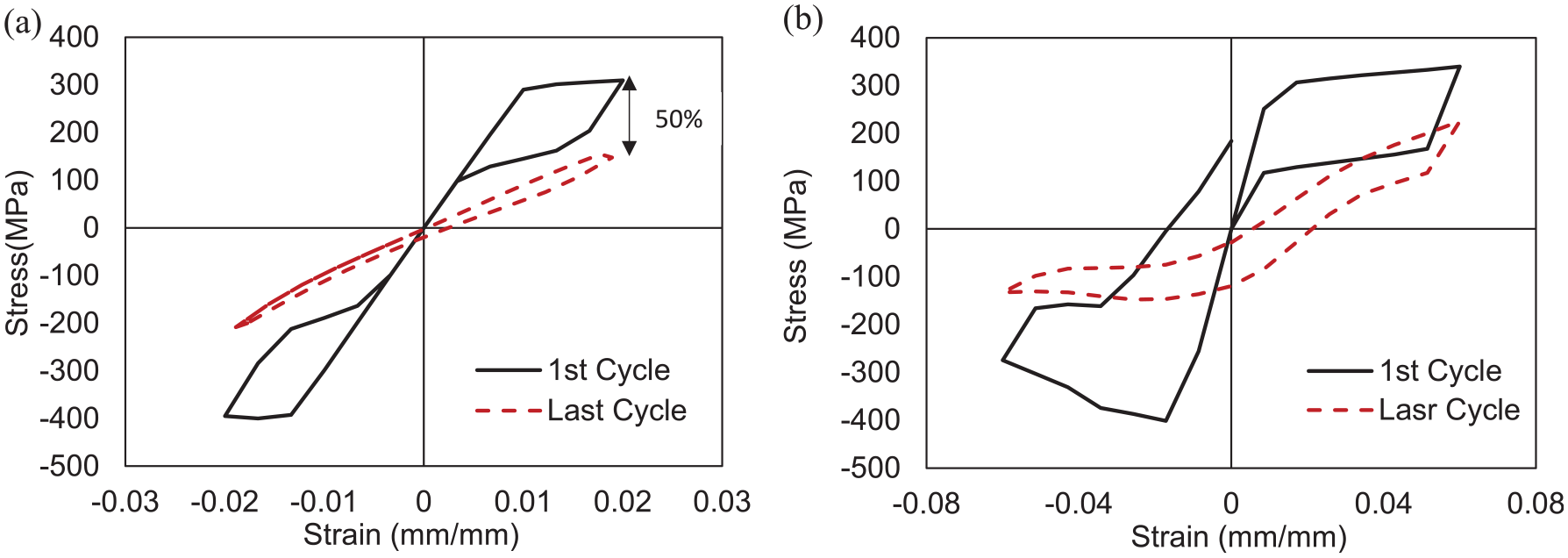
Failure criteria considered in this study: (a) first and third failure criteria and (b) second failure criteria.
4. Tension-compression response
Figure 7 compares the stress-strain curve of NiTi SMA rebars with different L/D under cyclic tension-compression loading with different strain amplitude (2%, 4%, 6%, 8%, and 10%) for the first cycle. As can be seen, the NiTi SMA rebar showed a flag shape behavior under tension compression cyclic loading. Under tensile loading within the elastic deformation regions, all NiTi SMA rebars displayed a similar trend. It shows that NiTi SMA rebar had similar austenite modulus of elasticity in the small deformation level. Also, the austenite modulus of elasticity was similar under compressive loading with strain amplitudes of 2%, 4%, and 6%. It is interesting to note that NiTi SMA rebar showed superelastic behavior when it was subjected to cyclic loading with strain amplitudes of 6% or smaller. Therefore, the superelastic behavior for NiTi SMA rebar under tensile loading below the strain amplitudes of 6% is evident. However, NiTi SMA rebars did not show superelastic behavior and lost their strength and stiffness rapidly when being under cyclic loading beyond 6% strain. When the NiTi SMA rebar was subjected to tensile loading with strain amplitude of more than 6%, the NiTi SMA rebar experienced noticeable residual strain. For example, according to Figure 7, the residual strains of the NiTi SMA rebar under strain amplitude ≤6% in tensile region were negligible (less than 0.1%); however, under strain amplitude of 8% and 10%, they were about 0.9% and 3%, respectively. It should be noted that the NiTi SMA rebar showed superelastic behavior at 6% strain amplitude and below due to the assumption in material definition of NiTi SMA rebar. Regarding to the assumption of
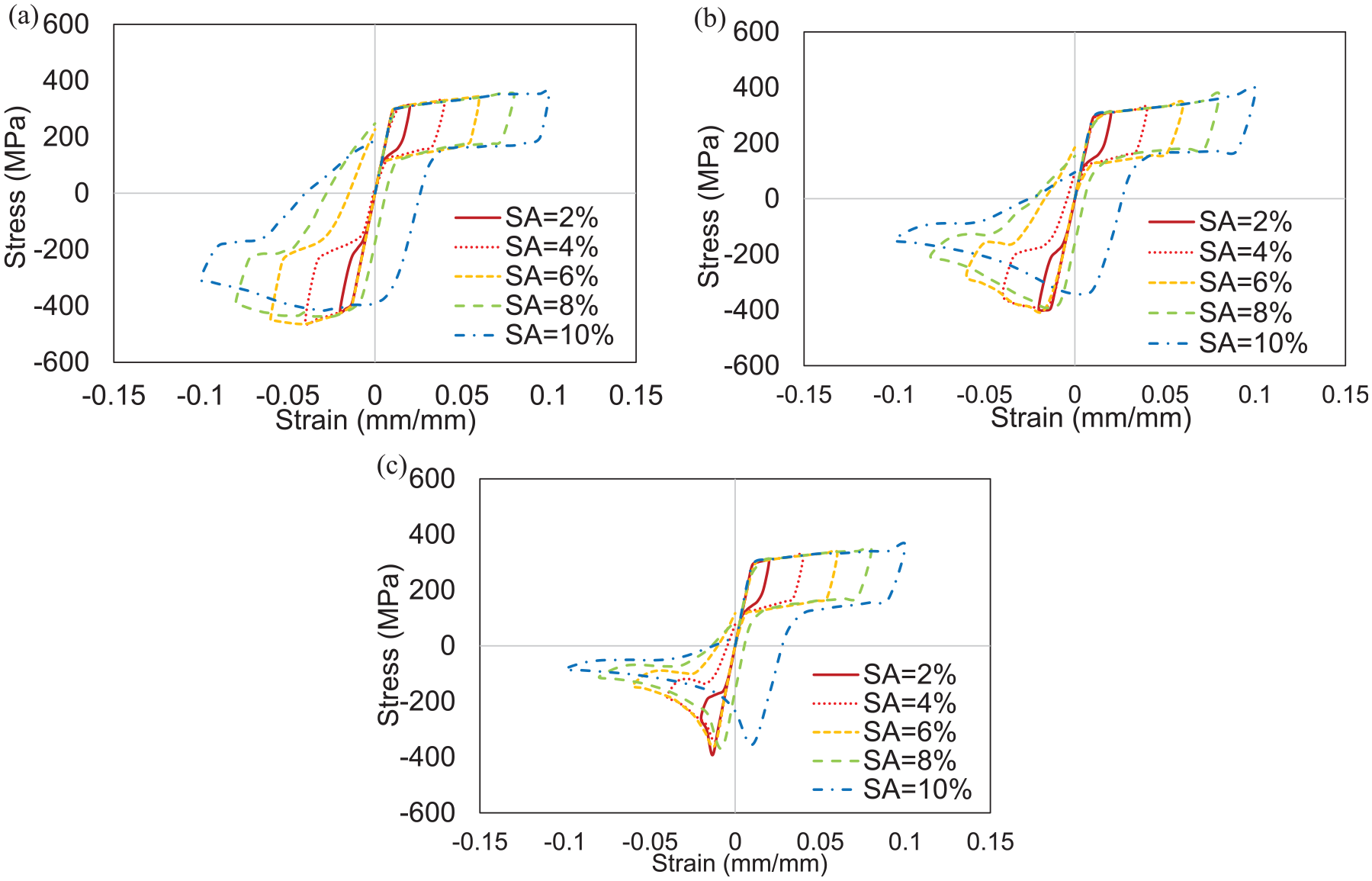
Stress-strain curve of NiTi SMA rebars under tension compression cyclic loading with different strain amplitude for one cycle (a) L/D = 5, (b) L/D = 7, and (c) L/D = 10.
Furthermore, according to Figure 7(b), it can be seen that the NiTi SMA rebar with L/D = 5 buckled when it was subjected to compressive loading with strain amplitudes more than 6%, whereas the NiTi SMA rebars with L/D = 7 and L/D = 10 buckled under the compressive loading with the strain amplitudes of more than 4% and 2%, respectively. Therefore, it can be found that that L/D and strain amplitudes are two important factors affecting the buckling of NiTi SMA rebars. Figure 8 illustrates the strain distribution along the cross section of a 10 mm NiTi SMA rebar under tensile and compressive loading. Under tensile loading at 4% strain, the entire cross section uniformly experiences 4% tensile strain, indicating a consistent deformation across the diameter. In contrast, under compressive loading at 4% strain, the strain distribution becomes non-uniform due to buckling: approximately 6 mm of the cross section is under compressive strain, while the remaining 4 mm experiences tensile strain. This behavior, influenced by buckling, highlights the rebar’s response to axial compression, and its transition from compression to tension across the neutral axis.
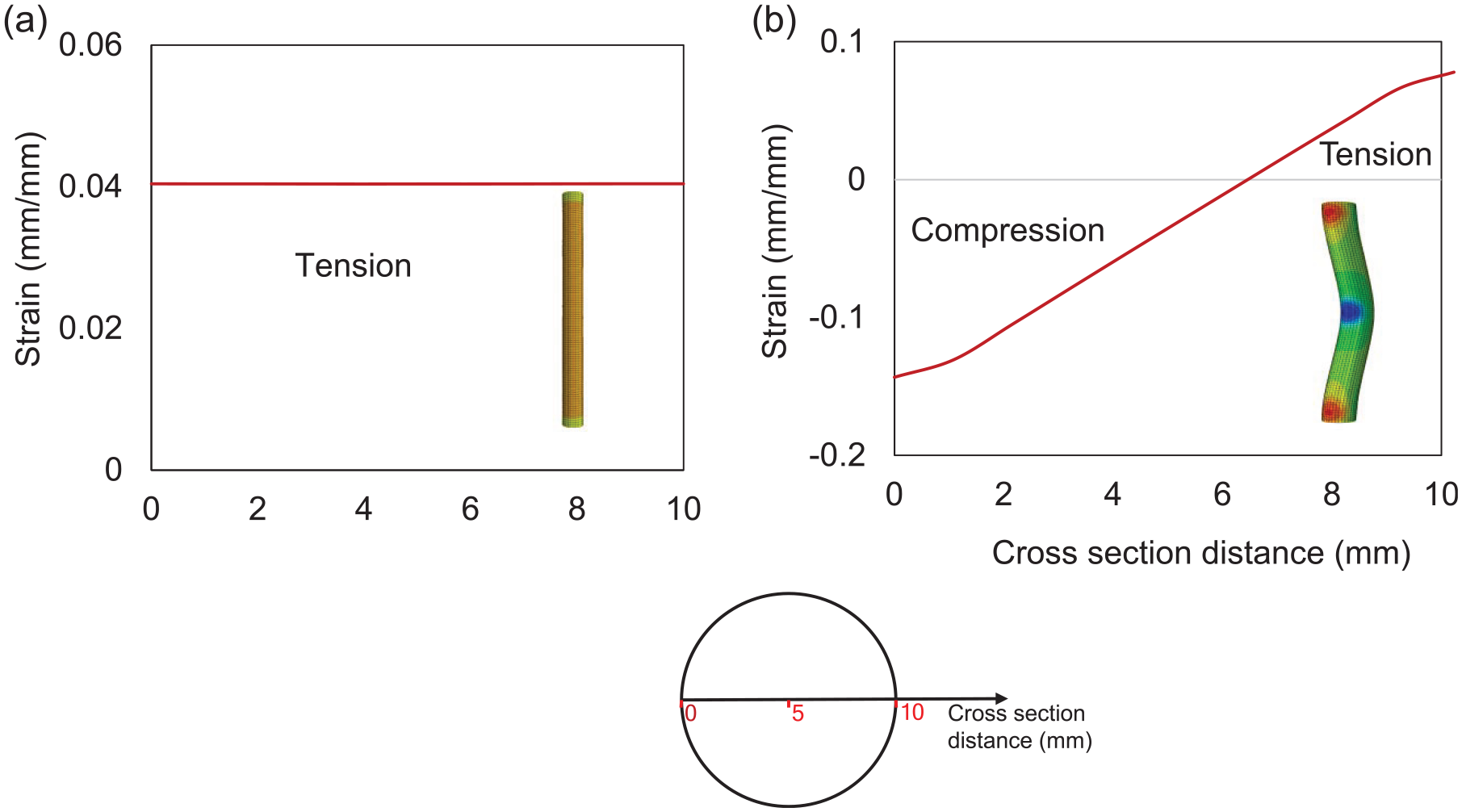
Strain distribution along cross section of the 10 mm NiTi SMA rebar under 4% tension compression cyclic loading(a) tensile loading (b) compressive loading.
This behavior also can be observed for NiTi SMA rebars with other diameters (12 and 15) and strength (
5. Low cycle fatigue investigation
Figure 9 illustrates the cyclic behavior of 10 mm NiTi SMA rebar under tension-compression cyclic loading with different strain amplitudes. As can be seen, the values of E,
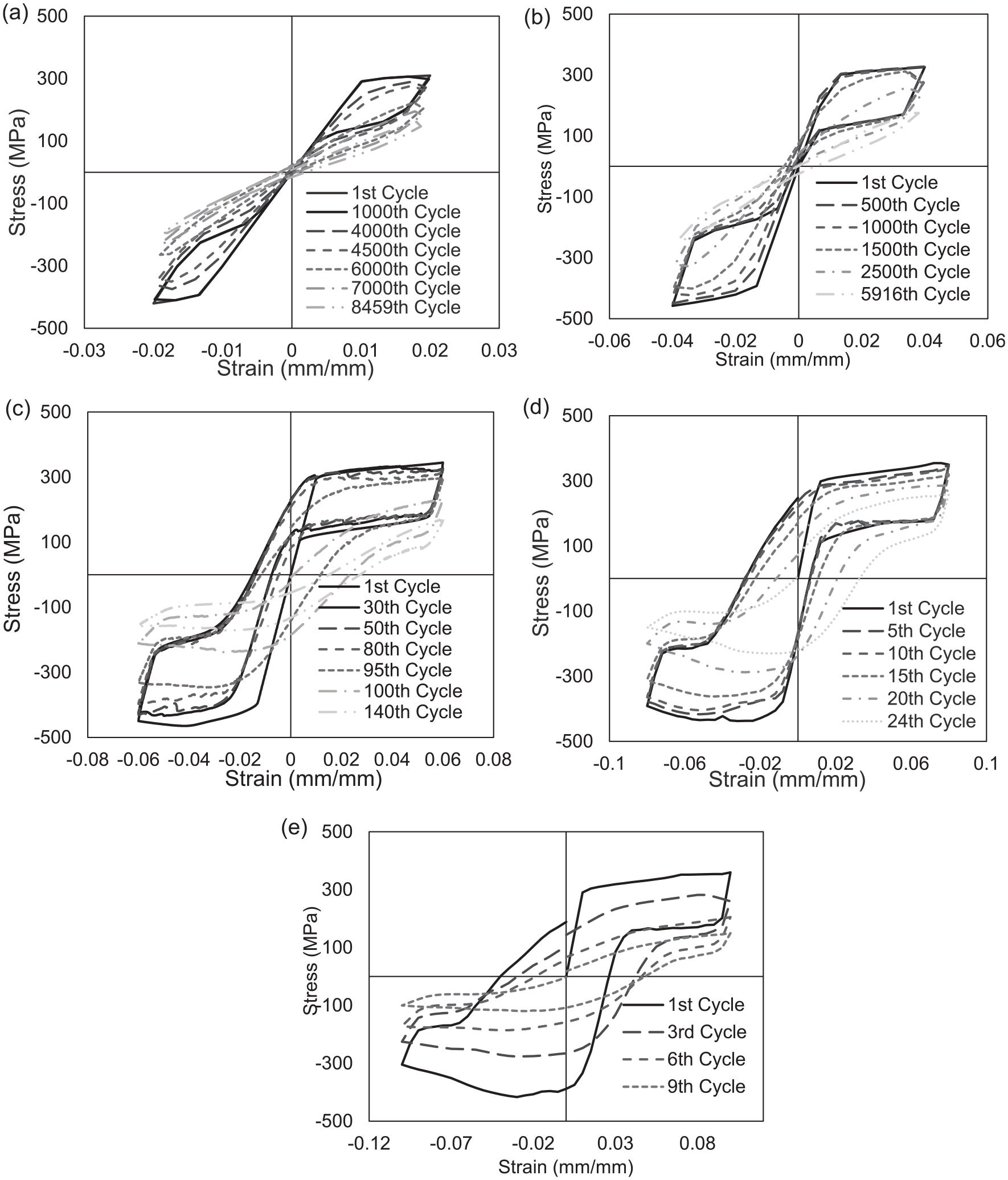
Behavior of NiTi SMA rebars under tension-compression LCF loading with strain amplitude of (a) 2%, (b) 4%, (c) 6%, (d) 8%, and (e) 10%.
It is interesting to note that the NiTi SMA rebars with L/D = 5 did not buckle at the first cycle when they are under tension compression cyclic loading with strain amplitudes of 2% and 4%. The rebar started buckling after about 4000 and 1000 cycles, respectively. The loss of strength and stiffness of the rebars under several cycles resulted in buckling of the rebars. When the slenderness of the rebar increased, the buckling occurred in the first cycle. Furthermore, according to Figure 9, the NiTi SMA rebars experienced residual strain under LCF loading. The amount of residual strain that the NiTi SMA rebar experienced under cyclic loading with 2% strain amplitude was negligible; however, this value increased when the rebar was under cyclic loading with higher strain amplitude. For example, with regard to Figure 9(e), the residual strain of the NiTi SMA rebar under 10% strain amplitude was about 3%, which is a significant amount. This shows that under large strain amplitudes such as 8% and 10%, NiTi SMA rebars do not display self-centering behavior as expected from SE NiTi SMA.
In the following sections, the LCF behavior of NiTi SMA rebars in terms of E,
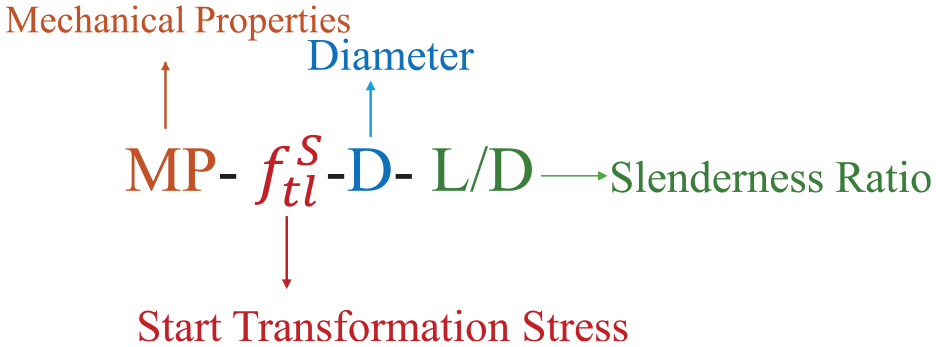
Naming convention of the FE models.
5.1. Modulus of elasticity (E)
Figure 11 shows the changes in modulus of elasticity for the 10 mm NiTi SMA rebars with different slenderness ratios under LCF tension-compression loading with different strain amplitudes. As shown, the modulus of elasticity of the 10 mm NiTi SMA rebar decreased under tension compression cyclic loading and the rebars lost their stiffness. According to Figure 11(a), E-300-10-5 NiTi SMA rebar under LCF loading with strain amplitude of 2%, E degraded from 30 to 10 GPa at about 8000 cycles (the modulus of elasticity decreased by 67%). However, for E-300-10-7 and E-300-10-10, E degraded at approximately 6500 and 3500 cycles, respectively. Therefore, when slenderness ratios of the rebar increased, the modulus of elasticity degraded in lower number of cycles because of buckling. With regards to Figure 11(b) to (e), it is obvious that the modulus of elasticity of NiTi SMA rebars with different slenderness ratios decreased under tension compression LCF loading; however, with an increase in strain amplitude, the degradation of modulus of elasticity occurred in lower number of cycles. In other words, the modulus of elasticity of NiTi SMA rebars with lower slenderness ratio (L/D = 5) under tension-compression cyclic loading with lower strain amplitude (SA = 2%) degraded gradually in higher number of cycles, whereas the modulus of elasticity of slender NiTi SMA rebars under loading with higher strain amplitude (SA = 10%) decreased suddenly in significantly lower number of cycles. For example, Figure 11(e) shows that the elastic modulus of E-300-10-10 under strain amplitude of 10% decreased from 30 GPa to approximately 5 GPa in two cycles. This sudden decrease in modulus of elasticity can be attributed to the buckling caused by high slenderness ratio of the NiTi SMA rebar and high strain amplitude loading.
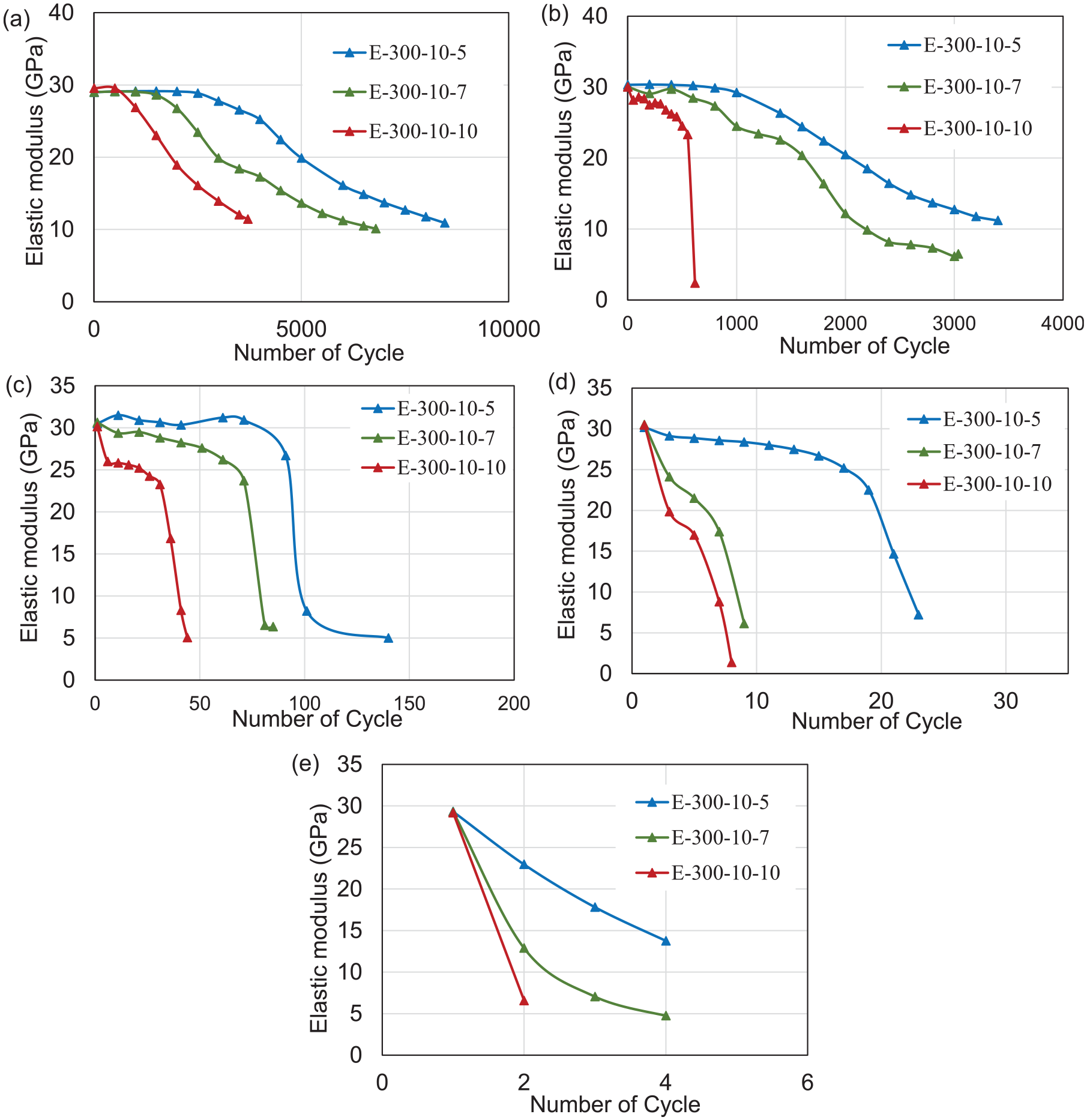
Effects of tension compression LCF loading with different strain amplitudes on the elastic modulus of 10 mm NiTi SMA rebars (a) SA = 2%, (b) SA = 4%, (c) SA = 6%, (d) SA = 8%, and (e) SA = 10%.
5.2. Tensile stress
In this section, the effects of tension compression LCF loading on
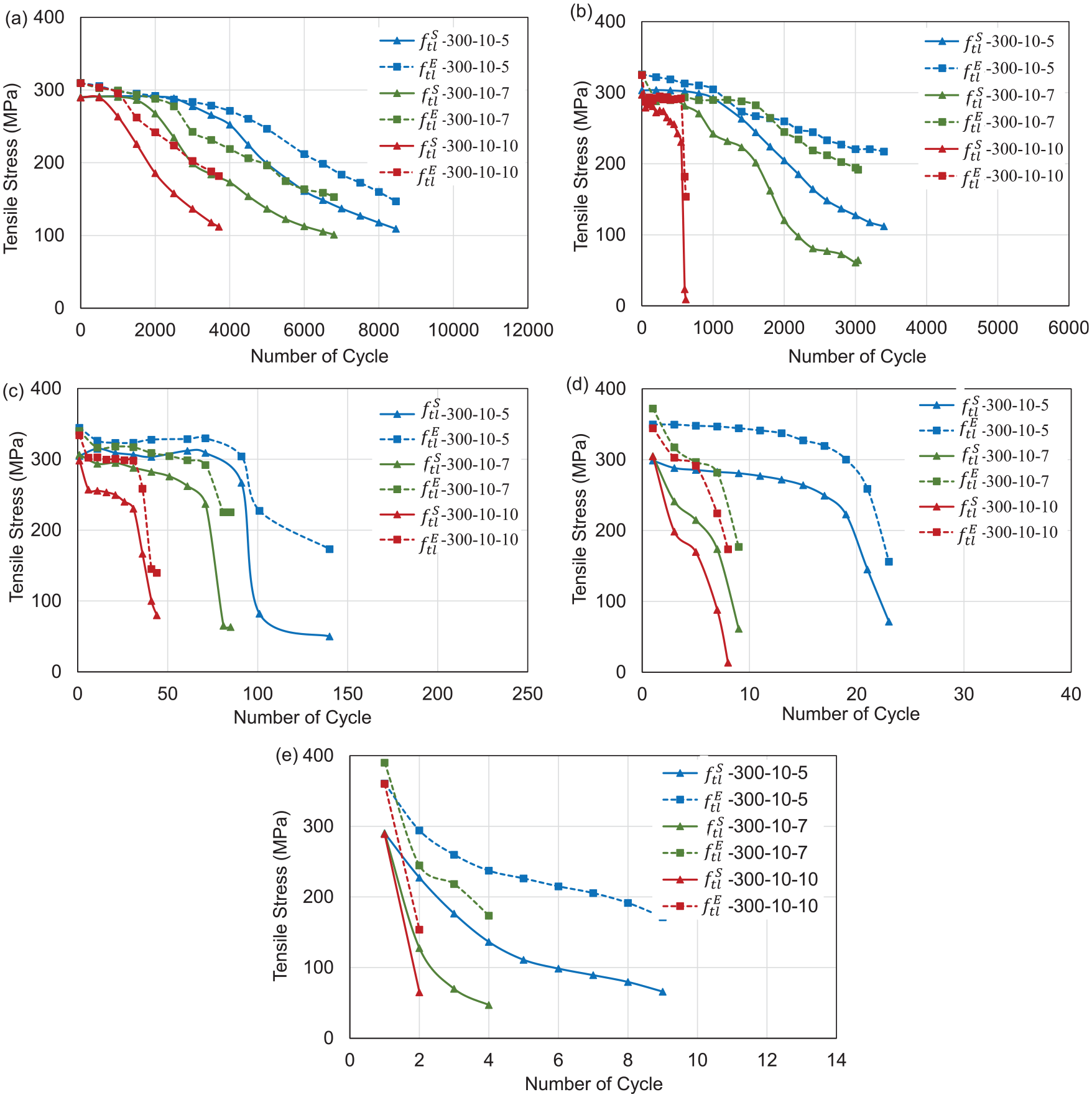
Effects of tension-compression LCF loading with different strain amplitudes on
5.3. Compressive stress
Figure 13 compares the effects of tension-compression LCF loading on
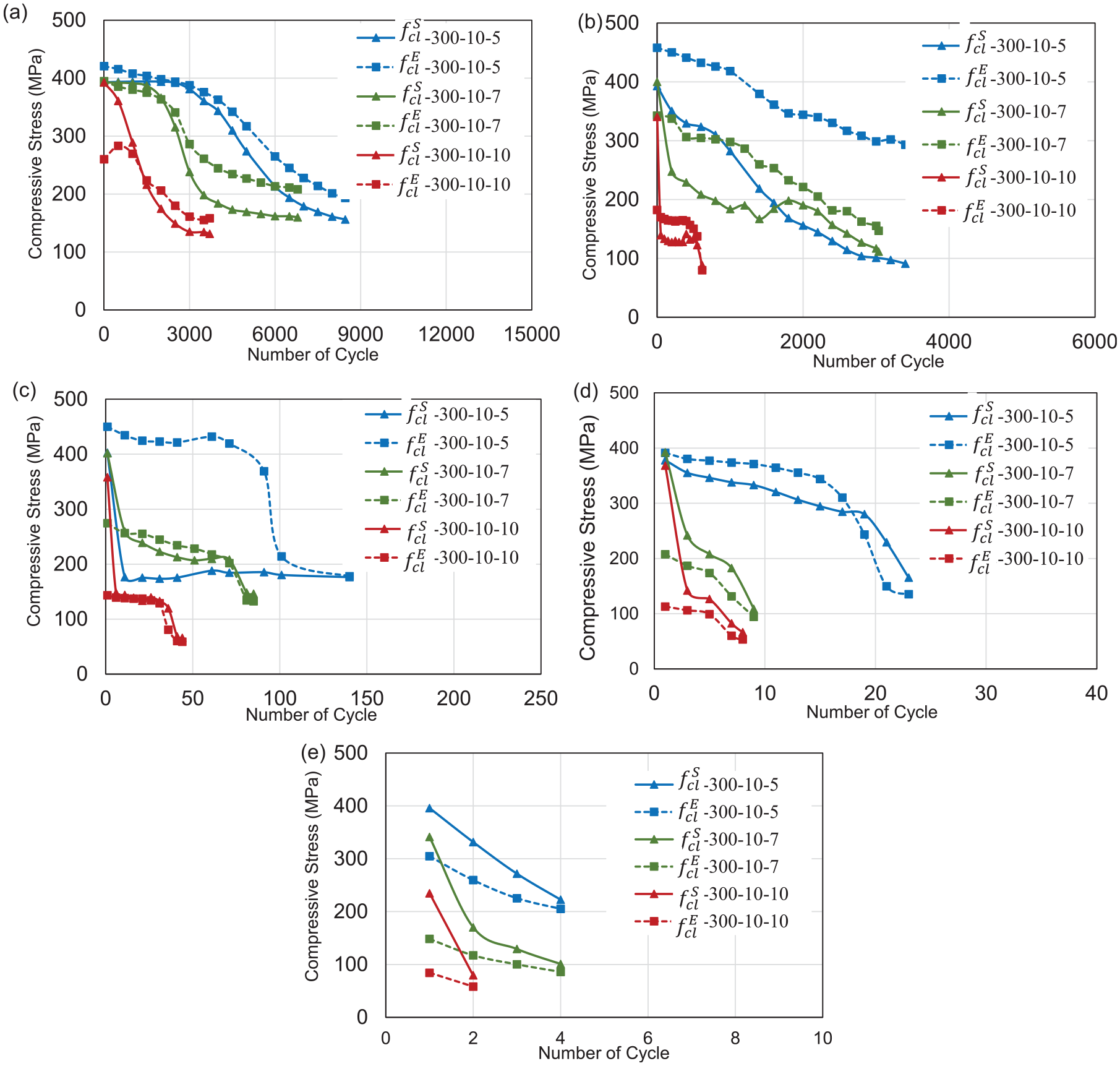
Effects of tension-compression LCF loading with different strain amplitudes on
Furthermore, with regard to Figure 13(d), it can be seen that 10 mm NiTi SMA rebar experienced buckling after 18 loading cycles with strain amplitude of 8% and the compressive stress plateau became negative as the value of
6. Superelasticity and energy dissipation capacities of NiTi SMA
As previously discussed, NiTi SMA rebars have gained popularity in structural engineering applications due to their ability to dissipate earthquake energy and exhibit superelastic behavior without experiencing residual strain. However, under earthquake loading, the superelasticity and energy dissipation capabilities of NiTi SMA rebars diminish. Therefore, it is crucial to investigate the variations in energy dissipation capability and residual strain that NiTi SMA rebars undergo when subjected to tension-compression LCF loading.
6.1. Energy dissipation
Figure 14 compares the energy dissipation of NiTi SMA rebars with different slenderness ratios under tension compression cyclic loading. As shown in Figure 14, the amount of energy dissipated by NiTi SMA rebars decreased when the rebars were under tension-compression LCF loading. According to Figure 14(a), 10 mm NiTi SMA rebars with L/D = 5, 7, and10 under tension compression loading cycle with 2% strain amplitude dissipated about 0.003
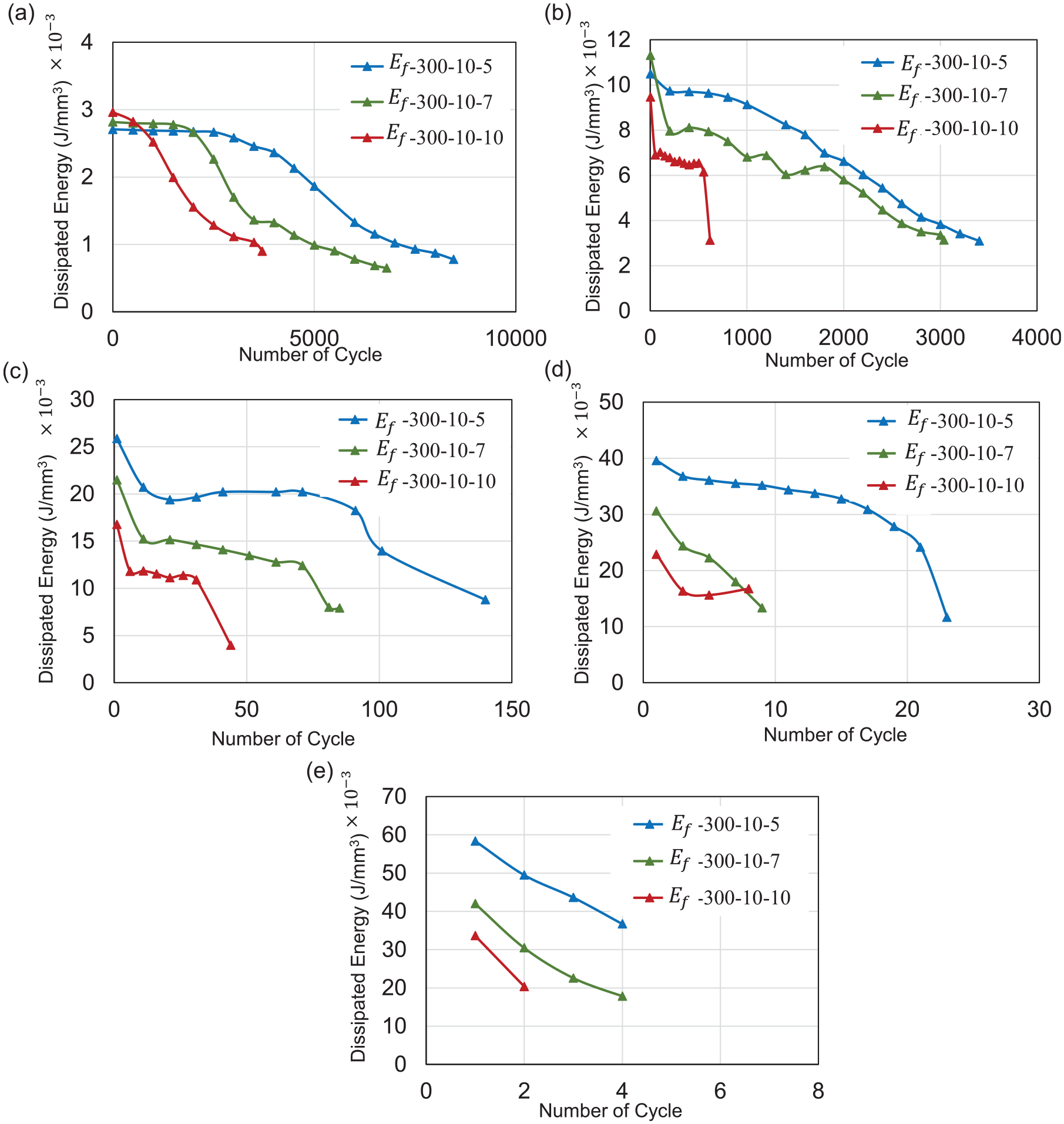
Effects of tension-compression LCF loading with different strain amplitudes on energy dissipated per cycle by 10 mm NiTi SMA rebars (a) SA = 2%, (b) SA = 4%, (c) SA = 6%, (d) SA = 8%, and (e) SA = 10%.
Figure 14(b) illustrates the amount of dissipated energy under 4% strain amplitude. NiTi SMA rebars with L/D = 5, 7, and 10 dissipated 0.01
According to Figure 14(e), 10 mm NiTi SMA rebars with L/D = 5, 7, and10 under LCF loading with strain amplitude of 10% experienced a decrease of dissipated energy per cycle from approximately 0.06, 0.04, and 0.03
It is interesting to note that when NiTi SMA rebars were subjected to cyclic loading with lower strain amplitude, NiTi SMA rebar did not buckle and the hysteresis curve became a line, thus decreasing the amount of dissipated energy. However, for higher strain amplitude, since the NiTi SMA rebars buckled, and resulted in a sudden failure, the last cycle dissipated a larger amount of energy. Therefore, it can be concluded that when the NiTi SMA rebar buckles, the full capacities of the NiTi SMA rebar cannot be utilized.
Figure 15 illustrates the effects of L/D and strain amplitudes on total dissipated energy of NiTi SMA rebrs under tension-compression cyclic loading. According to Figure 15(a), the amount of dissipated energy for 10 mm NiTi SMA rebar with L/D = 5 under cyclic loading with strain amplitude of 2% was just under 30
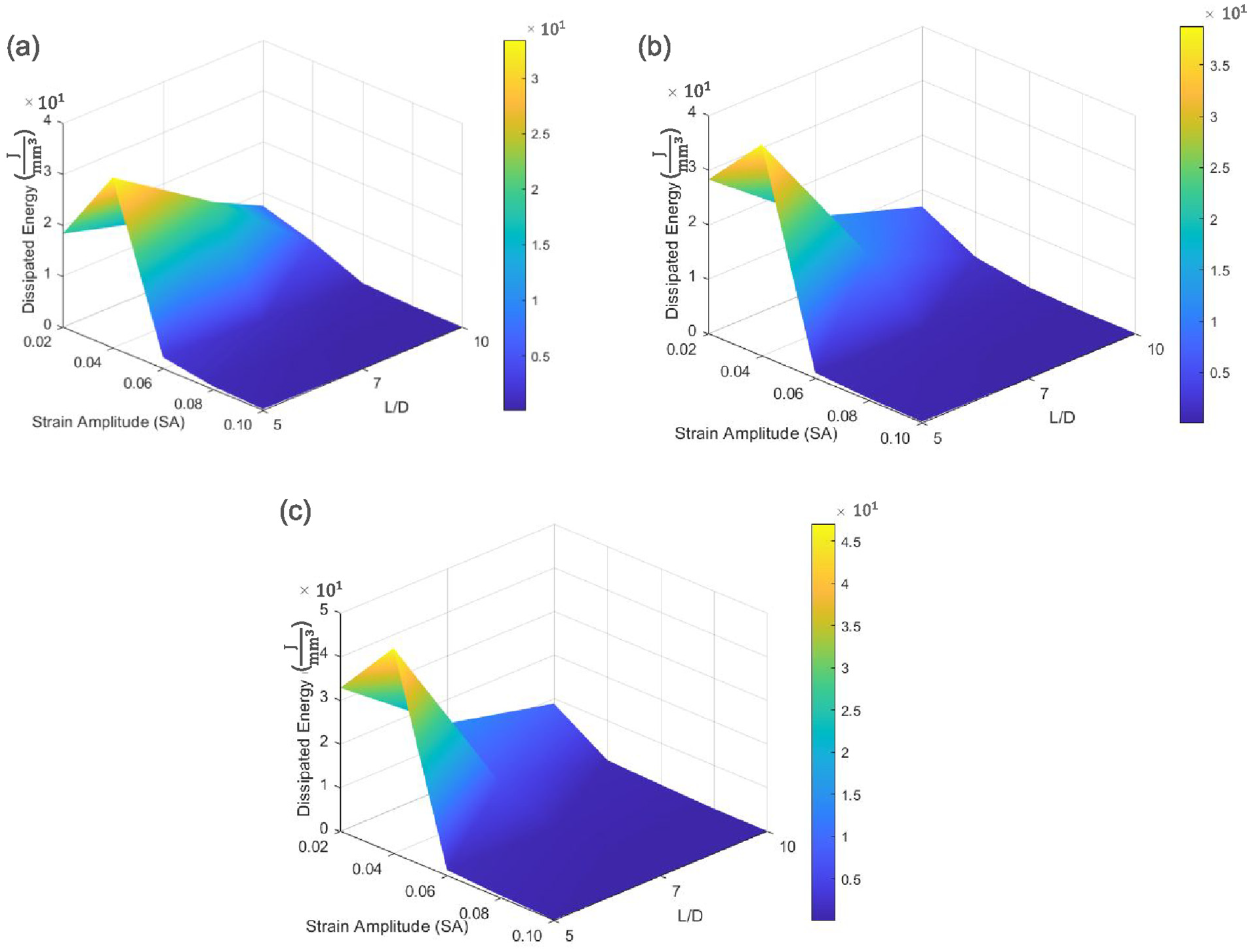
Effects of L/D and strain amplitude on energy dissipated by NiTi SMA rebars under tension-compression LCF loading (a) D = 10 mm, (b) D = 12 mm, (c) D = 15 mm.
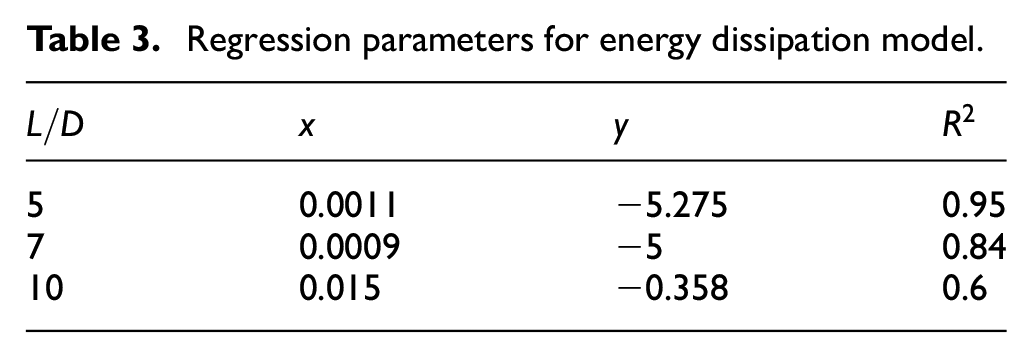
According to Figure 15, it is found that the amount of dissipated energy depends on slenderness ratio of the NiTi SMA rebar and strain amplitude of tension compression cyclic loading. Therefore, equation (2) is proposed to predict the total amount of energy dissipated by NiTi SMA rebar under tension-compression cyclic loading with different strain amplitudes. The amount of dissipated energy for NiTi SMA rebar with a specific slenderness ratio and different diameter and strength and related strain amplitude was plotted. Figure 16 shows the amount of dissipated energy versus strain amplitude for NiTi SMA rebar with different slenderness ratios. Then, a power regression line was fitted to the data for each slenderness ratio. The equation for the prediction of the energy dissipated by NiTi SMA rebar is as follows:

In which,
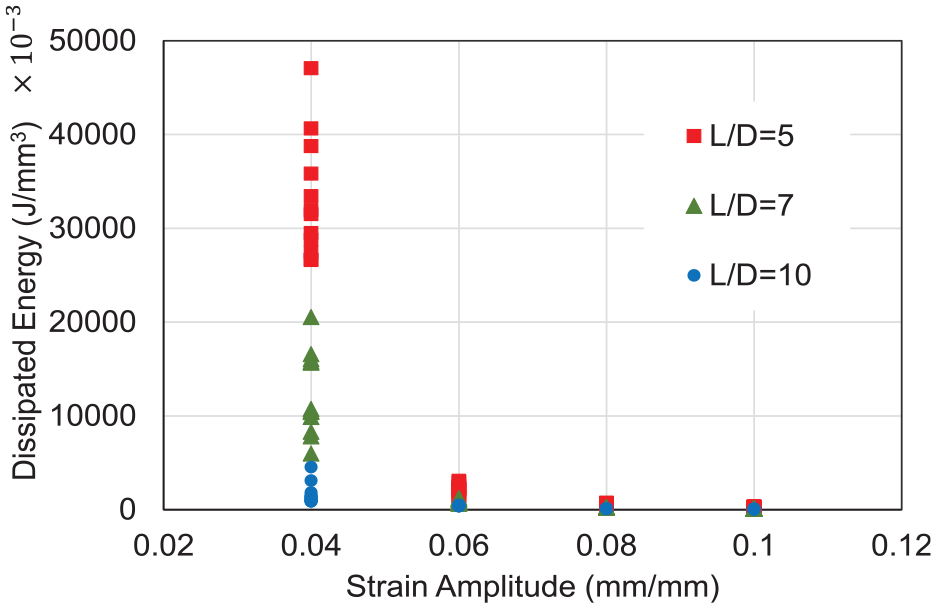
Energy dissipated by NiTi SMA rebars versus strain amplitude.
Regression parameters for energy dissipation model.
6.2. Residual strain
It is expected that the NiTi SMA rebar returns to original shape when loaded at or below 6% strain amplitude and unloaded, showing superelastic behavior. This feature of NiTi SMA rebar is interesting for structural engineering application, specifically as a reinforcing rebar in plastic hinge areas, since the rebar can dissipate earthquake energy without experiencing damage. However, tension-compression LCF loading under different strain amplitudes (ranged from 2% to 10%) can affect the residual strain experienced by the rebar. Since reinforcing rebars experience strain reversals in tension and compression under earthquake loadings, it is necessary to evaluate the residual strain of NiTi SMA rebars with different residual strains under tension compression cyclic loading with different strain amplitudes.
Figure 17 shows the effects of L/D and strain amplitude on residual strain of NiTi SMA rebars under LCF loading. Regarding Figure 17(a), 10 mm NiTi SMA rebar with L/D = 5 experienced an increase from a negligible residual strain under loading with 2% strain amplitude to about 3% residual strain when the NiTi SMA rebar was under tension-compression cyclic loading with strain amplitude of 6%. It also shows that from 6% strain amplitude to 10% strain amplitude, the residual strain increased significantly to approximately 5%. Therefore, NiTi SMA rebars experienced a negligible residual strain under tension-compression cyclic loading with strain amplitude at or below 4%. However, when strain amplitude increased the residual strain increased due to the strength degradation and occurrence of buckling.
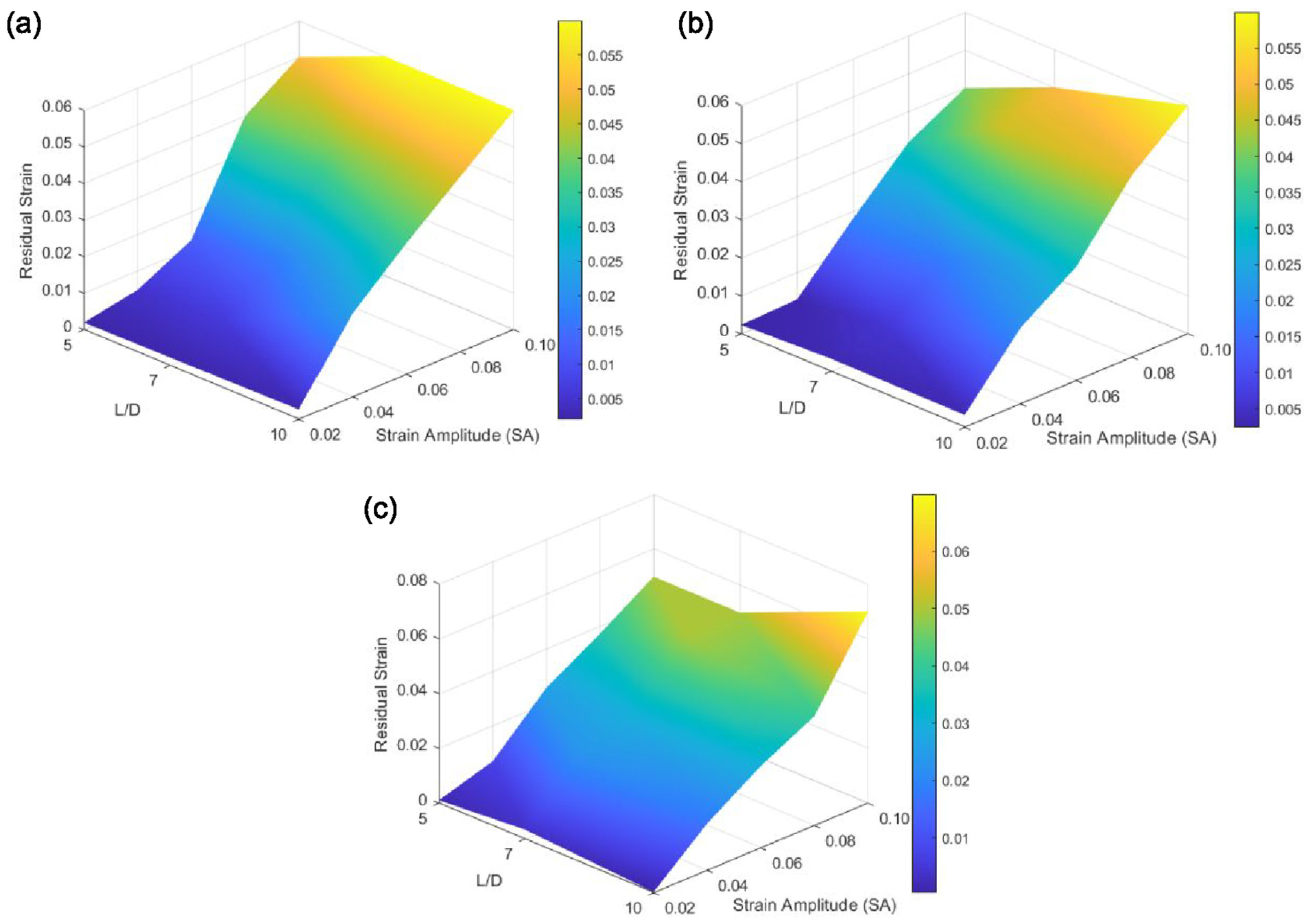
Effects of L/D and strain amplitude on residual strain by NiTi SMA rebars under tension-compression LCF loading (a) D = 10 mm, (b) D = 12 mm, (c) D = 15 mm.
Furthermore, it can be seen in Figure 17 that he residual strain of NiTi SMA rebar was not affected by slenderness ratios as no trend can be found between the slenderness ratio and the residual strain of the NiTi SMA rebars. For example, the 10 mm NiTi SMA rebar with L/D = 5 experienced residual strain of about 1.2% under LCF loading with strain amplitude of 6%. However, when the slenderness of the NiTi SMA rebar increased to 7 and 10, the residual strain increased to about 1.7% and 3.6%. This shows that buckling affects the residual strain experienced by NiTi SMA rebars.
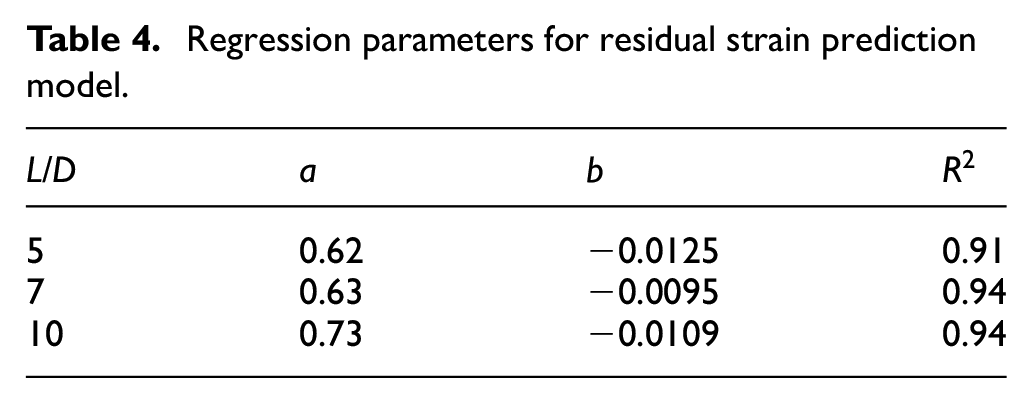
According to Figure 17, it is notable that NiTi SMA rebar with varying diameters and slenderness ratios exhibited negligible residual strain under tension-compression cyclic loading with 4% strain amplitude. Under strain amplitudes at or below 4%, the L/D had no significant impact on the residual strain of NiTi SMA rebar. However, at higher strain amplitudes, the residual strain increased, and this increase was more pronounced with higher slenderness ratios due to the effects of buckling. Since the residual strain indicates the damage experienced by NiTi SMA rebar and the degradation of its superelastic capabilities and is related to both the L/D ratio and strain amplitude, it is important to predict the amount of residual strain that NiTi SMA rebars experience during their LCF life under tension-compression cyclic loading with different strain amplitudes. In this study, the residual strain for all rebars with different diameters and strengths was correlated to strain amplitude, and a linear regression was fitted to the data with different slenderness ratios. The equation to predict the residual strain that NiTi SMA rebar experiences under tension-compression cyclic loading is presented as shown in equation (3):

In which,
Regression parameters for residual strain prediction model.
7. Conclusion
This study investigated the low-cycle fatigue (LCF) behavior of NiTi shape memory alloy (SMA) rebars with varying diameters and slenderness ratios (L/D) under tension-compression cyclic loading at different strain amplitudes (SA = 2%, 4%, 6%, 8%, and 10%). The LCF behavior of NiTi SMA rebars was investigated in terms of E,
NiTi SMA rebars is expected to show a flag shaped stress-strain response when subjected to cyclic loading in tension and compression. They demonstrated superelasticity up to a strain amplitude of 6%. Beyond this strain amplitude, they experienced a decline in both strength and stiffness, demonstrating substantial residual strain.
The buckling occurrence of NiTi SMA rebars at the first cycle depends on the L/D and SA: rebars with L/D = 5 buckled at strain amplitudes greater than 6%, rebars with L/D = 7 buckled at strain amplitudes greater than 4%, and rebars with L/D = 10 buckled at strain amplitudes greater than 2%. The observed behavior remained the same for different sizes and strengths of the material, emphasizing the significance of the length-to-diameter ratio and the amount of strain applied in determining the effectiveness and durability of NiTi SMA rebars.
The LCF behavior of NiTi SMA rebars under tension-compression LCF loading was significantly influenced by the impacts of L/D and SA. Under lower SA, NiTi SMA rebars with a slenderness ratio of five showed delayed buckling; under higher strain amplitudes, however, they buckled sooner. NiTi SMA rebar with higher slenderness ratios also experienced buckling in the first cycle of loading, experiencing failure in fewer number of cycles.
Under tension-compression cyclic loading, NiTi SMA rebars experienced a degradation in E,
The energy dissipation capacity of NiTi SMA rebars under tension-compression cyclic loading decreases over cycles, with higher strain amplitudes and slenderness ratios accelerating this reduction due to the occurrence of buckling. The NiTi SMA rebars under loading with lower strain amplitudes showed minimal energy dissipation due to smaller area of hysteresis curve, whereas under loading with higher strain amplitudes led to significant energy dissipation because of larger area of hysteresis curve.
NiTi SMA rebars superelastic behavior, returning to their original shape after being loaded and unloaded below 6% strain amplitude, makes them ideal for structural applications like reinforcing rebars in plastic hinge areas, dissipating earthquake energy without damage. However, under tension-compression LCF loading at strain amplitudes ranging from 2% to 10%, residual strain increased, particularly at higher amplitudes. This increase was significant as it affects the rebar’s superelastic capabilities and overall performance.
NiTi SMA rebars experienced negligible residual strain at 2% strain amplitude, regardless of slenderness ratio, but residual strain increases significantly at higher strain amplitudes, especially with higher slenderness ratios due to buckling. Predicting residual strain is essential as it indicates the damage and degradation of superelastic properties in NiTi SMA rebars. An equation was developed to predict residual strain under tension-compression cyclic loading with different strain amplitudes, considering slenderness ratios.
Footnotes
Acknowledgements
The Natural Sciences and Engineering Research Council (NSERC) of Canada through the Discovery Grant supported this study. The financial support is greatly appreciated.
Declaration of conflicting interests
The authors declared no potential conflicts of interest with respect to the research, authorship, and/or publication of this article.
Funding
The author(s) disclosed receipt of the following financial support for the research, authorship, and/or publication of this article: The Natural Sciences and Engineering Research Council (NSERC) of Canada through the Discovery Grant supported this study. The financial support is greatly appreciated.

Data availability statement
The data that support the findings of this study are available from the corresponding author, [MB], upon reasonable request.