



Abstract
In this paper, we propose a novel two-degree-of-freedom (TDOF) nonlinear energy harvester without internal resonance to realize broadband harvesting characteristic. To show the performance, a TDOF nonlinear electromagnetic harvester is designed. The electromechanical coupling system is established and solved by adopting the harmonic balance method. The modulation equations are constructed, the first-order harmonic solutions of the system are obtained and the frequency response curves of the displacement and current are plotted. The advantage of the proposed harvester is compared to the conventional single-degree-of-freedom (SDOF) nonlinear model and the corresponding TDOF linear system, the results achieve that the proposed scheme can enhance the bandwidth of the harvesting energy. Furthermore, the influences of system parameters on the response are discussed. The accuracy of the first-order harmonic results is revealed by numerical simulations. To further demonstrate the accuracy of analytical solutions, the finite element simulation is constructed in ANSYS finite element analysis (FEA) software. The performance predictions from the analytical solutions are compared with results from FEA. It is convincingly demonstrated that periodic solutions have a degree of good consistency for the behavior of frequency response curves.
1. Introduction
In recent years, vibration-based energy harvesting has attracted wide attention as a promising method to convert kinetic energy into electrical energy. One limitation of conventional linear harvesters is that they are only work efficiently near resonance area. That is, the excitation frequency is near the natural frequencies, which severely limits their useful working range to obtain high output power. Whereas various nonlinear techniques have been revealed to be efficient for solving the bandwidth restriction issue of linear harvesters. In light of this, there are many review papers about nonlinear energy harvesting, such as Tang et al. (2010), Pellegrini et al. (2013), Harne and Wang (2013), Daqaq et al. (2014), Wei and Jing (2017), Yang et al. (2018), and Yang et al. (2021).
On the other hand, the multiple modes are proven to be able to achieve broadband energy harvesting. It mainly includes the linear multi-degree of freedom systems (Aldraihem and Baz, 2011; Erturk et al., 2009; Kim et al., 2011; Shahruz, 2006; Tadesse et al., 2009; Yang et al., 2009) and nonlinear multi-degree of freedom systems with different internal resonance relationships, such as two-to-one internal resonance (Cao et al., 2015; Chen and Jiang, 2015; Chen et al., 2016; Fan et al., 2022a; Jiang et al., 2016; Karimpour and Eftekhari, 2020; Liu and Gao, 2019; Nie et al., 2019; Rocha et al., 2017; Wu et al., 2017, 2018; Xiong et al., 2018; Yang and Towfighian, 2017a, 2017b; Yan and Hajj, 2017), three-to-one internal resonance (Garg and Dwivedy, 2019; Shi et al., 2022), and one-to-one internal resonance (Jiang et al., 2020), and nonlinear systems without internal resonance (Wu et al., 2022). Although the linear multi-degree-of-freedom systems has multiple peaks, it only has efficient harvesting performance near the natural frequency. In addition, the internal resonance in the nonlinear systems only has a wider bandwidth near the primary resonance frequency. To date, how to achieve the harvester to realize broadband oscillations remains an important problem in harvester design. Wu et al. (2014) designed a two-degree-of-freedom nonlinear harvester and demonstrated the proposed scheme can achieve wider bandwidth between two natural frequencies. Cao et al. (2021) designed a vibro-impact piezoelectric energy harvester and obtained the broadband amplitude-frequency response curve of bimodal by using an approximate analytical method. Jiang et al. (2022) explored a novel one-to-one internal resonance to scavenge flow energy from vortex-induced vibrations, the mechanism of synchronous oscillations was introduced by the amplitude-frequency relationship. Aravindan and Ali (2021) analyzed the nonlinear dynamics behaviors and harvesting performance of a one-to-three internally resonant piezoelectric cantilever beam with a lumped mass under harmonic excitation and showed that the higher mode invoked through internal resonance plays a significant role in broadband power generation. Fan et al. (2022b) presented an internal resonance piezoelectric energy harvester with three-dimensional coupled bending and torsional modes and shown that the fine-tuned system leverages a two-to-one internal resonance between its first torsion and second bending modes to enhance the power output. Huang et al. (2023) designed a TDOF U-shaped single magnet bistable energy harvester based on the internal resonance technique and demonstrated the proposed system can produce a significant output in two frequency ranges. Xu and Zhao (2022) introduced a novel TDOF galloping energy harvester with 2:1 internal resonance for efficient dual-source energy harvesting, and obtained that at the wind speed of
The existing papers mainly focus on nonlinear systems with internal resonance and a small part of the literature focuses on systems without internal resonance. However, internal resonances only have broadband characteristics near first-order and second-order primary resonances. The performance of the entire modal band range is unclear. Therefore, the main motivation of this paper is to present a novel TDOF nonlinear energy harvester without internal resonance, which exhibits width frequency range and double peaks characteristics due to the cubic nonlinearity configuration. The other motivation is to reveal the nature of TDOF with cubic nonlinearity under periodic motion by using analytical investigation, numerical verification and finite element experiment. In this paper, we mainly study a novel TDOF nonlinear energy harvester without internal resonance. The feature that the amplitude-frequency response curve includes wide frequency double peaks is shown by harmonic balancing analysis. To demonstrate this performance, an electromagnetic energy harvester is designed, as described in Figure 1. Then, the corresponding physical parameters are selected, and the amplitude-frequency curve has wider bandwidth than the conventional harvesters.
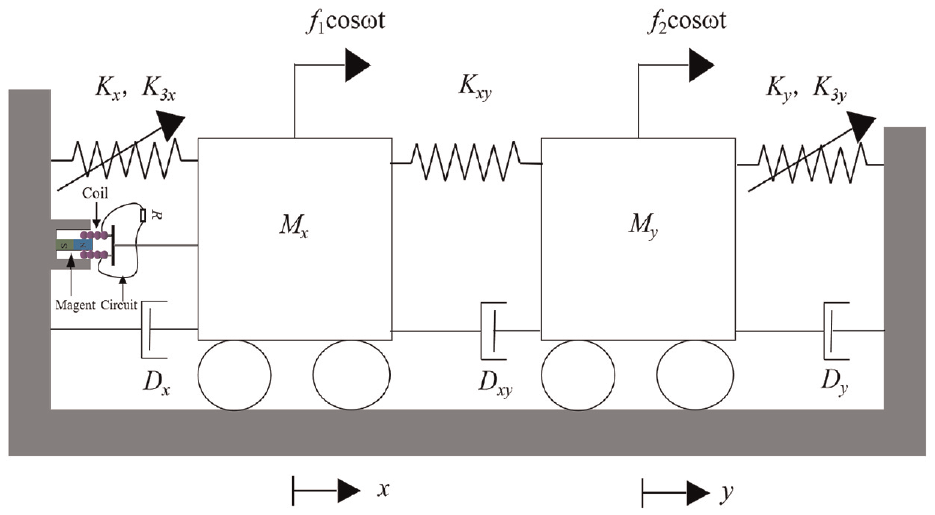
Schematics of a nonlinear TDOF energy harvester.
2. Mathematical model
The physical model of a TDOF nonlinear electromagnetic energy harvester is employed in Figure 1, the system consists of two nonlinear mass-spring oscillators with linear stiffness coupling. In the meantime, three magnets are fixed on the frame, and the motion of the coil with respect to the magnet generates an electric current. The dynamical equations of the coupling system can be written as
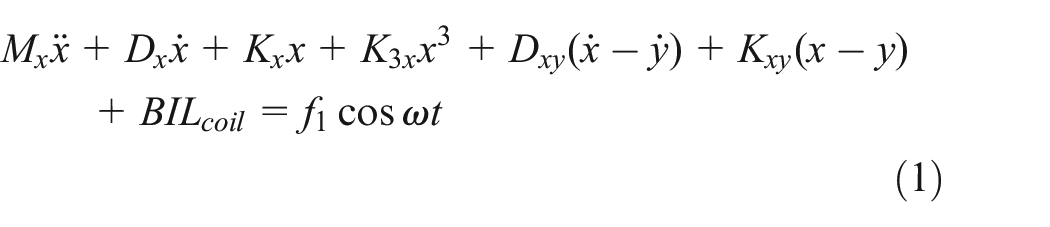
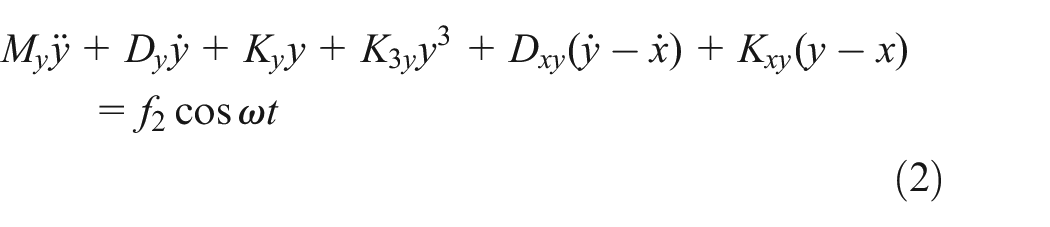

where
The harvesting model shows that a magnet is fixed on the frame, and the coil linked to the mass
For subsequent calculations, the system (1–3) can be dimensionless as



where
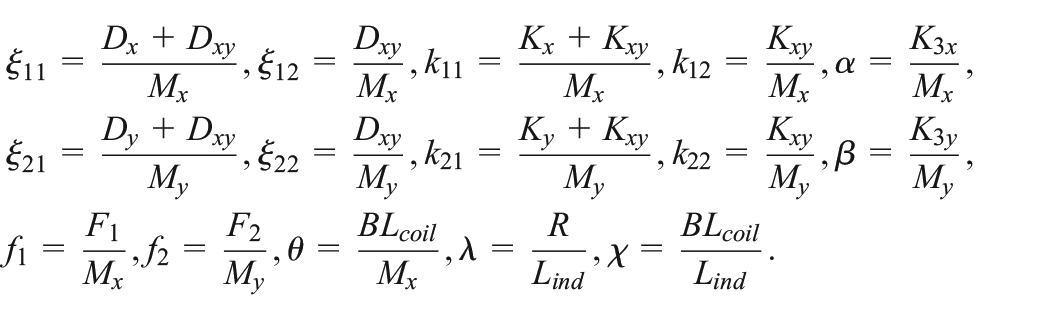
3. Dynamical analysis
This section introduces the dynamical response of the system, and the first-order harmonic responses are assumed as

where
Taking equation (7) into the equation (6), the steady current can be derived as

Inserting equations (7) and (8) into equation (6), yields the first order harmonic responses
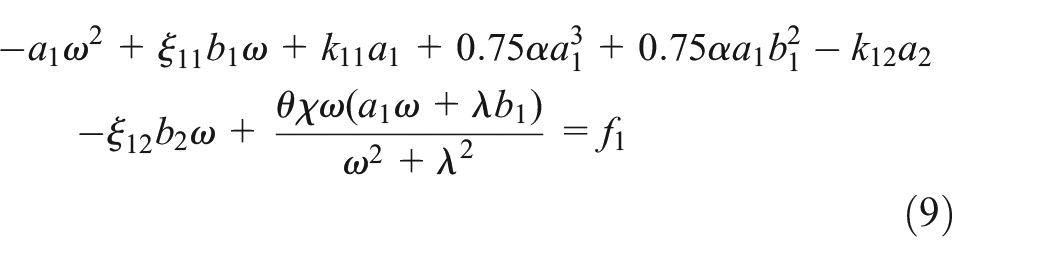
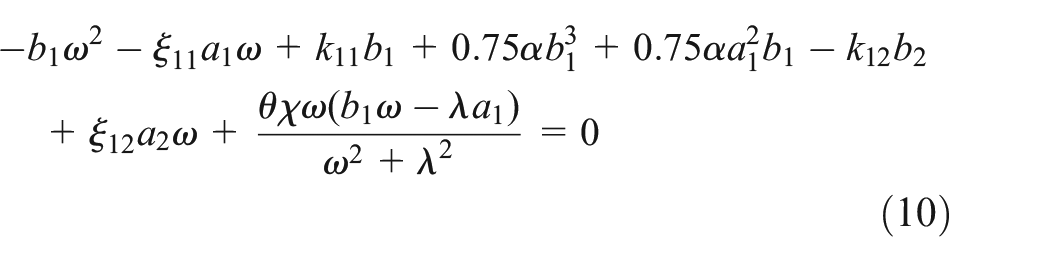


and the relationship between current and displacement amplitude is

In the meantime, the output power can be constructed as

To show the broadband characteristics of the proposed scheme, we refer to the results of amplitude-frequency response curve in the literature (Lenci, 2022) and choose the physical parameters as
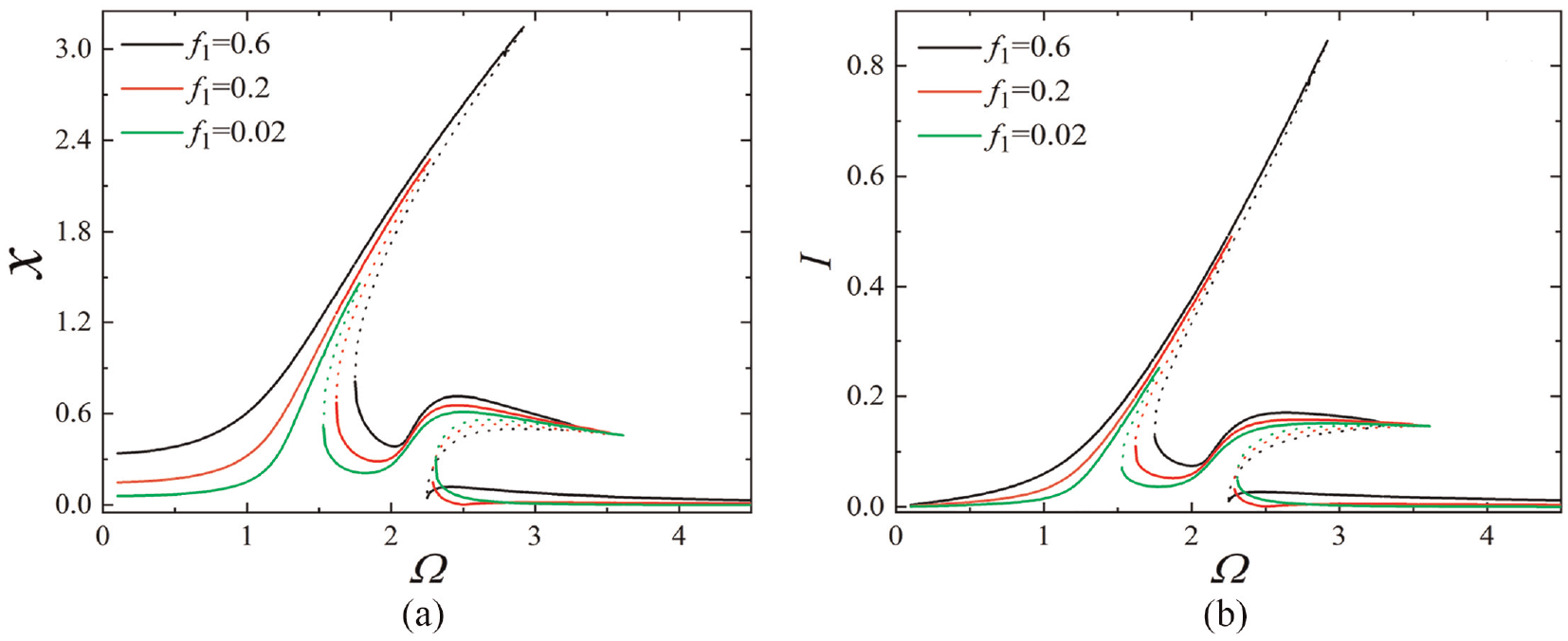
The displacement and the current versus the frequency for different
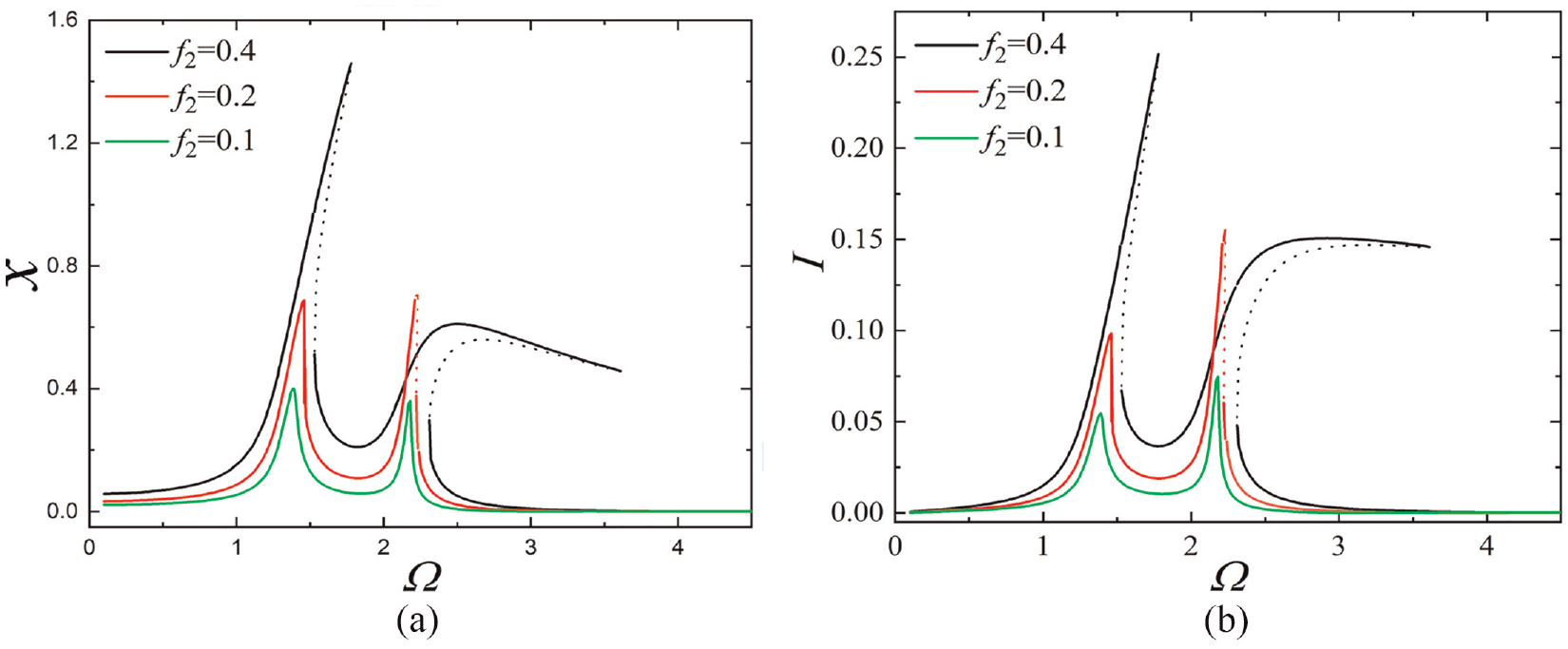
The displacement and the current versus the frequency for different
It is worth mentioning that the response of the system with non-internal resonance is different from that internal resonance, which produces a double peak only near the primary resonance frequency. Therefore, the system without internal resonance has a wider harvesting frequency bandwidth.
4. Comparison of the proposed scheme and the traditional cases
In this section, we consider the frequency response curves of the proposed scheme and the traditional cases, namely, the SDOF nonlinear system and the TDOF linear case.
Figure 4 shows the frequency response curves of the displacement and current versus the frequency for the proposed scheme and the traditional SDOF nonlinear system. From this figure, we can see that the response of the proposed scheme is two peaks, and it has a hardening spring characteristic that the frequency response curves bend to the right. Moreover, due to the coupling and nonlinear interaction of
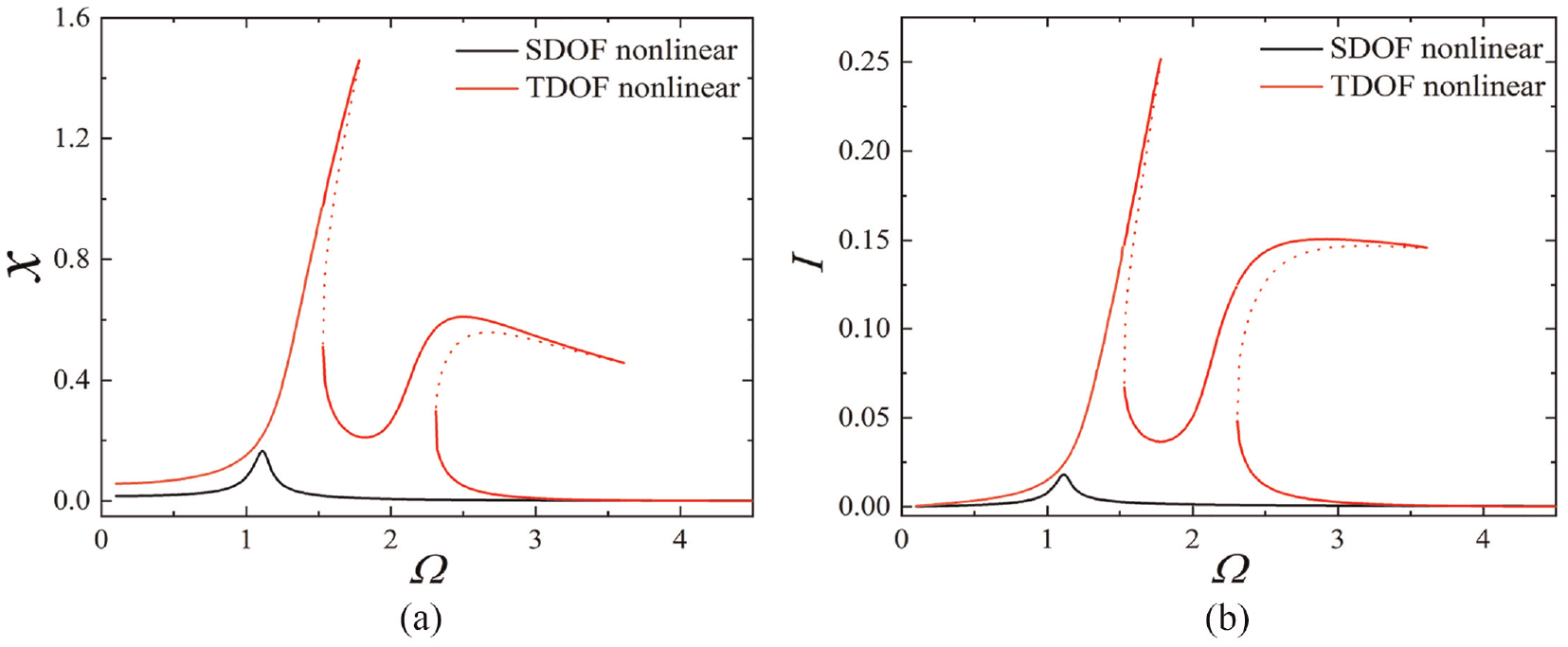
Comparisons of the TDOF nonlinear harvester and the SDOF nonlinear case: (a) displacement and (b) current.
Comparison of periodic solutions between the proposed scheme and the TDOF linear results are also described in Figure 5. It is found that the frequency response curve of the linear system only has two peaks near two natural frequencies, while the nonlinear system has a response that leans to the right. In addition, unlike the response in the linear system, the solution in the proposed scheme can be multi-valued. That is, for a fixed value of the excitation frequency there can be as many as three different response amplitudes. Consequently, we conclude that the TDOF nonlinear energy harvester without internal resonance has a much wider bandwidth than that of the traditional resonance cases.
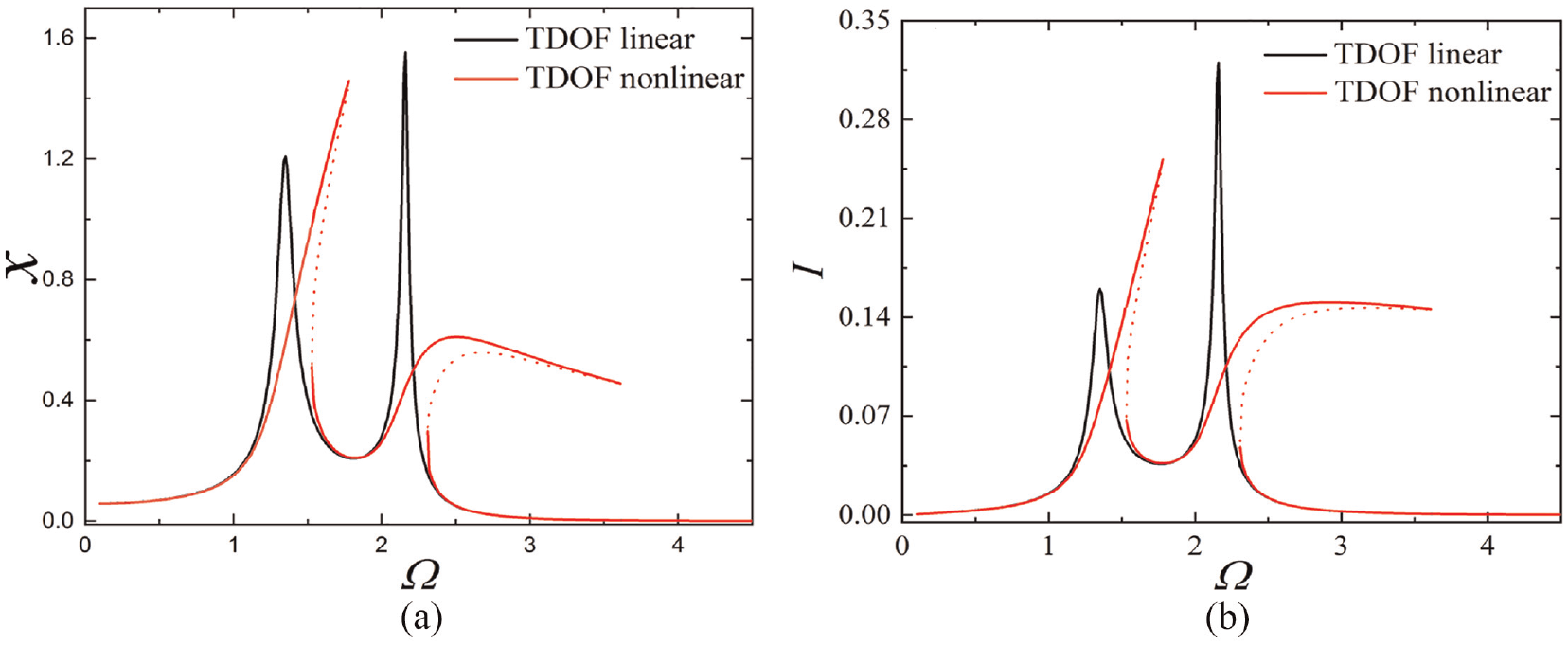
Comparisons of the TDOF nonlinear harvester and the TDOF linear case: (a) displacement and (b) current.
Moreover, the presence of cubic nonlinearities in a two-modal harvester brings in the prospect of occurrence of 1:3 internal resonance provided the linear natural frequencies of the system are nearly commensurable (Aravindan and Ali, 2019 ). Therefore, the performance of the proposed scheme and the existing TDOF nonlinear energy harvesting models with 1:3 internal resonance is also compared. Figure 6 shows the displacement and current versus the frequency for the proposed scheme and the TDOF nonlinear system with 1:3 internal resonance. It is found that the responses of the proposed scheme have a greatly larger amplitude than that of the system with 1:3 internal resonance.
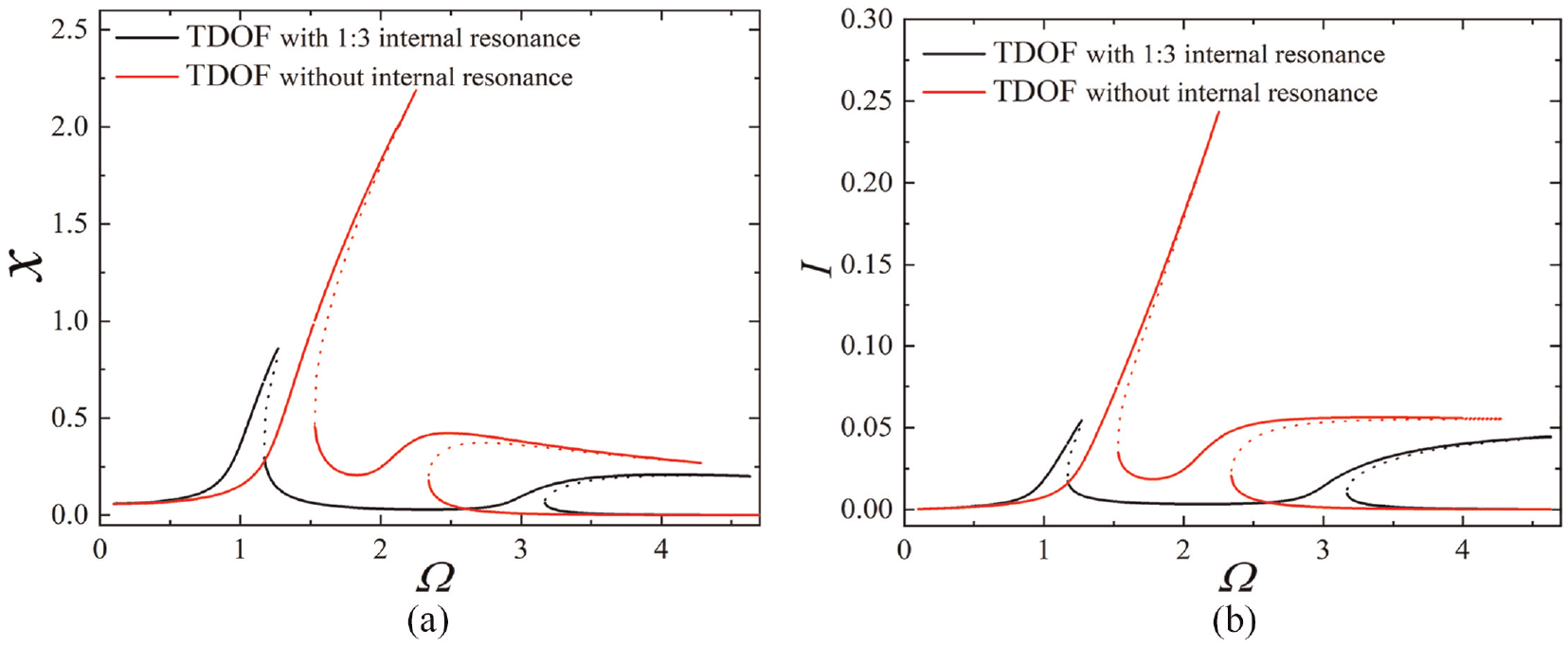
Comparisons of the TDOF with 1:3 internal resonance and the TDOF without internal resonance: (a) displacement and (b) current.
5. Results and discussion
This section starts with an analysis of the effects of the physical parameter, and the corresponding frequency curves are given.
Figures 7 and 8 show the response waveforms of different nonlinear coefficients
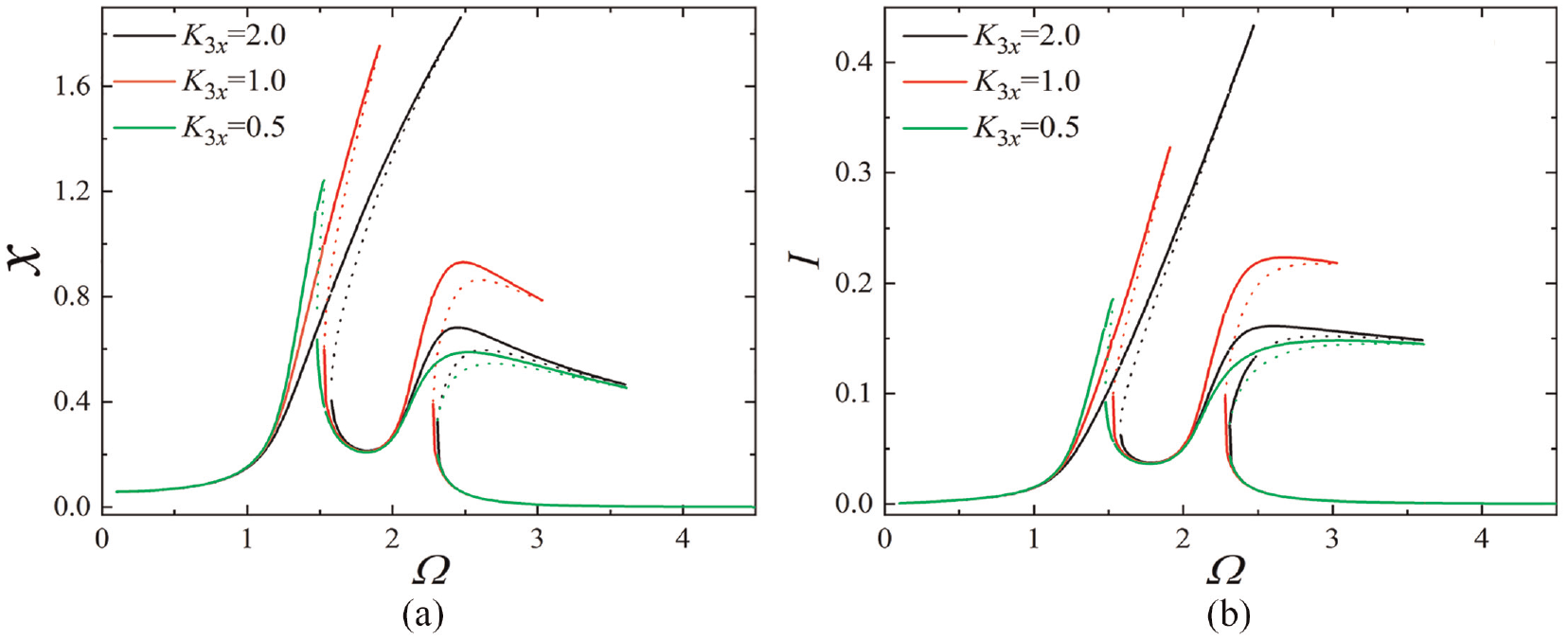
Variation of the response curves for different nonlinear coefficients
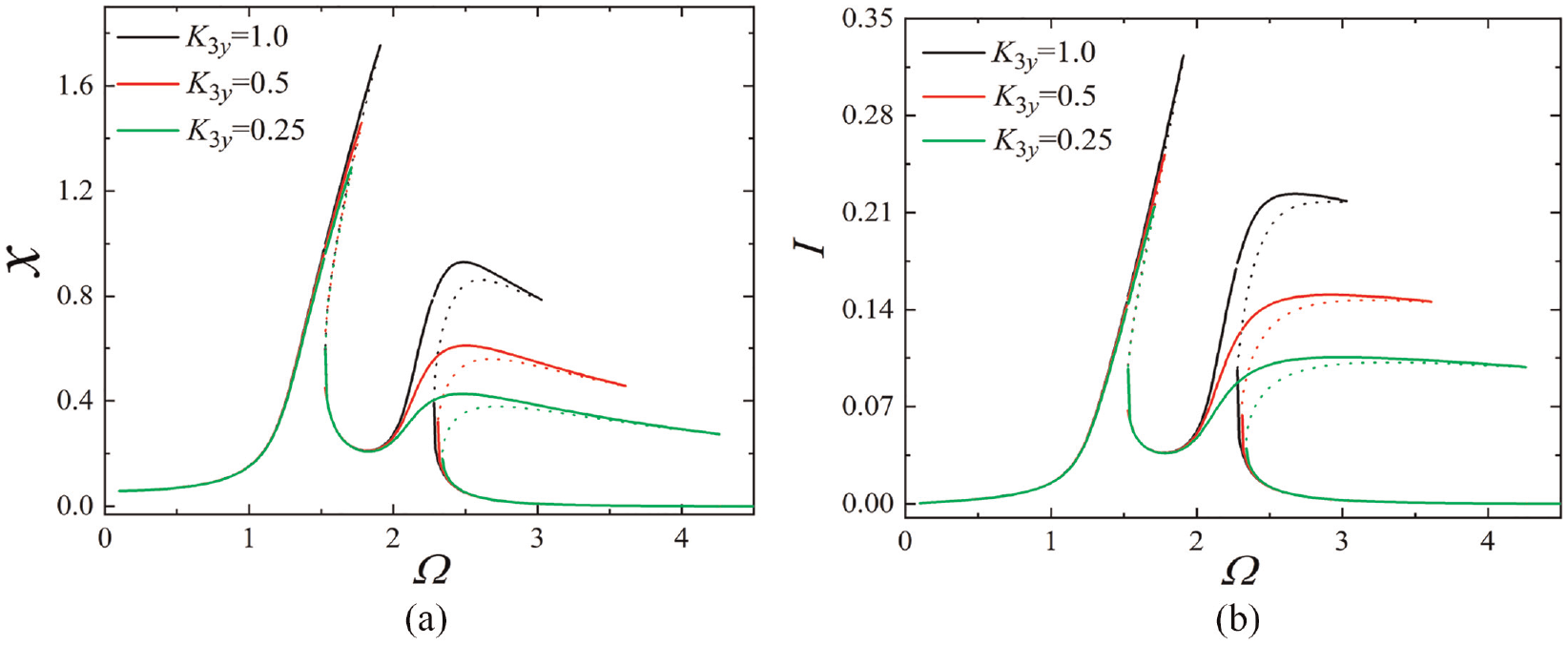
Variation of the response curves for different nonlinear coefficients
Figures 9 to 11 show the response curves of different damping coefficients
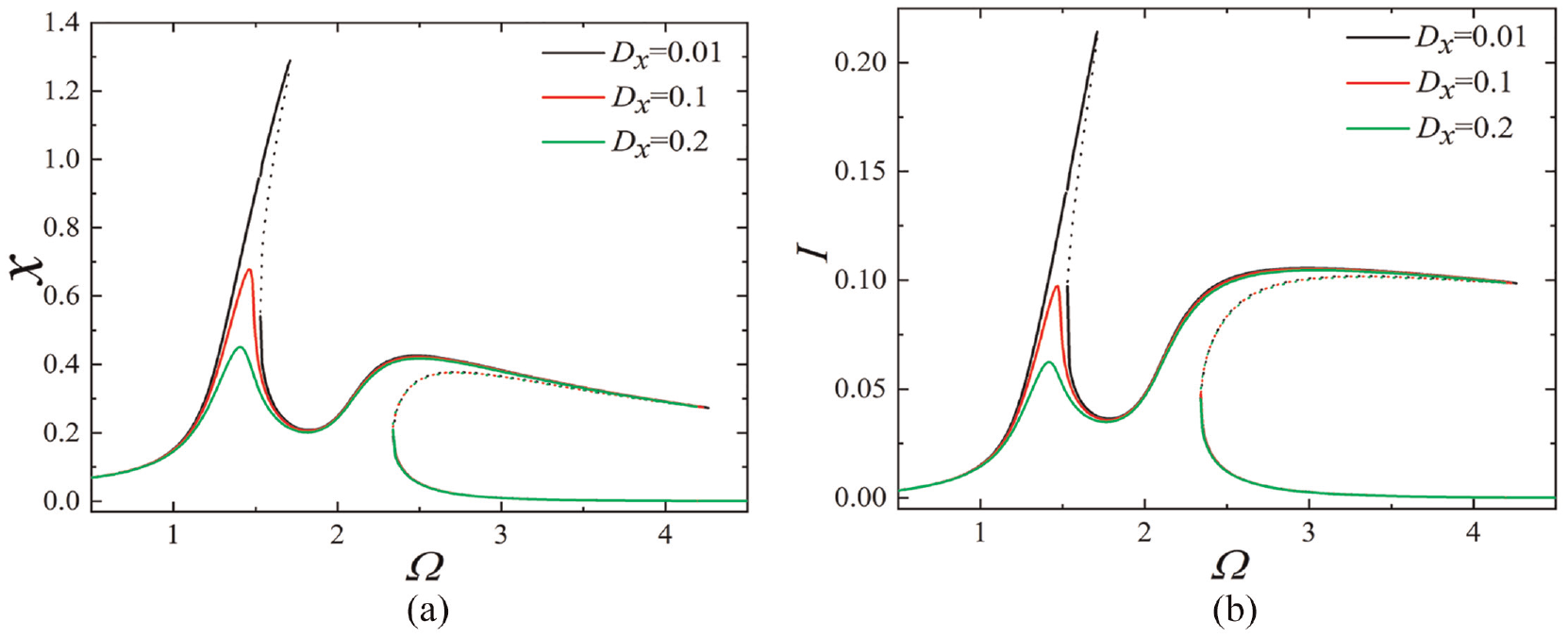
Variation of the response curves for different damping coefficients
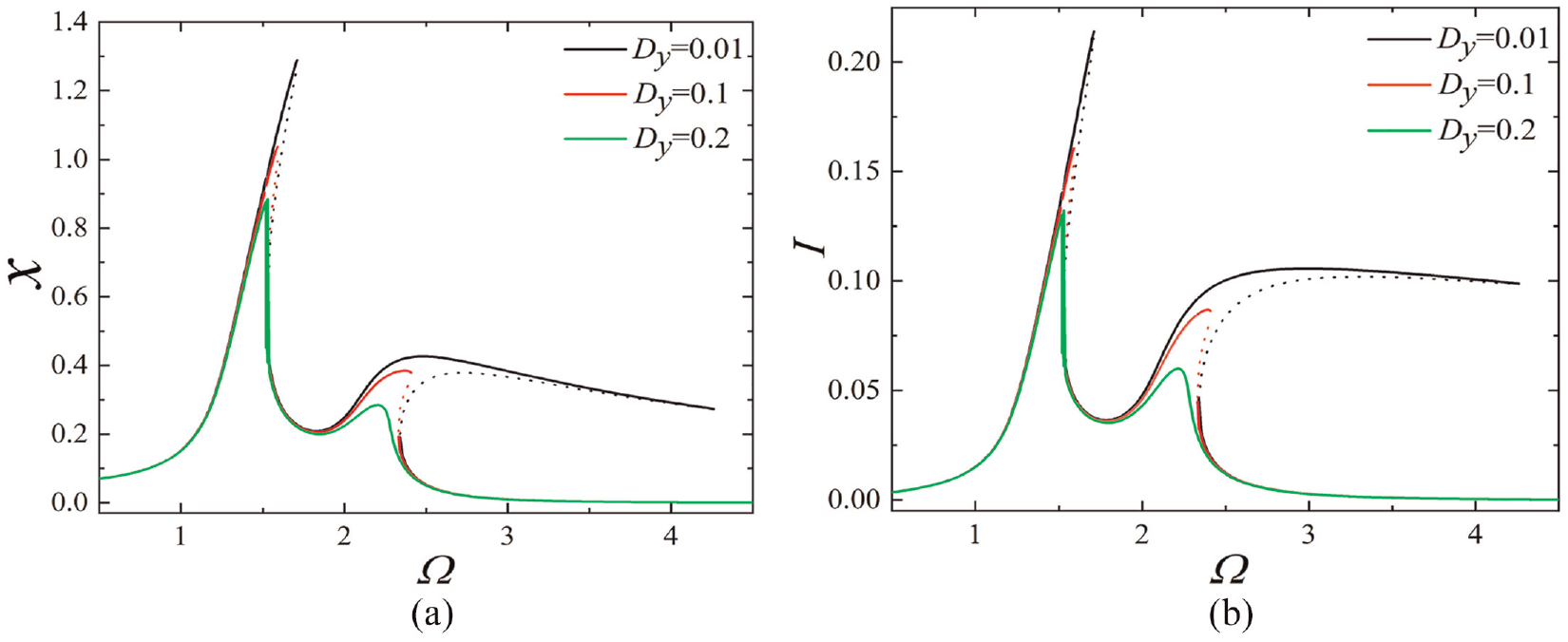
Variation of the response curves for different damping coefficients
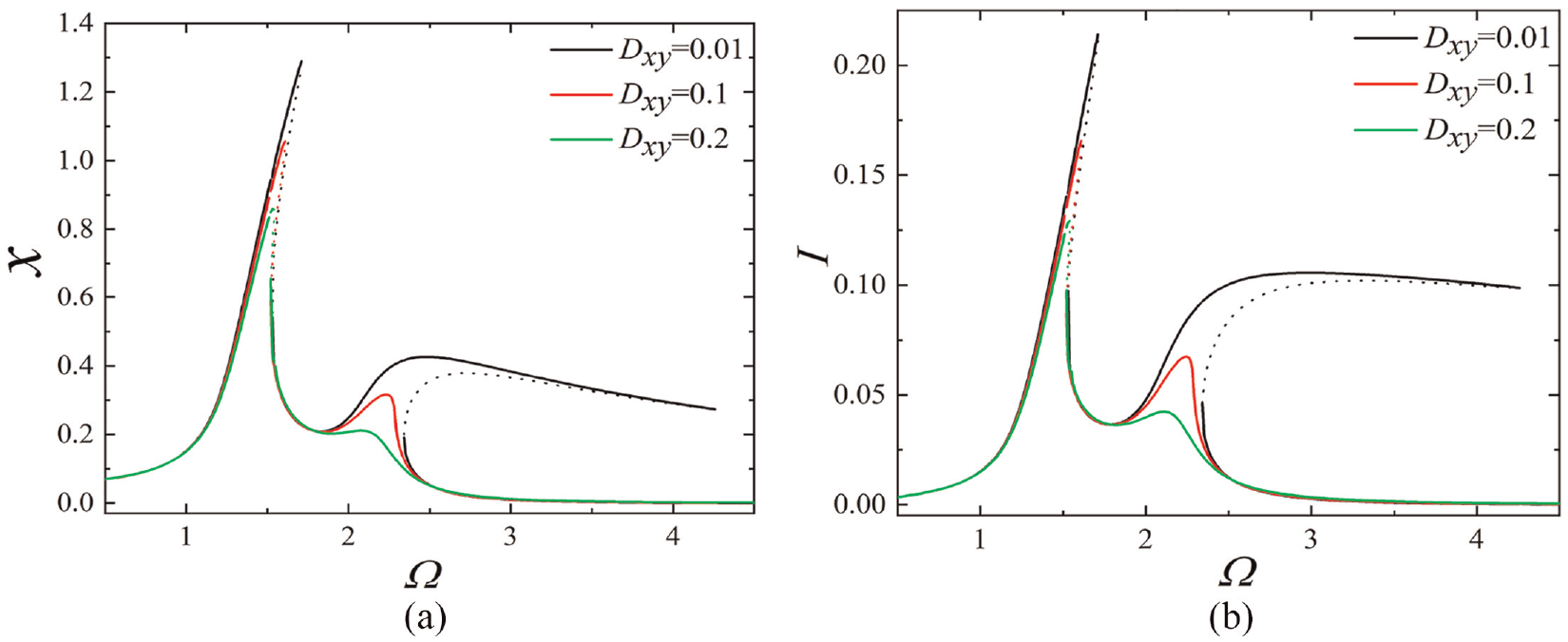
Variation of the response curves for different damping coefficients
To have an in-depth observing of harvesting energy, we compute the output power for different values of circuit parameters. Figures 12 to 15 plot the response curves for a varying of the resistive load, magnetic strength, inductance, and coil length. It is found that the first-order amplitude of the current response increases as the resistive load and coil length increase, while the second amplitude of the current response decreases as the resistive load and coil length increase, and the large power can exist for the largest parameters. In the meantime, the first-order amplitude of the current response decreases as the magnetic strength increases, while the second amplitude of the current response increases as the magnetic strength increases, and a large power can exist for the smallest magnetic strength
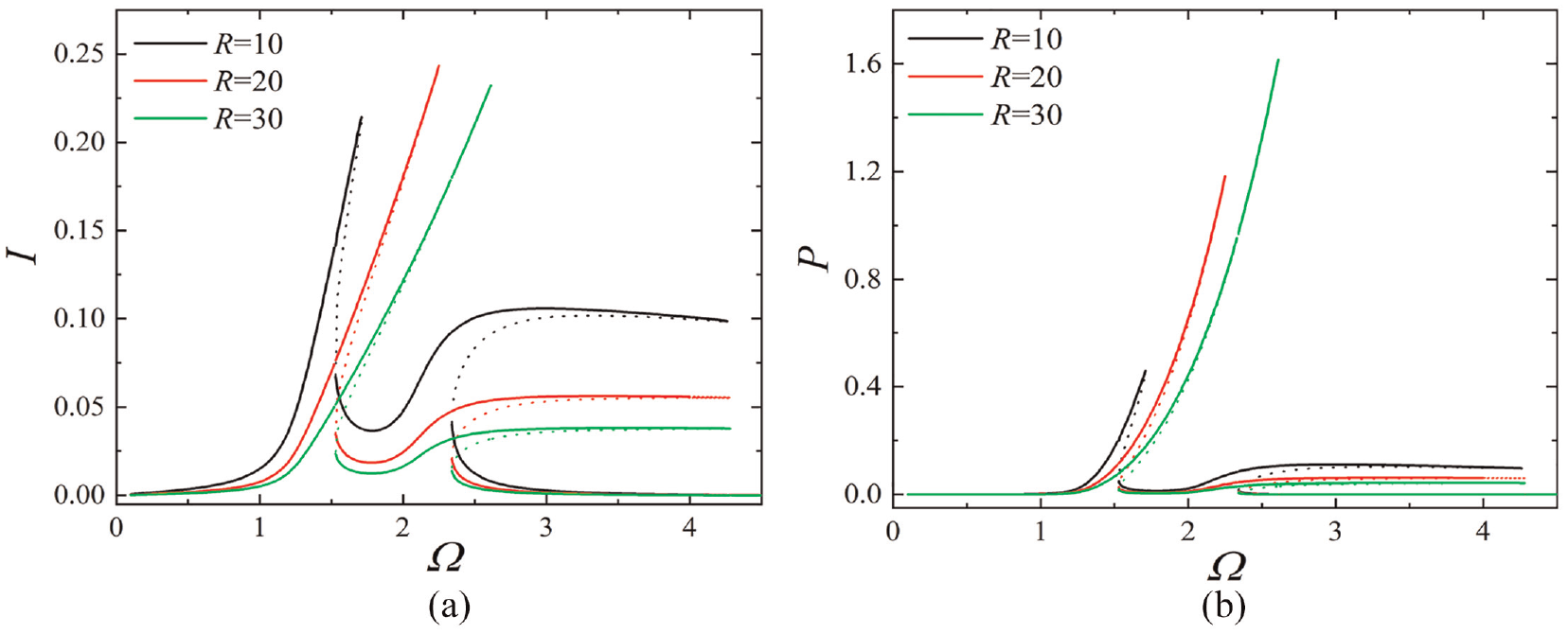
Variation of the amplitude-frequency curves for different resistive loads: (a) current and (b) power.
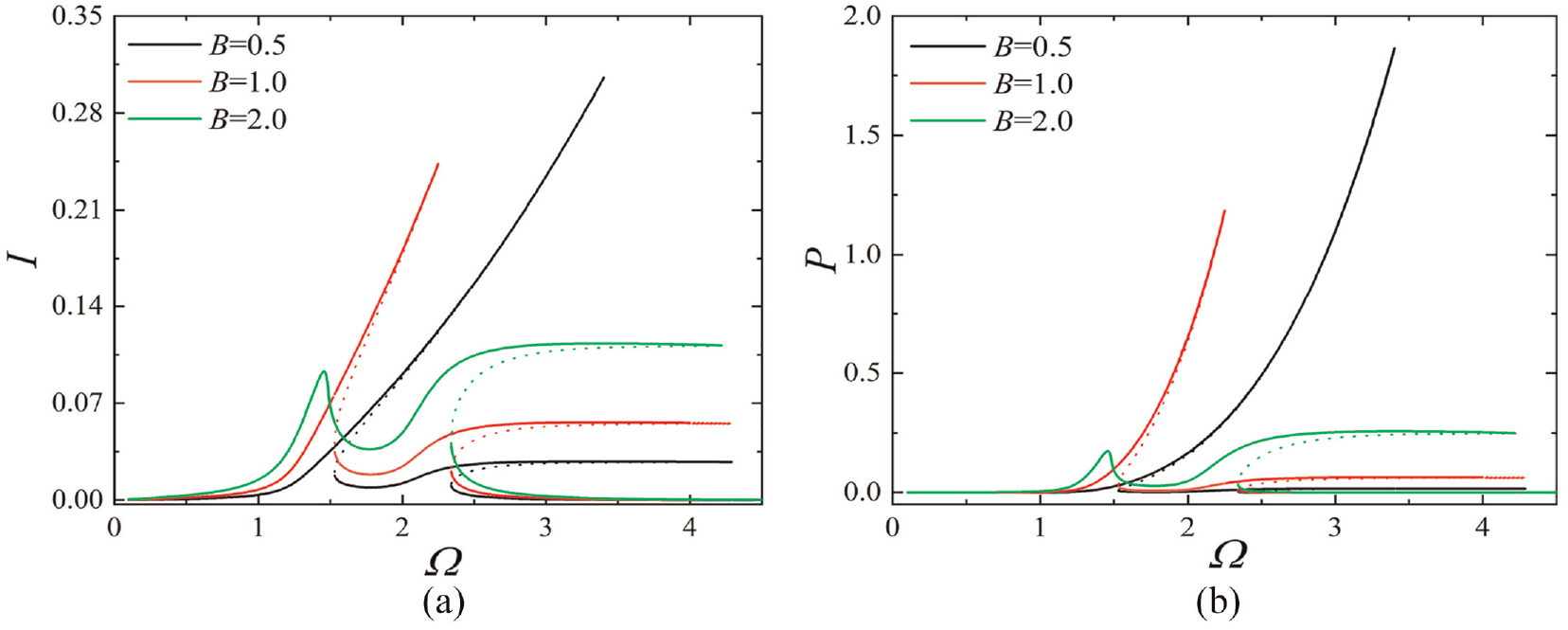
Variation of the amplitude-frequency curves for different magnetic strengths: (a) current and (b) power.
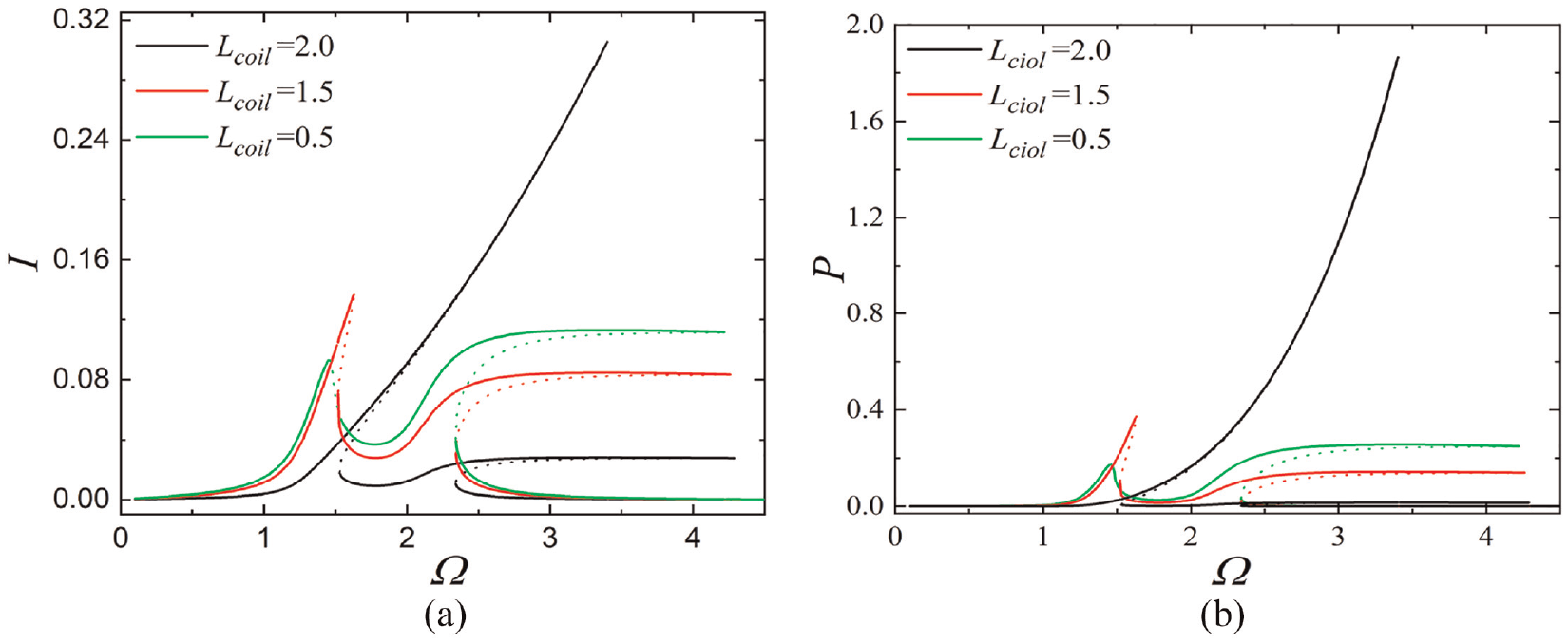
Variation of the amplitude-frequency curves for different coil lengths: (a) current and (b) power.
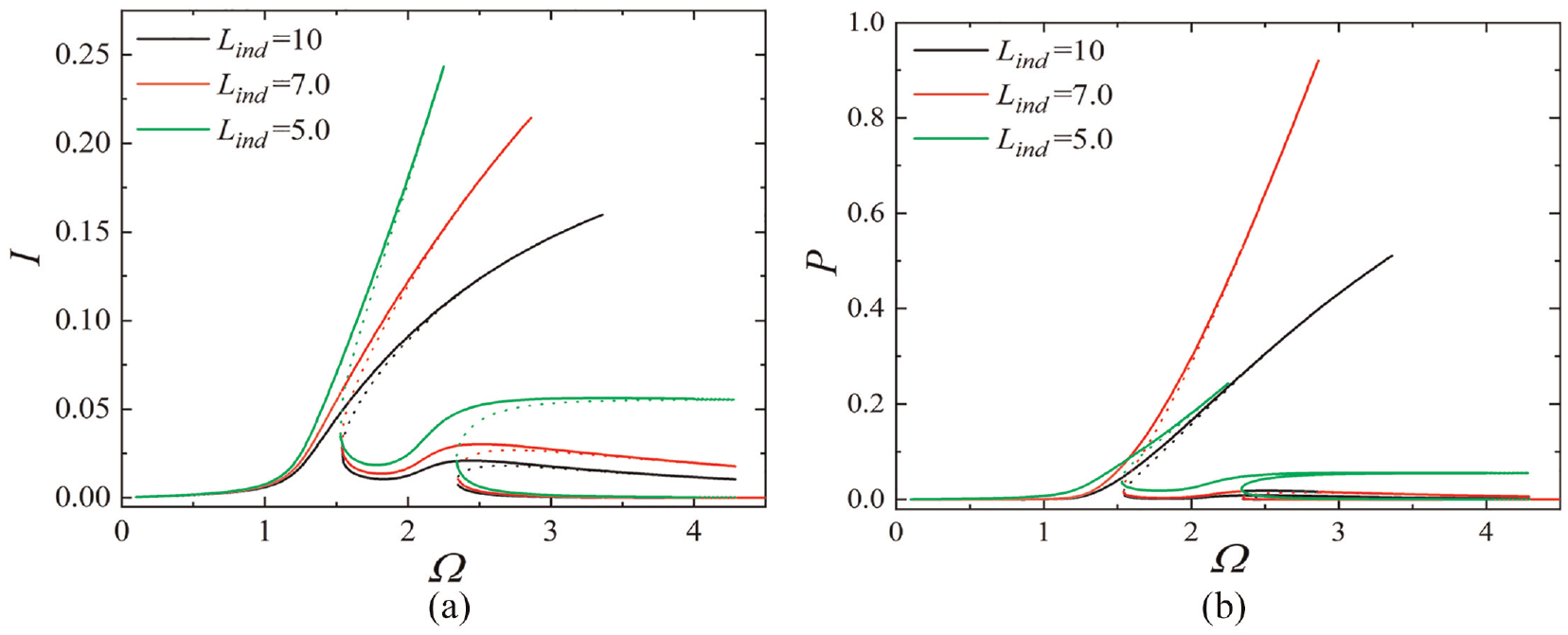
Variation of the amplitude-frequency curves for different inductances: (a) current and (b) power.
6. Numerical validations and finite element simulation
To evaluate the accuracy of analytical solutions, equations (4)–(6) are numerically implemented by adopting the fourth-order Runge-Kutta method. Obtained results from equations (4)–(6) are described in Figure 16 marked by red and green solid lines, and the analytical solutions are marked with the black solid line. It is found that a degree of good consistency for the frequency response curve of periodic solutions. Moreover, the jump phenomenon of bending to the right is qualitatively verified, and the existence of two peaks is quantitatively proved.
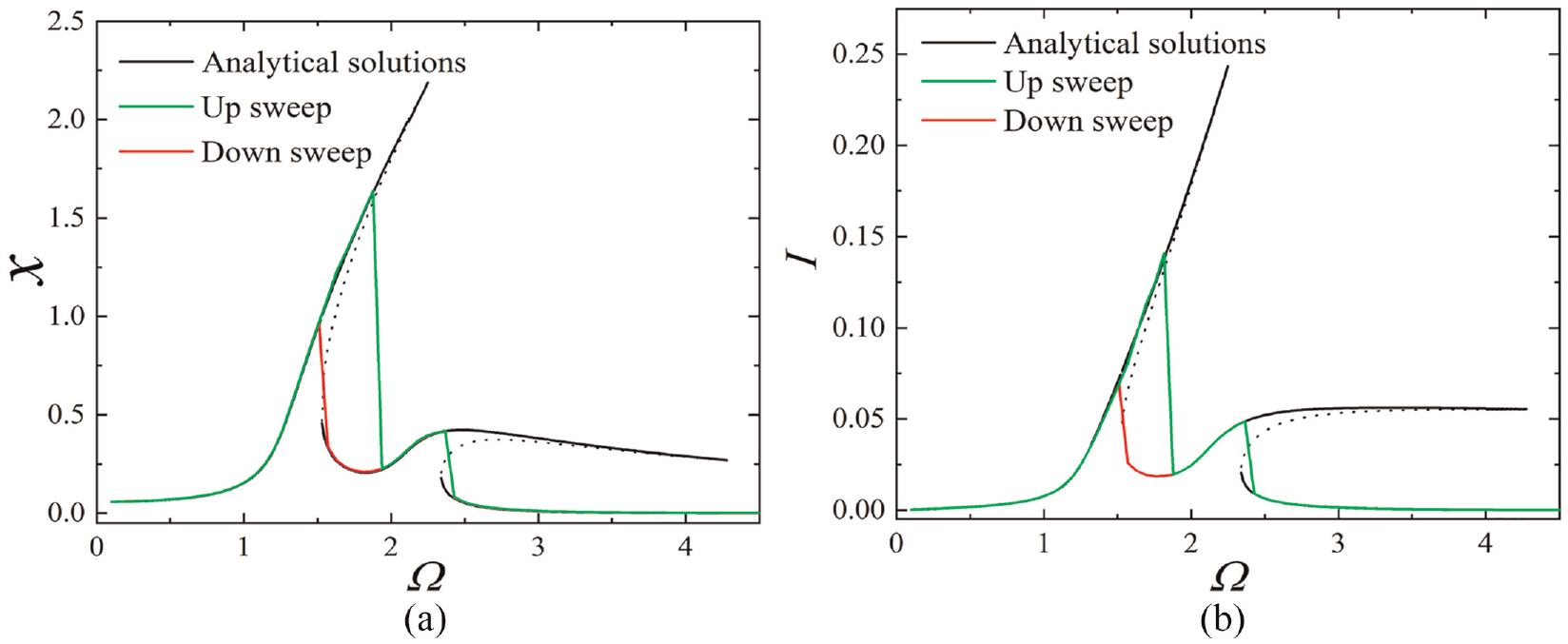
Comparisons of analytical solutions and numerical results: (a) displacement and (b) current.
To further check the effectiveness of analytical solutions, we employ ANSYS Academic Research 19.0 to construct the physical model, which is shown in Figure 17(a). The displacements of the masses
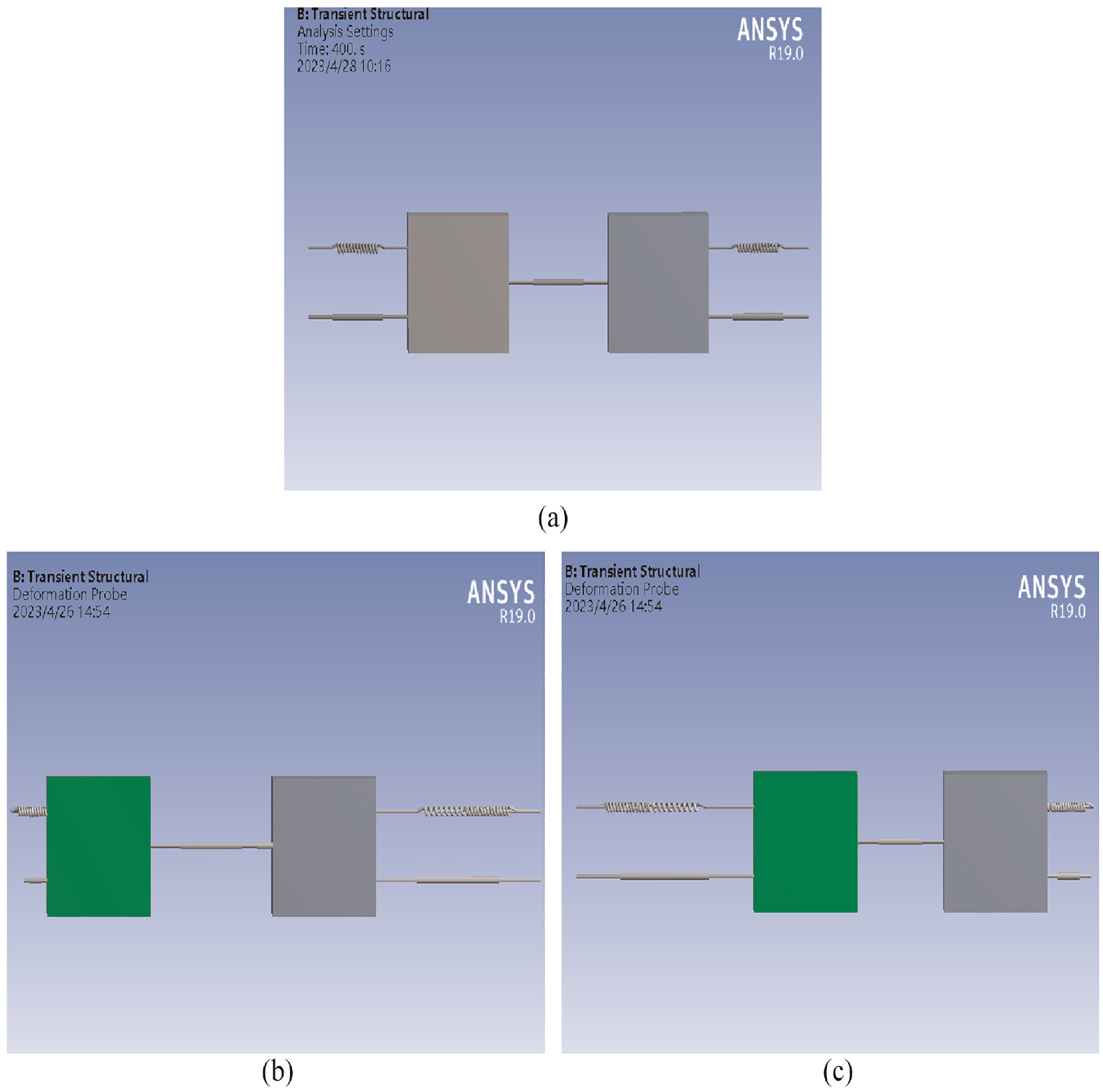
Finite element simulation of proposed nonlinear energy harvester (a) finite element model, (b) response of compression configuration (c) response of tensile configuration.
Meanwhile, the time histories of displacement under different initial conditions for two different frequencies of external excitation are shown in Figures 18 and 19. As can be seen from Figures 18 and 19, multiple periodic solutions can exist for displacement time history in the same excitation frequency approaching the resonance frequency. That is, trajectories initiated from different initial conditions can be attracted to different solutions.
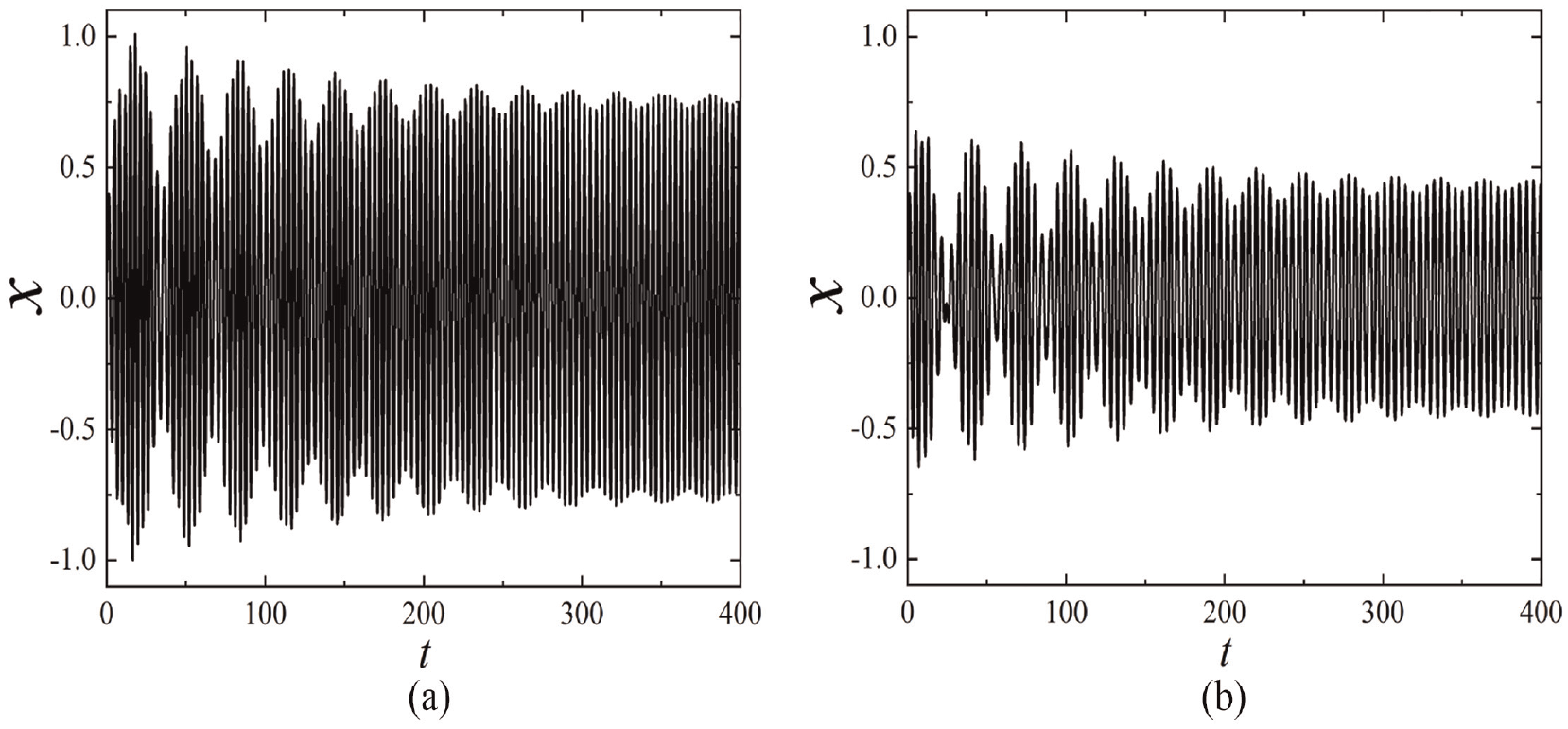
Time-history response of frequency
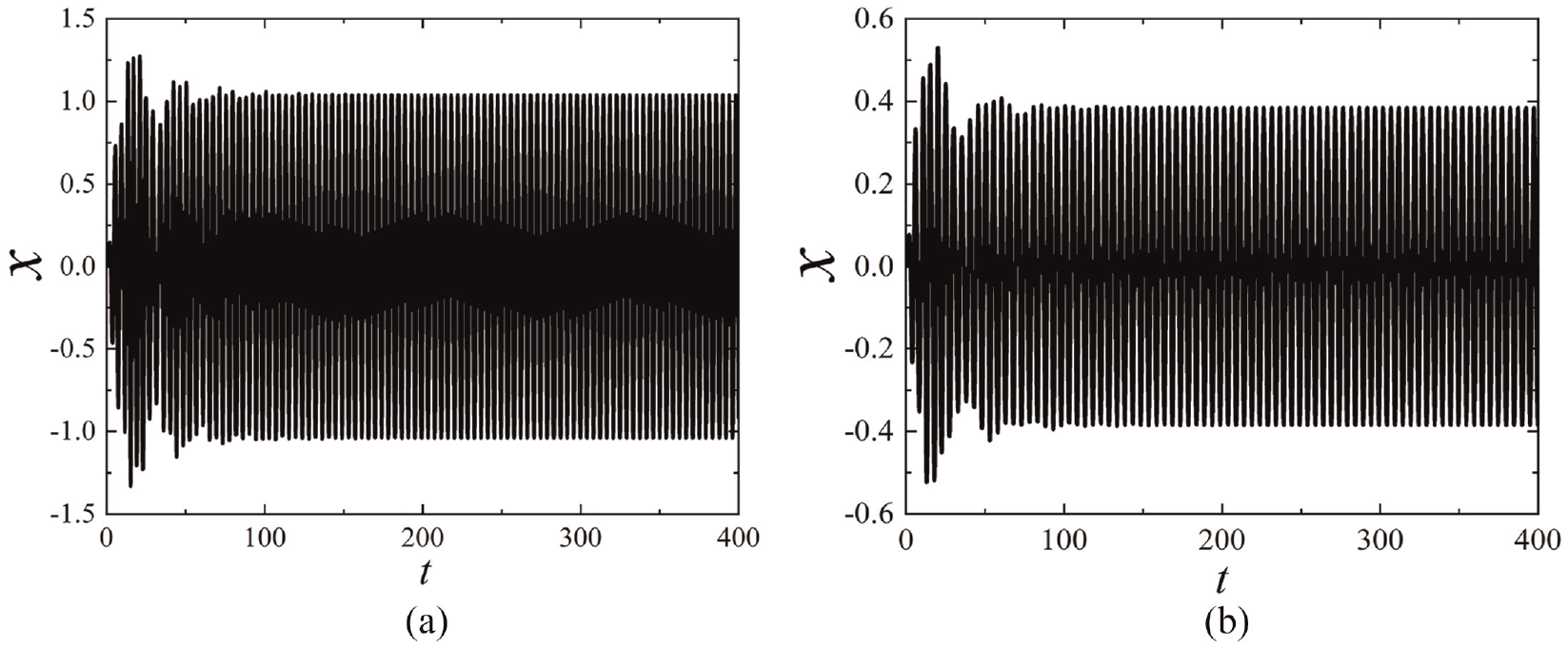
Time-history response of frequency
Furthermore, the results obtained from the finite element simulation and analytical solutions based on equations (9)–(13), are described in Figure 20, where the simulation results are marked by red scatter, and the analytical solutions are marked with the black solid line. It is convincingly demonstrated that periodic solutions have a degree of good consistency.
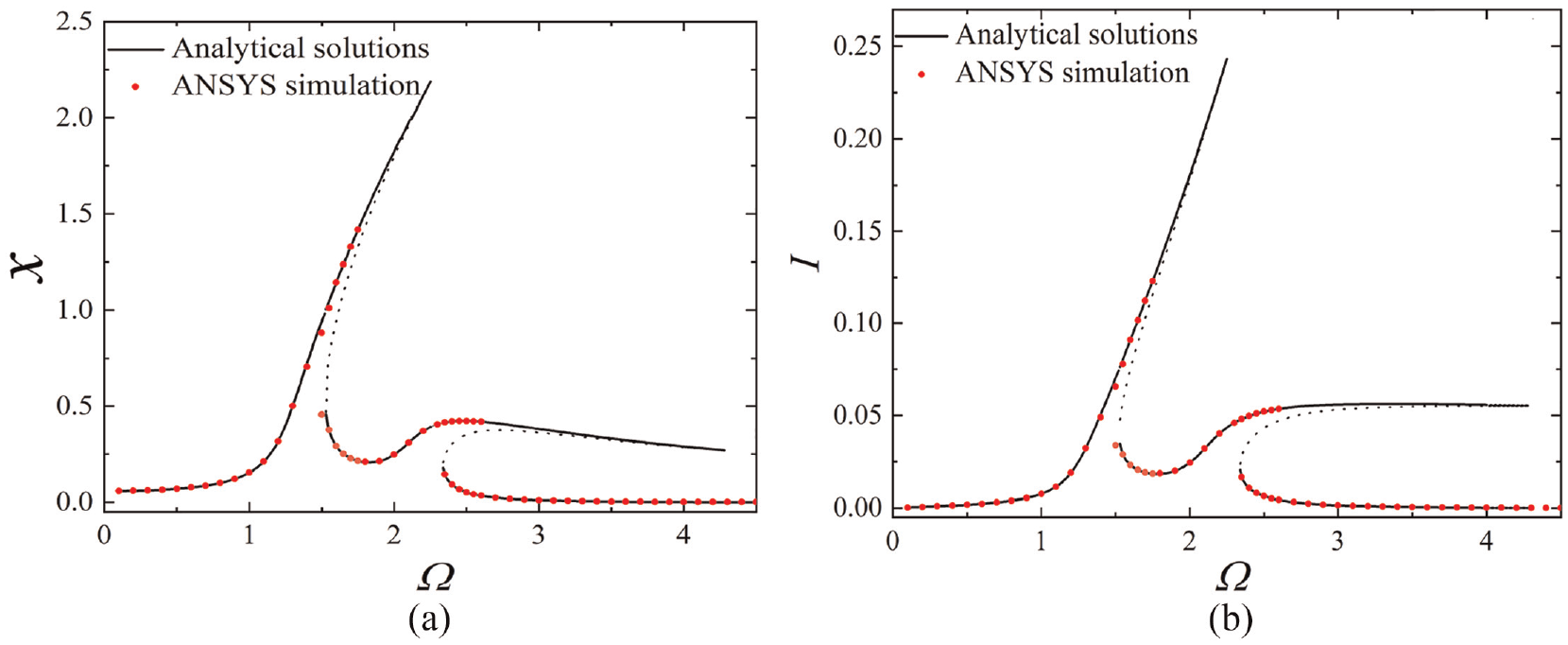
Comparisons of analytical solutions and finite element simulation results: (a) displacement and (b) current.
7. Conclusions
The paper demonstrated that a two-degree-of-freedom nonlinear system without internal resonance can be a great boost for the bandwidth of the energy harvester. Through reasonable parameter selection, we find that the response of the system has two peaks, which bend to the right, resulting in a hardening spring characteristic. In addition, more than one solution can exist for some excitation frequency, there are two resonance ranges with three solutions. Thus, the frequency curves of the system without internal resonance have a broadband characteristic of bending to the right near both natural frequencies than the traditional primary resonance and 1:3 internal resonance cases. The accuracy of approximate solutions is also checked by numerical integration and finite element simulation. It is worth mentioning that the response of the system with non-internal resonance is different from that to internal resonance, which produces a double peak only near the primary resonance frequency. Therefore, the system without internal resonance has a wider harvesting frequency bandwidth.
Footnotes
Declaration of conflicting interests
The authors declared no potential conflicts of interest with respect to the research, authorship, and/or publication of this article.
Funding
The authors disclosed receipt of the following financial support for the research, authorship, and/or publication of this article: This work was supported by the National Natural Science Foundation of China (Nos. 11872188 and 12002134), Hong Kong Construction Industry Council R&D Fund (EPS_202017) and Innovation and Technology Fund of Hong Kong Innovation and Technology Commission under Grant No. ITP/020/19AP.
