



Abstract
Severe challenges such as depletion of natural resources, natural catastrophes, extreme weather conditions, or overpopulation require intelligent solutions especially in architecture. Built environments that are conceived from smart materials based on actuator and sensor functionality provide a promising approach in order to address this demand. The present paper reviews smart materials-based technologies which are currently applied or developed for application in civil structures, focusing on smart material applications for actuation or sensing. After giving a definition and categorization of smart materials, applications of the investigated materials (i.e. shape memory materials, electro- and magnetostrictive materials, piezoelectric materials, ionic polymer-metal composites, dielectrical elastomers, polyelectrolyte gels as well as magneto- and electrorheological fluids) are presented for the fields of architecture and civil engineering. While some materials are already highly advantageous in the application context, others still need further research in order to become applicable in real-world constructions. Nonetheless this review indicates their large innovation potential which should be consolidated by systematic research efforts in the near future.
1. Introduction
Since mankind has turned from nomadism to settlement life, the construction of permanent buildings has evolved as a protective measure against extreme climates, natural disasters, human and animal threat, and other environmental impacts. Yet, the design of houses changed constantly in reaction to different environmental and social needs. For example, houses on stilts emerged as protective measure against floods. Demanding stone and brick buildings were carried out to ensure longevity of constructions. Today mankind faces challenges like the depletion of natural resources, extreme weather conditions and natural disasters, but also thorough demographic and societal changes like urban overpopulation that directly impact how people live in houses and cities. These challenges require intelligent solutions. For this, an adequate key response strategy may be the implementation of smart materials into built constructions. Smart materials are materials which can sense environmental changes or act upon them. A large variety of these materials are already well-known and applied in a multitude of fields including aerospace, automotive, healthcare, consumer goods, electronic devices, civil engineering, etc. Introducing smart materials as an integral part of civil structures as active or sensible construction elements opens up a wide range of possibilities. In the context of building construction, various smart material technologies are already available and commonly used, for example, piezoelectric transducers for structural health management. Others are still in the state of fundamental research like self-actuating façade elements utilizing shape memory alloys.
The aim of the present paper is to provide a comprehensive review of relevant technologies and approaches comprising smart materials in actuatoric and sensoric applications in architecture and civil engineering.
A schematic explanation of smart materials in regard to defining sensoric and actuatoric configurations is given in Figure 1.
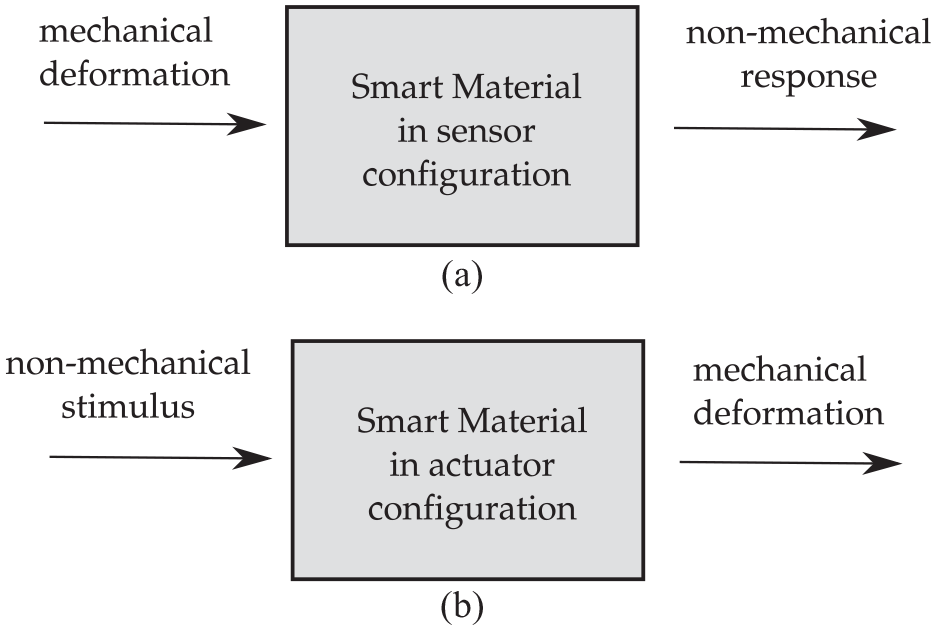
(a) A smart material in a sensoric configuration will change its non-mechanical properties (e.g. chemical or pyhsical properties) in response to a mechanical load and (b) in an actuatoric configuration, the smart material will deform in response to a non-mechanical stimulus (e.g. temperature change or light exposure).
In the following chapters, a definition of smart architecture and smart materials is proposed first. Thereafter, a categorization of the most articulate smart materials is given. In order to review the state-of-the-art of smart materials in architecture and civil engineering, respective applications are presented for each considered smart material. The concluding section highlights major trends in this field and identifies white spots to be further investigated.
2. Smart architecture
The ancient discipline of architecture which designs and builds constructions especially for the accommodation of human activities has received significant conceptual extension in the past few years by the new attribute “smart.” Semantically connected to notions like context awareness, environmental sensitivity, structural responsiveness and adaptivity, active building, the comprehensive term “Smart Architecture” indicates a new level in design and construction related to intelligent information, and communication technologies (Clark et al., 1998; Janocha, 2007; Sobek and Teuffel, 2001).
A second main driver for the rapid evolution of smart solutions in the construction sector is the necessity to react to increasingly volatile conditions in the physical and social environment (Kasarda et al., 2007). Climate change poses new demands in regards to building physics and facility management. Resource efficiency and sustainability have emerged as new target criteria in (i) design, (ii) construction, and (iii) facility operations over the past decades, implying a close monitoring of energy and material consumption (Chetty et al., 2008). Societal and demographic changes in turn dictate new life and work patterns, new demands of usage and occupancy, on which constructors, real estate developers, and operators need to respond with flexible and adaptable built structures (Frohlich and Kraut, 2006).
The key benefit of smart or cybernetic systems arises from their capacity to provide appropriate communication and feedback structures which are able (a) to sense fast-changing conditions of the spatial environments and (b) to trigger and control their adequate response (Klein and Kaefer, 2008). This has resulted in key applications, for example, for energy monitoring and climate control, home surveillance and security, production automation and logistics, etc. The smartness of the majority of the established solutions, however, unfolds on the level of technical appliances. Conceived and produced independently of the buildings’ design and usage program, smart components are merely attached or applied as (retro)fittings to the basic spatial and structural components (Akyu··rek, 2018).
Few solutions exist in architecture and civil engineering which understand smartness as an inherent, integrated property of physical structures and components. This paper therefore puts focus on solutions and approaches that go beyond the appliance level. It exclusively uses the term smart architecture for building structures or components in which smartness is deeply implemented on the material structure level, that is, materials having either actuatoric or sensoric elements which enable the active and fast control of architectural key target parameters such as shape, visual appearance, or load bearing capacities.
2.1. Smart materials
Defining smart materials is challenging. There exist a variety of definitions on smart materials in the available literature, which are ambiguous and sometimes contradictive. Despite differences in detail, there is a general consent in the scientific community that smart materials are materials or derived products that are able to reversibly change their physical or chemical properties in reaction to an external stimulus (Addington and Schodek, 2005; Leo, 2007; Mohamed, 2017; Ritter, 2007; Sobczyk and Wallmersperger, 2016; Vazquez et al., 2019). A problem with this definition is the fact that it applies to almost every existing material: Steel reversibly changes its dimension or water will reversible change its density in response to external temperature change, yet these materials are not considered as smart materials. So the definition of smart materials should only apply to non-conventional programmable materials with outstanding material properties. For clarification we will give a brief categorization of materials which are often referred to as smart or active materials.
2.2. Categorizing smart materials
There is a wide range of materials which are considered smart materials. These materials can be categorized as materials (i) that react to a non-mechanical (e.g. electrical, magnetic, or thermal) stimulus by a mechanical reply (deformation or mechanical stress) or (ii) that give a non-mechanical answer on a mechanical stimulus. So they can be used as (i) actuators or (ii) sensors (see Figure 1).
There also exist smart materials that (iii) react on a non-mechanical stimulus with another non-mechanical reply. In order to get an overview of existing smart materials a categorization of some of the most prominent smart materials is given in the following list:
• Shape-changing smart materials:
– Thermostrictive materials
* Thermal expansion materials
* Shape memory alloys
* Shape memory polymers
* Shape memory foams
* Shape memory ceramics
* Shape memory hybrids
* Biological systems with shape memory effect
– Electrostrictive smart materials
* Electrostrictive papers
* Electrostrictive ceramics
* Electrostrictive graft elastomers
– Magnetostrictive/magnetoelastic smart materials
* Magnetostrictives
* Magnetoelastic materials
* Metallic glasses
– Piezoelectric smart materials
* Piezoelectric ceramics
* Piezoelectric polymers
* Piezoelectric single-crystals
* Piezoelectric films
– Electroactive polymers
* Ionic polymer-metal composites (IPMCs)
* Conductive polymers
* Polyelectrolyte gels
* Dielectric elastomers (DEs)
– Electro/magnetorheological fluids
* Electrorheological fluids
* Magnetorheological fluids
• Smart materials with changing optical properties
– Photochromic smart materials
* Photochromic pigments
* Photochromic glasses
* Photochromic plastics
– Thermochromic and thermotropic smart materials
* Thermochromic pigments
* Thermochromic glasses
* Thermotropic glasses
* Thermochromic plastics
– Electrochromic and electrooptical smart materials
* Polymers with electrooptical properties
* Dispersed liquid crystals
* Suspended particle devices
• Adhesion-changing smart materials
– Photoadhesive smart materials
• Light-emitting smart materials
– Photoluminescent smart materials
* Fluorescent materials
* Phosphorescent materials
– Electroluminescent smart materials
* Light-emitting diodes (LED)
* Organic light-emitting diodes (OLED)
* Thick film electroluminescence
* Thin film electroluminescence
3. Scope of this review
As can be concluded from the vast number of different smart materials, a comprehensive review of smart material applications in architecture and civil engineering is beyond feasibility. In this review paper we will focus on applications in the field of architecture which include the mechanical manipulation of a given structure or the sensoric monitoring of the overall structure using smart materials. We will not discuss smart materials with changing optical properties, adhesion-changing, energy absorption properties, and light-emitting smart materials. This also excludes nanomaterials for thermal performance enhancement, which is reviewed for example by Olia et al. (2019). We focus on materials which might be seen as novel or innovative in the field of construction and architecture. This excludes well-known materials like thermal expansion materials, wood (Kim et al., 2006, 2008; Reichert et al., 2015; Ugolev, 2014), or bimetals. As a result, the materials of interest are primarily shape-changing and can be listed as
Shape memory materials
Electrostrictive smart materials
Magnetostrictive smart materials
Piezoelectric smart materials
Ionic polymer-metal composites
Polyelectrolyte gels
Dielectric elastomers
Magneto- and electrorheological fluids
4. State-of-the-art of smart materials in architecture
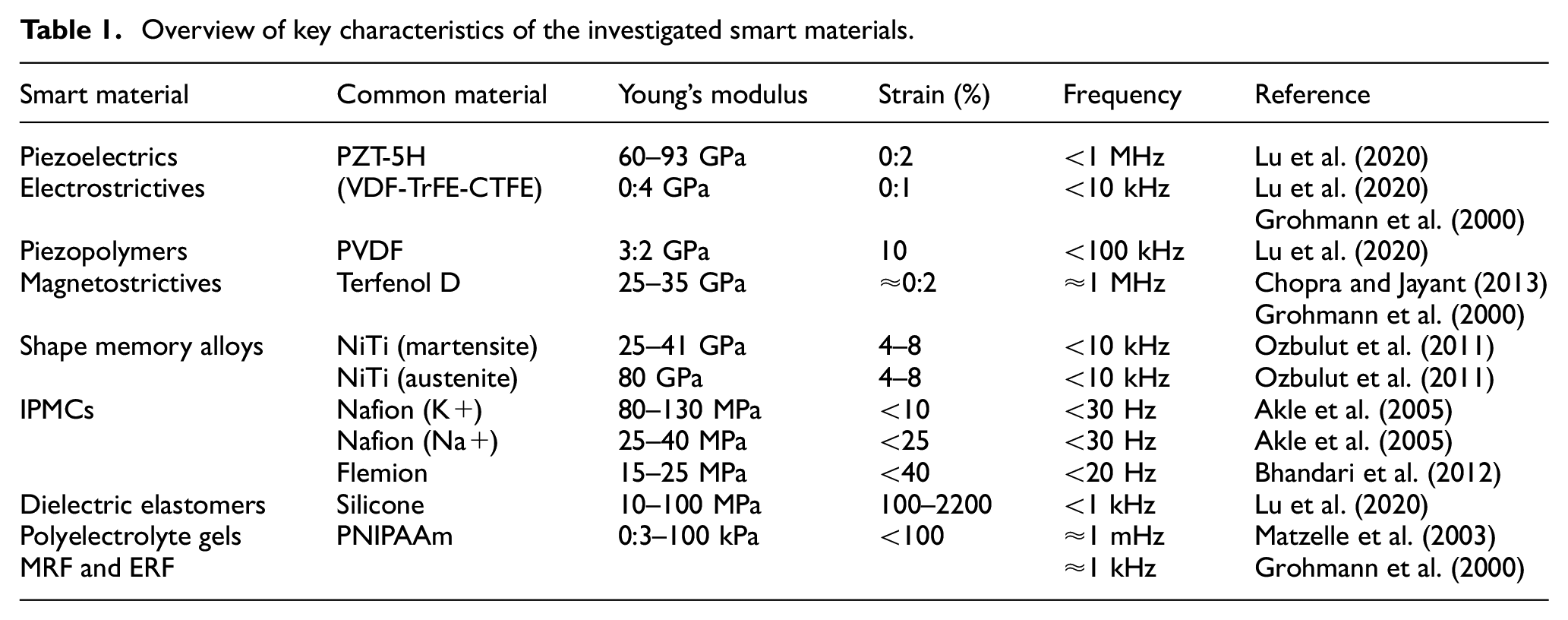
There are numerous examples of applications in architecture and civil engineering incorporating smart materials. In the past, the largest investments in smart materials for architecture were allocated to smart windows and façades (Addington and Schodek, 2005). But also ventilation systems, structural health monitoring, and the protection against seismic events are promising applications. Before going into detail with the application examples for smart materials in architecture, the general characteristics of the investigated smart materials are listed in Table 1 and depicted in Figures 2 and 3.
Overview of key characteristics of the investigated smart materials.
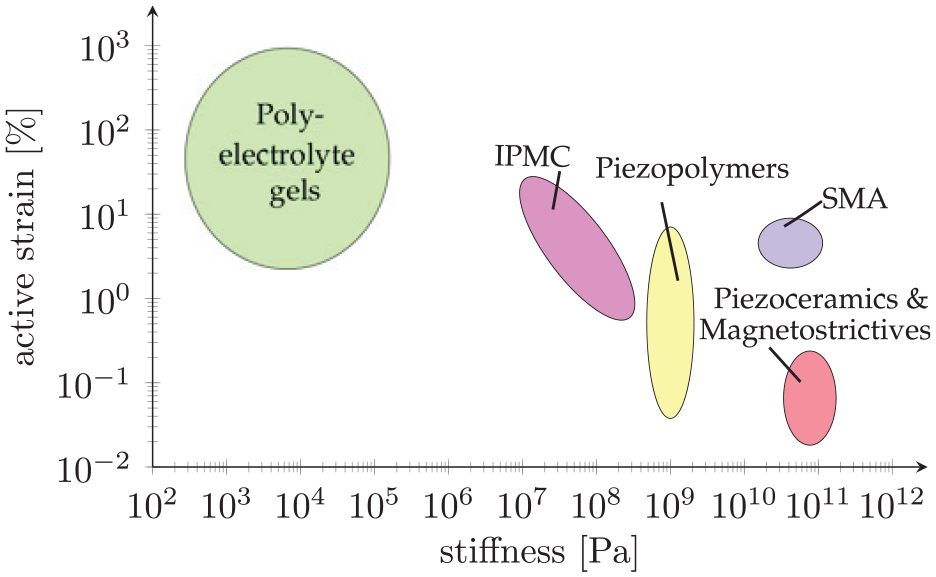
Classification of selected smart materials: active strain versus stiffness.
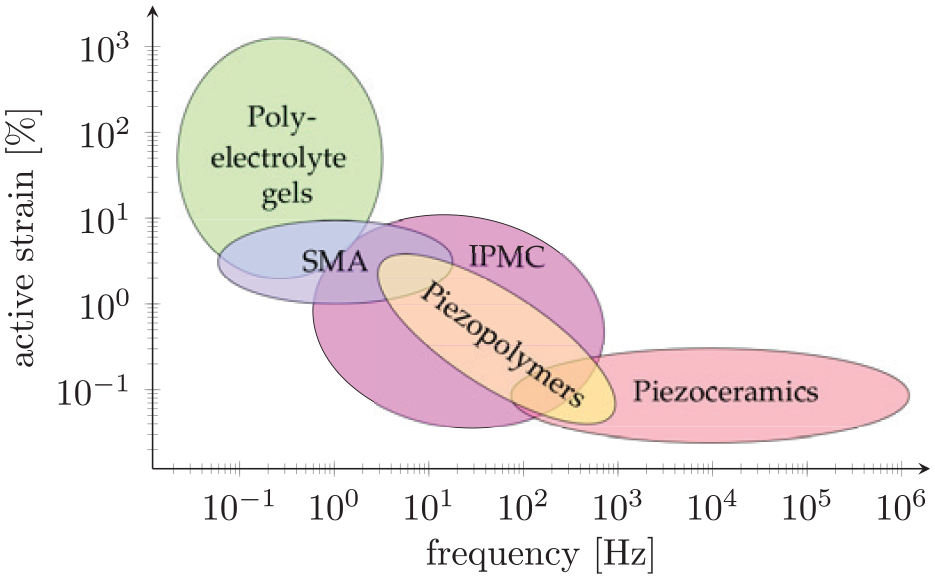
Classification of selected smart materials: active strain versus frequency.
4.1. Shape memory materials
Shape memory materials are materials which are able to recover their original shape upon being severely and quasi-plastically distorted, after a suitable stimulus was applied to the material (Huang et al., 2010a). This ability of recovery is called shape memory effect. Also, some shape memory alloys (SMAs) show superelastic properties. The superelastic effect describes the capability of a material to recover its original shape after being subjected to large strains (Ma and Cho, 2008).
The shape memory effect in SMAs was discovered as early as 1932 in an AuCd alloy. But only after the discovery of the shape memory effect in NiTi alloy, a broader interest in the material came up in the scientific community. Today, there is a wide range of shape memory based systems in the form of solid, foam, and film shapes. The SMAs of larger commercial interest are NiTi-based, Cu-based (CuAlNi and CuZnAl), and Fe-based (Huang et al., 2010a; Ozbulut et al., 2011). NiTi-based SMAs exhibit an excellent corrosion resistance and are biocompatible (Ozbulut et al., 2011). The frequency response of NiTi-based actuators ranges from 0.1–100 Hz with a normal working strain of 4%–8% (Ozbulut et al., 2011; Teh and Featherstone, 2007).
Other than SMAs, there is a huge variety of different shape memory polymers (Mather et al., 2009; Rousseau, 2008). Normally, shape memory polymers (SMPs) are less expensive than shape memory alloys (Huang et al., 2010a). In comparison to SMAs, SMPs exhibit a smaller mass density (Wagermaier et al., 2009) and their shape memory effect can be triggered by a variety of stimuli or even by multiple stimuli such as temperature and humidity (Huang et al., 2010b).
Out of the considered materials, shape memory materials are by far the most pronounced smart material in the domain of construction and architecture.
For the architectural field, Doumpioti et al. (2010) have described a prototype façade for the Piraeus Tower in Athens, Greece. For this the openings in the modeled façade are controlled using SMAs with an activation temperature of 35°C–40°C. Using this façade, the air flow and the light exposure is regulated. The façade is depicted in Figure 4(a). Utilizing actuators based on SMA springs and joints, Khoo et al. (2011), and Khoo (2013) manufactured three modular prototype systems for applications as second skin or shading device. The prototypes, namely a tent, a blind, and a curtain, were also showcases for the use of digital and physical computation to design architectural morphing skins. A numerical investigation using computational fluid dynamics (CFD) in Lignarolo et al. (2011) demonstrates, how SMAs or SMPs could be used to alter the surface roughness of high-rise buildings. This could be used to optimise the windflow and therefore the natural ventilation and the heat exchange due to the wind convection. A physical prototype of the used SMA façade elements is depicted in Figure 4(b). Liu et al. (2018) compare the use of SMPs and SMAs as environmentally-actuated hinges in folded sheet systems. The proposed kirigami structures could adapt to external inputs, such as heat, light, and human interaction. Liu et al. (2018) validated the use of SMPs as reversible two-way-hinges in proof-of-concept prototypes. Coelho and Maes (2009) proposed a system of SMA actuated louvers for controlling daylight and ventilation. Tashakori (2014) proposed a modular façade system actuated by SMA wires for sun-tracking and providing energy through photovoltaic. Loonen (2015) investigated the use of strips of shape-memory alloy for ventilation that respond to carbon dioxide concentration.
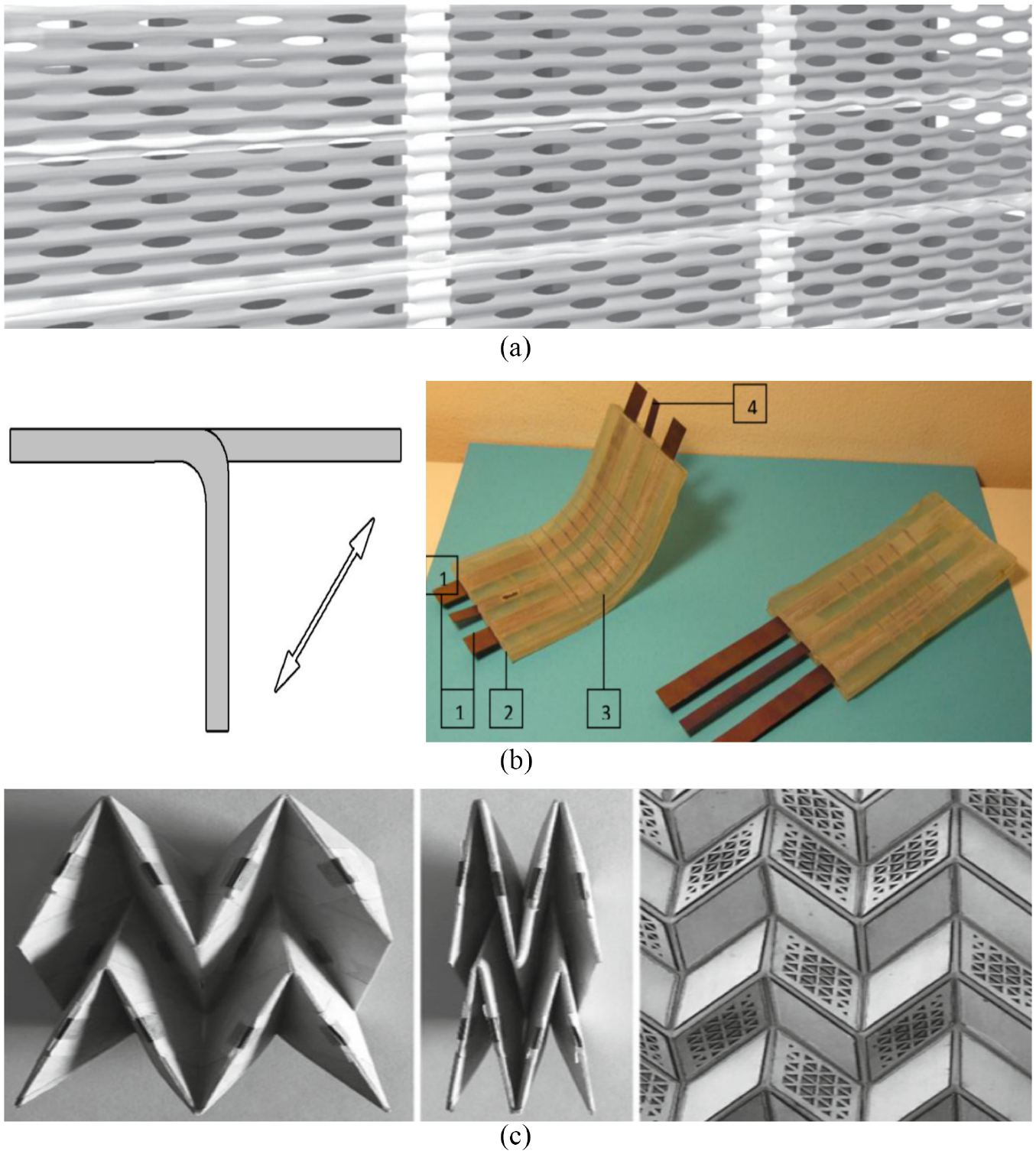
(a) Façade prototype with elliptical opening actuated with SMA wires. On the left, the slits are almost closed, on the right they are opened (Doumpioti et al., 2010),1 (b) scheme and physical prototype of smart composite as an air-bending façade element, adopted from Lignarolo et al. (2011),2 and (c) prototype of an SMA-based Miura-origami pattern as kinetic façade element, adopted from Albag et al. (2020).3 The wood skin is fabricated with plywood of 1 mm thickness.
In 2011, Lienhard et al. (2011) published a patented mechanism called Flectofin®. This SMA-driven shading device is inspired by the kinematics found in the bird-of-paradise flower and combines high tensile strength with low bending stiffness in order to get a wide range of controllable movement.
In an investigation in 2014, Sharaidin (2014) designed a kinetic façade, driven by SMAs which allows a temperature-dependent shading of the housing interior.
In the Living Glass prototype of the year 2007, Benjamin and Soo-in Yang set up a cast silicone membrane in which slits were actuated utilizing shape-memory alloy wire (Flexinol). When the carbon dioxide concentration in the air is exceeding a threshold, the SMA wire is activated to open the structure for ventilation (Kolarevic, 2015).
Using Origami folding techniques, Pesenti et al. (2015) studied ways to achieve various deployable shading systems using SMA actuators. Incorporating kinematics and kinetic constraints to the digital model, geometry, and wire linear deformation were successfully controlled. Felbrich et al. (2014b), Wiesenhuetter et al. (2016), and Felbrich et al. (2014a) also investigated the usage of origami-like folding techniques for architectural needs which could easily be extended by the implementation of SMA wires. With this approach, the generation of a target shape using simple rigid foldings by a finite number of collaborative agents was demonstrated.
In order to create an adaptive shading system, Abdelmohsen et al. (2016) designed a kinetic building façade using lightweight materials driven by SMA wires. With the adoption of tensegrity and folding mechanisms the mechanism is able to create different patterns as a reaction to different levels of daylight measured by optical sensors.
The concept of self-shading is widely found in cacti and other plants subjected to high solar exposure in order to lower thermal transmission. In the proof-of-concept project of Clifford et al. (2017), it is shown, that self-shading of structures like building façades could be achieved using smart materials. For this, smart tiles based on thermal-responsive SMA are designed which are able to wrinkle and reposition themselves.
In order to create adaptive structures like walls, roofs, or other kinetic structures driven by smart materials, Jun et al. (2017) created the project Remembrane. The structure is based on the principles of lightweight pantographs (crisscrossing sticks) and tensegrity (structural integrity by tension), where the Nitinol springs are actuated using voltage input controlled by an Arduino board. Still in the stage of prototype, this project’s goal is to be applied on architectural scale.
In 2018, Formentini and Lenci (2018) conceptualized a kinetic façade consisting on an Nitinol-actuated aluminum panel. Due to the large forces exerted by the SMA, the façade opens at temperatures above an activation temperature around 30°C. Analyzing the mechanical stress in the SMA wires using numerical simulations, about 105 functioning cycles are expected.
In Wang et al. (2018), a SMA-based joint mechanism is presented, which is able to tune its stiffness. The change in stiffness is achieved by switching between a locked and a released state. By tuning the stiffness in a controlled manner, an effective vibration control is possible to avoid resonance conditions, which might harm the structure. Other research in the field of active vibration control strategies has been published in Shahin et al. (1997), McGavin and Guerin (2002).
More dominantly, a passive vibration control for buildings using SMAs were conducted, based on their supereleastic effect: Wang et al. (2020) designed self-centering superleastic SMA devices for earthquake resilience of buildings. Ma and Cho (2008) demonstrated the feasibility of building SMA dampers for buildings in earthquake scenarios. Speicher et al. (2009) developed a tension/compression module for a seismic retrofit of building. For this, NiTi helical springs and NiTi Belleville washers were adapted. An analysis of load cases suggested that Belleville washer are beneficial for damping, whereas helical springs are the preferred choice for recentering and damping purposes.
The superelasticity of SMAs can be utilized for the design of bracing systems that are able to minimize earthquake damage on modular steel buildings. Sultana and Youssef (2018) used incremental dynamic analysis to investigate the benefits and drawbacks of such systems and found that they can significantly improve the resistance of buildings during earthquakes. Ozbulut et al. (2010) investigated the potential of SMA braces in tall buildings, optimizing the structure for minimum displacements and accelerations. The results were adopted in a full-scale shake table test. Torra et al. (2007) did an experimental and numerical analysis of SMAs as solid state dampers for a prototype family house, demonstrating that the SMA braces were able to cut accelerations by half in an “El Centro” earthquake scenario. The used SMA-based damper wires are depicted in Figure 5. Several other studies investigated the benefits of SMA braces in architecture during earthquake events including Shi et al. (2020), Lafortune et al. (2007), Auricchio et al. (2006), and Zhu and Zhang (2007). Re-centering of structures after large deformation can be achieved by integration of shape-memory alloys in a bracing system (Araki et al., 2014; Hu et al., 2013; Massah and Dorvar, 2014).
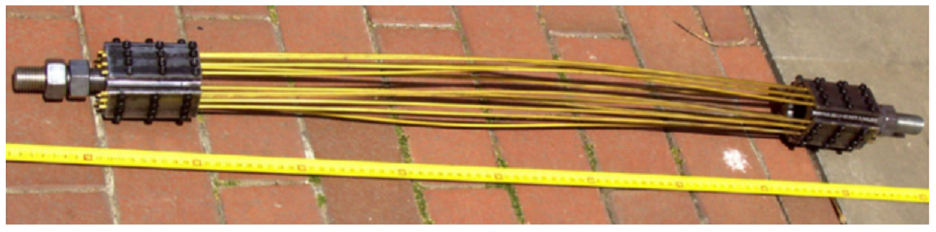
SMA-based damper wires, reprinted from Torra et al. (2007).1
A multitude of research in the field of beam-column connections was published in which the application of superelastic SMA bolts were proposed. Ma et al. (2007) investigated the benefits of using SMA bolts versus traditional connectors. It was demonstrated, that SMA connectors were able to bear higher loads without damage, whereas normal connections showed local buckling, which is very expensive to repair in post-disaster reconstruction.
Moradi and Alam (2015) analyzed moment-resisting steel frames under earthquake conditions and found that the amount of plastic deformations can be significantly reduced by implementing SMA plates into beam-columns connections. Using numerical simulations, it was shown, that this method offers large energy dissipation capabilities. Yurdakul et al. (2018) investigated the use of SMA bars to reinforce beam-column joints in a retrofit manner. The retrofit construction was able to withstand quasi-static cyclic loading up to 8% drift ratio, whereas the reference system exhibited brittle shear failure. DesRoches et al. (2010) and Ellingwood et al. (2010) evaluated the seismic performance of moment-resisting steel frames with superelastic and martensitic SMAs elements using numerical analysis as well as full-scale experimental testings. They demonstrated that martensitic SMA elements with large energy dissipation capabilities were suited best for high levels of seismic activity. On the other hand it was shown, that superelastic SMAs with self-centering capabilities were best in order to reduce residual deformations in the structure.
SMAs are also investigated as base isolation systems for the protection of civil structures during earthquakes. Huang et al. (2014) and Jalali et al. (2011) used a design for base isolation comprising superelastic SMA springs and a linear sliding mechanism. For this, a phenomenological model was utilized as well as an experimental two-story steel frame building. Using this approach, the shear forces, the maximum inter-story drifts and the occurring accelerations were reduced to 12.5% of the ones at the reference building without base isolation. Ozbulut and Hurlebaus (2010) investigated a similar base isolation device, but included environmental temperature effects on the device and implemented a neuro-fuzzy model capturing the material properties of the used SMA at the different test case scenarios. In order to evaluate the protection of internal equipment or other secondary systems during earthquakes by different base isolation strategies, Dolce and Cardone (2003) carried out shake table tests with base isolation systems based on rubber, steel-hysteretic and recentering SMA dampers. It was clearly confirmed, that all base isolation systems were able to considerably reduce accelerations compared to fixed-base structures. Also it has been demonstrated, that each isolation system is best suited only in specific frequency ranges. Shook et al. (2008) designed a hybrid base isolation system comprising of SMA wires, magnetorheological dampers, rubber, and friction-pendulum bearings in order to address different tasks during an earthquake event. Using this base isolation strategy, it was shown, that base drift could be reduced by 18% and maintaining structural integrity even during strong seismic activity. Dezfuli and Alam (2016) investigated the performance of different SMA wire-based rubber bearings to protect a three-span steel-girder highway bridges from breakdown due to seismic events. The increased stiffness of a SMA-natural rubber bearing resulted in a higher seismic acceleration and therefore in a more fragile system.
The system which was least vulnerable to earthquake related collapse was a bearing system based on SMA high damping rubber bearing. Casciati et al. (2007) proposed a different design for SMA base isolation systems consisting of two disks, a vertical cylinder and three inclined austenite SMA bars connected to a sliding system.
Mainly due to the high price of SMA, their application in architecture and construction is not widely established yet. One actual real-world implementation of SMA wires in a civil structure is reported by Indirli et al. (2001): During an earthquake in 1996, the S. Giorgio Church Bell-Tower in Italy was seriously damaged. During its rehabilitation, SMA devices were applied to the structure. When the next earthquake with a similar Richter magnitude occurred in 2000, the tower showed no damage of any kind. Further examples of reinforcement of cultural heritage sites damaged by earthquakes are the Basilica of St. Francis of Assisi and the San Serafino church in Italy (Croci, 2001; Indirli and Castellano, 2008; Martelli, 2008). As one of the first cases for post-tensioning of a concrete structure, a highway bridge in Michigan was repaired by reinforcement with SMA rods (Soroushian et al., 2001) resulting in a reduction of the crack width by 40%. Several other investigations were conducted to analyze the feasibility and efficiency of SMA base isolation devices on buildings by Qiu and Tian (2018), Huang et al. (2014), Cardone et al. (2006), and Yamashita et al. (2004) and on bridges by Johnson et al. (2008), Ozbulut and Hurlebaus (2011), Dolce et al. (2001), and Alam et al. (2012). Albag et al. (2020) designed a dynamic shading system based on a Miura-Ori pattern which is controlled by SMA-joints in order to obtain a temperature-adaptive shell mechanism (see Figure 4(c)). The project is situated in southern Siberia with ambient temperature of −40°C+30°C, which allows a control of the SMA transition only by natural temperature variation. Using human-controlled heating and cooling devices, the dynamic shading devices can also be manipulated manually.
Yoon (2021) used shape memory polymers (SMP) with a glass transition at 35°C in order to develop shading devices by exploiting environmental temperature changes. For this, a number of 3D printing fabrication tests were conducted following a research-through-design approach. As a result, basic elements for thermo-responsive building skins were prototyped including hinges, springs, iris, folding, and twisting elements. A comprehensive review on solar shadings implementing SMA, SMP, and SMH is given in Fiorito et al. (2016). Since Nitinol wire is costly, its large-scale application is often restricted by economical constraints. Another drawback of this material is the relatively low working frequency, which is determined by the time of cooling after actuation. Therefore, SMAs are mostly suitable for quasi-static tasks (Musolff, 2005). Also, SMAs suffer from a higher fatigue compared with classical construction material like steel (Wilkes et al., 2000).
4.2. Electrostrictive smart materials
The electrostrictive effect describes the deformation of a dielectric in the presence of an electric field. Electrostriction is the quadratic dependency of the strain to the electric field, whereas the linear dependency is described by the piezoelectric effect. The most pronounced material with electrostrictive effect is the solid solution of lead magnesium niobate and lead titanate called PMN-PT. It shows a maximum strain in the order of 0.1% induced by an electric field. Also they exhibit almost no hysteresis effect. Due to the quadratic relationship of the strain to the electric field, the induced strain is always of the same direction, independent of on the sign of the electric field. A major drawback of these materials is that a specific temperature range needs to be present for the electrostrictive effect to be large. Main advantages of this class of material are stability and the absence of ageing effects (Chopra and Jayant, 2013).
Despite of their favorable properties, during the literature review process, no relevant applications or investigations for electrostrictive materials in the field of architecture were found.
4.3. Magnetostrictive smart materials
Ferromagnetic materials are mechanically deformed, when a magnetic field is applied on them. This is due to the rotation of the domains of uniform magnetic polarization in the material. Conversely, if the magnetic induction of the material is altered due to a mechanical deformation it is called the inverse magnetostrictive or Villari effect. Prominent examples of magnetostrictive materials are Terfenol-D, Galfenol, Alfenol, Cobalt ferrite, or Metglas 2605SC.
Terfenol-D as the most pronounced magnetostrictive material exhibits a maximum strain of 0.2% under application of a magnetic field (Chopra and Jayant, 2013). It is widely known as a material for non-contact torque sensors, position sensors, stress sensors, and magnetic field sensors (Calkins et al., 2007). Magnetostrictive smart materials are frequently the material of choice to be used as magnetostrictive tags in non-magnetic composites for structural health-monitoring. Measurements of the magnetic flux near the material can be evaluated to gather informations on the damage occurring in the material (Addington and Schodek, 2005). Khazem et al. (2001) used magnetostrictive sensors for the monitoring of suspender ropes of George Washington Bridge in New York. Utilizing longitudinal guided waves traveling along the structure, defects, and cracks can be detected by the partial reflection of the signal. With this approach, large structures can be monitored very cost- and time-effectively. Na and Kundu (2002) proposed a combination of PZT transducer and electromagnetic acoustic transducer (EMAT) for non-destructive structural health monitoring of the interface between steel bar and concrete. The combination of PZT and EMAT circumvents the shortcoming of EMATs, which can only transmit relatively low ultrasonic energy—the PZT transducer is therefore utilized for signal generation during the inspection. Also magnetostrictives could potentially be applied for seismic vibration control. Fujita et al. (1998) conceptualized an active vibration control system for buildings in Japan. For this, the bending moment of the columns of a frame structure was controlled via magnetostrictive actuators inside of them. Large-scale vibration tests on a three-story house with a mass of 1.6 t were conducted with in total 32 magnetostricitve devices, achieving 15% of vibration reduction up to the third mode. Ohmata et al. (1997) investigated the usability of a three-link arm vibration control device, for seismic protection. For this a giant magnetostrictive actuator was made and tested for its effectiveness in vibration control. It was shown, that two- and three-dimensional vibration were effectively suppressed in a simple system comprising a mass and four springs. The working principle of this device is given in Figure 6. Zhou et al. (2006) investigated a similar system showing that for real-world usage of such vibration control system, the inherent material non-linearities must be considered in the design of the vibration control system. Monaco et al. (2000) carried out experiments on damage detection using magnetostrictive actuators and performing a statistical analysis. Hattori et al. (2001) were able to measure the distribution of cracks in concrete structures through low frequency elastic waves generated by magnetostrictive devices.
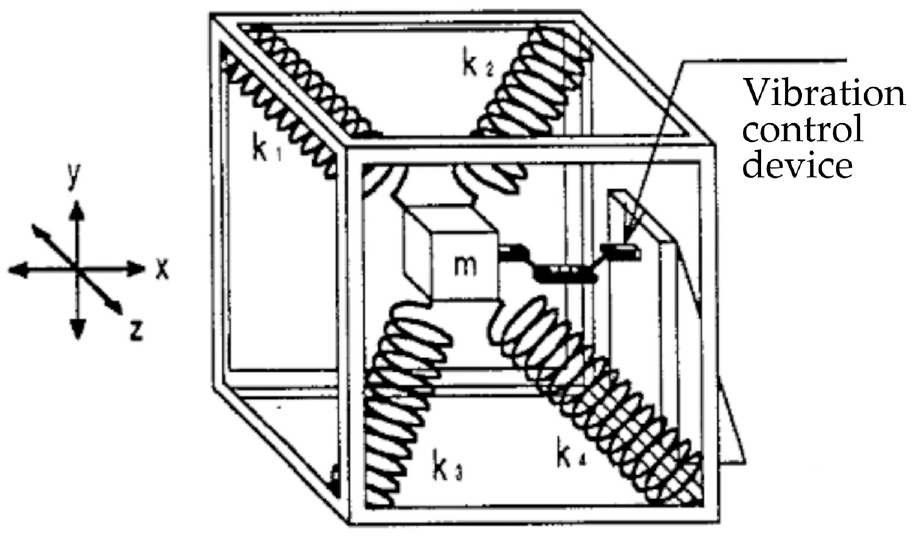
Active vibration control device using giant magnetostrictive actuators. The device is capable to produce controllable friction forces and torques in three directions.
4.4. Piezoelectric materials
The piezoelectric effect describes the linear relationship between the strain and the developed electric charge on the surface of the material. The effect of charge generation due to strain or pressure is called direct effect, which can be utilized for sensor applications or energy harvesting (Erturk and Inman, 2011). If a deformation is induced on the material due to an applied electric field, it is called inverse or converse effect, which can be used for actuator applications (Chopra and Jayant, 2013). Piezoelectric ceramics with its most prominent member lead zirconate titanate (PZT) exhibit some characteristics which are desireable for applications in the field of architecture and construction: Their properties comprise a stiffness in the range of 65–80 GPa, an active strain of 0.1% and an active frequency up to 1 MHz. By using displacement amplification mechanisms, the strain can be increased up to 10%.
Polyvinylidene fluoride (PVDF) is a semi-crystalline material with a strong piezoelectric effect and, because of its softness, normally adopted for sensor applications.
Due to their well-known mechanical and electrical characteristics, piezoelectric materials can be used for a variety of applications also in the field of architecture.
Using piezoelectric wires integrated in the surface of an elastic building skin, a ventilation mechanism for buildings, also called breathing skin was developed by Badarnah and Knaack (2007). Using a distinct lung-like shape, air can be either breathed in or out, depending on the actuation by the piezoelectric wires (see Figure 7(c)). The rate of the resulting air-exchange can be controlled by the velocity of the breathing motion.
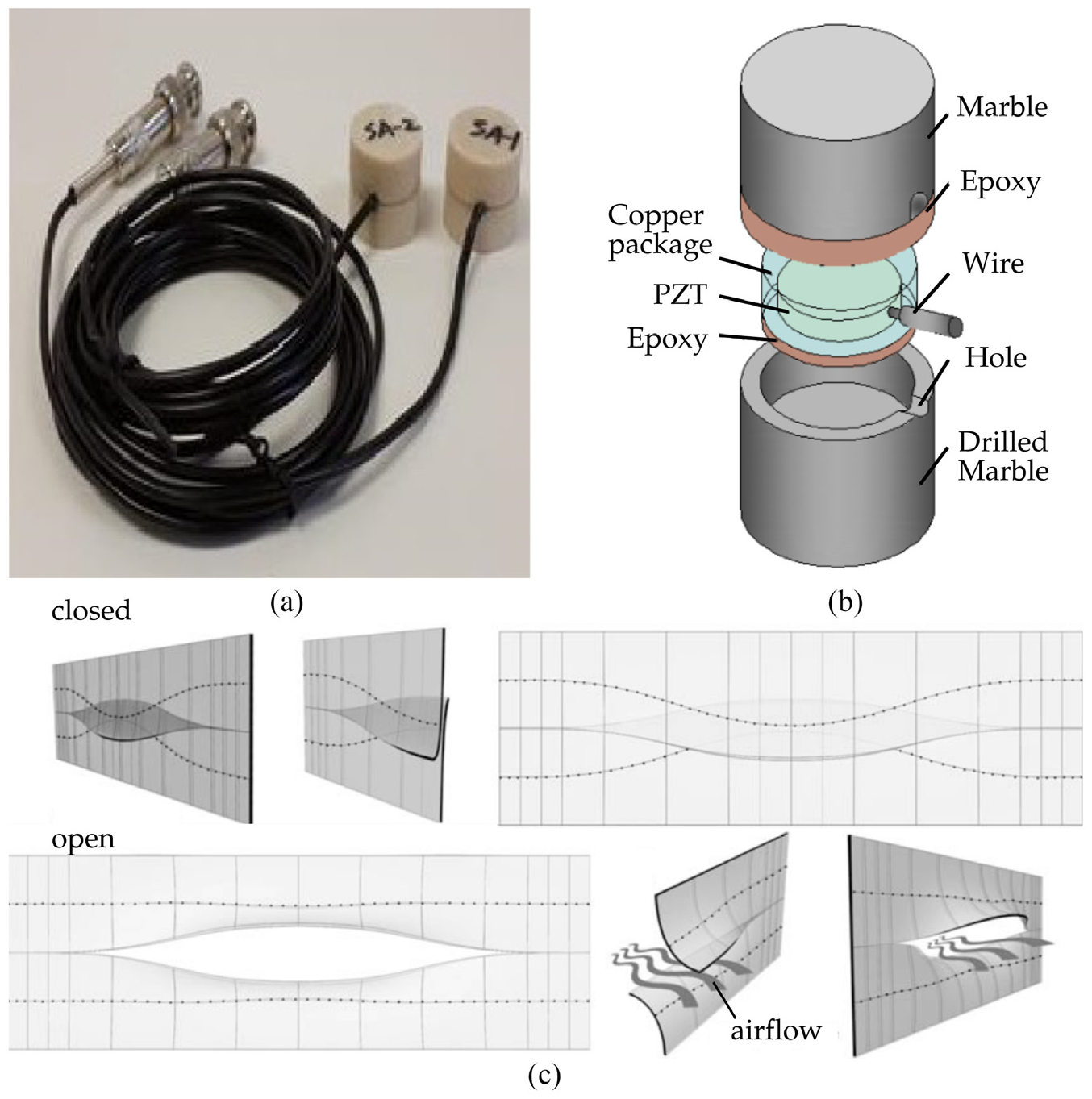
(a) Application of piezoelectric material in so-called smart aggregates (Chen and Xue, 2018),1 (b) schematic composition of a smart aggregate (Chen and Xue, 2018),2 and (c) application of piezo material for adaptive ventilation.
Implementing stacks of piezo actuators, Gaul et al. (2008) designed semi-active friction joints as dampers in large lightweight space truss structures. In order to optimize the placement of these joints, a numerical model was developed and tested on a 10-bay truss structure.
A major approach for structural health monitoring is based on the implementation of piezoelectric materials in civil structures, since these can be used as strain indicators for static, as well as for dynamic phenomena. Also piezoelectric materials can be used for the gathering of strain data occurring in the building using a set of distributed piezoelectric strain sensors (Chen and Xue, 2018; Fukuda and Kosaka, 2002).
In structural health monitoring (SHM), polyvinylidene fluoride (PVDF) is a widely used material applied in piezoelectric transducers for external application. Arranged in a wider matrix, these transducers are then used to monitor impedance signals for health monitoring of the mechanical structure (Song et al., 2004). A drawback for piezoelectric transducers like these is, that temperature and humidity variations as well as noise effects are factors diminishing the performance of these sensors (Chen and Xue, 2018). By the pioneering work of Song et al. (2008) the SHM inside of concrete structures with piezoceramic-based smart aggregates has become possible. These are waterproofed piezoelectric patches with lead wires which are mounted into the concrete structure. They allow the assessment of early-age concrete strength, impact detection as well as SHM. Due to their small dimensions, PZT smart aggregates have almost no influence on the integrity of the overall structure to be monitored, even if they are embedded into the bulk material (Chen and Xue, 2018). A PZT smart aggregate is depicted in Figure 7(a) and (b). Inside the structure, measurements of damage are assessed more accurately and the inclusion of the sensors into the structure has the advantage of protecting the sensor from environmental influences (Song et al., 2007).
In different investigations it was shown, that smart aggregates can be used to monitor reinforced concrete (Song et al., 2007), circular reinforced concrete columns (Gu et al., 2010), reinforced concrete shear walls (Yan et al., 2009), concrete frame structures (Laskar et al., 2009) as well as bridges (An et al., 2014). Modler et al. (2016) investigated compliant mechanisms based on integrated piezoceramic actuators for function-integrative structures. In this work, shape change is obtained by elastic deformation of the material instead of movement of joints.
Smart paint that utilizes piezoelectric particles can also be used for damage detection and assessment (Addington and Schodek, 2005).
Piezoceramics are also used for active vibration control devices. For this, a piezoelectric sensor and a piezoelectric actuator are placed on one structural member. In case the sensor picks up a vibration, the actuator is activated in order to mitigate vibrational movements (Addington and Schodek, 2005).
4.5. Ionic polymer-metal composites
Ionic polymer-metal composites (IPMCs) are smart materials belonging to the category of electroactive polymers. IPMCs are composed of a hydrated ionomer (Nafion or Flemion) membrane sandwiched between metal electrodes (Cha and Porfiri, 2014). They are one of the most promising smart materials because of their light weight, large actuation, and low driving voltage (Bhandari et al., 2012). There are a lot of applications for IPMCs in an actuator configuration, for example, as dust-wipers for planetary applications (Bar-Cohen, 2000), valve-less micropump (Lee and Kim, 2006), an active catheter system (Fang et al., 2007), jellyfish robots (Yeom and Oh, 2009), robotic fingers (Chew et al., 2009; Lee et al., 2006), or grippers (Shahinpoor, 2003; Shahinpoor et al., 1998). The actuation of an IPMC is shown in Figure 8.
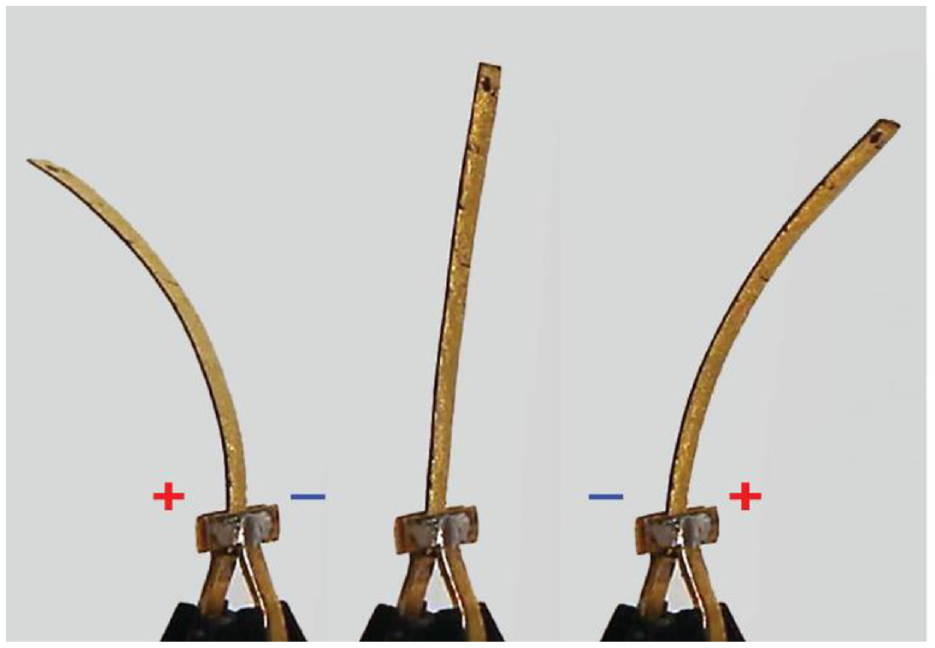
IPMC in clamped cantilever configuration.
Also, IPMCs were shown to be promising for sensoric applications including flexible sensors for wearables (Ming et al., 2018), nanosensors (Shahinpoor, 2008), or tactile sensors for biomedical applications (Bonomo et al., 2008).
Exhibiting a small possible force which can be exerted by IPMC actuators, they cannot be used for lifting or moving heavy loads and therefore do not seem to be the first choice for actuatoric applications in architecture. Also, we found only few relevant applications or investigations for IPMCs as sensors in this field. There are some reports on IPMCs used as vibration and seismic sensors: Brunetto et al. (2008) reports an early vibration sensing Nafion-based IPMC structure in a cantilever configuration. The device was tested using a shaker device and found adequate sensitivity as well as a linear response.
Ando et al. (2012) demonstrate the usability of a hybrid device consisting of an IPMC sensor in a cantilever configuration immersed in a ferrofluid. Under the influence of magnetic fields, the density distribution in the fluid can be manipulated which as a result changes the properties of the sensor characteristics of the whole device. This leads to a tunable sensor which changes its resonance frequency as a function of the applied magnetic field strength.
4.6. Polyelectrolyte gels
Polyelectrolyte gels or hydrogels are polymer gels which have the capability to reversibly swell and deswell in the presence of a solvent (e.g. water) depending on an external stimulus (Sobczyk and Wallmersperger, 2018). Examples for such stimuli are pH value, temperature, specific ions, or light exposure. One of their most interesting characteristics is that they can be designed in such a way, that multisensitivity (Ehrenhofer et al., 2020) is possible—that means that a hydrogel will respond only if two stimuli occur simultaneously. They exhibit very large strains and high energy densities. The main drawbacks of this material are their very low mechanical stiffness and strength as well as that the swelling kinetic is size-dependent. Therefore, for non-micro application, the swelling time is very long. Utilizing polyelectrolyte hydrogels, structural health monitoring with respect to the chemical composition of civilian structures is possible (Culshaw et al., 1996; Lu et al., 2019; Michie et al., 1995). A typical measurement device consists of the hydrogel wrapped with an optical fiber and a helical wrap for close contact of the fiber and the hydrogel. In presence of water, the hydrogel expands in volume. This can be measured by a change of the backscatter signal strength in the location of the bend. Even though this device was primarily designed for the detection of water ingress (Michie et al., 1995), it can also be utilized to detect changes in pH (Lu et al., 2019), which might, for example, be critical in nuclear power plants (Lu et al., 2019) or liquid hydrocarbon (MacLean et al., 2001). A schematic representation of the device is depicted in Figure 9(a).
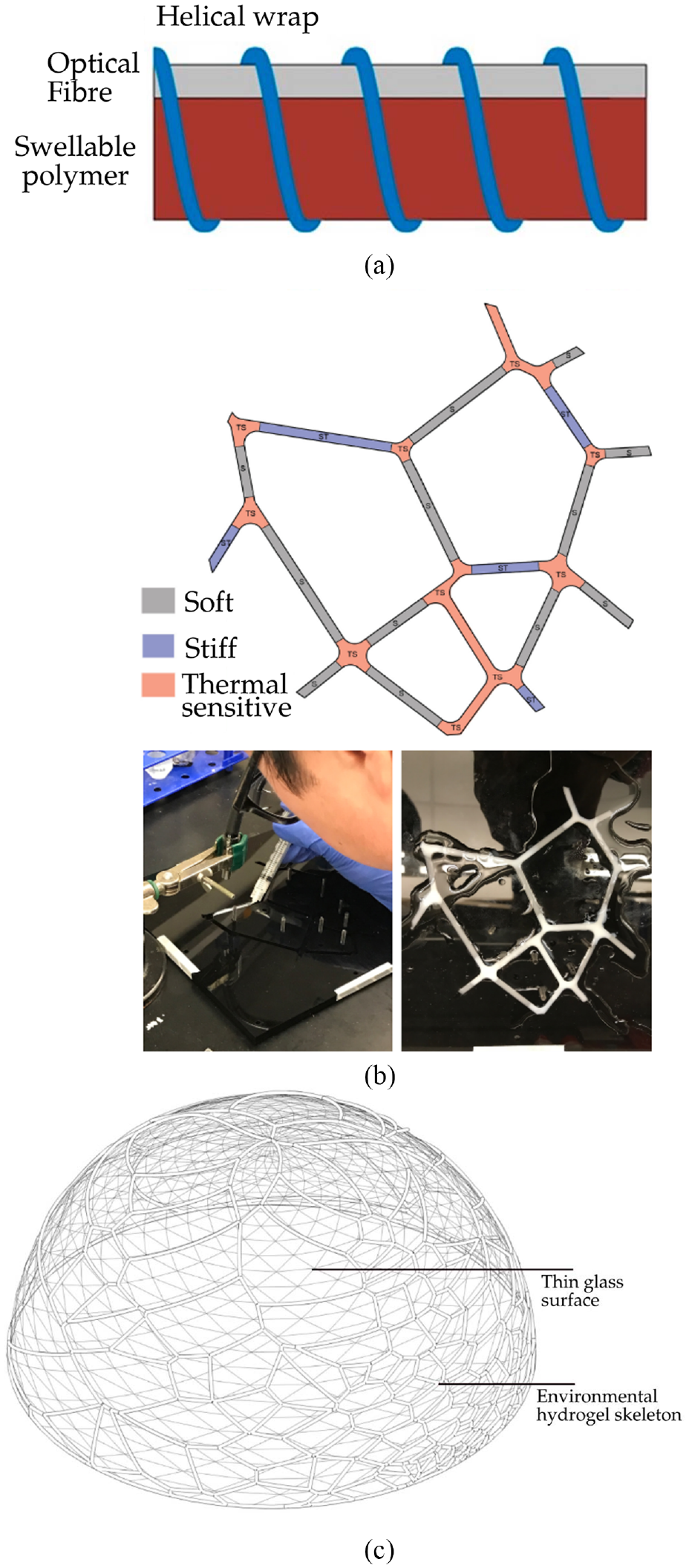
(a) Scheme of a hydrogel-based sensor. In the presence of an analyte, the hydrogel swells. The mechanical perturbation exerted on the optical fiber is measureable and therefore the analyte can be detected as well as located from a distance (Lu et al., 2019),1 (b) scheme and prototype of a soft structural component comprising thermal-sensitive hydrogels (Khoo and Shin, 2018),2 and (c) a soft dome made of the structural components shown in (b) (Khoo and Shin, 2018).3
Winkler et al. (2020) present investigations for design and simulation of tailored active material encapsulations based on hydrogels. This methodology could also be used to design furniture or interiors with tunable rigidity.
Khoo and Shin (2018) designed an early prototype of a responsive building envelope with integrated skeleton and surface with hydrogels as base material (see Figure 9(b) and (c)). The used hydrogel is thermo-sensitive and mechanically strong. In order to prepare large-scale envelopes in the larger dimensions, further research is needed to further enhance the toughness and durability of the material.
Due to their size-dependent swelling response time as well as their low mechanical strength, hydrogel actuators are difficult to implement into large and heavy civil structures. In an attempt to overcome this flaw, Poppinga et al. (2018) described how water uptake and drain is used in nature to actuate plant structures in response to ambient weather conditions. As a result, large structures might be actuated by a large number of small hydrogel cells with a considerably smaller response time each. Ehrenhofer and Wallmersperger (2020) combined an active hydrogel layer with a passive layer to create shell-forming structures. Depending on the swelling state of the hydrogel layer, the resulting shell exhibits a different bending stiffness. This structure therefore can be used to create soft rollable sheets with controllable bending stiffness. Smith (2017) tested prototypes for controlling environmental functions in hot-arid climates through hydrogel actuated lightweight ventilation cooling and daylight systems. The controlled deformation of the hydrogels could be used as adaptive liquid lenses for daylight control as proposed by Heinzelmann (2018), who developed a light redirection system using light responsive hydrogels based on poly (N-isopropylacrylamide) (pNIPAAm).
4.7. Dielectric elastomers
Dielectric elastomers are basically capacitors with soft electrodes and a soft dielectric. Upon application of a high voltage of multiple kilovolt, the electrodes will attract each other due to electrostatic forces. This leads to a transverse deformation. DEAs can be used as actuators with high energy densities and frequencies and large strains. Major drawbacks are their small mechanical strength and the very high driving voltage (Leo, 2007).
In the working group of Kretzer and Rossi (2012) and Shimul (2017), experiments were conducted to implement DEAs in basic architectural elements. Some prototype models are developed for projected architectural applications.
In the work of Kolodziej and Rak (2013), a responsive building envelope with soft pore openings made of DEAs is conceptionalized and numerically investigated (see Figure 10(a)). For this, a homeostatic circle is defined for opening and closing under local environmental conditions. Using CFD simulations, it is shown, that the heat and humidity of the interior can be exchanged sufficiently with the exterior, compare Figure 10(b).
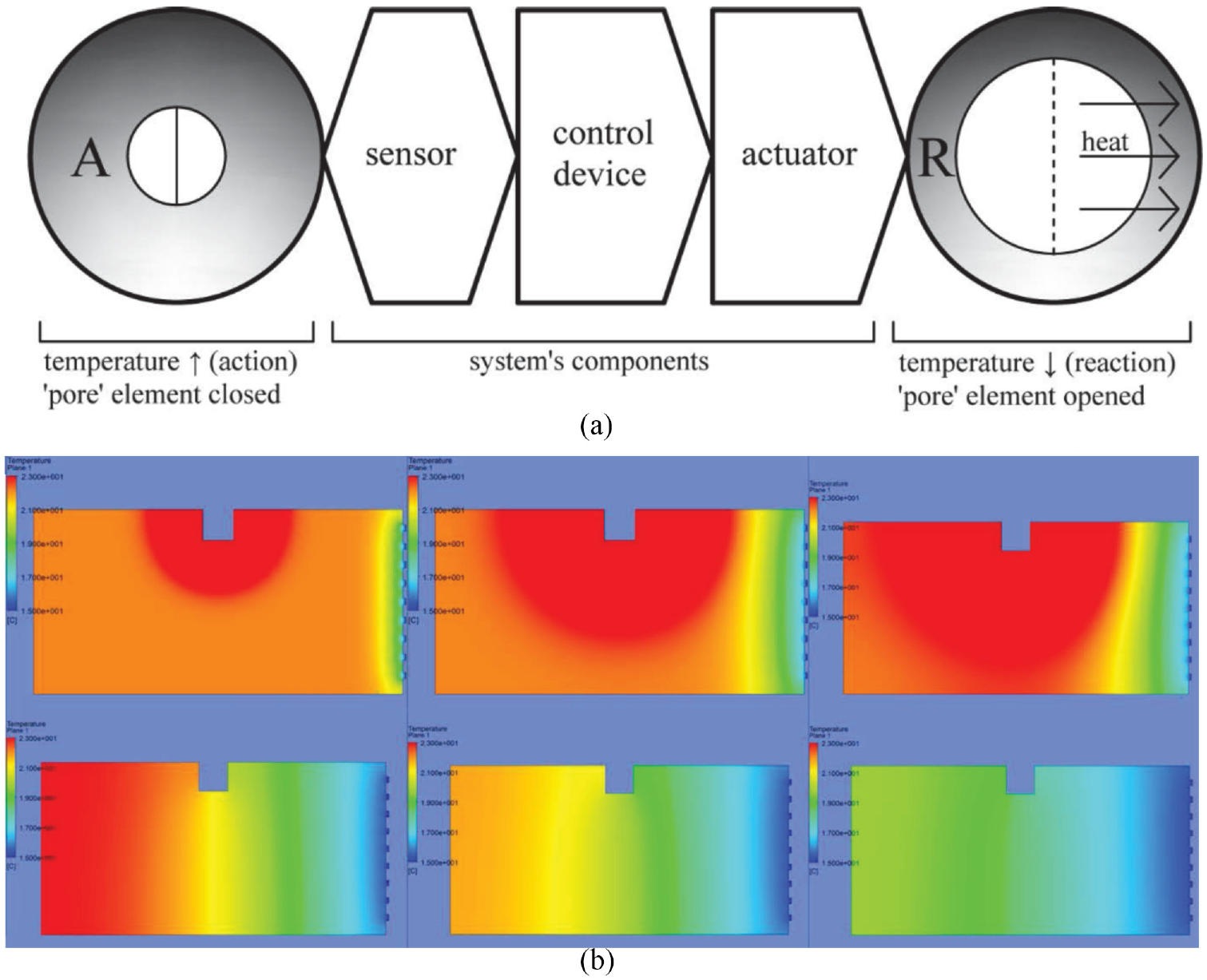
(a) Scheme of the elementary cell of a responsive building envelope with actuated opening made of DEAs (Kolodziej and Rak, 2013)1 and (b) simulation results of the proposed responsive building envelope and its impact on the interior and its temperature (Kolodziej and Rak, 2013).2 As can be seen, the proposed system is able to cool down the inside of the building.
Henke and Gerlach (2016) proposed a multi-layer configuration of a beam incorporating DEAs or SMAs. By an active control of the smart material, the stiffness of the overall mechanical device can be controlled via the control of the area moment of inertia. In order to achieve a significant change in flexural stiffness, a large number of layers need to be stacked. Homeostatic Façade System by Decker Yeadon LLC (Decker, 2013) uses DEAs to adjust to changing amounts of sunlight and temperatures. The active polymer is supported by a passive but flexible core. The percentage of openings in the façade is thus controlled to adjust the solar heat gain accordingly. Mossé (2011) investigate two prototypes for interior design that showcase the potential application for minimum energy structures based on dielectric elastomer actuators.
4.8. Magneto- and electrorheological fluids
Magneto- or electrorheological fluids are fluids with an amount of suspended particles which react on the presence of magnetic or electric fields. Upon the application of such fields, the particles will form chainlike structures, which will change the rheological properties of the fluid, like its viscosity.
Since the viscosity of magneto- and electrorheological fluids can be controlled by external magnetic or electric fields, they are ideal candidates for applications where vibration control is desired. For this the magneto- or the electrorheological fluid is encased in the structure to alter the vibratory characteristics of the overall structure. Using this methodology, base isolation technologies were applied very successfully for damage control during earthquake events (Addington and Schodek, 2005).
In a theoretical approach, Ramallo et al. (2002), and in an experimental study, Yoshioka et al. (2002), show the advantages of a smart base isolation using a combination of passive low-damping elastomeric dampers and magnetorehological fluid dampers over conventional lead-rubber bearing isolation systems. For this, several historical earthquakes were analyzed in order to reveal the limited performance of passive systems and the potential advantages of smart dampers are demonstrated. In Usman et al. (2009), a numerical investigation is conducted, investigating magnetorheological elastomers for the application in base isolation systems for civil engineering structures in the event of earthquakes, showing the advantage of controlled base isolation systems versus passive ones.
Christie et al. (2019) described a tunable seismic damper comprising of a magnetorheological fluid, a planetary gear-box and a pendulum mass connected to a torsional spring, compare Figures 11(a) and (b). By induction of a magnetic field, the damping torque of the magneto-rheological fluid is altered which as a result changes the overall resonance frequency of the system. Using this approach, a reduction of peak acceleration and peak relative displacement by 22% and 12.8%, respectively was reported. Further examples of vibration damping and seismic protection of buildings are given by Carlson (2001), Johnson et al. (1998), and Jung et al. (2005). Spencer et al. (1998) investigated large magnetorheological fluid dampers to control wind-induced vibrations in cable-stayed bridges.
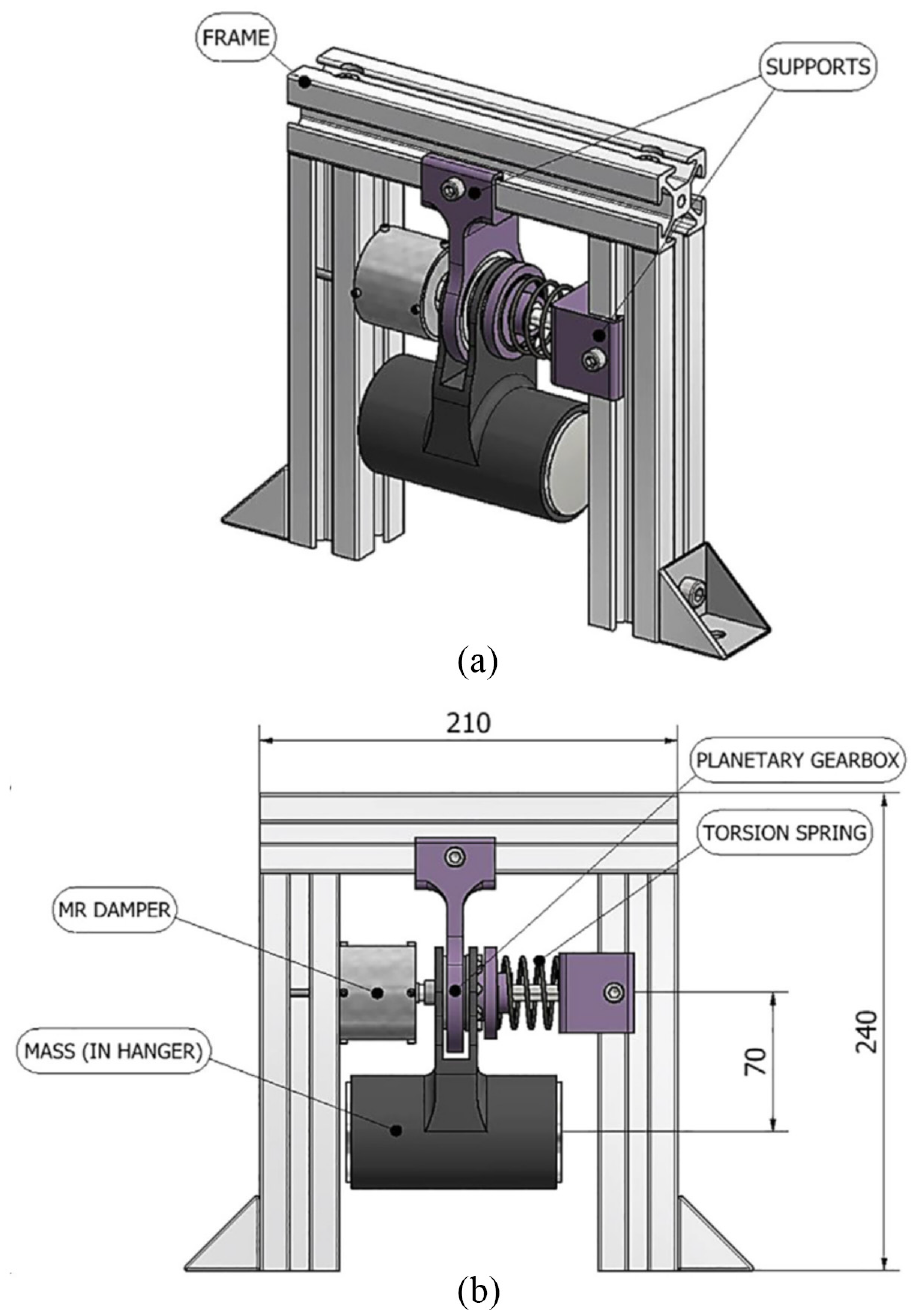
(a) Isometric view and (b) front view of a CAD model of a magnetorheological-fluid based pendulum tuned mass damper for seismic vibration.
5. Resume
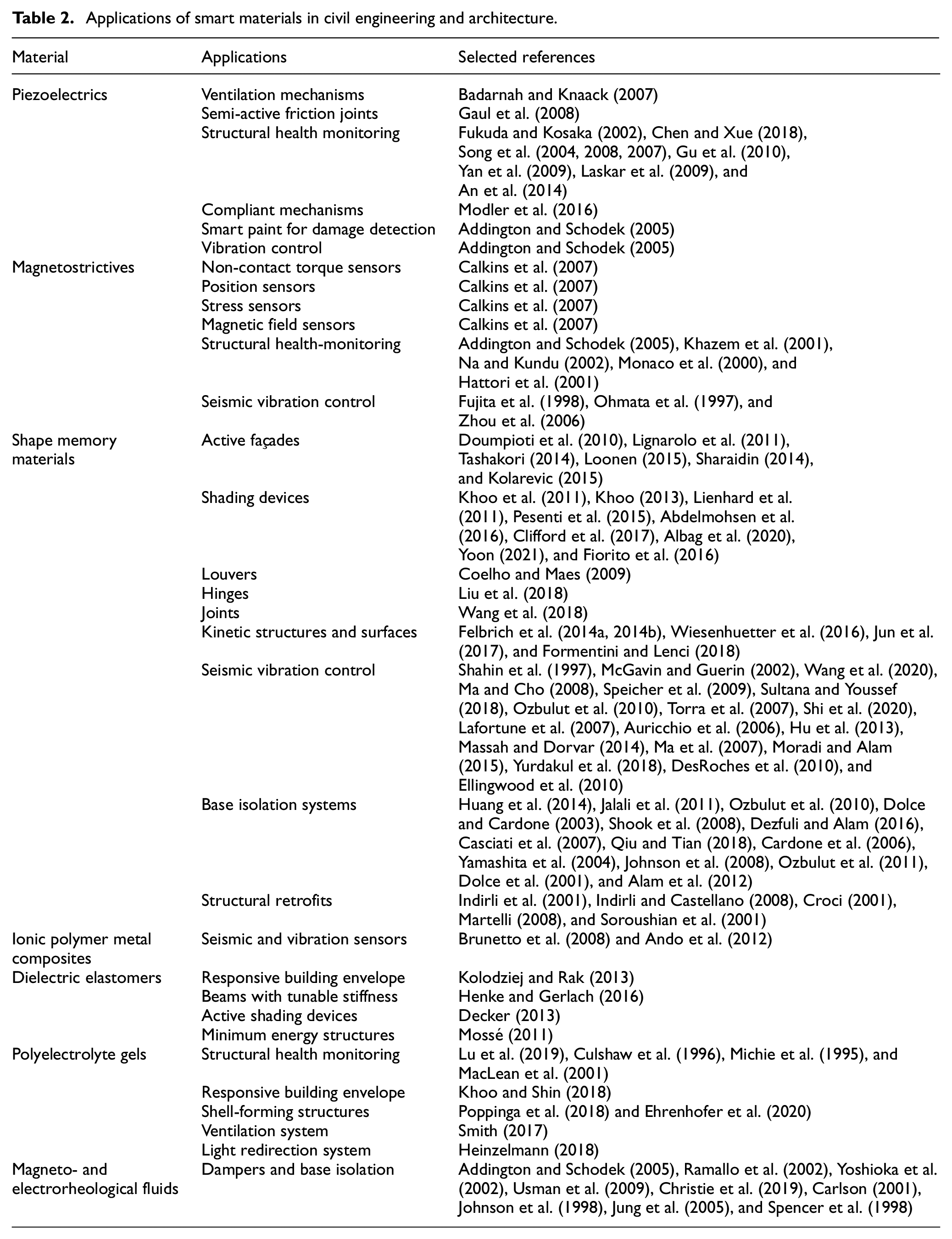
After having explained the different smart materials and some decisive applications, in Table 2 a summary of the applications of the reviewed smart materials in the field of civil engineering and architecture is given.
Applications of smart materials in civil engineering and architecture.
In order to make smart materials more common in the field of civil engineering and architecture further research and development have to be conducted. SMAs are still expensive. Improving the manufacturing process with regard to economics would significantly increase their usage potential for architectural applications. Also, further research on improving its tolerance against fatigue is needed.
Electrostrictive materials as well as piezoelectric materials are both well established as sensor materials in the field of civil engineering. For piezoelectric and magnetostrictive transducers, both mass production and consumer availability are given.
IMPCs on the other hand are still not easily accessible on the market. Here, a lot of research still has to be done in order to increase reproducibility and establish a reliable production process. Also fatigue is an important issue, that has to be addressed before a potential long-term application in civil engineering becomes realistic.
Polyelectrolyte gels respond to many external stimuli, which might become a game changer for indoor monitoring one day. But for this, a lot of research still has to be done: The synthesis of polyelectrolyte gels is still challenging with respect to reproducibility of the results. Also the size-dependence of their response time is a major drawback, which has to be addressed in order to use polyelectrolyte gels for actuatoric applications.
DEAs are also still at the stage of development and therefore there are no standard components available to simply buy and use.
For magneto- and electrorheological fluids, an application in the field of vibration control seems to be most promising. Here further considerations on the economic advantages of such devices are required.
6. Conclusion and outlook
This paper reviewed key trends for the application of smart materials in architecture and civil engineering. As has been shown, piezoelectric technologies are by far the most mature class of smart materials used in this field, especially for sensoric applications as well as in cases when fast reaction is desired. Shape memory materials also showed a strong progress in the recent years, especially when used for actuator technology by which larger displacements are realized. Magnetorheological fluids are already being used in the field of civil engineering, especially in the field of seismic and vibration control due to their variable stiffness. But also magnetostrictives are established materials for sensoric applications especially in the field of structural health monitoring and potentially also for seismic control. The paper has shown that on the basis of extensive fundamental research on smart materials and technologies various successful applications could be implemented in the architectural and engineering context already. Being on different level of technical readiness and maturity, however, the presented approaches and solutions indicate a strong potential for an alternative future architecture whose intelligence not only results from retrofitting with information and communications technology appliances, but from smartness deeply embedded in the physical structures of its structural components and materials. To explore these far-reaching prospects, comprehensive inter- and transdisciplinary research efforts are necessary. In addition to further investigations of the application potential of smart materials, also new design approaches in architecture and civil engineering become necessary. The new view on built environments as active, dynamic, and responsive structures also demands innovative conceptual methodologies that effectively bridge between materials science on the one hand, and environmental and sociological research, architectural and structural design on the other. Demands and requirements need to be systematically derived from concrete challenges and application scenarios (e.g. fast climate adaptation for lightweight structures in desert environments), to be adequately translated into tasks for researchers in the field of structure and materials science. Vice versa, the immense opportunities arising from the innovative application of smart materials (e.g. large shape transformation with minimal energy effort) need to be boldly explored in the fields of design and construction. The intersection and integration of these approaches promise great benefits, especially for the purposeful design and programing of new behaviors of spatial structures. Buildings and spaces equipped with such active programs will be more responsive and adaptive to new functions and uses, and more resilient to volatile changes of environmental and social conditions.
Footnotes
Declaration of conflicting interests
The author(s) declared no potential conflicts of interest with respect to the research, authorship, and/or publication of this article.
Funding
The author(s) received no financial support for the research, authorship, and/or publication of this article.
