



Abstract
Shape Memory Alloys (SMAs) exhibit a complex material behaviour due to thermo-mechanical coupling. At present, the understanding of their material behaviour under different thermo-mechanical loading conditions relevant to civil engineering applications is lacking even though they have been widely used in the past decade or so, for example mechanical behaviour at constant stress but variable temperature loading has not received much attention in civil engineering. In this study a comparative analysis of the mechanical behaviour of various NiTi-based SMAs is carried out to investigate: (1) stress-elongation and stress-temperature response under direct tensile loading; (2) thermo-mechanical behaviour under constant stress condition but under variable temperature loading (to investigate their ability to exhibit shape memory effect, if any, while carrying load); and (3) the ability to develop and retain recovery stress at room and sub-zero temperatures. Essentially, all these tests aim at investigating the potential/limitations of the SMAs in civil engineering in particular re-centring and heat-activated prestressing applications. The results from this study showed that at a constant stress of 600 MPa a large forward transformation strain, in the range of 5%–11%, is produced in NiTi-based SMAs when the temperature is lowered to or below the room temperature. This material behaviour of NiTi-based SMAs could be detrimental in many civil engineering applications of NiTi-based SMAs. However, all NiTi-based SMAs used in this study were found to have a good potential for re-centring applications, but only austenitic NiTi-based SMAs were found suitable for long-term prestressing applications. The maximum recovery stress developed on heating with constrained boundary conditions ranged between 230–750 MPa.
1. Introduction
Over the past few decades, many different types of shape memory alloys (SMAs) have been developed. Due to their unique material properties, SMAs have attracted the attention of many civil engineer researchers. In civil engineering, however, mostly NiTi and Fe-based SMAs have been used. NiTi-based SMAs exhibit the most effective memory and superelastic properties among all known polycrystalline SMAs (Shaw et al., 2008). The selection of a particular SMA type depends on the intended application. SMAs can be used in a wide variety of applications in civil engineering. In general, they are selected either to make use of their pseudoelastic feature (i.e. superelasticity), for example, in superelastic bracing systems for seismic applications (Dolce et al., 2000; McCormick et al., 2007) or the shape memory effect (SME), which includes applications such as active confinement (Choi et al., 2008; Shin and Andrawes, 2009; Suhail et al., 2020a) and heat-activated prestressing (Czaderski et al., 2006; Shahverdi et al., 2016; Sinha et al., 2020; Suhail, 2018; Suhail et al., 2015, 2018, 2020b). As SMAs have started to gain wide acceptance as a civil engineering building material, understanding the complex material behaviour of SMAs from a civil engineering perspective is imperative. Although many studies have been conducted on material characterisation of SMAs in the past (Dolce and Cardone, 2001; Dommer and Andrawes, 2012; Ozbulut et al., 2015, Suhail et al., 2016, 2020c) however, one important aspects of the material behaviour of SMAs that has been overlooked or received only minimal attention is the effect of external stress/applied pre-strain on the transformation temperatures and the subsequent consequences, due to shift in the transformation temperatures, on the safety and efficacy of SMA application.
Literature has shown that the unique material behaviour of SMAs is accompanied by a highly complex material behaviour and as stated by Shaw et al. (2008)‘It is not an amateur sport’. Depending upon the alloying elements and thermo-mechanical treatment SMAs exhibit different behaviour in different conditions and are highly sensitive to variation in temperature, phase in which it is used, loading pattern, strain rate and pre-strain conditions. Literature (Dagdelen et al., 2020; Daly et al., 2007; Funakubo, 1987; Hartl et al., 2006; Otsuka and Wayman, 1999; Saburi, 1999; Zhao et al., 1990) shows that even a slight variation in the percentage content of the alloying elements of SMA can result in significantly different thermo-mechanical properties. For example, a small increase in Ni content from 50% in equiatomic
This paper does not intend to present a complete review of the materials science and mechanics of the SMAs as the literature regarding this is extensive. For a comprehensive review on the thermo-mechanical behaviour of SMAs and the parameters that effect the thermo-mechanical behaviour of an SMA, readers are directed to ref. (Churchill et al., 2009a, 2009b, 2010; Kumar and Lagoudas, 2008; Otsuka and Wayman, 1999; Shaw et al., 2008; Suhail, 2018). In this paper, focuses is laid on the effect of external stress/applied pre-strain on the transformation temperatures and subsequent consequences on the civil engineering application such as in bracing systems and heat-activated prestressing. Several studies (Brinson, 1993; Liang and Rogers, 1997; Todoroki, 1990; Wu et al., 2003) have been carried out in the past to investigate the dependence of transformation temperatures on applied stress (constant stress). It is well established that under the external stress there occurs a shift in the transformation temperature of SMAs. Wu et al. (2003) showed that transformation temperatures under applied stresses vary non-linearly. They found that transformation temperatures are linear function of applied stress up to at a stress level of
The shift in the phase transformation temperature due to applied pre-strain has implications on the recovery stress also. Pre-strain, transformation temperature and recovery stress share a complex relationship. Suhail et al. (2020b) showed that forward transformation temperatures follow a linear relationship with applied pre-strain that is, greater the applied pre-strain, greater in the shift in the forward transformation temperatures. Other studies (Choi et al., 2013; Li et al., 2003; Proft and Duerig, 1990) have shown that recovery stress not only depend on the chemical composition and transformation temperatures of an SMA but also only the level of pre-strain applied. Proft and Duerig (1990) showed that the recovery stress in NiTiFe (47%Ni, 50%Ti and 3%Fe (at. wt.%)) SMA varied significantly with the applied pre-strain. The recovery stress in NiTiFe first with the increase in the level of pre-strain up to a certain point and then it decreases. The same trend was observed by Suhail et al. (2020b) for NiTiNb SMAs. For a safe an effective use of SMA in heat-activated prestressing applications, the shift in the phase transformation in SMAs should be such that the forward transformation temperatures are well above the room temperature so that applied pre-strain (deformed shape) is retained at room temperature and the shift in reverse transformation temperatures does not cross the minimum temperature expected in the proposed application.
The dependency of phase transformation temperature on applied stress or applied pre-strain could be a crucial piece of information required for deciding the suitability of an SMA for a particular civil engineering application. Therefore, in this study, an experimental programme was carefully planned to investigate this behaviour. A discussion on the implications of applied stress dependency of transformation temperatures, and on the thermo-mechanical behaviour of prestressed SMAs is also presented. To present a comparative analysis of different SMA types, five different types of NiTi- based SMAs commonly used in civil engineering are investigated in this study.
2. Materials and experimental procedures
Five different types of NiTi-based SMA wires were procured for this study. SMA were either binary NiTi composition or ternary with Niobium added to the NiTi matrix. The SMAs were bought from two different suppliers, Xi’an Saite Metal Materials Development Co., Ltd, China (Supplier 1) and Intrinsic Devices, Inc., USA (Supplier 2). The diameter of the SMA wires varied between 2.0 and 2.2 mm. No information of the thermo-mechanical treatment or heat treatment history was available. SMAs were however said to retain the pre-strain on unloading.
2.1. Material characterisation
Chemical composition of the SMAs used in this study was determined using Energy-Dispersive X-ray (EDX) analysis. An FEI Quanta 600 scanning electron microscope (SEM) equipped with an energy dispersive X-ray analyser was used to obtain the EDS spectrum of the samples. The samples, 2 mm in height, and diameter equal to the diameter of the wire, were cut from the as-received SMA wires using wire electrical discharge machining (EDM) and cast in an electrically conductive resin. Samples were then polished before placing them in the SEM for analysis. The phase transformation temperatures of the SMA wires were determined by differential scanning calorimetry (DSC) using a Perkin Elmer diamond DSC. The start and finish temperatures of the phase transformations were determined from the upright and inverted bell-shaped peaks found in the DSC curves of the SMAs.
2.2. Thermo-mechanical tests
SMA specimens, taken from the as-received SMA wire, were tested under different thermal and mechanical boundary conditions to study their thermo-mechanical behaviour at room temperature, see Table 1 for the summary of all thermo-mechanical tests conducted in this study. The original undeformed length of the specimens in all thermo-mechanical tests was kept same, equal to
Summary of the thermo-mechanical tests conducted in this study.
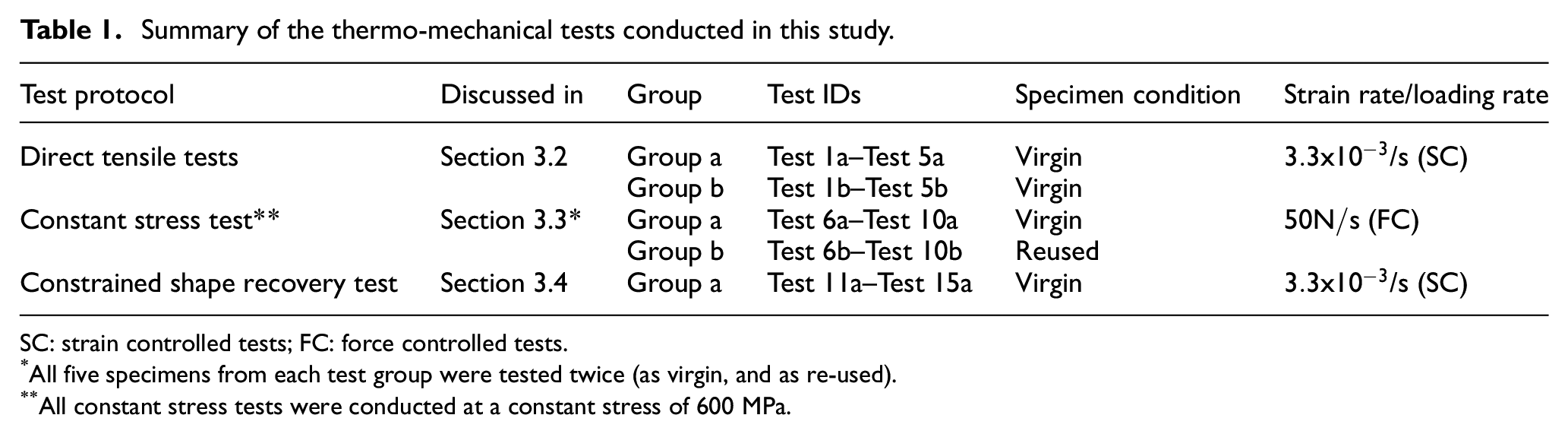
SC: strain controlled tests; FC: force controlled tests.
All five specimens from each test group were tested twice (as virgin, and as re-used).
All constant stress tests were conducted at a constant stress of 600 MPa.
At first, direct tensile tests, in which SMA specimens were subjected to monotonic tensile loading, were conducted at room temperature (RT). Two virgin specimens from each SMA type were stretched in Zwick Roell universal testing machine (UTM) until their failure. Specimens were deformed, in a strain-controlled mode at a strain rate of
Following the direct tensile tests, thermo-mechanical tests were conducted to study the effect of temperature variation on the forward/reverse transformation strains in SMAs held at a constant stress. A stress level of 600 MPa, which is close to the yield stress of most austenitic NiTi- based SMAs was chosen for these tests. Table 2 provides the details on loading protocol followed in these tests along with the thermal and mechanical boundary conditions adopted in each loading step. The tests in this section were conducted in a force-control mode. Loading and unloading of the specimens was carried out at
Loading procedure adopted for investigating the effect of temperature variation on the forward/reverse transformation strains in the SMAs held at constant stress of 600 MPa.
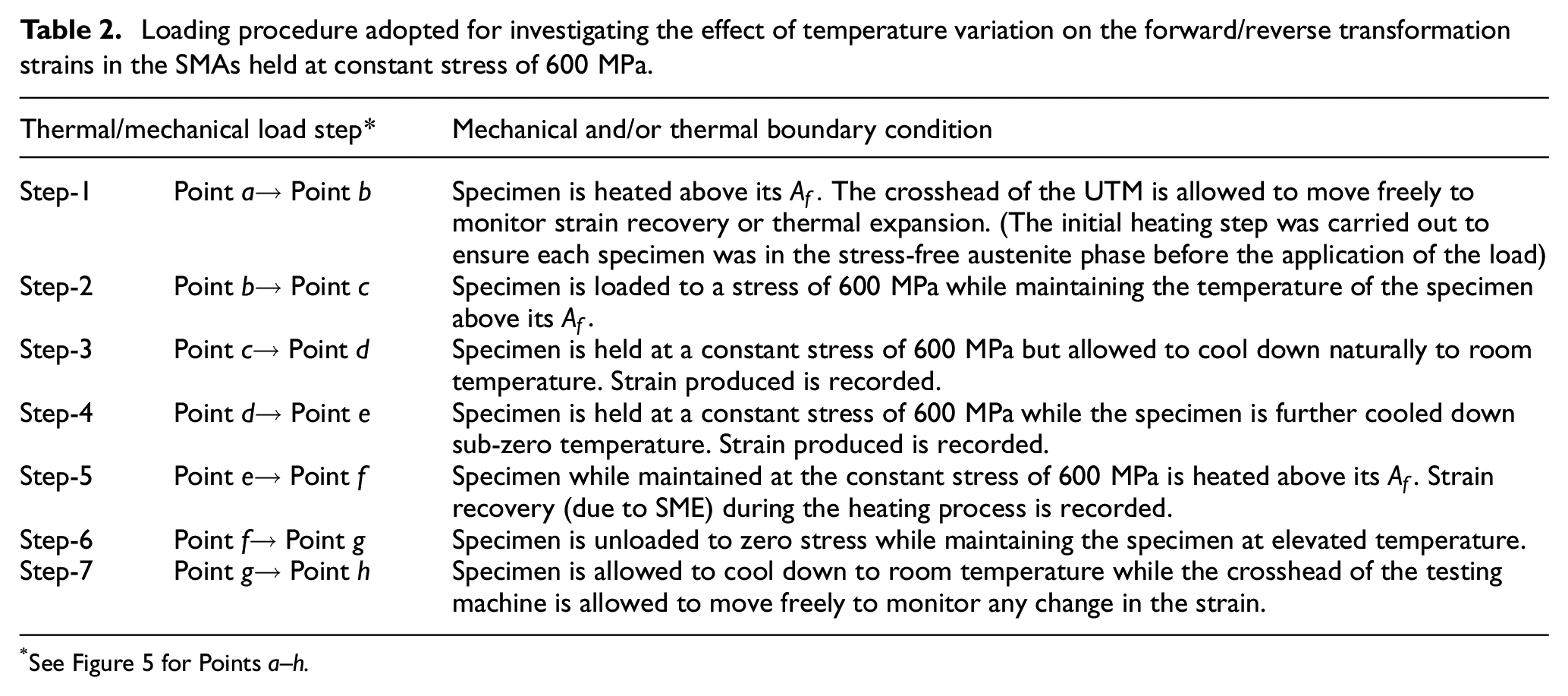
*See Figure 5 for Points a–h.
In the last set of thermo-mechanical tests, tests were conducted to study recovery stress in the SMAs. Recovery stress in the SMA specimens was investigated before applying the pre-strain and also after applying a pre-strain. A pre-strain between 6% and 9% was applied to the specimens. The tests in this section were conducted in a strain-control mode. Loading and unloading of the specimens was carried out at a strain rate of
In some of the above tests, that is, Tests
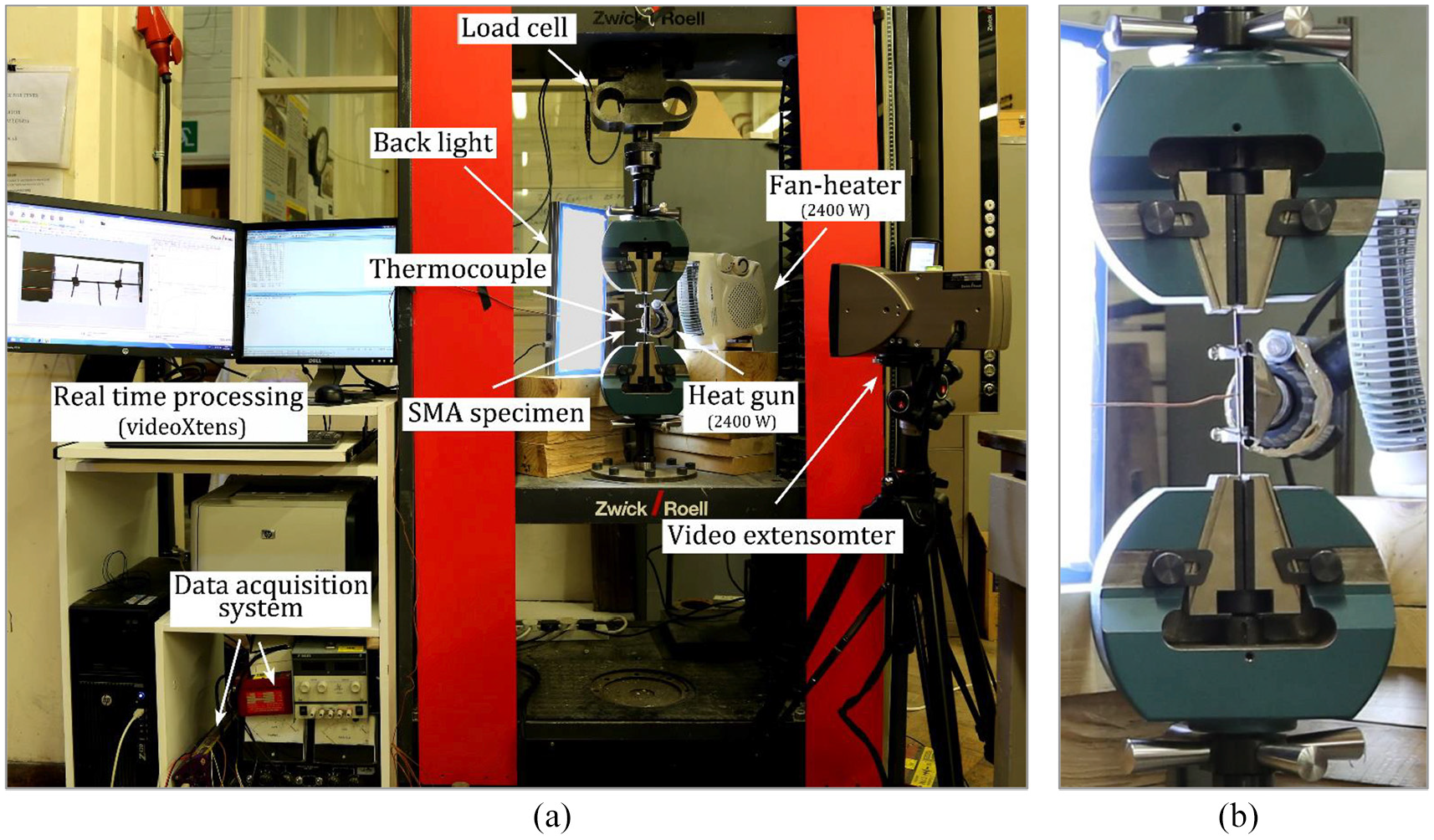
(a) Test set-up for thermo-mechanical tests and (b) close-up view of the specimen.
3. Results and discussion
3.1. Material characterisation
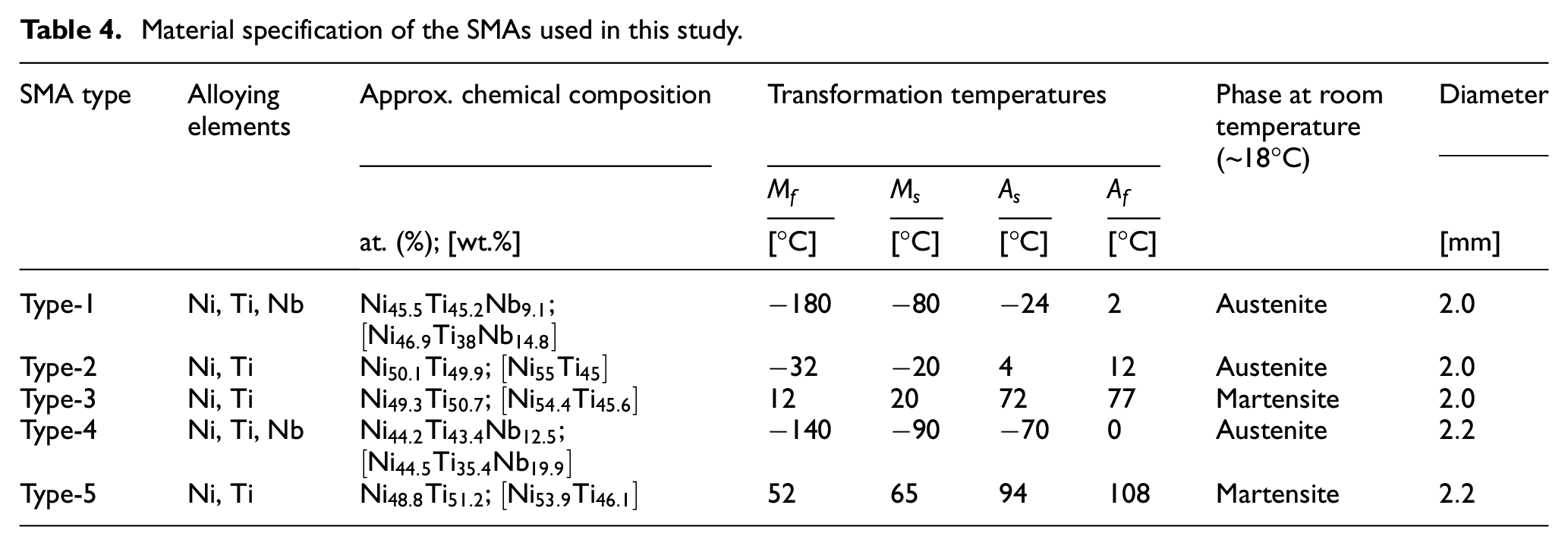
The EDX spectrums of the SMA samples are given in Figure 2. The chemical composition of the SMAs in atomic percentage (at.%) is given in Table 4. For the convenience of the readers, the equivalent wt.% of the compositions is also given in the Table 4. The results ignore the trace amounts of other interstitial elements. In the binary compositions, the nickel content varied from 48.8% (at.%) in Type-5 to 50.1% (at.%) in Type-2. In the tertiary compositions, nickel content was lower and varied from 44.2% (at.%) in Type-4 to 45.5% (at.%) in Type-1 SMA. The percentage content of Niobium was about 9.1% (at.%) in Type-1 while in Type-4, the percentage content of Niobium was 12.5% (at.%), about 3.5% higher than in Type-1.
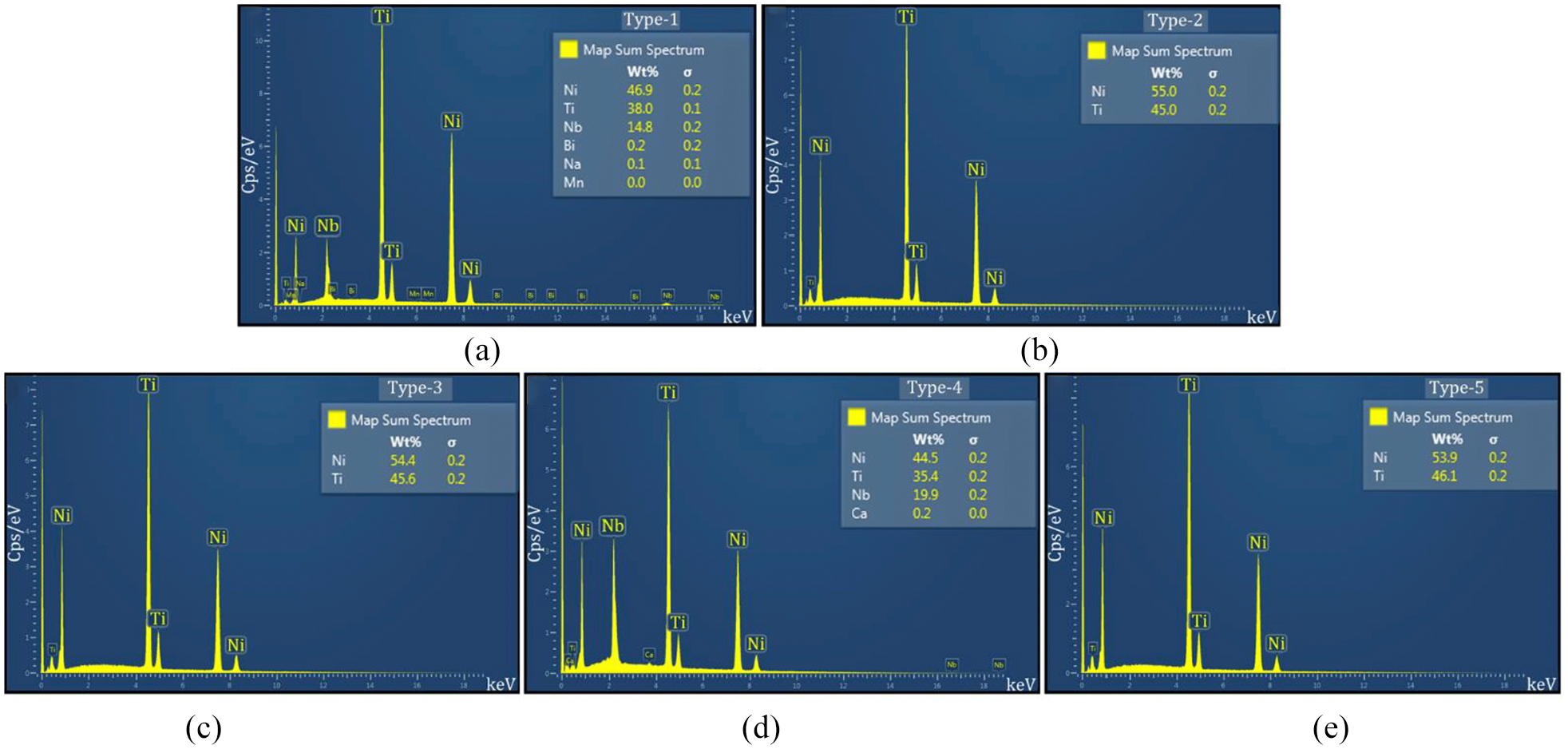
EDX spectrum of SMA wires investigated in this study: (a) Type-1, (b) Type-2, (c) Type-3, (d) Type-4 and (e) Type-5.
Phase transformation temperatures of the SMAs are given in Table 4. Type-1, -2 and -4 SMAs had there
3.2. Direct tensile tests
Two virgin specimens (Sp-1 and Sp-2) from each SMA type given in Table 4 were tested under monotonic tensile loading. The objective of these tests was to understand the overall thermo-mechanical behaviour of the wires at room temperature under monotonic tensile loading and to determine engineering parameters such as modulus of elasticity (
From Figure 3 and Table 5, it is evident that all SMAs used in this study exhibited a great deal of difference in their mechanical behaviour. The modulus of elasticity,
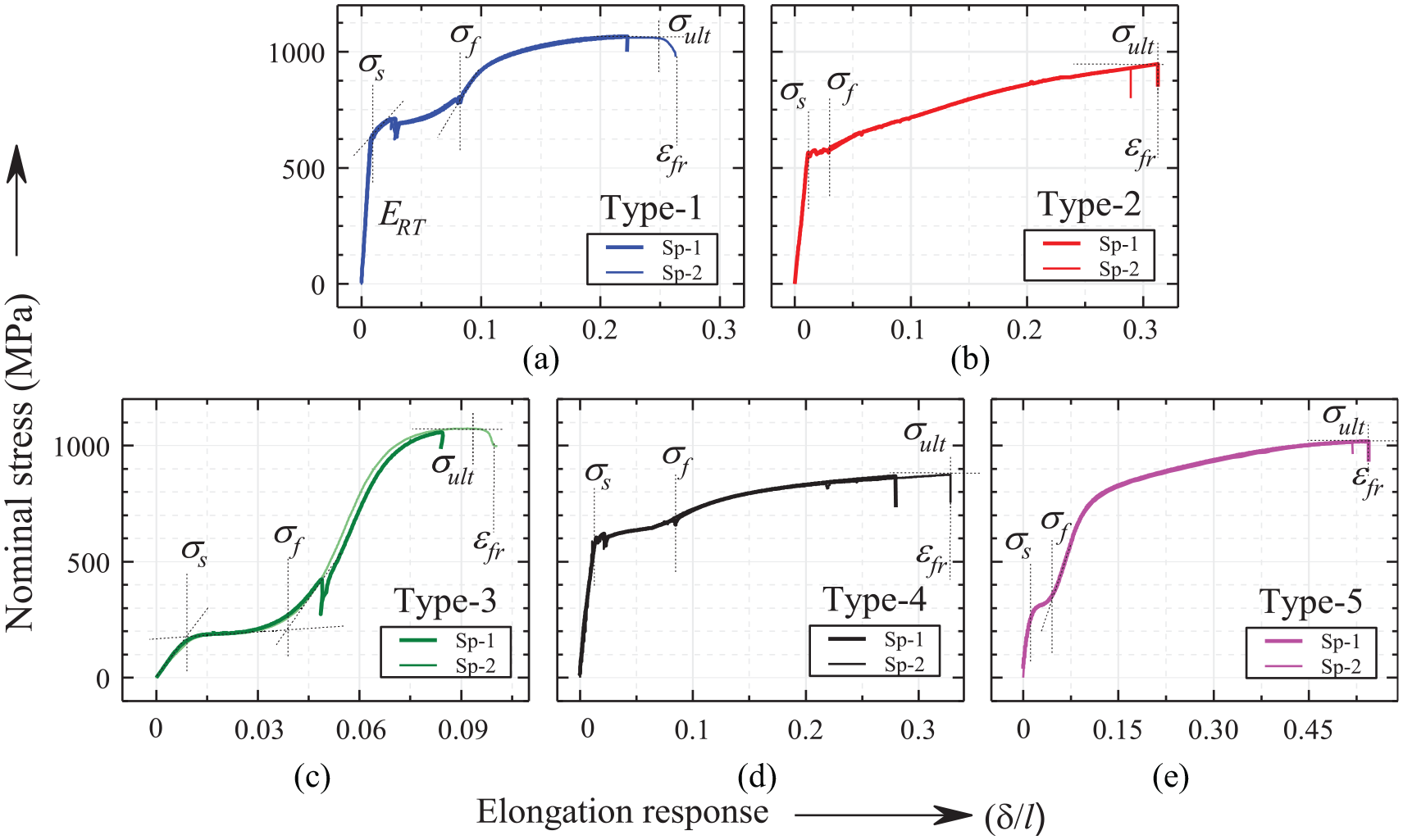
(a)–(e) Nominal stress versus elongation response of virgin SMA specimens.
Like the
From Figure 3 and Table 5, the martensitic plateau in the SMAs is found vary between 3% and 8% strain. The characteristic transformation strain, (
In Figure 4, two distinct temperature-strain elongation trends were obtained from the monotonic tensile tests of the SMAs. In Type-1, Type-2 and -4 SMAs, a sudden increase in the temperature took place as the specimens crossed the yield stress, see Figure 4(a), (b) and (d). While in Type-3 and -5 SMAs, the rise in temperature was gradual, see Figure 4(c) and (e). Yielding of SMAs indicate the start of either stress induced matristic (SIM) phase transformation, as in the case of austenitic SMAs, or reorientation of martensitic variants from twinned to detwinned structure in martensitic SMAs. Both the mechanisms are accompanied by the localised release/absorption of latent heat (Churchill et al., 2009a; Leo et al., 1993; Shaw and Kyriakides, 1995; Zhang et al., 2010). In Type-1, -2 and -4 SMAs, due to the SIM phase transformation a sudden generation of large strain takes place resulting in large stress drops. Under the quasi-static tensile loading, the SIM phase transformation takes place through the manifestation of macroscopically observable domain(s) (or transformation bands; TBs), the evolution of which is strongly coupled with heat transfer within the material and the surrounding environment (Suhail et al., 2020c). The amount of latent heat produced depends on the number of local transformation bands, their active propagation fronts and the speed of the propagation fronts (Churchill et al., 2009a; Leo et al., 1993; Shaw and Kyriakides, 1995; Zhang et al., 2010). From the stress-elongation plots of Type-1, -2 and -4 SMAs, it appears that several TBs were formed in these specimens over the stress plateau region. The nucleation of a new TB is typically identified by stress drop in the stress-elongation plots (mostly in strain-controlled tests). The larger the stress drop, the larger is the strain produced and larger the latent heat released. The sharp increase in the temperature in Type-1, -2 and -4 SMAs was observed only up to a strain of approximately 10%, which is very close to the strain corresponding to the end of stress plateau in stress-elongation plots, which also marks the complete transformation of specimen into martensite phase. Type -1, -2 and -4 SMAs, resulted in an overall rise in temperature of about 15°C. In Type-3 SMAs, due to reorientation of martensite variant, a temperature rise just under 4°C was recorded. Type-5 SMA, also assumed to have undergone only martensite reorientation, resulted in the total temperature rise of 14°C which is considerably higher than Type-3 SMA. The reason for this is believed to be total heat accumulation over a significantly large deformation range. In type 5, heat accumulation took place gradually over a strain of 0.55 (almost five times the Type-3 SMA). When compared with Type-3 SMA, at 10% strain the rise in temperature in Type 5 is more or less the same as Type 3 SMA (=4°C). The slope temperature-elongation (exothermic rate) curve was also the same in the two types of SMA.
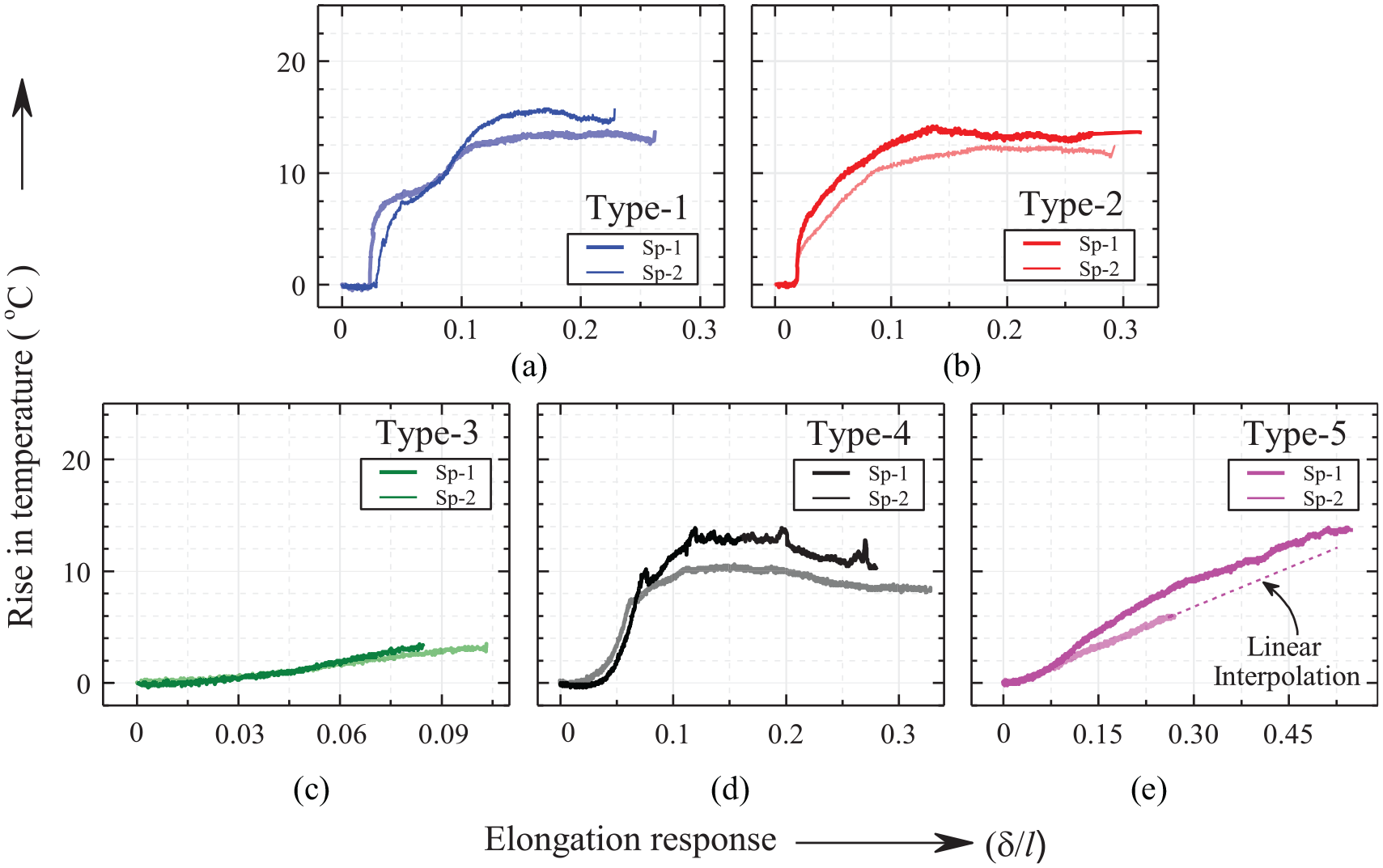
Rise in temperature with increasing strain in different SMA types under monotonic tensile load: (a) Type-1, (b) Type-2,(c) Type-3, (d) Type-4 and (e) Type-5.
From the above discussion, it is found that thermo-mechanical behaviour of SMAs can vary quite significantly, and depends on the number of parameters. For the safe use in civil engineering applications, civil-structural designers need to be aware of the influence of different parameters on the overall mechanical behaviour of SMAs.
3.3. Effect of variable temperature on transformation strains at constant non-zero stress
SMAs to be used in civil engineering applications will most likely be under some kind of load (stress). Under stressed conditions, the effect of temperature variation on the transformation strains (forward/reverse transformation strain) in SMAs may be a critical information required in deciding the feasibility of an SMA for a given civil engineering application. In order to investigate the effect at variable temperature on transformation strains of the SMA wires at constant non-zero stress, specimens from each SMA type given in Table 4 were tested as per the loading protocol discussed in Table 2. A typical stress-elongation response and temperature-elongation response of austenitic and martensitic SMAs is given in Figure 5(a), (c) and (b), (d), respectively.
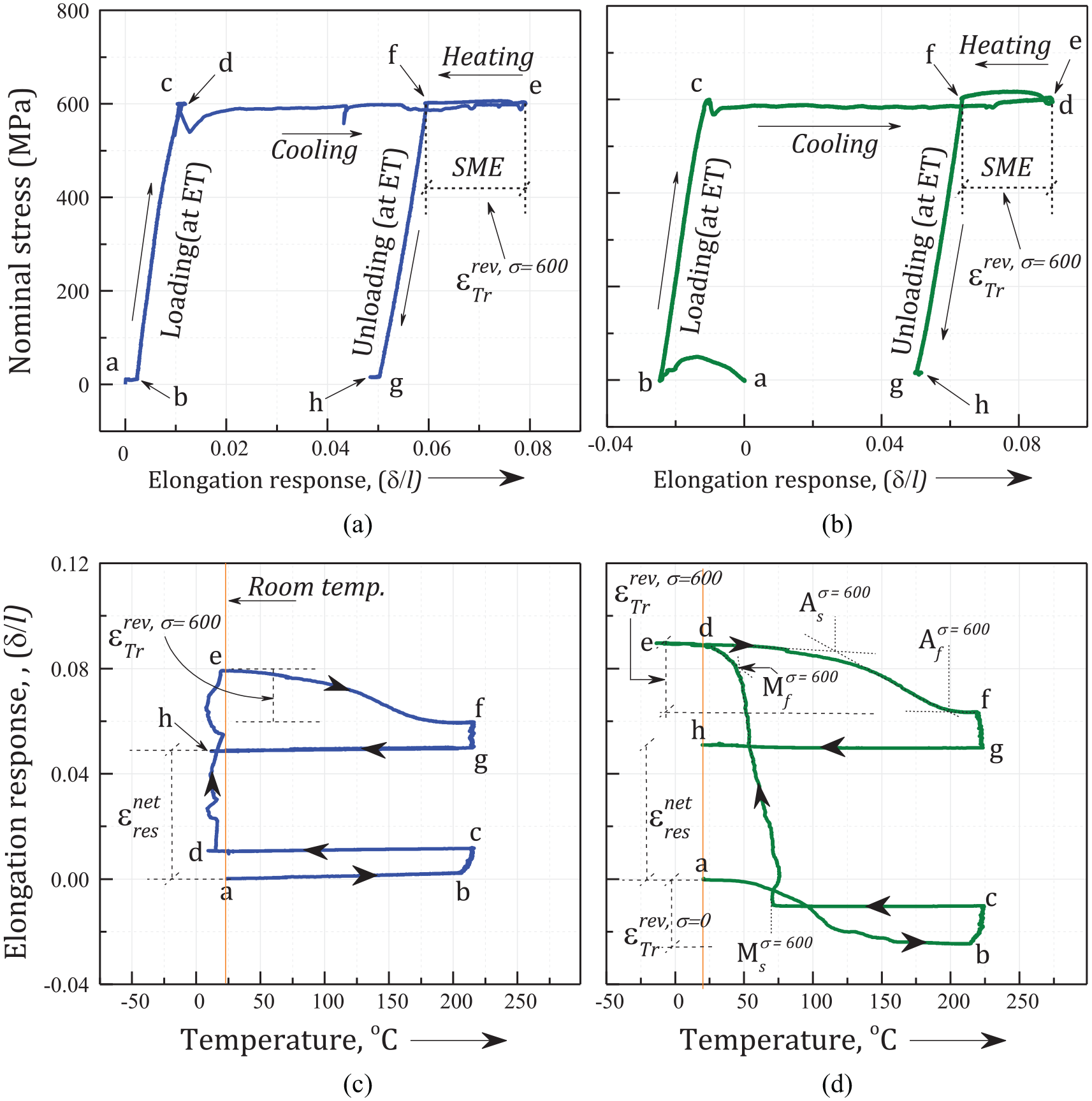
Effect at variable temperature on transformation strains (forward/reverse transformation strain) at constant single stress of 600 MPa: (a) typical stress versus elongation response of austenite SMA (Type-1 SMA), (b) typical stress versus elongation response of martensite SMA (Type-3 SMA), (c) typical temperature vs elongation response of austenite SMA (Type-1 SMA) and (d) typical temperature vs elongation response of martensite SMA (Type-3 SMA).
Figure 6(a) and (b) shows the bar plot of total strain recorded during Step-1 (Point a → Point b) and Step-3 and -4 (i.e. Point c → Point d and Point d → Point e) of the tests. The symbol ① and ② on the bars in Figure 6 indicate the number of times the specimen was tested. ① indicates the test was conducted on the virgin specimen and ② indicates the test was conducted on a reused SMA, after completing all the steps in test ①. All results are reported but for brevity only virgin specimen results that is, test ① are discussed in detail. As expected, those specimens (i.e. Type-1, -2 and -4 SMAs) which were originally in their austenite phase at room temperature did not recover any strain during the initial heating step (Step-1) instead, a small positive strain due to thermal expansion was recorded in these specimens, see Figure 6(a). For Type-1 and -2 SMAs, a maximum thermal expansion strain of approximately 0.23% was recorded, which corresponds to a thermal co-efficient of approximately
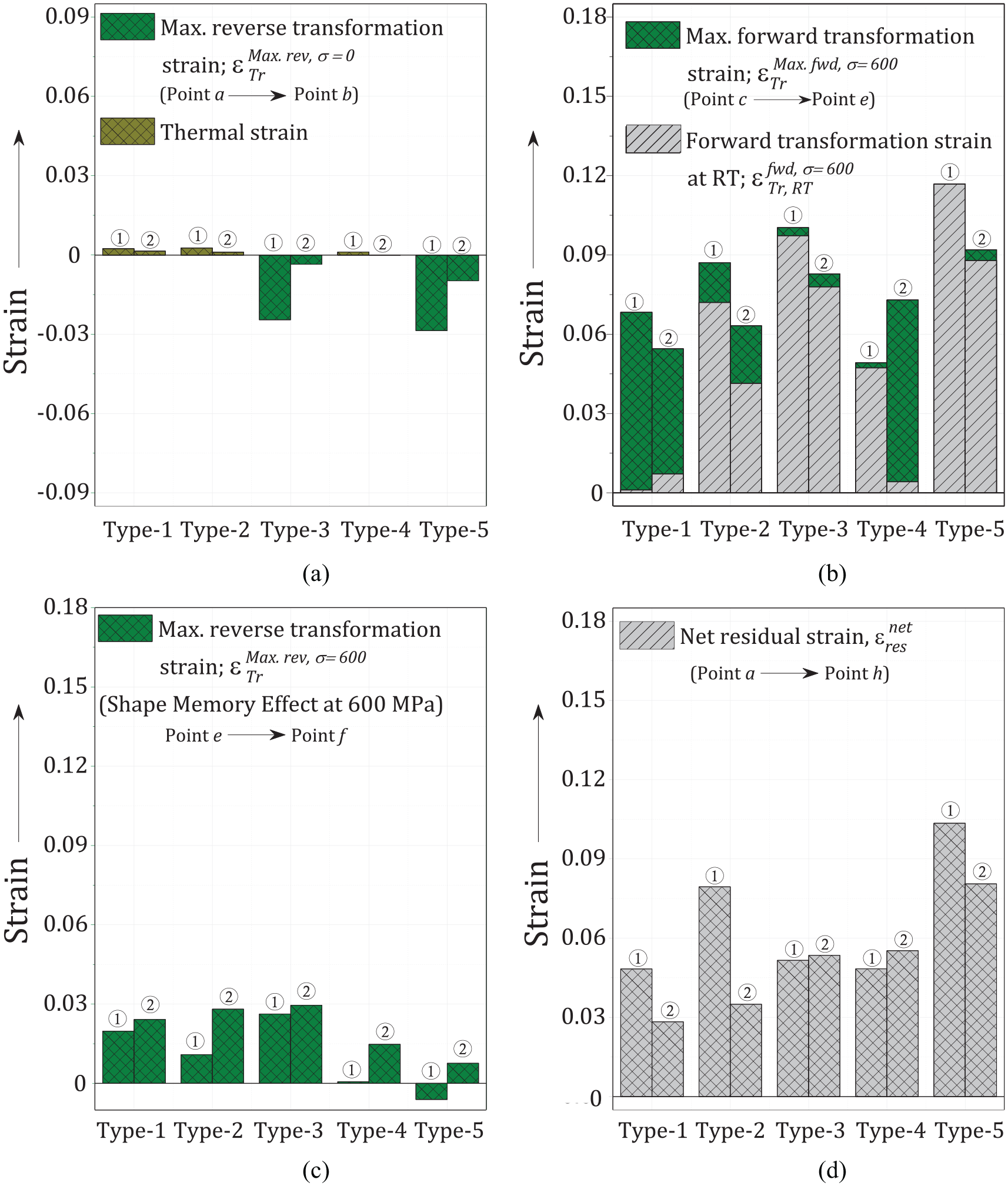
(a) Maximum reverse transformation strain
In Step-4, at a constant stress of 600 MPa, when the temperature was lowered, a considerable amount of forward transformation strain was recorded in all SMAs. Among the martensitic NiTi SMAs, a maximum forward transformation strain
On heating SMA specimens in Step-5, that is, from Point e → Point f, only partial recovery of strain was achieved during reverse transformation of the SMAs. Figure 6(c) presents the summary of results obtained in Step-5 of the tests. A maximum reverse transformation strain
All specimens upon unloading in Step-7 resulted in a significant residual strain. The net residual strain retained by the SMAs at the end of tests is given in Figure 6(d). A maximum net residual strain (
The above test results highlight the difference in the thermo-mechanical behaviour of different SMAs under stressed conditions. More importantly, the results highlight the consequences of large shift in the phase transformation temperature of some SMAs under the influence of external stress. The shift in the phase transformation temperature can be significant to an extent that even an austenitic SMAs having stress free
SMAs used in this study although exhibited only partial strain recovery but this material feature can be effectively used in many civil engineering applications (short term) for example, in self-centring of a structural system or closing of cracks in reinforced concrete elements. However, for these types SMAs, a relatively larger pre-straining may be required as a result of partial strain recovery. Shape recovery when enforced in constrained conditions could be used in heat-activated prestressing in civil engineering. A more detail on this is presented in the next section.
3.4. Constrained shape recovery (heat-activated prestressing)
To study the constrained shape recovery (heat-activated prestressing) of SMAs used in this study, specimens from each SMA type given in Table 4 were tested as per the loading protocol discussed in Table 3. Specimens were evaluated in terms of: (1) the level of recovery stresses developed before and after applying a pre-strain; and (2) recovery stresses retained at room temperature and at sub-zero temperate range.
Loading procedure adopted for heat-activated prestressing of various shape memory alloy wires used in this study.
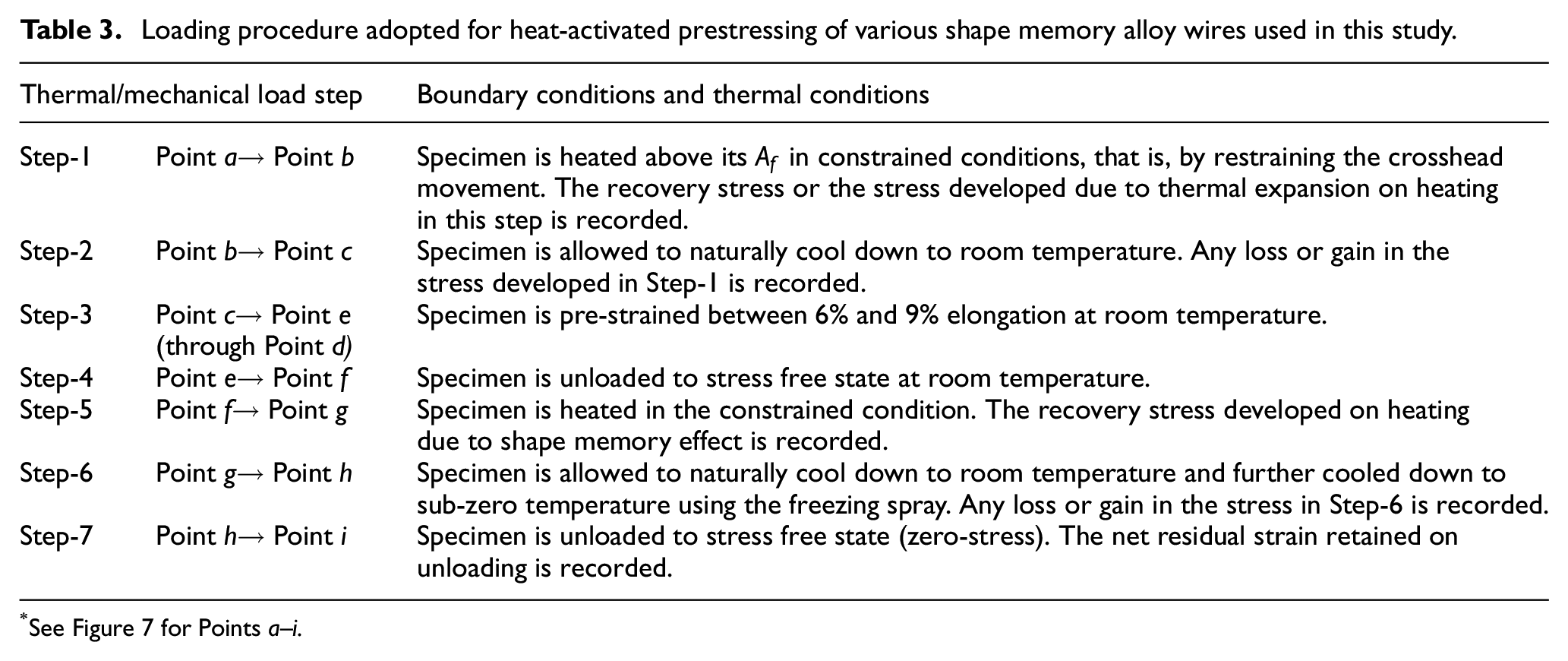
*See Figure 7 for Points a–i.
Material specification of the SMAs used in this study.
Experimentally derived material parameters for as−received SMA wires.
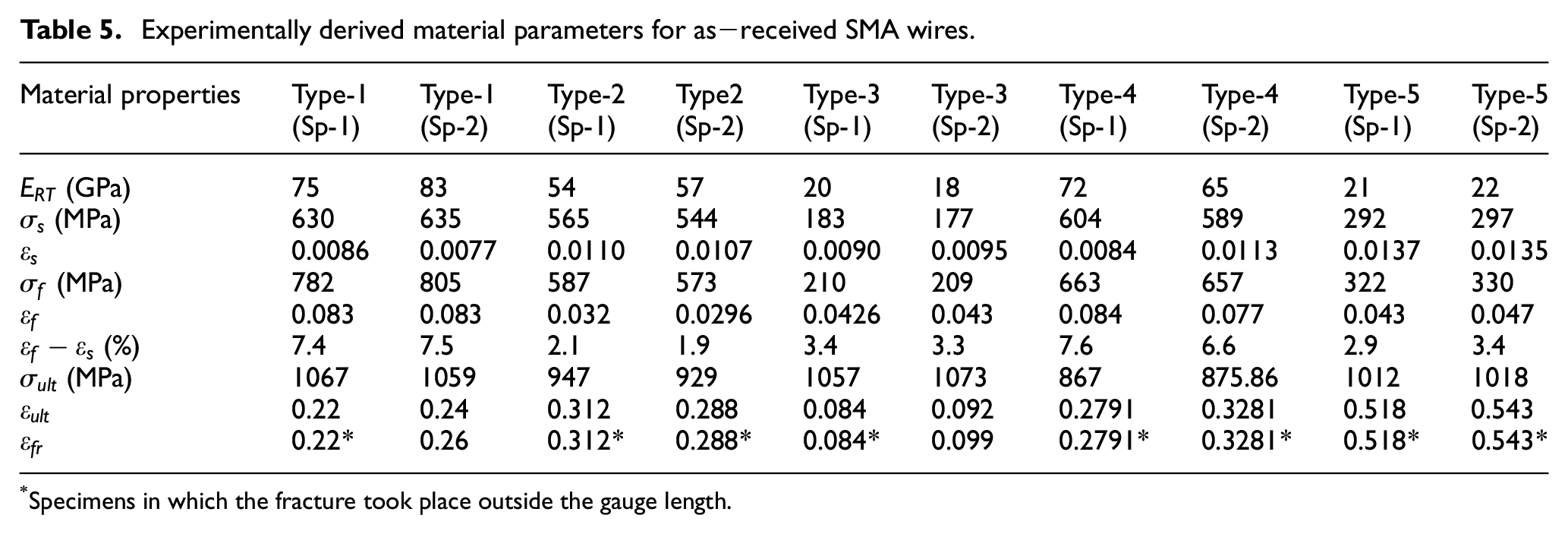
*Specimens in which the fracture took place outside the gauge length.
Figure 7 shows the nominal stress-elongation response and nominal stress-temperature response of the different types of the SMAs tested for constrained shape recovery. Two different plots of nominal stress-elongation responses are given in this figure. In the first set of plots, Figure 7((a), (d), (g), (j) and (m)) elongation response was obtained using the crosshead readings as
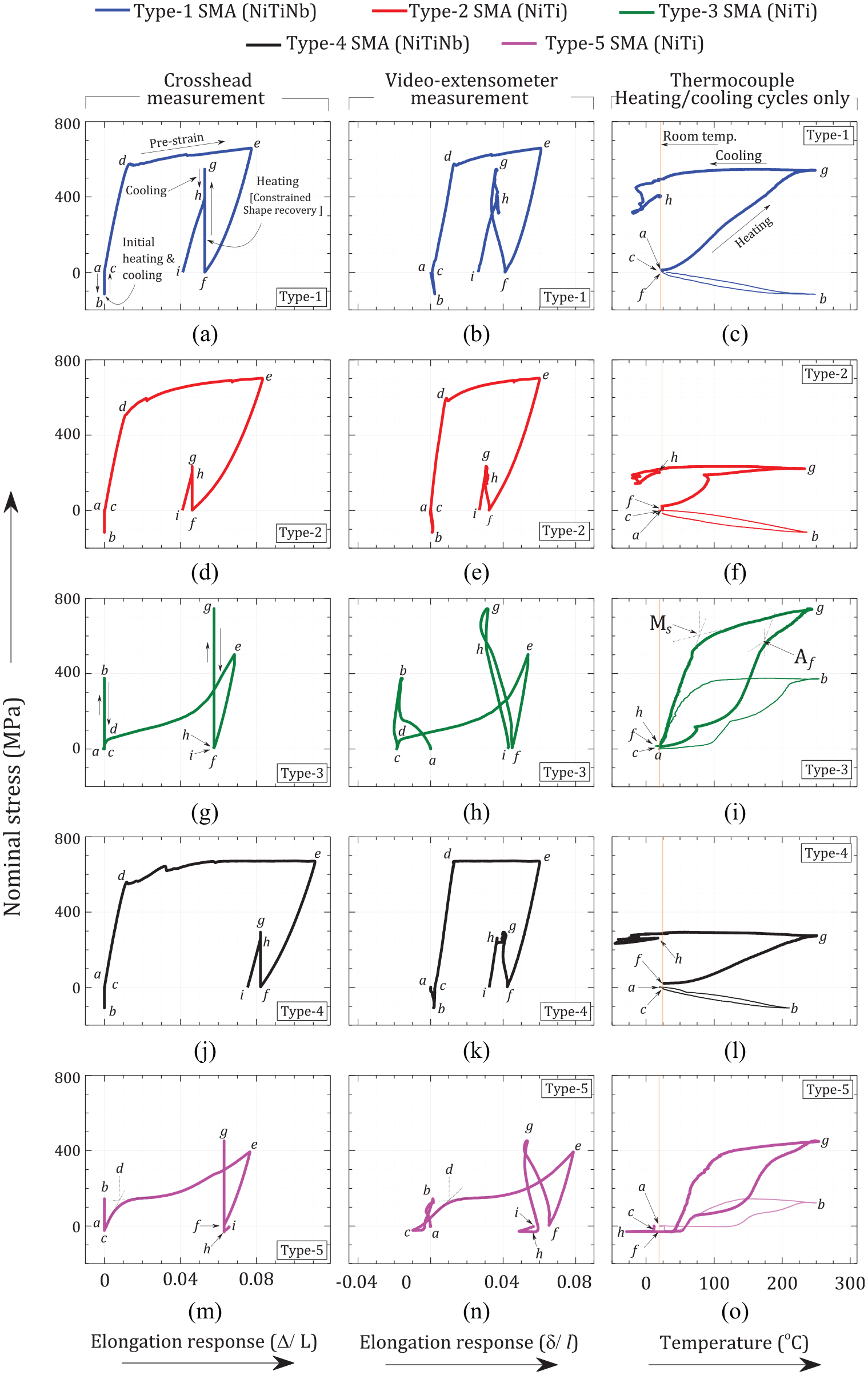
Nominal stress-elongation of the SMAs before and after the pre-strain. Left column plots (a), (d), (g), (j) and (m): crosshead displacement over total length of the specimen between the grips; Middle column plots (b), (e), (h), (k) and (n): deformation in the gauge region using video-extensometer measurements; Right column plot (c), (f), (i), (l) and (o): nominalstress-temperature responses of the SMAs before and after the pre-strain.
As expected, the specimens which were already in austenite phase (i.e. Type-1, -2 and -4 SMAs) did not develop any recovery stress during the initial heating step, see Figures 7 and 8(a), instead a small negative stress (approximately 100 MPa) due to thermal expansion was recorded. The results are consistent with the previously obtained results in section 3.3. Martensitic SMAs (i.e. Type-3 and -5 SMAs) on the contrary, underwent reverse transformation on heating and therefore produced a considerable amount of recovery stresses in the specimens. A maximum recovery stress
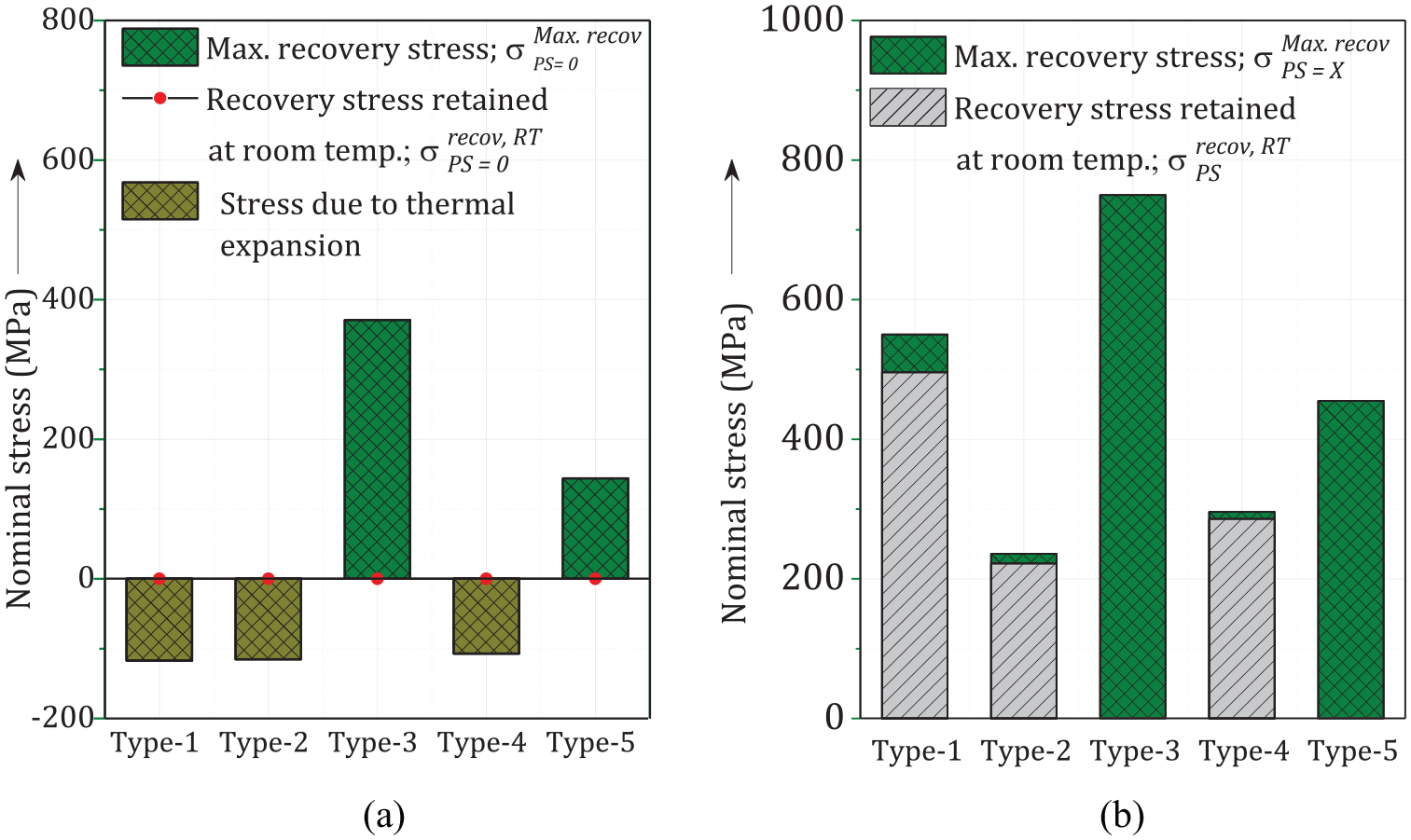
Recovery stress developed in different types of SMAs used in this study: (a) before pre-straining and (b) after pre-straining.
In Step-3, when the specimens were pre-strained, between 6% and 9% and subsequently heated to ∼250°C in Step-5, a significant level of recovery stress was developed in all specimens, see Figures 7 and 8. A maximum recovery stress of approximately 750 MPa was developed in Type-3 SMA. The lowest level of recovery stress was observed in Type-2 SMA, approximately 238 MPa. The level of recovery stress developed during the constrained shape recovery depend on number of parameters such as shape memory setting, which in turn depends on the composition and thermo-mechanical treatment, pre-strain level, ambient temperature and the activation temperature. SMA with greater characteristic transformation strain range (i.e. martensitic stress plateau range) and better shape recovery tend to produce greater recovery stress while as SMAs with high density of random dislocations at molecular level recover less strain and therefore produce less recovery stress. The summary of the results obtained from second constrained shape recovery of the SMAs (i.e. after applying pre-strain (PS); Step-5 and 6) is given in Figure 8(b).
In Step-6, when the specimens were allowed to cool down to room temperature, the recovery stress in the martensitic SMAs was completely lost, just like in the first cooling cycle. However, austenitic SMAs (Type-1, -2 and -4) retained most of the recovery stress developed in Step-5; meaning that the shift in the
Summary of the results obtained from heat-activated prestressing of the SMAs.
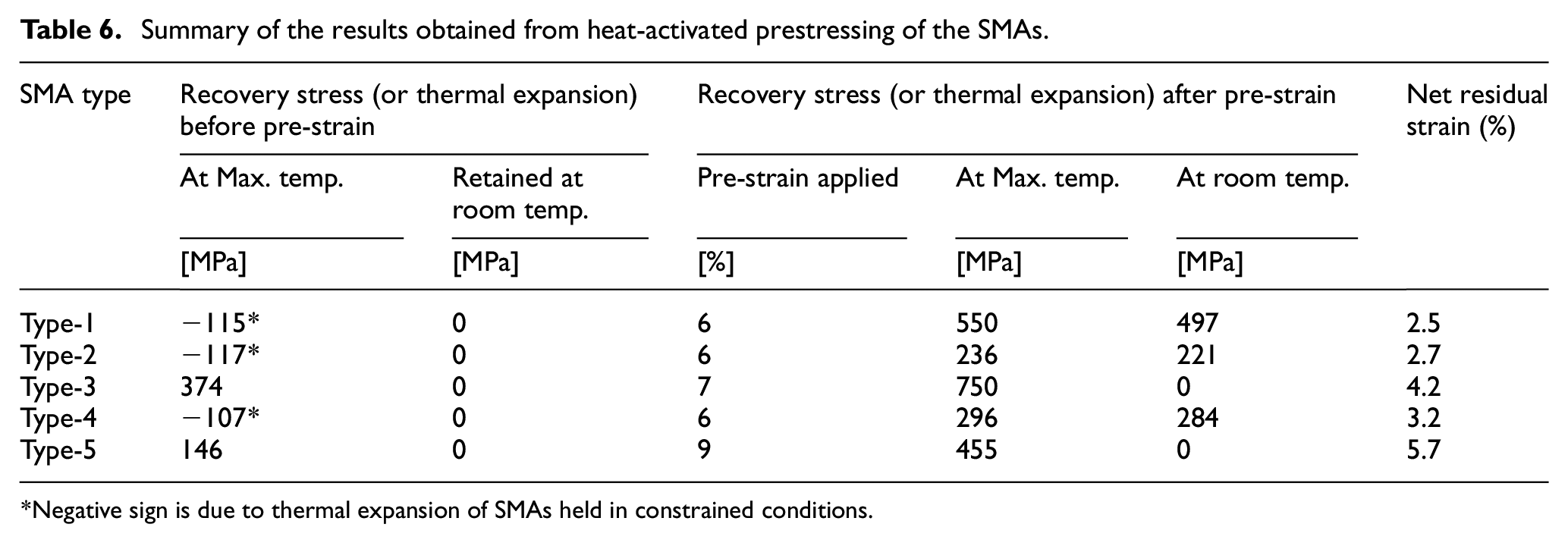
*Negative sign is due to thermal expansion of SMAs held in constrained conditions.
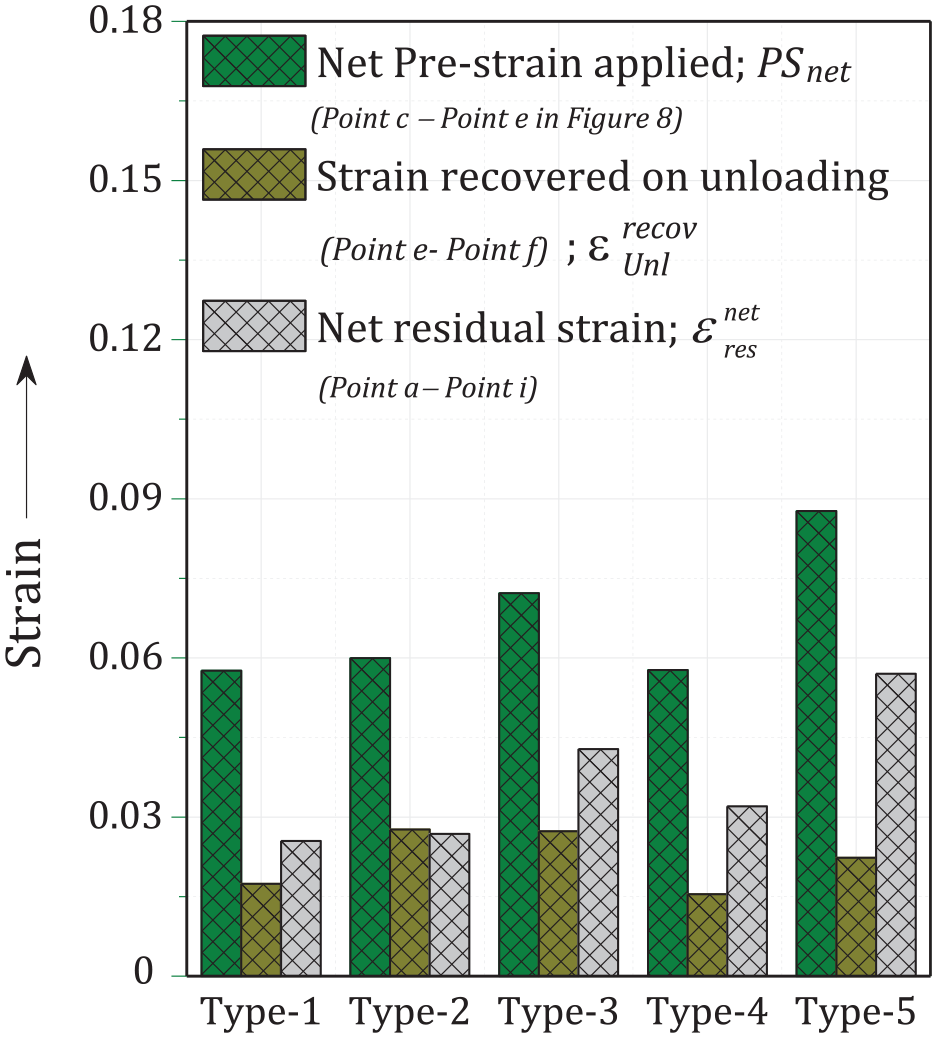
Comparison of net pre-strain applied (
The above test results highlighted the difference in the behaviour of martensitic and austenitic SMAs. Although, martensitic SMAs lose all the recovery stress when the temperature is lowered to room temperature, they can still be used in many civil engineering applications that requires temporary pre-stressing for example, in re-centring applications, tightening of joint connections etc. For applications where recovery stress needs to be retained at ambient temperature for example, active confinement or heat-activated prestressing of structural members, austenitic SMAs like Type-1, -2 and -4 SMAs can be effectively used within a wide range of ambient temperature. In Figure 7 it is found that even when the temperature is brought down to −20°C (see Figure 7(c)) a minimum of 320 MPa was still retained in Type-1 SMA. The recovery stress lost due to lowering of the temperature was naturally gained again when the temperature rose to room temperature again. Therefore, in most civil engineering applications, the SMAs like Type-1 SMA used in this study, are expected to perform safely and without the risk of losing of recovery stress completely. Further, combing the results from section 3.3 and 3.4, it can be concluded that the behaviour of SMA could be significantly different, under the application of external load and the under the recovery stresses developed internally. Unlike in section 3.2 in which Type-1 SMA under the influenced of external stress (of 600 MPa) produced a significantly large forward transformation strain at 9°C, the SMA did not lose much of the recover stress developed internally at this temperature.
Figure 9 shows a comparison of net pre-strain applied (
4. Conclusions
In this study, a series of experimental tests were conducted to investigate the thermo-mechanical behaviour of shape memory alloy wires for civil engineering applications. Tests were conducted to investigate stress-elongation response under direct tensile loading, shape memory effect at constant stress of 600 MPa and recovery stresses developed in constrained conditions at different pre-strain levels. The following conclusions can be drawn from the test results:
The stress-strain behaviour of SMAs depend on a number of parameters. The chemical composition, phase of the material, thermo-mechanical treatment during the production phase, all have a significant effect on the overall mechanical behaviour of SMAs. Therefore, it is important to have complete information on these parameters before the selection of an SMA for a particular civil engineering application.
In general, the addition of Nb to NiTi results in favourable effects on the yield strength, stress plateau
Under a constant stress (600 MPa), temperature fluctuation could result in a large shift in the transformation temperature of an SMA which in turn could risk the safety of many civil engineering applications.
A considerable amount of recovery stress (up to ∼700 MPa) can be developed in NiTi-based SMAs. The phase transformation temperature and the thermo-mechanical treatment of an SMA are found to be the key parameters for the selection of an SMA for a civil engineering application.
At room temperatures, only the pre-strained austenitic SMAs retained much of the maximum recovery stress developed on heating. Depending on the pre-strain level and the consequent shift in the phase transformation, recovery stress retained at sub-zero level can be relatively high (∼55% of maximum recovery stress developed on heating), for example Type-1 SMA retained 308 MPa at –20°C.
At present, the number of alloys that exhibit shape memory effect is large, and this number is continuously evolving. Each SMA has different material properties. Even SMAs with similar composition can have significantly different thermo-mechanical behaviour if subjected to different thermo-mechanical treatment. The reliability of the material behaviour is the most important factor for the safe use of SMAs in civil engineering applications. Therefore, a need for standardisation of the material specification of SMAs including the manufacturing process (i.e. thermo-mechanical treatment) is required for consistent and safe design in civil engineering applications.
Footnotes
Acknowledgements
Financial support received from Queen’s University Belfast in the form of a PhD studentship for the first author is gratefully acknowledged. Thanks, are also extended to Professor Jian-Fei Chen of Queen’s University Belfast for his valuable advices during the course of this study.
Declaration of conflicting interests
The author(s) declared no potential conflicts of interest with respect to the research, authorship, and/or publication of this article.
Funding
The author(s) received no financial support for the research, authorship, and/or publication of this article.
