




Abstract
Forced migrant populations endure trauma that reverberates across generations, yet little is known about how descendants interpret these legacies. This study used a Qualitative Interpretive Meta-Synthesis (QIMS) to examine intergenerational trauma in forced migrant families. An October 2024 search across APA PsycNet, Web of Science, PubMed, PsycINFO, and the Social Sciences Citation Index yielded 776 studies. After screening, 17 met the inclusion criteria: peer-reviewed or dissertation work, published in English, and using qualitative methods. Data were coded and thematically synthesized through independent review and team triangulation. Four themes emerged: (a) trauma transmission through silence and partial disclosures, (b) cultural identity tensions, (c) disrupted family dynamics and parental roles, and (d) coping through community, storytelling, and collective healing. Findings underscore trauma’s psychological, cultural, structural, and familial transmission, highlighting the need for culturally grounded, community-based interventions.
Keywords
Introduction
Refugees and other forcibly displaced populations are among the most heavily trauma-exposed groups globally. These individuals frequently endure war, violence, persecution, and prolonged displacement, all of which contribute to elevated rates of mental health disorders, including depression, anxiety, and post-traumatic stress disorder (PTSD; Blackmore et al., 2020; Fazel et al., 2005). Although research has largely concentrated on the relationship between trauma exposure and individual psychological outcomes, there is growing scholarly attention to the intergenerational transmission of trauma within refugee and forced migrant communities (Sangalang & Vang et al., 2017). Intergenerational trauma refers to the concept that trauma that is experienced by one generation is transmitted to future generations, continuing to impact the mental and physical health and well-being of subsequent generations (Kellerman, 2001). More recent scholarship further emphasizes that this transmission is not solely psychological but is embedded in relational, cultural, and structural contexts, producing a “felt impact” of inherited suffering that shapes identity, coping, and daily life for subsequent generations (Cerdeña et al., 2021). Forced migrants may be particularly vulnerable to this process due to their high levels of trauma exposure and experiences of collective trauma, which often disrupt social and community structures. The erosion of these communal networks, coupled with a dominant research and clinical focus on individualistic coping strategies and mental health interventions—even for communities rooted in collectivist cultural values—may increase the likelihood of intergenerational trauma having lasting adverse effects across multiple generations following resettlement (Kirsch & Haran, 2025).
Across the literature, several overlapping themes emerge regarding intergenerational trauma in forced migrant communities. A central finding across reviews is that intergenerational trauma is shaped not only by individual psychological symptoms but also by structural, cultural, and familial processes that continue to impact descendants of forcibly displaced populations (Flanagan et al., 2020; Sangalang & Vang, 2017). These studies underscore the role of disrupted family dynamics, collective trauma, and continued marginalization in resettlement contexts as key mechanisms through which trauma is transmitted across generations (Flanagan et al., 2020; Rana & Boyd-MacMillan, 2024). Importantly, collective trauma differs from individual trauma in that it is not solely experienced internally, but is shared across members of a group, embedded in collective memory, and often tied to ongoing structural conditions and social identities (Erikson, 1976; Hirschberger, 2018). This distinction is critical for understanding how trauma can be inherited not only through psychological symptoms but also through communal narratives, cultural transmission, and the social environments that shape lived experience across generations. The dominance of Western biomedical models in trauma research and intervention is repeatedly critiqued for inadequately reflecting the cultural expressions and collective meanings of trauma in forced migrant communities (Cerdeña et al., 2021; Hudson et al., 2016). Furthermore, despite increasing documentation of the prevalence and mechanisms of intergenerational trauma, few studies directly engage the voices of forced migrants themselves to define how they understand and live with these experiences (Kalocsányiová et al., 2024).
Collectively, these findings emphasize the urgent need for qualitative inquiry that centers forced migrant narratives to better understand how intergenerational trauma is experienced, interpreted, and addressed within their own cultural and familial frameworks. Without such inquiry, research risks imposing external definitions and overlooking the community-based coping strategies that may inform more culturally resonant interventions (Kalocsányiová et al., 2024; Rana & Boyd-MacMillan, 2024). Therefore, the purpose of the current study is to synthesize the existing qualitative literature on intergenerational trauma among forced migrant populations highlighting the voices of forced migrants themselves and offering insight into how these communities define, express, and respond to trauma across generations. Guided by this aim, the review asks: How is intergenerational trauma experienced and described within forced migrant families? The term forced migrant, while not an internationally recognized term like refugee or asylee, better encompasses the differing terms often used across the literature and allows for a broader inclusion of migrants who have been forced from their homes, regardless of their legal status. Our study uses the definition of forced migration by the International Organization of Migration (IOM) to guide our interpretation of forced migrants: A migratory movement which, although the drivers can be diverse, involves force, compulsion, or coercion. While not an international legal concept, this term has been used to describe the movements of refugees, displaced persons (including those displaced by disasters or development projects), and, in some instances, victims of trafficking. (p. 77)
Methods
As the first known qualitative interpretive meta-synthesis on this topic, this study applies the Qualitative Interpretive Meta-Synthesis (QIMS) methodology, a secondary qualitative analysis framework specifically developed for social work and trauma-focused research (Aguirre & Bolton, 2014). QIMS offers a structured yet interpretive approach for integrating diverse qualitative studies while preserving participants’ voices, making it particularly well-suited for generating higher-order conceptual insights on forced migrant trauma that extend beyond what individual primary studies can provide. The approach begins with the formulation of a guiding research question and proceeds through a systematic review and synthesis of prior qualitative studies to develop a deeper and more comprehensive understanding of the phenomenon under investigation. Following the identification of a guiding research question, a systematic sampling of relevant qualitative literature was conducted, ensuring diversity in perspectives and methodological traditions. The selected studies were then analyzed for recurring themes, with direct participant quotations extracted to preserve the integrity of the original research. Through this process, new themes emerged, offering an enriched, holistic understanding of forced migrant families’ lived experiences.
A key strength of QIMS is its ability to bring together diverse qualitative studies, allowing for a broader sample and greater heterogeneity in participant experiences, settings, and cultural contexts. This methodological approach ensures that the synthesis captures both the shared and unique aspects of intergenerational trauma and resilience across different refugee communities (Aguirre & Bolton, 2014).
Sampling the Literature
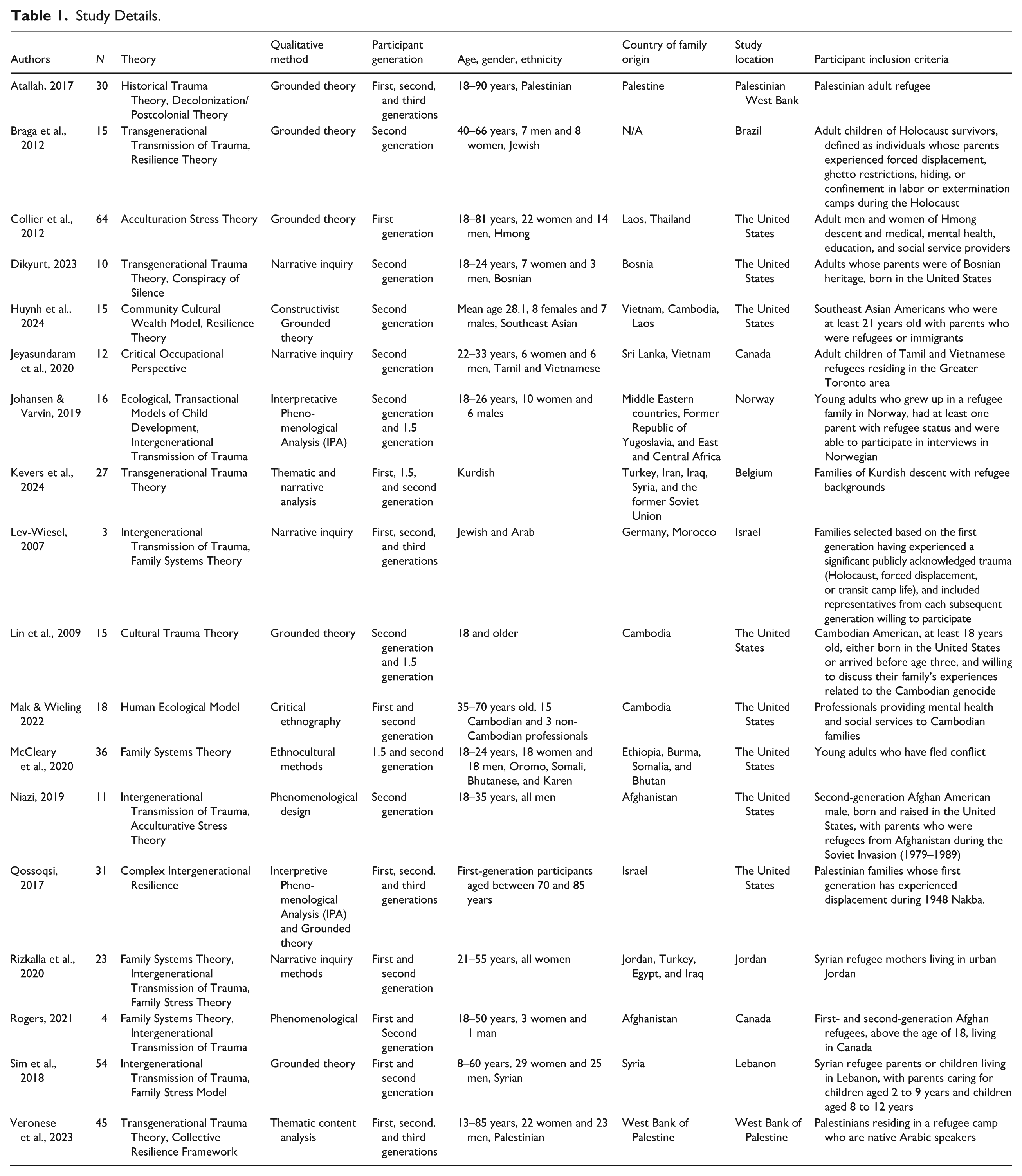
In October 2024, a comprehensive search was conducted across multiple computer-based databases spanning various disciplines, identifying 691 studies. No time restrictions were applied to article inclusion. The databases searched included APA PsycNet, Web of Science, PubMed, PsycINFO, and the Social Sciences Citation Index. Studies were included if they met the following criteria: (a) published in peer-reviewed journals, theses, or dissertations; (b) written in English; (c) focused on forced migrant experiences of intergenerational trauma within familial or relational contexts, including studies using individual adult narratives in which participants spoke about family relationships, as well as dyadic or multi-member family data collection designs; and (d) utilized qualitative methods, either fully or as part of a mixed-methods design. Because qualitative inquiry often captures family-level dynamics through individual accounts, studies were not required to use family-system data collection; rather, inclusion required that participants spoke to their experiences within intergenerational relationships, broadly defined. Direct participant quotes were required because QIMS relies on primary participant data as the unit of synthesis; without verbatim quotes, the interpretive integration of participant voice that defines this methodology is not possible. Key search terms included combinations of refugee, displacement, forced migration, intergenerational trauma, family trauma, parent–child, coping, resilience, and mental health. Search terms were established through the expertise of the authors on the study matter in consultation with a librarian. The screening process was conducted using Covidence, a systematic review management tool that streamlines study organization by enabling blinded dual screening, automated deduplication, and structured tracking of screen decisions. Of the 691 studies identified, 183 were removed as duplicates, meaning 508 underwent title and abstract screening by two authors, wherein 52 articles were included in full-text review. Studies were removed after full-text review due to being unavailable, not being available in English, not using qualitative methods, results not including direct participant quotes, and the findings not being directly related to intergenerational trauma. After screening, 17 studies met the inclusion criteria (Figure 1), with demographic details presented in Table 1.

Study selection process.
Study Details.
Theme Extraction
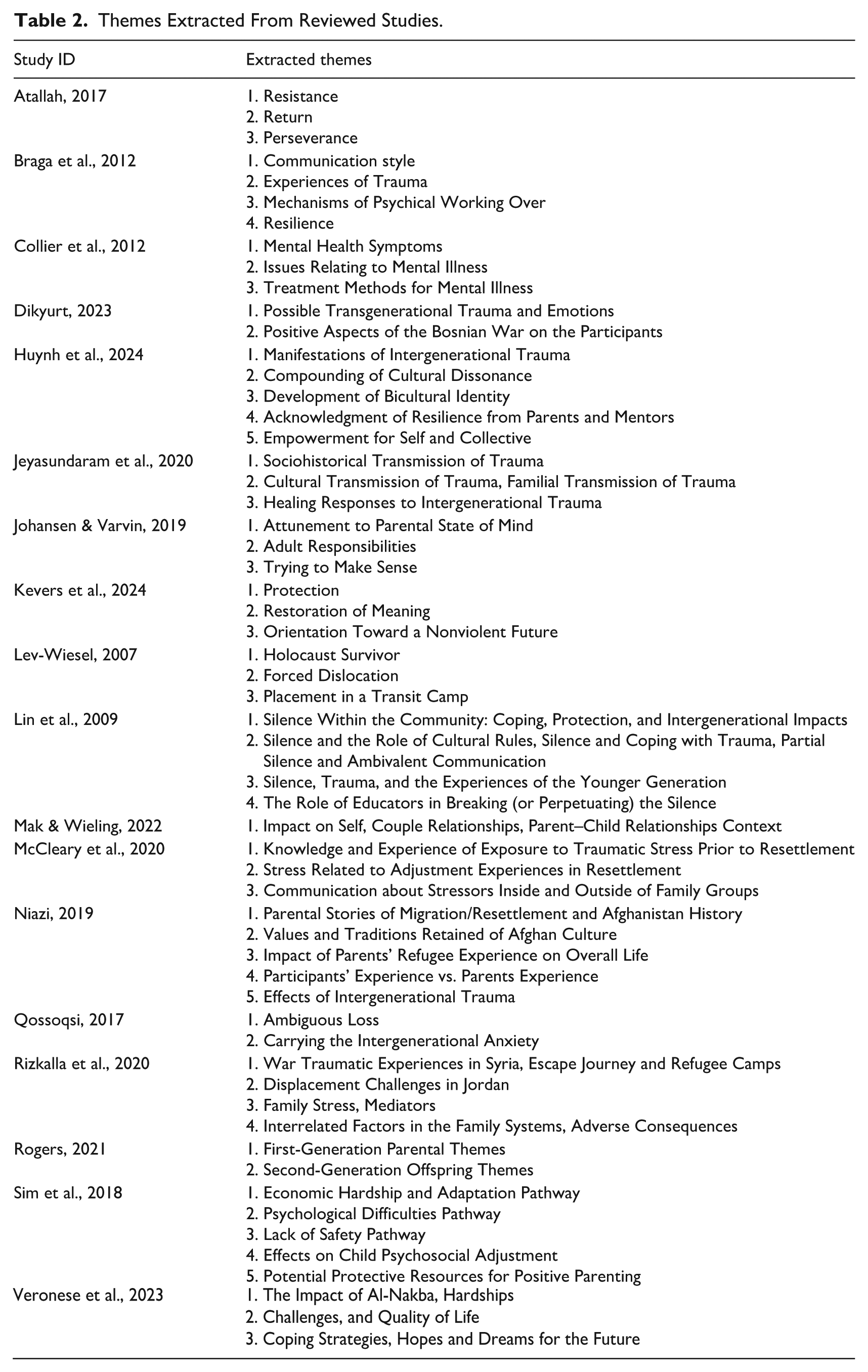
Following the selection and identification of the sample, we systematically analyzed each study to extract key themes. Themes were extracted and recorded as described in the original publications to preserve fidelity to source material and to respect the interpretive contributions of the original researchers. This extraction process served as the foundation for the higher-order synthesis presented in the “Results” section, which represents the authors’ interpretive integration of findings across studies rather than a direct aggregation of original themes. Consistent with QIMS methodology, the synthesized themes reflect a second-order analytic process in which the research team identified conceptual patterns across the extracted data, weaving original authors’ themes and participant quotes into a broader interpretive framework. The extracted themes were organized into Table 2 to allow for structured comparison across studies and to make transparent the relationship between the source material and the synthesized findings.
Themes Extracted From Reviewed Studies.
Data Analysis
Following the QIMS framework, our team conducted a structured thematic analysis of secondary data (Aguirre & Bolton, 2014). The included articles were evenly distributed among three researchers, with each coder independently conducting two rounds of coding. In the final stage, one researcher consolidated the coded excerpts into overarching themes.
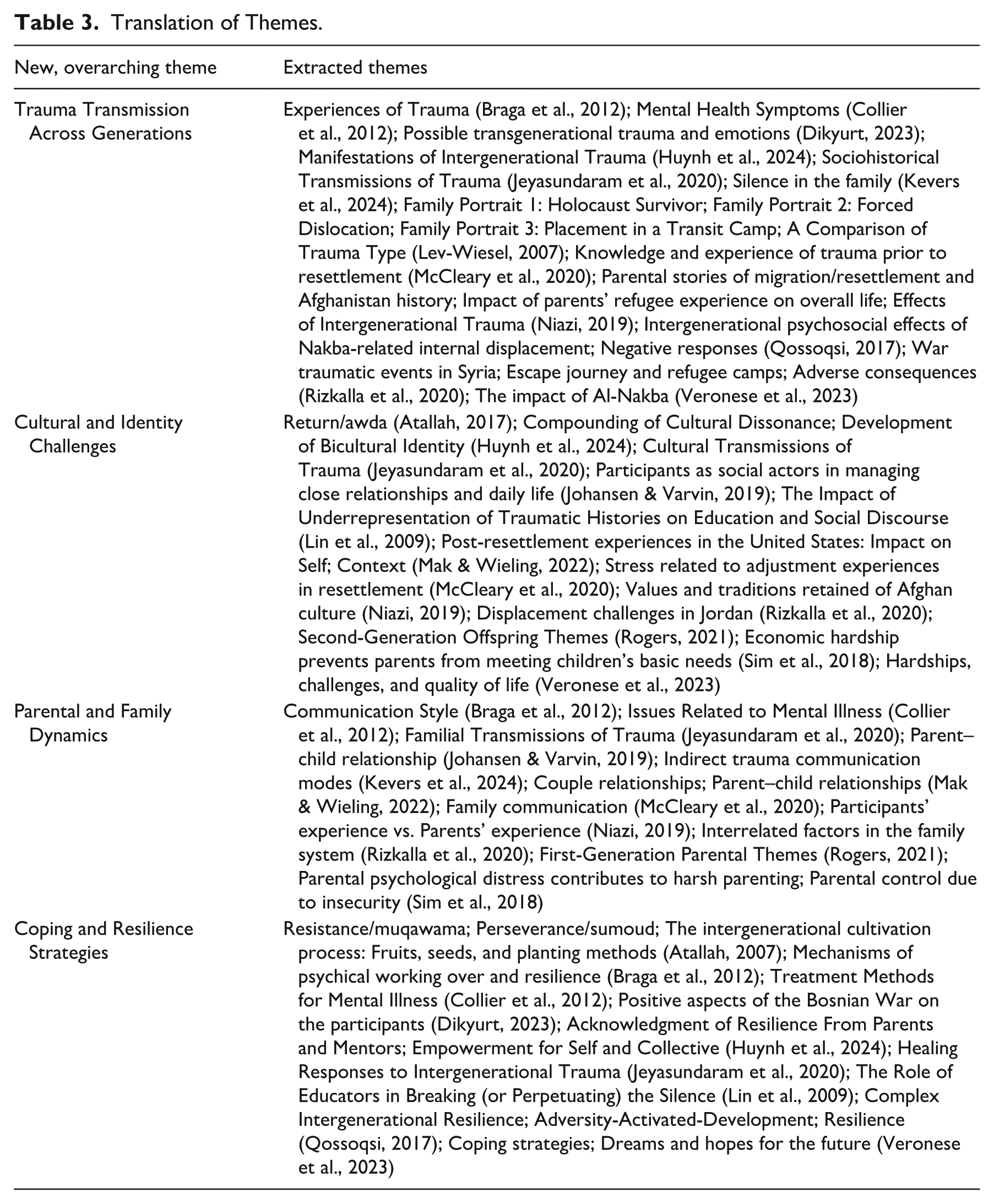
To ensure methodological rigor, we employed a collaborative approach to triangulate our findings. Over the course of multiple sessions, totaling 4 hours, the team systematically reviewed and cross-validated the coded themes. This process involved comparing individual coding results, refining emerging categories, and resolving discrepancies through discussion. Special attention was given to negative cases—instances where findings deviated from dominant patterns—acknowledging their significance in providing a more nuanced and trustworthy analysis (Patton, 2002). The final synthesized themes are presented in Table 3, alongside the original themes extracted from all studies, illustrating how each initial theme contributed to the broader conceptual framework developed in this synthesis.
Translation of Themes.
Results
Trauma Transmission Across Generations
Participants across studies described trauma as moving between generations through multiple pathways, from direct exposure to violence and displacement to subtler transmission through parental silence, behavior, and emotional atmosphere. For many first-generation participants, trauma was rooted in witnessing extreme violence firsthand. One Palestinian elder recalled her family’s expulsion: A man got up the minaret of the mosque and started shooting randomly down below at our village. I still remember my mother carrying one of my sisters, who was only 2 months old, as we ran to the mountains. . . . We panicked when they started shooting at us. We lived for years in caves waiting to return to our village, surviving by eating raw wheat. (Atallah, 2017, p. 368)
These experiences formed the traumatic material parents carried into resettlement and shaped how, or whether, they shared their histories with their children.
Many parents were reluctant to speak openly about the past. For some, silence was protective; one participant noted that his parents withheld information because “they don’t want us to have to suffer through what they’ve seen . . . it’s for protection” (Niazi, 2019, p. 68). For others, silence reflected shame and the pain of memory: My parents don’t build any theories and they have nothing to tell, because they don’t want to remember, they’re afraid of remembering, they’re ashamed of remembering, because each and every one of their memories comes wrapped in this shame of having been [who they were] or having lived what they lived. (Braga et al., 2012, p. 5)
Among Bosnian families, children perceived this reluctance as shared: “We don’t like talking about it and that’s kind of why I feel like my parents also didn’t talk about it. It was because they went through so much that it’s like they can talk about it if they want to but they just choose not to” (Dikyurt, 2023, p. 8).
Even without explicit disclosure, trauma was transmitted through affect and behavior. A Palestinian participant described absorbing her father’s grief during visits to their destroyed village without a single word being exchanged: Learning can be an indirect thing. I remember my father took us to the village and he was pointing and stopping, obviously looking for things that don’t exist anymore, without even saying anything, but you could feel he remembered the details of the details. . . . The expression on his face, the sadness he showed in his face, the way he was pointing at things, told us children of deep things, even though they might not exist anymore, they are still there. (Atallah, 2017, p. 373)
Descendants frequently described carrying inherited experiences in ways that were difficult to explain or trace. One participant reflected, “We may not get to the exact trauma that they went through, the exact fear, the exact anxiety. But, you know, telling their stories . . . it does impact you” (Niazi, 2019, p. 92). Others experienced this inheritance somatically. One second-generation Afghan Canadian participant described discovering that her recurring nightmares mirrored actual events her family had survived, concluding that “definitely trauma is passed on generations” (Rogers, 2021, p. 182).
Cultural and Identity Challenges
Intergenerational trauma among refugees shapes the way cultural identity is preserved, adapted, and challenged over time. For forcibly displaced communities, memories and heritage can be both a source of strength and a point of struggle as they navigate their connections to their homeland, their new country, and their evolving sense of belonging.
For first-generation refugees, the homeland is more than just a place. It represents dignity, identity, and a sense of belonging. Forced displacement disrupts these connections and creates a profound sense of loss. Many refugees try to preserve their culture through storytelling, traditions, and meaningful objects. These serve as reminders of their past and reinforce their connection to the place they call home. “This cradle used to be in Sheikh Saleh Assalim’s house. . . my brother slept in it, and he has died at the age of 80. This piece is the dearest and most precious to me. . . These keys symbolize the return” (Qossoqsi, 2017, p. 143). They also actively tried to transmit that memory to their children and grandchildren by storytelling and emphasis on maintaining their traditions. “I was born and raised here in the camp. We lived here as strangers, but my father always reminded us that we belong to our homeland, not to this exile” (Atallah, 2017, p. 371).
However, younger generations, born or raised in exile, experience cultural identity differently. While they inherit memories of displacement, their daily lives are shaped by their host country’s norms. Some embrace their roots, while others struggle against the expectations placed upon them. “When families say ‘he’s changed,’ they mean he is different from our culture. He is being too Americanized . . . You’re not performing to our expectations” (McCleary et al., 2020, p. 6).
For some, older family members shield them from the most painful aspects of their history, passing down only selective memories in an effort to protect them.
My older siblings who remember the war were fine telling me about things, [but] not a lot—they never would try to tell me anything too gory. Even at 17, when I said, “Tell me!” they were always careful. A bad past is not something you pass on to someone else. (Lin et al., 2009, p. 5)
Despite these generational shifts, storytelling remains a vital means of cultural transmission, ensuring that history is not lost. “We were raised on these stories, not fairy tales like Snow White, but the real ones about where we come from.” (Qossoqsi, 2017, p. 165). Yet, preserving culture can also place significant burdens on individuals. Women, in particular, often face rigid cultural expectations tied to their identity. One said, “Honor and shame—hayah (honor) and sharm (shame)—are way more attached to an Afghan girl’s identity than to a man’s.” (Rogers, 2021, p. 171). These pressures create intergenerational tensions as younger refugees navigate between tradition and personal autonomy. One young woman reflected: “You must always be on your best behavior—mardum che meghan (what will people say?)” (Rogers, 2021, p. 172).
Parental and Family Dynamics
Displacement, war, and long-term uncertainty reshaped family dynamics for many refugee participants. Participants described how trauma strained traditional caregiving roles, disrupted parent–child relationship, and produced complex feelings of loyalty, resentment, empathy, and guilt toward their parents. These dynamics often resulted in a reversal of roles, where children assumed emotional or practical responsibilities typically carried by adults. They often served as interpreters, decision-makers, and disciplinarians in their households: I was the one that had to be the one to discipline my younger siblings for a lot of their life. I was always the one that was kind of on their backs and making sure that they’re getting what they needed to get done and they weren’t slacking. My parents came to me whenever issues arose and I was always the one to discipline, and my parents’ kind of took the back seat for them. (Huynh et al., 2024, p. 7)
Early self-reliance often led children to grow up quickly, becoming not only independent but also altruistic. As one participant reflected, “Living under these difficult conditions taught me how to be an altruistic person, patient, and solving my problems independently” (Veronese et al., 2023, p. 6).
Parents processed and communicated their trauma in different ways. Some avoided talking about the past altogether, while others shared their stories—though not always directly with their children. Many were overwhelmed by their own unprocessed experiences and chose silence as a way to cope. One participant recalled, “She liked to talk about the subject, but not to me, not with me. She practically forced me to stay and listen when she talked with her friends” (Braga et al., 2012, p. 5). Others mentioned occasional, fragmented disclosures from parents. As one participant described: “My dad doesn’t really talk about it that much. . . once in a while he’ll say something, but it’s not like we ever sat down or like, ‘here’s the whole story’” (Dikyurt, 2023, p. 8). In contrast, some parents made deliberate efforts to pass down their experiences as a form of legacy and education. One mother shared, “I tell my family the story so they will be able to tell their children. Whenever my children need to choose a subject in school, I urge them to write on the Holocaust” (Lev-Wiesel, 2007, p. 10).
Beyond silence or storytelling, many parents struggled with their own trauma in ways that made them emotionally unavailable or unpredictable. This, in turn, shaped how children understood relationships, trust, and their own emotional needs. Many participants reflected on the emotional unavailability of their parents, which they attributed to unprocessed trauma, chronic stress, or a survival-focused mindset: My parents with their PTSD, they see the world as distrustful and angry. Impossible place to live, you know what I mean? Back in our old apartment that we lived in, my dad nailed all the windows shut. You know that’s not human. That’s like prison. That’s inhumane, not just for animals but for people, you know. He had a dozen locks on a door and with every guest we had come over, there was just no way that they could leave the door because there’s so many parts that you have to unlock at the same time to open the door. (Huynh et al., 2024, p. 6)
The impact of parental trauma often extended to children’s social lives. One Vietnamese participant said: “I wasn’t allowed to have friends over because [my family] thought they were going to steal information from us, but what seven-year-old steals information?” (Jeyasundaram et al., 2020, p. 6). Others spoke about how emotional expression was discouraged in their homes. A participant shared, There was a lot of anger in me. I couldn’t express it because my parents considered expressing emotions to be disrespectful. I have a lot of memories of my parents being angry and shouting at each other and me being very scared. I was disconnected to what my [emotional] needs were and how to express them, because they weren’t really met. (Jeyasundaram et al., 2020, p. 6)
Despite these challenges, many children developed a strong sense of empathy and admiration for their parents. They expressed a desire to honor their parents’ sacrifices through academic and personal achievement. However, this also came with the pressure to appease parents and the internalization of family reputation: When I turned down the opportunity to go to the Air Force Academy, my dad told me he was upset at me and he didn’t speak to me for a year. He told me he was upset, but when I got into the University of California, Los Angeles for grad school, that’s when he started forgiving me and for him to really know that I’m not a failure because again, that’s a parent’s worst fear, especially for refugee parents. Their children failing is almost like a reflection of them failing as a refugee parent and you know, I wanted to assure my dad that we didn’t fail. It’s just that I decided to take a different route. (Huynh et al., 2024, p. 8)
Coping and Resilience Strategies
Interwoven coping mechanisms shaped how communities with histories of forced migration navigated intergenerational trauma, providing valuable insights into processing and healing from adverse ancestral experiences. These mechanisms included different emotional responses to past trauma, the role of generational influence on learned coping skills, and fostering community connections to build resilience and promote healing.
Emotional responses to intergenerational trauma transmission were varied. Some respondents discussed that older generations coped by being emotionally withdrawn, detached, and silent, contributing to respondents having a limited or partial understanding of previous traumatic experiences. “My mom being reluctant to share information when I asked, ‘mama why didn’t you tell me that?’ dealing with my mom not willing to talk and tell me certain things about the War” (Dikyurt, 2023, p. 8). Other emotional responses included using humor or laughter to cope with the trauma and share past experiences: We’re even famous for this Jewish brand of humor, which can find the fun even in a major tragedy, but not in a meaningless way, of course. We got to know my father’s history during the war through these ironic, comic outbursts [of his]. And then the story came. (Braga et al., 2012, p. 4)
Respondents also highlighted the role of generational influence through the adoption of coping skills from previous generations. Generational influence was discussed in terms of always anticipating subsequent forced migration or being ready to flee: Expired passport: not an option. It doesn’t matter if you’re not going to travel for the next twenty years: you have to renew it, you always have to have, let’s say, a pair of underwear and a pair of socks at hand so you can take off. Always ready. (Braga et al., 2012, p. 5)
While others discussed the generational influence on emotional development and how unprocessed trauma showed up through learned coping mechanisms that were sometimes harmful or challenging to manage. “And some anger, my dad was pretty angry, is pretty angry, like he has some unprocessed things. His poor anger management rubbed off on me a little bit” (Dikyurt, 2023, p. 9).
Positive coping mechanisms were also fostered through resilience, strength, and community. The powerful role of a culturally centered community provided a space for connection, allowing participants to share experiences and heal: It was through Asian Pacific Islander Youth Promoting Advocacy & Leadership (a youth organization) where I started learning about my identity and becoming empowered as a youth. Learning about Asian American studies and capitalism and how all those things were connected to my life. But then having that space to just really talk to people and for the first time feeling like I could be vulnerable and myself. (Huynh et al., 2024, p. 8)
Resilience also grew through acts of giving back to the community, creating pathways for mutual support and healing. One person shared how educating younger generations became integral to their healing journey: It was also the start of [my] resilience and advocacy work. I understand that people younger than me probably won’t remember 2009. So that’s where my work has been—educating young people in the community about what happened and what continues to happen [to Tamil people in Sri Lanka]. I think it’s a really big part of my healing. (Jeyasundaram et al., 2020, p. 7)
Resilience was also built by addressing mental health stigmas and encouraging both personal and communal healing. Participants noted the importance of seeking professional help and challenging cultural norms that hindered openness and communication: I have considered seeing a professional, not necessarily about these types of feelings, but I’ve actually already made recommendations to people I’ve come across, people who are within my . . . family, who are elders. That I think they need to seek professional help, and they need to lose these cultural thoughts and norms that you need to only speak to the oldest person in your community or your family, you know. They’re — they should have professional intervention. (Niazi, 2019, p. 96)
These findings illustrate human adaptation in the face of trauma, emphasizing the critical roles of connection and cultural identity in healing. While intergenerational trauma poses challenges and may negatively impact mental health, it also cultivates community strength and motivates subsequent generations to seek support and lean on one another to process and heal.
Discussion
This qualitative meta-synthesis explores intergenerational trauma in forced migrant populations, identifying themes of trauma transmission, cultural identity struggles, shifting family dynamics, and resilience strategies. The aim of this study was to clarify how intergenerational trauma is understood and experienced within forcibly displaced families, drawing on qualitative evidence to center the perspectives of affected communities. The synthesized findings reflect this aim by illustrating the interplay of psychological, structural, and cultural processes through which trauma is carried forward, as well as the everyday practices of resilience that sustain families across generations. To the authors’ knowledge, this is the first QIMS study to synthesize forced migrant narratives to understand how trauma is experienced, interpreted, and managed within familial and cultural contexts.
Findings reveal that trauma in forced migrant families is often transmitted indirectly—through silence, partial disclosures, and emotionally charged family atmospheres—which leaves descendants with a diffuse yet powerful sense of inherited suffering (Kevers et al., 2024; Lev-Wiesel, 2007; Lin et al., 2009). Similar patterns, documented among Holocaust descendants, Indigenous communities, and undocumented immigrant families, demonstrate how selective disclosure can serve as both a protective and constraining strategy across diverse contexts (Collier et al., 2012; Johansen & Varvin, 2019; Lijtmaer, 2017; O’Neill et al., 2018; Rogers, 2021; Veronese et al., 2023). Cultural identity emerged as a central domain through which trauma reverberates: first-generation forced migrants often safeguarded dignity and belonging through storytelling, rituals, and symbolic objects, whereas younger generations navigated hybrid identities shaped by host-country norms, sometimes heightening tensions around assimilation and cultural loss—particularly for women who were expected to carry the burden of cultural preservation (Chao, 2019; Huynh et al., 2024; Jeyasundaram et al., 2020; Nandi & Platt, 2018; Niazi, 2019; Qossoqsi, 2017; Rizkalla et al., 2020; Sim et al., 2018). Displacement and trauma also reshaped family dynamics, as disrupted caregiving roles, emotional withdrawal, and hypervigilance affected children’s development and social lives (Cho et al., 2025; Huynh et al., 2024; McCleary et al., 2020). Many children assumed adult responsibilities, yet some later reframed parental silence and vigilance as survival strategies, enabling partial relational repair (Jeyasundaram et al., 2020; McCleary et al., 2020). Across these studies, coping strategies ranged from silence and emotional withdrawal to humor, storytelling, and activism (Braga et al., 2012; Dikyurt, 2023; Rogers, 2021; Veronese et al., 2023), with collective spaces, such as youth organizations and cultural centers, proving essential for fostering resilience, identity formation, and empowerment (Niazi, 2019; Sim et al., 2018).
Our findings align closely with existing reviews on intergenerational trauma in forced migrant communities, reinforcing several well-established mechanisms of transmission. Consistent with our synthesis, Sangalang and Vang (2017) identified silence, fragmented communication, and emotionally charged family environments as central pathways through which trauma is conveyed across generations—patterns that directly parallel our themes of partial disclosure and the “emotional atmospheres” descendants described. Flanagan et al. (2020) similarly documented disrupted family roles, parentification, and parental hypervigilance as key mechanisms of transmission, closely mirroring the strained family dynamics and role reversals identified in our analysis. Our findings on cultural identity tensions and generational negotiations of belonging also correspond with the conclusions of Kalocsányiová et al. (2024), who found that intergenerational contact, cultural expectations, and resettlement pressures shape both vulnerability and resilience in refugee families. Likewise, recent work by Cho et al. (2025) and by Strekalova-Hughes and Wang (2019) underscores the importance of storytelling, cultural continuity, and youth identity formation as forms of coping and resistance—elements that emerged prominently in our themes of community-based healing and intergenerational resilience. Together, these convergences demonstrate that the processes identified in this meta-synthesis are not only consistent with but substantively reinforce the broader evidence base on intergenerational trauma across diverse forced migrant groups.
Limitations
Despite the rich insights provided by this qualitative meta-synthesis, several limitations should be acknowledged. First, the study involves generalizing across diverse forced migrant groups with unique experiences, which may overlook specific cultural nuances and variations in trauma manifestation and coping strategies. Relatedly, most included studies provided limited attention to how intersecting factors such as class, gender, and sexuality shape intergenerational trauma, which may constrain the depth of analysis across differently positioned forced migrant groups. While the QIMS methodology aims for heterogeneity, the inherent diversity of forced migrant experiences means that a single synthesis may not capture the full spectrum of intergenerational trauma. Second, the search strategy, while comprehensive, may have missed relevant articles, potentially leading to an incomplete representation of the existing qualitative literature. Third, the inclusion criteria were limited to articles published in English. This excludes valuable qualitative research conducted and published in other languages, potentially introducing a linguistic bias and limiting the global generalizability of the findings. Fourth, the studies included in this synthesis were cross-sectional, limiting insight into how intergenerational trauma processes may evolve over time or shift across developmental stages and resettlement contexts. In addition, requiring direct participant quotes as an inclusion criterion may have introduced reporting-style bias, potentially excluding otherwise rigorous qualitative studies in which quotation was limited due to journal word count restrictions or disciplinary conventions. Finally, as a meta-synthesis, this study is limited by the extent and nature of the data reported by the original authors. The researchers did not have access to the original raw data, meaning their interpretations are based on the themes and findings presented in the published studies. This reliance on secondary interpretations means that deeper, more nuanced analyses that might have been possible with direct access to participant narratives could not be performed. Despite these limitations, the study offers a valuable synthesis of existing qualitative literature, amplifying the voices and lived experiences of participants in ways that can better inform practitioners and policymakers and guide future research and intervention.
Implications for Practice
This study highlights several implications for practice with forced migrant families. First, the findings underscore the importance of developing and implementing family-based interventions that foster dialogue across generations. Silence and selective disclosure, while often protective in intent, can deepen confusion and emotional disconnection. Interventions that create opportunities for open communication may help break this cycle and strengthen family relationships. Recent systematic reviews highlight the growing use of such family-based approaches in forced migrant communities (Bunn et al., 2022; Mak & Wieling, 2022). One example is the Family Strengthening Intervention for Refugees (FSI-R), developed through community-based participatory methods and piloted across several refugee communities in the United States (Betancourt et al., 2020; Boston College, Research Program on Children and Adversity, n.d.). Continued community-based development of these programs is essential to ensure they are tailored to the unique needs of diverse populations.
Equally critical is the integration of cultural identity and heritage preservation into practice. Findings from this review illustrate how cultural storytelling, traditions, and rituals serve as vital mechanisms for maintaining continuity and transmitting resilience across generations (Qossoqsi, 2017; Strekalova-Hughes & Wang, 2019). Practice approaches should therefore support community-wide efforts to sustain culture and language, such as creating spaces for intergenerational gatherings, cultural education programs, and religious or community-based events (Kirsch et al., 2024; Kirsch & Haran, 2025). These initiatives may also reduce tensions between generations, particularly around issues of assimilation and identity negotiation (Chao, 2019; Huynh et al., 2024; Rizkalla et al., 2020).
Another implication concerns the definition of trauma itself. Findings indicate that intergenerational trauma in forced migrant families cannot be fully understood through Western, individual-focused models. Instead, practice must incorporate more culturally grounded constructs, such as intergenerational and collective trauma, which better reflect the lived experiences of collectivist communities (Cerdeña et al., 2021; Hudson et al., 2016; Kirsch & Haran, 2025). These perspectives capture the enduring effects of trauma that extend beyond the original generation directly impacted by displacement or violence (Kellerman, 2001; Sangalang & Vang, 2017). Integrating such constructs into practice allows for more accurate recognition of forced migrant communities’ needs and more culturally resonant interventions.
Finally, the study highlights the value of collective and group-level healing. Community organizations, youth groups, and peer networks emerged as powerful sources of empowerment and resilience, providing opportunities for shared storytelling, advocacy, and identity formation (Niazi, 2019; Rogers, 2021; Sim et al., 2018; Veronese et al., 2023). Interventions should therefore prioritize building collective spaces where forced migrants can connect, heal, and preserve cultural traditions, alongside efforts to address stigma and promote professional mental health support (Huynh et al., 2024; Jeyasundaram et al., 2020; Kirsch et al., 2023). By shifting from an individual to a community focus, practitioners can more effectively foster healing and resilience across generations; importantly, this shift does not replace the need for individualized support. Rather, individual and community perspectives are complementary, recognizing each person’s distinct experiences while promoting collective environments in which all members can flourish.
Conclusion
This qualitative meta-synthesis provides a comprehensive understanding of intergenerational trauma in forced migrant populations, underscoring its multifaceted nature and profound impact across generations. The findings reveal that trauma is transmitted not only through individual psychological symptoms but also through structural, cultural, and familial processes. The tension between remembering and shielding, the reshaping of family dynamics, and the constant negotiation of cultural identity all contribute to the complex lived experience of intergenerational trauma. Crucially, the study also highlights the remarkable resilience and diverse coping mechanisms employed by these communities, emphasizing the vital role of community-based support, collective healing, and the breaking of mental health stigmas. Building on these insights, future research would benefit from longitudinal designs that capture how intergenerational processes unfold over time, studies that intentionally include undocumented and underrepresented forced migrant groups, and community-based intervention research that tests culturally grounded pathways to healing. By centering forced migrant narratives, this research offers critical insights that can inform more culturally resonant interventions and support systems, ultimately contributing to the healing and well-being of forcibly displaced populations and their descendants.
Footnotes
Disposition editor: Cristina Mogro-Wilson

Funding
The authors received no financial support for the research, authorship, and/or publication of this article.
Declaration of Conflicting Interests
The authors declared no potential conflicts of interest with respect to the research, authorship, and/or publication of this article.