




Abstract
This article describes the challenges and issues associated with providing meaningful individualized support for youth who have experienced homelessness through the lens of a not-for-profit supportive employment and housing program provider based in a tourist town in Canada. This article challenges common atomistic approaches to individual support that fail to recognize the importance of the community in which they are provided and tend to underplay the vital role of relationality. Drawing on findings from a qualitatively-driven participatory action research multi-year project, this article describes a qualitative meta-analysis of findings from one organization that articulate the human needs required for optimal functioning, through the lens of Siksika wisdom, Cross’s relational worldview model, and Blackstock’s Breath of Life theory. The research findings emphasized the importance of the intersection of community, relationality, and communications to support program and participant success.
Keywords
While it is difficult to disentangle the poly-crisis facing humanity today, homelessness continues to cause suffering for many in Canada, and currently “there are more homeless in Canada than ever before in the history of the nation” (CAUF Society, 2022). While there is no official reliable account of the number of homeless in Canada, “on any given night there are approximately 35,000 who would be categorized as homeless with up to 50,000 falling under the category of hidden homeless” (Homeless Hub, 2016). In British Columbia, an integrative data project identified 26,240 people experiencing homelessness in the province in 2021 with an average of 11,896 individuals experiencing it each month (Government of British Columbia, 2024). While youth are at the precipice of independence, those youth with less secure family support to launch toward independence as well as those who have been involved with child protection, youth justice, mental health, or addictions services are at higher risk of experiencing homelessness (Axe et al., 2020a; Brown, 2014; Rodrigue, 2016). Youth who come from a marginalized group, such as Indigenous, LGBTQ2S+, or Black youth (Kidd et al., 2019) are further vulnerable to homelessness and its detrimental impacts.
Dawson-Rose et al. (2020) found that most youth experiencing homelessness had experienced at least one adverse childhood event. Sample and Ferguson (2019) suggested youth experiencing homelessness face situational barriers (including interpersonal relationships, lack of resources, and street environment-related issues), and physical and mental health issues but are also more likely to resist asking for help and managing finances. As youth experience homelessness differently than adults, the individual, structural, informal, and formal supports they need to require customization (Gaetz, 2014b), particularly for those experiencing marginalization.
Adolescence is globally recognized as a period of turbulence, transition, and biological change, stretching between the ages of 10 and 24 (Newman & Newman, 2020). This stage of development is intimately linked to subsequent life stages, making the ability to plan and learn essential (where youth can make and learn from mistakes). By understanding these elements and nurturing them earlier in life we may help identify what elements need to be fed and which gaps need to be filled to support all youth to thrive.
Beginning with the literature on the context of vulnerable and unhoused youth in Canada, this article focuses on the approaches and components of individualized support for vulnerable youth, specifically those who have experienced homelessness and barriers to employment within one supportive employment and housing program that aims to end youth homelessness. Zero Ceiling was established in 1997 in Whistler, Canada. The organization’s Work 2 Live program helps reduce barriers to housing and employment and provides individualized support to youth who have experienced homelessness and faced obstacles to independent living. Based on a meta-analysis of multiyear findings of this program, individualized support emerged as key.
The Work 2 Live program largely focuses on young people between 18 and 24 who have experienced homelessness, are interested in the outdoors, and are willing to move to Whistler. Participating youth normally cannot have unsupported substance use or mental health challenges. They often apply to join the program through allied youth-serving homeless support organizations in Greater Vancouver and the Sunshine Coast. Eligible youth are screened for their fit for the program and successful applicants are usually inducted in the autumn of each year. Participants have included a diverse range of genders, races, religions, sexualities, and geographies including Indigenous and refugee-status youth. In recent years, the program increased its funding and staff. This has allowed them to move from a high-barrier to a lower-barrier program which offers multipronged in-depth services such as supported employment, housing, land-based programming, mental health support, life skills support, case management, and referrals with the goal of “facilitating a smooth transition to independent living and a successful journey into adulthood” (Zero Ceiling, 2023, para. 2). Continuous (24/7) support is provided using a family-like approach to developing community where “participants forge meaningful connections with each other, our staff, and program graduates. . .by promoting a familial atmosphere and encouraging camaraderie, we create a supportive and inclusive environment” (Zero Ceiling, 2023, para. 3). Participants graduate from the program based on their readiness as assessed by the participants and ZC workers.
Based on the feedback gathered through iterative annual research, the program staff tackles barriers the youth face and supports them with housing, life skills training, and realistic supported employment. While this system of support has shifted over the 7 years, including with variations caused by the COVID-19 pandemic and increasing levels of services, addressing barriers to housing and employment and providing support within the context of the community have remained core tenets of the program. From this, and the literature, we have distilled key components required to effectively integrate youth voices into their programs (see Figure 1).
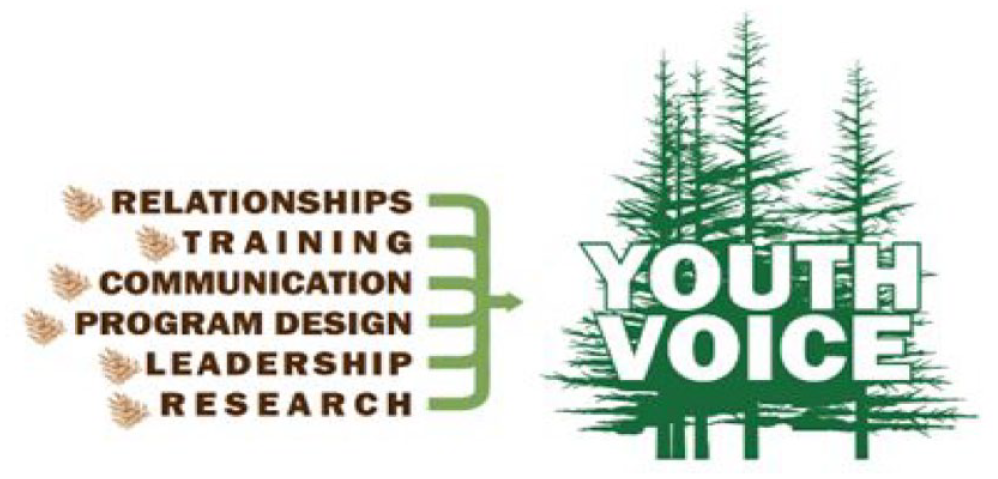
Youth Voice and Engagement Framework (Childs et al., 2024).
While the research has also investigated program impact across the areas of employment (Axe et al., 2018a, 2018b, 2020b, 2022, 2023, 2024), housing (Childs et al, in review), and youth engagement (Childs et al., 2024), this article summarizes the individualized support provided for youth that emerged as one aspect of this multiyear research study. When looking at individualized support, we focused on the first component of the figure, “relationships” which includes the essential ingredients as outlined in Table 1. While not the focus of this paper, it is important to note that the organization and the youth were significantly impacted by the COVID-19 pandemic which forced the organization to pivot to best support the youth. This included increasing the time participants stayed in the program by twice as long or more, whereby relational practice became even more important.
Youth Voice and Engagement Framework—Relationships (Childs et al., 2024).

Theoretical Framework
The multiyear research initially relied on social constructivism and social constructionism as theoretical frameworks. Social constructivism posits that an individual’s knowledge construction takes place in a social context as they interact with others and the world, which influences the learning process and “socially agreeable interpretations” (Adams, 2006, p. 246). Cunliffe (2008) builds from this and defines social constructionism as one in which “we construct multiple and emerging ‘realities’ and selves with others through our dialogue” (p. 135) and through this shared dialogue, create new understandings of the world. Together, the initial theoretical framework supported the idea of centering the voices of those who experience a phenomenon and was therefore strongly aligned with centering youth voices in support of effective youth programming, as evidenced in the Work 2 Live guiding principles of unconditional love, grounded in relationships and community, safety net, interconnectedness “the people and the land are one,” and courage to challenge (Zero Ceiling, 2023).
As the research progressed, we noted that the social constructivist and social constructionist theoretical framework was too broad given the Work 2 Live guiding principles, the importance of individualized support, and the prevalence of Indigenous participants in the research. Consistent with the iterative, responsive nature of action research, we drew on a more specific and culturally appropriate theoretical framework that articulated the importance of the human needs required for flourishing. While Maslow’s (1971) “hierarchy of needs” outlines an individual’s need for flourishing, it insufficiently outlines the social and relational well-being that emerged in research findings, in the youth voice component of “relationships” (Childs et al., 2024), or in Vygotsky’s (1978) socio-cultural perspective on development.
Since Maslow’s work built upon Siksika (or Blackfoot) theoretical origins, we turned to the Siksika articulation of human needs (Bear Chief et al., 2022; Blackstock, 2011; Bray, 2019). The Siksika Nations’ perspective on a hierarchy of needs is more holistic and relational. Their perspective emphasizes the interrelated concepts of self-actualization, community actualization, and cultural perpetuity as the core human needs required for human flourishing. Providing more depth to this concept, Blackstock (2011) frames the emergent Breath of Life theory where she suggests “self-actualization is at the base of the tipi, not at the top, and is the foundation on which community actualization is built. It assumes that “the world is indivisible and that everything across all time is important to understanding the human experience” (p. 8). The highest form that a Blackfoot can attain is called “cultural perpetuity” which is akin to the breadth of life (Blackstock interviewed by Michel, 2014). Embedded in the Breath of Life theory is the relational worldview model (Cross, 2007) that explores the interrelated principles of physical, emotional, cognitive, and emotional needs. The physical needs required to sustain life are seen as equivalent to the emotional, spiritual, and cognitive needs. The emotional needs focus on relationships and a sense of belonging. The spiritual aspects of needs denote the connection between self, spirituality, and life’s purpose. The cognitive needs relate to one’s identity and connection to the community. Blackstock (2011) suggests that if all the relational worldview principles are met, self-actualization can occur; but this is dependent upon the community which also builds toward community actualization (defined as the community meeting basic needs, providing safety, and fostering thriving). Blackstock (2011) further suggests that balance is required for optimal functioning of both the individual and their community over time. In analyzing the themes that emerged from the research across the annual research reports, we found that relational practice and individualized support stood as central themes worth further exploring. As such, it was important to expand the theoretical framework to include the Breath of Life theory (Blackstock, 2011; Cross, 2007) and Siksika articulation of human needs (Bear Chief et al., 2022; Blackstock, 2011; Bray, 2019). Collectively, these concepts, with social constructivism and social constructionism, form the theoretical framework for this article.
Literature Review—Landscape of Individualized Support for Vulnerable and Unhoused Youth in Canada
Individual, structural, and societal issues converge to exacerbate homelessness risks for youth (Baskin, 2007), which are redressed by many different approaches. The literature review examines the types and timing of individualized supports required for vulnerable youth, and the success identifiers for vulnerable youth programming, including exploring who defines success, what tools are used to measure it, and the challenges inherent in attempting to quantify success.
Individualized Support
Early evidence by Unger (1998) found that social support could dampen the negative effects of a variety of life stressors for youth. Individualized support for youth, including ensuring stable income and shelter (including transitional and affordable permanent housing) and social supports (e.g., education, skill training, food, and money) is seen as best practice (Community Development Halton, 2007). Halton identified the following support needs: appropriate job training (e.g., driving skills and licenses), daily living skills (money management, cooking, chores, help with food, a common garden, child care), health, medical access, assistance with addiction issues, support, and structure in housing. Sanders et al. (2020) found that having a supportive adult and early exposure to work and employment skills development gave youth the needed space to build skills.
A need commonly discussed across studies was a longing for a relationship that is critical for long-term support. Gasior et al. (2018) found the perception of social support had a positive influence on youth’s expectation of recovery. In an earlier broader study, Garmezy (1985) noted several protective factors that supported stress resistance, including individual characteristics, family qualities, and support systems. “For many, if not most, young people who experience homelessness, there is a longing for family . . .” (p. 32). Family reparation is not possible for some, but Gaetz (2014b) suggested that it can support long-term success.
Where healthy family relationships have been absent, healthy relationships with case workers and peers are important. The youth noted that they rise and fall together, so there was a need to “group up” for protection (Henwood et al., 2018, p. 3). However, the same youth noted that this runs counter to the need to compete for secure housing. In talking with 13- to 24-year-olds experiencing homelessness in California, Barman-Adhikari et al. (2016) found they had low levels of social support but fared better when they accessed support across different domains. Youth with experience of foster care, family violence, or physical abuse had fewer instrumental supports and were more likely to rely on emotional support from street-based peers; and youth living on the streets had little access to emotional or instrumental support from family but were more likely to utilize professional instrumental support (Barman-Adhikari et al., 2016).
Support during transitions (to independence or between services) is also important. French et al. (2017) stressed that youth need support throughout the transition, including ongoing housing, employment, education, cultural support (particularly for Indigenous youth), life skills, social inclusion, meaningful engagement, building social relationships, and engaging in meaningful activities. Paulsen and Berg (2016) found transitioning youth wanted to make their own decisions and be independent. Dichotomously, they also needed the information to make decisions, augmented by formal and informal support, including practical support, economic guidance, financial support, housing, emotional support, and affirmational guidance support (p. 128).
Bond et al. (2016) found that Independent Placement and Support (IPS) provided unemployed youth under 30 significantly better employment outcomes, with more hours logged, weeks worked, and longer job tenure. Frøyland (2016) suggested long-term support of IPS helped combat social exclusion. Concurrently, IPS demonstrated effectiveness in supporting youth to develop their skills, potential, and interests while achieving job mastery. Lessons learned were as simple as getting up in the morning and getting to work or learning how to handle oneself and work with others.
Programs focused on outdoor adventure add a distinct element to standardized programs as they use an integrated approach to foster positive youth development and well-being. Mutz and Müller (2016) characterized these programs as introducing youth to an unfamiliar physical environment with cooperative and challenging activities in a small group guided by an experienced skilled instructor. While these programs vary, meta-analyses of literature have illustrated statistically significant positive outcomes across a range of factors including improved self-concept, self-esteem, increased prosocial behavior, improved cognitive autonomy (Mutz & Müller, 2016; Romi & Kohan, 2004), increased resilience (Ritchie et al., 2014), amplified leadership, and improved community engagement (Cason & Gillis, 2016; Gillespie & Allen-Craig, 2009; Greffrath et al., 2013; Sibthorp et al., 2007). Relatedly, Deane and Harré (2014) found that across multiple studies, participants in adventure or outdoor-based interventions were 62% better off post-program. This is relevant in the context of the Work 2 Live program given one of its guiding principles is “Interconnection: The People and Land are one” (Zero Ceiling, 2023).
Identifiers of Intervention Success
To individualize support, it is useful to ask what constitutes success and who decides this. Asking youth to define what success looks like, rather than enforcing external precepts such as those imposed by the state, is ideal and is supported in the literature. Holtschneider (2016) found youth-defined program success differently than support workers. Henwood et al. (2018) found that youth involved in a housing intervention suggested that housing allocation should be tied to whether a youth “shows initiative and has the motivation for self-betterment” (p. 2).
Many youth homelessness program outcomes are intangible, difficult to quantify, rigid, crude, and hard to achieve due to external systemic issues such as the ability to obtain and sustain employment, education, and housing. Relevant measures of success exist, which correspond to support areas. Some speak to the use of organizational supports and structures, while others are youth-driven and grounded in lived experience.
Step Stones for Youth identified two factors that defined youth success in exiting homelessness: stable housing and a network of people who care about them and are willing to provide meaningful support (Amon, 2022). Noble-Carr et al. (2014) found success was dependent on relationships, community, belonging, competence, and hope. Youth outcomes mapping initiatives such as the World Health Organization Quality of Life (WHOQOL) measure the domains of physical health, psychological health, level of independence, social relations, environment, and spirituality/religion/personal beliefs (World Health Organization [WHO], 2012). The outcome measures for transitions into adulthood for vulnerable youth used by Boden et al. (2016) included life satisfaction, optimism, planned educational achievement, civic engagement, and positive peer influence and all were correlated with resilience. Altena et al. (2014) used the Consumer Quality Index for Shelter and Community Care Services (CQI-SCCS) instrument in the Netherlands to evaluate the experiences of 308 youth. Dewar and Goodman’s (2014) literature review highlighted promising practices including supportive relationships; links to family (p. 7); educational supports (including employment readiness, career planning, job search assistance, job skills and training, life skills, financial management training, resume building, interviewing skills; p. 8); educational mentoring (e.g., role models); and housing supports (stable safe housing plus financial assistance; p. 7). Community Development Halton (2007) noted security, safety, and privacy were critical success factors when provided alongside employment skills and life skills for independent living. Henwood et al. (2018) found youth discussed the importance of individualized support through support services, counseling, and life skills training but also noted the need to recognize and encourage flexibility and space to make mistakes. For example, when measuring the outputs of a program, the number of hours in employment or education is relatively straightforward to measure; however, measuring program outcomes such as increased life skills, confidence or improved well-being is more challenging.
Holtschneider (2016) interviewed exiting youth from a supportive employment program and found they continued to experience financial and housing instability including homelessness, high levels of stress, and difficulty returning to school due to work and family obligations “leaving many participants further away than they anticipated from the careers and futures they envisioned while in the (program]” (p. 161). However, their perceptions of the program were positive—the youth did not define success of the program as obtaining self-sufficiency, as is common. Rather, they identified four core outcomes they felt were most relevant: safety and survival, permanent connections, giving back, and personal development (p. 161). By these measures, 47% of youth said they would not be alive had they not been a part of the program, they had gained permanent connections with peers and staff who cared about them, and they personally felt more likely to give back and help others. Participants reported experiencing personal development, maturation and growth, increased empathy, and a desire to live more responsibly. This runs counter to common funder demands for economic autonomy.
The literature outlined here tends to focus on the individualized supports provided to youth and success measures associated with individual outcomes rather than the collective or communal benefits and needs articulated in the Siksika hierarchy of needs and the relational worldview that informs the Breath of Life theory (Blackstock, 2011). Our research examined the individualized support for youth within the context of communal benefits that emerged as one aspect of a multi-year research project. As such, we aim to expand the literature with an example of a deeper and more holistic representation of individualized support.
Methodology and Method
Informed by the theoretical framework discussed above, this article reports on a meta-analysis of 7 years of participatory action-oriented qualitatively-driven mixed-methodology research project (Hesse-Biber, 2022; Kemmis, 2008; Reason & Bradbury, 2006) undertaken on the Work 2 Live program to identify key aspects of effective practice to support the continued development, improvement, and impact of the Work 2 Live program. As reported elsewhere, the research demonstrated that the program was successful in supporting sustainable housing, employment experience, and life skills development for youth, community engagement, reciprocal benefits for employers and youth participants, and youth participation (Axe et al., 2018a, 2018b, 2020b, 2022, 2023, 2024). With the project goal of achieving a deeper and more holistic representation of views held by multiple rightsholders in the Work 2 Live program, this approach was chosen as it “privileges a qualitative epistemology and methodology, with the quantitative component taking on a secondary role by assisting the qualitative part” (Hesse-Biber, 2022, p. 619). It focuses on lived experiences that are explicit in the research questions and are examined through the participatory action-oriented research design where the research “investigates reality to transform it” (Kemmis, 2008, p. 132).
The overarching research question has been: What is the experience of participants and rightsholders in the Zero Ceiling Work 2 Live program and how does it impact them during and beyond program completion? Due to the responsive, iterative nature of participatory action research, sub-questions varied and evolved over the project’s 7-year timeframe. Co-developed with the Work 2 Live co-executive directors each year of the project, areas of focus included youth experience, employment success, and employer perspectives.
Data Collection
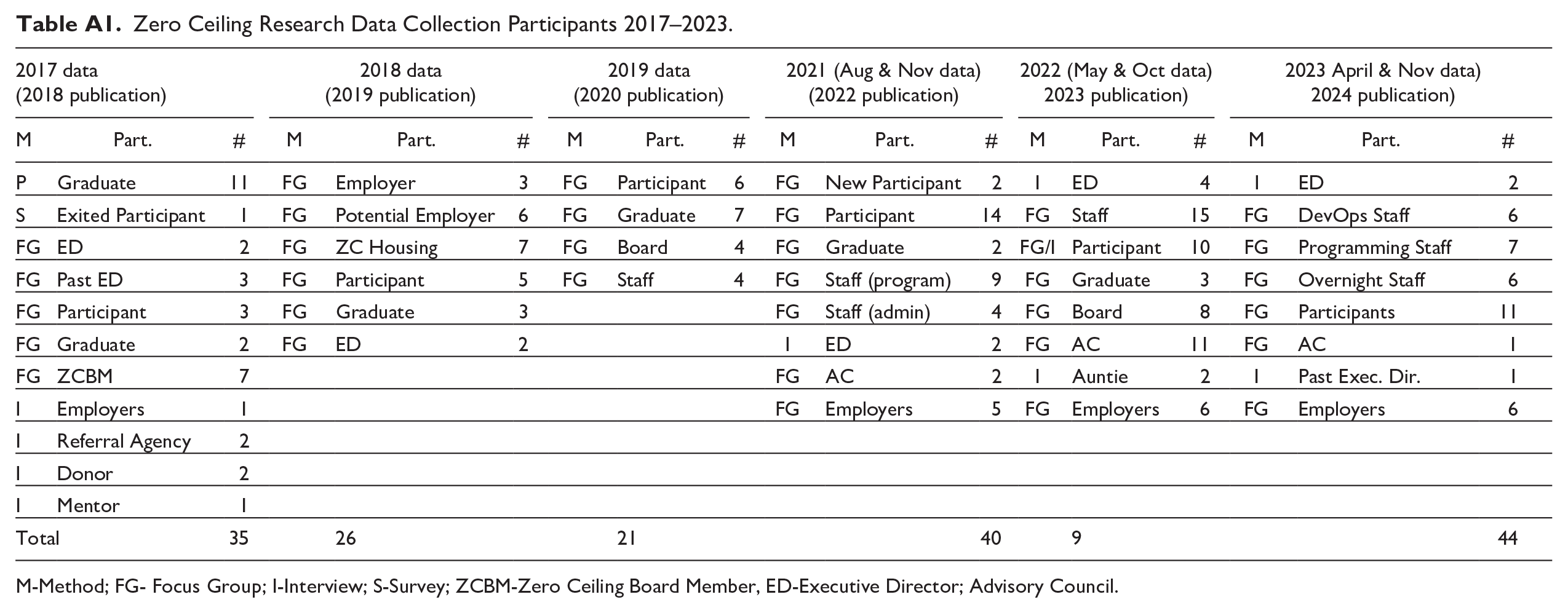
Data were collected, analyzed, and reported on annually. Qualitative data were collected through a series of semi-structured interviews and focus groups with Work 2 Live program current and graduate participants, executive directors, founder and past executive directors, board members, donors, employers, mentors, current employers, referral agencies, potential employers, housing representatives, and staff. Participants were recruited based on their involvement with Zero Ceiling and the Work 2 Live program between the years of 2017 and 2023. Invitations were sent out via email to all participants and graduates (with current contact details) from the Zero Ceiling staff, therefore participants were self-selected to participate. All non-staff were offered gift certificates for participation. Those who consented to participate in the research were scheduled into a face-to-face interview or focus group sessions (as individual preferences dictated and the schedule could accommodate). We conducted interviews or focus groups via videoconferencing for participants who were not in Whistler. Focus groups and interviews were conducted primarily on-site once a year during the 2017 to 2019 timeframe and twice a year during the 2020 to 2023 timeframe. A total of 225 individuals participated in this research between 2017 and 2023 with 34 focus groups and 10 interviews conducted (see Appendix 1 for details of participants). We did not collect demographic data, but participants represented diverse characteristics.
Quantitative data in the form of Work 2 Live participant case notes (2020–2023), alumni survey (2017), and employer surveys (2021–2023) were also collected and analyzed; however, the response rate was minimal across all three collection points so that an analysis of the quantitative data was not included in this article. Data are found in the Appendix, in Table A1: Zero Ceiling Research Data Collection Participants 2017–2023.
All focus groups and interviews were conducted with two or three researchers. The data from the current participants and graduates of the program were privileged in the analysis given their unique perspectives. The focus groups and interviews were 1-hr-long and were both transcribed live and recorded in Otter.ai for backup and transcription checking. The three researchers rotated the roles of interviewer, transcriber, and observer. Additional observational notes were captured on ReMarkable tablets as drawings and text and were included for reference but not as part of the analysis. The audio files were deleted once the transcription had been checked and all transcripts were held on university password-protected computers.
Data Analysis
Reflective thematic analysis (TA; Braun & Clark, 2022) was used year-on-year given its alignment to the research project, the research question and sub-questions and recognition of the “importance of the researchers subjectivity as analytic resource, and their reflective engagement with theory, data, and interpretation” (Braun & Clark, 2022, p. 330). As thematic analysis involves “immersion in the data, reading, reflecting, questioning, imagining, wondering, writing, retreating, returning” (Braun & Clark, 2022, p. 331), it supports and is supported by our theoretical framework, our research approach and the Work 2 Live program.
The TA approach informing the research analysis of this research project follows Braun and Clark’s (2022) definition of Codebook TA: a cluster of methods that broadly sits within a qualitative paradigm. . .use[s] some kind of structured coding framework for developing and documenting the analysis. . .themes are typically initially developed early on but in some methods can be refined or new themes can be developed through inductive data engagement and the analytic process (p. 333)
With the underlying theoretical framework (i.e., social constructivism, constructionism, and breath of life theory built on the premise of the relational worldview) and the research question, we approached TA with a descriptive purpose and as such, concur with Braun and Clark’s (2022) assertion that when undertaken in this way, TA is “an interpretative activity . . . allowing the researcher to through the lenses of their particular social, cultural, historical, disciplinary, political and ideological positionings. . . [the researcher] evoke participant ‘voices’ but ultimately tell their story about the data” (Braun & Clark, 2022, p. 339).
Consistent with reflexive TA, once data were collected, the research team manually coded it in Excel (2017; 2018) or in NVivo (2019-2023) where “the code is a tool used by the researcher to develop (initial) themes” (Braun & Clark, 2022, p. 340). The switch to NVivo was funding-driven. Researchers divided the transcripts for coding (aligned to their data collection assignment), individually completed coding, and generated initial themes from the transcripts where themes were defined as “patterns of shared meaning, united by a central concept or idea . . . with an active role of the researcher in theme creation and provisionality of themes when first developed” (Braun & Clark, 2022, pp. 341–343). In coding, both anticipated and emergent codes were examined, that is, the anticipated codes were established in advance, often determined by the questions posed, and the emergent codes were more granular sub-codes that developed in discussions. The research team met to review the individually themed datasets, congruence and misalignment, and to agree on the codebook and the themes. During the 2017 to 2019 timeframe, these themes were discussed in annual reports provided to the Work 2 Live program. Due to funder requirements, during the 2020 to 2023 period, intra-thematic analysis was conducted across the spring and fall datasets and these themes were summarized in annual reports.
Furthermore, a manual year-over-year meta-analysis was completed, based on the findings outlined in annual reports, to deduce meta-themes across the 7-year research project. Where clarity was needed, raw data were re-examined. Of the core and consistent themes that emerged across the years, the importance of relational practice and individualized support arose. This article focuses on broadening the theoretical framework to incorporate this meta-theme and review it through the lens of the research and the literature.
Research ethics approval was received from the researchers’ University Research Ethics Board (adhering to the Canadian Tri-Council Policy on Ethical Conduct for Research Involving Humans [Government of Canada, 2017]) and updated each year.
Limitations
This research took place in one organization in one community with a small number of participants. The research also evolved over time due to the responsive nature of participatory action research, making replication both challenging and undesirable. However, seen as a case example with a core research question, it provides rich insight into how individualized support can work to assist youth who have experienced homelessness.
Findings and Analysis
Underpinned by the theoretical framework, this section provides a summary of findings and associated analysis from 7 years of data collected on the Work 2 Live program. The themes identified through analysis are relevant to individualized support holistic individualized support, learning to live independently, and goal-setting support. The findings reflect on the role of individualized support in the life trajectories of program participants. While the findings are action-oriented, they illustrate the processes that build toward trusting relationships. The Work 2 Live program exemplifies individualized support that integrates elements that advance the Siksika components of both self and community actualization needed for optimal balance and human functioning (Bear Chief et al., 2022; Blackstock, 2011; Bray, 2019). The three cross-cutting themes outlined in the findings are carried forward to this analysis.
Impactful Holistic Individualized Support
The first research theme, impactful holistic individualized support, leads to both individual and community actualization and is inherently relational. The Youth Voice Framework depicted in Figure 1 (Axe et al., 2020a), based on the Work 2 Live program, provides a good picture of the variety of ways support can be offered. Under the relationship domain, the Framework suggests the following activities as examples: host weekly family dinners, include weekly outdoor activities, provide 24/7 access to support staff, offer a Life Skills Program, host employer/youth one-to-one meetings, offer employer training, provide transition training, provide opportunities to build relationships with the community (including Indigenous connections), provide low-barrier, culturally safe counseling, participate in shopping for and cooking family dinners, stay connected after graduation, participating in life skills program, and participate in transition training (Childs et al., 2024).
Delving further into support, program participants and graduates outlined several effective core features of the Work 2 Live program, including that the support provided is familial and allows them to move through the program at their own pace based on their needs. A 2022 staff reflected they had been “moving towards a more need-based approach as transition planning happens quite organically when there’s not an arbitrary end date” (Staff, 2022).
Staff-suggested, individualized support means reducing barriers and impediments that detract from the self-paced route used in the program to allow program participants to thrive and self-actualize. One 2019 program participant shared, prior to coming to the program, [I] didn’t have any time to think of this before coming into Zero Ceiling ‘cause I didn’t have anything to keep me in check, so Zero Ceiling has been keeping me in check and I have been able to plan.
As a graduate in 2018 stated, “having the support up here and the options up here took the stress away for me, thereby allowing the youth to make the changes they needed to make.” This was further articulated by another graduate in 2018, everyone comes for a reason, but we all have individual goals and where we want to be and what we need, and it [the Work 2 Live program] is very helpful because it focuses on what you need and how you want to succeed.
The effective and impactful aspects of support according to program participants were about relationships and included: being listened to, being treated with respect, and tracking success over time. Program participants identified the importance of removing the barriers by supporting housing and employment and building relevant life skills, noting that the human relationality in the program was more important than the other pragmatic components of the program: “It is the individuality and the warmness and the connection. It’s nice to not be another statistic on the board. Zero Ceiling makes you feel like a regular person. It’s the humanness of it” (Participant, 2020). A Board Member (2022) also articulated this: “It’s a way of framing providing services. That is not that language. It’s family. It’s unconditional love. It’s this trust . . . It’s a safety net.” This illustrates the individual approach that is done with a community.
The pragmatic supports offered by the Work 2 Live program are augmented by the physical location of the program in a mountain town and the program's direct emphasis on self-actualization through connecting to the land. Most program participants and graduates noted this crucial element of the program, as epitomized by this Graduate (2019), “. . .being somewhere so rich with nature and everything is so rewarding and calming, and it felt amazing to breathe the beautiful mountain air and be surrounded by the mountains. It made me feel safe.”
Learning to Live Independently and Relationally
The program participants and staff highlighted the importance of individualized support in building life skills while in the program and supporting them beyond the transition out of the program. Traditionally this has been achieved by focusing on the individual. However, the findings have shown it is the combination of individual work and collective relational in-community work that builds toward success and independence. More critically, the family-like support helped participants be better prepared to navigate the structural barriers they face, such as employment and housing. Participants frequently observed that disentangling housing and employment has also meant they have a safe space within a community where making mistakes do not come with high stakes; this allows them to grow their confidence and expand their skills in obtaining and keeping their employment. As one staff member stated, we are individualized service—speaking this is a disservice—we are a community-based provider—everything is in community. So, we need to look at this—a community of care we all participate in . . . a hyper-individual approach is not sustainable. (Staff, 2022)
This relates well with the Siksika idea of the interrelationship between self and community actualization.
The individualized support included tangible and physical support like budgeting, shopping, sexual consent/healthy relationships, car repair, paying taxes, doing laundry, cooking, cleaning, and getting a driver's license, but this was more impactful when the relationship with the support worker was strong and trusting. As one program participant suggested in 2022, this includes all the skills most people learn from their parents/caregivers, but for whatever reason, some program participants had missed learning. As one employer noted, “[participants] are quite independent and are good problem solvers for the most part because they have been taking care of themselves for longer. They are more mature in many areas but not so much in others” (Employer, 2018). Effective emotional support therefore requires not only listening, patience, and flexibility, but also the ability to foster these same skills in program participants. Attesting to the progress made by participants, a graduate stated that they had: improved my skills—my nutrition, my budgeting, my social skills and boundaries and people, recreational stuff (biking, etc.) . . . I had more time to think about what I am eating . . . It was all about coming up here getting stable. (Graduate, 2019)
Another 2019 participant shared: I think that I am learning a lot of things here, putting myself out there. Doing things on my own is a big step for me and I’m learning a lot of things and doing things on my own. Shopping—money is tight and finding deals that are there, cooking, cleaning and doing all those things. Taking out the trash to keep the place clean. (Graduate, 2019)
Staff suggested program participants needed to develop skills such as living in a community with roommates and effectively communicate with employers. Across the years of research, participants often expressed their experience navigating these interpersonal issues. Many research participants raised the importance of developing communication skills, as summarized by this advice given by a program participant: Try to communicate with each other, try not to ignore each other and try not to get angry with one another. Talk about it and get through it. If you are not going to talk about it and you ignore each other, it is not going to work out, it will get worse. I used to ignore it and then when I started talking about it, it made the situation better. (Participant, 2019)
The Work 2 Live program approach is grounded in care, love, and trust, illustrating relationality. Multiple research participants shared similar experiences as this staff member: “our approach works because it is very, very relationship centred and it’s around meeting people’s basic needs and connecting and being cognizant of social determinants of health” (Staff, 2022). A key program component is Tuesday “ride days,” where program participants share an outdoor activity culminating in a shared family dinner with participants and staff. These organized moments support a sense of community among the Work 2 Live participants as well as the larger Whistler community. It also inspired comparisons to the support given to that of a caring family: It is something that everyone is stoked about, everyone shares their day and how it is going and regardless of our moods, at the end of the day if you just go, it is so much better to put yourself through that day. (Graduate, 2018)
Many program participants and graduates have fondly recalled the importance of these ritualized moments in fostering a sense of belonging parallel to that of a family: I think it is great when we have ride day and family dinner. I like it when everyone comes together, we are like a family. Not everyone has a family, and we support each other like a family, and I like that. (Participant, 2018)
Furthering the family analogy and consistent with the literature (Gaetz, 2014; Henwood et al., 2018), research participants discussed their relationships with staff: To each one of us, [the staff] are a parent, a really close friend, and we will call them up still to ask them for advice. When you see that, and the time that has been put into it, you wish there is a way that there could be more of them. (Graduate, 2018)
Linking the individual approach to the community, program participants focused on personal accountability, which extends to accountability for creating and fostering relationships with staff, employers, and other research participants. Participants need to communicate their needs, successes, and struggles to allow trust to develop. As a program participant stated: I am here not just to have a fantastic time; I am here to shape a life. You have to be hungry for yourself here—you get to live it every day and there is a reason why, and you enjoy it—it is not a holiday . . . This program is suitable to those who seek it out . . . they are looking for a something that is better than where they are now . . . . (Participant, 2018)
Concurrently, tangible ways to balance independence and support are needed for self-actualisation, as one program participant noted participants need to “try to find your own community—I would avoid the drugs and alcohol—some people have that normalized in their life here” (Participant, 2019). Another advised participants to “not to crutch on the program too much. They are there to support you but not be there as your crutch” (Participant, 2019).
Self-care was a resonant theme for participants. A graduate shared: “make sure you stay quite aware of what you have going on in your life, so you don’t lose yourself. I kind of lost myself in Whistler, as much as I had fun there” (Graduate, 2019). Many program participants, particularly from 2019, shared they had tenuous connections with family which impacted their ability to approach self-care. Simultaneously, the Work 2 Live program was providing a safe experience to test this, as one staff member shared: It is the context of where they are in their families and in the world. They go visit their mom and see their immediate family members not doing well and then they feel guilty that they are where they are. A big challenge for everyone is letting go of family members that are not a good influence on them. (Staff, 2019)
Self-actualization was central to working toward independence. One program participant stated their goal was to “be a respected adult” (Participant, 2020) illustrating their work toward independence and the quality of service. Along the same lines, a graduate reflected: It gives you the opportunity for self-growth that maybe you haven’t had because you are always being pushed in a direction—when you get here some people aren’t ready for the freedom. There is time to spend on yourself here that you haven’t had in another life, and you are very much able to separate yourself and discover who you are by choosing what you do. You can choose to discover your own path and you are given the keys to a lot of places in Whistler. (Graduate, 2018)
This is consistent with Cross (2007) who highlights the interdependence and need for balance between, human needs, cultural values, and norms on the personal and collective level.
While the Work 2 Live program provides tangible and intangible support, it also leverages its location well. Research participants highlighted the restorative support offered by being in nature and actively participating in outdoor activities. Environment and outdoor programming are central to the Work 2 Live program, as well articulated by research participants throughout the years and typified by a graduate stating: What this place has to offer is the mountains and nature. When you get out of the city and see all the trees, you feel alive, and you’re not caged in . . . and [you have] the ability to go up on the mountain. I was going up red chair with [staff member] and I couldn’t even express how happy I was. It was surreal. (Graduate, 2019)
Another program participant in 2019 shared, “the immediate access to nature has been so valuable for me” and a graduate suggested: [The] benefits of Whistler—being in nature. I’m First Nations and my family is very cultural and so being somewhere so rich with nature and everything is so rewarding and calming, and it felt amazing to breathe the beautiful mountain air and to be surrounded by the mountains made me feel safe. (Graduate, 2019)
The need for additional cultural support that met the specific needs of each participant was recommended across multiple years of research, particularly for Indigenous participants. One staff member articulated this need to address concepts of belonging: “the things we see people struggle with the most, particularly with the Indigenous young people—it is the context of where they are in their families and in the world” (Staff, 2019). In 2022, to augment the familial approach, Zero Ceiling introduced an “Auntie,” whose role has been loosely defined to offer cultural support and guidance. As an Indigenous Elder, she provided flexible individualized support that included meeting with program participants one-on-one for coffee, introducing them to cultural healing practices, teaching them various skills like making moccasins, and learning about the various qualities of the local flora. While an added support, research participants were highly complementary of this support and had requested an “Uncle.”
Goal Setting Supports
Individually, across the years of research, program participants made strides across various areas of their lives. Tracking and celebrating success and making future plans was important in the Work 2 Live program and for relationship-building. Zero Ceiling continues to develop in this area. Retrospectively, staff in 2018 expressed their desire to have “a tool that expresses where they are at each point in time. This helps to identify where they are in the program and when they have successfully completed” (Staff, 2018). Zero Ceiling has since implemented a case management system to track progress. A staff member noted the importance of case management: I take it for granted that people are learning in organic ways from the conversation we have, but we are moving to a more structured case management system to organized goals and transition from start to the end and the life skills more structured so that they have what people need to live more independently. (Staff, 2019)
As a program graduate (2019) said, participants need to “think about what’s going to happen—the outcome, the end game because if you don’t think about the long term, you probably shouldn’t be up here. It is not a vacation.” Similarly, another participant noted “[Zero Ceiling] will help you process and plan for the future” (Participant, 2020).
Work 2 Live participant goals varied, some were focused on workplace skills obtained in the program and some focused on recreational activities, others included observations about their desire to pursue higher education. One participant (2020) stated, “I would like to finish my degree in Philosophy and would like to advance my career in Vancouver.” Program graduates also discussed their desire to expand their current knowledge and grow, with one program participant stating that personal goals evolve: My goals have changed since I got here. I’ve got my ski instruction and I’m working toward my first aid and now I am working on ski patrol. I was able to get my passport etc. . . . at the end of the year, you have so many more contacts than others who come to this, because you spent the year focusing, making contacts, and it sets you up to go anywhere and do anything. (Graduate, 2020)
Identifying components of participant success as unique items is challenging because they are interrelated, both for the individual participant and for the program community. However, some key points include: creating safety, setting expectations and boundaries, building communication skills, being listened to, building trusting relationships, and individualized support. Creating safety, including removing barriers, to be able to set and achieve goals has been noted as important by participants and staff over the years in the Work 2 Live program because “individualized support also means meeting program participants where they are, not where you want them to be” (Staff, 2022). A recommendation raised each year, particularly concerning the participant-employer interaction, was to set expectations at the beginning of the program and continue to discuss expectations throughout the program.
The employment skills gained by program participants varied. For some, it included being able to show up to work every day or communicate effectively with employers, for others it was gaining specific skills like ski school instruction or forklift licensing. The graduates discussed the challenges with the current focus of the Work 2 Live program on entry-level jobs, implying that this limited the participant’s potential to reach their goals, as well as their ability to earn a living wage. An employer that provides an entry-level position “is great if you have never had a job before but if you are trying to reach your full potential and trying to make more than minimum wage, especially in this town, you are cut off” (Program Graduate, 2020). Potential employers discussed the benefits of employees having goals and a drive to succeed: “[the] desire to have a career versus coming in for a season and then transitioning out—for tourism, it opens a whole new world” (Employer, 2020). Potential employers (2020) also noted the attributes they valued in their employees: “self-motivated, reliable . . . it is about attitude . . . because we have the tools to give them the skills.‘’ Program participants have articulated the support provided was highly valued and encouraged them to adopt a standard of behavior and communication.
Program participants valued developing communication skills, being listened to, and building a trusting relationship. One participant noted the importance of having “. . . someone to talk to me. They have a supportive and adaptive way of seeing it and I found it very useful with the program” (Participant, 2019). In building trusting relationships, staff needed to illustrate their ability to listen, set boundaries, and illustrate someone cares but also show their ability to do what they say they will do. As a program participant shared: “I needed someone to set the structure and then I can follow it . . . Having something constructive to do in the break would be helpful to keep that routine going” (Participant, 2019). Another program participant said: just being a good reference, having our back, special treatment—really good trusting people that believe in people, express their skills, attributes, and what they do best. It’s been really helpful. I second guess myself, but they give me confidence. It’s nice having a support system. (Participant, 2020)
Success also depends on the individualized approach, as one program participant shared: “I feel like they’ve had the support I’ve needed. I’m a bit more complicated and they’ve been there, I’d also second guess myself, they give me confidence” (Participant, 2020). Another graduate reflected, “I would like to see interpersonal support one-on-one, each person having their own gains to get to where they want to be” (Graduate, 2019). The Work 2 Live program illustrated community actualization (Blackstock, 2011; Bray, 2019) through the number of graduates who continue to connect with the program. As reported by these graduates: “I will still book out every Tuesday to go riding with [Zero Ceiling] to give back” (Graduate, 2018) and “I don’t want to see it end, I just want to see it grow” (Graduate, 2018). Staff also reflected on the supportive nature of mentorship that has successfully helped participants secure continuous employment beyond the program. Furthermore, the program participants named their improved confidence and independence, as one graduate stated: “I’ve moulded into this new person that is fearless and confident—it is awesome” (Graduate, 2019). Another participant noted their journey to “independence in terms of understanding my responsibilities for myself as an individual and being independent enough to sustain myself in society” (Participant, 2020).
Implications for Practice
As seen from the findings, there is a need for comprehensive, seamless individualized support for youth who have experienced homelessness and youth experiencing barriers to housing and employment that support their development (Fitzmaurice et al., 2021). Like the Work 2 Live program, recognizing the stigma youth experiencing homelessness face, Watson and Cuervo (2017) emphasize the importance of ensuring services are grounded in human dignity. These should be focused on the needs and goals of each youth, but they should also be contextualized within the community and society. In examining approaches and components required to provide impactful individualized support for youth who have experienced homelessness, the Work 2 Live program has provided insight into the importance of relationships (Axe et al., 2022) and the relational and interconnected approach offered through the Siksika articulation of human needs (Bear Chief et al., 2022; Blackstock, 2011; Bray, 2019) as the program works to build self and community actualization and move to cultural perpetuity (with a goal of ending homelessness).
According to Dyck et al. (2022), youth state that transitioning from homelessness needs to be done in their own time, it must not be overdone, it needs to rely on trusting relationships, and focus on supporting youth’s self-direction and determination by using their strengths. As an example of this, the Work 2 Live program provides an example of how one supportive employment program aims to offer this type of individual-in-community support. This mutually reinforces individual and community actualization. As emphasized in the youth engagement framework (Childs et al., 2024) and the literature, having youth define what success looks like, rather than enforcing precepts from outside, is beneficial. The literature previously cited highlights youth-defined measures that explore factors such as a program participant’s movement to their goals, their relationships, their sense of self and identity, their levels of satisfaction, their relationship to nature and culture, their access to housing and employment, the humane relationality of the program and goodness of fit, as well as their physical and mental well-being are critical to determining program success. These measures of success should align with the support given and be flexible enough to adjust to a youth’s needs over time. When these align, as in the example provided by the Work 2 Live program, the impact of the program and the support provided can be profound in fostering individual and community actualization.
The Work 2 Live program faces a range of impediments including structural issues such as the inflated cost and lack of housing, the party scene in Whistler, overstretched staff, staff turnover, and the precarity of funding. These forces detract program staff’s attention from the relational support needed by youth. Noble (2018) posited that building relationships with youth should be paramount but finding and obtaining housing can diminish the time available. Addressing homelessness requires more than just obtaining housing. Support is critical and “obtaining housing for vulnerable young people is not the ‘be-all-end-all’ of this work—rather, it’s about supporting and encouraging young people to become healthy adults at their own pace” (Making the Shift, 2018, p. 1). However, the impacts of systemic issues on success measures, particularly youth-generated ones, cannot be overlooked. As Gaetz et al. (2019) posit: although strength and resilience are important for service providers to foster and draw on to enhance their work with young people (and ultimately their outcomes), young people cannot bear the burden of total change while existing within a set of systems and structures that by design directly contribute to their cycles of poverty and illness. (p. 76)
Further research is needed into the supports required to help youth who have experienced homelessness navigate those issues they can control, systemic issues beyond their control, and investments that redress systemic barriers youth face, within the context of community support.
Conclusion
This article offers an opportunity to conduct a critical examination of the activities and interventions we are using with vulnerable youth, and it argues that more emphasis should be placed on the importance of the relational and community aspects of individualized support. Undergirded by a relational theoretical framework, this article has demonstrated the interrelated aspects of social and emotional support, housing and employment support, and skills development which are necessarily tied to the need to belong and be part of a community—to matter. Related, Lund et al. (2022) highlighted that programs were more successful for Indigenous participants when they centered Indigenous values and meaningfully integrated this through their case management and counseling support. Indigenous values such as relationality, balance, and interconnections between self and community are core to the individualized support offered outlined in this article and are beneficial to all participants irrespective of ethnicity.
For most youth, moving to independence is done within the context of a family environment where support is unconditional, yet builds accountability. Within the Work 2 Live program, this concept of family and connection to the larger community of participants, partners, and geographical community and the land is central to the organization’s supportive practice, as is the cultivation of culturally safe spaces, self-care, self-compassion, and accountability. These components are echoed in the Siksika wisdom about human needs. Developing effective and meaningful individualized support for youth who have experienced homelessness requires careful exploration of their needs and trajectories to independence while at the same time remaining cognizant of the interrelationship between individual and community actualization.
Footnotes
Appendix
Zero Ceiling Research Data Collection Participants 2017–2023.
| 2017 data (2018 publication) |
2018 data (2019 publication) |
2019 data (2020 publication) |
2021 (Aug & Nov data) (2022 publication) |
2022 (May & Oct data) 2023 publication) |
2023 April & Nov data) 2024 publication) |
||||||||||||
|---|---|---|---|---|---|---|---|---|---|---|---|---|---|---|---|---|---|
| M | Part. | # | M | Part. | # | M | Part. | # | M | Part. | # | M | Part. | # | M | Part. | # |
| P | Graduate | 11 | FG | Employer | 3 | FG | Participant | 6 | FG | New Participant | 2 | I | ED | 4 | 1 | ED | 2 |
| S | Exited Participant | 1 | FG | Potential Employer | 6 | FG | Graduate | 7 | FG | Participant | 14 | FG | Staff | 15 | FG | DevOps Staff | 6 |
| FG | ED | 2 | FG | ZC Housing | 7 | FG | Board | 4 | FG | Graduate | 2 | FG/I | Participant | 10 | FG | Programming Staff | 7 |
| FG | Past ED | 3 | FG | Participant | 5 | FG | Staff | 4 | FG | Staff (program) | 9 | FG | Graduate | 3 | FG | Overnight Staff | 6 |
| FG | Participant | 3 | FG | Graduate | 3 | FG | Staff (admin) | 4 | FG | Board | 8 | FG | Participants | 11 | |||
| FG | Graduate | 2 | FG | ED | 2 | I | ED | 2 | FG | AC | 11 | FG | AC | 1 | |||
| FG | ZCBM | 7 | FG | AC | 2 | I | Auntie | 2 | I | Past Exec. Dir. | 1 | ||||||
| I | Employers | 1 | FG | Employers | 5 | FG | Employers | 6 | FG | Employers | 6 | ||||||
| I | Referral Agency | 2 | |||||||||||||||
| I | Donor | 2 | |||||||||||||||
| I | Mentor | 1 | |||||||||||||||
| Total | 35 | 26 | 21 | 40 | 9 | 44 | |||||||||||
M-Method; FG- Focus Group; I-Interview; S-Survey; ZCBM-Zero Ceiling Board Member, ED-Executive Director; Advisory Council.
Disposition editor: Cristina Mogro-Wilson
Declaration of Conflicting Interests
The author(s) declared no potential conflicts of interest with respect to the research, authorship, and/or publication of this article.
Funding
The author(s) disclosed receipt of the following financial support for the research, authorship, and/or publication of this article: We acknowledge the generous funding from the Ministry of Social Development and Poverty Reduction between 2021 and 2024.
