




Abstract
This study examined the association between past bullying victimization and college students’ depressive symptoms, which included mediation (self-esteem) and moderated-moderation (parental monitoring and family support) analysis. This study sample (n = 362) was collected from South Central and Midwest colleges in the United States. Previous K–12 bullying victimization had a positive association with later life depression among college students which was partially explained by lowered self-esteem. Only a moderate or low level of parental monitoring in the context of high family support buffered the negative impact of past bullying victimization on college students’ depression. However, with low family support, parental monitoring rather increased depression. The transitional period to college life may require restructuring family relationships, and parents excessively monitoring their emerging adult child may not be ideal for mental health among college students who experienced bullying victimization.
Keywords
Introduction
Depression affects roughly one in every four (27%) college students (American College Health Association, 2022). This high rate of depression is alarming because of the elevated risk of ensuing adverse health outcomes such as suicidal ideation (Zhao & Yao, 2022) and self-harm (Bryson et al., 2021). Considering that college students are in the period of emerging adulthood when education and training are critical foundations for their future careers (Arnett, 2000), depressed young adults risk losing various opportunities that help lay the foundation for their future. As a critical risk factor for later-life depression, previous experiences of bullying victimization have been consistently argued (Winding et al., 2020). Bullying (i.e., peer victimization) is a repetitive, deliberate humiliation and harmful behavior of one or more individuals toward another person with less power with the intent to cause injury or discomfort (Olweus, 1997). In this study, early bullying victimization refers to bullying experiences during childhood and will also be referred to as early childhood bullying victimization, whereas past bullying victimization are all bullying experiences that occurred prior to attending college. In the association between bullying victimization and depression in adulthood (Winding et al., 2020), self-esteem has been documented to be a possible internal mechanism (Zhong et al., 2021). Meanwhile, family care and support are reported to protect college students from the deleterious impact of early bullying victimization on later-life depression (J. M. Lee et al., 2022; Reid et al., 2016). Considering family as a fundamental and long-lasting source of social support, it is warranted to examine the buffering effect of parental monitoring in the context of family support for college students. This study examines the structural association among early bullying victimization, self-esteem, and later depression among college students with a focus on the buffering effects of parental monitoring and family support.
Literature Review
Past Childhood Bullying Victimization and Depression
Early exposure to bullying victimization can cause a lingering negative emotional response in young people, which can lead to depression (Winding et al., 2020). Existing literature argues that obesity (Rupp & McCoy, 2019), low socioeconomic status (Hong et al., 2020), poverty (Johnson, 2019), being children of color (Peguero, 2019), and identifying as LGBTQ+ (Espino et al., 2024) are critical risk factors associated with bullying victimization. Particularly, youth with multiple marginalized identities were at an elevated risk of experiencing identity-based bullying (Galan et al., 2021). Wang and colleagues (2012) found that males were more likely to experience all types of bullying victimization, while females experienced bullying in the form of verbal/social bullying such as rumor spreading, which was likely to peak during grades 6 to 8.
Peer interactions during childhood and adolescence are crucial to youth development; thus, bullying victims are more likely to experience poorer developmental outcomes and psychological functioning, such as lower self-esteem and higher rates of depression (Kaltiala-Heino & Fröjd, 2011; Luk et al., 2016; Zhong et al., 2021). Several studies have found that childhood bullying victimization has a long-term negative impact on emerging adults (Arseneault, 2018; J. Lee, 2021; Lidberg et al., 2022), such that individuals victimized by bullying in childhood were at a heightened risk of experiencing greater depressive symptoms as young adults (Klomek et al., 2019; J. Lee, 2021). Particularly, childhood bullying victimization was associated with lower mental health functioning and worse physical and mental health perceptions among first-year college students (Holt et al., 2014).
Self-esteem is a critical mechanism to explain the process of past bullying victimization leading to emerging adulthood depression (Ritchie et al., 2011). Norrington (2021) documented that the negative effect of bullying victimization may last beyond adolescence, as adolescent self-esteem has been shown to mediate the relationship between bullying victimization and depression, potentially resulting in long-term psychological trauma in adulthood. A body of research supports that bullied victims are at an increased risk of experiencing low self-esteem (Beaty et al. 2008; Patchin & Hinduja, 2010; Wild et al., 2004), which in turn, leads to college students’ depression (Hodges et al., 2014; Rosenberg, 1965b). Hence, college students with earlier traumatic experiences of bullying victimization, without appropriate support and help, are likely to experience higher chances of depression.
Support Through Family Monitoring
Youth and Parental Monitoring
Parental monitoring refers to parenting behaviors that involve tracking children’s whereabouts and activities (Dishion & McMahon, 1998). Parental monitoring is reported to protect youth against externalizing behaviors, including risky sexual behaviors (Tomić et al., 2018), alcohol and substance use (Schick et al., 2022), bullying and cyberbullying (Baldry et al., 2019; Zych et al., 2019), delinquency, and aggression (Van Loon et al., 2014). Notably, family support can interact with parental monitoring to influence adolescents’ mental and behavioral outcomes (Rodríguez-Meirinhos et al., 2020). The benefits of parental monitoring for adolescents with internalizing problems have varied across studies (Yap et al., 2014). When combined with a supportive environment that emphasizes autonomy, high parental monitoring was associated with better psychological adjustment (i.e., lower internalizing and externalizing problems; Rodríguez-Meirinhos et al., 2020), lower depression (Jun & Choi, 2013), and reduced likelihood of suicidal behaviors in individuals experiencing occasional bullying (Jantzer et al., 2015). Conversely, poor parental monitoring has been associated to adolescent anxiety, depression, withdrawal, and somatic symptoms (Balan et al., 2017). However, other studies (Cai & Tu, 2020; Jules et al., 2021; Laird et al., 2018; Van Loon et al., 2014) found that parental monitoring did not predict anxiety or depression.
College Students and Parental Monitoring
Parents exert enduring impact on their children’s behavior, even as their roles in parenting evolve across developmental stages (Geisner et al., 2018; Kaynak et al., 2013; E. A. Turner et al., 2009; Turrisi et al., 2010). As adolescents transition into emerging adulthood, parental influence persists, despite the growing autonomy of young adults, although it may not be in the form of physical presence. A longitudinal study found that parental monitoring significantly impacts college students’ alcohol use not only during the first year but also in the fourth year (Mallett et al., 2019). In addition, parental monitoring among college students is protective in the context of risky behaviors (Branstetter & Furman, 2013), substance use (Kaynak et al., 2013), and drinking problems (Mallett et al., 2019). Furthermore, Napper and colleagues (2015) found that although parental monitoring may not prevent students from initiating marijuana use, closer parental monitoring was associated with college students’ less approval and less frequent use of marijuana. However, compared to adolescents, parental monitoring among college students is understudied in the context of depression, necessitating extensive research on parental monitoring with emerging adults to understand its impact on their mental health.
College students may perceive parental monitoring as intrusive or controlling, especially if they perceive a lack of parental support and warmth. As a result, parental monitoring can potentially increase the risk of mental health problems among college-age children. Helicopter parenting is an example of excessive parental monitoring which entails parents paying extremely close attention to their child (Rainey, 2006). However, interestingly, college students who experienced helicopter parenting in combination with higher warmth and lower control were less depressed than those who experienced controlling helicopter parenting (Padilla-Walker et al., 2021). On one hand, if parental monitoring is perceived as intrusive, college students may interpret it as helicopter parenting, increasing their risk of depression (L. A. Turner et al., 2020). However, if parental monitoring is viewed as a sign of concern and love (LaFleur et al., 2016), it may mitigate the negative impact of past bullying victimization on college students’ depression.
Compared to the effects on adolescents, the interaction between parental support and supervision on college-age students has received much less attention. This lack of focus could be brought on by parents’ reduced involvement during this time of transition. Given the importance of a supportive family environment for youth adjustment, further research into the buffering effects of parental monitoring in the context of family support on the structural relationship between past bullying victimization and college students’ depression via self-esteem is warranted.
The Current Study
This study aims to explore the relationship between how past childhood bullying victimization is associated with college students’ depression, focusing on the mediating role of lower self-esteem and the buffering effect of parental monitoring in the context of family support. Accordingly, the following hypotheses guide the study: (a) past bullying victimization is directly and indirectly associated with depression via self-esteem in college students; (b) parental monitoring in the context of family support moderates the association between past bullying victimization and depression in college students; and (c) parental monitoring in the context of family support moderates the association between self-esteem and depression in college students. Figure 1 presents the conceptual model of our study.
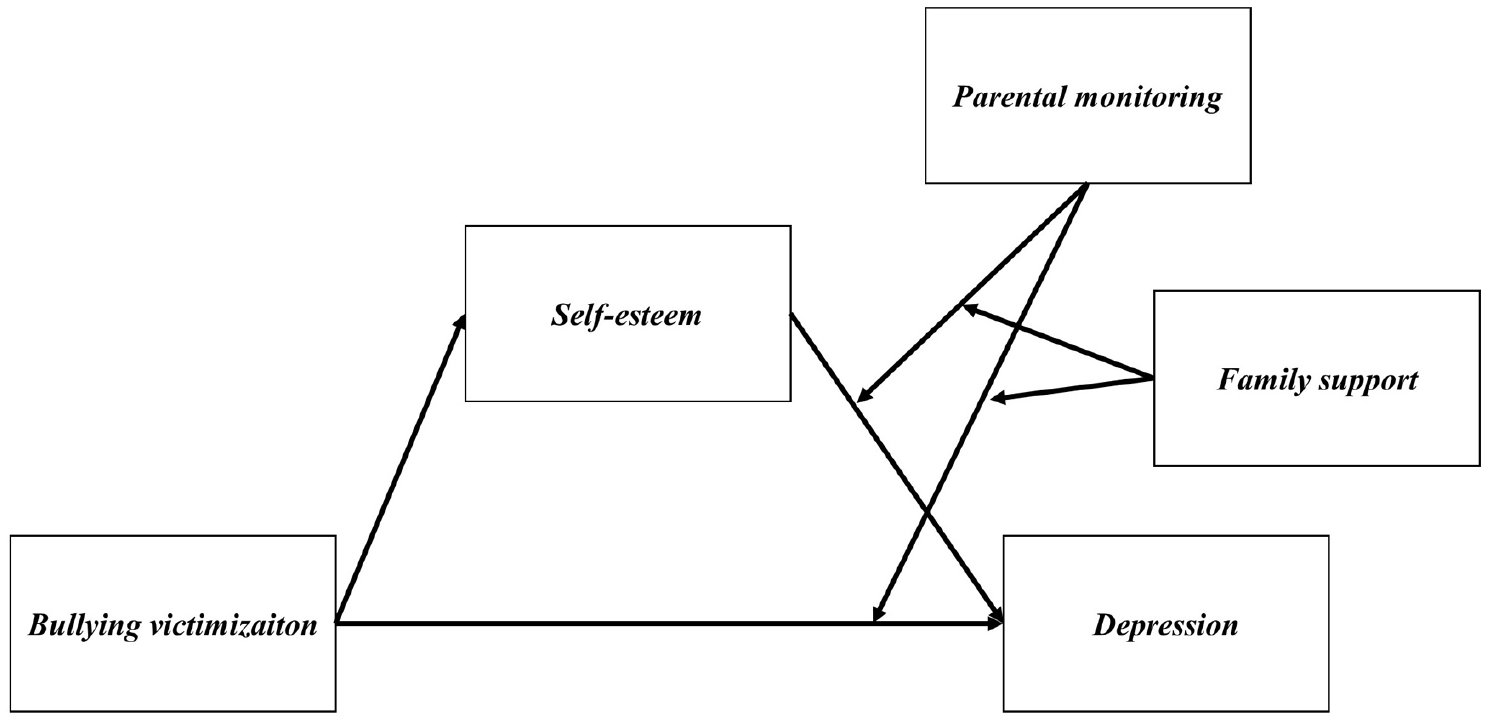
Conceptual Model.
Methods
Study Sample
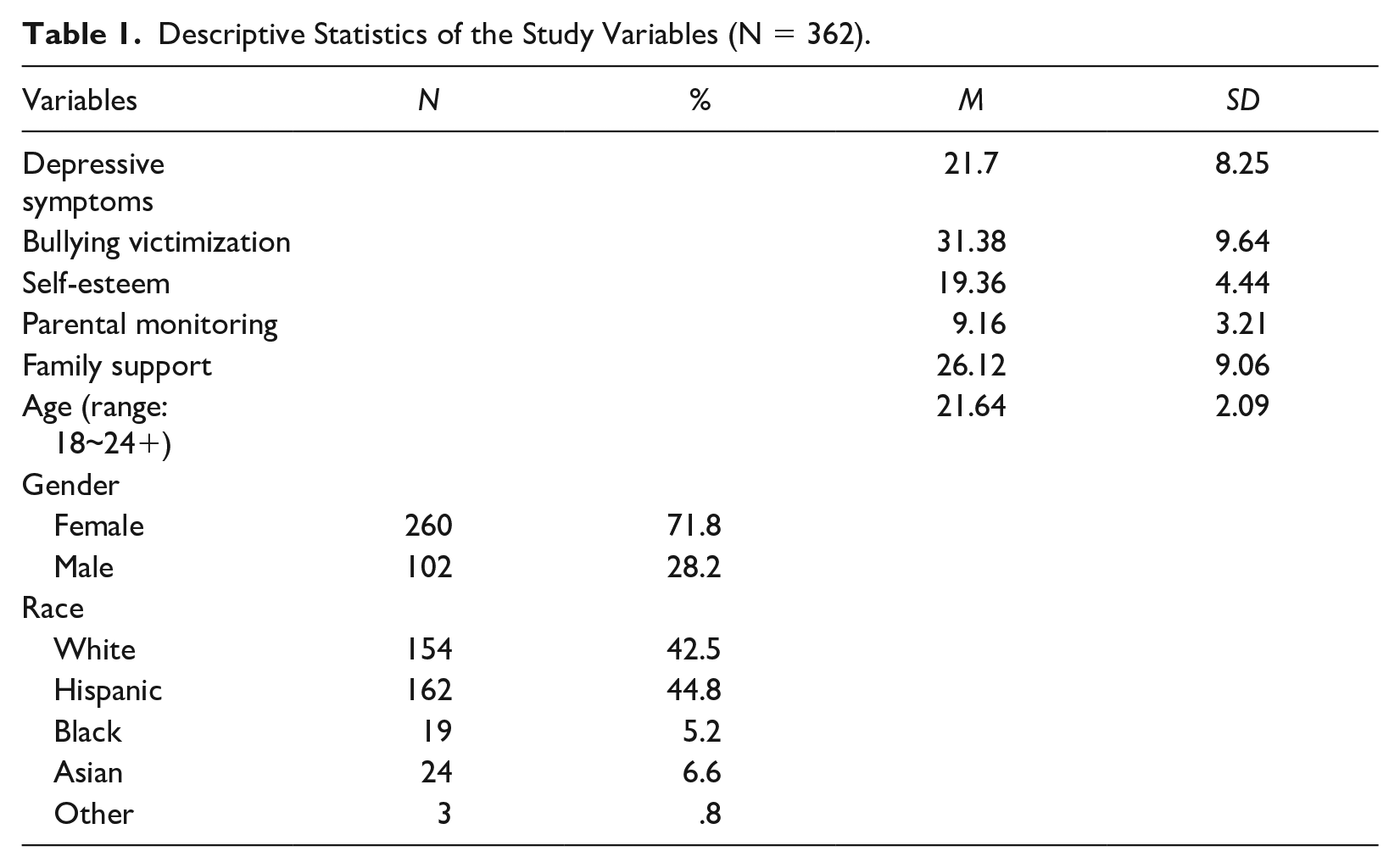
Study participants were from two universities in the South Central and Midwest regions of the United States. Before data collection, the Institutional Review Board (IRB) was approved by Wichita State University and the University of Texas at El Paso. After obtaining IRB approval, the research team contacted the Office of University Assessment Data to request students’ email addresses. Subsequently, the team distributed the study flyer and survey link through students’ emails for recruitment. The survey, administered as a self-administered questionnaire, was collected using Qualtrics and QuestionPro from July 2021 to January 2022. Informed consent was presented on the first page of the survey, and participants could proceed to the survey after agreeing to the consent. Participants were required to be at least 18 years old to take the survey. Access to the survey was restricted to those who consented to take part in it. In the survey, participants were asked about their experiences with bullying in grades K–12 as well as their recent experiences with cyberbullying in college. A total of 417 participants were recruited for the survey, and 362 cases were included in the analysis, excluding nonrespondents or individuals who provided incomplete surveys. In the analytic sample, the missing rate of variables was between 0.0% and 5.2%, and the expectation-maximization (EM) imputation method was applied to the missing values for the data. The final sample comprised 362 college students aged 18 years and older. There were 260 females and 102 males. Regarding race, 154 identified as White, 162 identified as Hispanic, 19 identified as Black, 24 identified as Asian, and three identified as more than two races. The demographic characteristics of participants and the descriptive statistics of study variables are shown in Table 1.
Descriptive Statistics of the Study Variables (N = 362).
Measures
Depressive Symptoms
The Revised Beck Depression Inventory was used to assess depressive symptoms (BDI-II; Beck et al., 1996). College student participants were asked eight questions, which assessed the severity of their experiences in the last 2 weeks. These questions included “feeling lonely,” “feeling of worthlessness,” “feeling hopeless about the future,” “thoughts of ending your life,” “feeling fearful or worried,” “I often feel helpless in dealing with the problems of life,” “sometimes I feel that I am being pushed around in life,” and “sometimes I feel there is nothing to look forward to in the future.” The response options were presented on a 5-point Likert-type scale, with 1 representing extremely unlikely and 5 representing extremely likely. The score of depressive symptoms has been closely related to the scores from the original full measures (Salmela-Aro & Nurmi, 1996). Cronbach’s alpha was 0.91 for depressive symptoms.
Bullying Victimization
Bullying victimization in grades K–12 was measured using 12 items from the modified Olweus Bully/Victim Questionnaire (Olweus, 2007; Solberg & Olweus, 2003; M. G. Turner et al., 2013). Bullying victimization was measured using self-reported items that began with the prompt: “If so, how did you get bullied?” Please rate the following statements in terms of how much you agree. “called me names,” “said they will do bad things to me,” “played jokes on me,” “made fun of me,” “broke my things,” “attacked me,” “pushed or shoved me,” “nobody would talk to me,” “won’t let me be a part of their group,” “wrote bad things about me,” “spread rumors about me,” and “said mean things behind my back.” Response options were provided on a 5-point Likert-type scale, with 1 representing never happened and 5 representing always happened. Cronbach’s alpha was 0.91 for bullying victimization in grades K–12.
Self-Esteem
Self-esteem was measured with five positively formulated items derived from the Rosenberg Self-Esteem Scale (Rosenberg, 1965a): “I feel that I am a person of worth, at least on an equal plane with others,” “I feel that I have several good qualities,” “I am able to do things as well as most other people,” “I take a positive attitude toward myself,” and “On the whole, I am satisfied with myself.” Response options were on a 5-point Likert-type scale, ranging from 1 meaning extremely unlikely to 5 meaning extremely likely. The five positively formulated items have been validated in a previous study (Martín-Albo et al., 2007). Cronbach’s alpha for self-esteem was 0.91.
Parental Monitoring
Parental monitoring was measured by a modified Parental Monitoring Scale (Stattin & Kerr, 2000). Parenting monitoring was measured using seven items at the time the survey was conducted. However, because the purpose of this study was to specifically examine the parental monitoring of college students whereabouts and activities, we included three items for the analysis and the four items about relationships were excluded. Item examples include “how well do your parent(s) know how you spend money?,” “how well do your parent(s) know what you do with free time?” and “how well do your parent(s) know who your friends are?” Response options were provided on a 5-point Likert-type scale, with 1 meaning not at all and 5 meaning a great deal. Cronbach’s alpha for parental monitoring was 0.83.
Family Support
Family support was measured using the modified Family Support Scale (Julkunen & Greenglass, 1989). Family support was measured using eight items, beginning with the prompt: “We would like to begin by asking you for some information about your family.” Item examples included “my family loves me,” “in my family, we talk about problems,” “when we argue, my family listens to “both sides of the story,” “in my family, we take time to listen to each other,” “my family gives me emotional support,” “my family pulls together when things are stressful,” “my family is able to solve our own problems,” and “I am satisfied with my family support.” A previous study used this scale (J. M. Lee et al., 2022). Response options were provided on a 5-point Likert-type scale, with 1 meaning not at all and 5 meaning a great deal. Cronbach’s alpha for parental monitoring was 0.95.
Covariates
Covariates included the participant’s age (18 or older), gender (female/male), and race (1 = White, 2 = Hispanic, 3 = Black, 4 = Asian, 5 = More than two races). Because the numbers of participants who identified as Black, Asian, and Other were small, to facilitate the main analysis without losing statistical power, Black, Asian, and more than two races were re-coded into “others” binary dummy variable as the reference.
Statistical Analyses
The analyses for this study included descriptive statistics, correlation analysis, and multiple regression for moderated-moderated mediation models. Descriptive statistics and correlation measures were used to investigate the demographic characteristics of the sample and the relationships between study variables. Controlling for covariates (i.e., age, gender, and race), the primary analysis examined the association between past bullying victimization during K–12 and college students’ depressive symptoms, which included the mediation (i.e., self-esteem) and a moderated-moderation (i.e., parental monitoring and family support). The bootstrapping method was applied to the estimation of multiple regression models. The number of bootstrapping samples was 5,000, and a confidence interval of 95% was applied. The analyses were conducted using SPSS 26 and PROCESS Macro 4.1 (Hayes, 2022). A simple slope was presented for the conditional effect of the interaction term to facilitate interpretation (moderated moderation). The simple slopes were applied as a method of calculating a regression equation that simplifies the effects of bullying victimization on depressive symptoms when the moderators (i.e., parental monitoring and family support) are the conditional level (−1SD, mean, +1SD), as suggested by Aiken and West (1991) and Hayes (2022).
Results
Descriptive Statistics and Correlations for Study Variables
Table 1 presents the descriptive statistics for the study variables. The mean scores were 21.70 (SD = 8.25) for depressive symptoms, 31.38 (SD = 9.64) for bullying victimization, 19.36 (SD = 4.44) for self-esteem, 9.16 (SD = 3.21) for parental monitoring, and 26.12 (SD = 9.06) for family support. The bivariate correlations are displayed in Table 2. Regarding the correlation coefficients to depressive symptoms, bullying victimization (r = .35, p < .01) was positively correlated, while self-esteem (r = −.68, p < .01), parental monitoring (r = −.36, p < .01), and family support (r = −.51, p < .01) was negatively correlated with depressive symptoms.
Correlations of the Study Variables (N = 362).
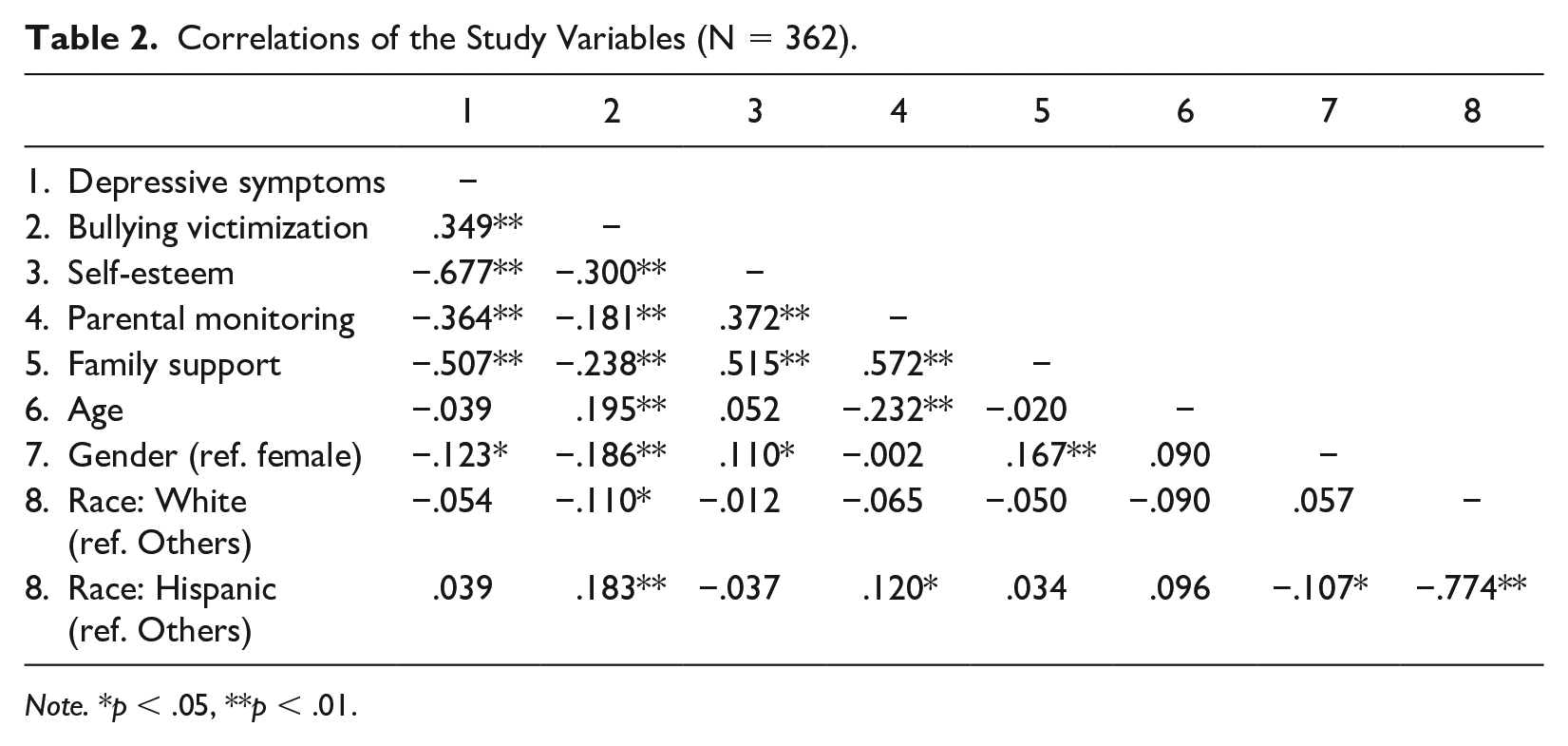
Note. *p < .05, **p < .01.
Results for Direct and Mediating Effects
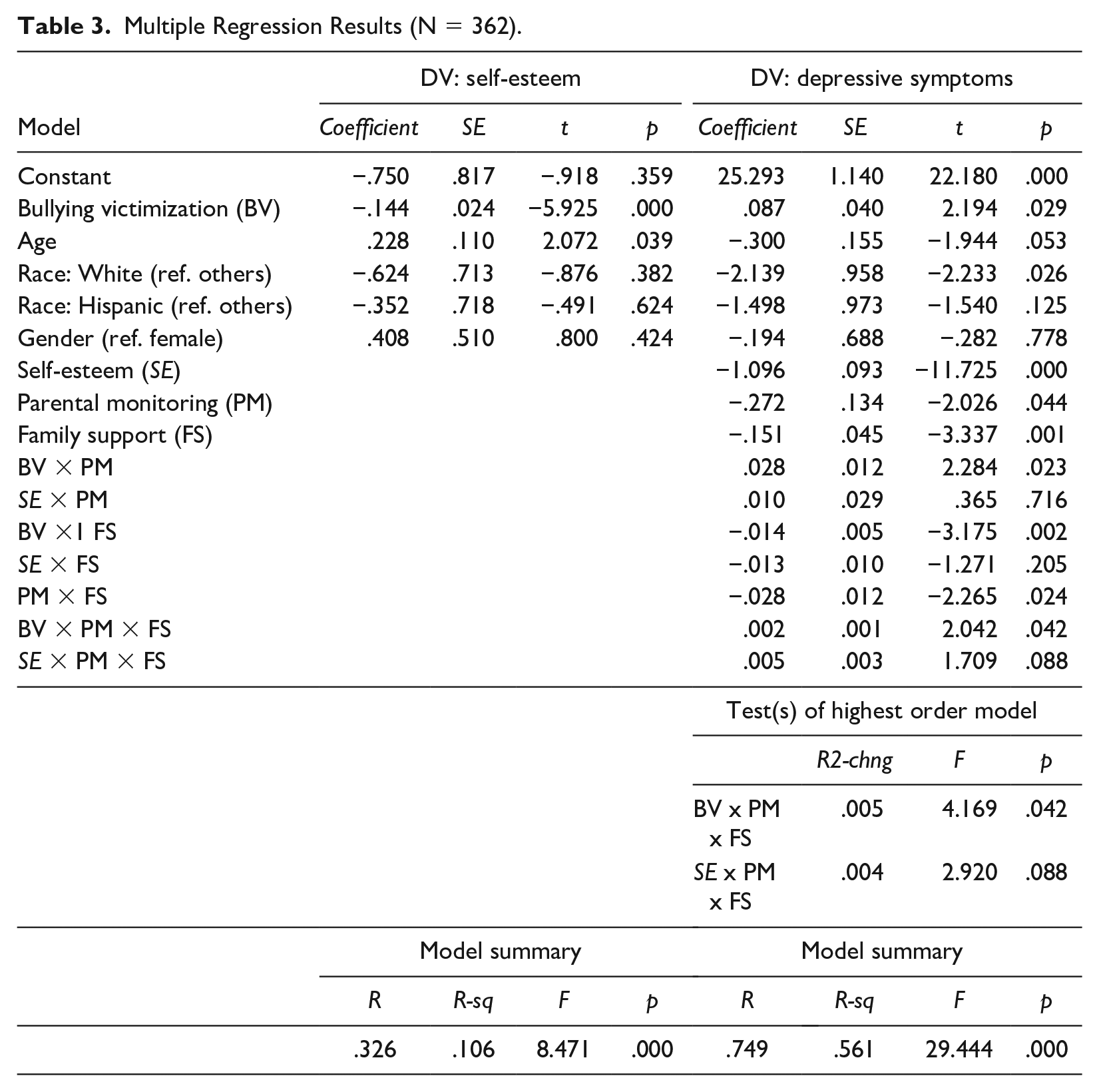
Table 3 shows the results of multiple regression, including mediating (self-esteem) and moderated-moderation (parental monitoring and family support) effects, controlling for covariates (age, gender, and race). In the association between bullying victimization and depressive symptoms, the direct effects are as follows: K–12 bullying victimization was positively associated with depressive symptoms (B = .087, p < .05). Bullying victimization was negatively associated with self-esteem (B = −.144, p < .001), and self-esteem was negatively related to depressive symptoms (B = −1.096, p < .001). Regarding the mediation effect, K−12 bullying victimization was associated with depressive symptoms via self-esteem (B = .158, 95% CI [.105, .222]). These findings suggest that adolescents who experienced more past bullying victimization had lower self-esteem, associated with higher levels of depressive symptoms.
Multiple Regression Results (N = 362).
Results for Moderated Moderating Effects
Regarding the moderated moderating effect, the hierarchical regression model including the three-way interaction term (i.e., bullying victimization × parental monitoring × family support) was statistically significant compared to the previous order model without the interaction term (∆R2 = .005, F = 4.169, p < .05). Regarding the association between past bullying victimization and a college student’s depressive symptoms, the interaction term for bullying victimization and parental monitoring in the context of family support was significant (B = .002, p < .05). This result indicates that the effect of bullying victimization on depressive symptoms is related to the conditional effect of parental monitoring in the context of family support. To facilitate the interpretation of the conditional effects (moderated moderation) of bullying victimization according to parental monitoring and family support on depressive symptoms, we examined a simple slope for moderated moderating effects, as shown in Figure 2. Although the simple slope, which is the effect of bullying victimization on depressive symptoms, varies slightly depending on the level of parental supervision when the level of family support is low (−1SD), it demonstrates an overall upward trend. However, when the level of family support is high (+1SD), the simple slope of bullying victimization on depressive symptoms is a negative slope when parental monitoring is low (−1SD) and a positive slope when parental monitoring is high (+1SD). In addition, the simple slope of bullying victimization on depressive symptoms was negative when parental monitoring was low (−1SD) and family support was high (+1SD). In contrast, the simple slopes represented a positive shape when the level of parental monitoring was high (+1SD) and family support was mean or high (+1SD).
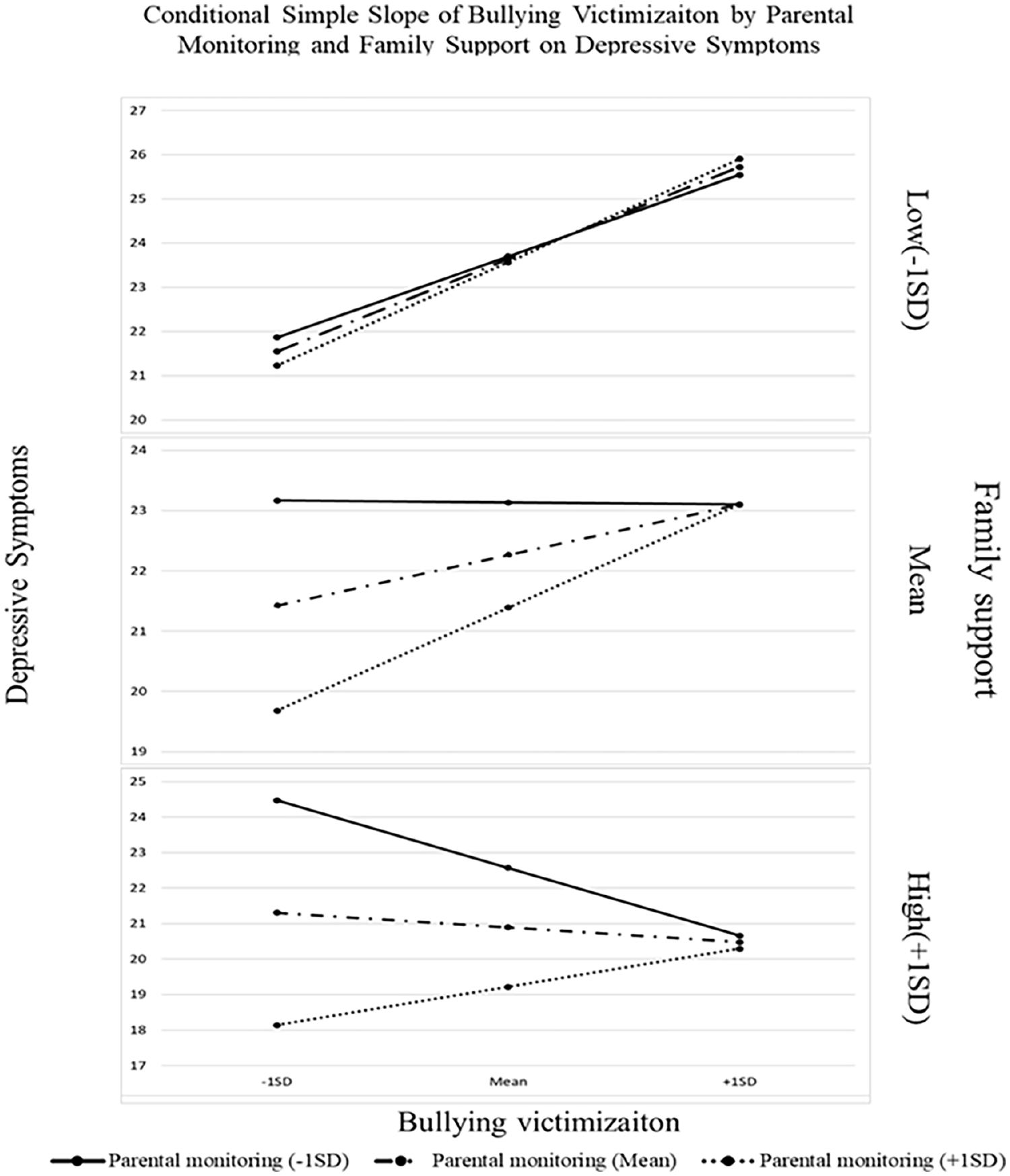
Conditional Simple Slope on Moderated Moderating Effects.
However, concerning the association between self-esteem and a college student’s depressive symptoms, the conditional effects as moderators of parental monitoring and family support, including the case for each conditional effect or the three-way interaction term, were not statistically significant.
Results of Supplementary Analysis for Conditional Effect by Each of Moderators
In addition, to further explore the conditional effect of each moderator (i.e., parental monitoring and family support), we examined the conditional effect of bullying victimization on depressive symptoms according to each of the moderators through supplementary analysis. The interaction term for bullying victimization and parental monitoring was significant (B =.028, p < .05), meaning that the effects of bullying victimization on depressive symptoms were conditional according to the level of parental monitoring. We examined a simple slope for conditional effects according to parental monitoring, as depicted in Figure 3. The slope is positively steep when parental monitoring is high (+1SD); when the level of parental monitoring is high, depressive symptoms increase relatively more as past bullying victimization increases. However, when the level of parental monitoring is low (−1SD), the slope is negative but not steep.
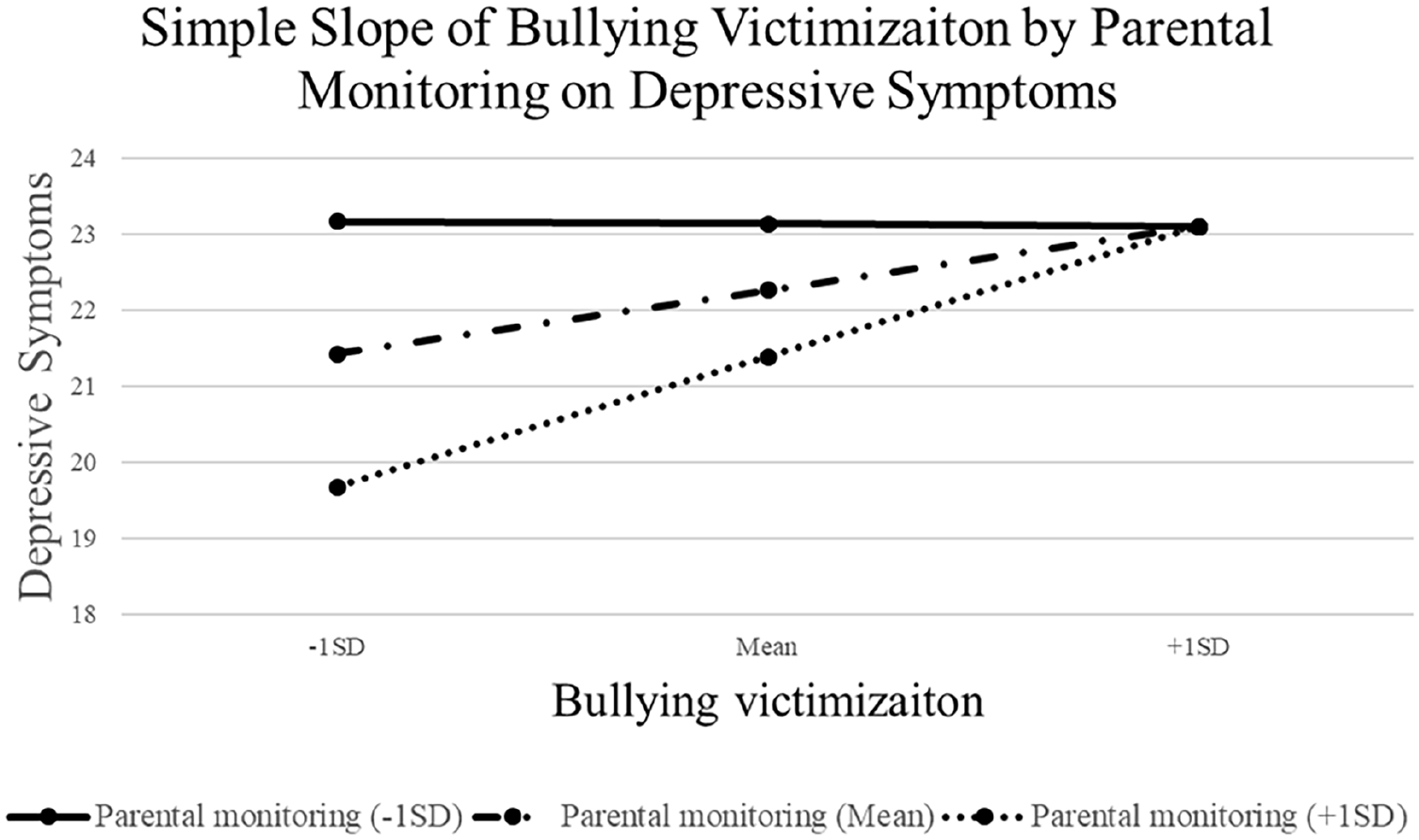
Simple Slope According to Parental Monitoring.
The interaction term for bullying victimization and family support was also significant (B = −.014, p < .01), which indicates that the conditional effects of bullying victimization on depressive symptoms depend on the level of family support. As a result of examining the simple slope, when family support is low (−1SD), the slope that is the effect of bullying victimization on depressive symptoms is relatively positive and steep. When family support is at a high level (+1SD), a simple slope appears in which depressive symptoms decrease as past bullying victimization increases, as depicted in Figure 4.
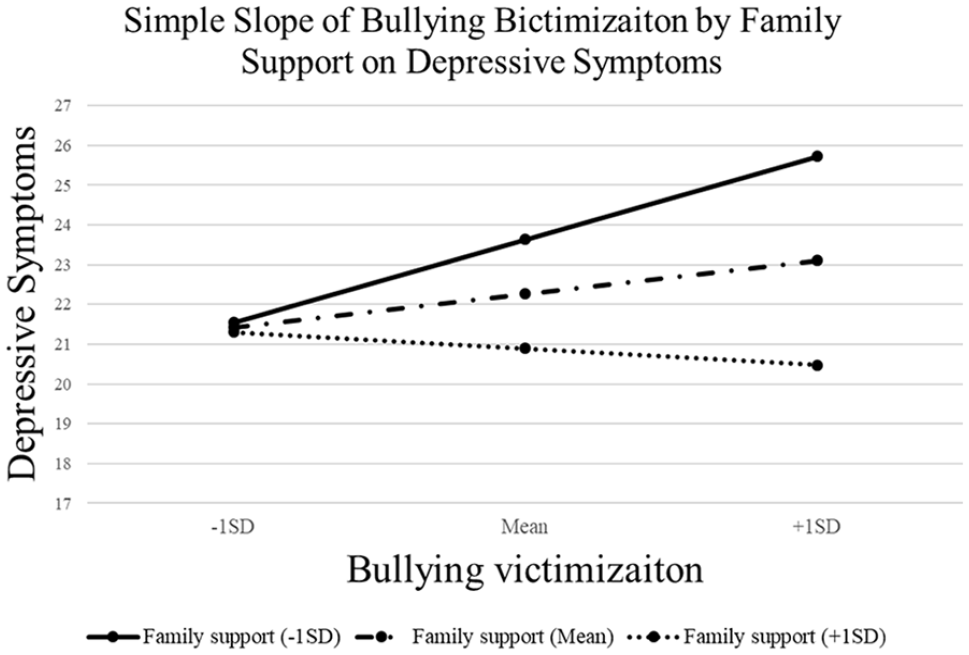
Simple Slope According to Family Support.
Discussion
In many industrialized societies, college students are referred to as being in the developmental period of emerging adulthood, a unique developmental period when education and job training are critical before entering society (Arnett, 2000). However, roughly one in four college students experience depression (American College Health Association, 2022), posing a critical barrier and challenge during this important period. Particularly during the transitional period from adolescence to emerging adulthood, college students may continue to be influenced by parental monitoring and family support. This study examined how previous exposure to bullying victimization has a lingering negative impact on college students’ depression, focusing on the mediating effects of self-esteem and the moderated-moderating effect of parental monitoring and family support.
Regarding our first hypothesis, our findings indicated that past bullying exposure was found to have a long-term effect on depression among college students, either directly (Klomek et al., 2019; J. Lee, 2021) or indirectly through decreased self-esteem (Luk et al., 2016; Zhong et al., 2021). Exposure to past bullying victimization is a traumatic life event that affects a college student’s mental health and well-being. Past bullying victimization was linked with lower self-esteem, which was positively associated with the severity of depressive symptoms that persisted into young adulthood.
For our second hypothesis, the protective effect of parental monitoring within the context of family support provided a fine-grained narrative for parental involvement for their college-aged child. To provide a better understanding of the role of parental monitoring in the context of past bullying victimization and later-life depression, we discuss the findings of parental monitoring and family support in the context of the moderation analysis and moderated-moderation analysis, respectively. Regarding the moderation analysis, parental monitoring amplified the negative impact of bullying victimization on college students’ depression, while family support alleviated the negative impact of past bullying victimization on college students’ depression. Our findings did not align with previous existing literature that suggested parental monitoring for college students is protective against behavioral problems such as substance use (Branstetter & Furman, 2013; Kaynak et al., 2013; Mallett et al., 2019; Napper et al., 2015). In the context of past exposure to bullying victimization, moderate to higher levels of parental monitoring amplified college students’ depression (with the worst case in the high level of parental monitoring). In other words, parental monitoring exacerbated the depression of college students who had been bullied as children. In this situation, parental monitoring could be seen as meddling, similar to helicopter parenting, where parents constantly watch over the lives of their college-age children. As college students become more independent from their parents, the protective effect of parental monitoring may become less protective for K–12 bullying victimization in later-life depression.
Expanding upon the findings of the moderation analysis, family support was presented as a protective factor against the negative impact of past exposure to bullying victimization on college students’ depression. Family support encompasses the feeling of being loved and enables college students to share and talk about problems with their family members. Accordingly, family support may have bolstered emotional support for a young adult child against exposure to bullying victimization. College students with higher levels of family support may be able to share and release the emotional distress and unwanted memories associated with their early traumatic experiences, thereby reducing their risk of developing depression in later life. Consequently, college students with strong family support may have built resilience and overcome past bullying experiences or may be able to cope with them more effectively. Meanwhile, college students with low levels of family support reported higher levels of depression. Despite their waning priority with their family members, college students who lack family support may not have critical social support from family that may bolster their emotional resilience.
The moderated-moderation analysis unfolded a more fine-grained narrative of the intricate association between parental monitoring and family support. In the context of high family support (refer to Figure 2 high family support), moderate and low levels of parental monitoring were found to be protective against past bullying victimization, leading to lower levels of later-life depression among college students. However, despite the high level of family support, a high level of parental monitoring was linked with increased levels of college students’ depression. In the context of mean or low family support, parental monitoring amplified the negative impact of past bullying victimization on depression. This is particularly important in that college students are in the emerging adulthood period, when becoming independent from their family, finding their intimate partner, and being trained and educated for their future career are the most critical developmental tasks (Arnett, 2000). According to Rodríguez-Meirinhos and colleagues (2020), understanding parental monitoring in the context of emotional support is critical. Most importantly, despite high levels of family support, excessive parental monitoring would negatively affect college students’ depression who were exposed to past bullying victimization, not to mention those from low family support groups. It can be inferred from the findings that, except for carefully limited parental monitoring, college students may perceive their parents monitoring as helicopter parenting (L. A. Turner et al., 2020). Particularly, for college students with past bullying victimization may need a high level of family support while parents should abstain from expressing excessive interest on their college-aged child, which may seem like another form of suffocation. Therefore, parents expressing love and concern for a depressed adolescent who was bullied as a child or adolescent should demonstrate their affection in a manner other than monitoring.
Finally, regarding our third hypothesis, the findings indicated that neither later parental monitoring nor family support during emerging adulthood mitigated the negative impact of low self-esteem on depression. College students’ self-esteem is likely to be gradually shaped over time, from childhood to adolescence, and ultimately to later life. Therefore, the adverse impact of low self-esteem on depression may be too potent to be mitigated by parental monitoring or family support. Self-esteem may need to be improved in a systemic approach (Chung et al., 2014) that goes beyond the realm of parental monitoring or family support. Many college students are likely to build relationships with their peers at college, and despite their significance, family members may not be the ones with whom students interact most frequently. Although it was not the focus of this study, as college students often spend substantial time with peers, they may provide a critical source of emotional support. Particularly, positive peer relationship in college may increase self-esteem (Kaltiala-Heino & Fröjd, 2011) and consequently, provide critical support to emerging adults (Kaltiala-Heino & Fröjd, 2011; Luk et al., 2016; Zhong et al., 2021). Emerging adulthood is a period when becoming independent from their family and building new circle of relationships become primary life tasks. Therefore, the family was found to have a nonsignificant effect on the low self-esteem resulting from past bullying victimization, which was ultimately associated with depression.
Limitations and Future Directions
First, this study is cross-sectional research, which limits the ability to infer causality among the variables. Second, bullying victimization was measured during the K–12 school years, which limited the recall accuracy of when bullying occurred. For example, bullying victimization in childhood might yield differential mental health outcomes during college compared to bullying victimization in adolescence. Hence, future studies are suggested to distinguish the timing of bullying victimization on emerging adulthood depression given the developmental differences between children and adolescents. Third, this study collected data from universities in the South-Central United States. Hence, the study findings cannot be generalized to all U.S. college students. Fourth, since this study used a shortened version of the depression scale using eight items, the cutoff score was not reported. Fifth, our study did not include the year of college students (i.e., first year, second year, etc.). There are limits to the dissemination of research results because college life may vary depending on the student’s year. Sixth, it should be noted that a large portion of our sample (71.8%) was female, which might have brought biased results. Seventh, the idea of emerging adulthood and becoming freer from their parents is a Western concept (Katsiaficas et al., 2015). Considering that roughly 58% of the sample were non-White, the concept of emerging adulthood may not apply to immigrant non-White adolescents. Seventh, this study did not ask the living arrangements of the college students. It should be noted that the data were collected during the COVID-19 period from July 2021 to January 2022 when many college students went back home and stayed with their parents. However, the total amount of in-person interaction between parent(s) and the college child has not been included in the study. Finally, the parental monitoring scale used three items from the original scale. Although the internal consistency was high, future research is recommended to use the full scale.
Implications for Practice
Considering the high rates of depression among college students (approximately 27%; American College Health Association, 2022), an efficient approach to addressing college students’ depression is critical. Our findings suggest that practitioners should be aware that earlier exposure to bullying victimization before entering college may have a lingering impact on college students’ mental health, particularly depression. We encourage college counseling centers to include past bullying experiences in assessments or screening questionnaires. Understanding an individual’s mental health with a systemic approach, such as the family systems framework, may be effective in reducing college students’ depression in the context of past bullying victimization. Because family members, parents in particular, remain significant and long-lasting relationships, informing family members of their college-age child’s depression and providing a family-level intervention may be helpful. However, practitioners should be aware of the fine-grained nuances of the intricate dynamics of family relationships to optimize the protective effect of family intervention. College students may take advantage of parental monitoring only when they perceive it as less intrusive in the context of high family support. As past traumatic incidents of bullying victimization have a lingering negative impact on college students’ depression, parents should be aware that a high level of family support with less-intrusive expressions of interest can maximize the protective effect on college students’ depression.
Parental love and intrusion may have a very fine line. To alleviate college students’ depression, parents should express their interest and love to their college-age child while fully respecting their boundaries. Under the guise of love, parents may treat their emerging adult child as if they are minors. As a result, parental monitoring may turn out to be helicopter parenting for college students, consequently increasing the level of depression. Hence, practitioners are recommended to integrate the findings of our study into counseling sessions and psychoeducation. College students with depression and their parents should be informed of the transitional stage of emerging adulthood, and the importance of emotional and relational independence should be emphasized. Parents, particularly those who are entering the empty nest stage, should be encouraged to gradually shift their energy and interest from their grown-up child to themselves. Even when college students are living with their parents due to various reasons, parents and their young adult child should be encouraged to build a clear boundary. Finally, although it was not the focus of this study, as college students’ primary interactions shift from family to friends and significant other, healthy relationships outside the family may provide practical emotional support for college students who are experiencing depression.
Conclusion
The negative impact of past experiences of bullying victimization lingers through emerging adulthood depression. Because college students are in a period of expanding their relationships independently from their parents and developing their abilities and skills, reshaping the understanding of parents’ and young adult children’s relationships may be imperative. In this sense, parents’ love and care expressed through monitoring their young adult child should be understood in the context of how college students perceive their family support. Only under the condition of high family support, a low level of parental monitoring may buffer the past trauma of bullying victimization on college students’ depression. Meanwhile, when college students see parental monitoring as intrusive, it can become helicopter parenting, ultimately increasing the risk of depression. Transitioning from one developmental stage to another may require restructuring family relationships, and parents excessively monitoring their adult child may not be an ideal expression of love and caring.
Footnotes
Disposition editor: Cristina Mogro-Wilson
Declaration of Conflicting Interests
The author(s) declared no potential conflicts of interest with respect to the research, authorship, and/or publication of this article.
Funding
The author(s) received no financial support for the research, authorship, and/or publication of this article.
