




Abstract
Using data from an online survey of 223 birth mothers who had relinquished an infant for adoption during the last 25 years, this analysis examines the influence of the length of time that has passed since relinquishment on birth mothers’ satisfaction with their decision to place their child for adoption. Time since relinquishment, age of the respondent, education level, and income had a significant inverse relationship with birth mothers’ satisfaction to place their child for adoption. Two variables were predictive of increased satisfaction with their decision: having current contact with the child and full-time employment. The findings underscore the importance of agencies and adoption professionals ensuring that birth mothers have access to ongoing postrelinquishment support services throughout the life course.
No official federal statistics are kept regarding the number of domestic infant adoptions each year (Simmonds & Likis, 2005; Vandivere, Malm, & Radel, 2009; Zamostny, O’Leary Wiley, O’Brien, Lee, & Baden, 2003); however, figures from a recent National Council for Adoption survey suggest that slightly more than one quarter (n = 18,329) of the 69,350 unrelated domestic adoptions that took place in the United States in 2014 involved infants (Jones & Placek, 2017). During the last three decades, increased effort has been made by researchers to document the effects of adoption on different members of the adoption triad (i.e., birth parents, adoptees, and adoptive parents). Researchers have focused much of their efforts during this time on understanding the experiences of adoptive parents and adoptees. Less attention has been paid to the more difficult-to-access birth mother and birth father populations (Coleman & Garratt, 2016; Cushman, Kalmuss, & Namerow, 1993; Fruendlich, 2002; Zamostny et al., 2003). As such, research related to the postplacement outcomes and adjustment of birth mothers remains fairly limited (Coleman & Garratt, 2016). To date, only a small handful of studies have explored the effects of voluntary relinquishment on birth mothers or their satisfaction with their decision (e.g., Deykin, Campbell, & Patti, 1984; Kalmuss, Namerow, & Bauer, 1992; McLaughlin, Pearce, Manninen, & Winges, 1988; Millen & Roll, 1985; Namerow, Kalmuss, & Cushman, 1997; Winkler & van Keppel, 1984). A review of the extant literature shows that even fewer studies have examined the experiences of birth mothers in the post-open adoption era.
Research on the Impact of the Adoption Decision
There is general consensus among adoption researchers that for many women the experience of relinquishment is often fraught with intense feelings of grief, loss, shame, guilt, remorse, and isolation (Brodzinsky, 1990; De Simone, 1996; Fruendlich, 2002; Livingston Smith, 2006; Madden, Ryan, Aguiniga, Verbovaya, Crawford, & Gobin, 2017; Triseliotis, Feast, & Kyle, 2005; Wiley & Baden, 2005; Winkler & van Keppel, 1984). For many birth mothers, the act of relinquishing a child for adoption is a profound experience that can have life-long emotional and interpersonal effects. Winkler and van Keppel (1984) found that birth mothers often experience a “strong and persistent sense of loss” stemming from their child’s adoption (p. 72). Similarly, Askren and Bloom’s (1999) metanalysis of English-language published studies from 1978 through 1994 regarding the postrelinquishment experience of birth mothers noted a theme of chronic grief that negatively impacted birth mothers’ health, mental health, and relationships. More recent studies have confirmed the findings of these earlier works, concluding that some birth mothers experience prolonged and ambiguous grief that is exacerbated by the failure of others to acknowledge the mothers’ profound loss (e.g., Coleman & Garratt, 2016; Madden, Ryan, Aguiniga, & Crawford, 2016; Madden et al., 2017).
A number of studies in the 1980s and 1990s explored the social and demographic determinants of relinquishing a child for adoption as well as the short-term consequences reported by birth mothers (e.g., Chippendale-Bakker & Foster, 1996; Cushman et al., 1993; McLaughlin et al., 1988; Namerow et al., 1997; Resnick, Blum, Bose, Smith, & Toogood, 1990; Weinman, Robinson, Simmons, Schreiber, & Stafford, 1989). Regarding the longer term impact of relinquishment, Freundlich (2002) notes that two divergent narratives are found in the literature: (a) the view that adoption is a traumatic event that has lasting negative consequences for a birth mothers, and (b) the view that adoption is a “positive alternative” (p. 146) for mothers who find themselves experiencing an unplanned pregnancy. Consistent with this narrative, other studies have concluded that for a subset of birth mothers, the act of relinquishment is tied to an increased sense of self-efficacy and confidence that their decision was in the best interest of their child (Donaldson Adoption Institute, 2007; Henney, Ayers-Lopez, McRoy, & Grotevant, 2007; Namerow, Kalmuss, & Cushman, 1993). Studies with findings that support the more positive narrative (e.g., Henney et al., 2007; Krahn & Sullivan, 2015) underscore the importance of recognizing that birth mothers may express confidence in their decision while simultaneously encountering feelings of grief and loss.
While the response to relinquishing a child for adoption is highly personal and individualized, findings from prior research suggest that a birth mother’s adjustment and/or satisfaction following the adoption may be impacted by a number of factors. These factors include the circumstances surrounding the relinquishment—that is, whether the birth mother felt pressure to place her child (Cushman et al., 1993; De Simone, 1996; Madden et al., 2017), the availability of a caring support system to help her cope with ongoing feelings related to the adoption (Krahn & Sullivan, 2015; Triseliotis et al., 2005; Wiley & Baden, 2005), and subsequent life transitions and milestones, such as marriage and/or the parenting subsequent children (Henney et al., 2007; Krahn & Sullivan, 2015). More recent research regarding birth mothers’ postrelinquishment adjustment suggests that the type and frequency of contact between the birth mother and her child in the months and years following the adoption may also play an important role (Ge et al., 2008; Henney et al., 2007; Krahn & Sullivan, 2015; McRoy, Grotevant, Ayers-Lopez, & Henney, 2007).
What is decidedly less clear is the role that time plays in birth mothers’ satisfaction with their decision to place their child for adoption. There continues to be a dearth of studies that have examined the role of time. Studies that have examined the role of time have largely focused on the resolution of grief stemming from the adoption. For example, in a multistate, qualitative study of 215 birth mothers recruited from maternity homes, Cushman and colleagues (1993) examined perceived changes in grief between the last trimester of the mother’s pregnancy (prebirth interview) and a follow-up interview conducted 6 to 8 months postpartum. The researchers found that slightly more than one third (38%) of mothers reported feeling “a lot of grief,” and one quarter (27%) reported “some” grief. Among those who reported feeling grief, more than half (57%) reported their grief was lessening with time, while the remaining birth mothers (43%) reported that their grief levels remained the same or had increased since the last interview.
The findings of a more recent study support the findings of Cushman and colleagues (1993). Using data from the Minnesota/Texas Adoption Research Project (MTARP), a longitudinal study of 169 birth mothers recruited from 31 states, Henney and colleagues (2007) examined birth mothers’ grief reactions. Among the 127 birth mothers who participated in both Wave 1 and Wave 2 of data collection, the majority of birth mothers reported some grief at Wave 2. However, the researchers reported a reduction in grief levels for over half (52%) of the participants between the two waves of data collection. Forty-one percent reported similar levels of grief in Waves 1 and 2 of data collection, and four mothers (3%) reported an increase in grief levels. Birth mothers in fully disclosed adoptions (i.e., open adoptions) reported the lowest levels of grief.
The Current Study
The literature on birth mothers’ experience postrelinquishment remains somewhat disjointed. Additionally, many adoption-related variables have not yet been examined in the context of a multivariate analysis. Therefore, this article seeks to address a clear void in the literature by examining the influence of the length of time that has passed since relinquishment on birth mothers’ satisfaction with their decision to place their child for adoption. Little is known about the interaction of these two variables. This analysis builds on the work of other studies that have looked at the impact of time since relinquishment on birth mothers’ satisfaction with their decision, together or in part (e.g., Ge et al., 2008; Henney et al., 2007; Krahn & Sullivan, 2015; McRoy et al., 2007), by utilizing multivariate statistics to model the effect of time since relinquishment on birth mother satisfaction with her decision to place her child, while controlling for variables that may have an impact on the dependent variable (satisfaction with decision). Practice implications for adoption agency workers and counselors who serve birth mothers will be discussed, as well as recommendations for future research.
Methods
This analysis was part of a larger study that sought to understand the decision-making experiences of women who have placed a child for adoption as well as the context in which pregnancy options are discussed with expectant parents by professionals in the adoption community (see Madden et al., 2016, for a complete description of the sample and design). Data for the study were collected between fall 2015 and summer 2016 via Qualtrics, a secure web-based tool for conducting online surveys.
Participants were recruited through a number of different methods with the intent of maximizing the number of responses. Those who had relinquished an infant for adoption in the United States during the last 25 years (i.e., after 1989) were eligible to participate in the survey. This time period was selected because it is reflective of the increased acceptance and emphasis on open adoption arrangements between birth and adoptive parents. Participants were recruited using online interest, advocacy and support groups, blogs, and adoption-related listservs. Additionally, other participants were recruited for the study through snowball sampling methods. This research protocol was approved by the Human Subjects Institutional Review Board of the University of Texas at Arlington. Consent was obtained from all participants.
Sample
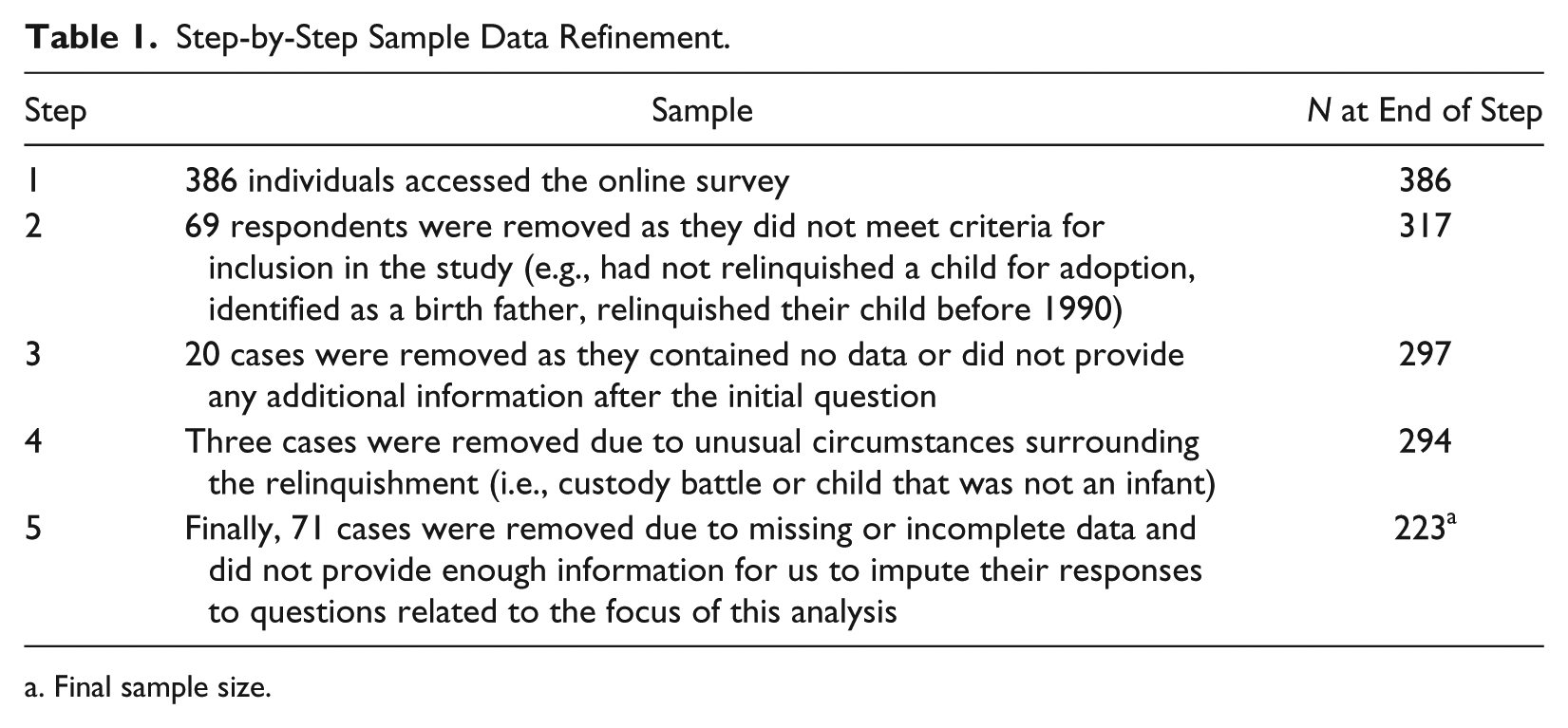
This analysis includes data from 223 respondents (N = 223). In total, 386 individuals accessed the online survey; however, 163 surveys were excluded from the final analysis. Table 1 describes the various decisions points made by the researchers to determine the final study sample. 1 An analysis of missing data revealed no significant patterns.
Step-by-Step Sample Data Refinement.
Final sample size.
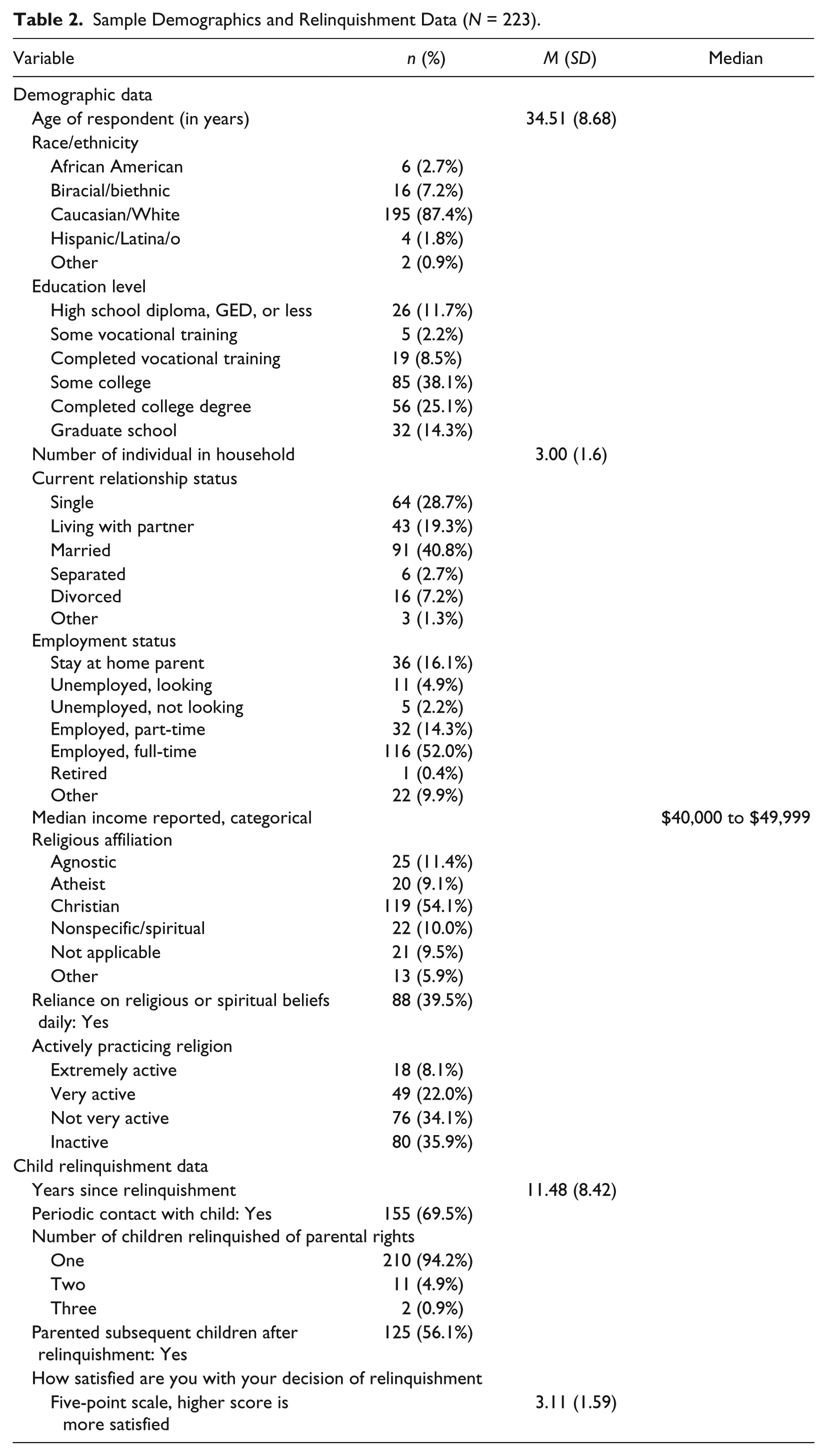
As shown in Table 2, the mean age of the respondents was 34.51 years (SD = 8.68). Participants reported a mean of 11.48 years since that relinquishment (SD = 8.42). A vast majority of respondents were White (n = 195; 87.4%) and reported at least some college education or more (n = 173; 77.5%). Currently, many participants reported being married (n = 91; 40.8%) or living with their partner (n = 43; 19.3%). A majority reported working full-time (n = 116; 52.0%). Median household income was reported as between $40,000 and $49,999. Most participants reported being Christian (n = 119; 54.1%) though largely inactive (n = 80; 35.9%) or not very active (n = 76; 34.1%). More than one third reported practicing religious or spiritual beliefs daily (n = 88; 39.5%).
Sample Demographics and Relinquishment Data (N = 223).
Variables
The dependent variable for this analysis was birth mothers’ satisfaction with their decision to place their child for adoption. This variable was measured using a 5-point Likert-type scale (very dissatisfied to very satisfied) to answer the question, “How satisfied are you with your decision to relinquish your child for adoption?” The independent variable for this analysis, time since the relinquishment (continuous), was calculated by subtracting the month and year of relinquishment from the month and year the survey was completed to create a continuous variable measuring the number of years since the relinquishment.
Covariates examined in the analysis included the following variables: mother’s age at the time the survey was completed (continuous), the mother’s race/ethnicity (dichotomous; minority or not minority), mother’s education level (categorical; high school diploma, GED, or less; some vocational training; completed vocational training; some college; completed college degree; and graduate school), current contact with the child at the time of the survey (dichotomous; yes or no), number of individuals in the home (continuous), mother’s current relationship status (categorical; single, living with partner, married, separated, divorced, and other), mother’s employment status (categorical; stay-at-home parent; unemployed, looking; unemployed, not looking; employed, part-time; employed, full-time; retired; and other), mother’s self-reported income (dichotomous; above median reported income or below median reported income), the extent to which the mother relies on religious /spiritual beliefs to guide daily life (categorical; never, rarely, sometimes, very often, and always), how active the mother is with regard to religious /spiritual practices (categorical; inactive, not very active, very active, and extremely active), and whether or not the mother parented a subsequent child(ren) following the relinquishment (dichotomous; yes or no).
Data Analysis
Data for this study were analyzed using Statistical Package for Social Sciences (SPSS, Version 24; IBM Corp., 2016). Descriptive statistics were used to explore demographic and sample characteristics. Ordinary least squares regression modeling tested the ability of sample characteristics and factors related to the relinquishment of parental rights as predictors of parental self-reported satisfaction with that relinquishment. In order to build a multivariate model predicting satisfaction, all variables were entered into a forward stepwise regression model. Given the lack of prior research and theory available to guide the variable entry selection process, a forward stepwise approach was selected for this analysis. Stepwise regression is an appropriate technique for evaluating the importance of variables and for selecting the most useful subsets of predictor variables (Henderson & Denison, 1989).
The strongest predictor was included in the first model, and the strongest predictor of the remaining variables was added to subsequent models (p < .05, and lowest p value). If a variable began nonsignificant at any time, it was removed from the model (p > .10). Variables were added until no other remaining predictors were significant. Multicollinearity was checked at each stage using variance inflation factor (VIF) scores (VIF > 10 indicating significant multicollinearity).
Findings
Participant reports concerning the child and their relinquishment of parental rights varied across the sample (see Table 2). Nearly 7 out of 10 participants reported periodic contact with the child (n = 155; 69.5%). Most participants reported only a single child relinquished (n = 210; 94.2%). A majority of participants parented other children after the relinquishment of a child (n = 125; 56.1%). On a scale of 1 to 5, participants reported a mean satisfaction with relinquishment score of 3.11 (SD = 1.59).
Regression Analyses
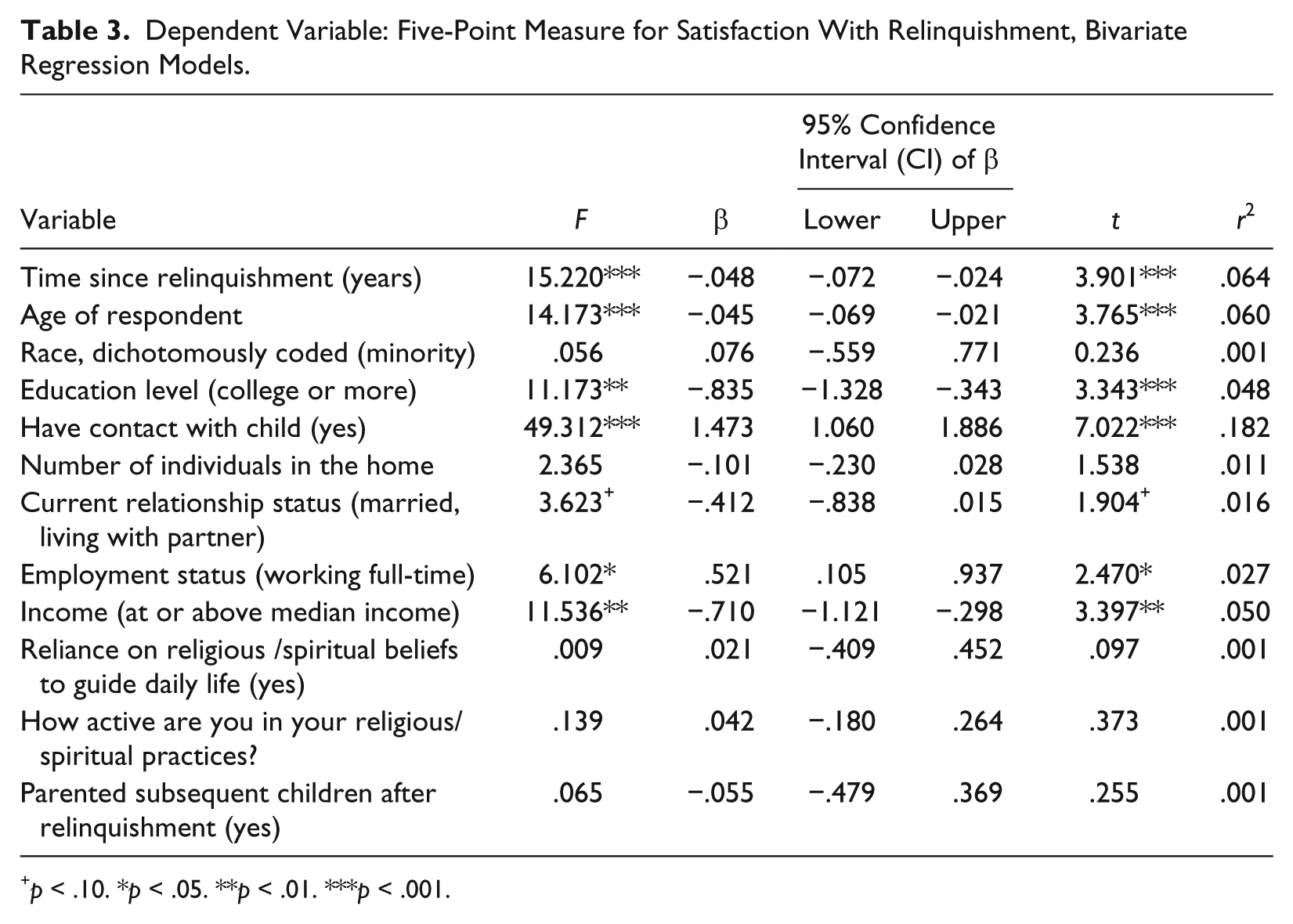
Using the years since relinquishment and the 5-point measure for satisfaction with relinquishment, Table 3 presents bivariate regression models with each variable predicting the outcome.
Dependent Variable: Five-Point Measure for Satisfaction With Relinquishment, Bivariate Regression Models.
p < .10. *p < .05. **p < .01. ***p < .001.
As noted in Table 3, six variables significantly predicted satisfaction with relinquishment: time since relinquishment, age of the respondent, education level, contact with the child, full-time employment, and income. Time since relinquishment predicted a .48 decrease in satisfaction per year every year after relinquishment (β = −.048, t = 3.901, p < .001). Age of the respondent had a similar relationship with satisfaction. For every year of age for the respondent, there was a predicted 0.045 decrease on a scale of 1 to 5 (β = −.045, t = 3.765, p < .001). Education level had a significant inverse relationship with satisfaction (β = −.835, t = 3.343, p = .001): Individuals with a college education or more reported .835 lower on a scale of 1 to 5 when compared to individuals with less education. Having continued and current contact with the child was a powerful predictor of satisfaction explaining 18.2% of the variance in the satisfaction variable (β = 1.473, t = 7.022, p < .001). Respondents reporting contact with the child reported on average about 1.5 points higher on the satisfaction scale from 1 to 5. Those reporting full-time employment reported greater satisfaction (β = .521, t = 2.470, p = .014). Full-time employment was associated with a 0.5 increase on a scale of 1 to 5 compared to those of other employment types. Lastly, mother’s income predicted satisfaction (β = −.710, t = 11.536, p < .001). Those with above median income in the sample reported significantly lower satisfaction with relinquishment, averaging a .71 point decrease when compared to those of lower income levels.
In order to build a multivariate model predicting satisfaction, all variables were entered into a stepwise regression model. The strongest predictor was included in the first model, and the strongest predictor of the remaining variables was added to subsequent models (p < .05, and lowest p value). If a variable became nonsignificant at any time, it was removed from the model (p > .10). Variables were added until no other remaining predictors were significant. Multicollinearity was checked at each stage using VIF scores (VIF > 10 indicating significant multicollinearity).
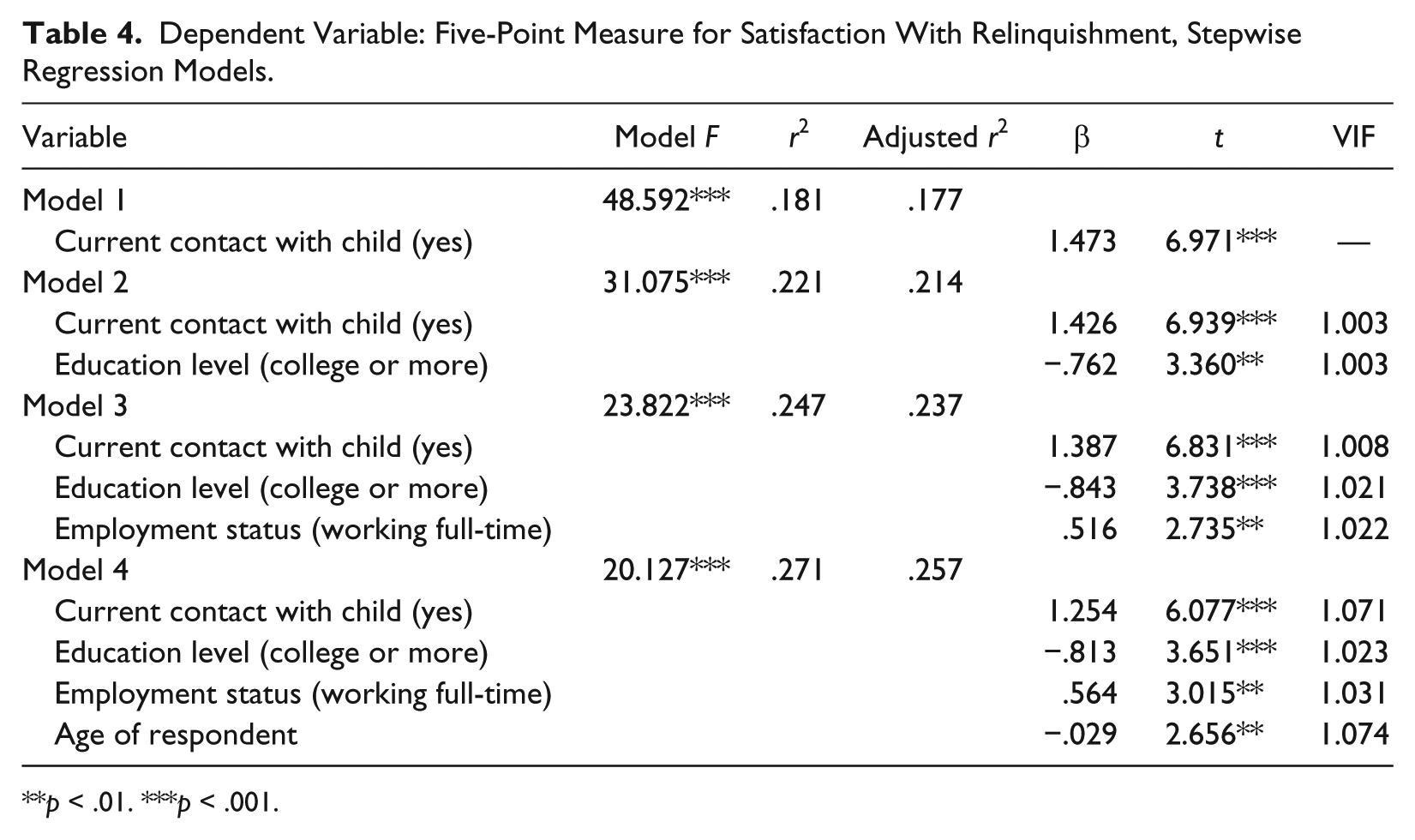
In the first model iteration, having current contact with the child was included in the first model as the strongest predictor of satisfaction with relinquishment. In subsequent models, educational level (college degree or more), employment status (full-time), and age of the respondent were included, in that order and each as the most influential predictor of satisfaction with relinquishment at each iteration. After the fourth model iteration, no other variables were noted to be significant predictors. Table 4 provides model and predictor estimates at each iteration. None of the models were observed to have any issues with multicollinearity.
Dependent Variable: Five-Point Measure for Satisfaction With Relinquishment, Stepwise Regression Models.
p < .01. ***p < .001.
The final model included having current contact with the child, educational level (college degree or more), employment status (full-time or not), and age of the respondent as the significant predictors of satisfaction with relinquishment. The model explained 27.1% of the variance in satisfaction (r2 = .271, adjusted r2 = .257). Respondents reporting contact with the child reported an average 1.254 satisfaction score on a scale of 1 to 5 compared to those without contact (β = 1.254, t = 6.077, p < .001), after controlling for other predictors. Similarly, those reporting full-time employment reported 0.564 greater satisfaction than those with a different employment status (β = 0.564, t = 3.015, p = .003). Having at least a college education was associated with lower satisfaction of 0.813 points on average, compared to those reporting less education (β = −.813, t = 3.651, p < .001). Finally, for every year of age older the respondent was, less satisfaction with relinquishment was reported, on average 0.029 points less on the same scale (β = −0.029, t = 2.656, p = .008), after controlling for other predictors in the model.
Discussion
This analysis sought to better understand the relationship between time since relinquishment and birth mothers’ self-reported satisfaction with their decision to place their children for adoption. As such, this analysis provides an important glimpse into how time intersects with birth mothers’ satisfaction regarding these life-altering decisions. The results of this analysis demonstrate that for many birth mothers, satisfaction is not static. Rather, time (measured by years since relinquishment) was found to have a significant inverse relationship with birth mothers’ satisfaction regarding their decision to place their child for adoption. Some prior research (e.g., Cushman, Kalmuss, & Namerow, 1997; McRoy et al., 2007) suggests birth mothers’ grief and adjustment attenuates with the passage of time. However, the findings of this analysis highlight the importance of not conflating a birth mother’s satisfaction with her decision to relinquish and the feelings of grief and loss that she may experience about her decision. For example, as with many major life decisions, a birth mother can experience grief and other painful emotions that ebb and flow with time and circumstance but still be confident in the knowledge that she made the best choice for child. This conclusion parallels those drawn in Krahn and Sullivan’s (2015) study, where only 1 of the 13 birth mothers interviewed explicitly expressed regret about her decision, but there were expressions of differing degrees of guilt and sadness about their child’s adoption.
The findings of this analysis may also be attributed in part to the method of participant recruitment. Participants were recruited from online interest, advocacy, and support groups; blogs; adoption-related listservs; and through snowball sampling. For birth mothers who are active in these various forums, it may be that their adoption experience continues to be a paramount event in their lives, regardless of the time that has elapsed since the relinquishment. Even for mothers who express satisfaction with their decision, their presence in these forums and their subsequent recruitment into this study demonstrate the lasting impact of relinquishment and may be, to a small extent, indicative of the regret that they feel about their decision to place their child.
Decreased Satisfaction
The results show that age had an inverse relationship with satisfaction. As with time since the relinquishment, age of the respondents predicted an incremental decrease in satisfaction for every year they have aged. It may be that the distance afforded by time, along with the internal resources and perspective that often comes with age, may have provided an opportunity for birth mothers to look back and reflect on what could have been.
In this same vein, results from the multivariate model found that for birth mothers whose educational attainment was college or higher, the decision to relinquish for adoption was met with decreased satisfaction. Similarly, in the bivariate analysis, higher income was also found to be linked with decreased satisfaction. It is possible that birth mothers who have achieved educational and/or financial success may now feel dissatisfaction with their decision to place their child as they now believe, in retrospect, that they would have been able to acquire sufficient resources necessary to successfully parent their child. Furthermore, it is possible that some birth mothers may feel that their subsequent successes in life (i.e., education, income) may have been achieved at the expense of their opportunity to parent their child.
Increased Satisfaction
Postadoption contact between parties is no longer the exception to the rule. Rather, contact between adoptive parents, birth parents, and adopted children has become the norm (Child Welfare Information Gateway, 2013; Siegel & Livingston Smith, 2012). The findings of this analysis reinforced the findings of prior studies (e.g., Ge et al., 2008; Grotevant, McRoy, Wrobel, & Ayers-Lopez, 2013; Henney et al., 2007; McRoy et al., 2007) that have confirmed the positive impact postrelinquishment contact can have on birth mothers. In the current analysis, birth mothers who reported current contact with their child were more likely to express satisfaction with their decision. This finding mirrors results found in the MTARP by McRoy and colleagues (2007), which found that birth mothers who had contact with their child experienced greater satisfaction. Prior research suggests that for some birth mothers, having contact with the child helps reduce feelings of anxiety about the child’s life and well-being, worries they may be having about the child feeling abandoned, and/or guilt about their decision (Krahn & Sullivan, 2015; Wiley & Baden, 2005).
Birth mothers who work full-time were more likely to express increased satisfaction with their decision to place their child for adoption than those with other employment statuses. While the rationale for this finding is not immediately clear, it is possible that birth mothers who are employed full-time have achieved personal fulfillment or otherwise found success through their employment. It is also possible that for some birth mothers, there is recognition that they have less time or perhaps fewer resources for parenting and thus are more satisfied with their decision to place their child. A post hoc analysis of the data found that birth mothers who work full-time have a greater likelihood of having a college education and a household income above the study median than birth mothers with other employment statuses. Since education and income had an inverse relationship with satisfaction in this analysis, further research is recommended to better explain how the interrelated variables of employment, income, and education impact birth mothers’ satisfaction with their decision to place their child for adoption.
Limitations
The individuals who responded to these surveys represent a convenience sample. Therefore, the presence of selection bias cannot be entirely eliminated as those who were uncomfortable with or unfamiliar with taking a survey online were less likely to participate. Additionally, Wiley and Baden (2005) make an important observation that many of the studies that inform our understanding of birth mothers’ experiences postrelinquishment are inherently biased, as these studies often disproportionally focus on birth mothers who have sought support to process the complex feelings that emerge in the months and years following the relinquishment. It may be that birth mothers who self-selected to participate in the current study were more likely to be dissatisfied with their decision to place their child. The use of online birth mother support groups and blogs to recruit participants likely increased this possibility, as women struggling with their decision may be more likely to access these types of support opportunities. The use of a forward stepwise process was warranted given the lack of theory and conceptualization in this area of research; however, it should also be noted that this type of analysis may limit generalization of the final model. It is possible that if repeated in another sample, the resulting model may differ. As such, additional study regarding this topic is needed.
Despite the above and other limitations, this study is not without important strengths. One primary strength of the study was it sought to identify needs of a marginalized and rarely accessed population (Coleman & Garratt, 2016; Wiley & Baden, 2005). The birth mothers in this study had much to say about the experience of relinquishing their parental rights to their child for adoption and the impact their decision has had on other facets of their lives. While the findings of this study should not be generalized, it is notable that the experiences reported by participants were varied and represent a broad spectrum of views about adoption. The current study represents a significant step forward in the research on the important role that these variables play in their postrelinquishment experiences.
Implications for Practice and Policy
The long-term consequences for all members of the adoption triad require that adoption professionals are well-versed in the repercussions for birth mothers, both positive and negative, of placing a child for adoption. However, adoption professionals must be especially attuned to the needs and concerns of expectant mothers who seek their counsel, as many expectant mothers lack a full understanding of their options (Madden et al., 2017). As a remedy, adoption professionals should ensure that expectant mothers are counseled on the full range of options available to them, including termination of the pregnancy, parenting, exploring kin supports, and adoption. Agencies should also ensure that expectant mothers are provided with accurate information on all state laws relating to open adoption arrangements as well as an understanding that postadoption contact may change over time, regardless of the existence of a mediated agreement.
Of particular importance is the need for adoption professionals to be transparent and honest about the impact of relinquishment on a birth mother’s immediate and long-term well-being. To adequately equip adoption professionals for these important conversations, professionals should be mandated to receive annual training in grief and loss. Training in grief and loss will better enable adoption professionals to help expectant and birth mothers prepare for and navigate the emotional and mental aftermath of a decision to place a child. Trainings should include specialized content on ambiguous loss and disenfranchised grief and the possibility that some birth mothers never achieve a feeling of complete acceptance about the absence of their child from their lives, particularly in instances when there is closed adoption, as well as in situations when there is sporadic or discontinued postrelinquishment contact (Christian, McRoy, Grotevant, & Bryant, 1997; Grotevant & McRoy, 1998).
Additionally, prior research confirms that many birth mothers experience heightened emotions to related milestones that arise over time (e.g., child’s birthday, birth of another child, Mother’s Day; Henney et al., 2007; Krahn & Sullivan, 2015) and may desire access to long-term counseling and other supportive services to help them process these events. State and federal policies should be adopted to ensure that birth mothers have access to ongoing postrelinquishment support services, such as counseling and the availability of in-person and online support groups, that are not restricted by artificial time frames. Currently, these services, when available, are not offered in a comprehensive manner that ensures that birth mothers have access across the life span and as their circumstances and relationships change. Furthermore, while it would require a notable investment of time and resources, adoption agencies should sponsor free grief support groups open to all birth mothers. This would allow birth mothers who have relocated as well as those who may have placed their child through an agency that is no longer operational to receive at least one form of in-person support and not be constrained to a geographic region or specific adoption agency.
Openness in adoption has become the standard in modern private domestic infant adoptions. Despite these important gains, a recent survey of adoption agencies by Siegel and Livingston Smith (2012) found that 40% of the adoptions reported by participating agencies during the preceding 2 years involved mediated agreements. Given the known benefits of fully disclosed adoptions for all members of the adoption triad (Grotevant et al., 2013; McRoy et al., 2007), adoption professionals are in a unique position to encourage and facilitate fully disclosed adoptions from the outset of the adoption process rather than suggesting mediated contact that is more cautious in nature and that is structurally more likely to extinguish over time. To ensure that all parties fully understand the benefits of fully open and disclosed adoptions, national standards should be adopted to ensure that expectant mother and prospective adoptive parents receive standardized information detailing the benefits of ongoing postadoption contact. This information should be shared and fully discussed at multiple points during the adoption process and should occur again before a postadoption plan is mediated and finalized. Furthermore, to ensure that the rights of expectant mothers are fully protected, adoption agencies and attorneys should be mandated to provide expectant mothers with a stipend, determined by local market rates, to hire independent legal counsel to represent the mother during the relinquishment and all preceding negotiations involving postadoption contact. The presence of independent counsel at the relinquishment and during sensitive discussions regarding postadoption contact will ensure the expectant mother’s rights are clearly identified and that a neutral party is available to advocate for the expectant mother’s immediate and long-term interests.
Understanding that fully disclosed adoptions are not possible or desirable in every circumstance, policies are needed to strengthen the mediation process to ensure that the interests of all parties are more fully protected. Specifically, additional research is needed to establish recommendations for minimum levels of contact that can be used as the default standard, barring situations when the birth mother decides that contact is not her best interest—for example, in cases of abuse, rape, or incest. In states that do not have existing laws surrounding mediation, legislation is needed to ensure that agreements are enforceable. In instances in which a mother elects to have a closed adoption, agencies should consider adopting practices that allow birth mothers a set time frame postrelinquishment (e.g., 6 months or a year postrelinquishment) when the mother has the option to change her mind and request contact. For birth mothers who are uncertain about their long-term desires regarding contact, policies such as this could better allow them adequate time to make a more informed decision about future contact.
Conclusion
This research supports the work of prior studies that suggests that the act of relinquishing a child for adoption is a life-altering experience for many women that has long-term implications. Understanding factors that influence birth mothers’ satisfaction with their decision to relinquish can help agencies and adoption advocates tailor services (e.g., the provision of independent legal counsel during relinquishment and during the development of a postadoption contact plan as well as the provision of support groups available to any birth mothers in the community) to ensure that sufficient support is available to birth mothers throughout the life course. How birth mothers feel about their decision to place a child for adoption is often overlooked, as greater attention is provided to other members of the adoption triad. As the current study suggests, birth mothers’ satisfaction with their decision to place their child can be altered by time and circumstances. As such, it is the responsibility of adoption professionals, agencies, advocates, and policymakers to ensure that birth mothers receive adequate support long-term.
Footnotes
Disposition editor: Sondra J. Fogel
Authors’ Note
The authors wish to thank Ruth G. McRoy for her generous feedback and advice throughout the course of this study.
Declaration of Conflicting Interests
The author(s) declared no potential conflicts of interest with respect to the research, authorship, and/or publication of this article.
Funding
The author(s) disclosed receipt of the following financial support for the research, authorship, and/or publication of this article: Funding for this study was provided by the Donaldson Adoption Institute’s Lynn Franklin Fund. Publication of this article was made possible in part by support from the Open Access Fund sponsored by the Baylor University Libraries.