




Abstract
In this article, we describe the sources of funding cited, and topics of research associated with that funding, in Australian disability research. We conducted a systematic search for publicly available peer-reviewed papers reporting the findings of Australian disability research studies focused on Australia in the 2018–2020 period. Papers identified were analyzed according to research topic, participant group, study methodology, and funding sources acknowledged. In total, 1,241 relevant papers were identified. Of these, 582 papers (47%) reported at least one funding source. Government sources accounted for most funding identified (n = 487), followed by university sector (n = 112), nongovernment organizations (n = 99) and for-profit organization funding (n = 17). The most funding went to intellectual disability (22%), autism (15%), and psychosocial disability (12%). Only 16 (1.3%) papers citing funding sources reported their research was conducted in partnership with people with disability. Research funding influences the priorities of disability research, how it is conducted, and its outputs. Funding therefore shapes the information available to build evidence-based systems of service and support for and with people with disability. It is essential that research funding policies are considered in relation to broader disability policy goals and the research priorities of the disability community.
Academic research relies on funding from a variety of government and nongovernment organization (NGOs) (e.g. not-for-profit and for-profit organizations) sources through competitive grants, tenders and commissioned funding agreements. Funding is also provided by universities through internal funding schemes. In combination, these sources provide a substantial amount of funding: for all fields and from all sources in 2019 in Australia, when research funding reportedly amounted to almost AUD$4.6 billion (Australian Government, 2021b). The type and range of research pursued by researchers in the field of disability is substantially influenced by available funding and funder priorities concerning research types, topics, and recipients (e.g., equity schemes or partnership-based projects). Unfunded research may be limited in scope because researchers are not able to pay for research staff time, facility use, or project administration (Funk et al., 2019; Jacob & Lefgren, 2011). Knowledge translation may also be affected by funding, by enabling or constraining researchers’ ability to draw on funds for conference participation, open access publication fees, the production of accessible research translation materials to reach people with disability (e.g., plain language, graphic fact sheets, leaflets or brochures, accessible video research briefings), and other dissemination activities such as education and training events (Dew & Boydell, 2017). Despite the need for funding, the extent of funding provided specifically to disability research is not clear. Thus, a comprehensive and consolidated understanding of who funds disability research and which areas of disability research are funded is lacking. Consequently, little is known about who is setting and influencing the disability research agenda. This article addresses these significant gaps in the existing knowledge base on research funding for Australian disability research.
In Australia, reviews of what is and is not funded in disability studies have been limited, despite the clear flow-on effects of funding outcomes and structures in guiding and influencing research, for policy and practice outlined above. Prior reviews of funding focus on specific fields of research such as social work (e.g., Bigby et al., 2018) or diagnostic groupings such as autism and mental health research (e.g., Batterham et al., 2016; Den Houting & Pellicano, 2019). In 2016, an extensive analysis of research funding conducted internationally by RAND Europe provided an analysis of global mental health research funding (Pollitt et al., 2016). The authors searched the acknowledgements of more than 225,000 papers published between 2009 and 2014 to identify and map funders of mental health research globally. More limited investigations of mental health research funding have been undertaken in Australia by Christensen et al. (2011) and Batterham et al. (2016), with both teams examining only National Health and Medical Research Council (NHMRC) funding. Each of these teams examined the percentage of funding that went to mental health research by comparing it with mental health as a proportion of the overall Australian burden of disease, finding that mental health received less funding than other health conditions. In 2015, Cancer Australia reported that research for cancer largely focused on a small number of specific cancers (e.g., half of the tumor-specific fellowships awarded were for breast cancer) which was out of proportion in relation to numbers of cancer diagnoses and deaths (Cancer Australia, 2015). The Australian Government’s “Watt Review” of Research Policy and Funding Arrangements (Australian Government, 2015) did not aim to investigate or make recommendations around specific fields of research; but called for a prioritization of “impact and engagement,” partnerships with business and “end users,” and commercialization potential, in government competitive research funding decisions. The authors of the report also emphasized the importance of the assessment of “economic, social and other benefits” of research in research funding decisions (Australian Government, 2015, p. 43).
Researchers in the field of autism have examined the distribution of competitive research grants in the United Kingdom, the Unites States, Canada, and Australia (Daniels & Warner, 2018; Krahn & Fenton, 2012; Pellicano et al., 2013; Singh et al., 2009). Den Houting and Pellicano (2019) reported an ongoing increase in Australian autism research funding as a result of the successful funding of the Autism Cooperative Research Center (CRC). Findings from these international and national studies support the notion that funders will prioritize certain types of research, with biological diagnostic and treatment research receiving the bulk of the autism research funding available. However, the rationale for setting these funding priorities remain unclear.
Small numbers of structured research funding prioritization exercises with community members have been conducted in Australia (e.g. McIntyre et al., 2009). However, these are rarely used in decision-making in relation to research funding, resulting in funder priorities being informed by organizational and political priorities, rather than community needs. Furthermore, the amount of funding that is made available, and for some types of research but not others, shapes the knowledge available to influence policy, practice, and praxis (Fabbri et al., 2018; Funk et al., 2019; Patel, 2021). This in turn influences the policy environment and service systems and supports built for empowering people with disability, thus fostering social and economic inclusion. It is therefore essential that we have knowledge of contemporary patterns of disability research funding so that (a) the nature and impact of research funding gaps can be understood, (b) funding systems are developed to ensure equitable prioritization of research funding, and (c) the highest priority research areas are funded (Woelbert et al., 2021). Strategically, it is also important that researchers understand the research funding landscape to know what potential sources of funding are available to support programs of research. However, there also needs to be a recognition that these research priorities will vary depending on the stakeholders that are being included within prioritization exercises.
The Australian Research Funding Context
In Australia, grant funding received by researchers working in universities is reported annually as part of the Higher Education Research Data Collection. Of the almost AU$4.6 billion in research funding recorded for 2019, more than one-third (39.5%) was from the main Australian competitive grants schemes (termed “Category 1”); one quarter (25.6%) was from other public sector research funding (Category 2); almost one-third (32.8%) was from industry and other funding (Category 3); and a relatively small proportion (2%) was for CRC funding, which are public–private partnership grants administered by the Australian Government (Category 4) (Australian Government, 2021b). The main annual competitive grant funding schemes are administered by the National Health and Medical Research Council (NHMRC) and Medical Research Future Fund (MRFF), both provided by the Federal Government to fund health and medical research specifically, and the Australian Research Council (ARC), provided by the Federal Government to fund research which does not focus on medical treatments. The ARC and NHMRC schemes fund individual projects, fellowships, programs of research and centers of research excellence. Apart from mental health-related research, there have been few general disability-focused funding rounds offered through ARC or NHMRC schemes over the past decade. Targeted funding calls have focused on specific groups of health conditions that are associated with disability (e.g. multiple sclerosis, autism, epilepsy, and intellectual disability). However, these funding sources are arguably defined for the most part in the context of the medical model of disability and do not necessarily reflect more contemporary understandings of disability which have developed from the social and/or bio-psycho-social models of disability (Shakespeare, 2017; World Health Organization, 2001). This means that the collective experiences and needs of people with disability might not be adequately prioritized in funding calls. In contrast, mental health research has received significant dedicated and general calls for research funding via the MRFF, without a specific focus on diagnostic or disorder groups.
Section 31(1) of the United Nations Convention on the Rights of Persons with Disabilities (CRPD) requires that “States Parties undertake to collect appropriate information, including statistical and research data, to enable them to formulate and implement policies to give effect to the present Convention.” In Australia, the previous National Disability Strategy (2010–2020), as the national implementation strategy for the CRPD, committed to the development of a “. . . national research agenda on disability issues to inform research priorities across both mainstream and disability-specific areas” (Council of Australian Governments, 2011). The initial National Disability Agreement (2010–2020) included a promise to fund US$11 million worth of disability research through the National Disability Research and Development Agenda (2011, p. 4) to “support the delivery of the objectives and reform priorities of the National Disability Agreement and the National Disability Strategy and, more broadly, to increase the focus in research on issues facing people with disability.” Australia’s Disability Strategy 2021–2031 replaces the previous strategy and commits to “building the evidence base” to support the Strategy outcomes (Commonwealth of Australia, 2021). In addition, the government has endorsed the facilitation of a research program through the new National Disability Research Partnership (NDRP) and subsequently committed to funding of US$12.5 million over 2 years (Australian Government, 2021a; National Disability Research Partnership, 2021). The NDRP will facilitate collaboration between academics, people with disability, their families and carers, peak advocacy and consumer groups, governments, and service providers to “conduct cutting-edge policy-relevant research that enables people with disability to participate fully in society” (p. 41). The Royal Commission into Violence, Abuse, Neglect and Exploitation of People with Disability (2020) has similarly endorsed the development and expansion of disability research to address research gaps to address abuse and discrimination against people with disability. Against this research, policy, and practice backdrop, this study analyses the sources of funding of published disability research in Australia to identify the distribution of funding across published Australian disability-focused research between 2018 and 2020.
Method
Our method involved first looking at published disability research, rather than what was funded by funding schemes, for two main reasons. First, starting with published research as the source enables a reflection on what research is “productive” in that it creates knowledge that is published and can be built upon and used in sector development and further academic research (Aagaard et al., 2021). Second, it enables a broader view of research funding across the field of disability research because it does not rely on “known” funders, or funding of the “input” to the research but works back from what is funded and published. Furthermore, the alternate approach of starting with the known research funders would potentially miss smaller, or less frequently offered, funding sources that are nevertheless an essential part of the research funding and knowledge translation “ecosystem” (Pollitt et al., 2016). Focusing on research that has been published as opposed to funded also highlights outcomes of that funded research when considered against the total amount of funding provided. Going to the original papers rather than relying on funding acknowledgements collected by databases (e.g. Web of Knowledge) also avoids the problems of partial coverage which have been leveled at analyses that rely on these databases (Rigby, 2011; Tang et al., 2017).
Context
The data reported in this article are drawn from a larger program of research funded by the National Disability Research Partnership. The overall program of research was conducted by a consortium of 31 nongovernment and academic research partners (Smith-Merry et al., 2022). The first stage of this project included a systematic search for all publicly available peer-reviewed Australian journal articles, book chapters and reports containing original research published between 2011 and 2020. For our reporting of research funding in this article, we have chosen the period 2018–2020. This period was chosen because a broader timeframe may not be representative of contemporary disability research funding practices in Australia given that major schemes and funding priorities emerge and disappear regularly.
Search Strategy
For the primary systematic search, a specialist research librarian was consulted to develop a list of databases to search which would reflect disability research in Australia occurring across a broad range of disciplines. The databases searched were AMED, Avery, CINAHL, Compendex, Embase, ERIC, Global Health, Medline, PsycINFO, Scopus, Sociological Abstracts, Web of Science Core Collection, and Informit (which includes the following databases: A+Education, Ausport, Families & Society Collection, Humanities and Social Sciences Collection, Literature and Culture Collection, Indigenous Australia, AGIS, FAMILY, APAIS, AMI, AusSportMed, Heath and Society Collection, Health Collection, RURAL, Transport Index, ALISA, BUILD, ENGINE, and ARCH).
The inclusion criteria were as follows: the paper must be published between January 2018 and December 2020, published in English, a peer-reviewed journal article, report or book chapter, a full paper (i.e. reporting the study aims, methods, results, discussion, and conclusions). In addition, this article had to feature at least one study aim related to people with disability, report results on Australian participants/topics (including international comparative studies and systematic reviews) and develop conclusions related to people with disability. Exclusion criteria reflected the inverse of these inclusions, as well as excluding research where disability was classified as acute and/or transient (e.g. rehabilitation from acute injury or illness), or research that was primarily lab-based and related to genetics, treatment approaches, diagnosis or cure (e.g. surgical, clinical, and basic science) which did not also consider the broader functioning, health, and well-being of people with disability, or where disability was mentioned only in passing.
The inclusion and exclusion criteria reflected our interest in the broad experiences, needs and lives of people with disability and their supporters, family members and communities and direct support workers, and the policy, advocacy and service systems which support them in Australia. The findings should be read in light of the scope of disability research included. Search terms to identify disability research were developed through discussion amongst the authors and broader project team, inclusive of four of the paper authors who have lived experience of disability. Restrictions were added to the searches to locate papers only referring to Australia. This limitation, which was necessary to keep the search manageable, meant that some studies were potentially missed where authors did not reference Australia or an Australian state in the abstract, keywords or titles. To address this potential limitation, we added an additional process of collating a list of all papers initially identified and distributed this throughout the project consortium contacts and stakeholders, who were encouraged to send the list on, so that people within the Australian disability research community could identify additional papers that they considered had been missed. Refer to supplementary materials for an example of the search terms used, and these terms were modified for use across different databases.
Potentially relevant papers located in the search were uploaded into the Covidence systematic review management program (https://www.covidence.org/). After duplicate removal, 22,047 papers were assessed for inclusion by two members of the review team (J.S.M. and either I.Y. or G.G.) reviewing titles and abstracts. From this, 3,918 full-text papers were downloaded and assessed for eligibility by at least two of the same authors. Disagreements in opinion about inclusion were independently resolved by the member of the screening team who had not been involved in the original screening. A total of 2,992 research papers were found to meet the inclusion criteria, of which 1,241 were published in 2018–2020. Figure 1 presents the PRISMA flow chart of the process. This paper focuses only on the results of the funding analysis. Data extracted included the following: research topic, participant group, study methodology, and funding sources acknowledged. The data reported in this paper includes study and funding source characteristics, which are summarized descriptively. Funding sources were categorized according to known funders and schemes, or “other” for lesser mentioned schemes. We also analyzed funded papers by types of disability, populations, and topic area. Papers were allocated one or more topic category area based on a review of paper content.
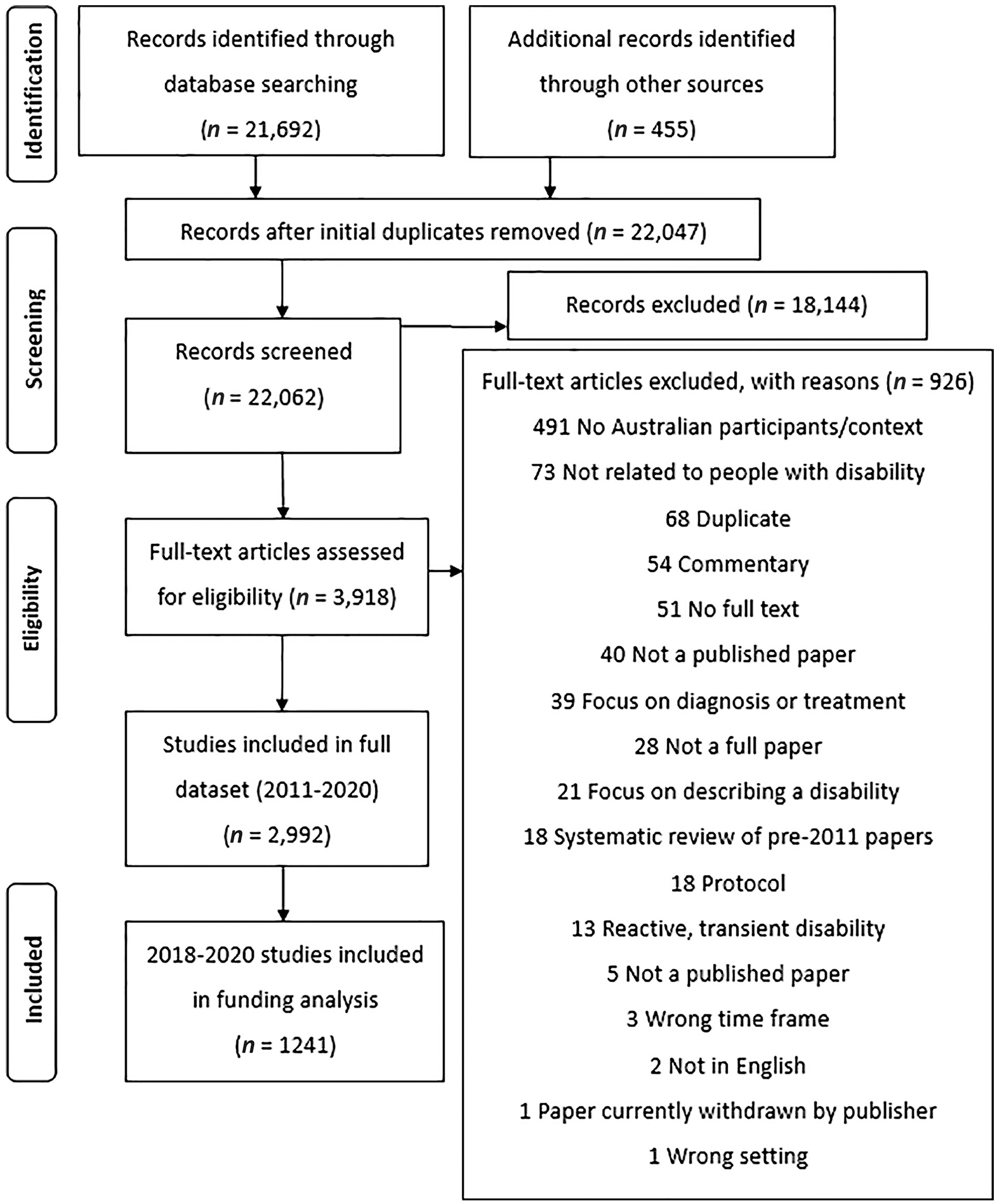
PRISMA Flow Chart.
Results
Of the 1,241 papers reporting on Australian disability research, 582 (47%) reported 764 funding sources (one or more per paper). The total number of funding sources reported, according to funding source category, is shown in Table 1. Research study designs used in papers reporting a funding source were quantitative (n = 254), qualitative (n = 197), mixed methods (n = 39), systematic (n = 22), or narrative reviews (n = 22). Only 16 funded papers utilized co-research or inclusive research approaches. We defined such approaches as those which included people with disability as members of the research team where authors self-identified such practices in the paper.
Total Reports of Funding by Source.
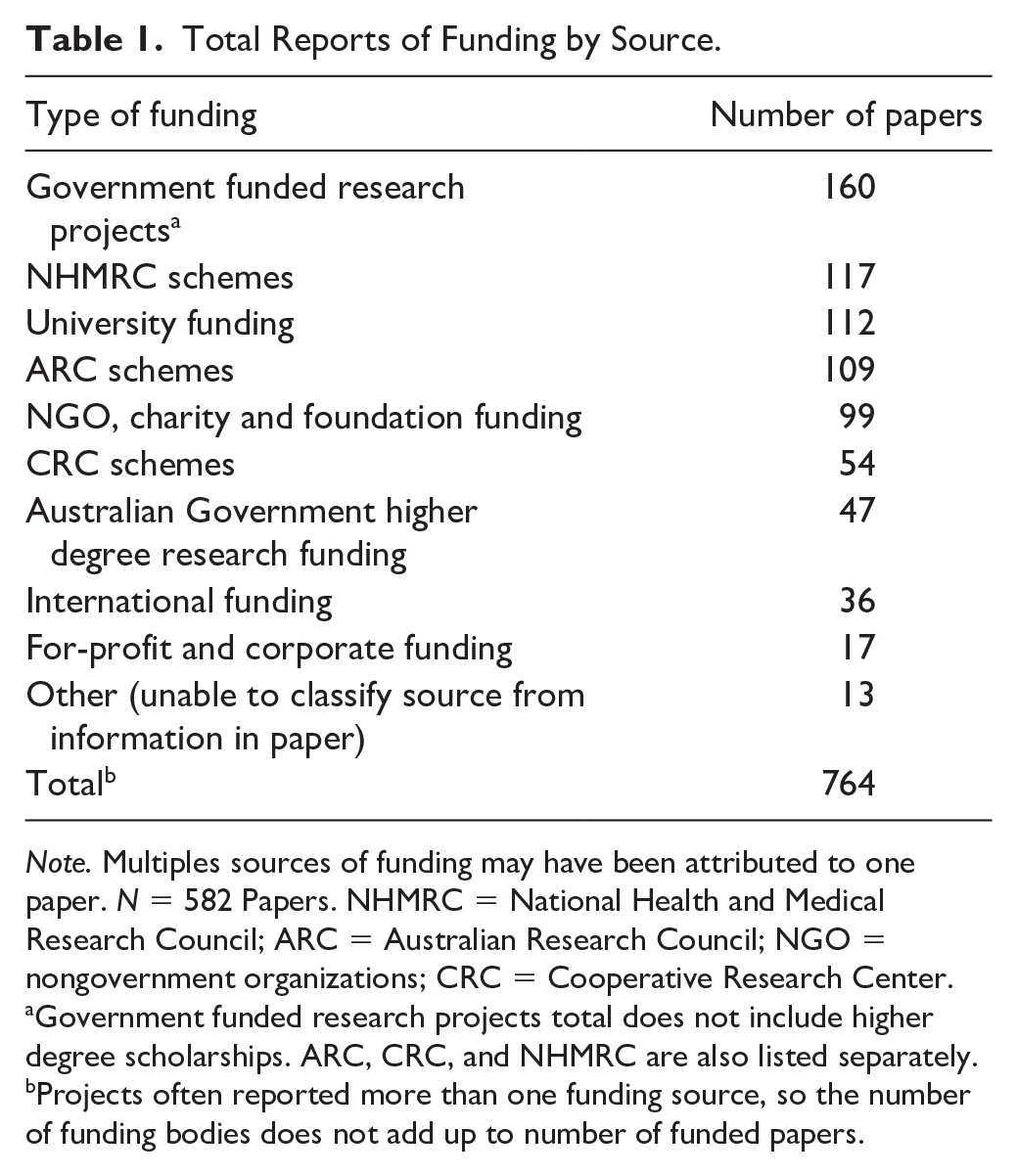
Note. Multiples sources of funding may have been attributed to one paper. N = 582 Papers. NHMRC = National Health and Medical Research Council; ARC = Australian Research Council; NGO = nongovernment organizations; CRC = Cooperative Research Center.
Government funded research projects total does not include higher degree scholarships. ARC, CRC, and NHMRC are also listed separately. bProjects often reported more than one funding source, so the number of funding bodies does not add up to number of funded papers.
The data presented in Table 1 show that around a third (n = 269, 35% of 764) of funding sources reported were from the major federal government “Category 1” grant funding schemes. Slightly more papers reported research funded by the NHMRC (n = 117) than the ARC (n = 109). Ninety-nine sources of NGO, charity, philanthropy, and foundation funding were reported and came from a diverse range of funders, primarily in the disability and mental health sectors, but with many working broadly across health and social care. In total, 38 separate foundations and charities provided funding (see the supplementary materials for full range of sources). For-profit organization (industry) funding came from BHP (n = 3 publications), Moose Toys (n = 2), Ferrero Group, Hewlett Packard, Microsoft, the pharmaceutical companies AbbVie and Pfizer (n = 3), the hearing device manufacturers Phonak, Oticon and Unitron, and several for-profit disability and health care providers.
In total, funding from international sources was cited in 36 publications. These projects were based in other countries, but included Australian participants, or funded consortia of Australian and international partners (e.g. Baldry et al., 2018). Figure 2 shows the breakdown of funding by sector (e.g. government, university, NGO, and private for-profit).
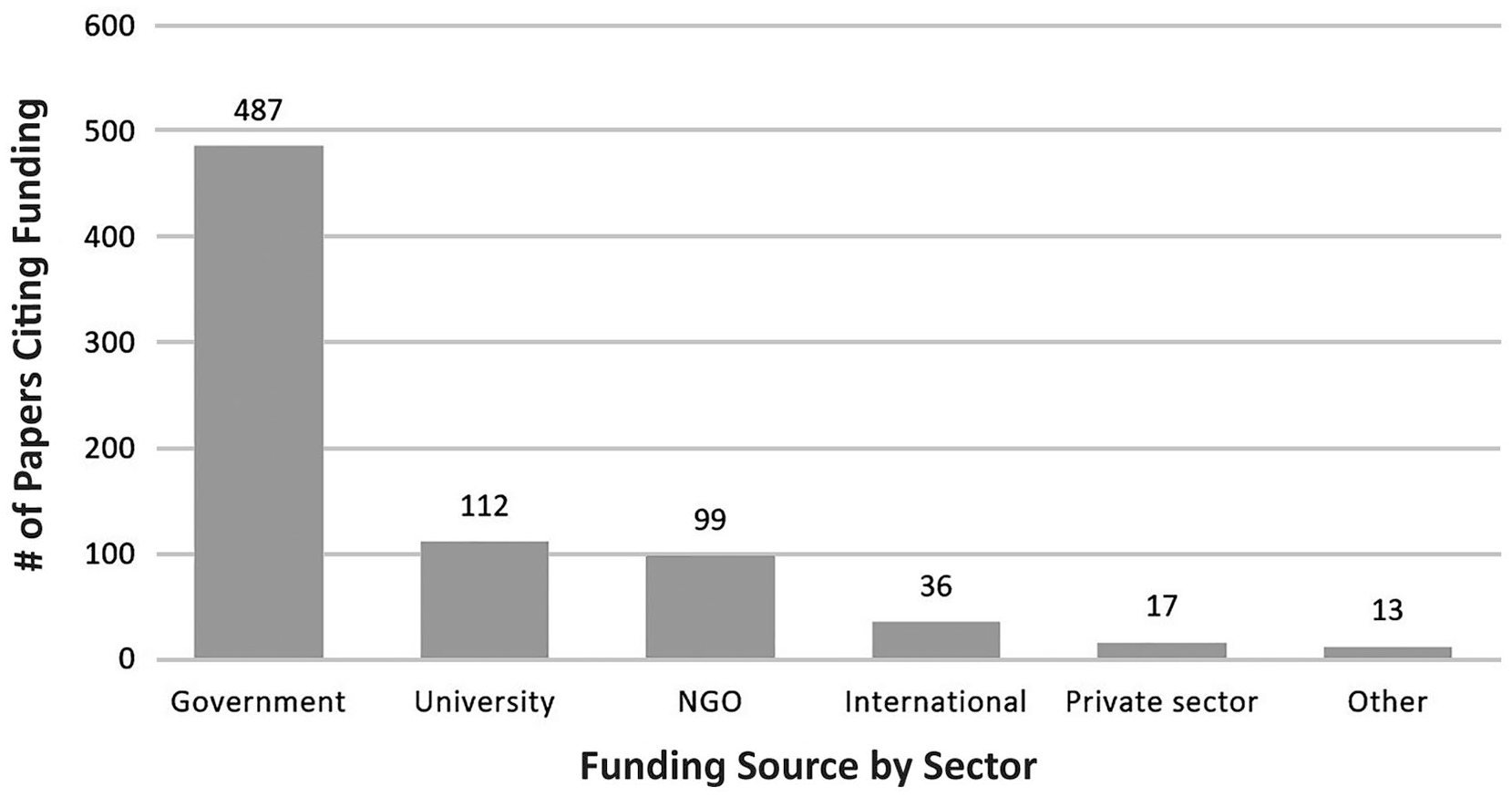
Disability Research Funding Source by Sector, Across All Funding References (n = 764).
Government Funding
Figure 2 shows that the largest source of funding (by number of papers citing the funding, n = 487) in published disability research was Australian governments at all levels (Federal, State, and Territory and local). Government funding was provided through direct funding to researchers, for example, in tenders or commissioned research, through annual grant rounds of government bodies (e.g. ARC, NHMRC, and CRC grants) and through postgraduate award funding for higher degree research students candidates (i.e., PhD or Master’s by research). Excluding the main NHMRC, ARC, CRC, and postgraduate training award programs, Australian Federal, territory, and state governments were acknowledged as funding the research reported in 160 papers. The amount of funding provided by Federal and State government is presented in Table 2. The data show that the federal government funded most published research through its departments and agencies. Four of the Australian government funded grants mentioned were provided through state-based primary health networks (PHNs). Most of these grants were to Partners in Recovery evaluation projects, which is likely because of the independent evaluation funding built into this scheme to better support people with persistent and severe mental illness.
Funding Sources by Federal or State/Territory Government and Number of Papers Identified.
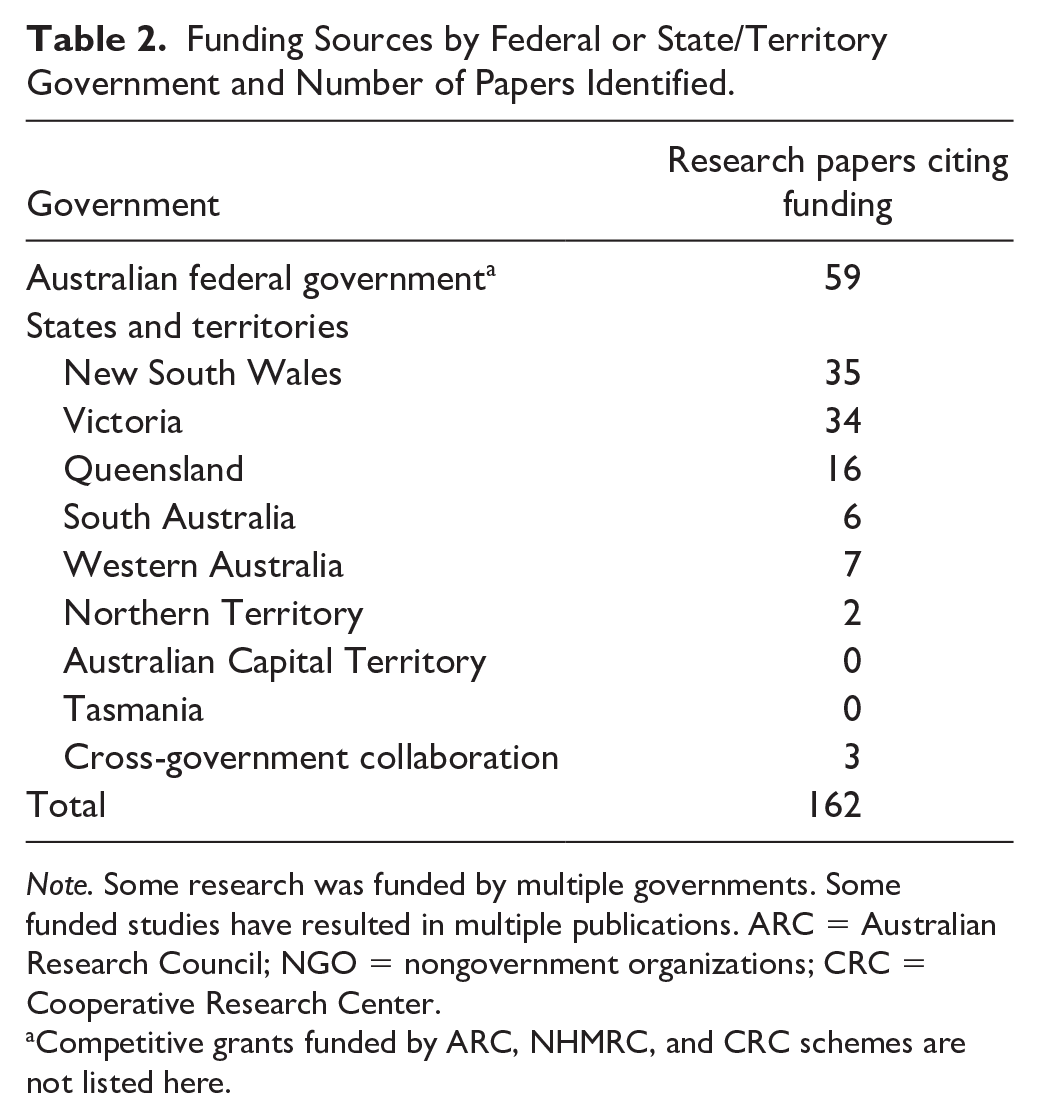
Note. Some research was funded by multiple governments. Some funded studies have resulted in multiple publications. ARC = Australian Research Council; NGO = nongovernment organizations; CRC = Cooperative Research Center.
Competitive grants funded by ARC, NHMRC, and CRC schemes are not listed here.
NHMRC Grant Funding
In total, 117 papers mentioned 150 instances of NHMRC funding, with most papers specifying the type of grant scheme. The papers referenced 49 fellowship awards, 29 Project and Partnership schemes, and 32 CRE funding awards, with most of the latter coming from either the Disability and Health CRE (n = 16) or the Fetal Alcohol Spectrum Disorder (FASD) CRE (n = 8). Identified funding schemes are listed in the supplementary materials.
ARC Funding
Of 109 papers citing ARC funding, 112 funding grants were referenced. The largest number of funding references were to the Linkage grant scheme which funds research projects involving partnerships between university and government, NGO and industry researchers (n = 54). Other ARC grant schemes cited were Discovery Projects (n = 22) and fellowships, which provide researchers salary and funding to conduct research. This included Discovery Early Career Fellowships (DECRA) (n = 12) and Future Fellowships (n = 9). There were no references to the Australian Laureate Fellowships which are the third major fellowship scheme funded by the ARC. Further information on specific grant schemes is listed in the supplementary materials.
CRC Funding
The CRC program was reported in 54 papers. CRCs are very large industry-led grants that bring together researchers with a range of partner organizations. The most commonly reported CRCs were the Autism CRC (n = 44) and the Hearing CRC (n = 6). The Autism CRC was the reported source for over half of the autism papers, demonstrating the significance and productivity from major competitive funding investments by the federal government’s partnership-based funding schemes. In previous research paper audits, the Sustainable Tourism CRC provided a valuable contribution to transport, travel and tourism research, including funding disability research (Dwyer & Darcy, 2011).
University Sector Funding
Twenty-six of the 43 universities in Australia were referenced as funders across 112 papers, most of which were publicly funded universities (reflecting the structure of the higher education system in Australia). Griffith University, the University of New South Wales (UNSW), and La Trobe University were the most commonly cited university funders (full list of funders is provided in the supplementary materials). Where funding type was described, it was directed to PhD scholarships (n = 10), fellowships (n = 4), project “seed” funding (n = 4), and new staff grants (n = 4).
Conditions, Populations, and Topics Researched
The largest number of papers funded (n = 161) did not focus on a specific disability, but rather discussed disability across a wide range of populations. When research was condition-specific, the types of disability most frequently funded were intellectual or cognitive disability (n = 130), autism (n = 89), and mental health conditions (n = 72). Table 3 presents the conditions where more than 10 papers referred to a particular population of people with disability. Instances of funding by government acknowledged in papers mainly focused on intellectual or cognitive disability (n = 105 instances of funding), mental health conditions (n = 53), or discussed disability generally without focusing on a particular group (n = 142).
Frequency of Published Papers by Types of Disability.
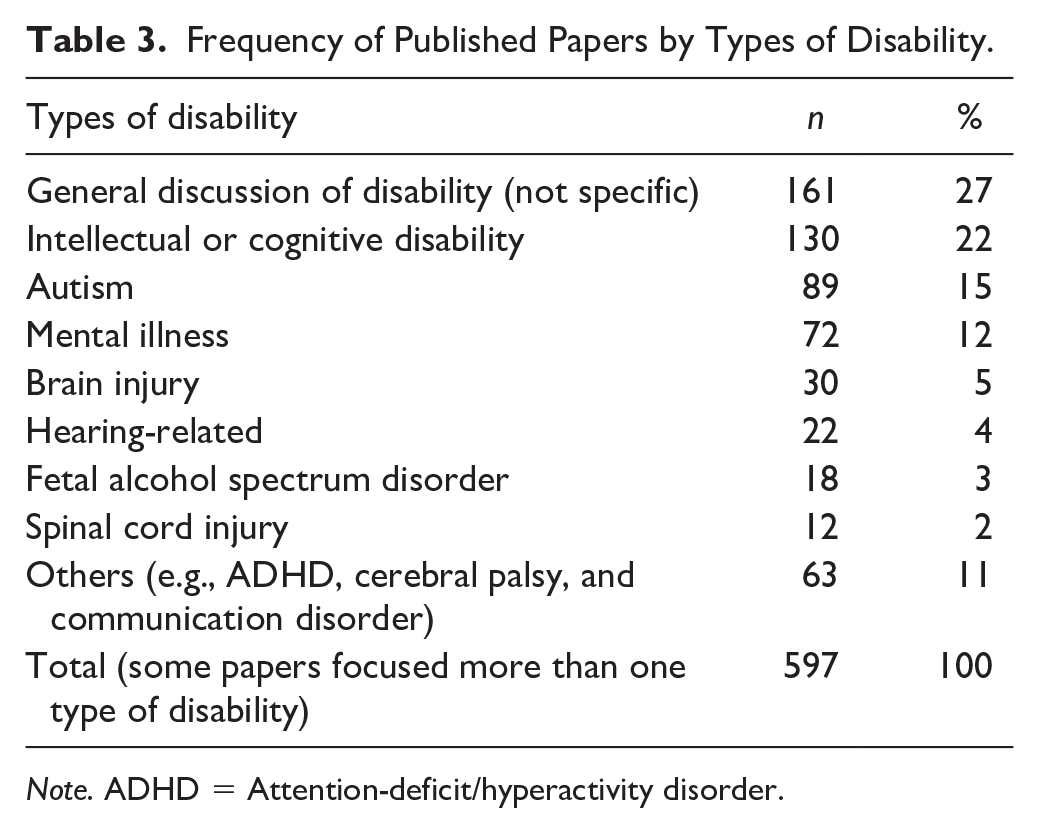
Note. ADHD = Attention-deficit/hyperactivity disorder.
Forty-nine papers (8%) focused specifically on Aboriginal and Torres Strait Islander populations. Ten papers (2%) focused on culturally and linguistically diverse people with disability. While the largest number of papers (n = 210; 36%) did not focus on a specific age group, 198 (34%) papers focused specifically on adults and 125 (21%) on children and adolescents. Only 13 (2%) papers specifically focused on adults ages 50+. The main topic areas which received funding were health and well-being (n = 142; 24%), experiences of disability (n = 79; 14%), education (n = 68; 12%), service development and evaluation (n = 53; 9%), workforce development and leadership (n = 45; 8%), and policy (n = 42; 7%). For a full list refer to the supplementary materials.
Discussion
This research mapped the landscape of recently published disability research funding in Australia, according to the funding source and populations at focus. Overall, funding sources were acknowledged in less than half (47%) of published Australian disability research papers over 2018–2020. This proportion was a little lower than that reported in the RAND Europe report on mental health research, which identified funding acknowledgements in 52.5% of mental health published research papers over the 2012–2014 period.
Our results show that the majority of disability research in Australia is funded by government bodies which provided grants, tenders and direct funding for projects, fellowships, or training scholarships. The next biggest groups of funders were universities, which also receive much of their funding from government, and nongovernment funders including charities and peak bodies. Only a small number of private, for-profit companies funded disability research, representing just 2.9% of the funded research reported in the papers located. Within Australia, this proportion is lower than the for-profit sector funding, reported to be 8.5% across all areas of research funding (Australian Government, 2021b) and the proportion of corporate industry funders reported in the RAND Europe study of international mental health funding of 8% (Pollitt et al., 2016). Drawing on U.K. data, Batterham et al. (2016) noted that more than 11 times as much for-profit and corporate funding is given to cancer research in comparison with mental health research. While some for-profit funders supported issues outside their commercial interest (e.g., BHP’s funding of FASD research), most for-profit funders in this review provided funding directly to their field of interest (e.g., Oticon funding hearing-related research). Across all fields of research, for-profit funding is more likely to favor those areas where funders have a commercial interest. For example, for-profit funders are more likely to fund drug, device, and treatment studies, compared with just 1.5% of U.S. based for-profit funding for clinical effectiveness studies going toward behavioral change (Fabbri et al., 2018). Conversely, government- and NGO-funded studies were more likely to focus on behavioral change (Fabbri et al., 2018). The number of for-profit funding sources identified in this study is likely to be reduced by our exclusion of treatment studies.
The National Disability Insurance Scheme (NDIS), introduced in 2013, has created an open market-driven system of disability funding with individualized funding packages going to people with disability to negotiate choice and control of their supports (Olney & Dickinson, 2019). This has seen an increase in for-profit sector involvement in NDIS services and supports. However, from our analysis, there has not been a concomitant increase in for-profit sector contribution to research development in the sector, which is disappointing. There is substantial room for the for-profit open market to engage in funding of disability research, with appropriate management of conflicts of interest that could support both commercial interests and align with the values and missions of the organizations providing the funding.
Our finding that competitive ARC, NHMRC, and CRC grants in Australia only contributed to 35% of all funded research reported in the papers is also important. Significant opportunity costs have been noted with regard to these competitive funding schemes (Herbert et al., 2013) due to the extensive time commitment to writing those grants (Herbert et al., 2014) and the low success rates of key schemes in comparison with other types of funding (e.g. 2021 success rates at 20% for ARC Discovery, 15% for ARC DECRA, and 15% for NHMRC Investigator grants across all levels; Australian Research Council, 2022; NHMRC, 2022). The results of this analysis show that it may be a better use of resources for disability researchers to spend time building relationships with individual government agencies and NGO partners given the potential funding available in those sectors. The problem, however, in adopting this strategy could be an increased reliance on current funding envelopes in a sector that is under increased pressure by government to reform, and which is potentially at risk of reduced resourcing of research and development (National Disability Services, 2021).
Our findings shed light on the broad research topic areas which were attracting funding, but we were unable to identify whether that funding was targeting priority areas identified by those communities. Funding should ideally not just be available but be targeted toward research that fulfills the needs and priorities of people with disability and the disability community. These needs could be conceptualized through existing legal and ethical frameworks (e.g., the framework provided by the United Nations Convention on the Rights of Persons with Disabilities); the findings of reviews or legal processes (e.g., the Royal Commission into Violence, Abuse, Neglect and Exploitation of People with Disability); and by assessing needs as understood in the sector (e.g., regular surveying undertaken by disability peak bodies).
Overall, the finding that only 16 funded papers were framed around an inclusive or a codesign research approach indicate that current policies and frameworks that aim to increase the inclusion of people with disability as co-researchers in funded studies are not yet bearing fruit. It is unclear if it is simply too soon to say, or whether the policies need to be rethought; certainly, an evaluation of why the strategy has not translated into published papers is needed. It may be that inclusion of lived experience in research studies does not persist into the stages of publication writing. This may reflect a situation where there are still only limited avenues for people with lived experience of disability to be employed within universities in Australia (Mellifont et al., 2019). A lack of ongoing employment of people with disability beyond the life of a research grant has been the subject of prior critique (Dorozenko et al., 2016; Tilly, 2015). We are currently in the process of undertaking a major consultation exercise which brings together the views of people with disability, their supporters and family members, people working to support people with disability, policy makers and academics to ask their views on the future disability research in Australia.
There is an increasing discourse in the university sector about the value of relationships and research partnerships with industry. However, for disability researchers to succeed in academia there will need to be a substantial shift in university policy to ensure that industry-based grants are equally valued and gain the same recognition as Category 1 grants. This would align with federal government encouragement of partnership-based academic research that has wider industry application (Australian Government, 2015). We have seen the discourse begin to shift with the inclusion of engagement and impact research exercises by the Australian Research Council scheduled for 2024 after an initial round in 2018. This approach values the outcomes of research beyond journal publications, as well as direct engagement with industry and communities in the conduct of research and implementation of findings (Australian Research Council, 2021). Given the emphasis of federal government rhetoric on for-profit business interests, there is an urgent need for disability researchers to develop partnerships with for-profit private sector organizations, and for governments to enable strategic initiatives that encourage for-profit organizations to pursue disability research. Managing potential, perceived and actual conflicts of interest will be important for navigating these new funding relationships.
This study provides insights into the way that disability research has been funded over 2018–2020. Now, we need to look forward to envision ways that research can be funded in the future, and the topics that should be prioritized. Disability research funding often results in research that is of direct utility for improving the lives of people with disability, for example through trialing service improvements, and changes to government policy systems and social contexts that may currently limit the lives of people with disability. This means that research is an important tool in furthering disability policy aims, such as those contained in Australia’s Disability Strategy, and should be considered as an important part of long-term policy implementation. Our findings clearly point to the value of targeted funding by government for creating bodies of research which significantly move forward our understanding of disability. For example, the Centre for Research Excellence in Disability and Health (2023), funded by the National Health and Medical Research Council, has a strong focus on health equity, which aligns with the national disability strategy outcomes.
For research to do this effectively, funded research also needs to be made publicly available. Our research focused only on peer-reviewed papers because those are the resources available to the sector excluding non-peer-reviewed papers or those papers which were not publicly available. This meant that some studies with significant funding for research and evaluation purposes could not be considered, where the research was not made generally available. Funding structures and expenditure in government grants typically extends to the preparation of a final report, but less commonly includes funding provision for the preparation of peer-reviewed manuscripts and open access publication of the findings. Frequently, funded reports are not made public at all. This can then limit the utility and reach of funded research. These are policy issues that funding bodies should consider given the added value of both peer review and open access dissemination of research findings to influence practice. Funds for open access and accessible reporting are particularly important, given the rapid growth of private sector disability services associated with implementation of the NDIS. Few disability service providers will necessarily have the funding for timely, immediate access to peer-reviewed research evidence in subscription-based journals.
In addition to priority topics, disability research funding should have as an overarching priority the involvement of people with disability in the research itself, through conceptualizing designing, conducting, and reporting on research. Involvement has been increasingly expected in the field of disability research, as reflected in statements and funding guidelines that encourage consumer involvement (e.g., NHMRC, 2016, 2021). Hence, together with the NDIS and Australia’s Disability Strategy 2021–2031, the disability sector also needs to establish new research relationships through codesign processes that incorporate people with disability and disability advocacy organizations in conjunction with universities, philanthropic and commercial interests. This requires funding schemes to explicitly acknowledge this requirement and resource it appropriately.
Limitations
In this study, we report numbers of papers and named funders, rather than instances of funding. Some government funding sources (e.g., the CRC funding for the Autism CRC) have funded research that has led to multiple papers, where others have funded research which led to only one paper reported in our study. It is very likely that further funding was provided in relation to the research contained in the papers, but funder details were not included in publications, either as a simple omission or for proprietary reasons. The reason for this is a combination of the way that different online publishing platforms collect funding information and the withholding of that information during the reviewing process for purposes of anonymity. Some grants may also have produced papers which were not included in our review because they are not within its remit (e.g., papers that are diagnosis or intervention focused). Papers focusing on psychosocial disability may be underestimated because of the limited range of search terms used. There may also be an under-estimation of co-funding provided by government, private, and NGO partner organizations on partnership-based grants where partner funders were not mentioned by name (e.g., Linkage and CRC grants).
In this study, no attempt was made to measure the broader impact and translation of research, which are also important and necessary outcomes for disability research. A time lag between research and publication means that there are studies that were funded and accepted for publication over the 2018–2020 period that have since been published. While acknowledging funding sources in publications is best practice, it is not possible to conclude the remaining 53% of disability research that we identified was unfunded. Despite these limitations, the methods used address the incomplete nature of contemporary disability funding research. It also addresses the methodology limitations of existing studies which do not encompass the breadth of research funding types and focus only on competitive grants (e.g. Christensen et al., 2011).
Conclusions
This study provides an overview of how funding sources are cited in disability research in Australia. It reveals a field of research where less than 50% of papers acknowledge funding and funding is dominated by government sources, the university sector, and NGOs; with very limited funding provided by the private or philanthropic sector. Arguably, private and philanthropic funders can and should utilize their schemes to influence research priorities and approaches that better target the needs of diverse disability communities, and to mandate the consultation with and inclusion of people with disability the leadership and conduct of disability research. Future research should gauge the effectiveness of strategies designed to increase the amount of inclusive disability research and consultation with disability communities. Continuing to map funded published research to those topics prioritized for research funding by people with disability, their families and supporters, including the broader disability practice and policy sector is important. Further research is needed to examine the outcomes and implementation of disability research findings which are beyond published research papers and understand community, policy, and practice outcomes.
Supplemental Material
sj-docx-1-dps-10.1177_10442073241228840 – Supplemental material for Who Funds Published Disability Research in Australia?
Supplemental material, sj-docx-1-dps-10.1177_10442073241228840 for Who Funds Published Disability Research in Australia? by Jennifer Smith-Merry, Simon Darcy, Angela Dew, Bronwyn Hemsley, Christine Imms, Mary-Ann O’Donovan, Gisselle Gallego, Keith McVilly, John Gilroy, Gemma Carey and Kathy Ellem in Journal of Disability Policy Studies
Footnotes
Acknowledgements
The authors acknowledge the rest of their consortium partners and members of the codesign groups who developed the project methodology. The authors acknowledge and thank the following people who assisted with aspects of the study including the systematic review of papers to identify funding sources: Ivy Yen, Greta Westermann, Caitlin Jameson, Valentina Merzetti, James Cann, Erin Whittle, Jenny Plumb, and Jacky Lipson.
Declaration of Conflicting Interests
The author(s) declared no potential conflicts of interest with respect to the research, authorship, and/or publication of this article.
Funding
Funding was provided by the National Disability Research Partnership, hosted by the University of Melbourne and funded by the Department of Social Services.

References
Supplementary Material
Please find the following supplemental material available below.
For Open Access articles published under a Creative Commons License, all supplemental material carries the same license as the article it is associated with.
For non-Open Access articles published, all supplemental material carries a non-exclusive license, and permission requests for re-use of supplemental material or any part of supplemental material shall be sent directly to the copyright owner as specified in the copyright notice associated with the article.
