




Abstract
Youth with disabilities must be college and career ready to be prepared for adult life. U.S. federal policy efforts confirm this prioritization (Every Student Succeeds Act [ESSA], 2015; Individuals with Disabilities Education Improvement Act [IDEIA], 2004). Parallel to the emergence of college and career readiness (CCR), transition planning and service requirements have promoted successful transitions to postschool education, employment, and community living (IDEIA, 2004). However, not all high schools provide a range of CCR supports for these students. We conducted a systematic mixed studies review to investigate the prevalence of five domains of CCR identified in the literature. Findings revealed the five domains had a range of coverage across the literature with academic engagement and process-oriented skills comprising more citations and transition competencies least likely to be included. In addition, across the CCR literature, data for students with disabilities were rarely disaggregated, which confirms that we know even less about the effectiveness of the five domains for these students. Clear gaps were identified and suggests research often does not inform CCR policy and/or practice decisions.
Keywords
Youth with and without disabilities must be college and career ready in order to be prepared to engage in adult life. U.S. federal policy efforts confirm this prioritization (Every Student Succeeds Act [ESSA], 2015; Individuals with Disabilities Education Improvement Act [IDEIA], 2004). Parallel to the emergence of college and career readiness (CCR), transition planning and service requirements have promoted successful transitions to postschool education, employment, and community living (IDEIA, 2004). Even so, mounting evidence continues to confirm students with disabilities have worse postschool outcomes than their peers without disabilities, especially in the areas of employment and postsecondary education (Honeycutt et al., 2017; Winsor et al., 2021). Specifically, youth with disabilities (a) experience greater course failure and higher dropout rates (Doren et al., 2014); (b) have fewer opportunities to receive academically rigorous curricula and use critical thinking skills (e.g., formulate problems, interpret information, communicate findings; (Lipscomb et al., 2017; Lombardi et al., 2015); and (c) are less likely to take steps to prepare for college and access work experiences in high school as compared with their peers without disabilities (Lipscomb et al., 2017). Together, these findings demonstrate a persistent problem that points to students not receiving adequate preparation for college and careers, with this issue being most pronounced for students with disabilities. Therefore, it is critical that high schools adequately prioritize CCR and ensure these opportunities are offered school-wide to all students.
Research reveals that when students have the opportunity to engage in activities that allow them to build CCR skills and make their own decisions about career interests, school-related activities, and long-range plans for college and careers, they are more likely to experience positive outcomes (Mazzotti et al., 2021). In this study, we conducted a systematic mixed studies review of 303 studies and resources to investigate the prevalence of five domains of CCR identified in scholarly literature (n = 253; that is, peer-reviewed articles and dissertations), as well as gray literature (n = 50; that is, policy briefs, research reviews, practitioner guides, and instrument review). Our findings informed an established theoretical framework (Morningstar et al., 2017) as well as confirmed the assessment framework for a newly developed CCR measure intended for youth with and without disabilities (Lombardi et al., 2022).
Identification of CCR Domains
Even though academic indicators have been used as the sole source of measuring CCR, researchers agree that CCR goes beyond academic skills and should include nonacademic skills, such as soft skills; character; and social, emotional, and behavioral skills (American Institutes for Research, 2014; Conley, 2010; Gates et al., 2016; Green et al., 2021; Krauss et al., 2016; Lombardi et al., 2015, 2019; Welch et al., 2017; West et al., 2016). Our systematic mixed studies review was based on five CCR domains that underpin our assessment framework (Lombardi et al., 2020). The five domains represent academic and nonacademic skills:
Academic engagement (e.g., classroom supports that foster productive academic behavior);
Process-oriented skills (e.g., critical thinking and learning processes as both facilitate access to and engagement in content areas);
Interpersonal engagement (e.g., incorporating communication and interactions with oneself, others, adults, and the broader community);
Ownership of learning (e.g., concepts of sense of belonging, growth mindsets, and perseverance); and
Transition competencies (e.g., including early planning activities related to career search and exploration, understanding college and workplace expectations, and investigating adult living and community engagement opportunities).
The five domains evolved from previous studies that included extensive literature reviews within and outside of special education research and soliciting stakeholder feedback on proposed CCR domains (Morningstar et al., 2017), as well as preliminary measurement modeling using pre-existing measures that mapped onto the framework (Lombardi et al., 2018). Drawing from these studies, the CCR assessment framework incorporates five domains of academic and nonacademic skills (Lombardi et al., 2020).
The CCR Literature Base
CCR has not been well defined in educational literature, particularly with regard to measuring nonacademic skills and especially concerning youth with disabilities (Green et al., 2021; Monahan et al., 2020). In a recent systematic literature review focusing on CCR frameworks, Monahan et al. (2020) found 26 published empirical studies that incorporated CCR frameworks, yet, only five included students with disabilities alongside their peers without disabilities, with only two studies exclusively examining CCR for students with disabilities. This systematic review was limited in that it only focused on established CCR frameworks and did not include a broad range of resources. This work supports the fact that the convergence of CCR and transition practices have not traditionally been supported by state and local education agencies suggesting that educational policies and practices are, at best, parallel efforts, and at worst, lead to conflicting and contradictory efforts to ensure students with disabilities are considered in CCR initiatives (Morningstar et al., 2012). For example, vocational programs (e.g., career technical education, community-based experiences) are often not developed with both youth with and without disabilities in mind (Dougherty & Lombardi, 2016). The first purpose of our current systematic mixed studies review was to confirm the prevalence of a comprehensive CCR assessment framework that underpins a new measure (Lombardi et al., 2022) to ensure the five domains support item development and refinement. A second purpose of our review was to identify the prevalence of CCR in the literature that disaggregated data for youth with disabilities to make some initial recommendations related to CCR for these youth. Our current systematic mixed studies review (a) targeted CCR literature that included individual academic and nonacademic skills and variables, which went beyond focusing on established CCR frameworks; and (b) included a range of resources from scholarly and gray literature (e.g., peer-reviewed articles, dissertations, and policy briefs) to identify the prevalence of the five CCR domains in the literature for youth in general and special education settings. Our work was guided by the following research question:
Method
Selection Procedures
We conducted a systematic mixed studies review of scholarly and gray literature following the Preferred Reporting Items for Systematic Reviews and Meta-Analyses (PRISMA) guidelines suggested by Shea et al. (2017) for conducting high-quality systematic literature reviews. Mixed studies reviews include “any combination of methods where one significant component is a literature review (usually systematic). Within a review context, it refers to a combination of review approaches; for example, combining quantitative with qualitative research or outcome with process studies” (Grant & Booth, 2009, p. 94). Given the scope of our research aim and the emergent nature of CCR research, including a wider array of data (i.e., gray literature) was warranted. Gray literature is not peer-reviewed (American Psychological Association [APA], 2020), and for the purpose of this study, was considered to be documents and resources “produced on all levels of government, academics, business and industry in print and electronic formats, but which is not controlled by commercial publishers” (Charrois, 2015, p. 145; The New York Academy of Medicine, 2017). Figure 1 provides the systematic mixed studies review flow diagram for scholarly and gray literature adapted from Moher et al. (2009).
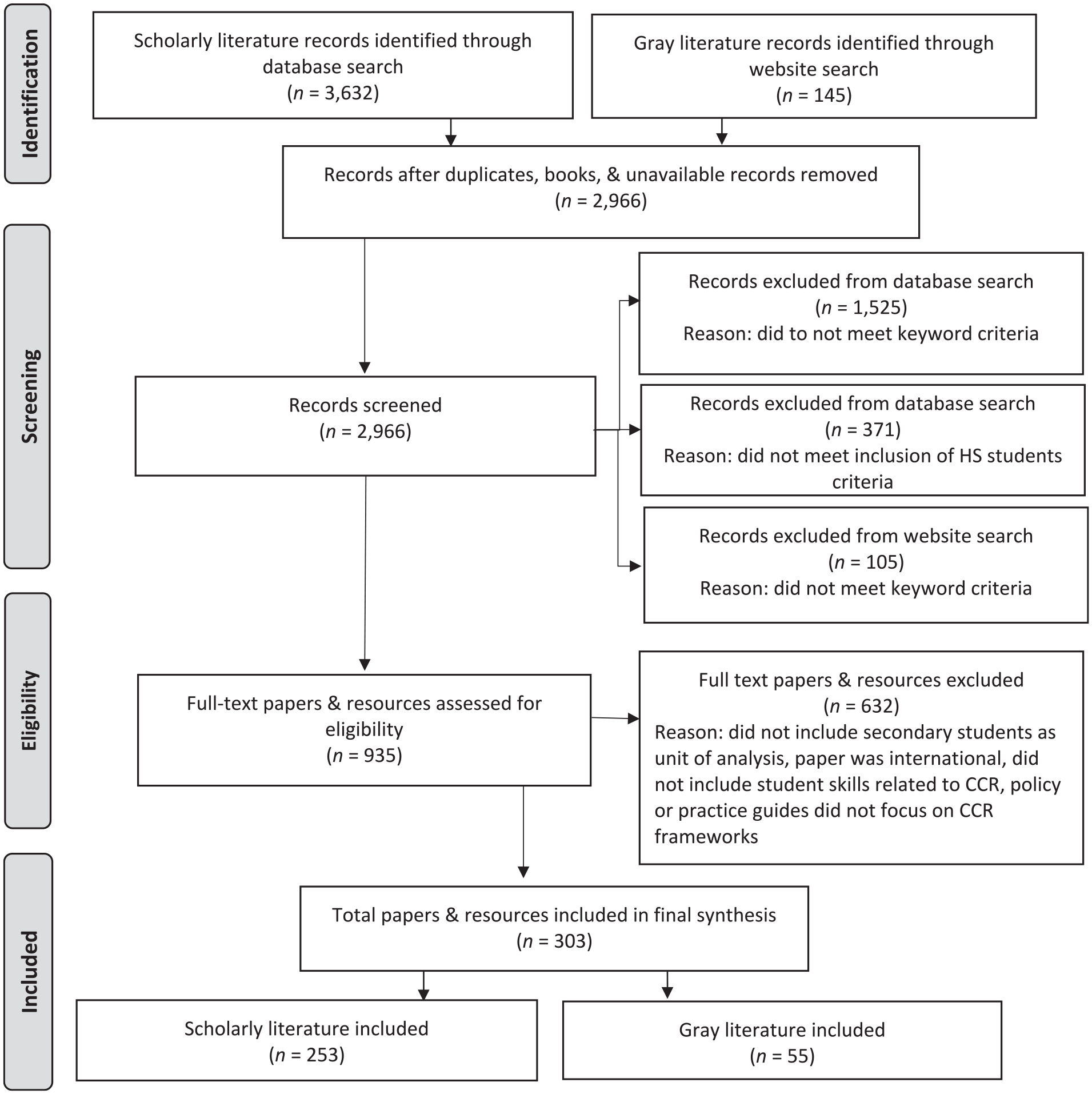
Systematic mixed studies review flow diagram for scholarly and gray literature.
Scholarly literature review
We conducted an electronic search of the literature from January 1990 through September 2019. Our search procedures included methods to identify peer-reviewed and gray literature (APA, 2020) focused on CCR for students with and without disabilities. The scholarly systematic search occurred in collaboration with two university research librarians (one northeast university, one southeast university) and one doctoral student from each university. Databases searched were CINAHL with Full Text, ERIC, Education Research Complete, Educational Administration Abstracts, Health Source: Nursing/Academic Edition, PsycINFO, and Web of Science Core Collection. Search terms used included (but were not limited to): college and career readiness, work readiness, postsecondary preparedness, intervention, special education students, and students with disabilities. Figure S1 in Supplemental Materials includes our systematic mixed studies review search strategy with a full list of full and truncated search terms. Based on results of our initial search, a total of 3,632 documents were identified (i.e., peer-reviewed; published dissertations; gray literature [e.g., reports, resources, practitioner guides]). After duplicates were removed, 2,966 records remained for title and abstract screening.
Gray literature review
The gray literature team included a faculty member and graduate student from a northwest university. Given the emerging policy and practices associated with CCR, second-level search procedures examined gray literature focused on prevalent CCR websites. We systematically searched for similar terms from the initial scholarly literature review search (Charrois, 2015; see Figure S1 in Supplemental Materials). We identified five websites: College & Career Readiness & Success Center (CCRSC); University of Chicago Consortium on School Research (UCC); Forum for Youth Investment (FYI); National Technical Assistance Center on Transition (NTACT); and APA PsycTests (accessed through the university library system). Given the unique search engines found on each website, we utilized distinct approaches during the key term searches as noted next: (a) a website internal keyword or product search mechanism (CCRSC, UCC, FYI); (b) general search window for specified keywords: “college and career” framework, “college and career” model, “college and career” intervention, “college and career” measure (CCRS, UCC, FYI); (c) ProQuest Search engine for keywords: “college and career readiness,” “career readiness,” and “college readiness” (APA PsycTests); and (d) hand search of the website using the designated “resources” tab (NTACT). Based on results of the website search, a total of 145 reports, resources, and practitioner guides were identified with no duplicates. In addition, the scholarly literature review team identified and submitted 444 reports, resources, and practitioner guides that were screened as not meeting the scholarly literature criteria, but still relevant to the topic. This literature was related to college and career frameworks, policies, or procedures, and thus, reviewed for the gray literature review. The gray literature team completed a title and abstract screening using appropriate inclusion criteria as described below.
Inclusion/Exclusion Criteria
Scholarly literature review
We used a two-step process for determining inclusion/exclusion criteria for the scholarly review. The first step was title and abstract screening. The second step was to conduct full-text coding of the scholarly literature identified from title and abstract screening for eligibility.
Title and abstract screening
There were two rounds of abstract screening. Initial inclusion criteria for the first round included screening abstracts for (a) including one or more of the following key terms: college and career readiness, college and career ready, career readiness, career ready, career preparation (preparation for career), work readiness, work ready, work preparation (preparation for work), college preparation (preparation for college), college readiness, college ready, postsecondary education readiness, and/or postsecondary education preparation (preparation for postsecondary education); and (b) being written in English and conducted in the United States; this decision was made due to educational policy differences between countries. Two independent coders at two separate institutions conducted the first round of abstract screening. A list of 235 “other” terms and phrases included in the abstracts were identified during the first round of screening (e.g., preparation for entry into a career, preparedness for the first year of college, readiness for work). Four senior members of the research team reviewed the “other” terms and came to consensus about which terms and phrases should be included in abstract screening criteria (i.e., 174 out of 235 were included). After initial abstract screening was complete, all coders met via Zoom to discuss each item in which there were discrepancies. A third coder conducted interrater reliability (IRR) on 31.2% (n = 879) of the abstracts. IRR for the first round of abstract screening was 83.2%. The first round of abstract screening resulted in 1,296 abstracts that met the initial inclusion criteria.
Due to the high number of remaining scholarly literature and our research focus (i.e., CCR for secondary students with and without disabilities), the team conducted a second round of abstract screening. Inclusion criteria for the second round of abstract screening included (a) screening for information focused on secondary students with and/or without disabilities; and (b) removing books, speeches, and conference papers. The same two independent coders conducted the second round of abstract screening, and IRR was 70.9%. Discrepancies occurred due to different interpretations of the coding criteria and human error. For example, one coder did not include articles pertaining to specific high school programs, such as a nursing or engineering focused high school. The coders met via Zoom to discuss discrepancies to reach consensus. The second round of abstract screening resulted in 925 scholarly papers eligible for full-text coding.
Full-text coding
Of the 925 scholarly papers, 481 were peer-reviewed articles or dissertations and 444 were considered gray literature (e.g., reports, resources, practitioner guides). The 444 gray literature documents identified through the database search were coded by the research team at the northwest university. The remaining 481 peer-reviewed articles and dissertations were coded for inclusion by our research teams at the southeast and northeast universities. Our inclusion criteria for the scholarly papers (i.e., peer-reviewed articles, dissertations) were that the paper (a) included secondary students as the unit of analysis or focus of the paper, (b) was not international, and (c) included student skills related to CCR. IRR was completed on 30% (n = 145) of the full-text coded scholarly papers with a 89.4% agreement across all coded data. Based on full-text coding, 253 peer-reviewed articles and dissertations were eligible for inclusion in our systematic mixed studies review. Table S1 in Supplemental Materials includes the 253 citations included in the scholarly literature review.
Gray literature review
Title and abstract screening
Similar to the scholarly review, a two-step title and abstract review was initiated for gray literature. During the screening, search terms were examined within the titles and abstracts of the website resources (N = 145), as well as the gray literature brought over from the scholarly literature review (n = 444). After title and abstract screening, a total of 454 gray literature documents were considered relevant for full-text coding. IRR was completed for 31.7% (n = 144) of identified abstracts with a 90.9% agreement among the two coders. Closer examination of the gray literature revealed the majority of documents referenced CCR as an essential outcome, but were not the primary focus of the resource. A second screening was undertaken to include gray literature that described or defined a CCR model, or included descriptions of CCR domains, concepts, or specific elements. This second screening reduced the total to 50 for full-text coding.
Full-text coding
For full-text coding, the gray literature was analyzed to confirm that the resource (a) described or defined terms and domains associated with a CCR framework or model; (b) included descriptions of broader CCR domain(s) to organize specific CCR concepts or elements within a resource; or (c) focused on specific elements/characteristics within the policy or practice descriptions. All of the remaining gray literature (n = 50, 100%) was analyzed for IRR with 92.2% agreement across all coded data. Table S2 in Supplemental Materials includes the 50 citations included in the gray literature review. Next, we describe our data and content analysis procedures.
Data and Content Analysis
For the scholarly and gray literature review, we used descriptive statistics to analyze results. Our data and content analysis also focused on a gap analysis related to findings to determine which domains of CCR were most common and/or missing across the types of literature reviewed (Grant & Booth, 2009). Qualtrics online survey software (https://www.qualtrics.com) was used to code the 481 scholarly papers and the 454 gray literature resources (n = 935).
We first coded whether or not the document was data-based. If the document was data-based, we coded demographics (i.e., gender, age, grade, race/ethnicity, disability); type of methodology used (i.e., qualitative, single-case, group design, correlational, descriptive survey); study design (e.g., single-case multiple baseline, hierarchical multiple regression, randomized control trial, focus groups); and the CCR domain(s) (i.e., academic engagement, process-oriented skills, interpersonal engagement, ownership of learning, transition competencies). If the document was not data-based, but was considered a peer-reviewed article, we coded the type of peer-reviewed article (i.e., practitioner, literature review, policy, other) and the CCR domain(s). If the document was considered gray literature, we coded the type of resource document as a policy brief, research review, practitioner guide, or review of an instrument(s); and relevant CCR domain(s). For the purpose of this systematic mixed studies review, we analyzed our data using descriptive statistics (i.e., n, %) to identify the prevalence of the five CCR domains.
Results
In this section, we describe results of our systematic mixed studies review related to prevalence of the CCR domains across the scholarly and gray literature. A continued reliance on academic indicators as a focal point for CCR was noted, with an uneven distribution of literature addressing transition competencies and inclusion of students with disabilities. We assessed the scholarly and gray literature to confirm and/or expand the initial elements associated with the five domains in the original assessment framework: academic engagement, process-oriented skills, interpersonal engagement, ownership of learning, and transition competencies (Lombardi et al., 2020).
Scholarly Literature Review
Of the 253 scholarly papers, 203 (80.2%) included domains related to academic engagement, which was the most frequently represented of the five domains. For example, Bell et al. (2009) conducted focus groups with high school students to determine how they were preparing for college. This included identifying components of academic engagement that related to course completion, challenge levels (i.e., depth of academic knowledge), and content area knowledge. Next, 140 (55.3%) scholarly papers included domains related to transition competencies (e.g., Liang et al., 2017); 91 (36.0%) included domains related to ownership of learning (e.g., Besnoy et al., 2013); 83 (32.8%) included domains related to process-oriented skills (e.g., Conley, 2010); and 71 (28.1%) included domains related to interpersonal engagement (e.g., Geenen et al., 2015). Table S1 in Supplemental Materials includes APA citations for the 253 scholarly articles included in this review and the domains reflected in each article.
When we examined the scholarly literature for trends related to gender differences (i.e., male and female) and CCR, we found the majority of articles included domains related to academic engagement and transition competencies. When examined for school type, the majority of scholarly articles were conducted in or used data from high schools, and also included academic engagement and transition competencies as the two most prevalent domains. Few studies disaggregated data by educational setting (i.e., general education, special education). The scholarly papers that did not specify general education and/or special education were recorded as not specified. It should be noted there was an overrepresentation of general education across scholarly papers, and only a small portion of scholarly papers reported on students receiving special education services (n = 34; 13%). Similar to previous findings, domains related to the academic engagement and transition competencies were most often represented. Table 1 summarizes the CCR domains by gender, school type, educational setting, and gray literature.
College and Career Readiness Domains by Gender, School Type, Educational Setting, and Gray Literature.
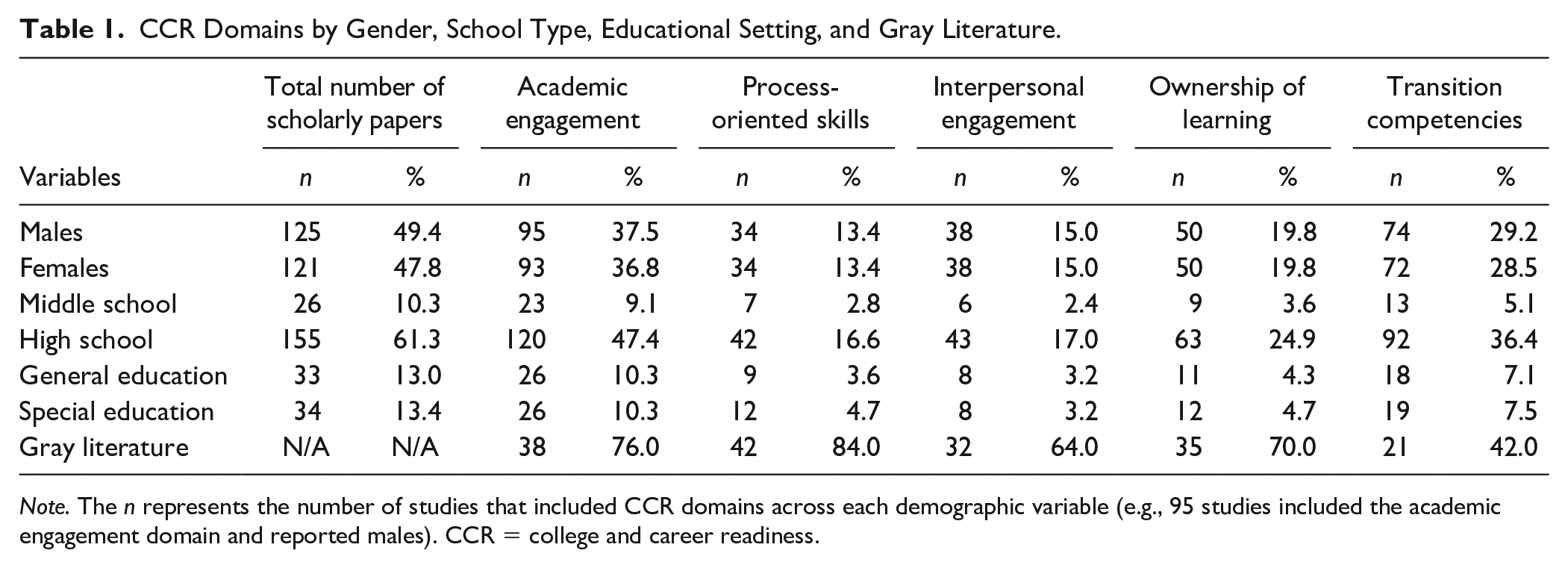
Note. The n represents the number of studies that included CCR domains across each demographic variable (e.g., 95 studies included the academic engagement domain and reported males). CCR = college and career readiness.
Next, we assessed our findings to determine the number of scholarly papers that disaggregated data by the 13 Individuals with Disabilities Education Improvement Act’s (IDEIA, 2004) disability categories across the five domains. We rarely found scholarly papers reflected or disaggregated data for specific disability categories. Students with specific learning disabilities, emotional disturbance, and/or intellectual disability were reported most frequently across the five domains, and particularly, within the process-oriented skills domain. Table 2 summarizes the CCR domains by disability category.
College and Career Readiness Domains by Disability Category.
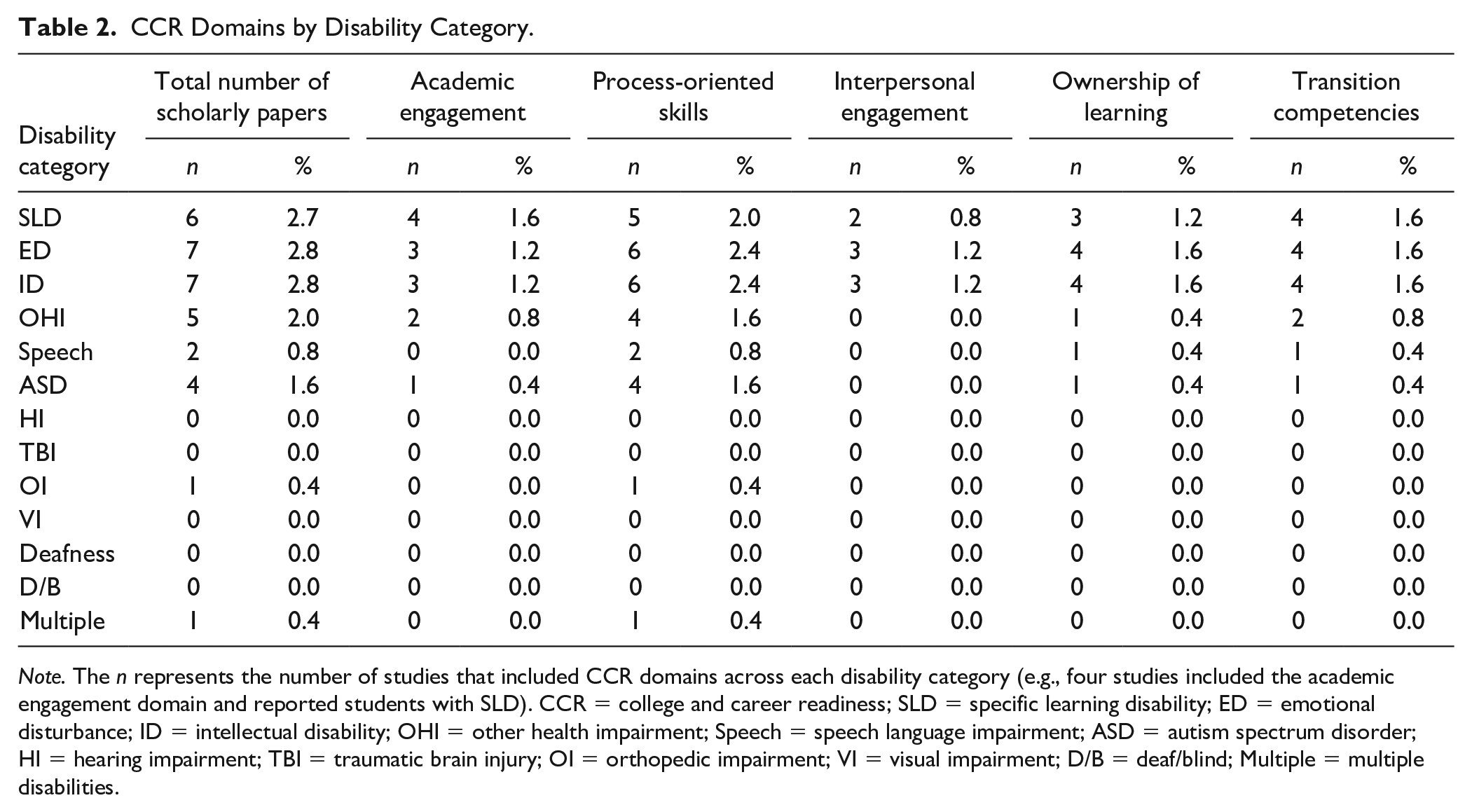
Note. The n represents the number of studies that included CCR domains across each disability category (e.g., four studies included the academic engagement domain and reported students with SLD). CCR = college and career readiness; SLD = specific learning disability; ED = emotional disturbance; ID = intellectual disability; OHI = other health impairment; Speech = speech language impairment; ASD = autism spectrum disorder; HI = hearing impairment; TBI = traumatic brain injury; OI = orthopedic impairment; VI = visual impairment; D/B = deaf/blind; Multiple = multiple disabilities.
Finally, we assessed our findings to determine the number of scholarly papers that reflected or disaggregated data by race/ethnicity. Similar to findings related to gender, school type, and educational setting, we found that the race/ethnicity categories were most frequently represented within the academic engagement and transition competencies domains. Data for White, Latinx, Black, and Asian groups were most often disaggregated within scholarly papers with less representation for American Indian/Alaska Native and Native Hawaiian/Other Pacific Islanders. Table 3 summarizes the CCR domains by race/ethnicity.
College and Career Readiness Domains by Race/Ethnicity.
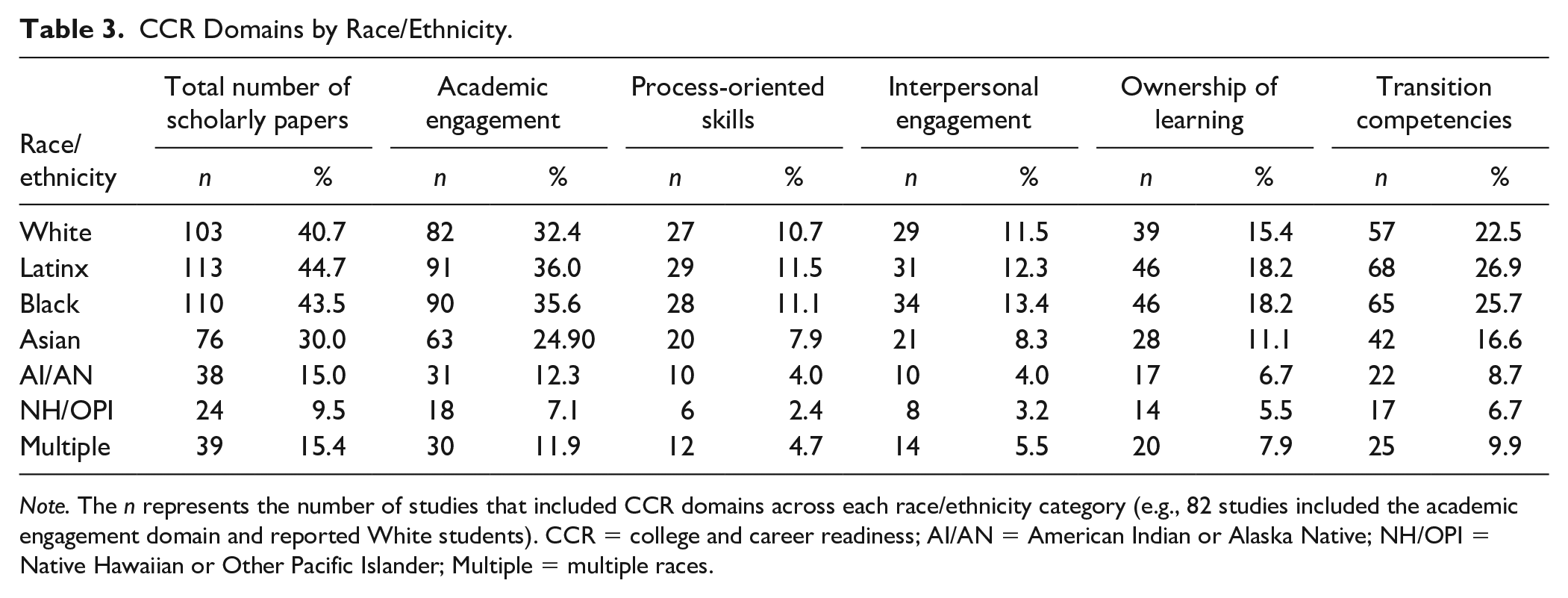
Note. The n represents the number of studies that included CCR domains across each race/ethnicity category (e.g., 82 studies included the academic engagement domain and reported White students). CCR = college and career readiness; AI/AN = American Indian or Alaska Native; NH/OPI = Native Hawaiian or Other Pacific Islander; Multiple = multiple races.
Gray Literature Review
We examined the gray literature for the prevalence of CCR domains as described within resources that primarily focused on guidance and practices. Among the types of resources published, the majority were identified as policy briefs or guides (n = 38; 68.0%). These materials often included descriptions of programs currently in use as well as specific guidance for district and school administrators to implement change. For example, Borsato et al. (2013) described a framework and system for tracking CCR indicators and supports for students who were off track for postsecondary success. This resource incorporated administrative strategies for supporting districts and schools to understand and implement needed conditions, processes, and supports to increase the number of high school completers. The remaining resources included: (a) research reviews which included research briefs, general reports, and fact sheets (n = 10; 20%); (b) practitioner guides for educators (n = 4; 8%); and (c) instruments or measurement reviews (n = 2; 4%).
In terms of how the gray literature described or defined the five domains of CCR, we found that process-oriented skills (n = 44; 84.0%) and academic engagement (n = 38; 76.0%) were most frequently identified (see Table 1). Ownership of learning (n = 35; 70.0%) and interpersonal skills (n = 32; 64.0%) were also widely represented among the gray literature, while transition competencies were least likely to be described (n = 21; 42.0%). Among the 50 resources analyzed, only three documents referenced all five CCR domains, with one being a policy brief that described a CCR framework for students with disabilities (Brand & Valent, 2013). The other two were research briefs that included an annotated bibliography (McGarrah, 2014), as well as a research review focused on incorporating social and emotional learning into a readiness framework (Dyminicki et al., 2013).
An equal number of gray literature described either four or three of the five domains (n = 20; 40.0% respectively). Even fewer resources addressed two (n = 6; 12.0%) or only one domain (n = 1; 2.0%). Among the 20 resources describing four of the five domains, 11 (55.0%) included similar domains: academic engagement, process-oriented skills, interpersonal engagement, and ownership of learning. Most of the gray literature however, did not describe transition competencies, perhaps indicating a tendency to focus on school-based, but not postschool skill development. Interestingly, among the 21 resources that referenced transition, only two resources did not include academic engagement as a focused domain, and both of these documents targeted employment and career pathways (De Velasco et al., 2016; Neilson et al., 1997). Overall, among the 20 resources that included four domains, academic engagement, process-oriented skills, interpersonal skills, and ownership of learning were equally represented 16 times (80.0%), respectively, while transition competencies was least likely to be addressed (n = 9; 45.0%).
Finally, we examined the rates at which the gray literature referenced student groups, and found that for the most part, students were not discussed or referenced in the resources (n = 32; 64.0%). A general reference to high school students was identified 15 times (30.0%), while students with disabilities were only explicitly described three times (6.0%).
Discussion
College options are expanding for youth with a range of disabilities (National Coordinating Center Accreditation Workgroup, 2016; Think College, 2022). Despite this promising expansion of postsecondary options, secondary youth with disabilities may not have access to school-wide CCR (Morningstar et al., 2017). In this study, we conducted a systematic mixed studies review of scholarly and gray literature that pertain to CCR among youth with and without disabilities in secondary school. The five domains had a range of coverage across the scholarly and gray literature. As shown in Table 1, academic engagement was better represented in the scholarly literature for middle and high school students and in general and special education settings, followed by transition competencies. The other three domains were less represented in the scholarly literature (i.e., process-oriented skills, interpersonal engagement, ownership of learning). These findings are consistent with a previous study where individualized education program (IEP) annual and postschool goals were analyzed by the same CCR framework, and the same two domains—academic engagement and transition competencies—were better represented in actual IEP goals as compared with the other domains (Lombardi et al., 2017). With regard to the gray literature, different patterns emerged that were slightly different from the scholarly literature review. The scholarly review identified academic engagement as the most frequent domain and transition competencies the second most frequent; whereas process-oriented skills were most often represented in the gray literature, and transition competencies was the least frequently represented. Clearly, the scholarly and gray literature focused on CCR domains resulting in different emphasis patterns.
The types of gray literature were predominantly policy guidance/briefs that described frameworks and strategies, but did not often share research supporting such guidance; thereby suggesting educators may make practice and policy decisions without a strong research base or operational definition of CCR. Our results lead to the critical question of how research informs the gray literature given that it most often reported research that was descriptive in nature and lacked evidence of empirical and/or correlational outcomes. Moreover, findings showed a lack of practical guidance for educators with only 7.0% of resources reflecting this type of resource. Additionally, very few resources represented measurement reviews (3.6%) suggesting evidence for the need to develop a new CCR measure. In addition, the gray literature review suggested there is sustained focus over the past decades for CCR policy and practice to only address school-based settings, specifically with academically focused domains most represented and the transition competencies domain least represented. Given the audience for the majority of the gray literature were general education policy makers, it is not surprising that the body of research associated with special education and transition evidence-based practices and predictors were not included (Mazzotti et al., 2021; Rowe et al., 2021). Overall, our findings regarding the transition competencies domain suggests that students without disabilities may not have sufficient exposure to these CCR practices. Our findings from the gray literature also indicate the five CCR domains are more likely to be described than in the scholarly literature.
Across the scholarly papers (n = 253), a small portion reported on students receiving special education services (n = 34; 13%). Among these studies, even fewer reported on specific disability categories, ranging from less than 1.0% to approximately 2.8%, with the highest representation being from the categories of specific learning disabilities, emotional disturbance, and intellectual disability. Moreover, minimal descriptions included students with disabilities in the gray literature, a similar finding to the scholarly literature review. Because students with disabilities were represented less frequently in the scholarly literature and rarely reflected in the gray literature, our findings confirm that we know even less about the effectiveness of the five domains for students who receive services under IDEIA (2004), which is consistent with previous findings (Monahan et al., 2020).
Limitations
Although we followed the PRISMA guidelines (Shea et al., 2017), there are potential limitations of this study that should be taken into consideration. First, we limited our search to include only studies within the United States. Second, we limited our website search to include only five websites. Third, we examined secondary grades, including middle and high school (Grades 6–12), but did not extend the search to younger students or students in postsecondary transition programs that may also focus on CCR skills. Finally, our gray literature search did not include books, speeches, or conference papers. Despite these limitations, this study is particularly unique in that we included scholarly and gray literature, and is the first of its kind to address mixed studies that focus on CCR to identify the prevalence of the five CCR domains in the literature for youth in general and special education settings.
Implications for Research, Policy, and Practice
Our study sought to inform the theoretical constructs associated with the assessment framework of a newly developed CCR measure (Lombardi et al., 2022). We investigated the prevalence of five domains of CCR that emerged from prior research: (a) academic engagement, (b) process-oriented skills, (c) interpersonal engagement, (d) ownership of learning, and (e) transition competencies (Lombardi et al., 2020; Morningstar et al., 2017). Some interesting patterns surfaced among the five domains across the scholarly and gray literature, with certain domains targeting academic skills (i.e., academic engagement, process-oriented skills) emphasized to a greater extent than other domains (e.g., interpersonal, ownership of learning). Furthermore, our findings revealed differences for the transition competencies domain, with skills representing this domain more likely to be researched within the scholarly literature, but less likely to be described or shared as part of existing CCR frameworks, as evidenced within the gray literature. Both sets of literature confirmed continued attention to the narrow band of academic skills as the predominant definition of CCR (Green et al., 2021). Given such inconsistencies across research, policy, and practice, the new CCR assessment framework can serve as potentially important for consistently measuring a balance across essential domains. Clearly, there is a need to prioritize intervention research within each domain, particularly in process-oriented skills, interpersonal engagement, ownership of learning, and transition competencies.
It is also important to consider these findings related to policy and research moving forward. For example, our study did not evaluate general trends in CCR across students with and without disabilities and how their diverse characteristics impact CCR and outcomes for youth. As policy makers and researchers move forward, it will be important to consider how the five CCR domains impact both in-school and postschool outcomes for all youth, including how states and districts can make data-based decisions in CCR programming for all youth.
The gaps identified by our review suggest research is not informing CCR policy and/or practice decisions. We noted limited research reporting the breadth of CCR skills along with a general lack of attention to research among policy and practice guidance as a considerable gap to be addressed. Future research is needed to expand focus across the essential CCR domains as well as align findings with policy and practice allowing research-informed decisions to be made by practitioners and policy makers (Mazzotti et al., 2013). As it stands, our review found that research was not informing policy and practice guidance, and better alignment across the five domains is needed. However, it is critical that policy makers, researchers, and practitioners consider CCR initiatives and how changes to provide more inclusive experiences among practitioners and students could potentially improve CCR outcomes for youth with disabilities. Furthermore, conducting mixed methods research focused on CCR that includes action research with secondary practitioners may expand this focus and inform both policy and practice decisions by providing researchers and policy makers with a greater understanding of CCR domains, including how to evaluate CCR and develop secondary programs that support CCR for all students (McDaniel & Mazzotti, 2021)
Furthermore, the types of gray literature were predominantly policy guidance briefs, with very little research supporting such guidance. These findings suggest that educational policy makers may be determining policy and procedural decisions with incomplete information regarding the extent of CCR defining elements. Often research reported within the gray literature was descriptive in nature and did not elaborate upon the research studies identified by the scholarly review. It will be critical to design rigorous, group experimental studies that focus on the five domains and include students with and without disabilities. We recommend prioritizing research to focus on the five domains in high schools for all students to better understand what works and for whom.
Conversely, the lack of transition competencies identified in the literature for students without disabilities indicates a gap in school-wide CCR supports between students with and without disabilities. Historically and legally, special education transition services are offered to students with disabilities in the areas of postsecondary education and employment. These areas are not much different from CCR. The use of different terminology—postsecondary education and employment, college and careers—may further exacerbate unnecessary gaps between educators who support all students. The scholarly literature results reflect this bifurcation. Bringing together the fields of general and special education to address issues of CCR by establishing a shared definition that moves beyond academics and considers the importance of nonacademic skills to support CCR for all students is certainly needed (Green et al., 2021; Trainor et al., 2020). The gray literature findings provide mostly policy guidance which is equally, if not more so, lacking for students with disabilities.
Conclusion
Ensuring all students who graduate high school be prepared for college and careers is imperative. Researchers and policy makers should consider collaborating across disciplines (i.e., general and special education) to establish research-based CCR guidance that meets the academic and nonacademic skills all students need for CCR. Doing this will move the field forward and help ensure all students achieve both in-school and postschool success.
Footnotes
Declaration of Conflicting Interests
The author(s) declared no potential conflicts of interest with respect to the research, authorship, and/or publication of this article.
Funding
The research reported here was supported by the Institute of Education Sciences, U.S. Department of Education, through Grant R324A190170 to the University of Connecticut. The opinions expressed are those of the authors and do not represent views of the Institute or the U.S. Department of Education.

Supplemental Material
Supplemental material is available on the Journal of Disability Policy Studies webpage with the online version of the article.
References
Supplementary Material
Please find the following supplemental material available below.
For Open Access articles published under a Creative Commons License, all supplemental material carries the same license as the article it is associated with.
For non-Open Access articles published, all supplemental material carries a non-exclusive license, and permission requests for re-use of supplemental material or any part of supplemental material shall be sent directly to the copyright owner as specified in the copyright notice associated with the article.
