




Abstract
This study examines the relationship between self-control and juvenile delinquency, with a focus on differences between traditional (offline) and cyber (online) offenses. Utilizing data from the fourth wave of the International Self-Report Delinquency Study (ISRD-4), the sample consisted of 2,115 Czech adolescents surveyed in spring 2023 across Prague and Pilsen. The sample included students from 8th and 9th grades of elementary schools, equivalent grades of multiyear grammar schools, and the first 2 years of high schools. Logistic regression analysis revealed that both self-control and gender significantly influence the chance of engaging in delinquent behaviors, with boys demonstrating a higher propensity for both traditional and cyber delinquency, particularly in the online contexts. Notably, self-control was found to play a stronger role in traditional offenses compared to cyber delinquency, suggesting it is not the primary predictor of delinquent behavior in the digital realm. Such insights are critical for developing differentiated and targeted interventions to address the distinct characteristics of offline and online delinquent behaviors.
Introduction
The COVID-19 pandemic altered the crime dynamics as isolation and restrictions generally contributed to an increase in theft and violent crimes among adolescents (Nägel & Kroneberg, 2023). In the Czech Republic, the COVID-19 period is characterized by a temporary decline in registered offenses—from 3,119 in 2019 to 2,324 in 2021. However, this was followed by an increase to 3,285 in 2024 (Police CR, 2024). In addition, Czech Police (2024) data confirm the rapid growth of cybercrime in recent years—from 3,106 cases in 2013 to 19,592 in 2023—supporting the assumption of increased adolescent involvement.
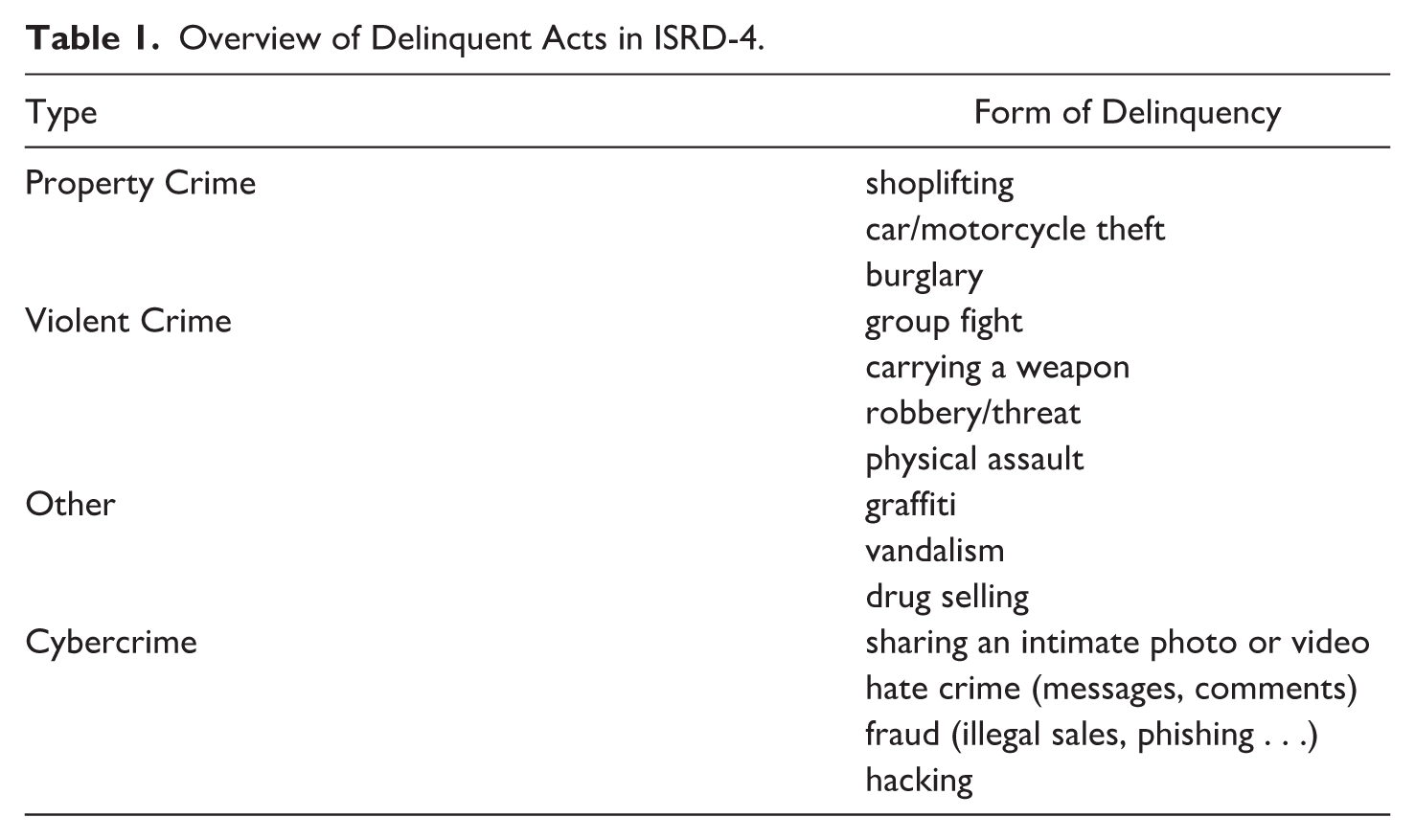
Based on the Global Risks Report (World Economic Forum [WEF], 2023) cybercrime poses one of the top 10 global risks, both in the short-term and long-term, and continues to evolve at an alarming rate. Moreover, many of the traditional types of crime, such as fraud, theft, or hate crime, may now be perpetrated online, which significantly expands the threat of cybercrime (European Commission, n.d.). In the context of juvenile delinquency studied in International Self-Report Delinquency Study (ISRD-4), cybercrime was represented namely by fraud, hacking, hate crime, and sharing of an intimate photo or video (Marshall et al., 2022). For most teenagers, the internet offers an escape from reality and a safe space to live a second—sometimes a more desirable—life (Presdee, 2000; Wall, 2007). Due to the formative nature of the adolescence phase, the boundlessness that the internet offers can result in identity experimenting and explorative self-presentation. Despite this being potentially a beneficial tool to promote adolescent development, it can also be a risk factor for transgression as it induces a certain level of identity disruption (Borca et al., 2015; Buriánek, 2008; Valkenburg & Peter, 2008).
Delinquency and Self-Control
Pratt and Cullen (2000) have already established self-control as “one of the strongest known correlates of crime” (p. 952). Conversely, high self-control serves as a protective factor and hence offers a potential target for interventions. For instance, higher levels of self-control in adolescents have been found to correlate with better academic achievements (Duckworth et al., 2019; Tangney et al., 2018), lower substance abuse (Podaná & Buriánek, 2013; Tangney et al., 2018), lower risky sexual behavior (Vazsonyi et al., 2006), less emotional and behavioral problems and more prosocial behavior (King & Gaerlan, 2013; Paschke et al., 2016), as well as greater overall well-being (Converse et al., 2018).
Gottfredson and Hirschi (1990) hypothesized within their General Theory of Crime (GTC), that there is a significant gender gap in self-control levels among adolescents, further supported by Turner and Piquero (2002). GTC argued that girls are in general more likely to be corrected by their parents in case of any misbehavior than boys, which is then expected to lead to an increased sense of self-control. Furthermore, Wong et al. (2010) found a stronger link between self-control and delinquency among boys, who may be more prone to seek risky and provocative situations. Similarly, Stults et al. (2021) found that boys are more affected by low levels of self-control and delinquent peers when it comes to violent and property crime, compared with girls.
Nevertheless, some of the recent studies suggest otherwise, showing no significant differences in the development of self-control between boys and girls (Jo & Armstrong, 2018; Thijs et al., 2015) and indicating that self-control explains delinquency in both sexes equally (Baek et al., 2018; Blackwell & Piquero, 2005). Thus, the debate over sex differences in self-control and its role in juvenile delinquency remains open.
Specifics Within Cybercrime
Research on the relationship between self-control and cybercrime has been growing in the past years. Several studies have shown that low self-control is a significant correlate of different types of cybercrime, such as hacking or cyberbullying (e.g., T. J. Holt et al., 2020; Maimon & Louderback, 2019). Furthermore, results from a study by Marcum and colleagues (2014) reveal that both girls and boys with low levels of self-control are equally more prone to engage in cyberbullying, that is, online hate crime, suggesting no differences in the influence of self-control between the two sexes.
Evidence from research also suggests significant interactions between self-control and other factors. For instance, T. J. Holt and colleagues (2020) identified that opportunity serves as a mediator in the relationship between self-control and juvenile hacking. Similarly, another study by K. Holt and colleagues (2021) found that both low self-control, as well as opportunity measures, correlate with engagement in sexting behaviors and sext dissemination among youth. In addition, they have also found that the relationship between self-control and sexting was mediated by opportunity factors. Another significant mediator that has been found in this relationship is the influence of delinquent peer groups (Marcum et al., 2014). Stalans and Donner (2018) have also pointed out that the relationship is further mediated by disrupted moral beliefs. Finally, we are familiar with attempts to link self-control directly with moral judgments (Wikström & Treiber, 2007).
Nonetheless, research examining the impact of low self-control on cybercrime among diverse juvenile populations remains limited as most of the studies were conducted on samples in the United States (e.g., Marcum et al., 2014) or Australia (T. J. Holt et al., 2020; K. Holt et al., 2021). This brings to light a significant gap in the literature, particularly concerning European contexts, as the adolescent population may exhibit different behavioral dynamics within cybercrime. Given the increasing global concern over online criminal activities among youth, this article aims to examine the role of self-control in both traditional and cyber forms of delinquency.
Method
This study utilized data from the fourth wave of the ISRD-4, a large-scale, standardized, internet-based self-report survey conducted across more than 50 countries between 2020 and 2023. For this study, only data collected in the Czech Republic were analyzed. Data collection was postponed to the first half of 2023 due to the difficulties of conducting research during the Covid pandemic and difficulties in finding financial resources. The ISRD-4 questionnaire was translated into Czech, Ukrainian, and Russian to ensure inclusivity and accuracy in data collection. The survey targeted adolescents attending selected grades of primary and secondary schools, with data collected anonymously through an online platform.
Participants and Sampling
The study initially comprised 2,126 Czech adolescents, of which 11 were excluded due to missing data on sex to ensure the integrity of comparative analyses between male and female participants. The final sample consisted of 2,115 individuals, including 997 boys (47%) and 1,118 girls (53%). Participants’ ages ranged from 12 to 21 years (M = 15.43, SD = 1.32), with the majority (91%) aged between 14 and 17.
The sample was drawn from two major Czech cities: Prague (n = 985, 47%) and Pilsen (n = 1,130, 53%). The sampling corresponds to the comparative strategy of the ISRD4 project, when another larger city is selected in addition to the capital: in the case of Pilsen, it was mainly a possibility of comparison with previously conducted research, while it is not a specific location different from previously studied national samples. Students were recruited from five school types, including primary schools (základní škola), multi-year grammar schools (víceleté gymnázium), 4-year grammar schools (čtyřleté gymnázium), vocational programs (učební obor), and “maturita” programs concluded with a school-leaving examination (maturitní obor). Participants were enrolled in one of four grade levels: 8th and 9th grades in primary schools (and equivalent grades in multiyear grammar schools), or the first and second year of high school. The distribution across these grades was approximately equal, with each grade comprising 24% to 27% of the sample. There were no additional inclusion criteria beyond attending one of the selected school types within the designated grades.
Participants were recruited using a random sampling method based on a list of schools and classes provided by the Czech Ministry of Education, Youth, and Sports. Schools in Prague and Pilsen were selected to maintain comparability with previous ISRD waves conducted in these cities. The target sample size was 1,800 participants and recruitment continued until this number was achieved, resulting in 102 participating classes. A total of 185 schools were contacted, with a final response rate of approximately 55%.
Upon confirmation, arrangements were made with class teachers for data collection, which then took place in school computer labs, supervised by trained examiners. Informed consent was obtained from all participants or their guardians in accordance with ethical guidelines. Students completed a standardized online questionnaire (via LimeSurvey) in approximately 30 to 45 min during ICT lessons. To ensure privacy, teachers left the classroom during data collection and students were instructed to work individually. Anonymity was maintained by assigning unique codes to each class.
Measures
An overview of the delinquent acts included in the ISRD-4 questionnaire is presented in Table 1. Traditional delinquency, defined as two or more offline offenses (property, violent, or other crimes, excluding cybercrime) in the past year, was assessed through a summative variable. A binary indicator was then computed: 1 for participants reporting two or more acts and 0 for those with fewer or none. Similarly, a binary variable for cybercrime was created based on the same cutoff point. An overview of traditional delinquency and cybercrime incidence by sex is presented in Table 2. The threshold of two acts was chosen to distinguish isolated incidents from repeated delinquent behavior. This approach aligns with prior research methodologies in the ISRD study and ensures a focus on sustained delinquent patterns.
Overview of Delinquent Acts in ISRD-4.
Traditional Delinquency and Cybercrime Incidence by Sex
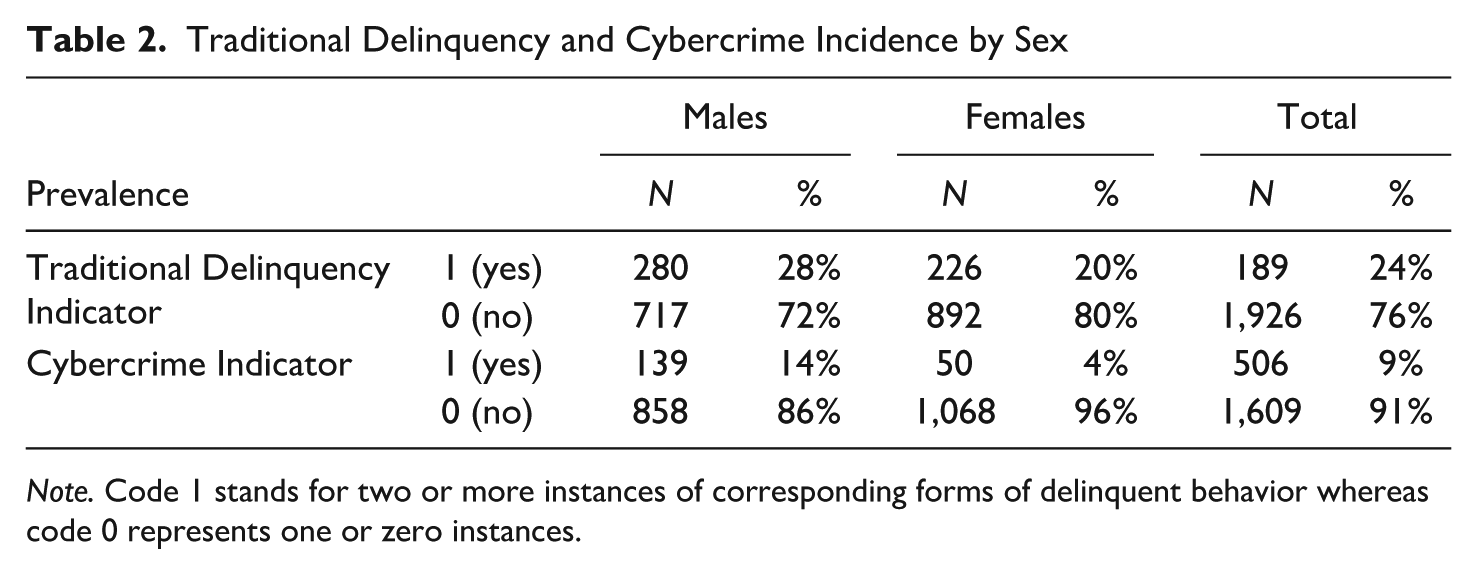
Note. Code 1 stands for two or more instances of corresponding forms of delinquent behavior whereas code 0 represents one or zero instances.
Self-control was measured within the ISRD-4 questionnaire using a modified version of Grasmick et al.’s (1993) scale. To limit the questionnaire’s overall length, the original scale was shortened to include only two of the six dimensions—impulsivity and risk-taking—each represented by three items. Participants rated six statements on a five-point Likert-type scale ranging from 1 (“strongly disagree”) to 5 (“strongly agree”). Example items include: “I act on the spur of the moment without stopping to think” and “Excitement and adventure are more important to me than security.” A complete list of the items used in the modified scale can be found in the ISRD-4 study protocol (Marshall et al., 2022). Item scores were coded so that higher values indicated greater self-control, and a composite mean score was used as the self-control index.
The modified self-control scale demonstrated acceptable reliability (α = .745). While impulsivity dimension had poor internal consistency (α = .543), its average inter-item correlations were within the acceptable range (.2–.5). Risk-taking demonstrated good reliability (α = .808).
Data Analysis
A factorial analysis of variance (ANOVA) was conducted to examine the main and interaction effects of sex and school type on adolescents’ self-control levels, following confirmation of relevant assumptions (normality, homogeneity of variances, and independence of errors). Statistical significance was evaluated at an alpha level of .05, with significant results indicating an effect of the examined variables.
To address the potential difference in the predictive power of self-control on cybercrime versus traditional delinquency, results from two logistic regression models were compared. Each model was first analyzed separately to determine whether self-control significantly predicts traditional delinquency and cybercrime. Significant odds ratios were used as the criterion for rejecting the null hypotheses in both models. It was hypothesized that self-control would be a significant predictor in both contexts. The analyses also included sex and school type as additional predictors to assess whether these variables enhance the explanatory power of the models.
As there is no suitable statistical test to directly compare two non-nested logistic regression models, differences in the predictive power of self-control between the models were interpreted and discussed in the Discussion section. All analyses in this article were conducted using IBM SPSS Statistics software, version 29.0.1.0 (2023).
Results
Primary Analysis: The Influence of Sex and School Type on Self-Control
The results are summarized in Table 3. There was no significant effect of sex on the levels of self-control, F(1, 2079) = .02, p = .887, ηp2 = .000. However, the effect of school type was found to be significant, F(4, 2079) = 8.458, p <.001 with ηp2 = .016 indicating a large effect. The interaction effect between sex and school type was not significant, F(4, 2079) = 1.57, p = .180, ηp2 = .003, and hence no follow-up analyses were performed.
Factorial ANOVA, Tests of Between-Subjects Effects.
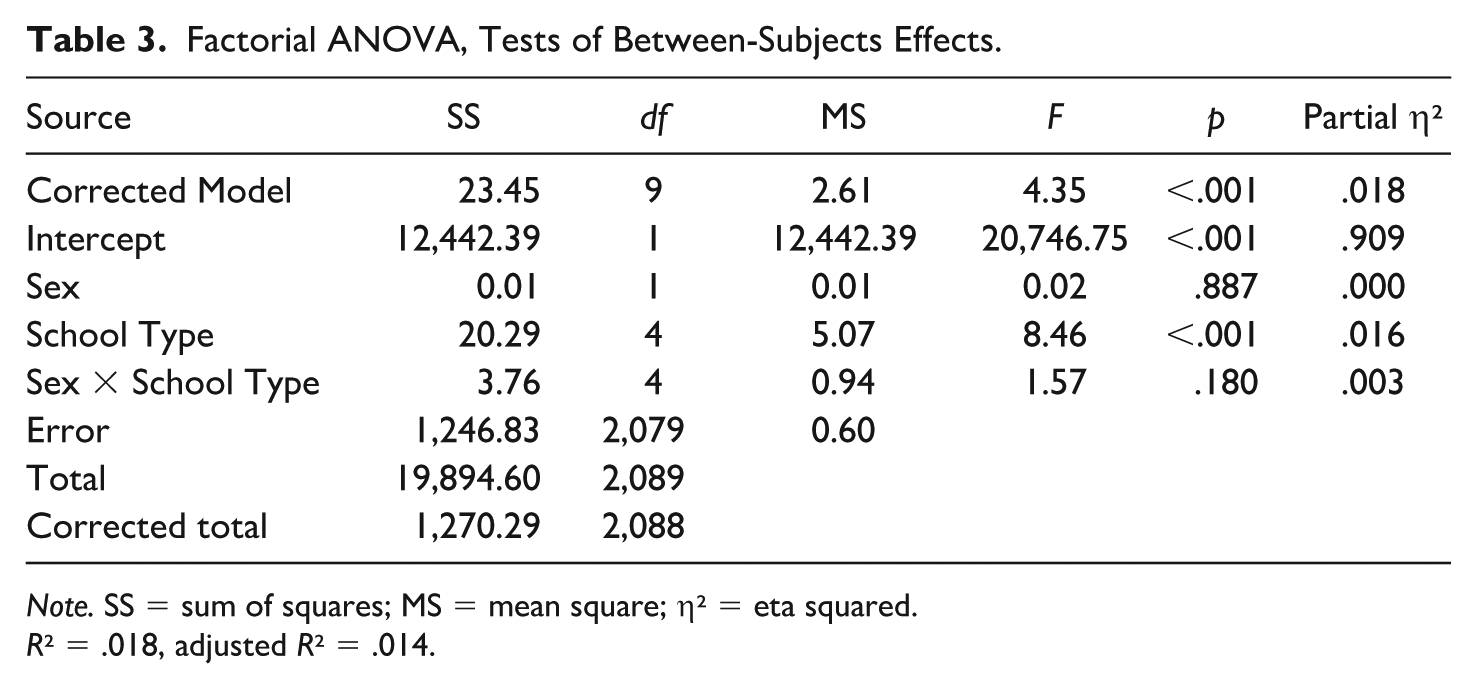
Note. SS = sum of squares; MS = mean square; η² = eta squared.
R² = .018, adjusted R² = .014.
Although the interaction effect was nonsignificant, Figure 1 suggests noteworthy trends. Girls in 4-year grammar schools displayed higher levels of self-control than those in vocational programs, where self-control was notably lower. These two school types also showed the greatest gender gap: boys in vocational programs had higher self-control levels than girls, whereas girls in 4-year grammar schools demonstrated higher self-control than boys. Overall, vocational students exhibited the lowest self-control levels, followed by those in “maturita” programs. In contrast, adolescents in multiyear grammar schools and primary schools (i.e., 8th and 9th graders) showed similarly high levels across both sexes.
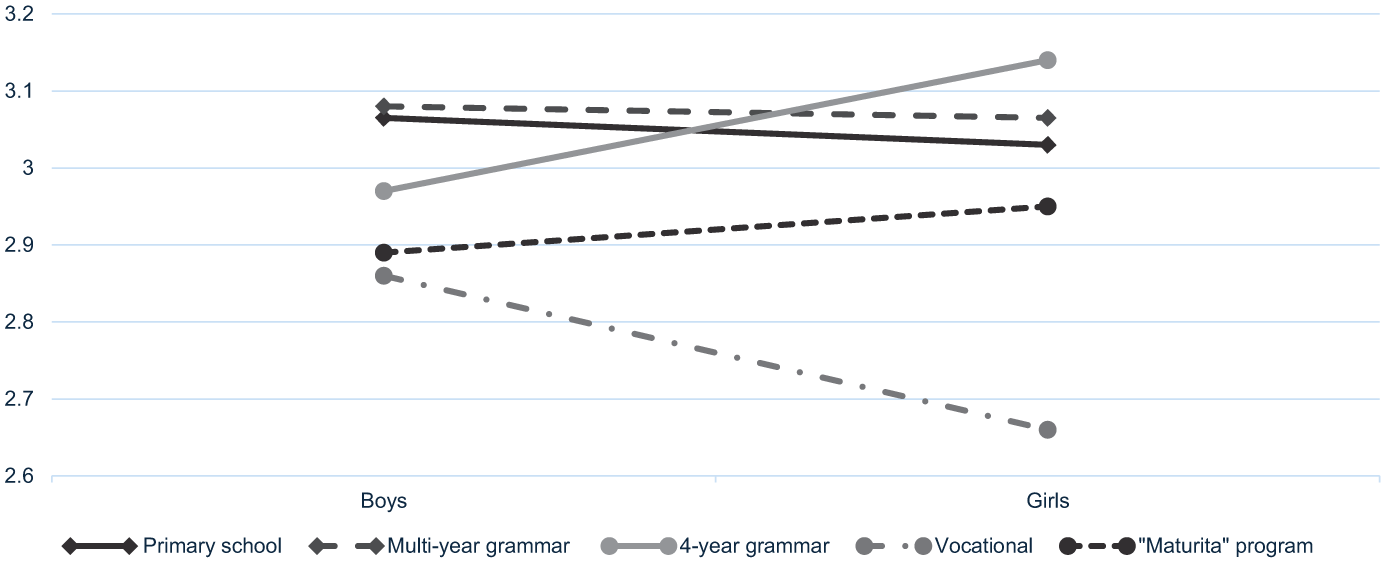
Estimated Marginal Means of Self-Control by Gender and School–Type.
The observed differences may also reflect the influence of age, as school type corresponds to different educational stages. Younger adolescents (8th and 9th graders) exhibited less variation in self-control across sex compared with older adolescents in high school, suggesting that developmental factors may play a role. Among girls, the transition to higher educational levels appears to amplify differentiation: those in academically oriented programs show a slight increase in self-control compared with boys, whereas those in vocational programs tend to lag behind. However, these differences should not be overstated, as they may also be influenced by the specific types of schools and programs included in the sample.
Self-Control as an Explanatory Factor in Delinquent Behavior
Logistic regression analysis revealed that self-control significantly predicted traditional delinquency (simple model), B = −0.80, p < .001, Exp(B) = 0.448, indicating that higher self-control reduces the odds of engaging in delinquency by 55.2%. The model explained 9.5% of the variance (Nagelkerke R² = .095). Adding sex and school type as predictors (extended model) improved model fit slightly, explaining 11.1% of the variance (Nagelkerke R² = .111). Sex was a significant predictor, B = −0.49, p < .001, Exp(B) = 0.610, with girls 39% less likely to engage in delinquency than boys, while school type was not significant (see Table 4). A likelihood ratio test (LRT) indicated that reduced model (including two predictors: self-control and sex) was the most parsimonious, explaining 10.9% of the variance (Nagelkerke R² = .109).
Logistic Regression Results for Traditional and Cyber (online) Delinquency (Comparison of Extended Models).
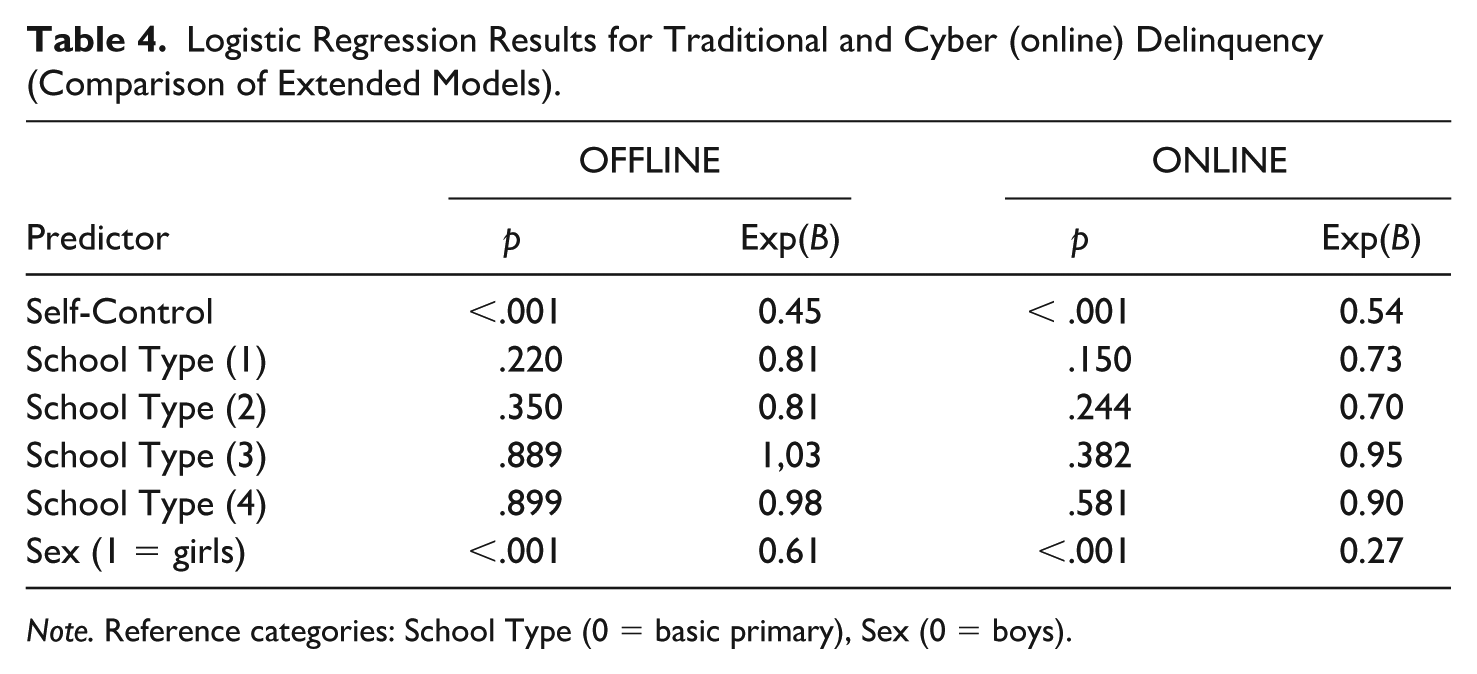
Note. Reference categories: School Type (0 = basic primary), Sex (0 = boys).
For cybercrime, self-control was also a significant predictor (simple model), B = −0.58, p < .001, Exp(B) = 0.559, with higher self-control reducing the odds of engagement by 44.1%. The model explained 3.6% of the variance (Nagelkerke R² = .036). Adding sex and school type (extended model, Table 4) improved the model, explaining 10.3% of the variance (Nagelkerke R² = .103). Sex emerged as a strong predictor, B = −1.30, p < .001, Exp(B) = 0.274, with females being 72.6% less likely to engage in cybercrime than males, while school type remained nonsignificant. The LRT indicated that reduced model (predictors: self-control and sex) was the most parsimonious, explaining 10% of the variance (Nagelkerke R² = .100).
Discussion
Key findings include (a) school type significantly influenced self-control, whereas sex did not; (b) self-control and sex emerged as significant predictors of both traditional delinquency and cybercrime; and (c) the predictive power of self-control differed between online and offline offenses. Thus, while educational paths are reflected in self-control levels, they do not directly affect delinquency: self-control remains independent predictor of delinquency. It remains unclear, however, to what extent self-control may influence or mediate the choice of educational trajectory.
Influence of School Type and Sex on Self-Control
The significant effect of school type on self-control aligns with prior research suggesting that educational environments contribute to the shaping of self-control in youngsters (Beaver et al., 2008; Li et al., 2020). Grammar schools, characterized by high academic demands, appeared to foster self-control, while vocational programs, usually being less demanding, were associated with lower self-control. However, this relationship may be bidirectional: students with lower self-control may self-select into less demanding schools. Longitudinal studies could clarify this ambiguity.
Contrary to the GTC by Gottfredson and Hirschi (1990), which posits that there is a notable gender gap in self-control among adolescents, our results revealed no significant effect of sex on self-control levels. This aligns with some of the recent studies (e.g., Jo & Armstrong, 2018; Moravcová et al., 2015; Thijs et al., 2015) suggesting diminishing gender differences in self-control development. Even though the main effect of sex as well as the interaction effect was found to be nonsignificant, the graph illustrating the interaction revealed some noteworthy trends offering insights into how different educational environments may potentially relate to self-control levels among boys and girls (refer to Figure 1). Based on this graph, self-control appears to be affected differently between boys and girls by some of the school types. For instance, girls in 4-year grammar schools exhibited higher self-control compared to boys, while girls in vocational programs showed lower self-control than their male peers. This indicates that the structure and demands of different school types might contribute to shaping self-control in nuanced ways for each of the two sexes. Especially since the levels of self-control were found to be almost equal in students attending the last 2 years of primary school, or a corresponding level at a multiyear grammar school. This suggests that differences between boys and girls are more pronounced during high school years, that is, in older children, which supports multiple recent studies highlighting the malleability of self-control during adolescence (e.g., Forrest et al., 2019; Jo & Armstrong, 2018; Zondervan-Zwijnenburg et al., 2020).
However, while these findings are important to consider, they have not been found to be significant and hence this interpretation is only speculative. It is important to note that the proportion of boys and girls was not equal across all school types in our sample. This imbalance could potentially bias the results, making it harder to draw definitive conclusions about the interaction between school type and gender. Future research should aim to examine these dynamics with more balanced sex and school type distributions to ensure generalizable findings. In addition, longitudinal studies could provide deeper insights into how these educational contexts influence self-control development in boys and girls over time.
Predictive Value of Self-Control on Traditional and Online Delinquency
Logistic regression confirmed self-control as a significant predictor of traditional delinquency, explaining 9.5% of the variance. Adding sex as a predictor improved the model slightly, but school type did not significantly contribute to the model, which suggests its influence may be indirect or mediated by other factors. Therefore, future research should explore the complexity and focus on including other potential predictors, such as family dynamics, socioeconomic status, psychological disorders, or peer influence. However, it may also be reflected in the choice of educational path, thereby weakening the direct effect of school type on delinquency in our models. The influence of these factors may manifest at the level of self-control. Preliminary analyses of Czech data have indicated, for instance, that children from economically disadvantaged backgrounds or from families with a surrogate partner tend to exhibit lower self-control.
The logistic regression analyses revealed that self-control predicts engagement in both offline and online offenses. While school type was not a significant factor, sex emerged as a significant predictor in both models. However, some notable differences were observed.
Self-control exhibited a stronger predictive power in terms of traditional delinquency, indicating a 55.2% decrease in the odds of engaging in traditional delinquency for each unit increase in self-control, compared with cybercrime, where the odds ratio indicated a 44.1% decrease in the odds of engaging in cybercrime for each unit increase in self-control.
In addition, a noteworthy difference in the effect of sex was found. In terms of traditional delinquency, the analysis revealed that girls are 39% less likely to engage in traditional delinquency than boys. The amount of explained variability changed only slightly by extending the model with sex. On the other hand, the results of the extended cybercrime model indicated a robust difference between boys and girls in cybercrime engagement, with girls being 72.6% less likely to engage in online offenses than boys. Moreover, the explained variability increased from 3.6% to 10.9%, further supporting the fact that sex plays a significant role in predicting cybercrime. The current data suggest that girls’ involvement in the emerging domain of cybercrime is progressing at a somewhat slower pace.
This finding is in contrast with a study by Marcum and colleagues (2014), who suggested that both sexes are equally likely to engage in cyberbullying. However, our study encompassed a broader range of cybercrimes beyond cyberbullying. Thus, this broader scope may explain the observed gender disparity, as other previous research indicates that boys are generally more involved in certain online offenses, such as hacking (Hutchings & Chua, 2016). These findings highlight the potential for substantial gender differences across various types of cybercriminal behavior as boys may have not only greater technological access but also broader motivations (Kivivuori et al., 2016). Future research should focus on exploring these differences in more detail by comparing various types of cybercrime to better understand the underlying gender dynamics. Although school type did not emerge as a significant predictor of delinquency, the possible influence of school disorganization deserves further consideration, along with other factors, such as family dynamics and socioeconomic status. The interplay of these factors with self-control should also be examined.
Conclusion
While our findings do not overturn the well-established fact that self-control is a key predictor of delinquency (e.g., Marshall & Enzmann, 2012), they reveal that its impact is relatively limited in the area of cybercrime (less than 4% of the explained variance). This suggests the need to expand explanatory models to include additional factors, as some cyber offenders may even have relatively high levels of self-control. It remains an open debate whether the relatively limited role of self-control in predicting delinquency is specific to the Czech context. In the case of cybercrime, however, there is clearly little reason to overstate the importance of self-control.
Footnotes
Declaration of Conflicting Interests
The authors declared no potential conflicts of interest with respect to the research, authorship, and/or publication of this article.
Funding
The authors received no financial support for the research, authorship, and/or publication of this article.
