




Abstract
Joyriding is a dangerous, illegal activity primarily involving young males from disadvantaged backgrounds. In Australia, First Nations youth are disproportionately represented in unlawful use of motor vehicle offenses. This study evaluates the “Deterring Drivers” program, which aims to reduce car theft and joyriding through group-based education and recreational activities. Data from participant observation and interviews highlight the program’s effectiveness in fostering social connections within a culturally safe environment, enhancing social cohesion, and promoting empathy for crime victims. In addition, the study underscores the importance of providing legal and constructive avenues for young people’s interest in cars, potentially steering them away from crime by offering training and employment opportunities.
Introduction
Joyriding poses serious risks to both participants and the broader community (Dawes, 2002; Kellett & Gross, 2006), including property damage, serious injury, and death (Rush et al., 2006). In Australia, motor vehicle theft is increasing, with 60,417 victims reported in 2023, an increase of 10% from the previous year (Australian Bureau of Statistics, 2024). Young males are primarily responsible, with legal actions against such individuals increasing by 179% between 2019 and 2023 (Cook, 2023). According to Cook (2023), these thefts are likely to have been opportunistic and for joyriding and transportation purposes. Similar concerns about car theft and joyriding exist in North America (Anderson & Linden, 2014; Drozda, 2006) and the United Kingdom (Kellett & Gross, 2006; Rush et al., 2006).
Few intervention programs in Australia target joyriding. The Synergy Automotive Repairs Program, which leveraged young people’s interest in cars, showed positive outcomes, highlighting the benefits of mentoring, prosocial role models, and lawful car-related activities (Thielking & Pfeifer, 2016). Similarly, the U-Turn diversionary program offered automotive training to youth involved or at risk of involvement in motor vehicle theft, with an evaluation showing improvements in behavior, skills, self-esteem, and community awareness (Tasmania Institute of Law Enforcement Studies, 2005).
Despite these promising results, there remains a need for innovative, criminologically grounded interventions specifically tailored to young people’s involvement in joyriding. Moreover, given the overrepresentation of Australian First Nations youth in joyriding (Dawes, 2002; Willis & Facchini, 2018), there is a pressing need for programs designed specifically for that demographic. The authors were unable to find any previous evaluations of similar programs specifically designed for First Nations youth.
This article canvases the literature regarding the characteristics and motivations of young joyriders and attempts to ignite desistance among youths who offend. We then describe the “Deterring Drivers” program, a pilot intervention program designed for Australian First Nations youth who engage or are at risk of engaging in joyriding. Drawing from interview and participant observation data, we provide a detailed process evaluation of that program.
Characteristics and Motivations of Joyriders
Joyriding is a heavily gendered activity that almost exclusively involves adolescent males (Anderson & Linden, 2014; Cook, 2023; Dhami, 2008). Joyriders often come from single-parent families, have lower socio-economic backgrounds, experience unemployment, and are disengaged from education (Anderson & Linden, 2014; Dawes, 2002). They frequently engage in other criminal behaviors, use alcohol and/or drugs, and have friends or family who are involved in criminal activities (Anderson & Linden, 2014).
Joyriding is typically a group activity (Anderson & Linden, 2014), with peer groups significantly influencing both the initiation and continuation of young joyriders’ involvement (Dawes, 2002). Studies suggest that car theft and joyriding give young people, particularly those from disadvantaged backgrounds, a sense of control and an opportunity to showcase their skills to peers (Anderson & Linden, 2014). Stealing a car and performing dangerous stunts can elevate a young person’s status within their social group (Anderson & Linden, 2014; Dodd & Morgan, 2023; Kellett & Gross, 2006) and provide excitement and enhanced self-esteem (Light et al., 1993).
Stealing cars and joyriding is recognized as a type of “edgework,” a concept that refers to the sensations and emotions generated by the high-risk nature of criminal activities (Lyng, 2004). Car theft and joyriding may offer young people the opportunity to engage in behavior that to outsiders appears dangerous or foolish, but to young joyriders is exciting and enjoyable and with risks they feel able to control (Drozda, 2006). When police pursue a stolen vehicle, this may intensify the positive sensations experienced by joyriders and serve as a reminder of the activity’s high-stakes nature (Halsey, 2008). As Anderson and Linden (2014) recognize, even if young people have other opportunities for edgework, it may be difficult to compete with the thrills gained from driving a stolen vehicle.
For minority youth, joyriding may also operate as a form of resistance to experiences of social and economic marginalization (Dawes, 2002; Morgan & Dodd, 2024). Australian First Nations youth may incite police into high-speed car chases using stolen vehicles to momentarily experience a sense of empowerment within a societal and political structure that predominantly privileges the white majority (Atkinson, 1993; Morgan & Dodd, 2024). Research from Ireland (Ó Cadhla, 2001; Rush et al., 2006) and Canada (Anderson & Linden, 2014) also shows how disenfranchised youth may use these activities to provoke police and resist police intervention.
Promoting Desistance From Crime Among Youth
McAra and McVie (2007) argue that greater involvement with the criminal justice system reduces the chances of desistance, highlighting the importance of maximizing diversion. Similarly, Barry (2010) argues that desistence and diversion from youth offending are driven by greater access to legitimate opportunities, whereas persistent offending stems from a lack of alternative lifestyles. Barry’s (2010) research found that young people who engage in crime share the same conventional aspirations as other law-abiding adolescents—stable employment, housing, and family—and acquiring these responsibilities was linked to reduced offending (Barry, 2010).
However, disadvantaged youth often lack the power to invest in conventional responsibilities that result in mainstream success, recognition, and integration and are more likely to be stigmatized by the justice system and wider social policies (Barry, 2016). In garnering a sense of self-worth and social identity, youths are more likely to associate with other like-minded peers who are equally disadvantaged and stigmatized, thus leading to co-produced and peer-assisted offending (Barry, 2016). As such, researchers have highlighted the importance of increasing prosocial bonds for young people in reshaping identity and igniting the process of desistence, whereby friends and family provide access to prosocial institutional opportunities like employment, training, and education (McMahon & Jump, 2018). Given disadvantaged youth often lack access to such opportunities and networks, professional or social group intervention programs involving key stakeholders may provide an avenue for prosocial opportunity, social bonding, and co-desistence (Halsey & Mizzi, 2023).
Peer Mentoring
Peer mentorship promotes positive socialization through one-to-one, non-judgmental relationships, often between an adult and a young person, to provide emotional and practical support to encourage desistence (Tolan et al., 2008). Mentors can assist mentees in accessing employment, education, leisure activities, and challenging anti-social beliefs (Creaney, 2020). Tolan et al.’s (2008) meta-analytic review of youth mentor intervention programs found substantial evidence for their effectiveness, particularly in reducing youth offending when mentees receive emotional support from prosocial mentors.
Role modeling is central to mentorship, with mentors viewed positively by mentees and their peers rather than as authority figures. Peer mentors often possess experiential knowledge, such as prior offending or experiences of social disadvantage, that can provide a source of hope and inspiration for mentees to develop a new, prosocial identity (Creaney, 2020). Mentors can serve as role models to emulate prosocial relationships and facilitate positive transformation over time (Brown & Ross, 2010). Given many justice-involved youth have experienced fractured relationships at home and in the community that can lead to feelings of hopelessness, depletion, and de-motivation, the influence of positive role models can provide an invaluable refuge that engenders personal loyalty and accountability (Creaney, 2020).
The “Deterring Drivers” Program
Funded by an Australian state government, the “Deterring Drivers” program is a pilot initiative aimed at addressing car theft and joyriding among First Nations youth. Developed and delivered by a multidisciplinary research team with expertise in criminology, policing, road safety, psychology, and medicine/health, the 6-week program combines weekly education sessions by expert speakers with various recreational activities. Recognizing desistance as a relational process, all activities were conducted in a group setting (Halsey & Mizzi, 2023; Weaver, 2015).
Building on scholarship that emphasizes the role of external relational figures in sparking and sustaining desistance (Halsey & Mizzi, 2023), the program sessions included participation from research team members, professional guest speakers, volunteers, and support persons alongside the young participants. Guest speakers included a medical doctor, psychologist, crime victim, and police officers.
Research suggests that car theft and joyriding are often impulsive crimes (Anderson & Linden, 2014) where participants give little thought to the physical dangers or impact on other community members (Dawes, 2002). Studies also show that young people may engage in joyriding alongside alcohol or illicit substance use (Kellett & Gross, 2006), yet they often overlook the dangers of driving under the influence (Dawes, 2002). Thus, as part of the education sessions, a medical doctor highlights the potential consequences of dangerous driving, particularly when combined with drugs and/or alcohol.
Young people may also use neutralization techniques to rationalize their involvement and diminish their responsibility for stealing cars, including by shifting blame onto victims and contrasting joyriding with more “serious” behaviors (McDonagh et al., 2002). Dawes (2002) reported that young joyriders rarely think about the owners of the cars they stole or feel remorseful. Therefore, the education sessions include empathy awareness, with a crime victim sharing their experience with participants. That session is underpinned by elements of restorative justice and is intended to create a non-adversarial dialogue to promote accountability (Bergseth & Bouffard, 2013). It also draws from research demonstrating how empathy for crime victims can significantly reduce recidivism rates among youth (Narvey et al., 2021).
To further the impact of these talks, a First Nations psychologist with expertise working with young people addresses participants with empowering messages about being a role model to others in their family and community. Because joyriders often have negative perceptions of police and may use joyriding as a means of provoking and defying police (Ó Cadhla, 2001), police officers also provide an expert talk. This session aims to encourage more favorable perceptions of the police by providing them with an opportunity to interact with young people positively.
The program’s second component involves recreational bonding experiences such as a high-ropes course, golf, and participation in panel beating workshops. Panel beating involves repairing damaged car panels and other bodywork using various tools and techniques, such as welding, filling, and sanding. This process, which is sometimes referred to as auto body or collision repair, is often required for vehicles that have been stolen and joyridden, resulting in dents, scratches, and other paint damage. The panel beating workshops are of particular importance, since young joyriders often have a specific interest in car-related activities, use cars as an identity marker, and have car-related career aspirations (Light et al., 1993). As such, Rush et al. (2006) suggest that desistance from joyriding may be achieved when young people are provided with legitimate car-related opportunities. Such opportunities are particularly important for disadvantaged youth, who may have fewer opportunities to engage in exciting, but lawful, activities (Anderson & Linden, 2014). These activities were designed, therefore, to provide a safe and legal outlet for participants’ interest in cars, while fostering a sense of unity through bonding activities that counteract social isolation or exclusion (Dawes, 2002; Dhami, 2008).
To foster social inclusion, participants gathered at a designated space at the start of each program day. Halsey and Mizzi (2023) highlight the importance of physical spaces in supporting desistance by enabling new identities and relationships to be formed. A religious charitable organization provided facilities, including exclusive use of a café, where participants, researchers, and other stakeholders could meet, bond, share lunch, and engage with the guest speakers.
Because the program was designed for First Nations youth, careful consideration was given to cultural sensitivity and appropriateness. Researchers recognize the importance of providing culturally sensitive programs that resonate with the lived social and cultural experiences of the intended participants (Dawes, 2002; Pooley, 2020). The program incorporated several culturally sensitive and appropriate elements. For example, the program began with a traditional smoking ceremony performed by local traditional owners. Further, because First Nations youth are more likely to perceive a program or speaker as credible when they share a similar cultural background (Fazal, 2014), the program engaged, where possible, First Nations persons as expert speakers. Other First Nations people regularly attended the program sessions and encouraged the use of “yarning,” a culturally safe style of communication and conversation used to share stories and information (Bessarab & Ng’Andu, 2010).
Objectives
The objective of this process evaluation is to assess the effectiveness of the “Deterring Drivers” program in providing a safe and inclusive environment where young people can come together to combat feelings of social isolation or exclusion. It also examines the efficacy of the program in enhancing empathy among participants for crime victims and delivering prosocial messages that discourage car theft and joyriding. Finally, it examines the effectiveness of channeling young people’s interest in cars in a lawful way to build self-esteem and promote desistance.
Method
Program Participants
This process evaluation draws from data collected from 17 interviews and participant observation undertaken during the pilot “Deterring Drivers” program in March and April 2023 in Townsville, Queensland. Townsville, a regional city in North Queensland, faces high rates of motor vehicle theft and joyriding. Data from the National Motor Vehicle Theft Reduction Council (2021) showed that in 2020/2021, 815 vehicles were stolen in Townsville for short-term use, including by opportunistic thieves for use in other crimes, joyriding, or for transport. With a theft rate of 4.14 per 1,000 people, Townsville ranks fourth among Australian local government areas for motor vehicle theft (National Motor Vehicle Theft Reduction Council, 2021).
The research team collaborated with local Youth Justice Service Centres, community support services, and educational pathways to recruit participants to the pilot program. Recruitment was focused on young people aged 13 to 17, who were identified by recruiting partners as engaging in car theft and joyriding or at risk of doing so. Both males and females were invited to participate, with a focus on First Nations youth. Participation in the program was entirely voluntary.
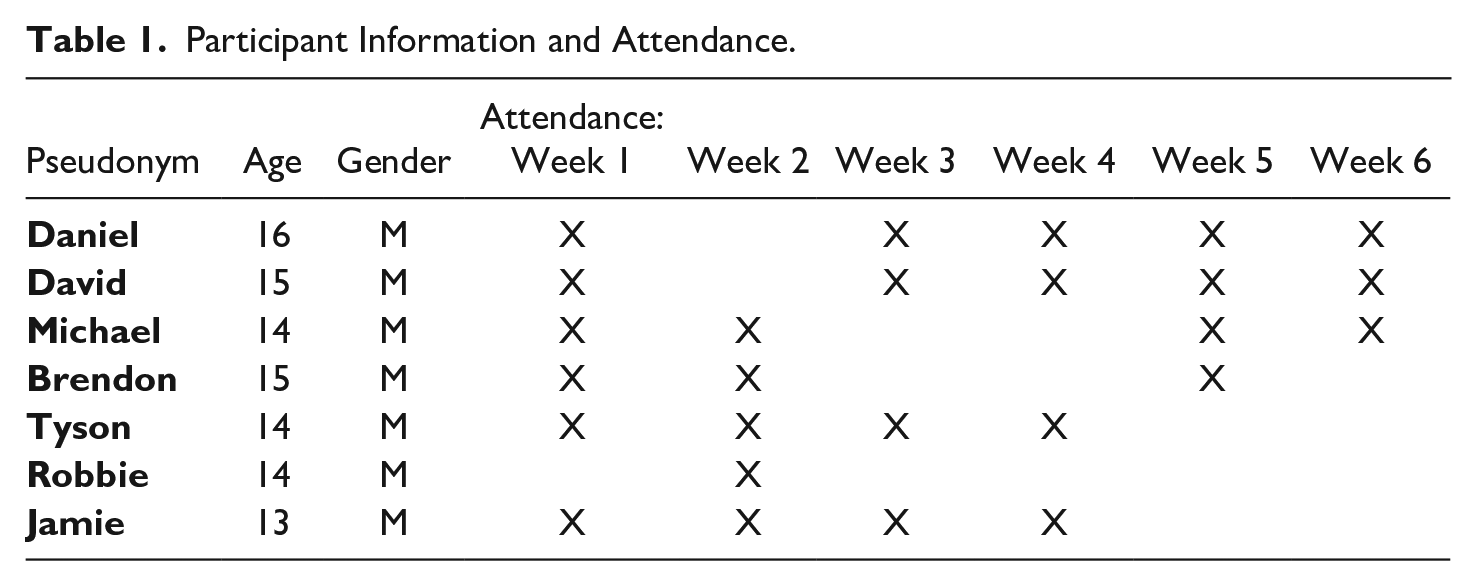
There were seven young participants in the pilot program. The sample size was purposively kept low to allow for a more “intimate” environment for the participants to bond and get to know one another and the program staff. All participants were male and aged between 13 and 16 years (for information about participants and their attendance at the program, see Table 1). An inclusive approach to attendance was adopted, whereby young people were encouraged to attend the program even if they were unable to attend all program sessions. Most of the participants said that they had previously engaged in car theft and/or joyriding, either as the driver and/or passenger. With one exception—a young person who admitted to ongoing involvement in car theft and joyriding—most participants stated they were not currently engaged in these activities. Some participants knew each other before the program, often due to referrals from the same provider, but there was no indication that any had co-offended.
Participant Information and Attendance.
Data Collection and Analysis
To undertake the process evaluation, we employed two primary data collection methods. First, we engaged participants in in-depth semi-structured interviews at the beginning of the program and, where possible, at its completion. Semi-structured interviews provide a broad structure for data collection that allows for comparison across cases, but still allows research participants to describe, in their own words, their perceptions and experiences of the program (Leavy, 2014). We conducted 11 interviews with seven participants, seven of which took place at the program’s outset and four as exit interviews. We also interviewed six stakeholders, including caseworkers, volunteers, and other individuals who had observed the program and interacted with program participants. All interviews were audio-recorded with the participants’ consent and transcribed. No incentives or other rewards were provided to interview participants.
The interview data was supplemented by participant observation, a qualitative method that is unique in its ability to study people, culture, and processes within group settings (Jorgensen, 1989). The researcher participates in the daily lives of the participants being studied by observing, listening, and questioning them in their natural setting (Takyi, 2015). With participants’ consent, a researcher observed all program sessions, recording detailed handwritten field notes that captured observational data, including formal and informal conversations, interview notes, activity records, and diary-style entries. To minimize intrusiveness, we adopted an “observer-as-participant” role whereby the researcher observed more and participated less (Baker, 2006). Initial notes were taken during the program activities, with additional details added by the researcher shortly afterward, either late that evening or the following day. These notes were later transcribed and analyzed alongside the interview transcripts.
We conducted a qualitative thematic analysis of all data using NVivo software. Thematic analysis is a process of organizing qualitative data into explicit codes or themes (Boyatzis, 1998) which help to describe the phenomenon under study (Fereday & Muir-Cochrane, 2006). Themes are identified through a “careful reading and re-reading of the data” (Rice & Ezzy, 1999, p. 258) and become the categories for analysis (Fereday & Muir-Cochrane, 2006). Identified themes included participants’ views of the program, their involvement with joyriding, and their perspective on why young people may joyride. Two research team members cross-checked the themes to confirm consensus.
In the findings below, we draw from both the interview and participant observation data. Where participant quotes have been included, all identifiers have been removed or modified to protect participants’ anonymity. Participants’ names have been replaced with pseudonyms. A numbered identification system has been adopted to refer to stakeholders who were interviewed for this research (e.g., S1). In accordance with Australian Catholic University’s Human Research Ethics Committee approval (2022-2756HI), participation in the interviews and observations was entirely voluntary.
Findings
The following findings highlight five key themes aligned with the project’s core aims and objectives: cultural safety, social cohesion, role models, empathy, and engagement.
Providing a Culturally Safe and Inclusive Environment
Participants and stakeholders highlighted the safe environment of the program. In exit interviews, Daniel described the atmosphere of the program as “very positive. It’s really healthy, really relaxed and calming,” while Michael noted “I pretty much enjoyed it all. I kicked back the whole way through.” David reflected on finding a “second family” and looking forward to “seeing smiles, [and] happy faces.” Stakeholder 3 observed that having a safe space that valued the young people’s cultural backgrounds fostered a sense of belonging and connection: But what I did notice was that the kids, from start to finish . . . there was more confidence within them to actually talk. But also, just the way they were interacting with [program staff]. I also observed how they would come in and talk and shake hands with the guest speakers and all that sort of stuff as well. I think what we’ve got is that the kids have found confidence within themselves, a sense of belonging. When I talked about identity, they belong to the group. So, they knew that they could come in and it was a safe space for them.
This environment encouraged cultural expressions, with some participants referring to program volunteers and researchers as “Aunty” or “Uncle,” terms of respect usually reserved for Elders held in high esteem by their community (Deadly Story, n.d.). Initially directed at First Nations research team members or volunteers, this respect later extended to non-Indigenous team members. For example, on the program’s last day, a participant addressed a non-Indigenous researcher as “Uncle”: “Michael has perked up and thanks me and calls me ‘Uncle’” (Field notes). This suggests that the efforts to provide a culturally safe and inclusive environment translated into respect from program participants. Stakeholder 3 explained the significance of this cultural sign of respect, saying “It’s the recognition. So, in your own right, now you’ve become an Uncle to that person.”
Enhancing Social Cohesion
The program aimed to address social isolation among participants, many of whom did not attend school regularly, were unemployed, and/or experienced family or relationship issues. It focused on harnessing social inclusiveness, acceptance, recreation, and friendship-building, with findings suggesting it was largely successful.
Group cohesion was encouraged through shared lunches. The program site included a café space with a commercial kitchen where the café’s volunteers, program staff, and participants prepared and ate meals together. Sharing a meal in an informal setting helped participants feel at ease and foster connections. As Stakeholder 4 noted, “Having lunch together, I think helped a little to break down the walls a bit, and all that stuff.” It also provided an opportunity for the young people to get to know program staff and volunteers: We saw that with Daniel. You could tell by the end [of the program], that he wanted to be around us, and wanted to spend time with us. He didn’t really care much for cooking but would help us to cook things. (S4)
These meals also provided some salvation for the young people who were living “rough” or had no food at home: “Michael expressed to us that he was very hungry and had not eaten for two days. He also said he had not slept for two days . . . Michael puts excess food in a container to take home” (field notes). When asked what he enjoyed most about the program in his exit interview, Michael confirmed, “Mostly the lunches. The lunches were really good.”
Observations of the participants also yielded several indicators of successful social cohesion and comfort with the program and its staff. Visual displays of engagement, satisfaction, and mood were recorded across the 6-week program. Field notes from Week 2 noted, “[We] have noticed a change in Brendon’s attitude . . . he is different from the kid we saw last week, with his cap down, almost covering his eyes. This is not the case now. He is opening up to us.” Stakeholders familiar with participants before the program echoed this sentiment. Stakeholder 1 shared, . . . what you put together in terms of what you’re offering in each session, is an unreal opportunity for the young people. I think just the way you designed it, all coming together in a safe space, eating together, feeling that warmth of this atmosphere with the [volunteer organisation] community. I feel like that sets them up for success because they are coming somewhere familiar. (S1)
On the program’s final day, David expressed his gratitude for the program and how it helped him to make friends and enhanced his mood. He said, “Coming here with friendly people makes me feel good. It makes me feel motivated.” Daniel also had positive reflections about his experience, saying “More young kids should be coming to programs like this because it would help them a lot instead of them stealing cars and doing crimes and all that. It would help them a lot.”
The Importance of Being a Role Model
The program also emphasized the importance of becoming a positive role model. Research suggests that young people who participate in auto-related crime often lack close relationships with prosocial friends or family (Thielking & Pfeifer, 2016). However, envisioning themselves as role models can serve as a form of social control to promote desistance (Abrams & Aguilar, 2005; Carlsson, 2013).
Guest speakers emphasized the importance of role modeling, defining it as inspiring and influencing others to make positive decisions through leadership and support. For example, our field notes recorded the following interaction between the psychologist guest speaker and participants: Guest speaker: “What are some things that we can do for others?” Daniel answered readily: “Offering help.” Daniel then added, spontaneously: “Being here, cleaning” (he meant cleaning after lunch, because he had helped with this). [The guest speaker] emphasised the fact that, when someone does something good, then it motivates others to follow the example, and that this is known as a “ripple effect.” Guest speaker: “Being here at the program makes you a role model.”
These sessions often focused on making better choices through emotion management. The guest speakers articulated that emotional literacy and being mindful of emotions are integral to becoming a positive role model. For example, a former professional sportsperson drew in his talk on finding ways to help with emotion regulation: [The guest speaker] talks about mindfulness: “The ability to be calm, relaxed, and present. Mindfulness practice is about managing destructive thoughts; they can lead to destructive behavior.” (Field notes)
While not always explicitly about joyriding, guest speakers encouraged participants to reflect on the consequences of making poor choices or acting impulsively. The dangers of driving under the influence of drugs or alcohol emerged as a key theme. The medical professional guest speaker emphasized this issue by drawing on his firsthand experiences of treating car crash victims in the Emergency Department: [The guest speaker] says that he often sees people in the Emergency Department who end up with injuries or trauma—whether by misadventure or drugs and alcohol. . . . [he] explains that people don’t always make good decisions when they are drinking. (Field notes)
Interviews showed that some of the participants valued the idea of being a positive role model and influencing others to make better choices. David, for example, said, It’s what built me up. You know, mister? I love people talking to me. Like I just want to learn and, yes. Learn knowledge. You know what I mean? . . . Be a role model. Be a superstar. You know, mister? Yes, being gold.
For Daniel, the focus was on self-improvement and respect, a goal he recognized he was unlikely to achieve if he continued with joyriding: “If I had a job, then that’s something for me to look up to as well. I can be my own role model. If I keep doing [joyriding], then I won’t be my own role model.”
Increasing Empathy for Others
A key aim of the program was to enhance empathy among participants for crime victims and the wider community. Guest speaker talks and practical activities were designed to help participants understand the perspectives of others, particularly those of car theft victims. In line with restorative justice conferencing principles, talks were delivered in a round table format to encourage equal participation.
As joyriders often break into houses to steal car keys, a First Nations Elder whose house was recently burgled was invited to share their experience. In the field notes, we recorded the guest speaker asking the participants: “How would you feel if you had your home broken in?” Brendon says: “I would be mad” . . . Michael says that he too would be mad. [The guest speaker] reveals to us that they had their house broken into a few weeks ago. They explain that this was very hard because their partner had recently passed away. They said they experienced a lot of fear. They found the experience traumatic, and they feel worried now every day. As a person who is well known in the community, it hurt them even more because they have done their best to help kids.
Other guest speakers discussed the risks associated with joyriding by engaging with empathy. The police guest speakers, for example, described the devastating impact of being first responders to car accidents involving young people, including those with multiple fatalities.
Key stakeholders who knew the participants before the program observed how the participants engaged actively in these talks and showed the ability to take the perspective of others. They praised the interactive, conversational approach that was delivered in a circle setting. Stakeholders 5 and 6 stated in their interviews: . . . To see how the education times were in some ways very interactive, less of a lecture style, but more so in round groups. Everyone was in kind of like that common space and common ground. (S5) . . . Seeing some of the young guys start thinking through some of these things, and also having casual conversations about it as well, they seemed to pick up some of the things that were discussed during that educational time. (S6)
The participant interviews also demonstrated how the guest speakers had influenced their way of thinking about empathy and understanding different perspectives. For example, when asked what he had learned from the program, Michael referred to the message given by one of the guest speakers: “When [the guest speaker] talked about when you see things from a different point of view, like you step back out of the box, that really helped.” He also shared advice for future program participants, saying “. . . try to see things in a different perspective than you already do. Try to think about people around you.” Furthermore, when discussing the worst aspects of stealing cars, Daniel expressed concern for victims, such as an elderly person or parents of a newborn baby who may have difficulty getting to the hospital if their car had been stolen.
The panel beating workshops also allowed participants to understand the detrimental impacts of joyriding. The workshop manager provided participants with a tour of the site, showing the damage to stolen cars awaiting repair. This allowed the participants to understand firsthand the physical and financial costs of joyriding. The manager also discussed the wider effects on victims, such as the inconvenience of a stolen car, an issue worsened by a shortage of secondhand vehicles and the cost of alternative transportation. These conversations were framed compassionately, not in a blameful tone, to help participants understand the consequences of joyriding behaviors.
Engaging Young People in Recreational and Car-Related Activities
The final theme relates to how engaging the program was for the participants. A fundamental aim of the program was to provide therapeutic programming and rehabilitation for the participants via enjoyable, prosocial bonding activities. Overall, there were five “hands-on” activities designed to keep the participants stimulated and engaged in the program while also teaching them the risks of joyriding. These activities were an art session, two panel beating sessions, a session with a professional golfer at a driving range, and a high-ropes course.
Levels of engagement for each of the activities varied depending on the participants’ personal interests and energy levels. For example, the art activity and the high-ropes course yielded mixed interest, with some participants actively engaged and enjoying these activities, while others appeared less interested or willing to participate. Several participants voiced being most excited by the prospect of scaling the high-ropes course. However, when the time came to complete the course in the final week, several participants pulled out before or during the activity, citing a fear of heights or illness.
The golf driving range activity was enjoyed by most participants and provided an opportunity to demonstrate their natural talents and receive positive reinforcement from a golf professional. Sporting activities like golf are often less accessible to young people from disadvantaged backgrounds, irrespective of their interests or talents (Bailey et al., 2019). However, the panel beating workshop activities arguably yielded the most excitement and engagement among participants, especially given their deep interest in motor vehicles. Several of our observations recorded in the field notes demonstrate the participants’ sustained enjoyment and engagement with this activity: The boys are split up into three groups. David is painting and Daniel is doing mechanics. This is the most engaged the boys have been. Daniel is under a car . . . David puts a welding mask on, and I help tighten the back. Michael and Brendon paint a car door together and use power tools to buff it up. I notice that Jamie . . . seems to be really enjoying the activity. I don’t believe I have seen him this engaged before or confident.
This opportunity also appeared to motivate participants to think about their futures. In our field notes we observed Brendon looking around the workshop and saying, “I’m going to work here one day.” Similarly, when asked about his future plans during his exit interview, Michael replied “Yeah, panel beating.”
Workshop staff provided positive feedback on the participants’ engagement in the repair work activities. The manager also expressed his praise for their work ethic, which was supported by him discussing employment opportunities with several of the participants and offering an apprenticeship to Daniel. Daniel’s demeanor on the last day of the program was excitable and upbeat as he told us in his exit interview that the program “helped me a lot, really. It’s helped me get a job.” He says that he has not joyridden for some time, saying “I just don’t look forward to it. Because I’ve got my job now. I don’t want to fuck up my job.” He explains that he has already begun to disassociate himself from his anti-social peers: I’ve distanced myself from them. Like if I see them walking around, then I’ll say hello to them. I won’t go and put myself with them and walk around with them. I’ll go home and do what I need to do.
Stakeholder 1 also reflected on how the relationship between the participants and potential employers may open doors for other young people: I had a chat to the [manager] and he was telling me about his approach in school-based apprenticeships and just how tightly supported they are. And now I can share that with people who work with these young people, but also other young people I work with. And we know that’s an option and so, what [the program has] done is open up a connection for the young people, but also connections for us as a [service] that’s interested in different pathways. So, that’s a huge deal.
Discussion and Conclusions
The “Deterring Drivers” program is a social crime prevention initiative aimed at providing prosocial opportunities and social bonding to encourage desistance from joyriding among disenfranchised First Nations youth. The process evaluation suggests the program successfully created a culturally safe and inclusive environment, engaging participants in recreational activities and encouraging them to become role models in their community. These activities help raise awareness of the consequences of their behavior while fostering empathy toward others. In addition, surrounding at-risk youth with prosocial role models and discussing the risks of car theft and joyriding may not only educate them about the potential consequences of their choices, but importantly, also expand their social eco-system and enhance their self-esteem.
An important finding of this evaluation was that providing young joyriders with lawful opportunities to engage with motor vehicles through, for example, panel beating workshops may help to ignite desistance through the young person’s creation of a new prosocial identity. Such opportunities are vital to creating the types of social bonds and legitimate opportunities that encourage healthy growth among young people, including building relationships with people who care and providing a place where they can be productive and lead a more positive life (Barry, 2010; Goshe, 2019; Walsh & Fitzgerald, 2022). This approach also reflects principles of positive youth development, a strength-based and resilience-oriented perspective on adolescence that suggests that “even the most disadvantaged young person can develop positively when connected to the right mix of opportunities, supports, positive roles, and relationships” (Butts et al., 2010, p. 9).
Providing prosocial and occupational connections for young people is particularly important in regional and rural contexts, especially given many First Nations and working-class young people are further marginalized by residing in areas that lack opportunities for employment, education, and leisure (Dawes, 2002). The paucity of legitimate opportunities for excitement and financial gain may account for the high rates of joyriding seen in regional towns like Townsville and other comparable localities across Australia and internationally. Our research provides some support for the notion that when “at-risk” young people are presented with a vocational opportunity that provides a sense of financial independence and access to the consumer market, they may voice intentions to withdraw from illegitimate means of car ownership or joyriding.
Our findings have particular significance in the current era of Australian youth justice policy, where many jurisdictions are increasingly adopting a “tough on crime” approach to youths who offend, fueled by penal populism and media portrayals of out-of-control youth (O’Brien & Fitz-Gibbon, 2018; Walsh & Fitzgerald, 2022). While such approaches may be politically popular and, to some extent, ease community safety concerns (Walsh & Fitzgerald, 2022), they largely fail to recognize that justice-involved young people are a vulnerable population with complex needs (Clancey et al., 2020). Only once those needs are addressed through robust rehabilitation and meaningful programs that provide opportunities for young people to experience “hooks for change” and a different way of life (Giordano et al., 2002) are we likely to see a meaningful pathway to change for at-risk young people.
We offer some recommendations for improving the program. Specifically, we suggest arranging pre-engagement activities to help program staff and participants get acquainted, which would increase participants’ motivation to participate. The program could also incorporate more culturally based activities, such as visits to culturally significant sites and greater involvement of First Nations Elders, leaders, or role models to enhance cultural relevance. In addition, the panel beating workshops were highly successful and provided employment and training pathways. Future iterations of the program could expand car-related activities to include mechanical workshops and go-carting.
Limitations
While the findings from this process evaluation are encouraging, we recognize that it was not accompanied by an analysis of outcomes, including measuring changes in participants’ behavior following the program. Future research should incorporate a longitudinal design whereby follow-up studies with research participants are facilitated to measure the longitudinal efficacy of youth justice interventions in stemming joyriding behaviors. We also acknowledge that the scope of the data is limited due to a relatively small sample size. While this was largely intentional, replication of the study using a mixed-methods design and a larger sample size could provide more generalizable data that would increase the validity of the findings.
Footnotes
Declaration of Conflicting Interests
The author(s) declared no potential conflicts of interest with respect to the research, authorship, and/or publication of this article.
Funding
The author(s) disclosed receipt of the following financial support for the research, authorship, and/or publication of this article: This research was funded by the Queensland Government through the Community Partnership Innovation Grant Scheme in 2022.
