



Abstract
The aim of the present study is to examine the links between high intentional homicide rates and alcohol abuse in the context of social transition in Lithuania. According to the extant literature, both the increase in homicide rates and the increase in alcohol abuse have a negative impact on public health and are often associated with challenges at the macrosocial level. In recent decades, Lithuania has experienced substantial political, economic, and social transformations. Lithuanian society has transitioned from a Soviet regime to embrace the Western principles of liberal democracy. Yet, despite positive political and economic progress, Lithuania remains a country with one of the highest homicide and alcohol-related harm rates in the European Union. These characteristics have made the Lithuanian homicide situation a captivating topic for a range of international and national studies, expert analyses, and evaluations. Unfortunately, the lack of reliable and consistent data on homicide continues to obstruct researchers from delving deeper into the analysis and explanation of the homicide phenomenon in Lithuania. To mitigate this issue, in this work, we present thoroughly collected and processed historical data on intentional homicide trends from 1961 to 2022. We also examine changes in the rate of homicide suspects, including their socio-demographic characteristics and alcohol intoxication for the 2004–2022 period. Finally, we investigate changes in homicide mortality rates and homicide victims’ socio-demographic characteristics. Our analyses are based on data sourced from the Lithuanian Special Archives, as well as national and international databases of crime statistics and demographic data. We noted a continuous decline in intentional homicide rates after the steep increase in 1989–1994. Furthermore, between 2004 and 2022, more than half of intentional homicide suspects were under the influence of alcohol. These findings are discussed in the broader context of societal changes in Lithuania.
Introduction
Intentional homicide or murder—the unlawful killing of another human being—is not only an individual violent act but also a social event that has broad consequences for the country’s social, political, and economic states (Monkkonen, 2006). In Lithuania, as in many other countries, homicide falls into the category of statistically minor crimes (Rock, 1998), and its share in crime statistics is consistently below 1% (Čepas et al., 2018). However, homicide statistics in Lithuania are highly visible in the European context, as for decades Lithuania has been among the countries with the highest homicide rate (Čepas et al., 2018). Accordingly, it is important to elucidate the extent to which this phenomenon is influenced by the post-communist political, economic, and social circumstances in the country and/or is inherited from the national history and culture. Based on a review of homicide studies in the post-communist region, Stamatel (2012) noted that the typology of such investigations can encompass three interconnected research fields aimed at exploring macro-level theoretical explanations, interpreting socio-political and cultural transitional peculiarities, and examining public health dimensions.
The Lithuanian homicide phenomenon has been studied, particularly within the broader context of Central and Eastern Europe or the Baltic region, with a focus on the transitional period following the collapse of the Soviet Union. Throughout the last century, the Baltic countries (Estonia, Latvia, and Lithuania) have collectively gone through a series of events, including declaring independence in 1918, being occupied by the Soviet Union in 1940, regaining their freedom in 1990, and ultimately becoming members of the European Union (EU) and North Atlantic Treaty Organization (NATO) in 2004. Historical studies of interwar homicide trends in Lithuania (Černevičiūtė, 2021) and Estonia (Lehti, 2001b, 2001c) indicate relatively high homicide rates. Similar tendencies are reported for the period coinciding with the collapse of the Soviet Union. According to Babachinaitė (2008), intentional homicides in Lithuania have risen by 1.5-fold in comparison to the late communist era. From 1989 to 1994, intentional homicides increased 3–3.5 times. In Estonia, the homicide rate in 1989 remained under 10 per 100,000 inhabitants but increased dramatically to over 25 per 100,000 inhabitants by the mid-1990s (Lehti, 2001a). An examination of suicide and homicide phenomena in the three Baltic countries for the 1970–1998 period unveiled a correlation in trends, with both suicide and homicide rates reaching their zenith in 1994. Furthermore, Värnik et al. (2003) established a positive correlation between evolving sociopolitical and economic conditions and the suicide and homicide rates in the Baltic countries.
More recently, Ceccato (2008) compared homicide rates in the 1993–2000 period in selected Central and East European countries as well as Western Europe and noted significantly higher rates in the Baltic countries than in other studied nations. Still, the author found that, despite an initial rise in homicide rates in Estonia, Latvia, and Lithuania from 1993 to 1994, all three countries witnessed declining rates throughout the rest of the decade. Andresen (2011) examined the effects of Lithuania’s accession to the EU in 2004 on violent crime from 2001 to 2006. The findings indicated a decline in rape but an increase in robbery and homicide rates associated with EU accession. Expanding on Andresen’s findings, Piątkowską and colleagues (2016) conducted a study on 10 Eastern European nations (including Lithuania) focusing on 1990–2011 and reported a positive association between EU entry and homicide levels. The authors further noted that economic growth correlated negatively with homicide rates colleagues and positively with divorce rates and income inequality.
When interpreting these findings, it should be noted that Lithuanian scholars were able to conduct their research on homicide independently from the state’s political and ideological control only after the restoration of independence. Nonetheless, the initial studies mostly involved surface-level analyses of homicide based on the then-known statistics, highlighting the increase in homicide rates (Babachinaitė, 2008). This is not surprising given that during the Soviet occupation period, crime statistics were classified as state secret and were available only to those who worked in the internal affairs system or research centers. Therefore, contemporary Lithuanian scholars, faced with limited data, opted to analyze 5-year averages of homicide counts in Lithuania from 1961 to 1990 in the context of their research on the overall crime situation (Kuklianskis, 1993; Smaliukas & Urbelienė, 1994), occasionally referencing specific years and their respective totals (Kareniauskaitė, 2017). In a separate study (Justickis, 2008), a more in-depth analysis was carried out on intentional homicide rates spanning from 1961 to 2002, aiming to predict the homicide dynamics in the subsequent decade. The findings indicated a gradual increase in homicide counts until 1990, followed by a sudden surge. From 1995 to 2000, homicides experienced a decline, only to witness a subsequent rise and fall in the crime curve. This pattern indicated that, in accordance with the long-term upward trend, by 2012, the homicide rate would reach 12 per 100,000 inhabitants. However, a critical assessment of the data sources was absent, and no methodological clarifications were provided detailing the procedures for data retrieval or specifying the types of data obtained. Our investigation indicates that the expected increase in homicide rates did not occur.
In the past decades, interest in studying homicides in Lithuania has increased among scholars from various fields. Legal scholars mostly focus on sentencing analyses (Čepas, 2013) or legal definitions of murder (Milinis, 2011). However, criminological research delves deeper into different aspects of the homicide phenomenon. For example, Sakalauskas (2011) analyzed changes in Lithuania’s homicide rates from 1980 to 2009, comparing the findings with those pertaining to different European capitals and other countries. The author raised concerns about the accuracy with which homicides were recorded and suggested the possible existence of concealed data in Lithuania’s homicide statistics. Dobryninas and Sakalauskas (2011) briefly discussed homicide within the broader context of Lithuania’s crime situation and criminal policy, highlighting a more elevated homicide rate relative to other EU member states, along with the alcohol in most domestic homicides. Still, one of the most important recent works in the field of Lithuanian homicide research is a complex interdisciplinary study conducted by a team of Lithuanian criminologists, sociologists, psychologists, and legal scholars (Čepas et al., 2018; Dobryninas et al., 2014). The sociological analysis sheds light on the social and political factors that could be contributing to the elevated homicide rates in the nation. According to this study, approximately 57% of homicides occurred when the perpetrator and the victim were drinking alcohol together. Furthermore, group murders are committed exclusively by younger individuals, and their victims often tend to be other males. In publications on the pandemic and infodemic in Lithuania (Dobryninas, 2022), concerns were raised regarding the potential impact of quarantine policies on social strain and the subsequent rise in homicide cases during the initial wave of COVID-19. The examination of monthly homicide patterns in previous years and throughout the pandemic did not validate this presumption. Short descriptive analyses of statistical data on reported homicides spanning the 2005–2021 period, along with figures detailing the total number of perpetrators who were under the influence of alcohol at the time of committing homicides during 2005–2022, have been published by the Ministry of the Interior of the Republic of Lithuania (Vileikienė & Gelčytė, 2022, 2023) and thus shed further light on this phenomenon.
From a public health perspective, homicides in Lithuania are often studied by analyzing changes in homicide mortality and alcohol intoxication levels among homicide victims. Increased mortality from external causes of death is often considered to be a specific element of the post-Soviet mortality pattern, which is common in most post-Soviet countries (Shkolnikov et al., 1998; Stickley et al., 2007; Stumbrys et al., 2022). As Lithuania and other countries in the Central and Eastern European region have experienced post-Soviet transition trauma, this is often seen as the contributing factor to the homicide and alcohol-related mortality rates that have remained among the highest in Europe (Stumbrys et al., 2022). Still, studies based on individual-level mortality data show that increased mortality from alcohol-related causes of death and homicide is more common in socially disadvantaged groups, especially less educated, unemployed, unmarried, and unskilled middle-aged males (Jasilionis & Stankūnienė, 2012; Stumbrys, 2016). As a part of their study on mortality trends for the 1990–2000 period, Kalediene et al. (2004) identified a turning point in homicide rates around 1993–1994. Although homicide trends differed between urban and rural males, the disparities were statistically insignificant. However, their research suggested that substantial urban–rural differences in Lithuanian unemployment rates may contribute to varied coping mechanisms to the stress. Accordingly, Kalediene et al. (2004) proposed that unemployed individuals living in rural settings might be more prone to alcohol abuse and involvement in violent or suicidal behavior than their urban counterparts. Benošis’s (2014) subsequent analysis of deaths from external causes, based on autopsied forensic cases in Lithuania from 1985 to 2012, revealed that 56.8% of 131,278 cases (98% of registered unnatural deaths) involved alcohol consumption before death. Suicides (35,212) and homicides (8,533) accounted for 33.3% of external-cause deaths. The consistent presence of alcohol in all victim groups suggests that it is a significant contributing factor to unnatural deaths (Benošis, 2014). These findings encouraged us to analyze the characteristics of those suspected to have committed intentional homicides and determine the proportion of those under the influence of alcohol.
While some of the mentioned publications are descriptive, in others, the authors attempted to analyze the potential factors contributing to the long-standing issue of homicide in Lithuania. Generally, the studies on homicide in Lithuania can be evaluated within the theoretical framework of anomie and strain theories, as discussed by Durkheim (1897/1951), Merton (1938), and Agnew (2006). Although reliable data on homicide rates during the interwar and Soviet periods are lacking, the homicide trends in independent Lithuania (since the 1990s) have a well-documented political, social, and cultural background. The shift from the previous Soviet regime to a society founded on the liberal democracy principles, coupled with the integration into Western political and economic frameworks, presented a considerable challenge for the Lithuanian society. The price paid by Lithuania and other nations in Central and Eastern Europe for the transition period toward a more prosperous and sustainable future included inflation, a decrease in the living standards of specific social groups, rising unemployment, the prevalence of alcoholism and substance abuse, growing social inequality, and a shift and devaluation of traditional values (Joutsen, 1996). Crime statistics from 1990 to 1997 reveal that, although the overall demographic profile of offenders had remained largely the same, there were significant shifts in their social profile. For instance, the percentage of offenders who were unemployed or not enrolled in any educational institution tripled during this period (Dobryninas et al., 2000). While Lithuania’s homicide and crime trends differ, they can still be examined within the same political, social, and economic framework. Findings reported by Čepas et al. (2018) further indicate that Lithuania, along with other former Soviet republics, belongs to the post-Soviet socio-political cluster which displays numerous negative socio-economic indicators, including elevated suicide and emigration rates, and a sizable incarcerated population. This partially explains why Lithuania has a relatively high homicide rate compared to other European countries. In another study examining homicides in Lithuania, Dobryninas et al. (2014) found a significant negative correlation between increasing gross domestic product (GDP) and decreasing homicide rates. Thus, as Lithuania becomes more integrated into European political and social structures and enhances the living standards of its inhabitants, it is likely that homicide and other violent crime rates will decline. These assertions are in line with the findings obtained in earlier studies aiming to elucidate the main contributors to the variations in national-level homicide rates in post-communist countries in Central and Eastern Europe (Stamatel, 2009). Nevertheless, decreases in homicide rates cannot solely be attributed to improvements in GDP or increasing living standards. According to the Eurostat data, Lithuania has surpassed other post-Soviet countries (such as Poland) in terms of GDP, but these countries have much lower homicide rates (Dobryninas et al., 2014). The high homicide rate in Lithuania can thus be better understood by incorporating other social and cultural factors into the analysis, consumption and abuse of alcohol in particular. Hence, by shedding new light on this issue, the current investigation seeks to advance the understanding of homicide in Lithuania and contribute to future systematic investigations of this phenomenon.
The primary aim of our study is to examine the links between the high intentional homicide rate and alcohol abuse in the context of social transition in Lithuania. The analysis consists of three sections: (a) an examination of trends in the recorded intentional homicide crimes rate; (b) a study of changes in the rate of homicide suspects, including their socio-demographic characteristics and prevalence of alcohol intoxication; and (c) an investigation of changes in the homicide mortality rate and homicide victims’ socio-demographic characteristics. Based on the obtained findings, we discuss the potential associations between homicide and social strain in Lithuania during the transitional period, along with the study limitations.
To our knowledge, this is one of the first studies presenting thoroughly collected and processed, as well as reliable, historical data on intentional homicide trends pertaining to the Soviet era (1961–1989) and the current independent Lithuania (1990–2022). Furthermore, by providing socio-demographic data on homicide victims and suspects, the study contributes to the development of targeted alcohol abuse and domestic violence–prevention measures. This information is crucial for evidence-based decision-making in the country experiencing the highest level of alcohol harm to others in Europe (Tamutienė et al., 2023).
Data and Methods
Definitions
Homicide, a term encompassing various situations involving one person causing the death of another, may involve intentional or unintentional killing (Čepas et al., 2018; Smit et al., 2012). In Lithuanian, homicide and murder are represented by the same term (nužudymas), despite their distinct meanings in English. This article focuses on intentional homicide, representing all legal forms of murder included in statistical data.
The definition of homicide in pre-trial statistical data follows the legal definitions outlined in criminal codes from different historical periods. In the 1961 Criminal Code of Lithuanian Soviet Socialist Republic (LSSR), 1 intentional homicide covered intentional murder, intentional murder under aggravating circumstances, mother’s intentional murder of her newborn, and intentional murder committed in a state of intense stress. 2 These definitions had remained largely unchanged throughout the Soviet period. In addition, attempted murders were included in the total count of intentional homicides in the statistical data. Since Lithuania regained independence in 1990, the Criminal Code of LSSR has remained effective as long as it complied with the Constitution of the Republic of Lithuania. The definition of intentional murder has remained consistent with the soviet period, with the addition of some aggravating circumstances in 1991 and 1997 (Milinis, 2011). The new criminal code of the Lithuanian Republic was enacted in 2000 and entered into force in 2003. Intentional homicide (Art. 129−131) 3 preserved the fundamental concepts established in 1991, while merely renumbering the articles.
Data
Three different sources of statistical data can be used for research on homicides: medical records to count dead victims, police-registered data to analyze crimes and perpetrators, and court data for the criminals that had been convicted or acquitted.
The homicide data used in the present study are derived from a few different sources. Soviet-period homicide data from 1961 to 1989 were reported by the police at the time and collected from primary sources, that is, secret documents of the Ministry of Interior (stored in Lithuanian Special Archives in Vilnius, Lithuania) and other published academic and statistical sources. Homicide data from 1990 to 2022 are published by the Information Technology and Communications Department under the Ministry of the Interior of the Republic of Lithuania and are available online. Access is facilitated by the Departmental Register of Criminal Offenses, which drafts official statistical reports about criminal offenses (since 1990), persons suspected (accused) of committing criminal offenses, and victims of criminal offenses (since 2004) in the Republic of Lithuania. These data are produced during the preliminary investigations by pre-trial authorities and prosecution. 4 Crime classifications adhere to the criminal code of Lithuania, encompassing homicide attempts. Since 2004, detailed reports have included additional socio-demographic information about both perpetrators and victims of homicide, such as the sex of the suspects (male, female), age group (14–15 years, 16–17 years, 18–20 years, 21–24 years, 25–29 years, 30–39 years, 40–59 years, 60 years, and above), and the highest attained education (higher education, advanced education, vocational education, secondary education, basic education, and none). All socio-demographic data were aggregated to generate these reports, and no individual-level data were available for the present analysis. The total count of intentional homicides during both the Soviet era and present-day Lithuania was documented by the same law enforcement agencies and in the same pre-trial investigation procedures. The legal definition of intentional homicide in Lithuania did not change during the same period either. This consistency gives us the chance to present comparable and reasonably reliable data for the timeframe spanning from 1961 to 2022.
National cause-of-death statistics for homicide victims for the 2010–2022 period were gathered for the purpose of this investigation from online open-access resources of the Institute of Hygiene that extracts data from medical records. We also obtained anonymous individual-level data on intentional homicide deaths, which included victims’ sex (male, female) and age. To calculate intentional homicide rates and the number of individuals suspected of intentional homicide, we obtained population data for Lithuania from Human Mortality Database and Statistics Lithuania (Table 1).
Statistical Data Sources.
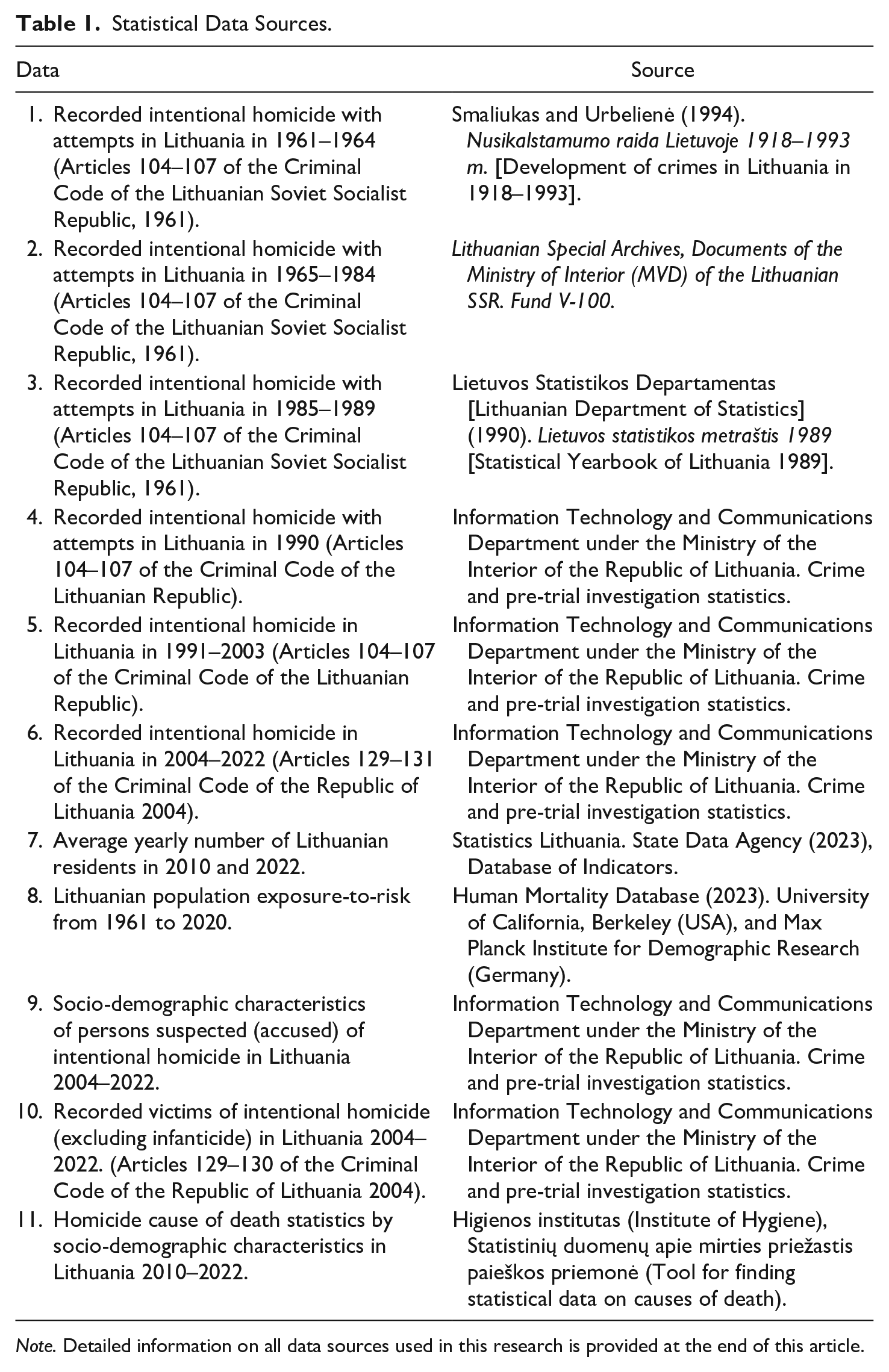
Note. Detailed information on all data sources used in this research is provided at the end of this article.
Methods
Historical crime data were collected by critically analyzing archival documents and historiography. This involved identifying and selecting relevant sources, classifying them, examining institutional processes, and critically evaluating the principles and mechanisms of Soviet and post-Soviet law enforcement institutions, the development of criminal law, and its impact on data (Dill & Aminzade, 2010). For homicide rate calculations, we used classical formal demography methods (Preston et al., 2001). The rate of intentional homicide per 100,000 inhabitants in each socio-demographic group was thus calculated by dividing the number of homicides by the number of inhabitants and multiplying by 100,000.
Ethics Approval
This study did not require ethics approval, as we used publicly available data from books, online sources, and archives. All the data used in the analyses were either aggregated data or depersonalized individual-level data. The Lithuanian Special Archives issued permission to publish historical data on intentional homicide trends in Lithuania (2023-11-24, Nr. V4-301(10.1.).
Recorded Intentional Homicides in Lithuania From 1961 to 2021
According to Eurostat (2023) data, Lithuania has had one of the highest rates of intentional homicide among EU member states in recent decades. Figure 1 depicts the recorded intentional homicide crime rate and the number of victims per 100,000 inhabitants in Lithuania for the 1961−2022 period. Data from the Ministry of the Interior of the Lithuanian SSR show that the recorded intentional homicide crime rate during the Soviet occupation varied from 2.20 in 1967 to 6.06 in 1990. After the restoration of independence, this upward trend continued and peaked at 14.31 in 1994. In the subsequent period, it gradually declined, with some short-term fluctuations, reaching 2.65 in 2022. Crime data further show that, in the 2004–2022 period, the intentional homicide victim rate per 100,000 inhabitants declined from 10.63 to 2.37. In sum, despite some initial fluctuations, there has been a steady decline in the intentional homicide victim rate since 2008. Moreover, it has remained below the intentional homicide crime rate since 2011.
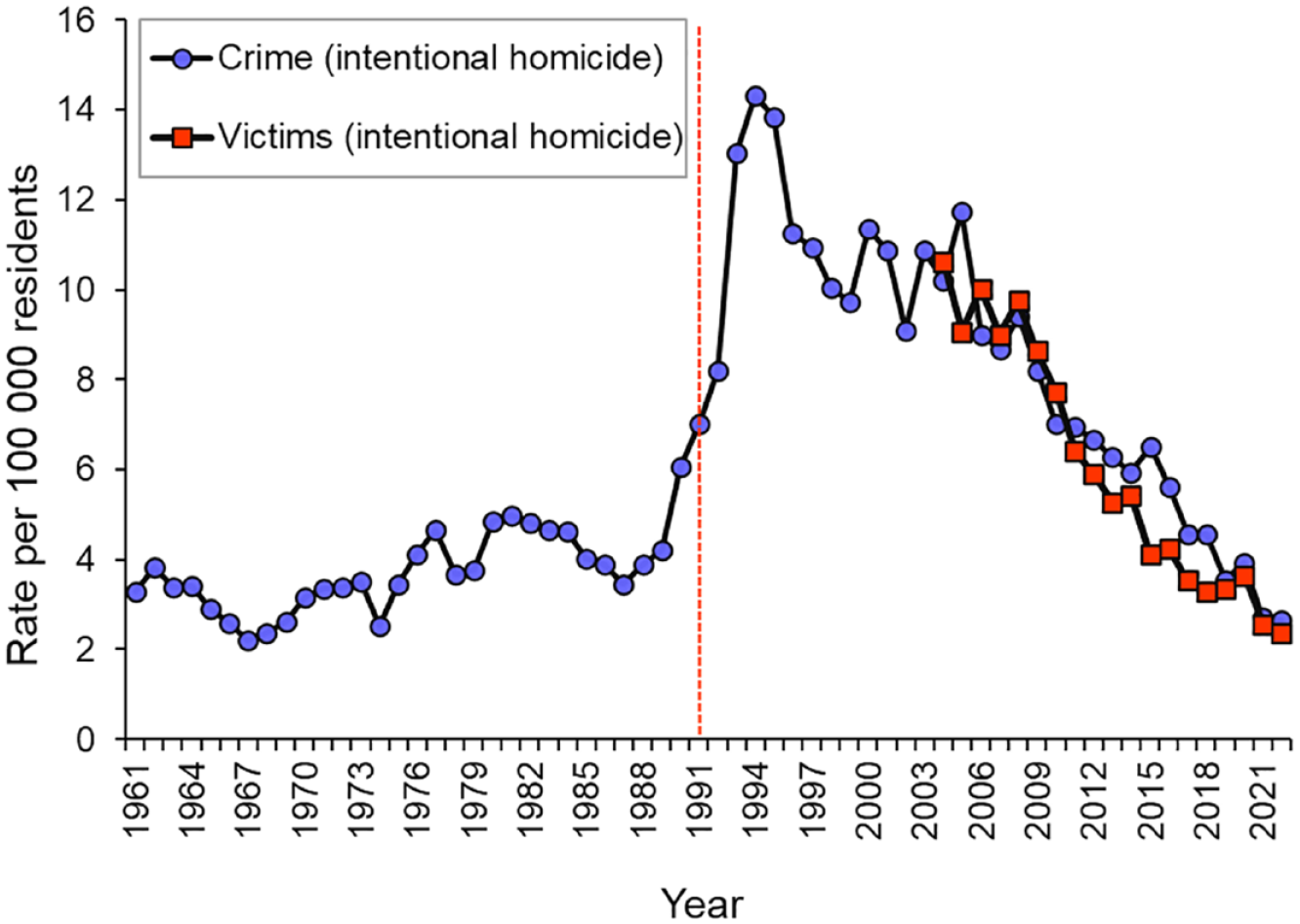
Recorded Intentional Homicide Rate and Victim Rate Per 100,000 Inhabitants in Lithuania, 1961–2022.
The Socio-Demographic Characteristics of the Suspects of Intentional Homicide
Figure 2 shows changes in the number of intentional homicide suspects per 100,000 inhabitants in the 2004–2022 period, as well as the corresponding figures for intentional homicide suspects under the influence of alcohol. Our analyses revealed that, on average, 66.04% of intentional homicide suspects were alcohol-intoxicated at the time of committing the crime. However, both rates decreased over time, whereby the intentional homicide suspect rate decreased from 10.40 in 2004 to 2.47 in 2022, and the proportion of suspects under the influence of alcohol declined from 63% to 51%.
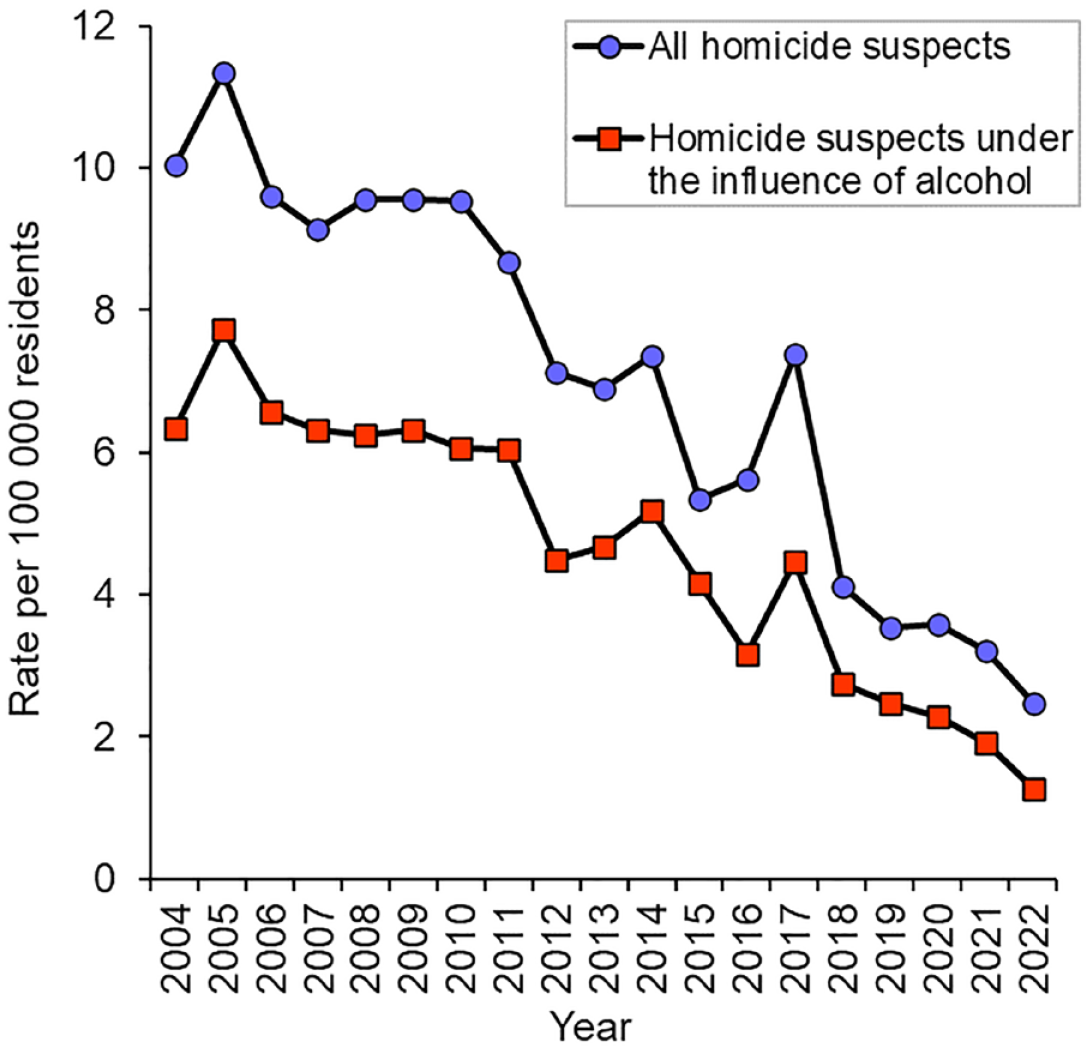
Intentional Homicide Suspect Rate Per 100,000 Inhabitants in Lithuania, 2004–2022 (All Suspects and Suspects Under the Influence of Alcohol).
The data collected from the Ministry of the Interior of the Republic of Lithuania also allowed us to estimate the distribution of suspects by sex, age group, and educational attainment since 2004. Figure 3 depicts the intentional homicide suspect rate by age in Lithuania for the 2004–2022 period. Crime statistics from the Ministry of the Interior of the Republic of Lithuania show that, throughout this period, this figure was generally the highest among those aged 30–59 years, while being the lowest among those older than 60 years. However, between 2005 and 2017, with a few exceptions (2007, 2008, and 2011), the rates for those under 30 years of age were significantly higher.
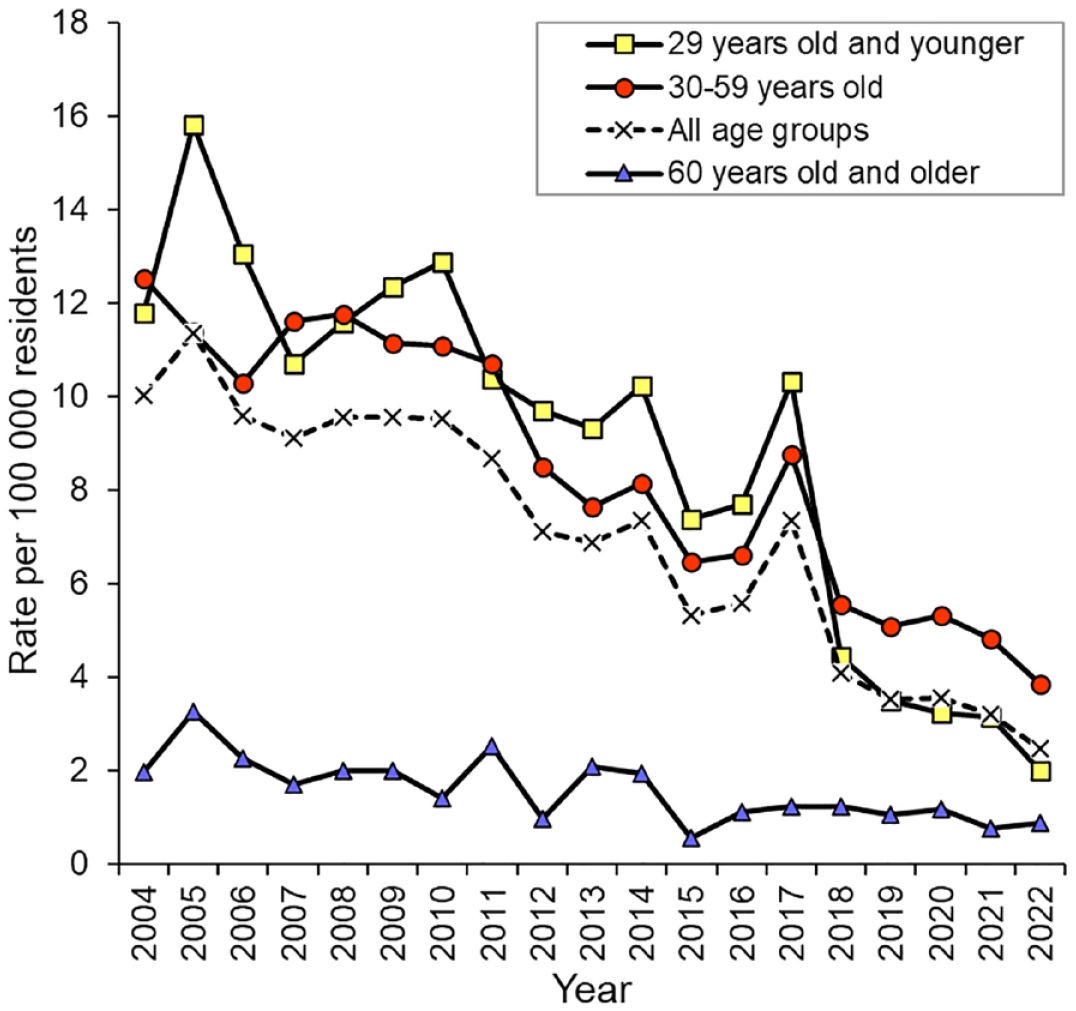
Intentional Homicide Suspect Rate by Age Group Per 100,000 Inhabitants in Lithuania, 2004–2022.
Figure 2 also shows that 90.30% (N = 3,723) of all suspects of intentional homicides committed in 2004–2022 were male, and only 9.70% (N = 400) were female. The rates in both groups declined during this period, from 22.52 in 2005 to 4.69 in 2022, and from 2.16 in 2004 to 0.52 in 2022 for males and females, respectively.
Due to the specific measurement of educational level, intentional homicide rates for individual groups could not be calculated. Thus, in Figure 3, we present percentages. It is evident that changes in the intentional homicide suspects’ educational attainment followed the upward trend seen in the overall educational structure of the Lithuanian population. For example, while the proportion of intentional homicide suspects with primary or less-than-primary education decreased from 40.1% in 2004 to 25.0% in 2022, the proportion of suspects with a vocational training diploma increased from 11.8% to 26.7%. At the same time, the proportion of suspects with higher (3.3% in 2022) and secondary education (45.0% in 2022) remained stable during the reference period. However, intentional homicide suspects’ educational level was much lower than the average for Lithuania. For example, the proportion of population (15 years or older) with primary or less-than-primary education was 4.45% in 2022 (Statistics Lithuania, [State Data Agency], 2024).
Intentional Homicide Victims
Cause-of-death statistics from the Institute of Hygiene (Lithuania) death register show that the intentional homicide death rate was the lowest among those below the age of 30 years while being the highest in the 30–59 years age group, but the rates in all age groups decreased from 2010 to 2022 (see Figure 5).
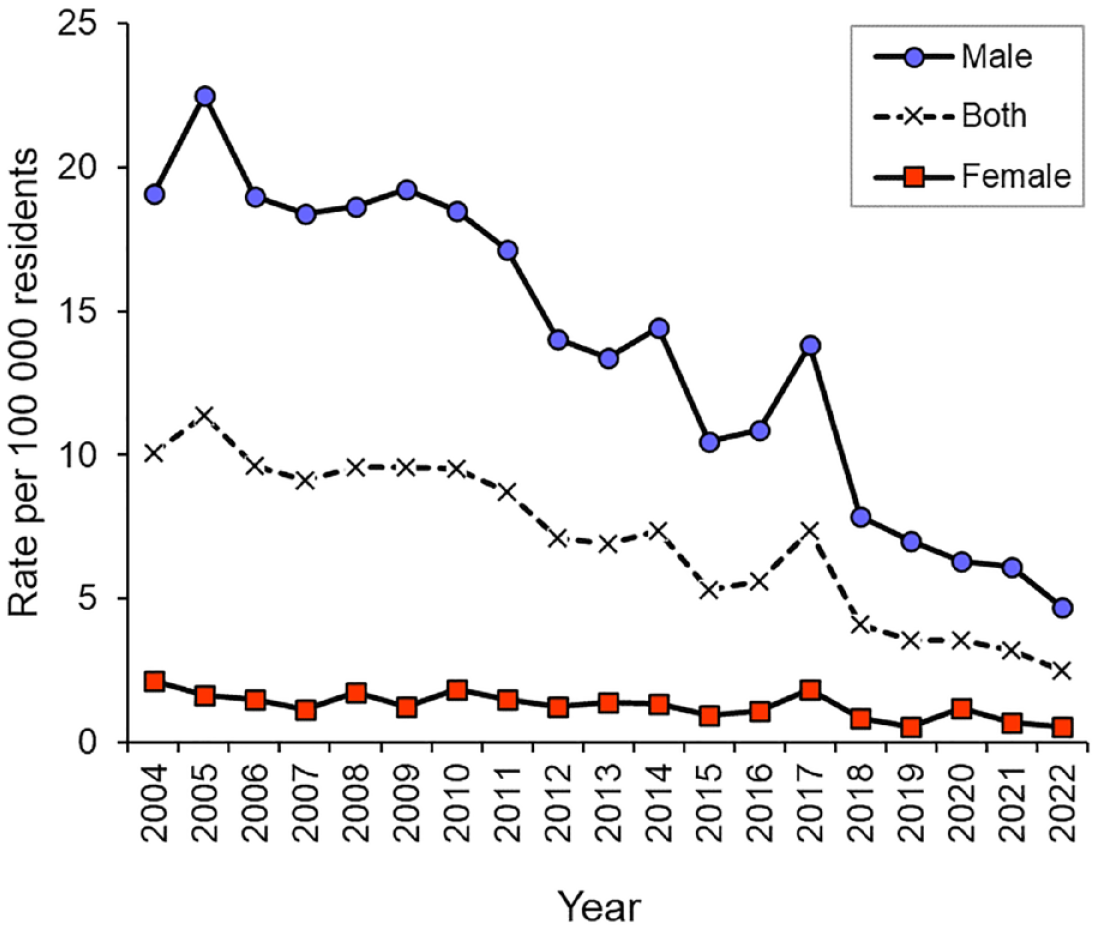
Intentional Homicide Suspect Rate by Sex Per 100,000 Inhabitants in Lithuania, 2004–2022.
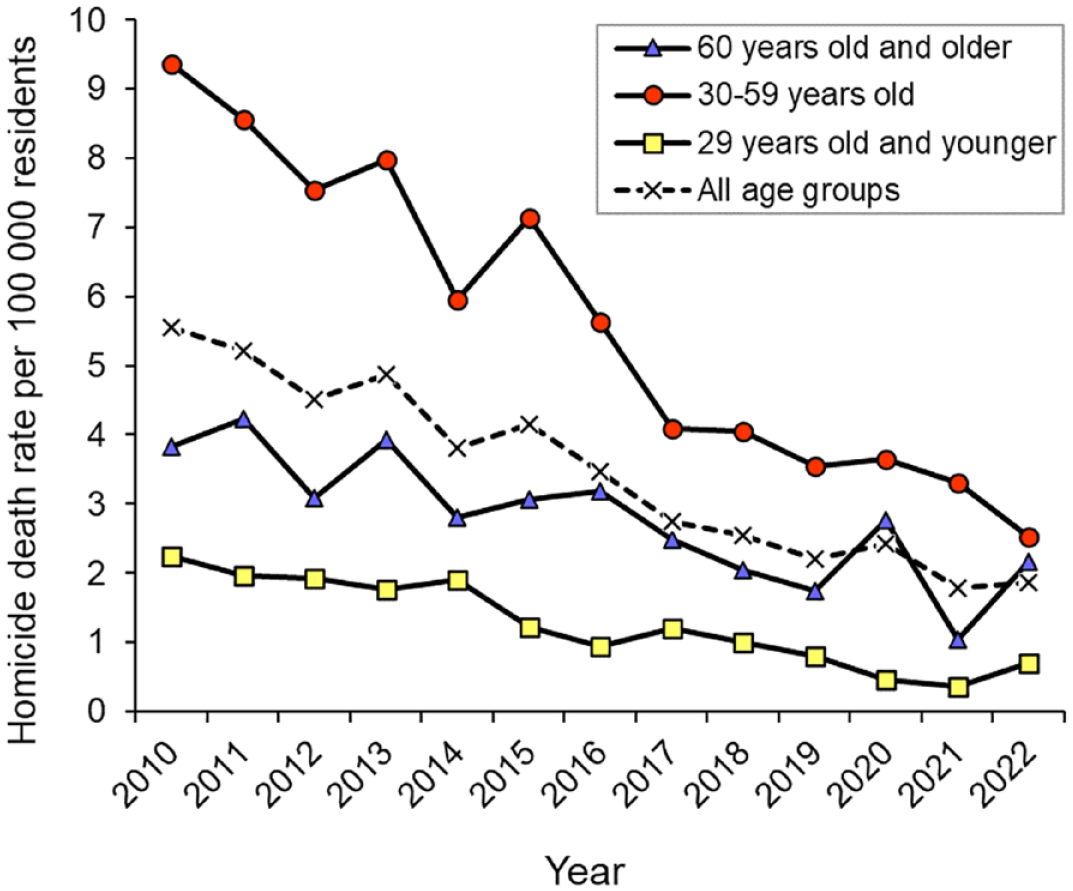
Intentional Homicide Death Rates by Age Group in Lithuania, 2010–2022
Accordingly, intentional homicide death rates declined for both males (from 8.47 in 2010 to 2.35 in 2022) and females (from 3.06 in 2010 to 1.46 in 2022). While in this period, 71.32% (n = 945) and 28.68% (n = 380) victims of intentional homicide were male and female, respectively, the proportion of female victims increased, especially in the recent years—from 16.67% (n = 12) in 2016 to 41.51% (n = 22) in 2022, in line with Verkko’s laws (Kivivuori, 2017).
Unfortunately, the Institute of Hygiene does not keep any records on the educational attainment of the deceased. However, according to Jasilionis et al. (2020), suicide mortality risk for males with lower-than-secondary and secondary education was 2.67 and 2.14 (p < .001) times higher, respectively, than that for males with higher education.
Discussion
The findings yielded by our study reveal a notable surge in homicide rates that began in the final year of Soviet rule in Lithuania, resulting in a doubling in the number of homicides between 1991 and 1994. In the subsequent period, homicide rates declined from 14.31 in 1994 to 2.65 in 2022. This pattern is usually explained in the context of the political, economic, and social transformations that took place after Lithuania’s independence and the transition to a liberal democratic model.
The historically tight relationship between homicide and alcohol abuse has been documented in Lithuania since the early 20th century. In late-Tsarist Russia (of which Lithuania was a part from 1795 to 1915), differences in homicide rates in provinces were linked to heavy drinking and literacy. As noted by Stickley and Pridemore (2007), While the spread of literacy was working to reduce homicide rates at the regional level, alcohol consumption, the continuing overwhelmingly rural nature of society, and a regional history of violence were all working to exert an influence in the opposite direction (p. 95).
There are no reliable data on the proportion of homicide suspects intoxicated by alcohol in interwar Lithuania. However, in the pertinent historical literature, violent crimes are often associated with alcohol abuse (Šimaitis, 1931). Požėla (1938) argued that 40% of prisoners in Lithuania were incarcerated for crimes committed under the influence of alcohol. Žalkauskas (1933), assistant prosecutor of the High Tribunal at that time, also estimated that at least half of the crimes against human life and health were committed by persons that were under the influence of alcohol. Historical research on violence against women in interwar and Soviet Lithuania shows that, in addition to patriarchal values, alcohol was one of the main factors that contributed to spousal homicide and domestic violence (Černevičiūtė & Kareniauskaitė, 2021). Based on the police records from the Soviet era for 1968, individuals under the influence of alcohol were responsible for 43.9% of intentional homicides, 78% of rapes, 71.6% of robberies, and 83.6% of hooliganism cases in Lithuania (Liubertas, 2019). According to the crime statistics for Soviet Lithuania, at least 62% of intentional homicides, 65% of severe intentional body injuries, 67% of rapes, 63% of larceny, 68% of robberies, and 74% of hooliganism cases were perpetrated by individuals under the influence of alcohol (Kuklianskis, 1986). In addition, individuals who engaged in alcohol abuse were more frequently victimized by crime. For instance, every fourth homicide victim was found to be under the influence of alcohol (Kuklianskis, 1986). These findings are supported by a recent qualitative sociological study based on interviews with heavy episodic drinkers, which revealed a link between violent crime and alcohol abuse in the Soviet era as well as contemporary Lithuania (Stumbrys, 2023).
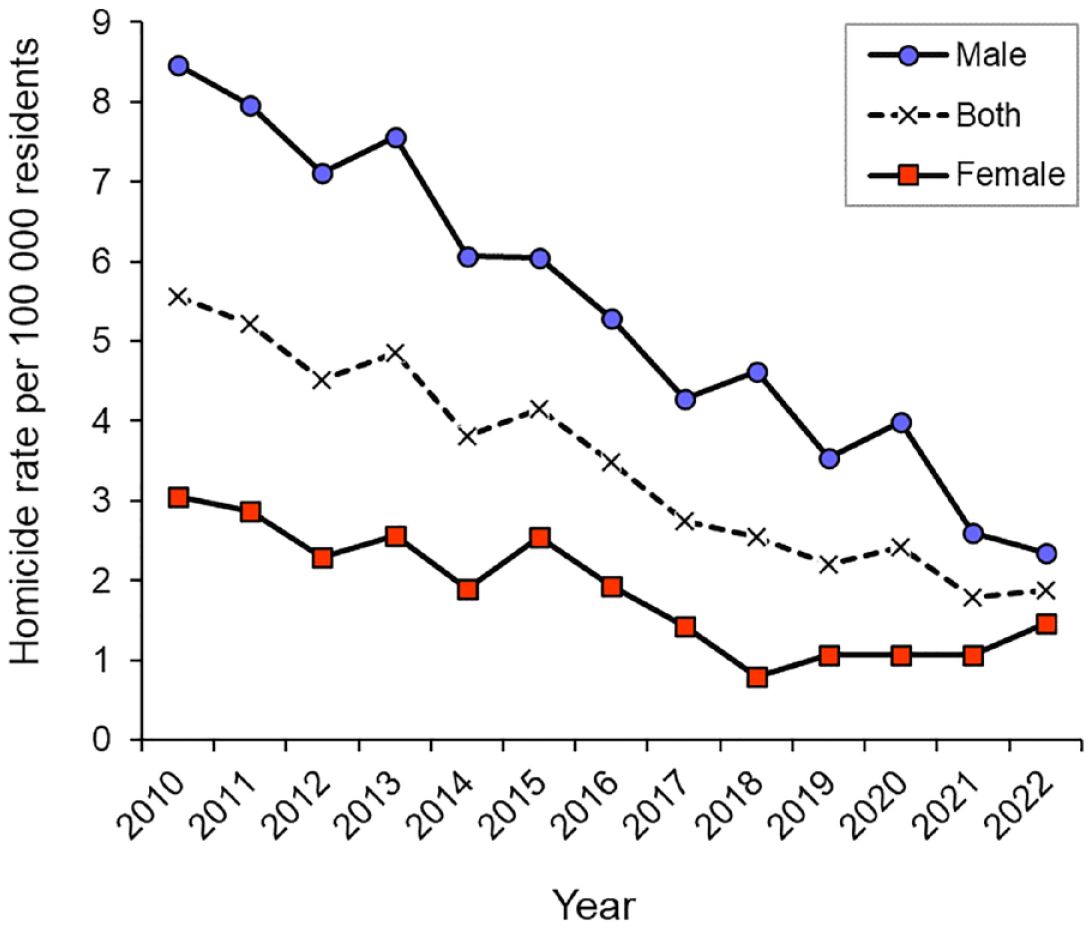
Intentional Homicide Death Rates by Sex in Lithuania, 2010–2022
Other studies on this topic also show that alcohol abuse is often a crucial factor in homicide (Andresen, 2012; United Nations Office on Drugs and Crime [UNODC], 2019). Thus, it is not surprising that, according to our analyses for 2004–2022, 66.04% of intentional homicide suspects in Lithuania were under the influence of alcohol, coinciding with the results from Finland, where Kivivuori and Lehti (2011) found that 75% of offenders and 62% of victims were under the influence of alcohol. Our findings also align with those reported by other authors. For example, based on the data from 17 countries, UNODC (2019) estimated that 33.3% of perpetrators were under the influence of alcohol at the time of the crime. Similarly, Čepas et al. (2018) reported that around 57% of homicide cases documented between 2005 and 2014 in Lithuania involved instances where both the perpetrator and the victim had consumed alcohol. Autopsies performed in 2020 further show that 63.2% of homicide victims had alcohol in their blood (Gurevičius, 2021). Therefore, it can be posited that homicide perpetrators and victims often consume alcohol or experience heavy episodic drinking together. Indeed, although a direct causal link between alcohol consumption and crime has not been established, the UNODC (2019) report on homicide highlights that the frequency of heavy episodic drinking predicts violent behavior. Miethe and Regoeczi (2004) also identified alcohol abuse as a risk factor for crime given that aggressive behavior is more common among alcohol drinkers because intoxication affects self-control. Furthermore, the cultural environment influences alcohol-related criminal behavior as cultural beliefs enable alcohol abusers to justify drunken behavior (Loue, 2002).
Over the past few decades, Lithuania has had one of the highest rates of alcohol consumption per capita in the world (World Health Organization, 2023). The findings of a cross-cultural comparison of the relationship between alcohol and homicide in 14 European countries (Rossow, 2001) support the hypothesis that the sale of alcohol influences the number of homicides and that this influence is more potent in northern European countries, where heavy drinking episodes are part of the drinking culture. Lithuanian population has a specific drinking culture, characterized by heavy episodic drinking and large amounts of alcohol consumed in a single drinking occasion (Moskalewicz et al., 2016). This phenomenon is often associated with extremely high rates of alcohol-related harm, likely contributing to one of the highest alcohol-related mortality rates (Stumbrys et al., 2020), as well as the highest prevalence of risky single occasional drinking (Moskalewicz et al., 2016) among all EU member states. Therefore, the drinking culture of the Lithuanian population can be described as harmful to health (Stumbrys, 2023). Still, it is worth noting that Lehti and Sirén (2020) reported statistically significant links between annual alcohol consumption and overall and male homicide mortality in Finland as well as male homicide mortality in Sweden. Thus, it is not surprising that several authors posited that, in Lithuania, alcohol abuse could be related to high overall mortality and high mortality from external causes of death (Stumbrys et al., 2020, 2022). The health-damaging drinking patterns in Lithuania may be inherited not only from the Soviet period but also from the interwar drinking culture as well (Černevičiūtė & Kareniauskaitė, 2021). During the Soviet era, alcohol consumption was normalized in the family and the work environment (Stumbrys, 2023). As a result, Lithuania has the shortest life expectancy for men and the highest suicide and one of the highest homicide rates among all EU member states (World Health Organization Regional Office for Europe, 2023).
Our analyses revealed that the periods of declining homicide rates in Lithuania overlapped with the adoption of evidence-based alcohol control measures aimed at reducing alcohol availability and alcohol-related harm to individuals and society. Specifically, the decline in 1985 and 1987 coincided with Gorbachev’s anti-alcohol campaign, whereas 2008—which marked another steep decline in the homicide incidence—was announced as a year of sobriety (Veryga, 2009), indicating the start of the evidence-based alcohol-control policy period in Lithuania. The findings obtained in our study are also supported by the results reported by other authors that examined the associations between the decrease in mortality from external causes of death and the adoption of evidence-based alcohol-control policy measures (Lange et al., 2023; Neufeld et al., 2021; Stumbrys et al., 2020, 2022).
We also found that homicide suspects in Lithuania were more likely to be undereducated men younger than 60 years, concurring with the previously published data (Kivivuori & Lehti, 2011; Marshall & Summers, 2012; Stumbrys, 2016). The male preponderance was particularly pronounced in the 30–59 years age group, coinciding with the findings reported for the Netherlands, Finland, and Sweden (Granath et al., 2011). As lower educational attainment leads to higher unemployment and lower earning potential, our results are also supported by those reported by Jasilionis and Stankūnienė (2012) who found greater mortality risk among economically inactive and unemployed persons who are generally most vulnerable to social, political, and economical changes at the macro level. Our findings also contribute to the discussion about the alcohol harm paradox suggesting that people of low socioeconomic status tend to experience greater alcohol-related harm than those of high socioeconomic status despite the same or lower alcohol consumption level (Bloomfield, 2020). However, while our analysis demonstrated that suspects and victims with lower levels of education experienced higher homicide rates, no information about the level of alcohol intoxication was available.
When interpreting the results reported here, several limitations of our study must be considered. First, we relied on the crime statistics from pre-trial investigation records to examine the changes in the number of victims and persons suspected of intentional homicide, as well as the prevalence of homicide. On the other hand, cause-of-death statistics were used to examine the number of intentional homicide victims, resulting in misalignment in the periods used for reporting the findings. This could also potentially lead to underestimates given that cause-of-death rates are usually lower than recorded homicide rates (Aebi et al., 2006). In Lithuania, cause-of-death data are based on the initial report of forensic experts, where homicide is recorded only when there are obvious signs, and other cases are classified as undetermined causes of death (which are then investigated by law enforcement officials). As medical institutions do not receive data on the conclusions of the pre-trial investigation regarding the final determination of the cause of death, the data on homicides provided by these institutions may include some inconsistencies (Dobryninas et al., 2014). Despite these potential differences, our comprehensive analyses provide an overview of the prevalence of homicide in Lithuania in different historical periods, which were chosen deliberately to ensure that the most reliable data were available in the pertinent sources.
Second, we were unable to obtain the information about the specific ways in which alcohol intoxication was measured for intentional homicide suspects and victims. Thus, we could only establish whether alcohol was found in their blood. Similarly, we have no information on whether any changes in the accuracy of alcohol intoxication evaluations or practices in the compilation of statistics were implemented during the analyzed period. These issues may affect our results and their interpretation.
Third, all data on homicide and other crimes from the Soviet period should be treated with caution. During the Soviet occupation, crime (including violent crime) statistics were falsified. Some intentional homicides were classified as serious bodily injury, suicides, or other causes of death to present a brighter picture of the Soviet reality, to increase the clearance rate, or to hide police incompetence (Anušauskas, 2008; Justickis, 2008; Kiškis, 2017; Liubertas, 2019). While no estimations are available for these misclassifications, we assume that their impact on our result is insubstantial. Moreover, crime statistics in the Soviet Union were considered a state secret (Butler, 1992). After the Soviet authorities left the country at the beginning of 1990, they destroyed many secret documents related to the criminogenic situation. Fortunately, we found crime data labeled “top secret” from Soviet Lithuania (1965–1984) in the Lithuanian Special Archives (e.g., Image S1). It is important to note that we also found intentional homicide records for the interwar Lithuania (1918–1940). The Central Statistical Bureau of Lithuania has published statistical data (including homicides) in Statistical Bulletins and the Statistical Yearbooks of Lithuania since 1924. These sources were problematic due to an unclear data-collection methodology. Inconsistency in terminology used by law enforcement, judicial, and medical agencies when it comes to defining homicide is coupled with a deficiency in policies that address the distinctions between urban and rural areas. Moreover, they overlooked the changes in Lithuania’s territory and population. Because of these issues, we decided to exclude this data information from our analysis.
Finally, due to the limited age and sex data for the intentional homicide suspects and victims in Lithuania, we could not explore any potential socio-demographic differences for which more detailed individual-level homicide data are required.
Conclusion
The aim of our work was to elucidate the intentional homicide trend in Lithuania and its associations with alcohol abuse. Furthermore, we explored links with the political and social transformations that have taken place in the country over the past 60 years. We showed that the intentional homicide rate was relatively low during the Soviet period, but it started to increase in the later years of the Soviet regime as well as during the transitional phase, culminating in 1994. Since then, there has been a continuous decline in the homicide rate in Lithuania. However, we observed a notable link between intentional homicides and alcohol abuse, as more than half of the suspects were under the influence of alcohol. In addition, males (mostly uneducated and younger) accounted for 90% of the suspects in intentional homicides. While these findings are certainly valuable, it is necessary to conduct more thorough analyses of the broader social and historical context, social strain factors, and the prevalence of alcohol abuse in the society, as the obtained results would increase our understanding of the homicide phenomenon in Lithuania.
Supplemental Material
sj-docx-1-ccj-10.1177_10439862241251624 – Supplemental material for Intentional Homicides and Alcohol Abuse in Lithuania
Supplemental material, sj-docx-1-ccj-10.1177_10439862241251624 for Intentional Homicides and Alcohol Abuse in Lithuania by Sigita Černevičiūtė, Aleksandras Dobryninas and Daumantas Stumbrys in Journal of Contemporary Criminal Justice
Footnotes
Acknowledgements
The author(s) are thankful to Prof. Chris Eskridge, Prof. Janne Kivivuori, Prof. Zenonas Norkus, Assoc. Prof. Gintautas Sakalauskas, Assoc. Prof. Algimantas Čepas, Dr. Skirmantas Bikelis, Dr. Ieva Balčiūnė, Dr. Monika Rogers, and Dr. Eglė Vileikienė for their valuable comments and consultations on the sources of statistics, legal documents, and criminological and historical literature on the homicide phenomenon. We are also grateful for the critical comments and valuable suggestions provided by anonymous reviewers.
Sources of Statistics
Figure 1
Recorded intentional homicides (with attempts) in Lithuania in 1961–1964 (Articles 104–107 of the Criminal Code of the Lithuanian Soviet Socialist Republic, 1961). Smaliukas & Urbelienė (1994). Nusikalstamumo raida Lietuvoje 1918–1993 m. [Development of crimes in Lithuania in 1918–1993]. Vilnius: Lietuvos Respublikos prokuratūra, 20.
Recorded intentional homicides in Lithuania in 1965–1984 (Articles 104–107 of the Criminal Code of the Lithuanian Soviet Socialist Republic, 1961). Lithuanian Special Archives, Documents of the Ministry of Interior (MVD) of the Lithuanian SSR, Fund V-100, inventory 1, files 28, 30, 32, 34, 36, 40, 51, 63, 68, 76.
Recorded intentional homicides (with attempts) in Lithuania in 1985–1989 (Articles 104–107 of the Criminal Code of the Lithuanian Soviet Socialist Republic, 1961). Lietuvos statistikos departamentas [Lithuanian Department of Statistics] (1990). Lietuvos statistikos metraštis 1989 [Statistical Yearbook of Lithuania 1989], Vilnius: Informacinis − leidybinis centras, 115.
Recorded intentional homicides (with attempts) in Lithuania in 1990 (Articles 104−107 of the Criminal Code of the Lithuanian Republic). Information Technology and Communications Department under the Ministry of the Interior of the Republic of Lithuania. Crime and pre-trial investigation statistics (Data on Crime in the Republic of Lithuania) (Form_1-G). Retrieved on October 12, 2023, from 
Recorded intentional homicides (with attempts) in Lithuania in 1991–2003 (Articles 104–107 of the Criminal Code of the Lithuanian Republic). Information Technology and Communications Department under the Ministry of the Interior of the Republic of Lithuania. Crime and pre-trial investigation statistics (Data on Crime in the Republic of Lithuania) (Form_1Ž). Retrieved on October 12, 2023, from
Recorded intentional homicides (with attempts) in Lithuania in 2004–2022 (Articles 129–131 of the Criminal Code of the Republic of Lithuania 2004). Information Technology and Communications Department under the Ministry of the Interior of the Republic of Lithuania. Crime and pre-trial investigation statistics (Data on Crime in the Republic of Lithuania) (Form_1Ž). Retrieved on October 12, 2023, from
Recorded victims of intentional homicide (excluding infanticide) in Lithuania 2004–2022. (Articles 129–130 of the Criminal Code of the Republic of Lithuania 2004). Information Technology and Communications Department under the Ministry of the Interior of the Republic of Lithuania. Crime and pre-trial investigation statistics (Data on Crime in the Republic of Lithuania) (Form_50). Retrieved on October 12, 2023, from
The average yearly number of Lithuanian residents in 2021 and 2022 was downloaded from Statistics Lithuania (State Data Agency). State Data Agency. (2023). Database of Indicators. Average annual population. Retrieved on October 12, 2023, from
Lithuanian population exposure to risk from 1961 to 2020 was downloaded from Human Mortality Database. Human Mortality Database. (2023). University of California, Berkeley (USA), and Max Planck Institute for Demographic Research (Germany). Retrieved on October 12, 2023, from
Figure 2
Persons suspected (accused) of intentional homicide (with attempts) in Lithuania 2004–2022 per 100,000 inhabitants (all suspects and suspects intoxicated by alcohol). Information Technology and Communications Department under the Ministry of the Interior of the Republic of Lithuania. Crime and pre-trial investigation statistics (Data on the criminality of suspected (accused) persons in the Republic of Lithuania (Form_2). Retrieved on October 13, 2023, from
Average yearly number of Lithuanian residents in 2021 and 2022 was downloaded from Statistics Lithuania (State Data Agency). State Data Agency. (2023). Database of Indicators. Average annual population. Retrieved on October 13, 2023, from .
Lithuanian population exposure to risk from 1961 to 2020 was downloaded from Human Mortality Database. Human Mortality Database. (2023). University of California, Berkeley (USA), and Max Planck Institute for Demographic Research (Germany). Retrieved on October 13, 2023, from
Figure 3 and Figure 4
Socio-demographic characteristics of persons suspected (accused) of intentional homicide (with attempts) in Lithuania, 2004–2022. Information Technology and Communications Department under the Ministry of the Interior of the Republic of Lithuania. Crime and pre-trial investigation statistics (Data on the criminality of suspected [accused] persons in the Republic of Lithuania (Form_2)). Retrieved on October 13, 2023, from
Figure 5 and Figure 6
Socio-demographic characteristics of persons whose cause of death was recorded as intentional homicide in Lithuania, 2010–2022. Higienos institutas (Institute of Hygiene), Statistinių duomenų apie mirties priežastis paieškos priemonė (Tool for finding statistical data on causes of death). Retrieved on October 13, 2023, from
Declaration of Conflicting Interests
The author(s) declared no potential conflicts of interest with respect to the research, authorship, and/or publication of this article.
Funding
The author(s) disclosed receipt of the following financial support for the research, authorship, and/or publication of this article: This article is a part of the postdoctoral fellowship project Homicides and Punishments in Lithuania in 1918–1940. This project has received funding from the European Social Fund (project No 09.3.3-LMT-K-712-19-0144) under a grant agreement with the Research Council of Lithuania (LMTLT).
Supplemental Material
Supplemental material for this article is available online.
Notes
Author Biographies
References
Supplementary Material
Please find the following supplemental material available below.
For Open Access articles published under a Creative Commons License, all supplemental material carries the same license as the article it is associated with.
For non-Open Access articles published, all supplemental material carries a non-exclusive license, and permission requests for re-use of supplemental material or any part of supplemental material shall be sent directly to the copyright owner as specified in the copyright notice associated with the article.
