




Abstract
Although representing a rather small percentage of gun deaths in the United States, mass shootings receive a disproportionate share of crime news coverage, with the fears of countless Americans at a level well above the actual risk. This article attempts to clarify some of the wide-ranging confusion regarding what exactly is a mass shooting, how often they occur, and whether they have been on the rise over the past several years. After discussion of some methodological issues associated with measuring prevalence, trends exhibited in several reliable data sources on mass shooting are presented. The article concludes with a brief discussion of contagion and whether it is reasonable to expect that the recent spike in mass shootings will persist.
A centuries-old idiom suggests that “No news is good news.” When it comes to the media’s approach to crime, however, it is more the reverse: “Good news is no news” and, of course, “Bad news is big news.” Recurring big news in recent years has been about mass shootings, particularly those that involve large body counts and occur in public settings, such as schools, nightclubs, houses of worship, and retail establishments. And according to on-air pundits, these tragedies seem to be an everyday occurrence.
In response to such devastating events, many Americans see the scourge of mass killing as something new, pointing to such factors as the proliferation of high-powered firearms, insufficient mental health services, and various forms of violent entertainment. While the underlying causes for large-scale bloodshed represent a topic of lively debate, the idea that mass shootings are a menace of recent emergence fails to consider headlines such as these concerning major shooting sprees that took place decades ago: 13 Slain at Club in Seattle’s Chinatown. (The New York Times, February 20, 1983) Big Mac Massacre. (New York Post, July 19, 1984) Rifleman Kills 5 at Stockton School: 29 Other Pupils Hurt. (Los Angeles Times, January 18, 1989)
During the 1980s and into the 1990s, mass shootings were eclipsed by the focus on a different form of multiple homicide: serial murder and legacy assailants such as Theodore Bundy, John Wayne Gacy, and Jeffrey Dahmer. The uneven attention given to these and other sexual sadists by crime writers, the mass media, and the public was reflected as well in the criminological literature (see Fox & Levin, 1998). But that all changed in 2012, following high-profile massacres at a California university, a Colorado cinema, and especially a Connecticut elementary school. The Sandy Hook school shooting that claimed the lives of 20 children and 6 educators (along with other mass shootings) became the leading topic of the year in the Associated Press annual rankings of news stories based on a poll of its editors (see Crary, 2012), overshadowing a hotly contested campaign for the U.S. Presidency and another Sandy—Superstorm Sandy—that actually resulted in far more deaths than the school shooting. Suddenly, the nation became deeply attuned to stories of large-scale gun violence. The same was true among criminologists. As shown in Figure 1, the number of scholarly articles related to mass shootings published in criminology/criminal justice journals grew precipitously following that juncture.
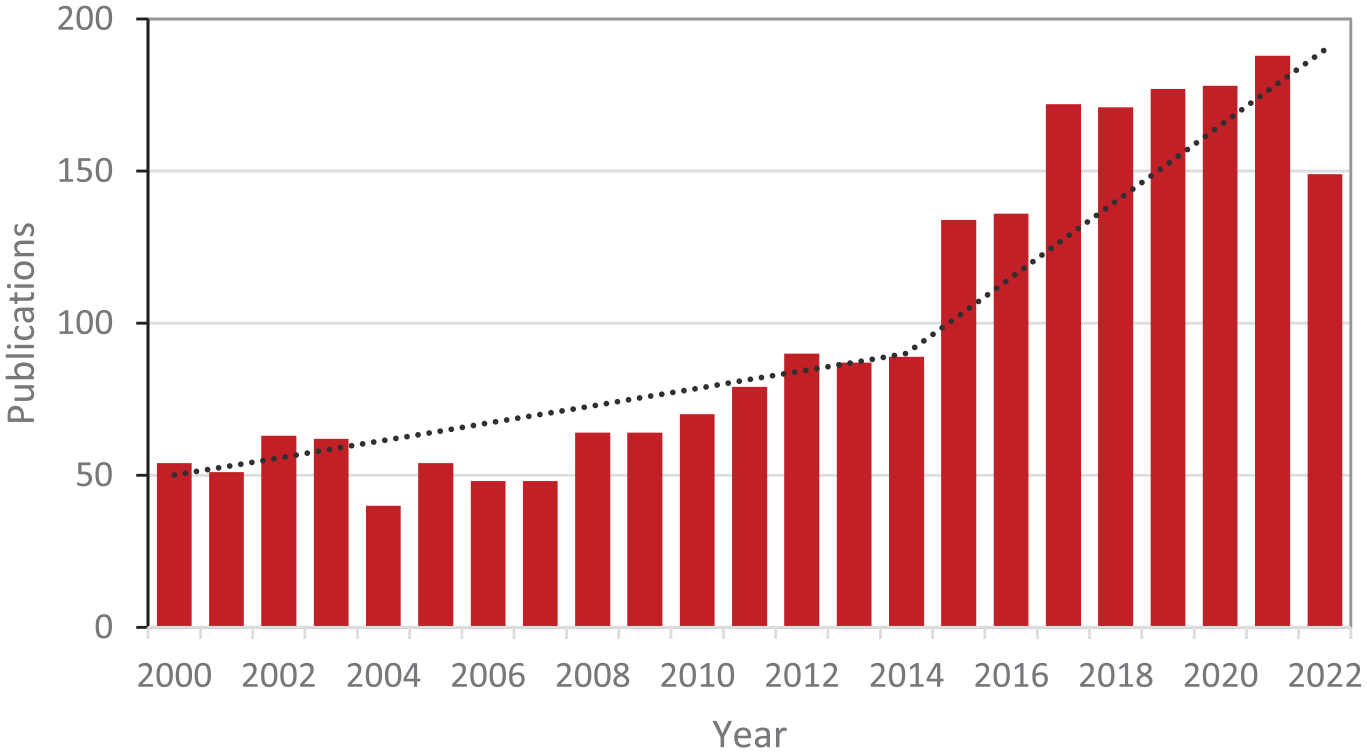
Criminology/Criminal Justice Journal Articles on Mass Shooting.
The concern over mass violence perpetrated with firearms has remained high since the 2012 “discovery” of the topic. This is hardly surprising in light of the fact that six of the nine mass shootings in modern U.S. history with at least 20 killed have occurred since Sandy Hook (see Table 1).
Mass Shootings With More Than 20 Victims Killed.
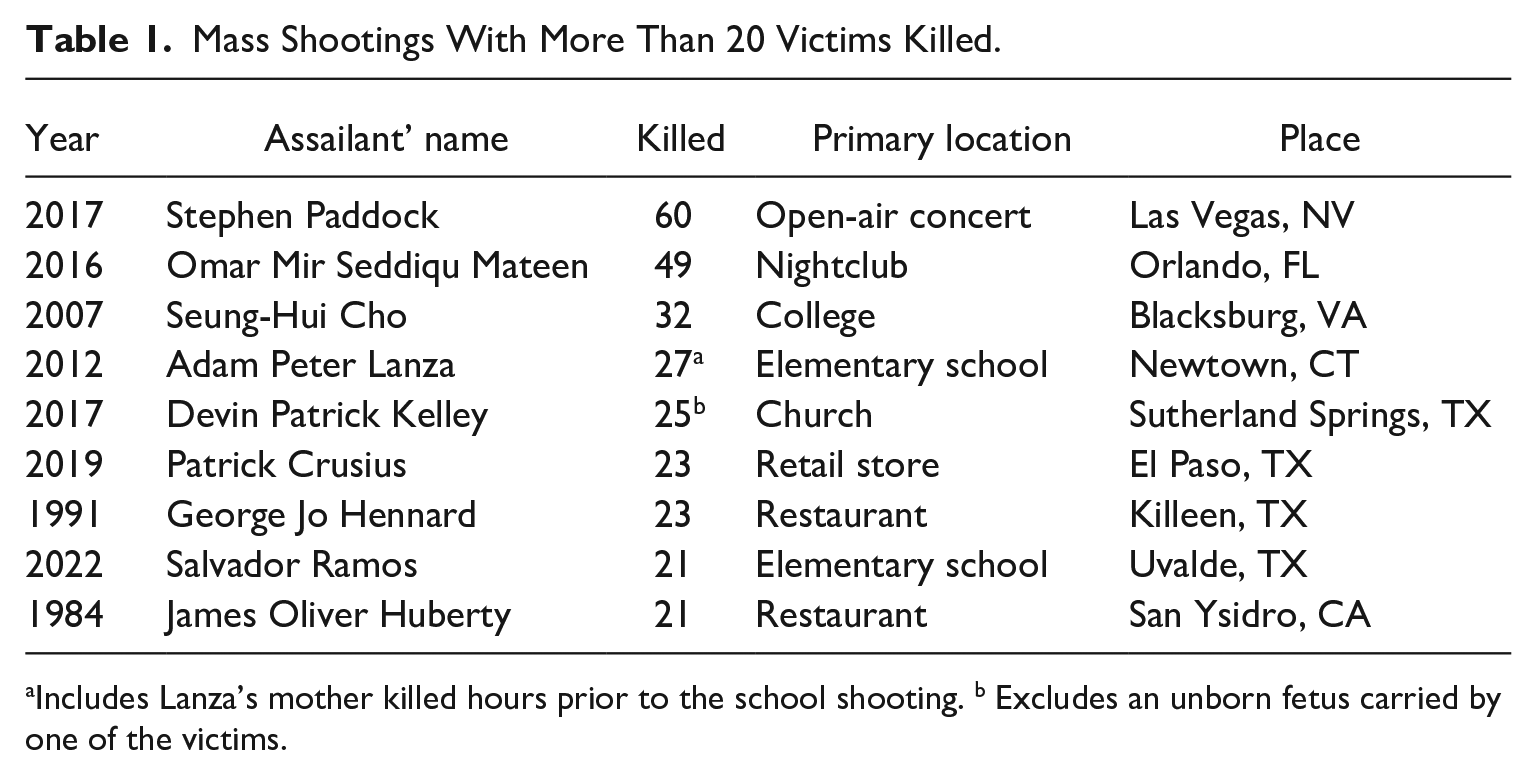
Includes Lanza’s mother killed hours prior to the school shooting. b Excludes an unborn fetus carried by one of the victims.
Although accounting for a very small fraction of homicides in the United States, mass shootings are greatly overrepresented in the news media, the political debate, and the public discourse. Many observers have described the surge in mass shootings as an epidemic. Although such a characterization may be largely hyperbolic, there is unquestionably an epidemic of fear. For example, a 2019 Harris Poll commissioned by the American Psychological Association (2019) of more than 2,000 American adults found that fearing the possibility of falling victim in a mass shooting caused more than three-quarters of respondents to experience stress, one-third to avoid certain places or events, and nearly one-quarter to alter how they live their lives.
The increasing trepidation surrounding the risk of mass shootings is evident from the recurring surveys of fear conducted by the Earl Babbie Research Center at Chapman University (see Figure 2). From 2015 to 2019, the percentage of respondents indicating that they were afraid or very afraid of mass shootings more than doubled, rising from 16.4% to 41.5%. The percentage fearing mass shootings dipped somewhat in the 2020/2021 survey as the country was dealing with the COVID-19 pandemic, but then rebounded in 2022. The early part of 2023 has witnessed a spike in mass shootings, which very well may push future Chapman results higher with regard to this area of concern.
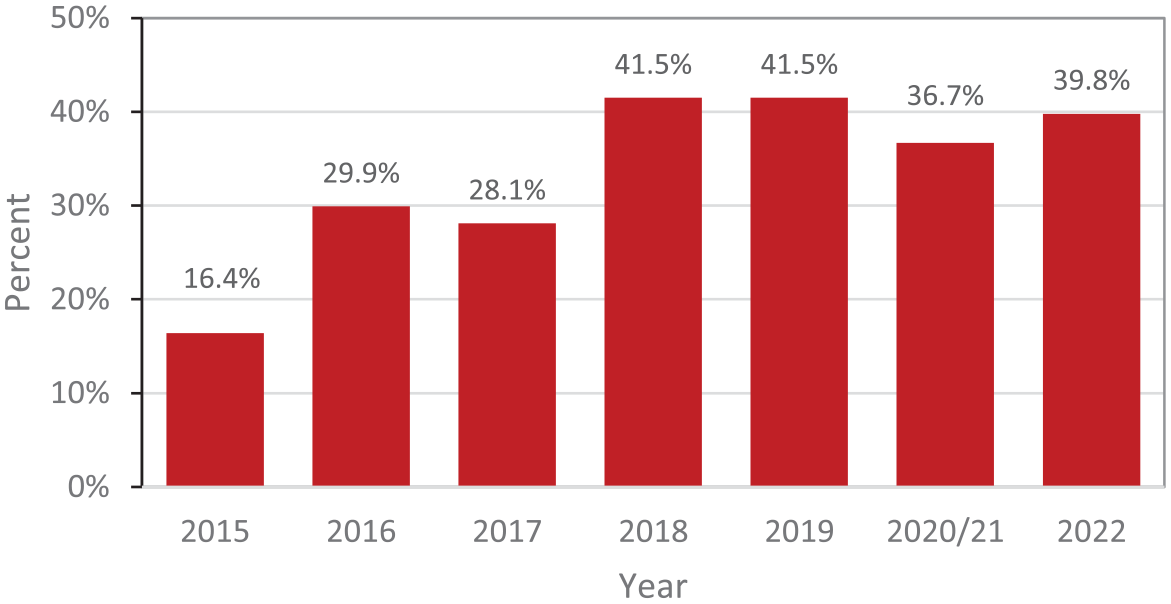
Percentage Fearful or Very Fearful of Mass Shootings.
The Many Definitions of Mass Shooting
Any assessment of the incidence and trends in mass shooting depends, of course, on how the term is conceptualized. Unfortunately, there is no consensus on a definition, which has many American confused and alarmed by some of the media coverage that attempts to cast the problem in the most ominous way possible. In this instance, the “If it bleeds, it leads” mantra is more “If it hemorrhages, it dominates the news cycle.”
After the Sandy Hook massacre, researchers and news outlets were interested in understanding and quantifying the prevalence of mass shootings. However, there did not exist an official data source, other than extracting cases from the FBI’s Supplementary Homicide Reports (SHR). Although the SHR may have been the only national data series with information about multiple homicides (as the National Center for Health Statistics mortality records do not connect homicides committed by the same individual), it suffers from several accuracy issues. Specifically, a number of mass shooting cases are missing from the SHR. In addition, the SHR contains records that wrongly suggest a mass shooting (e.g., injured victims included in homicide incident records, or several unrelated homicides combined in the same record). As a result, various organizations were forced to undertake their own data collection initiatives using whatever definition they chose.
As shown in Table 2, definitions of mass shooting employed in various databases vary by victim-count threshold, extent of victim injury, and incident type, all of which fundamentally alter the nature and prevalence of the phenomenon itself (Fox & Fridel, 2022). The three most commonly employed definitions of mass shooting are as follows:
Selected Mass Shooting Databases and Their Definitions.
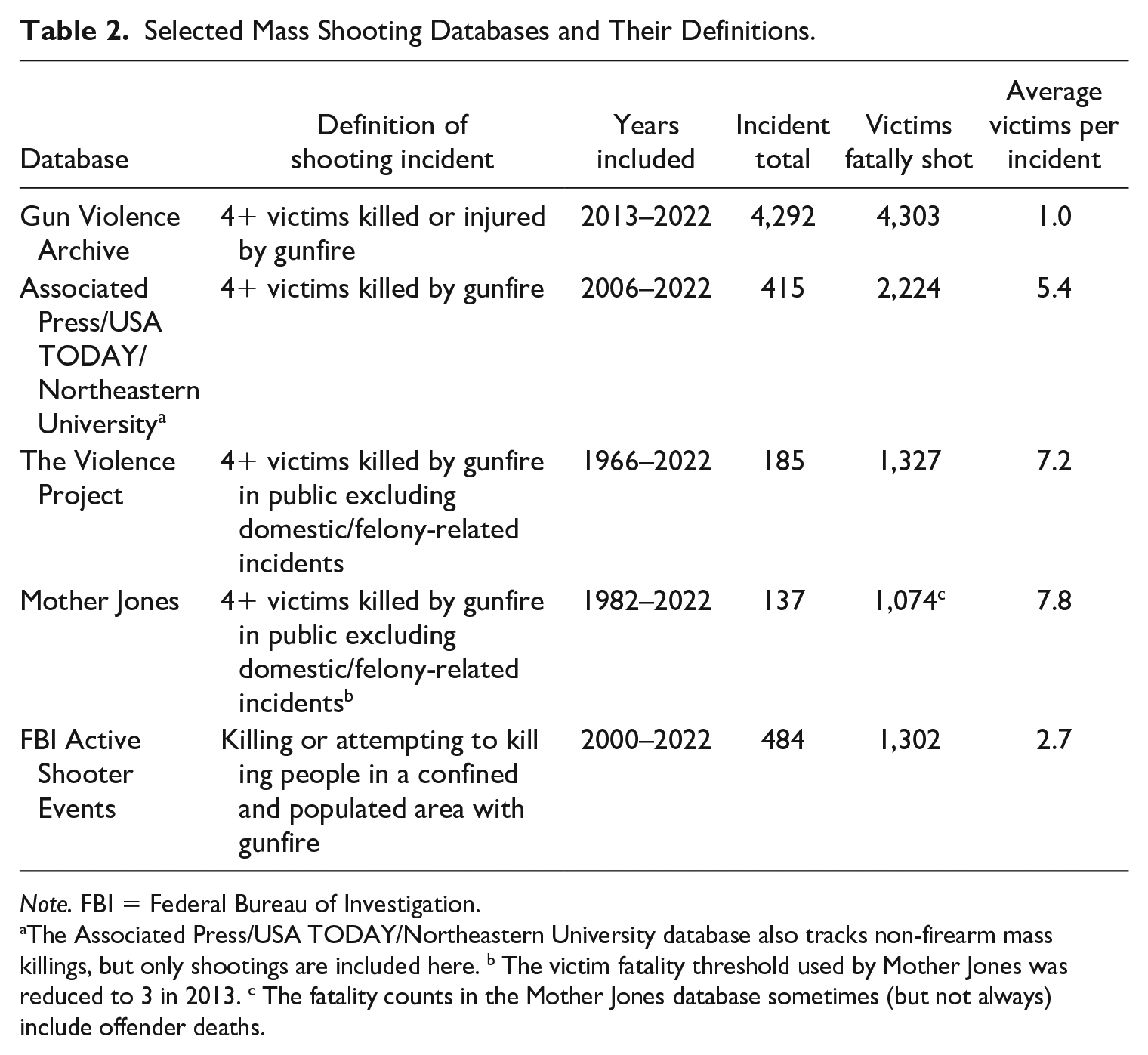
Note. FBI = Federal Bureau of Investigation.
The Associated Press/USA TODAY/Northeastern University database also tracks non-firearm mass killings, but only shootings are included here. b The victim fatality threshold used by Mother Jones was reduced to 3 in 2013. c The fatality counts in the Mother Jones database sometimes (but not always) include offender deaths.
Four or more victims shot (but not necessarily killed), used, for example, by the Gun Violence Archive (see gunviolencearchive.org). There are several hundred mass shootings per year in the United States by this definition, averaging one fatality per incident.
Four or more victims killed by gunfire, used, for example, by the Associated Press/USA TODAY/Northeastern University Mass Killing Database (see masskilling.usatoday.com). There are approximately two dozen mass shootings annually according to this definition, with an average of nearly five and one-half victim deaths per incident.
Four or more victims killed by gunfire in a public setting not involving ongoing criminal activity such as gang conflict or drug trafficking—a subset of the second definition often referred to as “public mass shootings”—is used, for example, by The Violence Project (see theviolenceproject.org). There are generally fewer than a half dozen such incidents per year by this definition, claiming an average of more than seven victim fatalities per incident.
Methodological Issues With Mass Shooting Trend Measurement
There are pitfalls associated with most any attempt to establish the trend in some social phenomenon, such as mass shootings. Specifically, the problem of missing data arises when gathering cases retrospectively or when the information is hard to locate, even when collecting data concurrently.
In 2014, the FBI in collaboration with Texas State University launched a data series on active shooter events, defined as episodes in which “an individual [is] actively engaged in killing or attempting to kill people in a confined and populated area” (Blair & Schweit, 2014, p. 5), reaching back to 2000 for cases. In their initial report on active shooter events from 2000 through 2013, the FBI claimed there to have been a staggering threefold increase in active shooter events, which was misreported in the media as an increase in mass shootings. 1
But the problem with that conclusion regarding an upward trajectory was more than just a misunderstanding of the terminology. It was immediately apparent that some cases were missing from the early years—even some well-known incidents such as the October 2002 fatal shooting of three professors at the University of Arizona by a 41-year-old nursing student who in advance of his rampage had sent a letter to the newspaper complaining about faculty with excessive hubris. Several years later, the FBI released an update covering the years 2000 to 2019 with 28 additional cases that had previously been overlooked (Federal Bureau of Investigation [FBI], 2021).
Unfortunately, the update with the newly found incidents may not have completely resolved the missing data problem. Shootings with large numbers killed are relatively easy to identify—not so when there are no fatalities. Evidence of missingness bias is apparent when comparing the FBI’s active shooter data from the early and later years. In the first 6 years of the data set (2000–2005), where cases were identified retrospectively, 10% of the gunmen failed to kill anyone. By contrast, in the last 6 years covered in the updated report (2014–2019), where cases were identified contemporaneously, 29% of the assailants failed to kill anyone. Although some of this threefold increase in the share of nonfatal incidents may be linked to improved police response, most likely it reflects an inability to capture less serious cases in the earlier years that may not have been covered by major newspapers. Moreover, even if a nonfatal shooting did get reported in the local press, it could have been easily overlooked in searches of news archives for years when the term “active shooter” was relatively obscure. Although the term has been used in law enforcement circles since 1999, following the Columbine High School massacre, it did not appear in daily newspapers until 2006.
In 2012, Mother Jones reached back three decades, to 1982, in creating a database of “indiscriminate rampages in public places resulting in four or more victims being killed by the attacker” (see Follman et al., 2012). 2 A year later, after President Obama signed the Investigative Assistance for Violent Crimes Act of 2012 defining mass shootings as incidents with at least three victim fatalities, Mother Jones decided to follow suit. 3 Importantly, Mother Jones chose to apply the lowered minimum only to cases going forward, but not to attempt to update its database with three-victim mass shootings for the years prior to 2013. 4 Mother Jones recognized that an attempt to find cases with three victims going back as far as 1982 would be a major undertaking and a significant challenge without any assurance of a successful outcome (see M. Follman, personal communication, May 14, 2023).
Non-Deadly Mass Shootings
Given that nothing in the term “mass shooting” necessarily indicates death, some researchers and news organizations have opted for a definition that includes in the victim-count threshold those who were fatally shot as well as those who were fortunate to survive their injuries. Most notably, the Gun Violence Archive (GVA), a prominent online data source established in 2013, defines a mass shooting as an incident in which four or more victims are shot, be they dead or alive. As shown in Figure 3, the GVA counts have risen over a 10-year time span, increasing from fewer than 300 in both 2013 and 2014 to well over 600 by 2020. 5 The GVA statistics have become a popular source for news outlets, especially when the intent is to run attention-grabbing headlines indicating that mass shootings have soared in recent years, with hundreds occurring every year. No wonder so many Americans are afraid, believing that mass shootings are a raging epidemic.
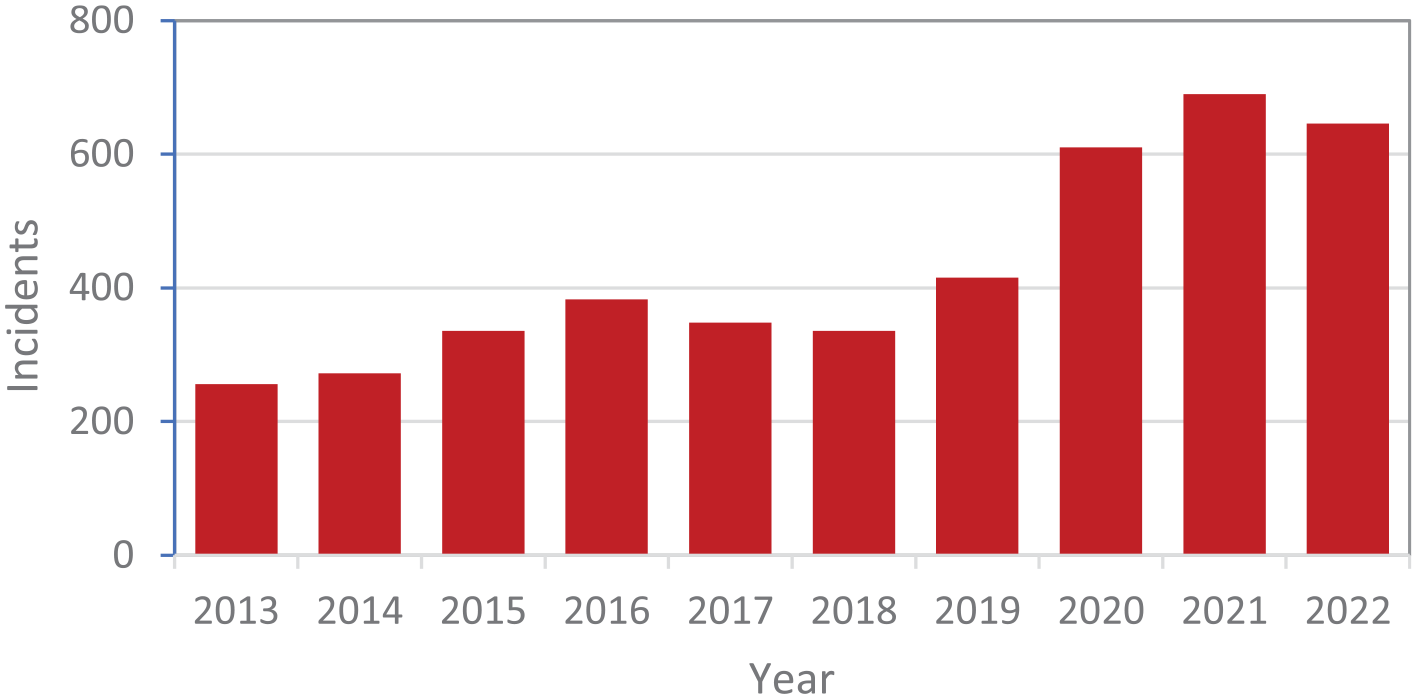
Mass Shootings With 4+ Victims Killed or Injured, 2013–2022.
The painful and debilitating injuries that gunshot survivors often endure are hardly insignificant. However, death is different. Not only is death obviously more serious than a survivable injury, but there are no gradations of death, unlike injuries that can range from minor to critical. Conflating injuries with fatalities can be terribly misleading. Of the 4,292 mass shootings from 2013 to 2022 in the GVA database, only 229 (or 5.3%) reached the four-victim fatality threshold typically used for a mass killing. Nearly half (47.4%) of the GVA mass shooting cases resulted in no victim fatalities, and more than three-quarters (77.1%) involved at most one homicide. Some defenders of this broad definition argue that there could have been more fatalities had there not been a speedy and effective police response. However, without massive media coverage of grieving family members, funerals, and remembrances, non-fatal shootings, even those with a significant number of injured victims, do not have nearly the same impact on policy or public sentiment.
Mass confusion arises when figures associated with the broadest notion of mass shooting are referenced by the media in their reporting on an incident of much greater severity (Fox & Levin, 2015). Unfortunately, the GVA counts of mass shootings are often invoked to portray a horrific shooting with double-digit death tolls as commonplace—the “new normal” as some contend (Holt & Gosk, 2018). News stories about mass killings often cite GVA statistics as context, showing more “mass shootings than days” (e.g., Silverstein, 2020), leading some Americans to conclude incorrectly that mass shootings like the one that killed 21 at a Texas elementary school in 2022 are happening every time they turn around.
In May 2021, for example, The New York Times (see Victor & Taylor, 2021) published what was described as a “partial list” of 13 mass shootings that had occurred up to that point in the year, noting that there were “many more” not included. However, the “partial list” of mass shootings was the entire list of mass shootings with four or more victim fatalities. The incidents not listed were the hundreds of lesser severity, half of which had no deaths. In effect, the “partial list” characterization misleadingly implied that the omitted incidents were similar in nature to the 13 deadliest ones listed.
Another source of confusion involves active-shooter events discussed above. Imprecise reporting on these episodes can easily deceive the public, inadvertently creating panic. News stories often conflate active shooter events with mass shootings. However, most of these wannabe mass killers fail to realize their goal. Nearly half of all active-shooter events result in at most one victim fatality. One-quarter of them involve no deaths, and some result in no one even being injured.
It is important to acknowledge, however, that in some instances, whether a shooting qualifies as a mass killing is simply a matter of opportunity, the assailant’s marksmanship skill, the nature of the weaponry, or the availability of medical treatment. Also, some family shootings are not considered mass killings only because there were not enough people in the household to reach a four-victim threshold. However, for the purposes of analysis, definitions need to be clear, reliable, and easy to apply. In the case of a mass shooting, for example, including injuries becomes problematic. Should someone suffering a life-threatening gunshot wound and someone grazed by a bullet both count equally toward the tally? The two are qualitatively very different. Even further, under some conceptualizations, barely injuring four people counts as a mass shooting, but killing three does not, despite the fact that the latter is far more serious. While a strict four-victim fatality threshold is certainly not perfect, and arguably arbitrary, at least it is unambiguous and avoids these thorny distinctions.
Trends in Deadly Mass Shootings
In 2011, the USA TODAY data team launched an initiative to assemble a database of shootings (as well as assaults by other means) that resulted in four or more victim fatalities within 24 hours (see Miller, 2015). Even with a large staff and resources of the Gannett network of newspapers around the country, it was determined that extending back more than 5 years—earlier than 2006—would be too great a challenge and increase the risk of missing qualifying cases. It would be difficult not only to identify cases prior to 2006, but to track down certain details about the incidents and those individuals involved (J. L. Upton, personal communication, May 16, 2023).
By 2018, the data collection effort was on the verge of being discontinued largely because of turnover in personnel involved in the initiative. However, Meghan Hoyer, a former member of the USA TODAY staff who had moved on to the Associated Press, reached out to USA TODAY and Northeastern University to forge a partnership to extend and expand the database. By the end of 2022, the Associated Press/USA TODAY/Northeastern University Mass Killing Database of incidents with at least four victim fatalities, regardless of location or victim-offender relationship, included 415 mass shootings with a total of 2,224 victims killed since 2006. Although most of the media attention and public concern focuses on shootings in public places, the database includes family massacres (which constitute 45% of the cases) and shootings associated with ongoing criminal activity, such as gang conflict and illegal drug trade (which are 23% of cases), as these victims are just as dead and should not be ignored.
Based on this database, Figure 4 displays trends in deadly mass shootings since 2006 by type of incident. As shown, there wasn’t any noticeable change in overall incident counts from 2006 through 2018. However, since then, with the exception of 2000 when the nation and many activities paused during the height of the COVID-19 pandemic, there has been an uptick in deadly mass shootings. Overall, some increase over the 17-year time span could, of course, have been expected in view of the 12% growth in the U.S. population during those years.
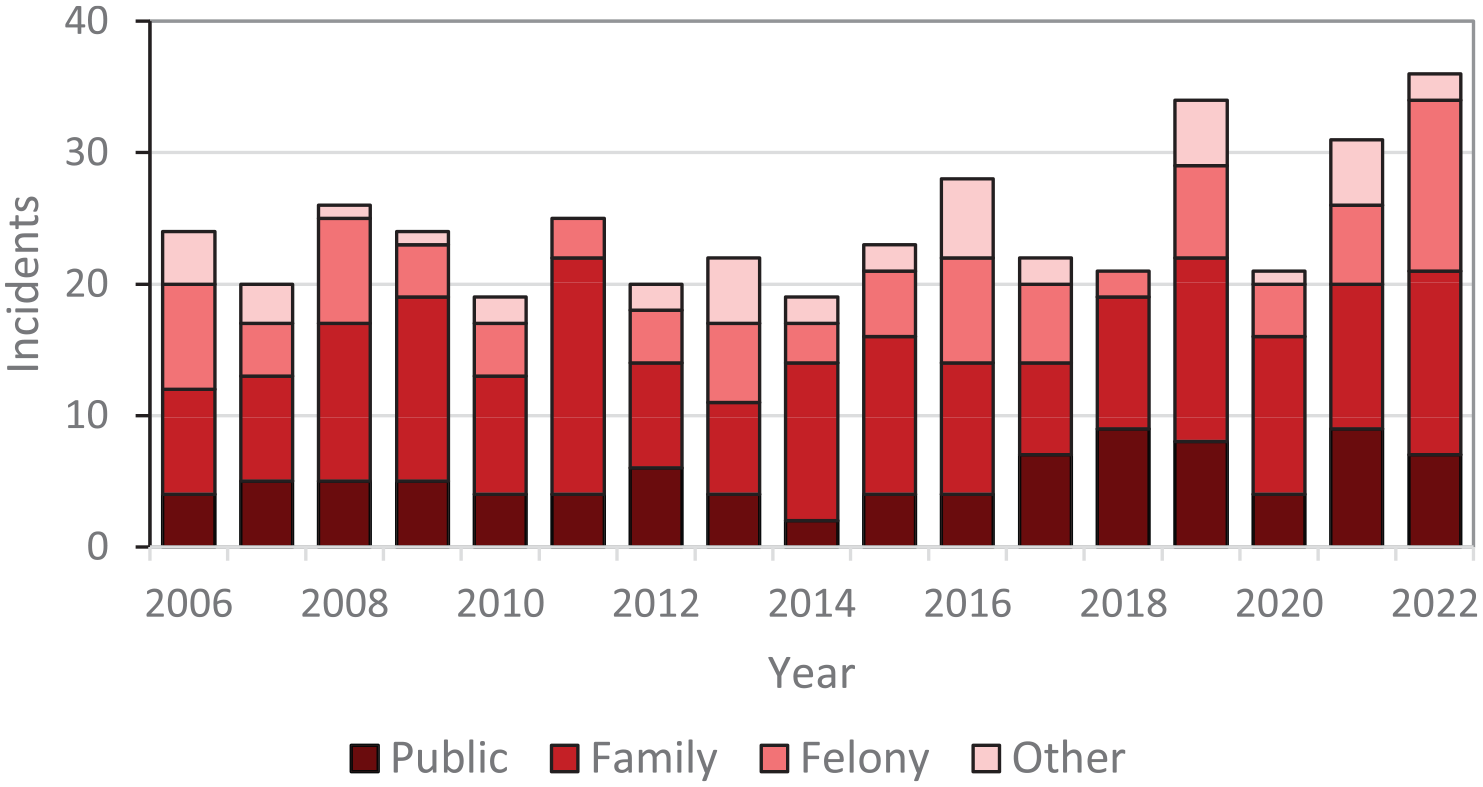
Mass Shootings by Type of Incident, 2006–2022.
Figure 5 shows trends in the aggregate count of victims killed each year by type of incident. There appears to be a sizable jump in total fatalities between the first 10 years of the timeframe and those since 2016. However, this spike was primarily linked to a few public shootings with especially large numbers of victims killed—49 at Orlando’s Pulse Nightclub in 2016; 60 at a Las Vegas concert and 25 at a Sutherland Springs, TX church, both in 2017; 17 at the Marjory Stoneman Douglas High School in Parkland, FL, in 2018; 23 in the massacre at an El Paso Walmart in 2019; and 21 at the Robb Elementary School in Uvalde, TX, in 2022.
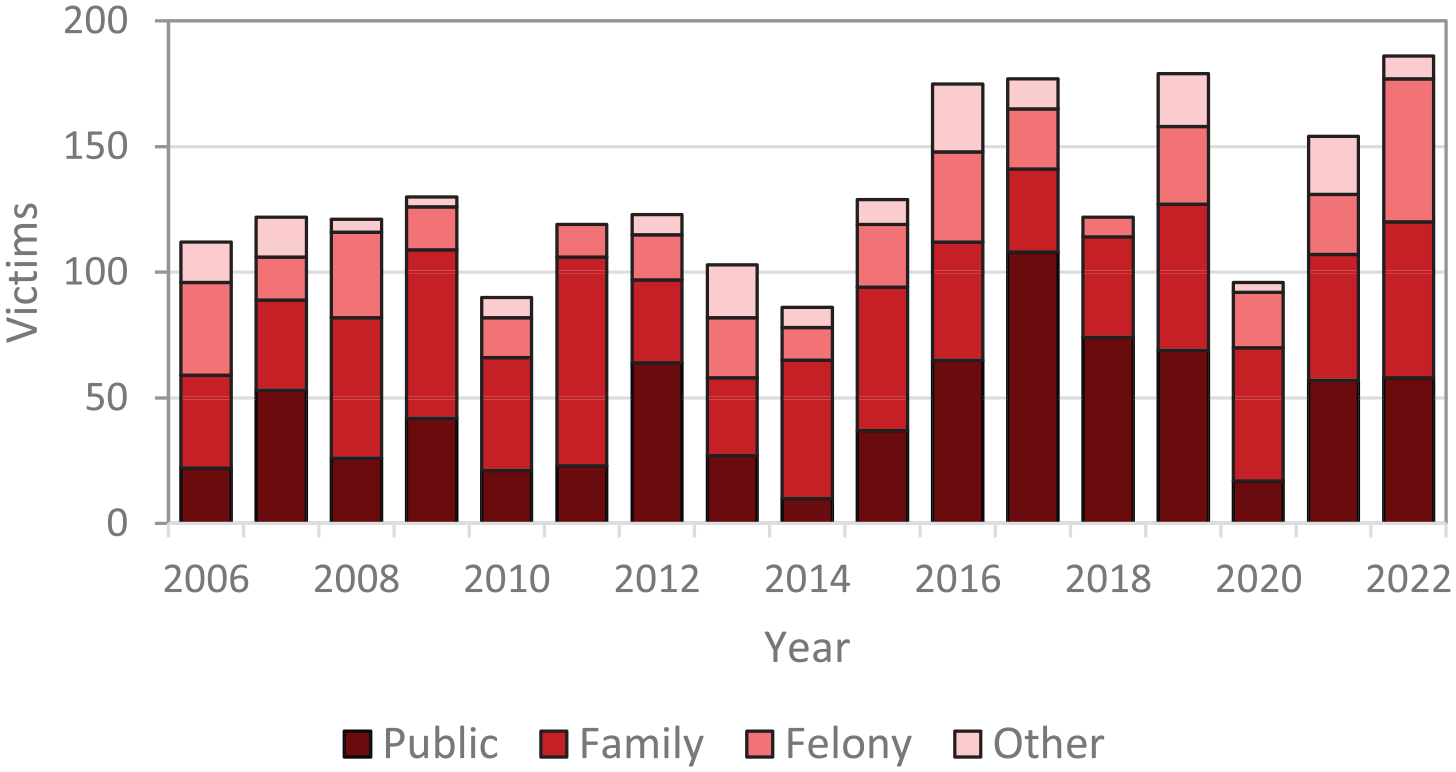
Mass Shooting Victims by Type of Incident, 2006–2022.
Trends in Public Mass Shootings
Mass shootings in public settings claiming the lives of multiple victims gunned down indiscriminately clearly receive most of the media attention and serve as the basis for considerable public anxiety and fear. Although constituting only about one-quarter of all deadly mass shootings, massacres in schools, houses of worship, retail stores, and entertainment venues diminish the public’s sense of safety and dominate debates over gun control. Indeed, most Americans do not feel personally threatened by family or felony-related mass shootings. By contrast, public mass shootings can victimize anyone, anywhere, at any time, and without warning.
Several database initiatives have focused exclusively on these high-profile incidents. Unlike the missing data concerns described earlier associated with identifying past active shooter events, some of which involve no fatalities or even no injuries whatsoever, efforts to develop databases of public mass shootings can be virtually assured of locating every incident from the distant past given that these massacres tend to make headlines nationally and stay newsworthy for days, if not weeks after the event. The Violence Project and Fox et al. (2022) successfully assembled long-term databases of public mass shootings with at least four victim fatalities (absent any link to an ongoing criminal enterprise), with but a few discrepancies that are likely the result of slight differences in inclusion criteria. 6
Figure 6 shows the trend in public mass shootings since 1980 based on data from Fox/Duwe/Rocque updated through 2022. As shown, the incident counts more than doubled over the four-plus decades, with annual averages of 2.6 cases in the 1980s, 3.5 cases in the 1990s, 4.1 cases in the 2000s, and 5.7 cases from 2010 onward. Part of this increase is a function of population expansion—nearly 50% over the 1980–2022 timeframe. In terms of incident rate per 100 million population, the increase is attenuated, nearly doubling over the four-plus decades: specifically, a rate per 100 million of 1.1 in the 1980s, 1.3 in the 1990s, 1.4 in the 2000s, and 1.8 from 2010 onward. Whatever the metric, these incidents remain rare, considering the U.S. population now exceeds 330 million.
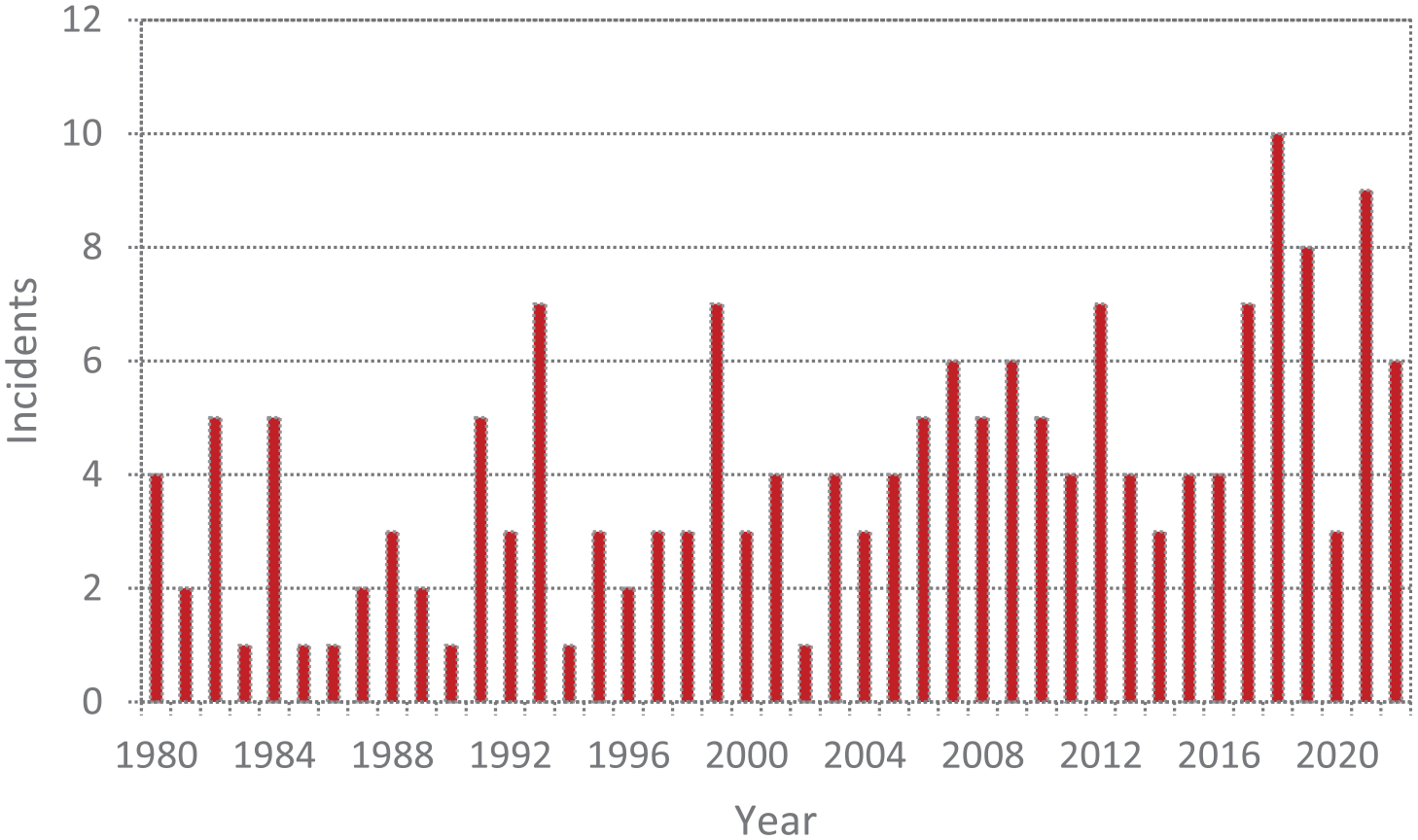
Public Mass Shooting Incidents, 1980–2022.
The COVID-19 pandemic resulted in a drop-off in cases, with only four mass public shootings occurring in 2020. In fact, there were only two after mid-March of that year, once the pandemic altered our way of life. The virtual lockdown of the country forced many public venues to shutter, making it unlikely, if not impossible, for there to be a mass shooting at a school, movie theater, or house of worship. Moreover, smaller gatherings may not have been as enticing to would-be assailants seeking infamy. Unfortunately, the number of public mass shootings rebounded after 2020, just as the nation gradually returned to some semblance of normalcy.
Figure 7 displays the long-term trend in mass public shooting fatalities, also showing a threefold increase in aggregate victim counts over the several decades, with an average annual victim total of 16.3 in the 1980s, 20.1 in the 1990s, 25.3 in the 2000s, and 48.9 from 2010 onward. Accounting for population growth, the increase in victimization rate per 100 million is somewhat moderated: 6.9 in the 1980s, 7.6 in the 1990s, 8.5 in the 2000s, but then jumping to 15.1 from 2010 onward. Aside from population growth, aggregate victim counts are partly a function of the sheer number of incidents and partly a function of the severity of those incidents.
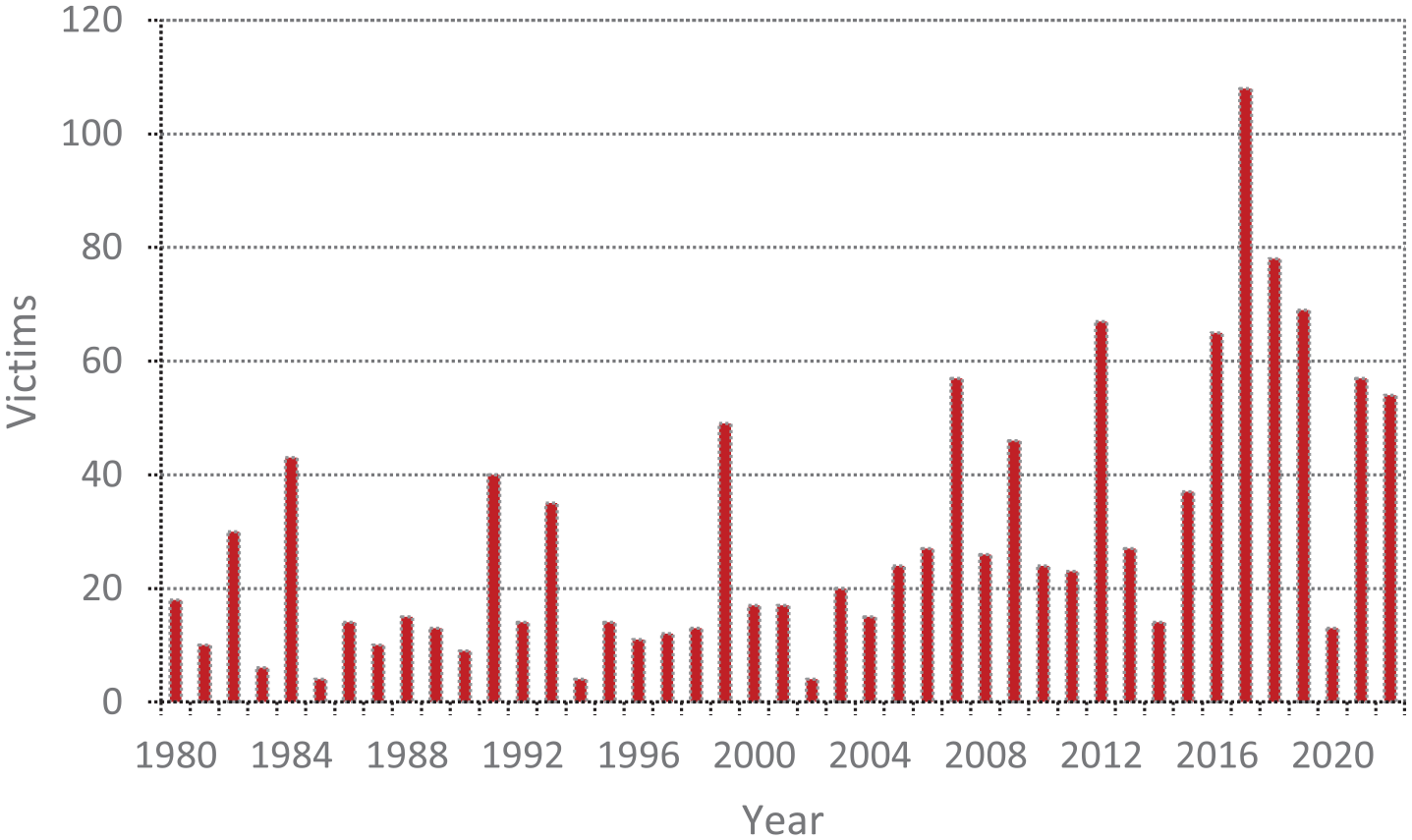
Public Mass Shooting Victim Total, 1980–2022.
Figure 8 isolates changes in the average severity of mass public shootings, not associated with any shifts in their frequency. Except for random fluctuations, the average number of victims killed per incident remained fairly stable at about a half-dozen up through 2014, after which the average victim toll increased primarily owing to the handful of shootings with unusually large death tolls noted above.
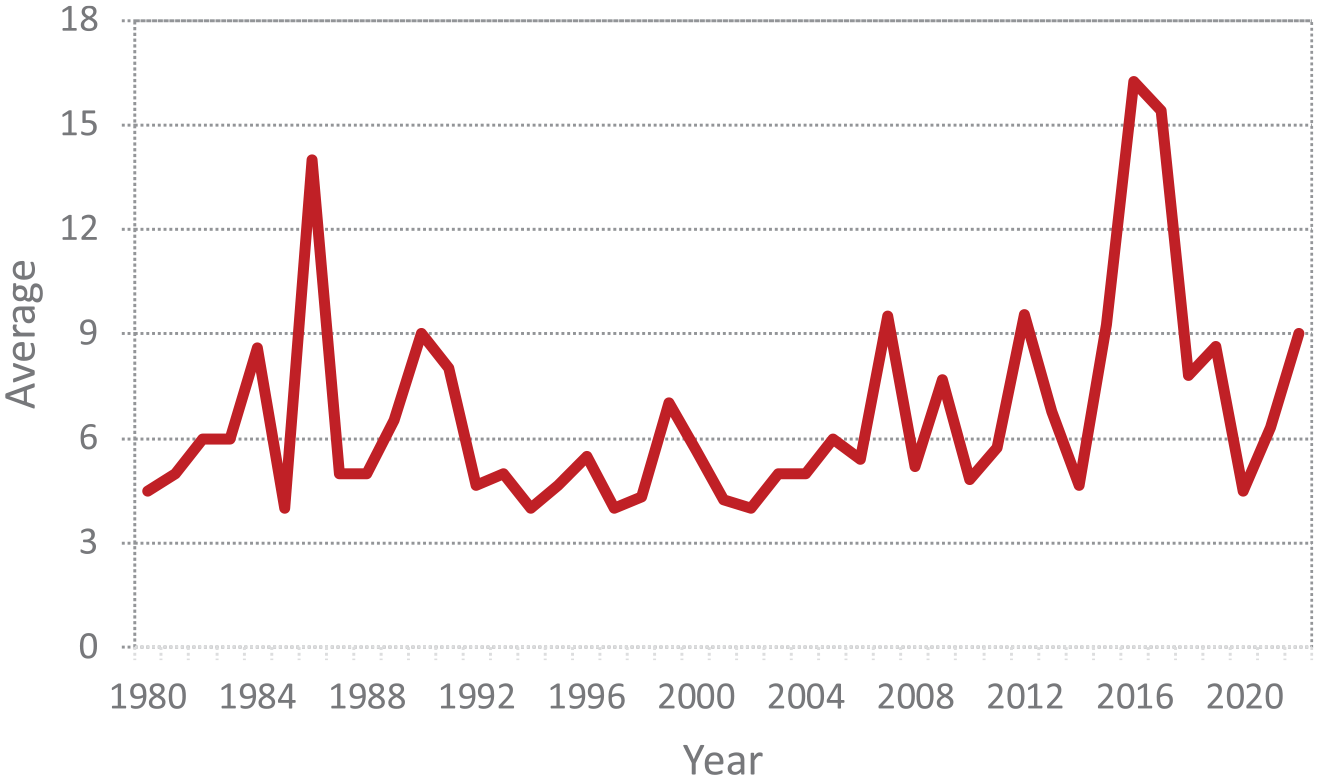
Average Victim Count in Public Mass Shootings, 1980–2022.
The recent trend in severity begs the question as to what the future might hold, particularly given the recent growth in gun sales, especially AR-15 style rifles (see Schuppe & Wu, 2023) as well as the increasing political polarization and widening cultural divide in the country. Procedures developed in other fields for estimating the future likelihood of rare catastrophic events—such as earthquakes that exceed 7.0 on the Richter scale or terrorist attacks that are similar in magnitude to that of September 11, 2001—can be applied here as well. Noting that the frequency and severity of indiscriminate mass shootings follow a pattern resembling these other rare, catastrophic events, Duwe et al. (2022) utilized similar procedures to forecast the future severity of public mass shootings within the United States. Using a data set containing 156 shootings that took place between 1976 and 2018, they generated a forecast of the future probability of attacks reaching each of a variety of severity levels in terms of the number of victims killed and wounded by gunfire. They determined that the probability of another shooting as deadly as the 2017 massacre in Las Vegas (i.e., resulting in at least 60 fatalities) occurring before the year 2040 is 30%, but with a rather wide uncertainty range (from 8% to 72%).
Contagion or Random Clustering?
Some scholars contend that mass shootings are contagious, spreading violence through society like a virus. The concepts of copycatting and contagion, although often used interchangeably, are somewhat distinct. Whereas copycatting refers to an attempt, be it successful or not, by an individual who is inspired by a crime committed by someone admired, contagion is a more general process by which highly publicized crimes increase the statistical likelihood of similar offenses in the near future.
The contagion hypothesis received a significant boost from a widely publicized study by Towers et al. (2015), who found that each mass shooting tends to produce an average of 0.2–0.3 attacks in the ensuing 2 weeks. Although this study was motivated by the proposition that media attention produces the contagion effect, its claim of a short-term contagion was based on modeling that did not actually include any measure of media coverage. Implicit in the analysis, therefore, were the dual implausible assumptions that all mass shootings receive substantial media coverage and that all types of massacres are equally contagious.
Analyzing the timing of mass shootings and the extent of daily news coverage of such events from 2000 to 2018 using a multivariate point process approach, Fox et al. (2021) failed to find compelling evidence of media-based contagion. Whereas mass shootings tend to increase (excite) the amount of related news coverage, news coverage of mass shootings does not tend to increase (excite) the incidence of mass shootings, at least over a period of several weeks. That there appears to be some temporal clustering of events does not necessarily mean that media coverage of mass shootings leads to a heightened risk of additional incidents as a result. As Lankford and Tomek (2018, p. 260) point out, “Incident clusters could theoretically be attributable to many other social and environmental factors, such as political cycles, stock market gains or losses, or other news events unrelated to crime.” Of course, clustering can also reflect the operation of pure chance or coincidence.
Even though there does not appear to be contagion linked to newspaper and television coverage, a different form of contagion—one that is associated with the social climate of fear—may be much more pervasive and powerful. Excessive worry over the risk of mass shootings and endless discussions of the issue among neighbors and on social media may play into the mindsets of malcontents and hatemongers. The public’s obsession over a rare, although awful, event can serve as a constant reminder for angry and dispirited individuals that the standard course of action in response to profound disappointment and sense of injustice is to pick up a gun and open fire on those perceived to be responsible.
A prime example of how social contagion builds and then dissipates can be found in the string of school shootings that emerged in the late 1990s. Between 1996 and early 2001, eight school shootings with four or more victims, at least two of whom were killed, were perpetrated by alienated students against their peers amid a growing climate of fear regarding school safety (see Fox & Burstein, 2010). President Bill Clinton became so distressed, especially after a school shooting in his home state of Arkansas, that he convened a White House advisory committee on school shootings. Meanwhile, the U.S. Department of Education published a detailed guide on school shooting warning signs and distributed the booklet to every school in America. By March 2001, following a deadly shooting at a high school in suburban San Diego, widely revered CBS News anchor Dan Rather declared school shootings a national epidemic. Months later, just as the new school year had begun, something even more terrifying occurred: the September 11th attack on America. Immediately, the focus turned to this new threat to the nation’s safety and security. Americans’ fears centered on terror from abroad, not from within school settings. Remarkably, as students and their parents ceased being preoccupied with the idea of school shootings, there wasn’t another multiple-victim K-12 school shooting for 4 years.
Toning down the hype and hysteria surrounding mass shootings does not mean the problem should be ignored. Even though they do not represent an epidemic, mass shootings remain a significant problem, necessitating calm deliberation in search of effective gun safety measures.
Forging a New Record?
Following the May 6, 2023, shooting deaths of eight victims at a premium outlet mall in Allen, TX, the number of deadly mass killings in the year had reached 22, according to the Associated Press/USA TODAY/Northeastern University Database, more than any other year at that juncture since 2006, and most likely ever. It was also the sixth public mass shooting, also more than any other year by that date. This “record” became the focus of much news coverage around the country, speculating on whether 2023 would ultimately set a new high mark for mass shootings. It is, of course, wrong to assume that the last eight months of the year would mimic the first four. With rare events like mass shootings, one can be easily misled by short-term clustering. For example, there were 15 deadly mass shootings in the 50 days between October 4 and November 26 of 2022, whereas typically (on average) it takes more than 200 days for that number of incidents to occur. Much was written in the press about the surge in mass shootings leading up to Thanksgiving that year, giving a rather different meaning to “Black Friday.” Then there wasn’t another mass shooting until January 4, 2023—43 days without an incident.
Whatever happens during the latter part of 2023 and beyond, the spike in mass shootings since 2021 suggests certain underlying factors contributing to the increased bloodshed. Partly, it may be the result of recent growth in gun sales, especially AR-15 style weapons, as well as a post-COVID increase in the number of Americans who are hurting emotionally or economically. Given these factors, as well as the deep political divide in the country, the recent surge in horrific, albeit still rare, deadly mass shootings is worrisome. However, in light of the usual fluctuation in the occurrence of such events, the recent spike may prove to be short-lived. Hopefully that will turn out to be the case.
Supplemental Material
sj-xlsx-1-ccj-10.1177_10439862231189987 – Supplemental material for Trends in U.S. Mass Shootings: Facts, Fears and Fatalities
Supplemental material, sj-xlsx-1-ccj-10.1177_10439862231189987 for Trends in U.S. Mass Shootings: Facts, Fears and Fatalities by James Alan Fox in Journal of Contemporary Criminal Justice
Footnotes
Declaration of Conflicting Interests
The author(s) declared no potential conflicts of interest with respect to the research, authorship, and/or publication of this article.
Funding
The author(s) received no financial support for the research, authorship, and/or publication of this article.
Notes
Author Biography
References
Supplementary Material
Please find the following supplemental material available below.
For Open Access articles published under a Creative Commons License, all supplemental material carries the same license as the article it is associated with.
For non-Open Access articles published, all supplemental material carries a non-exclusive license, and permission requests for re-use of supplemental material or any part of supplemental material shall be sent directly to the copyright owner as specified in the copyright notice associated with the article.
