




Abstract
This study investigates the space-temporal growth of homicide rates in Brazil from 2000 to 2017 and identifies determinants of the country’s growth of homicide rates. Data from the Brazilian Information System on Mortality and Censuses are used to estimate growth models combined with spatial statistics and Geographical Information Systems (GIS). Findings show evidence of change in the geographical distribution of lethal violence over time, characterized by a steady increase in the North and Northeast regions and a reduction in growth in the South and Southeast regions of Brazil. Social disorganization factors namely deprivation, ethnic heterogeneity, and urbanization are significant positive determinants of the growth of homicide rates. The results show a reduction of the predictive strength of income inequality and an increase in that of unemployment from the year 2010 to 2017. The theoretical and policy implications of these results are discussed.
Introduction
Brazil has one of the highest homicide rates in the world and, according to Cerqueira et al. (2019), a historically high rate was observed in the year 2017 (around 31.6 homicides per 100.000 population). In the year 2016, this rate was around 30.3, which was three times the world average; twice the average of countries in America; 30 times the average of countries in Europe. This makes Brazil a relevant case study on lethal violence in the international literature.
Apart from the expressively high rate of lethal violence in Brazil, empirical studies have alerted concerning the changing growth pattern of this crime across Brazilian regions over time (Ceccato & Ceccato, 2017; Andrade & Diniz, 2013; Justus et al., 2018; Scorzafave et al., 2015; Soares Filho et al, 2020; Waiselfisz, 2011). For instance, Scorzafave et al. (2015) found that crime rates are higher in urban areas but have been increasing more in rural areas while Justus et al. (2018) investigated the “mystery” around the striking reduction of homicides in the State of São Paulo in the 2000s. These findings are in line with the observation made by Waiselfisz (2011) regarding “new patterns” of the geographic distribution of homicide rates in the 2000s, whereby crime clusters are expanding from capital cities and metropolitan areas to the inland and smaller cities. Andrade and Diniz (2013) concluded that such increasing growth of homicide rates in inland municipalities is largely due to their changing economic dynamics.
This study builds on the evidence from previous empirical studies from Brazil and uses the social disorganization theoretical framework developed by Shaw and Mckay (1942) and extended by Sampson and Groves (1989). Therefore, this study posits that the effect of economic dynamics on the spatial and temporal growth pattern of lethal violence observed by Andrade and Diniz (2013) for Brazil is only part of a bigger picture—changes in social disorganization factors, among which, in this study, the focus is given to economic deprivation, population heterogeneity, and urbanization.
The main objective of this study is to investigate the space-temporal growth of homicide rates in Brazil from 2000 to 2017 and identify predictors of its growth. First, the spatial clusters of homicide rates are identified at the municipal level and their geographical evolution is evidenced. Subsequently, the temporal growth pattern of homicide rates is descriptively and empirically assessed. Finally, the determinants of the growth of these rates are identified bearing on the social disorganization theoretical framework and acknowledging the spatial and temporal patterns observed in the first two stages.
The novelty of this study is the combination of homicide growth models and the use of spatial statistics and GIS (geographical information systems) in identifying significant space-temporal patterns and the evolution of homicide rates over time. Accordingly, these patterns are controlled in the empirical model used in investigating predictors of homicide rates.
Theory and Hypotheses
The Spatial Concentration of Lethal Violence
Crime does not happen randomly in space or time and research has shown that homicides, in particular, tend to show highly concentrated patterns (Cohen & Felson, 1979; Newton & Felson, 2015). These concentrations often have a disproportionally high rate of crime taking into account the distribution of crime over a whole area. This temporal and spatial stability has attracted the attention of many scholars to the point that some provide clear evidence of the so-called “law of crime concentration at places” (Braga et al., 2017). In statistics, crime hotspots—locations of high crime rate surrounded by locations of high crime rate (Anselin et al., 2000) have been measured using indicators of spatial association and have been extensively tested in the international literature at country scales (e.g., Brooks, 2019; Ceccato et al., 2018; Plassa et al., 2020). The commonly used statistics are Moran’s I and the Local Indicator of Spatial Association (LISA), which are calculated as

where
Growth of Lethal Violence: An Economic Perspective
Trends of violence are commonly explained in the criminological literature using specific events in time and space, but there is a lack of a general theoretical framework of the growth of homicide rates across a country. The rise in violence in the United States in the 1980s is associated with the appearance of cocaine in the drug market and the decline observed in the 1990s is associated with stricter gun laws, economic development, and policing (Blumstein et al., 2000). Although similar trends were observed in Australia during the same period, most homicides were associated with interpersonal violence (Mukherjee, 2002). Similarly to the United States, the increase and spread of homicides in Brazil in the 2000s is commonly attributed to demography and criminal organizations (Cerqueira et al., 2019; Waiselfisz, 2011).
An alternative is to draw on growth theories from other fields, whereby this study resorts to the growth model developed and commonly applied in economics (Mankiw et al., 1992; Solow, 1970). This economic growth model characterizes the growth pattern in contexts whereby countries of different economic maturity, that is, size of gross domestic product (GDP), grow at different rates. In the economic framework, developed countries experience lower growth rates and developing countries grow at increasing rates. This growth pattern is analogous to that observed by Waiselfisz (2011) and Scorzafave et al. (2015) regarding property crime and lethal violence in Brazil. In economics, the growth of income is restricted due to the physical limits of capital, whereas, in criminology, the growth of homicide rates of a location is restricted, at maximum, to the population size of the location in question.
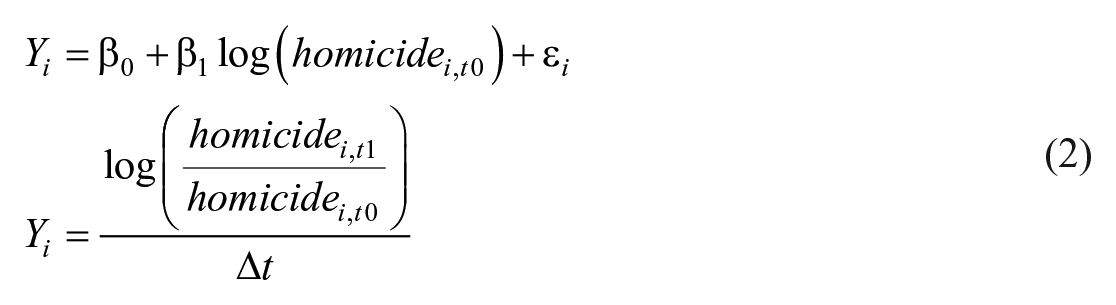
The growth model is implemented by the regression of the growth of homicide rates from an initial period
where
Structural Determinants of Crime and Violence
One of the prominent theories that explain deviant behavior in the international literature on criminology is the social disorganization theory developed by Shaw and McKay (1942). Social disorganization, in this framework, is the inability of local communities to realize the common values or solve commonly experienced problems of their residents. These authors identified that economic deprivation, ethnic heterogeneity, and residential mobility increase social disorganization, which, in turn, increases the rate of crime and delinquency. Specifically, low economic status increases the population turnover of a specific location, leading to population heterogeneity over time. Such a location would concentrate individuals with weak social ties, whereby commitment to group-oriented values is reduced. In such a context, the social cost of deviation within the group becomes lower, and offending becomes very likely. Therefore, in this theoretical framework, the motivation for crime is not individually originated but stimulated by the physical and social environment of individuals. Shaw and McKay (1942) also found empirical evidence that, apart from socially disorganized communities having higher rates of crime, these rates persist irrespective of the population turnover of the community over time, thus, creating a persistent subculture of crime and delinquency. That is, crimes tend to follow specific spatial distribution and persistence over time.
Although the classical social disorganization theory does not explicitly examine how crime locations change in response to ecological changes due to urbanization, significant extensions have been made in this direction in subsequent studies (Bursik, 1988). Apart from the three social disorganization factors forwarded by Shaw and McKay (1942), Sampson and Groves (1989) made extensions by including family disruption and urbanization. Similarly, Kawachi et al. (1999) argued that social cohesion, which measures social control, is also largely affected by inequality levels and, consequently, should be included in the social disorganization model. Kubrin and Weitzer (2003) suggested the methodological dynamic controls that address changes in neighborhood ecological structures and crime; the control of reciprocal effect between social disorganization and crime; the control of neighborhood contextual effect on the individual outcome, and most importantly; the control of spatial interdependence of social disorganization factors and crime.
Regarding social disorganization in Brazil, many empirical studies have shown that economic deprivation, ethnic heterogeneity, inequality, and urbanization are directly linked to lethal violence in Brazil (Aransiola et al., 2021; Batella & Diniz, 2010; Ceccato et al., 2007; Fajnzylber & Araujo, 2001; Filho et al., 2007; Resende & Andrade, 2011; Plassa et al., 2020). Plassa et al. (2020) found that relative deprivation, measured using income inequality, has a greater impact on homicide rates in the Northeast region compared to other social disorganization variables. For Brazil as a whole, Aransiola et al. (2021) found that the effect of unemployment (as a measure of absolute deprivation) is higher compared to that of income inequality (measure for relative deprivation), but the predominant predictor of homicides among the listed social disorganization factor is ethnic heterogeneity. It is noteworthy to add that Sachsida et al. (2010) found no evidence of the effect of poverty on homicide rates, but agreed regarding the effect of income inequality. According to Pridemore (2011) and Aransiola et al. (2021), the abscence of effect may be due to the confounding effect of income and income inequality when controlled in the same model.
Researches on lethal violence in Brazil have shown signs of changes over time (Cerqueira et al., 2019). Waiselfisz (2011) and Waiselfisz (2016) characterize this process as the interiorization and dissemination of homicides. The interiorization of violence indicates the direction of the spread of homicide rates, whereby this crime that was initially concentrated in capitals and metropolitan areas expands to inland municipalities. The dissemination of violence characterizes the expansion of high homicide rates from few locations to several municipalities in Brazilian states. According to Andrade and Diniz (2013), this unusual growth pattern is not observed in Brazil as a whole but concentrated in specific municipalities, especially those with a high rate of deforestation, coastal tourism, and international borders. A recent study shows that the observed growth pattern is correlated with the municipality size and is persistent over time (Soares Filho et al., 2020).
Regarding population subgroups, most studies report that homicide rates have expressively higher among the brown and black ethnic groups, and predominantly higher among young men (Cerqueira et al., 2019; Filho et al., 2007). These studies also report that most of these crimes are committed using firearms, and this indicator has significantly increased over time (Cerqueira et al., 2019; Waiselfisz, 2016).
Hypotheses
In this section, we set out to investigate the space-temporal growth of homicide rates in Brazil from 2000 to 2017 and identify determinants of the country’s geography of homicides. Therefore we hypothesize that:
The first hypothesis bears on the theoretical assumption of the social disorganization theory that crime is strongly associated with space. Although the classic theory of Shaw and McKay (1942) did not explicitly address changes in crime, further development of the theory has shown that crime locations may expand due to neighboring characteristics (Bursik, 1988; Kubrin & Weitzer, 2003). In this line, it is expected that locations neighboring to high crime locations will also have high rates, that is, crime spatial concentration. The second hypothesis bears on the recurrent empirical report of the unusual growth pattern of homicide rates over time in the Brazilian literature (Andrade & Diniz, 2013; Soares Filho et al., 2020; Waiselfisz, 2011). Therefore, it is expected to find increasing crime growth in regions that had lower crime rates compared to those that already had higher rates. The third hypothesis strongly bears on the macrosocial factors identified as determinants of crime by the social disorganization theory namely, economic deprivation, inequality, ethnic heterogeneity, and urbanization (Sampson & Groves, 1989). Therefore, these variables are expected to be directly associated with homicide rates. This third hypothesis also incorporates developments and new directions suggested by Kubrin and Weitzer (2003) regarding the control of spatial dependence and temporal dynamics of crimes, thus, related to the first two hypotheses.
Data
The analyses of this article are centered on the 5,565 Brazilian municipalities for the years 2000, 2010, and 2017. These dates are chosen because the data necessary to explain the growth of homicide rates at this geographic unit is only available in the national censuses, which were last carried out in the years 2000 and 2010. Homicide count is defined as the number of deaths provoked by external causes through aggression (group X85–Y09 of the International Classification of Diseases, ICD 10), and these data were obtained from the Information System about Mortality (ISM). The counts are transformed into rates by dividing by population size and multiplying by 100,000; hence, the homicide rate by 100,000 population. The population and other socioeconomic and demographic data are obtained from national censuses available in the database of the Brazilian Institute of Geography and Statistics (IBGE).
Homicide data are skewed to the right because there are many regions with low homicide rates and few regions with high rates. These data are approximated to a normal distribution by applying the natural logarithm, and one is added to the rates of homicide before applying natural logarithm to avoid missing values in the cases where zero homicide was registered in municipalities. Natural logarithm was also applied to other dependent variables to have all results and the same measurement scale, which facilitates the interpretation of results because the coefficients become elasticities.
Methods
The empirical strategy used to verify the hypotheses of this study is a mix of descriptive and confirmatory analyses as illustrated in Figure 1. First, homicide rates and growth are presented using tables and maps. Thereafter, Hypothesis 1, regarding the spatial concentration of homicide rates, was tested using spatial cluster statistics. Hypotheses 2 and 3 on the growth pattern and determinants of homicide rates are tested using regression models. A similar methodological mix has been performed by Ceccato et al. (2007), Justus and Santos-Filho (2011), Plassa et al. (2020).
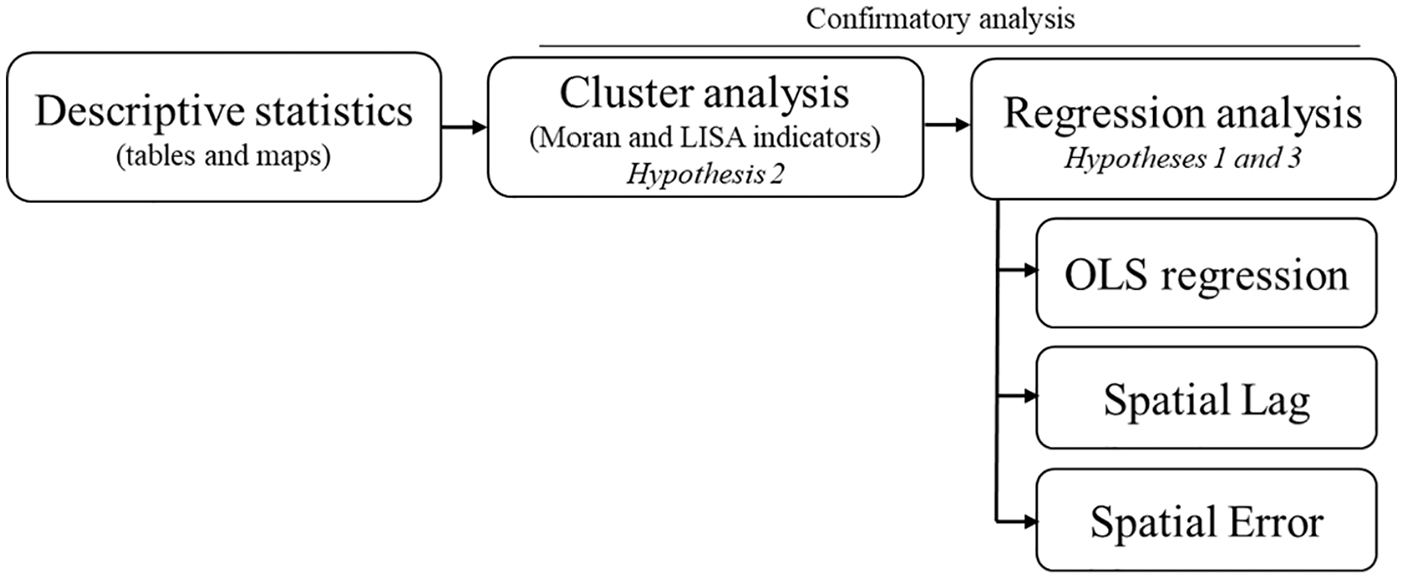
Methodological procedure.
Note that the classic ordinary least squares (OLS) regression, spatial lag, and spatial error models are estimated using the same specification, and the best fit model is chosen using due statistic tests as suggested by Anselin (2005). Table 1 presents the results and tests. The Moran’s statistics for all the models estimated using the OLS method uphold the existence of spatial correlation even after the inclusion of regressors. The coefficient of determination
Estimation Results and Tests for OLS, Spatial Lag, and Error Models.
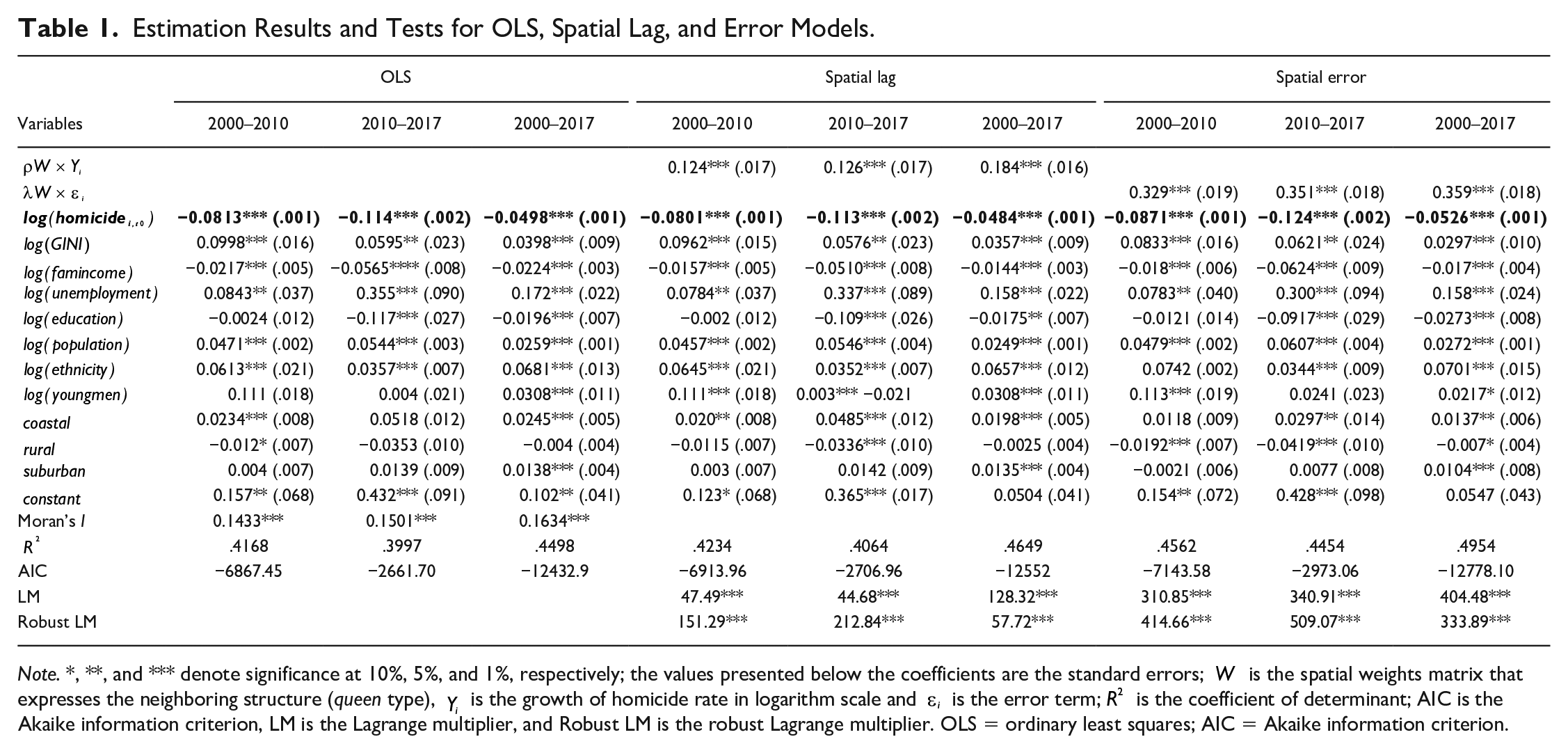
Note. *, **, and *** denote significance at 10%, 5%, and 1%, respectively; the values presented below the coefficients are the standard errors;
Detecting the Spatial Concentration of Homicides
The changes reported in previous studies regarding the geographical patterns of lethal violence in Brazil are descriptively illustrated by plotting the maps of homicide rates for the years 2000, 2010, and 2017. Besides, the spatial clustering pattern of these rates and its evolution are presented and empirically tested by calculating spatial statistics. First, the Moran’s index was calculated to verify the existence and degree of global spatial correlation of homicide rates. Subsequently, the LISA was used to show the regional clusters of homicides across municipalities. The LISA values are classified into categories of High–High (hotspot), Low–Low (coldspot), Low–High, and High–Low. For instance, a hotspot is a municipality that has a high homicide rate and is surrounded by municipalities also with high rates. Other clusters are interpreted analogously. Consult LeSage and Pace (2009) for more details concerning these spatial correlation measures.
Modeling Homicide Growth in Brazil
To test Hypothesis 2 regarding the empirical characterization of the temporal growth pattern of homicide rates, we estimate the growth model presented in Equation 1 of Section “The Spatial Concentration of Lethal Violence.” This hypothesis (H2) is confirmed if β1 in Equation 1 is significant and negative, meaning that the homicide rate of municipalities with already higher rates in the initial period increased at diminishing values during the period in question compared to those which had lower rates.
The growth speed of homicide rates and the length of time, in years, that it will take to reach halfway of a steady-state (henceforth, half-life) is given by
Identifying Determinants of Homicide Growth
To test Hypothesis 3, the growth model presented in Equation 1 is adapted to account for potential covariates and the spatial dependence of the growth of homicide rates and is expressed as

where Zi is the set of independent variables at the initial period;
Regarding model specification, the variables contained in the model to explain the growth of homicide rates are chosen based on the extension of the social disorganization theory by Sampson and Groves (1989) and the empirical evidence from the international and national literature. Apart from the importance of deprivation (income, unemployment, and inequality), urbanization, and ethnic heterogeneity supported by the social disorganization theory, control variables are included in the model based on the empirical evidence from the Brazilian literature. Specifically, the dependent variable is the growth of homicide rates as shown in Equation 1, and the independent variables are as follows: income inequality measured by the GINI index, GINI; average household income per capita, famincome; average years of schooling, education, and; unemployment rate, unemployment. The demographic controls are as follows: population size, population; an indicator developed by Blau (1977) for race/ethnicity heterogeneity calculated by subtracting one from the squared proportion of the population in each racial/ethnic group, ethnicity, and; the proportion of young men between age 20 to 29, youngmen. The geographic controls are: a binary that is 1 for coastal municipality and 0 if otherwise, coastal, and; a categorical variable for the level of urbanization—urban (reference group) for municipalities that are predominantly urbanized, suburban for municipalities with the intermediary level of urbanization and, rural for predominantly rural municipalities.
Result
Descriptive Analysis of the Trends in Regional Homicide Rates
Homicide rates increased steadily in Brazil from the year 2000 to 2017, and the spatial distribution of these rates changed over this period. According to the data from the Information System on Mortality (ISM), the rates of homicide caused by aggression were around 29.01, 29.44, and 30.70 per 100,000 persons in Brazil in the years 2000, 2010, and 2017 (Table 2). In the year 2000, the homicide rate was highest in the Southeast region followed by the Midwest, whereas, in the year 2017, the highest rates were observed in the North followed by the Northeast and the lowest in the Southeast. Regarding growth, homicide rates reduced consistently in the Southeast from the year 2000 to 2017, but more than doubled in the North and Northeast.
Homicide Rate Per 100,000 Population by Region, 2000, 2010, and 2017.
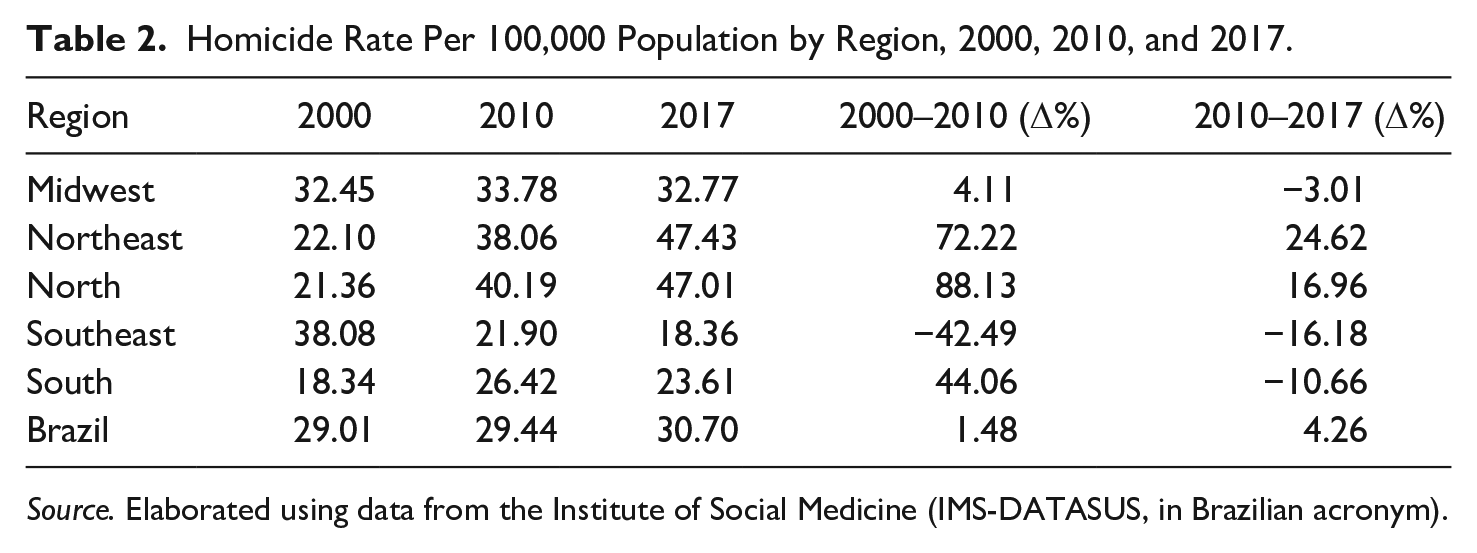
Source. Elaborated using data from the Institute of Social Medicine (IMS-DATASUS, in Brazilian acronym).
The homicide rates were calculated by municipalities and plotted in Figures 2 (a), (b), and (c) to observe greater detail of the geographical distribution and changes over time. It is clear that, in the year 2000, only very few coastal municipalities were responsible for the high homicide rate in the Southeast. In the same year, high homicide rates were spread across many municipalities of the Midwest region, especially in the states that share international borders with Bolivia and Paraguay.
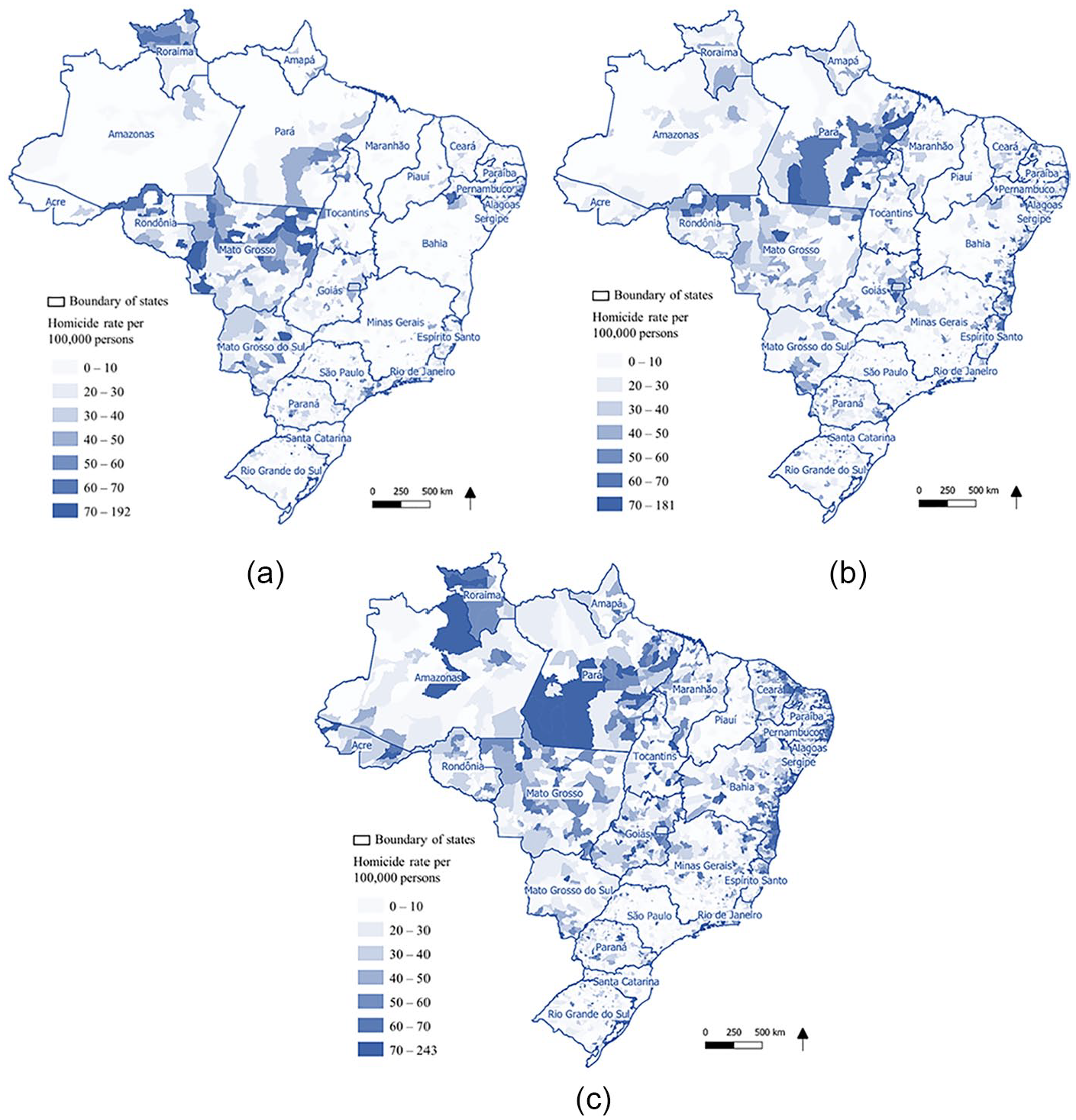
Homicide rates per 100,000 population, Brazilian municipalities: (a) homicide clusters, 2000, (b) homicide clusters, 2010, and (c) homicide clusters, 2017.
In the year 2010, there was notable dissemination of higher homicide rates in many states in Brazil compared to the year 2000 (Figure 2 (b)). However, a more pronounced increase was observed in the North and the coastal municipalities of the Northeast and Southeast. The reduction observed in Table 2 for the Southeast region seems to be mostly stimulated by the reduction in the coastal municipalities of the state of São Paulo. In the year 2017, homicide rates were expressively higher in the North and Northeast compared to the previous years, and these rates became more distinguished in coastal municipalities (Figure 2 (c)).
By comparing Figure 2 (a) and (c) for the year 2000 and 2017, respectively, we are more convinced of the relative homogenization of homicide rates in Brazil. This is further emphasized by Figure 3 that shows the growth of homicide rate from the year 2000 to 2010 and from 2010 to 2017, respectively. It is perceptible that most of the municipalities which already had high homicide rates in the year 2000 experienced a modest increase or reduction from the year 2000 to 2010. The stagnation or reduction is more evident for the entire Midwest region, the state of São Paulo in the Southeast, and Pernambuco in the Northeast region which had higher rates in the year 2000. From the year 2010 to 2017, stagnation was more evident compared to reduction, but the increase in homicide rates was still very perceptible.
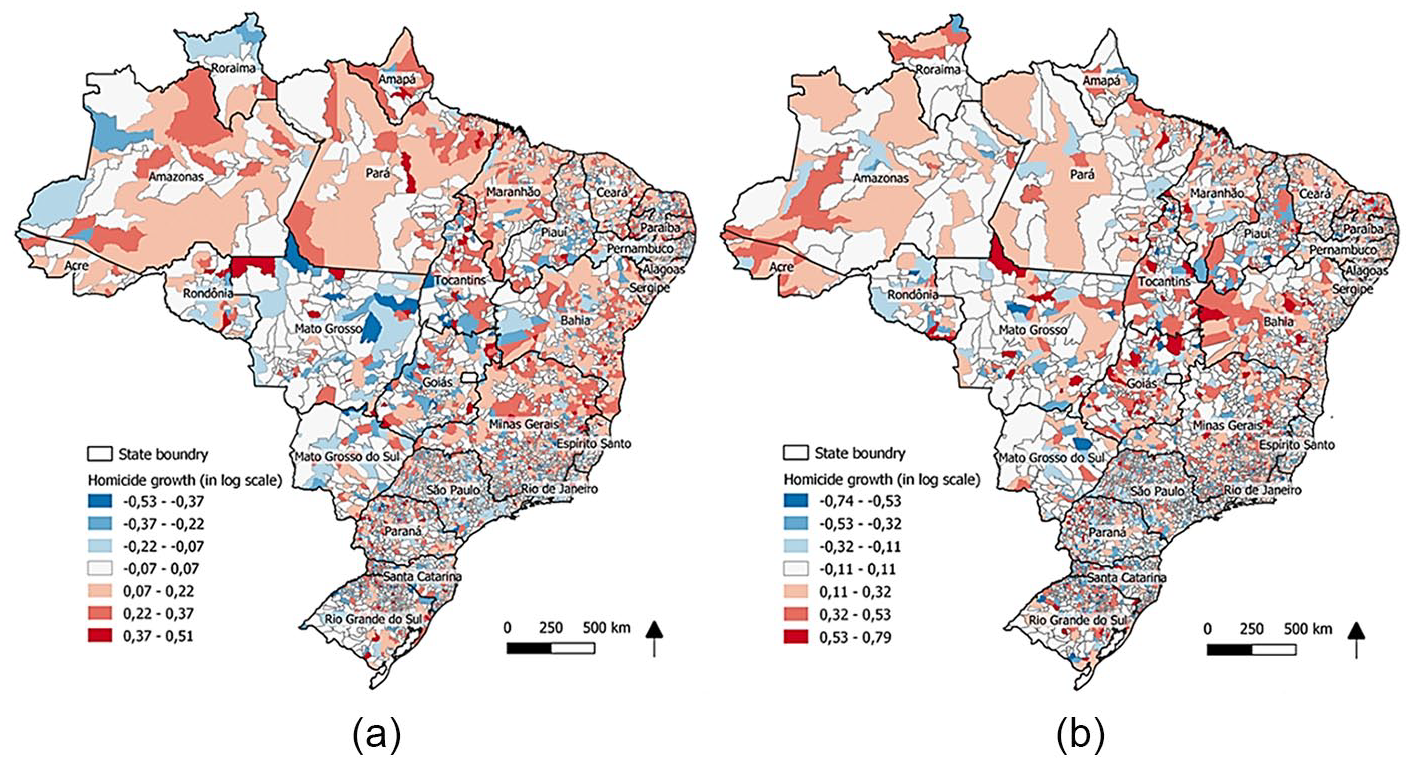
Growth of homicide rates of Brazilian municipalities, from 2000 to 2010 and 2010 to 2017.
Spatial Clustering Patterns of Homicide Rates
The locations concentrated with high homicides rates were not only persistent over time but also expanded in space. This is expressed by the significance of the Moran’s index at 1% for the years 2000, 2010, and 2017 with values of 0.267, 0.213, 0.394, respectively. This clustering pattern is heterogeneously spread across Brazil as illustrated in Figures 4 (a), (b), and (c) that present the significant hotspots (clusters of high rates) and coldspots (clusters of low rates) of homicide rates, measured by the LISA indicator.
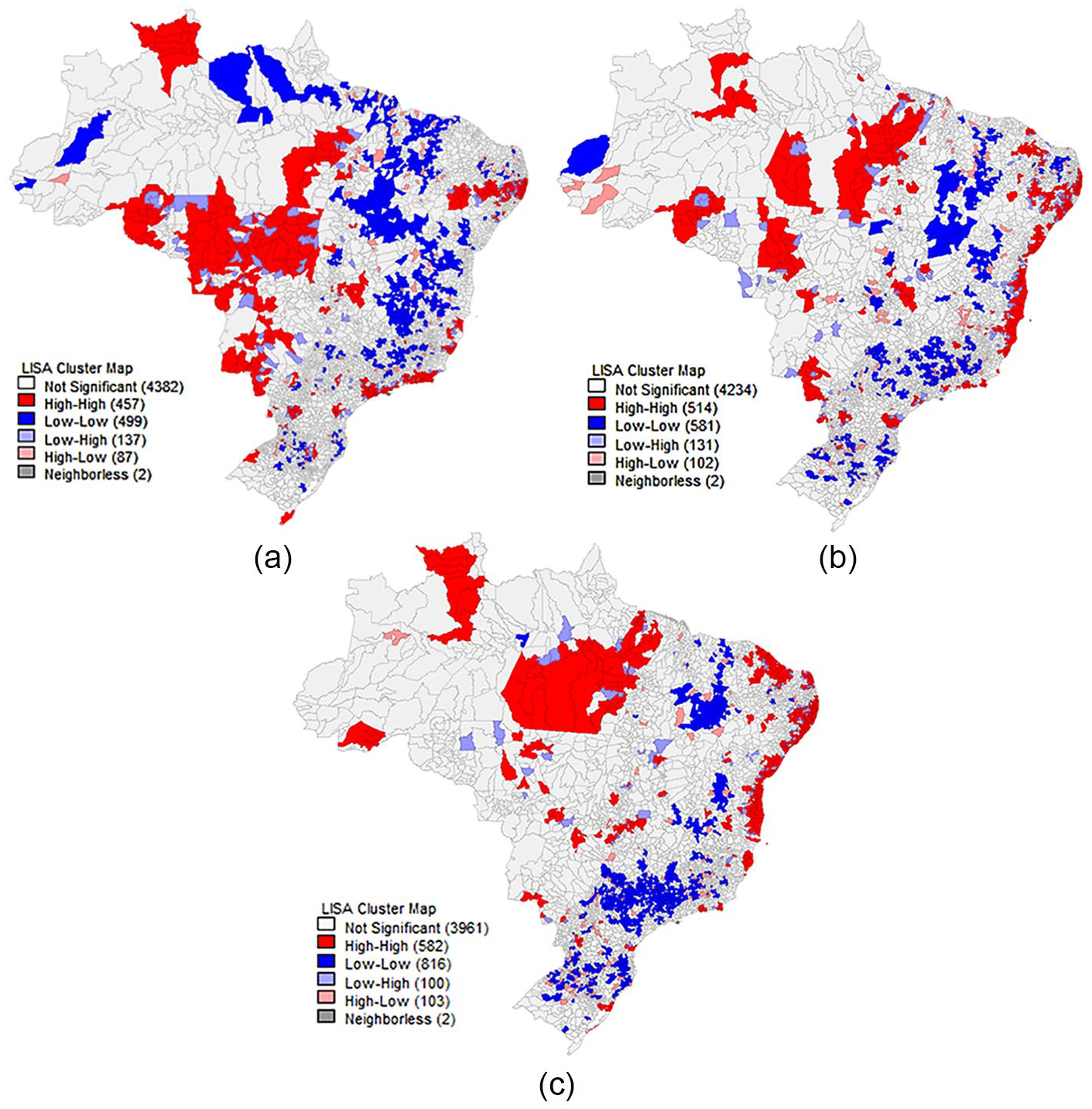
Homicide clusters, Brazilian municipalities, years 2000, 2010, and 2017: (a) homicide clusters, 2000, (b) homicide clusters, 2010, and (c) homicide clusters, 2017.
Apart from being concentrated, the geography of homicide clusters changed significantly from the year 2000 to 2017. In the year 2000, most of the hotspots were located in the Midwest region, emphasizing the borders with Bolívia and Paraguay (Figure 4 (a)). Almost the entire states of Roraima in the North and Pernambuco in the Northeast were isolated hotspots in the same year. The concentration of high homicide rates in the Southeast is located in the coastal municipalities of the states of São Paulo, Rio de Janeiro, and Espírito Santo. The coldspots were mostly located in the inland of the Northeast and Southeast regions.
In the year 2017 (Figure 4 (a)), the concentration of hotspots in the North and the coastal municipalities of the Northeast and Southeast regions becomes more evident. Moreover, a higher concentration of coldspots is observed in the state of São Paulo (Southeast), Piauí (Northeast), and some parts of Rio Grande do Sul and Santa Catarina (both South). The most noticeable observation for the cluster analysis over time is the regional shift of the clusters of homicide rates, characterized by: the upward shift of hotspots from the Midwest to the Northern region; the expansion of coastal hotspots, and; the drastic reduction of coldspots in the Northeast region.
Empirical Growth Pattern of Homicide Rates
Table 3 presents the result from the empirical modeling of the growth of homicide rates. The overall growth models (Model 1) presents the results from Equation 2 of section “Growth of lethal violence: an economic perspective,” and the result from Equation 2 is presented in two stages—with and without the regional dummies that indicate the level of urbanization—to test for growth patterns conditioned to the level of urbanization and observe the stability of the models’ results.
Estimation Results for Absolute, Conditional, and Club Convergence of Homicide Rates.
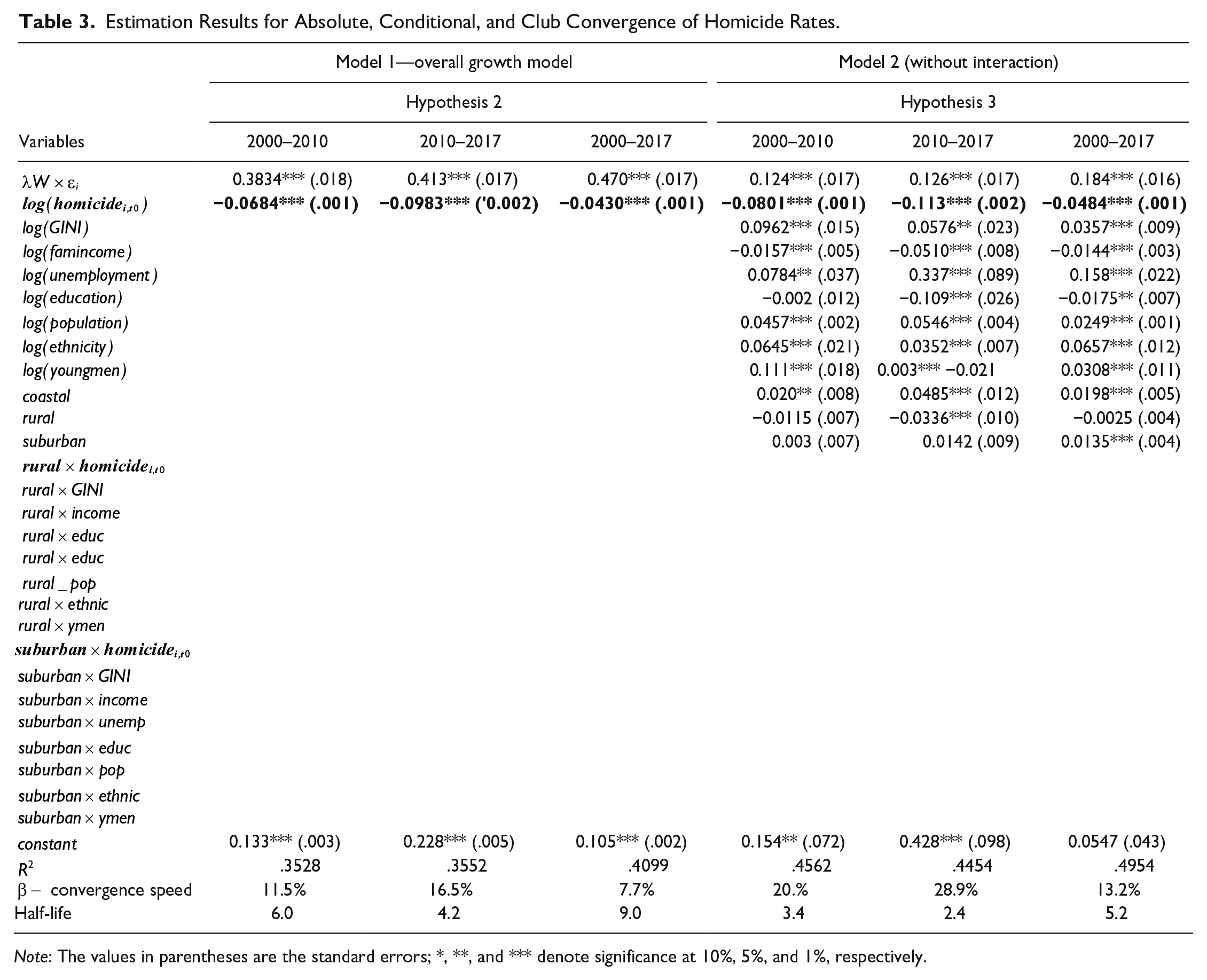
Note: The values in parentheses are the standard errors; *, **, and *** denote significance at 10%, 5%, and 1%, respectively.
The coefficients for
The Determinants of Growth of Homicide Rates
The results for the growth model (represented in Equation 2) containing social disorganization and geographic variables are presented in Models 2 in Table 3. The first two components,
From the year 2000 to 2017, homicide rates increased more in municipalities with high-income inequality and unemployment in the initial period. However, such growth is mitigated by higher levels of education and average family income. The strength of the association of these social disorganization variables with the growth of homicide rates varied significantly over time. The predictive strength of income inequality (measured using the GINI coefficient) on the growth of homicide rate slightly reduced over time, whereas that of unemployment became expressively dominant from the year 2010 to 2017. During this latter period, the growth of homicide rates also became more elastic to average income. Education level seems to have been influential on homicide growth only from the year 2010 to 2017.
The population size is positively associated with the growth of homicide rates throughout the period between the year 2000 and 2017. The model also shows that, besides size, the ethnicity and gender composition of the population also positively correlate with the growth of homicide rates. Specifically, the higher the ethnic heterogeneity or population of young men, the higher the growth of homicide rates and both factors were more influential in the earlier period from the year 2000 to 2010.
The control for coastal municipalities confirms the observation provided in Figures 2 and 4 that homicide rates increased significantly in the coastal municipalities, especially in recent years. From the year 2010 to 2017, the model indicates a lower growth of homicide in predominantly rural municipalities compared to urban ones. However, for the whole period between the year 2000 and 2017, the growth of homicide was higher in predominantly suburban municipalities compared to urban and rural ones.
Discussion of the Results
The results show that the growth of homicide rates follows an unequal trend and pattern in Brazilian municipalities from the year 2000 to 2017. Lethal violence grows at an increasing rate in municipalities that had lower rates in the early 2000s, whereas those that already had higher rates grow at reduced rates or experienced reduced homicide rates. This growth pattern is in line with the reports provided by Waiselfisz (2011), Andrade and Diniz (2013), and Cerqueira et al. (2019) regarding the steady increase of homicide rates in the North and Northeast regions combined with the reduction in the South and Southeast regions. Specifically, Cerqueira et al. (2019) reported that the increase observed in North and Northeast is mostly the aftermath of the increasing narcotraffic operations and conflicts in those regions. Similarly, Waiselfisz (2016) reported that such operations are especially common in municipalities that share international borders, making them routes for drug and firearm trafficking. Andrade and Diniz (2013) added that the spread of homicide rates to inland locations is largely due to changes in the economic and land use dynamics among those areas.
Cerqueira et al. (2019) also showed that the growth of homicide rate was restrained by the Statute of Disarmament and reduced by demographic factors such as, for example, population aging. The results add that, from the year 2000 to 2017, the growth of homicide increased alongside income inequality, unemployment, total population size, young male population, and ethnic heterogeneity and reduced with average income and years of schooling. A similar result was reported by Chon (2011) who concluded that the high rates of violent crimes in Brazil are mostly due to poverty, economic inequality, and illiteracy rather than the subculture of crime. The results from these studies are corroborated by Plassa et al. (2020) and Aransiola et al. (2021).
The descriptive and empirical evidence show that homicide rates increased significantly in coastal municipalities, especially in recent years. Waiselfisz (2011) posited that such an increase is due to “predatory tourism” and suggested the need for empirical investigation of this hypothesis. Nonetheless, the regionalization of homicide hotspots observed for recent years may be positively exploited by directing focal regional policies to high-risk locations.
This study showed that as suggested by the social disorganization theory, economic deprivation (measured by income level, unemployment, and inequality), urbanization, and ethnic heterogeneity are important determinants of homicide rates. However, the strength of the association of these factors varies over different spans between the year 2000 and 2017. Specifically, from the year 2000 to 2010, the proportion of young men was the dominant covariate of homicide rates, whereas, from the year 2010 to 2017, the unemployment rate became more dominant. This is particularly unsettling because unemployment has been steadily increasing in Brazil (Pochmann, 2015).
Conclusions
This study set out to investigate the space-temporal growth of homicide rates in Brazil. The analysis was informed by criminological and economic growth theories that guided the cluster detection and empirical modeling of the growth of homicide rates. This study found evidence of changes in the geography of homicide rates, alongside some determinants of the growth dynamics of homicide rates in Brazil. That is to say, high levels of lethal violence, represented by homicide rates in this study, are very likely to increase and spread across all municipalities in Brazil in the close future.
The spatial analysis shed light on changes in the geography of homicide rates which may have stimulated the faster rate of growth in Brazil. The geographic clusters of high homicide rates reduced expressively in the south and southeast regions that had higher rates in the past but expanded significantly in the North and Northeast regions that had lower rates in the past, especially in coastal municipalities.
Specifically, the growth analysis showed that apart from the overall increase and heterogeneous distribution of homicide rates, the “new” growth patterns experienced across Brazilian regions from the year 2000 to 2017 portray a pattern that may cause homicide rates to grow toward high levels throughout Brazil in the close future. Moreover, this growth process is occurring at a faster rate than conjectured in previous studies.
Social disorganization factors such as economic deprivation (measured by income level, unemployment, and inequality), urbanization, and ethnic heterogeneity are significant determinants of homicide rates and, specifically, the empirical results spotlight the role of unemployment in increasing homicide rates in the recent period (from the year 2010 to 2017).
The findings of this study indicate that, community and regional oriented policies can be effective in constraining the increase and spread of lethal violence in Brazil taking into account the “new” clustering patterns identified. Specifically, policies that improve the overall well-being of individuals, especially targeting unemployment and income inequality, should be given more priority. Such policies are now particularly crucial, given that the COVID-19 pandemic caused an upsurge in unemployment and the deepening of inequality. The unemployment insurance policy, conditional cash transfer and the COVID stimulus packages adopted in many countries (including Brazil) are examples such policies.
A limitation of the study is that it does not take time shocks between periods into account. Therefore, it is most appropriate to read the results as time-specific events and not generalize the associations found in this study, although they are strongly in line with those in the literature. Another limitation is that the empirical models do not exhaustively control for the determinants of homicide suggested in the theoretical literature. However, the focus here is more on the growth characteristics of homicide rates and not the determinants of homicides per se, and no theoretical framework was found concerning the former in the criminological literature, that is, the results are associative and not causal.
Future research on homicide in Brazil should further investigate the causes of the regional heterogeneity of homicide rates, focusing on the role of social, economic, and political institutions and their interaction with social factors, beyond the hypotheses tested in this study. Despite these limitations, this study applies spatial analysis and contributes to the area homicide studies by offering an insight into the patterns and trends of homicide growth in a country of Global South, so far lacking in the international literature.
Footnotes
Declaration of Conflicting Interests
The author(s) declared no potential conflicts of interest with respect to the research, authorship, and/or publication of this article.
Funding
The author(s) disclosed receipt of the following financial support for the research, authorship, and/or publication of this article: The authors thank the financial support provided by São Paulo Research Foundation – FAPESP Grant number 2016/23475-2 and 2018/14236-0 – that made possible the doctoral degree and research internship of the main author at the University of Campinas (Unicamp) and Kungliga Tekniska Högskolan (KTH), respectively; Department of Urban Planning and Built Environment at KTH and the Department of Social, Urban and Regional Economics at Unicamp for the infrastructure.