



Abstract
Introduction:
Few cultural competence interventions exist for nurse educators who shape students’ cultural competence. This article thus details the design, implementation, and evaluation (2021–2024) of an online cultural competence training program (TraINErS) for nurse educators and proposes design principles.
Methods:
Following a design-based research approach, there were two development and testing cycles (TraINErS1.0 and TraINErS2.0), involving a multidisciplinary European team, with two corresponding testing cycles with nurse educators (N1 = 16; N2 = 22) from seven European countries. Data were collected through user reports, an evaluation questionnaire, and the System Usability Scale.
Results:
Testing TraINErS1.0 led to content and sequencing adjustments. TraINErS2.0 achieved positive evaluations and high system usability scores (80.44). Participants valued flexibility and self-paced learning but noted asynchronous challenges. The resulting design principles emphasize metacognitive awareness, experiential learning, multimedia use, and motivation mechanisms.
Discussion:
These principles can guide the design of online nurse educator training, preparing them to produce culturally competent nursing professionals.
Introduction
Culturally congruent care is necessary to reduce health inequalities (Betancourt et al., 2014) and can be defined as the capacity to deliver patient care with an emphasis on holistic well-being, considering their culture, beliefs and religion (Agga et al., 2022). Intercultural competence, which is the ability to interact effectively and appropriately across cultures and is rooted in the recognition of and respect for cultural differences (Bennett, 2013), is integral to providing such care (Betancourt et al., 2014; Vella et al., 2022). However, the role of nurse educators is an often overlooked yet key factor in producing interculturally competent nurses (Shopo et al., 2024). Nurse educators require specific competencies to design and deliver effective intercultural competence training. Despite the apparent need to strengthen these cultural competencies (Visiers-Jiménez et al., 2025), interventions to this end have received scant attention (exceptions: Carnevale et al., 2015; Hughes et al., 2020; Rahimi et al., 2023).
The lack of evidence on the quality and effectiveness of intercultural competence interventions for healthcare professionals has also been highlighted (Nkhoma et al., 2023; Tosun et al., 2021). This stems from weak theoretical frameworks, methodological shortcomings, and a scarcity of validated assessment tools (Shopo et al., 2024; Tosun et al., 2021). This article addresses these issues, with a focus on nurse educator training.
A second issue pertains to the use of technology for intercultural competence training. Online educational formats in health care have increased, driven by the need for equitable access (Deliz et al., 2020; O’Connor et al., 2022). For example, the flexibility and accessibility offered by technology enable online intercultural exchanges, which foster students’ intercultural sensitivity (Shaw et al., 2025). Also, using blended learning, which combines in-class and online learning, can include diverse formats, such as problem-based cases, video content, and simulations offered on online platforms (Červený et al., 2022; O’Connor et al., 2022). These digital educational modalities can positively impact specialized nursing competencies. For instance, web-based cultural care curricula can significantly enhance both cultural competence and self-efficacy among graduate nursing students participating in controlled interventional studies (Fadaeinia et al., 2022).
While these approaches show promise in terms of learning gains and user satisfaction, they often focus on specific areas of health care, such as emergency management (Kula et al., 2021), or specific cultural contexts, such as educators in Iran (Rahimi et al., 2023). Although targeted training is valuable, more culture-general web-based designs are required to increase accessibility. To support the development of such interventions, the essential components of effective cultural competence training must be defined (Oikarainen et al., 2019).
To address this gap and align with educational best practices, the online open-source Training Intercultural Nursing Educators and Students (TraINErS) program was developed for nurse educators. The aim was to enhance the intercultural competence of nurse educators, in line with the World Health Organization’s (WHO, 2016) emphasis on cultural competence as a core skill for this group. The project team comprises members from nurse training institutions across several European countries, thereby representing a diverse spectrum of cultural values (e.g., collectivism/individualism, uncertainty avoidance, and communication styles), facilitating a culture-general approach in TraINErS. This paper presents the systematic design and implementation of TraINErS using a design-based research approach (Anderson & Shattuck, 2012) and reports on the resulting design principles. The aim is not to evaluate immediate learning outcomes, but to derive evidence-informed guidelines for future training initiatives.
Methods
Ethical Considerations
Ethical approval for this research was granted by the ethics committee at the University of Antwerp in Belgium, following an expedited review. Written informed consent was obtained via a Qualtrics® form from all participants in both rounds of data collection. All participant data were anonymized for publication.
Study Design
This study adopted a Design-Based Research (DBR) approach for its capacity to generate empirically grounded, transferable design principles that guide innovation in authentic educational contexts (The Design-Based Research Collective, 2003). The methodological tradition of DBR emerged in response to the recognition that many educational innovations provided little systematic knowledge to inform future developments (Guisasola, 2024). DBR is characterized by collaboration between researchers and practitioners, where theoretical ideas and practical solutions are iteratively developed, implemented, evaluated and refined to address complex educational challenges (Anderson & Shattuck, 2012; The Design-Based Research Collective, 2003). In this study, this approach involved the design of an online intercultural competence training program for nurse educators and students, namely TraINErS.
DBR provides a structured perspective to analyze the advantages and challenges of implementing innovative learning environments, while supporting the development of frameworks linking theoretical assumptions with educational practice (Cobb et al., 2003). Originating in the learning sciences (Fowler et al., 2023; Guisasola, 2024), DBR is widely applied in health and nursing education (e.g., Solberg et al., 2022; Sweet et al., 2019; Wolcott et al., 2019). While different sequencing proposals exist (e.g., Easterday et al., 2014), we followed Amiel and Reeves (2008), combining qualitative and quantitative methods, iterative prototyping and systematic extraction of design elements to ensure the knowledge generated is empirically validated and adaptable to contexts with similar educational challenges.
Setting and Participants
A multidisciplinary team (i.e., nurse education, intercultural competence education, and digital curriculum developers) from seven European countries (i.e., Belgium, Spain, Italy, Denmark, Switzerland, Serbia, North Macedonia) was involved in development, refinement, and participant recruitment. A key feature of DBR is involves relying on a multidisciplinary team of researchers and using multiple research methods to ensure credibility (Sandoval & Bell, 2004). Thus, the course was designed collaboratively in English. Next, two sets of participants, namely nurse educators from team members’ institutions, were involved in the two testing cycles, respectively. Team members approached potential participants at their institutions in person, explained the purpose of the project to them, and invited them to participate. They had to have a sufficiently high level of English (B1 on the CEFR), but there were no limitations on the number of years of prior teaching experience.
Instruments and Data Collection
First Testing Cycle: TraINErS1.0
A complete evaluation of TraINErS1.0 was planned during the first testing cycle (N = 16; 2021–2022). However, as a result of the complications associated with the COVID-19 pandemic, there was a low completion rate (n = 5), which resulted in limited data collection. At the end of the training cycle in October 2021, data were collected in the form of user reports. The most valuable report came from extensive feedback on each unit from one particular participant. After completing all three units of TraINErS, the participant provided detailed comments on problems and areas for improvement. This participant’s observations were based not only on individual experience, but also on the collective experience and issues flagged by other participants on the forum. To collect additional data from the five participants, project team members were invited to facilitate a review of the course through discussion with the participants from their institution and write a report with suggestions for changes. The authors discussed the reports and, upon reaching a consensus, produced the initial set of design principles and made changes, resulting in TraINErS2.0.
Second Testing Cycle: TraINErS2.0
A post-course evaluation questionnaire was administered via Qualtrics® 1 month after the completion of the TraINErS2.0 training (N = 22; 2023). In this cycle, the project team members’ involvement in data collection was limited to encouraging participants to complete the questionnaires. The aim was to explore usability and user experience. Participants received a link to the questionnaire via email, accompanied by an informed consent form. The questionnaire developed for this study comprised three sections. The first section gathered sociodemographic data (i.e., name, age, sex, and nursing specialization). Then, to assess the course’s usability, the second section employed the validated, open-source System Usability Scale (SUS) (Bangor et al., 2008; Brooke, 1996, 2013), which is reliable even in small samples (Tullis & Stetson, 2004). The SUS consists of 10 items alternating between positive and negative statements to minimize response bias, rated on a 5-point Likert-type scale (1 = strongly agree; 5 = strongly disagree). Following Bangor et al. (2008), the wording was adapted so that the terms “the product” were replaced with “the TraINErS Moodle system.”
In the final section, participants evaluated course components. Using a 5-point Likert-type scale (1 = strongly agree; 5 = strongly disagree), they indicated the extent to which each element facilitated learning. They then rated usefulness and appeal on a 0 to 100 semantic differential scale, with three adjective pairs for usefulness (meaningless–meaningful; useless–useful; time consuming–time saving) (Ajani & Stork, 2014) and appeal (unpleasant–pleasant; unattractive–attractive; demotivating–motivating) (Hassenzahl, 2001). Optional open-ended questions followed, addressing strengths and weaknesses and two recommendations for system use. The questionnaire was piloted by six nurses and two linguists to assess clarity and content validity, and minor revisions were made to improve clarity.
Usability data were analyzed using the established scoring system to calculate the average score out of 100 for the system (Brooke, 1996). The average score was classified according to the university grade analog (i.e., >90 = A, 80–89 = B, 70–79 = C, 60–69 = D, <60 = F) (Bangor et al., 2008). Likert-type scale data were analyzed using frequency distributions. Descriptive statistics (i.e., means and standard deviations) were used to summarize the data.
Results
Development of TraINErS1.0
The design process began by developing a profile of an Intercultural Nursing Educator (INE; Gradellini et al., 2024). The profile’s competencies are organized into three dimensions: Personal, Professional, and Pedagogical. The personal dimension is the foundation of intercultural competence, regardless of the profession. The professional dimension builds on this foundation, focusing on the competencies that nurses need to provide culturally adapted care. The pedagogical dimension is divided into two sub-dimensions: culturally responsive teaching and fostering students’ development of intercultural competence.
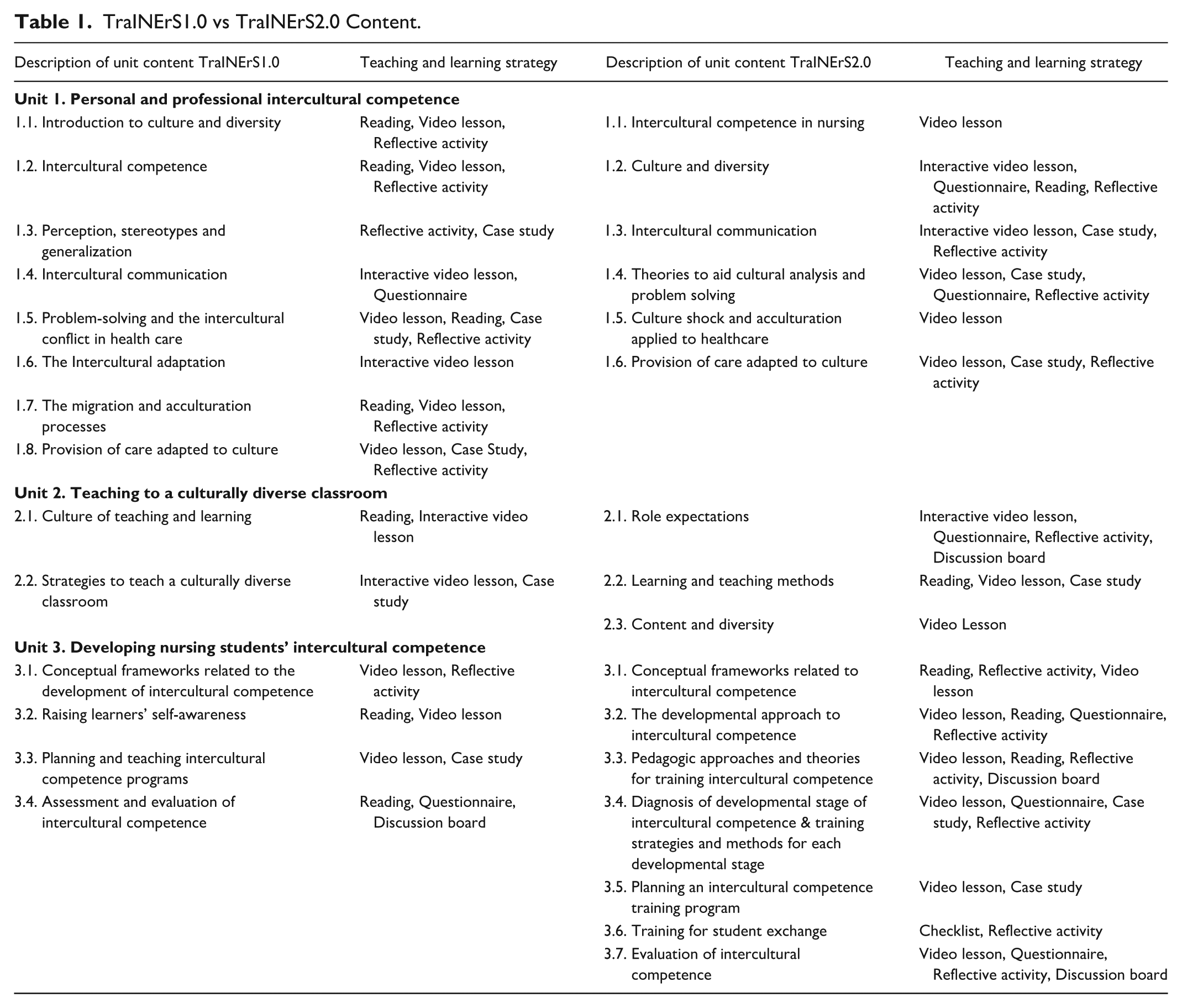
TraINErS consists of three units, mapping onto the INE profile, and is hosted on Moodle, which supports various customizable activities, such as forums, assignments, and questionnaires. Unit 1 consists of the personal dimension applied to the professional, Unit 2 focuses on the first pedagogical sub-dimension, and Unit 3 on the second (see Table 1). As stated above, the content was developed collaboratively by the multidisciplinary team and centered on video lectures complemented by various activities (e.g., reflections, quizzes, and case studies; see Supplementary Material 1). Project team members developed content based on their respective areas of expertise. After the content was integrated into Moodle, it was reviewed by two other members for usability, appeal, and correctness, and adapted based on the feedback. The strength of this program lies in the grouping and sequencing of activities, allowing each to build on the outcomes of the previous activity. For example, in Unit 3, users apply what they learned in Units 1 and 2 by adapting the content for use with their own students.
TraINErS1.0 vs TraINErS2.0 Content.
Relevant theories, frameworks, and approaches were used to guide the development of the first prototype. The project’s guiding theory was the developmental model of intercultural sensitivity (DMIS; Bennett, 1986, 2013). The program’s goal is thus to assist individuals in moving away from ethnocentrism, where one’s own culture is perceived as the “central to reality,” toward ethnorelativism, where both one’s own and other cultures are perceived as “relative to context” (Bennett, 1986, 2013). This means, for example, defining culture by differentiating between subjective and objective culture, and discussing how to make accurate cultural generalizations to avoid stereotyping (Bennett, 2009, 2001). Also, a constructivist and student-centered approach was adopted (Bada, 2015; Lee & Hannafin, 2016). Thus, the content is scaffolded to facilitate reflection, inquiry and problem solving, with the online system functioning as a facilitator rather than an information dispenser (e.g., see Supplementary Material 1: Appendix A). The materials follow Kolb’s (2015) experiential learning cycle; learning advances through loops of virtual content and experiences, followed by guided, reflective observation, which leads to abstract conceptualization to form new theories or ideas, supported by the content in the video lessons and reading materials, and finally, through active experimentation to test these new ideas in case studies (e.g., see Supplementary Material 1: Appendix B and C). Universal design for learning (Nelson, 2014) was applied to develop a flexible learning environment with multiple learning routes and options, giving all users an opportunity to engage and succeed. For example, content is offered in multiple formats (i.e., text, video, audio, etc.; e.g., see Supplementary Material 1). Frameworks for self-directed learning (Brookfield, 2009; Towle & Cottrell, 1996) were also used to design activities, for example with built-in instructions and prompts (e.g., see Supplementary Material 1: Appendix A), supporting their ability to work through the content autonomously. However, it supports the use of blended learning (Killilea, 2012), allowing for collaborative, real-world experiential learning. For example, in-class activities could include having pairs of students engage in problem-solving using online cases.
First Cycle of Testing: TraINErS1.0
The first implementation cycle encountered substantial barriers because of the COVID-19 pandemic. Initial training utilized a 3-day synchronous online format delivered during a period of widespread institutional restrictions and variable lockdown conditions across participating countries. The extended implementation period required participants to engage primarily through self-directed learning, supported by structured weekly schedules and facilitator-led reflective activities on the online platform. Despite systematic efforts to maintain engagement through weekly forum discussions and shared learning progressions, pandemic-related workload increases resulted in substantial attrition, with completion rates reaching only five participants across all three training units.
The user reports highlighted issues with the clarity of student activities, discrepancies between indicative and actual task times, and difficulty in completing the activities. These reports were discussed by the authors, leading to a proposal for changes that was discussed with the entire project team. Once consensus was reached, changes were implemented (see Table 1): the course description document was adapted to more accurately reflect the notional hours based on users’ tracking of actual time on task; additional reflective questions, case studies with feedback and interactive activities were added to several topics; and the content of the different units was also reorganized as (i.e., Unit 1 topics were reduced from eight to six, an additional topic was added to Unit 2, and three topics were added to Unit 3).
Reflection: Design Principles
The first implementation cycle highlighted the challenges of delivering intercultural competence training online. This inherently complex competence depends on interactive, immersive experiences that can be difficult to replicate virtually. Participants’ feedback revealed the limitations of online platforms in cultivating the depth of engagement found in face-to-face settings, underscoring the need for innovative design improvements:
TraINErS1.P3. The personal exchange is difficult. Online it’s not possible to experience the encounters [. . .] we had during the intensive week.
Case studies proved especially valuable, as scenario analysis deepened learners’ insights into cultural contexts and adaptation, for example:
TraINErS1.P7. Case studies showed people react on the base of their background & culture, and when you stop and think about that, it helps understand the reason behind the behavior.
These findings reinforce the importance of promoting metacognitive awareness and confirm that comprehensive situation analysis and constructive feedback are essential for effective intercultural competence training.
Second Cycle of Testing: TraINErS2.0
Testing of TraINErS for the second cohort (n = 22) commenced with an introductory webinar, followed by self-paced weekly modules to build foundational knowledge. Under instructor guidance, participants formed online working groups to co-develop an intercultural competence training program as they completed Unit 3. These collaborative design sessions informed a subsequent 3-day, in-person workshop in Denmark, where learners applied theoretical concepts through immersive exercises in intercultural communication.
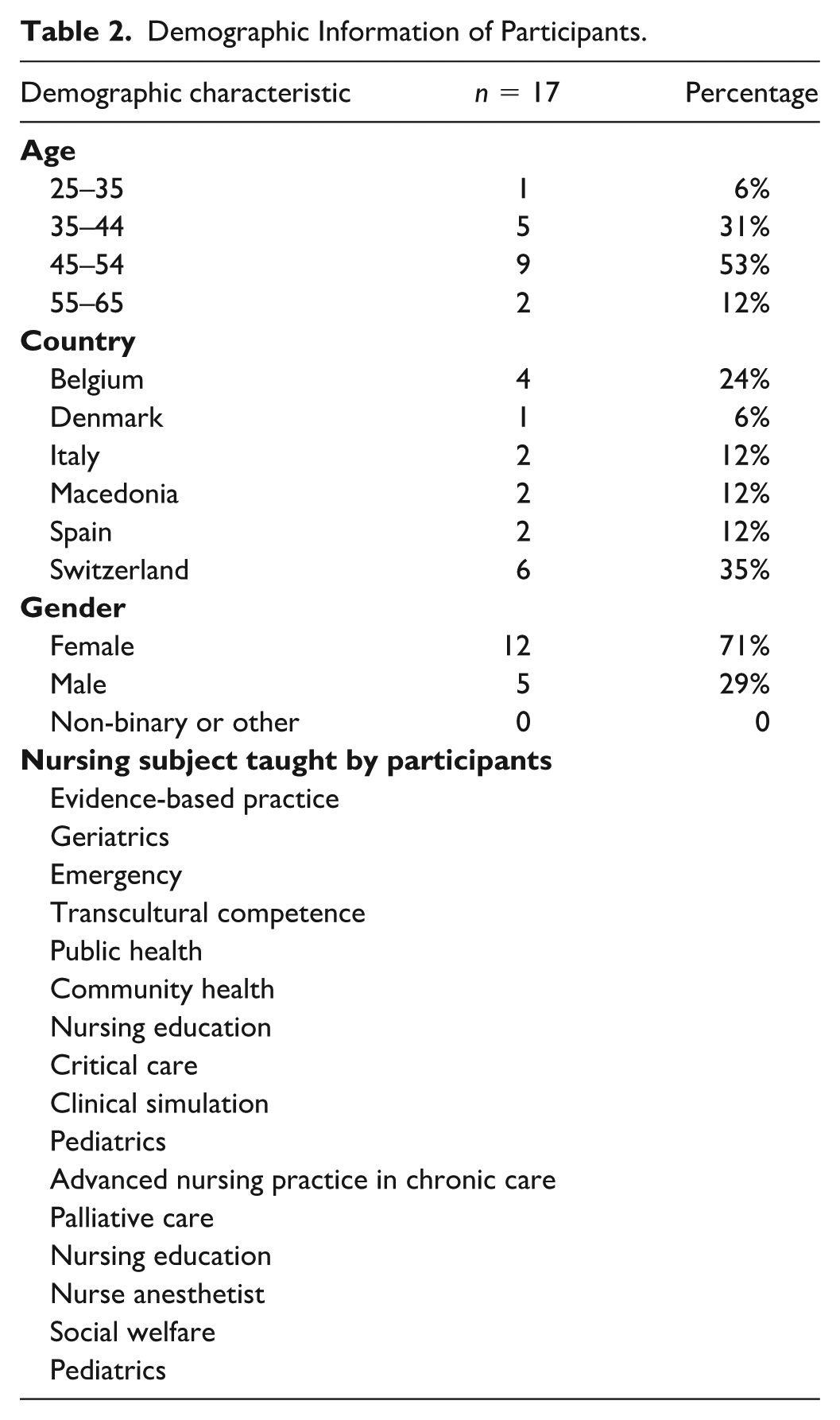
The questionnaire had a 77% response rate (n = 17), and most participants were female (71%). The participants were from Switzerland (35%), Belgium (24%), Italy, Macedonia, and Spain (each 12%), while Denmark represented 6%. The age of the participants ranged from 25 to 65, with half between the ages of 45 and 55. See Table 2 for more details.
Demographic Information of Participants.
The mean SUS score for TraINErS2.0 was 80.44 (SD = 13.98), corresponding to a grade of B. This was notably higher than the average score of 70, or a grade of C, commonly reported (Bangor et al., 2008). Table 3 shows that users generally agreed or strongly agreed that most elements, except for forum discussions, promoted learning and supported the achievement of the objectives. Especially the objectives, instructions, lesson videos, handouts, and tools were perceived as contributing to learning.
Perceived Usefulness, Appeal and Contribution to Learning of Elements in TraINErS (n = 17).
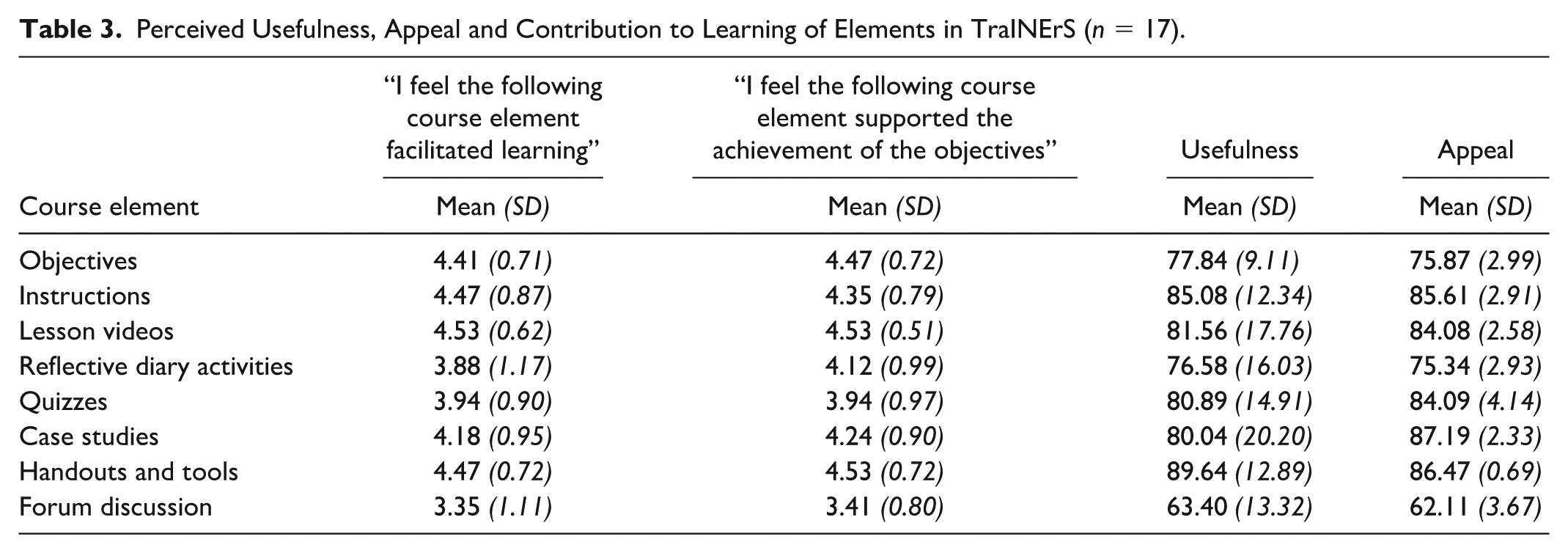
The usefulness and appeal of all elements were also rated highly, except for the forum discussions. The rather low overall mean ratings for the forum were related to the nature of asynchronous learning, which became evident in the analysis of the open-ended questions discussed in the next section.
Advantages of Synchronous Learning
The flexibility and accessibility that self-paced learning afforded the participants were emphasized as definite benefits. It allowed them to learn anytime and anywhere:
TraINErS2.P5. you can work and learn at any time and repeat as many times as you like, it is available (sic) everywhere, it is all in one. . .
Disadvantages of Asynchronous Learning
The participants clearly noted that the potential of the forum discussions was not realized, as there was often a lack of peer interaction:
TraINErS2.P12. I found it difficult to get any benefits (sic) from the forum discussion as it was asynchronous and each participant wrote in it depending on their working rhythm TraINErS2.P17. one of the main disadvantages of the forum was that it was asynchronous. the different workload of the many participants may not have allowed it to do it in any other way.
This is less of an issue with the design and more of a practical consideration when using the program, specifically because learners work at different speeds. They seem to accept that this is potentially the price to pay for gaining accessibility and flexibility. There is also a risk of discontinuation or procrastination. As some stated:
TraINErS2.P6. To take the time needed for the training. TraINErS2.P4. the risk of procrastination (sic)!
With self-paced learning, learners need to apply self-discipline and be self-motivated to consistently participate in and eventually complete the training.
Design Issues
Participants commented on the problematic length of some video lectures:
TraINErS2.P15. Some videos were quite long. Even when the same person is talking or they are talking about the same topic, I find it easier when it is broken into smaller sections. It gives me time to rest and reflect upon smaller bits of information at a time.
Participants reported that lengthy videos contained too much complex information to process comfortably, negatively impacting their motivation and increasing the risk of discontinuation. In the final version of TraINErS, certain videos were removed and replaced with reading material. Where feasible, videos were either divided into shorter segments or supplemented with reflective questions and activities at approximately 10-min intervals.
Recommendations for Optimal Use
First, reflective practice was highlighted as key to the learning process:
TraINErS2.P9. Take time to do your reflections (sic) and discuss online with other participants. TraINErS2.P11. Systematically complete the reflective journal and consult other teachers’ posts to compare different opinions and draw out actions for change.
This recommendation echoes the earlier theme of the need for more interaction with peers. While peer reflection and discussion are ideal, they are a trade-off in asynchronous learning.
Time management and self-discipline are other themes in the recommendations. This is again related to the risk of discontinuation and procrastination. For example:
TraINErS2.P5. Bear in mind estimated time required to complete the section, so you do not interrupt your learning process and drop it for a long while before you can pick it up again. TraINErS2.P2. Take time at the beginning to understand the environment & what is required.
These comments revealed that there is a learning curve when using the system. Based on the SUS results, however, this did not appear to be a problem. Rather, it seemed to be a question of preparation and follow-through.
The use of in-person training or a blended-learning approach was also strongly recommended. Participants expressed a desire for more face-to-face time with teachers:
TraINErS2.P9. [. . .] for more deeper understanding it would be necessary to employ a face-to-face teaching strategy.
Although this would have been ideal, it was not feasible at the time. The logistics involved in bringing together all the experts involved in creating the materials, as well as nurse educators from institutions across Europe, are also unsustainable in the long run.
Outlining the Final Learning Design
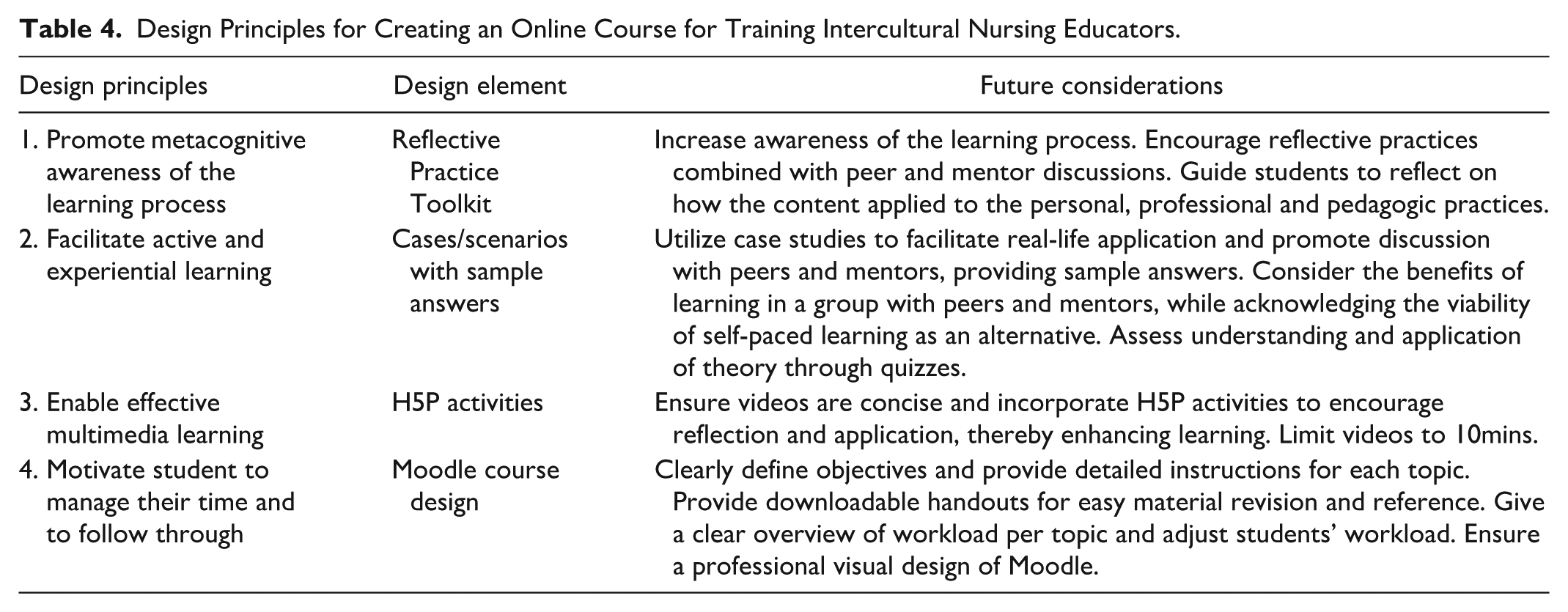
Building on the first testing cycle, questionnaire results informed the final design principles developed in 2024 for creating an online course to train interculturally competent nurse educators. The detailed outline of the final TraINErS’ content can be viewed online (https://trainers.ap.be/wp-content/uploads/2023/03/IO3-TraINErS-Syllabus-1.pdf), and a full description is provided in Supplementary Material 2. The design principles, elements, and future considerations are summarized in Table 4.
Design Principles for Creating an Online Course for Training Intercultural Nursing Educators.
Discussion
This article highlights the potential of online formats for intercultural competence training. Online delivery can reduce costs associated with scheduled in-service education and increase active learning by offering a self-paced format (Bennet & Glasgow, 2009). In this study, participants from various European countries engaged in TraINErS within the same timeframe without the need to interrupt their teaching responsibilities or incur travel expenses. They valued the flexibility to control their own learning pace, a benefit consistently reported in the literature on self-paced online courses (Vázquez-Cano et al., 2021; Vorbach et al., 2019).
What distinguishes TraINErS from other web-based programs (cf. Červený et al., 2022; O’Connor et al., 2022) is its accessibility; the training is available anytime, anywhere, to anyone. Though developed for and by European educators, its cultural- and health care-general approach ensures global relevance, unlike most other training programs, which tend to be culture-specific.
To optimize usability and effectiveness, we propose four design principles. First, the course should foster metacognitive awareness of learning. This requires a blend of individual, peer, and guided reflection—either with a mentor or through the system itself (Vande Berg et al., 2012)—to support the application of learning in nursing and educational practice.
Second, active and experiential learning are essential, though challenging to implement online (Li et al., 2013; Thomas & Inkson, 2005). In TraINErS, case studies with feedback facilitated experiential learning and were positively received. Select videos offered vicarious experiential learning (Hansch et al., 2015) by modeling challenging intercultural interactions. Activities and quizzes promote active learning and concept application. Although asynchronous peer discussion is difficult, it remains important (Linton, Farmer, and Peterson, 2014; Linton, Pangle, et al., 2014). Learning is further enhanced when training occurs with peers under mentor guidance (Cress et al., 2021); thus, TraINErS is well-suited for blended learning within institutions where synchronous classes and discussions can be integrated.
Third, multimedia use must be intentional. Research is inconclusive about optimal video length (Belt & Lowenthal, 2021), but our study supports a maximum of 10 min per video, with interactive activities embedded at regular intervals to maintain engagement.
Fourth, addressing common issues in self-paced online courses (Vázquez-Cano et al., 2021) requires attention to time management, motivation, and follow-through. Course objectives should be clearly defined and aligned with content, and instructions must be explicit. Downloadable handouts can support note-taking and revision. Accurate estimation of notional hours and user-friendly visual and system design are crucial, especially for digital non-natives. While intrinsic motivation is ideal, institutional incentives may be necessary.
A notable limitation of TraINErS is limited peer interaction, a common challenge in self-paced learning (Vorbach et al., 2019). Participants expressed a clear preference for greater peer engagement, especially through face-to-face interaction. However, practical constraints—such as limited time and resources—often hinder participation in study-abroad programs, highlighting the importance of accessible alternatives like TraINErS.
A limitation of this study was the relatively small sample size, particularly in the first cohort. External factors restricted both the implementation and evaluation of the original design. Nevertheless, data from the second cohort provided valuable insights, which fundamentally shaped the proposed design principles.
Future research should explore whether the advantages of self-paced learning outweigh its limitations. Comparative studies examining self-paced online training and blended-learning approaches are warranted. Research is needed to assess whether self-paced online training can deliver outcomes equivalent to in-person or blended modalities.
Conclusion
The training program described in this article was developed and refined through a DBR approach, integrating diverse data into an iterative design process. Program design and revision were guided by expert perspectives on intercultural and online learning and user feedback. Four core principles emerged: fostering metacognitive awareness; promoting active learning; ensuring effective multimedia use; and supporting learners’ motivation and course completion.
These principles provide a framework for developing web-based interventions to enhance intercultural competence, understood not as a static endpoint but as a dynamic, lifelong process requiring reflection, empathy, and attitudinal growth. Training should therefore develop knowledge, skills, and self-awareness for meaningful intercultural engagement.
The findings highlight the value of technology in expanding access and enabling flexible learning. However, limitations of self-paced formats, particularly reduced peer interaction, suggest that blended learning may offer more effective experiences. Designing for inclusivity and accessibility, including language, digital literacy, and diverse learning needs, remains essential to ensure equitable participation.
Finally, intercultural competence training should align with broader institutional and societal goals to foster more inclusive, equitable, and effective health care environments. TraINErS, freely accessible at https://digitapro.ap.be/login/index.php after registration, is being implemented through the European Nursing Module Network in 16 European countries. Beyond this, the aim is to inspire and guide institutions worldwide to invest in intercultural training for nurse educators. This is vital for preparing nurse educators to shape the next generation of nursing professionals to provide culturally congruent care. Continued research and iterative evaluation remain essential to refine such initiatives, assess long-term impact, and ensure their relevance in an increasingly diverse and globalized health care landscape.
Supplemental Material
sj-docx-1-tcn-10.1177_10436596261432656 – Supplemental material for Training Intercultural Competence of Nurse Educators Online: A Design-Based Research Approach
Supplemental material, sj-docx-1-tcn-10.1177_10436596261432656 for Training Intercultural Competence of Nurse Educators Online: A Design-Based Research Approach by Marilize Pretorius, Jagoba Zarandona, Uwe Weber and Valerie Vanceulebroeck in Journal of Transcultural Nursing
Supplemental Material
sj-docx-2-tcn-10.1177_10436596261432656 – Supplemental material for Training Intercultural Competence of Nurse Educators Online: A Design-Based Research Approach
Supplemental material, sj-docx-2-tcn-10.1177_10436596261432656 for Training Intercultural Competence of Nurse Educators Online: A Design-Based Research Approach by Marilize Pretorius, Jagoba Zarandona, Uwe Weber and Valerie Vanceulebroeck in Journal of Transcultural Nursing
Footnotes
Acknowledgements
We would like to thank the project team members for participating in the design and implementation of the intervention: Sophie Vermeiren, Petra Bourkia, Susan Schaerli-Lim, Cinzia Gradellini, Elena De Lorenzo, Izabela Filov, Mette Bønløkke, Helle Flodager, and Milton Bennett. No writing or editing assistance was obtained from a third party.
Author Contributions
Declaration of Conflicting Interests
The authors declared no potential conflicts of interest with respect to the research, authorship, and/or publication of this article.
Funding
The authors disclosed receipt of the following financial support for the research, authorship, and/or publication of this article: This work was supported by the Erasmus Plus Program of the European Union [grant number 2019-1-BE02-KA203-060235]; and Movetia, the Swiss national agency for exchange and mobility [grant number 2019-1-BE02-KA203-060235b].
Ethical Considerations
Ethical approval for the study was obtained from the University of Antwerp’s Research Ethics Committee (approval number: SHW_22_117) on February 26, 2021.
Consent to Participate
All participants gave written, informed consent for review and signature before commencing participation in the testing of the intervention and data collection.
Consent for Publication
All participants’ provided written, informed consent allowing the authors to publish their responses, including direct quotes.

Data Availability Statement
Not applicable.
Supplemental Material
Supplemental material for this article is available online.
References
Supplementary Material
Please find the following supplemental material available below.
For Open Access articles published under a Creative Commons License, all supplemental material carries the same license as the article it is associated with.
For non-Open Access articles published, all supplemental material carries a non-exclusive license, and permission requests for re-use of supplemental material or any part of supplemental material shall be sent directly to the copyright owner as specified in the copyright notice associated with the article.
