




Abstract
We analyse which demographic groups in the UK were more likely to change their views on Brexit following the 2016 referendum on EU membership. Drawing on a large individual-level dataset of over 12,000 respondents, we find that women and middle-aged individuals were significantly more likely to shift towards a negative view of Brexit during the UK–EU negotiation period (2017 to 2019). Our analysis reveals that women and middle-age individuals were more likely to develop increasingly negative views of Brexit over time, while older individuals were more likely to report more favourable views. We also find that individuals with higher level of education were less likely to alter their views, maintaining consistent opinions over time. Importantly, we find no evidence that pre-referendum exposure to austerity policies influenced the likelihood of opinion change.
Introduction and motivation
The United Kingdom’s (UK) vote to leave the European Union (EU) (i.e., Brexit) on 23 June 2016 sent shockwaves through the world. Brexit is considered one of the most significant economic and political events of the 21st century as, for the first time, a member state left the EU. The arguments for remaining in the EU (Remain) or leaving (Leave) were complex, involving economic and political issues 1 that overwhelmed ordinary voters who had to make a simple “yes” or “no” choice.
This paper examines the demographic characteristics of voters who changed their opinions on Brexit over time, with a focus on age, gender, and education. Using a unique dataset of over 12,000 respondents, this study sheds light on how demographic and contextual factors influence belief updating in response to political uncertainty. We apply a Bayesian learning framework, looking at these shifts as a result of voters rationally adjusting their beliefs based on new information, within the constraints of bounded rationality (Gigerenzer and Selten, 2002; Simon, 1957). Referendums have been used as a direct form of democracy for a long time. However, the UK has only held three national referendums 2 , the first taking place in 1975. Concerns often arise mainly about the voters’ lack of information when deciding on important state matters, as they are mostly provided with little information through political messaging (Taub and Fisher, 2016).
This reflects a broader tension in the literature on voter competence and political engagement. Brennan (2016), for instance, argues that democratic decisions—particularly referendums—often occur in low-information environments where many voters lack both the incentive and the capacity for meaningful political learning. The Brexit referendum is a clear example of this dilemma: a high-stakes decision shaped by uncertainty, cognitive bias, and widespread misinformation.
The literature on voter behaviour in referendums emphasises rational decision-making while also highlighting the role of biases and heuristics (Hobolt, 2016; Matsusaka, 2005; Nickerson, 1998). For example, Matsusaka (2005) argues that direct democracy empowers voters, while Hobolt (2016) emphasises the emotional and identity-driven factors influencing Brexit voting behaviour.
At the same time, the best well-known result in political economics is that competition between parties leads to policy convergence, as the winning party aims to attract the median voter (Downs, 1957; Hotelling, 1929). However, this implies that measures deviating from the median voter’s preferences are less popular and likely to be unsuccessful. Recent events, such as the Brexit referendum, have challenged the traditional median voter theorem, with several policies initially deemed against the constituents’ interests gaining success through different democracies or general election programmes in different countries (Figueira, 2018).
It is argued that during the Brexit referendum campaign, parts of the media actively shaped the beliefs of the electorate by propagating misinformation and biasing and concealing accurate information (Watson, 2018). The literature suggests that media reporting (Gerber et al., 2009) and political mobilisation by elites and advocacy groups (Brulle et al., 2012) influence people’s voting decisions. Even the choice of wording for the referendum question has been criticised, as the Leave campaign is believed to have effectively tapped into voters’ cognitive biases, influencing the voting results more than the Remain campaign (Hatter, 2016). Therefore, these factors may have impacted the Brexit vote. Leading up to the referendum, immigration and fiscal transfers to the EU were critical arguments made by the Leave supporters. The former was exaggerated with the false premise that Turkey would join the EU, resulting in an influx of unwanted immigration. The latter was linked to an incorrect figure of £350 million 3 transferred to the UK each week, which instead could potentially fund the UK’s National Health Service (Becker et al., 2017).
The Leave campaign also suggested that leaving the EU would be without risks as the UK would hold all the cards in subsequent negotiations with the EU (Fetzer, 2019) 4 , a claim that has not materialised. During the same period, there was a broad consensus among many academics, policy institutions, and businesses that Brexit would have a negative long-run effect on the UK economy (Dhingra and Sampson, 2022). Previous empirical studies have examined the determinants of voting behaviour in the Brexit referendum (Alabrese et al., 2019; Becker et al., 2017; Colantone and Stanig, 2018; Drinkwater, 2021; Goodwin and Heath, 2016; Hobolt, 2016), finding that support for Leave was concentrated among the elderly, less educated, low-skilled, and economically marginalized households. Globalization emerged as a key driver of economic displacement, while students and women were more likely to support Remain. However, as Walter (2020) points out, many voters’ preferences remained relatively stable over time, challenging the assumption that economic developments alone could shift opinions.
Previous research on Brexit voting behaviour has primarily focused on the determinants of Leave versus Remain support during the 2016 referendum (Colantone and Stanig, 2018; Goodwin and Heath, 2016). These studies identify key drivers to be age, education, and economic marginalisation. However, less attention has been given to the evolution of voter preferences over time. This paper explores longitudinal opinion shifts, contributing to the literature on voter regret and belief updating (Drinkwater and Jennings, 2022; Walter, 2020). In particular, we provide new insights into how gender and age dynamics shaped changing attitudes during the delayed Brexit negotiations. On 31 January 2020, after three and a half years of negotiations, the UK officially exited the EU, four years after the referendum, providing the public further opportunities to reassess the pre-referendum arguments. Anecdotal evidence suggests that some voters changed their minds during this period (Curtice, 2019; Obordo, 2019), though previous studies, such as Janmaat et al. (2018) and Collins et al. (2021), have primarily focused on short-term regret immediately following the referendum. Our study builds on these insights by offering new perspectives on the demographics of those whose views shifted over time, with a particular focus on gender and age, engaging with related literature that has explored similar dynamics using longitudinal data (De Vries, 2018; Green and Jennings, 2017; Hobolt, 2016).
In this paper, we examine the demographics of individuals who changed their views on the implications of Brexit in the longer term. We analyse voter behaviour, particularly after extensive public debate and the availability of more information between 2017 and 2019 during the UK’s exit negotiations with the EU. During this period, the economic consequences of Brexit became more evident. Born et al. (2019) demonstrate that the Brexit vote led to the UK output loss of 1.7% to 2.5% by year-end of 2018, and households adjusted their behaviour in anticipation of Brexit, resulting in a considerable decline in consumption. Similarly, Dhingra and Sampson (2022) find that Brexit led to higher import and consumer prices, lower investment, and slower real wages and GDP between 2017 and 2019. Consequently, individuals, particularly those who voted to leave the EU, may have changed their views due to the experience of these significant adverse economic developments.
To investigate this phenomenon, we utilise a dataset comprising a large sample of over 12,000 individuals, which enables us to capture an individual’s changing view on the EU referendum in the years leading up to the completion of Brexit in January 2020. We employ comprehensive controls at the individual level and account for external factors that may influence voting decisions. By employing probit regression models, we find that gender and age strongly determine negative changes in views on Brexit between the announcement of the EU referendum outcome in June 2016 and the exit of the UK from the EU in January 2020. In contrast, older people and individuals with higher education were less likely to change their views. We also find that austerity measures implemented in the years prior to the Brexit vote are not a factor in changing views.
Despite the potential importance of the changes in voters’ views in such a significant event for both the UK and the EU, there is a shortage of literature investigating this behaviour and its determinants. Drinkwater and Jennings (2022), examining the regret behaviour of voters in relation to the Brexit referendum, find that Leave voters and non-voters were significantly more likely to indicate that they would vote to remain if given the chance again. Our paper contributes to this emerging literature in three ways. Firstly, we provide additional evidence, complementing Drinkwater and Jennings (2022), on voters’ changing attitudes towards Brexit. Using an individual-specific data source, our findings strengthen the empirical evidence and provide a more detailed understanding of how individuals’ views on Brexit have evolved. Secondly, unlike previous studies, we consider individuals’ demographic characteristics to explain and understand voters’ behaviour. We emphasise the significance of an individual’s background and demographic characteristics, such as gender and age, in explaining the factors that influence changes in their views. These factors also play a role in shaping public opinion on complex and divisive issues such as Brexit. Thirdly, we employ a refined variable selection approach to capture even subtler shifts in individuals’ views regarding the EU referendum. By using proxies, we are able to gauge individuals’ feelings when the EU referendum result was announced and how their views changed afterwards (in 2018 and 2019), using a five-level Likert scale. This innovative and valuable approach can aid policymakers and researchers in better understanding the factors driving public opinion and the potential implications of policy decisions.
The rest of the paper is structured as follows. In the following section, we present the data and methodology. The results and discussions are provided afterwards. The last section concludes.
Materials and methods
Theoretical perspectives on voters’ opinion shifts
Bayesian learning offers insights into how individuals update their beliefs over time in response to new information. In this model, voters weigh new evidence against their prior beliefs, leading to updated preferences when the evidence is compelling enough to justify a shift (Golman and Loewenstein, 2018; McFadden, 1981).
This framework is particularly useful for interpreting the dynamics of opinion change during the Brexit negotiation period. The extended nature of the negotiations between the parties exposed voters to new information about the economic, social, and political consequences of Brexit after the referendum. For example, deteriorating economic indicators and delayed agreements may have driven voters to re-evaluate their initial choices, particularly among those who initially supported leaving the European Union. This aligns with the concept of bounded rationality, where voters process information within the constraints of their cognitive abilities and available resources (Gigerenzer and Selten, 2002; Simon, 1957).
Bayesian learning suggests that individuals update their beliefs rationally and our findings indicate that graduates were less likely to alter their opinions on Brexit. This resistance may be explained by cognitive biases rather than purely rational evaluation. Education, while associated with greater exposure to political knowledge, may also induce confirmation bias, where individuals selectively integrate information that aligns with their pre-existing beliefs (Nickerson, 1998). Alternatively, they overweight their initial assessments due to perceived expertise showing not just confidence bias but also over-confidence bias (Tversky and Kahneman, 1974). For graduates or voters with higher education attainment, this background may increase their ability to process information while simultaneously reinforcing prior beliefs through selective information processing. This phenomenon underscores the importance of studying not only the rationality of voter behaviour but also the biases that shape belief systems.
Facchini (2016) argues that individuals are less likely to update their views when political attitudes are anchored in deeply held ideological values rather than in beliefs about observable facts. This distinction helps to contextualise the limited opinion change among more educated individuals in our sample. Rather than reflecting resistance to new information per se, their stable views may stem from stronger political identity or doctrinal consistency, making them less responsive to the evolving economic and political realities of Brexit.
In contrast to graduates, women and older voters appear to have shifted their views during the negotiation period, suggesting a stronger engagement with Bayesian learning processes. For older voters, the anticipation of Brexit’s longer-term implications for financial security or legacy for future generations may have prompted a re-evaluation of their initial choices. Women, often primary caregivers, may have been particularly sensitive to the social and economic disruptions emphasised during this period, such as changes in social welfare systems and employment (Hobolt, 2016; Katwala et al., 2016).
These patterns suggest that Bayesian learning manifests differently across demographic groups. The divergence in opinion change across demographic groups presented in this paper highlights the interplay between rationality and cognitive biases. Bayesian learning provides a foundational framework for understanding belief updating. However, it must account for the unique cognitive and experiential contexts of different voter groups. These factors interact with broader social and political structures to shape public opinion on complex policy issues like Brexit.
Data source and variables
We utilise a unique dataset provided by the Bank of England/NMG household survey. 5 The dataset enables us to capture individuals’ changing views on the EU referendum two or 3 years (2018 and 2019) after the initial vote in 2016. There are 6000 and 6051 respondents surveyed in 2018 and 2019, respectively.
Green and Jennings (2017) use the same dataset to study voter preferences over time, including wealth as a key variable. Their findings suggest that wealth plays an important role in shaping attitudes towards Brexit, complementing our focus on demographic factors such as age and gender. We build on Green and Jennings’ work by employing a refined variable selection approach to capture shifts in views in response to economic conditions and political developments.
We capture the changing views of the participants from their responses to the following two questions: (1) Thinking back to the time of the referendum, how did you feel about the vote outcome at the time? (2) Taking everything into account, how do you currently view the UK voting to leave the EU?
For both questions, the participants can respond as “very positive”, “somewhat positive”, “no opinion”, “somewhat negative”, and “very negative”. Based on these responses, we calculate the following four dummy variables for each individual. We exclude the “no opinion” as they cannot be classified as positive, negative or neutral. (1) Got worse, equals 1 if an individual’s view has deteriorated, 0 otherwise. For example, if an individual’s responses are as “very positive” to question 1 and “somewhat positive” to question 2, then this variable is recorded as 1. Similarly, responses of “somewhat positive” to question 1 and “very negative” to question 2 are recorded as 1. Any view changes from “very negative” upwards is recorded as 0. No change in the view are also recorded as 0. (2) Got better equals 1 if an individual’s view has improved, 0 otherwise. (3) Positive to negative equals 1 if an individual has switched from a positive to an opposing view, 0 otherwise. For example, if an individual’s responses are as “very positive” to question 1 and “somewhat negative” to question 2, then this variable is recorded as 1. Any view changes from “very positive” to “somewhat positive” is recorded as 0. No change in the view are also recorded as 0. (4) Negative to positive, equal 1 if an individual switched from an opposing view to an optimistic view, 0 otherwise.
We also have information on the background characteristics of the individuals and their financial situation. These include age, gender, educational attainment, employment status, number of dependent children, income level, outstanding mortgage amounts, savings, payment difficulties, eligibility to vote in the 2016 Brexit referendum, and regional location of the respondent.
Descriptive statistics.
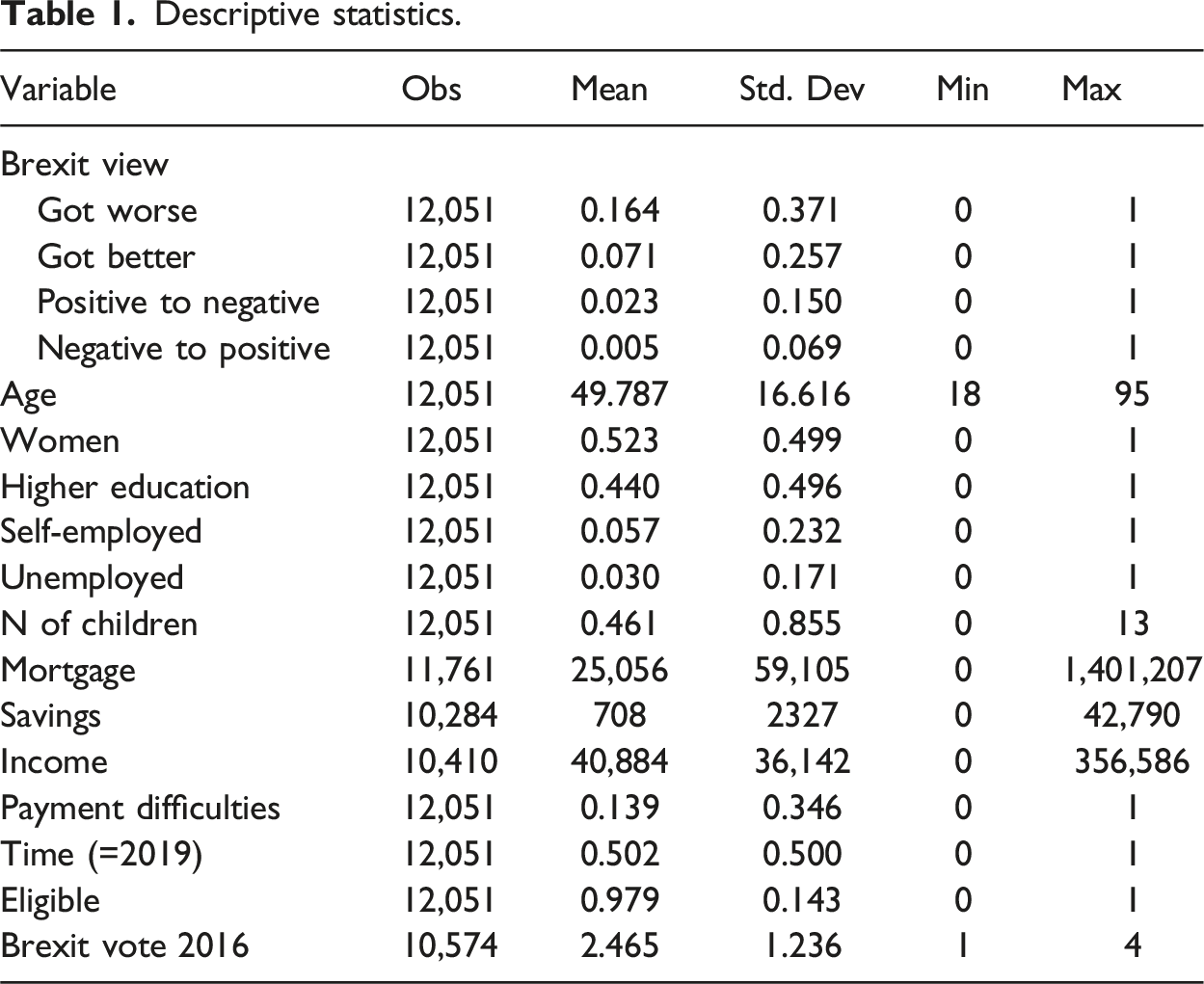
A recurring argument in the literature is that previous years of austerity in the UK may have contributed to Brexit, with some studies finding a statistical relationship between poorer areas and support for the United Kingdom Independence Party (UKIP) (Fetzer, 2019). Hence, political measures can directly impact individuals’ financial situation. To account for this effect, we also include different financial controls at the individual level.
Figure 1 illustrates the distribution of individuals’ pre-tax income based on their (recalled) sentiment towards Brexit immediately after the referendum (Panel A) and during the survey year (Panel B) for both cohorts. The distribution of income appears to be dependent on the voters’ sentiment towards Brexit. However, it does not seem to be a decisive factor for individuals in our dataset
6
. We can argue that in 2019, the distribution of income was slightly higher among individuals who held negative sentiments about the Brexit result, both in the immediate aftermath and a couple of years later. However, this is not the case for individuals surveyed in 2018, where slightly contrasting results are observed. Distribution of pre-tax level income across the level of sentiment towards Brexit. X-axis: Likert points from 1 = “very negative” to 4 = “very positive”, excluding “no opinion”. Based on data from the Bank of England/NMG survey of household finances (2018–2019).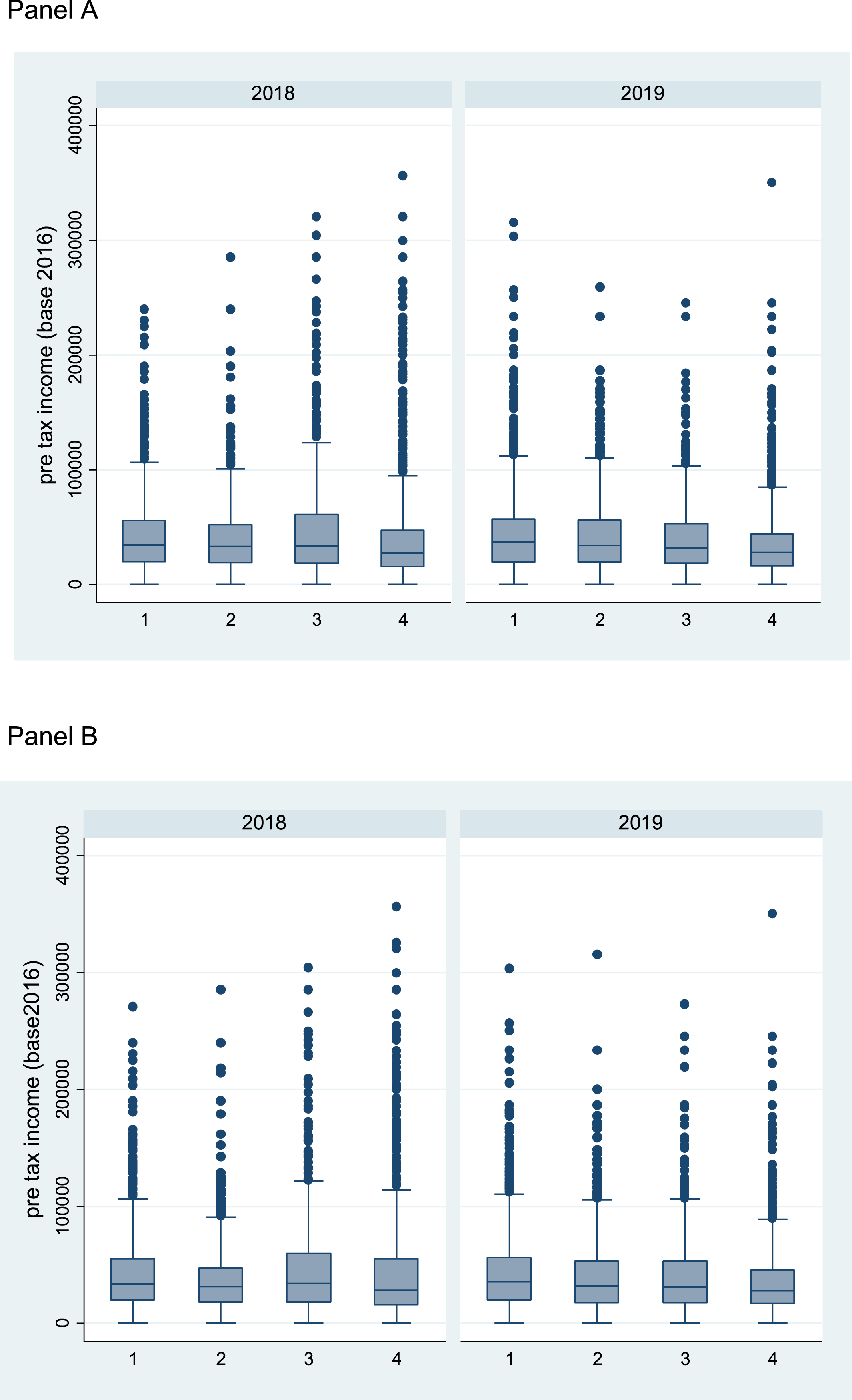
Empirical model
Based on the pooled cross-section dataset described above, we estimate the below baseline probit regression model (Boes and Winkelmann, 2006; Van Praag and Ferre-i-Carbonell, 2004):
The dependent variable, ViewChange, corresponds to one of the four categorical variables explained earlier. The matrix
To enhance our baseline model (Equation 1), we introduce several additional controls and estimate the following models:
While time-invariant variables like age, gender, and education do not change over time, they may still play a role in shaping individuals’ predispositions toward view change. These variables are proxies for underlying traits, preferences, or susceptibilities to certain information that interact with time-varying factors, such as financial uncertainty or regional austerity. To address this issue more rigorously, we introduce financial variables and regional economic conditions as explained below.
To account for potential time variation in the financial variables, we first interact the year of response with the financial variables (
Results and discussion
Main results
Demographic determinants of Brexit view getting worse.
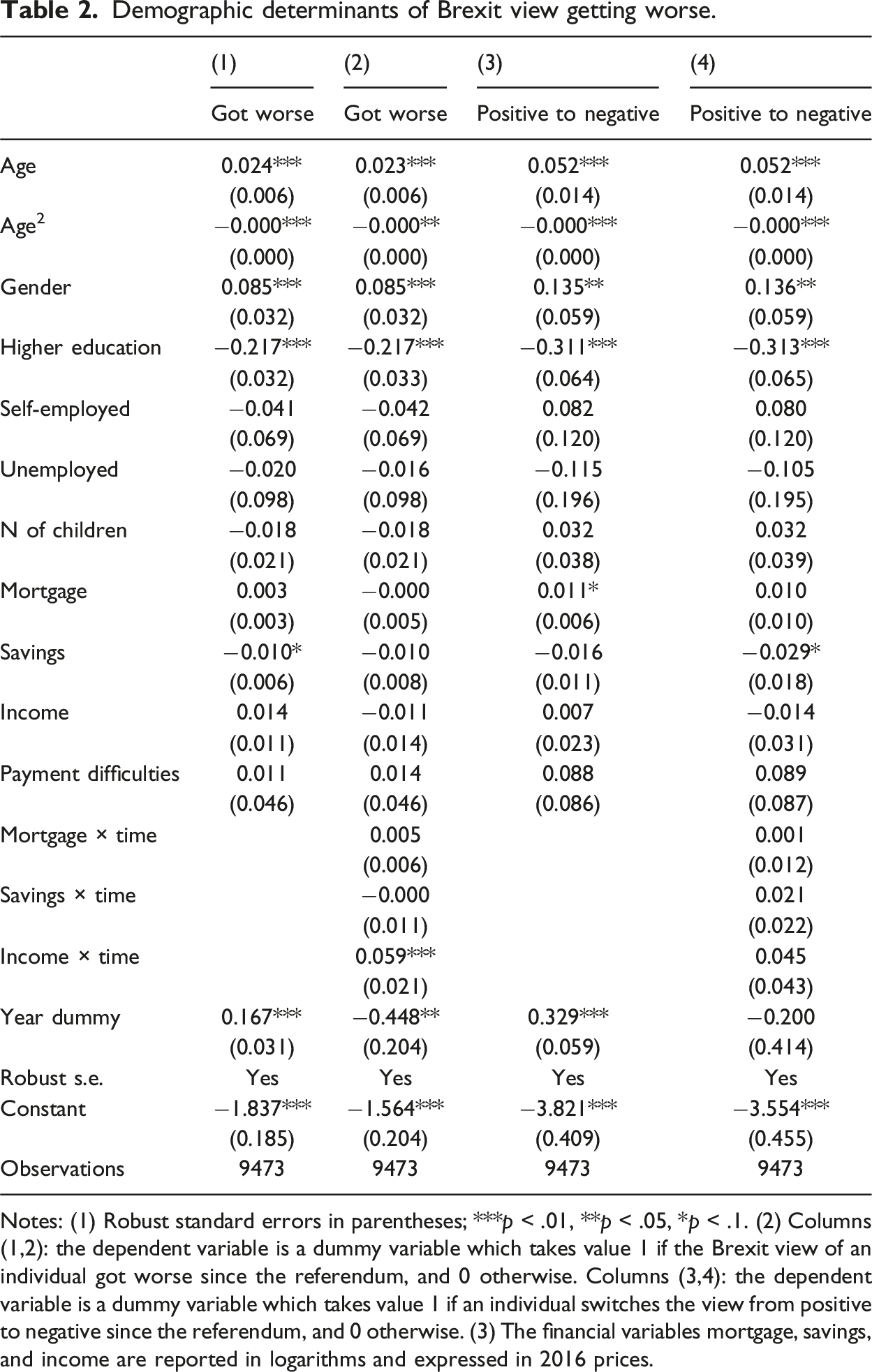
Notes: (1) Robust standard errors in parentheses; ***p < .01, **p < .05, *p < .1. (2) Columns (1,2): the dependent variable is a dummy variable which takes value 1 if the Brexit view of an individual got worse since the referendum, and 0 otherwise. Columns (3,4): the dependent variable is a dummy variable which takes value 1 if an individual switches the view from positive to negative since the referendum, and 0 otherwise. (3) The financial variables mortgage, savings, and income are reported in logarithms and expressed in 2016 prices.
Demographic determinants of Brexit view getting better.
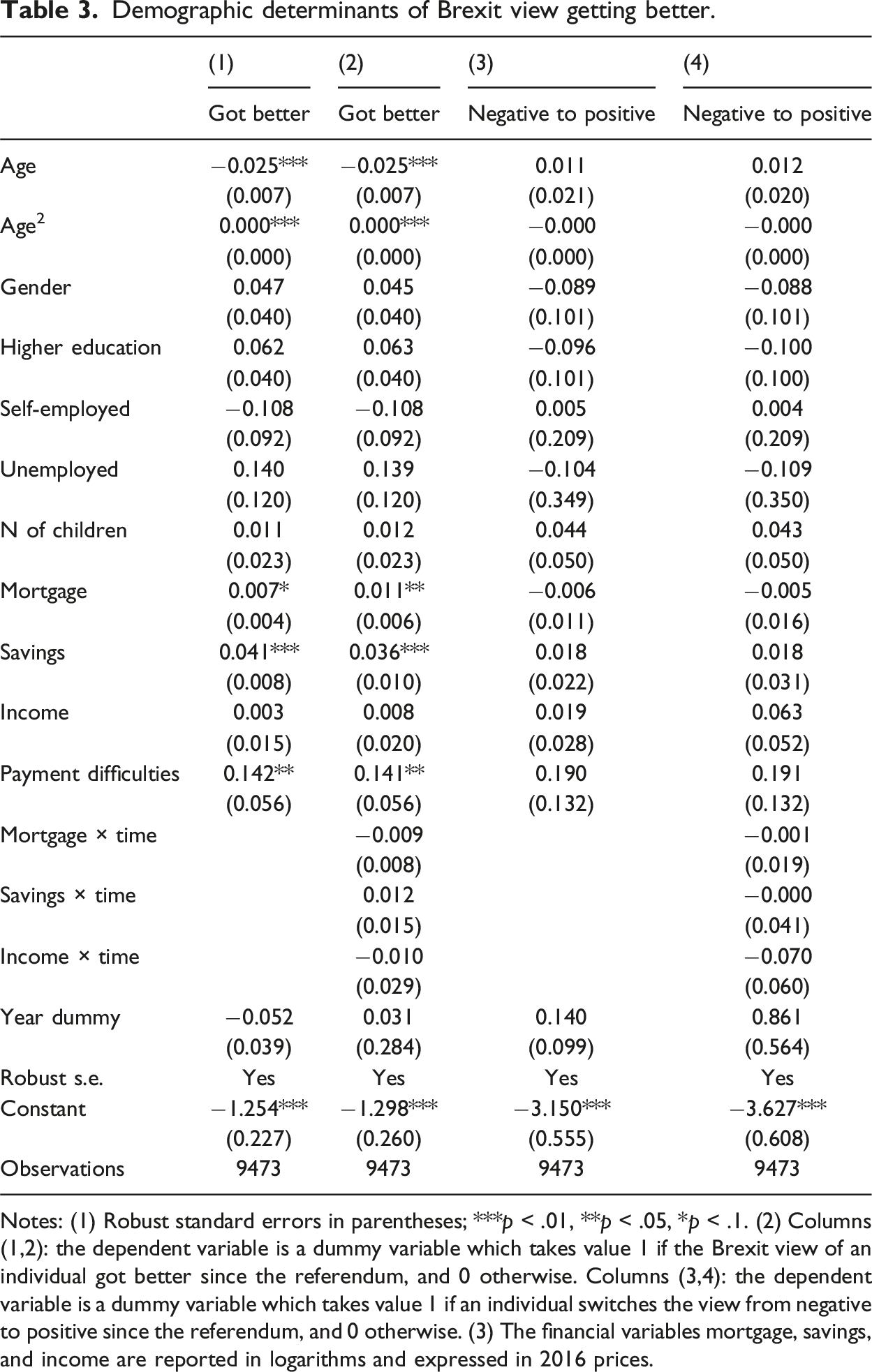
Notes: (1) Robust standard errors in parentheses; ***p < .01, **p < .05, *p < .1. (2) Columns (1,2): the dependent variable is a dummy variable which takes value 1 if the Brexit view of an individual got better since the referendum, and 0 otherwise. Columns (3,4): the dependent variable is a dummy variable which takes value 1 if an individual switches the view from negative to positive since the referendum, and 0 otherwise. (3) The financial variables mortgage, savings, and income are reported in logarithms and expressed in 2016 prices.
Our findings suggest that women and older individuals were more prone to experiencing a deteriorating view of Brexit during the period between 2018 and 2019 when negotiations regarding exit conditions were held between the UK and EU. There are few plausible explanations for these results. Firstly, women and older individuals may have been more willing to acknowledge and express their changing views when asked. Secondly, these groups may have been more susceptible to the negative economic and social implications of Brexit, which became more apparent as additional information became available during the negotiations. For instance, older individuals and women may have been more likely to envision the impact of Brexit on household income and expenditure compared to younger individuals and men. In the case of women, their views may have also shifted due to the profound effects of Brexit on women’s rights and well-being (Chattopadhyay and Duflo, 2004; Swers, 1998). 7 These results are also in line with Portmann and Stadelmann’s (2017) findings in Switzerland, namely that gender and political experience play a crucial role in voting behaviour. They argue that women, as more experienced voters, are less likely to engage in shirking compared to their male counterparts.
These shifts in opinions, particularly among these demographic groups, can be understood by the literature of bounded rationality. Initial decisions were made with incomplete information, and subsequent adjustments reflected a rational learning process as economic and social consequences became clearer. This aligns with the theoretical framework suggesting that voter behaviour is influenced by adaptive responses to new information over time, particularly in contexts of high uncertainty and media influence (Hobolt, 2016; Izquierdo Sanchez and Shaw, 2022; Kahneman, 2003). Media coverage during the Brexit negotiation period emphasised the economic and social costs of Brexit, which likely contributed to shifts in voter sentiment. Women, as primary caregivers, may have been particularly sensitive to these narratives, given their greater exposure to changes in social policy (Gerber et al., 2009).
Furthermore, our analysis reveals that individuals with higher levels of education were less inclined to change their view of Brexit over time. This result suggests that these individuals may have developed a more informed opinion about the consequences of the UK leaving the EU prior to the referendum, as they were able to evaluate the available information more effectively compared to those with lower levels of education (Hedrick and Gherghina, 2020).
Robustness checks with control variables.
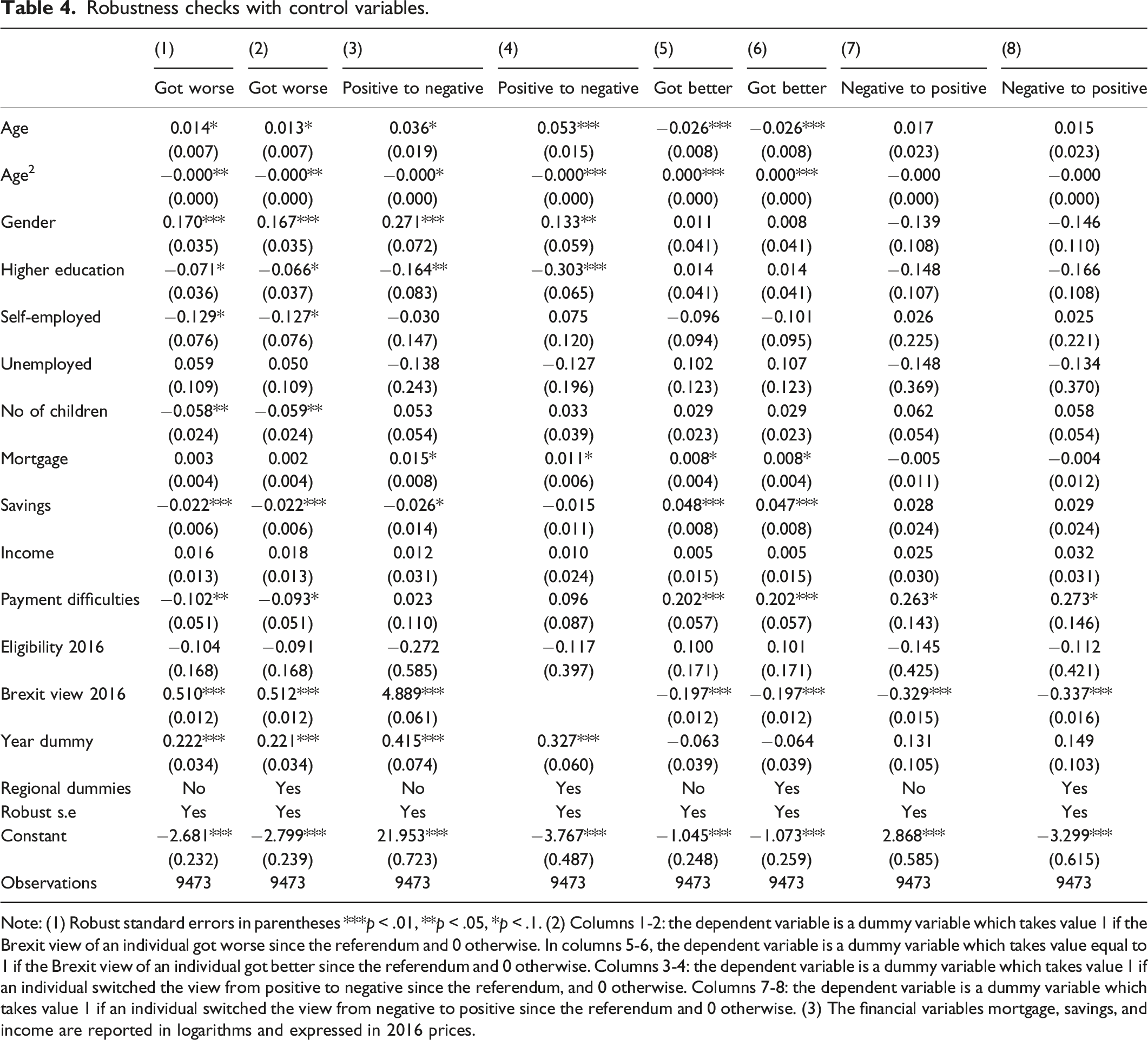
Note: (1) Robust standard errors in parentheses ***p < .01, **p < .05, *p < .1. (2) Columns 1-2: the dependent variable is a dummy variable which takes value 1 if the Brexit view of an individual got worse since the referendum and 0 otherwise. In columns 5-6, the dependent variable is a dummy variable which takes value equal to 1 if the Brexit view of an individual got better since the referendum and 0 otherwise. Columns 3-4: the dependent variable is a dummy variable which takes value 1 if an individual switched the view from positive to negative since the referendum, and 0 otherwise. Columns 7-8: the dependent variable is a dummy variable which takes value 1 if an individual switched the view from negative to positive since the referendum and 0 otherwise. (3) The financial variables mortgage, savings, and income are reported in logarithms and expressed in 2016 prices.
Regional bubbles and the impact of austerity
The rise of populism in recent years, along with austerity measures, has been identified in the literature as contributing factors to the outcome of the 2016 Brexit referendum (Colantone and Stanig, 2018). The implementation of policies aimed at reducing government spending and debt in the UK since the 2008 financial crisis has led to increased inequality and social exclusion, particularly in economically disadvantaged areas (Innes and Tetlow, 2015).
Existing research suggests that the political disillusionment resulting from the austerity measures played a role in influencing the decision to vote for Brexit in 2016. Studies indicate that individuals residing in regions experiencing economic growth and rising property prices were more inclined to vote to remain in the EU. In contrast, those in regions facing economic stagnation and declining property values were more likely to vote to leave (Fetzer, 2019). This indicates that the financial circumstances of individuals, influenced by the regional areas in which they reside, played a significant role in the Brexit vote.
In our analysis, we examine whether residing in a region more affected by austerity measures has an impact on changes in sentiment towards the referendum outcome. Building upon the work of Abel et al. (2016) and Beatty et al. (2019), we utilise an adjusted Index of Multiple Deprivation (IMD) as a proxy for austerity within the specific region where each individual resides. 8 This approach allows us to explore the long-term effects of austerity and further contribute to the existing literature.
The Bank of England/NMG household survey categorises individuals into nine regions across the United Kingdom. Figures 2(a) and (b) display the total responses of individuals, categorised by region, regarding their sentiment towards the referendum result in 2016 and in the year they participated in the survey (either 2018 or 2019). We observe some variations in voters’ sentiments, with a slightly greater inclination towards a negative sentiment towards the referendum result in 2019. This contrasts with the variation observed among cohorts, where changes in voting sentiment appear to be smaller and more fragmented. However, when examining the data graphically, we can see that these movements differ significantly across regions. Sentiment towards referendum result per region. Based on data from the Bank of England/NMG Survey of Household Finances (2018–2019) and the English Indices of Deprivation (2019), Department for Levelling Up, Housing and Communities.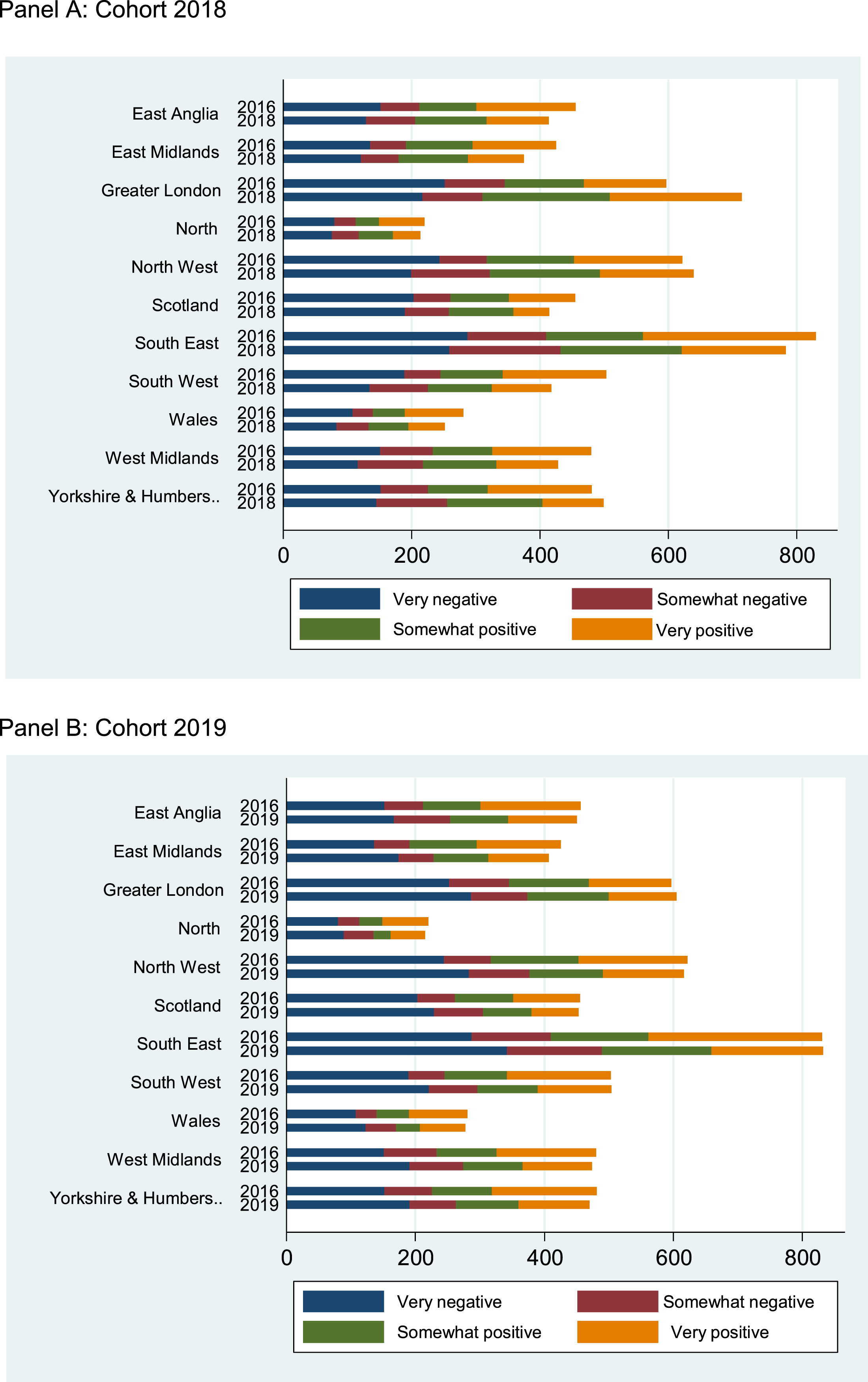
Probit regional bubbles.
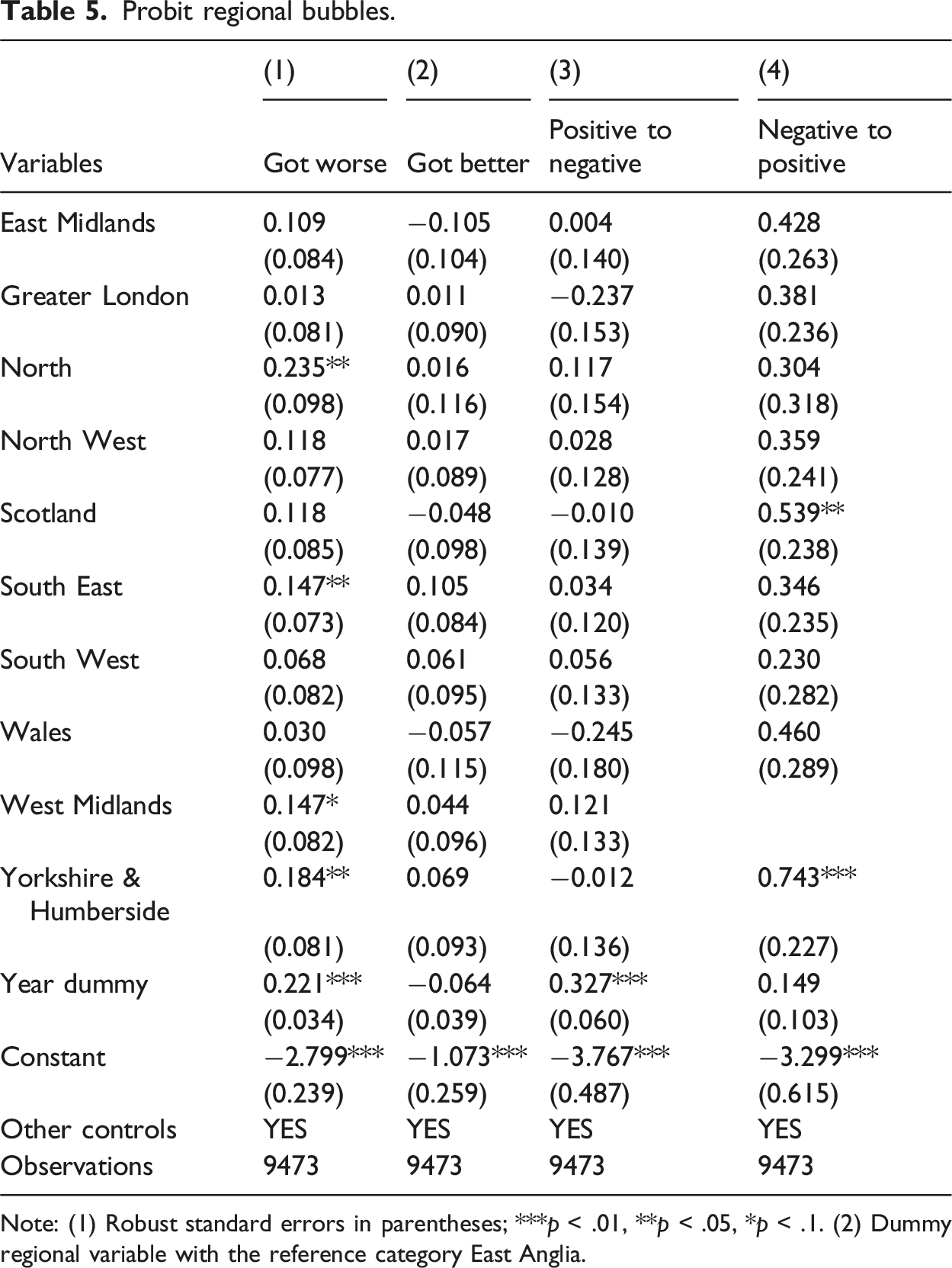
Note: (1) Robust standard errors in parentheses; ***p < .01, **p < .05, *p < .1. (2) Dummy regional variable with the reference category East Anglia.
More specifically, our analysis focuses on individual-level data, which may not be fully representative at the regional level. It is important to acknowledge this limitation in interpreting regional variations. Ansell and Adler (2019) provide a comprehensive analysis of the effects of aggregate unemployment on the Brexit vote. Our findings complement this by focusing on the individual-level changes in preferences, although future studies could further explore regional disparities by incorporating more representative data.
As an alternative approach, we explore the concept of austerity as a measure of regional bubbles which may be influencing the voting sentiment of individuals. Building on the work of Abel et al. (2016) and Beatty et al. (2019), we adopt the adjusted Index of Multiple Deprivation (IMD) to calculate the effects of austerity
9
:
It is important to note that the IMD scores are only available for specific years, with the latest being 2019 and the previous one 2016. Additionally, the availability of data varies across different countries, so our austerity analysis focuses only on the regions of England. To examine the impact of austerity on the probability of vote switching, we consider the subsample of individuals who responded to the questionnaire in 2019 within England. We then incorporated the IMD scores into a slightly modified version of equation (2):
Probit austerity impact on negative switch view.
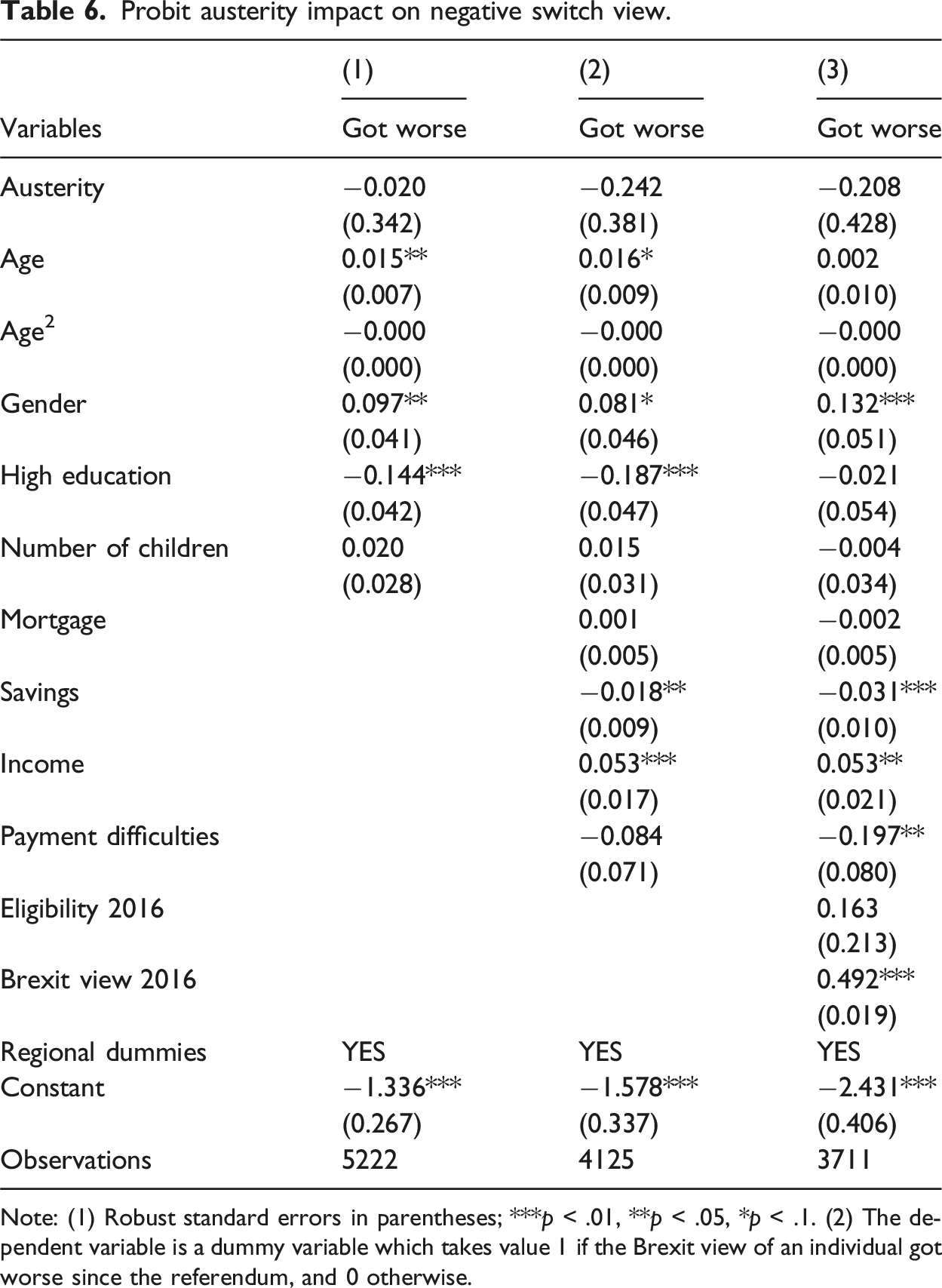
Note: (1) Robust standard errors in parentheses; ***p < .01, **p < .05, *p < .1. (2) The dependent variable is a dummy variable which takes value 1 if the Brexit view of an individual got worse since the referendum, and 0 otherwise.
Probit austerity impact on positive switch view.
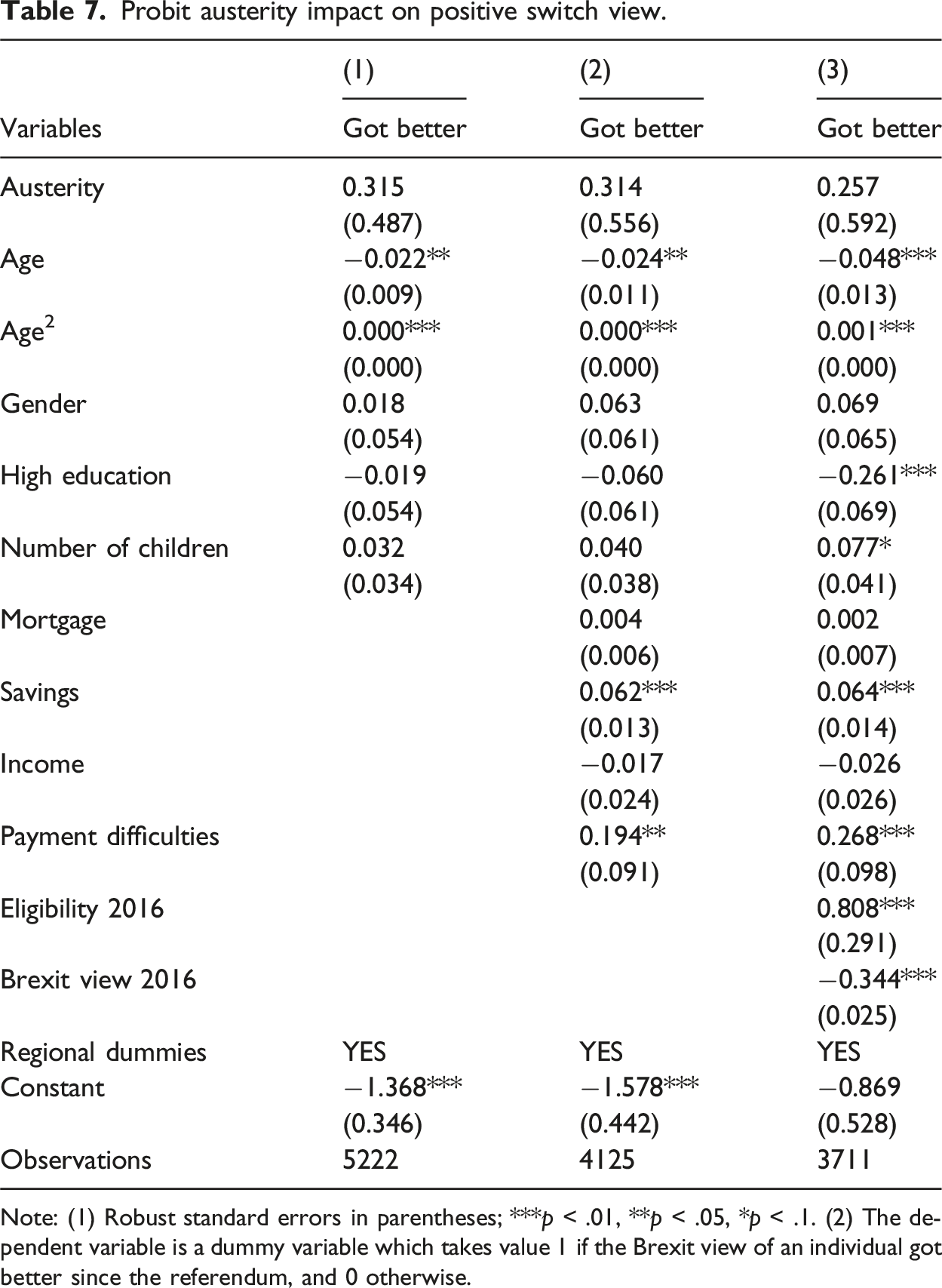
Note: (1) Robust standard errors in parentheses; ***p < .01, **p < .05, *p < .1. (2) The dependent variable is a dummy variable which takes value 1 if the Brexit view of an individual got better since the referendum, and 0 otherwise.
Our findings align with those of Alesina et al. (2024), who show that austerity policies do not necessarily result in electoral punishment. Rather than triggering backlash, such measures may be viewed by voters as signs of fiscal responsibility, especially when framed as necessary or unavoidable by political elites. This perspective helps explain why, in our data, exposure to austerity prior to the Brexit referendum does not appear to influence the likelihood of opinion change. The absence of significant view shifts may therefore reflect a degree of implicit voter endorsement or political resignation, rather than active disapproval.
It is worth noting that even though the austerity coefficient is statistically insignificant, the coefficients for income and savings are statistically significant. This suggests that these variables, which previous austerity measures can indirectly influence, play a significant role in shaping individuals’ sentiments towards the referendum.
These results highlight the complexity of the relationship between austerity, gender, and voting sentiment. While austerity may not directly influence the likelihood of switching votes, its impact on individuals’ financial well-being, as captured by income and savings, cannot be ignored. Moreover, the gender effect remains robust, indicating that gender-related factors continue to be influential in shaping negative sentiments towards the referendum.
De Vries (2018) provides critical insights into the broader context of voter disillusionment with the EU, which played a significant role in the Brexit vote. Additionally, Hobolt (2016) offers an in-depth analysis of the Brexit referendum, highlighting key drivers such as identity politics and economic grievances. Our study builds on these contributions by focusing on how voter preferences evolved in response to economic and political developments during the exit negotiations.
Conclusion
In this paper, utilising the Bayesian learning framework, we analyse the demographics of individuals who experienced a change in their views following the UK’s 2016 referendum on EU membership. Our study utilises a large dataset comprising over 12,000 individuals, allowing us to capture the nuances of their evolving perspectives. Our findings reveal significant shifts in Brexit views among different demographic groups. Specifically, we observed a deterioration in the views of women and, initially, of older individuals over the negotiation period, although the views of older people later showed some improvement. Additionally, individuals with higher education were less likely to change their stance on Brexit. We did not find any impact of years of austerity prior to the Brexit vote on the likelihood of changing views.
This null result may seem surprising, given the attention austerity has received as a source of political discontent. However, our findings are in line with Alesina et al. (2024), who argue that austerity policies do not necessarily provoke electoral punishment. Voters may interpret such policies as fiscally responsible or become resigned to them due to lack of perceived alternatives. In this context, the absence of significant opinion change may reflect implicit endorsement, political fatigue, or a weak perceived link between economic hardship and the Brexit vote itself. The divergence in opinion change across demographic groups shown in our results highlights the interplay between rationality and cognitive biases.
These results have important policy implications, particularly considering the narrow margin of the referendum result (51.9% Leave vs 46.1% Remain). It raises questions about whether a similar outcome would be achieved if the referendum were held again prior to the final exit of the UK from the EU. These findings emphasise the challenges of relying solely on referendums to address complex political and economic issues, particularly in the post-truth era. In such a climate, where objective facts carry less weight in shaping public opinion compared to emotional appeals and personal beliefs, the limitations of referendums become apparent.
The implications of our findings extend beyond Brexit and pertain to broader political decision-making processes. Our results suggest that even in the face of new information, many voters did not revise their views, raising critical questions about the efficacy of referendums in shaping complex national policy. In line with Brennan (2016), this underscores the limitations of democratic decisions made in low-information environments, where voters often lack both the incentive and cognitive capacity for rational belief updating. This reinforces the need to reconsider how democracies approach large-scale public consultation—potentially shifting toward more deliberative or representative mechanisms when addressing intricate, long-term policy issues.
Our work underscores the need for a more comprehensive and nuanced approach to public engagement, policy formulation, and democratic decision-making. It highlights the importance of incorporating a range of factors, such as demographics, education, and emotional appeals, in order to address the complexities of contemporary political issues effectively. By understanding the dynamics that shape individuals’ views and acknowledging the limitations of referendums, policymakers can strive for more inclusive and informed decision-making processes that better represent the diverse interests and concerns of the population.
Footnotes
Acknowledgements
The authors thank the participants at the Huddersfield Business School Conference 2020.
Declaration of conflicting interests
The author(s) declared no potential conflicts of interest with respect to the research, authorship, and/or publication of this article.
Funding
The author(s) received no financial support for the research, authorship, and/or publication of this article.

Data Availability Statement
This article uses two publicly available datasets: Bank of England/NMG Survey of Household Finances (2018 and 2019 waves), available at: https://www.bankofengland.co.uk/statistics/research-datasets. English Indices of Deprivation, published by the UK Department for Levelling Up, Housing and Communities, provide official measures of relative deprivation in small areas across England and are available for multiple years (2004, 2007, 2010, 2015, and 2019) at: https://www.gov.uk/government/collections/english-indices-of-deprivation. The replication syntax and analysis code for this study are available at https://www.dropbox.com/scl/fi/zp7zjuas2gikv38sbbb60/Brexit-Views.do?rlkey=6e1nk9y2fwwww5njrir5qnso9&st=0jrx5quk&dl=0. This includes a fully annotated STATA .do file that reproduces the tables and models in the article, based on the publicly available datasets listed above.