



Abstract
This paper presents a model to identify why, for some, the expression of liberal attitudes towards the LGBT population may be strategic rather than sincere. We show that the British population displays considerably more tolerant views towards homosexuality compared to the end of the 1980s. However, there is evidence that this has slowed in recent years, especially in areas that have experienced the highest levels of immigration, particularly from countries outside Europe. We explain these changes with reference to two effects that immigration/multiculturalism may have – direct cultural and indirect political effects – the latter manifested in selective liberalisation such that for some members of the in-group adopting a liberal attitude towards a group that was once the salient out-group (in this case the LGBT population) generates greater benefits for the in-group by creating disutility for the currently salient out-group (in this case culturally conservative religious minorities and immigrants). We explore both influences using survey data and find strong evidence for the first effect and suggestive support for the second effect.
Introduction
In recent decades we have witnessed a dramatic change in social attitudes towards homosexual relations across the globe. This has been especially the case in Western democracies where views on the issue have increasingly liberalised, whereas public opinion has become more intolerant in other parts of the world where more repressive legislation has been introduced. The UK, the focus of this paper, provides no exception. However, casual observation is sufficient to tell us that this change has not been uniform across all groups. Individuals aligned with certain religious groups hold more intolerant views towards the Lesbian, Gay, Bisexual and Transgender (LGBT) population (Brittain and McKinnon, 2011). In the UK, liberalisation of attitudes has occurred more rapidly amongst the ethnic white population than amongst ethnic minorities (Collins and Drinkwater, 2017).
The primary contribution of the paper is to present a formal model which identifies a mechanism which explains why the expression of liberal attitudes towards the LGBT population may be strategic rather than sincere. It may be that for some members of the in-group adopting a liberal attitude towards a group that was once the salient out-group (in this case the LGBT population) generates greater benefits for the in-group by creating disutility for the currently salient out-group (in this case culturally conservative religious minorities and immigrants). We investigate empirically whether significant changes in attitudes towards homosexual relations extend to other social attitudes. In particular, is liberalisation on this dimension part of a package of liberalisation that extends to a range of attitudes? If this is the case, one might expect a more liberal attitude on matters of sexuality to be combined with more liberal attitudes in a dimension such as law and order, reflected in the expression of relatively more libertarian than authoritarian attitudes. However, in contrast (and in line with our theory) to a package of general liberalisation, it may be that liberal expression is selective. It may be that for a significant proportion of the UK ethnic white population liberalisation in their attitudes is a counter response to attitudes perceived to be held by ethnic minorities. 1 These may be particularly related to those attitudes held (or perceived to be held) by the Muslim population, which in recent times has become the salient out-group 2 within western societies (see, for example, Modood, 2005; Poynting and Mason, 2006; Abbas, 2007; Betz, 2016; Ragazzi, 2016; Narkowicz and Pędziwiatr, 2017). This suggests that some of the liberalisation in attitudes towards the LGBT population may be strategic. This implies that some of the white population may privately hold intolerant views concerning LGBT rights but strategically express a liberal attitude to identify with an issue that they believe hurts ethnic minorities (particularly Muslims) and that expressing views that hurt ethnic minorities is more valuable than expressing views hurtful to LGBT people. This may be due to an increased sense of threat from ethnic groups. Our analysis thus relates to the formation of attitudes based on group identity, which has been a growing focus of rational choice analysis in recent decades (see Akerlof and Kranton 2000; Kalin and Sambanis 2018; Shayo 2020). 3
An increasing tolerance towards LGBT people has permeated out from those areas in the UK that have traditionally been most accepting of people with different sexual orientations. At the same time as these changes occurred, rising levels of immigration, especially into the most heavily populated parts of the largest cities – particularly London - may have had the effect of slowing down levels of tolerance towards homosexual relations, even though all areas have become more tolerant. Net migration for the UK was negative until the 1980s and has been largely positive ever since, especially since the early 1990’s since when it has been at historically high levels reaching more than 300,000 before the 2016 referendum on UK membership of the European Union (White, 2018). The highest levels of immigration have been observed in London, its surrounding areas and to other big cities. The increasing salience of immigration as a public issue in the UK, and the broad representation of immigrants in the public perspective of immigrants as conservative Muslims, we argue has helped to fuel the dramatic increase in tolerance towards the LGBT population that has been witnessed.
Our study uses data from the British Social Attitudes Survey (BSAS) to look at changes since the early 1980s. This was a time in which there were typically very intolerant attitudes towards homosexuality, with well over one half of adults (56% in 1989) reporting that they thought that this was always wrong in the late 1980s. Since then, public attitudes have changed considerably, with this percentage falling to 15% in 2015. This is similar to the evidence presented by Loftus (2001) for the United States between 1973 and 1998. 4 In our analysis, we pool consecutive cross-sectional datasets to examine how attitudes have changed across different demographic groups, thereby identifying the factors that have contributed most to the liberalisation of attitudes and other observed changes.
The central feature of our paper is the focus on the possibility that some of the liberalisation in attitudes may be strategic as a conflicting response to perceived out-groups, most notably Muslims. While a direct test of this is difficult, more indirect tests can shed some light on this possibility. We provide a comparison with attitudes towards pre-marital sex and stiffer sentences and can again contrast the attitudes of the white majority to those of Muslims and other minority groups. Attitudes on pre-marital sex provide results that are similar to attitudes towards homosexual relations. Immigrants and minorities tend to have far less liberal attitudes, and as a result London appears as the least liberal region in the UK. The key difference with homosexual relations is that the regions outside London in the 1980s did not have views that especially differed from those in London. It seems that all the change has been driven by the increased proportion of ethnic minorities and not by significant changes in attitudes in the white population. We can speculate that one possible key difference compared with attitudes to homosexual relations is that pre-marital sex is not associated with a clearly identifiable out-group. In the 1980s the LGBT population provided an out-group at a time when the immigrant population was relatively small. This contributes to homophobic attitudes. But as immigration increased and the Muslim population became the main out-group, attitudes have arguably shifted towards increased tolerance towards the LGBT population as a strategic shift from one targetable out-group to a new targetable out-group. Pre-marital sex provides no such target. An area where there are often perceived to be differences between more socially conservative communities and more liberal ones is over law and order. This can be measured in attitudes to stiffer sentences. A second implication is that there would be little strategic incentive to alter attitudes if the Muslim/immigrant community does not express especially strong views. There is little value in altering an attitude if is not perceived as imposing a cost upon the salient out-group.
Our paper is not focused on party politics, but it does relate to a literature that has developed around the changing focus in the politics of the radical right in Britain and the wider world over the last two decades (Jennings and Ralph-Morrow, 2020). A distinguishing feature of how radical right politics has altered stemming back to the emergence of Pim Fortyn in the Netherlands at the turn of the century is a narrower focus on Muslims as a target and as a corollary how they pose a threat to liberal values concerning gender and LGBT rights (Akkerman, 2005). This approach spread to the ‘detoxification’ in France of the National Front (Almeida, 2017; Facchini and Jaeck 2021) and more generally as indicated by Moffitt (2017) in his study of the populist radical right in northern Europe and Eatwell and Goodwin (2018) in their study of national populism. 5
A key distinction, however, between the discussions of LGBT rights in radical-right politics and mainstream politics is that the former only tend to discuss it with reference to the alleged homophobic attitudes of Muslims and not as an isolated issue in itself. Indeed, as Eatwell and Goodwin (2018) argue, a reason why national populists are able to tap into support that traditionally was given to the Democrats in the USA and the Labour party in the UK is that these parties are perceived as now focusing too much on issues such as LGBT rights. In these latter cases, LGBT rights are, of course, discussed commonly without reference to Muslims. So, the expression of support for the LGBT population may, amongst some groups, be conditional on being couched in terms that draw attention to their concern with Muslims. This paper aims to, first, theoretically and then, empirically tease out some of this distinction between increased acceptance of LGBT rights in and of itself and where it has increased as a response to what are perceived to be Muslim/immigrant homophobic attitudes, as a means by which Muslims/immigrants can be attacked as not sharing British values. This of course begs the question as to whether expressions of tolerance towards the LGBT population are sincere or strategic.
The next section sets out a theoretical enquiry into this issue. The following sections then provide an empirical analysis relating to the theory. A final section offers a summary of the main findings and key conclusions.
Theoretical background
We postulate that there are direct and indirect effect of the presence of ethnic minorities (especially Muslims) on attitudes towards homosexual groups. The direct effect has changed the relative spatial balance of attitudes, given that certain migrant groups have more conservative attitudes. Religion is important here especially with regards to Muslims. The indirect effect refers to the white ethnic population with traditional (authoritarian) attitudes, who may be more tolerant towards certain groups such as homosexuals because these groups are (even) less popular with Muslims and some immigrants. In this section, we develop theoretical insight into the indirect effect. 6
We present a simple depiction of the problem for a member of group A (the in-group) that experiences disutility from increasing utility for members of group B and C (the out-groups). Group B may be thought of as the LGBT population and Group C as the Muslim population. Group A members can undertake actions or form attitudes targeting the other groups that reduce the utility of B and C and as a result increase the utility of group A. We label these actions



Begin by supposing a society where intolerance of groups B and C is widely held within large swathes of the ethnic white population. There would be little social stigma attached to engaging in negative actions and language aimed at both groups. This would be reflected in low values of
Now suppose two changes occur. First, social stigma against all forms of intolerance increases, but this is particularly the case for intolerance of liberal rights such as those for the LGBT population, which are here depicted as group B. In this case both marginal costs would rise, but
We can depict the outcomes diagrammatically in Figure 1, such that intolerance unambiguously falls towards the LGBT population as depicted by a lower equilibrium value for Perceived threats from out-groups and tolerance towards lgbt people. Panel (a) and Panel (b).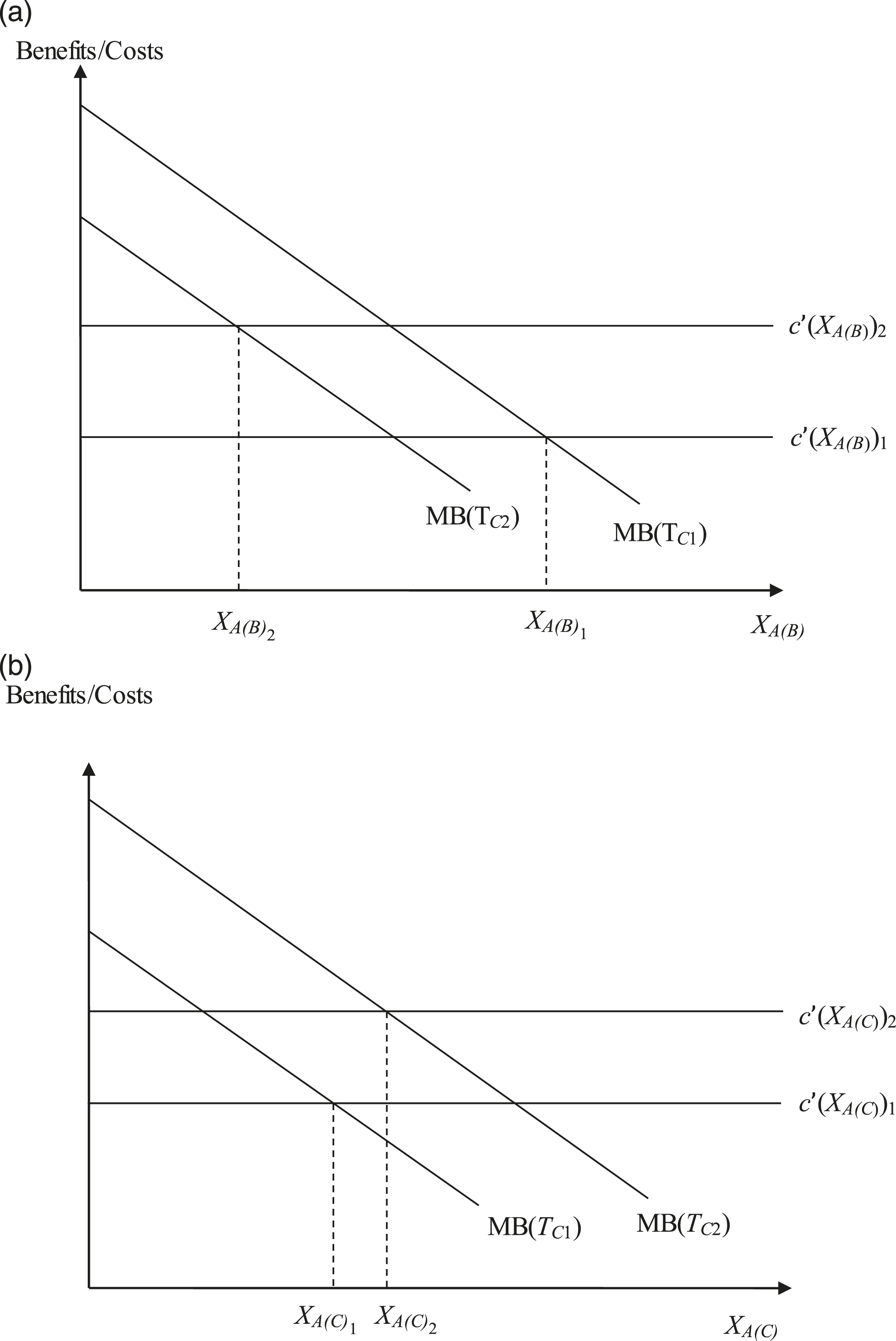
The key points to take from the theoretical approach depicted here for the empirical analysis is as follows. We can think in a highly stylistic manner of the white ethnic population as composed of those in a metropolitan city and those outside. For example, in London in the 1980s attitudes to homosexual relations were already liberal. Attitudes to Muslims were also liberal. Clearly these attitudes may have been held with conviction. Alternatively, they could have been driven by costs and benefits. The stigma costs of expressing intolerance towards any out-group were very high. In addition, for the liberal representative of a metropolitan city neither out-groups would have been perceived as a threat. That is
Alternatively, we can construct a stylized set of preferences for an ethnic white representative outside a metropolitan area or large provincial city. In the 1980s stigma costs may have been low and both out-groups are considered threatening. However, given the low salience of Muslims
In the other attitudes we analyse (pre-marital sex and the death penalty) the bolstering effect identified for homosexual relations would not apply because there is not an identifiable threatening out-group strongly in favour of pre-marital sex with which the Muslim population is perceived to be in strong disagreement with. So, although supporting pre-marital sex would run contrary to Muslim opinion, it would not also lead to more liberal attitudes towards an identifiable group associated with pre-marital sex because no such group really exists. The absence of a contrasting identifiable out-group also applies in attitudes towards the death penalty. In addition, although Muslims are relatively more in favour of it than the hypothetical ethnic white Londoner, the preference is not strong and there may be perceived to be little advantage for the hypothetical ethnic white non-Londoner in softening their position as it will do little to hurt the Muslim population that they perceive as a threat. These factors may help to explain why the liberalisation that has been witnessed in attitudes towards homosexual relations has not simply been reflective of a wider set of liberalisation across a large range of attitudes. While London may be the least liberal region in the UK in terms of attitudes on homosexual relations, it is still the most liberal on other matters and the identifiable nature of the LGBT population and the strategic considerations discussed here may be relevant to that contradiction.
Data
The data used in this paper are taken from the BSAS, which is a representative sample survey of respondents living in Great Britain. There is a separate study in Northern Ireland. The data that we use covers the period from 1983 to 2015 and has been used over a long period to examine a wide range of issues by social science researchers such as Blanchflower (1991) and Chan and Goldthorpe (2007). A consistent question on attitudes towards homosexual relations has been asked in many of the years that the survey was undertaken. However, there are some years that it didn’t feature and the BSAS did not take place in 1988 and 1992. Therefore, we have data for 1983-5, 1987, 1989, 1990, 1993, 1995, 1998-2000, 2003, 2005-7, 2010, 2012, 2013 and 2015. Responses to the question on homosexual relations have previously been analysed by other authors including Collins and Drinkwater (2017). They note that although there has been a general liberalization in attitudes towards homosexuality across Britain this has not been evenly distributed in different parts of the country, including variations between urban and rural areas.
Attitudes towards homosexual relations by time period.
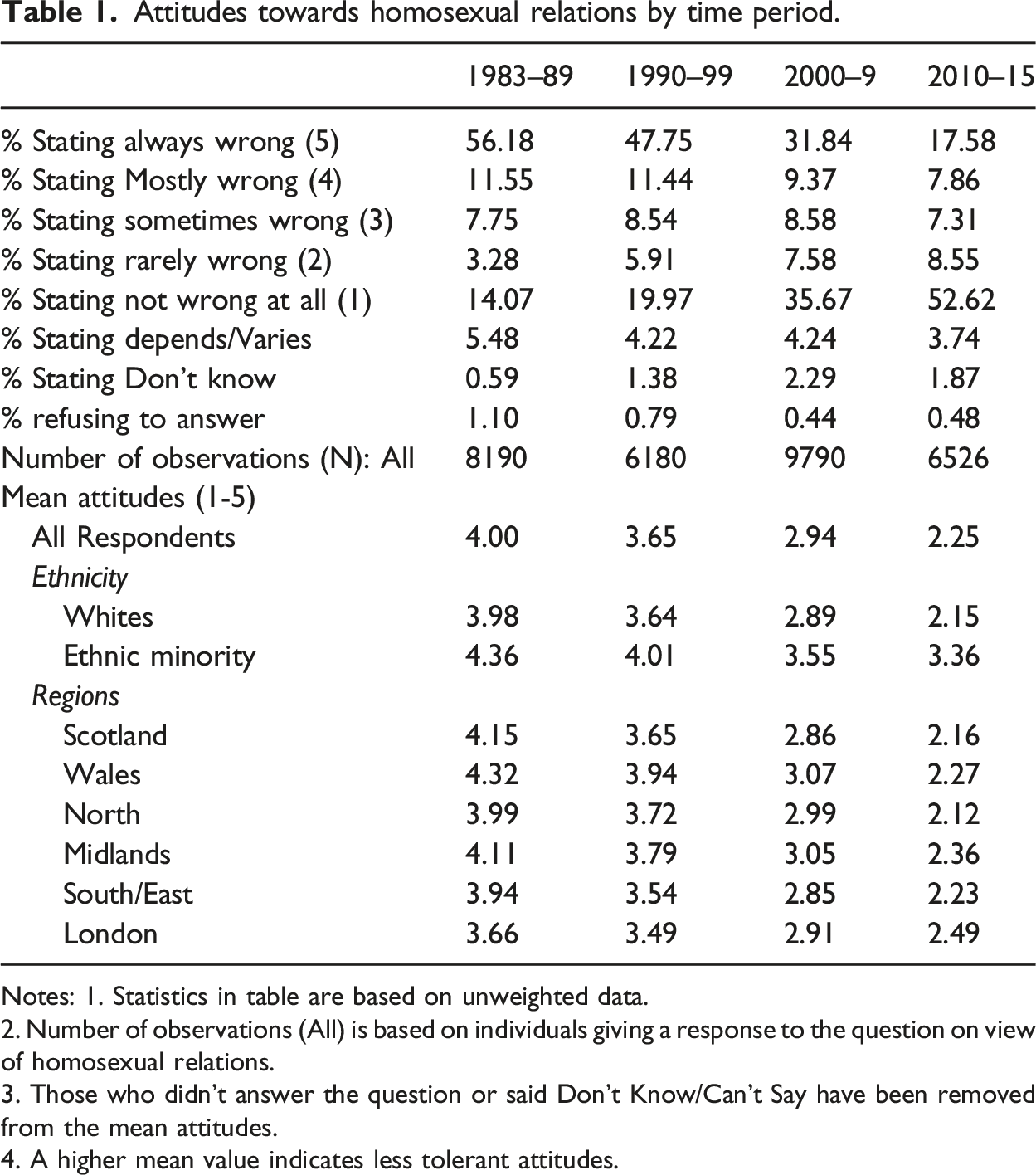
Notes: 1. Statistics in table are based on unweighted data.
2. Number of observations (All) is based on individuals giving a response to the question on view of homosexual relations.
3. Those who didn’t answer the question or said Don’t Know/Can’t Say have been removed from the mean attitudes.
4. A higher mean value indicates less tolerant attitudes.
Multivariate modelling approach
The regression analysis is based around the following basic model using data from the BSAS
To further examine the direct effect of the higher levels of immigration in London on relative changes in regional attitudes towards homosexual relations, the gap between attitudes towards homosexual relations in London and other parts of Britain is decomposed into two components using a regression-based technique initially developed by Oaxaca (1973) and Blinder (1973). The two components are an explained or characteristic effect and an unexplained or coefficients effect.
8
The characteristic effect relates to the compositional differences between the samples in the two areas that are being compared. The unexplained component represents the part of the differential between the areas that cannot be explained by the variables that have been included in the regression model. This approach has been used extensively in the labour economics literature, especially in connection to wage differentials, where the unexplained component is often used to measure the extent of discrimination against a particular group.
9
However, it will also include the effects of group differences in unobserved factors (Jann, 2008). The basic decomposition framework is
To ascertain whether there has been a selectively liberal effect in relation to attitudes towards homosexual relations is provided through extending the basic regression model 
A second set of models that interact time and education have been also estimated using different measures of these effects. In particular, the time dummies in (6) have been augmented with a measure of concerns about race and immigration (R).
10
In (7), the educational dummies have been interacted with R rather than the period dummies, with the retained to capture temporal influences
By including the concerns about race and immigration variable as well as the time period dummies this should mean that the interaction will more precisely estimate the impact of the relationship between changes in attitudes towards immigration and educational groups. There was a rise in immigration following the election of the Labour Government in 1997 and from that point until 2015 there was also a rise in anti-immigrant opinions. For example, English (2019) constructs a measure based on 111 items from 21 individual series over 26 years to show that public hostility towards immigration rose more or less continuously in Great Britain from the mid-1990s until 2015. 11 This is consistent with the single Ipsos MORI Issues Index shown in Figure A1 in the Appendix.
To further examine the influences on changing social attitudes over time, we also estimate models that include variables and interactions capturing views towards the death penalty. Kaufman (2016) argues that attitudes towards the death penalty was a very strong predictor of whether an individual voted to leave the EU in the 2016 Referendum. Ballard-Rosa et al. (2021) examine the spatial link between exposure to Chinese imports and authoritarian values. They conclude that this relationship helps to explain the behaviour and opinions of Leave voters and their desire to restrict immigration and gain back control of policy-making.
12
Further evidence on this is provided in Table A1 in the Online Appendix, which reports the percentage of Brexit voters amongst respondents to a question about views towards the death penalty using pooled BSA surveys from 2016 to 2019. It shows that those who agreed or strongly agreed with the question regarding the death penalty being the most appropriate sentence for some crimes were far more likely to be Brexit voters. In particular, just over 70% of Whites in this group voted for Brexit compared with around a third of those who did not agree with the death penalty. Given the importance of this variable, we include a dummy variable (D
i
) indicating whether the respondent agreed or strongly agreed with the death penalty in our final set of ordered probit regression models. We also interact this variable with the time period dummies, as in equation (6)
Results
Ordered probit estimates of attitudes towards homosexual relations: key explanatory variables.
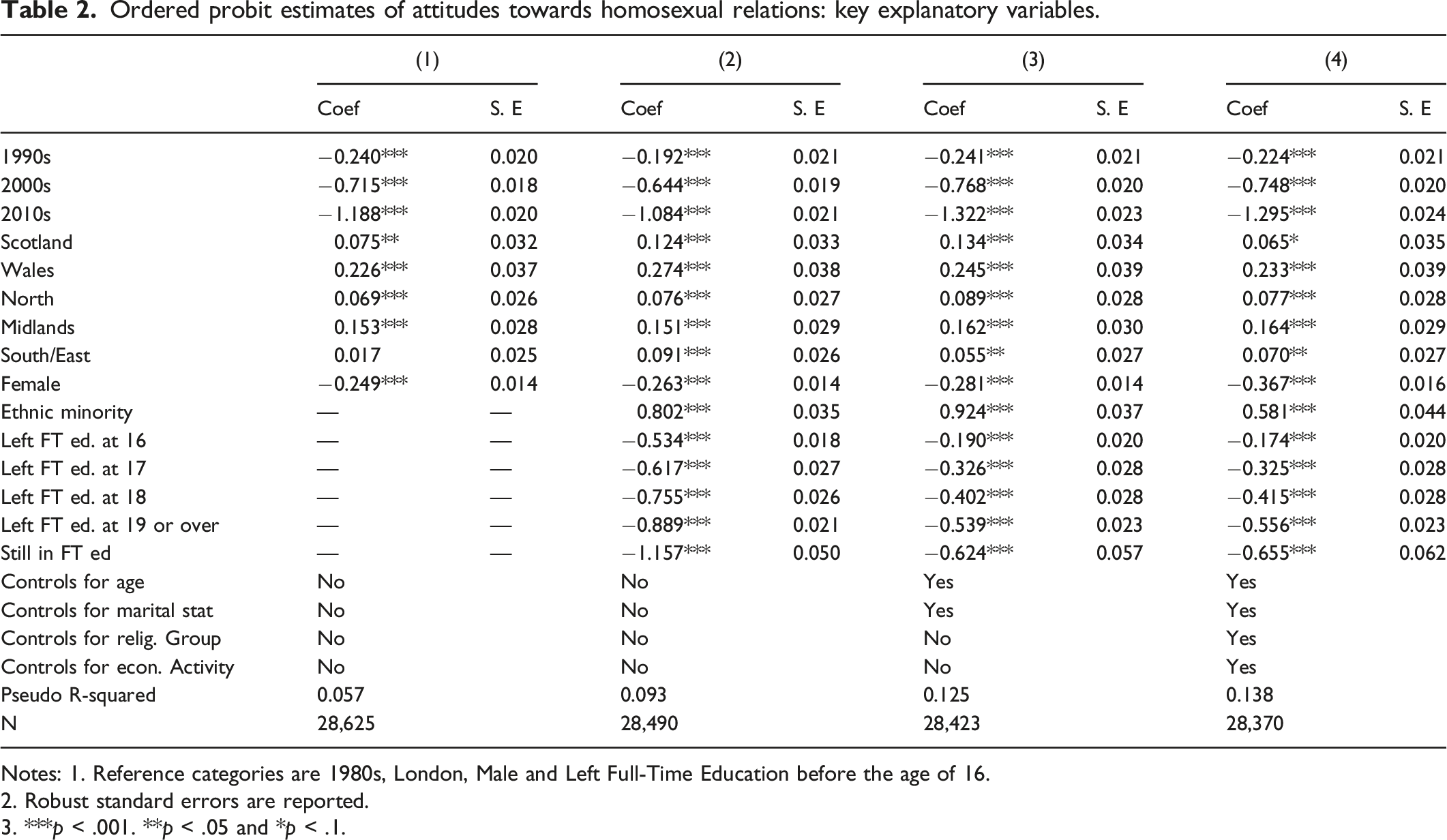
Notes: 1. Reference categories are 1980s, London, Male and Left Full-Time Education before the age of 16.
2. Robust standard errors are reported.
3. ***p < .001. **p < .05 and *p < .1.
The table also shows the importance of ethnicity as indicated by the large and significant coefficient attached to the ethnic minority dummy in each specification. 13 The magnitude of the coefficients does vary, particularly when controls for religious group are included in the final specification, thereby lowering the coefficient attached to belonging to an ethnic minority group. Table A2 in the online appendix provides further detail by highlighting on the impact of religion. In particular, individuals reporting that they are affiliated to each of the religious groups, apart from the Other Religion category, are significantly (at the 1% level or better) more likely to indicate a less liberal view towards homosexual relations compared to people with no religion. This is especially noticeable for Muslims, who display by far the most intolerant views towards homosexual relations.
From a regional perspective the table shows that respondents from London displayed significantly more liberal attitudes towards homosexual relations compared to some other regions over the whole period even after controlling for a range of socio-demographic controls had been included. The significance levels compared to other regions do however vary as more characteristics are included, especially education and religious group. For example, the difference between Scotland compared to London is not significant at the 5% level in the final specification. 14 The table also indicates the very strong influence of education on attitudes towards homosexual relations, which is lessened after controlling for age. Females also display a significantly more tolerant view towards homosexual relations.
Oaxaca decompositions of attitudinal variables: rest of great britain compared to London by decade.
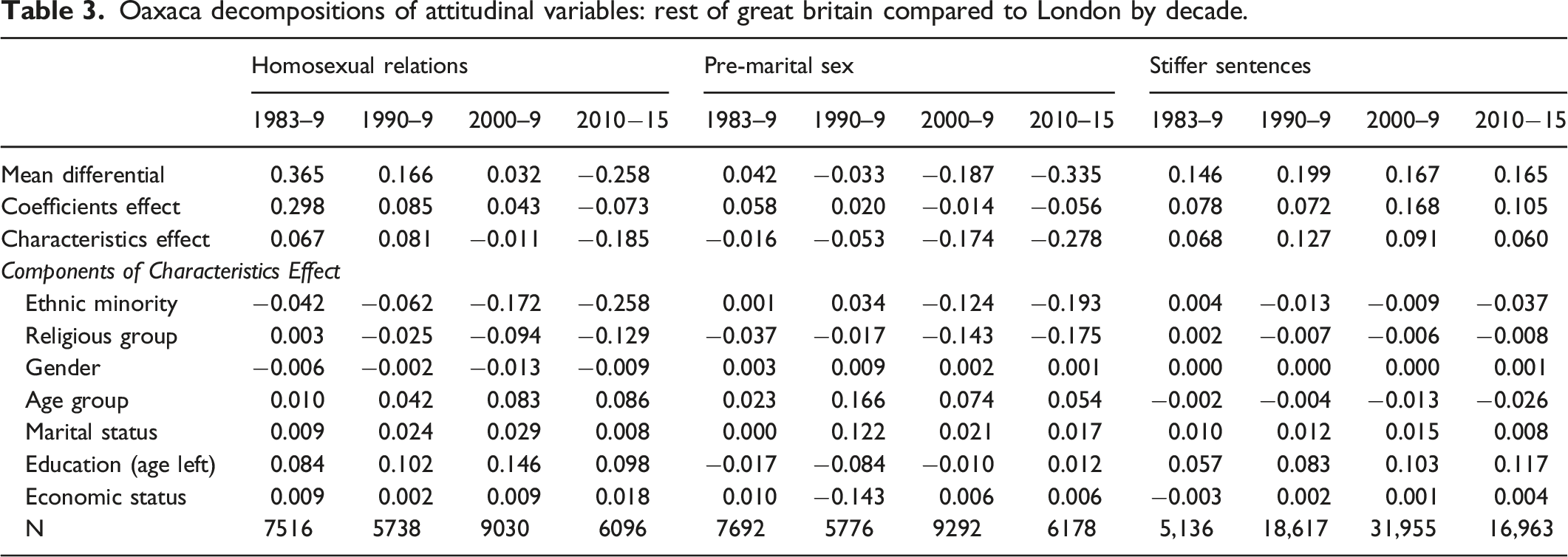
The results for attitudes towards pre-marital sex have a similar pattern to those for homosexual relations. Attitudes towards pre-marital sex have liberalised at a faster rate in other parts of Britain in comparison to London. A large negative differential is again apparent by the fourth period, and this is almost entirely accounted for by the characteristics effect, especially the ethno-religious controls. Interestingly, the effects of the religious group dummies are relatively more important in comparison to those in results for homosexual relations. 15 However, the results for the law and order variable are quite different. Attitudes in London start as more liberal than in other parts of Britain and this gap widens slightly over time. This suggests that the adoption of liberal attitudes in matters of sexuality has not extended to other issues such as stiffer sentencing. Moreover, the coefficients effect accounts for the majority of overall differential in the final period, with the ethnic and religious controls contributing relatively little to the characteristics. This is particularly the case for the religious dummies but the effect of the ethnic minority dummy does increase over time.
Ordered probit estimates of decades, education and interaction terms for attitudinal variables for whites.
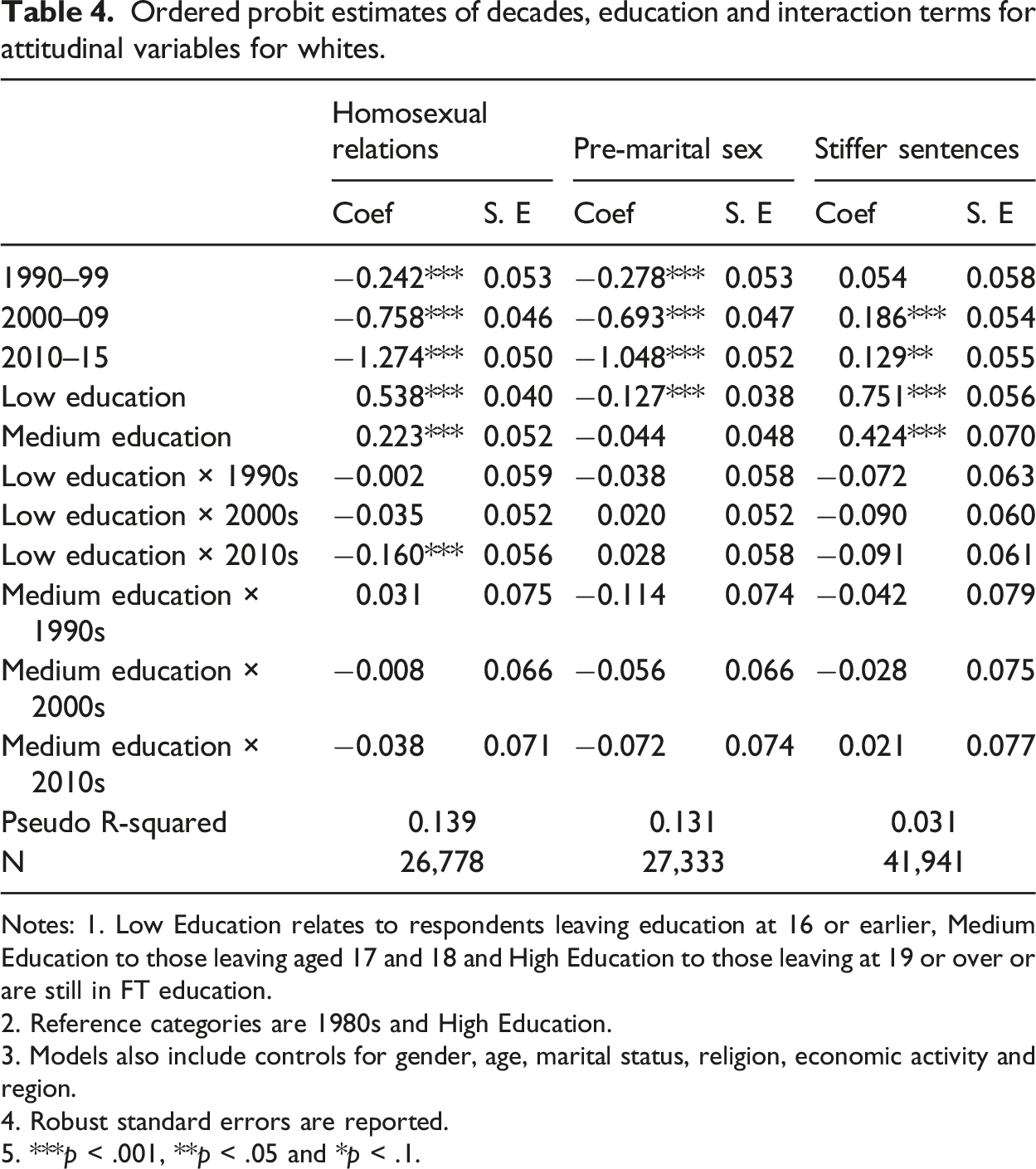
Notes: 1. Low Education relates to respondents leaving education at 16 or earlier, Medium Education to those leaving aged 17 and 18 and High Education to those leaving at 19 or over or are still in FT education.
2. Reference categories are 1980s and High Education.
3. Models also include controls for gender, age, marital status, religion, economic activity and region.
4. Robust standard errors are reported.
5. ***p < .001,
Ordered probit estimates of period dummies, concerns about race and immigration, educational and interaction terms for attitudinal variables for whites.
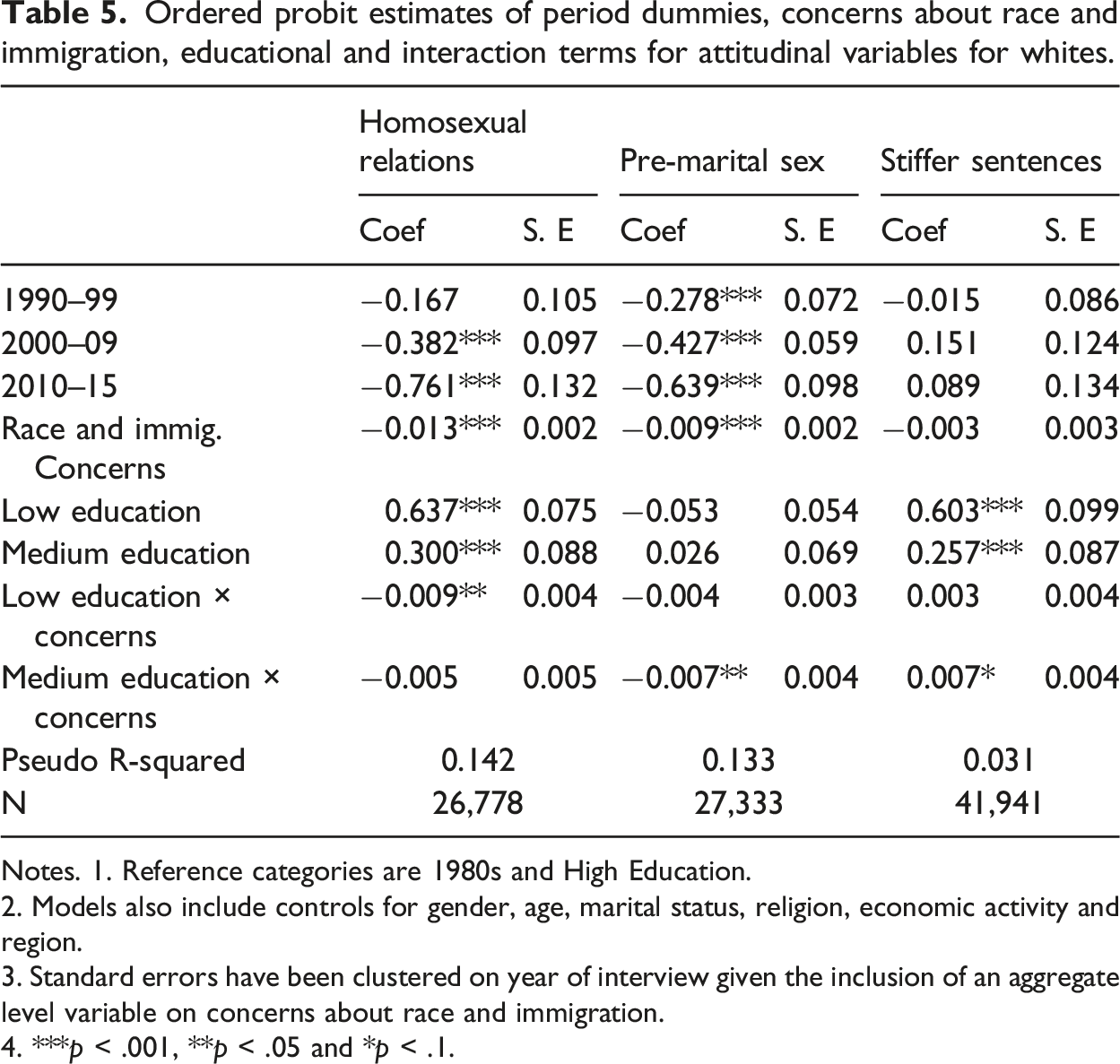
Notes. 1. Reference categories are 1980s and High Education.
2. Models also include controls for gender, age, marital status, religion, economic activity and region.
3. Standard errors have been clustered on year of interview given the inclusion of an aggregate level variable on concerns about race and immigration.
4. ***p < .001, **p < .05 and *p < .1.
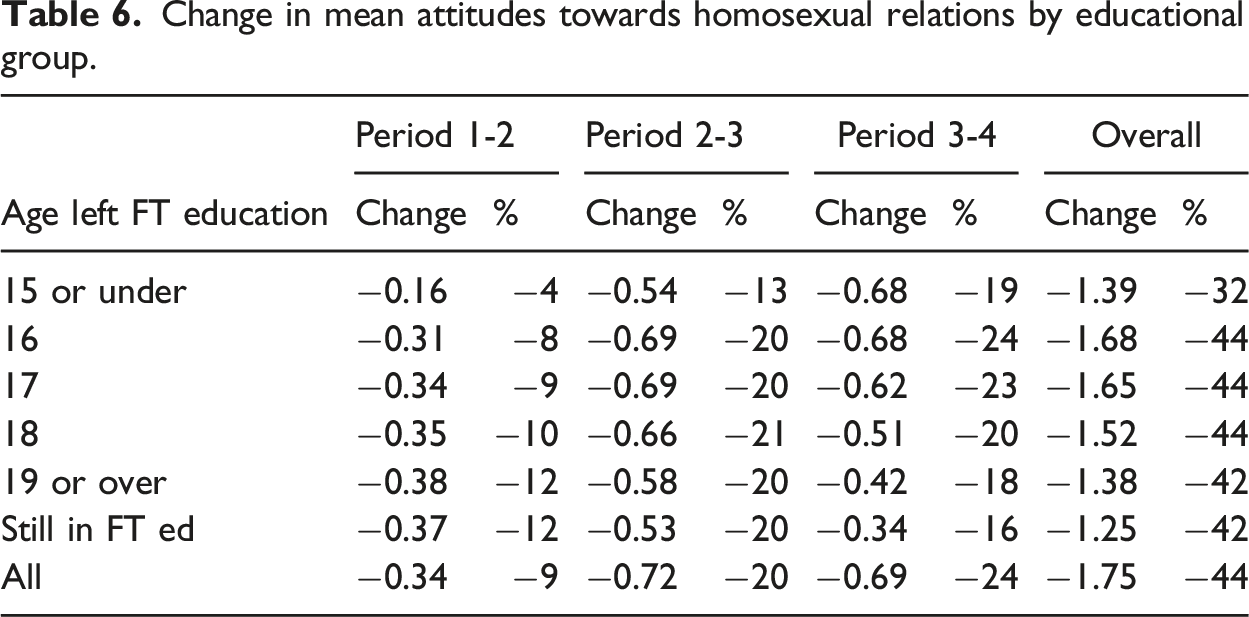
Change in mean attitudes towards homosexual relations by educational group.
Ordered probit estimates of decades, views towards death penalty and interaction terms for attitudinal variables for whites.
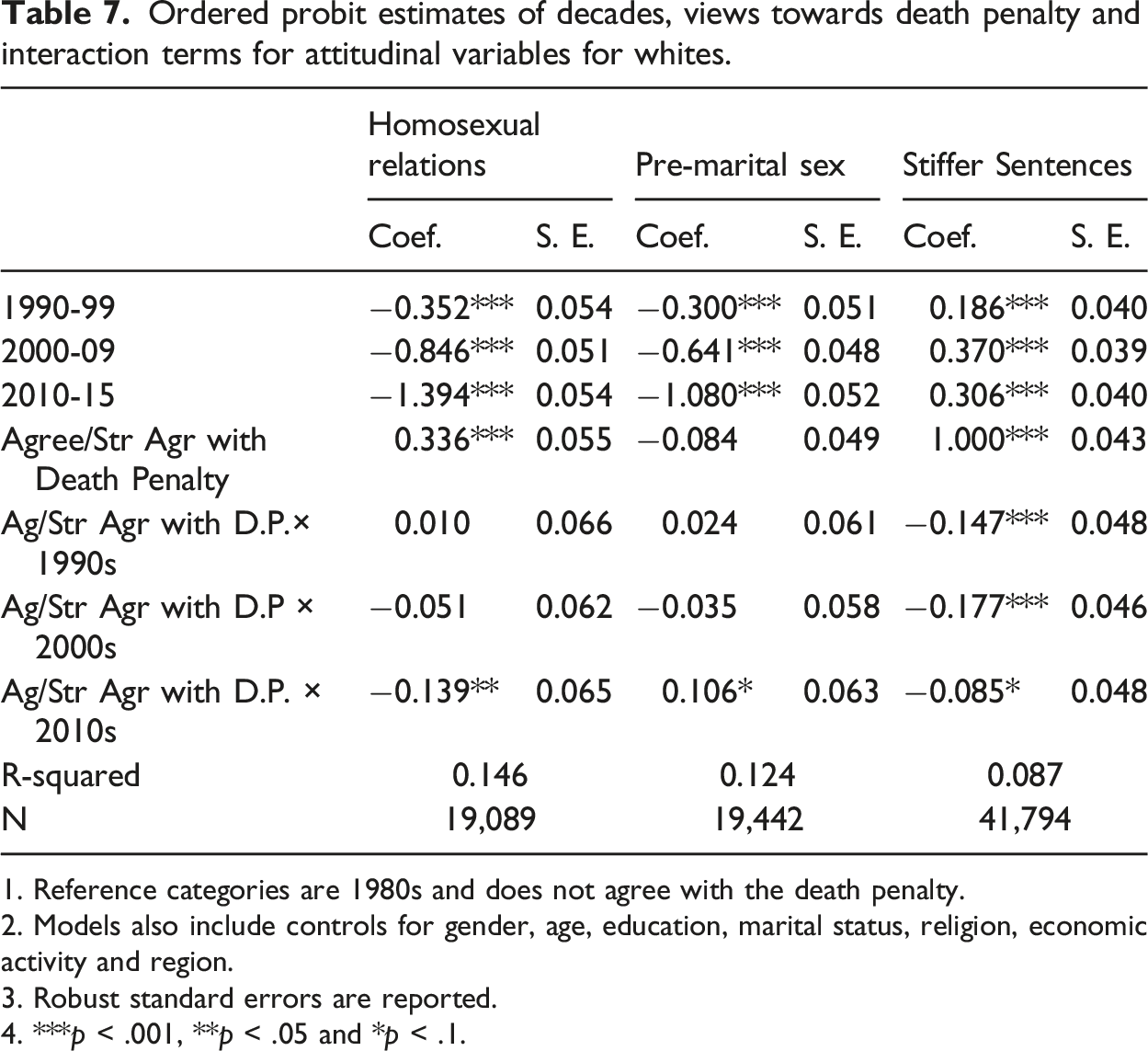
1. Reference categories are 1980s and does not agree with the death penalty.
2. Models also include controls for gender, age, education, marital status, religion, economic activity and region.
3. Robust standard errors are reported.
4. ***p < .001,
Concluding remarks
To explore the phenomenon of selectively liberal expression captured in our model we have contrasted attitudes to homosexuality with those towards pre-marital sex and stiffer sentences. We highlight the direct effect from the arrival of immigrants (and their offspring) who generally have less liberal attitudes compared to the ethnic white population, especially regarding attitudes towards homosexual relations. More pertinently, we explore the indirect effect highlighted in our model, whereby a proportion of the in-group may have liberalised their attitudes towards previously salient out-groups because there may be a current culturally conservative out-group whom they hold in greater distaste.
We did not have survey data that would directly capture the strategic reasoning contained within the indirect effect. However, we do believe that we provide evidence suggesting a specific type of selectively liberal expression. That is, in addition to culturally changing attitudes, there is also a strategic component of selecting liberal attitudes in those matters for which the conservative attitudes of immigrants/minorities are strongest and thus adopting a more liberal position will cause immigrants/minorities (especially certain groups such as Muslims) more harm. We provide statistical evidence that is compatible with our theory regarding the considerable liberalisation of attitudes towards homosexual relations that have been observed in Great Britain over recent decades. This is most noticeable for certain groups - especially whites with low levels of education and those in favour of the death penalty in the periods in which attitudes towards immigration were most negative. Moreover, on an issue such as law and order, where Muslims hold quite conservative views, there is no evidence of liberalisation amongst the white population that have also held traditionally conservative views. Perhaps, this is because Muslims do not hold especially contrasting views on law and order. We do not, however, make a strong causal claim that immigration and the higher profile of the Muslim community has definitively generated a selectively liberal response towards LGBT people. Nonetheless, we have presented evidence that we believe is highly suggestive of this link.
Given the reference we made in the introduction to the relevance of the argument made here to countries such as France and the Netherlands, it would be interesting if the approach here could be replicated outside the UK. Our hunch is that the possibility of selective liberalisation investigated here exists in many other Western countries, especially where the radical right has prospered. We in no way dispute that the huge liberalisation in attitudes towards LGBT rights is for the very largest part sincere. In this paper we have drawn attention to that, but the focus of the paper has been on the theoretical argument for selective liberalisation and the suggestive evidence for that. Furthermore, if the reader agrees that liberalisation is a good thing, we conjecture that what begins as a strategic alteration of preference can then become embedded and sincere. Nonetheless, to the extent that a minority of attitudes are potentially not sincere, we also conjecture that a change in the political climate that creates different group alliances and antagonisms may reveal currently concealed, sincerely held, and hostile beliefs towards LGBT rights and for that reason there should not be complacency that liberal attitudes can be taken for granted.
Supplemental Material
Supplemental Material - Selectively liberal? social change and attitudes towards homosexual relations in the UK
Supplemental Material for Selectively liberal? social change and attitudes towards homosexual relations in the UK by Alan Collins, Stephen Drinkwater and Colin Jennings in Rationality and Society
Footnotes
Acknowledgements
We would like to thank Andreas Flache and two anonymous reviewers for their very close reading and suggestions for the paper. It is much improved as a result. We would also like to thank seminar participants at University College Cork.
Declaration of conflicting interests
The author(s) declared no potential conflicts of interest with respect to the research, authorship, and/or publication of this article.
Funding
The author(s) received no financial support for the research, authorship, and/or publication of this article.

Supplemental Material
Supplemental material for this article is available online.
Notes
References
Supplementary Material
Please find the following supplemental material available below.
For Open Access articles published under a Creative Commons License, all supplemental material carries the same license as the article it is associated with.
For non-Open Access articles published, all supplemental material carries a non-exclusive license, and permission requests for re-use of supplemental material or any part of supplemental material shall be sent directly to the copyright owner as specified in the copyright notice associated with the article.
