




Abstract
We apply attribution theory to examine how family ownership status shapes consumer attitudes toward companies after negative corporate social responsibility incidents, focusing on incident controllability. Two longitudinal experiments reveal that, when controllability is unknown, consumers infer lower controllability for family firms and thus hold more favorable attitudes toward them than non-family firms. However, when controllability is known, low-controllability incidents lead to similar attitudes across firm types, whereas high-controllability incidents reverse the effect, resulting in more negative attitudes toward family firms than non-family firms. These findings challenge the prevailing assumption that family firms consistently benefit from their reputation and inform stakeholder communication strategies.
Keywords
Introduction
Consumers respond sensitively to information about negative corporate social responsibility (CSR) incidents; that is, events that result in adverse social, environmental, or ethical consequences for internal or external stakeholders (Kim et al., 2024; Kotler & Lee, 2005). Such information, including news of unfair labor practices or environmental harm, can severely damage a company’s reputation (Piyasinchai et al., 2024), defined here as stakeholders’ perceptions, expectations, and attitudes toward a company (Brown et al., 2006).
Family firms warrant particular attention in this context. Their long-term orientation and emphasis on legacy preservation heighten their concerns regarding the protection of their reputation (Dyer & Whetten, 2006). At the same time, studies have documented negative CSR incidents involving family firms (Kidwell et al., 2024; Miller & Le Breton-Miller, 2021; Miroshnychenko et al., 2022). Together with high-profile cases, such as Volkswagen’s emissions scandal (Hotten, 2015), accusations of wage exploitation of temporary workers at Swarovski (Hammer, 2020), and allegations of child labor in Mars’ cocoa supply chain (Lucas, 2023), these studies underscore the importance of understanding how such incidents influence consumer perceptions and attitudes toward family firms (Sekerci et al., 2022).
A dominant assumption in both scholarly and practitioner discourse is that the typically positive reputation of family firms consistently yields favorable consumer responses and is unlikely to backfire. Extensive research finds more favorable consumer attitudes toward family firms than non-family firms (Sageder et al., 2018); to date, no empirical study has documented a reversal effect in the form of more negative attitudes toward family firms (Jaufenthaler et al., 2024). This body of evidence has encouraged family firms to highlight their ownership status in consumer-facing communications (Lude & Prügl, 2018) and supports the argument that their perceived greater trustworthiness, moral responsibility, and stakeholder orientation (Schellong et al., 2019) shield them from negative information, enabling them to maintain more positive attitudes even in adverse scenarios (Dyer & Whetten, 2006; Godfrey, 2005). Reinforcing this argument and the prevailing assumption of consistently positive outcomes, Datta and Mukherjee (2022) found that consumers exhibited greater leniency toward family firms during product-harm crises and sustained more positive attitudes despite negative incidents.
We challenge this assumption by proposing a more holistic framework in which the typically positive reputation of family firms can range from an asset (Dyer & Whetten, 2006) to a liability (Rondi et al., 2023). Negative CSR incidents may disrupt the expectations stakeholders hold about family firms compared to non-family firms (Nyffenegger et al., 2025; Sekerci et al., 2022). Drawing on attribution theory (Folkes, 1984; Weiner, 2000), we argue that consumer responses depend on the controllability attributed to negative CSR incidents. This perspective allows us to explain why and when differences in attitudes toward family firms compared to non-family firms persist, converge, or reverse after such incidents.
Attribution theory highlights perceived controllability—the extent to which the cause of an incident is seen as under the firm’s volitional influence—as a key determinant of stakeholder responses (Weiner, 2000). Higher controllability typically elicits stronger negative reactions, whereas lower controllability is interpreted more positively. Importantly, controllability can be (a) unknown, requiring consumers to infer its level (investigated in our first study) or (b) known, with evidence indicating either low or high controllability (investigated in our second study; Martinko, 1995; Yoon, 2013). We adopt a comparative perspective to examine how consumer responses differ for family versus non-family firms across these two contexts (Jayamohan et al., 2017). When controllability is unknown, family firms may experience a “benefit of the doubt” effect (Dyer & Whetten, 2006): heightened perceptions of trustworthiness and moral responsibility lead consumers to infer lower controllability compared to non-family firms, thereby sustaining differences in attitudes despite a negative incident.
When controllability is known, however, dynamics may shift. Evidence of low controllability adds little beyond what is already expected from family firms, whereas for non-family firms, it serves as a less anticipated positive signal (Jayamohan et al., 2017), contributing to more similar attitudes after a negative incident. Most critically, when evidence indicates high controllability, the same moral expectations that protect family firms when controllability is unknown may instead amplify condemnation by highlighting the discrepancy between assumed values and deliberate misconduct (Sekerci et al., 2022), leading to more negative attitudes toward family firms than non-family firms. These considerations lead to our central research question: How do negative CSR incidents shape consumer attitudes toward family firms (vs. non-family firms), and what role does incident controllability play in this relationship?
To address this question, we conducted two randomized, longitudinal between-subjects experiments examining how family ownership status interacts with perceived controllability of a negative CSR incident in shaping consumer attitudes. Our study contributes to consumer research on family firm reputation (Schellong et al., 2019) by revealing that consumers’ unique perceptions and expectations toward family firms can range from an asset to a liability in the context of negative CSR incidents. We identify controllability attribution as a key mechanism that explains why and when differences in attitudes toward family firms compared to non-family firms persist, converge, or reverse, thereby challenging the prevailing assumptions of consistently positive outcomes associated with family firm reputation (Sageder et al., 2018).
We are the first to identify a condition under which the effect of family ownership status turns negative, leading to significantly more negative consumer attitudes toward family firms than toward non-family firms. We further extend the application of attribution theory in family business studies (Jayamohan et al., 2017) by highlighting how the perceived distinction between family and non-family firms shapes both the inferences and the consequences of controllability attributions. Lastly, our methodological approach addresses calls for more experimental investigations in family business, management, and entrepreneurship research (Hsu et al., 2024; Lude & Prügl, 2021; Maula & Stam, 2020) and generates actionable insights for family firms navigating challenges to their reputation following negative CSR incidents.
Theoretical Background
In the academic discourse on family enterprises, definitions of what constitutes a family business can vary substantially (Chua et al., 1999). In line with our focus on how perceived family ownership status shapes consumers’ perceptions and attitudes after negative CSR incidents, we adopt an identity-based approach (Zellweger et al., 2010, 2012), defining businesses as family firms if they self-identify as such and communicate their family identity to external stakeholders. This approach follows prior research on perceptions of family versus non-family firms, recognizing that consumers typically assume non-family ownership unless family firm status is clearly signaled to stakeholders (Jaufenthaler et al., 2023; Lude & Prügl, 2018). We synthesize existing knowledge on negative CSR incidents in family firms as well as on family firm reputation in consumer contexts, using a theoretical framework informed by attribution theory to guide our analysis.
Negative CSR Incidents in Family Firms
Family firms have traditionally been described as socially responsible organizations, often demonstrating their concern for reputation and pursuit of non-financial goals (Berrone et al., 2012; Dyer & Whetten, 2006; Piyasinchai et al., 2024). However, research highlights not only exemplary CSR behaviors by family firms, such as environmental protection and employee welfare (Berrone et al., 2010), but also identifies instances of social irresponsibility, including inferior employment practices, environmental pollution, corruption, and extreme cronyism (Dal Maso et al., 2020; Firfiray et al., 2018; Medioli et al., 2024; Miroshnychenko et al., 2022; Neckebrouck et al., 2018).
Scholars suggest that such incidents can stem from various contextual factors, such as governance structures, regulatory environments, external pressures, or uncertainties in the business environment (Kidwell et al., 2024; Miroshnychenko et al., 2022). This underscores the heterogeneity among family firms, which can differ widely in their objectives and practices (Miller & Le Breton-Miller, 2021). For instance, some families are driven more by socio-emotional wealth (SEW) motives, while others exhibit stronger nepotistic tendencies or seek immediate financial outcomes (Chua et al., 2018; Miller & Le Breton-Miller, 2021). Furthermore, not all negative incidents are consciously chosen or fully controllable, as unforeseen events, errors, and negative press can occur in any organization (Rondi et al., 2023).
Negative CSR incidents can severely damage a firm’s reputation, particularly when social or environmental harm comes to light (Cruz et al., 2014; Kim et al., 2024; Xie & Bagozzi, 2019). While some incidents remain private (Clemente & Gabbioneta, 2017), those that become public can strongly influence stakeholders’ attitudes toward the company (Rondi et al., 2023). Therefore, beyond exploring family firms’ actual behaviors, creating an understanding of how key external audiences react to negative CSR incidents involving family firms is crucial for advancing research and practice on family firm reputation (Sekerci et al., 2022).
Consumer Perceptions of Family Firms
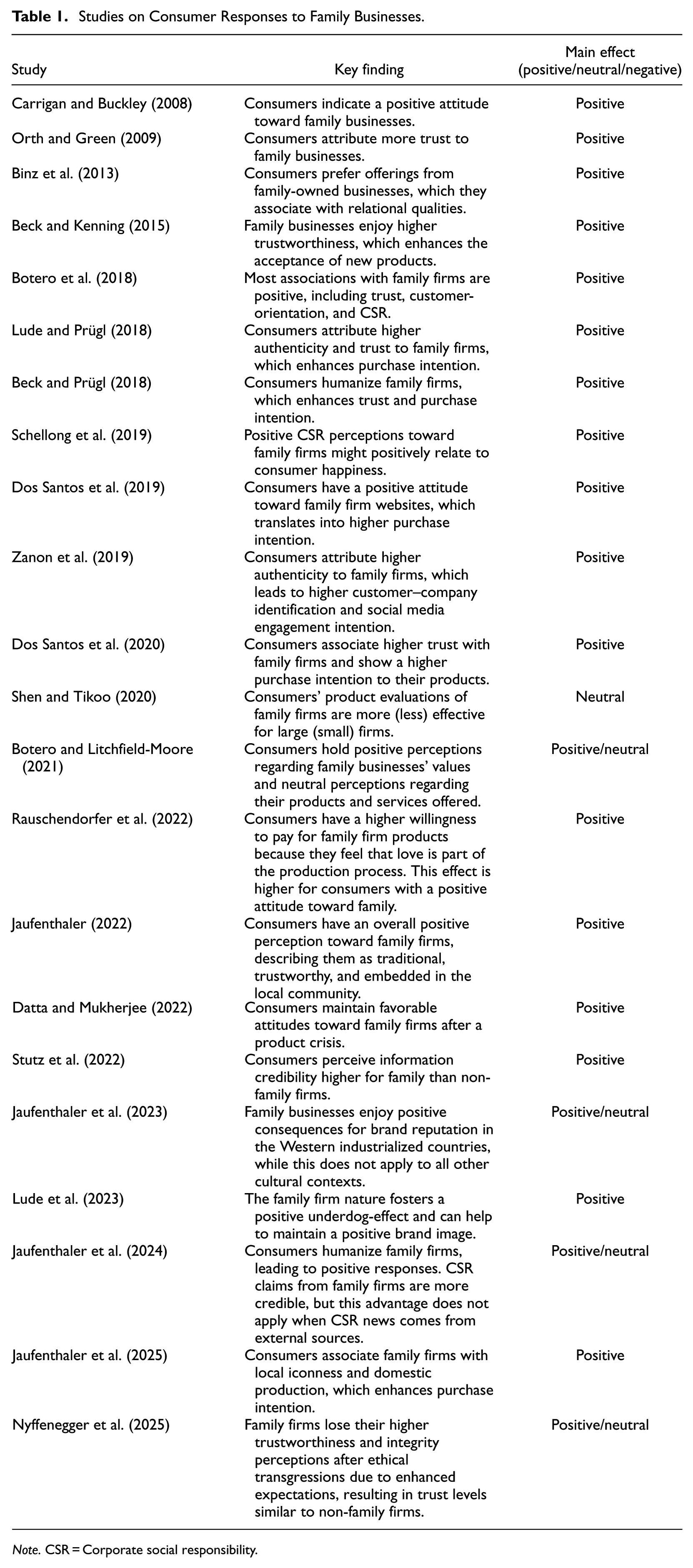
Research into how family firm status influences external stakeholder perceptions has grown substantially in recent years, with most studies focusing on consumers and typically reporting positive findings (see Table 1 for an overview). More specifically, empirical results overwhelmingly suggest that consumers associate family firms with positive attributes, such as trustworthiness, moral responsibility, ethical conduct, reliability, and stakeholder orientation (Botero et al., 2018; Carrigan & Buckley, 2008; Jaufenthaler, 2022). Favorable perceptions toward family firms translate into positive consumer responses. Lude and Prügl (2018) found that consumers exhibited stronger purchase intentions for family firm products due to heightened perceptions of authenticity and trust. Schellong et al. (2019) observed that consumers derived greater happiness from family firms’ products, attributing this to heightened expectations of positive internal and external CSR. Jaufenthaler et al. (2025) demonstrated that consumer attitudes toward family firms benefit from positive consumer perceptions linked to local identity and domestic production, aligning with contemporary consumer preferences. A crucial mechanism underlying favorable consumer perceptions and attitudes is humanization, which stems from the unique family element that differentiates family firms from non-family firms in the eyes of consumers (Beck & Prügl, 2018; Jaufenthaler et al., 2024).
Studies on Consumer Responses to Family Businesses.
Note. CSR = Corporate social responsibility.
Only recently has the role of context in shaping consumer perceptions received scholarly attention. For example, Rauschendorfer et al. (2022) found that consumers with favorable attitudes toward families perceive greater love in family firm products, while those with unfavorable attitudes do not. Similarly, Jaufenthaler et al. (2023) highlighted cultural differences, noting that family firm status improves brand reputation in the United States and Germany but has less impact in India.
A particularly intriguing context concerns consumer responses to family versus non-family firms following negative CSR incidents, with initial findings indicating a potential buffering effect. Specifically, Datta and Mukherjee (2022) reported that consumers maintained more favorable attitudes toward family firms following a product-harm crisis, compared to non-family firms. Negative consumer perceptions are generally rare and center on concerns about a lack of professionalism, resistance to change, or nepotism (Jaufenthaler, 2022). Some scholars, however, have cautioned that family firm status might also intensify negative repercussions (Rondi et al., 2023), a pattern consistent with stock market settings, where investors tend to respond more critically to adverse information about family firms (Sekerci et al., 2022). Furthermore, Nyffenegger et al. (2025) recently found that after ethical transgressions, family firms can lose enhanced perceptions of benevolence and integrity due to elevated expectations. Nevertheless, no prior research has identified a case where family firm status results in a reversal effect; that is, more negative consumer attitudes toward family firms than toward non-family firms.
Overall, the empirical record in the consumer context remains dominated by positive outcomes. This lack of evidence on negative outcomes reinforces the implicit assumption that communicating family firm status is unlikely to backfire. In our framework, we challenge this assumption by drawing on attribution theory, which offers a theoretical lens for understanding how consumers interpret negative firm incidents and assign responsibility based on the information available to them. We next outline the key tenets of attribution theory to establish the foundation for our framework, which then builds on this perspective to explain why and when a typically positive family-firm reputation can range from an asset to a liability.
Attribution Theory
Attribution theory centers on the idea that individuals seek to understand the underlying causes of events, and that these explanations shape their subsequent attitudes and actions (Folkes, 1984; Weiner, 2000). Although the theory originates from social psychology, its broad relevance and applicability have led to widespread adoptions across organizational research domains, including human resource management (Hewett et al., 2018), entrepreneurship (Breugst & Shepherd, 2017), marketing (Puzakova et al., 2013), and business ethics (Ginder et al., 2021). Drawing from attribution theory, scholars have explained how stakeholders interpret organizational events, assign responsibility and blame, and translate these causal interpretations into responses at individual, group, and firm levels (Martinko & Mackey, 2019).
Within family business research, Jayamohan et al. (2017) demonstrated differences between family and non-family firms in communicating causes for performance outcomes and how investors react to these attributions. Similarly, Wated and Sanchez (2015) and Hughes and Childers (2023) used attribution theory to explain stakeholders’ responses to nepotism and hiring decisions in family firms. Thus, prior studies have highlighted attribution theory as a valuable lens for understanding how stakeholders interpret and respond to specific events in organizational contexts.
In this study, we examine how consumers respond to negative CSR incidents. When confronted with such events, consumers’ reactions are shaped not only by the occurrence of the incident but especially by perceptions of its causation (Folkes, 1984). Attribution theory typically distinguishes among three causal dimensions: locus, stability, and controllability. Locus refers to whether a cause of an event was internal or external to the firm, stability concerns whether the cause was temporary or enduring, and controllability addresses whether the firm had volitional influence over the cause (Folkes, 1984). In this study, we focus on controllability attributions, as this dimension most directly invites moral evaluations and therefore is considered particularly influential in eliciting severe consumer reactions to negative events (Folkes, 1984; Weiner, 2000). Specifically, controllability indirectly asks whether the firm could have taken steps to prevent the negative event (Weiner, 2000). By doing so, it scrutinizes the moral conduct of the actors involved. Although negative incidents generally harm corporate reputation, low controllability is viewed more favorably, whereas high controllability triggers stronger anger and a greater desire to punish the firm (Folkes, 1984).
The formation and consequences of controllability perceptions strongly depend on the information available to stakeholders (Folkes, 1984; Hewett et al., 2018). Attribution theory acknowledges that stakeholders often face information asymmetries and rely on available signals and cues when making causal inferences and judgments (Folkes, 1984; Martinko, 1995). We distinguish between two controllability contexts: unknown and known. When unknown, stakeholders lack information regarding the underlying causes, and the true level of controllability remains ambiguous (Yoon, 2013). For example, the responsible party within a firm’s value chain may not be identifiable, media narratives may conflict, or key facts may be inaccessible by the public. In such contexts, stakeholders are forced to rely on chronically or momentarily salient information to infer the potential degree of controllability (Yoon, 2013). When controllability is known, ambiguity is reduced. For example, investigations may show that underpayment of employees resulted from deliberate cost-cutting (high controllability) or from a technical error such as an undetected software bug (low controllability). In such contexts, stakeholders can attribute the true level of high or low controllability, which will influence their subsequent responses (Folkes, 1984).
Building on this theoretical foundation and prior research on family firms (Jayamohan et al., 2017), we propose that inferences and consequences of controllability attributions are not uniformly applied across all firms; rather, they are shaped by the perceptual distinctions consumers make between family and non-family firms, as we detail in the following section.
Hypotheses Development
We examine how family ownership status shapes consumer attitudes toward the company under two controllability contexts: (a) unknown and (b) known. In our theoretical framework, the role of controllability depends on the informational context surrounding the incident; specifically, whether consumers must subjectively infer the level of controllability (unknown, addressed in our first study) or whether controllability is objectively indicated (known, addressed in our second study). This distinction guides the development of two conceptually related but practically distinct hypotheses, which we test across two randomized experimental studies, as outlined below.
Study 1 (Mediation): Effects Under Subjective (Unknown) Controllability
Family firms are often perceived through an idealized lens, associated with reliability and consistently positive CSR narratives (Schellong et al., 2019). Any negative CSR incident, regardless of its controllability, may disrupt these expectations and threaten family firms’ advantage of more favorable attitudes compared to non-family firms (Nyffenegger et al., 2025; Sekerci et al., 2022). Yet, in contexts where controllability of a negative CSR incident is unknown, we argue for a positive main effect of family ownership status on attitude toward the company, with this relationship being mediated by perceptions of lower incident controllability. We draw on attribution theory to posit that family firms (vs. non-family firms) retain their advantage in higher consumer attitudes following such incidents because consumers infer lower controllability, which serves as a key mechanism in protecting more favorable consumer attitudes.
Consumers frequently face incomplete information about organizational events, making it difficult to determine responsibility for negative CSR incidents (Yoon, 2013). This is especially relevant in the family firm context, as family firms tend to disclose less information to external stakeholders due to their strong internal cohesion and inherent desire to protect their reputation (Jayamohan et al., 2017). Attribution theory suggests that in the absence of clear causal evidence, individuals rely on salient contextual information to make subjective controllability inferences (Martinko, 1995; Yoon, 2013). As shown by previous research, an important piece of information to consumers is whether a company is family-owned (Lude & Prügl, 2018).
When the controllability of a negative CSR incident is unknown, family firms may benefit from positive perceptions of trustworthiness, ethical conduct, and stakeholder commitment (Dyer & Whetten, 2006; Schellong et al., 2019). These perceptions are rooted in the SEW orientation of family firms, which emphasizes reputational and trans-generational concerns (Gómez-Mejía et al., 2007). As a result, family firms are often seen as organizations that genuinely aim to maintain long-lasting relationships and avoid causing harm to stakeholders (Berrone et al., 2012). When the cause of a negative incident is unclear, the perceived intent to act responsibly becomes a crucial basis for inference, implying that if the family firm could have prevented the incident, it would have done so. Thus, consumers are more likely to interpret it as the result of unfortunate circumstances (e.g. failures of other parties or unforeseeable technical errors) rather than intentional misconduct or managerial negligence. This tendency aligns with research indicating that firms with a reputation for responsibility are more often perceived as experiencing “bad luck” in adverse events (Minor & Morgan, 2011). Accordingly, negative incidents are viewed as less preventable, resulting in a lower perceived controllability by the family firm.
Moreover, family firms are frequently described as more personal and morally grounded than non-family firms, since consumers ascribe human-like qualities such as benevolence and integrity to family businesses (Jaufenthaler et al., 2024). These humanized perceptions foster trust resilience and reinforce the perception that the firm’s actions reflect an underlying moral character (De Visser et al., 2016). Consequently, when a negative incident occurs, and its cause is unclear, consumers find it less plausible that the family firm would have caused harm, which strengthens the inference that the incident was difficult to avoid. Taken together, since family firms are expected to act with higher moral responsibility, consumers may be more likely to infer low controllability in the absence of clear evidence, thereby giving family firms the benefit of the doubt (Godfrey, 2005).
Non-family firms, in contrast, are not automatically associated with favorable attributes such as trust and moral responsibility (Jaufenthaler et al., 2024). Rather, they are more commonly associated with profit orientation, efficiency goals, and more instrumental stakeholder relationships (Datta & Mukherjee, 2022). Combined with heightened public skepticism regarding corporate ethical conduct and greenwashing (Habel et al., 2016), this reinforces the view that ethical considerations are subordinated to financial goals and makes consumers less inclined to assume responsible intent when controllability information is lacking. Thus, when a non-family firm is involved in a negative CSR incident with unknown controllability, consumers may infer higher levels of controllability than they would for a family firm.
According to attribution theory (Folkes, 1984; Weiner, 2000), when controllability of the incident is perceived to be low, responsibility and blame are correspondingly reduced, which directly softens negative post-incident evaluations of the firm. Accordingly, in contexts where controllability is unknown, family ownership status should preserve differences in attitudes, with family firms continuing to be perceived more favorably than non-family firms, even after a negative CSR incident, because they benefit from low-controllability inferences relative to non-family firms. Formally, we hypothesize:
Study 2 (Moderation): Effects Under Objective (Known) Controllability
In other contexts, however, stakeholders have more information about the incident (Martinko, 1995). We therefore extend our focus to negative CSR incidents with known controllability and theorize how consumers respond to family firms (vs. non-family firms) under objectively indicated low and high controllability. In Hypothesis 1, controllability was subjectively inferred (unknown) by consumers, and its proposed variations between family and non-family firms helped explain the underlying mechanism (why) the difference in attitudes persists (Baron & Kenny, 1986). In Hypothesis 2, when controllability is known, the level of controllability represents an objective attribute rather than a subjective inference. In this context, high and low controllability specify conditions when the relationship between family ownership status and attitude toward the company changes. Accordingly, controllability functions as a moderator here (Baron & Kenny, 1986), and we next discuss its effect.
When evidence shows low controllability, we propose that attitudes toward family firms and non-family firms will converge. According to attribution theory, information indicating that a negative event was low (vs. high) in controllability is interpreted more positively (Folkes, 1984). We previously argued that when the level of controllability is unknown, the positive effect of family ownership on attitude toward the company persists after a negative CSR incident because family firms benefit from low-controllability inferences relative to non-family firms (Dyer & Whetten, 2006; Godfrey, 2005). However, when low controllability becomes objectively evident, this perception applies to all firms and neutralizes the benefit of the doubt advantage for family firms.
Furthermore, while such evidence confirms what consumers typically expect from family firms in negative CSR contexts, it is not automatically associated with non-family firms (Dyer & Whetten, 2006). Family firms are generally seen as morally responsible (Schellong et al., 2019) and granted low-controllability perceptions without explicit information, so additional evidence adds little value. For a non-family firm, however, low controllability signals that the incident was not deliberately caused by profit-seeking motives, assumptions often linked with these firms (Datta & Mukherjee, 2022). Accordingly, evidence of low controllability represents a more positive and corrective signal for non-family firms than for family firms (Jayamohan et al., 2017), countering consumer skepticism (Habel et al., 2016) and narrowing the gap in consumer attitudes between the two company types. Prior work shows that investors interpret negative outcomes outside a company’s control more positively for non-family firms than for family firms (Jayamohan et al., 2017). Thus, we expect low-controllability incidents to lead to more similar attitudes toward family and non-family firms.
Conversely, when evidence indicates high controllability, we propose that the differences in attitudes toward family firms (vs. non-family firms) not only converge but reverse because of the sharp discrepancy between their assumed values and their actual behavior. As consumers associate family businesses with morality, ethical conduct, and a strong sense of responsibility toward stakeholders (Schellong et al., 2019), violating these expectations undermines perceptions of benevolence and integrity (Nyffenegger et al., 2025). When family firms deliberately act against their assumed standards, the resulting sense of betrayal amplifies negative consumer attitudes (Sekerci et al., 2022). These negative attitudes may be reinforced by nepotism-related concerns, as consumers may suspect self-serving motives that prioritize family enrichment over broader stakeholder interests (Firfiray et al., 2018; Sekerci et al., 2022).
Furthermore, humanized entities are judged more harshly when violating moral norms (Puzakova et al., 2013). Consumers tend to perceive family firms as more human and morally conscious entities, attributing to them a greater responsibility and capacity for ethical decision-making (Beck & Prügl, 2018; Jaufenthaler et al., 2024; Rondi et al., 2023). Consequently, family firms are expected not only to uphold ethical principles but also to exercise superior moral judgment (Epley et al., 2007; Gray et al., 2007). Building on attribution theory, research shows that deliberate negative behaviors elicit stronger consumer anger and punitive intent, particularly for firms with humanized brands because they are perceived as better able to distinguish between right and wrong (Puzakova et al., 2013). Thus, when a family firm is found responsible for a controllable negative CSR incident, the perceived breach of moral standards is magnified, provoking harsher criticism and stronger demands for accountability than for a non-family firm.
For non-family firms, high-controllability incidents are also highly damaging. However, such incidents may be perceived as more consistent with their assumed profit-oriented motives (Datta & Mukherjee, 2022) and with consumers’ widespread skepticism toward corporate ethics (Habel et al., 2016). Non-family firms may thus be judged more on broader industry norms and corporate pragmatism, whereas family firms are judged against their own projected moral standards (Rondi et al., 2023). In sum, the combination of high ethical expectations and perceived moral capacity makes negative CSR incidents with high controllability particularly severe for family firms, resulting in more negative consumer attitudes toward family firms than toward non-family firms.
Taken together, we hypothesize:
Methodological Approach
As experiments are widely regarded as the gold standard for establishing causality (Hsu et al., 2017), we employed an experimental methodology to test our hypotheses, which propose causal relationships. The random assignment of participants to experimental conditions ensures that inter-individual differences are evenly distributed across groups, thereby minimizing the influence of these differences and reducing the risk of alternative explanations (Colquitt, 2008). Despite numerous calls for more experimental research in entrepreneurial and family business studies (Lude & Prügl, 2021; Maula & Stam, 2020; Neubaum, 2018) and the valuable insights generated by existing experiments (Hauswald et al., 2016; Jaufenthaler et al., 2024; Schellong et al., 2019), experimental designs remain under-utilized in these fields. By addressing these calls, we aim to contribute to the growing body of experimental research and encourage researchers to adopt this methodology.
We employed a longitudinal approach, where participants indicated their attitude toward the company both before and after learning about a negative CSR incident. This design (Lude & Prügl, 2021) isolates the effect of communicating family ownership status before and after the incident, allowing us to replicate the positive effect identified in prior studies while examining how it may change under certain conditions. Also, it enhances realism, as individuals typically learn about family ownership before encountering negative CSR news. Finally, this sequential approach enables consumers to first form a mental image of a family firm, allowing us to assess how negative CSR information may later disrupt this perception.
Study 1 examined Hypothesis 1, focusing on contexts where controllability is unknown, thus requiring consumers to infer its level. Study 2 focused on contexts where controllability is known and examines scenarios with indicated low or high controllability (Hypothesis 2).
Study 1: Negative CSR Incidents with Unknown Controllability
Sample, Procedure, and Manipulations
To test Hypothesis 1, we recruited 300 U.S. consumers through Prolific Academic, an online research platform known for its high data quality (Peer et al., 2022). Participants were compensated with a small financial incentive. Of the 298 responses received, we excluded those with incomplete answers or failing an attention check, resulting in a final sample of 288 participants. Attention checks were included to enhance data quality by retaining only those participants who adhered to survey instructions (“Demonstrate your attention by not answering this question”). The average age of participants was 36.99 years, with 68.1% identifying as female.
The study employed a between-subjects design in which participants were randomly assigned to one of two ownership status conditions (non-family vs. family). All participants were shown the same logo and company description for “Tiroxo,” a fictitious U.S.-based tire manufacturer. In line with previous experimental studies in the consumer context (Jaufenthaler et al., 2024; Lude & Prügl, 2018), the company in the family ownership condition was explicitly described as family-owned, whereas ownership information was not provided in the non-family ownership condition (see Appendix 1 for stimuli).
Participants were instructed to carefully review the logo and company description and imagine the company’s behavior and characteristics. Participants indicated their pre-incident attitude: “How would you describe your attitude toward this company? (1 = extremely negative/extremely unfavorable to 9 = extremely positive/extremely favorable).” Reliability analysis confirmed strong internal consistency (Cronbach’s α = .96). Subsequently, all participants were presented with a newspaper article describing a negative CSR incident involving the company; specifically, a breach of minimum wage regulations. This scenario was chosen because such incidents pose significant risks for a company’s reputation, attract substantial attention from consumers, and do not inherently imply full or no controllability (as might be the case with other incidents, such as corruption). As such, controllability remains unknown, requiring consumers to make subjective inferences. The article read:
Some of the company’s employees were underpaid. Estimates are that 50 workers were being paid less than the minimum wage for the last year.
It is not clear yet whether this was an accident or whether the company did so on purpose.
Participants were then asked to report their post-incident attitude toward the company, using the same measure as before (α = .96). Additionally, participants rated the perceived controllability of the incident: “To what extent do you think the minimum wage breach incident was under the company’s control? (1 = not at all controllable to 9 = highly controllable).” Given that perceived controllability is a specific and unidimensional construct, the use of a single-item measure was deemed both appropriate and effective, providing simplicity without sacrificing predictive validity (Bergkvist & Rossiter, 2007; Rossiter, 2002).
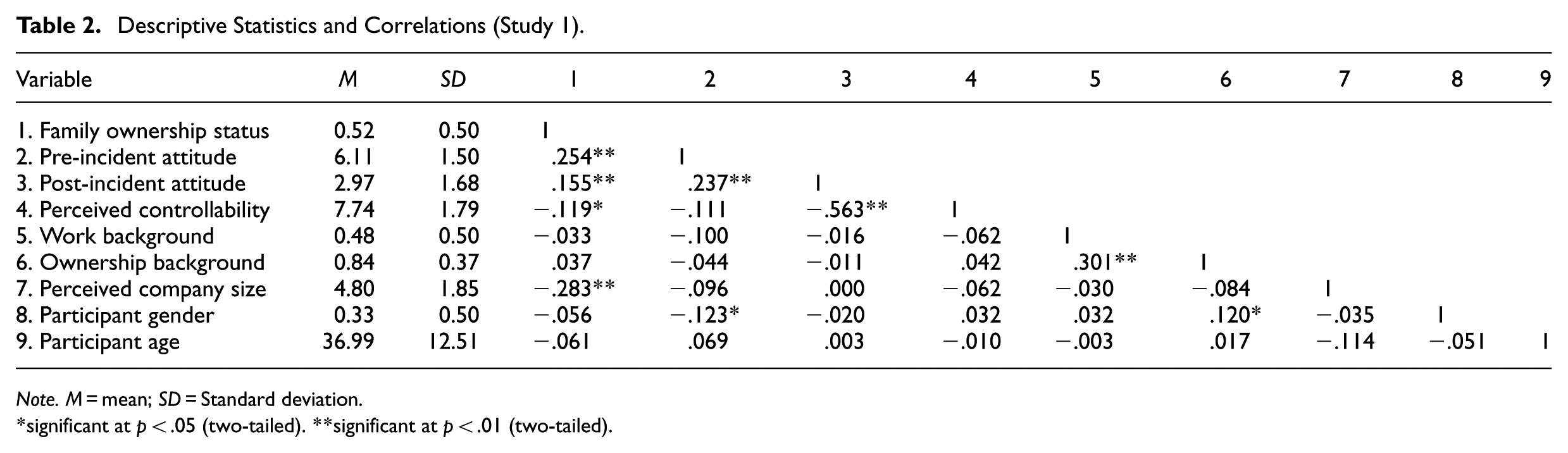
We also included several control variables: participants’ ownership background (“Does your family own a business?”; 0 = yes, 1 = no), work background with family firms (“Have you worked for a family-owned business?”; 0 = yes, 1 = no), perceived company size (“How small versus large do you imagine this company to be?”; 1 = extremely small to 9 = extremely large), as well as age and gender. Descriptive statistics and correlations among all variables are reported in Table 2. To evaluate the effectiveness of the family ownership status manipulation, participants were asked to rate their agreement with the statement, “This company is family owned (1 = fully disagree to 9 = fully agree)” (Hsu et al., 2017). Figure 1 illustrates the experimental procedure of Study 1.
Descriptive Statistics and Correlations (Study 1).
Note. M = mean; SD = Standard deviation.
significant at p < .05 (two-tailed). **significant at p < .01 (two-tailed).
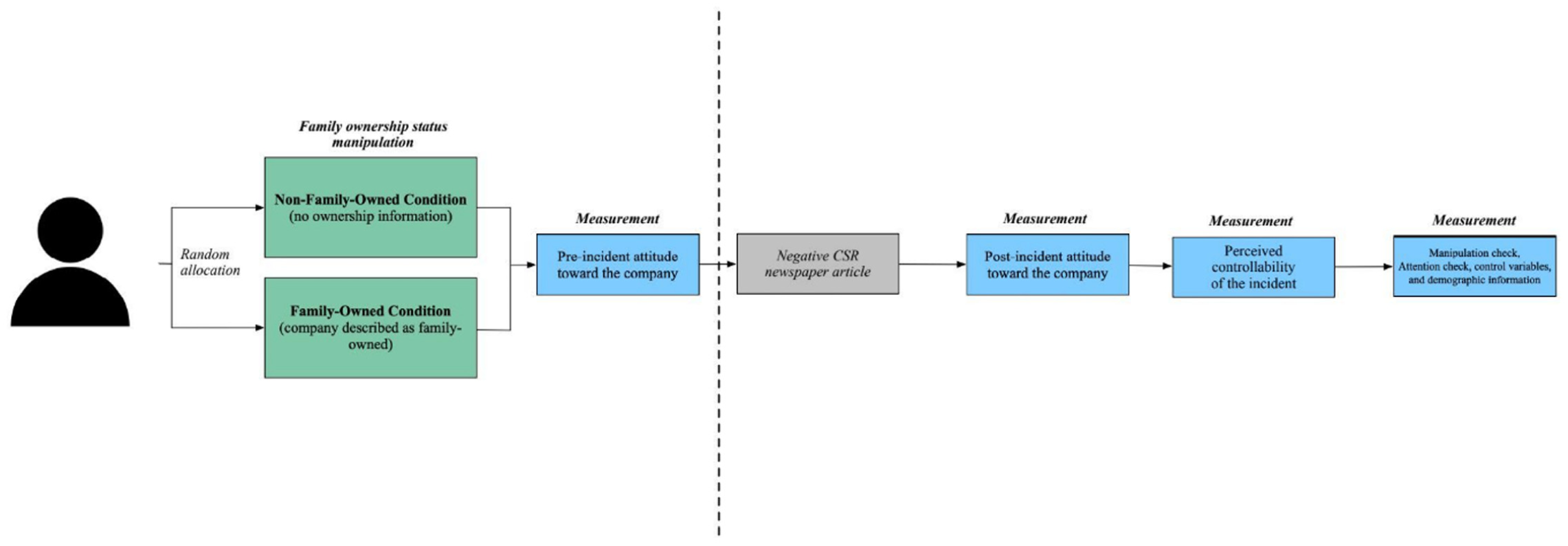
Experimental procedure of study 1.
All variables were z-standardized across both studies to facilitate the interpretation of regression model parameters. For completeness and ease of interpretation, we also present unstandardized descriptive statistics (i.e. means and standard deviations) by experimental condition alongside the regression results.
Study 1 Results
We first examined whether our family ownership status manipulation was successful. A regression analysis confirmed that our manipulation worked as planned (β = .68, p < .001); that is, participants in the family ownership condition perceived the company as significantly more family-owned (M = 7.83, Standard deviation [SD] = 1.94) than those in the non-family ownership condition (M = 4.13, SD = 2.02).
We next analyzed responses before the negative CSR incident. Previous research has documented a positive effect of communicating family ownership status (Jaufenthaler et al., 2024). Regressing pre-incident attitude on our family ownership status manipulation and the five control variables replicated this positive effect (β = .24, p < .001), meaning that attitude toward the family-owned company (M = 6.47, SD = 1.58) was higher compared to the non-family-owned company (M = 5.71, SD = 1.29). None of the control variables had a significant effect on the dependent variable (all p-values > .05).
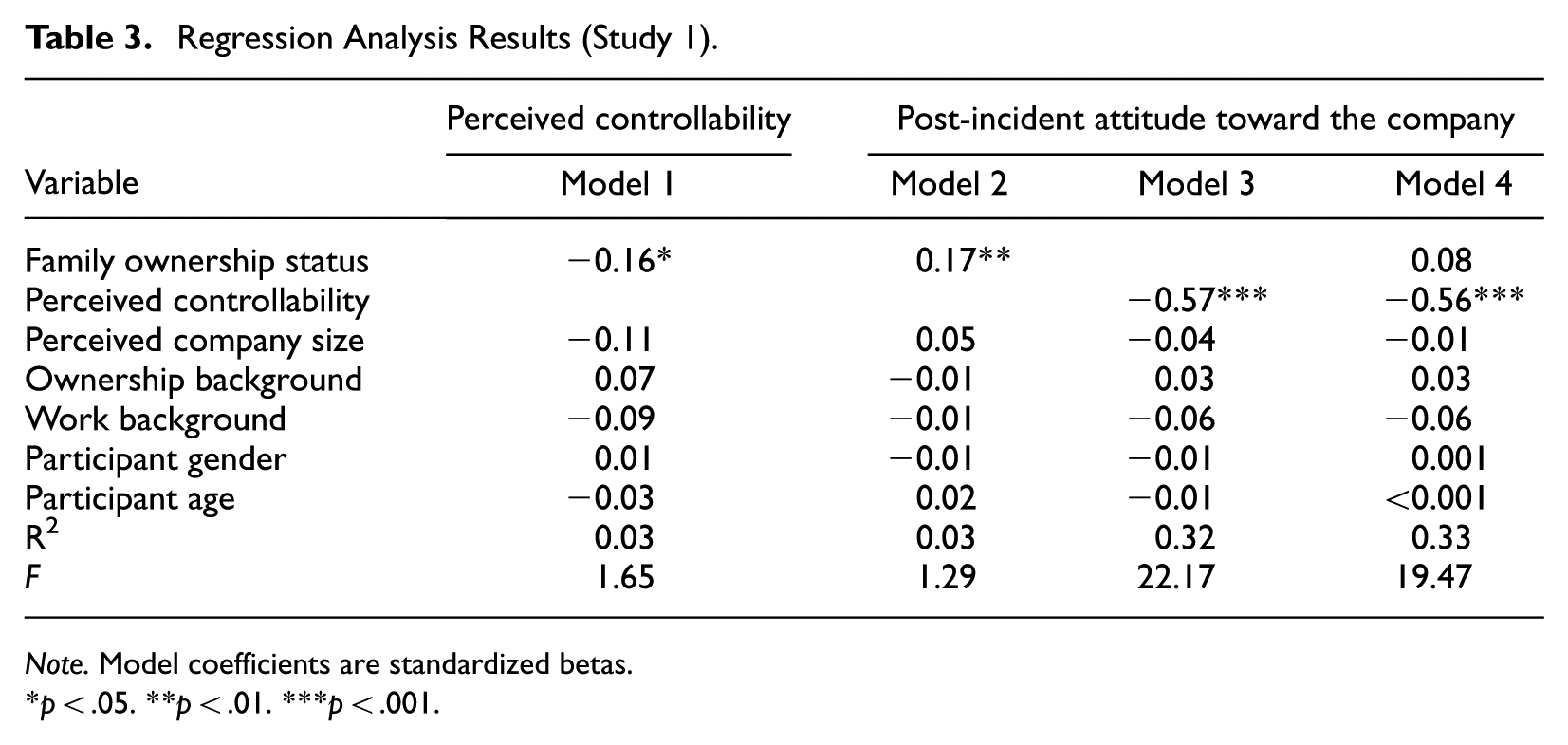
To test Hypothesis 1, we analyzed consumers’ responses after the negative CSR incident; specifically, whether family ownership status influenced perceived controllability of the incident and, consequently, consumers’ post-incident attitude toward the firm. Regressing post-incident attitude on the family ownership status manipulation and the control variables produced a positive effect (β = .17, p < .01). That is, attitude toward the family-owned company (M = 3.22, SD = 1.79) was significantly higher compared to the non-family-owned company (M = 2.70, SD = 1.52). Additionally, we found a significant effect on perceived controllability (β = −.16, p < .05), meaning that consumers thought that the negative CSR incident was significantly less controllable when it involved the family-owned company (M = 7.53, SD = 2.00) compared to the non-family-owned company (M = 7.96, SD = 1.50). None of the control variables had a significant effect on the dependent variables (all p-values > .05). Results are reported in Table 3.
Regression Analysis Results (Study 1).
Note. Model coefficients are standardized betas.
p < .05. **p < .01. ***p < .001.
Next, we tested whether perceived controllability of the CSR incident mediated the relationship between family ownership status and consumer post-incident attitude toward the company via the traditional Baron and Kenny (1986) method (see Table 3). These results support full mediation. As a robustness check, and in line with established practice, we also utilized PROCESS (Model 4) with 5,000 bootstrap samples (Hayes, 2018). Family ownership status was entered as the independent variable, perceived controllability as the mediator, and post-incident attitude toward the company as the dependent variable; the five control variables were entered as covariates. The analysis revealed a significant indirect effect (0.29, Standard error = 0.12; 95% confidence interval [0.07, 0.54]). None of our five control variables showed a significant influence (all p-values > .05). Overall, this supports Hypothesis 1. Figure 2 depicts the results.
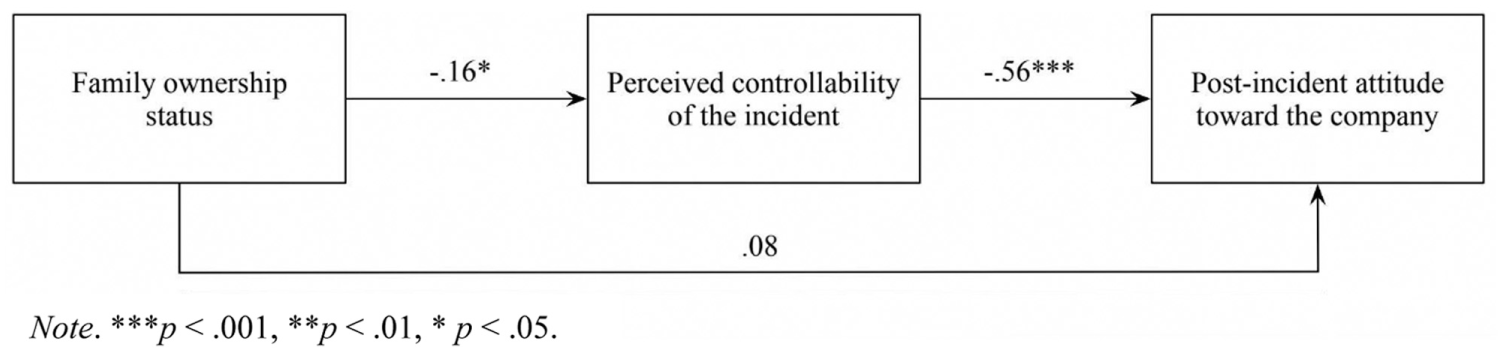
Mediation model with standardized path-coefficients.
Study 2: Negative CSR Incidents with Known Controllability
Sample, procedure, and manipulations
In Study 2, we tested how consumers respond to negative CSR incidents with objectively indicated low versus high controllability. We recruited a new sample of U.S.-based consumers through Prolific Academic. A total of 301 responses were collected. After excluding incomplete responses and those failing attention checks, the final sample consisted of 246 participants. The average age of participants was 40.15 years, and 56.5% identified as female.
Study 2 experimentally manipulated controllability of the incident (Hsu et al., 2024). Consequently, controllability functioned as a moderator rather than a mediator as in Study 1, because it specifies the conditions (indicated low vs. high controllability) when the relationship between family ownership status and attitude toward the company may vary (Baron & Kenny, 1986). We employed a 2 (Ownership Status: Non-Family vs. Family) × 2 (Incident Controllability: Low vs. High) between-subjects design. The rest of Study 2 followed a procedure similar to Study 1; that is, all participants saw the same logo and company description, but only those randomly assigned to the family ownership condition were told the company was family-owned. Participants reported their pre-incident attitude toward the company using the same measure as in Study 1 (α = .97). Participants then viewed the same newspaper article describing the negative CSR incident. This time, however, depending on their random assignment, they received additional information about the company’s low or high controllability. In the low controllability condition, the minimum wage breach was attributed to a software bug outside the company’s control. The article read:
The company has been underpaying some of its employees. Estimates are that 50 workers were being paid less than the minimum wage for the last year.
Investigations revealed that the cause of this incident was not under the control of the company. A software bug seems responsible for this breach.
In the high controllability condition, the breach was attributed to the company’s strategic decisions, indicating full control. The article read:
The company has been underpaying some of its employees. Estimates are that 50 workers were being paid less than the minimum wage for the last year.
Investigations revealed that the cause of this incident was under the control of the company. The strategic orientation of the company seems responsible for this breach.
Participants subsequently reported their post-incident attitude toward the company using the same items as before (α = .99). As Study 1 showed that the main results did not change based on other variables (e.g. family business background), Study 2 did not include other control variables beyond demographic information. Descriptive statistics and correlations among variables are presented in Table 4. To verify the effectiveness of our incident controllability manipulation (Hsu et al., 2017), participants responded to a manipulation check: “The cause of the incident (minimum wage breach) is: (1 = highly controllable by the company to 9 = not at all controllable by the company).” We reverse-coded the item so that higher values reflect greater controllability. All variables were again z-standardized for the regression analysis. To ensure that participants fully engaged with all information, two attention check items were included that asked whether the company was described as family-owned and whether the incident was described as controllable by the company. Figure 3 illustrates the experimental procedure of Study 2.
Descriptive Statistics and Correlations (Study 2).
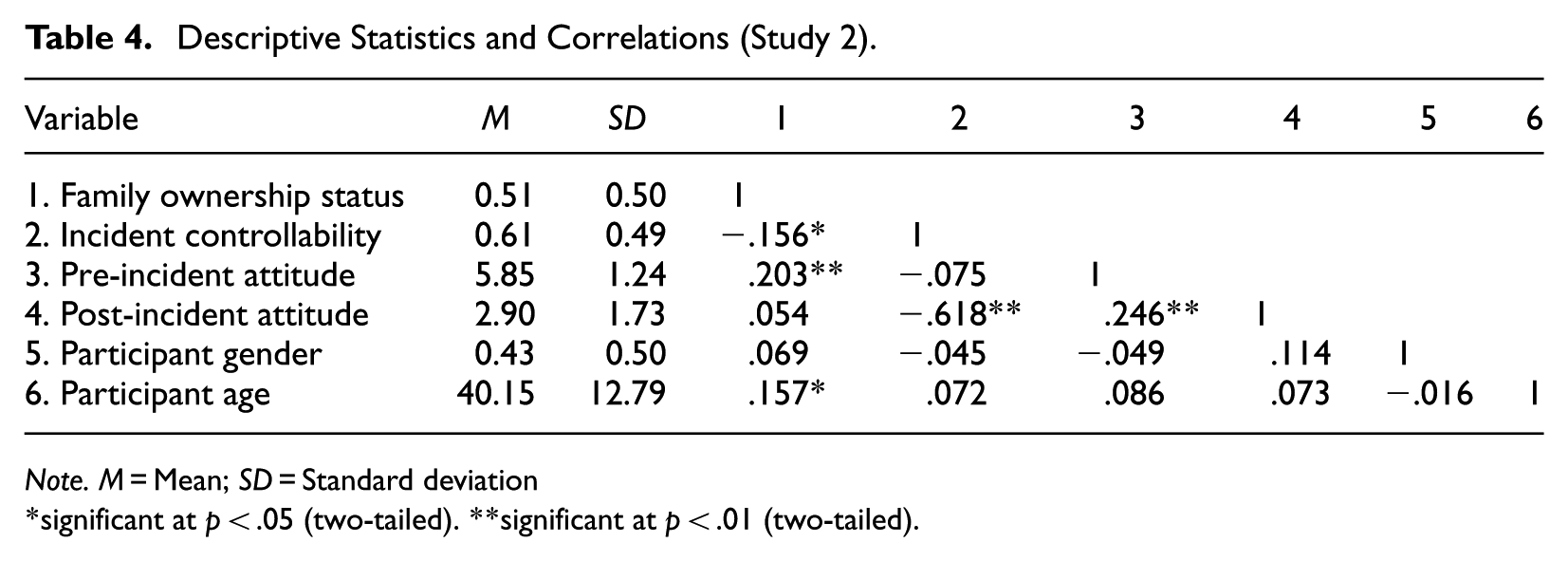
Note. M = Mean; SD = Standard deviation
significant at p < .05 (two-tailed). **significant at p < .01 (two-tailed).
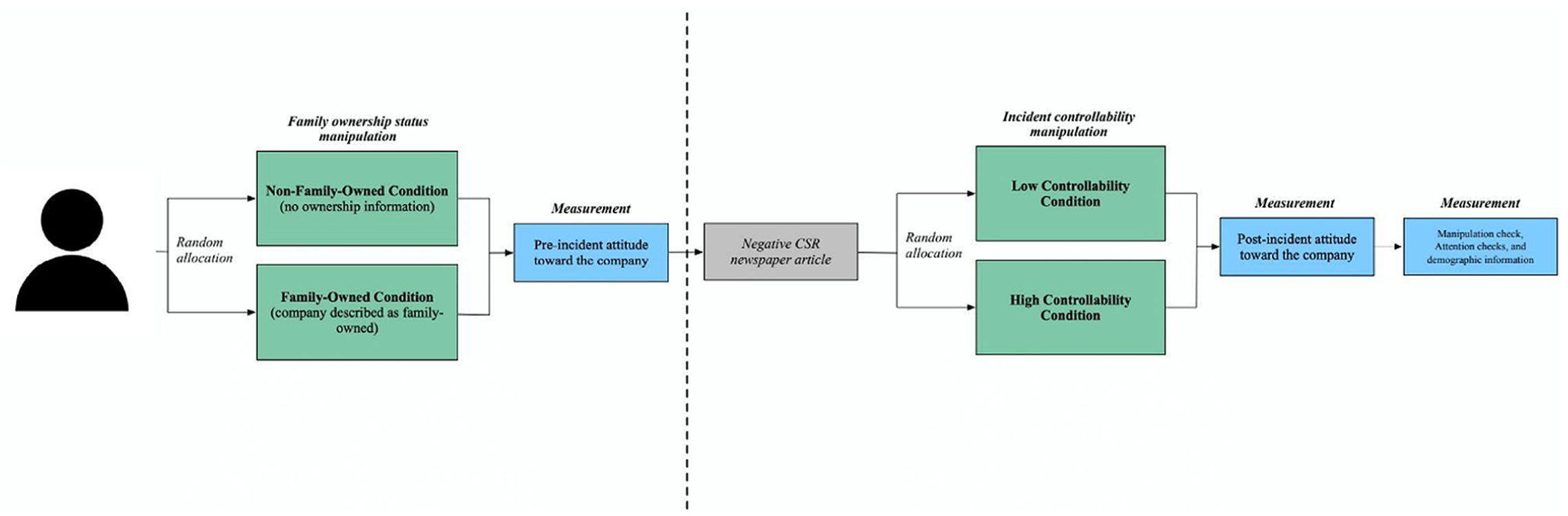
Experimental procedure of study 2.
Study 2 results
Regression analysis showed that our incident controllability manipulation was successful (β = .73, p < .001), as participants in the high controllability condition (M = 8.47, SD = 1.30) perceived the incident as significantly more controllable than those in the low controllability condition (M = 4.52, SD = 2.32). Importantly, family ownership status did not significantly influence perceived controllability; the interaction between controllability and ownership status was also not significant (all p-values > .05).
Again, we then analyzed responses before the negative CSR incident. As in Study 1, we found a significant positive effect of family ownership status (β = .20, p < .01), showing that pre-incident attitude toward the company was significantly higher for the family-owned (M = 6.09, SD = 1.20) than for the non-family-owned company (M = 5.59, SD = 1.23). The control variables had no significant effect on the dependent variable (all p-values > .05).
To test Hypothesis 2, we examined the interaction between ownership status and incident controllability on consumers’ post-incident attitude toward the company. Regressing post-incident attitude toward the company on our family ownership status manipulation, our incident controllability manipulation, their interaction, and the control variables produced a significant interaction between family ownership status and incident controllability (β = −.14, p < .01). 1 As summarized in Table 5, simple slope analyses reveal that, when controllability of the incident was low, the positive effect of family ownership status vanished (β = .11, p = .277), so that post-incident attitude toward the family-owned company (M = 4.43, SD = 1.57) was no longer significantly higher than that toward the non-family-owned company (M = 3.95, SD = 1.34).
Regression Analysis Results (Study 2).
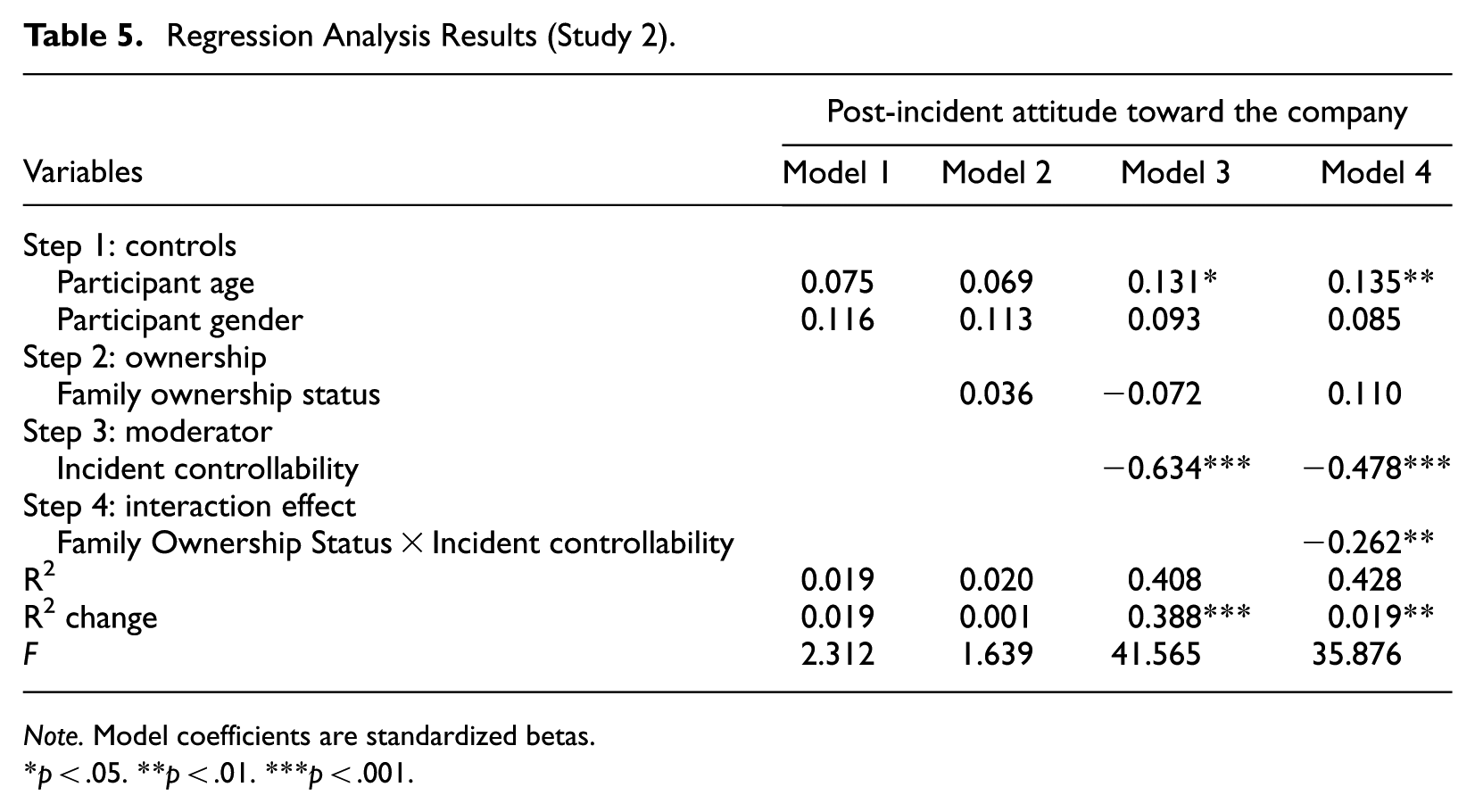
Note. Model coefficients are standardized betas.
p < .05. **p < .01. ***p < .001.
When controllability was high, the positive effect reversed (β = −.23, p < .01); that is, post-incident attitude toward the family-owned company (M = 1.76, SD = 0.99) was significantly less favorable than that toward the non-family-owned company (M = 2.29, SD = 1.43; see Figure 4). Overall, these findings support Hypothesis 2 and our key proposition that family ownership status can strongly backfire in cases of controllable negative CSR incidents. Specifically, the positive effect of family ownership status not only dissipated but reversed, suggesting that consumers judge family-owned companies more harshly than non-family firms for controllable negative incidents.
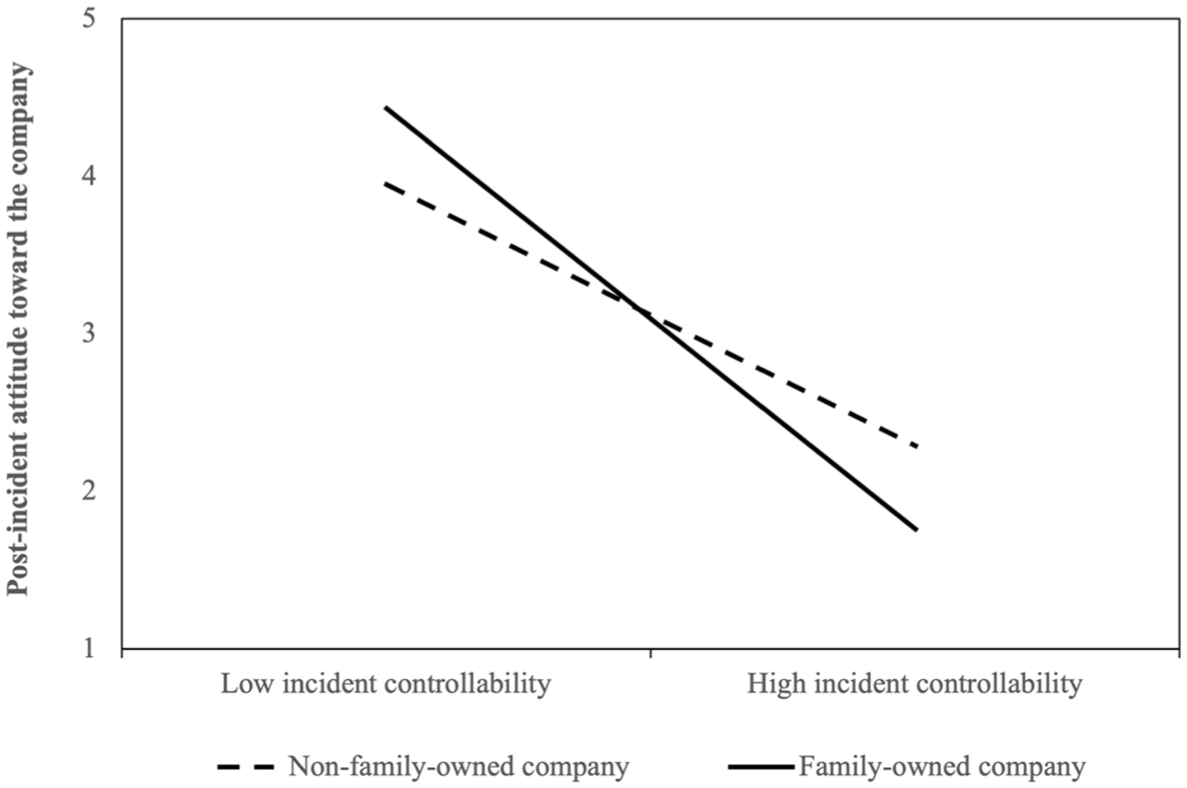
Interaction between family ownership status and incident controllability on post-incident attitude toward the company.
Discussion
Using an experimental methodology, this study examined consumer responses to family firms (vs. non-family firms) following negative CSR incidents. Guided by attribution theory (Folkes, 1984), we demonstrated that perceived controllability plays a key role in determining whether the reputation of family firms functions as an asset or a liability, depending on the context. In contexts of unknown incident controllability, family firms experience a benefit of the doubt effect: incidents are perceived as less controllable compared to those involving non-family firms, which preserves more positive consumer attitudes. In contexts of known controllability, dynamics differ: low controllability leads to similar attitudes, but most notably, high controllability produces a reversal effect in which consumers express more negative attitudes toward family firms than non-family firms.
While prior research has highlighted the advantages of family firm status on consumer responses, such as enhanced purchase intentions (Lude & Prügl, 2018), willingness to pay (Rauschendorfer et al., 2022), and consumer attitudes (Jaufenthaler et al., 2024), our findings challenge the prevailing assumption that the typically positive family firm reputation is consistently associated with favorable outcomes and unlikely to backfire. Specifically, we are the first to demonstrate that in situations involving controllable negative CSR incidents, family ownership status can lead consumers to judge family firms more harshly than non-family firms, resulting in more negative attitudes. This reversal effect can be explained by the high CSR expectations consumers attribute to family firms compared to non-family firms (Schellong et al., 2019) and by their perception of family firms as humanized entities with heightened moral responsibilities (Jaufenthaler et al., 2024), which creates a sharp discrepancy that elicits particularly strong consumer reactions.
This research also adds to recent insights on expectation violations (Nyffenegger et al., 2025), extending beyond trust adjustments to show that family firm misconduct can significantly amplify negative consumer responses. Furthermore, our theoretical framework helps explain prior findings on attitudes toward family firms. For example, Datta and Mukherjee (2022) observed that consumers maintained more favorable attitudes toward family firms during product-harm crises in which incident controllability was unclear, consistent with our argument that ambiguity leads to lower controllability inferences.
By identifying controllability as a determining factor for why and when the difference in attitudes toward family and non-family firms persists, converges, or reverses, we offer a novel and more holistic perspective on consumer responses to family firms involved in negative CSR incidents. On the one hand, our findings in contexts with unknown controllability support the view that family firm reputation may shield against negative information (Dyer & Whetten, 2006; Godfrey, 2005). On the other hand, our findings on high-controllability incidents underscore warnings that perceived family firm status might intensify negative repercussions under certain conditions (Rondi et al., 2023). Moreover, and in line with prior research (Jayamohan et al., 2017), our results also show that low-controllability incidents can contribute to a convergence of attitudes between family and non-family firms. This suggests that low-controllability evidence benefits non-family firms more, as it serves as a positive signal, whereas for family firms, it merely confirms pre-existing assumptions and underscores how sensitive the difference in favorable attitudes can be in the face of negative CSR incidents.
By examining these dynamics, we contribute to the discussion on the context-dependence of family firm reputation. Prior work has shown that external contexts, such as institutional (Block et al., 2019) or cultural environments (Jaufenthaler et al., 2023), can influence how family firm status is evaluated. We extend this discussion by showing that the consequences of the typically positive reputation of family firms can be favorable or detrimental depending on the controllability context of a negative incident.
We advance the application of attribution theory (Folkes, 1984) in family business research by demonstrating that perceived distinctions between family and non-family firms can lead stakeholders to interpret organizational events differently (Jayamohan et al., 2017; Wated & Sanchez, 2015). In particular, we show that family ownership status functions as a salient informational cue that influences both the inferences and the consequences of controllability attributions. These effects reflect the unique perceptions and expectations consumers hold toward family firms compared to non-family firms, such as heightened moral responsibility, trustworthiness, and stakeholder orientation (Jaufenthaler et al., 2024). These expectations benefit family firms when controllability is unknown but serve as evaluative standards once controllability is known, offering little additional benefit when low and amplifying negative responses when high. Beyond CSR, attribution theory offers a promising lens for studying other family business situations where underlying causes and responsibility are contested, including succession, downsizing, and family conflicts (Jayamohan et al., 2017).
Our study also contributes to the literature on CSR and wrongdoing of family firms (Smulowitz et al., 2023; Stock et al., 2024). While prior studies have largely focused on family firms’ actual CSR behavior (Piyasinchai et al., 2024) and highlighted tendencies toward both responsibility and irresponsibility (Berrone et al., 2010; Miroshnychenko et al., 2022), we shift the focus to consumer perceptions of negative CSR incidents, an important perspective given the impact of CSR information on a company’s reputation (Sekerci et al., 2022). Thus, our findings offer valuable insights into how family ownership status influences stakeholder perceptions and attitudes in the wake of negative CSR incidents.
Finally, we answer recent calls for more experimental research in the fields of family business, management, and entrepreneurship (Hsu et al., 2024; Lude & Prügl, 2021; Maula & Stam, 2020). Our longitudinal design demonstrates the value of capturing dynamic consumer responses over time, enabling a step-by-step assessment of how new information affects pre-existing perceptions and attitudes.
Practical Implications
Our research offers several managerial implications for family-owned firms, particularly concerning the strategic communication of their identity in the face of negative CSR incidents. As our findings show, the benefits and risks of highlighting family ownership status vary depending on the background information stakeholders have about the incident.
Despite the numerous advantages of positioning a business as a family firm in the eyes of consumers (Sageder et al., 2018), owners and managers of family firms must recognize that their company status can be both an asset and a liability. To mitigate risks associated with negative, high-controllability incidents, a firm’s corporate mission, market positioning, and behavior should be aligned accordingly. Deliberate actions that violate ethical standards can lead to disproportionately severe harm for family firms compared to non-family firms, endangering both consumer attitudes toward the business and the family behind it. Therefore, family firms should implement robust internal controls and foster a culture of ethical accountability to preempt such risks. As our findings clearly underscore, being perceived as a family firm places a substantial responsibility on all members involved.
When family firms face negative CSR news, there are contexts in which they may consider strategically leveraging their ownership status to protect their reputation. In general, firms should manage their post-incident communication by emphasizing transparency and, where applicable, the uncontrollability of the incident. In cases where controllability is unknown (e.g. when conflicting rumors exist) emphasizing family ownership status can help support the company’s position that the incident was accidental and preserve more favorable consumer attitudes. By contrast, when evidence indicates low controllability, emphasizing family ownership adds little value and may unnecessarily draw attention to the owning family. Theoretically, communicating family ownership may be useful in the early stages of many negative incidents, when stakeholders often have limited information about underlying causes (Jayamohan et al., 2017), which can help bridge the critical period until the company’s innocence is established.
However, this approach also carries significant risks. If it later becomes clear that the company had control over the incident, such a communication strategy can backfire, resulting in disproportionate negative consumer attitudes toward the company. Therefore, in cases of controllable negative incidents, it may be prudent to avoid emphasizing family ownership at any stage to protect the business and the owning family from negative backlash. By proactively preparing for different crisis scenarios and understanding the conditions under which communicating family ownership status is beneficial or not, family firms can better navigate the challenges posed by negative CSR incidents.
Limitations and Future Research
While this research has limitations, it also paves the way for several important avenues for future exploration. Building on recommendations for strengthening causal inferences (Anderson et al., 2022), researchers could extend our experimental approach to additional contexts and boundary conditions to both enhance the robustness and expand the scope of our findings. Specifically, our methodological approach used specific scenarios of negative CSR incidents and selected an internal issue that promised wide-ranging effects on the perceptions of consumers. However, as CSR encompasses a wide range of events affecting different stakeholders, future studies should explore how different types of negative incidents involving family firms (Kidwell et al., 2024) affect different audiences, as the nature of the incident itself could influence perceived controllability. For instance, corruption is generally perceived as highly controllable and thus tends to lead to immediate negative consequences, whereas an environmental incident may leave more room for interpretation. As a result, similar benefits or risks as in our study may occur, depending on the information available to consumers about the incident’s controllability. Moreover, legal interventions (e.g. court rulings) may further influence attributional judgments by clarifying responsibility, thereby affecting consumer reactions depending on the decision’s outcome.
Furthermore, our study focused on controllability due to its central role among attributional factors (Weiner, 2000). Researchers could explore other attributional dimensions, such as stability and locus. For instance, it would be interesting to test the robustness of the benefit of the doubt effect in situations where controllability of a negative incident is unknown but displays a degree of stability over time. If a similar incident occurs a second or third time involving the same family firm, can the firm still benefit from its reputation? Or will repeated negative incidents gradually increase perceived controllability, thereby amplifying negative consequences more for family firms than for non-family firms?
While our study highlighted controllability as a key factor, researchers could further examine downstream reactions such as accountability, expectations, anger, or moral hypocrisy. Likewise, future work may investigate the antecedents of controllability perceptions, including how family firms’ perceived benevolence, moral responsibility, or humanness give rise to lower controllability inferences. We used attitudes toward the company as our main dependent variable, as it summarizes consumers’ evaluations, perceptions, and feelings, as well as its strong correlation to behavioral tendencies toward companies (Brown et al., 2006; Hartmann & Apaolaza-Ibáñez, 2012). Nevertheless, expanding the focus to include outcomes such as purchase intentions, willingness to pay, or brand loyalty would be worthwhile.
In our empirical studies, we used a basic form of family ownership information as commonly applied (Lude & Prügl, 2018). Future studies could build on this by examining various forms of family involvement, such as ownership, management, and governance structures, to determine whether they differentially influence responses to CSR incidents. Moreover, cultures shape expectations and perceptions of family firms (Jaufenthaler et al., 2023). While this study focused on a Western industrialized country, researchers could explore these dynamics across different global contexts, particularly in countries with varying degrees of sensitivity to CSR.
Finally, research into recovery strategies for family firms following negative CSR incidents represents a particularly promising direction and offers practical insights into mitigating damage to consumer attitudes and rebuilding trust. Our findings suggest that family ownership status can significantly backfire in combination with controllable negative CSR incidents, raising several important questions regarding long-term effects and recovery strategies. For instance, is the damage caused to consumer attitudes temporary, persistent, or increasing over time? Can family firms recover from such damage and, if so, which strategies are most effective? Addressing these questions requires further investigation into a range of response strategies, from informational to emotional apology approaches (Lee & Kim, 2024).
Conclusion
This study illuminates the complex interplay between family ownership status and negative CSR incidents. By introducing controllability attributions as a critical factor, we provide new insights into why and when consumer perceptions of family firms (vs. non-family firms) can range from an asset to a liability. Most notably, by revealing a context in which the typically positive reputation of family firms significantly backfires, we are the first to identify a reversal effect in which consumers hold more negative attitudes toward family firms than toward non-family firms. These findings contribute a novel perspective to consumer research on family firm reputation and provide practical insights for strategic communication of family ownership in response to negative CSR incidents.
Footnotes
Appendix 1
Declaration of Conflicting Interests
The authors declared no potential conflicts of interest with respect to the research, authorship, and/or publication of this article.
Funding
The authors disclosed receipt of the following financial support for the research, authorship, and/or publication of this article: This research was supported by the “Early Stage Funding Program” from the University of Innsbruck.
Informed Consent Statement
All participants provided informed consent before taking part in our studies, and their participation was fully voluntary and anonymous.

Data Availability Statement
Data for this study can be provided upon request. Interested researchers should contact the corresponding author.