




Abstract
Indigenous Entrepreneurship has been conceptualized as arising from and reflecting cultural characteristics common to Indigenous people internationally, yet this approach increasingly fails to capture its diversity. Drawing on a database of 19,530 Indigenous enterprises in Australia, we show that criterial approaches to defining Indigenous Entrepreneurship based on preconceived ideas about Indigenous ways of doing business do not adequately characterize Indigenous entrepreneurial activity. We propose an approach that analyses Indigenous entrepreneurialism as a strategic response to the challenges and opportunities encountered by Indigenous entrepreneurs, shifting the focus of study from expressions of indigeneity in entrepreneurship, to entrepreneurial responses to Indigenous contexts.
Keywords
The Challenge of Defining Indigenous Entrepreneurship
Indigenous entrepreneurship research has grown as a field over the last 2 decades, bolstered by contextualization movements in entrepreneurship research. Where previously the “mainstream” or “Silicon Valley” approach to entrepreneurship studies had excluded all but the highest growth enterprises from the field of entrepreneurship, contextualization movements have called attention to the “everyday” forms of entrepreneurship practiced by a wide range of enterprise owners (Welter et al., 2017). By broadening the definition of what it means to do entrepreneurship, this literature made space for people engaging in entrepreneurship differently to be included in the field—including Indigenous entrepreneurs. Where previously scholars wrote to defend the existence of the field of Indigenous Entrepreneurship (e.g., Hindle, 2010), today there is a large body of research to draw upon which describes a wide range of characteristics of Indigenous entrepreneurs (Croce, 2017; Padilla-Meléndez et al., 2022). The Indigenous Entrepreneurship literature has also expanded geographically, and now covers a diverse range of Indigenous contexts globally—a recent literature review by Padilla-Meléndez et al. (2022) included studies of Indigenous Entrepreneurship from 55 countries with diverse historical and sociocultural contexts.
As the range of enterprises included in the category of Indigenous Entrepreneurship has grown, the criteria by which Indigenous Entrepreneurship is defined have become increasingly stretched. Indigenous peoples are diverse, and there are few commonalities shared by all. This has made it hard to define what constitutes Indigenous Entrepreneurship in all cases. Some efforts have been made, utilizing typologies drawn from broader characterizations of indigeneity internationally (e.g., Kuper, 2003). These contributions describe Indigenous entrepreneurs as, for example, community-focused (e.g., Dana, 2015; Colbourne, 2017), using “Indigenous Knowledge,” culture, and heritage in their businesses (Collins et al., 2017; Padilla-Meléndez et al., 2022; Parhankangas & Colbourne, 2022), motivated to provide social benefits (e.g., Mika et al., 2019; Ratten & Dana, 2017), and committed to environmental protection (Colbourne, 2021). For example, Colbourne (2021, p. 319) argues that Indigenous enterprises are necessarily “developed with explicit goals to benefit the community, instigate social change and protect the environment.” Reflecting these definitions, a number of authors have posited that Indigenous entrepreneurs who fail to embody a predefined set of Indigenous characteristics—such as those that function with exclusively commercial goals—are not practicing Indigenous Entrepreneurship at all (e.g., Hindle & Landsdowne, 2005; Tapsell & Woods, 2008; and see Peredo & Anderson, 2006).
This literature is not only descriptive, but also aspirational, as it has sought to establish the mechanisms by which Indigenous Entrepreneurship can contribute to Indigenous economic development, cultural revitalization, and self-determination. This research played an important role in driving political support for Indigenous enterprises by highlighting the social welfare benefits that the Indigenous business sector provides, such as employment of Indigenous workers, the generation of wealth for Indigenous entrepreneurs, and the provision of social benefits in Indigenous communities (Commonwealth of Australia, 2021). Today, several countries have programs designed to support and grow Indigenous Entrepreneurship through both direct support and market-based mechanisms. For example, public procurement policies exist to support Indigenous business sector growth in the USA, Canada, South Africa, Australia, and New Zealand, and are being considered for development in other regions (Silva Valenzuela et al., 2024). Paradoxically, however, political support premised on criterial characterizations of indigeneity has reinforced essentialist stereotypes which are limiting for many Indigenous people, provoking pushback from Indigenous entrepreneurs and academics who emphasize the diversity of Indigenous identities (see e.g., Carlson, 2016). In light of the growing diversity of Indigenous entrepreneurs, we argue that it is time to rethink the definition of Indigenous Entrepreneurship.
We interrogate the assumption inherent in much of the Indigenous Entrepreneurship literature that Indigenous enterprises can be defined based on criteria of what constitutes an “Indigenous” approach to entrepreneurship by analyzing a database of 19,530 Indigenous-owned businesses in Australia. While much Indigenous Entrepreneurship literature adopts a case-study methodology to investigate what makes individual businesses Indigenous, our discussion builds on the results of an exploratory statistical examination of the contours of the entire Australian Indigenous-owned business sector. This approach reveals the striking diversity of Indigenous Entrepreneurship. Combining theoretical developments in Indigenous Studies and anthropological literature with the contextualization movement in entrepreneurship literature, we argue that contemporary Indigenous entrepreneurialism is best defined contextually as a dynamic response to challenges and opportunities presented by broader society, rather than by a set of criteria purporting to reflect Indigenous peoples’ essential cultural difference. Our approach requires a shift in the focus of Indigenous Entrepreneurship scholarship from studying expressions of indigeneity in entrepreneurship, to studying entrepreneurial strategies developed in response to Indigenous circumstances.
Theory
The Emergence of the Field of Indigenous Entrepreneurship
As Indigenous Entrepreneurship has emerged as a field of research over the last two decades, researchers have struggled to define it—and indeed, to determine whether it exists at all (e.g., Hindle & Landsdowne, 2005; Peredo & Anderson, 2006). Scholars were initially preoccupied with the question: Is there such a thing as “Indigenous Entrepreneurship”? If so, what distinguishes it from other forms of entrepreneurship? Or is entrepreneurship universal, and must all accommodate themselves to its essential requirements? (Anderson, 2004, p. 5, cited in Peredo & Anderson, 2006).
The continuing use of the term “Indigenous Entrepreneurship” suggests there is something distinctive about it, combining what Hindle and Lansdowne (2005) call the “ideological” concept of Indigenous with the “instrumental” component of entrepreneurship. Yet these two components have at times seemed to sit in tension with each other. For business venturing to be counted as entrepreneurship, it has typically had to demonstrate individual pursuit of profit and high growth, while for that business to be included in the category of “Indigenous,” entrepreneurial activity has needed to comply with a range of attributes identified as typical of Indigenous people—such as a community orientation, a commitment to social change, the practice of Indigenous Knowledge, culture and heritage in the business, and a focus on environmental protection. Early scholarship in Indigenous Entrepreneurship sought to establish it as a field of research by arguing that Indigenous entrepreneurial behavior, while not closely aligning with mainstream visions of entrepreneurship, shared commonalities with it. For example, Harper (2003) argued that some cultures conceptualize the “self” as interdependent with their community, such that communally oriented enterprises could be seen to be furthering the “self” in entrepreneurship.
For example, Hindle and Lansdowne (2005) argued that all Indigenous Entrepreneurship must engage with three "elements": an inclusion of Indigenous heritage in the enterprise, a collective orientation, and a combination of both Indigenous and entrepreneurial skills and capabilities. They argued that enterprises which do not contain these elements may not constitute Indigenous Entrepreneurship at all.
If heritage and the importance of Indigenous culture do not constitute an issue for a given venture, then we may not be talking about Indigenous entrepreneurship, even though the particular enterprise may have a degree of Indigenous ownership or involvement. It might be adequately studied as part of the entrepreneurial mainstream (Hindle & Lansdowne, 2005, p. 138, emphasis in original).
Other scholars working in the field seemed to concur with this view. In their examination of Māori Indigenous ventures in New Zealand, Tapsell and Woods (2008, p. 196) noted that many Indigenous entrepreneurs functioned “exclusively as commercial entrepreneurs who have successfully leveraged Māori branding to maximize profits without any recourse to rangatiratanga [elders] of the local tribe or their own neighboring kin group,” concluding that such ventures lack “the principle of kin-accountability … that one might expect if a commercially driven enterprise is indeed to be labeled Māori.” In 2006 (p. 260), Peredo and Anderson observed “a clear tendency on the part of many scholars to consider entrepreneurship (however that is understood) that is Indigenous to be restricted to certain contexts.” That is, this literature asserts that not all Indigenous entrepreneurs do Indigenous Entrepreneurship.
Over the last two decades, a consensus has formed around this approach, and most writing on Indigenous Entrepreneurship today implicitly assumes that it takes a distinct form. A recent systematic review of the Indigenous Entrepreneurship literature identified nine key components of the literature, including study of Indigenous entrepreneurial characteristics (summarized as Indigenous culture and values, environmentally sustainable activities, social capital, and family involvement), individual characteristics (education and individual personality traits) and contextual factors (the role of institutions, non-Indigenous culture, and entrepreneurial motivation; Padilla-Meléndez et al., 2022). The review prescribed a series of characteristics of Indigenous entrepreneurs, claiming, for example, that “Indigenous entrepreneurs are more likely to undertake cooperatively … or to seek innovation under a collective motivation,” that “forms of social and cooperative entrepreneurship [are] the most appropriate to the Indigenous culture,” that “Indigenous entrepreneurial motivation does not pursue the search for economic benefits but rather the preservation of a way of life” and that “traditional activities related to the environment [are] … the main promoters of entrepreneurship among Indigenous people” (Padilla-Meléndez et al., 2022, pp. 14–16). These statements reflect broader trends in the Indigenous Entrepreneurship literature which describe Indigenous Entrepreneurship as community-based (e.g., Dana, 2015; Colbourne, 2017), focussed on the provision of social benefits (e.g., Mika et al., 2019; Ratten & Dana, 2017), involving Indigenous Knowledge, culture, and heritage (e.g., Collins et al., 2017; Padilla-Meléndez et al., 2022; Parhankangas & Colbourne, 2022), and committed to environmental protection (e.g., Colbourne, 2021).
The issue with such statements is that they rely on representations of Indigenous culture that are overly simplistic, static, and traditionalist. Such representations, while superficially positive, restrict Indigenous peoples’ options for business development by imposing limits on the types of activities that constitute Indigenous Entrepreneurship. They imply that successful Indigenous entrepreneurs who do not conform to such notions are no longer behaving in an “Indigenous” way (see Langton, 2013), a notion that flattens the diverse expressions of Indigenous identity in contemporary society. Alternative definitions of indigeneity have emerged in Indigenist and anthropological literature, which view indigeneity in relational and contextual terms, but these have yet to be fully incorporated into conceptualizations of Indigenous Entrepreneurship.
Contextual Approaches to Defining Indigeneity
The risk in defining Indigenous Entrepreneurship according to what are presumed to be Indigenous characteristics is that it reinforces reified ideas of what it means to behave (in entrepreneurial pursuits) in an Indigenous way, and by extension, what it means to be Indigenous. As the burgeoning Indigenous studies literature has shown, there are many varieties of Indigenous experience, and new and different ways of being Indigenous(see, e.g., Clifford, 2001; Langton, 2013; Moreton-Robertson, 2004; Nakata, 2007; Watson, 2011). In recognition of this diversity,Merlan (2009, p. 205) differentiated between “criterial” and “relational” definitional approaches to defining indigeneity, where “criterial” definitions emphasize what are perceived to be inherent characteristics of Indigenous people, while in contrast, “relational” definitions emphasize indigeneity as arising from the intercultural contexts in which Indigenous and non-Indigenous people interact. As Merlan argues, criterial and relational approaches are often overlapping and in tension with each other, encompassing contradictions and possibilities for Indigenous people. Criterial approaches which delineate Indigenous ways of being have been widely criticized by Indigenous thinkers for propounding a definition of indigeneity which is anchored in the past. In the context of land rights recognition processes in Australia, which requires that Indigenous people demonstrate continuity with traditional law and custom as they seek recognition of their rights in land and waters (Martin, 2023), criterial approaches have been criticized as “a westernized way of corralling and limiting Aboriginal people’s rightful demand for justice and rightful demand for their lands” (Dodson, cited in Maddison, 2019, p. 80). It has been argued that defining indigeneity in this way forces Indigenous people to conform to a settler construct of indigeneity “where one is stamped native or extinguished” (Watson, cited in Maddison, 2019, p. 84; see also Povinelli, 2002). Against this, Indigenous Australians are increasingly emphasizing their right to define themselves in their own ways (e.g., Langton, 2013; Moreton-Robertson, 2004; Nakata, 2007; Watson, 2011), including in transnational, transcultural, and cosmopolitan contexts and scales(see, e.g., de la Cadena & Starn, 2007; Forte, 2010; O’Sullivan, 2021), critiquing, as Dodson (1994, p. 3) put it, “the prison knowledge builds.”
In the Australian setting, prominent Indigenous intellectual Noel Pearson has sought to move discussions of Indigenous identity past a sole focus on alterity toward a celebration of Indigenous peoplehood defined in economic terms as a class as much as it is by a shared culture. Pearson’s extensive contributions to public debate can be interpreted as an attempt to reposition Indigenous peoplehood in contextual terms (Rowse, 2012, p. xviii), such that representations which stress the radical alterity of Indigenous identities based on their roots in pre-colonial cultures are being complemented by accounts which describe Indigenous peoples’routes through modern life, utilizing governmental, corporate, legal, academic, philanthropic, and other resources (Clifford, 2001). These debates have prompted some academics to stress more dynamic definitions of Indigenous entrepreneurs centered on their agency. Foley, for example, offers a definition of Indigenous Entrepreneurship focused on efforts to “alter traditional patterns of behavior, by utilizing their resources in the pursuit of self-determination and economic sustainability via their entry into self-employment, forcing social change in the pursuit of opportunity beyond the cultural norms of their initial economic resources” (Foley, 2000, p. 25, emphasis added). Croce (2017) similarly sought to broaden the field by describing three models of Indigenous Entrepreneurship: an urban, individual, “Western” model; a remote, culturally informed, subsistence model; and an intermediary rural model.
Despite these important developments, the field of Indigenous Entrepreneurship has yet to fully conceptualize the implications of the shift toward the use of contextual approaches to Indigenous Entrepreneurship for the delineation of the field. If Indigenous peoples cannot be assumed to share a common way of thinking, being, and doing business—and reject attempts to shoehorn their diverse experience into such a definition—what does the term Indigenous signify in Indigenous Entrepreneurship? To return to Anderson’s (2004, p. 5) question, “Is there such a thing as ‘Indigenous Entrepreneurship’?” Or do Indigenous people do entrepreneurship in a way that may be indistinguishable from non-Indigenous entrepreneurship? We argue that incorporating insights from the contextualization movement in entrepreneurship literature can help resolve these questions.
Contextualization Movements in Entrepreneurship Literature
The contextualization movement (Welter, 2011) offers a path to redefine entrepreneurship to open productive new lines of enquiry that recognize the diversity and relationality of Indigenous identity. By calling attention to everyday forms of entrepreneurship, the contextualization literature made space for a broader range of entrepreneurial behaviors to be studied as part of the field. For example, Welter et al. (2017, p. 315) argue against what could be considered a criterial approach to understanding female entrepreneurs, arguing that in such an approach, the characteristics of women–owned businesses become theoretical extensions of some narrow view of what it is to be a woman in contrast to being a man, rather than being contextualized in terms of structural and cultural features that have an impact on the characteristics of women–owned firms and shape their development paths and strategies as well as the resources available to them.
Welter et al. (2017) argue that rather than defining “unconventional” entrepreneurs (see also Bakker and McMullen 2023) based on stereotypical ideas of what it means to belong to that group, their activities should be analyzed based on how they engage relationally with wider structural and cultural aspects of society, and by enacting the contexts in which they find themselves, participate in their construction. This view enables these enterprises to be supported by recognizing the constraints and opportunities that shape their development pathways and entrepreneurial strategies, while recognizing the role they play in shaping the contexts in which they operate.
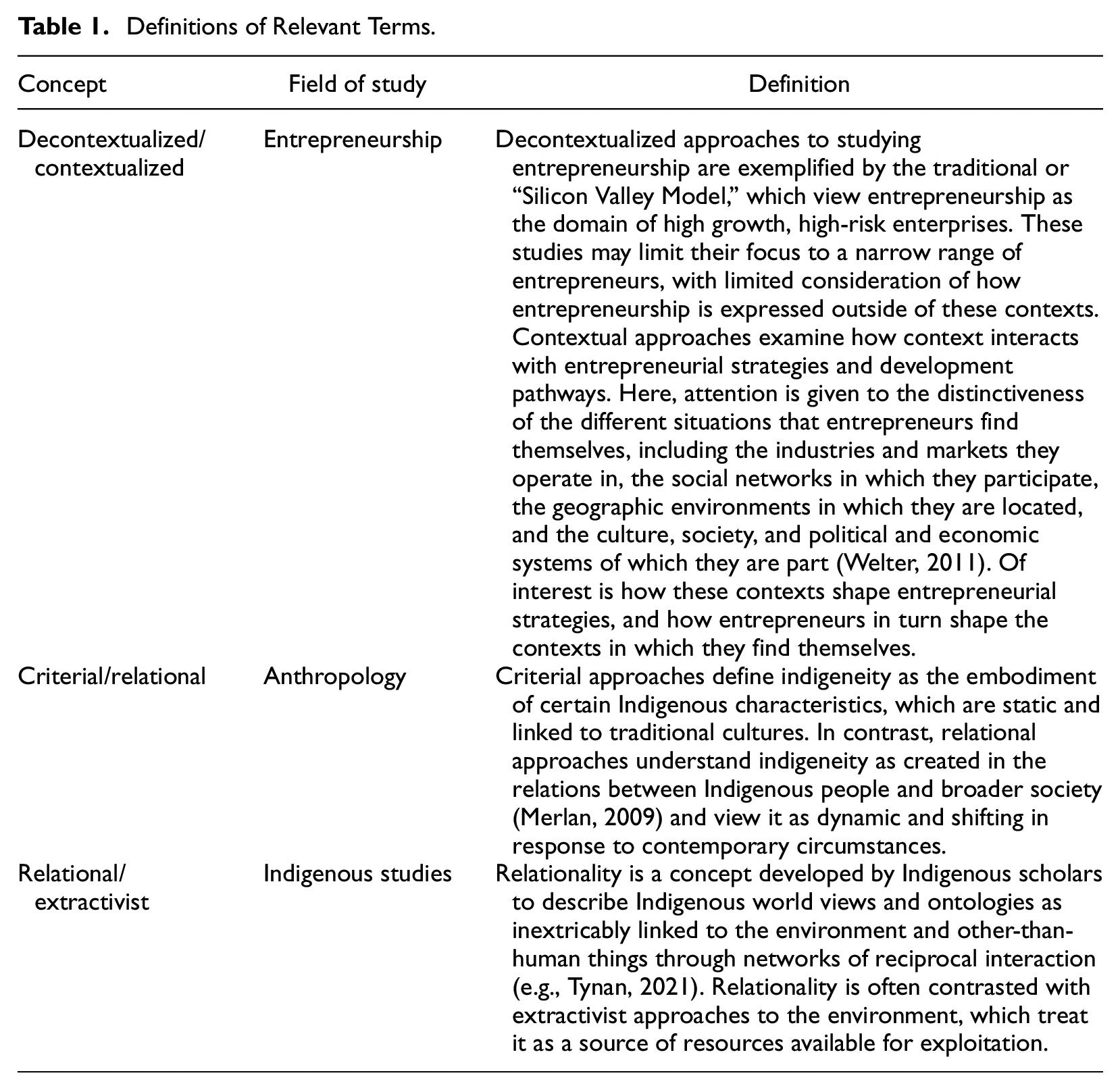
Contextual/decontextualized and relational/criterial approaches reflect different understandings of what defines entrepreneurship and indigeneity, respectively. Key terms are provided in Table 1, where, for clarity, we also define relationality as it is used in Indigenous Studies literature, to differentiate it from the anthropological usage of the term discussed above. In this article, our focus is on understanding the entrepreneurial strategies of Indigenous people, as opposed to examining how indigeneity is expressed in entrepreneurial pursuits. As such, we refer to our approach as contextual in the tradition of entrepreneurship research.
Definitions of Relevant Terms.
Many authors are paying increasing attention to context in writing about Indigenous entrepreneurs (e.g., Colbourne et al., 2023; Henriques et al., 2020). However, the field continues to assume that Indigenous Entrepreneurship can be identified by the presence of a set of criteria presumed to be associated with Indigenous people. We suggest this is based on an inherent tension in the way the field has developed. In working to define itself as a distinct field of research, it has identified characteristics of Indigenous entrepreneurs that would simultaneously establish their activities as worthy of inclusion in the field of entrepreneurship and as being recognizably Indigenous in nature. This has led to an emphasis on academic research on community-based and social enterprises, many of which are remote, land-based, or draw demonstrably on some aspect of Indigenous traditions. This case-study approach presents issues of selection bias, which has led to an overemphasis on types of Indigenous businesses that conform with preconcieved models of Indigenous Entrepreneurship. As we detail below, our methodology enables an assessment of the analytical value of contextual approaches to Indigenous Entrepreneurship by examining the entire field of Indigenous Entrepreneurship as it exists in contemporary Australia.
Methodology
Research Design
The Indigenous Entrepreneurship literature is dominated by analyses using case studies of individual Indigenous businesses. This is illustrated by a recent systematic review of the Indigenous Entrepreneurship literature conducted by Padilla-Meléndez et al. (2022), which found that 66% of all papers used case studies or ethnographic methodologies, with only 17% employing statistical methods (with other methodologies accounting for the remainder). Case studies begin by identifying Indigenous enterprises and then investigating—typically through interviews with the Indigenous entrepreneur- how they express indigeneity in their business, thereby eliciting reference to various criterial definitions of indigeneity. This approach reflects the importance of place-based thinking and has produced rich, detailed data on individual enterprises. This has led the field to be described via deductive analysis, beginning from existing ideas about what constitutes Indigenous Entrepreneurship and then examining the ways in which these entrepreneurs conform with, and deviate from, these preexisting models. However, this approach also risks reinforcing preexisting assumptions about Indigenous Entrepreneurship.
This study takes a different approach. Employing inductive reasoning, it begins by reviewing the entire cohort of Indigenous-owned enterprises in Australia seeking to identify patterns in these data, and then moving toward a general conclusion about the key drivers of Indigenous Entrepreneurship in Australia. It thus examines the extent to which criterial and contextual definitional approaches to Indigenous Entrepreneurship are representative of the Australian Indigenous business sector. The inquiry is guided by two research questions:
(1) Do criterial definitions (emphasizing, for example, community orientation, environmental protection, importance of Indigenous culture, and social impact) accurately characterize the contemporary Indigenous business sector?
(2) What are the key contextual drivers of contemporary Indigenous Entrepreneurship?
This article investigates these questions in turn. We begin by analyzing the extent to which the Indigenous Australian business sector aligns with commonly identified characteristics of Indigenous businesses, including a communal orientation, a focus on environmental protection, use of Indigenous Knowledge, culture, and heritage in the business, and social impact focus, finding that these characterisations represent part, but not all, of the sector. We then review major contextual drivers of Indigenous business growth in Australia and offer a typology of Indigenous businesses based on their entrepreneurial strategies. These include businesses which are responding to: self-employment needs; Indigenous procurement policies; growing consumer demand for Indigenous goods and services; and communal resource ownership. We conclude by offering a new approach to defining Indigenous Entrepreneurship as a strategic response to contextual circumstances rather than necessarily conforming with a set of criterial characteristics that purport to define Indigenous ways of being.
Data
This research draws on a database compiled through a collaborative research project undertaken with Supply Nation, Australia’s largest certifier of Indigenous businesses. Full details of database compilation and calculations are outlined in Langford (2023). Data was collected from three sources: the Australian Bureau of Statistics, the Office of the Registrar of Indigenous Corporations (ORICs), and Supply Nation. The combination of these three data sources captures all Indigenous-owned and managed businesses registered in Australia in 2022 (encompassing 19,530 Indigenous owner-managers, of which 5,100 operate enterprises that have been formally certified as Indigenous by either Supply Nation or ORIC). These enterprises register through several pathways (depicted in Figure 1 and further described below).
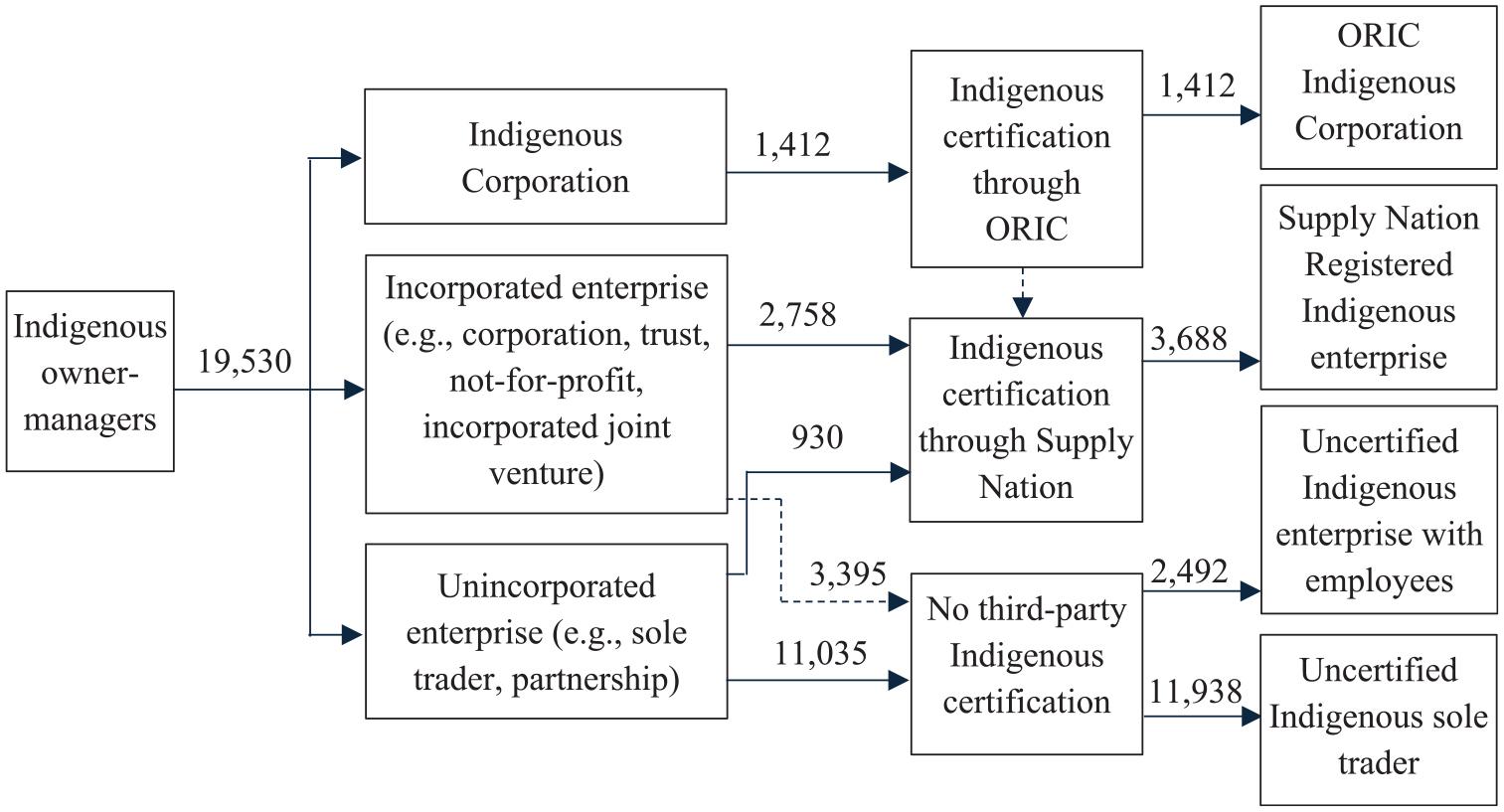
Pathways to registration of an Indigenous enterprise in Australia.
ORIC Indigenous Corporations
The first pathway to registering an Indigenous business in Australia is to register an “Indigenous Corporation” under the Corporations (Aboriginal and Torres Strait Islander) Act 2006 (Cth). This is a special type of corporation registration only available to Indigenous people, typically used by community-based groups of Indigenous people who wish to register a corporation on behalf of many members—the average ORIC Indigenous Corporation has 68 members, with some having several thousand (data from ORIC [2024] for corporations registered as of August 2024). Indigenous Corporations are overseen by ORIC, which provides some benefits to these corporations, such as business support and oversight. However, ORIC registration also carries additional requirements such as the need to publicly report financial and management information. ORIC data on the number of corporations and their characteristics is available from the ORIC website. Summary data is available in spreadsheet form from the open data portal and was obtained as current on January 1st, 2022, and included entries for 3,430 currently registered businesses. Of these, 2,018 corporations had either not met their reporting requirements or reported no income, assets, or employees in all the last three financial years, so were categorized as inactive and excluded from the dataset. Detailed asset, income, and employee data for the remaining corporations were obtained by downloading the published excerpts of the 1,412 general reports of these corporations from ORIC (2023) and extracting the data for entry into our database. The following data were recorded in our database for all 1,412 active corporations: geographic location, charity status, number of members, number of directors, most recently reported income, assets, and employees, and industry of operation.
Supply Nation Indigenous Enterprises
The second pathway to registering an Indigenous business in Australia is for an Indigenous person to register an enterprise and then seek third-party verification of their Indigenous status. These may be incorporated enterprises (such as corporations, trusts, not-for-profits, or incorporated joint ventures) or unincorporated enterprises (such as sole traders or partnerships). These are not legally Indigenous entities—rather, they are entities registered by Indigenous people under legislation covering both Indigenous and non-Indigenous people. Corporations registered through this pathway are overseen by the Australian Securities and Investments Commission, or (for charities and not-for-profits) the Australian Charities and Not-for-profits Commission. These enterprises have the option of subsequently pursuing third-party recognition of the Indigenous status of their business through Supply Nation or other certifiers. Supply Nation is the largest database of Indigenous businesses in Australia, although other state-based certification mechanisms also exist. Supply Nation plays a key role in mediating access to Indigenous procurement contracts as it acts as a registrar of Indigenous businesses in Australia. Supply Nation defines Indigenous businesses according to several criteria, but their primary criteria for inclusion is based on at least 50% Indigenous ownership (Supply Nation, 2025). Businesses that register with Supply Nation then appear as Supply Nation-verified Indigenous businesses on the Supply Nation database. Supply Nation data was provided by Supply Nation as current on June 30, 2022, at which time 3,688 businesses were registered. The following variables were included in the database: geographic location, certification status, descriptive overview, business type, not-for-profit status, annual revenue, number of employees, number of Indigenous employees, service area, and services provided.
Self-Identified Indigenous-Owned and Managed Enterprises
Not all Indigenous enterprises choose to register with Supply Nation or ORIC. In fact, most Indigenous enterprises self-identify as Indigenous business owner-managers on the Australian census without seeking third-party verification of the Indigenous ownership of their business. Drawing on 2021 census data on the numbers of Indigenous owner-managers and applying the 2016 to 2021 Compound Annual Growth Rate of 9.1% to estimate numbers for 2022, an estimate of 19,530 Indigenous owner-managers in Australia in 2022 was reached. This represents an estimate of the total number of people who self-identify as Indigenous and business owner-managers in Australia. Subtracting the 5,100 enterprises listed with Supply Nation and ORIC, an estimate is reached of 14,430 Indigenous-owned and managed enterprises that have not formally identified their business as an Indigenous business with Supply Nation or ORIC. Of these, 11,938 report having no employees. Data on the incorporation status, owner income, number of employees, and industry of work were obtained from the ABS and used in the analysis provided here.
The Australian Indigenous business sector therefore contains three types of Indigenous enterprise: ORIC Indigenous Corporations (1,412 active corporations), Supply Nation Indigenous businesses (3,688 enterprises), and other enterprises owned and managed by Indigenous people (14,430). Data on these enterprises were compiled into a detailed database on Australian Indigenous-owned businesses.
Data Analysis
Data from each source needed to be cleaned and made comparable, as each applied different industry, size, and geographic classifications. Data were classified by annual revenue, geographic remoteness, and industry participation by grouping comparable indicators in the Supply Nation and ORIC datasets. Indigenous employment rates were calculated for Supply Nation businesses as the proportion of the total number of employees who are Indigenous. Supply Nation enterprises are asked to specify their five main goods and services, and these services were classified based on a review of the service name into four categories differentiated by the extent to which they require Indigenous perspectives or derive a competitive advantage from them. The extent to which each enterprise undertakes these four types of activities was estimated based on the proportion of their five main services in each category. The proportion of the sector allocated to each type of activity was calculated as an average of all Supply Nation enterprises. Data on engagement with IPP contracts was obtained from Ernst and Young Australia (2022, 2023), Supply Nation (2020), and publicly available procurer reports. For comprehensive details of calculations and assumptions made, see Langford (2023).
The proportion of businesses pursuing different contextual approaches was estimated by combining ABS, ORIC, and Supply Nation data. The proportion of Indigenous enterprises that fall into the category of Indigenous self-employed businesses was estimated based on the number of Indigenous entrepreneurs reporting no employees in the 2021 census. The proportion of Indigenous enterprises which fall into the category of Indigenous procurement suppliers was estimated based on the number of Indigenous businesses registered with Supply Nation, minus the number of businesses that provide goods and services which require, may require, or may benefit from the entrepreneur’s Indigenous Knowledge, culture, or heritage (IKCH) in the business. The proportion of Indigenous enterprises that fall into the category of Indigenous goods and services providers was estimated based on the number of Supply Nation businesses that provide goods and services that require, may require, or may benefit from IKCH. The proportion of Indigenous enterprises that fall into the category of Indigenous community enterprises was estimated based on the number of active ORIC-registered Indigenous corporations. The proportion of Indigenous enterprises that are uncertified employing entities was estimated based on the number of entities with employees in the 2021 census minus the number of Supply Nation and ORIC-registered entities.
Findings
Challenging the Contours of the Indigenous Business Sector
Where a previous report estimated that in 2018 Australian Indigenous business sector revenue was $4.9 billion (Evans et al., 2021), our analysis estimated that by 2022 it had reached $10.4 billion 1 —doubling in size in under 5 years (Table 2).
Size of the Indigenous Business Sector in Australia in 2022.
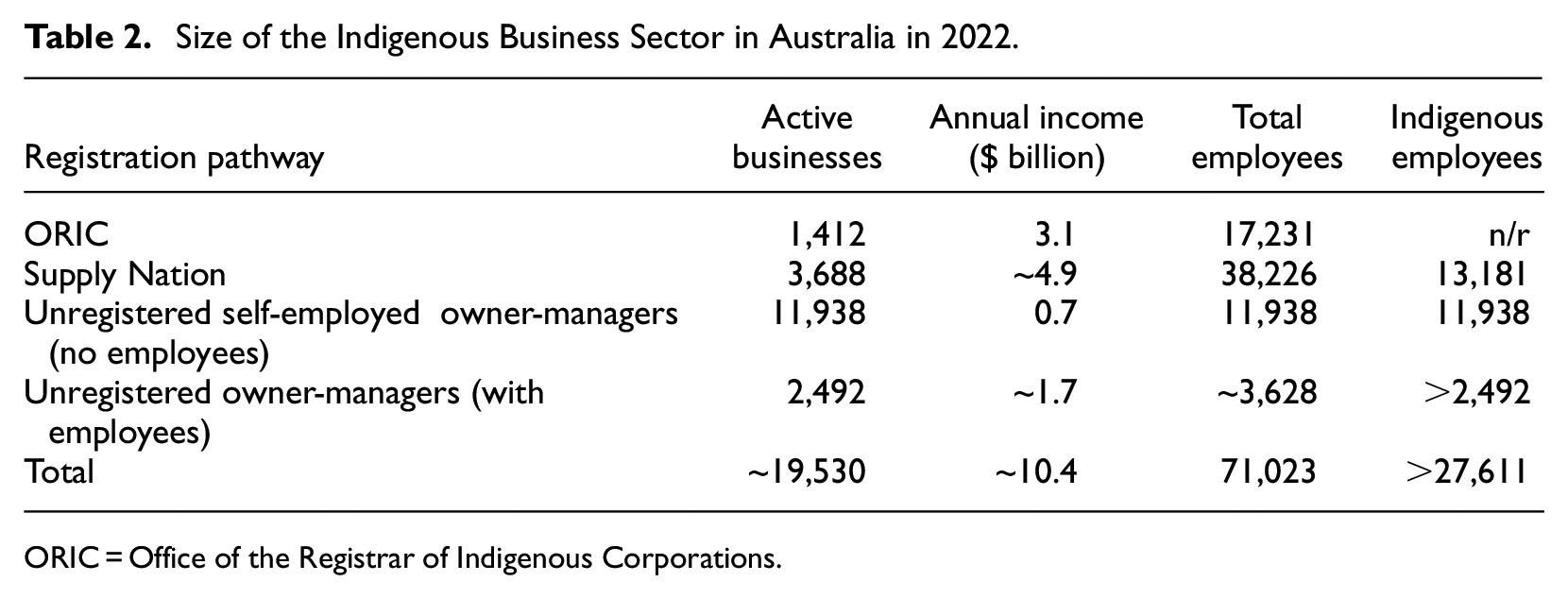
ORIC = Office of the Registrar of Indigenous Corporations.
We analyzed the contours of the Indigenous business sector to determine the extent to which Indigenous-owned and managed businesses were communally oriented, based on Indigenous lands, used Indigenous Knowledge, culture, and heritage, and were socially impact driven.
Community-Based Organizations
The Indigenous business sector can be divided into five key types of businesses (Figure 2). Some of these enterprises have clear links to communal management or a social impact focus. As noted above, ORIC-registered Indigenous Corporations are typically registered on behalf of many members (68 on average), and this registration pathway is often used because it provides governance support, which is of particular benefit to community-owned enterprises. Many of these corporations are registered on behalf of groups that communally own land, and more than half (59%) are registered as charities, indicating a social impact focus. They are typically large and represent around 30% of the total revenue accruing to Indigenous enterprises in Australia, but only 7% of the total number of enterprises.
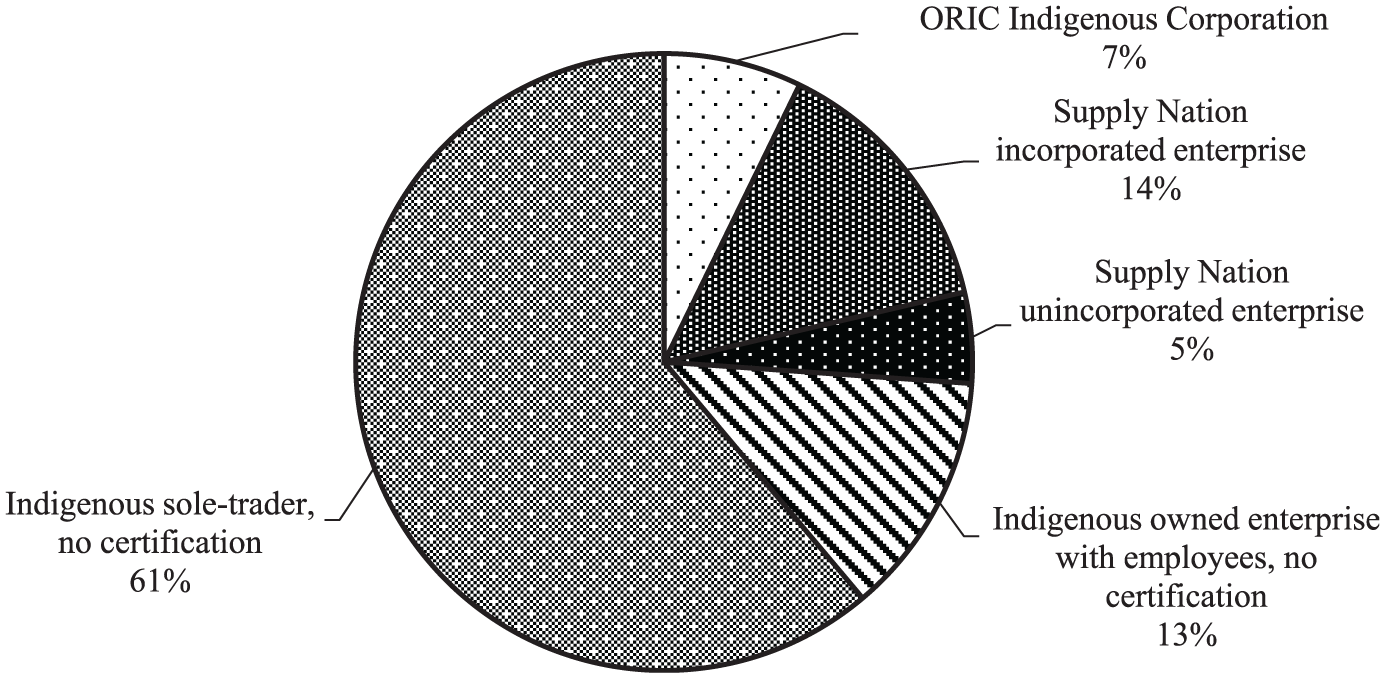
Types of Indigenous-owned and managed businesses in Australia.
By contrast, the largest proportion (61%) of Indigenous enterprises in Australia are Indigenous sole traders who do not employ any staff other than the owner and have not sought third-party certification as Indigenous entities. These self-employed people operate in a range of industries, the largest ones being construction, healthcare and social assistance, administrative and support services, and professional, scientific and technical services, which together represent over half of the total number of businesses. These small business owners earn a median income of AUD 49,000 (USD 33,000), contribute approximately 7% of the total revenue of the Indigenous business sector, and represent 61% of businesses. As such, while community-based enterprises are an important component of the Indigenous business sector, they are by no means the majority.
Commitment to Environmental Protection
Indigenous Entrepreneurship literature often emphasizes the significance of land- and water-based activities and a commitment to environmental protection. Some inferences about the importance of such activities can be made from an examination of the industries in which Indigenous entrepreneurs operate (Figure 3). That analysis shows that Indigenous entrepreneurs are less likely to work in agriculture, forestry and fishing than non-Indigenous businesses, and more likely to work in mining, noting participation in both industries is low relative to other industries, with Indigenous entrepreneurs most commonly engaged in construction (25% of Indigenous businesses) 2 and healthcare and social assistance (11% of Indigenous businesses). Just 264 Supply Nation-certified enterprises and 359 ORIC-registered enterprises report being involved in land management. This indicates that land- and water-based activities represent a relatively small component of the Indigenous business sector. There is no evidence that Indigenous entrepreneurs are more likely to be engaged in land- and water-based enterprises than non-Indigenous entrepreneurs. In addition, the involvement of Indigenous entrepreneurs in the mining industry suggests that not all land- and water-based activities conform to the criterial definitions of Indigenous businesses emphasizing environmental protection. This is not to suggest that Indigenous mining businesses may not pursue sustainability in different ways, but rather that simplistic characterizations of Indigenous people as necessarily resisting resource extraction and pursuing environmental preservation are not corroborated by these data (see Langton, 2013).
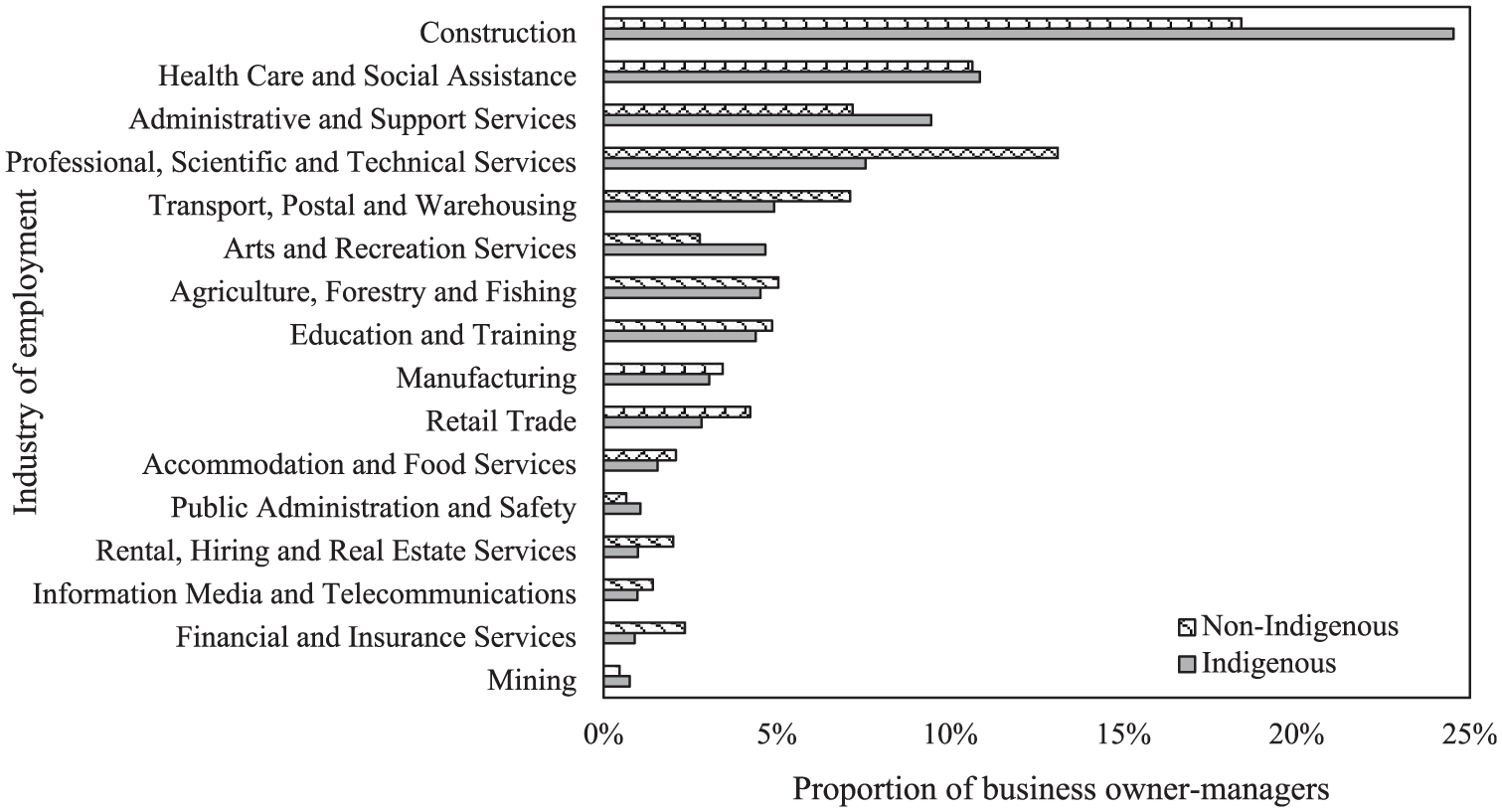
Proportion of Indigenous and non-Indigenous entrepreneurs working in selected industries.
Use of IKCH in the Business
Indigenous Entrepreneurship literature often emphasizes the significance of IKCH in business. In this context, IKCH encompasses values, practices and ways of seeing and knowing that are distinctive to Indigenous peoples, especially those associated with traditional (or pre-colonial) life, rather than more expansive definitions of knowledge, culture, and heritage as encompassing the entirety of human symbols and meanings (see, e.g., Geertz, 1973, p.5). In Australia, this narrower set of values, practices, and ways of seeing and knowing is commonly understood as the property of Indigenous people, and is subject to some legal protections. For example, Intellectual Property (IP) Australia (2024) describes Indigenous Knowledge as an “important asset belonging to Aboriginal and Torres Strait Islander people, their communities, organizations and businesses” including “oral traditions, musical heritage, and artistic methods that are traditionally inherited across generations.” While this definition is indicative rather than denotive, IP Australia specifically includes both tangible property (identified as cultural objects, art pieces, performances, and languages) and intangible property (identified as wisdom passed down through generations, storytelling traditions and ancient methods, and skills) within IKCH.
Some general inferences as to the importance of IKCH to the sector can be made from the industry breakdown provided above: for example, industries such as arts and recreation services (5% of Indigenous-owned businesses) likely require the use of IKCH in production and for market access (as is the case for Aboriginal art). Others, such as health and community services (11% of Indigenous-owned businesses), may benefit from the use of IKCH, such as when IKCH supports the design and implementation of services tailored to Indigenous people. Other industries’ connections to IKCH are unclear—for example, those involved in mining, concreting or sugarcane farming—although they may utilize IKCH in some ways.
Supply Nation enterprises are required to specify, to a high level of detail, the types of services they provide. As such, their database makes possible a more detailed examination of the role of IKCH in the provision of these goods and services. The database showed that overall, 68% of Supply Nation enterprise activity occurred in the provision of goods and services for which no clear competitive advantage is gained from IKCH, such as general construction, demolition services, concreting, drainage services, bobcat hire, road signs, and office supplies. 19% of Supply Nation enterprise activity occurred in the provision of services for which IKCH may be beneficial, such as management consulting; 8% engaged in the provision of possibly Indigenous goods and services, such as professional artists; and 5% were involved in the provision of necessarily Indigenous goods and services, such as cultural awareness training. In sum, at least 68% of Supply Nation enterprises are associated with the provision of goods and services for which no clear competitive advantage provided by IKCH could be ascertained (Table 3).
Provision of Indigenous Goods and Services by Supply Nation Businesses.
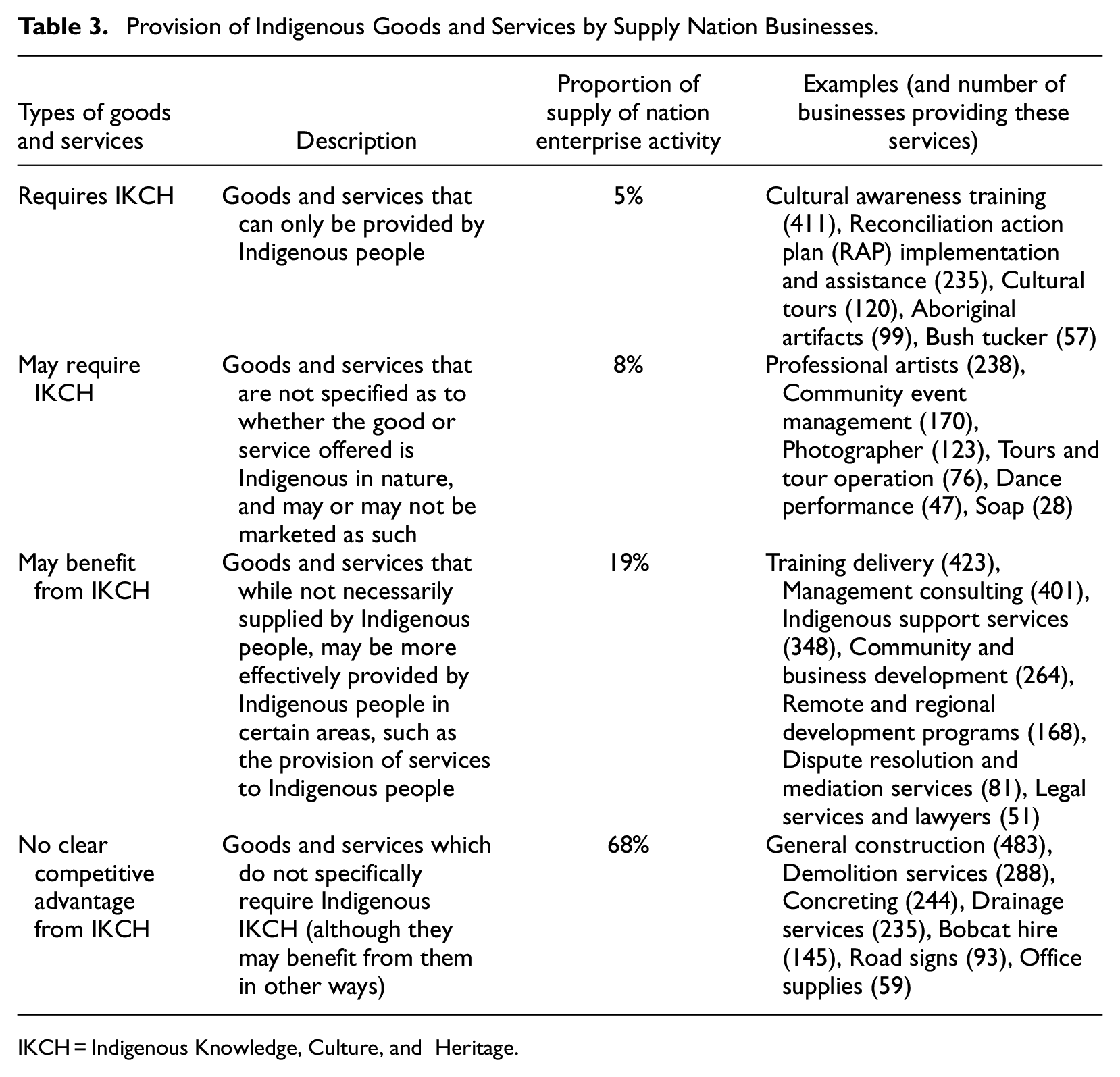
IKCH = Indigenous Knowledge, Culture, and Heritage.
There is a correlation between enterprise size and the extent to which Supply Nation-certified Indigenous businesses specialize in non-IKCH service provision, with smaller enterprises more likely to be engaged in the provision of services involving IKCH (Figure 4). Larger businesses are much more likely to provide services with no demonstrable connection to IKCH, although IKCH may play a role in these businesses in other ways (e.g., concreting service providers may draw on IKCH in other aspects of business management). However, the data does not clearly point to the role of IKCH as a key component of all Indigenous businesses. Rather, it suggests that Indigenous businesses have diverse ways of engaging with IKCH.
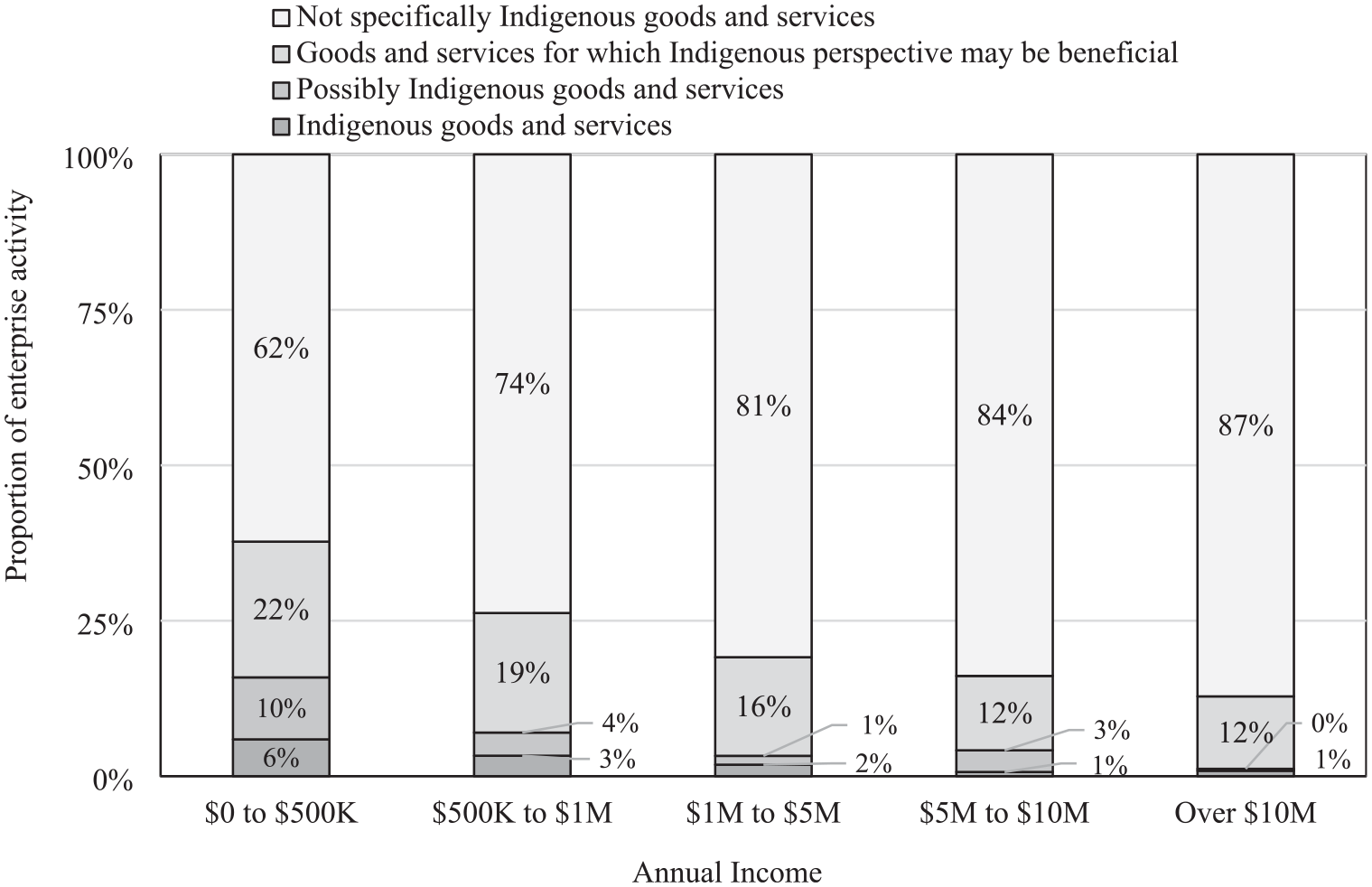
Role of Indigenous knowledge, culture, and heritage in supply nation businesses.
Social Impact Focus
Indigenous Entrepreneurship literature emphasizes that Indigenous businesses are often social enterprises pursuing nonfinancial goals. Our analysis shows that of the certified Indigenous businesses registered with Supply Nation or ORIC, 907 are registered as not-for-profits or registered charities, and 4,193 are registered as for-profit enterprises. 3 Of uncertified Indigenous businesses identified in ABS data, 11,938 are sole traders for whom the distinction between profit and wages is inconsequential, and 2,492 have unknown profit orientation (Figure 5). This indicates that at least 82% (and up to 95%) of Indigenous enterprises are for-profit enterprises.
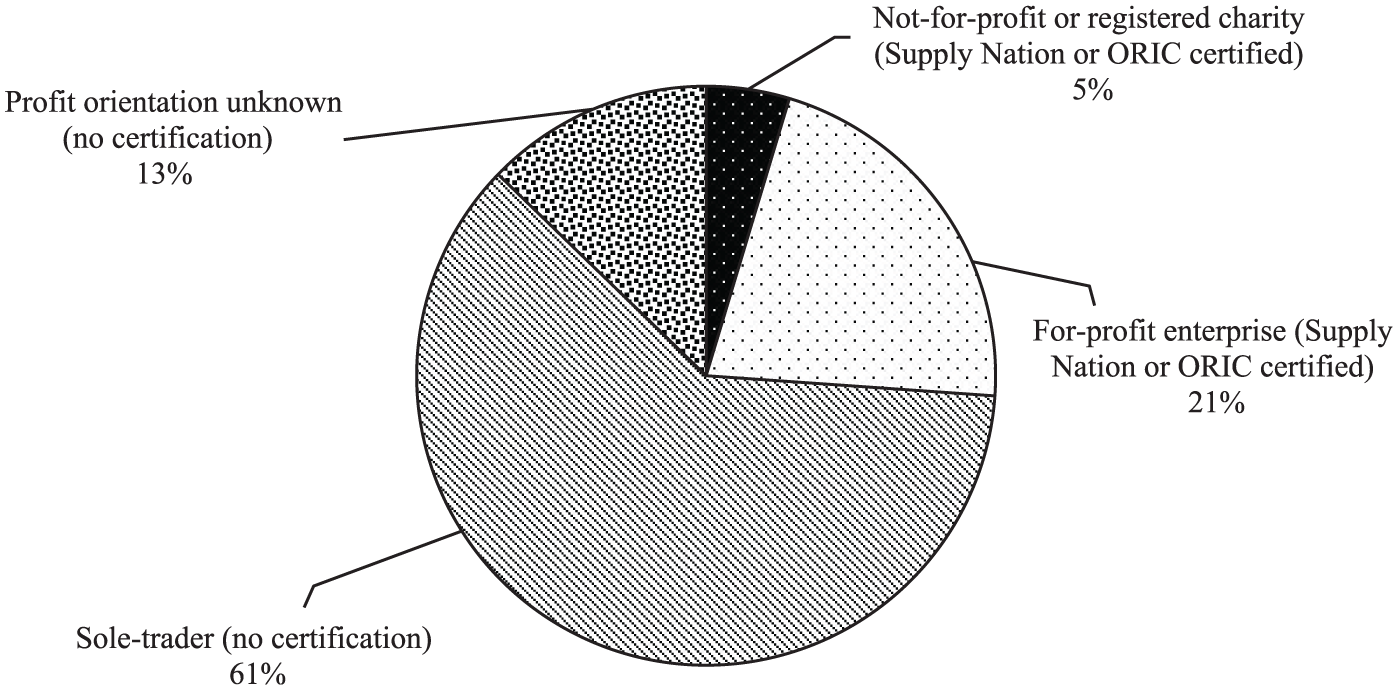
Profit orientation of Indigenous-owned enterprises in Australia.
More detailed analysis is possible for certified Indigenous businesses, which specify not only their profit orientation but also their geographic location. These enterprises are much more likely to be not-for-profit or registered charities when they are registered in regional and remote areas than in major cities: in remote areas, 43% of certified Indigenous enterprises are not-for-profit or registered charities, while in urban areas, this rate declines to 7% (Figure 6). In addition, ORIC corporations are much more likely to be established with explicit social goals than Supply Nation enterprises: 59% of ORIC enterprises are registered charities, while only 2% of Supply Nation enterprises are not-for-profit.
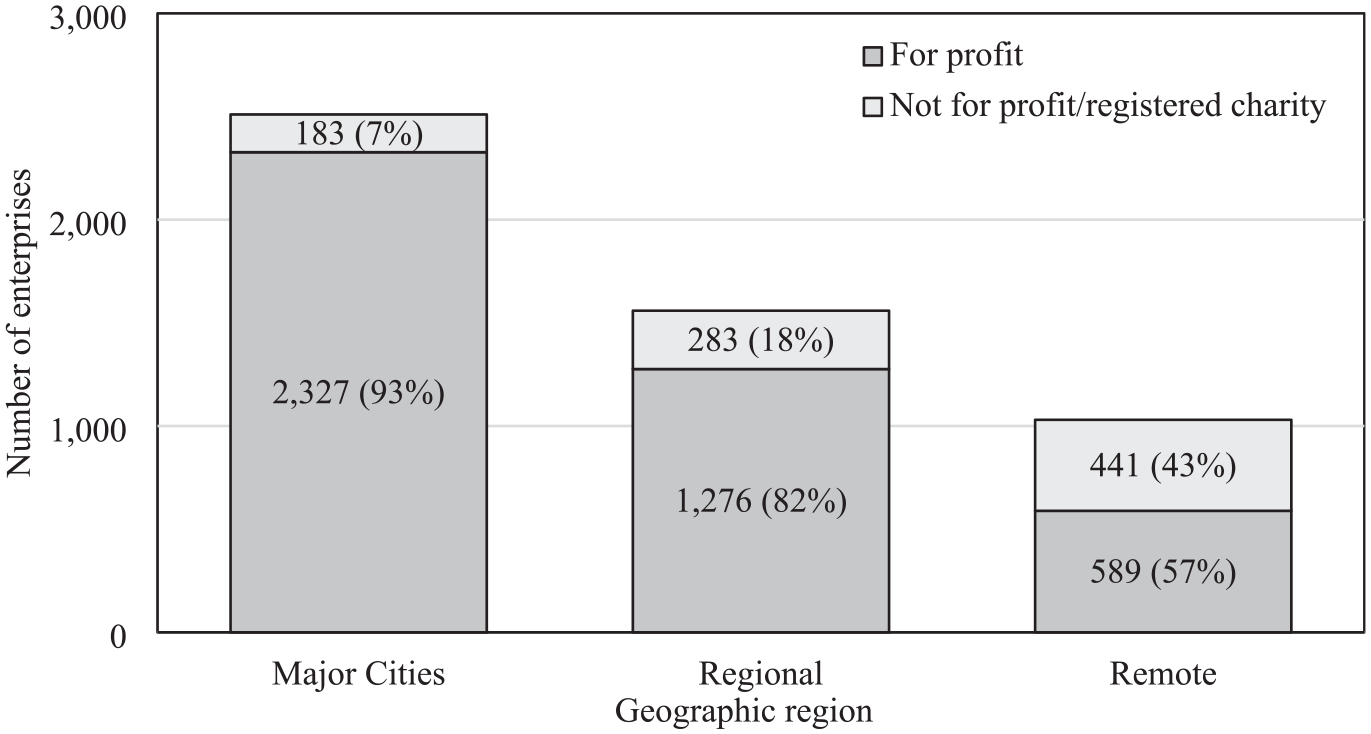
Proportion of ORIC and supply nation enterprises which are charities or not-for-profit.
Another indicator of the socioeconomic benefits provided by Indigenous businesses is the extent to which they employ Indigenous workers (Commonwealth of Australia, 2021). Our database contains information on Indigenous employment rates for 3,688 Supply Nation registered enterprises and shows that staff employed by these enterprises are 34% Indigenous. With an Indigenous Australian population of 3.8% in 2021 (ABS, 2021), this suggests that Supply Nation-certified Indigenous businesses employ Indigenous workers at approximately nine times the rate that would be expected based on population data (noting they still employ approximately twice as many non-Indigenous workers as Indigenous workers). There are, however, significant differences between regional and remote businesses and those in major cities of Australia. Regional and remote Supply Nation-certified enterprises employed Indigenous workers at twice the rate of those in major cities (Figure 7), and smaller Indigenous enterprises employed Indigenous workers at twice the rate of larger enterprises (Figure 8).
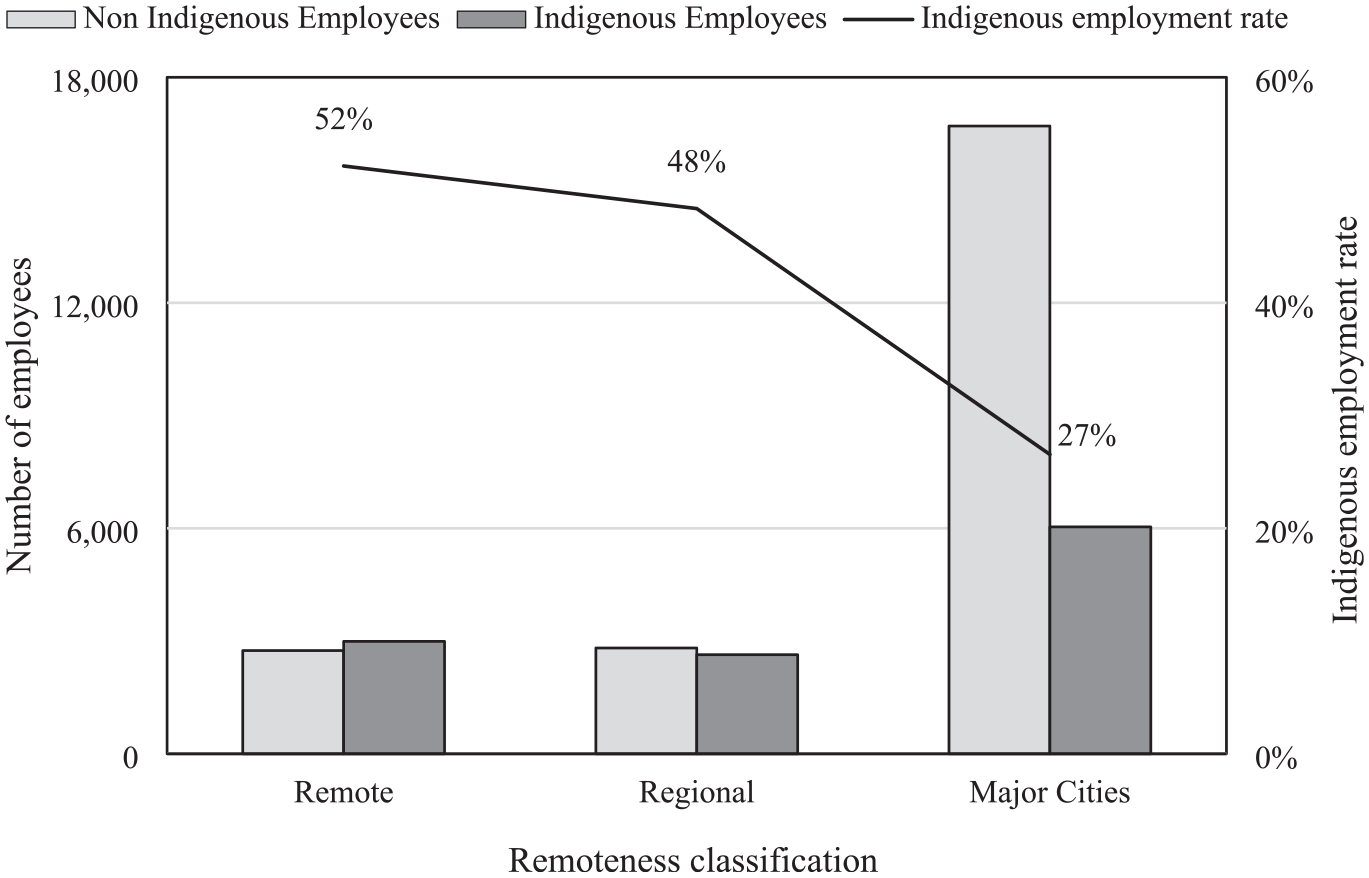
Indigenous employment rate of supply nation incorporated entities by remoteness.
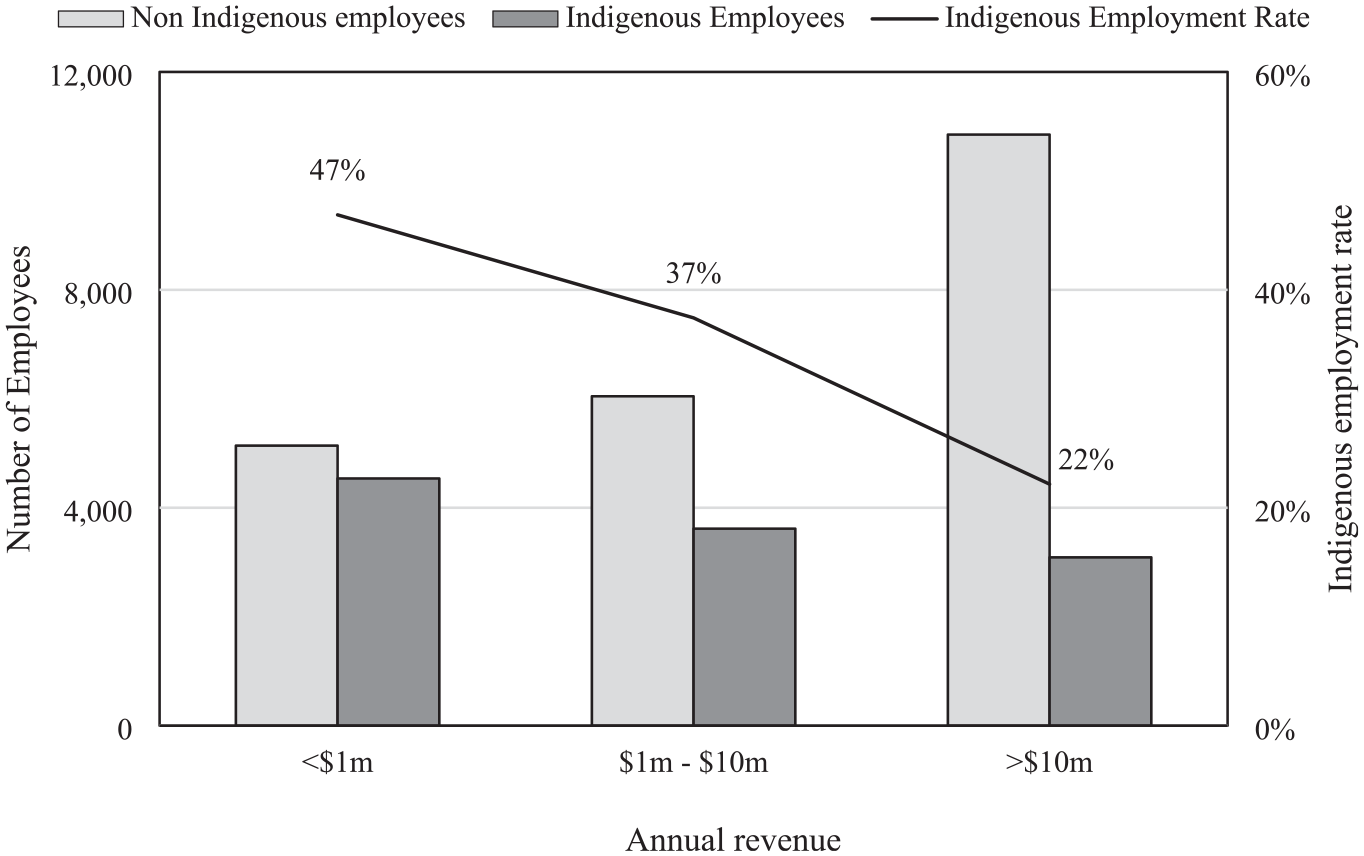
Indigenous employment rate of supply nation incorporated entities by annual revenue.
Overall, our analysis shows that at least 82% (and up to 95%) of Indigenous-owned enterprises in Australia are for-profit enterprises, and that Indigenous employment rates vary substantially between businesses. This suggests that while social and employment goals may be important drivers for some Indigenous entrepreneurs, there is significant diversity in the extent to which different entrepreneurs pursue these goals.
A Contextual Approach to Studying Strategic Indigenous Entrepreneurship
The section above described the contours of the Indigenous business sector, showing that most enterprises are for-profit sole traders operating in industries in which IKCH does not present a clear competitive advantage. Relatively few enterprises are community-based, registered as charities or not-for-profits, involved in land management and environmental protection, or operate in industries where IKCH plays a clear and necessary role. This highlights the limitations of a criterial approach to defining Indigenous Entrepreneurship based on these characteristics, as it excludes a large proportion of Indigenous entrepreneurial activity.
Next, we develop a characterization of the Indigenous Australian business sector using a contextual approach. Here, Indigenous Entrepreneurship is defined contextually as a strategic response to opportunities and challenges faced by Indigenous entrepreneurs in the contexts in which they operate. These contexts may be social, cultural, economic, and political, and involve varying connections to Indigenous traditions, which may or may not be self-evident. This definitional shift requires scholars to examine what is distinctive about the different situations that Indigenous entrepreneurs find themselves in, including the industries and markets they operate in, the social networks in which they live and work, the geographic environments that surround them, and the relationships between themselves and the social, cultural, economic, and political systems in which they operate (see Welter, 2011), and how these contextual factors shape entrepreneurial pathways.
This definitional shift has important implications for the field of Indigenous Entrepreneurship. First, it broadens the field of study to include all entrepreneurs who are Indigenous, regardless of their modes of business operation. This allows for a fuller and more in-depth study of the diverse motivations, strategies, successes, and failures of Indigenous people in entrepreneurship. Second, it moves the focus of study from identifying expressions of indigeneity in entrepreneurship, to identifying entrepreneurial responses to Indigenous contexts. This recenters entrepreneurship as the focus of study, removing the need to identify how predefined components of indigeneity materialize in entrepreneurial pursuits.
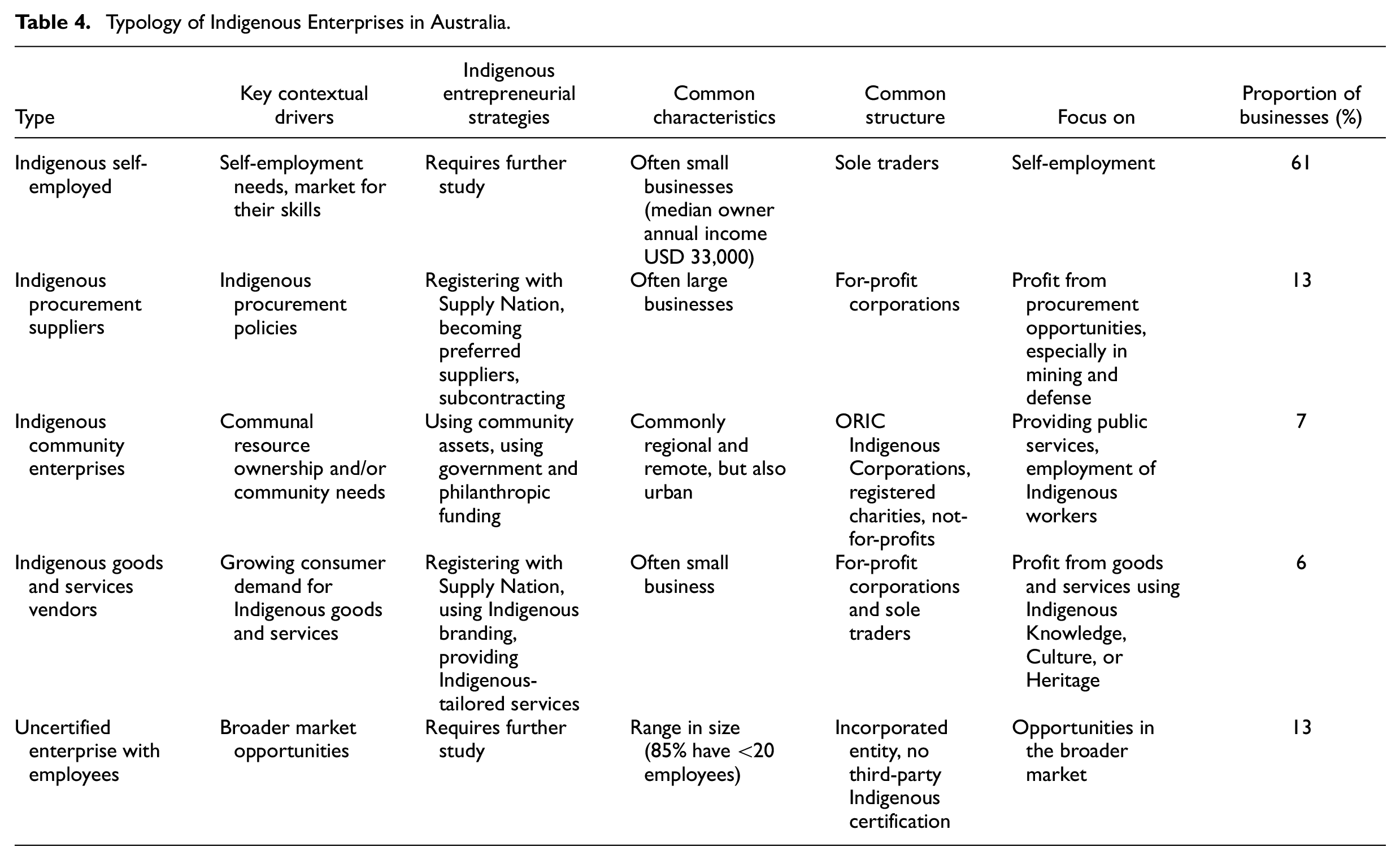
Based on our review of the data, we identify five key types of Indigenous enterprises based on their contextual drivers and resulting entrepreneurial strategies. These are presented in Table 4. The types of Indigenous enterprises we identify include: (1) Indigenous community enterprises; (2) Indigenous procurement suppliers; (3) Indigenous goods and services vendors; (4) self-employed individuals; and (5) uncertified enterprises with employees. Notably, two of these types of Indigenous businesses do not make clear use of an Indigenous entrepreneurial strategy that can be identified using these data. These are Indigenous entrepreneurs who have not sought third-party Indigenous certification, including self-employed individuals and uncertified corporations that employ others. Further research with such entrepreneurs is needed to understand the extent to which they identify their business and their entrepreneurial strategies as Indigenous in nature. The next section explores these different types of Indigenous enterprises.
Typology of Indigenous Enterprises in Australia.
Indigenous Self-Employed
By far the largest category of Indigenous business in Australia is self-employed business owners with no employees. These entrepreneurs operate in a range of industries, most commonly construction, healthcare and social assistance, administrative and support services, and professional, scientific and technical services (which together represent over half of the total number of these enterprises), but also agriculture, arts, education, retail, transport, and warehousing, among others. These enterprises have typically not sought third-party recognition as Indigenous businesses and operate in competition with non-Indigenous businesses in ways that may or may not draw on aspects of their Indigenous identity. They are typically small, with a median annual income of AUD 49,000 (USD 33,000), and most (89%) business owners earn less than AUD 104,000 (USD 70,000) annually. This is lower than non-Indigenous self-employed businesspeople, who earn a median income of AUD 54,000 (USD 36,000). We estimate that 61% of Indigenous-owned and managed businesses in Australia fall into this category.
The extent to which this cohort represents an entrepreneurial response to Indigenous-specific circumstances requires further research. One theory would be that Indigenous people are more likely to seek self-employment than non-Indigenous people due to racism in employment, yet the rate of business ownership is much lower among Indigenous working-age people than non-Indigenous working-age people. This is due in part to lower labor force participation and higher unemployment among Indigenous people, 4 but also reflects trends among working people—15% of non-Indigenous workers work in their own or a family member’s business, compared to 8% of Indigenous workers. Overall, Indigenous workers are less likely to be self-employed, and when they are, earn less than non-Indigenous workers (ABS, 2021). Further research with self-employed Indigenous entrepreneurs is needed to understand their entrepreneurial strategies, 5 and the extent to which these strategies are responding to uniquely Indigenous challenges and opportunities. Such research could support the development of strategies to support the growth and profitability of this group.
Indigenous Procurement Suppliers
The second largest category of businesses is those entities which appear to be responding to opportunities available through Indigenous procurement policies. We estimate that approximately 13% of Indigenous enterprises are pursuing this strategy. These are businesses that have registered with Supply Nation and provide goods and services with no clear connection to IKCH, such as general construction, demolition services, concreting, drainage services, bobcat hire, road signs, and office supplies. These businesses may compete with non-Indigenous services but seek preferential treatment as suppliers to government and companies with Indigenous procurement policies. Their entrepreneurial strategies may include gaining access to preferential procurement opportunities by registering with Supply Nation, becoming preferred suppliers, and subcontracting to non-Indigenous businesses where necessary. They often manage (or seek to obtain) large government and industry contracts and may or may not employ large numbers of Indigenous workers or provide community benefits. Further research with this group is needed to characterize additional entrepreneurial strategies used to gain and deliver these contracts—for example, establishing a suitable scale of operations, and developing appropriate reporting protocols.
Procurement policies are a significant driver of Indigenous entrepreneurship in Australia. Since the IPP was first implemented in July 2015, Supply Nation reports that $5.3 billion has been spent with Indigenous businesses registered on their database through more than 35,000 contracts awarded to over 2,000 Indigenous businesses (Ernst & Young Australia, 2022). They note that from 2011 to 2017, Supply Nation businesses grew at 13% per annum, much faster than businesses in the broader economy, which grew at 3% p.a. (Supply Nation, 2020, p. 10). Government and community groups consider the IPP to have been highly successful in its goal of promoting Indigenous business expansion, as the Commonwealth notes in a recent report: “the advent of government preferential procurement policies had driven demand for Aboriginal and Torres Strait Islander businesses and resulted in a significant expansion of this sector” (Commonwealth of Australia, 2021, p. 15). In addition to the government IPP, several large companies have voluntarily implemented IPPs in which they encourage their own procurement divisions to buy from Indigenous businesses. This is most influential in the mining sector, where companies such as Fortescue Metals Group and Rio Tinto offer large, profitable contracts to Indigenous enterprises to provide services to their operations. Indeed, procurement with Supply Nation businesses is concentrated in a small range of sectors—in the 2022 financial year, 80% of the total AU$ 3.8 billion in contract value was awarded by procurers in the government, mining and construction industries (Ernst & Young Australia, 2023), and just three organizations were responsible for more than half of the total value of contracts awarded to Supply Nation businesses—the Commonwealth Department of Defence ($1.0 b), Rio Tinto ($504 m), and Fortescue Metals Group ($452 m) (Rio Tinto 2023; Fortescue 2023; Ernst & Young Australia, 2022; NIAA, 2023). As a result, the benefit of procurement policies has been concentrated in a small range of industries and enterprises, with almost half of Supply Nation enterprises receiving no contract revenue and some groups of entrepreneurs—such as women—being underrepresented in contract revenue awarded (Ernst & Young Australia, 2023; Pingali, 2024). Indigenous procurement policies are therefore a highly significant driver of the Indigenous business sector in Australia, but are influential in a relatively narrow range of industries. While a criterial definition of Indigenous Entrepreneurship may see no grounds on which to include these enterprises in the sector (since they do not necessarily draw on IKCH, provide social and community benefits, or pursue environmental protection), they are in practice a significant proportion of Indigenous businesses in Australia, and are driven by specifically Indigenous contextual opportunities.
Indigenous Goods and Services Vendors
The fourth category of Indigenous enterprise is those entities which sell Indigenous goods and services—that is, goods and services in which Indigenous owner-managers have either exclusive market access or a competitive advantage. They may provide goods and services such as cultural awareness training, cultural tours, Indigenous art, Indigenous bush products, Indigenous support services, and community development services. These enterprises often benefit from Indigenous branding, and indeed, consumers may require evidence of authenticity to minimize incidents of “black washing” (where non-Indigenous businesses use Indigenous words and/or iconography to market products) and “black cladding” (where non-Indigenous businesses draw on inauthentic engagement with Indigenous people to access markets). Supply Nation registration is of use to some of these businesses in providing this authentication. These businesses draw on their unique access to IKCH as a key component of their entrepreneurial strategy. Like the category above, this is a highly visible component of the Indigenous business sector, although a relatively small one—we estimate that approximately 6% of Indigenous enterprises fall into this category.
Community-Based Indigenous Corporations
The oldest and most visible category of Indigenous enterprises is those that are registered by, and work on behalf of, a group of Indigenous people. We estimate that 7% of Indigenous enterprises fall into this category. These enterprises often (but not always) register with ORIC as this provides them with management support, which is particularly valuable to Indigenous corporations with many members. The majority of these corporations are registered charities, which often have community development and education goals. They often are responding to specifically Indigenous opportunities presented by communal resource ownership made possible through Australia’s Indigenous land rights recognition systems, as well as grant opportunities available from the Australian government to provide services to Indigenous communities. They may also be responding to Indigenous-specific challenges, such as a lack of appropriate service provision and employment and training opportunities in the communities in which they work. They are more likely to be registered in regional and remote areas than other types of enterprises—80% of ORIC enterprises are registered in regional and remote areas, compared to 40% of Supply Nation registered enterprises and 51% of uncertified enterprises. Many large ORIC corporations are registered on behalf of land holding groups and operate a number of smaller enterprises which may be registered through other pathways, and provide employment, education opportunities, and goods and services to Indigenous communities. This category of Indigenous enterprise most closely aligns with widely held characterizations of Indigenous Entrepreneurship, as, for example, community-based and social-impact focused. However, these businesses are conceptualized here as an entrepreneurial response to communal resource ownership and community needs, rather than a manifestation of what are presumed to be inherent characteristics of Indigenous people. In the discussion below, we discuss the implications of this conceptual distinction.
Indigenous-Owned Uncertified Incorporated Entities
The remaining 13% of Indigenous enterprises do not fall into any of the above categories: they do not seek third-party certification of their business, register on behalf of communities, sell Indigenous goods and services, or respond to Indigenous procurement opportunities in ways that can be identified through high-level data analysis. They may compete with non-Indigenous businesses in the market and may or may not draw on IKCH in the operation of their business. That is, they are Indigenous business owner-managers who may or may not identify their business as an Indigenous business and their entrepreneurial strategies as distinctively Indigenous. Further research is needed to understand the extent to which these entrepreneurs see themselves as undertaking a specifically Indigenous form of entrepreneurship (as opposed to those who do not see their indigeneity as key to their entrepreneurial strategy).
Contextual Definitional Approaches
Our results show that definitional approaches that view Indigenous Entrepreneurship as an expression of a set of predefined “Indigenous” characteristics do not adequately characterize the contemporary Indigenous Australian business sector. We offer an alternative approach to defining Indigenous Entrepreneurship as a strategic response to Indigenous contextual opportunities, challenges, and resources, rather than as a manifestation of what are presumed to be the inherent characteristics of Indigenous people. There are important implications of moving from a criterial to a contextual approach to defining Indigenous entrepreneurship. Criterial definitions contend that there is a set of characteristics that are inherent to Indigenous people and define the types of entrepreneurial behavior which can be considered Indigenous. They suggest that all Indigenous entrepreneurs must behave in particular ways to be engaging in Indigenous Entrepreneurship. By contrast, a contextual approach identifies Indigenous-specific constraints and opportunities, which Indigenous entrepreneurs can respond to in a range of ways. There is no requirement in this definition that all Indigenous enterprises fit this characterisation, and while we have offered a typology of Indigenous Australian Entrepreneurship based on key strategies pursued by enterprises in our database, this is no means a comprehensive list, nor should these be thought of as mutually exclusive categories. Rather, Indigenous entrepreneurs may pursue a combination of multiple strategies, including those which are Indigenous-specific (e.g., responding to community needs, preferential procurement opportunities, Indigenous branding opportunities) as well as other opportunities in the wider market. They may also employ strategies that cannot be ascertained from the high-level data presented here, such as leveraging family connections, accessing novel sources of finance, or developing sophisticated social and financial accounting systems (e.g., see IBA 2024, Langford, 2024, Langford et al., 2021). Further in-depth research with the diverse cohort of Indigenous entrepreneurs would support a richer analysis of their strategies.
While there are similarities between contextual strategies and criterial categories, there is a subtle but important distinction between these in how we understand the nature of Indigenous Entrepreneurship. Where criterial approaches see Indigenous entrepreneurs as necessarily behaving in a certain way based on what are presumed to be inherent characteristics common to Indigenous people, contextual approaches see these behaviors as linked to and shaped by Indigenous-specific challenges and opportunities. For example, a criterial definition that sees those Indigenous businesses selling goods and services based on IKCH as resulting from an inherent desire to practice this IKCH imposes limits on the creative license of Indigenous entrepreneurs to significantly recontextualize their IKCH, because it requires continuity with Indigenous traditions. In contrast, a contextual approach repositions these same enterprises as entrepreneurially responding to opportunities in the wider market for IKCH-based goods and services. This allows greater creative license to those entrepreneurs who significantly recontextualize IKCH in pursuit of entrepreneurial opportunities, while recognizing that the social and cultural benefits of practicing IKCH may nonetheless be an important motivator for many entrepreneurs.
Similarly, a criterial definition that views Indigenous community-based charities and not-for-profits as arising from what is presumed to be the inherently collective nature of Indigenous peoples constrains innovation in this sector and excludes those Indigenous entrepreneurs who do not conform to that presumption. By contrast, a contextual approach sees these same organizations as entrepreneurial responses to challenges of social disadvantage in Indigenous communities and to opportunities provided by communal resource ownership and the availability of philanthropic and grant funding. Galbraith, Rodriguez, and Stiles made this point in their 2006 paper, in which they argue that Native American collective business activity has been misinterpreted as arising from a collective nature rather than from structural factors in land ownership, which constrain the opportunities available to Native American entrepreneurs. They argue that these criterial definitions perpetuate “myths” of Indigenous collectivism which are “historically inaccurate” and “fundamentally misleading in describing the entrepreneurial potential of the Indigenous cultures of North America” (Galbraith et al., 2006, p. 1). Of course, this point must be nuanced because the collective structures of Indigenous land rights are themselves reflections of traditional Indigenous land-owning systems, and there is overlap between contemporary contextual factors and Indigenous cultures and traditions. The data provided in this article does not suggest that the distinct cultures of Indigenous peoples play no role in Indigenous Entrepreneurship, but rather that these are used to different extents by different entrepreneurs, and as a result, cannot be used to define an increasingly diverse sector.
This point is elucidated by a consideration of those Indigenous businesses responding to preferential procurement policy opportunities. Whereas a criterial definition may see grounds to exclude these enterprises from the field of Indigenous Entrepreneurship, a contextual approach is more analytically accurate in describing the sector since these enterprises do, in practice, identify as Indigenous businesses and operate as such in Australian society. They represent a specifically Indigenous form of entrepreneurship as they are responding to opportunities not available to non-Indigenous Australians. A contextual approach to defining Indigenous Entrepreneurship offers a productive way forward by removing constraining ideas about what constitutes Indigenous ways of doing business that are both limiting to Indigenous people and onerous to define and enforce. This is not to say that Indigenous values, knowledges, and cultures do not inform Indigenous entrepreneurial strategies: rather, that they do not define them.
Discussion
Our research offers three key insights for entrepreneurship scholars.
First, our database demonstrates the risks of research becoming disconnected from the field it claims to represent as that field diversifies. Case studies can offer deep, contextualized knowledge about individual entrepreneurs, yet they also risk misrepresenting the field through selection biases and researcher assumptions. As Baker and Welter (2020) observe, academics make choices that bound the feild of study and structure knowledge creation, and in doing so, they participate in the construction of certain representations of reality (see also Rosnow & Georgoudi, 1986, p. 19). Researchers may find what they are looking for but fail to recognize other phenomena that lie outside the bounds of what they have set out to study. Here we have used statistical approaches to hold theory to account. We highlight the importance of regular reality checks and demonstrate the importance of balancing abductive and deductive logics, and quantitative and qualitative data, in research endeavors.
Second, and relatedly, we highlight the intersectionality of entrepreneurial identities. As our dataset has shown, Indigenous entrepreneurs have multiple overlapping identities which could be usefully studied through different entrepreneurship lenses. For example, among Indigenous entrepreneurs in our dataset, we find that some are social entrepreneurs and some are financially focused entrepreneurs; some are rural entrepreneurs and some are urban entrepreneurs; some are female entrepreneurs and some are male entrepreneurs; some are older entrepreneurs and some are young entrepreneurs; some run small businesses and some run large, growth-oriented businesses; some sell niche products and some target broader markets; some are opportunity-driven and some are necessity-driven. Among Indigenous entrepreneurs we find “necessity,”“poverty,”“underdog,” and “unconventional” entrepreneurs (see Bakker & McMullen, 2023; Miller & Le Breton-Miller, 2016; van der Zwan et al. 2016), as well as entrepreneurs who are well-resourced, growth-oriented risk takers targeting mainstream markets. Focusing too much on one component of entrepreneurial identity—that is, the “Indigenous” in “Indigenous Entrepreneurship”—runs the risk that the field of study will become disconnected from other forms of entrepreneurship from which it could usefully learn. We therefore mirror calls for a shared theoretical conversation among entrepreneurship scholars (Bakker & McMullen, 2023).
Finally, we highlight the importance of studying entrepreneurial agency. A contextual definitional approach shifts the focus of study from expressions of indigeneity in entrepreneurship, to expressions of entrepreneurial agency in Indigenous contexts. This recenters entrepreneurial agency as a key focus of study, and invites study of how this agency is expressed in diverse contexts (see McMullen et al., 2021). This is not to suggest that entrepreneurship needs to conform to high-growth, high-risk model to be included in the field; rather that a focus on entrepreneurial strategies can support the practical goal of understanding and advancing entrepreneurship in Indigenous contexts.
Future Research
Rethinking Indigenous Entrepreneurship in contextual terms opens productive new lines of inquiry for scholars. We suggest three key components of a new research agenda.
First, we encourage scholars to embrace diversity in the study of Indigenous Entrepreneurship. As we have shown, much Indigenous entrepreneurship literature has neglected the study of Indigenous entrepreneurs whose entrepreneurial strategies do not conform to preexisting conceptualizations of what constitutes an “Indigenous” way of engaging in entrepreneurship. We call on scholars to embrace the diversity of Indigenous entrepreneurship and study a much wider range of Indigenous entrepreneurial strategies in diverse contexts. Important insights could be gained from studying, for example, the vehicle hire company, the cattle company, the landscaper, and the office supplies provider, whose activities may not immediately be recognizable as Indigenous Entrepreneurship. How do these entrepreneurs operate their businesses? What mix of Indigenous and other entrepreneurial strategies do they employ? How do they enact their indigeneity in their business, if in fact it is relevant to their strategy at all? Understanding the diverse motivations and strategies of Indigenous entrepreneurs is key to supporting a greater number of Indigenous entrepreneurs to start, operate, and grow businesses, while also supporting the diversification of the sector.
Second, we encourage scholars to examine success in the study of Indigenous Entrepreneurship. In its preoccupation with identifying what makes Indigenous entrepreneurs Indigenous, the Indigenous entrepreneurship literature has sometimes failed to examine what makes Indigenous entrepreneurs entrepreneurial (see McMullen et al., 2021). Indeed, the literature has been reticent to introduce discussions of success to Indigenous entrepreneurship because success has been so often defined in normative terms (e.g., as high-growth and high-income enterprises), which ignore diverse Indigenous values and understandings of success. When success is discussed in Indigenous Entrepreneurship, it is often as part of a project to widen these definitions of success. Yet, embracing an inclusive definition of success does not preclude the possibility that some entrepreneurs are more successful than others at achieving their goals. For example, an Indigenous entrepreneur may set out with the goal of starting a fencing business to enable them and their family to spend more time on country, but they may be successful or unsuccessful at achieving this goal. Pergelova et al. (2021) studied a sample of 1,095 Indigenous entrepreneurs in Canada and found that 45% of them felt that their business was unsuccessful or only somewhat successful, according to their own personal definition of success. Just as many mainstream entrepreneurs fail, so do many Indigenous entrepreneurs, and a frank examination of the factors that contribute to success and failure is needed here, as it is elsewhere. A study of Indigenous entrepreneurial success could include a focus on “exceptional” Indigenous entrepreneurs (Clark et al., 2023) 6 which can inform an understanding of how to support exceptional businesses, as well as on “everyday” successful Indigenous entrepreneurs, which can support policy to increase the number of Indigenous entrepreneurs and help close the gap in rates of entrepreneurship between Indigenous and non-Indigenous people.
Finally, we encourage scholars to welcome “messiness” in studies of Indigenous Entrepreneurship. Recent studies in other areas of entrepreneurship have emphasized the importance of unorthodox behaviors within entrepreneurial strategies (Fisher et al., 2020; Kuratko & Morris, 2024). In letting go of preconceived ideas about what Indigenous entrepreneurship is, we invite the field to explore in more detail some of the unorthodox, creative, and adaptive strategies of Indigenous entrepreneurs operating in diverse contexts. Our database shows that Indigenous entrepreneurs often work in complex contexts where unconventional strategies may apply. They may need to make uncomfortable choices and negotiate trade-offs between different goals. These factors are important components of Indigenous Entrepreneurship, and research that overlooks these may do the field a disservice by misrepresenting what it takes to make entrepreneurship work in challenging spaces. We urge researchers not to erase the difficult, messy components of Indigenous Entrepreneurship, and to enable Indigenous entrepreneurs to voice their own position in its entirety and complexity. For example, further research is needed to understand how Indigenous entrepreneurs build labor force participation in remote areas. What strategies do they use to overcome resource limitations and access needed skills? How do they tailor their operations to access opportunities available under procurement and other development policies, as well as through mainstream markets, and what trade-offs does this entail? In removing constraining definitional boundaries around what constitutes Indigenous Entrepreneurship, our approach makes space for greater complexity in the field. We argue that embracing this complexity is necessary for the field to drive practical outcomes for Indigenous entrepreneurs.
Policy Implications
Our research has important practical implications for policymakers aiming to support the establishment and growth of Indigenous enterprises.
First, our research highlights that Indigenous entrepreneurship is more diverse than previously thought, including not only procurement policy providers, community organizations, and certified Indigenous sellers of Indigenous goods and services, but also large numbers of uncertified Indigenous businesses operating in diverse industries. While much policy attention has been on the Indigenous Procurement Policy as a mechanism of growth for the sector, our research highlights the existence of a much larger group of entrepreneurs who may benefit from other forms of support (Langford and Martin 2024a,b).
Second, our research shows that policy makers cannot assume that Indigenous businesses are community-based, social impact-focused or environmentally sustainable, or that they employ significant numbers of Indigenous workers. Policy tools such as the Indigenous Procurement Policy, therefore need to explicitly specify whether recipients are required to meet any Indigenous employment targets or other social benefit goals. We do not express a view as to whether these businesses should have to provide wider benefits, as this is a question that speaks to the goal of Indigenous entrepreneurship policies. 7 Rather, we emphasize that if the goal is to encourage wider social and employment benefits from Indigenous entrepreneurship, these targets need to be made explicit, monitored and enforced, rather than assumed.
Conclusion
We argue that as Indigenous identities globally become increasingly diverse, definitions of Indigenous Entrepreneurship based on criterial understandings of Indigenous characteristics are not analytically accurate or practically useful. Instead, we propose a contextual approach to defining Indigenous entrepreneurship, which sees it as a strategic response to the resources, challenges, and opportunities encountered by Indigenous entrepreneurs. We offer a typology of Indigenous Entrepreneurship in Australia, which identifies several key strategies employed by Indigenous entrepreneurs: self-employment, procurement suppliers, community-based organizations, and vendors of IKCH-based goods and services.
A contextual definitional approach requires broadening the field of Indigenous Entrepreneurship to include all Indigenous entrepreneurs in the field, not just those who practice entrepreneurship in ways with demonstrable links to Indigenous traditions. This approach is more analytically accurate in describing the sector since these enterprises do, in practice, identify as Indigenous businesses and operate as such in Australian society. We outline a research agenda that shifts the focus from studying expressions of indigeneity in entrepreneurship, to studying entrepreneurial strategies developed in response to Indigenous contexts. This recenters entrepreneurial agency in the exploration of how Indigenous entrepreneurs engage with and enact the contexts in which they find themselves. We highlight three key components of this approach: embracing diversity, examining success, and encouraging messiness.
We also emphasize the practical implications of our approach. A contextual definition of Indigenous Entrepreneurship recognizes that not all businesses will operate in ways designed primarily for social benefit, cultural revitalization, or environmental sustainability. Our research shows that Indigenous businesses provide a range of social, economic and environmental benefits to their owners and their communities, but the distribution of these benefits varies greatly between businesses. As policymakers struggle with decisions about how best to support the Indigenous business sector to grow and to maximize the benefits it creates, we suggest that further examination of the complex contexts in which Indigenous entrepreneurs work may yield new insights into to grow the sector and increase the impact of Indigenous Entrepreneurship.
Footnotes
Acknowledgements
Sincere thanks to Supply Nation for sharing the data on which this article is based, as well as to the ORIC open-access data program which has made data available since 2021. We also thank the editor and anonymous reviewers for their thoughtful and detailed comments which have helped us to strengthen our analysis.
Declaration of Conflicting Interests
The author(s) declared no potential conflicts of interest with respect to the research, authorship, and/or publication of this article.
Funding
The author(s) received no financial support for the research, authorship, and/or publication of this article.
