




Abstract
Entrepreneurs who face recurring crises must repeatedly navigate lengthy recovery processes. In this article, we go beyond immediate responses and individual-level outcomes to focus on the evolution of entrepreneurial perseverance as entrepreneurs engage with broader recovery efforts post-crisis. We examined the experiences of 33 entrepreneurs during and following the Calbuco Volcano eruptions in Chile from 2015 to 2019. We discovered three social cues that reinforce entrepreneurial perseverance over extended periods of time: descriptive (the sharing of recovery memories), injunctive (the socialization of recovery work ethic), and symbolic (the celebration of recovery legacies). Findings show how socially reinforced entrepreneurial perseverance becomes intertwined with broader recovery efforts creating a sustained collective response to crisis, which we theorize as relational entrepreneurial perseverance in extreme contexts. This changes our understanding of long-term entrepreneurial perseverance. Perseverance resides not simply in the individual entrepreneur but in social reinforcement, social support, and the capacity for connection, that is, the connection between individual actions, group principles, and community celebration. These create entrepreneurial recovery legacies that act as memory assets to be used when the next crisis hits.
Introduction
Entrepreneurship has proven central to recovery when crises create disruption (Batjargal et al., 2023). Research shows how entrepreneurs engage in action in extreme situations and, through it, can alleviate physical, psychological, or material consequences (Mittermaier et al., 2023) and help restore the necessary capacity (Grube & Storr, 2018) to deal with unfolding disruption (Hannah et al., 2009). Interest in this area of research has grown significantly in recent years (Batjargal et al., 2023) as the frequency and severity of extreme crisis events continues to increase (Klyver & McMullen, 2025). Weather warnings are constantly on the news, with destructive wildfires, floods, life-threatening tornados, extreme heat waves, and blizzards hitting communities more often. In our research, we see these places as being in a near-constant crisis state. They are extreme contexts in which “events are occurring or are likely to occur that may exceed the organization’s capacity to prevent and result in an extensive and intolerable magnitude of physical, psychological, or material consequences to […] organization members” (Hannah et al., 2009, p. 898).
However, our understanding of how entrepreneurs operate in an extreme, near-constant crisis state is still limited. Most research has focused on how entrepreneurs respond to disruptive events and transform resources into action (Scheidgen et al., 2024). The temporal emphasis is placed on immediate responses and the alleviation of suffering as the crisis unfolds. In this sense, most theories of entrepreneurship in extreme contexts reveal the importance of spontaneity and courage, as the backdrop of life-and-death circumstances (Klyver & McMullen, 2025). Such research informs how shocks impact entrepreneurship and how the individual actions of entrepreneurs can reduce immediate suffering. Scholars, however, have begun to criticize the over-emphasis on the “here and now,” because the effects of a disruptive event do not disappear as public interest fades away. For those living in an extreme context, the effects continue to unfold over extended periods of time, and they must deal with emotional and financial scars while persevering through a lengthy recovery process and in the face of an impending new crisis. These recovery efforts are defined as organizational- and individual-level actions taken to restore functionality, stability, and growth in the aftermath of a crisis (Williams et al., 2017).
As recovery takes time, research must go beyond immediate responses (Berends et al., 2021; Branzei & Fathallah, 2023) to examine how entrepreneurs persevere, defined as “the tendency to persist and endure in the face of adversity” (Markman et al., 2005, p. 3), in the aftermath of a crisis and during recovery stages. Entrepreneurial perseverance in this context will likely materialize differently, in terms of what drives and influences it, from what we know from extant entrepreneurial perseverance literature. Addressing this knowledge problem is important for three reasons. First, the current explanations regarding the role of courageous and spontaneous actions in the early stages of recovery might not be able to explain equally well what allows entrepreneurs to persevere over time in the face of recurring crises. Second, since entrepreneurship does not operate in a vacuum, it would allow us to better understand how entrepreneurs persevere over extended periods of time in the presence of broader recovery and reconstruction efforts. Third, it allows us to observe the emerging outcomes of evolving actions, as entrepreneurs and communities learn to overcome challenging circumstances and acquire resources to maintain functioning before, during, and following adversity. In this article, we thus ask the following research question, how does entrepreneurial perseverance unfold over time as entrepreneurs engage with broader recovery efforts in extreme contexts?
To explore this question, we ground our work in the extreme contexts and perseverance literatures, paying particular attention to the social dimensions of perseverance. Empirically, we focused on the Calbuco Volcano eruptions in Chile in 2015 and 2016, and the recovery process that followed until 2019. Between July 2015 and March 2019, we conducted 53 interviews with 33 individuals over 4 visits. We also recorded videos and collected photos of the recovery process, taken by the authors and the entrepreneurs themselves. We complemented our on-site data collection efforts with documentary material.
We discovered three social cues that reinforce entrepreneurial perseverance over extended periods of time. Entrepreneurial perseverance is first reinforced by shared recovery memories from past disasters. Individual efforts are also sustained by work principles—self-sufficiency, hard work, and collective responsibility to move forward—which are widely shared among local business owners and aggregate to construct a socialized recovery work ethic. Recovery achievements are communicated and celebrated at the level of community, creating recovery legacies that also reinforce entrepreneurial perseverance over an extended period. These entrepreneurial achievements are stored as collective memory assets that can guide new recovery efforts when the next crisis hits, in the same way previous stories of recovery (from the eruptions in the early- to mid-1900s) inspired the 2015 to 2019 recovery efforts. We observe that as social cues reinforce perseverance, perseverance gradually becomes more relational “we persevere together” and the recovery outcomes are attributed to collective perseverance, not to the perseverance of individual actors: “Look at what we did, despite the difficulties.”
Drawing on our findings and literature, we propose the concept of relational entrepreneurial perseverance in extreme contexts, which we define as a sustained collective response to crises that is reinforced by descriptive (recovery memories), injunctive (recovery work ethics), and symbolic (recovery legacies) social cues. In extreme contexts, these three distinct social cues not only reinforce entrepreneurial action but also connect actors bringing relationality into entrepreneurial perseverance. We theorize relational entrepreneurial perseverance as a central component of entrepreneurial recovery after crisis and preparation for crises in extreme contexts because these entrepreneurial principles and achievements accumulate and get stored as memories of recovery. This expands the set of resources individuals, groups, and communities possess to inspire, energize, and guide new recovery efforts.
We make two contributions to literature. First, we contribute to the literature on entrepreneurial perseverance in extreme contexts. Building on calls for research to examine how individual entrepreneurial actions are translated to the community level (Bacq et al., 2022), including in crisis contexts (Shepherd & Williams, 2020), we find that entrepreneurial perseverance evolves from the individual level to a community level, over time becoming a multi-level response. Perseverance stems from accomplishments that are tied not just to the efforts of the individual entrepreneur, but to the community. We explain how individual, group, and community levels connect through formative and communicative experiences, allowing individual perseverance to evolve and connect to broader recovery efforts. We also respond to calls for research on the temporal and relational commitments of perseverance (Berends et al., 2021) by showing how persevering in an extreme context is underscored by relationality and the entrepreneurs’ capacity for connection and communication, expanding our understanding of individual motivation and grit. As a result, we not only show how entrepreneurs react immediately after a crisis (Williams & Shepherd, 2021) but also how their perseverance ebbs and flows over time and connects with broader recovery efforts.
Second, we contribute to entrepreneurship and crisis literature more broadly, by shedding light on the joint role of (personal-level) formative and (social-level) communicative experiences over extended periods of time. We build on calls for research to examine the longer-term outcomes of crises (Scheidgen et al., 2024). We show that, in extreme contexts, entrepreneurial recovery resides in the capacity for connection and communication. We demonstrate that individual actions are reinforced by descriptive (recovery memories), injunctive (recovery work ethics), and symbolic (celebration of legacies) social cues. Over time, this builds the response resource repertoire of the entrepreneur and the community in which they reside. While social support and reinforcement are implied in research looking at the wider impacts of entrepreneurship in times of crisis (Grube & Storr, 2018), social cues have not previously been studied in extreme contexts. Relational entrepreneurial perseverance is unique to extreme contexts; in that, it connects entrepreneurial actors through social cues and creates memory assets to deal with future crises.
Theoretical Grounding
Crisis, Entrepreneurial Perseverance, and Temporality
The literature on entrepreneurship and crisis has grown significantly in recent years (Batjargal et al., 2023). Crises, whether created by climate change, conflict, geopolitics, or natural disasters, appear to be increasing in magnitude and frequency (Klyver & McMullen, 2025). This creates extreme contexts for entrepreneurs who must continue to operate, recover, learn, and prepare in the near-constant presence of disruptive events. To be considered extreme, a crisis should have the potential to cause massive physical, psychological, or material consequences, unbearable to the organization and its members, exceeding the entrepreneur’s capacity to prevent those extreme events from taking place.
Within entrepreneurship research studies have typically centered on individual immediate responses in the midst and aftermath of natural disasters (Muñoz et al., 2019; Williams & Shepherd, 2016, 2021), pandemics (Scheidgen et al., 2024), and man-made crises, for example social unrest (Muñoz et al., 2020) and market meltdown (Williams & Vorley, 2015). Temporality is a feature in most extreme contexts due to high time pressures (Branzei & Fathallah, 2023), as time is a core organizing principle to ensure safety and (often) rapid decision-making (Williams et al., 2017). This is salient in immediate responses, as in the “here and now” of an extreme event individuals must draw upon available resources and make time-sensitive decisions between “staying the course” and deviating from planned routines (Williams et al., 2017). This means that the emphasis on temporality focuses not only on immediate responses but also on the alleviation of suffering as the crisis unfolds (Branzei & Fathallah, 2023).
However, the time horizon associated with a crisis is likely to go beyond these immediate responses. This is the case in situations with near-constant exposure to potentially extreme events (Hällgren et al., 2018), such as those who are constantly exposed to disruptive events. These situations can significantly disrupt operations and continue to pose a danger to the larger population (Linnenluecke, 2017), even after a disruptive event has faded away. Here, entrepreneurs are forced to work through chronic crises (Branzei & Fathallah, 2023) and may work to shape varying aspects of the context in terms of community, networks, and place (Welter & Baker, 2021). This is important for advancing our understanding of entrepreneurship and its social context, an area that has often produced inconsistent conclusions regarding the significance of community (Bacq et al., 2022). We thus go beyond the “here and now” and examine how entrepreneurs can persevere and be in a constant crisis response state.
The role of temporality in understanding entrepreneurial perseverance has been restricted to entrepreneurial responses in extreme contexts looking at a single point in time, such as after a shock or firm failure, rather than over time (Doern et al., 2019). In this sense, temporality is expressed in practices as entrepreneurs grapple with immediate suffering and short-term survival. However, the effects of extreme events will continue to impact entrepreneurs, especially in situations where there is near-constant exposure to potentially extreme events. In such scenarios, entrepreneurs may express practices associated with longer time horizons, such as storytelling that cement stories of recovery into folklore or reaching into the past to make sense of the present. Literature has already unpacked how entrepreneurs react to crises, yet a central question remains unanswered; how entrepreneurs persevere over extended periods of time and in extreme contexts where risks and threats do not disappear.
Perseverance is a critical attribute for entrepreneurs, as it enables them to sustain effort in the face of adversity, uncertainty, and setbacks inherent in business venturing. Since perseverance surfaces in the face of adversity, it is unsurprisingly a salient construct in the entrepreneurship and crisis literature. Perseverance is a combination of grit and goal-directed effort (Duckworth et al., 2007), that indicates endurance when faced with adversity (Markman et al., 2005). In entrepreneurial settings, perseverance also involves adaptability and the ability to navigate changing contextual conditions while staying committed to long-term objectives (Van Gelderen, 2012) despite challenges and obstacles (Markman et al., 2005). In the aftermath of a crisis and facing long recovery processes, perseverance might look different, as it may require social and psychological responses rather than just spontaneous and strategic business responses (Chadwick & Raver, 2020). These responses may materialize as recovery practices that involve communication, narrative, and discourse (Cornelissen et al., 2014).
We already know from the literature on perseverance in crisis that social support (e.g. family, peers, and mentors) can significantly foster perseverance by providing emotional and practical assistance (Dudasova et al., 2024; Prayag et al., 2021). In entrepreneurial contexts, we know that social support can improve an entrepreneur’s ability to persevere by enabling access to resources and reducing feelings of isolation (Stam et al., 2014). Social support helps individuals regain self-regulatory strength, which allows individuals to persevere longer (Van Gelderen, 2012).
The role of social support and reinforcement is implied in most research looking at the wider impacts of entrepreneurship in times of crisis. We know that entrepreneurs are well-positioned to help others recover from adverse events and contribute to the wider community (Grube & Storr, 2018). Yet, when it comes to perseverance in crises, most of the literature remains focused on individual-level factors, emphasizing the role that motivation, self-efficacy, and passion play in fostering perseverance (Mueller et al., 2017; Santos et al., 2020), neglecting broader factors such as social support and reinforcement. Existing research shows that individual-level factors have a diminished predictive power in a crisis context (Bergenholtz et al., 2023; Klyver & McMullen, 2025). Therefore, it is important to investigate the nature of the relationship between entrepreneurs’ actions and the broader recovery efforts which can signal that “we, as a community, will pull through this adversity” (Shepherd & Williams, 2014, p. 979).
Entrepreneurial Perseverance, Recovery Efforts, and Social Reinforcement
A reconsideration of the temporal nature of extreme contexts inevitably invites us to rethink how entrepreneurs’ perseverance connects to broader recovery efforts. Drawing on the crisis management literature (Williams et al., 2017), we define recovery efforts as organizational and individual-level actions taken to restore functionality, stability, and growth in the aftermath of a crisis. These efforts involve a wide range of activities aimed at mitigating damage, rebuilding affected systems, and leveraging opportunities for social and economic renewal.
Entrepreneurial recovery over longer periods involves the reconstruction of both the business itself and the socioeconomic fabric of communities (Williams & Shepherd, 2021). Therefore, broader recovery efforts have the potential to reinforce actions and foster connections between entrepreneurs and surrounding actors. This suggests that while individual responses are important, how entrepreneurs connect with such recovery efforts may be more important for understanding entrepreneurial perseverance over extended periods of time.
To build our theoretical apparatus, we draw on the social psychology literature that emphasizes the relevance of the social dimensions of perseverance. Research highlights that social reinforcement is central to sustaining action (Shepherd & Williams, 2020). Social reinforcement is especially important for sustaining effort on tasks that are both difficult and prolonged, as is often the case with recovery in extreme contexts.
This has been studied widely in educational settings, across schools, colleges, and graduate programs (Latorre-Cosculluela et al., 2022). Drawing on the exchange theory of behavior in achievement contexts, a seminal study (Wyer & Bednar, 1967; Wyer, 1968) found that students were more likely to persevere with difficult tasks when their relative achievements were acknowledged and approved by others in their social environment. In educational environments, social reinforcement stems from the instructors’ praise (Dweck, 2008). As in our entrepreneurial context, perseverance in these studies is seen as continued steady effort that withstands discouragement or difficulty. Findings suggest that students persevere for longer (in one task and a sequence of tasks) the more difficult the task(s) and stronger the reinforcements are. A more recent study (Boone, 2011) confirmed that this is not dependent on ability, confidence or self-esteem, instead individuals receiving commendations for effort prior to task engagement show greater levels of perseverance than those receiving ability commendations. Self-efficacy, confidence, or self-esteem may increase the chances of success in the execution of a task, but these have demonstrated diminished predictive power in crisis contexts (Klyver & McMullen, 2025). In the absence of any social reinforcement, perseverance may diminish when tasks are difficult, and there is a high level of adversity. In other words, social reinforcement has a strong effect on perseverance.
This resonates with the mechanisms our research question seeks to explain, whereby the social-cognitive processes involved may be similar. In the field of entrepreneurship research, we know that social capital, through bridging and bonding, affects individuals’ ability to recover after disasters (Prayag et al., 2021), but we do not know how social cues influence perseverance more specifically. The types and intensity of communication are not necessarily correlated to types and intensity of social capital. While social support and reinforcement appears to be central to our theoretical puzzle, we do not know how it operates as entrepreneurs persevere in near-constant crisis (extreme) contexts and how the actions of individual entrepreneurs evolve over time as they engage with broader recovery. Reinforcement in our context of interest will likely go beyond positive feedback, encouragement, or approval. Other mechanisms might also be involved as entrepreneurs strengthen their motivation and commitment. How these actions and relationships develop and their relevance to entrepreneurial perseverance in lengthy recovery processes requires examination.
Methods and Data
To answer our research question, we devised a qualitative methodology. While there is a growing body of qualitative research that demonstrates insight into the entrepreneur and the environment in which they operate, there are also calls for more qualitative approaches on aspects of entrepreneurship which are unique, extraordinary, and extreme, as well as hard to measure, including perseverance (Burg van et al., 2020). In this section, we begin with outlining our research context, before setting out our methodological and analytical approach to the study.
Research Context
Calbuco volcano, located in the province of Llanquihue, state of Los Lagos, southern Chile, erupted on April 22, 2015, 18.00 local time. Seismic activity had increased approximately 1 hour before the explosion. Due to the eruption, a Red Alert for aviation was issued on the same day, and the airport of Puerto Montt suspended all flights. Simultaneously, a State of Constitutional Exception was announced in the province of Llanquihue. On the same day, an evacuation zone was enforced around the erupted crater and four emergency shelters were prepared in neighboring towns. In total, over 6,000 people were evacuated, mostly from the community of Ensenada. To some, the eruption of the Calbuco volcano came as a surprise. The last significant eruption of the same volcano was in 1961. Calbuco was inactive since 1972, but authorities still considered it dangerous due to its destructive potential. Following the 2015 eruption, the situation calmed somewhat, and entrepreneurial recovery was in process. However, there were concerning movements on the surface of the volcano detected again in June 2016, prompting warning signals and putting residents on standby for several months before the situation receded in severity. Exhibit 1 offers examples of the impact of the volcano eruption on local businesses. These photos were taken by the entrepreneurs and remain stored in their phones until the time of this writing.
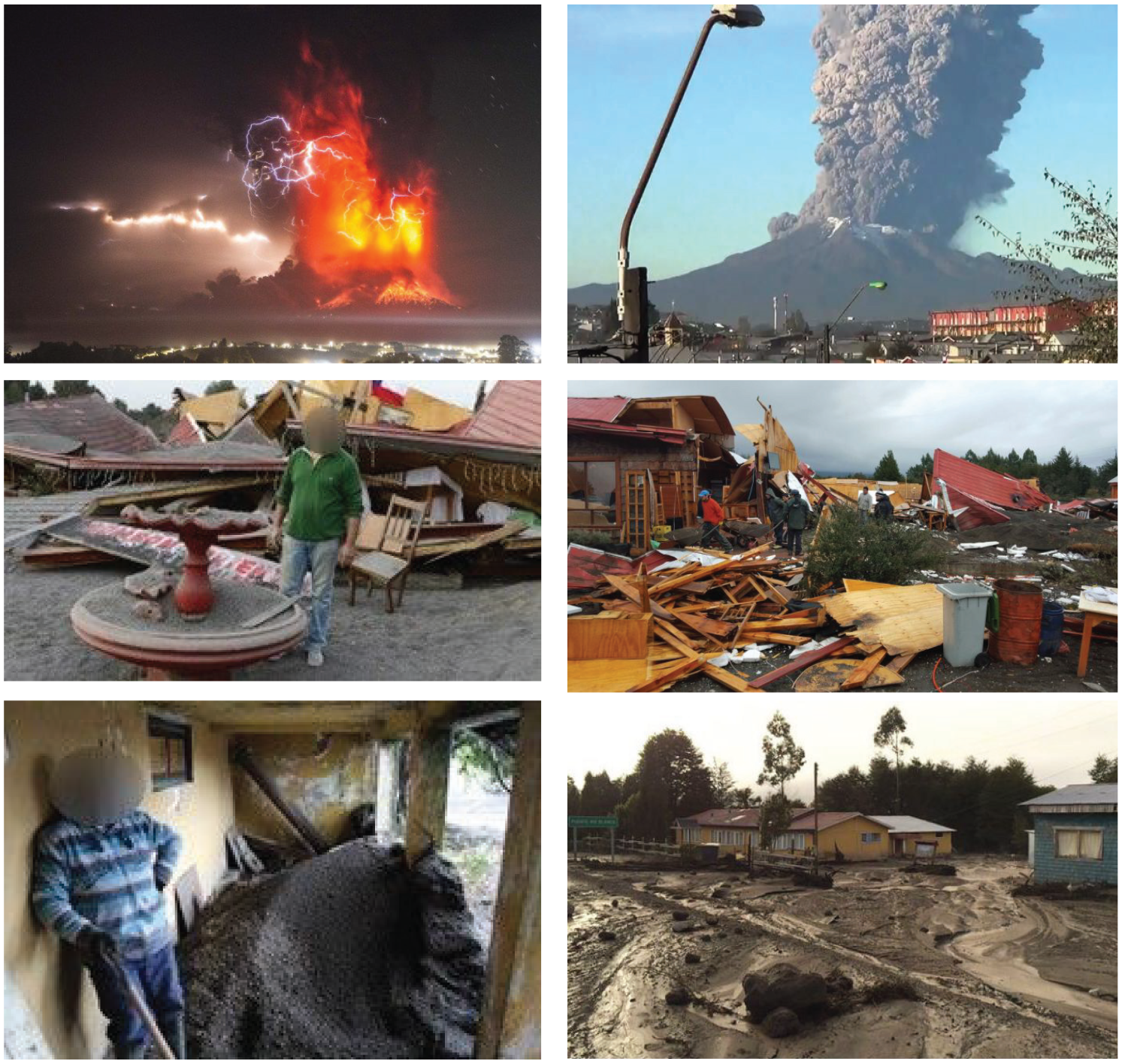
Photos taken by the entrepreneurs, during and after of the eruption.
We focus on these volcanic eruptions in Chile in 2015 and 2016, and the recovery process experienced until 2019. The Calbuco is considered the third most dangerous and active volcano in the country, with 13 large eruptions in the last 100 years, which means that 5 generations thus far have been in constant threat of disruption. Therefore, it represents an appropriate setting to explore the theoretical mechanisms of perseverance because it is a context that requires entrepreneurs to regularly enact their recovery. The temporality in our data collection allows us to understand this long-run feature aspect of entrepreneurial perseverance in granular detail.
Sampling and Data Collection
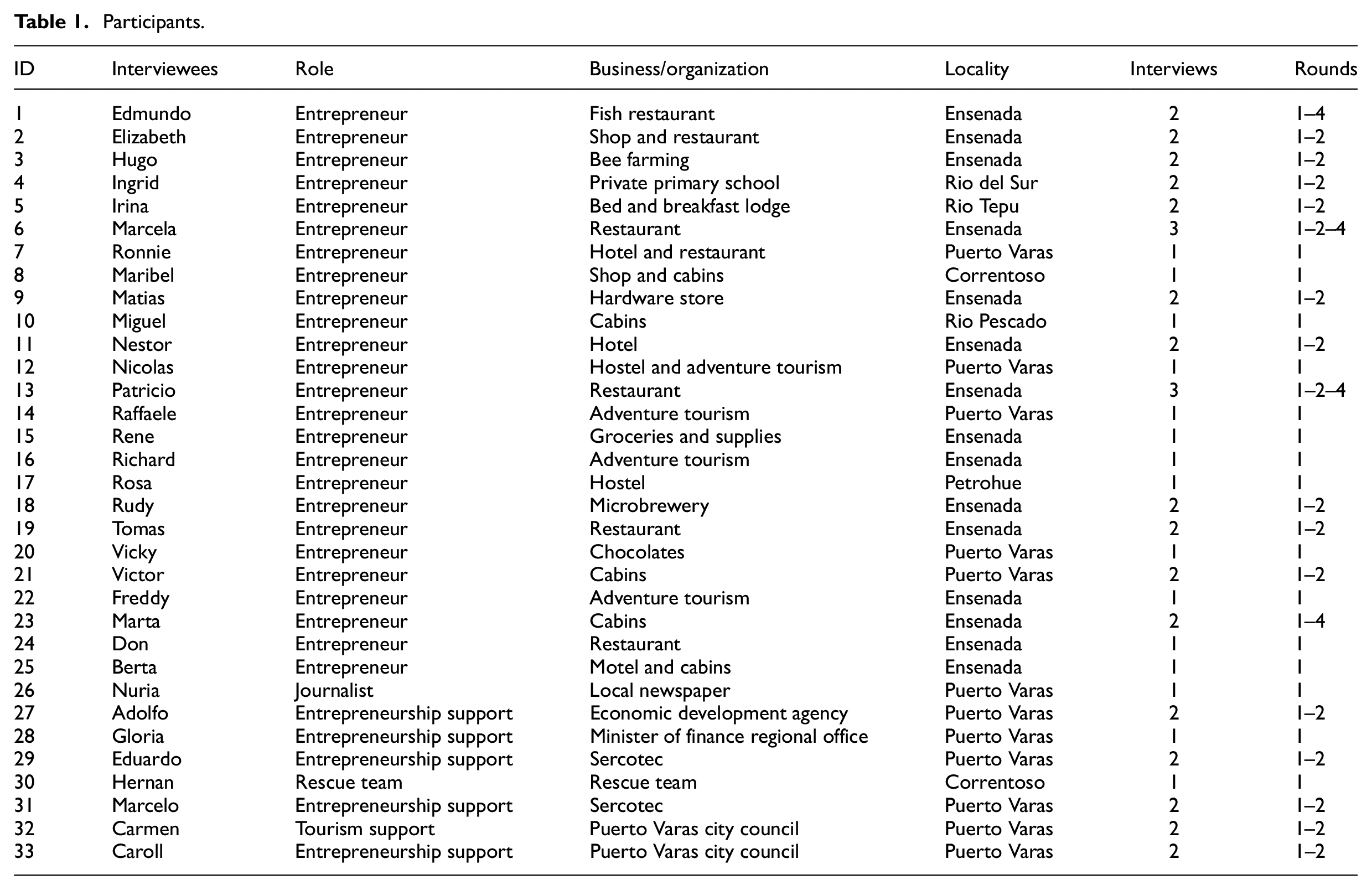
Our data collection effort spanned over 4 years, from May 2015 to March 2019. This approach allows for a perspective on the impact of the extreme context that facilitates the emergence of novel findings not found in traditional cross-sectional analysis. The value of studies with this temporal element in natural environments lies in their ability to capture how phenomena unfold with immediacy and detail (Doern, 2021) rather than studies using cross-sectional designs. We visited the volcano site on four occasions where we conducted interviews, engaged in informal conversations and collected a range of visual material and documents. We conducted 53 interviews with 33 individuals living in several areas of the affected region, mostly along Llanquihue Lake’s southern coast between Ensenada and Puerto Varas (45 km), the area that was mostly affected by the eruption (see Appendix A). This includes 25 entrepreneurs, 6 public officials, a journalist, and a member of the rescue team. Some people were interviewed on several occasions. The data from non-entrepreneurs was particularly insightful in developing our understanding of the context in the immediate aftermath of the eruption.
In terms of the sampling strategy, we identified entrepreneurs by engaging in conversations with small businesses in the region that were adversely impacted by the volcano. Given the precarity and danger of the situation, this involved pragmatically snowballing our sample from one entrepreneur to the next, mindful of the changing circumstances in Ensenada and Puerto Varas.
In May 2015, we spent 2 weeks in Ensenada and Puerto Varas and conducted 33 interviews, right after the first series of volcano eruptions. During this first visit, the clean-up operation was underway, but the situation was still relatively fragile. Therefore, we took a broad and relatively grounded approach in trying to identify relevant entrepreneurial firms as well as public and other civil society organizations involved in the recovery efforts. As we looked closely at the initial insights from the data, we particularly identified how entrepreneurs’ recalled stories from past disaster events and the toolkit this gave them for recovery. In 2016, we returned to the towns for 5 days, after the emergency level was once again raised to yellow alert and conducted observation and 16 further interviews. As such, our second round of data collection focused more specifically on the entrepreneurs in the area and how they persevere amidst renewed uncertain conditions. On our third visit in October 2017, we spent 2 days with different entrepreneurs, discussing the state of recovery. After this third visit, the idea of relationality started to emerge in our data which we were able to explore in detail with a further round of interviews in a fourth and final visit where we focused more on data that can more clearly offer evidence of the social factors at play. In a final 3-day visit in March 2019, we engaged in informal conversations, gathered visual evidence (250 photos) and conducted four extended interviews in Ensenada with key business owners of two restaurants, a local craft shop and a motel, previously interviewed and who had documented the entire recovery process over the course of 4 years, including their own and of other fellow business owners. During this visit, we collected hundreds of media articles, victims’ statements and photographs, and videos of the recovery process taken by the participants themselves. The four rounds of data collection allowed us to capture first-hand three critical stages of recovery and the individual and social responses that propelled perseverance during that period. A summary of data sources is included in Table 1.
Participants.
In the interim periods, we continued monitoring the situation following local and national news and engaging in informal conversations with organizations operating in the area.
Data Analysis
For our analysis, we focused on the identification of emergent themes through abductive data analysis (Tavory & Timmermans, 2014). Abductive analysis involves going back and forth between inductive (bottom-up, data-led) and deductive (top-down, theory-led) insights to reach a middle ground whereby theory threads through data (Alvesson & Skoldberg, 2000). To bring our analysis closer to the reader, in Figure 1 we provide an overview of the analytical procedure: steps, analytical moves, interpretation and outputs.
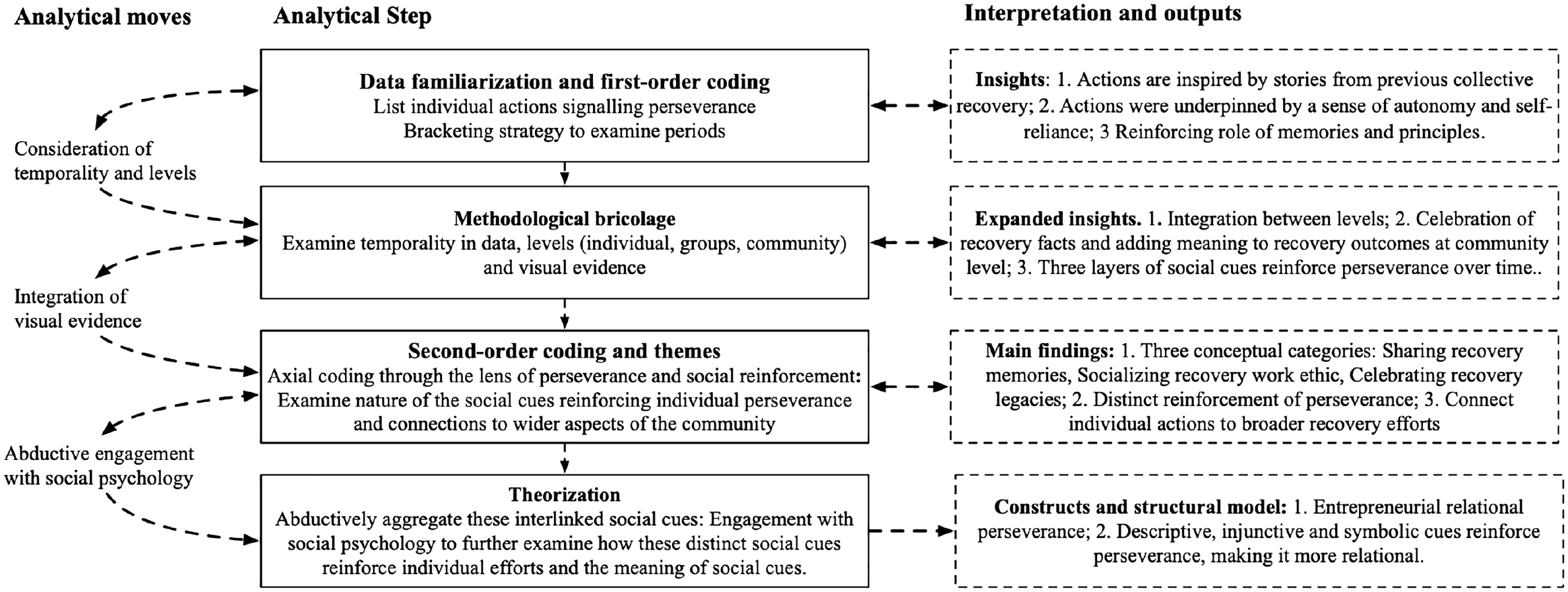
Analytical procedure: An overview.
Step 1: Data Familiarization and First-Order Coding
In the first step of the analysis, we approached the interview transcripts inductively, looking at instances where individuals sustained effort despite adversity and difficulties, and the factors that enabled perseverance in those instances. This first cycle of coding was relatively descriptive and open, producing a long list of individual actions signaling perseverance (e.g., shoveling ashes, reconstructing facilities, convincing tourism agencies, chasing banks) as well as initial insights into organizational and community-level social cues (e.g., testimonials in media, photo displays, letters, direct praise). To organize our data, we first used a temporal bracketing strategy to examine distinct periods (Berends et al., 2021; Langley, 1999), aligned with field visits and the evolving recovery efforts. In line with our research question, we focused on the interplay between repetitive and sustained tasks (i.e., perseverance) and social cues, but coding was broad and atheoretical.
At this point, we were asking questions broadly in terms of response to the disaster. We looked at the data immediately after the extreme event, in the aftermath of the volcanic eruption, and also more dynamically into the next phase of disaster threat in 2016. Naturally, immediately after the disaster, we noticed recovery actions aimed at mitigating anxiety, uncertainty, and despair because entrepreneurs either did not know where their relatives were or when would they be able to return to their houses if they were still standing. Although we were expecting some form of early-stage community-level actions, entrepreneurs first attended their own urgencies, (e.g., codes: removing ashes from the roofs, providing food for their animals, securing a loan for the business). While apparently individualistic, these actions are largely inspired by stories from previous collective recovery processes from the eruptions in the early and mid-1900s (e.g., codes: an unforgotten past, lessons learned from past disasters) and a recognition of what it means living in a disaster area (e.g., code: crises are a fact of life and landscape).
In the years that followed (2016–2018), we observed that recovery actions were increasingly underpinned by a sense of autonomy and self-reliance; by the belief that individuals could achieve things on their own. References to autonomy and self-reliance were most often framed in terms of what entrepreneurs in the region were capable of doing, as well as the principles that guided their recovery efforts and individual perseverance, such as hard work, self-sufficiency, and, more recently, solidarity (e.g., code: “hard work as a principle facing crisis”). While memories of the crisis remained present, these emerging recovery principles—widely shared and continuously reinforced within the local entrepreneurial community—began to play a more prominent, reinforcing role. They contributed to a growing sense of moral responsibility to recover quickly (e.g., code: “moving forward is what we ought to do”).
Step 2: Methodological Bricolage
To further explore these early insights, we followed Pratt et al.’s (2020)“methodological bricolage” which involved making “analytical moves” not initially anticipated. At this point we were focusing on puzzles (Grodal et al., 2021) because we could see how initial entrepreneurial responses were surprisingly individualistic, contrary to what the literature would suggest. Delving deeper, we started to recognize the temporal aspect of our data, not just because there was a passage of time but the way they were expressing practices associated with time horizons such as the past (e.g., looking at previous recovery effort), the short-term (e.g., dealing with immediate recovery), and the future (e.g., showcasing what they have done).
This was affirmed during our last visit (2019), where we noticed a new layer of social cues, linked to their recovery actions and what they have individually and collectively achieved. From the crisis and entrepreneurship literature, we expected suffering to still be part of the story, but it was no longer mentioned. At this stage, we turned our attention to the visual material we had collected—photos, media articles, and videos—as it became central to understanding how individual efforts were connected to the wider community.
While entrepreneurs continued to portray the harsh reality of recovering after a volcanic eruption, they mostly emphasized that, as a community, they had managed to rise-up and recover in record time (see Exhibits 2 and 4 below). In addition to recounting memories, describing individual recovery actions, and highlighting the work ethic behind local business efforts, they also spoke about and showcased the town, its people, and the broader community (e.g., code: collective victory). Notably, they did not merely celebrate tangible recovery milestones (e.g., a restaurant rebuilt) but infused these outcomes with deeper meaning (e.g., a restaurant rebuilt as a symbol of community strength; code: recovery gives new meaning to community life).
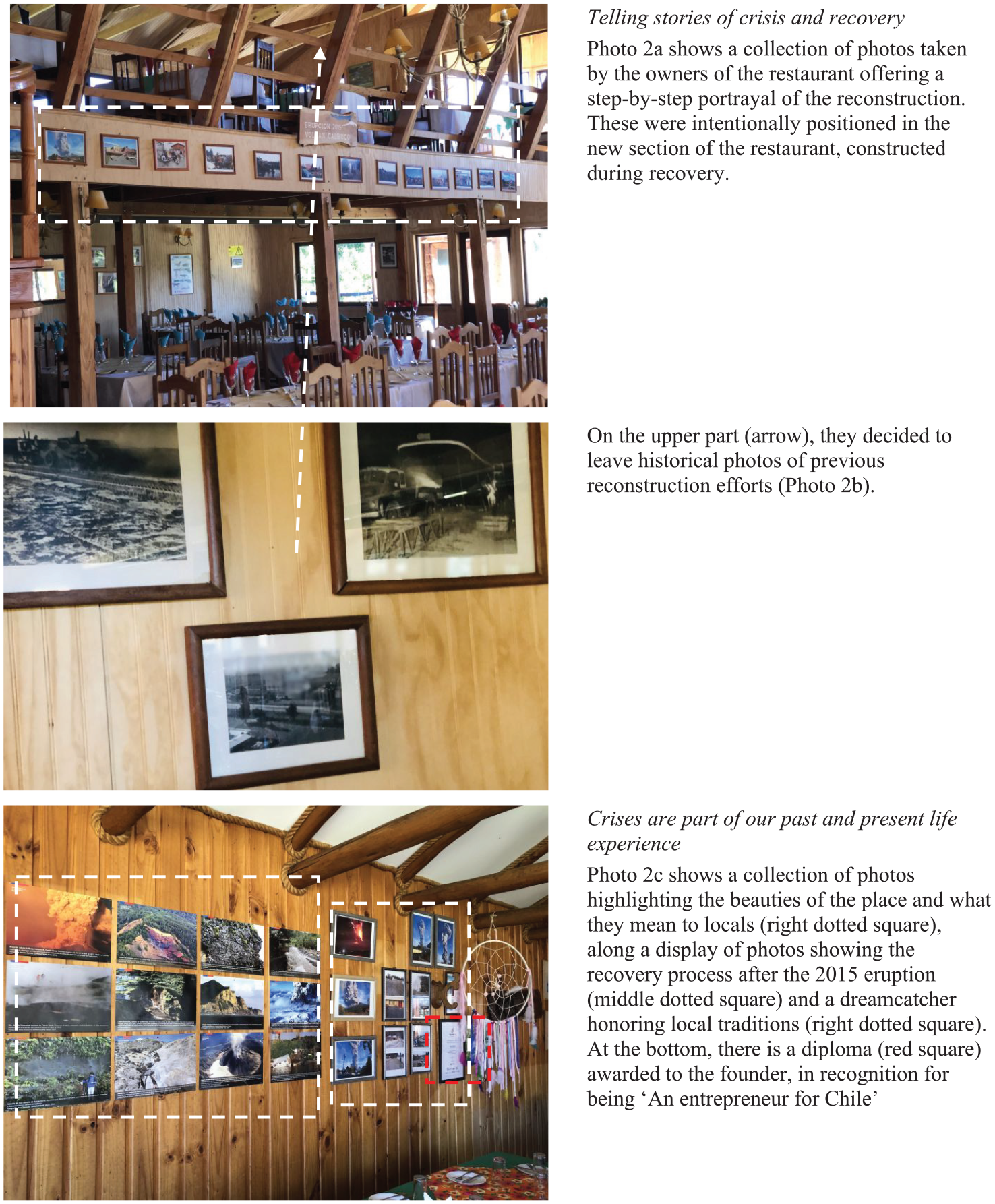
Sharing recovery memories.
Step 3: Second-Order Codes and Themes
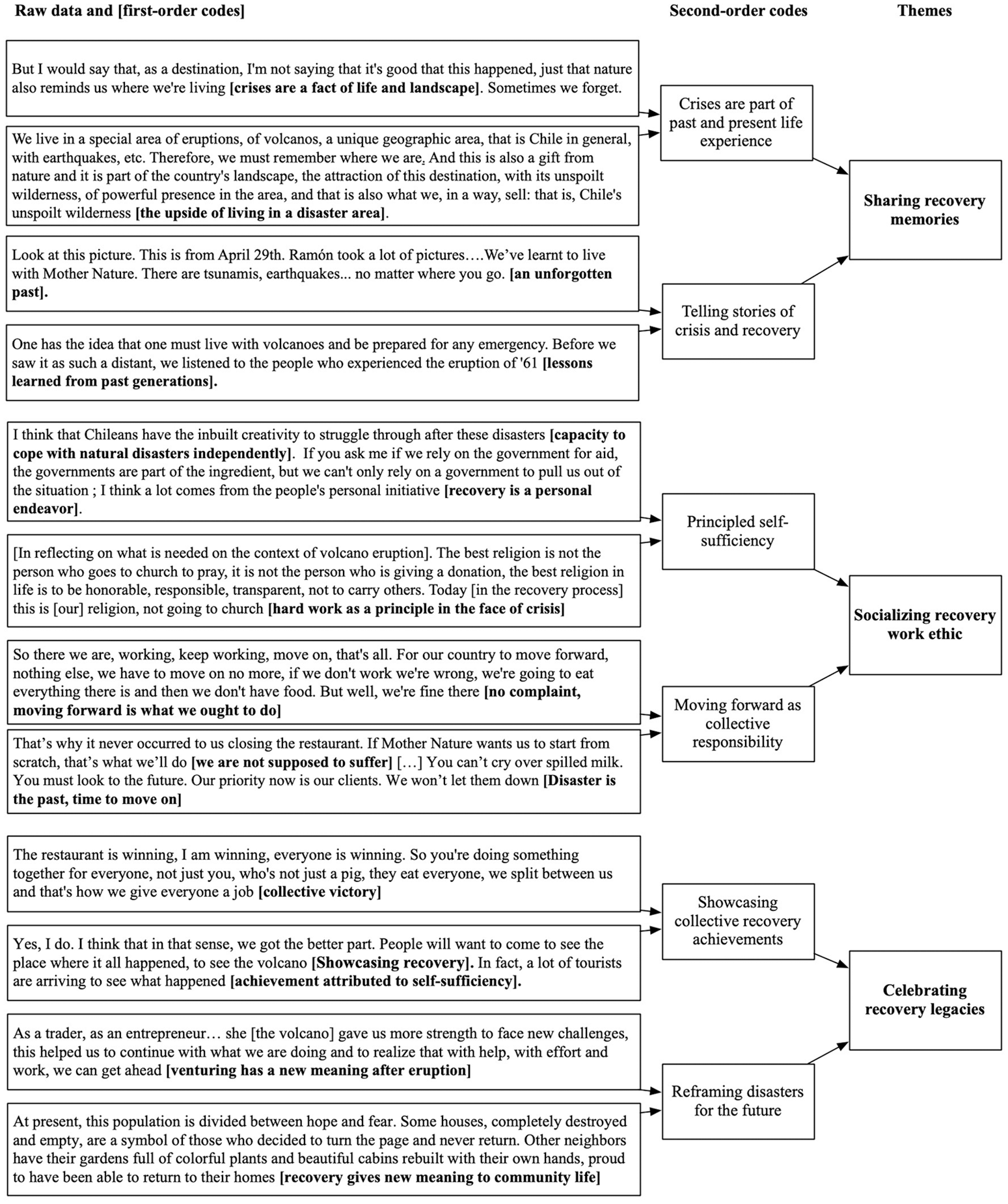
In this third stage of the analysis, we deepened our analysis to focus on the nature of the social cues reinforcing individual perseverance and their connections to wider aspects of the community. In this analytical move, we leveraged social psychology literature to aid our interpretation. In our exploration, we conducted axial coding through the lens of perseverance and the role of social reinforcement allowing for the merging of categories (Grodal et al., 2021). First, we identified that stories from historical recovery efforts were constantly being evoked by entrepreneurs and used to explain why they must keep going despite the adversity. Since “crises are part of their past and present life experience,” they leverage “stories of crisis and recovery” to sustain recovery efforts. Participants largely agree that Chileans rely heavily on their capacity to adjust because Chile is a country of natural disasters. They also stress that those living in disaster areas constantly tell stories about past disasters and their actions to remind themselves how good they were and will once again be as they muddle through the present crisis. We aggregate the above codes under the “sharing recovery memories” theme, which is a social cue that guides and reinforces perseverance.
At the time memories were being recalled, we observed entrepreneurs communicating self-reliance and hard work, as principles of action. We coded these as: “principled self-sufficiency” and “Moving forward as collective responsibility.” We aggregate the above codes under the “Socializing recovery work ethic” theme, which is a social cue that guide and reinforce perseverance.
Finally, and leveraging the latter, we noticed entrepreneurs staging community recovery efforts and achievements. Over time, entrepreneurs referred not only to individual-level actions or group-level work ethics, but they also “showcased collective recovery achievements” and “reframed disasters for the future,” creating new meaning around entrepreneurial recovery memory assets to inspire future recovery efforts. We aggregate the above codes under the “Celebrating recovery legacies” theme, which is a social cue that reinforces perseverance.
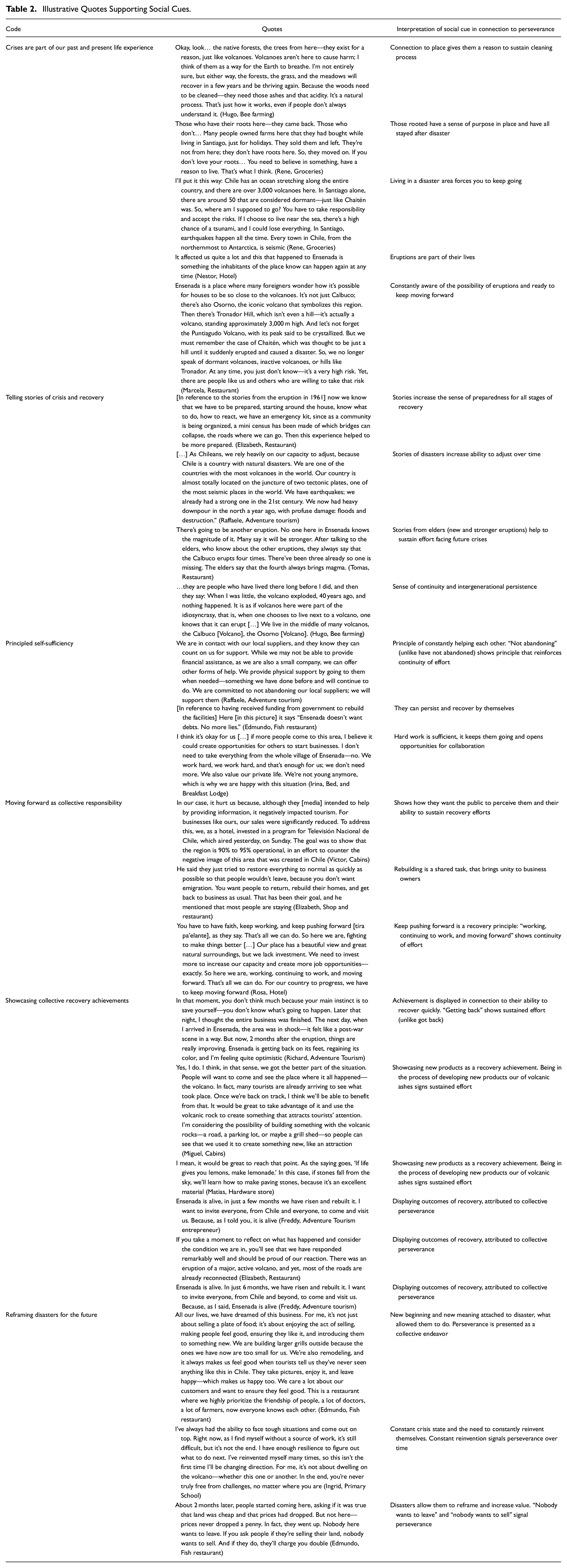
Together, these themes configure a set of social cues that reinforce entrepreneurial perseverance, which gradually becomes intertwined with broader recovery efforts creating a sustained collective response to crisis. Figure 2 provides the data structure underlying these themes and Table 2 offers representative quotes for each of the social cues, showcasing how we move between raw data and concepts, staying benevolent to participant voice (Pratt et al., 2020).
Data structure.
Illustrative Quotes Supporting Social Cues.
Step 4: Theory Development
In the fourth step, we moved to theorization by abductively fleshing out the meaning of the themes and linkages inferred from the data. To do so, we proceeded to aggregate these interlinked social cues, considering more deeply theoretical meaning and connections. We looked deeper into to social psychology literature to further examine how these distinct social cues—stories, principles, and celebration—were reinforcing individual efforts and the meaning of those social cues. In doing so, we considered the multiple levels involved—individuals, groups of entrepreneurs, and communities—and how the levels connect and interact.
In this analytical move, we identified that social reinforcement stems from other community members affected by the crisis and involved in recovery efforts aimed at restoring functionality in the affected place. The actions taken were drawing upon empathy, confidence, relational awareness, and collective meaning-making. Recovery is jointly owned and acted upon together in relationships. In this sense, entrepreneurial recovery resides not only in individual action but also in collective recovery work and the capacity for connection and communication.
Different community members offer different kinds of social reinforcement as time passes. Contrasting our findings to the social psychology literature discussed above, we identified three types of social cues—descriptive, injunctive, or symbolic—each corresponding to a conceptual category. They play distinct roles, uniquely reinforcing perseverance when the entrepreneur engages in difficult tasks that require a significant amount of time to execute.
Descriptive social cues refer to what an entrepreneur describes as being available to them to tackle the situation (i.e., memories of similar recovery instances). Injunctive social cue concerns the social expectations people have about how to behave in the recovery effort situation (i.e., a strong work ethic required). Symbolic refers to actions that have shared meanings and values (i.e., celebrating recovery achievements).
Drawing on the findings and literature, we proceeded to develop a theoretical representation of our findings; what we refer to as relational entrepreneurial perseverance in extreme contexts. A move to consider relationality in perseverance, particularly facing difficult tasks has implications for our understanding of not only entrepreneurial actions in times of crisis but also processes of social change facing adversity. We elaborate this in section “Towards a Theory of Relational Entrepreneurial Perseverance in Extreme Contexts” and develop a structural model which builds upon descriptive, injunctive, and symbolic social cues as the foundation for relational perseverance in extreme contexts.
Findings
Below we set out the findings of our study. We do this by presenting each of the aggregate themes in turn, sharing recovery memories, socializing recovery work ethic, and celebrating recovery legacies. In doing so, we are able to unpack the process of recovery over time, and how individual activities accrue to the community level.
Sharing Recovery Memories and Entrepreneurial Perseverance
During our first visit, sustained recovery actions were salient at the individual level. Despite the severity of the situation, we observed entrepreneurs stressing the normality of the situation, drawing mostly from their own prior experiences of storytelling from previous recovery experiences, that is, volcanic eruptions their parents, grandparents, and great grandparents experienced during early and mid-1990s.
Crises are part of past and present life experience. These recovery memories are inherently place-based and fully integrated into their ways of being and living. Our findings identify that the storytelling behind recovery is anchored to the connection to the territory and their normalized life experiences in it. When asked about the community and their experiences, Hugo emphasizes: They [people in Ensenada] are people who have lived there long before I did, and then they say: “When I was little, the volcano exploded, 40 years ago, and nothing happened.” It is as if volcanos here were part of the idiosyncrasy, that is, when one chooses to live next to a volcano, one knows that it can erupt.
Because this bond between people and volcanos exists, it is also a guide for individual action. In the following quote, the entrepreneur explains how they see themselves as being “immersed” in nature and anchors his recovery actions—the feeling of being “punished” and the desire to keep “fighting”—within the context of place immersion. This anchoring of actions operates side-by-side with storytelling to help enable recovery memories.
I’ve been based here since 1992 and here I’m going to stay, no matter what I’m going to follow. My whole family, that is, in the environment in which we live here is not the same as living in Puerto Varas, here is a tranquility, we are immersed in nature, I have a step away the Petrohué River, I live meters from Lake Llanquihue, I have the Osorno volcano, that is, Ensenada for me is the epicenter of the outdoor tourism activity which is what we like as a family… we have to learn to live with nature and nature will suddenly punish us as Calbuco punished us. (Rudy, Microbrewery)
This anchoring is apparent in consideration of returnees to the disaster zone. For entrepreneurs to return to Ensenada as soon as it was safe and begin rebuilding their communities re-affirmed their commitment to the place. Vicky explains: I think most are just going back to normal, doing what they were doing, because moving away from the area for most of the people is, like, ‘What do you do?’” They do, or do not, there is no try. As another entrepreneur puts it: “There is a lot of strength, a lot of inner strength too…, it is incredible, everybody [has returned]. You must have an adventurous soul!” (Elizabeth). This “inner strength” highlights how the experiences of disaster, counterintuitively, re-affirm the entrepreneurs’ connection and affinity to the place, and reinforce their recovery actions.
Telling Stories of Crisis and Recovery
One key dimension of recovery memories refers to how entrepreneurs tell stories of their own recovery based on how they received similar stories from previous volcanic episodes. They appreciate stories of recovery, good or bad, they are always memorable. Given Chile’s unique and frequent relationship with natural disasters, they are seen as a regular part of everyday life. One entrepreneur, highlighting the close connection to the physical environment, emphasized how storytelling around the Calbuco has now changed: And we hope it will be reopened as soon as possible, and when it reopens, we will go with our tourists, and the story and its interpretation will change, it will be different. We used to talk about an eruption in 1960, 1961, now we will talk about an eruption dating four or five months, we will talk about something that is still changing, a soil that is alive, that breathes. We have our experience, and it has changed it is more profuse now. That surely will change the concept of the tours […] Therefore, also, when these things happen, what they [prospective customers] receive out there is a mix of photographs, emotions, opinions, and you sometimes feel it’s too much information, which I think human beings are not capable of processing adequately. So, the first thing we did was inform our clients on what was really going on. Afterwards, again, informing the clients on the situation we are currently in, which is a completely normal situation. (Raffaele, Adventure tourism)
This entrepreneur is a tour operator, specializing in nature and bird-watching trips. One of the features of such tours is to share the stories told in Ensenada of previous eruptions in the 1960s which are now updated to incorporate the experiences from 2015. This has the function of keeping the experience alive and allowing future generations to understand and prepare for similar disruption.
As such, stories of recovery indicate how entrepreneurs regulate their expressions to respond to the reality of disaster and recovery. The disaster appears to indicate a natural inflection point whereby entrepreneurial responses separate the past from the present, reflecting on the heroism and suffering of locals with entrepreneurs expressing their own immediate recovery stories and how they are linked to those from previous volcanic episodes and other disasters across the country. Tomas explains: We’re now in 2015 and in the north, houses are still being rebuilt after the first earthquake in 2005 or 2003, I think. Then, there were other minor disasters, I don’t know if you remember them? For example, the disaster in Macul when the river flooded and there was a mudslide and a lot of people died. The Chilean people are used to natural disasters. When there was an earthquake in Chillan, the people rebuilt.
Recovery memories are vivid in Exhibit 2, where we offer visual evidence of how some entrepreneurs remember present and past stories of recovery in connection to the place. These are collection of photos taken by business owners offering step-by-step portrayals of the reconstruction, right next to historical photos of previous reconstruction efforts and photos highlighting the beauty of the place. In their views, it is all connected.
Sharing Recovery Memories, Perseverance, and Broader Recovery Efforts
Combined, these social cues reinforce individual perseverance by informing what business owners in the region commonly do after an eruption situation. Recovery memories represent a formative experience for entrepreneurs that enable them to persevere through the recovery process. Through telling stories of crisis and recovery, entrepreneurs engage in action and persevere by recalling historic stories of recovery from previous disaster events and begin adapting to tell stories from the recovery process they are experiencing in that moment. This links to entrepreneurs’crisis life experiences, which represents a response that re-affirms their affinity and connection to the place. As recovery memories are shared, entrepreneurs engage with broader recovery efforts. This, in turn, creates a sense of persevering together as individual actions have been inspired and reinforced by a sense of commonality that the efforts of past generations bring to the present.
Socializing Recovery Work Ethic and Entrepreneurial Perseverance
Through our findings we also identified how entrepreneurs linked their recovery efforts to individual and collective principles. We observed that participants were keen to stress how the success of the recovery efforts could only be attributed to their hard work rather than through external assistance which was considered ineffective and often non-existent to their real needs. Specifically, we identified how entrepreneurs embrace self-sufficiency as a social value which emphasizes how they collective perceive the importance of individual hard work. Similarly, moving forward as collective responsibility is used strategically by entrepreneurs to communicate to the wider world that they are committed to being resilient, welcoming and open for business. This reinforces the notion that recovery efforts are attributed to individual entrepreneurial efforts rather than external help.
Principled Self-Sufficiency
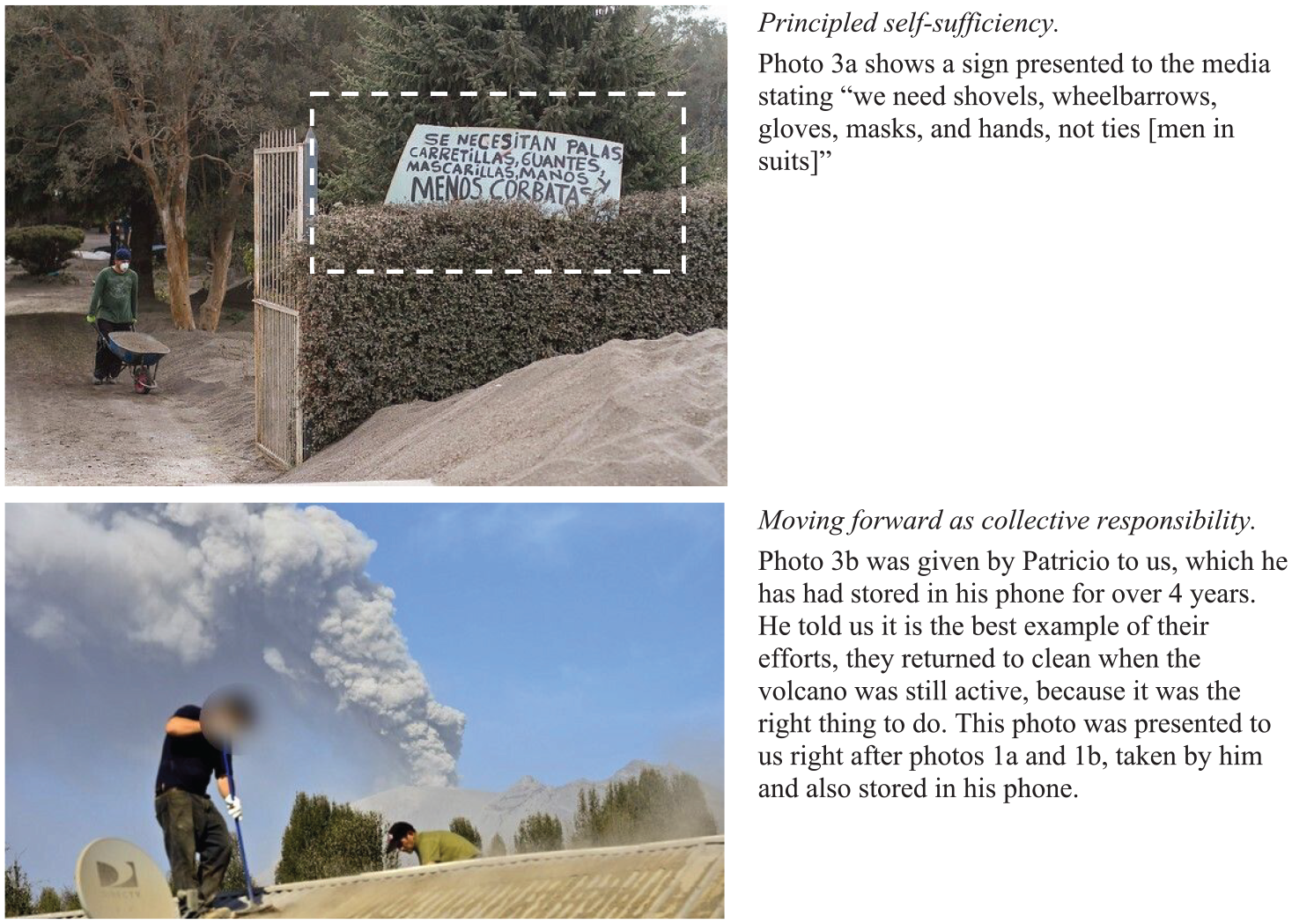
For Chileans, natural disasters are the norm, and the capacity of the state to prepare and mitigate all physical, social, and economic impacts is limited given the regularity of such events. Therefore, while some immediate short- and medium-term support is provided by the state, such as physical repairs to roads and other critical infrastructure, the experience with business recovery support is much more mixed. This means that coping through self-sufficiency is a crucial part. In terms of the aftermath of the disaster, one restaurant owner put it: “But everybody’s sort of, ‘Okay, back to business. Let’s get back to business as soon as possible’. Everybody’s got this feeling” (Elizabeth). But there was a clear emphasis on the importance of this labor as being autonomous because of the importance that comes from doing this by yourself. For example, one restaurant owner rejected the generous offer of a free car because he wanted to “achieve the recovery” with what he had (Patricio, restaurant owner). Exhibit 3 shows a photo taken during the early recovery stages, around September 2015, where one of the local business owners reacted to government incompetence: “We need shovels, wheelbarrows, gloves, masks, and hands, not ties (men in suits)” [Photo 3b].
Socializing recovery work ethic.
They did not only react to government incompetence but also actively sought to offer a counternarrative to what was being offered by the media. In reference to press coverage, one entrepreneur stresses: In our case, they [the press] damaged us, because they obviously intended to help by informing [the public], but with regards to tourism, at least for this type of tourism enterprises, our sales were considerably reduced. So […] we invested in a show for TVN the National TV channel, which was broadcasted yesterday, Sunday, to show that Puerto Varas and the region are 9095% operational, in order to reverse the image of this area generated in Chile (Victor).
The same entrepreneur continues and explains in detail the actions taken, to show the public how by their own means and perseverance, they have been able to recover not just the basic infrastructure and his own business, but all the businesses in the area: We invested around three million pesos to bring journalists over here, and we didn’t just show the hotel, but we showed Frutillar, some hot springs close to Ensenada, a beer brewery, several small products in the area, new tourism products; so that is one of the actions we have undertaken so as to protect our enterprise (Victor).
Our findings suggest that these expressions of self-sufficiency were catalyzed by the disaster and were powerful in bringing the group of entrepreneurs back to “life.” As one entrepreneurial hotelier articulated it: This is a geographically strategic place and has suffered all this eventuality at any time and many times, so that the population here is almost a floating population… But people came back and what caught my attention is the rehabilitation capacity, for me personally. I appreciate it because after the catastrophe, Ensenada kind of smiled very quickly. One sees that people began to paint the houses, to fix the garden, they recovered with more life and with more force what had been extinguished. (Nestor, Hostel owner)
The idea of a “floating population” point to the latent uncertainty created by living in an area known for volcanic activity but the response of how entrepreneurs “smiled very quickly” demonstrates the link between that latent threat and individual perseverance. Others emphasize the importance of being “calm” to enable reinvention: “I don’t know why now the beautiful times are coming […] I will get the idea that I am a 1-year-old as well as to see everything calmly and see where I can reinvent myself” (Ingrid, Private school owner). By demonstrating how entrepreneurs can respond in their perceived absence of external support, principled self-sufficiency acts as a social cue, which reinforces action by placing the responsibility of recovery efforts on the entrepreneurs’ collective work ethics. This is vivid when entrepreneurs explain the main drivers of recovery, which is not only self-sufficiency but also their ability to persevere (securing funding in this case): I believe that 90% of the recovery was done by the residents of Ensenada themselves. Because we organized among ourselves, we realized that here, you just have to survive. If we hadn’t had savings, if we hadn’t had family, we wouldn’t have been able to do this. We spent more than 200 million pesos to rebuild the restaurant, loans from here, loans from there, all private; there was no government assistance (Tomas).
Moving Forward as Collective Responsibility
We also identified a further social cue, which express the entrepreneurs’ frustration with how events were being portrayed and the negative impact of this narrative. As such, entrepreneurs actively try to change perceptions regarding suffering, which is deemed as transitory and past. A tourism entrepreneur explains lost and collective recovery: Here, we all lost. In the beginning, all the [tourism] agencies, the children, the people who had van loans and all that—this is an entire team effort, so everyone lost. Well, now we’ve been getting back on our feet, as people have become more aware [of collective recovery], the people in the area I mean (Marcela)
Following the eruption of Calbuco, an influx of national and international media outlets followed. While this was important in bringing the plight of residents to light, it can also have a damaging impact on the assumed safety and image of the area. Our findings show that entrepreneurs acted to suppress this and construct an image that downplayed suffering and reinforced the idea that moving forward is what they do: The first thing we did, and this we did immediately after the event, was to put our clients’ minds at rest, explain them also what had happened. As I told you, this is a very sensitive industry and in these times we are facing, instant and global communications represent a double-edged sword because a lot is communicated at present, but we all give information. Therefore, also, when these things happen, what they receive out there is a mix of photographs, emotions, opinions, and you sometimes feel it’s too much information, which I think human beings are not capable of processing adequately. So, the first thing we did was inform our clients on what was really going on. (Raffaele, Adventure Tourism)
By downplaying suffering to this entrepreneur’s clients, he was able to reconstruct an image of the place not told by the media. Thus, moving forward is a kind moral display designed to guide and sustain action. Because media interest diminishes over time as the situation becomes less dramatic, few stories of the actual recovery and improvements are told. Similar to principled self-sufficiency, moving forward also displays the hard work and effort that is central to recovery efforts. As restaurant owner Tomas highlights: There’s a word that here in Chile they [those taking advantage] forgot [it] is called “dignity” and I have dignity, I have my restaurant, we lifted it up alone, we got to work, it’s working the restaurant, there’s still some permits that the municipality approves, that it should already have been authorized, but we’re already working and if the municipality comes and gets us a fine because we’re working and there’s still not all the papers, they’re going to fuck off, I’m going to pay them the fine, but I’m going to keep working. (Tomas, Restaurant)
In this response, Tomas bemoans how it may appear that there is external support present, but it is completely disconnected from reality and the portrayal of suffering is highly undignified when he is focusing on the work and business recovery. This response emerges from frustration because of the perception of suffering that is damaging for the reputation of the area. This can also be seen in Photo 3c in Exhibit 3, where a local entrepreneur uses the same media platform that sought to over-emphasize suffering to invite people to ‘come and see’ how Ensenada is actually alive. His little smile, the fact that he tilts his head slightly back, visibly expands his posture, and raises his arms are all embodied expressions of achievement.
Therefore, moving forward as a collective responsibility acts as a social cue that reinforces action during the lengthy recovery period. Our findings represent that this is a kind of display to alter the perceptions about the effects of the disaster on the area. This is not to underplay its severity but to represent better the perseverance, hard work, and normality of what is occurring in Ensenada. This approach to moving forward is relevant to both the wider world and those external agencies working in the region to support.
Socialization of Recovery Work Ethic, Perseverance, and Broader Recovery Efforts
Combined, these social cues reinforce individual perseverance by setting moral expectations as to how entrepreneurs ought to react in that extreme context. A central thread through the findings pertained to what recovery was being attributed to. In sharing the idea of principled self-sufficiency, we see the clearest indication that entrepreneurs persevere by placing the responsibility of recovery on their shoulders, not that of any external agency. In moving forward as collective responsibility, entrepreneurs socialize a new narrative that reinforce their actions while creating a sense of persevering together as groups of entrepreneurs.
Celebrating Recovery Legacies and Entrepreneurial Perseverance
Our findings also reveal a third social cue that reinforces perseverance and relates to achievement in the recovery process, which we label as celebrating recovery legacies. This achievement-based social reinforcement contains two social cues: showcasing collective recovery achievements and reframing disasters for the future. In the former, entrepreneurs’ actions are reinforced by a positive take on the situation. This is not just taken as a mere return to normal but shared and celebrated so that people can see what they have achieved in recovery. In the latter, these achievements have underlying meaning that are intrinsically valuable to the entrepreneur in connection to community re-building and learning for the future.
Showcasing Collective Recovery Achievement
Our findings further show how entrepreneurs engage in a process of recovery which involves telling new stories around accomplishments from this time. While downplaying suffering focused on how to pause the negative narrative of suffering, showcasing collective recovery achievement emphasizes the achievements in the face of adversity. One bee farmer discusses how they have adapted their product range as well as how the business infrastructure has actually improved: We’ve exploited that commercially. We have tried to make the most of what happened and it has turned out well, it favored us a lot, many did not, but many who had their old premises, who fell, now have new premises, there is a better infrastructure for tourists than before… For example, we took out a cream with honey, with propolis and volcanic sand and that was a boom, it sells a lot as an exfoliator, so we occupied the sand of the eruption as exfoliating for the skin. (Hugo, Bee farming)
Notable in this narrative is how the entrepreneurs talk about their business accomplishments not despite the disaster but because of it. In this context, they are adapting their business ventures and bringing about positive change because of the circumstances. This helps create a new narrative around the town’s relationship with the volcano. It is not a disaster, and it is thriving because of the efforts of entrepreneurs and the wider community.
Similarly, local media report how the local population share imagery and videos with visitors to emphasize the natural beauty and opportunity that the volcano provides. Indeed, entrepreneurs report the need to tell a new story, not about the disastrous consequences of the volcano but of the community’s achievements despite the circumstances: We want to have one floor in that building devoted to volcanology; since we are an area abounding with volcanoes, we want to help the children in the schools, the tourists, and all the people who live here to learn more about volcanology, and post photographs of the Osorno eruptions, the Calbuco eruptions… This has been a cultural undertaking, which is closely associated with those eruptions. (Victor, Cabins)
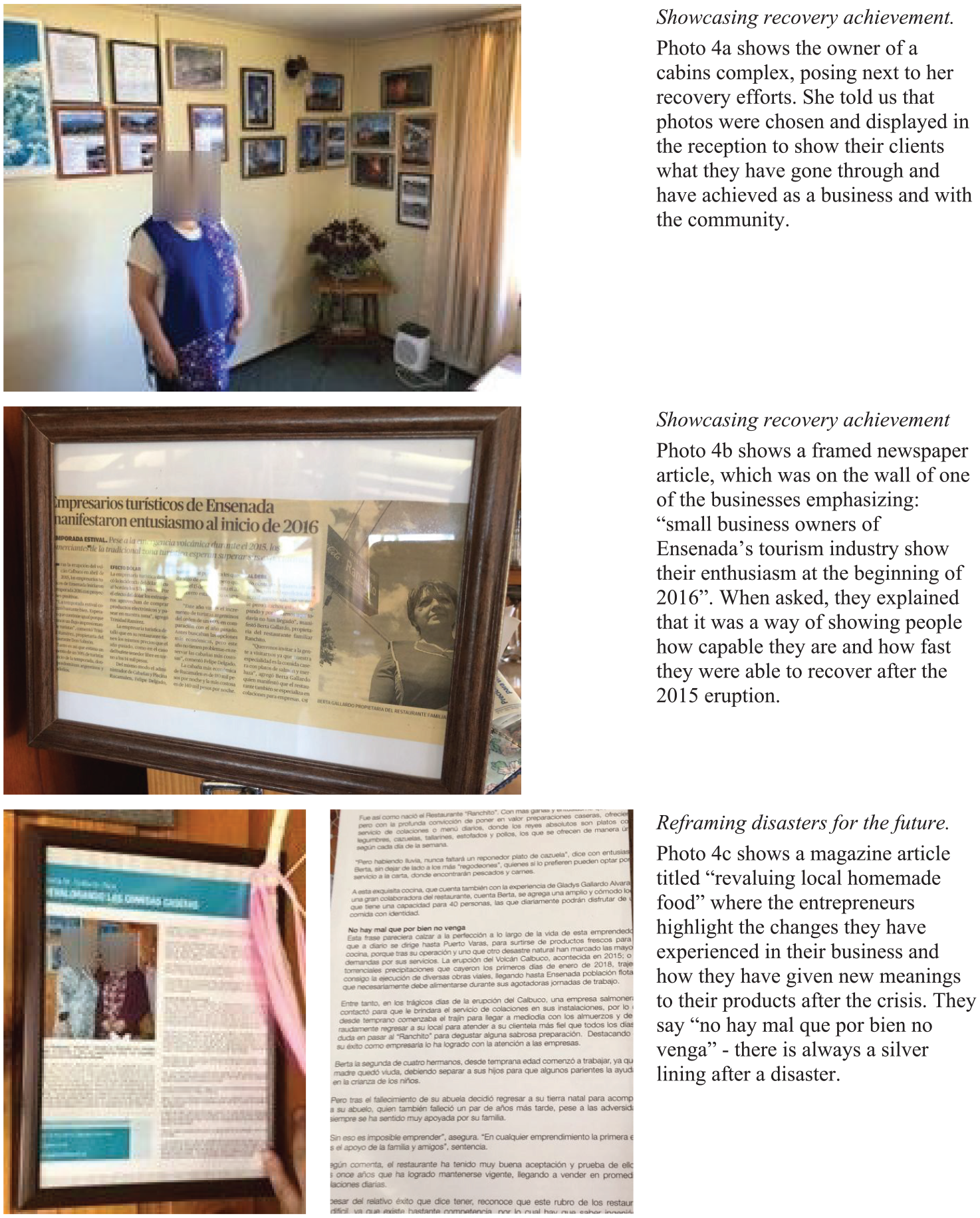
This entrepreneur emphasizes the value of improving and adapting the business through new stories of recovery. This is used to correct messages of pity or reliance on third parties, which abound in the media portrayals of the eruption. Exhibit 4 (Recovery as meaningful adaptation) shows photos taken and collected by entrepreneurs during and the 4 years after the volcano eruption, which some business owners have framed and are now displayed in their restaurants. While tourists normally come to observe traces of the eruption, the entrepreneurs offer them the entire recovery process that followed it. The photos, which are placed alongside old photos from previous eruptions, show and celebrate each of the stages of the recovery process highlighting the capacity of local businesses to thrive in adversity, as the previous generations have done it.
Celebrating recovery legacies.
Through showcasing recovery achievements, we see how entrepreneurs wish to not only talk about their self-sufficiency efforts but commemorate and enjoy their business achievements within the recovery process. This concerns showing outsiders that the entrepreneurs (and community more broadly) have recovered while taking complete ownership of this recovery. The recovery is their achievement stemming from perseverance and hard work while being a critical part of their identity.
Reframing Disasters for the Future
Although expressing self-sufficiency indicated coping, our findings also identify the meaning tied to the entrepreneur’s achievements. While there appear to be clear business accomplishments in adversity, this must be seen in the context of their values and meaningful goals within the community. As one entrepreneur puts it: The restaurant is winning, I am winning, everyone is winning. So, you’re doing something together for everyone, not just you, who’s not just a pig, they eat everyone, we split between us and that’s how we give everyone a job… So, I got in and, in the end, I made the decision to invest in the other place […] they told me not to invest, not to risk it because what if the volcano explodes again? I have always said, our fate is written, no one can change [your] fate, that is a lie, if something must happen, it is going to happen again. The eruption and me losing the restaurant, it was all fate. (Ronnie, Hotel and restaurant)
This entrepreneur identifies that the accomplishments of his business post-disaster are meaningfully tied to the community: “winning” and “doing something together for everyone.” Sharing these entrepreneurial achievements would help foster a sense of community and momentum around recovery efforts. Photo 4c (reframing disasters for the future) in Exhibit 4 shows extracts from regional newspapers and magazines that some business owners have framed and are now displayed in their shops. They celebrate enthusiasm and highlight the capacity of local businesses to face adversity “Every cloud has a silver lining.”
Through their various perceived achievements in the recovery process, entrepreneurs in Ensenada were adding new meaning to their ventures. Although stories of previous volcanic eruptions were known, few had physically experienced and endured a recovery effort. New layers of meaning were being added through their perseverance efforts. As one entrepreneur describes: We were busy in the summer with tourists because people came to see how Ensenada looked. Then there were many asking where the eruption had been and I told them that of course they see nothing because we had to work, never in my life, for 3 months, almost 4 months, we were working, I hated the shovel so much. It was every day the shovel, the shovel… there’s still some ash between the plants… it’s an apprenticeship and we’ll have to keep fighting. We live between two volcanoes, which are active, we have to be prepared. (Rudy, Microbrewery)
The entrepreneur highlights having to do the basics of recovery to get the business ready for the tourist season. In this context, it was considered necessary to “keep fighting,” and it is particularly meaningful because it is an “apprenticeship” for the next potential disaster event. Therefore, expressing meaning refers not only to the business achievements of the business post-disaster but the underlying meaning behind those actions.
Celebrating Recovery Legacies, Perseverance, and Broader Recovery Efforts
Combined, these social cues reinforce individual perseverance because by framing symbols of recovery, that create positive reinforcement and emotional contagion. Celebrating recovery legacies highlights the perceived achievements of entrepreneurs and communities in the face of adversity, giving the crisis a new meaning that can inspire future generations.
These narratives highlight entrepreneurs moving beyond survival and self-sufficiency to a more achievement-oriented focus. Specifically, through celebrating recovery achievements, we observe how entrepreneurs celebrate the outcomes of the recovery process and how they do not just attempt to return to normal but use the new dynamics resourceful to conceive of improvements. Complementing this, we see entrepreneurs reframing disasters for the future to articulate the meaning of these achievements such as through collaborative community efforts and/or as a positive learning experience to prepare for future events. Edmundo (Fish restaurant) explains how celebrating recovery has brought people together and is centered around their businesses: “All our lives, we have dreamed of this business […] This is a restaurant where we highly prioritize the friendship of people, a lot of doctors, a lot of farmers, now everyone knows each other.”
Towards a Theory of Relational Entrepreneurial Perseverance in Extreme Contexts
To elevate our findings, we returned to crisis and social psychology research on perseverance. Literature suggests that individuals tend to persevere for longer when the tasks are more difficult and social reinforcement is strong. Through this lens, our findings show not only how particular social cues and social relations allow individuals and groups to persevere more over extended periods of time when confronted with adversity but also how the relationships themselves adapt and thrive in the process. In this sense, social cues and communication play a central role in the entrepreneurs’ recovery actions, since individuals do not only cope with adversity psychologically, but they also deal with it and make meaning by talking to others about adversity, emotions, and ways to overcome adversity, what Olekalns et al. (2020) referred to as relational repair. From here, we argue that perseverance is not only sustained for longer when actions are socially reinforced, but it also evolves as it is gradually shared by the community. This view can help us theorize from our findings as it focuses on mutuality and encourages the transformation from isolation and pain to relatedness and growth. It allows us to elaborate theory away from traditional ideas of control, need for support, and “power over” and more closely to empathetic involvement, relational confidence, empowerment, relational awareness, and meaning creation. In our findings, three distinct social cues reinforce entrepreneurial perseverance, gradually making perseverance more relational.
We present our ideas in a structural model (Figure 3), that identifies constituent concepts of relational entrepreneurial perseverance, as well as the linkages between those concepts. We explain the connections between the key concepts in our structural model, based on patterns we found in the data and inferences drawn from data and literature. By bringing together the concepts shown in Figure 3, a structural model of relational entrepreneurial perseverance becomes evident.
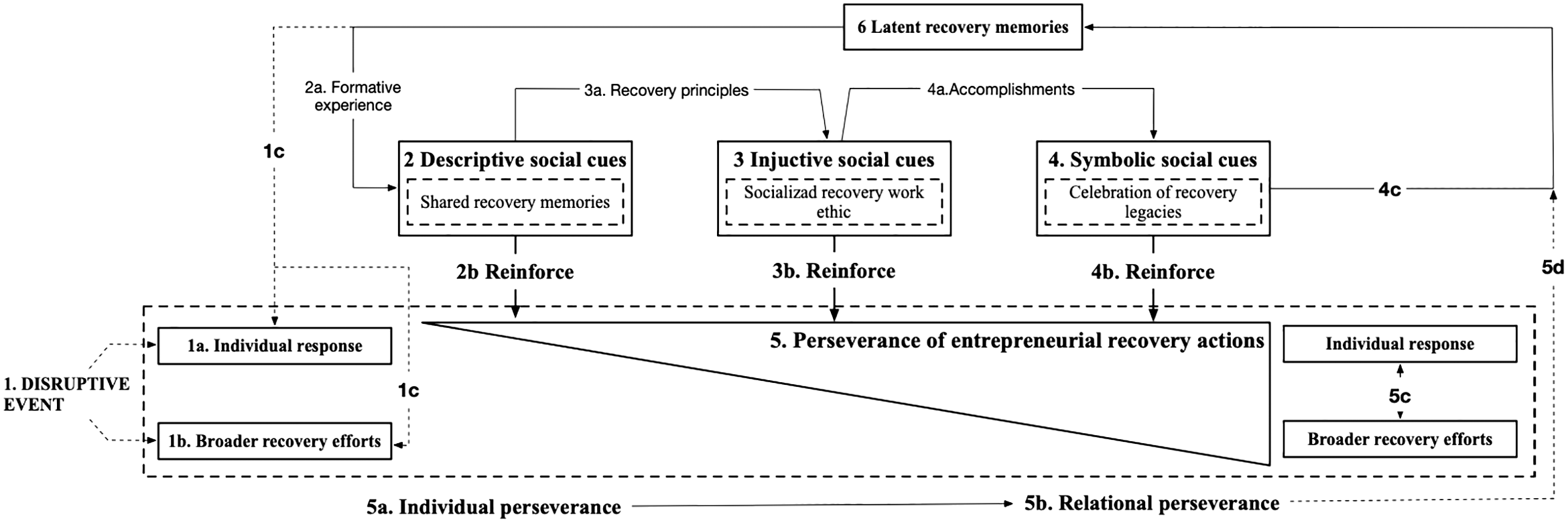
Structural model: Relational entrepreneurial perseverance in extreme contexts.
Figure 3 shows that disruptive events (1) trigger both individual entrepreneurial responses (1a) and broader recovery efforts (1b). Both are inspired by latent recovery memories from previous crises (6). These memories are shared and socialized (1c).
Through sharing recovery memories, stories and connections to place act as formative experiences that inspire and regulate action-oriented responses (2a). In this regard, the presence of these formative experiences that relate to experience of, and stories regarding, previous crisis episodes are likely critical to the present-day positive action-oriented responses and the likelihood of positive group and community-level responses. Páez et al. (1997) argued that traumatic events, such as volcanic eruptions, are pivotal in shaping collective memory. These memories serve as a shared mental representation of not only the disaster events, but also the recovery experiences and cultural values that accompany them within this group. Combined, experiences and values shape the expectations and actions of individual entrepreneurs in the extreme context. Collective memories act as descriptive social cues informing them what is commonly done by business owners in a crisis. From here we argue that in extreme contexts, entrepreneurs will persevere for longer (5) if their actions are reinforced by descriptive social cues that stem from shared recovery memories.
The socialization of individual recovery actions does not immediately lead to community-level action, rather it inspires socializing recovery work ethic that are able to guide and frame the recovery efforts of the group of entrepreneurs in the area. As collective memories inspire action, they gradually shape recovery principles (3a)—what is socially approved or disapproved within the entrepreneurial community. In our case, hard work, self-sufficiency, and the moral commitment to moving forward are principles “approved” by the community, that set moral expectations as to how entrepreneurs ought to react in that extreme context. This way, recovery work ethics act as an injunctive social cue that delineates a framework of moral norms that influence perseverance by activating normative motivation and acting as an emotional incentive (Gavrilets, 2020). In extreme contexts, this injunctive social cue reinforces perseverance (3b) as entrepreneurs feel a stronger obligation to persevere to “fit in,” a commitment to fulfil the “entrepreneurial responsibility” and a sense of being proud about having persevered. Ultimately, when an entrepreneur perceives him/herself as part of a group of entrepreneurs that share the moral responsibility of recovery, he/she will be more likely to engage in actions that fulfill that responsibility. This is particularly so in extreme contexts affected by crises that are concrete, local, and attributed to a single event (Markowitz & Shariff, 2012). From here, we argue that in extreme contexts, entrepreneurs will persevere for longer (5) if their actions are reinforced by injunctive social cues that stem from socialized recovery work ethics.
Celebration of recovery legacies indicates the specific accomplishments (4a) by entrepreneurs through the recovery process (e.g., “I am proud of the business’ recovery”) and how these accomplishments are attributed to the actions reinforced by descriptive (memories) and injunctive (work ethics) social cues. In social psychology, the collective celebration of community achievements creates and highlights symbols of recovery, thus acting as a symbolic social cue that affects perseverance through positive reinforcement and emotional contagion (Barsade, 2002). On the one hand, the celebration of recovery legacies serves as a reward for collective and individual perseverance, reinforcing the idea that the recovery actions undertaken are worth repeating (4b). This creates a feedback loop, encouraging future behaviors that align with work ethics and memories. On the other hand, the celebration of recovery legacies creates emotional contagion. The collective pride experienced during celebrations create a shared emotional experience that fosters group belonging and create new recovery memories (4c). People are motivated to persevere and, through that, contribute to the group to be part of future recovery celebrations. From here, we theorize that, in extreme contexts, entrepreneurs will persevere for longer (5) if their actions are reinforced by symbolic social cues that stem from the celebration of recovery legacies.
Consequently, we propose the concept of relational entrepreneurial perseverance, which we define as a sustained collective response to crisis that is reinforced by descriptive (recovery memories), injunctive (recovery work ethics), and symbolic (celebration of legacies) social cues. Relational entrepreneurial perseverance is unique to extreme contexts; in that, it connects entrepreneurial actors and creates memory assets to deal with future crises.
We argue that, as social reinforcement increases (2b, 3b, 4b), entrepreneurs see themselves as part of a community that shares similar recovery goals or values and want to persevere to become a part of a collective recovery process and celebrate recovery achievements. Relational entrepreneurial perseverance allows individual entrepreneurs to engage with broader recovery efforts (5c), not only at the level of material recovery but also at normative, moral, and symbolic levels. By doing so, descriptive, injunctive, and symbolic social cues not only reinforce individual perseverance (5a) but also connect actors (5), bringing relationality into entrepreneurial perseverance (5a > 5b), which in turn makes entrepreneurial perseverance more enduring. This means that, over time, the social reinforcement of entrepreneurial perseverance by descriptive, injunctive, and symbolic social cues will connect individual recovery actions to community recovery efforts, leading to relational perseverance (5b). In this sense, entrepreneurs are likely to attribute final recovery outcomes more to the collective than their individual perseverance. Conversely, if actions are not reinforced by descriptive, injunctive, and symbolic social cues, entrepreneurial perseverance will decline over time.
We argue that relational perseverance is built over time and sustains recovery efforts of individual entrepreneurs and the wider community. Alongside reinforcing perseverance and connecting actors, relational entrepreneurial perseverance contributes to the production and storage of recovery memory assets and resources in extreme contexts (5d), which, through recovery memories (6), can assist future generations in their ability to adapt and face (future) adversity (2a). As such, relational entrepreneurial perseverance is particularly valuable in an extreme context because it helps entrepreneurs understand what they have achieved (i.e., recovery) and produces longer-term benefits (i.e., memory assets and community resources). Memories remain latent (6) the longer the extreme event disappears into the medium and long-term history yet can become activated through new descriptive social cues to sustain new recovery efforts. This is relevant in extreme contexts where entrepreneurs periodically experience extreme physical, psychological, and material disruption. In sum, relational entrepreneurial perseverance has the capacity to create new descriptive social cues (memory assets) that can inspire and guide new recovery efforts facing future crises. Following this, we posit that the stronger the relational entrepreneurial perseverance in the current crisis, the higher the chances of recovery in the next one.
Discussion
In this article, we explored how entrepreneurial perseverance unfolds over time as entrepreneurs engage with broader recovery efforts in extreme contexts. We discovered three emerging social cues—recovery memories (descriptive), recovery work ethic (injunctive), and recovery legacies (symbolic)—that reinforce entrepreneurial perseverance over extended periods of time. As social cues reinforce perseverance, it gradually becomes more relational and the recovery achievements are attributed to collective perseverance, not to the perseverance of individual entrepreneurs. In extreme contexts, recovery achievements produce memory assets that can guide new recovery efforts when the next crisis hits. Drawing on findings and literature, we theorize this as relational entrepreneurial perseverance in extreme contexts and offer a structural model to illustrate this. In the following section, we explain how the above contributes to literature.
Contributions and Implications
We make two contributions to literature. First, we contribute to literature on entrepreneurial perseverance in extreme contexts. To date, most of the research on entrepreneurship in extreme contexts has focused on immediate responses, individual-level outcomes, and negative emotions (Branzei & Fathallah, 2023), examining a single point in time (Doern et al., 2019). While relevant, this limits our understanding of sustained responses over lengthy recovery processes. Our findings and structural model explain that, as time passes, entrepreneurial perseverance begins to look different, becoming a multi-level response stemming not only from the motivation and efforts of individual entrepreneurs but also from three social cues—recovery memories (descriptive), recovery work ethic (injunctive), and recovery legacies (symbolic)—that reinforce and sustain action. Our model explains how perseverance is reinforced by social cues and how these three levels—individual, group, and community—connect through formative and communicative experiences, letting individual perseverance evolve and connect to broader recovery efforts. While it is the individual entrepreneurs who persevere, their capacity to do so over time depends on combinations of individual motivation and social reinforcement, which in turn impacts entrepreneurial success and their understanding of attribution.
Several authors (e.g., Holland & Shepherd, 2013; Mittermaier et al., 2023; Shepherd & Williams, 2020) have begun to suggest that long-term adversity may lead to positive responses. We build on this by showing how persevering over extended periods of time is underscored by relationality and the entrepreneurs’ capacity for connection and communication, which is particularly relevant in extreme contexts where entrepreneurs are in a near-constant exposure to threats. This aligns with Tracy et al. (2009), who suggested that more negative prior experiences of the extreme context are likely to yield more egoistic accounts of recovery than we observe here. This is an important addition to the literature, particularly given that the frequency and severity of shocks and crises are likely to increase in the future.
Interestingly, while courage has been identified as a critical aspect of crisis entrepreneurship (Klyver & McMullen, 2025), perseverance over time is less heroic and courageous than has been observed in immediate responses to crises. Rather, it is more mundane and embedded in everyday actions, reinforced by descriptive, injunctive, and symbolic social cues. The responses we found do not appear within a space of boredom (de Rond, 2017), though we acknowledge that some periods of time might be inevitably tedious and uneventful. Yet, relational entrepreneurial perseverance appears to remain constant, yielding a powerful positive narrative and sustaining recovery however dull or exciting the situation might be. The positive aspect of perseverance is not trivial because it allows entrepreneurs and the community to not only sustain recovery efforts but also create new meanings and affordances for future recovery efforts. This adds to a body of literature that has been mostly focused on stress and negative emotions. Now, we not only know how entrepreneurs react immediately after a crisis, but also how their perseverance ebbs and flows, connecting with broader recovery efforts that can enable and sustain individual, organizational, and community efforts during lengthy recovery processes once the danger of the initial shock has faded (Hällgren et al., 2018).
As a result, we contribute to entrepreneurial perseverance more broadly. Literature has focused mostly on the role of individual-level drivers, such as passion, grit, proactivity, and resilience, and on how these affect individuals’ capacity to delineate the future, set goals, and achieve results across the venture development process (Mueller et al., 2017; Santos et al., 2020). These studies largely draw on theories of self-regulation and self-determination, neglecting the role of the social context and communication within these contexts. These are used as controls at best, alongside other conventional controls such as demographics, education, start-up experience, and orientation. This is problematic as research shows that, in a crisis setting, individual-level factors have little predictive power (Bergenholtz et al., 2023; Klyver & McMullen, 2025).
We extend this stream of research by showing that the social context is not a mere container where perseverance occurs, it rather plays an active role through distinct social cues. This goes beyond relational commitments to direct stakeholders (Berends et al., 2021) and informational cues in the evaluation of venture options (Kier et al., 2022; Muehlfeld et al., 2017). In our findings, we observe that relationality does not exert pressure on them to preserve, as stressed by Berends et al. (2021). Relationality plays a formative and communicative role, providing descriptive, normative, and moral guidance not only in terms of how long they should persevere but also how perseverance should look like: embedded, principled, positive, and gradually shared.
Second, we contribute to entrepreneurship and crisis literature, by shedding light on the joint role of formative (personal-level) and communicative (social-level) experiences over extended periods of time, which reinforce individual action, foster perseverance, and produce memory assets to face the next crisis. Through our multi-level focus, relational perseverance extends current research focused mostly on immediate responses and individual-level outcomes. We show that entrepreneurial responses to crises reside not in the individual but in the capacity for connection and communication and the ability of a particular community to effectively socialize descriptive, injunctive, and symbolic social cues. Over time this builds the response resource repertoire of the individual entrepreneur and hosting communities. These are recovery memories and legacies that can reinforce future collective responses and maintain functioning when the next crisis hits. In doing so, we add to recent work on crisis-as-context (Klyver & McMullen, 2025) which invites researchers to explore entrepreneurial dynamics in a poly-crisis era. Klyver and McMullen (2025) echoed Davidsson et al.’s (2020) call to action. Collectively, they stress the need to better contextualize research and move beyond the treatment of contextual factors as environmental contingencies. Our findings and structural model shed light on the role of social context in a near-constant (poly) crisis setting.
We do not take a simplistic before and after view of the crisis and avoid viewing the pre- and post-crisis periods as separate contexts. The unremitting threat under study here means that perseverance can be a continuous construct for entrepreneurs. Our study shows that in the face of the constant threat of crisis, relational perseverance becomes more significant than the direct strategic decisions associated with business survival. Strategic priorities typically associated with business activity can become less important, while entrepreneurial perseverance becomes the key focus. This does not mean that strategic imperatives are in tension with perseverance, but that relational perseverance and recovery memories help to alleviate the impact of shifts in immediate strategic challenges.
Relational perseverance is not only relevant for entrepreneurship theory but also for extreme contexts literature more broadly. Our findings and structural model offer researchers guidance to better understand what might underlie not only individual perseverance but also broader recovery processes. Further research is necessary to examine the long-term impacts of relational perseverance on entrepreneurs, including whether these concepts can act negatively, impacting the viability of entrepreneurship and its relationship with community recovery. Future work might also look at gender, age-based, or wider contextual distinctions to understand how entrepreneurs use perseverance and if this helps or hinders growth during and outside of crisis situations. Hällgren et al. (2018) highlighted the relevance of skillful performance in extreme contexts, which allows individuals to successfully operate in recovery situations “where the possibility of catastrophic failure occurring is forever on the horizon” (p. 141). Our findings suggest that skillful performance includes not only individual coping mechanisms but also the capacity to connect and communicate and persevere together under one set of recovery work principles.
Conclusion
In conclusion, in this article we address a critical gap in understanding how entrepreneurial perseverance unfolds over time in extreme contexts. By examining the long-term recovery following the Calbuco Volcano eruptions, we propose relational entrepreneurial perseverance as a multi-level process sustained by social cues—shared memories, work ethics, and collective legacies. This concept advances current debates by shifting attention beyond immediate, individual responses to the enduring, socially reinforced practices that underpin recovery. In doing so, we offer new insights into the temporal and relational dimensions of entrepreneurial action in crisis-affected contexts.
Footnotes
Appendix A
Acknowledgements
We are grateful to Associate Editor Sarah Jack for her guidance and constructive feedback throughout the review process. We also thank the three anonymous reviewers for their comments and suggestions, which helped us improve the clarity and contribution of our article.
Declaration of Conflicting Interests
The author(s) declared no potential conflicts of interest with respect to the research, authorship, and/or publication of this article.
Funding
The author(s) received no financial support for the research, authorship, and/or publication of this article.
