




Abstract
This article explores why an increasing number of Swedish mothers are becoming entrepreneurs; this choice appears counterintuitive given the prevailing social welfare system prioritizes the rights of employed women. Using an interpretative stance, we analyzed the life stories of 18 Swedish mothers who created new ventures while caring for young children. The value of the time afforded by parental leave policies was identified as vital to the business creation process. Hence, we argue that time is a critical entrepreneurship-relevant resource; this is illustrated by the positive effect of the Swedish welfare system upon entrepreneurship entry and the timing of this decision.
Introduction
New venture creation among mothers is a growing phenomenon (García & Welter, 2013) although they—like other women entrepreneurs—continue to face gendered disparities, such as challenges in obtaining entrepreneurial resources to create a business (Guzman & Kacperczyk, 2019; Rocha & van Praag, 2020; Tonoyan et al., 2020). Decisions by mothers to enter entrepreneurship have been analyzed as a career option using motivational theories (Schjoedt & Shaver, 2007; Thébaud, 2016), human capital and career theories (Sullivan et al., 2007), and occupational context (Sorgner & Fritsch, 2018). Underlying such research is the assumption that women—and mothers in particular—are more likely than men to be pushed, rather than pulled, into entrepreneurship (Foley et al., 2018). Many assume women start businesses, particularly those that are home based, to combine work and family obligations (Duberley & Carrigan, 2013; McGowan et al., 2012; McKie et al., 2013), balance their lives (Mainiero & Sullivan, 2005), achieve flexibility (Ekinsmyth, 2013; Richomme-Huet et al., 2013), and satisfy relational needs (Breen & Leung, 2020). Scholars argue that women’s career choices are more likely to be relational rather than individual (Afiouni et al., 2020; Mainiero & Sullivan, 2005). That is, in making career choices, women factor in the needs of their children, spouses, and/or aging parents, while men tend to keep their work and nonwork lives separated as they are less likely to have to factor in caring and domestic labor demands.
These accounts of women’s entrepreneurship are based on two assumptions. First, a woman starts a business as a necessity—or as a “Plan B”—to be able to balance work and family (Thébaud, 2015). Second, there are stable differences between the career choices of women and men—women’s career choices are more likely to be relational, while those of men are more likely to be independent and goal oriented (Mainiero & Sullivan, 2005). Both assumptions are dubious. If economic necessity or lack of alternative options for work–life balance were the primary motivator for business creation, women in institutional contexts with established policies for protected employment paid parental leave and sponsored child care would be far less likely to turn to entrepreneurship. As such, family-friendly social policies make it easier for parents to combine their family lives with paid employment rather than with entrepreneurship (Alsos et al., 2010; Klyver et al., 2013). Paid employment also offers better income security (Bergqvist et al., 2007; Neergaard & Thrane, 2011). Nevertheless, increasing numbers of mothers with young children in economies that offer family-friendly policies, such as Sweden (Naldi et al., 2021) are pursuing entrepreneurship. In addition, evidence supporting the second assumption—the greater relationality of women’s choices as compared to the goal orientation supposedly exhibited by men—is still wanting. Indeed, scholars have argued that these orientations or preferences “are actually formed under a high level of institutional constraint” (Pedulla & Thébaud, 2015, p. 118).
Thus, in this article, we provide an alternative account of why women choose to start a business by combining the literature on gender disparities in entrepreneurship with literature that emphasizes the role of family-friendly policies in shaping individual career preferences and choices. We address the following research questions: Why do women who are mothers of young children start businesses in an institutional context characterized by family-friendly policies, such as Sweden? How do family-friendly policies influence and shape women’s career decisions? To explore these questions, we collected rich longitudinal data on the life stories of 18 women entrepreneurs in Sweden, exploring their stories using narrative analysis (McAdams, 2006) to identify emergent themes and relationships (Braun & Clarke, 2006; Gioia et al., 2013). Sweden’s social democratic welfare state is a relevant empirical context for our study (Esping-Andersen, 1990) as it enables parents to spend time at home with young children and provides financial support for 480 days. It also encourages individuals to stay in employment, rather than move into self-employment, due to its income-security scheme.
We find that parental leave, combined with a gender egalitarian culture within the family, helps to reduce an often-neglected gender disparity that women face when making career choices: lack of time. Based on our analysis, we identify three interrelated entrepreneurship-enabling processes: time to think (and rethink) about oneself, time to identify new business opportunities, and time to “kickstart” a business. In reviewing these findings, we develop the notion that time does not exist in a vacuum. Rather, what matters is the qualitative aspect of time—namely, the space that it provides to women during transitional periods in their lives, such as during parental leave, when their everyday work lives are “interrupted” and they can reconsider their lives. Furthermore, we illustrate the importance of the right timing for making the decision to start a business. This right timing reflects women’s active efforts to synchronize the rhythms of their work and family plans with the design of parental leave policies, meaning that women can plan when to start their venture to benefit from the welfare system. Moreover, we observe that the income security and job guarantee in the Swedish parental leave system, along with the availability of daycare services, indicate that women are not pushed into entrepreneurship. Instead, the system provides women with time to consider business start-up as an opportunity, or a “Plan A.”
By exploring business start-up among mothers in this particular socioeconomic/socio-institutional context, we engage in research that is both critical and practical, challenges taken-for-granted assumptions about gender-based differences in career pathways and illustrates the importance of formal and informal institutions for career decisions (Baker & Welter, 2017).
Conceptual Framework
Women’s Entrepreneurship
Women’s entrepreneurship is inherently gendered, reflecting the gendered institutions, both formal and informal, in which entrepreneurship occurs (Welter et al., 2014) and the influence of such institutions on behaviors and preferences (Pedulla & Thébaud, 2015). As a result, self-employment is more likely to be pursued by men (Klyver et al., 2013), who have higher start-up rates than women in most economies (Elam et al., 2019). Sex segregation in terms of industry and job type has led to an overrepresentation of women entrepreneurs in low-growth sectors, and a concomitant overrepresentation of men entrepreneurs in high-growth sectors (Marlow & McAdam, 2013); moreover, women still encounter obstacles to entrepreneurship in terms of limited access to human, social, and financial resources (Guzman & Kacperczyk, 2019). The number of women who have become entrepreneurs is nevertheless, steadily increasing (Sorgner & Fritsch, 2018), but much of this activity is framed as necessity rather than opportunity driven (Foley et al., 2018). The dominant Anglo-Saxon literature on women’s entrepreneurship asserts that women, particularly those with caregiving responsibilities, engage in entrepreneurship as a fallback option to combine childcare with work (Duberley & Carrigan, 2013; McGowan et al., 2012; McKie et al., 2013) and achieve flexibility (Ekinsmyth, 2013; Richomme-Huet et al., 2013) while considering the needs of others. That is, they factor in “the needs of their children, spouses, aging parents, friends, and even coworkers and clients—as part of the total gestalt of their careers” (Mainiero & Sullivan, 2005, p. 111). Similarly, Foley et al. (2018, p. 313) argue that mothers engage in entrepreneurship to gain independence. However, this independence does not reflect their lifestyle desires but rather “functional necessity in managing the temporal and perceived moral demands of motherhood.” These notions suggest that for many women, their decision to become an entrepreneur is personal and reflects her embeddedness in a context, including the context of her changing life course.
Life Course and Women’s Entrepreneurship
It has been shown that entrepreneurship-related decisions—such as entry or exit decisions—are embedded within a woman’s household dynamics and life course (Davis & Shaver, 2012; Jayawarna et al., 2014, 2021). Specific events, such as childbirth, are transitional moments that prompt individuals to reconsider their roles and responsibilities within their households and their careers and alter their time commitments, thereby shaping the ways women engage in entrepreneurship. For example, Ekinsmyth (2011, 2013) highlights spatiotemporal restrictions leading some mothers to structure, organize, and embed their businesses within family-friendly time–space routines, while Jayawarna et al. (2021) find that women caring for young children are more likely to exit their businesses given incompatible demands between the time required to generate sufficient returns and their caring responsibilities.
Although pioneering in exploring the complexity of the interplay between household dynamics and women’s life course, this research has paid less attention to how women entrepreneurs use their time. The studies assume that women entrepreneurs must allocate their time between different spheres of their lives—work and family—to achieve synchronization between them, with the family sphere being dominant and affecting the rhythm of the work sphere. The research largely reflects an Anglo-Saxon context and is anchored in specific norms, values, and formal institutions that influence how women make tradeoff decisions about time, including how these “decisions might be made from a position of little or no choice” (Ekinsmyth, 2014, p. 1233). However, we know less about the situation when women with childcare responsibilities have a choice in their use of time, what they use it for, or why their choices may appear asynchronous with the demands of their life courses. It has been recognized that time in use is shaped by the institutional context (Feldman et al., 2020). Thus, without explicit attention to the institutional environment, it may be difficult to fully understand how women entrepreneurs use and experience time, to which we turn now.
Institutions, Family-Friendly Policies, and Women’s Entrepreneurship
Institutions play an important role in influencing women’s entrepreneurship; they both enable and constrain entrepreneur behavior by influencing what they perceive as desirable and feasible (Welter & Smallbone, 2011). It is argued that the interplay between formal and informal institutions shapes the entrepreneurial climate such that the former provides the background for entrepreneurship namely, its overall attractiveness (Chowdhury et al., 2019), while the latter affects businesses more directly, particularly among women (Bullough et al., 2017). For example, Estrin and Mickiewicz (2011) argue that high levels of welfare support provide alternative sources of income and that increasing alternative income may reduce the attractiveness of entrepreneurship.
Evidence from various disciplines has evaluated the importance of family-friendly policies for reducing the obstacles mothers face in reconciling work and family (Bourdeau et al., 2019). Studies rooted in labor economics and sociology have focused on labor-market participation and the effects of family policies on maximizing women’s return to work after childbirth (Hegewisch & Gornick, 2011). It has been shown, for example, that full-time employment among women is higher in countries that offer publicly financed parental leave and subsidized daycare, such as Sweden. However, other evidence highlights the harmful effects of some of these policies, especially in terms of wage penalties (Mandel & Semyonov, 2006).
Organization and management scholars have explored the effects of family-friendly policies on employees (Fuller & Hirsh, 2019; Ruppanner et al., 2019). An integral part of this research is the notion that work–family policies increase employee commitment and reduce exit (Bourdeau et al., 2019). In a meta-analysis, Butts et al. (2013) conclude that the availability and use of work–family policies have a positive effect on work attitudes in terms of lower work–family conflicts and lower turnover intentions. Still, it is not clear whether and how these positive effects of family-friendly policies on employees—the so-called “happy worker story” (Bourdeau et al., 2019)—can be reconciled with the observed increase in business start-up by mothers in contexts characterized by supportive family policies, such as social democratic welfare state systems (Joona, 2017).
To illuminate this thorny issue, we must consider the interplay between family-friendly policies and informal institutions (Bullough et al., 2017; Estrin & Mickiewicz, 2011) specifically, the prevailing culture with its accepted values and beliefs. This provides a reference point as to whether any given behavior is considered desirable and acceptable in a particular community. In this article, we consider gender equality as being part of culture, and gender egalitarian values as influencing the division of household work and childcare between men and women. It has been shown that gender egalitarian values are “most widespread in settings where work–family policies have consistently favored joint earning and joint caring” (Grunow et al., 2018, p. 49). Thus, family-friendly policies in social democratic welfare state systems do not shape women’s choices in a vacuum; instead, these policies are likely to interact with gender egalitarian values in the family to influence women’s (and men’s) business start-up.
The Swedish Welfare State System, Gender Egalitarian Values, and Entrepreneurship
Scandinavian social democratic welfare systems, such as those in Sweden, have been characterized as both women and family friendly, with a wide array of provisions including paid parental leave, time off to care for sick children, low-cost high-quality daycare, child allowances, and free education at all levels (Hernes, 1987; Sainsbury, 1994, 1999). Berggren and Trägårdh (2010) argue, though, that the Swedish system is somewhat individualistic, it is built on the idea that individuals should not have to rely on their families, but be financially self-sufficient. For instance, women should not rely on men, and the elderly should not depend on their children. Children should get a good education irrespective of parental income, thereby providing equal life opportunities for all thus, reducing social stratification. Social solidarity is channeled through taxation with the delivery of fundamental services “outsourced” from the family to the state. This requires that where possible, individuals are in employment to generate the tax revenues sufficient to fund these provisions.
The system is universal and far reaching (Table 1) and affects the life choices of individuals in fundamental ways. A ‘ street-smart’ young Swede and parent-to-be will do the following: First, get a full-time job. Remunerations for sick leave, unemployment, and parental leave are based on one’s prior income. Income from self-employment counts equally. Second, have the baby—use the 480 days of paid parental leave (80% of the income of the parent on leave, but with a cap). It is possible to save some for unexpected circumstances; this can be used until the child is 12. Ensure your partner is willing to share parental leave, or you will be disadvantaged as 90 days are mandated for each parent. Third, put your child into daycare/preschool and return to your guaranteed full-time job. High-quality, full-time preschool is available for any child from the age of 1. It is publicly subsidized and easily affordable for everyone irrespective of income. Full-time employment is important as future pensions are based on lifetime income, so part-time employment, or no work, is penalized financially; it is not possible to rely on one’s partner. Taxation is individual; there is no widow’s (or widower’s) pension and no alimony in the case of divorce. Returning to full-time work is also important if more children are planned since parental leave reimbursement is based upon the most recent income. However, the same reimbursement level persists if there is a second child born within 2 years of the first. The older child can still go to preschool, at least part-time.
Features of the Swedish Welfare System.
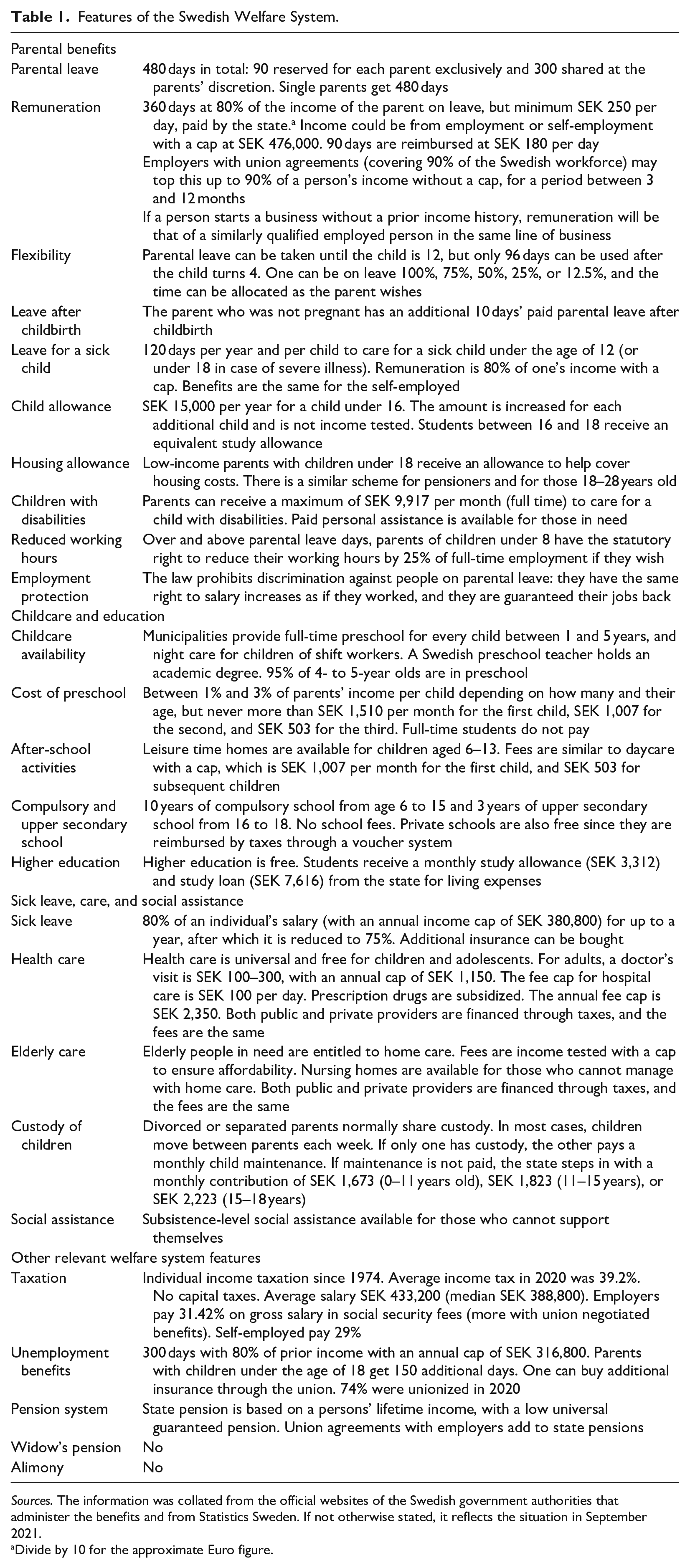
Sources. The information was collated from the official websites of the Swedish government authorities that administer the benefits and from Statistics Sweden. If not otherwise stated, it reflects the situation in September 2021.
Divide by 10 for the approximate Euro figure.
Swedes adapt accordingly. The average Swedish woman gets her job first and has her first child after the age of 29 (Socialstyrelsen, 2021). Only 1.5% have a child before 20 1 —contraceptives are free for teenagers and abortion is free until 18 weeks. Being a single working parent is, of course, more difficult (they comprised 6% of women and 3% of men, 20–44 years old in 2019), but a wide safety net makes it possible. Child allowance is universal with housing allowance for low-income families; the state acts if one’s partner does not pay child support; education is free as is health care for children with low costs for adults. Social assistance is available for those who cannot support themselves, and parents who do not have earned income still get a low guaranteed parental leave reimbursement.
This system has resulted in high labor-force participation: 85% of women and 90% of men aged 20–64 are economically active (Statistics Sweden, 2020). Only 1% of women aged 20–64 are homemakers. The gender pay gap is at the lower end of international comparisons—9.8% unweighted and 4.4% controlled for age, educational background, full-time/part-time status, sector, and occupational group (Medlingsinstitutet, 2021). The fertility rate is 1.67, higher than in many European economies where welfare systems are less generous.
The provisions in the system have affected the informal institution of “how to raise a family” in profound ways; in particular, it has created gender egalitarian values regarding the division of paid and unpaid work (Oláh & Bernhardt, 2008). First, it is now taken for granted that both men and women should have an education and a job and that each should support themselves financially. Second, it has affected the gendered division of housework and childcare. Sweden has had parental leave that can be split between both parents since 1974; men’s use of this leave was negligent at first—they risked being ridiculed at work, or even placing their careers at risk. However, with at first 30, then 60 and, since 2016, 90 of the 480 days paid parental leave reserved for each parent, practices and attitudes have changed. Swedish fathers now take 30% (144 days) of parental leave overall, and 39% of paid leave days when their children must stay home from school or day care due to illness (Statistics Sweden, 2020). These figures are above the mandated number of days: a father pushing a stroller during daytime work hours is a common sight (see Supplemental Appendix 1 for pictures). This shift in family policies to include fathers, as well as mothers, has had a double effect—women can be workers as well as caretakers and indeed, men can be caretakers as well as workers (Ahlberg et al., 2008). When fathers are on parental leave, they also do household work, which may spill over to practices and attitudes in general. While women still do more unpaid work than men, the gap is decreasing. The latest time-use survey from 2011 revealed that in cohabiting couples with young children, women did 39 hours of unpaid housework per week and men, 32 hours (Statistics Sweden, 2020). Children growing up in families where both parents share parenting and household work will see this as the natural situation.
The Swedish system’s design also affects women’s choice to enter entrepreneurship in that mothers of young children are less likely to be pushed into entrepreneurship as a fallback strategy—or necessity—to accommodate work and childcare. Entrepreneurship is also unlikely to offer “an attractive avenue for mothers in higher social positions, sometimes referred to as ‘mumpreneurs’, to reconcile career ambitions with intensive mothering ideals” (Besamusca, 2020, p. 1286). Indeed, a “stay-at-home mom” is frowned upon; it is a stigmatized position. In addition, while the benefits are the same for employed and self-employed claimants, the system is modeled after wage employment and cannot always be entirely realized by entrepreneurs who are unable or unwilling to work part-time, hire a temporary employee, or temporarily close their businesses when they become parents (Naldi et al., 2021; Neergaard & Thrane, 2011).
Because the system encourages employment over entrepreneurship, the latter is likely to be a less preferred option. In a recent survey, “entrepreneur” was only number 19 on a list of preferred careers. Every career in which employment is the norm outranked “entrepreneur” (Randstad, 2021). Moreover, failure as an entrepreneur is still linked to relatively high stigmatization in Swedish society where a business failure is often seen as personal failure (Jenkins et al., 2014). Indeed, less than 8% of Swedes aged 18–64 are planning to start, or have recently started, a new business; this is low in international comparison (Bosma et al., 2021). As elsewhere, women entrepreneurs in Sweden face a gendered business landscape, gender stereotypes, and difficulties obtaining finance (Malmström et al., 2017) and the median disposable income of a woman business owner is lower than that of an employee (Tillmar et al., 2022b). On the whole, entrepreneurship seems to be a poor choice for most women in Sweden. Consequently, understanding why mothers of small children in contexts with supportive family policies and employment as the norm become entrepreneurs requires further investigation.
Method
Research Approach and Data Collection
We employed a multiple case study strategy, which allows the context to become an integral part of the phenomenon of interest (Zahra et al., 2014). We adopted a gendered lens in our analysis of the diverse layers of context, formal and informal institutional factors, social values, norms, and traditions (Brush, 2006; Díaz-García et al., 2016). Consequently, we approach business start-up as a gendered and relational phenomenon (Tatli et al., 2014).
We selected 18 entrepreneurs in Sweden who created a business after becoming mothers but before their youngest child was 4 years old and who actively owned and managed their businesses. We used purposive and snowball sampling to identify appropriate cases and followed them over 3 years. 2 Our participants represent a variety of sectors and vary in number of children as well as in the type and size of the businesses (see Table 2 for case characteristics and Supplemental Appendix 2 for two example profiles to illustrate the differences in experiences of parental leave as employed and self-employed). The majority were married, two were cohabitating, and one was divorced. All had at least postsecondary education, and many had postgraduate education; this is roughly representative for Swede, where in 2018, 55% of women aged 25–44 had tertiary education, and 34% had upper secondary education (Statistics Sweden, 2020). All but one were employed prior to business start-up; while we did not ask about income levels, their education and social backgrounds would indicate they would be described as middle class.
The Interviewees.
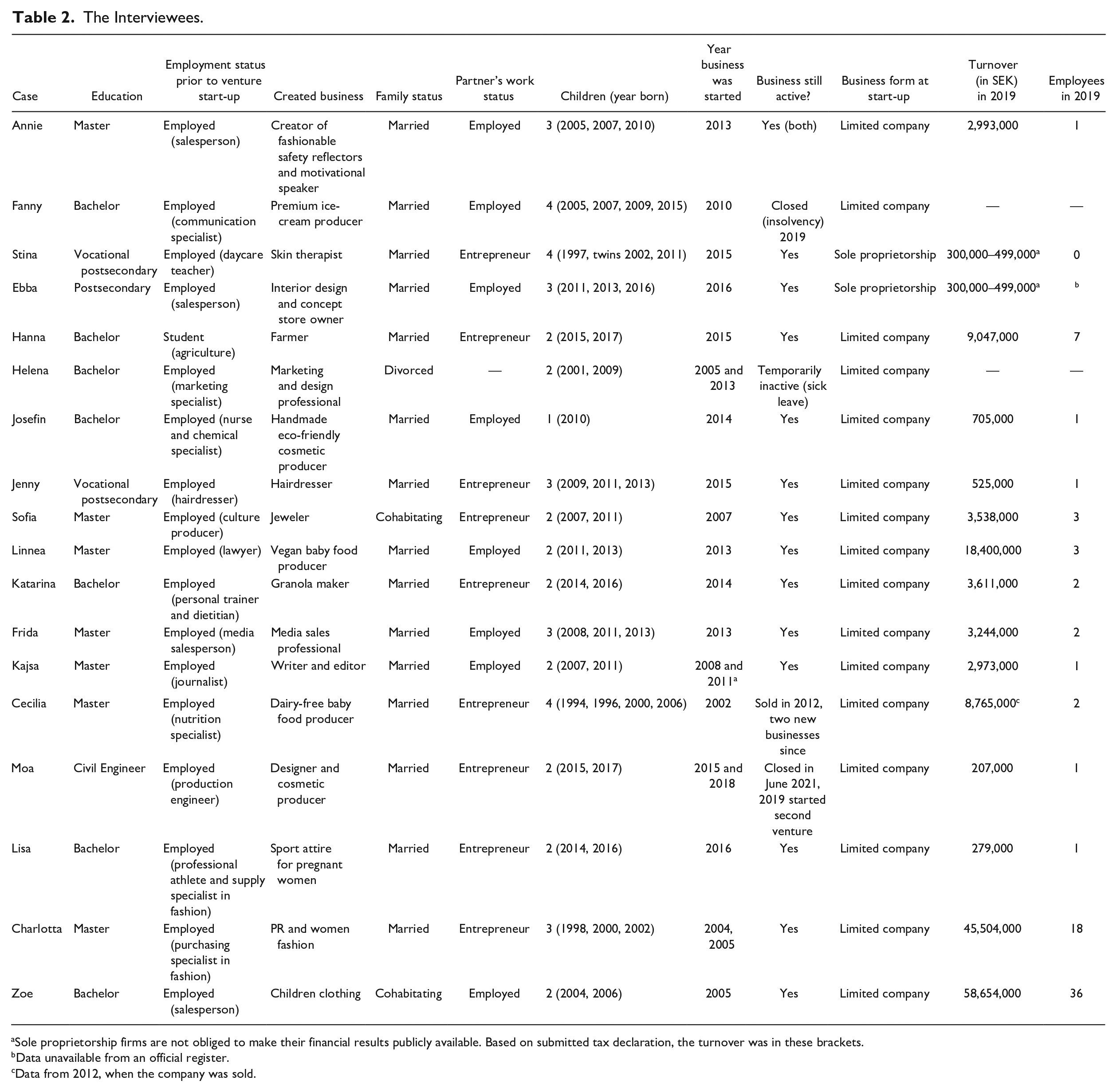
Sole proprietorship firms are not obliged to make their financial results publicly available. Based on submitted tax declaration, the turnover was in these brackets.
Data unavailable from an official register.
Data from 2012, when the company was sold.
We adopted a life story approach to collect our data. It allows respondents to tell their stories in their own words, making sense of their decisions and subsequent life trajectories (Atkinson, 1998; McAdams, 1995). This approach results in a story told in its context—a self-narrative that reflects the focal individual’s identity, goals, needs, and context as perceived by the individual (McAdams, 2006). Each life story interview took between 1 and 2.5 hours, and each of the respondents was interviewed at least three times over a period of 3 years. While the initial interview round closely followed McAdams’s (2007) protocol for life story interviews, the second focused on the role of motherhood and participant decisions to start a business when their children were young, and the third round focused on the role and use of parental leave and partner/family support in child-rearing (see Supplemental Appendix 3). We complemented the interviews with data from the participant activities on social media, press releases in newspapers, and financial information from business registers about our case entrepreneurs. This approach allowed us to collect rich longitudinal data. 3
Data Analysis
We performed our analysis in two steps. First, we employed narrative analysis (McAdams, 2006, 2008), enabling us to analyze how our participants made sense of their decisions and their (entrepreneurial) careers. Since the social world we live in is highly structured, and decisions are contextually influenced, we also looked for patterns across the experiences of many individuals to be able to draw more general conclusions (Riessman, 1990). As such, our second step involved comparing the women’s life stories, searching for emerging patterns and relationships between the different constructs using thematic analysis technique (Braun & Clarke, 2006). This approach—combining narrative analysis with thematic analysis—is common in qualitative research as narrative analysis allows researchers to make sense of temporality and plot as experienced by participants, while thematic analysis enables researchers to search for commonalities and patterns and compare data (Floersch et al., 2010; Peterson, 2017).
Narrative analysis interprets how individuals construct meaning by emphasizing the social contexts and structures in which meaning is produced (Riessman, 1990, 1993). A narrative allows for elaboration of the protagonist’s definition of the focal situation and offers “the depiction of reality not through an omniscient eye that views a timeless reality, but through the filter of the consciousness of the protagonist of the story” (Bruner, 1986, p. 25). Hence, a narrative reflects how the storyteller perceives his or her surrounding environment (Boje, 1991). This sense-making is infused with cultural discourses and taken-for-granted knowledge about the world (Riessman, 1990). Therefore, interpretating and understanding a story as it is told—with its cultural colorings—is particularly useful when researching why protagonists make decisions and behave in ways that challenge societal expectations (Bruner, 1986, 2004) (e.g., business start-up instead of returning to work in a context designed for individuals to favor employment). The aim here is not to establish whether all the details actually happened but to understand how the individuals construct and explain their choices.
We began the narrative analysis by identifying the constitutive elements of each of the stories: the theme, the plot, the character(s), and the setting (McAdams, 2001) (Supplemental Appendix 4). We then analyzed how the narratives were constructed—that is, how and why the various elements and themes were connected (Scholes, 1982). For example, in Linnea’s story, it was important for her to portray herself as enjoying every minute of being with her baby but also as working hard “in between feeding” to develop her business idea. Sofia’s story, on the other hand, is full of assertions about how difficult it was to combine being a parent and an entrepreneur. In Moa’s story, we observed how she contrasted her experiences of parental leave with her first child and being employed and her second child as an entrepreneur.
In the second step, we used thematic analysis to identify, analyze, and report patterns (themes) within the data (Figure 1). We theorized over the sociocultural context and structural conditions to reveal patterns of meaning as constructed by our respondents. We began by familiarizing ourselves with the data by reading and rereading the interviews and the written life stories (Riessman, 1993). Then, based on our initial ideas about what our data contained we produced our first codes in a very data-driven approach. Interpretatively organizing the codes into cohesive groups (themes) constituted the next phase in our analysis (Tuckett, 2005). We identified reflections about the self, motherhood, parental leave as a trigger, entrepreneurship as a choice, timing, welfare design, and time as a resource as recurring themes. We then reviewed all the identified themes and grouped related themes together to simplify our thematic categories. As we analyzed each theme separately, identifying the relevant content (i.e., what is of interest and why), we refined the themes and assigned their final labels. For example, we converted “me-time,” time to scan the environment, and time to plan and kickstart into subthemes of the time as a resource theme. Doing so helped us structure our data more rigorously (Braun & Clarke, 2006). We then wrote up the whole analysis, providing both data extracts and an analytic narrative to compellingly illustrate the stories that emerge from our data and support our arguments that address our research questions.
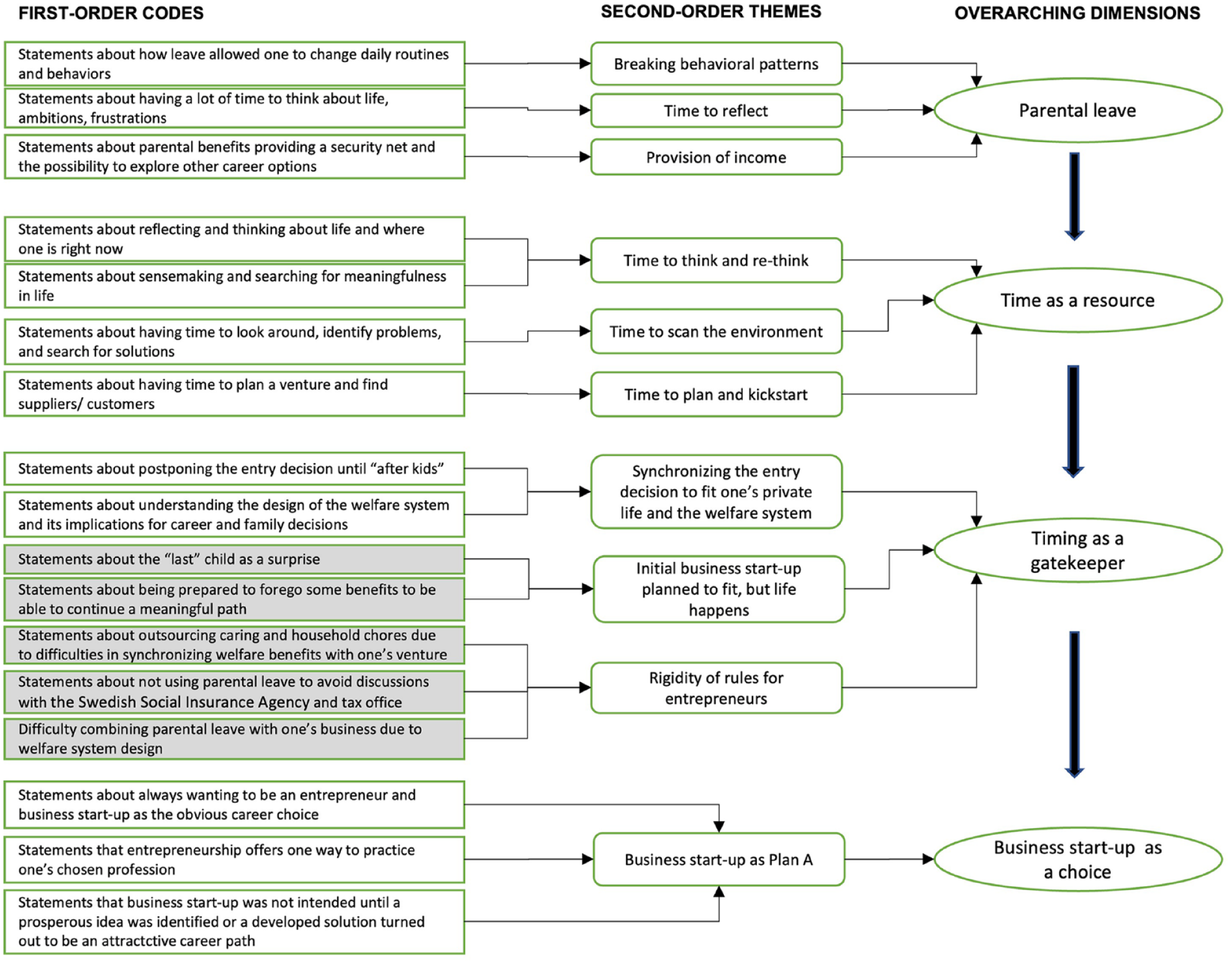
Data structure.
Findings
The stories reveal that the reasons why the participants decided to start their own ventures differed. Notwithstanding this, we identified three main stories. For some, the decision to start a venture reflects the realization of a “big dream” (we labeled their narratives “entrepreneurship as the obvious choice”), while others expressed that becoming an entrepreneur was a way to practice their profession (we labeled it “entrepreneurship as a way to practice one’s profession”). A third group was labeled “entrepreneurship as growing into the choice,” because the decision undertaken to start a business was unexpected and not part of their career plans. The differences in the stories are shown in Supplemental Appendix 4.
The women in the entrepreneurship as the obvious choice category painted themselves as the active chief protagonists of their decisions who were convinced that they wanted to be entrepreneurs at some point in their careers. Such stories also included role models and/or people who inspired them and their life partners, although these characters were not very active. Surprisingly, children were not present in these stories (with the exception of two accounts, but these mainly reflected a desire to offer their children a learning opportunity). The participants constructed the plots of their stories to demonstrate that their actions were purposeful and directed toward bringing them closer to their goal of becoming an entrepreneur, and that they were merely waiting for the right moment to take action. These women were vocal about the inspiration they received from significant others to choose an entrepreneurial career. Moreover, they painted the settings of their stories by describing their previous careers as part of their plans or, alternatively, as merely time fillers. The key themes identified in their stories revolve around the search for self and the importance of the right timing when becoming an entrepreneur, as well as the role of the Swedish welfare system. Some also mentioned time to search for and experiment with different ideas.
The women who saw entrepreneurship as a way to practice their professions also depicted themselves as the main characters of their stories. These participants were agentic and driven and identified with their professions; their stories are relatively void of children or the needs of children. Their plots illustrated how they searched for opportunities to have meaningful careers within their professions and to emphasize entrepreneurship as one possible mode of performing their professions. As such, they set their stories to make their professions the main theme. The key themes in their stories include the search for purpose as well as time to reflect and time to plan how to become purposeful in their self-employed lives.
The participants who did not initially plan to be entrepreneurs, but for whom entrepreneurship became a choice they grew into, presented themselves as agents with very satisfying previous careers. Like the previous two narratives, very few of these stories devote much space to children (apart from two stories in which the business opportunities are related to children). The plots encompass a surprising turn to entrepreneurship. In these stories, becoming an entrepreneur was never part of the women’s career plans; rather, maternity leave helped them consider entrepreneurship as a possibility. The key themes include the importance of reflection time, the search for challenge and/or alignment with core values as the outcome of me-time as well as the emergence of a business opportunity. These stories are set as tales of success with very rich descriptions of the past, and visions for the future.
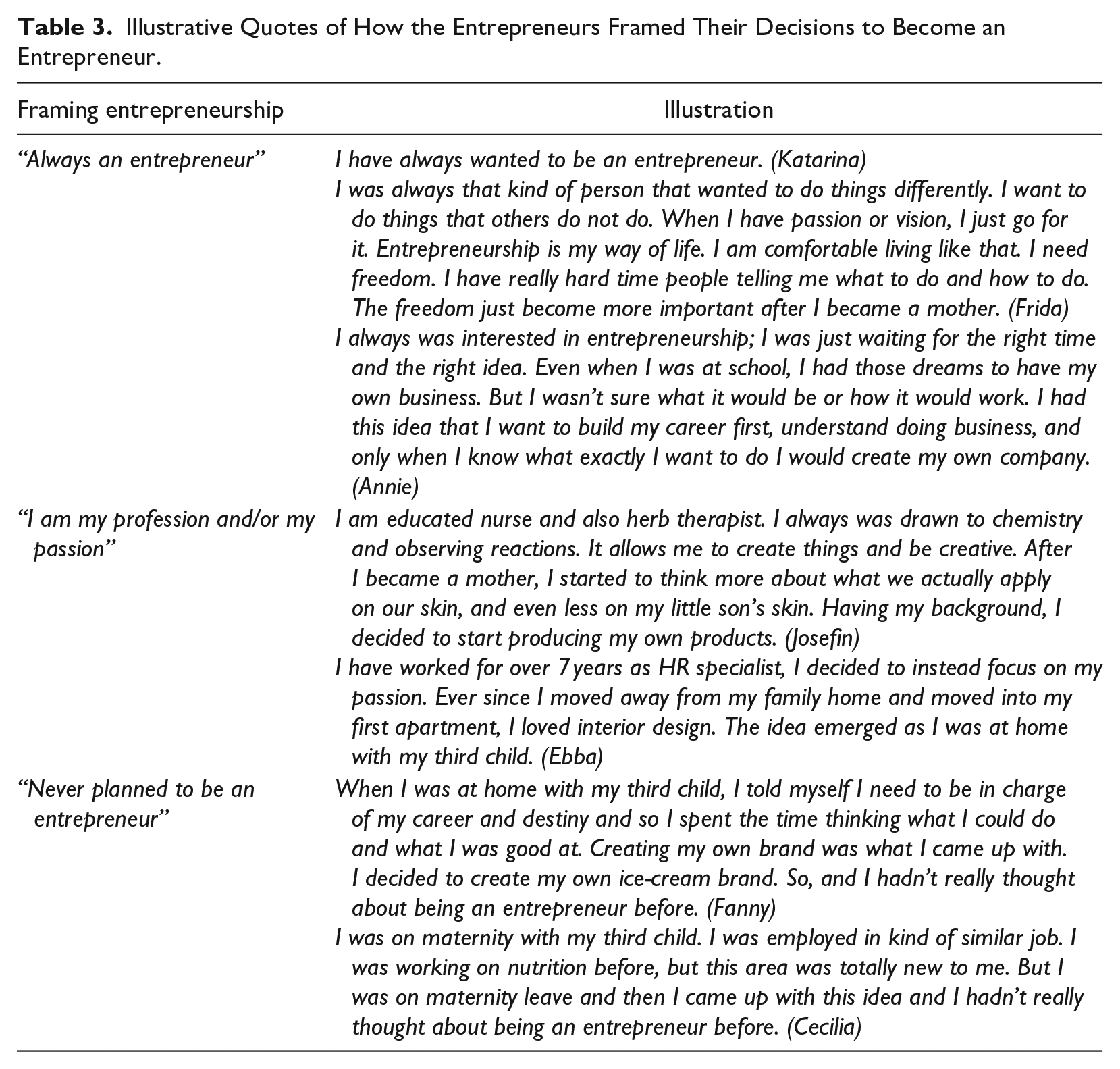
Overall, the participants depicted their decisions to start a business as a choice they made either in pursuit of an authentic self, in search of a challenging career, or in response to an identified opportunity. Thus, they presented as agents actively paving their career trajectories; time for reflection and for self-evaluation is visible in all stories. The search for opportunities to self-actualize and follow one’s own passions and for challenges, the pursuit of opportunities, the meaning of motherhood, the important role of the life partners and of the Swedish welfare system as an enabler constitute other themes. Notably, childcare issues were not a key feature; there was no mention of entrepreneurship as a way in which work and family obligations could be combined. Furthermore, the participants did not directly relate motherhood with entrepreneurship; rather, they stressed the importance of parental leave and the time it provided to make the decision to engage in entrepreneurship (see Table 3). More specifically, the participants referred to time as a valuable resource, a resource for taking “me-time” and reflecting on where they were in their lives and how they felt about it; time to break behavioral patterns and search for/or create opportunities for themselves and time to plan their next steps, for example, to kickstart their ventures. Regardless of how the decision to enter entrepreneurship was framed, the participants emphasized the importance of parental leave and the time it provided to make important career-related decisions.
Illustrative Quotes of How the Entrepreneurs Framed Their Decisions to Become an Entrepreneur.
Theorizing the Model
To understand why mothers of young children become entrepreneurs in Sweden, we scrutinized respondent narratives for motives and found that time was an important issue. Another critical factor was timing; this was vital in terms of contextualizing the decision to be entrepreneur within the institutional conditions in which they lived. Our findings are illustrated in Figure 2 and are supported by relevant quotes in Table 4.
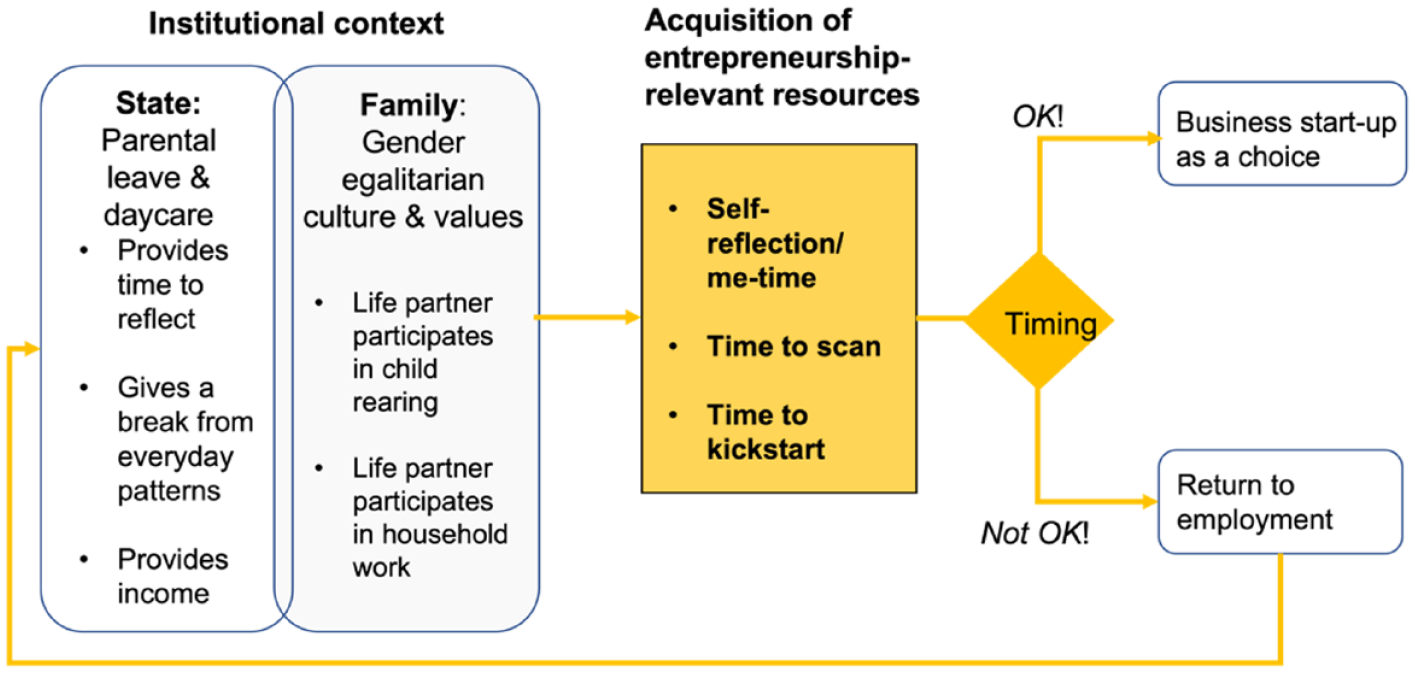
Model of the role of the Swedish institutional context in women’s acquisition of entrepreneurial resources and their subsequent decisions to become an entrepreneur.
Emerging Themes from the Data.
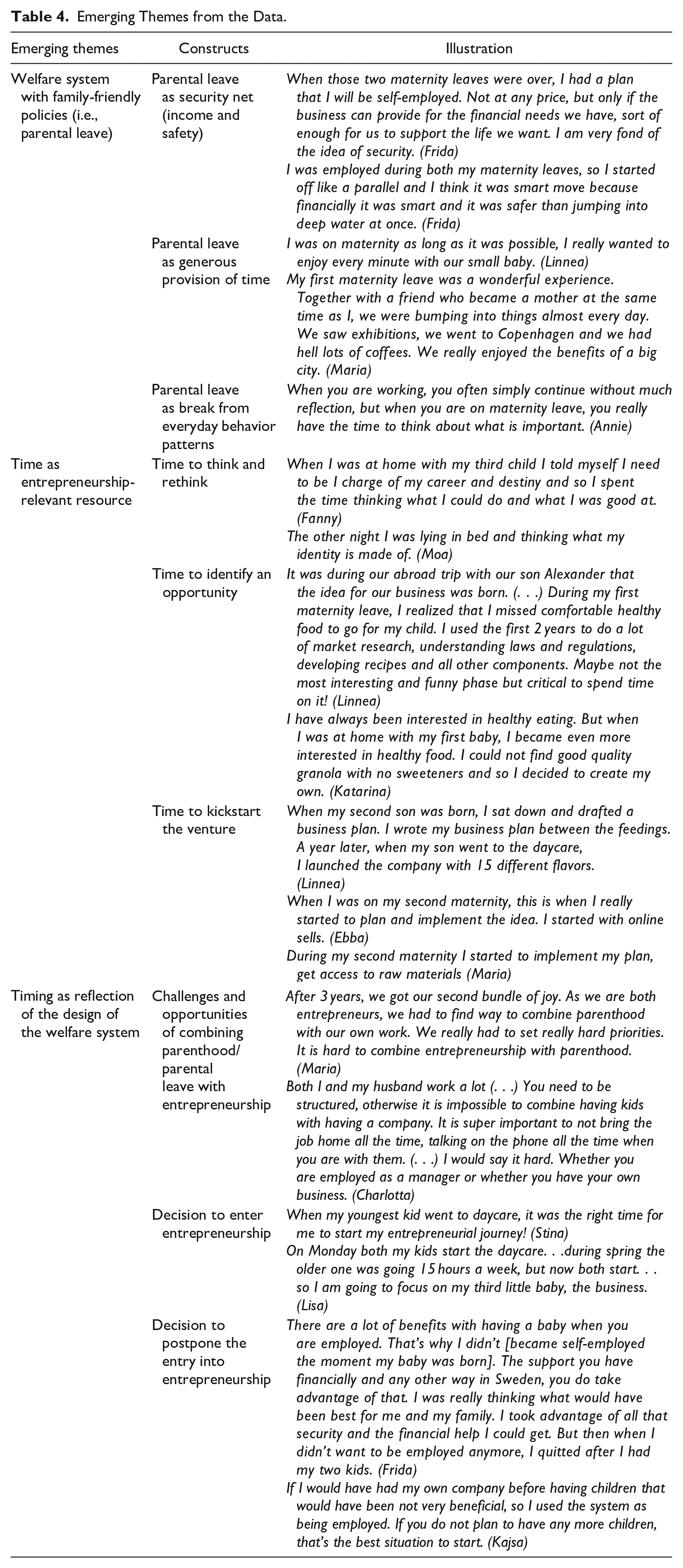
Our model theorizes family-friendly policies with paid parental leave as a trigger and potential enabler of the entrepreneurship for women. Whether they were thinking about entrepreneurship as a possible career option, all the participants indicated that family-friendly policies with paid parental leave positively contributed to their decisions to become an entrepreneur. We show how the provision of time can become the enabling mechanism of women’s business start-up by allowing them to reflect upon their careers, by sensitizing their alertness to business opportunities, and by providing a safe space for planning and implementing these venture ideas. As such, we show that time provided to women via family-friendly policies is likely to be seen as a valuable entrepreneurship-relevant scarce resource. Interestingly, our findings suggest that parental leave and the provision of time may not be sufficient to motivate the entrepreneurial activity. Timing 4 plays the role of gatekeeper; if the timing is considered to be wrong, women remain in employment, but if it is considered to be right, women decide to start a venture as Plan A. The assessment of timing reflects the interplay between the welfare system design and a mother’s contextual situation (her family and career plans in the bigger picture, etc.).
Contextualizing Time—It Is Not Motherhood; It Is Parental Leave
Becoming a mother and adapting to the role of mother was not the crucial element underlying the women’s decisions to become an entrepreneur. Rather, it was the opportunity to stay at home with their children, and reflect on their own lives, that triggered the decision. This is illustrated by Annie:
I do not think that becoming a mother has influenced me in any way to start my own business. I decided that a long time before. After three children, I finally felt that I now have the possibility to start my own company. . . . I was ready to start my business. Nothing was going to stop me. . . . Maternity leave provides a pause in life, and you can really re-think what you want to do in your life. When you are working, you often simply continue without much reflection, but when you are on maternity leave, you really have the time to think about what is important.
It may be that the Swedish welfare system with its employment guarantee provides an additional security cushion for women such that they are not afraid of trying to create a business, and if it does not work, they can return to their jobs. All the participants agreed that the Swedish welfare system is very beneficial for women and parents in general. Kajsa said “Sweden, I think, has the best parent support system in the world.” When discussing its advantages, many raised the fact that the system provides the possibility for parents to spend time with their families while receiving monetary remuneration, flexibility to combine parental leave with employment and/or self-employment, and the opportunity to engage in self-employment on a trial basis. For example, Frida, who was employed in a managerial position prior to her third pregnancy, noted:
So, when I was pregnant with my third child, I went to Thailand for 2 months, and there I thought a lot. I did not leave the company directly. . . . When I was just ready to take the step, everyone was saying I should wait a couple of years so my children would be older, but he [her husband] said, “You have been talking about this for so long now; you should not stop. Just do it, just do it.” He had a permanent job at the time, and therefore, we knew we had an income in the family.
Generally, our participants saw being at home with their children as an opportunity. For example, Hanna explained, “No, I did not think, ‘Now that I am pregnant, I am not going to take the chance.’ Rather the opposite: ‘Okay. If I am going to be home with the baby, why not take it.’” Kajsa emphasized that “the possibility to create something for myself, not like I need to survive but to achieve something” was important for her. She stressed that her choice of business was deliberate and intentional and that she engaged in it because it was relevant to her as an individual and not to her as mother. Later, she added, “I think I always had this dream to have my own business, but I never thought I would do that while having small children.” However, she realized that being on parental leave provided her time to think about this dream and to search for opportunities.
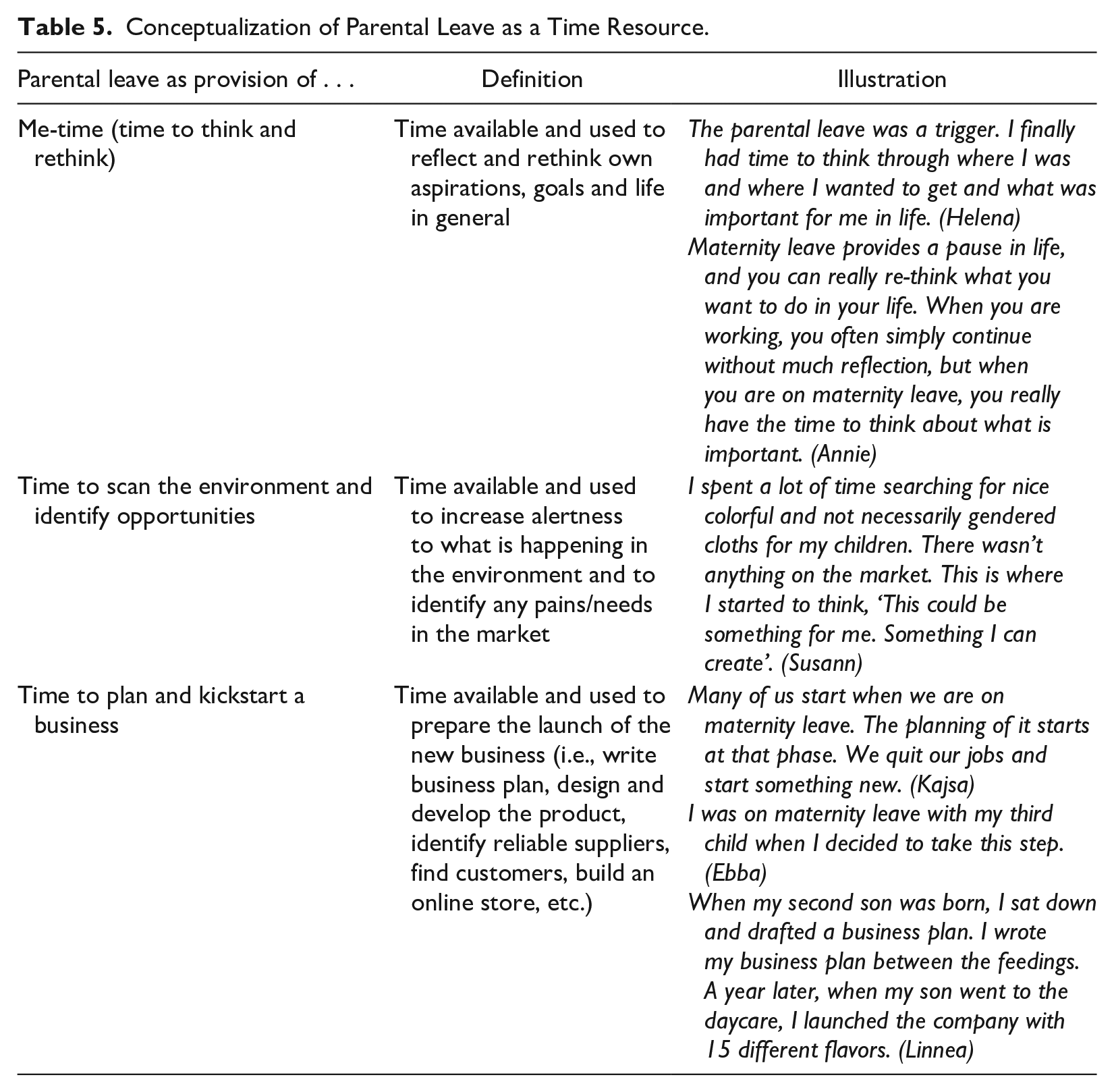
Simply put, time was perceived as a valuable resource that the women could access because of the generous parental benefits system in Sweden. Time was referred to in three different ways: “me-time,” that is, time to think and reflect about oneself; time to scan the environment and identify opportunities; and time to plan and kickstart their ventures. Table 5 illustrates this conceptualization.
Conceptualization of Parental Leave as a Time Resource.
Me-Time: Making Sense of Who I Am and Who I Want to Be
Although the stories vary considerably, we identified one dominant theme: the theme of self-reflection and the consequential search for challenge and purpose. Challenge means different things to different people—it may be taking on more responsibility, assuming a new role, learning a new language, etc. (Sullivan et al., 2007)—but the overall idea is present in many of the stories in this study. Moreover, seeking purpose and alignment with one’s own values dominates the life stories of our participants. For example, Helena realized that she was not in harmony with her values. She said, “Parental leave was a trigger. I finally had time to think through where I was and where I wanted to get and what was important for me in life. I realized I was not really happy where I was.”
Surprisingly, becoming a mother, although important, was not a dominant theme. For instance, Stina started by saying, “I always wanted to be a mother and wife and have a big family. As a small girl, I imagined a countryside house and many kids in it. I was never interested in a career.” However, she continued, as soon as her children were of school age, she realized that she wanted to do something with her life and needed a challenge that would help her feel fulfilled. Being a mother was not enough. As a result, she enrolled in a vocational education program and created her own business to fulfill a newly encountered passion. Jenny and Charlotta told similar stories. For them, being “a good mother” was important, but this importance did not stand in the way of being a happy and fulfilled woman through a career as well. It was emphasized that fulfilling passions and having meaningful careers helped these women be better mothers and better role models for their children. For example, Moa was convinced that she would not be a good mother if she was not able to fulfill her passion for design. She said,
I am an entrepreneur. I am a mother, a wife, and a woman too, but I am an entrepreneur in the first place. I am creative. I need to have my mind and my hands occupied to feel happy. I want my kids to understand that being happy is important. I want to be a good role model to them. Being an entrepreneur helps me to achieve this.
Similarly, Helena asserted that being happy and satisfied showed her children the right approach to life and gave her the strength to endure all the challenges that life brings.
Time for Scanning the Environment and Identifying Opportunities
Parental leave offered opportunities for many of the women to meet others and increase their participation in their social and/or public lives; this time was used to scan the environment, identify and evaluate opportunities, and address potential challenges. For example, Sofia, a mother of two, admitted that parental leave provides women with time to not only reconsider their own lives, but also to generate ideas and do fun things while bringing along their babies. She said, “This was the best time. I had time to meet my friends, other mothers; sit and talk in a café about everything and nothing; visit art exhibitions; do lots of fun things.” Kajsa felt that parental leave offers women time to reflect on their own lives and to start thinking and planning their businesses. She said, “Many of us start when we are on maternity leave. The planning of it starts at that phase. We left our jobs and started something new.” Helena never considered becoming an entrepreneur; she was content working as an employee until she returned to work after her first maternity leave and felt upset about the limited prospects her employer offered for career development. Consequently, she decided to create her own business to grow her career and create a working space that treats women fairly; her second maternity leave was used to identify the exact opportunity she wanted to pursue and turn her plan into reality. Likewise, Cecilia did not plan to be an entrepreneur; she had been a satisfied long-term employee in a large company. However, her third child was allergic to milk protein and no milk-free baby products existed on the market prompting her to address the situation. She noted, “I actually left during my maternity leave because I wanted to start this instead.”
Time for Planning and Kickstarting a Venture
For the participants who saw themselves as entrepreneurs, maternity leave provided a great opportunity to start planning their ventures. For example, Jenny said she always wanted to have her own hair studio, but she knew that it was better to be an employee initially, to gain experience. When she had her third pregnancy, she decided she would not return to employment but instead, use the time at home to create her own venture. Similarly, for Annie, the decision to become self-employed was always her ambition; however, she had to wait for the right time. When her third child was ready to start daycare, she decided it was time to realize her dream and started two independent ventures—sales consulting/coaching and designing fashionable safety reflectors for adults; developing the product ideas and searching for possible suppliers commenced her maternity leave.
Thus, for those women who had never considered entrepreneurship previously, the time made available during repeated parental leave offered an opportunity to consider and design their ventures. For example, Linnea, a lawyer by education, said that she used the time between feeds for her second child to sketch out the business idea identified during her first parental leave (vegan baby food to go). She felt energized by being able to engage in both caring for her children and planning her venture at the same time during this break from her “normal” daily work.
Parental Benefits and the Timing of the Decision to Enter Self-Employment
Our participants were clear that the design of the Swedish welfare system influenced their decisions regarding when to enter entrepreneurship. For example, Katarina stated she waited to start her venture until her family plans were realized commenting: “If I was expecting another kid and another maternity leave, I do not think I would have taken this risk.” Similarly, Frida stated that she would have not started her business if she planned to have more children:
If you are planning to have children, I don’t think it is a financially good decision to start your own company. In that case, it is much better to be employed in the Swedish system. However, if you do not plan to have more children, that’s the best situation in which to start.
The participants were very positive about the opportunities the system provided. For example, Cecilia emphasized the system’s flexibility as well as the possibility to combine different types of activities to reduce risk and thus, balance available and missing resources more effectively. But they were also very aware of limitations. While, in theory, the benefits for the self-employed and employees are the same, the former may have difficulties working part-time, hiring temporary staff, or temporarily closing their businesses when they have another child. Moreover, they may have difficulties proving to authorities that they are indeed, not working while on parental leave. Moa stressed that when she had her second child it was almost impossible to combine running her venture and parental leave; she could not take time off from her business, so without the support from her husband, also an entrepreneur, who took care of the baby when she was working, she would not have been able to do her work. Others who welcomed another child after starting their ventures also spoke about how the rule rigidity made it difficult to combine parental leave with managing a business which would not have been possible had their partners not made an equal contribution to childcare and household work.
Overall, the design of the Swedish welfare system offers individuals time to think through and reflect on their options, build their networks, and plan their ventures; at the same time however, it makes creating a business difficult if further parental leave is imminent. In effect, it incentivizes women to engage in business creation only after they have completed their families. The welfare system provides space for contemplating business start-up, but its design and implementation make it difficult for established entrepreneurs to use parental benefits while maintaining or growing their ventures.
Partner’s Involvement as a Reflection of Gender Egalitarianism in the Family
Another important factor was the involvement of the women’s partners in childcare and household chores. We observed two patterns. The women who had no further children after the start-up decision had a greater focus upon the value of parental leave for them rather than if, and how, their partners used parental leave. A partner’s involvement was not essential for their decision to start a business. Those who had another child after creating their ventures, but were not able or willing to make full use of their parental benefits, repeatedly acknowledged the crucial role their life partners undertook in juggling new parenthood and the entrepreneurial activity. For example, Moa mentioned that her entrepreneur husband accompanied her to some business meetings for taking care for the baby while she interacted with customers and suppliers. Reflecting on her entrepreneurial experiences, Sofia felt that sharing “life with a fully egalitarian partner” was key to her success. Gender egalitarian values were thus, an important aspect of informal context that positively contributed to the decisions to start and continue a business.
In conclusion, the context for entrepreneurship among women in Sweden consists of a combination of different layers. The regulatory legislative framework provides income and job security such that both parents can care for children in the home when they are young. The framework extends beyond parental leave with a very well-developed and highly subsidized daycare system. Moreover, the societal context comprises a set of accepted norms of behavior—in this case, being a good parent and both partners playing active roles in childcare. The respondents who became parents anew while already running their ventures, emphasized the role of their life partners referring to parenthood as shared and egalitarian, largely avoiding references to motherhood or fatherhood. The context also supports self-realization through work as the norm for women, as well as for men, suggesting that “simply motherhood” is not enough. Women who return to employment after maternity leave have different possibilities. Engaging in entrepreneurship is therefore, embedded in this contextual complexity. As argued above, parental leave as a consequence of motherhood is a factor in women’s decisions of whether and when to engage in business creation.
Discussion
We have examined why women, who are mothers of young children, create new ventures despite the fact that the social welfare system privileges employment above entrepreneurship. Furthermore, we explored how family-friendly policies inform the career decisions of these mothers. Based on our analysis of the life stories of 18 Swedish mothers, we find that women engage in business creation when they have young children because of their socio-institutional context; that is, the conjuncture of welfare state policies and gender egalitarian values within the family provides them with time as a valuable resource.
Time as an Entrepreneurship-Relevant Resource
Despite efforts to increase gender equality, women still spend more time on housework, including the cognitive labor associated with managing a home (i.e., planning and managing household work) (Daminger, 2019). As such, women have more limited access to a key resource for entrepreneurial action—time. Without time, women may not have the capacity to break existing behavioral patterns, scan the environment, or simply develop a plan for the future. As the saying goes, “it is impossible to pour from an empty vessel.” Hence, the availability of time is likely to affect women’s careers and the career choices available to them.
Becoming a parent and making use of parental leave provided our participants with the opportunity to take time to reflect, scan the environment, think about opportunities, and plan their businesses. The participants framed the decision to start a venture as a positive choice referring to themselves as agents. Entrepreneurship was considered to be an outcome of, and a response, to a reevaluation of their preferences and prevailing social structure rather than an adaptation to the role of mother. Indeed, they believed that becoming a mother did not mean they could not focus upon themselves; as such, time was crucial for them to be able to reflect and plan for changes if desired. Similarly, this process of self-reflection did not occur automatically with age, as suggested by McAdams (1993), who posited that people approaching their forties begin to look back on their lives and reflect on whether they have achieved their ambitions. Rather, their self-reflection was triggered by the interruption in everyday life caused by taking parental leave. It provided a break from the demands of prior employment and crucially, time and space to reconsider their lives. Finally, having reflected, our participants then took action; we theorize therefore, that time becomes an entrepreneurial resource when individuals experience it as providing space and value and it leads to action.
Interestingly, contrary to findings from Anglo-Saxon research, we do not find that our participants created new ventures to combine work and childcare, nor did we find that they utilized a relational approach factoring in the needs of their children, spouses, or other family members in their decisions to become an entrepreneur. On the contrary, they used parental leave to think about themselves and their futures. Although some may assume that women on parental leave are isolated and burdened by housework and childcare, such assumptions remain contextually bound. Our study deepens the understanding of the critical interplay between parental leave policies and informal institutions, such as gendered egalitarian values within the family, that indeed allows people on parental leave to use some of the time to focus on themselves while still caring for their children. Relatedly, the new businesses were not home based and/or solely related to products and services with maternal/childcare focus (except for Cecilia, Linnea, and Zoe, who run baby- or children-related businesses, but none of were home based). Those in our study self-selected as entrepreneurs were fully committed to their ventures, and effectively used their resources (i.e., human, social, financial, and time) to build ventures that go beyond the subsistence level. While the size of the businesses varied, the majority had employees (Table 2), and some of the women have become serial or habitual entrepreneurs. Therefore, time is a resource not only for creating a business, but it also enables business growth.
State and Family as Institutional Enablers of Business Start-Up
Research has identified some institutional norms as constraining for women’s entrepreneurship (Welter & Smallbone, 2011), suggesting that the overall institutional setting (i.e., a country-wide labor-market policy) may influence work–family decisions. While the influence of gendered institutional constraints has been identified as a barrier to women’s entrepreneurial activity (Pedulla & Thébaud, 2015), our evidence suggests that the institutional setting can become an enabler of business start-up by providing individuals with time, a scarce entrepreneurial resource. When given time and space, our participants were able to reflect on their life goals, identifying opportunities, and actively planning and kickstarting their businesses. In other words, when constraints (i.e., lack of time, lack of flexibility, lack of available childcare) were removed, they did not have to prioritize others but could focus on creating meaningful careers for themselves. However, the provision of parental leave alone would not be a guarantee that women have more time if it were not combined with gender egalitarian values regarding the division of childcare and housework. Thus, our results suggest that gendered institutions have a direct effect on individual behavior, that enabling institutions substantially influence women, and that many “gender-traditional” behaviors have been adapted to conform to institutionally constraining contexts. In line with Pedulla and Thébaud (2015), our findings indicate that institutional environments and policies matter for reshaping gender (in)equality. In our case, it also provided time and space for women to consider entrepreneurship as their future career, whether intentionally planned or emergent.
Nonetheless, our study also reveals that timing business start-up after the birth of one’s last child was optimal to fully receive the benefits from the family-friendly policies. While the policies proved beneficial for business start-up as they granted women time prior to, and during, the start-up phase they can also have adverse side effects. First, most women will stay in employment until they consider the time is right to start a business. Second, taking parental leave may become a barrier for development and growth once a business is operating. Here, another dimension of the institutional context, namely the gender egalitarian values regarding the division of childcare and housework within the family, proved particularly important for helping mothers to overcome some of the policy-related barriers. Life partners (at least in part) shared the housework and undertook childcare when the women worked within the businesses. While beyond the scope of our study (which focuses on business start-up), these insights raise important questions regarding whether and when certain features of welfare systems might also become disablers of business development and growth and how they interact with other features of the institutional context, such as gender egalitarian values within the family.
Overall, our study suggests that in this context, the state and the family act as interrelating institutional enablers for giving women time to be entrepreneurs and prompt new venture creation at particular junctures in the life course.
Timing of the Start-Up as Influenced by Parental Leave Policies
It has been demonstrated that when navigating along their life course, women adopt various coping strategies to synchronize the rhythms of their household and work spheres (Ekinsmyth, 2013; Jayawarna et al., 2014). Timing decisions, such as when to enter or exit entrepreneurship, are an integral part of these strategies (Jayawarna et al., 2021). In this article, we explored timing in relation to the decision to engage in business start-up and the embeddedness of this decision in its institutional context. Timing was very important for our participants to review when might be the most suitable moment for business creation. Multiple factors related to timing were considered including family plans, their resourcefulness, and the risks associated with becoming an entrepreneur, given the design of Swedish welfare system and parental benefits. Reflecting the notion that time matters at specific junctures of women’s lives, and that it is institutionally shaped, our findings illustrate that timing is closely connected to, and affected by, embeddedness in institutional settings and life cycle considerations. Our evidence suggests that the timing of the decision to start a business was primarily affected by the design of family policies. Given the complexities of running an operational business while being on parental leave, our participants preferred to wait to create their ventures until their last planned child was born.
Thus, in our institutional context, women not only try to achieve synchronization between the rhythms of their family and work spheres, but they also appear to time their choices according to the design of parental leave policies. By elucidating this interplay of factors, our study reveals that the relationship between entrepreneurship and welfare state policies is more complex than previously assumed.
Business Start-Up as a Choice
It is argued that once they are parents, some women select into self-employment to combine economic activity with childcare. We argued that in a context with generous family policies, such as in Sweden, this would not be the first choice. A secure income from employment with a good pension plan is still the better option for most women—and men—in Sweden, perhaps particularly so since employment is much easier to combine with a family than entrepreneurship. Entrepreneurship also represents a risk since approximately half of all businesses in Sweden fail within the first 5 years (SBA, 2019).
However, we show that if provided with generous parental benefits and affordable childcare women may have more freedom to pursue entrepreneurship if this is their chosen career. We also found that while the system is conducive to business start-up, it can also be rather rigid and limiting for women already pursuing entrepreneurial careers if they choose to expand their family. However, even in such cases, our participants did not exit their ventures, but persisted. We argue that this was because entrepreneurship was their Plan A, a positive choice. For those such as our participants, who have a viable business idea, a market, and the necessary resources in terms of human and social capital, we demonstrate that the Swedish welfare system provides yet another crucial resource, namely, the time needed to make a desired career change.
Implications for Policy
The most common motivation behind policies to increase women’s business ownership is economic growth; gender equality is thought to arise automatically. However, entrepreneurship policies have a limited definition of gender equality—they tend to assume that the greater the share of women business owners, the greater is gender equality (Ahl & Marlow, 2021). This assumption is questionable. There is an inverse relationship between a country’s economic prosperity and the number of small businesses (Bosma et al., 2021), and some of the poorest countries in the world have the highest shares of women-owned businesses (Elam et al., 2019). Inverting the argument and making gender equality the overriding goal, we argue, like Tillmar et al. (2022a), that in poorer patriarchal societies with dysfunctional states, business ownership may indeed be the only available means for women to achieve financial and other types of independence. In contrast, in wealthier countries with well-functioning states, a welfare model built on financial independence for each individual provides income security and subsidized daycare to help raise a family; it encourages gender equality in terms of sharing childcare and household work between men and women. Such systems avoid entrepreneurship as Plan B—namely, necessity entrepreneurship that combines work and family, which often results in poor business performance. Instead, such systems act as a trigger for entrepreneurship as Plan A by providing time to rethink one’s career. Firms founded as Plan A typically have better survival and growth chances, so as a side effect, these systems do indeed stimulate the kind of businesses that entrepreneurship policies aim at in the first place. The particular system applied in Sweden needs to be tweaked, though, to not deter people from business start-up before they have completed their families and to allow them to continue running their businesses even if they have additional children.
Limitations and Future Research
Although our data and context are unique in offering an opportunity to study women’s entrepreneurship, our work is not without limitations. First, although we collected longitudinal data, we were not able to follow our entrepreneurs in real time as they were making their decisions to start their businesses. Thus, our accounts represent retrospective sense-making by the participants regarding how they created their ventures. Since people are the heroes of their own stories, they may reduce the roles of others or downplay disappointments. Following the participants in real time as they went through the reflection and sense-making process would have advanced our knowledge further.
Second, our sample includes Swedish women who were active in the labor market prior to becoming mothers. Including entrepreneurs who were not active in the labor market before motherhood would advance our understanding of the phenomenon. Moreover, we selected women who had started, and were managing sustainable businesses and who had the necessary resources in terms of human and social capital to do so. A different data set would be needed to draw any conclusions about entrepreneurship as a career choice for women of all socioeconomic backgrounds, not least immigrant women who may have additional difficulties in accessing relevant resources. Future research could, for example, investigate how immigrants with varied socioeconomic backgrounds use the welfare system and whether resulting business start-up reflects opportunity entrepreneurship or precarious work. Similarly, future research could study different welfare and family cultural systems internationally to capture the contextual differences and their impact upon women’s decisions.
Third, our findings concerning parental leave as an enabler of entrepreneurship suggest that parental leave offers women an opportunity to break the behavioral patterns of everyday work, providing time to reflect, scan the environment, and plan/kickstart their new ventures. Future research could therefore, explore whether men who take parental leave use the time provided in similar ways. Future research could also explore whether any type of sabbatical or break from one’s normal job over a longer or shorter period would have similar effects for individuals who take it—that is, whether such breaks facilitate business start-up. Conversely, future research could adopt a norm-critical approach and consider men as enabled or constrained by institutional settings, particularly highlighting their privilege of time that men tend to enjoy and its institutional enablers thus, challenging the heroic male entrepreneur acting only via his own agency.
Finally, our decision to focus on business start-up by women with young children also offers the opportunity for future studies to examine how factors that were beyond the scope of our research play into this decision. For example, scholars could draw on the literature on the motherhood penalty (Benard & Correll, 2010) to examine how gendered relationships in the family and workplace (and society more generally) could inform women’s decisions. Similarly, a better understanding of how uncontrollable adversities, like COVID-19 and the measures introduced to combat it that created lots of time for some workers who were furloughed, but that radically squeezed others (particularly working mothers and mothers on parental leave who were homeschooling) affected these workers’ decisions about business start-up and the timing of it.
Conclusion
Our study conceptualized time as a valuable and scarce resource to which women often lack access; we identified three important aspects of time that women acquire during parental leave: time to think and rethink, time to scan the environment and identify opportunities, and time to plan and kickstart a venture. Furthermore, we demonstrated that the institutional context—here, the design of the Swedish welfare system and a gender egalitarian culture can offer women access to time that they otherwise denied them and as a result, engage in business start-up not as a fallback option (Thébaud, 2016) but rather, as a desired career—a Plan A. This insight calls for a better understanding of societal structures, such as welfare systems, as entrepreneurial agents and not only individuals. In comparison to policies that often target particular measures, groups, industries, etc., the study suggests that structures can be entrepreneurial—or at least support business start-up more broadly than has been recognized in entrepreneurship policy research to date.
Our observations lead to the following contributions to theory. First, by emphasizing the importance of time, we respond to the call for more research on the role of time in entrepreneurship (Lévesque & Stephan, 2020). It has been shown that time is a gendered constraint (Daminger, 2019; Foley et al., 2018); Foley et al. (2018) show that women want and need flexibility because they do not have control of time and that the promise of challenging and purposeful work attracts them to entrepreneurship. However, the key for women to successfully engage in business start-up is having valuable time and control over its allocation. We show that time is institutionally enabled (or constrained) by an interplay between welfare system and family systems. Hence, we theorize that time matters if it provides valuable space and is action oriented. By identifying time as a critical resource that women gain access to via family-friendly policies, we focus not on limitations (Tonoyan et al., 2020) but on enablers of entrepreneurial action for women entrepreneurs and hence, extend the current new venture creation literature. Time is thus, considered the “most valuable and scarcest resource of all” (Zachary et al., 2015, p. 1402), but as Lévesque and Stephan (2020) argue, still largely neglected in entrepreneurship research. Our data show that “me-time” is a particularly important factor in women’s career decisions.
Second, we extend the discussion of time in the entrepreneurship literature by revealing the interplay of individual and contextual aspects that inform women’s entrepreneurial action. More specifically, we show how the design of the Swedish welfare system influenced the timing decisions made by our participants regarding the most apposite point to create a new venture. The “right time” was a key variable in such decisions; there was no rush to implement their ideas until their second or third child, thereby timing their decisions with the institutional context in which they are embedded.
Third, we contribute to the literature on women’s entrepreneurship and institutions by identifying parental leave as a possible trigger for women’s career transition to entrepreneurship. Parental leave acts as a trigger because it breaks behavioral patterns by allowing many women time and space to think about their own priorities and in so doing, reflect on their values, goals, and opportunities and act where appropriate. It provides an occasion to search for oneself, to take “me-time,” and to acquire entrepreneurship-relevant resources. Interestingly, it was not motherhood but rather parental leave that led to a change in career paths. Given the income and job security inherent to the parental leave system in Sweden, and the availability of daycare, many women do not have to be preoccupied with balancing work and family obligations when making career choices. As such, we expand current understanding of the role of the state with its welfare system as an entrepreneurial agent.
Fourth, contrary to the extant literature positing that women are above all relational, prioritizing the role of others in their career decisions (Sullivan & Mainiero, 2007; Sullivan et al., 2007), our evidence suggests that under the right circumstances and conditions (i.e., parental leave and one’s partner taking time to care for the children), such relationality becomes less important. We thus suggest that career theory claims that most women privilege their relationships and families in their career choices is not related to gender, but to the absence of equal career opportunities for men and women in most countries. In contrast to the Anglo-Saxon context, we find that in contexts with family-friendly policies, institutions can act as enablers of entrepreneurship as a desirable career, Plan A, and not only a fallback option, Plan B. See Figure 3 for a heuristic illustration. This realization has important implications for policy as it influences who enters entrepreneurship and what type of ventures they create.
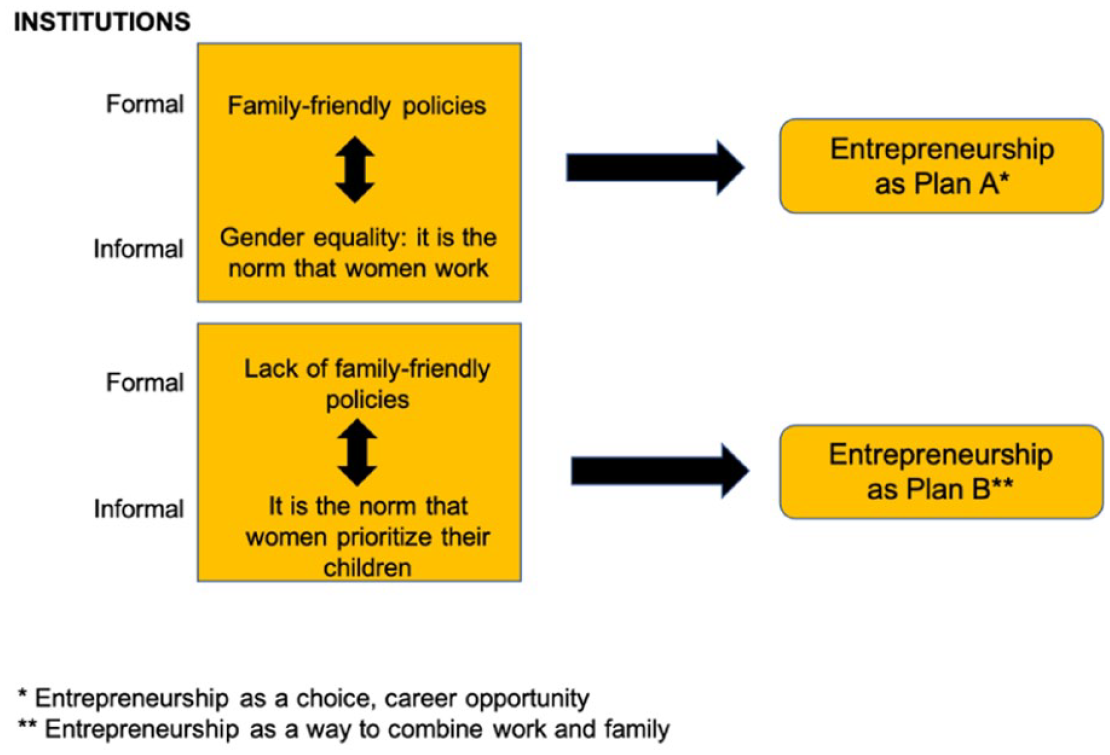
Comparison of different institutional contexts and the impact of the Swedish welfare system on entrepreneurship.
Fifth, these insights are also important for theories on new venture creation. They deepen our understanding of new venture creation from a resourcefulness standpoint (Baker & Nelson, 2005; Zahra, 2021). Research in this space has coalesced around the notion that resourcefulness is a key capability of entrepreneurs (Hornaday, 1982), but its dimensions “are still under development” (Bradley, 2015, p. 1). Our research suggests that timing the choice of business start-up at particular junctures of the life course could be a possible dimension of entrepreneurial resourcefulness, serving as a foundation for offsetting one critical resource limitation for entrepreneurs—lack of time. Relatedly, while not our explicit focus, our research potentially connects to theories on the external enablement of new venture creation (Davidsson et al., 2020). Specifically, in our study, the provision of parental leave policies, in conjunction with gender egalitarian values within the family, can be conceptualized as an external enabler that women entrepreneurs can creatively—and serendipitously—benefit from to create new ventures.
Supplemental Material
sj-pdf-1-etp-10.1177_10422587221126493 – Supplemental material for Timeout: The Role of Family-Friendly Policies in Business Start-Up Among Mothers
Supplemental material, sj-pdf-1-etp-10.1177_10422587221126493 for Timeout: The Role of Family-Friendly Policies in Business Start-Up Among Mothers by Magdalena Markowska, Helene Ahl and Lucia Naldi in Entrepreneurship Theory and Practice
Footnotes
Acknowledgements
We are very grateful to the editor, Susan Marlow, for her exceptional guidance and to the two reviewers, who encouraged and helped us enhance the quality of our manuscript through their constructive comments. Our work has also greatly benefited from discussions at the 2018 BCERC conference, the 2021 AOM Annual Meeting as well as Paper Development Seminar in Seville and Paper Development Bootcamp at Jönköping International Business School.
Declaration of Conflicting Interests
The author(s) declared no potential conflicts of interest with respect to the research, authorship, and/or publication of this article.
Funding
The author(s) disclosed receipt of the following financial support for the research, authorship, and/or publication of this article: The authors gratefully acknowledge the support of Swedish Research Council through the grant 2015-01678 for the research, authorship, and/or publication of this article.

Supplemental Material
Supplemental material for this article is available online.
Notes
Author Biographies
References
Supplementary Material
Please find the following supplemental material available below.
For Open Access articles published under a Creative Commons License, all supplemental material carries the same license as the article it is associated with.
For non-Open Access articles published, all supplemental material carries a non-exclusive license, and permission requests for re-use of supplemental material or any part of supplemental material shall be sent directly to the copyright owner as specified in the copyright notice associated with the article.
