




Abstract
A long-term surveillance study was conducted on 95 search-and-rescue (S&R) dogs deployed to the September 11, 2001, terrorist attack sites; an additional 55 nondeployed S&R dogs served as controls. After 5 years of surveillance, 32% of the deployed dogs have died and 24% of the nondeployed dogs. The mean age at the time of death in these 2 groups of dogs is not significantly different. Causes of death in both groups of dogs include inflammatory, degenerative, and proliferative conditions. No primary pulmonary tumors have been identified to date nor has any significant level of toxicant been found in the tissues from these dogs using assays for general organic compounds and metals or, specifically, for polychlorinated biphenyls. However, significant numbers of both deployed and nondeployed dogs have evidence of inhaled matter as demonstrated by the presence of anthracotic pigments or refractile particulate matter in pulmonary tissue. Although S&R activities in response to the 9/11 terrorist attacks exposed dogs to a wide variety of potentially toxic compounds, to date, these dogs do not appear to suffer from higher mortality or increased pulmonary disease compared with nondeployed dogs. To the authors' knowledge, the current survey represents the first long-term and large-scale survey of the pathology and toxicology of S&R dogs deployed to a major disaster site.
Introduction
The objective of the current survey was to document the long-term mortality, pathology, and toxicology of search-and-rescue (S&R) dogs deployed to the September 11, 2001, terrorist attack sites in New York City, New York (World Trade Center buildings and the Fresh Kills Landfill, Staten Island), and Washington, DC (Pentagon building). 16,21 These S&R dogs were directly exposed to a variety of airborne and surface toxicants without the benefit of the personal protective equipment worn by human responders. The causes of mortality, pathologic findings, and toxicologic effects in these dogs have potential implications for long-term health effects in human rescue workers and may also provide a guide to the risk associated with canine S&R activities for dogs deployed to other disaster sites.
The toxic components encountered in the fumes, smoke, and ash resulting from the destruction of the World Trade Center (WTC) have been described previously. 7,15 The S&R dogs in this study were deployed within hours of the buildings' destruction and arrived at the disaster sites within hours to days after the attacks. None of the dogs in the current study were present at the time of the WTC building collapse. 21 The dogs were exposed to large amounts of airborne toxicants and particulate matter; the routes of potential exposure include respiratory, dermal, oral, and ocular. 7 Classes of potential toxicant compounds include hydrocarbons, polychlorinated biphenyls (PCBs), heavy metals, gases, acids and alkalis, ethylene and propylene glycols, phenols, alcohols, and asbestos. 15 Even after the rain on September 14, 2001, cleared the air, there remained thick coatings of dust and ash at both the primary sites and covering the debris when it was hauled to secondary sites for further examination. The majority of the dogs at the WTC and Pentagon sites were initially searching for live victims, whereas the dogs at the Fresh Kills site were searching for human remains. 21 All of these S&R dogs had extensive exposure to potentially toxic or carcinogenic compounds in the abundant dusts and ash. Of the greater than 40,000 human rescue and emergency personnel involved in the response to the WTC attacks, there have been numerous reports on the acute and long-term respiratory system effects. 1–3,5,8,9,11,14 In comparison, the Pentagon attack site has not resulted in reported respiratory effects in human responders.
Materials and methods
Initially, 97 S&R dogs deployed to the 9/11 sites were enrolled in a medical surveillance study; of those dogs, 95 had complete data available and were considered for inclusion in the long-term mortality study. 16 An additional 3 deployed dogs that died during this study period and had basic deployment and signalment information available were added to the long-term mortality study. Fifty-five nondeployed S&R dogs were enrolled as unexposed cohorts. The WTC and Pentagon served as the primary rescue sites, whereas the Fresh Kills Landfill served as the initial site of debris removal and cadaver detection among the debris and rubble taken from the WTC.
Dog handlers, who were located throughout the country and participated in this study, consented to have their dogs necropsied by a local veterinarian at the time of their dog's death. 21 Veterinarians were provided with detailed instructions for the gross necropsy and sample collection for histopathology and toxicology. Tissues were collected in 10% buffered formalin for histopathology. These tissues included brain (when possible), tonsil, trachea, lung (all lobes), thyroid with parathyroid, heart, spleen, mesenteric lymph node, adrenal gland, pancreas, liver, stomach, small and large intestines, kidneys, urinary bladder, ovary and uterus or testis if intact, bone marrow (when possible), skeletal muscle, and any tumor masses. Tissues that were to be collected fresh and be frozen immediately for toxicologic evaluation included liver, kidney, and abdominal adipose tissue. All tissues were forwarded to the Diagnostic Center for Population and Animal Health (DCPAH) at Michigan State University. At the DCPAH, all fixed samples were routinely processed by paraffin embedding, cutting of 5-μm sections for histopathology, and staining with hematoxylin and eosin. For the duration of the study, all samples were evaluated by the same board-certified veterinary anatomic pathologist.
Because airborne particulate and nonparticulate substances were of the greatest interest in this study, samples of all lung lobes were requested. These were examined microscopically for inflammatory, degenerative, reparative, and neoplastic conditions. Peribronchial aggregates of macrophages containing dark brown–black pigment (anthracosis) were scored on a scale of absent, mild, moderate, or severe, based upon the size and frequency of these aggregates. In addition, all lung sections were examined under polarized light for the presence of refractile particulate matter. This particulate matter was scored on a scale of absent, low (scattered amounts of refractile matter predominantly associated with aggregates of peribronchial macrophages), moderate (refractile matter accumulating in peribronchial macrophages and scattered throughout the pulmonary interstitium), or abundant (refractile matter widely distributed throughout the pulmonary interstitium).
Fresh samples were processed in the DCPAH Toxicology Laboratory as follows: liver and kidney were separately processed and analyzed by inductively coupled plasma–atomic emission spectroscopy for both trace minerals and heavy metals. 22,23 These included antimony (Sb), arsenic (As), barium (Ba), boron (B), cadmium (Cd), chromium (Cr), cobalt (Co), copper (Cu), iron (Fe), lead (Pb), mercury (Hg), manganese (Mn), magnesium (Mg), molybdenum (Mo), selenium (Se), thallium (Tl), and zinc (Zn). The liver was analyzed for the presence of organic toxic compounds by gas chromatography and mass spectrometry (GC/MS) method. 19 This technique detects a wide variety of organic compounds, including industrial compounds, pesticides, herbicides, household chemicals, and pharmaceuticals. A list of some of the more frequently identified organic compounds found in animal tissues previously detected by GC/MS at DCPAH was previously published. 19 Fat samples were analyzed for PCBs, a group of persistent organic pollutants, by gas chromatography with electron capture detector (GC-ECD) according to a previous study. 20 They were measured as total PCBs, and results were reported as wet weight. Briefly, fat samples were snap frozen, ground, and extracted in ether. Ether extracts were dried. and the residue was dissolved in hexane and subsequently cleaned using a silica gel column. Finally, progressive serial dilutions of the unknowns, blanks, and known concentrations of positive control samples were set up and analyzed on the GC-ECD. 10,20 The detection limit of the assay for PCB was 10 parts per billion (0.01 ppm). All toxicologic analyses used appropriate control samples and followed strict quality control procedures.
Causes of death for each dog were determined based on the history provided, the referring veterinarian's necropsy report, and the final histopathology report. The causes of death, as well as specific histopathologic lesions, were subcategorized as accidental, inflammatory, degenerative, or proliferative (including both hyperplasia and neoplasia).
Cases were included in the current study if they were submitted between September 12, 2001, and September 10, 2006, and only if the dog was deceased (i.e., not included if samples were limited to biopsy material from living dogs). All samples were analyzed without prior knowledge as to the animal's deployment status or deployment site.
Continuous data was evaluated for normality and equal variance. Comparison of continuous variables (age at death) was performed by Student's t-test. Categorical data was compared by chi-square analysis. All descriptive and analytical statistics were performed with a commercial software package. a
Results
For the 5-year period of this study, 23 dogs were submitted for pathologic evaluation; 18 were deployed and 5 were nondeployed. Thirteen dogs were deployed to the WTC site, 3 to the Fresh Kills Landfill, and 2 to the Pentagon. Three of the 18 deployed dogs were not initially enrolled or had incomplete information for the medical surveillance study; however, deployment information was available, and complete necropsy workup following death was performed for each dog. Overall, 30 out of the 95 deployed dogs enrolled in the medical surveillance study had died by September 10, 2006; 15 of these 30 dogs had been necropsied. The mean age at death of the necropsied deployed dogs was 10.1 ± 3.2 years standard deviation (SD; n = 18). The mean age at death of all 33 deployed dogs (30 in study, 3 not in study) was 9.6 ± 3.1 years. The nondeployed control dogs had a death loss of 13 out of 55 after 5 years; 5 of 13 had been necropsied. The mean age at death of all nondeployed dogs was 11.1 ± 2.8 years (n = 13). There was no detectable difference in the mortality rates between the deployed and control S&R dogs (P = 0.396). There was no detectable statistical difference in the mean age at the time of death in the deployed dogs compared with the controls (P = 0.251). For the dogs enrolled in the study, there were no differences in the necropsy compliance rate between the two groups (P = 0.716).
Summary of search-and-rescue dog signalment, deployment, and cause of death.*
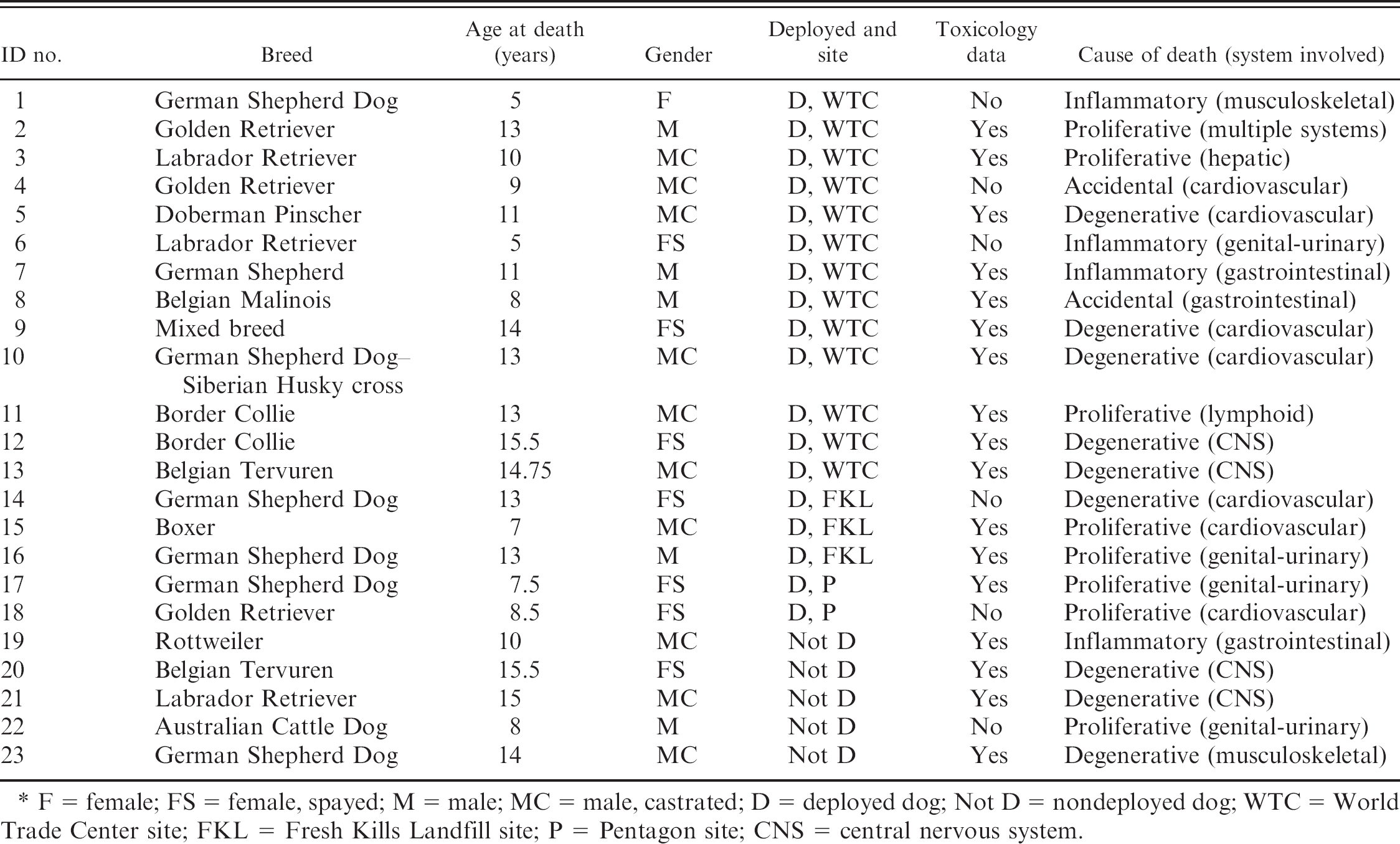
F = female; FS = female, spayed; M = male; MC = male, castrated; D = deployed dog; Not D = nondeployed dog; WTC = World Trade Center site; FKL = Fresh Kills Landfill site; P = Pentagon site; CNS = central nervous system.
Complete summaries of the deceased dogs' signalment, deployment status, and cause of death are listed in Table 1. Overall, deployed dogs suffered mortality from 2 accidental (11.1%), 3 inflammatory (16.7%), 6 degenerative (33.3%), and 7 proliferative (38.9%) causes. The nondeployed dogs' mortality was due to 1 inflammatory (20%), 1 proliferative (20%), and 3 degenerative (60%) causes. Body systems associated with the principal cause of death in the deployed dogs were musculoskeletal (1; 5.6%), lymphoid (1; 5.6%), central nervous system (2; 11.1%), gastrointestinal (2; 11.1%), hepatic-pancreatic (2; 11.1%), genital-urinary (3; 16.7%), and cardiovascular (7; 38.9%). Nondeployed dogs' principal systems affected at death were cardiovascular (1; 20%), gastrointestinal (1; 20%), genital-urinary (1; 20%), and central nervous system (2; 40%). Because of the small numbers in each category, statistical analysis of trends was not possible.
Histopathologic conditions primarily leading to death were divided into inflammatory, accidental, degenerative, and proliferative. In addition, incidental pathologic findings not directly related to that dog's death and a third category of pulmonary pathology (primary tissue of interest) are summarized in Table 2. The relative proportions of the various categories and systems for the primary pathology matches were previously described for the cause of mortality. Incidental pathology (i.e., lesions not responsible for the dog's death or euthanasia) was detected in nearly every organ system examined. Of greater interest is the incidental pathology found in the lung tissues. Anthracosis (inhaled carbonaceous black pigment) was present to a varying degree in 21 of 23 dogs and was absent only in 1 dog deployed to the WTC and 1 nondeployed dog (Fig. 1A, 1C). The use of polarized light microscopy revealed varying amounts of refractile particulate matter in 20 of 23 dogs, which was absent from the lungs of 2 deployed dogs and 1 nondeployed dog (Fig. 1B, 1D). Although no primary pulmonary tumors were identified in any dog in this study, 3 deployed dogs did have disseminated metastases from primary tumors elsewhere, including a renal cell carcinoma and 2 cases of hemangiosarcoma. Additional pulmonary pathologies found included bronchial-associated lymphoid hyperplasia, smooth muscle hyperplasia, hemorrhage, hemosiderosis, sub-pleural fibrosis, and ossified nodules.
Finally, Table 3 summarizes the toxicologic findings and interpretations for each dog. No fresh tissues were submitted for toxicologic testing for 5 dogs. All samples tested negative for PCBs at the detection limit of 0.01 ppm (10 ppb), except for 1 dog deployed to the WTC that tested positive for trace amounts (0.08 ppm). Organic compounds other than PCBs were detected from the livers of 15 dogs; these all consisted of injected chemicals for the purpose of humane euthanasia, primarily the short-acting barbiturate pentobarbital often in combination with phenytoin. Except for mild liver iron elevation in 1 WTC-deployed dog, there were no significant findings in metal concentrations in either livers or kidneys of the S&R dogs in the current study.
Discussion
This long-term pathology and toxicology survey follows an initial case cohort survey dealing with the short-term medical and behavioral affects on S&R dogs deployed to the September 11, 2001, terrorist attack sites. 16,21 Unfortunately, the number of nondeployed dogs that had the full necropsy protocol and sample submission completed was relatively low, so it is difficult to make meaningful statistical comparisons between the deployed and nondeployed dogs because of the overall small sample size.
Search-and-rescue dogs require a level of maturity and an extensive training period before they can be successfully deployed 12 ; the median age of the deployed dogs was 5 years at the time of deployment. 21 This survey continued for 5 years past the dogs' deployment, which resulted in many of the deployed dogs being at the end of their breed-average life spans. Therefore, the finding that many of these dogs died or were euthanized because of degenerative or neoplastic conditions is not surprising. Degenerative conditions of the heart and central nervous system, and neoplastic conditions, were among the most common primary causes of death in these dogs.
Toxicology results did not reveal any S&R activity-related toxic compounds in any dog deployed or nondeployed. Fifteen of 17 dogs for which GC/MS analysis was performed had evidence of euthanasia compounds (typically the short-acting barbiturate pentobarbital with or without phenytoin). No other significant organic compounds were detected. Because many of the contaminants identified at the sites and amenable to detection by GC/MS analysis have relatively short half-lives and are noncumulative, these results do not necessarily mean that dogs were not exposed to toxic organic compounds during deployment. However, these results do suggest that at the time of death, these animals did not have toxic residues within their tissues. Polychlorinated biphenyls are persistent organic compounds with long half-lives. They are likely to have been generated at the WTC and other deployment sites. 18 For example, these compounds were widely used as fire retardants in electric transformers. 15 Only a trace of PCBs was found in 1 deployed dog, suggesting that this dog was exposed at some time in its life. Polychlorinated biphenyls have proven to be carcinogenic, inducing hepatic neoplasms in laboratory rats, and increased cancers of the liver, gallbladder, biliary tract, gastrointestinal tract, and brain in exposed humans. 13 However, the significance of trace amounts of PCBs and its relationship to the proliferative conditions present in this dog are unclear. The conclusion of the toxicologic data generated to date is that these S&R dogs did not have significant (or toxic) levels of any of any compounds within the categories of heavy metals, organic, synthetic compounds, specifically PCBs, at the time of death.
One of the major concerns regarding exposure of both S&R dogs and their human emergency counterparts is increased cancer incidence because of exposure to inhaled carcinogens. Building collapses, such as the WTC, can generate carcinogenic compounds and promoters. 15 Classes of carcinogenic compounds known to be found at the deployment sites include hydrocarbons, PCBs, and asbestos fibers. Overall, the rate of neoplastic and other proliferative conditions was higher in the deployed than in the nondeployed dogs. Six of 18 deployed dogs did suffer mortality primarily because of malignant cancers. Of these, the tonsillar squamous cell carcinoma in dog 11 is the most likely tumor that could be directly related to exposure to carcinogens as part of its S&R activities. Several studies have pointed to an increased incidence of tonsillar squamous cell tumors in dogs in association with polluted or smog-like air conditions. 6,24 However, such tumors may also arise spontaneously. The other malignant tumors in this survey's dogs show more tenuous evidence of toxic associations. Renal cell carcinomas have been reported to increase in relation to heavy metal, specifically mercury, exposure in laboratory rats. 4 Adrenal pheochromocytomas have also been reported to increase in laboratory rats in association with inhalation of particulate compounds. 17 Whether or not these associations hold true in dogs is unknown at this time.
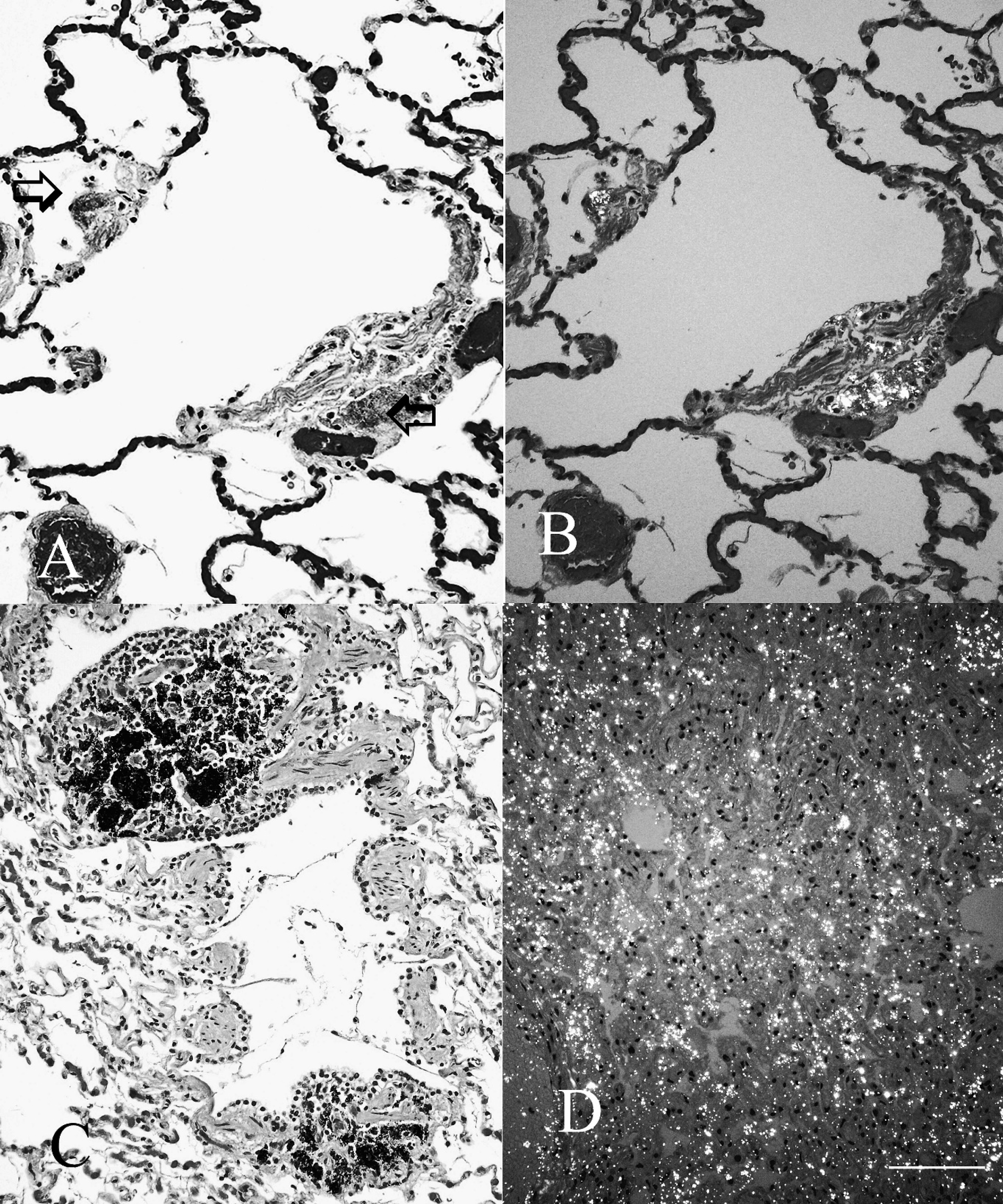
Photomicrographs illustrating common incidental lesions present in search-and-rescue dogs.
Summary of histopathology findings for primary cause of death, incidental findings, and pulmonary lesions.*
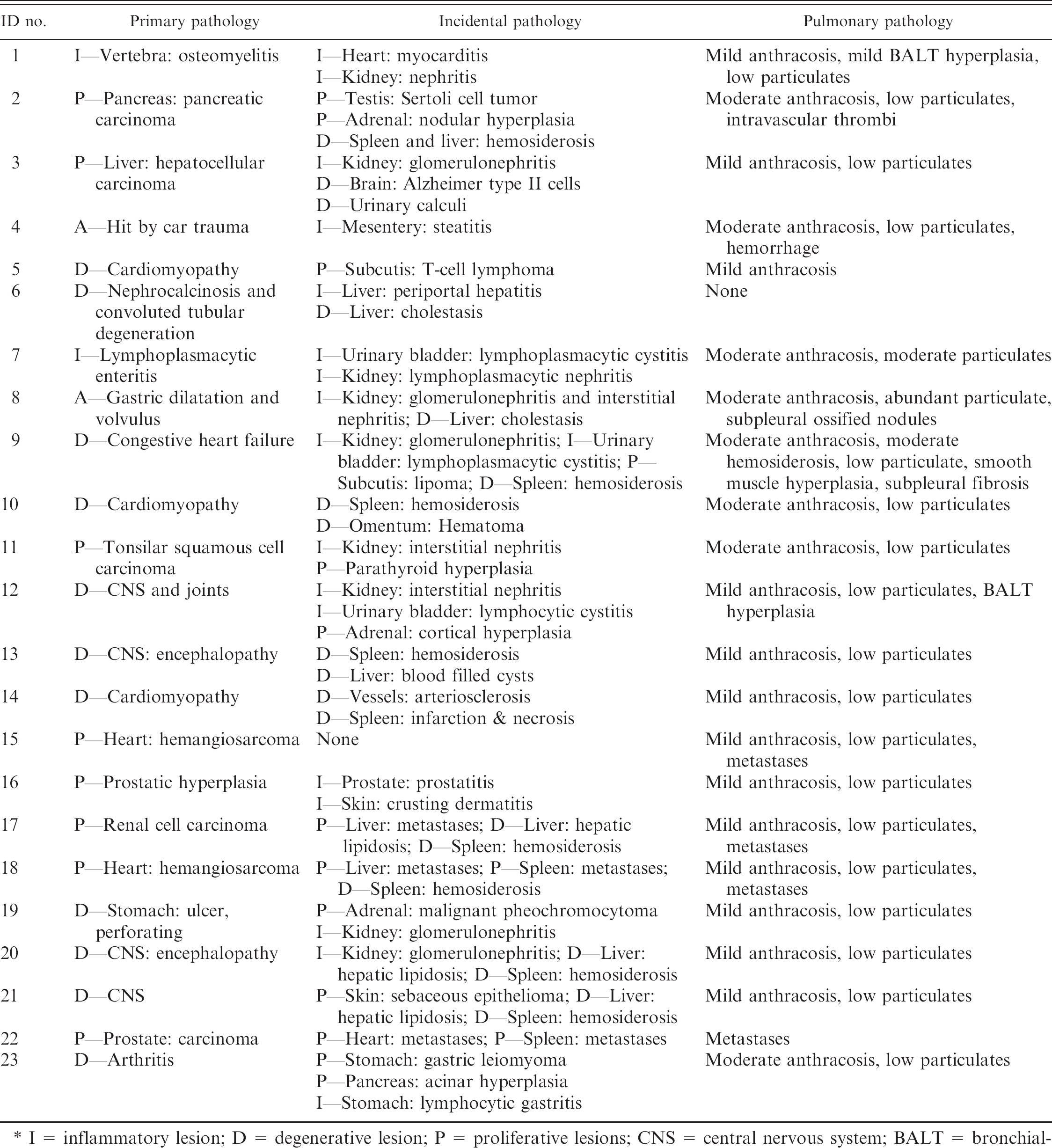
I = inflammatory lesion; D = degenerative lesion; P = proliferative lesions; CNS = central nervous system; BALT = bronchial-associated lymphoid tissue.
As stated earlier, one of the primary areas of interest in the current study was the effects of deployment on development of pulmonary lesions. Surprisingly, there was a lack of significant pulmonary disease, and no primary pulmonary tumors were found in these dogs. Although the lungs of 3 deployed dogs did have disseminated metastatic tumors, these tumors all developed at other primary tissue sites. However, although there were no primary lung tumors or sufficient pulmonary pathology to cause the death of any of these dogs, there were more incidental pathology findings in the lungs of these dogs than in any other tissue examined. Anthracosis is defined as the presence of black carbon-containing material present in the pulmonary tissues that is resistant to all staining or bleaching techniques. Anthracosis is most commonly associated with the inhalation of smoke or smog-polluted air. The authors commonly recognize anthracotic pigments in the lungs of domestic animals living in suburban or urban settings, zoo animals situated in heavy automobile traffic or industrialized areas, as well as in S&R dogs related to their rescue and training activities (Fig. 1A, 1C). Thus, anthracosis is, to some degree, a nonspecific finding and, in fact, was common in both deployed and nondeployed animals in this study. The presence of refractile, particulate matter was coincidental with the occurrence of anthracosis; in many cases, both pigment and particulate matter were present in the same peribronchial macrophage aggregates (Fig. 1B). However, particulates may represent an array of insoluble chemical agents that have been inhaled. Sources of particulate matter in the air surrounding the disaster sites include fibrous glass, silicate dusts from concretes, metal dusts from equipment and support beams, and carbons from burning textiles, fuels, solvents, paper, and wood products. 7 Fortunately, none of these inhaled substances seemed to produce clinical respiratory signs, major pulmonary pathology, or induce pulmonary tumors in the dogs in the current study.
Summary of toxicology testing and interpretations.*
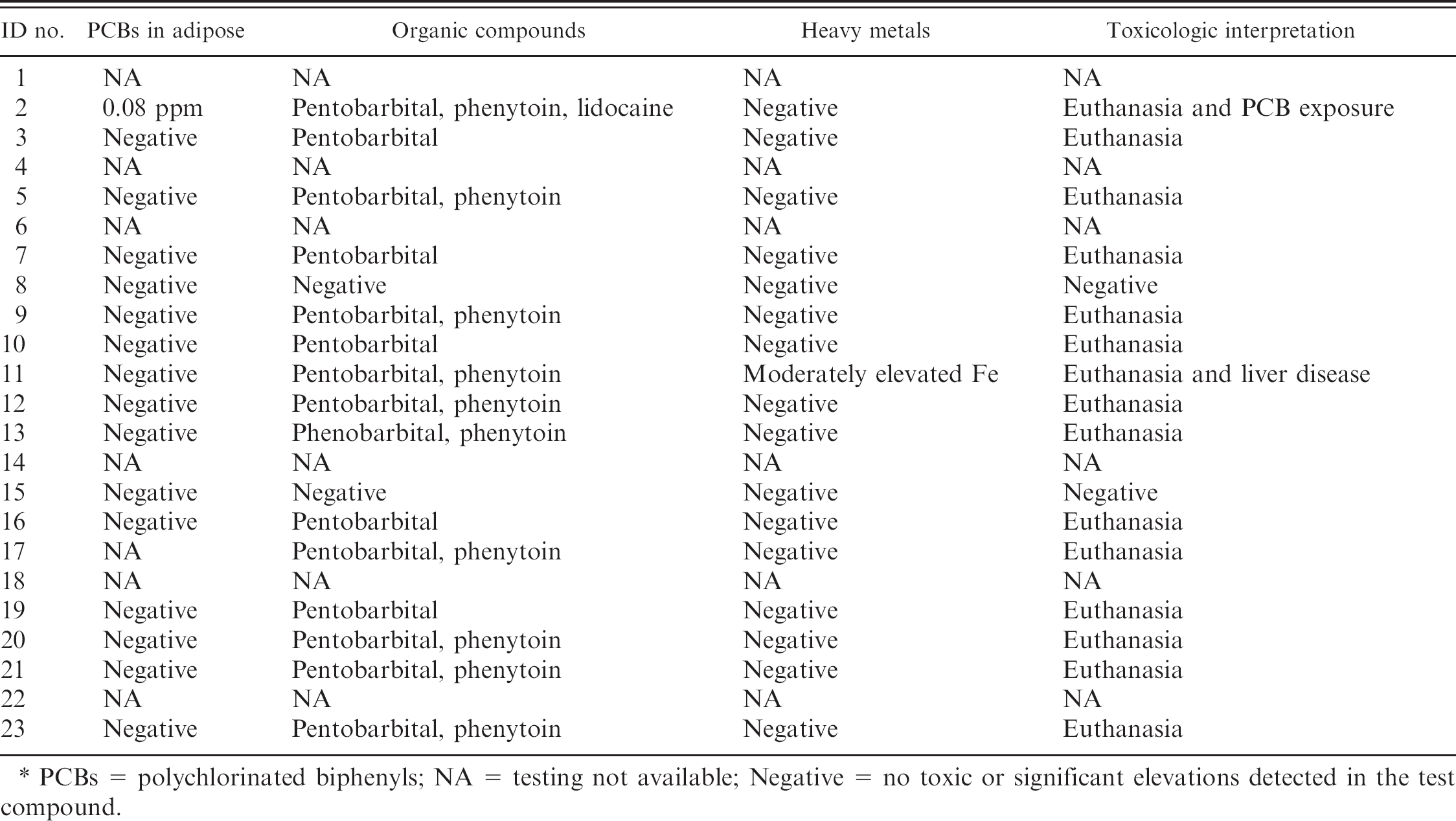
PCBs = polychlorinated biphenyls; NA = testing not available; Negative = no toxic or significant elevations detected in the test compound.
The lack of significant pulmonary pathology in S&R dogs is quite different from what has been documented involving human rescue and clean-up workers deployed to the WTC site. Studies conducted during the first 5 years after the incident demonstrates increased incidence of respiratory syndromes in rescue workers, firefighters, police officers, and other recovery workers. 1–3,5,8,9 Spirometry tests of lung function indicate as many as 27% of workers had abnormal lung function after September 11, 2001. 8 Respiratory syndromes including reactive airways dysfunction syndrome, reactive upper airways dysfunction syndrome, inflammatory pulmonary parenchymal syndrome, and asthma have all been documented as increased in workers exposed to airborne pollutants at the site. 1–3 In addition, at least 26 firefighters have developed sarcoid-like granulomatous pulmonary disease since their deployment. 11 The long term effects including cancers in exposed rescue workers remains unknown at this time. 14 Although S&R dogs have not suffered from such common and widespread upper respiratory syndromes, they certainly could develop similar chronic diseases of the pulmonary parenchyma, although so far none have been detected.
Although no clear evidence of an association between the various neoplasms present in deployed S&R dogs with the search work performed following the 9/11 attacks was identified, these dogs will need continued monitoring. Comparison to the nondeployed dogs will be valuable as those dogs, which on average were 1 year younger than the deployed dogs, reach the end of their lives. 21 The authors will continue this long-term survey for several additional years. Hopefully, this surveillance will allow the majority of deployed dogs that expire to be included in the survey data pool, further strengthening its findings. Secondly, the authors will be collaborating with an occupational health, pulmonary specialist to conduct retrospective examination of fixed pulmonary tissues from both deployed and nondeployed dogs. The goal of these specialized electron-microscopic and x-ray–dispersive pulmonary studies is to detect both fibrous and nonfibrous particulate matter within the lung tissues and to describe and quantitate the various components for each of the terrorist attack sites. Based upon the widespread anthracosis and particulate matter present in many deployed and nondeployed dogs, it is hoped that this additional testing will provide a fingerprint pattern of inhaled compounds from each site and provide additional insight into the potential toxicity of these compounds.
Acknowledgements
The authors wish to thank the American Kennel Club Canine Health Foundation, for their generous support of this research, and the numerous search-and-rescue dog handlers, owners, and veterinarians who collaborated in this study.
Footnotes
a.
SigmaStat® 3.1, Systat Software Inc., San Jose, CA.