



Abstract
Dispositional employability can be understood as a psychosocial process that facilitates the enactment of behaviors directed toward career self-management. This investigation aimed to test the validity of a measure of dispositional employability to predict salient career outcomes in university students. Two studies using distinct samples of students at a multi-campus university in Australia deployed surveys containing measures of dispositional employability, career adaptability, and job search self-efficacy. The measures’ properties were tested using principal axis factoring in Study 1 and confirmatory factor analysis in Study 2. Furthermore, hierarchical regression analyses in Study 2 found that dispositional employability has distinctive relations with measures of career adaptability and job search self-efficacy. Our findings inform recommendations for higher education institutions to measure the psychosocial aspects of employability.
The term employability is widely used in the UK, Australia, and Europe, and it refers to individuals’ capacity to obtain and maintain employment. The literature examining employability over past decades has concentrated on conceptual aspects of graduate employability, individual factors, and institutional-focused processes (Healy et al., 2022). However, there is a need to better understand the relations between employability and the career behaviors required to effectively deploy individuals’ qualifications, skills, and knowledge in the employment market (Fugate et al., 2004). Dispositional employability is conceptualized as a psychosocial resource that facilitates the enactment of proactive behaviors directed toward obtaining employment (Fugate & Kinicki, 2008; Fugate et al., 2004). Research into dispositional employability has been advanced by development of the Dispositional Measure of Employability (DME; Fugate & Kinicki, 2008) but there is a limited amount of research into its measurement properties in different contexts. The aim of the present research is to provide new evidence of validity about the DME (Fugate & Kinicki, 2008) for use with undergraduate university students.
Dispositional employability
Dispositional employability is a multidimensional construct (Fugate et al., 2004). Fugate and Kinicki (2008) proposed that individuals exhibit attributes that constitute their employability: (a) open to change or be positive about changes at work; (b) resilient through a sense of control over their career, generally optimistic about the future, and feel able to make valuable contributions at work; (c) optimistic about the future and the possibilities of opportunities; (d) proactive in seeking out information about future career opportunities; (e) exhibit motivation directed toward career planning and career self-management; and (f) incorporate their work or career into their personal identity.
Dispositional employability is associated with emotions and affective commitment to organizational change (Fugate & Kinicki, 2008), job search intensity (McArdle et al., 2007; Tomas & Maslić Seršić, 2017), self-esteem and re-employment of unemployed workers (McArdle et al., 2007), engagement in professional development (Torrent-Sellens et al., 2016), and perceptions of future career prospects (Cerdin et al., 2020). Further research into dispositional employability is required to discern its relations with career adaptability, choice of job search methods, and other important career outcomes (Fugate & Kinicki, 2008). For example, there is a need for a better understanding of how dispositional employability affects university students’ engagement in career adaptive behaviors, which is the aim of the present research.
Career adaptability
The notion career adaptability is variously defined in the literature of vocational psychology and career development (e.g., Park et al., 2019; Rottinghaus et al., 2005, 2012, 2017; Savickas, 2005, 2013). One conceptualization of career adaptability posits it as a psychosocial resource an individual utilizes to respond to vocational developmental tasks, occupational transitions, and work traumas (Savickas, 2005, 2013). Savickas describes four dimensions of career adaptability including concern, control, curiosity, and confidence. Another conceptualization of career adaptability references an orientation to the future, individual agency, occupational knowledge, optimism, and resilience (Park et al., 2019; Rottinghaus et al., 2012; Rottinghaus et al., 2005; Rottinghaus et al., 2017). Career adaptability has been found to positively relate to proactive career behavior (Spurk et al., 2020), self-perceived internal and external marketability (Spurk et al., 2016), career planning, career exploration (Rudolph et al., 2017b), and self-efficacy (Matijaš & Maslić Seršić, 2021; McLennan et al., 2017). Although there are some conceptual similarities between dispositional employability and career adaptability, the former “is more akin to traits that contribute to career adaptability” (Fugate & Kinicki, 2008, p. 509), whereas career adaptability may be conceptualized as a characteristic adaptation. As such, career adaptability is considered a transactional competency that is responsive to interventions and learning experiences (Rottinghaus & Eshelman, 2015; Rottinghaus et al., 2017; Rudolph et al., 2017b; Savickas & Porfeli, 2012).
Job search self-efficacy
Job search self-efficacy (JSSE) is an individual's confidence in performing job search tasks (Tolentino et al., 2019; van Hooft et al., 2021) and is an antecedent of job search behavior (Lim et al., 2016), including search intensity, quality (van Hooft et al., 2021), and job search outcomes (Brown et al., 2006; Guan et al., 2014; Saks et al., 2015; van Hooft et al., 2021). Developing the self-efficacy to search for and apply for jobs, to receive feedback on performance, and to learn from the successes of peers is important for university students to successfully make the transition from study to work. Research has found support for several antecedents of self-efficacy, such as employability (Berntson et al., 2008), learning experiences (Lent et al., 2017), career adaptability (Matijaš & Maslić Seršić, 2021), and psychological capital (Pajic et al., 2018). Several scholars have identified multiple dimensions of JSSE that differentiate between confidence in job search behavior, outcomes of job search (Saks et al., 2015), and performance in job interviews (Matijaš & Maslić Seršić, 2021; Petruzziello et al., 2022). Saks et al. (2015) found that environmental- and self-exploration were stronger predictors of JSSE behavior, whereas career planning was a stronger predictor of JSSE outcomes.
The present investigation
The present research has two principal aims. The first is to determine the measurement properties of the DME (Fugate & Kinicki, 2008) in independent samples of Australian university students for which there are no published studies specifically addressing its measurement properties. The findings will provide additional validity evidence and concomitantly ascertain the DME's utility for other demographic contexts. The second aim is to test the DME as a predictor of career adaptability and JSSE. The investigation was conducted across two phases with independent data sets. Phase 1 used principal axis factoring (PAF) to initially explore the measurement properties of the DME and other measures that were to be used in Phase 2. Although the DME has been validated in samples of adult workers, other research has found slightly different factor structures (cf. Cerdin et al., 2020; Fugate & Kinicki, 2008; Tomas & Maslić Seršić, 2017). Accordingly, it was important to determine the factor structure of the DME and other measures in this sample of Australian university students, before conducting hypothesis testing. Phase 2 used confirmatory factor analysis (CFA) to test the measurement model, then hierarchical regression analyses and multinomial regression to test the hypotheses.
Study 1: exploratory factor analysis
Participants
The participants were students at a multi-campus university in Australia. Complete and valid responses were obtained from 751 students (638 female, 85.0%), aged 18 to 52 (M = 22.46 years, SD = 6.27). Most participants were studying an undergraduate degree (97.0%) and were enrolled in health science, humanities, and behavioral science courses (88.3%), which reflects the large proportion of female participants in this study, and the remainder of participants were enrolled in science, business and commerce, and law courses. As is common in Australia, most participants (78.4%) were engaged in the workforce in casual employment (i.e., not professional full-time employment).
Procedure
Participants were recruited through the careers service at the university. Students were invited to complete an online survey. At the end of the survey, participants received a computer-generated report which contained a description of the measures in plain English and the participants’ scores on each subscale. Participation was voluntary and participants had the right to withdraw from the study. The study was approved by the Human Research Ethics Committee of the University of Southern Queensland.
Measures
Dispositional measure of employability
The DME (Fugate & Kinicki, 2008) is a 25-item measure which includes six subscales aligned with its theoretical foundation. Sample items for each subscale: Openness to Changes at Work (e.g., “I would consider myself open to changes at work”), Work and Career Proactivity (e.g., “I stay abreast of developments in my industry”), Career Motivation (e.g., “I have a specific plan for achieving my career goals”), Work and Career Resilience (e.g., “I have control over my career opportunities”), Optimism at Work (e.g., “I always look on the bright side of things at work”), and Work Identity (e.g., “I define myself by the work that I do”). The Work and Career Identity subscale was not included as its items (e.g., “It is important to me that others think highly of my job”) were not relevant for this cohort of predominantly undergraduate students who were not in full-time professional employment. Respondents indicate their agreement with each item using a 5-point Likert-type scale (1 = strongly disagree, 5 = strongly agree). The score of each subscale is calculated by taking the mean of the items. In the present dataset, the DME subscales’ internal consistency coefficients ranged from α = .71 to α = .89.
Job search self-efficacy
The JSSE has two subscales: Outcomes and Behaviors (Saks et al., 2015) were used to measure the confidence of participants in obtaining job outcomes (e.g., item) and engaging in career adaptive behaviors (e.g., “Use social networks to obtain job leads”). Respondents indicate their confidence for each statement using a 5-point Likert-type scale (1 = not at all confident, 5 = totally confident). The score of each subscale is calculated by taking the mean of the items in the subscale. This measure has been used in a diverse range of samples, including refugees (Pajic et al., 2018) and people with disability (Cmar & McDonnall, 2019). In the present dataset, the JSSE subscales’ internal consistency coefficients ranged from α = .81 to α = .95.
Career futures inventory-9 item
The career futures inventory-9 item (CFI-9) (McIlveen et al., 2012) is a short-form version of the Career Futures Inventory (Rottinghaus et al., 2005) with three subscales: Career Adaptability, Perceived Knowledge, and Career Optimism. The CFI-9 has been tested in research and found to be a valid measure of career adaptability (McLennan et al., 2017; Spurk et al., 2020), and includes measures of knowledge, optimism, and agency that Fugate and Kinicki (2008) anticipated would be supported by dimensions of dispositional employability. All three subscales from CFI-9 were selected for this study. Career Adaptability (CA) measures how an individual perceives their ability to cope with and adapt to work and career related changes (e.g., “I can adapt to change in the world of work”). Perceived Knowledge (PK) indicates how well individuals understand labor market information (e.g., “I am good at understanding job market trends”). Career Optimism (CO) measures individuals’ tendency to expect the best to happen (e.g., “Thinking about my career inspires me”). Respondents indicate their agreement with each item using a 5-point Likert-type scale (1 = strongly disagree, 5 = strongly agree). The score of each subscale is calculated by taking the mean of the items in the subscale. In the present dataset, the JSSE subscales’ internal consistency coefficients ranged from α = .75 to α = .93.
Data analysis
PAF, using SPSS v27, was used to determine the factor structure using the present data collection. For consistency, PAF was also undertaken on the CFI-9 and JSSE scales. Factors were extracted with oblique rotation (direct oblimin) as the latent factors are expected to correlate. The extraction of factors was determined through analysis of the scree plot, Kaiser unity criterion, and the variance explained. Internal reliability was estimated using Cronbach’s alpha coefficients and the factor correlations were calculated.
Results
Data screening
Data screening was conducted to remove aberrant cases. A total of 786 participants completed the full questionnaire. First, the time taken to complete the questionnaire was analyzed and responses that took under 3 min and greater than 60 min were removed, leaving 761 participants. These times were selected to remove unconsidered responses and those that might have not been completed in one session. Although the survey link was promoted through the university's careers service, staff and recent graduates may have been able to access the survey. The responses of ten participants who were not enrolled students were removed. Responses from 751 participants were retained. The measures’ means, standard deviations, Cronbach’s alpha coefficients of internal consistency, and correlations are presented in Table 1.
Descriptive statistics, internal reliability, and correlations among measures for study 1 (N = 751).
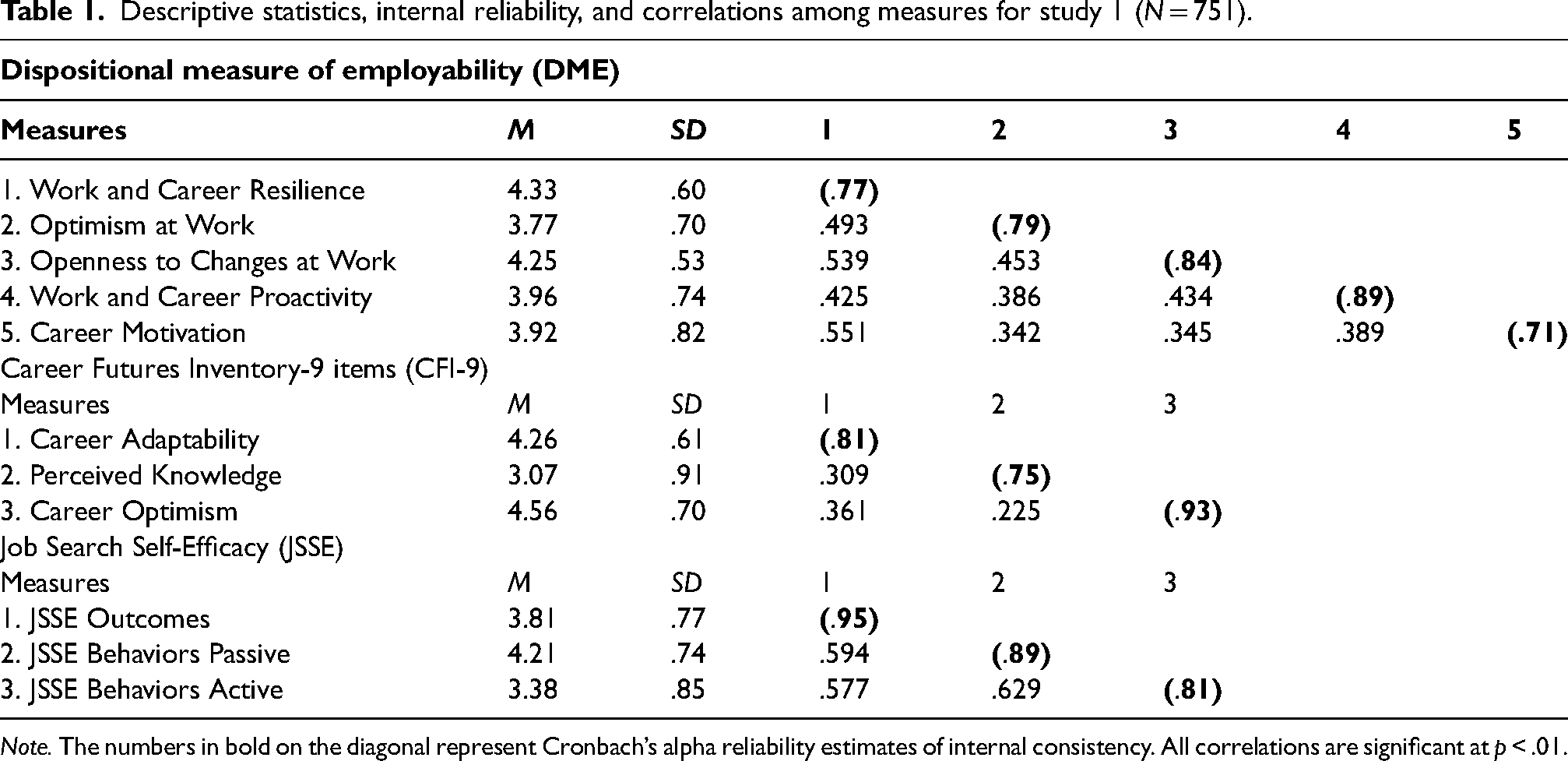
Note. The numbers in bold on the diagonal represent Cronbach’s alpha reliability estimates of internal consistency. All correlations are significant at p < .01.
Factor structure: DME
The Kaiser–Meyer–Olkin measure confirmed adequacy of the sample (KMO = .89) and the accepted five-factor solution explained 65.95% of the variance. The pattern matrix and item loadings are presented in Table 2. Initially, a four-factor solution with eigenvalues greater than one was identified, which explained 62% of the variance. Items corresponding with two subscales—Work and Career Resilience, and Career Motivation—loaded onto a single factor. As these two subscales correlated moderately in previous research (Fugate & Kinicki, 2008), the factor extraction was run again, specifying a five-factor structure. Although the eigenvalue for the fifth factor was less than one, the scree plot and plausibility of five distinct factors justify accepting this solution (Giordano et al., 2020). This five-factor solution replicates the factors identified in the Fugate and Kinicki (2008) exploratory factor analysis, minus the Work Identity subscale which was not included in the present study. However, one item (“My past career experiences have been generally positive”) was dropped due to not adequately loading on any factor (<.3). This item appears to not hold face validity for undergraduate university students, who are likely not to have had extensive past career experiences. The internal reliability of the subscales was acceptable (from α = .71 to α = .88); and there was no evidence of collinearity of any of the subscales (r = .32 to .56).
Factor loadings for the dispositional measure of employability scale.
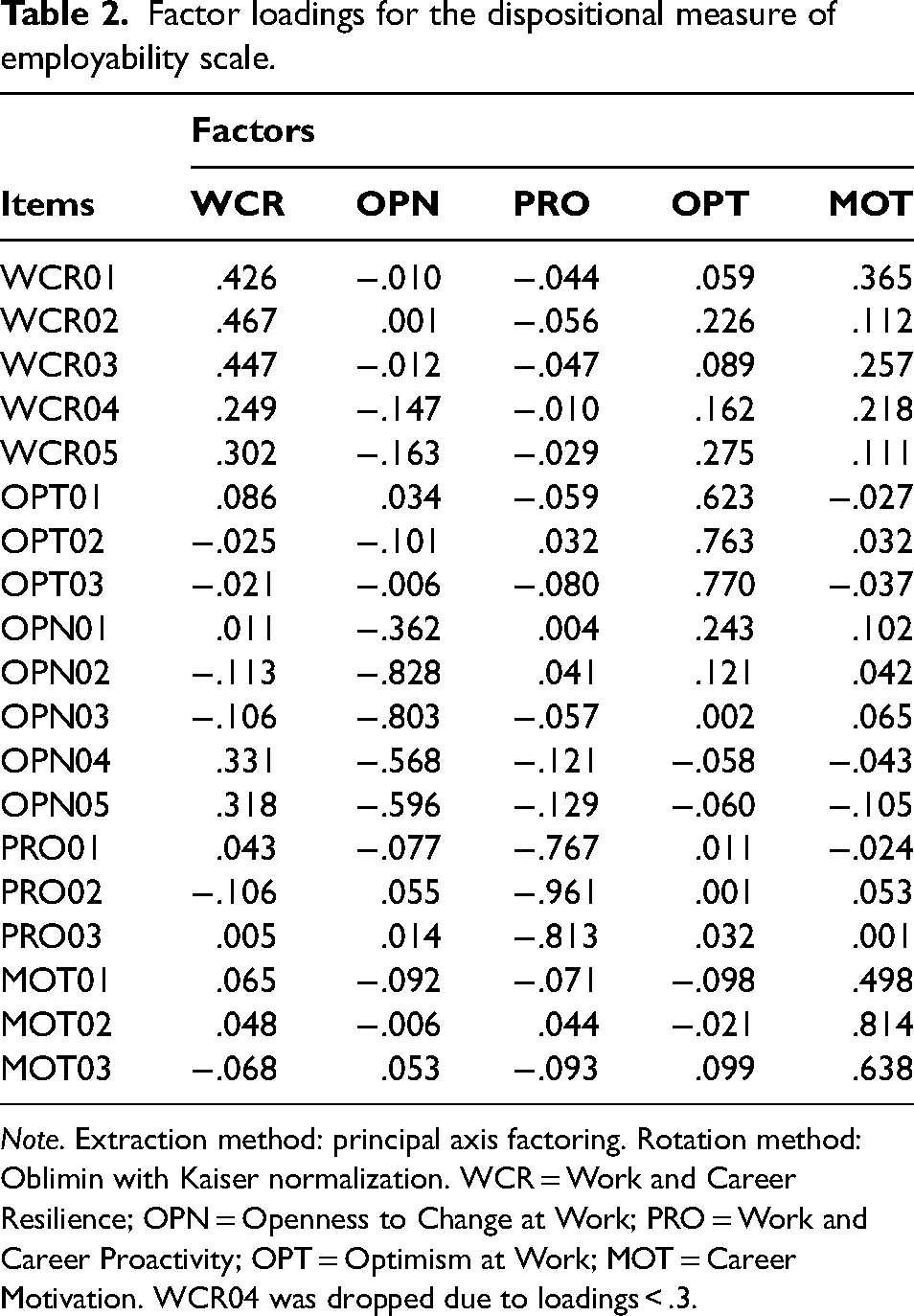
Note. Extraction method: principal axis factoring. Rotation method: Oblimin with Kaiser normalization. WCR = Work and Career Resilience; OPN = Openness to Change at Work; PRO = Work and Career Proactivity; OPT = Optimism at Work; MOT = Career Motivation. WCR04 was dropped due to loadings < .3.
Factor structure: JSSE
The Kaiser–Meyer–Olkin measure confirmed adequacy of the sample (KMO = .95). A three-factor solution was identified with eigenvalues greater than 1 and in combination explained 68.05% of the variance. Table 3 presents the pattern matrix and item loadings on three factors, rather than the original two factors. The first factor contains all items of the JSSE Outcomes subscale reported in Saks et al. (2015). The next two factors include items from the JSSE Behaviors subscale. On closer inspection, the second factor includes items related to passive job search behaviors (e.g., “Prepare resumes that will get you job interview”), whereas the third factor contains items requiring active job search behaviors (e.g., “Use social networks to obtain job leads”). This distinction between active and passive behavior is consistent with other conceptualizations of job search behavior (e.g., preparatory v. active; van Hooft et al., 2021). Two items were dropped due to cross-loadings with similar magnitudes. The first item “Impress interviewers during employment interviews” loaded on JSSE Outcomes (λ = .357) and JSSE Active Behavior (λ = .349). The second item “Plan and organize a weekly job search schedule” loaded on JSSE Active Behavior (λ = .309) and JSSE Passive Behavior (λ = .340). The internal reliability of the scales was acceptable (from α = .80 to α = .95) and the correlation between subscales ranged from .58 to .63, indicating that the subscales are not collinear.
Factor loadings for the job search self-efficacy scale.
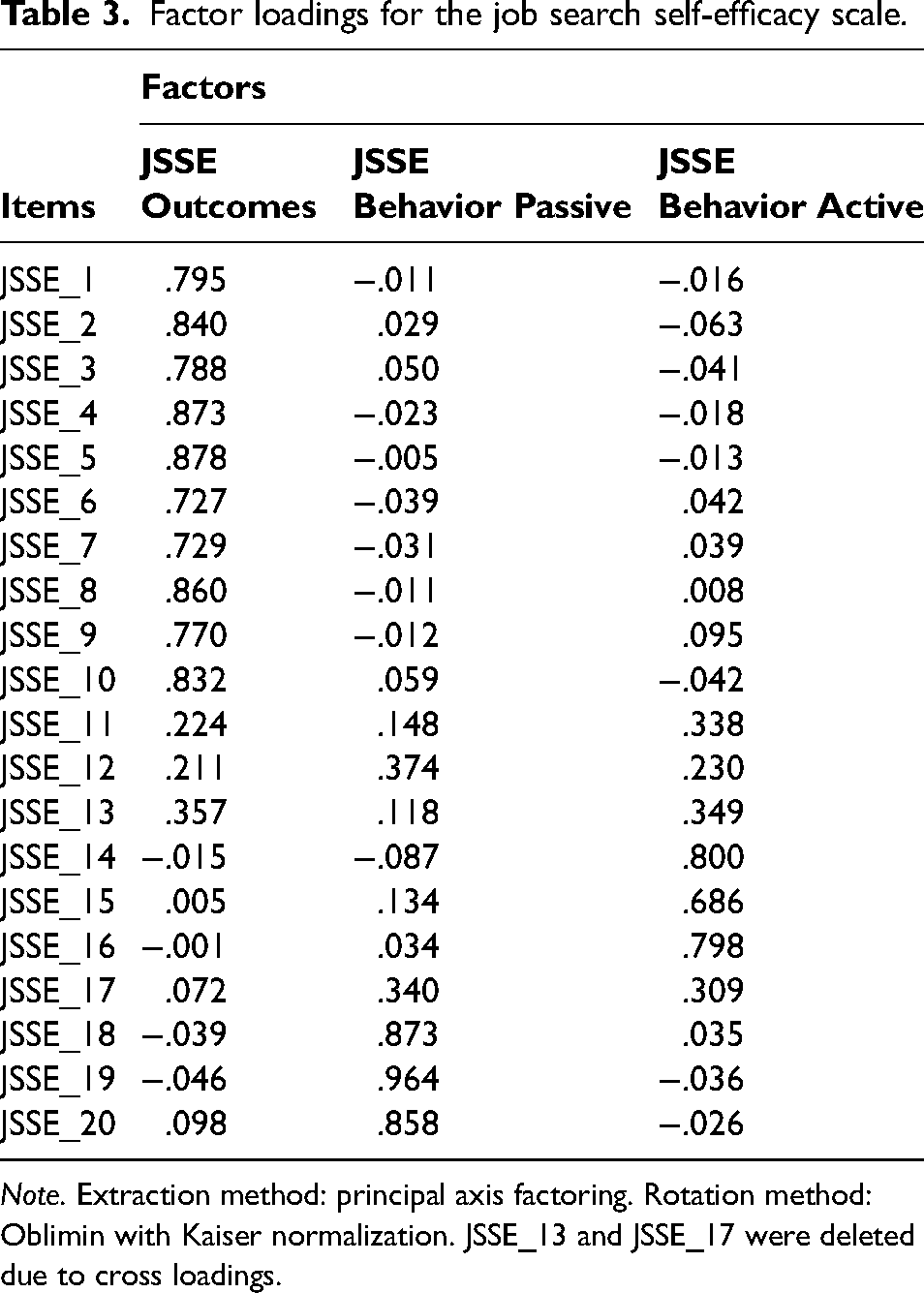
Note. Extraction method: principal axis factoring. Rotation method: Oblimin with Kaiser normalization. JSSE_13 and JSSE_17 were deleted due to cross loadings.
Factor structure: CFI-9
The Kaiser–Meyer–Olkin measure confirmed adequacy of the sample (KMO = .76). The PAF had to be limited to three iterations to produce a pattern matrix. As these items have been derived empirically (McIlveen et al., 2012; Rottinghaus et al., 2012; Spurk et al., 2020) it is acceptable to use a small number of iterations (Watkins, 2018). A three-factor solution was identified with eigenvalues greater than 1 and in combination explained 76.42% of the variance. The items loaded on the same three factors found in previous research (McIlveen et al., 2012). The pattern matrix and item loadings are presented in Table 4. The internal reliability of the scales was acceptable (from α = .75 to α = .93) and the subscales were moderately correlated (.23 to .37) indicating that the subscales are not collinear.
Factor loadings for career futures inventory (9 item) scale.
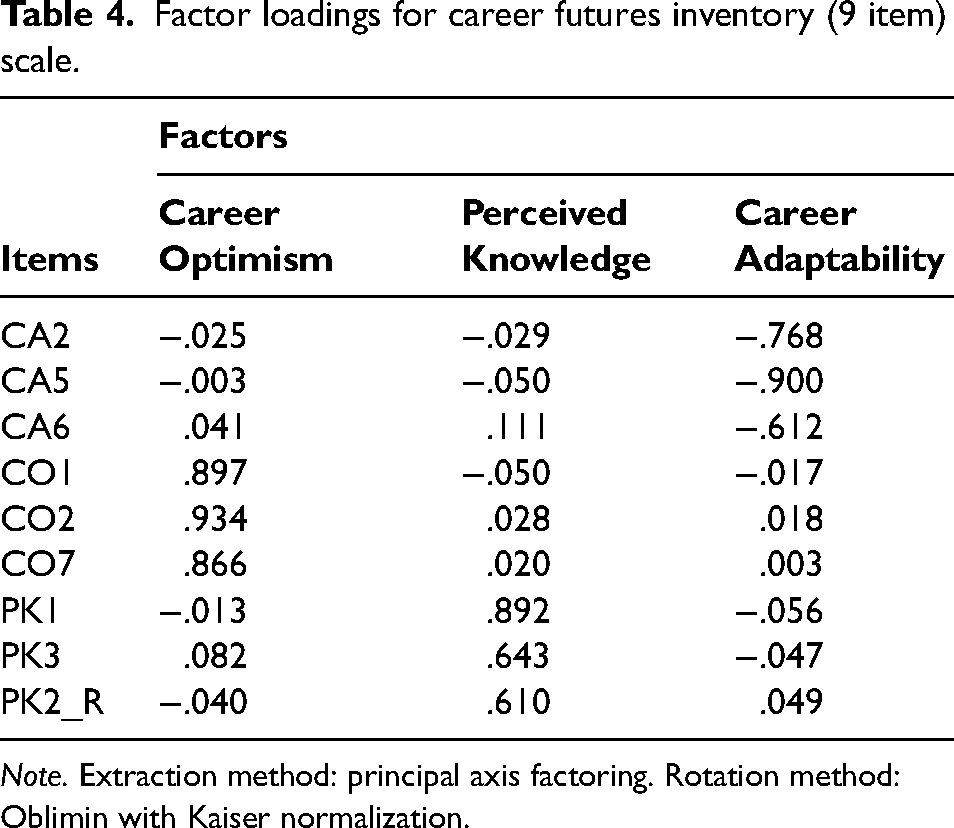
Note. Extraction method: principal axis factoring. Rotation method: Oblimin with Kaiser normalization.
Summary
In summary, the factor structures of the DME (without the subscale Work Identity) and CFI-9 were recovered from the data. Instead of two factors, the JSSE presented three: outcomes, passive behavior, and active behavior. We tested these models again using an independent data set for the hypothesis testing phase of the research in Study 2.
Study 2: confirmatory factor analysis and hypothesis testing
Participants
The participants (N = 719) were students enrolled at the same university as reported in Study 1 but were separately sampled. The participants’ demographic indicators were similar to those in exploratory factor analysis phase and are as follows: participants were aged 18 to 57 (M = 21.6 years, SD = 5.5), 565 were female (78.6%), studying an undergraduate program (95.5%), and the majority (79.2%) were engaged in the workforce.
Procedure
This study followed the same procedure as reported in Study 1, with participants recruited from the university's careers service during the second semester of the academic year.
Measures
The measures used in Study 2 were: the five subscales of the DME (Fugate & Kinicki, 2008): Work and Career Resilience, Openness to Change at Work, Career Proactivity, Career Optimism, and Career Motivation; the CFI-9 (McIlveen et al., 2012) and the JSSE (Saks et al., 2015).
Data analysis
First, a CFA was deployed using a maximum likelihood estimator in AMOS v.27 to estimate the fit to the data for a measurement model. Fit indices were calculated using the “model fit measures” plugin (Gaskin & Lim, 2016) and the cutoff criteria for an excellent fit were CFI ≥ .95, TLI ≥ .95, RMSEA < .08, and SRMR < .08 (Hu & Bentler, 1999; Schreiber et al., 2006). Second, hierarchical regression analyses were used to test relations between the DME subscales as predictor variables, and the CFI-9 and JSSE subscales as criterion variables.
Results
A total of 761 participants’ data were screened to remove aberrant cases. First, the time taken to complete the questionnaire was analyzed and responses that took under 3 min and greater than 60 min were removed, leaving 728 responses. These times were selected to remove unconsidered responses and those that might have not been completed in one session. Responses from a small number of participants who indicated a non-student status were removed. In total, 719 responses were retained. The means, standard deviation, internal consistency, and correlations for the measures were calculated and presented in Table 5.
Descriptive statistics, internal reliability, and correlations among measures for study 2 (N = 719).
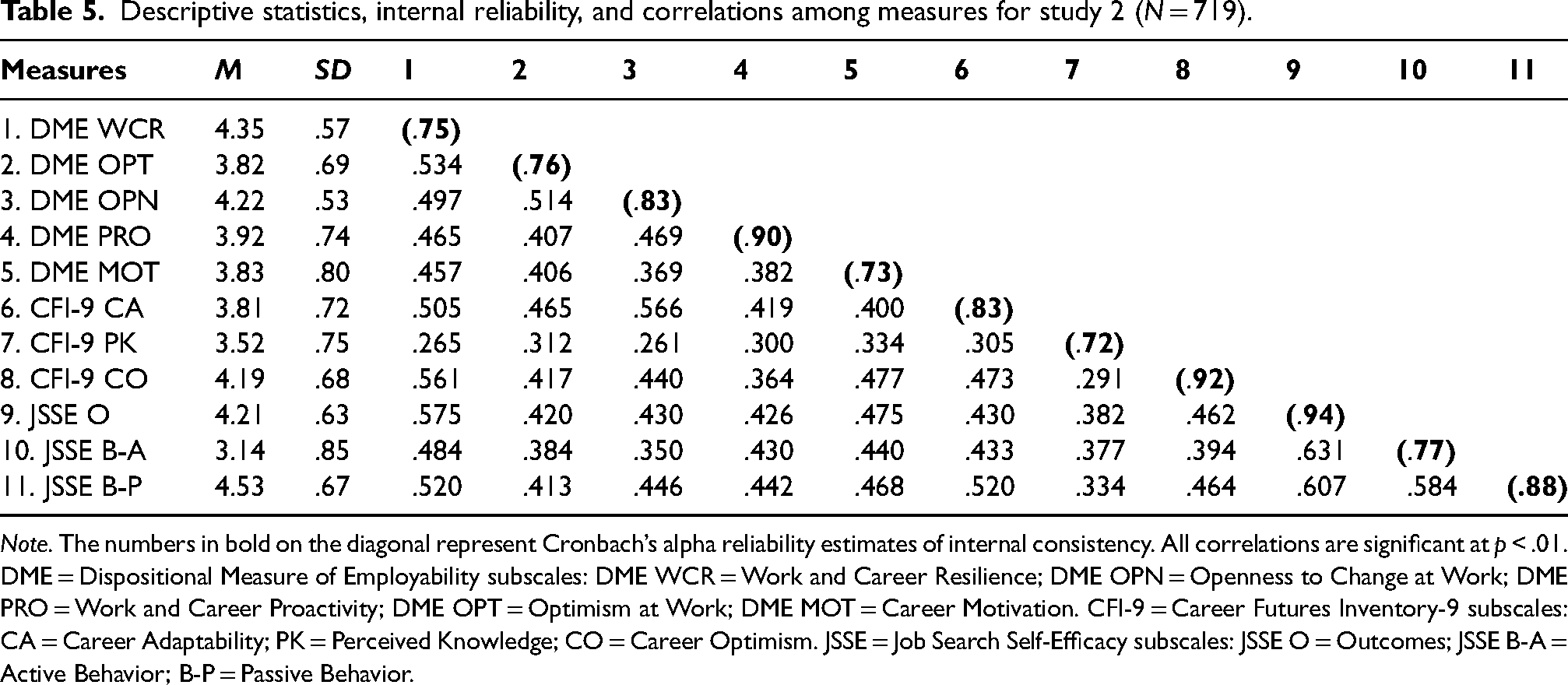
Note. The numbers in bold on the diagonal represent Cronbach’s alpha reliability estimates of internal consistency. All correlations are significant at p < .01. DME = Dispositional Measure of Employability subscales: DME WCR = Work and Career Resilience; DME OPN = Openness to Change at Work; DME PRO = Work and Career Proactivity; DME OPT = Optimism at Work; DME MOT = Career Motivation. CFI-9 = Career Futures Inventory-9 subscales: CA = Career Adaptability; PK = Perceived Knowledge; CO = Career Optimism. JSSE = Job Search Self-Efficacy subscales: JSSE O = Outcomes; JSSE B-A = Active Behavior; B-P = Passive Behavior.
Confirmatory factor analysis
A CFA correlated factors model was used to test the factor structures of the DME, CFI-9, and JSSE. The DME contained latent factors representing Work and Career Resilience, Work and Career Proactivity, Openness to Change at Work, Optimism at Work, and Career Motivation. The CFI-9 contained latent factors representing Career Adaptability, Career Optimism, and Perceived Knowledge. The JSSE contained latent factors representing JSSE Outcomes, JSSE Passive Behavior, and JSSE Active Behavior. This model was found to be an acceptable fit to the data χ2 (887) = 2029.34, p < .001, CFI = .943, TLI = .936, RMSEA = .042, 90% CI [.040, .045], SRMR = .052. All factor loadings were significant at p < .001 and latent factor correlations ranged from r = .31 to r = .73. Thus, the measurement models confirmed the findings of Phase 1.
DME as a predictor of CFI-9 subscales
Regression analyses were conducted to discern evidence of validity for the DME. First, the subscales of the DME were tested as predictors of the criterion variables Career Adaptability, Perceived Knowledge, and Career Optimism. Table 6 displays the results of the regression models for dispositional employability with the three career adaptability subscales.
Regression analysis of DME predicting CFI-9 career adaptability, perceived knowledge, and career optimism (N = 719).
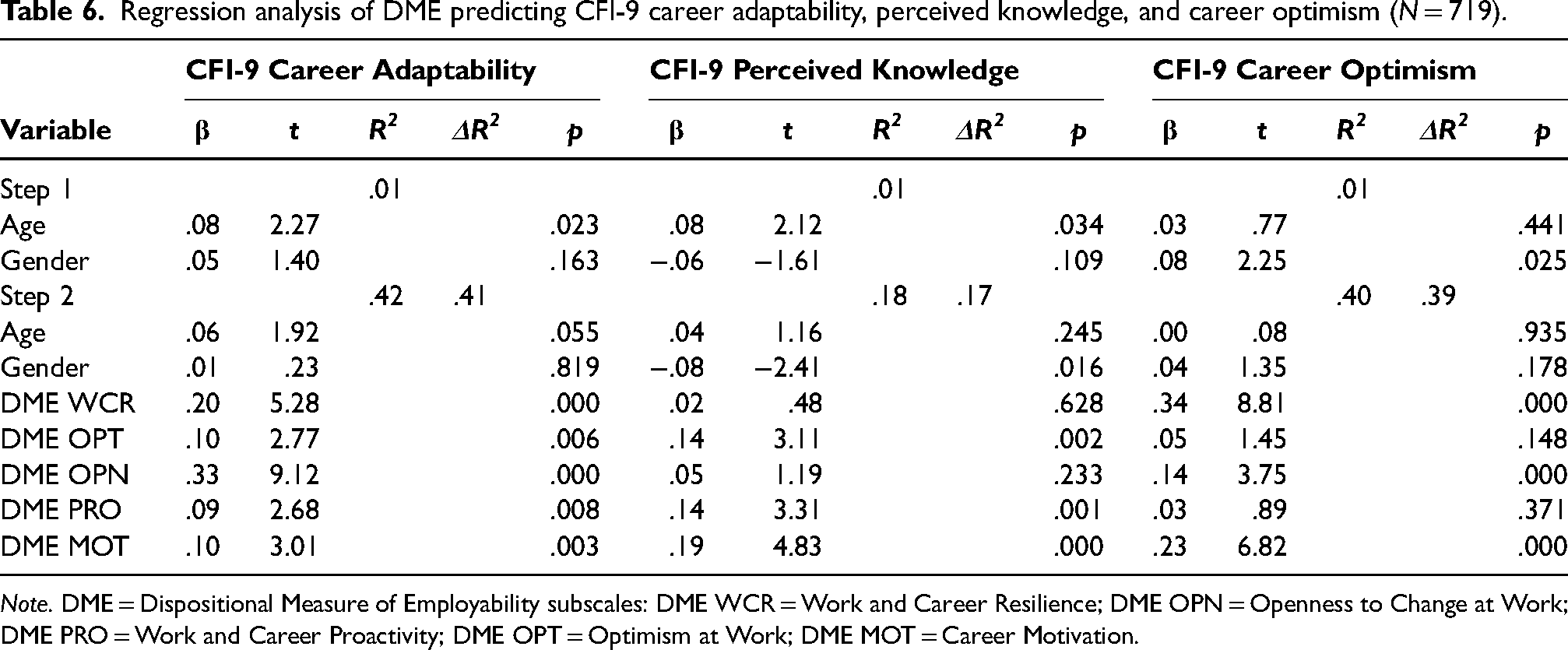
Note. DME = Dispositional Measure of Employability subscales: DME WCR = Work and Career Resilience; DME OPN = Openness to Change at Work; DME PRO = Work and Career Proactivity; DME OPT = Optimism at Work; DME MOT = Career Motivation.
As hypothesized, regression analysis revealed significant relations between dispositional employability and each of the career adaptability subscales. The first hierarchical regression used Career Adaptability as the criterion variable. Age (β = .08, p = .023), but not gender, was positively related to Career Adaptability F(2, 711) = 3.45, p = .032; however, it only accounted for 1% of the explained variance. The DME subscales were then entered into the regression and all five subscales were positively and significantly related to Career Adaptability F(7, 706) = 74.20, p < .001. The variance explained increased to 42%. With the addition of the DME subscales, age was no longer significantly related to Career Adaptability (β = .06, p = .055).
The second hierarchical regression used Perceived Knowledge as the criterion variable. Age (β = .08, p = .034), but not gender, was positively related to Perceived Knowledge F(2, 711) = 3.67, p = .026; however, age merely accounted for 1% of the explained variance. The DME subscales were then entered into the regression and three subscales—Optimism at Work (β = .14, p = .002), Work and Career Proactivity (β = .14, p = .001), and Career Motivation (β = .19, p < .001)—were positively and significantly related to Perceived Knowledge F(7, 706) = 21.71, p < .001. The variance explained increased to 18%. With the addition of the DME subscales, age was no longer significantly related to Perceived Knowledge; however, gender was related (β = −.08, p = .016), thus indicating that males rated Perceived Knowledge higher than did females.
The third hierarchical regression conducted was on Career Optimism as the criterion variable. Age and gender were not related to Career Optimism F(2, 711) = 2.76, p = .064. The demographic variables accounted for 1% of the explained variance. The DME subscales were then entered into the regression and three subscales—Work and Career Resilience, Openness to Change at Work, and Career Motivation—were positively and significantly related to Career Optimism F(7, 706) = 67.81, p < .001. The variance explained increased to 40%. Optimism at Work was not significantly related to Career Optimism (β = .05, p = .148).
DME as a predictor of JSSE subscales
Next, a hierarchical regression analyses using independent variables of demographics (age and gender), dispositional employability subscales, and career adaptability subscales, were tested against the dependent variables of the three job-search self-efficacy subscales. Table 7 displays the hierarchical regression results.
Regression analysis of DME predicting JSSE outcomes, JSSE active behavior, and JSSE passive behavior (N = 719).
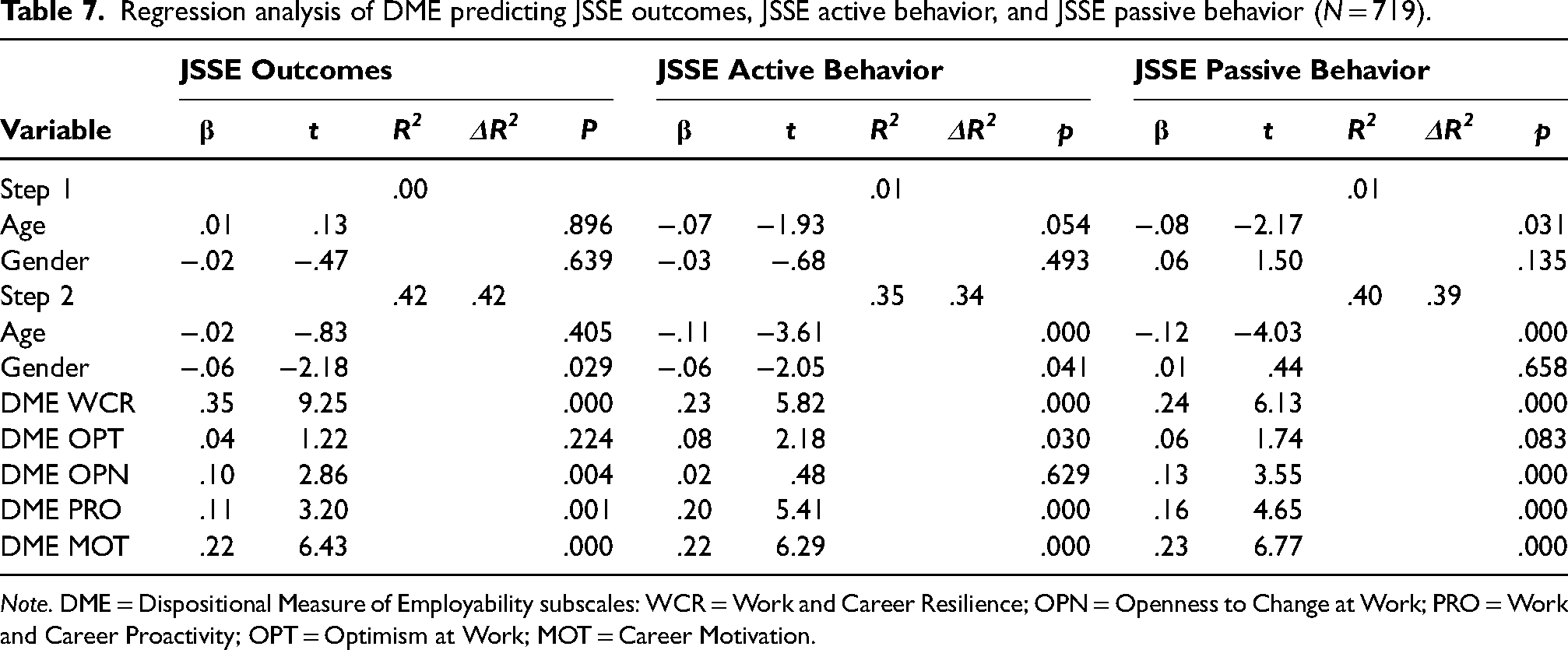
Note. DME = Dispositional Measure of Employability subscales: WCR = Work and Career Resilience; OPN = Openness to Change at Work; PRO = Work and Career Proactivity; OPT = Optimism at Work; MOT = Career Motivation.
The first hierarchical regression conducted was on JSSE Outcomes as the criterion variable. Age and gender were not significantly related to JSSE Outcomes, F(2, 711) = .121, p = .886. Next, the DME subscales were entered, which increased the explained variance to 42%, F(7, 706) = 72.56, p < .001. The Work and Career Resilience subscale held the strongest relations with JSSE Outcomes, (β = .35, p < .001), followed by Career Motivation (β = .22, p < .001), Work and Career Proactivity (β = .11, p = .001), and Openness to Change at Work (β = .10, p = .004). The relation between Optimism at Work and JSSE Outcomes was not significant (β = .04, p = .224).
The second hierarchical regression conducted was on JSSE Active Behavior as the criterion variable The demographic variables (age and gender) not significantly related to JSSE Active Behavior, F(2, 711) = .2.05, p = .129 and contributed 1% of the explained variance. Next, the DME subscales were entered, which increased the explained variance to 35%, F(7, 706) = 53.76, p < .001. Four DME subscales were positively and significantly related with JSSE Active Behavior—Work and Career Resilience (β = .23, p < .001), Optimism at Work (β = .08, p = .030), Work and Career Proactivity (β = .20, p = .001), and Career Motivation (β = .22, p < .001). The relation between Openness to Change at Work and JSSE Active Behavior was not significant (β = .02, p = .629). With the addition of the DME subscales, age became negatively associated with JSSE Active Behavior (β = −.11, p = .001), and males indicated higher confidence in JSSE Active Behaviors than did females (β = −.06, p = .041).
The third hierarchical regression conducted was on JSSE Passive Behavior as the criterion variable. The demographic variables (age and gender) were entered and were found to be significantly related to JSSE Passive Behavior, F(2, 711) = 3.56, p = .028 and contributed 1% of the explained variance. Next, the DME subscales were entered, which increased the explained variance to 40%, F(7, 706) = 67.95, p < .001. Four DME subscales were positively and significantly related with JSSE Active Behavior—Work and Career Resilience (β = .24, p < .001), Openness to Change at Work (β = .13, p < .001), Work and Career Proactivity (β = .16, p < .001), and Career Motivation (β = .23, p < .001). The relation between Optimism at Work and JSSE Passive Behavior was not significant (β = .06, p = .083). With the addition of the DME subscales, age became negatively associated with JSSE Passive Behavior (β = −.12, p < .001).
Discussion
The present research provides new validity evidence for DME as a measure of the multidimensional construct dispositional employability. With minimal differences from the original measure (Fugate & Kinicki, 2008), we recovered DME's factor structure in two distinct sets of data. These findings are based on data from a sample of participants for whom there are no published studies of the DME's measurement properties; thus, we provide new evidence that the DME generalized to a context different from its original validation sample. Furthermore, the DME has distinctive relations with measures of career adaptability, JSSE, and career identity. These findings support the argument by Fugate et al. (2004) that dispositional employability is a psychosocial process that indicates individual's readiness to enact proactive career behaviors.
The present investigation also provides support for the conceptualization of the DME subscales. Fugate and Kinicki (2008) proposed that individuals who scored high on Work and Career Resilience would have a sense of control over their career; their Optimism at Work would relate to awareness of opportunities and to view career changes as an opportunity to learn; Openness to Change at Work would be adaptable to changing environments; their Work and Career Proactivity would foster seeking information to identify and realize career opportunities; and their Career Motivation would demonstrate a learning orientation and engagement in career planning. The significant relations between the DME subscales, particularly resilience, motivation, and optimism, and measures of career adaptability, perceived knowledge, career optimism, and JSSE behaviors and outcomes, provides new evidence to support these conceptualizations. Fugate and Kinicki (2008) accepted a factor structure in which the Optimism at Work and the Work and Career Resilience subscales (identified initially in an exploratory factor analysis) were combined into one factor. Our findings indicate that the two subscales are independent and held different relations with the CFI-9 and JSSE subscales. Work and Career Resilience was positively related to Career Adaptability and Career Optimism and all three JSSE subscales.
Optimism at Work was positively related to JSSE Active Behavior, CFI-9 Perceived Knowledge, and CFI-9 Career Adaptability and supports the conceptualization of this dimension by Fugate and Kinicki (2008). The lack of relations between the DME Optimism at Work and the CFI-9 Career Optimism subscales was somewhat surprising, particularly as the two factors were moderately correlated (r = .417). A possible explanation is that the two subscales are measuring different aspects of optimism. The items in the Optimism at Work subscale are generalized positive statements (e.g., “I am a believer that ‘every cloud has a silver lining’ at work”), whereas the Career Optimism scale items assess career-specific future orientations (e.g., “I am eager to pursue my career dreams”). Luthans and Youssef-Morgan (2017) argue that optimism includes both a generalized positive outlook and an explanatory attribution style that attributes positive events to internal factors. Nonetheless, we note other research (McLennan et al., 2017; Tolentino et al., 2014) has found positive relations between career optimism and career adaptability using the full optimism scale from the career futures inventory (Rottinghaus et al., 2005) and the career adapt-abilities scale (Porfeli & Savickas, 2012), which is reason for further research to discern the measures’ differential properties as indicators of optimism as a disposition or attributional style.
The present findings affirm the JSSE Outcomes subscale. The novel finding in the present data distinguishing the JSSE Behaviors subscale into active and passive job search behaviors. The passive behavior factor represents job search behaviors that may be performed without interpersonal interactions in the labor market. The active behavior factor utilizes more social aspects of the job search process, such as using social networks to identify opportunities. This is consistent with prior research which distinguished between preparatory and active job search behavior (van Hooft et al., 2021). Other research has identified distinctions between confidence in job search and interview performance (Matijaš & Maslić Seršić, 2021). As the job search process involves stages, such as preparation, search, application, and performance in assessment activities and interviews, it is important to continue to develop instruments that can distinguish individual's confidence in each aspect of the job search process. Therefore, the use of a three-factor structure for JSSE may be useful in future research to explore different job search behaviors.
Limitations and directions for future research
As a cross-sectional design, the present investigation has limitations in testing the direction of relations between variables; however, our findings are consistent with the meta-analysis of career adaptability research (Rudolph et al., 2017a). In addition, other research indicates that stronger relations between JSSE and outcomes occur in cross-sectional research designs in comparison to longitudinal designs (Kim et al., 2019). Therefore, further investigations applying a longitudinal research design will improve the testing of relations between dispositional employability and career adaptability, adapting responses (e.g., participation in work integrated learning), and ultimate career adaptation outcomes. The findings of a three-factor structure of the JSSE scale warrants further investigation in a diversity of student and worker populations. The differential relations between the dimensions of dispositional employability, career adaptability, and job-search self-efficacy scales present opportunities to further understand how different combinations of subscale scores translate into the enactment of career adaptive behaviors, and consequential implications for designing career interventions.
Implications for practice and assessment
Higher education institutions preparing graduates for the contemporary world of work (Oliver & Jorre de St Jorre, 2018) must develop their graduates’ readiness in several psychosocial domains. These include readiness to manage unknown or at least unpredictable organizational changes in their workplaces, readiness to search for new opportunities to assure their viability and sustainability in a volatile employment market, and readiness to search for and secure new employment opportunities when their current work and income is no longer available. The global pandemic has been a salutary lesson in the need for such preparedness.
The present research also lends support to career counselling and education targeting students’ engagement in career adaptive behavior, such as career planning, career exploration activities (Whiston et al., 2017), and job search interventions (Liu et al., 2014). Career counsellors could recommend students complete psychometric measures to identify current levels of dispositional employability, career adaptability, and JSSE. The results of the assessment could be addressed in career counselling sessions to enhance student's career self-management and identify opportunities to use of career adaptive behaviors.
Conclusion
In higher education, the issue of graduate employability is concerned with graduates achieving employment outcomes; however, there is insufficient research into employability as a psychosocial process. The present research findings demonstrate the importance of resilience, motivation, and optimism as psychosocial processes that enable an individual to be willing to respond proactively and reactively to career challenges, development tasks, and importantly for university students, transitions from study to employment. These findings behoove higher education institutions to include a psychological perspective on their strategies and curricula for graduates’ employability.
Footnotes
Acknowledgements
This work was supported in part through an Australian Government Research Training Program Scholarship.
Declaration of conflicting interests
The authors declared no potential conflicts of interest with respect to the research, authorship, and/or publication of this article.
Funding
The authors received no financial support for the research, authorship, and/or publication of this article.
