



Abstract
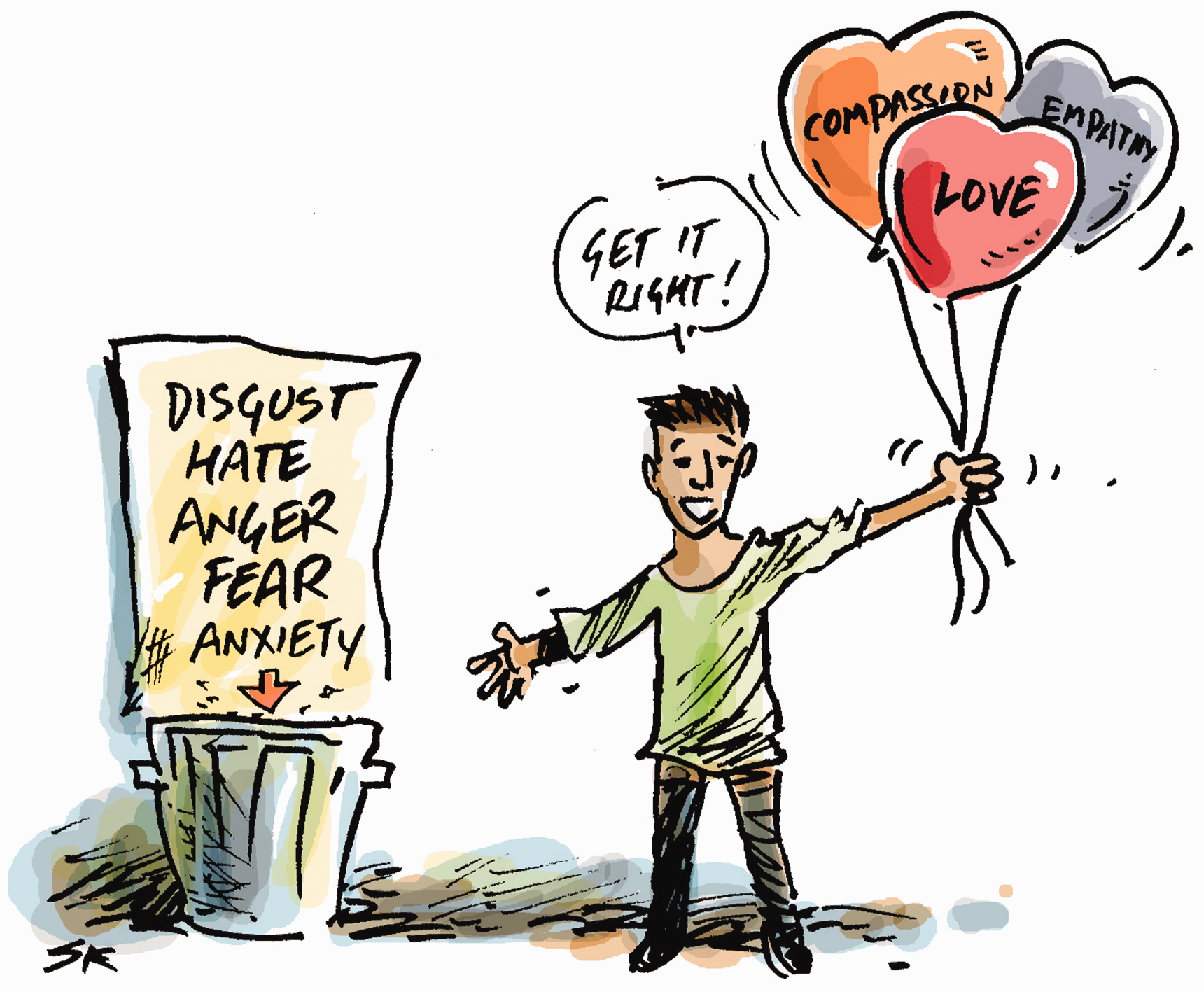
This reflection explores how emotion shapes lesbian, gay, bisexual, transgender and intersex (LGBTI) rights and law reforms. Drawing on case studies from Australia, the United Kingdom, and the United States, the author maps how disgust regulates sexuality, hate manifests in hate crime penalties, anger arises in anti-discrimination measures, fear polices refugee law, anxiety shapes trans children’s access to medical transition, pity and compassion inhibit intersex autonomy, and love enables marriage equality. Legal scholars, activists, lawyers, and judges need to take emotion seriously to better address the pressing challenges facing LGBTI people.
Why does disgust compel us to police certain sexual practices? How do we address violence motivated by hate? What can anger achieve in law reform designed to address discrimination and inequality? How do fears and anxieties shape the way law controls borders and bodies? Why do courts turn to love when dealing with relationship recognition? These are a few questions I’ve been thinking about lately as part of my advocacy on lesbian, gay, bisexual, transgender and intersex (LGBTI) 1 human rights.
Campaigns for LGBTI legal equality generate strong feelings, particularly among the scholars, activists, lawyers and judges who are invested in their outcomes. Yet, while many of us have acknowledged the emotions (including joy, hope, fear, despair, frustration) that law makes us feel personally, few of us have thought seriously about the emotional grammar of law and how that grammar makes LGBTI rights possible in the first place. Emotion is not ‘queer’ to law – it is an essential part of a legal landscape that makes theorising, legislating, litigating, adjudicating and affirming rights possible.
This reflection tries to illuminate some of that disparate landscape by mapping how emotion shapes the ways that LGBTI rights and reforms are progressed, challenged and affirmed in a few common law jurisdictions and subdisciplines of law. 2
Emotion, seriously?!
Most lawyers and judges balk at the mention of emotion. Of course, they recognise emotions exist. But law, in a professional’s imagination, is about reason and objectivity. It is a set of rules that can be applied dispassionately in courts to resolve disputes that may be highly emotional. But emotion is not confined to the frustrations of parties to a contractual dispute, the trauma of victims in a criminal law proceeding, or the vindication felt by individuals who succeed in their anti-discrimination claim. How and why law exists in the way it does requires us – as legal scholars, lawyers and judges – to look more closely at the emotional infrastructure of legal institutions (courts, parliaments, statutory authorities, executive bureaucracies, and so on). 3 Law is not just constituted by dispassionate doctrines and prescriptive precedents – it materialises through formalised feelings.
Once upon a disgust…
Many activist stories about ‘LGBTI progress’ begin by setting the scene in relation to the decriminalisation of homosexuality. While the last half century has witnessed a number of countries begin their stories of progress, laws criminalising gay sex still persist in 68 countries. These laws – many introduced through the British Empire’s ‘civilising missions’ – prohibit ‘carnal intercourse against the order of nature’ and ‘gross indecency’. These crudely drafted statutory provisions generate disgust: they crystallise social revulsion towards non-heterosexual forms of intimacy and turn gay and lesbian people, among others, into abjected outlaws.
Even in jurisdictions where privacy has been invoked to repeal or read down such provisions, people who engage in sexual practices that disturb social conventions still find themselves under the scrutiny of criminal law. Think about Anthony Brown who, along with a few of his lovers, was convicted of assault occasioning actual bodily harm in England during the early 1990s because he enjoyed sadomasochist sex with multiple kinks. The House of Lords did not mince their words in holding Brown and his lovers culpable for assault occasioning actual bodily harm: non-genital forms of pleasure derived from piercing and cutting were ‘an evil thing’. 4 Yet, a few years later, the English Court of Appeal refused to apply the precedent set in Brown when dealing with a husband who tattooed his initials into his wife’s arse using a knife. 5 Apparently, that was merely an act of ‘adornment’ rather than intentional infliction of harm.
Disgust reveals a lot about the scope of decriminalisation. Privacy only works as a shield against criminal liability when the acts performed are not too disgusting and can be safely quarantined, away from public consumption. 6 Lawyers or judges wanting to challenge this (homo)sexual policing cannot just rely on objective reasoning – they have to take on the disgust that animates its existence.
Haters gonna hate!
Policing, however, has also become an emotional symbol of LGBTI inclusion. One example of this is hate crime legislation, which carries the promise of remedying bigoted violence. These laws highlight a unique emotional shift: queers move from being despised for their intimacies (gay sex) to being viewed as vulnerable and in need of protecting from others who would despise them. Homophobes – not homosexuals – become subjects of legal hostility and social loathing.
Just take a look at the US. In the Hate Crimes Prevention Act of 2009 (US), the non-incorporated ‘findings’ note that hate crime ‘disrupts the tranquility and safety of communities’. 7 The findings also go on to say that such violence ‘devastates not just the actual victim and the family and friends of the victim, but frequently savages the community sharing the traits that caused the victim to be selected’. 8 The legislation purports to recognise the intimate associations between the victims, families and the broader community to which such victims belong. In doing so, it imagines the national community as tolerant and inclusive and casts those who would be liable under the Act as violent interlopers in the community. Homophobes, instead of homosexuals, are now made queer to the community. In the Hate Crimes Prevention Act, the analogising of hate crime with ‘savagery’ stigmatises offenders as barbaric or uncivilised while sentimentalising the community as a homogenous site of ‘tranquility’. In sentimentalising the community as always already safe and welcoming, those who express homophobia are deemed to lack self-control. 9
But, hate crimes are not just about violence that results in serious injury or death. They are much more banal than that. Homophobia manifests in verbal insults hurled towards a same-sex couple who hold hands on the street. Transphobia emerges in routine harassment directed towards a person who does not conform to an expected gender role. 10 By directing our (righteous) hate towards those who engage in exceptional forms of (homo/transphobic) hate, we obscure how homo/transphobia is a structural and social reality that pervades our lives.
Embracing a vengeful desire for punishment through penalties like prison also sustains a penal logic that already disproportionately harms marginalised groups of people (such as the incarceration of Black and Indigenous people, many of whom are also queer and trans). Ironically, hate crime provisions provide an instrument to channel our collective hostilities towards spectacular forms of homo/transphobic violence and inequality but, in redirecting our hate towards incarcerating those we might describe as ‘heinous humans’, we reproduce other forms of violence and inequality made possible by the carceral system. 11 This cautions us to resist the (understandable) public appeals to hate through law if we are to address the structural causes of homo/transphobic violence and secure accountability that addresses, not entrenches, inequality.
You can get angry
Thinking about broader forms of accountability leads me to reflect on anti-discrimination law. Unlike criminal law that punishes individuals, anti-discrimination law reaches more broadly into institutions to ensure policies, processes and procedures are conducive to promoting inclusion. Anger has been important to make visible the everyday experiences of discrimination faced by LGBTI people. It is an energising emotion that pushes us beyond the injury we have faced and to strike back against what we perceived was the cause of it. Think about the indignation we feel at hearing that a young trans person has been expelled from a religious school for seeking medical transition or the outrage we would experience if we were unable to live with our partner in an aged care facility. In law, this anger has facilitated the creation of equality law to deal with public and commercial exclusions.
Yet, the reach of LGBTI people’s anger is circumscribed by a competing set of indignant claims. Some religious groups argue that their ‘religious freedom’ is threatened by equality laws that force them to compromise their beliefs. This is acutely apparent in the vociferous debates around the Religious Discrimination Bill in Australia. Broadly drafted, as a concession to some conservative religious groups angered by the passage of marriage equality legislation, this Bill would allow for the exclusion of LGBT people (among other groups) in various areas of public life. 12
What strikes me emotionally about this debate is how anger circulates between groups: from LGBT people enraged by a law that will further intimidate them (at work or in hospital) to religious groups that are indignant about having to conform to a ‘pro-gay agenda’ (in their schools). 13 And yet, while it is important to make room to reckon with anger, we have to be mindful of how it presents conflicts in binary terms. The ‘sexuality vs religion’ debate, as it is so often caricatured, ignores how many queer people are also religious. Accommodating them requires law to move past a reliance on only privileged forms of anger to either include groups or carve out exceptions. Instead, law needs to make room for the anger of marginalised groups (queers of faith) who challenge conditional forms of public accommodation and social inclusion.
What are you afraid of?
Exclusion and discrimination can be violent, too, when they happen as a result of state (in)action. Fear materialises here for people who experience homo/transphobic persecution and seek to leave it behind. It may seem obvious, but fear is how we anticipate and recognise things (for example, people, objects, situations) that threaten us. For LGBTI people seeking asylum, fear matters legally because a grant of asylum is only possible where someone demonstrates a ‘well-founded fear’ of persecution because they belong to a particular social group. 14
But queer people lodging asylum claims also struggle. They have to deal with another set of fears: a state bureaucracy that dismisses their experiences because they do not match up with stereotypes about what it means to be ‘authentically gay’ (such as marching in Pride, having many sexual partners, or listening to Madonna). These groups of people are treated with hostility and suspicion because the state fears the border is under threat or abuse by disingenuous people.
15
For example, in 2012, the UK government embarked on a process of creating a ‘hostile environment’ for people who remained in the country without a regularised migration status. This was made possible through a series of policy, legislative and regulatory measures that ‘showed contempt’ towards migrants.
16
At the same time, LGBT people seeking asylum in the UK were faced with an anxious culture of disbelief when they sought refuge. Here are the words of a Home Office decision maker in May 2016: It is reasonable to expect … you would have had a lot of pressure and mental ordeals to overcome in realising your sexual identity.
17
It is not just the person seeking asylum who has fears. Political fears shape the legal infrastructures that govern adjudication of asylum claims. Screening interviews, strict statutory or jurisprudential criteria on authenticating who is ‘really’ gay and in need of protection, detention practices and limited judicial review expose underlying legal fears that ‘opening the floodgates’ will compromise the integrity of the refugee system. Following fears in the asylum system exposes why so many LGBT people are denied protection. And fighting those fears is important if we are to support those who seek refuge.
Deal with your anxieties
Anxieties related to policing borders and identities also emerge in other areas of law, such as those relating to medicalising sex and gender. We can observe this in how young trans people’s desires to medically transition generate a mix of legal caring and anxiousness. In Australia, for example, minors have had to appeal to the welfare jurisdiction of the Family Court of Australia to undergo medical or surgical changes to alleviate their ‘gender dysphoria’. In approving virtually every application and, most recently, dispensing with the requirement for minors to seek court approval, the Family Court has oscillated between compassion and anxiety when addressing anxieties faced by trans children and formulating therapeutic interventions to relieve those anxieties.
This began in Re Alex when a prepubescent trans boy, Alex, was granted puberty blockers and cross-sex hormones to assist with his transition. The decision in Re Alex manifested an anxiety over a failure to provide treatment to young trans people by noting that a failure to affirm Alex’s coherent gender identity would severely compromise his health. Nicholson J embraced submissions relating to Alex’s gender identity and proposals for his treatment but remained anxious over giving young trans people the capacity to make important decisions over their bodies without court supervision. 19
Almost a decade later, Re Jamie involved approving a young girl’s application for treatment to suspend the onset of ‘male puberty’. By focusing on gender dysphoria and the exigencies of treatment, the Family Court in Re Jamie expressed anxieties over a failure to affirm the gender identity of young trans people and the irreversible consequences of treatment. Dessau J’s reasoning made visible the vulnerability of trans minors to self-harm, suicidal ideation and emotional distress, and these acknowledgments of harms prompted the justice to agree to puberty blockers. 20 Yet, Dessau J also expressed anxiety over predicting Jamie’s future gender identification and held that Jamie would need to seek further court authorisation for cross-sex hormones, noting Jamie’s best interests as an adolescent could not be pre-determined as she was 10 years old at the time. 21 Such reasoning alleviated broader judicial anxieties over irreversible bodily modifications and shifting gender identifications while recognising that medical treatment was central to Jamie’s wellbeing in this case.
Finally, Re Kelvin affirmed the petition of a teenage boy who requested access to testosterone therapy to ‘masculinise’ his body and held court authorisation was no longer necessary for such interventions. In arriving at this historic decision, the Court had to alleviate the anxieties enacted in Re Jamie about the risks associated with treatment and if a child (who lacked capacity to consent) changed their mind after an irreversible procedure. The majority began their judgment by noting in careful detail the clinical criteria that underpinned a diagnosis of gender dysphoria and emphasising that it was a state of ‘distress’, one which could ‘lead to anxiety, depression, self-harm and attempted suicide’. 22 Such individual vulnerabilities were alleviated by medical and legal care: distress over one’s gender could be addressed with medical affirmation and legal recognition of that gender identity. These general statements about their therapeutic value were then connected to Kelvin’s particular situation. Thackray, Strickland, and Murphy JJ writing as the majority noted how the medical interventions he had been able to access so far had improved his mental health and that hormone treatment would offer another means to ‘relieve his suffering’. 23 In making these statements, the Court departed significantly from Nicholson J’s initial concern in Re Alex about characterising trans subjectivity in terms of ‘disorder’ or ‘malfunction’. The Court made space to affirm Kelvin’s gender identity but only to the extent that his gender identity was governed by prevailing medical and psychological norms.
The decisions relating to the medical treatment of trans children make palpable the disparate ways that anxiety and care ultimately shape the recognition of gender identity of young trans people along with their capacity to consent to medical treatment. On one hand, the court is concerned about the health and wellbeing of trans minors and seeks, where possible, to give effect to the voices of young trans people through caring judgments that affirm the therapeutic necessity of medical transition to ‘cure’ gender dysphoria. On the other hand, young trans people must alleviate the court’s anxiety, that they may change their minds in the future, by subscribing to a psychological truth about their gender and demonstrate this truth by performing particular gender stereotypes associated with that gender (which include their toy, clothing and bodily preferences). We need courts to deal with their own anxieties if they are to make room to affirm trans and non-binary children who refuse to fit binary categories of gender.
Hold back on the pity and compassion
Intersex people also endure a problematic mix of anxiety, pity and compassion. Pathologised as a ‘disorder of sexual development’, the medicalisation of intersex bodies reveals how social anxieties over indeterminacy render infants susceptible to coercive, non-therapeutic surgical interventions. In other words, surgical interventions are legally permissible without consent or oversight because they are compassionately desirable to ‘repair’ bodies with obscure, mixed or absent sex to make them appear functionally ‘normal’. 24 Physical health, however, is rarely the primary concern when deciding on treatment methods. Most surgical decisions are based on whether a penis will appear ‘normal’ to others or whether a vagina will be ‘penetrable’ and therefore capable of functioning in heterosexual intercourse. While there is no unanimity to medical criteria to determine sex or consistency in approach among surgeons seeking to intervene, what is clear is that clinical decision-making becomes an anxious exercise in fashioning social, rather than physical, wellbeing. 25
Medical anxieties function in the absence of legal regulation as ‘authority’ to conceal the ways clinicians push an ideological agenda about gender under the guise of patient care. The wishes of intersex people in relation to their health or wellbeing become secondary to a broader medical narrative that refuses to imagine bodily diversity which threatens the coherence of social systems that determine sex through the reproductive pairing of male/female.
Law makes this permissible through its silence and refusal to legislate. For us to challenge this, we need to ensure law is able to stop privileging the gender anxieties of medical practitioners (and to some extent the parents of intersex children) and their ‘compassionate’ interventions above the needs and desires of intersex people who seek to protect their bodily integrity and ability to make informed decisions.
#LoveWins
Our story of progress often concludes with the realisation of love, prized through the achievement of marriage equality. In the case that led to constitutionalising marriage equality in the US, Justice Anthony Kennedy wrote: No union is more profound than marriage, for it embodies the highest ideals of love, fidelity, devotion, sacrifice, and family. In forming a marital union, two people become something greater than once they were. As some of the petitioners in these cases demonstrate, marriage embodies a love that may endure even past death. It would misunderstand these men and women to say they disrespect the idea of marriage. Their plea is that they do respect it, respect it so deeply that they seek to find its fulfillment for themselves. Their hope is not to be condemned to live in loneliness, excluded from one of civilization’s oldest institutions. They ask for equal dignity in the eyes of the law. The Constitution grants them that right.
26
Love in law, however, need not be so limited. In the judgment that led to the decriminalisation of gay sex in India, the Supreme Court of India sent a valentine to the LGBT community by promising them a future built on nourishment, reciprocity, inclusion and dignity. Chief Justice Dipak Misra observed that the penal law which prohibited same-sex conduct eroded the ‘right to choose without fear’ a partner and realise ‘a basic right to companionship’. 29 He added, ‘the rights of the LGBT community inhere in the right to life, dwell in privacy and dignity and they constitute the essence of liberty and freedom.’ 30 The constitution was a way to nourish individuals – ‘the painting of humanity’ – a document that could cultivate the affective and intimate capacities of the people it governed. Unlike other cases which dealt with sexuality in privatising terms, this judgment elevated LGBT people through loving references about the importance of preserving their identities and intimacies in public life, as related to employment, housing, social association, and so on. Love in law need not be narrow. We can embrace critical and capacious expressions of love that make space for LGBTI people.
Let me get this gay…
‘We need to pour contempt on emotion’. This was the critical feedback I received from a former judge and barrister during the launch of my book earlier this year. 31 For this individual, the heightened focus on emotion risked turning the practice of law into one of radical subjectivism, inimical to reason. But the earnestness of his last comment made me pause to wonder how the irony of it – using emotion to talk about why we shouldn’t talk about emotion in law – could be missed by such an experienced legal professional. This is not meant as a criticism of that judge. Rather, it illuminates the hostility that we – as legal scholars and lawyers – have in talking about our feelings in our work. This is not surprising given how most law schools train us in doctrinal forms of analysis and legal practice encourages us to see our work as intellectual, rather than emotional, exercises of reasoning.
We need to think more affectively about law, rights and reform to better understand all three. We can do that by thinking, and talking more about, our feelings critically. We need to develop our legal vocabularies, tactics in litigation and strategies of reform to take account of how emotion makes the pursuit of LGBTI rights possible. Law cannot escape emotion. And neither should we.
Footnotes
Declaration of conflicting interests
The author(s) declared no potential conflicts of interest with respect to the research, authorship, and/or publication of this article.
Funding
The author(s) received no financial support for the research, authorship, and/or publication of this article.
1
Intersex rights emerge alongside, and distinct from, LGBT rights and law reform projects. ‘LGBT’ is sometimes used instead of ‘LGBTI’ in this work to indicate that the law reform or legal debate does not explicitly include intersex people.
2
This reflection draws on material I have published elsewhere. See Senthorun Raj, Feeling Queer Jurisprudence: Injury, Intimacy, Identity (Routledge, 2020); Senthorun Raj, ‘Alleviating Anxiety and Cultivating Care: Young Trans People in the Family Court of Australia’ (2019) 45(1) Australian Feminist Law Journal 111; Senthorun Raj, ‘How Indian Judges Wrote Love into Law as They Decriminalised Gay Sex’, The Conversation (10 September 2018) 
3
For a more in-depth overview of Law and Emotion scholarship, see Terry Maroney, ‘Law and Emotion: A Proposed Taxonomy of an Emerging Field’ (2006) 30 Law and Human Behavior 119.
4
R v Brown [1994] 1 AC 212 at 237 (Lord Templeman).
5
R v Wilson [1997] QB 47 at 50 (Russell LJ, Bracewell and Capstick JJ).
6
See also Kendall Thomas, ‘Beyond the Privacy Principle’ (1992) 92(6) Columbia Law Review 1431.
7
18 USC ss249.
8
Ibid.
9
Leslie Moran and Beverley Skeggs, Sexuality and the Politics of Violence and Safety (Routledge, 2004) 35.
10
See Gail Mason, The Spectacle of Violence: Gender, Homophobia and Knowledge (Routledge, 2002).
11
Jin Haritaworn, ‘Beyond “Hate”: Queer Metonymies of Crime, Pathology, and Anti/Violence’ (2013) 4(2) Jindal Global Law Review 44, 47.
12
Religious Discrimination Bill 2019 (Cth).
13
15
Jenni Millbank, ‘Imagining Otherness: Refugee Claims on the Basis of Sexuality in Canada and Australia’ (2002) 26(7) Melbourne University Law Review 144.
16
Frances Webber, ‘On the creation of the UK’s “hostile environment”’ (2019) 60(4) Race & Class 76, 77.
17
18
Didier Fassin, ‘The Precarious Truth of Asylum’ (2013) 25(1) Public Culture 39.
19
Re Alex [2004] FamCAFC 297 at [173] (Nicholson J).
20
Re Jamie [2013] FamCAFC 110 at [60] (Dessau J).
21
Ibid at [130].
22
Re Kelvin II [2017] FamCAFC 258 at [19] (Thackray, Strickland, and Murphy JJ).
23
Ibid at [37 and 47].
24
Re Carla (a medical procedure) [2016] FamCA 7.
25
Morgan Carpenter, ‘The “Normalization” of Intersex Bodies and the “Othering” of Intersex Identities in Australia’ (2018) 15 Bioethical Inquiry 487.
26
Obergefell v Hodges, 576 US ___ (2015), at 25 (Kennedy, Sotomayor, Breyer, Kagan, and Ginsburg JJ).
27
See Katherine Franke, Wedlocked: The Perils of Marriage Equality (NYU Press, 2015).
28
See Joey Mogul, Andrea Ritchie, and Kay Whitlock, Queer (In)Justice: The Criminalization of LGBT People in the United States (Beacon Press, 2011).
29
Navtej Singh Johar & Ors v Union of India thr Secretary Ministry of Law and Justice (2018) (10) SCALE 386, at 86 (Misra CJ).
30
Ibid at 154 (Misra CJ).
31
This intervention took place during a panel discussion organised by the Sydney Institute of Criminology for my book, Feeling Queer Jurisprudence, on 4 March 2020 at Sydney Law School.