




Abstract
The absence of institutionalised childcare and education during the lockdowns, caused by the COVID-19 pandemic, put parents who worked from home in a stressful situation in which they had to combine the roles of teacher, parent and employee. This study aims to analyse how the closure of kindergartens and schools during the March–May 2020 lockdown in Slovenia changed the reported allocation of time, and perceived emotional exhaustion of parents working from home, compared to nonparents. We also focus on the differences in the impacts of lockdown between genders, status of family-provision and employment sectors of parents. Using data from a survey carried out on cohabiting and married individuals in Slovenia and applying a difference-in-difference estimator, we find that parents incurred a significant increase in their unpaid work burden, reductions in time devoted to paid work and leisure and suffered an increase in emotional exhaustion. Namely, Slovenian parents reported roughly 2 h less of paid and 4 h more of unpaid work per day during the lockdown in comparison to nonparents. The analysis also demonstrates that females performed more unpaid work and enjoyed less leisure before the lockdown, but the lockdown adjustment did not further increase gender inequality.
Keywords
Introduction
The COVID-19 pandemic lockdowns disrupted the way we work, parent and care for ourselves and our communities. Childcare, which played the most important role in bridging the gender gap (Chhaochharia et al., 2019; Cebrián et al., 2019; Stadelmann-Steffen and Oehrli, 2017; Yerkes and Javornik, 2019), was suddenly no longer available. Besides childcare, parents had to cope with homeschooling responsibilities. As homes turned into schools and offices, mothers and fathers’ working conditions changed considerably compared to nonparents. Parents had less time per day to allocate to paid work and faced frequent interruptions while working from home. Finally, spending more time at home by all family members resulted in a significantly increased amount of housework.
The additional burden of housework, caretaking and homeschooling on top of full-time work (from home) means that the domestic burden becomes exacerbated, making household responsibilities even heavier (United Nations Population Fund [UNFPA], 2020). The increased stress faced by parents is expected not only to take its toll on individuals’ quality of life but also on their physical and mental health (Duxbury and Higgins, 2001; MacDonald et al., 2005). While in the short run, stress might increase motivation and energy (Folkman, 2008), it can also negatively affect family interactions through its impact on mood, thoughts and coping behaviours; result in a destructive behaviour towards the employer; and minor physical symptoms (Repetti and Wang, 2017; Spector, 2002). In the long run, the accumulated stress from personal and work lives can result in emotional exhaustion – ‘a chronic state of physical and emotional depletion that results from excessive job demands and continuous hassles’ (Wright and Cropanzano, 1998: 486) – which is the key indicator of burnout. Emotional exhaustion can be difficult to overcome, and chronic stress can cause permanent damage to an individual’s health. Moreover, employees with emotional exhaustion may fail to meet deadlines, feature higher involuntary absenteeism and turnover (Cropanzano et al., 2003; Halbesleben and Bowler, 2007; Wright and Cropanzano, 1998).
The additional unpaid workload might, however, be unevenly distributed among partners. Its division can depend on gender, the family-provision status (the share of individual’s earnings in the total household income) and the sector of employment. Women all over the world tend to perform the majority of unpaid domestic work, which includes housework and childcare (Barigozzi et al., 2019; Connelly and Kongar, 2017; Craig and Mullan, 2011; Ferrant and Thim, 2019; Gershuny and Kan, 2012; Gimenez-Nadal and Sevilla, 2012; Lewis et al., 2008; Pocock, 2016). Following this evidence, the Organisation for Economic Cooperation and Development [OECD] (2020) – in its policy response to the pandemic – warned that much of the additional unpaid work burden is expected to fall on women. However, the pre-pandemic evidence suggests that in couples with full-time employed women, men are likely to do relatively more housework and childcare than in couples with lower female labour-market attachment (Sanchez and Thomson, 1997). Also, the growing support of gender equality has changed families and the traditional role of the main provider – a partner earning half or more of the couple’s total earnings – is no longer associated only with men (Drago et al., 2005; Kowalewska and Vitali, 2020). Lastly, the highly protected labour arrangements among public sector employees (OECD, 2002) or their preference for work-family balance (Buelens and Van Den Broeck, 2007), could cause a greater substitution of paid for unpaid work in response to increased family obligations than among the private sector professionals, who face a higher risk of losing a job, and not being promoted in case of lower performance relative to their co-workers (Leuze and Rusconi, 2009).
The empirical analyses on this topic are emerging (Adams-Prassl et al., 2020; Andrew et al., 2020; Craig and Churchill, 2021; Del Boca et al., 2020; Farré et al., 2020; Sevilla and Smith, 2020; Xue and McMunn, 2021; Zamberlan et al., 2021), but the evidence on the differences between parents and nonparents or the impact of the pandemic lockdown on emotional exhaustion is scarce or even nonexistent. We fill this gap in the literature by addressing the following questions: how did the closure of kindergartens and schools during the March–May 2020 lockdown in Slovenia change the perceived work and leisure hours, and emotional exhaustion of parents working from home compared to nonparents? Did perceived gender inequalities increase? Did size of the reported adjustments in the time allocation depend on the family-provision status and/or sector of employment?
To address these questions, we conducted a survey during the first wave of the COVID-19 pandemic that led to the closure of all kindergartens and schools in Slovenia, an EU member state with low gender inequality (see Supplement Material for a description of institutional background), between 16 March and 18 May 2020. We use a sample of employees living in partnerships in which both partners were teleworking or working remotely from home. As our survey asked about the time allocation and emotional exhaustion before and after the measures for containing the spread of COVID-19 took place, we could assess the effect of kindergarten and school closures by comparing the changes in outcomes over time between parents and nonparents. Besides contributing to the growing literature on the effects of the pandemic, this article also complements the existing literature on gender inequalities (Hill, 2009; Hundley, 2000; Sullivan et al., 2018), the effect of parenthood (e.g. Andresen and Nix, 2019; Glauber, 2008; Hill, 2009; Killewald, 2013; Lundberg and Rose, 2000, 2002; Molina and Montuenga, 2009; Nwaka et al., 2016; Wilner, 2016) and on the consequences of economic downturns on labour market outcomes (Aguiar et al., 2013; Christiano et al., 2015; Hoynes et al., 2012; Rubery and Rafferty, 2013).
Our results show that parents reported having performed less paid work, more unpaid work and enjoyed less leisure than nonparents, already, before the lockdown. During the lockdown, these differences further increased – parents reported having allocated 2 h less per day to paid work and 4 h more to unpaid work than nonparents. Not surprisingly, the increased burden of parents was reflected in an increase of perceived emotional exhaustion compared to nonparents. While we also find that females performed more unpaid work and enjoyed less leisure before the lockdown, adjustment during the lockdown did not further increase gender inequality. Instead, the burden of adjustment was primarily born by non-main providing partners (i.e. partners that provide a smaller portion of the total couple’s income 1 ), irrespective of gender. Finally, a comparison of time allocation between employees in the private and public sectors shows that public sector employees reported having performed slightly less paid work, significantly more unpaid work and enjoyed less leisure before the lockdown. Again, these differences were not further increased during the lockdown.
The remainder of this article is organised in the following way. The next section describes the data set and methodology used in empirical estimations. Third section presents the results. The last two sections discuss the implications of results and conclude.
Data and method
Survey
The impacts of school and kindergarten closures on reported time allocation and perceived emotional exhaustion were estimated for a sample of employees working remotely from home – teleworking – during the COVID-19 lockdown in Slovenia. To compile the data, a survey was conducted during the closure of all kindergartens and schools. Due to the challenges associated with primary data collection during the pandemic, we resorted to a non-random online sampling. The analysis was based only on data of respondents, whose partners were also employed at the time of the survey.
In order to obtain measures of hours of leisure, paid and unpaid work amid and before the COVID-19 pandemic, we asked the respondents about the proportion of their awake time allocated to each of these activities (e.g. What proportion of your awake time is/was allocated to paid work amid/before the COVID-19 pandemic?) and about hours of sleeping (How many hours a day do/did you spend sleeping amid/before COVID-19 pandemic?). Hours devoted to each activity were then calculated as (proportion of awake time allocated to the activity) × (24 – h of sleep).
Due to the problems related to measuring past emotional states (e.g. Bruun and Ahm, 2015; Miron-Shatz et al., 2009; Redelmeier and Kahneman, 1996), we avoided inquiring about the levels of emotional stress prior to lockdown. Instead, emotional exhaustion was measured with three questions comparing emotional drain (How often are you emotionally drained during the COVID-19 pandemic compared to the pre-pandemic period?), fatigue (How often do you feel fatigued when you get up in the morning and have to face with obligations of another day during the COVID-19 pandemic compared to the pre-pandemic period?) and work strain (How often is work really a strain for you during the COVID-19 pandemic compared to the pre-pandemic period?) between the two periods, in character with an abbreviated Maslach burnout inventory (Maslach and Jackson, 1981). For each question, 0 was assigned to the answers for equal frequency; negative values were given to each answer indicating lower frequencies; and positive values for higher frequencies during the COVID-19 pandemic than before it. A variable emotional exhaustion was then calculated as the total of the three values, with higher scores indicating a greater increase in emotional exhaustion. Please, see Supplement for the full survey description.
Econometric analysis
While mandatory working from home orders affected all individuals in our sample, the closure of kindergartens and schools affected only parents. Thus, we could estimate the impact of school and kindergarten closures by comparing parents and nonparents’ outcome variables. However, based on the literature review, we had reasons to believe that differences did not occur only between parents and nonparents, but also between genders. Furthermore, the impacts of COVID-19 measures might differ between main providers and non-main providers in partnerships and, public and private employees. As our survey asked about the time allocation before and during the lockdown, we were able to apply the difference-in-difference (DID) method (e.g. Angrist and Pischke, 2008; Cerulli, 2015) to estimate the causal effects. Using persons without children as a control group, the following equation was estimated with OLS:

Here y
i
denotes an outcome variable for individual i, where the outcomes are reported allocations of time to three distinct activities – paid and unpaid work, and leisure. Graphical representation of DID method. Note: This graphical representation of DID assumes that control variables are the same for all observations. If this does not hold, the differences before and amid the COVID-19 epidemic also depend on the values of other explanatory variables, x, and corresponding regression coefficients.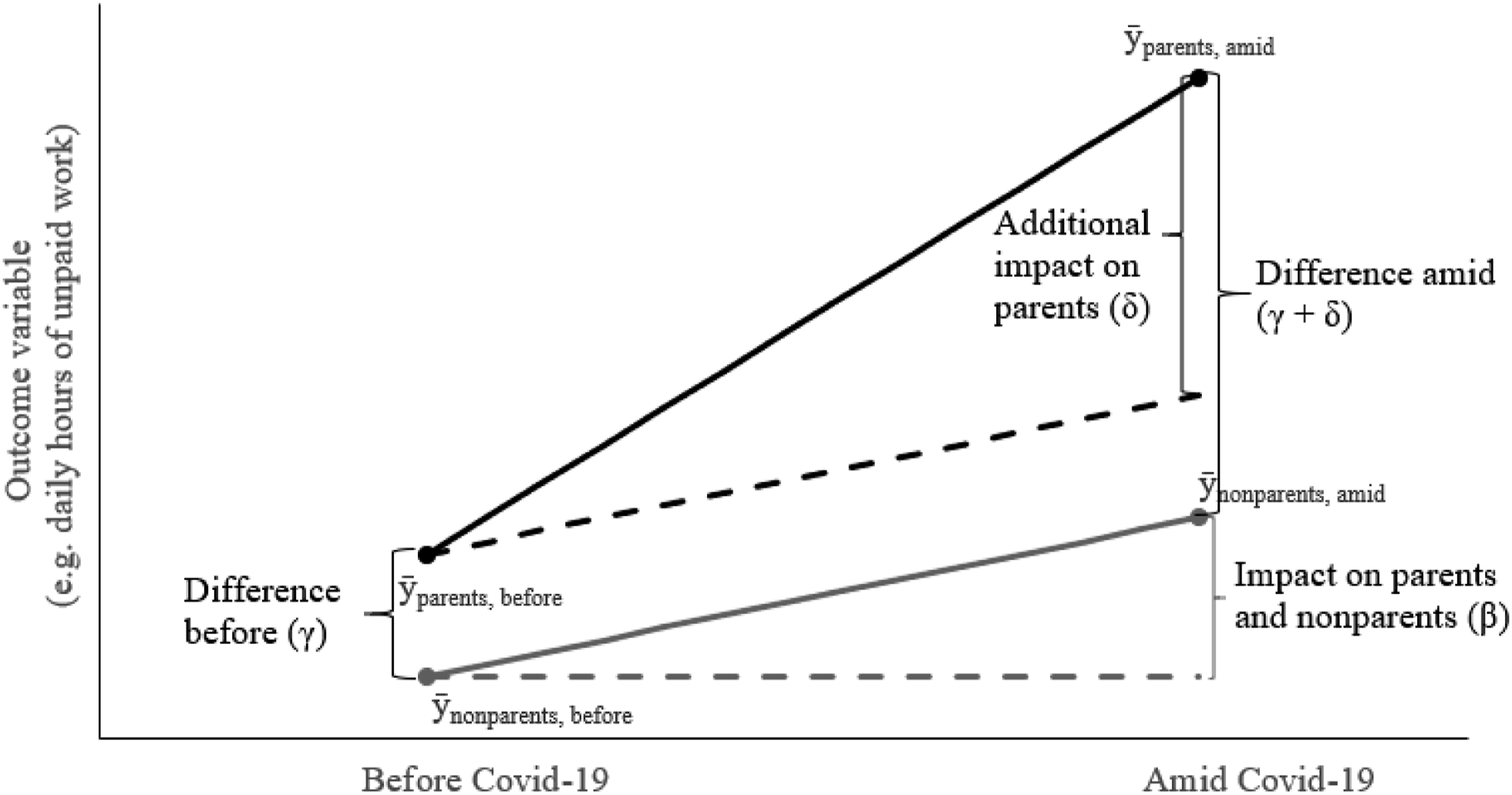
As emotional exhaustion was measured as the difference from the state before Covid-19 lockdown, only parameters

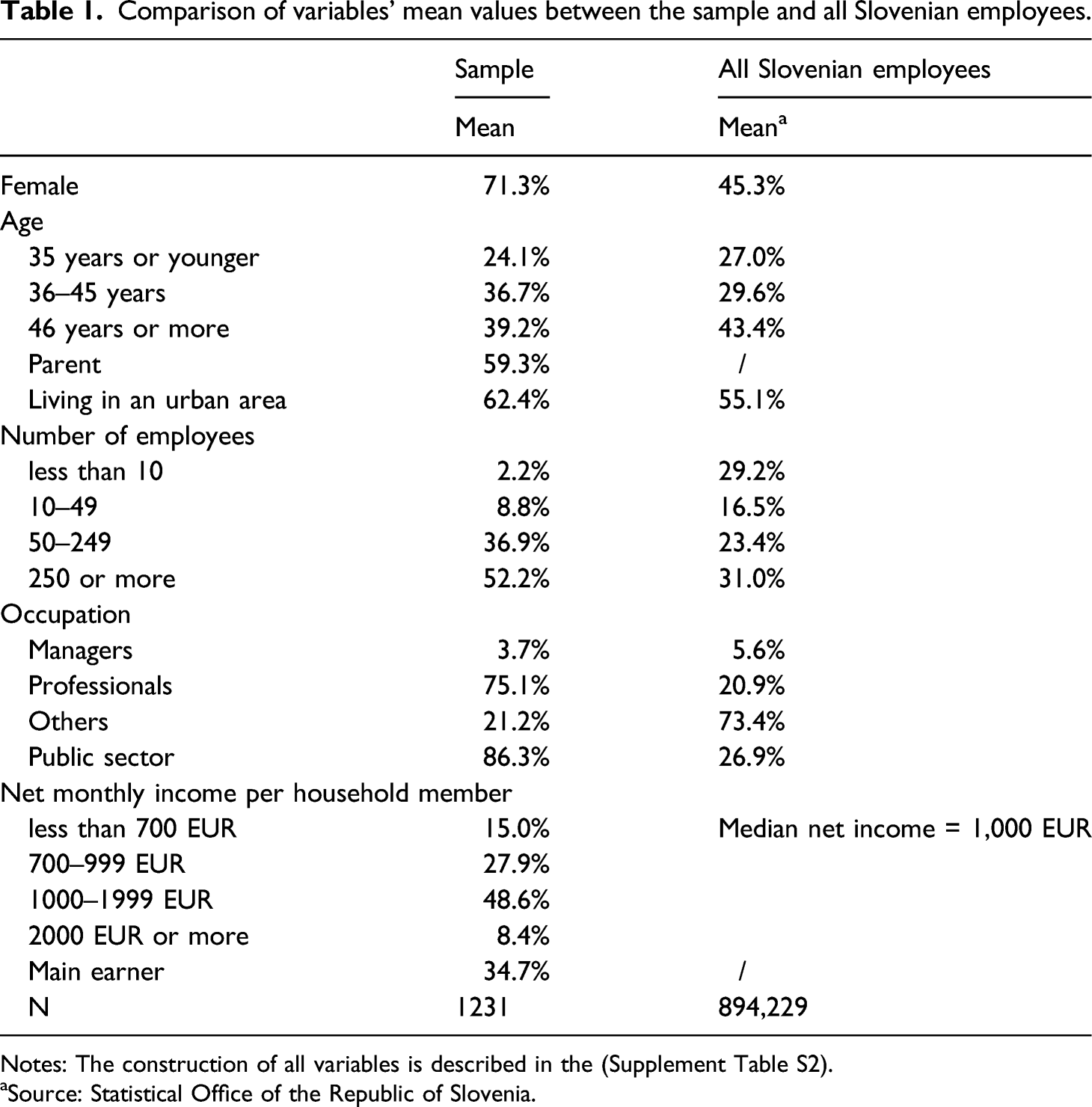
Before turning to results, we note that we report the estimated coefficients using probability weights based on the entire population of employees to correct for sample imbalances in gender and sector of employment. Ideally, this correction would be based on the population shares of only those employees working remotely. However, given that we do not know the conditional distributions of those working remotely, we apply the structure of the entire population of employees. 2
Empirical results
Descriptive statistics
Comparison of variables’ mean values between the sample and all Slovenian employees.
Notes: The construction of all variables is described in the (Supplement Table S2).
aSource: Statistical Office of the Republic of Slovenia.
The differences in organisational size are also reflected in the deviations of the occupational and industrial structures of our sample, and the sample of all employees. Among occupations, professionals were most likely to continue their work from home. Their share in our sample (75%) therefore substantially exceeded the share of professionals among all employees (21%). For a similar reason, the public sector was overrepresented among the respondents (86% in our sample compared to only 27% among all employees). The average salaries/wages earned by workers in our sample also seem higher than all employees’ incomes. Based on the median salary from the Slovenian statistical office, 50% of employees had net monthly income above 1000 EUR, while 57% of the survey respondents stated their net monthly income per member to be 1000 EUR or more. Finally, roughly 35% of the survey respondents were the main earners in their household, whereas no comparative number is available for all employees.
Our main variables of interest are reported time allocations between paid work, nonpaid work, leisure and measures of perceived emotional exhaustion. The distributions for these variables are presented in Supplemental Figures S1–S4 in the Supplement, separately, by gender and parental status. The lockdown during the COVID-19 pandemic did not influence the distribution of hours of paid work for men without children and had only a slight influence on females without children. However, the changes in the distribution of working hours of parents changed noticeably amid the COVID-19 lockdown. Specifically, mothers and fathers worked on average almost 9 h per day before the lockdown, but during the lockdown, the mean hours worked for fathers and mothers decreased to 8 h and 7.8 h per day, respectively (see Supplemental Figure S1). While there was a minor increase in time devoted to unpaid work for persons without children during the lockdown, major shifts occurred for parents (see Supplemental Figure S2). On average, mothers and fathers increased unpaid work by roughly 1.8 and 1.5 h, respectively. It is interesting that, on average, parents and nonparents devoted less time to leisure while working from home. The decrease was, however, more substantial for parents, especially mothers (see Supplemental Figure S3). Both mothers and fathers, on average, seem to have exhibited greater emotional exhaustion during the lockdown than individuals without children. In contrast, men without children on average reported emotional exhaustion to be less frequent during the lockdown (see Supplemental Material Figure S4).
Results
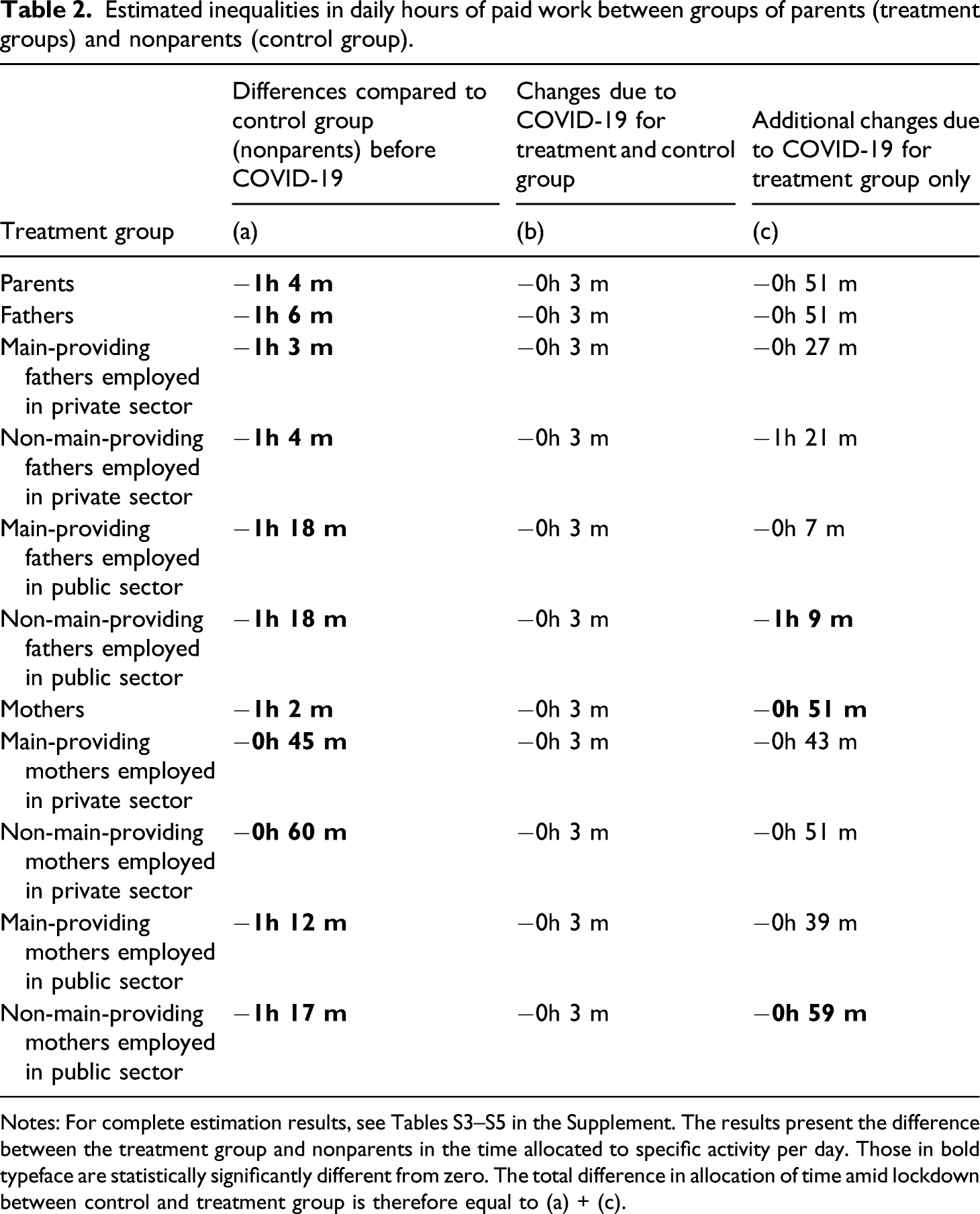
Estimated inequalities in daily hours of paid work between groups of parents (treatment groups) and nonparents (control group).
Notes: For complete estimation results, see Tables S3–S5 in the Supplement. The results present the difference between the treatment group and nonparents in the time allocated to specific activity per day. Those in bold typeface are statistically significantly different from zero. The total difference in allocation of time amid lockdown between control and treatment group is therefore equal to (a) + (c).
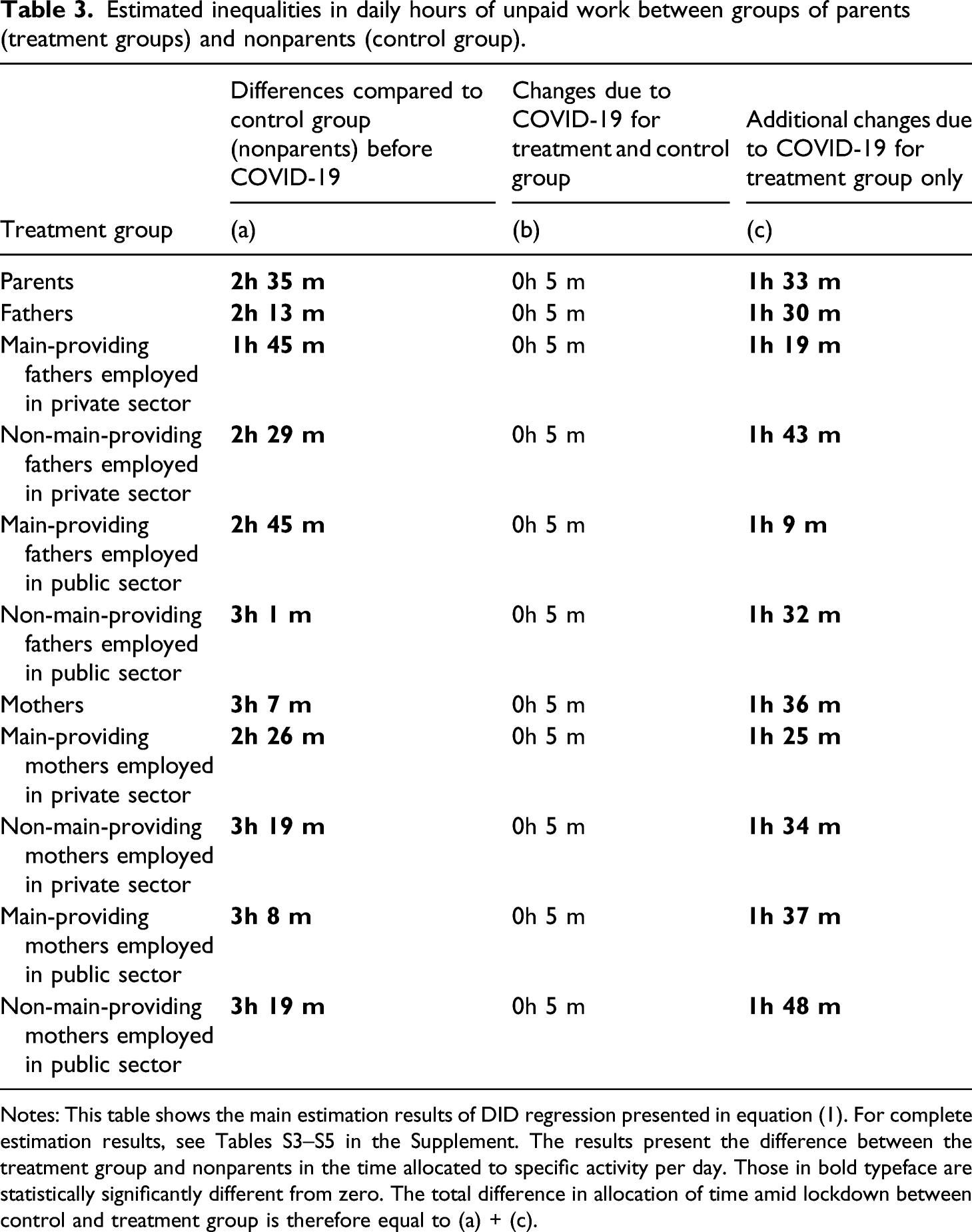
Estimated inequalities in daily hours of unpaid work between groups of parents (treatment groups) and nonparents (control group).
Notes: This table shows the main estimation results of DID regression presented in equation (1). For complete estimation results, see Tables S3–S5 in the Supplement. The results present the difference between the treatment group and nonparents in the time allocated to specific activity per day. Those in bold typeface are statistically significantly different from zero. The total difference in allocation of time amid lockdown between control and treatment group is therefore equal to (a) + (c).
Estimated inequalities in daily hours of leisure between groups of parents (treatment groups) and nonparents (control group).
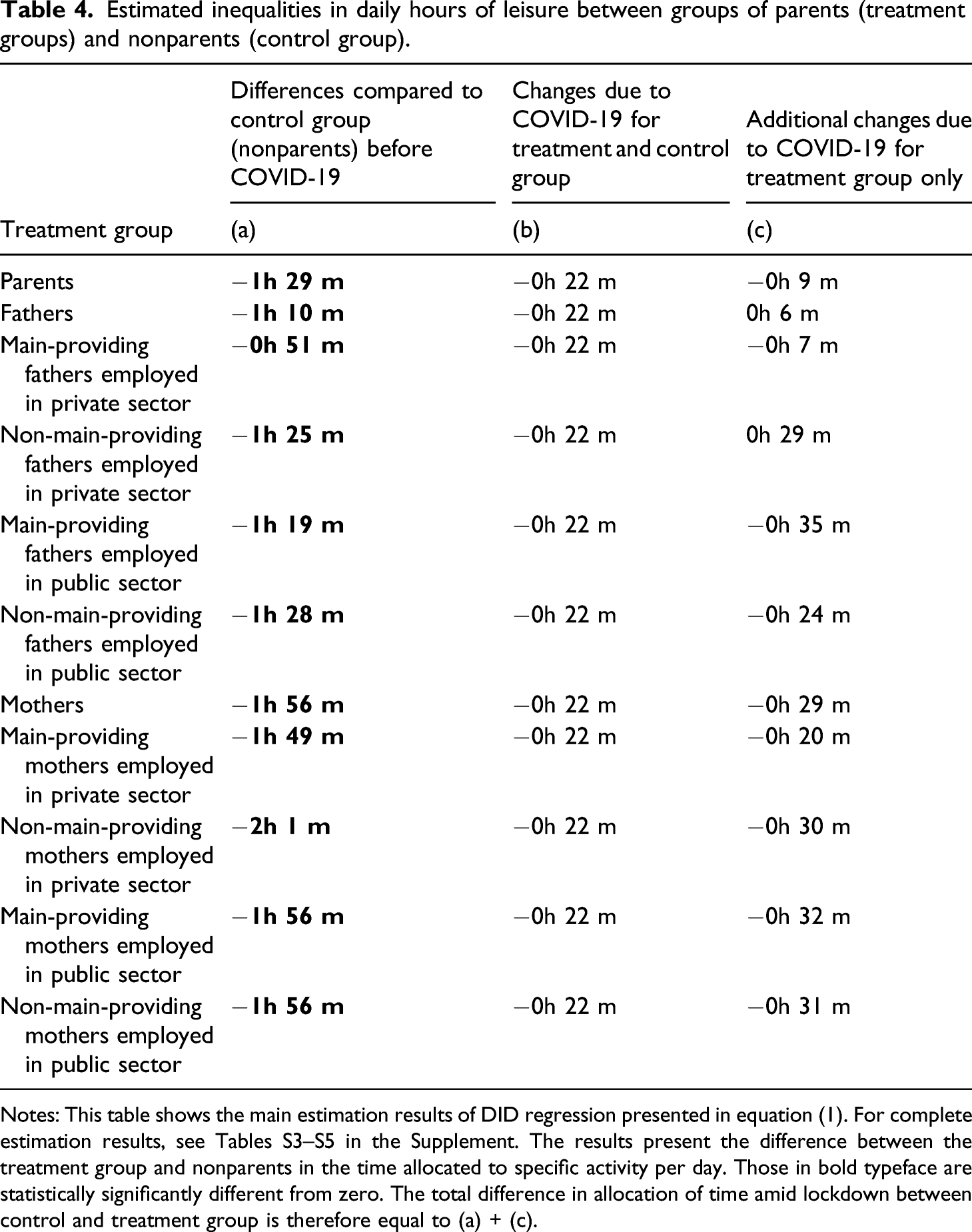
Notes: This table shows the main estimation results of DID regression presented in equation (1). For complete estimation results, see Tables S3–S5 in the Supplement. The results present the difference between the treatment group and nonparents in the time allocated to specific activity per day. Those in bold typeface are statistically significantly different from zero. The total difference in allocation of time amid lockdown between control and treatment group is therefore equal to (a) + (c).
Estimated impact of lockdown amid COVID-19 on emotional exhaustion.
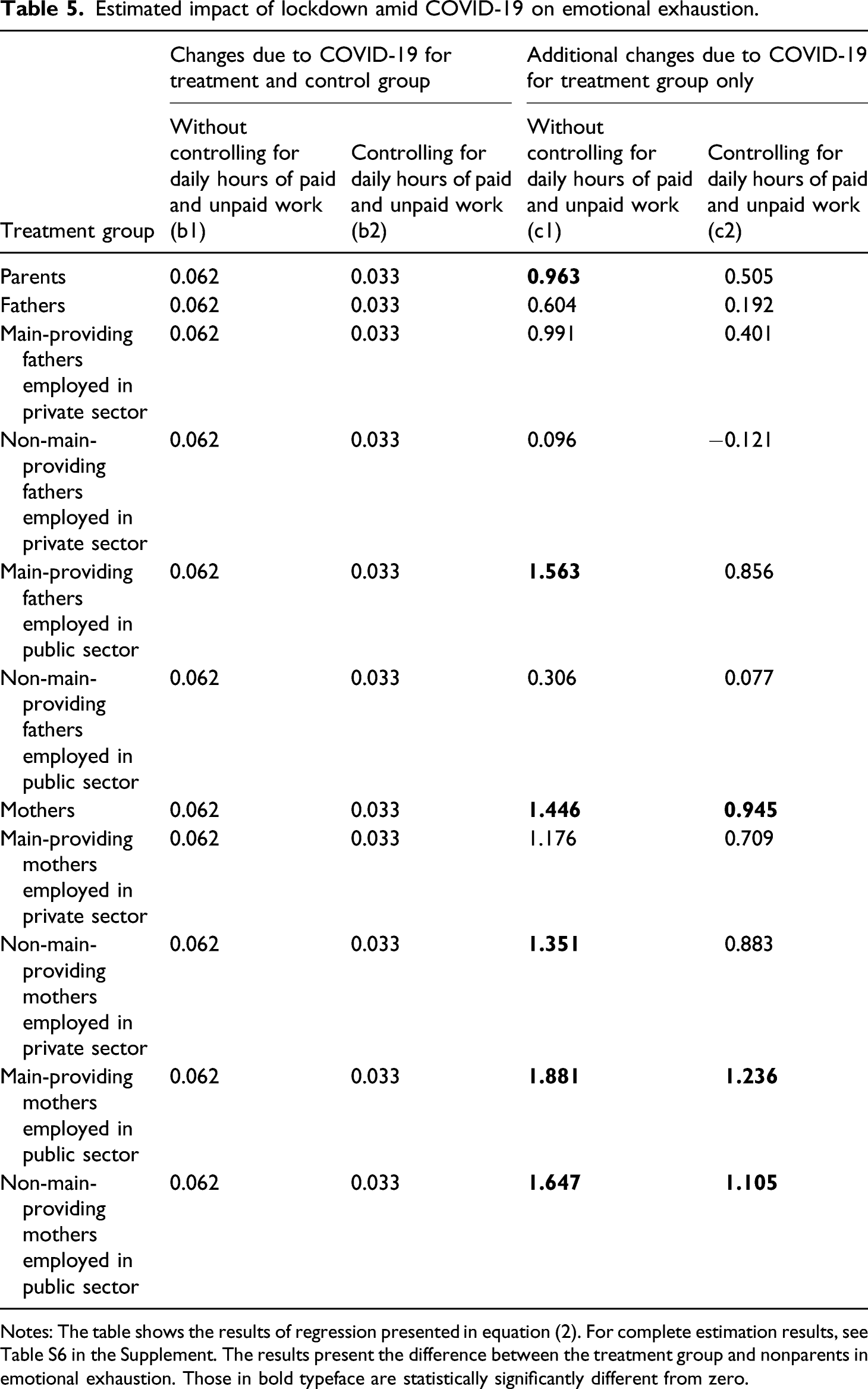
Notes: The table shows the results of regression presented in equation (2). For complete estimation results, see Table S6 in the Supplement. The results present the difference between the treatment group and nonparents in emotional exhaustion. Those in bold typeface are statistically significantly different from zero.
The estimates for the variable Parents in columns (a) show that before the lockdown, parents reportedly devoted approximately 1 h less to paid work, 2.5 h more to unpaid work and 1.5 h less to leisure per day than nonparents. The lockdown measures did not statistically significantly impact the reported unpaid work of individuals without children (column (b)), but economically and statistically significantly increased the time allocated to unpaid work by parents for an additional 1.5 h (column (c)). This amounted to a total difference in reported unpaid work between parents and nonparents to 4 h during the lockdown (2 h 35 min before, plus an additional 1 h 33 min after the lockdown). The lockdown also decreased parents’ paid work by almost an hour, although the coefficient is not statistically significant. The total difference in time worked between parents and nonparents was therefore almost 2 h.
The results also provide evidence on gender inequality. While there is almost no difference in reported paid work between genders (only 4 min less paid work reported by mothers compared to fathers before the lockdown and no additional gender difference between them after the lockdown), the differences in unpaid work and leisure are statistically significant (rows Fathers and Mothers). On average, mothers reported almost 1 h more of unpaid work and almost 1 h less leisure before the lockdown. During the lockdown, this gender difference did not increase much further. Additional differences across genders are observed if we allow differential effects between sectors of employment (private/public) and family-provision status (main/non-main for fathers and mothers). Comparing the coefficients between genders for the same sectors of employment and family-provision statuses, we find almost no difference in terms of hours of paid work before the lockdown and slightly greater adjustment of females’ hours during the lockdown. Main-providing females in the public sector reported lower hours of paid work by half an hour more than males, which is economically significant. Greater differences between genders are, however, found in terms of unpaid work and leisure. For all sectors of employment and provision statuses, we can see that before the lockdown, females reported more hours of unpaid work, ranging between 18 min (non-main providers in the public sector) and 50 min (non-main providers in the private sector) and enjoyed 28 min (non-main providers in the public sector) to 58 min (main providers in the private sector) less leisure. During the lockdown period, these gender-specific differences did not increase any further for any category apart from main-providers in the public sector (females increased unpaid work by 1 h 37 min, while fathers performed an additional 1 h 9 min of unpaid work).
Next, we focus on the comparison of coefficients across the sectors of employment. Before the lockdown, the parents employed in the public sector performed slightly less paid work, significantly more unpaid work and enjoyed less leisure (in comparison to nonparents) than their peers in the private sector. Specifically, the parents in the public sector reported between 14 min (non-main-providing fathers) and 27 min (main-providing mothers) less paid work than their peers in the private sector, and between 0 min (non-main-providing mothers) and 1 h (main-providing fathers) more unpaid work than their peers in the private sector. These results show that the disparities between the main and non-main providers were larger in the private sector. During the lockdown, the time allocation changes did not depend importantly on the sector of employment or family-provision status. However, the total differences in paid and unpaid hours of work were nevertheless substantial. For example, while main-providing fathers employed in the private sector reported roughly 3 h more of unpaid work than nonparents, non-main-providing mothers employed in the public sector exceeded the amount of unpaid work of nonparents by more than 5 h. Almost a mirror image (with less statistically significant coefficients) is observed for leisure.
Table 5 presents the estimates of the coefficients for equation (2) with emotional exhaustion as the dependent variable. The set of estimates, without controlling for hours worked, shows significant increases in the difference in reported emotional exhaustion between parents and nonparents during the lockdown (column (c1)), particularly for parents employed in the public sector and non-main-providing mothers. Comparison of the estimates with and without controls for hours worked reveals that the differences in hours of paid and unpaid work during the lockdown and prior period can explain an important part of the differences in emotional exhaustion changes for specific groups of individuals.
Discussion
Although individuals who worked from home during the COVID-19 lockdown may be considered fortunate to have kept their jobs while being minimally exposed to the new virus, some of them were nevertheless struggling. Our main finding is that in the absence of institutionalised childcare and education, Slovenian teleworking parents faced a significant increase in reported unpaid work burden compared to nonparents, which was partly reflected in reporting lower paid work hours and partly in reduced reported leisure. An increase of unpaid work (especially for parents) is no surprise, and is consistent with the findings of several other studies focussing on the effects of lockdowns on time allocations (e.g. Craig and Churchill, 2021; Del Boca et al., 2020; Farré et al., 2020; Xue and McMunn, 2021).
Existing gender inequalities in Slovenia, that is, primarily females providing more unpaid work than males, were not further increased during the lockdown period. These results support previous findings on the division of unpaid domestic work (e.g. Barigozzi et al., 2019; Ferrant and Thim, 2019) and the existence of gender inequalities in unpaid work obligations (Argyrous et al., 2017). The results are also in line with conclusions of preceding studies showing that when faced with a choice between putting hours into a pursuit of a career or childcare, women are more likely to choose the latter than men (e.g. DeRoche and Berger, 2017; Barigozzi et al., 2018). Moreover, the results of research focussing on the COVID-19 period carried out on samples from Italy, UK and Australia (Del Boca et al., 2020; Craig and Churchill, 2021; Sevilla and Smith, 2020; Xue and McMunn, 2021), where the pre-Covid environments were much less egalitarian, similarly exhibit no further increases in gender inequalities during lockdowns and even a narrowing of this gap in Australia (largely due to a significant increase in fathers’ active care for children during the lockdown). In contrast, however, the already wide gender gap further increased in Spain (Farré et al., 2020).
In our study, we also showed that the lockdown in Slovenia induced heterogeneous responses of main and non-main providing partners. Non-main providing males and females adjusted more in terms of hours of work than their main-providing peers. Our results contradict earlier studies, which found that only mothers abridged paid work due to the overpowering obligations at home and the workplace (Bianchi and Raley, 2005; Kaufman and Uhlenberg, 2000), as well as a UK lockdown study, which revealed that female main providers whose paid work hours reduced, disproportionally increased the share of the housework they contributed (Zamberlan et al., 2021). Exploiting information on the sector of employment, we also investigated whether labour protection arrangements (OECD, 2002), preference for work-family balance (Buelens and Van Den Broeck, 2007) and weaker risk of losing a job or being promoted (Leuze and Rusconi, 2009) among the public sector employees led to a greater substitution of paid for unpaid work hours than among the private sector professionals. While we observe that workers in the public sector tend to perform more unpaid work and enjoy less leisure before the lockdown, we fail to observe additional important differences during the lockdown.
This study also briefly addressed the increased emotional exhaustion reported by parents, especially mothers employed in the public sector. A parallel could again be drawn with research on the UK COVID-19 lockdown (Xue and McMunn, 2021), which showed that women who spent long hours on housework and childcare were more likely to report increased levels of psychological distress, while no significant association was found among men. These results are not surprising, as previous research found that: the time of the day that people worked, mismatches between children’s school and parents’ work schedules, schedule fit, time pressure, feeling that ‘too little’ time is spent with one’s children and the sense of control that people feel over the important things in their life; have a strong negative link with mental health, especially for mothers (see Bianchi and Milkie, 2010, for a review).
Our results are based on an online survey for one country, which allowed us a timely collection of data on time allocations and measures of emotional exhaustion during the period of the first lockdown in Slovenia. Moreover, the survey questionnaire allowed us to collect information on time allocation to unpaid work and leisure, which are not available in administrative data sources, and on hours of work, which may be misreported to both employers and in administrative data. The study contributes to the literature by analysing the differences in lockdown effects on time allocation and emotional exhaustion between parents and nonparents. It is also one of the rare studies focussing on an environment with low pre-pandemic gender inequality.
Our reliance on the online survey, however, suffers from other limitations that must be recognised. Our sampling is not random, and the questionnaire dissemination did not result in a representative sample of the entire teleworking population. As individuals could self-select whether to complete the survey or not, the reported estimates might be biased. If parents suffering the most (due to, e.g. absence of help from other family members or inability to be on furlough) were more motivated to complete the survey, the estimated adjustments in time allocations of parents might be larger than the average adjustments of the entire population of parents. In fact, due to the lack of information on the target population, which we tried to mitigate by using weights and assuming that the population of cohabiting and married individuals working from home resembled the population of all employees (untestable assumption), our results may not be taken as representative of the entire teleworking population.
The second major caveat is that our survey contains a limited set of confounding variables that may not fully control for the differences between the different subpopulations (i.e. parents vs nonparents, male vs female, main- vs non-main providing status, and public vs private sector employment). The reported results may thus be biased and do not warrant causal interpretation, reflecting both the differences in treatments due to lockdown and the non-observed characteristics of subpopulations.
Finally, the results are based on the survey of self-reported measurements of time use and emotional exhaustion before and during the lockdown period. As the survey was conducted during the lockdown, the values for the pre-lockdown period are reported retrospectively and could be biased (e.g. Kan, 2008; Kamo, 2000). In addition, our research (as well as most of the previously mentioned comparable research) does not explicitly address multitasking, which is one of the sources of gender inequality (Offer and Schneider, 2011). However, Craig and Churchill (2021) demonstrated that during the pandemic, the stress of juggling and/or multitasking was experienced by both fathers and mothers, suggesting that this bias might not be significant.
Conclusion
In this study, we analyse the short-term effects of the first COVID-19 lockdown that took place in Slovenia between March and May 2020 on workloads and wellbeing of teleworking individuals. We find that the lockdown, which brought the closure of kindergartens and schools, led to a significant increase in the unpaid work burden of parents compared to nonparents. The additional burden of the unpaid work was accommodated by a reduction of hours devoted to both the paid work and leisure and was also reflected in a greater emotional exhaustion. The OECD (2020) foreshadowed that much of the anticipated additional unpaid work burden would fall on women, a pattern of adjustment that was not observed for our sample. Instead, both partners adjusted time allocations similarly, although women started from a greater unpaid work burden. We also find important differences in the adjustment of time allocations between the main- and non-main providing partners, as the latter carried an important part of the additional unpaid work burden. Lastly, our findings suggest that the lockdown in Slovenia did not further increase the differences between the private and public sector workers’ allocations of time, although again starting from significantly different pre-lockdown allocations.
Our study was timely – conducted during the first lockdown in Slovenia. It used an online survey questionnaire, allowing us to measure the time allocated to paid work, unpaid work and leisure (the latter two typically not available in administrative data), and emotional exhaustion. Nevertheless, several caveats are warranted. First, the results are based on a sample of individuals from a European country with a specific institutional setting that cannot be generalised to other countries. Second, the sample may not be representative of the entire teleworking population, whose characteristics are unknown. Our estimations may also suffer from several potential sources of bias: non-random sampling, unobserved confounding variables and self-reported measurements of time allocation and emotional exhaustion.
The limitations of our study suggest that further research on the effects of COVID-19 lockdowns on short-term and long-term time allocations, and emotional exhaustion are needed for countries with heterogeneous institutional setups. As survey data limitations are hard to overcome, the use of administrative data – at least on time allocated to work – may be beneficial to reduce the uncertainty of the estimated effects.
Supplemental Material
sj-pdf-1-elr-10.1177_10353046211070042 – Supplemental Material for Reported time allocation and emotional exhaustion during Covid-19 pandemic lockdown in Slovenia
Supplemental Material, sj-pdf-1-elr-10.1177_10353046211070042 for Reported time allocation and emotional exhaustion during Covid-19 pandemic lockdown in Slovenia by Tjasa Bartolj, Nika Murovec and Saso Polanec in The Economic and Labour Relations Review
Footnotes
Declaration of conflicting interests
The authors declared no potential conflicts of interest with respect to the research, authorship and/or publication of this article.
Funding
The authors disclosed receipt of the following financial support for the research, authorship, and/or publication of this article: This work was supported by the Slovenian Research Agency [grant number P5-0096].

Notes
Author biographies
References
Supplementary Material
Please find the following supplemental material available below.
For Open Access articles published under a Creative Commons License, all supplemental material carries the same license as the article it is associated with.
For non-Open Access articles published, all supplemental material carries a non-exclusive license, and permission requests for re-use of supplemental material or any part of supplemental material shall be sent directly to the copyright owner as specified in the copyright notice associated with the article.
