




Abstract
Music has impact on cognition, emotions, sense of self, the body, and social interaction. Through these multiple effects, engagement with music-making can bring positive change, with transformative potential. For older adults, documented experiences of positive change in published studies fall into broad areas of self-perception, quality of life, and personal growth. Yet in these same studies, there is no accepted definition of the experience of transformation. Furthermore, the specific elements of the experience in community music-making that enable such effects remain little understood. To address these gaps in knowledge, a scoping review was carried out with the aim of identifying the breadth of current research into positive and potentially transformative experiences for older adults in community music-making. Twelve databases were searched for studies of older adults’ community music-making. After a process of review, 68 studies were selected for inclusion. The studies cover a diverse range of community music-making practices and a range of participant demographics. The review discloses the depth of contributions already made and the potential music has for personal transformation, as well as suggesting the mechanisms for enabling it. The findings of this review are intended as a valuable resource for further research.
The benefits of engagement with music are well-known. As a multimodal artform, music engages cognitive, emotional, social, and physical domains. It stimulates our thinking; allows us to access emotions and thus regulate our emotional state; defines our personal music choices; and our sense of self and identity. It fosters and supports social connections and entrains us both emotionally and physically, stimulating movement (DeNora, 2000). These capacities of music apply across the lifespan (Brancatisano et al., 2020).
Creative aging is a growing field that reflects interest in non-pharmacological approaches to aging well, typically using arts engagement. Cognitive decline associated with aging can be mitigated by engagement with activities that are stimulating, and there is strong evidence that engagement with creative arts can be protective (Hooker et al., 2017). Gene Cohen was a key figure in advocating for creative engagement as we age (Cohen, 2006) and a leader in the field of creative aging. Larson and Perlstein, two of the founders of the Centre for Creative Ageing in the United States of America, identified visual arts, music, drama, dance, and creative writing as creative arts activities that are engaging, challenging, and stimulating for older adults (Larson & Perlstein, 2003). This review focuses on music as the creative activity and specifically music-making for older people living in the general community. Following retirement from work and/or caring responsibilites, music can offer new learning, skills, and social circles, leading to new musical identities, associated with a sense of purpose, motivation, and self-development (Dabback, 2008; Southcott, 2009; Tsugawa, 2009). These are potential capacities that can lead older people to experience deep immersion and focus—a state of flow—where they are fully absorbed, time is perceived differently, and wellbeing improves (Koehler et al., 2023; Seligman, 2011). Thus, the intellectual and creative stimulus and meaning attached to engaging with music can lead to positive change, which has been argued as potentially transformative (English & Davidson, 2023). The current article explores this by investigating how positive change and, in particular, transformation for older people through community music-making are described in the literature.
The concept of transformation is referred to predominantly in the educational literature (Freire, 1996; Mezirow, 1997, 2006; Paul, 2014; Paul & Quiggin, 2020), but also in the literature on music education (O’Neill, 2012) and group music-making (van der Schyff, 2015). A transformative experience involves both epistemic and personal transformation (Paul, 2014) and may be precipitated by both short and sustained experiences (Paul & Quiggin, 2020). Transformative experiences cause a shift in our interaction with the world, for example, in the raising of consciousness (Freire, 1996); a shift in perceptions (O’Neill, 2012; Paul & Quiggin, 2020); and heightened states of awareness and empathy (Mezirow, 1978; van der Schyff, 2015). These are all sustained transformations taken forward into the individual’s way of being in the world.
Studies of community music-making for older adults note many positive changes, some of which can be considered as transformative experiences, articulated as new ways of perceiving and being in the world. These include new awareness and the overcoming of previous barriers. This kind of transformative change can be seen in a Finnish study of women who challenged stereotypes of older women through forging new musical identities for themselves as rock musicians (Laes, 2015) and a study reporting how choir members experienced liberation from the expected roles of older Mediterranean women (Southcott & Joseph, 2015). Research on music-making in prisons reveals pathways of transformative self-discovery for women prisoners in Portugal (Lamela, 2021) and the means to transcend their current situation for older men in a U.S. prison (Harbert, 2010).
Most studies of community music programs and groups focus on benefits of some kind. For example, community music-making has been associated with older people finding a new sense of purpose (Glen, 2018; Hallam & Creech, 2016), a new identity (Dabback, 2008; Jenkins & Southcott, 2016), and increased social connectivity (Joseph & Southcott, 2017). A common methodological approach to understand its impact is phenomenological, using qualitative techniques to explore participants’ perceived experiences. Some studies note changes to self-perception, which might be expressed as increased confidence (Allison et al., 2020), a sense of accomplishment (Clay, 2022), or realizing desired “musical possible selves” (Creech et al., 2014, pp. 41–42). Other studies point to changes in perception that are important for older individuals, for example, when listening to music (Habron et al., 2013), and some note how these can carry over into everyday life (Perkins & Williamon, 2014). There is also reporting of participants experiencing a widening of worlds, whether this be musical (Balsnes, 2017), via the arts more broadly (Hillman, 2002), or social (Hays & Minichiello, 2005a).
There are three recent reviews focused on creative aging. One reviews creative aging through participation in creative arts activities broadly (Bellazzecca et al., 2022). The other two review music and aging; of these, one has a main focus on creativity (Creech et al., 2020), and the other on the motivations and perceived benefits of involvement in music groups (Dabback et al., 2018).
The critical realist review by Bellazzecca et al. (2022) encompasses studies of music-making, theater, visual arts, and a creative festival with a focus on place-based programs delivered in the United Kingdom. Among these different programs, positive effects are noted in music mainly from singing and include better mood and morale; general feelings of mental wellbeing; decreased depression; and improved cognitive functioning and memory.
Of the two music reviews, Creech at al. (2020) review creative expression through music and its link with quality of life (QOL). Strong QOL themes are a sense of belonging; a sense of self and agency (being); and a sense of becoming, as self-exploration and expression (2020, pp. 16–17). Dabback, Coffman, and Rohwer’s review (2018) focuses on motivations of participants and their perceptions of benefits. They find that motivations are driven by aspects such as desire for musical engagement; a sense of community; and opportunities to learn and grow in older age. In addition, they find that membership of a music group brings benefits such as improved QOL, physical health, new skills, social benefits, and personal benefits.
In a recent publication, van der Schyff et al. (2022) argue that engagement with music is potentially transformative for anyone. They suggest that musical collaboration can offer transformational experiences, which open the individual up to new perspectives and possibilities. Furthermore, they argue that music-making, whether score-based, aural, or improvised, accesses creativity through the acts of making, doing, trialing, and thus creating anew. As Kaufman (2018) argues, creativity and creative activities lend themselves to strong engagement, facilitating experiences of flow and meaning-making. The flow state and meaning-making through creativity are reportedly linked to positive change and potential for transformation (Silverman et al., 2016). These findings have clear implications for music-making in aspects such as a supportive environment and the level of difficulty of the activity; for as Seligman (2011) argues, activities that are challenging yet doable enable a sense of flow.
Some scholars adopt critical geragogy as a framework to understand how music-making can be transformative for older adults (Creech & Hallam, 2015; Laes, 2015). Critical geragogy is an extension of critical pedagogy focused on the older adult. It draws on the work of Paulo Freire (1996) and his concept of teacher-student co-learning with recognition of what each brings to the learning process. It is a social justice approach, opening the way to transformative learning and empowerment (Formosa, 2010). Scholars apply critical geragogy to understand which practices within music groups enable positive change for participants and advocate for more work with community music participants to understand the transformative process and enabling aspects from their perspectives (Creech & Hallam, 2015).
Researchers of community music also take a phenomenological approach to enquire into the musical, social, pedagogical, and environmental factors that deliver potentially transformative benefits. The role of the facilitator is a factor that is investigated, for example, to understand how facilitators promote a sense of community (Schiavio et al., 2019). Other studies highlight the importance of opportunities for participants to contribute to their groups; to the choice of repertoire; goals of the groups; and supportive environments (Varvarigou et al., 2013).
Reviewing the literature, there are indicators that, while many older adults experience positive change from engagement with music-making, transformation is a potentially deeper and more powerful outcome of musical engagement. To address gaps in understanding the experiences of transformation (as well as positive change) and its enablers, the current scoping review was undertaken, with three objectives: to identify the literature on older adults’ engagement with community music-making in which the experience of transformative change is noted; to explore the different ways the transformation is described; and to identify factors that enable this experience.
Methods
The review followed the guidance provided by the Preferred Reporting Items for Systematic Reviews and Meta-Analyses (PRISMA) extension for scoping reviews (Tricco et al., 2018). The protocol is published (English et al., 2024). The review employed the PCC approach (Participant, Concept, Context) to define the question to be addressed. Participants were defined as older adults (60+ years of age), and the concept was transformation. The context was any form of group music-making in a community setting.
Search strategy development and execution followed the three-step process outlined in the JBI (Joanna Briggs Institute) Manual for Evidence Synthesis (Peters et al., 2020). A comprehensive search was conducted on the following databases: MEDLINE (Ovid), CINAHL (EBSCO), PsycINFO (Ovid), Scopus, Embase (Ovid), Informit, Cochrane Collaboration, Campbell Collaboration, JBI, Web of Science, JSTOR, and Academic Search Ultimate. In addition, searches of Google Scholar plus citation analysis were carried out to check for additional studies. Searches were limited to English language and a publication date range of 2000–2023. Search terms included “aged,” “older,” and “elder” for participants; music-making terms such as “music,” “sing,” “choir,” “orchestra”; combined with “aging in place” or “community.” The concept transformation required multiple search terms, including “purpose,” “quality of life,” “positive,” and “transform.” The final search strategy consisted of both keywords and MeSH terms (see Supplemental Appendix 1 for the full search strategy for MEDLINE (Ovid)). The search was translated for the other databases using the appropriate index terms for each resource. Searches were conducted in October 2022 and re-run in May and October 2023.
All sources were uploaded into the EndNote 20 (Clarivate Analytics, PA, USA) bibliographic software and then exported to the Covidence review management platform (Veritas Health Innovation, Melbourne, Australia; available at www.covidence.org). Screening against inclusion and exclusion criteria, at both title and abstract and full-text stages, was carried out by two independent reviewers (shared between authors HE, SL, and JD), with conflicts resolved by the review team.
Inclusion and exclusion criteria
To be included, studies needed to have as their focus positive change of some kind resulting from participation in community music-making. Qualitative, quantitative, and mixed-methods studies were included. Studies that focused on creative activities broadly were included if the music activities were investigated separately. As studies often had participants of a large age range, it was decided that the research would include studies where all participants were 60 years of age or older, or the sources were clear about the ages of included participants in reporting. Studies were excluded if the main focus was on intergenerational relationships and if they focused on music listening or were multimodal studies (such as dancing to music). Clinical settings, residential aged care facilities, prisons, and hospitals were excluded. Community-based music-making with specific therapeutic aims for condition-based groups of older adults, such as stroke survivors and people with neurodegenerative diseases, was excluded.
Data extraction
The team developed and tested a data-extraction form together. Authors HE and JD, as content experts, worked independently to chart the data, meeting regularly to discuss the charting process and resolve any differences of opinion. The form captured source citation, type of source, country of origin, research aims, study population, and sample size. Concerning the sample, the form required age range, cultural and linguistic background, and whether participants were Indigenous or not. The form also captured the methodology, theories and frameworks, assessment tools, findings, transformative descriptions, and enablers of transformation. Following the recommendation by Levac et al. (2010), the team committed to adapting the extraction form if necessary, and two modifications were made: to add gender to participant information; and to name the types of music-making. Next, HE and JD reviewed the data on descriptors of transformation and enablers of transformation to collate and categorize in a useful way. These findings were summarized in table and narrative forms.
Results
Screening and study selection
The searches yielded 1,247 sources, of which 669 were duplicate records. The remaining 578 sources went forward to title and abstract screening, at which stage 288 were excluded, leaving 290. Full-text review led to the exclusion of a further 233 sources including four reviews (since all the reviews’ relevant studies were already included). Fifty-seven sources remained to which 11 new sources were added, having been identified from reference lists. A total of 68 sources were included in the review. Figure 1 (PRISMA flow diagram) summarizes the study identification and selection process.
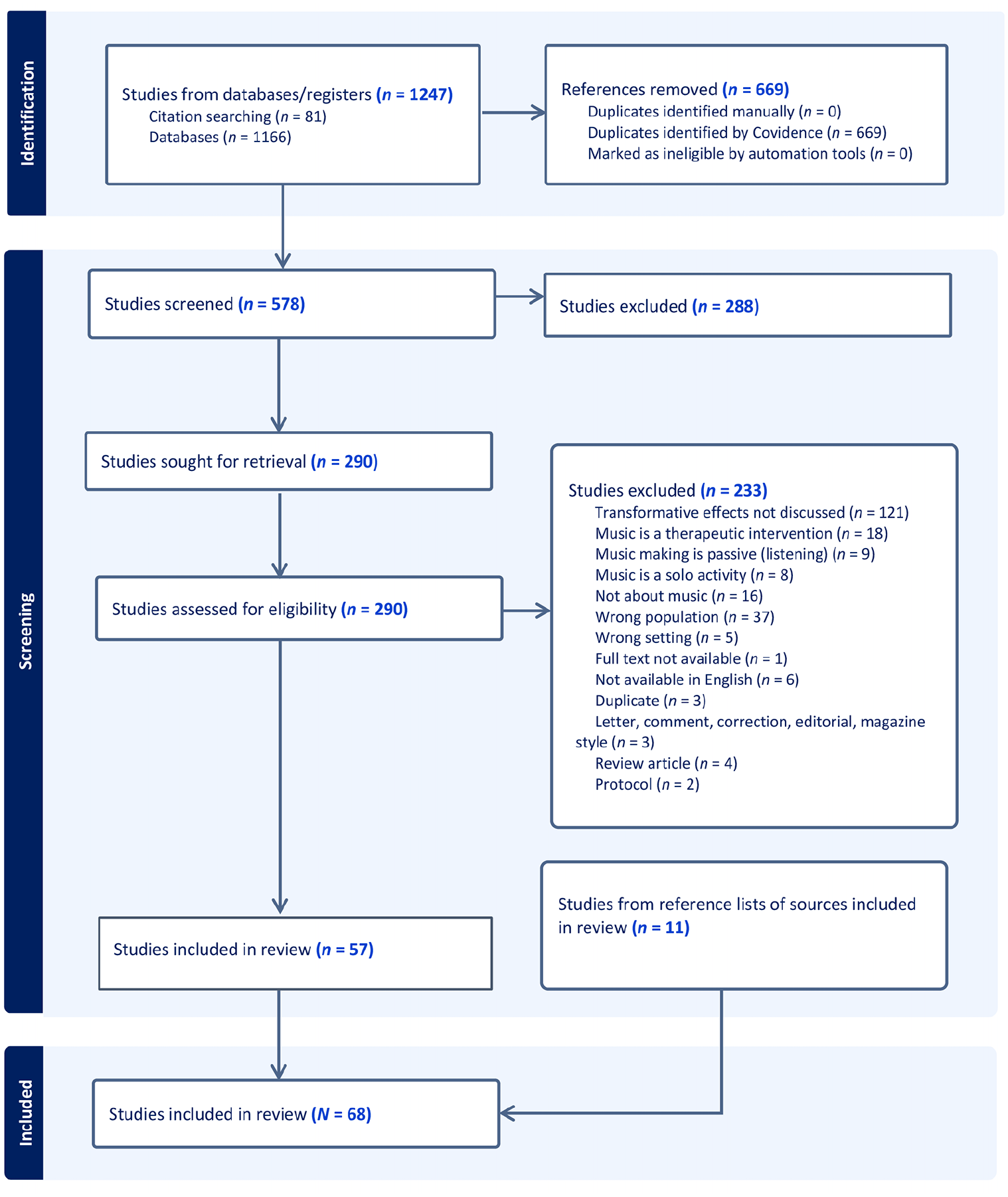
PRISMA diagram: identification, screening, and selection of articles.
Characteristics of included studies
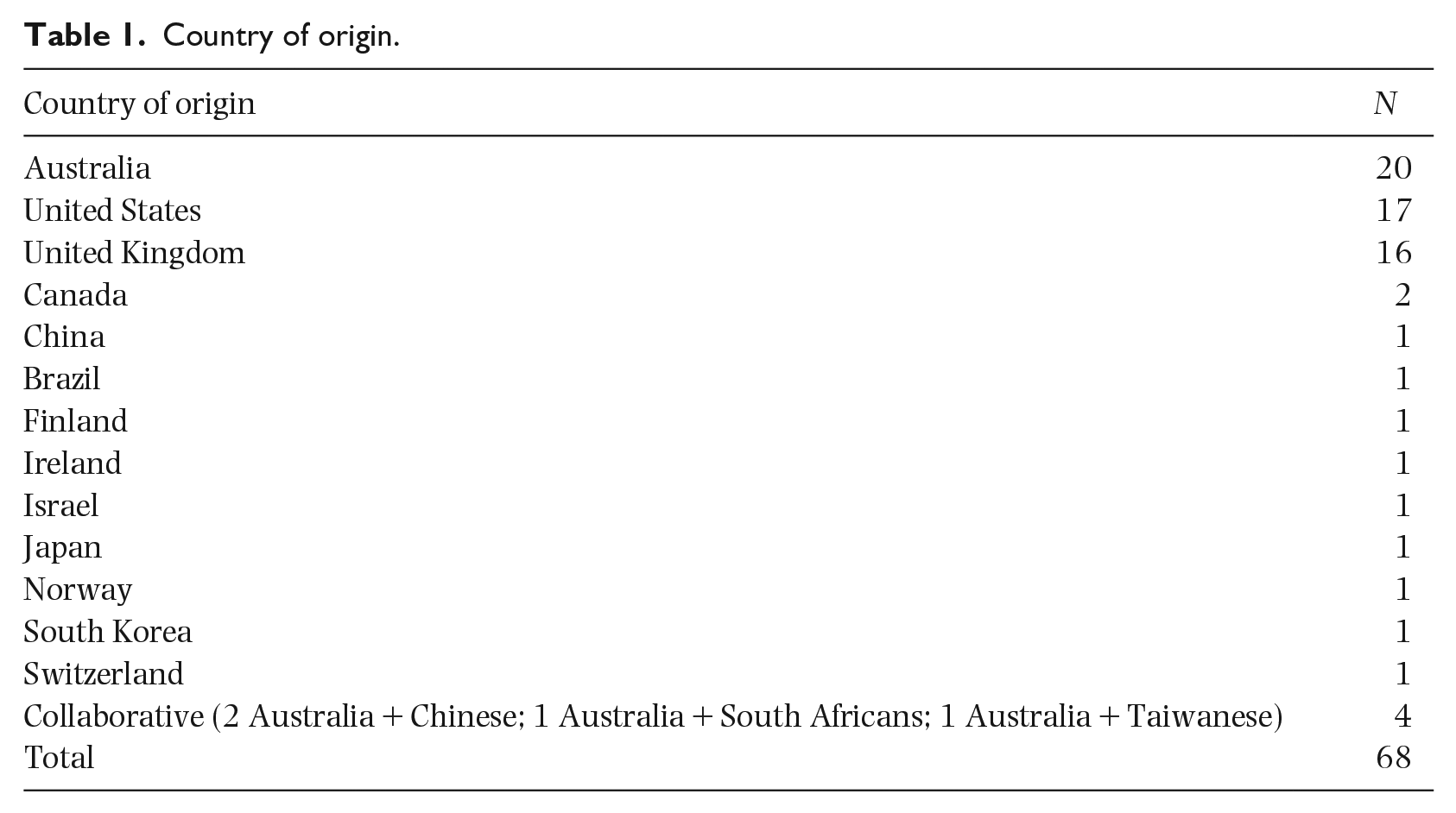
The included studies originated from the following countries: Australia (20), the United Kingdom (16), the United States (17), Canada (2), and one study each from Brazil, China, Finland, Ireland, Israel, Japan, Norway, South Korea, and Switzerland. In addition to the 20 Australian studies, there were four collaborative studies between academics or an academic and a PhD student from: Australia and China (2), South Africa (1), and Taiwan (1) (see Table 1).
Country of origin.
Out of 68 included studies, eight did not note the gender of participants; the samples in 48 studies consisted predominantly of women, while samples in nine were predominantly men, and three had equal numbers of men and women. Studies that were included were predominantly case studies working with ongoing community music groups, such as choirs and bands of various types (number is 58, approximately 85% of total studies). The remaining studies (10, approximately 15% of total) were interventions that ranged from six weeks to 44 weeks. Two lasted six weeks (Baker & Ballantyne, 2013; English et al., 2022), one lasted eight weeks (Davidson et al., 2014), one lasted 10 weeks (Dhokai et al., 2023), three lasted 12 weeks (Ahessy, 2016; Perkins & Williamon, 2014; Riabzev et al., 2022), one lasted 30 weeks (Lally, 2009), and two lasted 44 weeks (Allison et al., 2020; Johnson et al., 2020). Interviews where participants shared their perceptions, including change from the engagement, were held after the interventions or with people who had already been a member of a music group for some time, implying that these were considered responses.
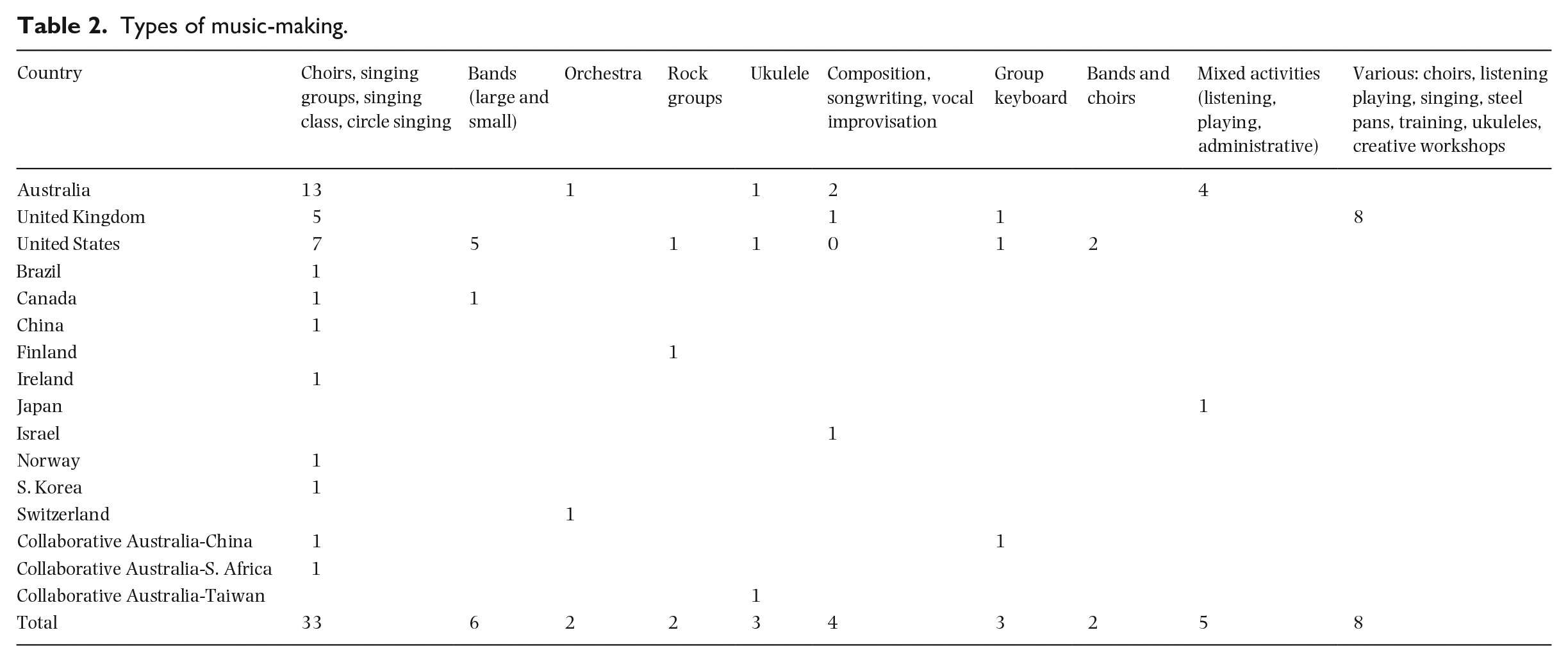
Types of music-making covered were referred to using the following descriptors (see Table 2): choirs, group singing, and singing classes (33 studies); bands (6 studies) and orchestras (2 studies); both bands and choirs (2 studies); composition, improvisation, and songwriting groups (4 studies); keyboard (3 studies), ukulele (3 studies), and rock groups (2 studies); studies that considered a variety of groups, such as bands, ensembles, and choirs (9 studies); and studies that considered mixed activities, such as listening, playing, singing, and music training combined (4 studies).
Types of music-making.
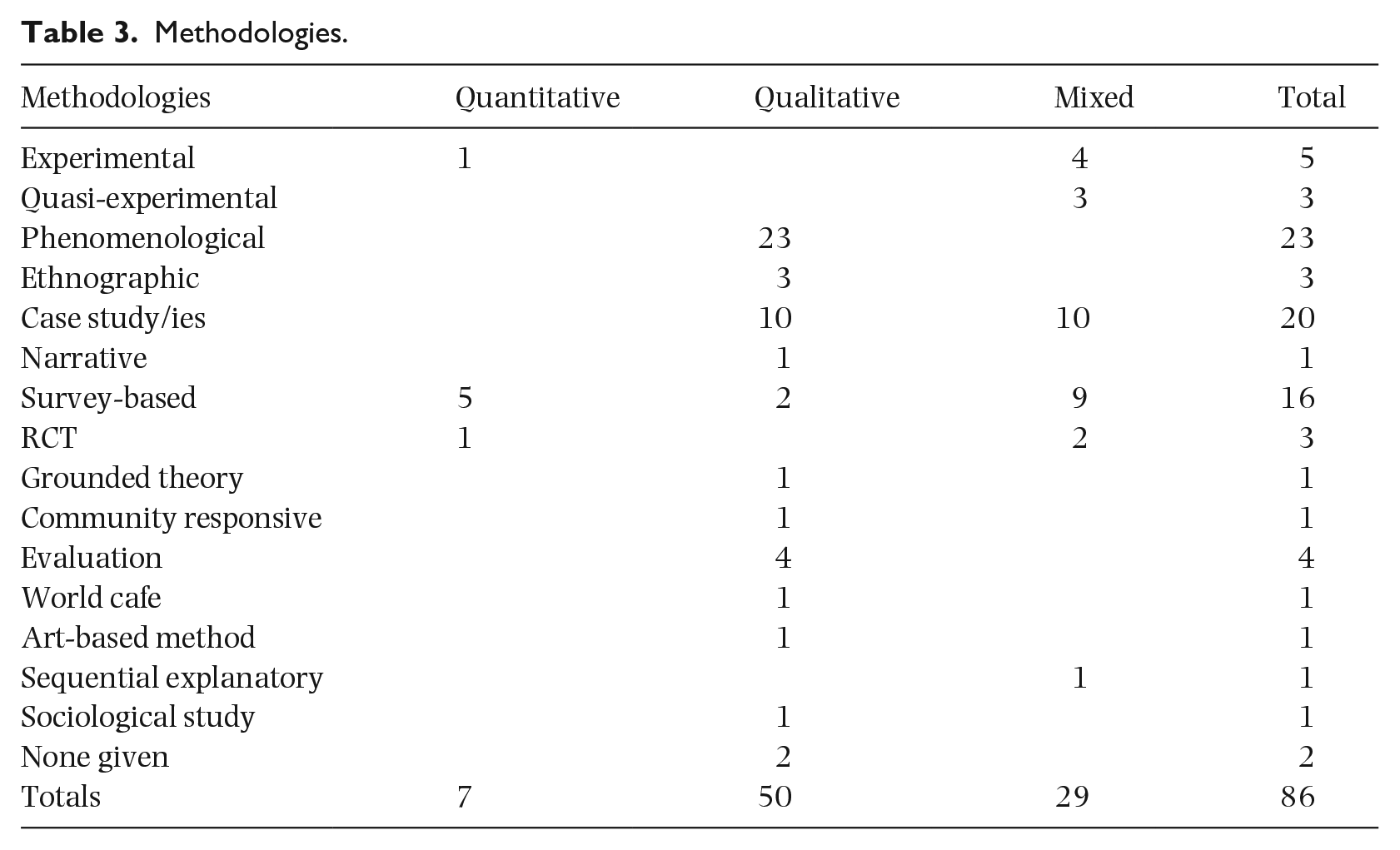
In terms of methodologies, the included sources comprised 49 qualitative studies, 7 quantitative studies, and 29 mixed-method studies. Several different study designs were used (see Table 3), with some studies using more than one methodology. Methodologies included experimental, quasi-experimental, phenomenological, ethnographic, and narrative. Overall, data-collection methods included interviews (49 sources); questionnaires or self-report measures (19 sources); surveys (15 sources); direct observation (12 sources); videoing (3 sources); focus groups (24); and journaling and diaries (5 sources). Approaches to analysis used were interpretative phenomenological analysis (IPA), thematic analysis, power analysis, and content analysis. In the 68 included sources, phenomenology-based studies tended to have small participant numbers, while surveys had larger numbers. Sample sizes ranged between two (Southcott & Joseph, 2010) and 488 participants (Mito & Kinjo, 2023).
Methodologies.
All included studies specified a focus on older adults. However, within community music groups, “older” was often stated as 50 and over, the minimum age set by organizations such as the global University of the Third Age (U3A) and the Silver Program in Gateshead, United Kingdom. The New Horizons Music program in the United States also has a lower age limit of 50 years, with some bands allowing younger members (Jutras, 2011). Four studies included participants older than 40 years (Creech et al., 2014; Habron et al., 2013; Hallam et al., 2012; Maury & Rickard, 2022), and one had participants older than 30 years (J. Lee et al., 2016). In response to this variation, sources were included if they recruited only participants who were 60 years of age or older, or they were clear about the ages of included participants in reporting. Some studies provided a mean age, such as 83 (Baker & Ballantyne, 2013), 70 (Coffman, 2008), and 71.8 years (Glen, 2018). Most study participants were White, Caucasian, and middle-class. Other featured populations were African Americans (Allison et al., 2020; Petrovsky et al., 2020); Latino/Hispanic Americans (Allison et al., 2020; Johnson et al., 2020); Taiwanese (A. Lee & Southcott, 2020); Chinese (Cai et al., 2023; Li & Southcott, 2015; Southcott & Li, 2018); Japanese (Mito & Kinjo, 2023); North Korean (Heo et al., 2022); Israeli (Riabzev et al., 2022); and Brazilian (Zanini & Leao, 2006).
Within the included sources, there were groups of studies focused on the same music-making program or initiative and a consistent core group of authors (and/or their PhD students and research associates). This applied to eight articles about the Music for Life project led by authors Andrea Creech and Susan Hallam; six sources (including theses) focused on the New Horizons program in the United States and Canada, led by Don Coffman, William Dabback, and their research students; four articles on a survey study in Australia led by Terrence Hays and Victor Minichiello; eight articles under the theme of “Well-being and ageing, community, diversity and the arts in Victoria, Australia,” led by Dawn Joseph and Jane Southcott; and two focused on the Community of Voices project led by Julene Johnson in the United States.
Indicators of transformation
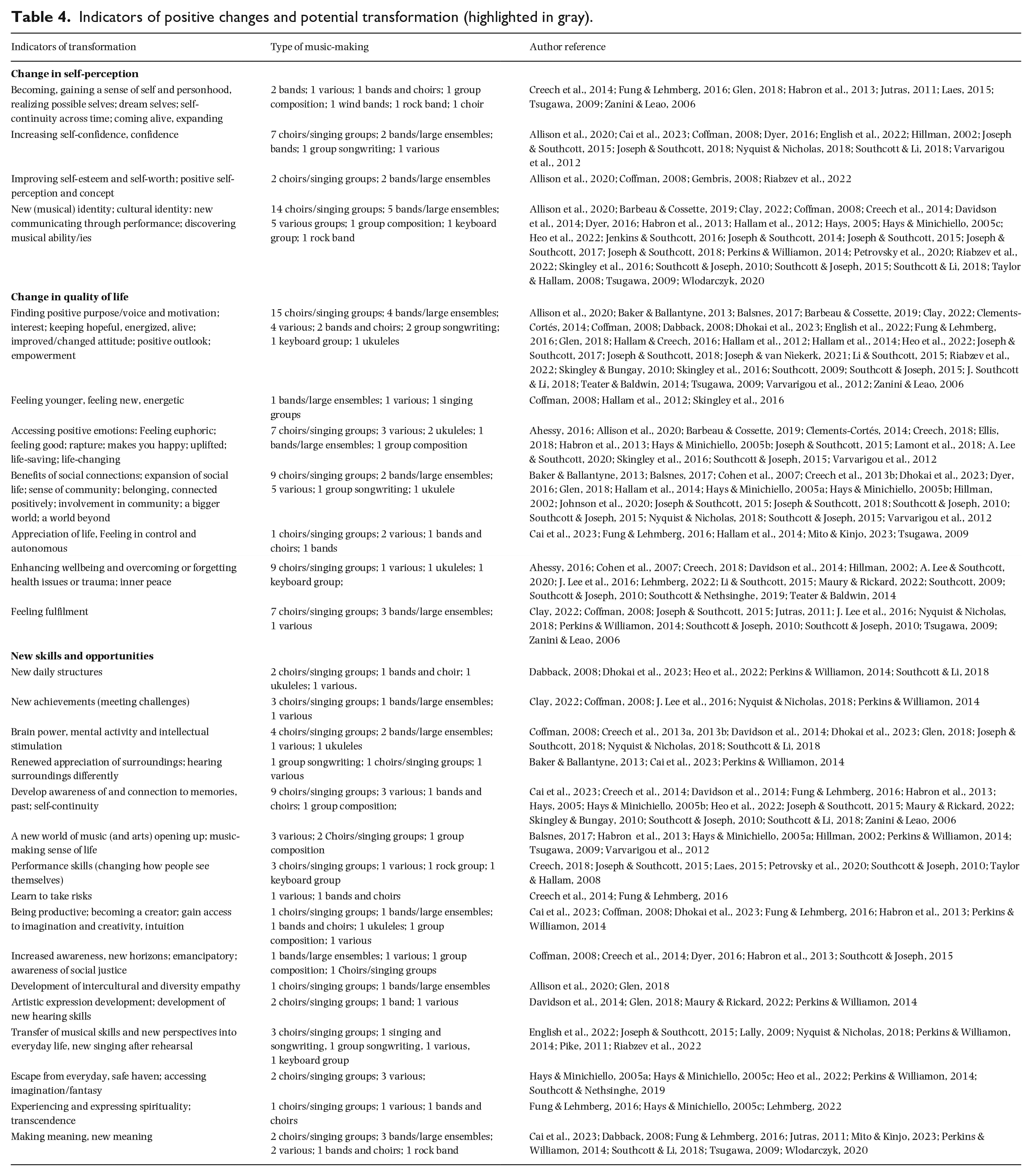
The first two objectives of this scoping review were to discover how transformation as an outcome of community music-making was described and experienced. While studies describe many effects with positive outcomes, they use a plethora of terms, and rarely “transformative.” Therefore, close attention was paid to any references in the included sources to perceived positive, including transformative, changes from authors and/or participants, where these latter were quoted within the sources. From this process, many types of positive change, some suggestive of transformative experiences, were identified and collated for convenience into three categories: Change to Self-Perception; Change in Quality of Life; and New Skills and Opportunities (see Table 4). Within Change to Self-Perception, transformation is suggested by important shifts in self-perception, which encompass a sense of becoming (Laes, 2015); realization of possible and dream selves (Creech et al., 2014; Jutras, 2011; Li & Southcott, 2015); and new musical identities and roles (Dabback, 2008; Hallam et al., 2012). Twenty-seven studies referred to a new or strengthened musical identity, sometimes also cultural identity, coming from the discovery and growth of individuals’ musical abilities. Within Change in QOL, change was variously expressed as finding positive purpose and motivation (29 studies); expansion of social life (20 studies); accessing positive emotions; feeling younger; appreciating life; a sense of increased control; enhanced wellbeing; and forgetting health issues and challenges. Transformative change is suggested by the participants’ experiences of a change in attitude to a positive outlook (Teater & Baldwin, 2014; Zanini & Leao, 2006); self-expansion (Glen, 2018); a sense of a bigger and expanding world (Hays & Minichiello, 2005a); and empowerment (Southcott & Joseph, 2015). Participation in music-making is also described as transformative in being life-changing (Ellis, 2018), or life-saving (Tsugawa, 2009). New Skills and Opportunities encompasses positive change as stimulation for the brain; developing awareness of and connection to memories (14 studies); meaning-making (10 studies); access to one’s own creativity; renewed appreciation of surroundings; and safe haven. Those suggesting transformation are transference of musical perception into everyday life (English et al., 2022; Perkins & Williamon, 2014); new self-expression and experiences of spirituality (Hays & Minichiello, 2005b; Lehmberg, 2022); music as a means to make sense of life (Tsugawa, 2009); as well as intercultural and diversity empathy (Allison et al., 2020); a feeling of emancipation (Habron et al., 2013); and increased awareness of social justice issues (Dyer, 2016; Southcott & Joseph, 2015). Indicators of positive change and transformation are listed in Table 4, together with the type of music-making involved and the relevant included sources.
Indicators of positive changes and potential transformation (highlighted in gray).
Enablers of transformation
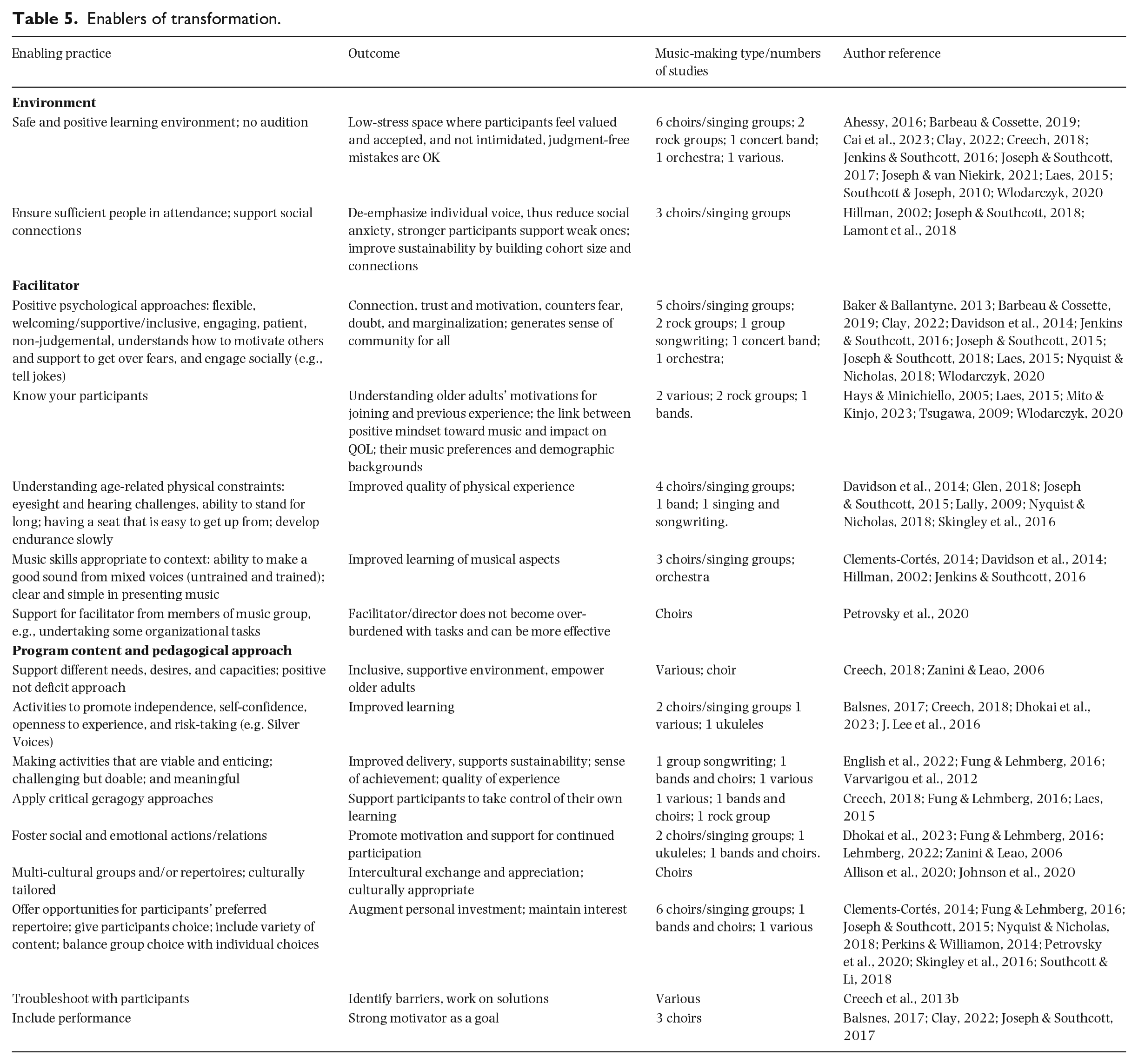
The third objective was to discover what enablers of transformation have been identified by researchers. The objective here was focused on enablers of positive change or transformation and not on factors that enable participation such as transport, support of local authorities, and so on. Enablers can be conveniently collected together under the following broad categories: Learning Environment; Facilitator; and Program Content and Pedagogical Approach (see Table 5). Aspects of the learning environment that were reported to enable positive change and potential transformation were found to be a safe and positive learning environment (e.g., Barbeau & Cossette, 2019), ensuring a sufficient number of participants (e.g., Hillman, 2002). Enablers relating to the facilitator included a positive and welcoming approach (e.g., Clay, 2022); knowing the background of each participant (e.g., Tsugawa, 2009); understanding age-related constraints (Lally, 2009); music skills appropriate to context (Davidson et al., 2014); and support for the facilitator from the group (Petrovsky et al., 2020). Program content and pedagogy were reported to enable positive change and potential transformation via the following: supporting different needs, desires, and capacities (Creech, 2018); activities to promote independent learning and confidence (Perkins & Williamon, 2014); making activities enticing and engaging (Varvarigou et al., 2012); applying critical geragogy approaches (Laes, 2015); fostering social connections (Fung & Lehmberg, 2016); culturally sensitive and tailored programs (Johnson et al., 2020); opportunities for participants’ preferred repertoire (Joseph & Southcott, 2015); troubleshooting with participants (Creech et al., 2013a); and including performance in the program (e.g., Clay, 2022).
Enablers of transformation.
Discussion
This scoping review had three objectives. The first was to identify literature on older adults’ engagement with community music-making in which the experience of positive and potentially transformative change is noted and/or discussed. The review yielded a large number of sources, reflecting scholarly interest in indications and perceptions of change from engagement with music-making. However, the term transformation is not generally used, and we found that there is a lack of clarity around conceptual boundaries for both “positive” and “transformative.” Therefore, indicators of positive change that are possible proxy indicators of transformation, as listed in Table 4, were identified via close reading of all the included sources.
The second objective was to map and collate the different ways that transformation is described. Many of the extracted themes relate to a Freirean idea of transformation, as understood through critical geragogy, aligning with Creech and Hallam (2015), Mezirow (1997, 2006), O’Neill (2012), and van der Schyff (2015). These include challenging one’s assumptions, which leads to a sense of becoming or expansion of self (Freire, 1996; Mezirow, 1997; O’Neill, 2012; Paul & Quiggin, 2020), realizing possible selves (Creech & Hallam, 2015), empowerment (Freire, 1996; van der Schyff, 2015), empathy (Mezirow, 1978; van der Schyff, 2015), new awareness of social justice issues (Freire, 1996; Paul, 2014; Paul & Quiggin, 2020), and new perspectives (Freire, 1996; Mezirow, 2006; Paul, 2014). A striking example of increased social justice awareness was found in Southcott and Joseph’s (2015) article on an Italian women’s choir in Melbourne. In this study, older Italian women described how the choir enabled them to resist and escape a stereotype of the Italian older woman and the social ghettos that restrict her. Another likely indicator of transformation came through the discovery of a new world through music (Balsnes, 2017; Tsugawa, 2009) and sense of personal expansion (Glen, 2018; Habron et al., 2013; Hallam et al., 2012), described by Mezirow (2006) and O’Neill (2012) as individuals finding new ways to define their worlds. This relates to the transformative process of constructing a new musical and/or cultural identity (O’Neill, 2012), reported in 27 studies. The increase in social connections through a music group was identified by some participants as supportive of personal growth and shift to a positive mindset, leading to creative adaptability (Mezirow, 1978). For some, the new experience of music-making in later life afforded deep reflections on connections between the past and present, which allowed participants to envision a future (Freire, 1996; van der Schyff, 2015). It should be noted that transformation may be perceived and experienced in different ways and also depends on variables such as social context and previous access to education and experiences. Furthermore, we cannot know how long-lasting transformative effects are without access to longitudinal studies, which were not found in this review.
The third objective was to find studies identifying factors that may enable transformation through engagement with community music activities. This presented a similar challenge to the first objective in that only seven studies focused specifically on enabling factors (Barbeau & Cossette, 2019; Clay, 2022; Joseph & Southcott, 2015; Perkins & Williamon, 2014; Petrovsky et al., 2020; Tsugawa, 2009; Varvarigou et al., 2012). Close reading was required to locate suggestions for enabling practices in the remaining studies, of which 32 suggested factors. The major factor suggested was a welcoming and inclusive community music environment, to which the context, facilitator, program content, and pedagogy all contribute (Fung & Lehmberg, 2016; Laes, 2015). Studies that took a critical geragogy approach (Laes, 2015; Tsugawa, 2009; Varvarigou et al., 2012), with its emphasis on co-learning and liberation, provided more specific guidance. For example, getting to know participants and their background is an important aspect of critical geragogy, as is recognizing and valuing what each person brings to the learning process (Creech & Hallam, 2015; Formosa, 2010). Efforts to get to know participants would have enabling implications, such as adapting sessions to the group’s background, knowledge, and goals (Mito & Kinjo, 2023; Wlodarczyk, 2020). Aspects such as supporting participants to take control of their own learning and troubleshooting with participants (Creech, 2018; Laes, 2015; Tsugawa, 2009) also align with the critical geragogy approach. The importance of the facilitator’s approach and sensitivity was raised frequently (19 studies), highlighting their considerable responsibilities. In response, Petrovsky et al. (2020) pointed to the importance of support for the facilitator and to delegation of tasks.
Outside these enabling factors, there are others that affect participants’ responses to the experience of learning and making music with others. These include the length of the music course (a 6-week songwriting intervention, for example, or an ongoing ukulele group). Is the experience deepened if the music group is ongoing, rather than a one-off experience? Interestingly, this was not discussed as a potential enabling factor or variable in any of the articles. The individual’s motivation is another variable, addressed in some studies (e.g., Clay, 2022), but not in most. There is also the purpose of the music group—is it, for example, to combat loneliness as in Johnson’s study (2020) or to adjust to new and unfamiliar surroundings, as in the Chinese study of older adults who sing together in parks to help adjust to a relocation from the countryside (Cai et al., 2023). Some music groups are associated with migrant populations, such as the Bosnian Behar choir (Southcott & Joseph, 2010) and the choir for defecting North Koreans in South Korea (Heo et al., 2022). These groups support cultural identity, while helping members adjust to their new surroundings. Variables add complexity to predicting a music group’s effect; among the included studies, one by Teater and Baldwin (2014) shows major changes for participants who come from low-socio-economic backgrounds and are socially isolated, including one participant reporting he no longer feels suicidal after engagement with the group.
Limitations
For the review, due to limiting studies to those available in English, the majority came from Australia, the United Kingdom, and the United States. However, there was some representation from other countries and an emerging interest in the field from East Asian countries, notably China, Japan, South Korea, and Taiwan. In Australia, the United Kingdom, and the United States, participants were mainly White, educated, and comfortably off, according to the studies that gave such details. This is noted of the Music for Life group of studies (Creech, Hallam, and others); the New Horizons bands and choirs (Coffman, Dabback, Glen, and others); and the four articles arising from Hays and Minichiello’s survey, for which participants were described as Caucasian and highly educated (Hays, 2005). Therefore, any studies focused on other populations were important. Allison et al. (2020) focused on a cohort made up of African Americans, Latino-Hispanic, and Asian participants, with a small number of Whites; the study by Cai et al. (2023) included older Chinese adults who relocated to big cities to help their children; and Johnson’s 2020 study comprised 65% non-White participants.
These findings point to a need for more studies with diverse (non-White and/or not highly educated) older adults. Also, because studies with mainly female cohorts dominated (48 studies), more studies with equal numbers of men or of men only are needed. The included studies were mainly drawn from countries with highly developed or developing industries, education, and health systems, ranging from Norway to Brazil and South Korea, and therefore, studies in less-developed countries would expand knowledge in this field of inquiry. A further limitation concerns the groups of articles focused on the same music-making groups and organizations, such as the Music for Life group, or that have the same researchers on a series of studies, as with Joseph and Southcott, or both, as for Hays and Minichiello. While this review revealed a high number of articles discussing some form of positive change resulting from participation in a community music ensemble, there is a need for studies that focus specifically on the transformative aspects of change and their impact on individuals and groups. There is also a pressing need for more research into the enabling aspects of community music groups with recommendations for best practices.
Our review did not include institutions, although there are other settings where group music-making is potentially transformative. Among these, correctional facilities could yield rich data, as demonstrated by Harbert’s (2010) article reporting on an ethnographic study of African American lifers in a U.S. prison. The prisoners used music to transcend their reality, connect to the past, and provide some purpose within their heavily-controlled lives.
Conclusion
There is a growing interest in creative aging and its potential for transformative (positive) change. In this review of music and transformation, the included studies as a whole show the depth of contribution already made and highlight the potential music has for personal transformation. Clearly there are strengths and weaknesses in the included studies that have been discussed and which will provide a launchpad for further research. This scoping review offers an important contribution to moving forward the discussion on how engaging with music supports healthy aging and providing examples of enablers of transformation drawn from the literature.
Supplemental Material
sj-docx-1-msx-10.1177_10298649241291796 – Supplemental material for Transformative engagement with community music-making for older adults: A scoping review
Supplemental material, sj-docx-1-msx-10.1177_10298649241291796 for Transformative engagement with community music-making for older adults: A scoping review by Helen English, Suzanne Lewis, Jane Davidson and Nicholas Goodwin in Musicae Scientiae
Supplemental Material
sj-docx-2-msx-10.1177_10298649241291796 – Supplemental material for Transformative engagement with community music-making for older adults: A scoping review
Supplemental material, sj-docx-2-msx-10.1177_10298649241291796 for Transformative engagement with community music-making for older adults: A scoping review by Helen English, Suzanne Lewis, Jane Davidson and Nicholas Goodwin in Musicae Scientiae
Footnotes
Funding
The author(s) disclosed receipt of the following financial support for the research, authorship, and/or publication of this article: the research for this article was supported by an ARC Discovery Early Career Award held by the lead author.

Supplemental material
Supplemental material for this article is available online.
References
Supplementary Material
Please find the following supplemental material available below.
For Open Access articles published under a Creative Commons License, all supplemental material carries the same license as the article it is associated with.
For non-Open Access articles published, all supplemental material carries a non-exclusive license, and permission requests for re-use of supplemental material or any part of supplemental material shall be sent directly to the copyright owner as specified in the copyright notice associated with the article.
