



Abstract
In research on communication in music lessons, masterclasses, and rehearsals, there is a growing focus on multimodal interaction using conversation analysis (CA), where the combination of talk and embodied actions (e.g., using musical instruments, gestures, voice, and score) provides the opportunity to study this complex area in microscopic detail and the potential for findings to inform practice. A methodological approach informed by CA was used to explore processes in peer-led musical theatre rehearsals in a university, where students adopted the roles of both musical director and performer. The data consisted of 12 hr of video-recordings of rehearsals that took place over the course of 5 weeks and involved 24 participants; the data were analyzed to identify patterns in relation to informal interruptions (talking that did not relate to the task at hand) that occurred during the rehearsals, and how they were managed by the student director so that rehearsing could be resumed. Management often involved musical prompting as part of a three-stage sequence: (1) orienting to the piano, (2) giving directives, and (3) initiating performance. The directors’ prompts included vocalizing, playing the piano accompaniment, and making bodily movements. These actions served to capture the performers’ attention, interrupt the informal talk, bring the focus back to performing, and indicate performers’ starting notes. The director completed the sequence by initiating a run-through of the previously rehearsed segment of the performance. The findings not only have implications for students’ management of rehearsals but also highlight the value of studying multimodal rehearsal interactions and techniques generally to ensure effective and efficient delivery in typically time-constrained rehearsal periods.
In this study, we drew on research on musicians’ rehearsal processes, using a methodological approach informed by conversation analysis (CA) to examine interactions between students rehearsing for a musical theatre production. A growing body of research has applied CA in the performing arts, for example, to individual music lessons (Ivaldi, 2016, 2019; Tolins, 2013), masterclasses (Reed, 2015; Reed & Szczepek Reed, 2014; Szczepek Reed et al., 2013), and rehearsals (Emerson et al., 2019; Parton, 2014; Weeks, 1996). In these studies, CA is applied not only to talk but also to the multimodal features of interactions between individuals such as breathing, making bodily movements including pointing and other hand gestures, and playing musical instruments. To fully understand pedagogical processes in music teaching, it is essential to analyze embodied actions as well as talk. The wide variation in, and complexity of, embodied actions have been highlighted in a systematic review of CA research investigating teaching and learning methods in performing arts lessons, including dance. The authors list nine multimodal features that emerged from 23 published studies as follows:
Establishing and manipulating rhythm, space, and time frame;
Making corrections;
Miming and mirroring to provide information and understanding;
Highlighting movements and demonstrations;
Teacher/conductor controlling the beginnings/restarts/end of activities;
Cues from where to start/pick up [when resuming practice];
Students showing understanding;
Getting ready to perform;
Making learning inclusive and collaborative. (Ivaldi et al., 2021, p. 6)
CA is a methodological approach that was developed by Sacks from lectures given in the 1960s, and later revised for publication (see for instance Sacks, 1989). It aims to discover how participants in a conversation construct, order, and orient themselves to everyday talk by recording, transcribing, and analyzing their natural interactions (Hutchby & Wooffitt, 2008). Its main objective, according to Hutchby and Wooffitt, is to investigate how participants show understanding of each other’s turns and how they respond to them, as well as to find out how actions are produced within sequences of turns. Early research using CA focused on aspects of conversation such as sequence organization. For example, Schegloff and Sacks (1973) examined adjacency pairs or pairs of turns taken by conversational partners. These turns take the form of ordered pair-part utterances (first and second pair parts) such that the first speaker, who utters the first pair part (e.g., a question), creates the space for the second speaker to utter the second pair part (e.g., the answer). Sacks et al. (1974) also studied the rules (systematics) of turn-taking, or how turns are allocated and passed between speakers, and how speakers correct or repair their errors in talk (Schegloff et al., 1977). These examples of early research using CA focused on the organization of conversation rather than its multimodal features such as gestures and facial expressions. Subsequent research has shown that these features also contribute to interactions (Stivers & Sidnell, 2005).
CA has been used to examine interactions not only in everyday life but also in teaching and learning contexts such as schools and colleges. Research has taken place, for example, in second-language learning (Barraja-Rohan, 2011; Lee, 2007) and mathematics (Forrester & Pike, 1998; Koole, 2012). In these contexts, conversation analysts are interested in how interactions are constructed and recognized as educational talk (Koole, 2013). Research in CA in teaching and learning contexts has focused on elements of conversation such as turn taking, with teachers managing the allocation of turns and having a superior right to take or continue their turn (McHoul, 1978), the usage of what in linguistics are termed discourse markers (words such as “yeah,” “right,” and “okay”; Othman, 2010) and how directives are used in the classroom (He, 2000). Discourse markers were regularly found in the data set for this study with both a rising and falling intonation. The use of the markers “right” and “okay” with a rising intonation in the course of a lecture can “seek assurance” from students (Othman, 2010, p. 677), each marker having a different function. It was demonstrated that “okay?” can be used for checking the understanding of students before moving on to a new point in a lecture, while “right?” can be used to confirm mutual understanding or “shared knowledge” (Othman, 2010, p. 677) The same markers with a falling intonation can be used to capture students’ attention, and also to move on to something new.
Teaching and learning dialogues also include the giving of directives, which were often used in the rehearsals that were analyzed in this study. Directives can be formulated in several different ways, such as imperative, imbedded imperative, or permission directives, depending on the “relative power” of the interlocutors (Ervin-Tripp, 1976, p. 29). Imperative directives can be used to tell the recipient what to do next (Kent & Kendrick, 2016), for example, “take out your textbooks” (He, 2000, p. 123). Such directives can be used by those in positions of superiority (Ervin-Tripp, 1976). In our data set, directives were formulated in different ways, and musical directors (referred to as directors from this point onward) often used both imperative directives and imbedded imperatives. The latter are similar to imperative directives, although they exist within a structure containing additional syntax and have other semantic characteristics, so that the directive follows some kind of opening talk (e.g., “could you gimme a match?”; Ervin-Tripp, 1976, p. 29).
While little research has applied CA to music teaching, there are some studies of rehearsals highlighting the value of CA in this area. One explored conductors’ feedback in choir rehearsals, drawing on 19 hr of data (Emerson et al., 2019). Feedback was usually given in the form of assessments, for the purpose of evaluating the previous performance, and directives, for the purpose of informing choir members of how something should be sung in the next performance or a future performance of a song. The authors also established that assessments and directives could function, indirectly, in the same way as each other. In other words, a directive could imply a negative assessment of the performance that had just been given, and a negative assessment could imply a directive or instruction for future performances. It seemed that choir members had to interpret the meaning of previous turns in the talk to show their understanding of what constituted an appropriate next attempt, in terms of not only the conductor’s assessment of the performance they had just given but also what they needed to do next. Overall, the findings of this study showed that CA can be used to highlight the communicative actions of conductors to facilitate performance. Once these actions have been identified, it would be possible to teach them how to improve on them, and apply them in practice (see also Parton, 2014, who used CA to examine how a conductor communicated his vision and knowledge of a piece in rehearsals).
Weeks (1996) examined the use of correction talk in an audio-recording of part of an orchestral rehearsal and found that the conductor made corrections while the orchestra was playing, when they had finished playing, and by interrupting their playing. As well as noting where the conductor made corrections, Weeks also observed how he did so: using either verbal expressions to give positive or negative appraisals, or illustrative expressions such as singing to demonstrate how a passage played incorrectly should have been performed. Again, these findings suggest some of the ways in which conductors can make corrections in rehearsals.
This research was informed by a small number of studies using CA that have been conducted in performing arts contexts other than rehearsals, such as master classes. Szczepek Reed et al. (2013) investigated how performance restarts 1 were accomplished by masters, accompanists, and students. The authors were particularly interested in responses to masters’ directives, which could be either local or nonlocal. Local directives were formulated in a way that obtained immediate compliance, whereas nonlocal directives were often delivered in clusters, with the opportunity to comply occurring only once the master had finished delivering several directives. In addition, where nonlocal directives were put into practice at a performance restart, local directives initiated other responses such as talk or physical actions. The decision as to when to respond to these directives was therefore left to students and/or accompanists.
In a study of dance classes, Broth and Keevallik (2014) identified several features in sequences where teachers led students from instruction to practice, two of which were key to this research: practice projectors and structuring instructions. Practice projectors are directives related to the upcoming performance, for instance “Can we try that?” or “one more time” (Broth & Keevallik, 2014, p. 113). Structuring instructions then serve to construct the performance and provide a location for starting or restarting, for example, “from [dance step]” (Broth & Keevallik, 2014, p. 114). The students responded to practice projectors and structuring instructions by preparing to dance.
The studies reported above involved analyses of data collected in formal contexts: music and other performing arts settings in which rehearsals and classes were led by a conductor or teacher. Unlike those studies, and for the first time so far as we know, this study was conducted in the informal context of student-led musical theatre rehearsals and explored peer-to-peer musical direction. We were particularly interested in how students negotiate the transition between the roles of peer and director, given that informal talk (i.e., that does not relate to the task at hand) can present challenges for a student director who is attempting to get a rehearsal back on track. We focused on a multimodal technique used by student directors to stop their peers engaging in informal talk and persuade them to resume rehearsing: musical prompting. Our aim was to examine its role in rehearsals by asking: how is it used, and how do the student performers orientate and respond to it?
Methods
Participants
We recruited a university musical theatre group who were rehearsing for an upcoming show. All its members were students. Three members of the group were designated directors. They took it in turns to lead rehearsals, offering vocal training and providing elements of direction such as guidance on characterization. Although they had been allocated to this role before the rehearsal period began, and fulfilled it throughout the production of the show, they were not all present at the same time. If the rehearsal was being led by one director, another could fulfill the role of performer. A total of 24 students (directors and performers) took part in the rehearsals.
Procedure
We placed a video camera at the back of the rehearsal space to record the rehearsals, which were also observed by the first author. Over the course of 5 weeks, we recorded 33 hr of rehearsals, each one lasting between 1 hr 40 min and 4 hr. Their content included solos, duets, and performances by small groups and larger ensembles. Directors were usually seated at the piano. Soloists and small groups stood in front of or behind the piano, while larger groups were seated around it in sections (e.g., soprano, alto, tenor, bass).
Ethical approval for the study was obtained from the research ethics committee of the university psychology department. All participants gave their informed consent and were informed of withdrawal and anonymization procedures. All data were anonymized in the transcripts by removing names and any other identifiable information.
Data analysis
We selected 12 hr of data for verbatim transcription and analysis. Transcripts at this stage included gestures, pauses, and overlaps. We conducted the analysis by following the five steps recommended by Pomerantz and Fehr (1997). In Stage 1, we chose a sequence of interest, noting the opening (where a speaker started an action within their turn, eliciting a response from other participants) and closing of the sequence (where the earlier action was no longer being responded to). We searched for similar occurrences of these sequences throughout the data set. In Stage 2, we examined the actions in each individual’s turn in the sequence, aiming to understand what they accomplished and how participants’ actions related to one another. In Stage 3, we considered how participants formulated actions in their turn (e.g., using one way of phrasing something over another) and how their formulation influenced the other participant’s responses. In Stages 4 and 5, we examined the allocation of turns and how the formulation of actions suggested how participants oriented to different roles during their interaction.
In the early stages of the analysis, it became apparent that informal talk took up a significant amount of time in rehearsals where this talk followed the rules of everyday conversation. These include the rules of turn taking, whereby participants can, for example, self-allocate turns and where the turns vary in their order and length (Sacks et al., 1974). Also, there was no evidence that participants oriented to the role of director; during episodes of informal talk, directors had to work to regain their authority and get the rehearsal back on track. They often did this by using a three-stage sequence of talk and multimodal techniques including musical prompting: (1) orienting to the piano, (2) issuing directives, and (3) initiating performance. Extracts illustrating this sequence were re-transcribed using Jefferson’s (2004) notation system, which captures the wide range of vocal features occurring in conversation (e.g., intonation, overlapping, volume, elongation of words, and emphasis), with the addition of researcher-designed annotations to indicate elements of multimodal interaction such as singing, turning to or from the piano, and other gestures such as pointing (see Appendix 1).
Validity and credibility
Peräkylä (2011) suggests several considerations that should be addressed for the purpose of validating the interpretation of data derived from audio- and video-recordings of natural social interaction. These include the following: that the phenomenon identified makes logical sense or could be recognizable to readers; that a participant’s response in the next turn is evidence that supports the interpretation of the prior turn; that deviant cases are acknowledged and dealt with appropriately; that it can be demonstrated that the findings, where appropriate, are characteristic of institutional interaction; and that the findings can be generalized, in some way, to other settings other than the specific one currently analyzed. We addressed these considerations by offering transparent, detailed extracts and interpretations, and by considering the findings in the context of music and wider instructional contexts. Compared to other qualitative methods, bias is unlikely to be an issue in research using CA because hidden or external factors that may influence individuals’ talk are not relevant to the analysis (Ten-Have, 2007); we did not seek, for example, to understand the motivations behind participants’ conversations or their personal intentions.
Results
The informal-talk-to-performance sequence and musical prompting
Several studies involving CA in the performing arts have shown that classes are divided into different segments such as instruction and practice/performance (Broth & Keevallik, 2014; Keevallik, 2014; Reed, 2015) or learning and performing (Ivaldi, 2016). In this study, participants moved not only between instruction and performance but also between informal talk, unrelated to the task of rehearsing, and performing. As the directors were also students, they may have held less authority than teachers in formal settings. Performers often disrupted learning segments with jokes, anecdotes, or general chatter. Directors also participated in informal talk without acknowledging that it was disruptive. Participants then had to make the transition back to performing, frequently using the informal-talk-to-performance sequence. The sequence itself had three stages:
Orienting to the piano: The director initiated the sequence by using preparatory, embodied actions such as turning to the piano, placing their hands on the keys, and looking at the score. These actions indicated that the director was ready to resume the rehearsal.
Issuing directives: The director issued local and nonlocal directives, including practice projectors and structuring instructions (Broth & Keevallik, 2014; Szczepek Reed et al., 2013), to prepare for performance. Musical prompting functioned as an embodied, local directive and was often used by the director in this stage. The technique acted as a precursor to a performance start and typically followed nonlocal directives (Szczepek Reed et al., 2013). However, as demonstrated in Extract 2, it was also occasionally used prior to giving any short, final directives before a performance. The technique also functioned as a way of obtaining the attention of any performers who were not yet ready to perform.
Initiating performance: The director gave the count-in, initiating a run-through of the previously rehearsed segment of the performance.
Musical prompting was achieved by the director playing and/or singing and holding the starting note for the relevant sections of the ensemble in turn, while looking at the performers concerned. Performers responded either by singing and holding their notes themselves or performing other actions such as turning to the piano or ending informal talk between themselves. The technique appeared to act as an embodied local directive requiring immediate compliance (Szczepek Reed et al., 2013). If the performers did not comply with the directive instantly, the director would often add a verbal prompt. This further indicated that a performance was upcoming and that a response to the musical prompt was required immediately (see Extract 2). The technique thus also functioned as a way of obtaining the attention of performers who were not yet engaged in the rehearsal by shortening the time to performance. Outside the informal-talk-to-performance sequence, the director still used musical prompting to inform students of their starting notes prior to a performance start. However, in these cases, the technique did not function as an attention-getting device. The key characteristics of musical prompting and its role in Stage 2 of the informal-talk-to-performance sequence as an interactional device are illustrated in the following two extracts.
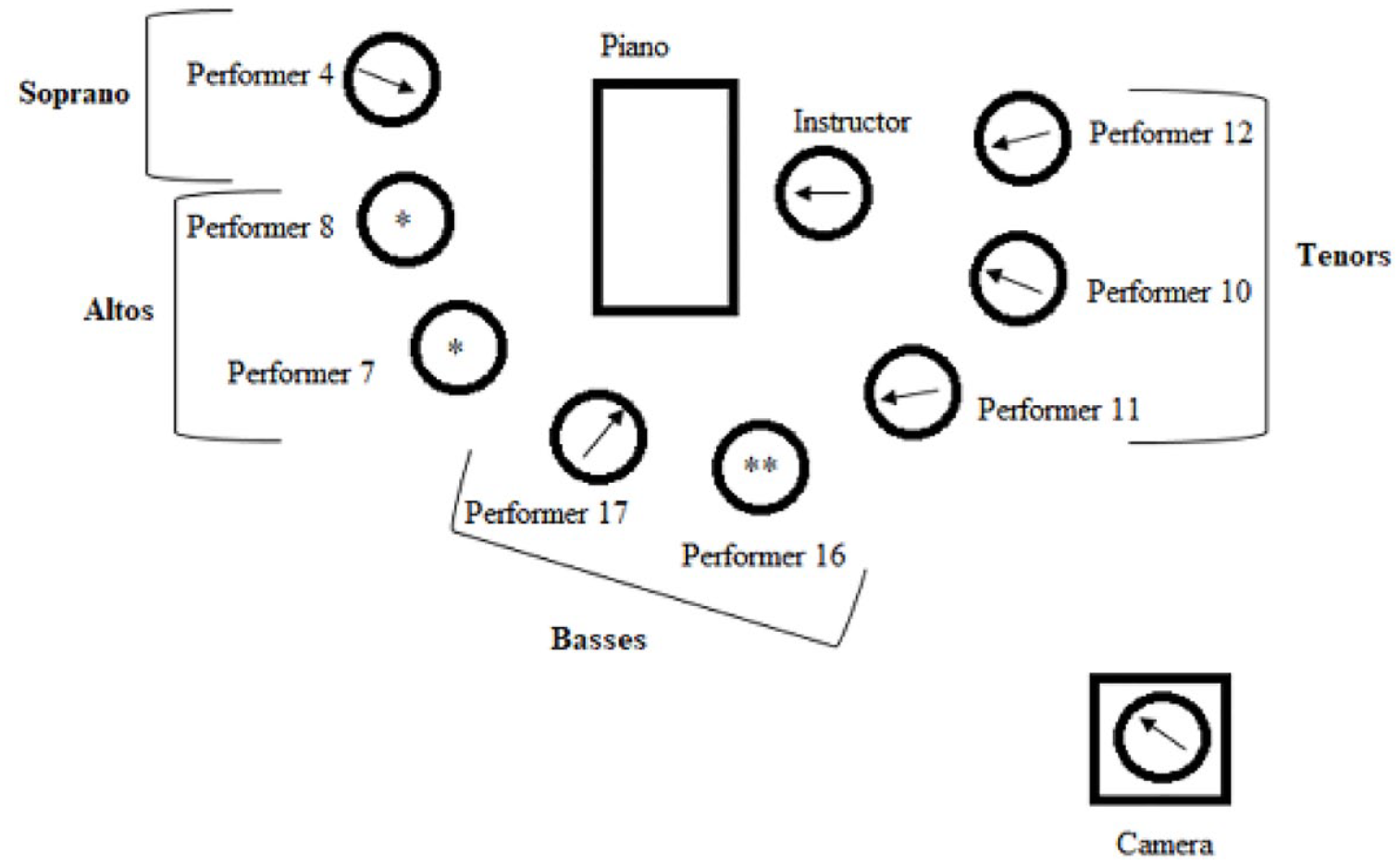
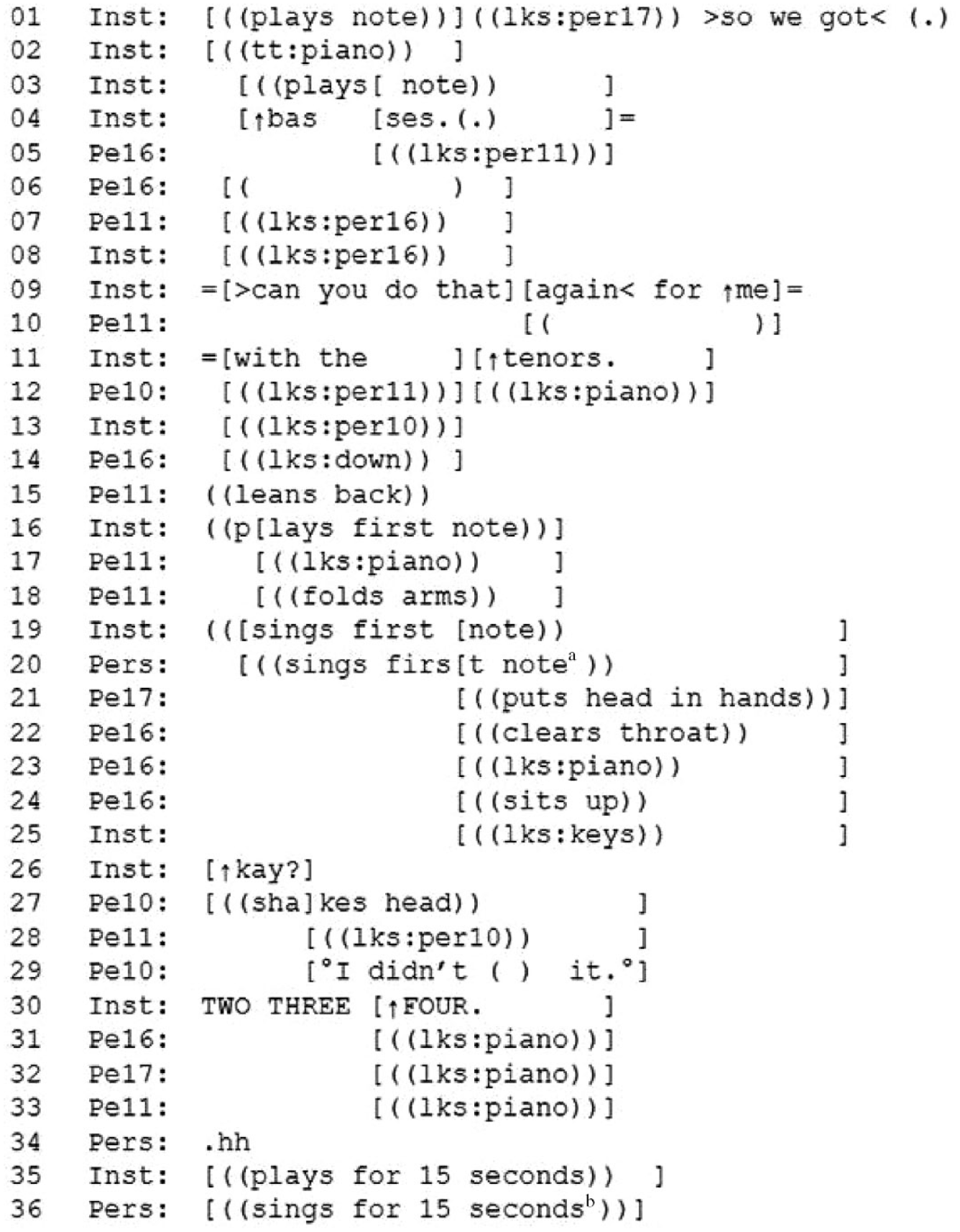
Extract 1 is taken from the rehearsal of a number from Godspell involving a director and eight performers seated around the piano, as shown in Figure 1, and represents the director’s use of the informal-talk-to-performance sequence beginning with a practice projector and structuring instruction (Broth & Keevallik, 2014), followed by musical prompting.
Rehearsal layout for Extract 1.
aTenors.
As shown in line 1, the director plays a note and gives a directive using the discourse marker “so,” which can indicate a forthcoming, pending action (Bolden, 2009). She alerts the basses to the upcoming performance in lines 1, 3 and 4, “we got basses,” while playing their starting note. Performer (P)16 (a bass) looks at P11 (a tenor), however, and continues their previous conversation (lines 5–7). P16 is thus not responding to the director’s turn in such a way to indicate that he is ready for the upcoming performance, or indeed that the director has his attention. The director asks, “can you do that again for me” (line 9), which is formulated as both an imbedded imperative directive (Ervin-Tripp, 1976) and a practice projector (Broth & Keevallik, 2014), as it also specifies what the basses are to sing next, a repetition of what they had just sung.
The director continues giving directives, “with the tenors” (line 11), while also directing her gaze toward P10. This specifies the tenors’ involvement and could be interpreted as a kind of structuring instruction (Broth & Keevallik, 2014). On hearing the word “tenors,” P10 turns back to the piano (line 12) and P11 leans back into his seat (line 15), and thus begins to orient away from his informal conversation. These actions indicate that these two performers are getting ready to perform in response to the instruction, unlike P16 who looks down (line 14).
The director follows her verbal directives with a musical prompt (line 16): she plays and holds the tenors’ first note, while still looking at P10 (line 13). P11 responds by looking at the piano, again suggesting he is aware that the rehearsal is resuming. She sings the tenors’ starting note and holds the first syllable of the first word of the phrase (line 19). The tenors respond by singing along with the note (line 20). This action by the director seems to serve as a local directive (Szczepek Reed et al., 2013), because the tenors have responded immediately rather than waiting until the next restart to practise their entry. P16 shows he is getting ready to sing by clearing his throat (Reed, 2015) (line 22), sitting up and looking toward the piano (lines 23–24), showing awareness of an upcoming performance. By the end of line 24, the informal talk has stopped and the performers are showing that they are ready to resume the rehearsal.
The director then looks down at the piano keys, before producing a discourse marker “kay?” [okay] with a rising intonation (line 26). As shown in lines 27 and 29, P10 speaks (unclearly) and simultaneously makes an embodied action, shaking his head (line 27). This response indicates that he has a problem, evident in line 29 (“I didn’t . . .”). But the director misses this response. She is already turned toward the piano and ready to initiate performance, so the problem is not resolved before she gives the count-in (line 30).
P10’s response to the director’s discourse marker at line 26 also suggests that he has interpreted the previous turn as the director asking if everyone understands what they need to do in the upcoming performance. This corresponds with the finding that “Okay?” with a rising tone can be used by teachers not only to check if students understand, but also to make sure they are happy to move on (Othman, 2010). In this extract, “kay?” appears to be a way of moving to the third stage of the sequence: initiating performance.
In this extract, we have shown how a director uses musical prompting and its similarity to a local directive (Szczepek Reed et al., 2013). The technique can be used after directives such as practice projectors and structuring instructions (Broth & Keevallik, 2014). Performers respond to musical prompting by singing and holding their first notes for the upcoming performance. Musical prompting also captures the attention of performers who may not have previously shown by their embodied actions (e.g., orienting to the piano, adjusting their seating position, and clearing their throat) that they are ready to perform. However, because musical prompting requires immediate compliance, and is typically followed immediately by performance, there is no time for performers’ queries to be resolved before the rehearsal is resumed.
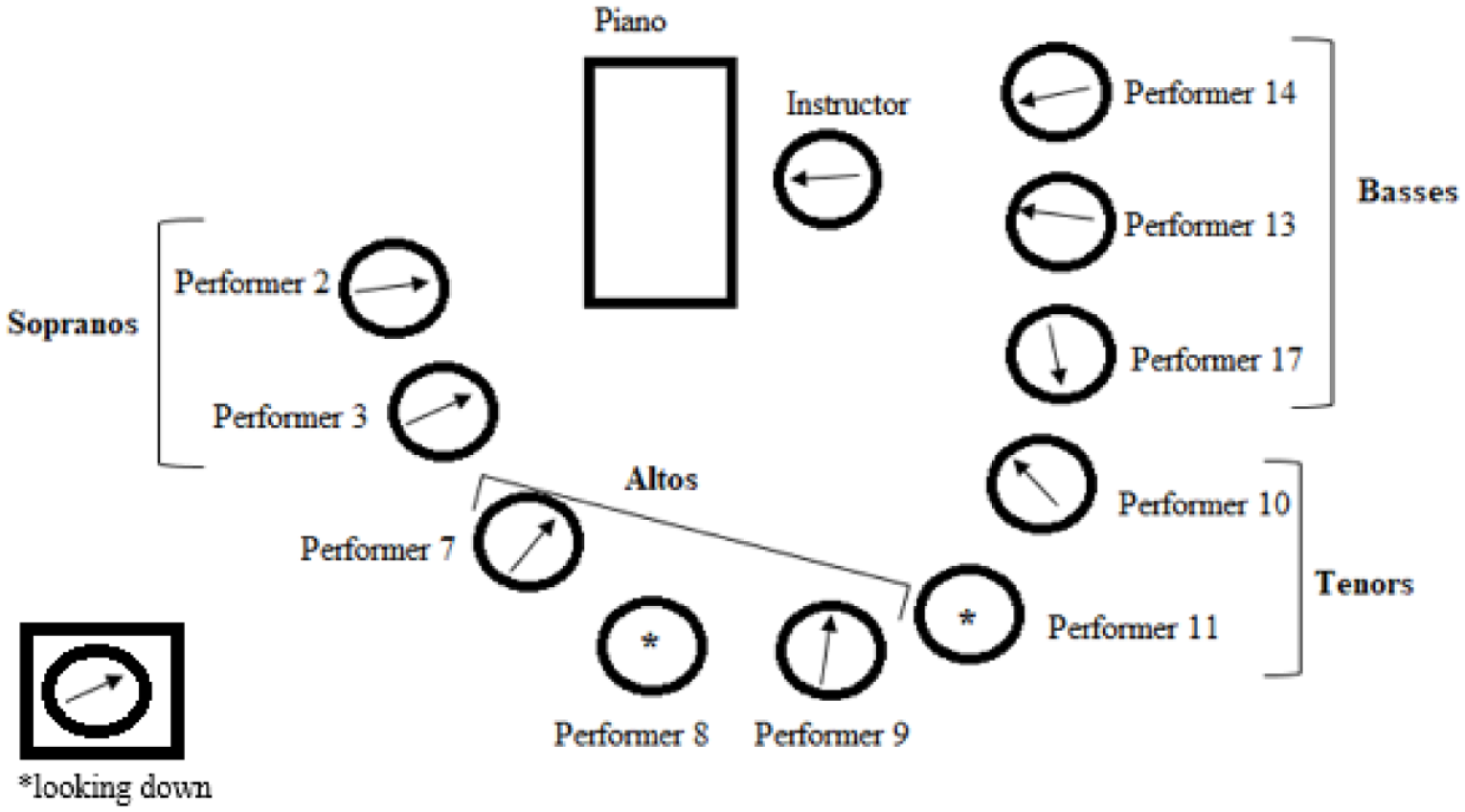
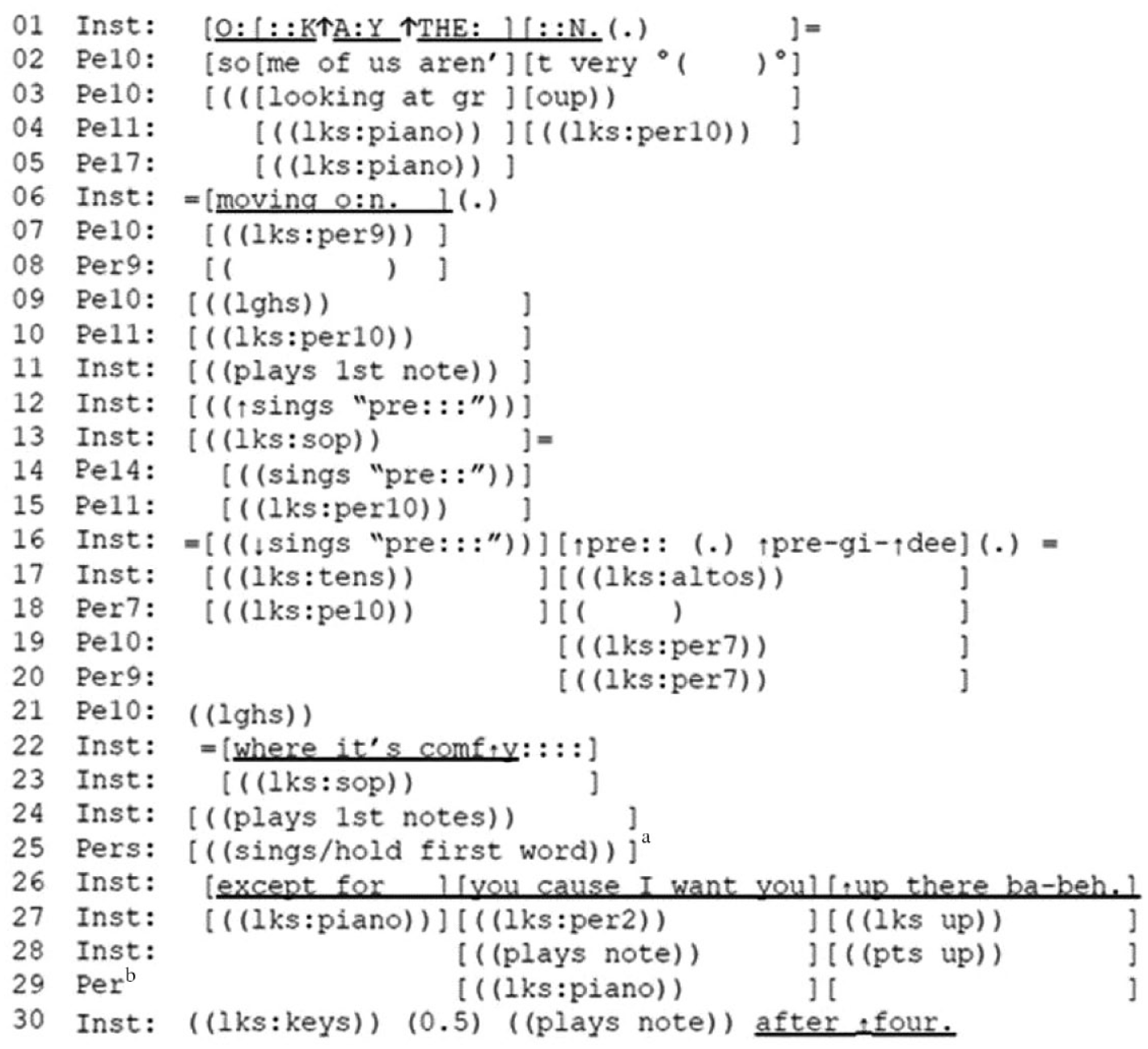
The second extract (Extract 2) is taken from another rehearsal in which another number from Godspell was being rehearsed. It involved the same director and 10 performers seated around the piano, as shown in Figure 2. This extract demonstrates how the director manages the transition to a successful performance start when not all performers comply immediately with the musical prompt, by adding a verbal directive to facilitate a response. It also shows how musical prompting can take place earlier in Stage 2 of the informal-talk-to-performance sequence, before giving short directives prior to a performance start.
Rehearsal layout for Extract 2.
aPerformers hold their first note until the “four” of the count-in.
As shown in line 1, the director faces the piano and utters the discourse marker “okay then” with a falling intonation. P10, P11, and P17 end the informal talk that had preceded the beginning of the extract and P11 and P17 (only briefly, in the case of P11) turn their upper bodies back to the piano (lines 4 and 5). The director is indicating with “okay then” that she is ready to move on to a new activity (Othman, 2010), that is, from informal talk to rehearsing. The performers’ response—turning toward the piano—shows also that she gains the performers’ attention in this way (Othman, 2010), this could also be partly due to her speaking louder than them.
The director then confirms that the discourse marker “okay then” was a way of moving from informal talk back to rehearsing (“moving on;” line 6). However, not all of the performers respond by paying attention; P10 looks at P9 (line 7), who says something that makes P10 laugh (lines 8 and 9). This suggests that these two performers are oriented to each other instead of the rehearsal, and that the director’s two utterances (lines 1 and 6) were insufficient to prepare the performers for resuming the rehearsal.
Without issuing further verbal directives, the director begins the musical prompt (line 11) with non-verbal actions, looking at P2 and P3 (sopranos) while giving them their starting note by playing and singing the first word of the phrase to be sung (lines 11–13). P14 responds by singing along with the director even though he is a bass, indicating that he is ready to resume rehearsing. The director does not have the attention of the whole group, however, as P11 looks toward P10 (line 15).
As shown in lines 16 and 17, the director shifts her upper body and gaze to look first at the tenors and then the altos. She sings the first word of the phrase again, twice, in the appropriate register for each section, lower for the tenors and higher for the altos. The actions of the director differ slightly from those illustrated in the previous extract, as she barely pauses between bodily movements, changes in direction of gaze, or starting notes. Some of the performers continue with their informal talk (lines 18, 19, 20, and 21) and show no signs of preparing to perform; neither do they sing their starting note along with the director. Unlike in the first extract, the director did not hold either notes or gaze to provide an opportunity for performers to respond appropriately. This is a characteristic of giving directives in clusters and could be considered as a nonlocal as opposed to a local directive, which requires immediate compliance (Szczepek Reed et al., 2013).
Now the director reasserts her authority by giving a verbal directive, “where it’s comfy” (line 22). This directive is a continuation of the musical prompt with little pause between actions (the prompt and the directive). Most of the performers respond to this directive by singing and holding the first word of the phrase (line 25) while the director plays their first notes simultaneously (line 24), suggesting that the elongation of the word “comfy” has provided a gap for compliance and the opportunity for the performers to acknowledge that they were supposed to be responding to the musical prompt now, not later. This additional directive reinforces the idea that the musical prompt, although delivered in much the same way as a nonlocal directive, was intended as a local directive requiring an immediate response from the performers (Szczepek Reed et al., 2013).
The instructor, now having the attention of the majority of the ensemble, issues a final directive (line 26). At this point, she is already looking up at the sopranos seated in front of her (line 23), and “except for you” shows that it is relevant only to them. At the same time, she repeats the first few notes of the phrase on the piano, which keeps the momentum up before the performance starts; the performers respond by continuing to hold their notes until the director begins the count-in. Whilst the director is giving this directive to the sopranos, P7, P9, P10, and P11 turn their heads back toward the piano (line 29), suggesting that they too are responding to the previous musical prompt/directive (lines 16, 17, and 22) and the other performers singing their starting notes (line 25) by preparing to sing. The director now has the attention of all of the performers and begins the count-in. She has successfully initiated performance.
In this extract, we have highlighted how the director manages the transition back to performance when performers do not respond immediately to musical prompting. The additional directive functions as a local directive (Szczepek Reed et al., 2013), confirming that the director requires an immediate response to the musical prompt. Performers responded to this by singing or preparing to sing. We have also demonstrated how musical prompting can be used before giving short directives. This technique could therefore be used to ensure that performers are ready to begin the performance and sing the first note correctly.
General discussion and conclusion
In this study, we examined directors’ use of musical prompting in peer-led musical theatre rehearsals to capture the attention of performers as part of a three-stage informal-talk-to-performance sequence. The rehearsal dynamic revealed by our study differed from that reported in previous research using CA in performing arts settings that included one-to-one lessons, masterclasses, and dance rehearsals (Broth & Keevallik, 2014; Emerson et al., 2019; Ivaldi, 2016, 2019; Keevallik, 2010, 2014; Parton, 2014; Szczepek Reed et al., 2013; Weeks, 1996). For example, there was a large amount of informal talk, which often took place following an interruption in a rehearsal. This talk was characteristically mundane, unrelated to the task of rehearsing. Participants could allocate themselves to turns, which were distributed more evenly (Sacks et al., 1974) than in typical classroom environments where the teacher has a superior right to turns (McHoul, 1978). When this occurred, the director often instigated the informal-talk-to-performance sequence by (1) orienting to the piano, (2) issuing directives including musical prompting, and (3) initiating performance.
Musical prompting functions as a local directive (Szczepek Reed et al., 2013). The director prompted as follows: turning and/or looking toward the relevant section(s) (sopranos, altos, tenors, and basses) and playing and/or singing the first note of the phrase, often holding it long enough for the performers to comply immediately with the directive. They responded either by singing and holding their first notes alongside the director or ceasing their informal talk and turning to the piano. If the performers did not respond immediately, a verbal prompt could be added to obtain a response (see Extract 2). Musical prompting took place before the count-in, to limit interruptions and capture performers’ attention. The director often used the technique following any nonlocal directives (Szczepek Reed et al., 2013). However, as illustrated in the second extract provided above, they occasionally did so before issuing any short, last-minute directives prior to the performance start. In this case, the director waited until most of the group were responding to the musical prompt and showing a readiness to start before issuing the final directive. The two extracts demonstrate that the musical prompting technique could be used by directors in peer- or non-peer-led settings to gain students’ attention. Other local directives requiring an immediate response (Szczepek Reed et al., 2013) could also be used for this purpose.
Previous researchers have used CA to explore conductors’ feedback (Emerson et al., 2019), correction talk (Weeks, 1996), and how conductors communicate their interpretation of a piece of orchestral music (Parton, 2014) in rehearsals. We are the first to use a CA-informed approach to explore the ways in which directors can deal with performers’ interruptions and subsequent informal talk, thereby adding to a limited body of research on rehearsal interactions. In particular, we highlight techniques that can be used to bring performers’ focus back to performance itself. This is particularly important given that rehearsals are typically time-constrained.
Although musical prompting was used successfully in this context, it requires immediate compliance and occurs just prior to the performance start, which has the disadvantage of leaving no gap for students to ask questions or to resolve any issues they may have before resuming the rehearsal. In their systematic review, Ivaldi et al. (2021) found that there are often limited opportunities for students to direct their learning, as teachers/instructors typically take the lead in activities during sessions. Directors using musical prompting should be aware that students might wish to raise queries in the short space between the prompt and the resumption of the rehearsal.
Limitations of the research include the use of a single video-camera/microphone. This meant that we may have missed subtle bodily movements that could have been relevant to the talk, and it was sometimes difficult to distinguish the speech of individual participants (as indicated in the transcripts from which the extracts above are taken), especially if they spoke over each other or music was being played or sung at the same time. In future, it may be beneficial to use multiple cameras and personal microphones worn by participants, although they might find this more intrusive.
We identified a key feature of student-led musical theatre rehearsals in our study, but such rehearsals may have other features worth exploring. First, we found evidence in our data set of other techniques for resuming rehearsal after an episode of informal talk such as playing a backing track as a cue for performers to start singing. While this might appear to serve the same function as playing the piano, it would be worth determining the extent to which performers responded appropriately or if the cue was ineffective since no verbal instructions were given. Second, rehearsals can be divided into different segments such as instruction, learning and performing/practice (Ivaldi, 2016; Keevallik, 2014; Reed, 2015). It would be worth investigating how directors make the transition from informal talk to instruction talk rather than performance, comparing the techniques used for each purpose, and suggesting ways of minimizing delays and interruptions. Finally, it would be worth finding out when and why students start talking informally in peer-led rehearsals and noting the techniques that are effective in reducing informal talk, thus making it possible to use limited rehearsal time more efficiently.
In conclusion, we investigated musical prompting in student-led musical theatre rehearsals to gain performers’ attention and prepare them for performance. This technique could be applied in a number of educational and rehearsal contexts in which informal talk is an issue. While we recommend that our research be extended to other domains of the performing arts in the first instance, our findings may also be applicable to group-based activities in classrooms more generally, where teachers are required to manage informal talk and the resumption of the task at hand.
Finally, we have added to the steadily growing research using a methodology informed by CA in the domain of music learning and performance, highlighting the importance of taking multimodal, interactional perspectives. This fine-detailed approach to the specifics of interactions between student instructors and performers reveals hitherto unseen nuances in the processes of learning and rehearsing.
