



Abstract
The purpose of this study was to investigate the types of musical activities carried out in preschools for children aged 3–6 years in two contrasting cultural settings: Spain, a Mediterranean European country, and Hong Kong, a special administrative region in China. Participants were 398 teachers in preschools, 199 in each location. We administered a survey in which we asked how often they carried out 19 musical activities. In our analysis, we considered these activities independently and clustered by content (based on the type of musical practice involved) and nature (based on the potential of the activity to foster creativity). Participants in Hong Kong reported carrying out eight activities most often while participants in Spain reported carrying out four activities most often. Regarding content, Singing and Voice activities were provided most often in Hong Kong, whereas Rhythmic Movement activities were provided most often in Spain. Regarding nature, Reproductive activities were carried out more often than Creative activities in both locations. Contrary to our expectations, Creative activities were carried out more often in Hong Kong than Spain. We conclude that there are mismatches between the curriculum for music and actual practices in both cultures, with repetitive musical practices being the most prevalent. Implications are discussed for curriculum designers, teacher educators, and teachers themselves.
It is well known that societies around the world differ in terms of cultural values, beliefs, practices, and styles of thought (Chang et al., 2011). For instance, there are evident differences between Mediterranean and Asian—particularly Chinese—societies (Servaes, 2000). While people in Mediterranean societies tend to seek independency, autonomy, self-expression, and originality in their ways of being and relating to others, people in Chinese societies tend to embrace traditional values such as collectivism, conformity, respect for authority, and obedience (Schiavio et al., 2018; Wang & Liu, 2010). In the field of education, stakeholders such as teachers, teacher educators, and researchers commonly assume that these cultural differences are reflected in the classroom, both in the content that is taught to students and in the nature of activities that are conducted (Li, 2012).
The present study focused on the teaching of music in early childhood settings, specifically preschools for children aged 3–6 years. To the best of our knowledge, no previous study has compared the types of musical activities carried out in contrasting cultural settings. We aimed to fill this gap in the literature by focusing on Spain and the Hong Kong Special Administrative Region (SAR) of the People’s Republic of China. Spain is a Mediterranean country in southwestern Europe. Influential in the creative arts worldwide, particularly in Western Europe and the Americas, its education system is known for the use of pedagogies that foster competency development, social interaction, critical thinking, and creativity (Tiana et al., 2011). Hong Kong is a densely populated and highly developed city in South China, with more than 90% of its population ethnically Chinese, and one of the most important global financial and economic centers in the world. A century of British colonial rule coupled with the influence of foreign talent produced a fusion of cultures in a highly cosmopolitan society. While influenced by Western values and Christian beliefs in many schools (Rao et al., 2018), education in Hong Kong is heavily shaped by Confucianism, a system of social and ethical philosophy associated with values such as respect for authority, conformity, self-perfection, hard work, and academic achievement (Gopinathan & Lee, 2018). Most parents in the territory tend to subscribe to these traditional values (Rao et al., 2018).
In this study, we asked teachers in preschools in Spain and Hong Kong how often they carry out specific musical activities and compared the mean frequency with which the activities were reported in the two societies. The activities were considered independently and clustered by content (based on the type of musical practice involved) and nature (based on potential to foster creativity). Frequencies were obtained from an ad hoc survey, a section of which included 19 music-related activities identified in textbooks for preschool teachers. This comparative study is important because it sheds light on how sociocultural factors can influence the ways in which music education is interpreted and enacted in different contexts. In the literature review, we first analyze and compare the official curriculum frameworks of the two selected locations; second, we review international classroom-based studies focusing on musical activities in preschool education.
Literature review
Music education in official preschool curriculum frameworks: The cases of Spain and Hong Kong
As a result of globalization, official preschool curriculum frameworks around the world have been largely homogenized in recent decades (Organisation for Economic Co-Operation and Development [OECD], 2019 ). This has clearly been observed in music education, an area in which similarities between curricula across nations and jurisdictions outnumber differences (Campbell & Scott-Kassner, 2019; Essa & Burnham, 2019; Ho & Bautista, 2022). Contemporary curriculum frameworks emphasize the importance of exposing young children to varied and diverse musical activities daily, given the multiple benefits of music education in promoting children’s holistic development and learning (Sullivan, 2016). Specifically, teachers in preschools are expected to implement activities that promote children’s understanding of the elements of music; allow children to appreciate and value music; provide children with skills to express their emotions and feelings through singing, instruments, their bodies, and any other kind of sound producer; and stimulate their musical imagination and creativity (Essa & Burnham, 2019).
These global trends are reflected in the official preschool curriculum frameworks of both Spain and Hong Kong, which have numerous commonalities. The Spanish curriculum (Ministerio de Educación y Ciencia [MEC], 2007) argues that music has the potential to stimulate the development of perception via active listening; the use of voice via singing; the use of sonorous objects and musical instruments; rhythmic bodily movement; and the creation that arises from exploration, improvisation, and play with sound. The primary goal is to foster the acquisition of new skills and abilities that allow for the production, use, and understanding of sounds with different characteristics, for aesthetic and communicative purposes. The Hong Kong curriculum (Curriculum Development Council [CDC], 2017) includes music as part of the learning area named Arts and Creativity, which poses three learning goals for young children: “to develop sensory abilities and accumulate art experiences; to express feelings and unleash creativity through presenting and creating the arts; and to develop creativity through active exploration in art activities” (CDC, 2017, p. 47). Both frameworks mention musical activities focusing on recognizing and producing sounds and rhythms, including clapping, imitating the sound of nature, singing songs with movements, and playing musical instruments or other sound producers; appreciating music; expressing feelings in relation to personal experiences; and enjoying music performance, dancing, creating, and composing.
While both curriculum frameworks emphasize the need to foster children’s musical creativity, it is worth noting neither defines what creativity means in this area (Cremin & Chappell, 2019). Following Campbell and Scott-Kassner (2019), we conceptualize musical creativity as a process comprising three recursive stages of work with sonorous elements: (a) exploration and discovery, (b) experimentation and improvisation, and (c) creation and composition. Based on this definition, we argue that not every musical activity necessarily fosters creative processes. To do so, activities must somehow incorporate the three recursive elements mentioned above. For instance, singing routine songs in the morning, while being positive and beneficial for children in many respects (e.g., vocal training, self-regulation, communication), does not mobilize creative processes. Indeed, the activity is reproductive in nature (i.e., children are just required to memorize and reproduce the song in a specific way), rather than productive or generative (Cremin & Chappell, 2019). However, if the teacher follows up by asking children to change the lyrics of the song, invent actions that reflect the meaning of the lyrics, or create an accompaniment for the song with instruments or other objects, for example, this would clearly promote musical creativity, as children would be required to explore, experiment, and create something of their own, using their imagination and originality (Duffy, 2006; Young, 2008).
Musical activities in preschools: A review of international classroom-based literature
Our review of the literature identified no cross-cultural studies focusing on preschool music education. We did find related studies that are relevant to the present investigation, however. Research indicates that while teachers in preschools generally value the importance of music education, time spent in music-related activities tends to be low. For example, in a large-scale US study conducted in six states, Winton and Bussye (2005) investigated how 900 preschool children spent their time in center-based programs over a 2-day period. Teachers were found to engage children in music and arts activities during approximately 9% of the time, which was significantly less than the time they spent on other areas of learning. Similar trends have been identified in Asian societies such as Singapore (Bautista et al., 2018) and Hong Kong (Ho & Bautista, 2022). Furthermore, scholars have argued that teachers in preschools often use music as a tool to teach children content pertaining to other areas of learning, whereas activities centered on music per se tend to be carried out less often (Lau & Grieshaber, 2018; Samuelsson et al., 2009). These activities are the focus of this article.
There is a relative shortage of information about the practice of music in preschools internationally. Despite the flow of educational ideas brought about by the forces of globalization (Spring, 2014), the available literature suggests that teachers in preschools in different regions of the world tend to implement musical activities that differ in terms of their content and nature. In Asian societies such as China, Japan, Taiwan, Singapore, as well as Hong Kong, musical activities have been found to be primarily teacher-led and reproductive (Bautista et al., 2018; Chen, 2009; Ho, 2010). Music is included on a daily basis, but it is often “a routine and highly structured component of the curriculum and involves breathing exercises, pitch practice, and an emphasis on the technique of singing songs” (Lau & Grieshaber, 2010, p. 128). Singing and performing action songs in large groups in unison is common, with children expected to memorize the lyrics, melody, and movements. Repetitive practice is utilized to ensure that children can perform to a high standard (Li, 2012). The teaching of basic music theory notions and simple instrumental skills are also common for older preschool children (Liu & Liu, 2017). Interestingly, while Asian classrooms generally include a variety of music instruments and resources, children do not have access to them so as to be able to explore them freely (Bautista et al., 2018). The small size of preschools in highly populated urban areas such as Hong Kong obviously limits the level of noise that can be tolerated and the possibilities for movement within classrooms (Rao et al., 2018).
By contrast, teachers in preschools in certain Western countries seem to focus more on activities that involve responding to music with movement and improvising with instruments, as well as singing and listening to music. Ersoy and Dere (2012) carried out research with a sample of 200 teachers in Turkey. They found that activities involving moving to music and imitating sounds were most common. Because certain types of musical activity were not observed in the classroom, they concluded that Turkish teachers’ music practices were partial and insufficient. Ersoy and Dere (2012) also found that teachers did not take children’s interests into consideration when designing and implementing musical activities. In the same vein, Denac (2008) found that although children’s preferred activity in Slovenia was moving to music freely, the activities most commonly practiced in preschools involved music appreciation, singing, and playing instruments.
Researchers have also documented the limited provision of activities fostering creativity in preschools in different parts of the world. In a study of 20 schools in the United States, Cho et al. (2017) found that, while teachers awarded great importance to creativity, their classroom practices did not allow children to explore, improvise, create, and express themselves freely with music and sound. According to a report by Cachia et al. (2010), similar findings were obtained from a large-scale project including a review of the literature, survey, and interviews; the study involved a representative sample of 12,893 participants from 32 countries in the European Union. While teachers clearly acknowledged the importance of creativity and innovation in students’ development, their teaching approaches tended to be didactic and teacher-centered, with activities that fostered memorization and repetitive learning. On the basis of research conducted in Hong Kong, Cheung (2017) suggested that Chinese preschool children require high levels of adult guidance and structure to demonstrate creative behaviors, due to sociocultural and contextual factors. The author concluded that excessive choice and freedom might be counterproductive in terms of fostering children’s creativity. Because of these challenges and difficulties, researchers have recommended improvements in preparing teachers to encourage preschool children’s musical creativity (Bautista et al., 2022; Yates & Twigg, 2017; Yim & Ebbeck, 2009).
Aim and research goals
The aim of this study was to investigate the provision of music-related activities in Spain and Hong Kong preschools for children aged 3–6 years. Drawing on self-reported data from teachers, the study had two research goals: (a) to examine how often teachers report carrying out specific musical activities and examine differences between the provision of each activity in the two societies and (b) to analyze whether provision of musical activities differed significantly according to their content (e.g., singing, rhythmic movement, instrumental activities) and their nature (reproductive vs. creative activities).
Method
Participants
Participants were 398 teachers at preschools, 199 in Hong Kong and 199 in Spain. The Hong Kong participants were a subset of a larger sample of teachers (N = 1,019) who participated in a project on preschool music education in this territory (Bautista & Ho, 2022). Data in Spain were collected subsequently, specifically in two Autonomous Communities: Cantabria (67.4% of the Spanish sample) and Valencia (32.6%). The 199 Spanish teachers worked in preschools located in urban, suburban, and rural contexts. Seven participants (3.5%) had less than 1 year of teaching experience; 23 participants (11.6%) had 1–4 years; 30 participants (15.1%) 5–9 years; 59 participants (29.6%) 10–14 years; 46 participants (23.1%) 15–19 years; and 34 participants (17.1%) had more than 20 years’ experience of teaching.
To ensure that the two groups of participants were comparable, we randomly selected 199 teachers from the Hong Kong sample with the same profile of teaching experience (in other words, the teaching experience breakdown for Hong Kong participants was the same as for Spanish teachers). Table 1 presents a detailed breakdown of the demographic characteristics of participants in both locations.
Demographic characteristics of participants in Spain and Hong Kong.
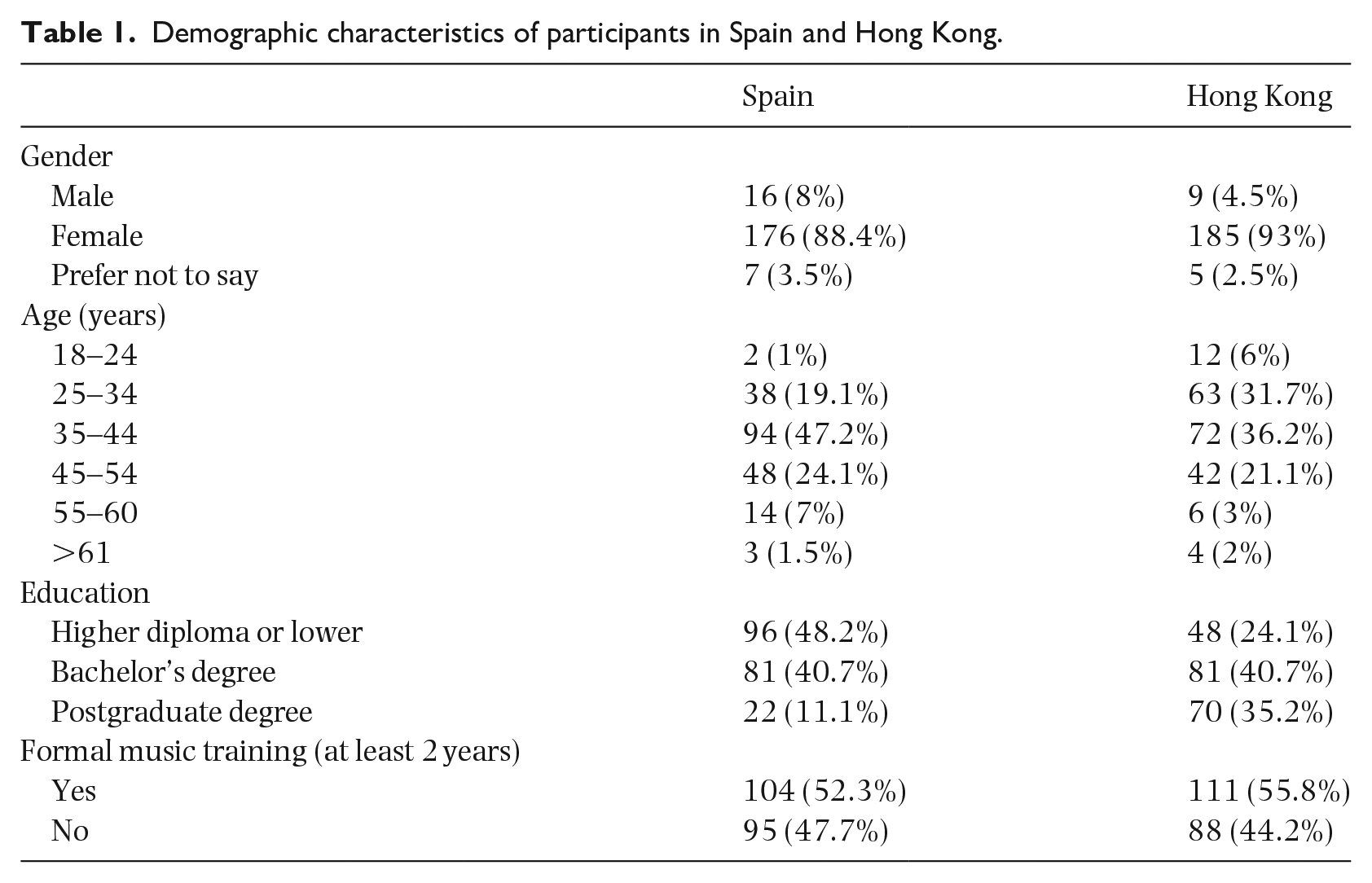
All the participants possessed the qualified preschool teacher certification required in their respective jurisdictions. Reflecting the training-related characteristics of these two populations of teachers, the majority of Hong Kong participants in our sample were trained to higher diploma (2 years of postsecondary education) and bachelor’s degree levels (4 years) (Education Bureau, 2021). In contrast, most participants from Spain were trained to bachelor’s and postgraduate degree levels (Ministerio de Educación Cultura y Deporte [MECD], 2013).
Materials
We designed a survey that included different types of items (e.g., Yes/No, Tick all that apply, Likert-type scales). It had five sections: (a) Demographics; (b) Music education and professional development: prior experiences and perceived usefulness; (c) Music classroom practices: Perceived readiness and confidence to teach music to children; (d) Music-specific training needs, motivations, and preferences; and (e) Perceptions of the Rhythm and Movement for Self-Regulation (RAMSR) classroom intervention (Williams & Berthelsen, 2019).
To ensure the validity and reliability of the survey, we followed a three-stage approach. First, based on a thorough review of the music education literature pertaining to the topics under investigation, we produced a series of items specific to preschool teachers. Second, the preliminary version of the survey was piloted in the context of individual interviews with 71 preschool teachers, who were recruited using convenience sampling (Bautista & Ho, 2021). The researchers read the items aloud, with follow-up questions intended to understand how teachers interpreted the key constructs included in the questionnaire (e.g., confidence, training needs, motivation). Teachers were asked to justify their responses and elaborate on them as much as possible. Subsequently, we introduced modifications in the questionnaire items based on teachers’ responses. For example, we rephrased certain items; added, removed, or rephrased certain response choices; and rearranged the order of items. Finally, we conducted validity and reliability checks. The survey included screening items to identify participants who answer inconsistently or randomly (Fowler & Cosenza, 2008). For the data collection in Hong Kong, the questionnaire was translated from English into Traditional Chinese and Simplified Chinese by a research assistant. To ensure accuracy in the translation, a person external to the research team translated the Chinese versions back into English for the purposes of comparison and enhancement. Subsequently, the three versions (English, Traditional Chinese, and Simplified Chinese) were set up in Qualtrics. A similar process was followed for the translation into Spanish.
The item analyzed for the purposes of this article focused on music classroom practices (Section 3 of the survey). Teachers were asked, “How often do you implement the following activities in your own classroom?” We presented 19 music-related activities identified in textbooks commonly used in the training of preschool teachers (Campbell & Scott-Kassner, 2019; Moravcik et al., 2013). The activities presented were:
Sing songs, rhymes, or chants with children
Use music and movement during transitions
Ask children to invent new lyrics for songs
Imitating world sounds with voice
Story telling with music and movement
Exposing children to different music styles
Ask children to describe their feelings in response to music
Teach children how to play musical instruments
Play musical instruments for children (you play for them)
Body percussion (explore the sounds our bodies can produce)
Ask children to freely explore the sound of objects or instruments
Invent songs or create pieces of music
Move to music freely (without teacher direction)
Move to the beat, tempo, or dynamics of music
Dance performance
Activities exclusively centered on coordinated rhythmic movement
Activities focusing on musical concepts (fast/slow, high/low)
Using music technology (music software, audio recordings)
Integrating music and movement in theme-based activities
Teachers were asked to indicate whether they implemented each of these activities every day, several times a week, once a week or less, or never.
The four content clusters that were established based on these musical activities were Singing and Voice (Activities 1, 3, 4, and 12), Instruments and Body Percussion (Activities 8, 9, 10, 11, and 18), Rhythmic Movement (Activities 2, 11, 13, 14, 15, and 16), and Concepts and Appreciation (Activities 6, 7, 17). The two nature clusters were Reproductive (Activities 1, 2, 6, 8, 9, 14, 15, 16, and 17) and Creative (Activities 3, 4, 7, 10, 11, 12, 13, and 18). Consistent with the conceptualization of musical creativity presented in the literature review (Campbell & Scott-Kassner, 2019), the musical activities categorized as creativity-fostering were those that would necessarily involve processes of free exploration/discovery, experimentation/improvisation, and/or creation and composition (e.g., invent new lyrics for songs, freely explore the sound of objects or instruments, description of personal feelings). Activities that would not necessarily require such processes were categorized within the Reproductive cluster. Activities 5 and 19 were excluded from the nature cluster analysis, as they could be carried out either reproductively or creatively, depending on the specific teaching steps outlined by the teacher. For example, the activity “Story telling with music and movement” could be implemented by simply teaching children to memorize and repeat an action song about a given story book (reproductive approach) or by asking them to compose a song based on a story book, perform it for their peers, justify their decisions, and so on (creative approach).
Procedure
The study was conducted following ethical guidelines in Hong Kong and Spain. Approvals were obtained from the institutions of the first and second authors, respectively. The procedure followed in both locations was similar. We first contacted the principals of many preschools via email. This email contained general information about our study and the hyperlink to the online survey. Principals were invited to forward the email to teachers in charge of children aged 3–6 years. Teachers were informed that the survey (a) focused on music education (e.g., prior educational experiences, current practices, training needs, and preferences); (b) was anonymous and confidential; (c) would take around 6–7 min to complete via phones, computers, or tablets; and (d) was available in various languages. Participants were asked to provide informed consent prior to the start of the survey. In Hong Kong, the survey was delivered using Qualtrics Online Survey Software (http://qualitrics.com/). In Spain, it was delivered using LimeSurvey (https://www.limesurvey.org/). Two follow-up emails were sent to the principals 1 week and 1 month after the initial email, asking them to remind their teachers to complete the survey.
Data analysis
To address our first goal, we calculated descriptive statistics (frequencies, percentages, means, standard deviations, and ranks by region) to obtain an overview of general trends in the data. Response options were converted into numerical values (i.e., scores) as follows: 1 (never), 2 (once a week or less), 3 (several times a week), 4 (every day). Independent t tests were performed to investigate potential differences in the frequencies reported by teachers from Hong Kong and Spain.
To address our second goal, as explained above, the activities were clustered based on content (four clusters) and nature (two clusters). Scores for individual activities were summed to obtain total mean frequencies by cluster. Independent t tests were performed for each dimension to investigate whether there were significant differences between the frequencies with which the activity clusters were provided in Hong Kong and Spain. When possible, an analysis of variance (ANOVA) test with a Huynh–Feldt correction was applied to examine the effect of location on various activity clusters within each region. Post hoc tests with Bonferroni corrections were used to identify differences between clusters. Data analyses were conducted using SPSS (version 26).
Results
Frequency with which teachers in Spain and Hong Kong carry out specific musical activities
First, we explored the response choices of participants in Spain and Hong Kong, for all 19 activities taken together. As shown in Figure 1, participants in both locations were most likely to choose once a week or less or several times per week and least likely to choose every day and never. However, Hong Kong participants chose the middle categories most often, while Spanish participants chose the extreme categories most often. The largest difference between participants in the two locations can be seen in the frequencies with which they chose never (7.2% higher in Spain).
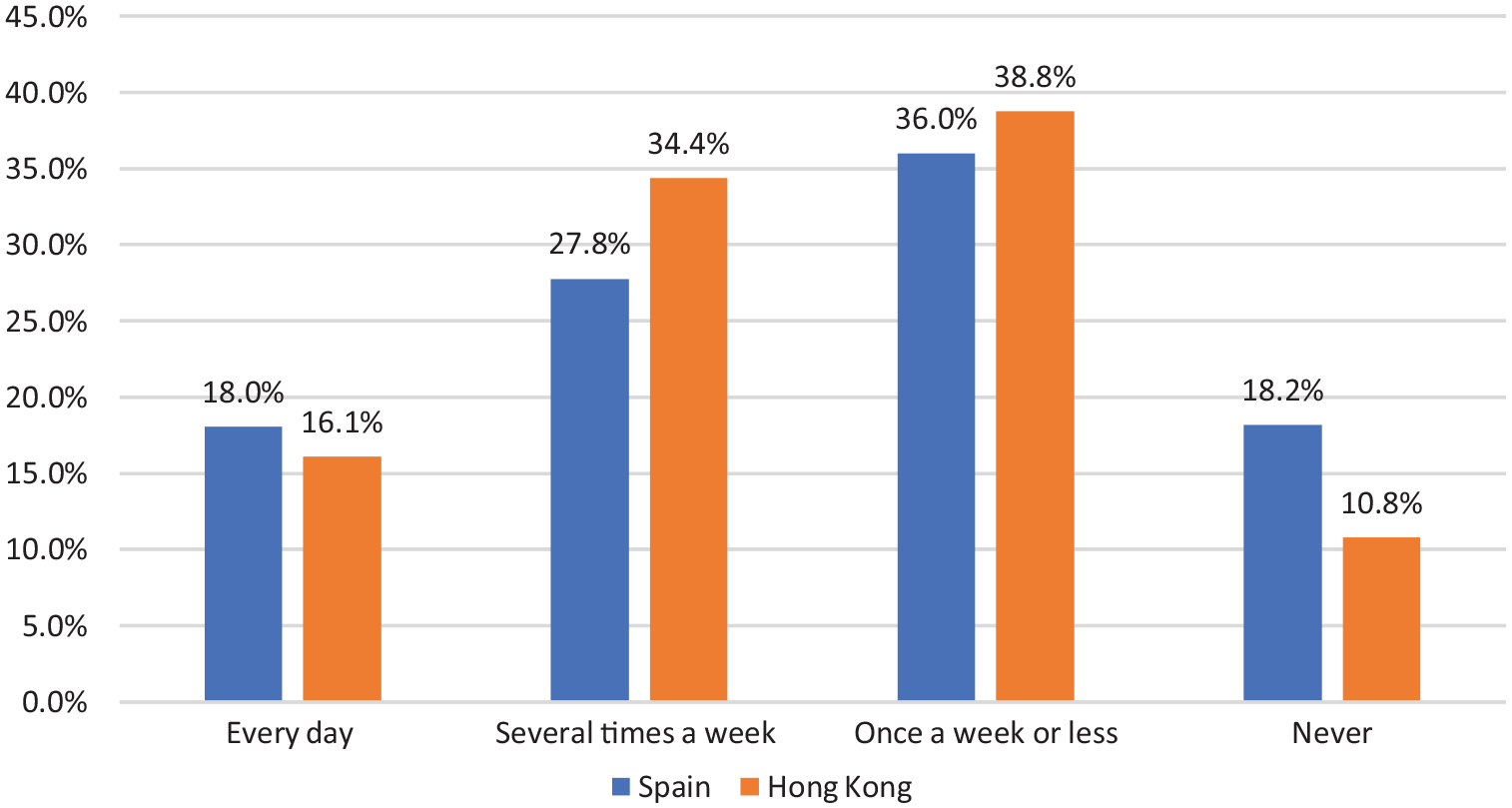
Response choices: Percentages by location.
Second, we averaged the numerical values representing the response choices for each of the 19 musical activities, as shown in Supplemental Appendix 1, and calculated an overall mean score for each location. The Hong Kong mean of 2.55 (SD = .53) was slightly higher than the Spanish mean of 2.46 (SD = .51) but an independent t test showed that this difference was not significant.
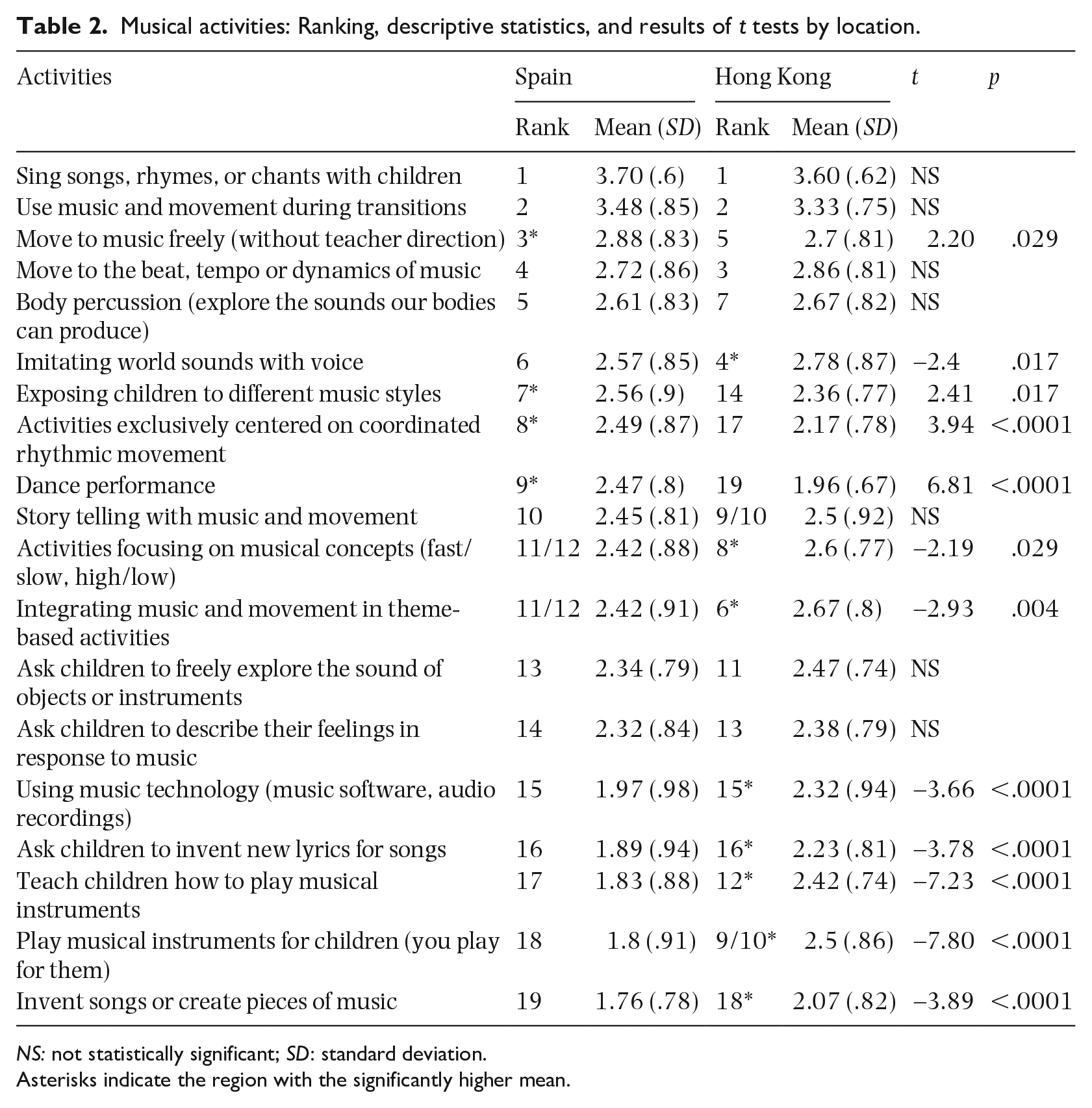
Third, we calculated mean scores representing the frequencies with which participants in the two locations reported carrying out each of the 19 activities. Independent t tests showed that 12 of the activities (63.2%) were carried out significantly more often in one or other of the two locations. These results are shown in Table 2, in which the mean scores and standard deviations for each activity are ranked in descending order from 1 (carried out most often) to 19 (carried out least often), according to the scores of the Spanish participants.
Musical activities: Ranking, descriptive statistics, and results of t tests by location.
NS: not statistically significant; SD: standard deviation.
Asterisks indicate the region with the significantly higher mean.
Because Spanish participants were more likely to choose never and every day, the range of mean scores (1.76–3.7) obtained from their ratings was wider than that of those obtained from Hong Kong participants (1.96–3.6). In fact, the mean scores obtained from Spanish participants were less than 2 for five activities, while there was only one mean score of less than 2 obtained from Hong Kong participants. Activities ranked at the top (carried out most often) and bottom of the table (carried out least often) were relatively similar in both locations, whereas there was wide variability for the activities ranked in the middle. For example, activities such as “Sing songs, rhymes, or chants with children” and “Use music and movement during transitions” were those carried out most often in both Spain and Hong Kong (ranked 1 and 2, respectively), while “Ask children to invent new lyrics for songs” was ranked 16 in both locations, and “Invent songs or create pieces of music” was ranked 19 in Spain and 18 in Hong Kong. The activity for which there was the widest difference in ranking was “Dance performance” (9 in Spain, 19 in Hong Kong); others with wide differences in ranking were “Activities exclusively centered on coordinated rhythmic movement” (8 in Spain, 17 in Hong Kong), “Exposing children to different music styles” (7 in Spain, 14 in Hong Kong), and “Play musical instruments for children (you play for them)” (18 in Spain, 9/10 in Hong Kong).
Independent t tests showed that the mean scores obtained from Hong Kong participants were significantly higher for eight activities, while those obtained from Spanish participants were significantly higher for four activities. The activities for which mean scores were higher in Hong Kong focused on singing (e.g., “Imitating world sounds with voice”), instrumental music (e.g., “Teach children how to play musical instruments”), and integrated activities (e.g., “Integrating music and movement in theme-based activities”). They also included activities requiring exploration, improvisation, and creation: “Invent songs or create pieces of music,” “Ask children to invent new lyrics for songs,” and “Using music technology (music software, audio recordings).” By contrast, the activities for which mean scores were higher in Spain involved body movement, namely, “Dance performance,” “Move to music freely (without teacher direction),” and “Activities exclusively centered on coordinated rhythmic movement,” as well as “Exposing children to different music styles.”
Content and nature of musical activities provided in Spain and Hong Kong
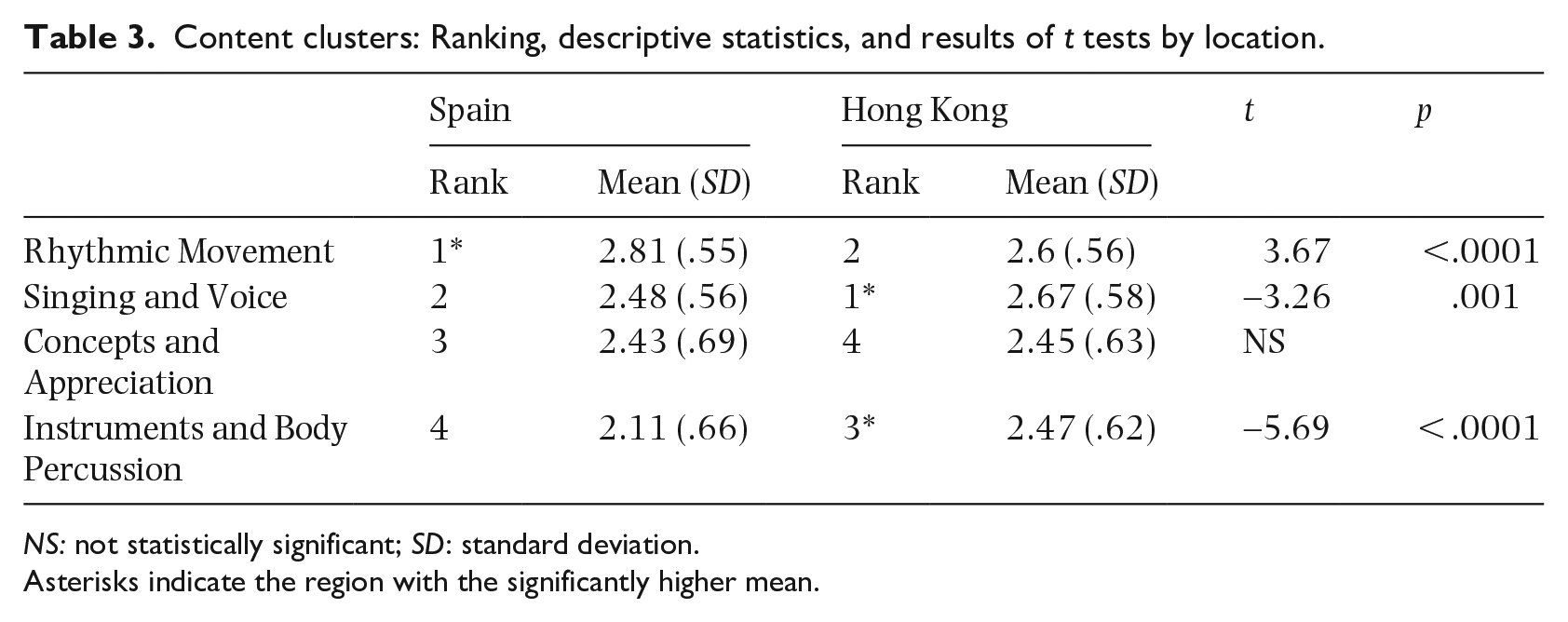
As described above, the 19 musical activities were clustered by content and 17 were clustered by nature (Items 5 and 19 having been excluded from this analysis, as reported above). We calculated mean scores representing the frequencies with which participants in the two locations reported carrying out the activities in each of the clusters. Independent t tests showed that activities in all but one cluster were carried out significantly more often in one or other of the two locations. These results are shown in Table 3, in which the mean scores and standard deviations for each cluster of activities are ranked in descending order from 1 (carried out most often) to 4 (carried out least often), according to the scores of the Spanish participants.
Content clusters: Ranking, descriptive statistics, and results of t tests by location.
NS: not statistically significant; SD: standard deviation.
Asterisks indicate the region with the significantly higher mean.
Consistent with the findings for the 19 activities, the range of mean scores (2.45–2.67) obtained from Hong Kong participants was narrower than that of those obtained from Spanish participants (2.11–2.81), suggesting that the former may provide more varied musical activities than the latter. Independent t tests showed that mean scores obtained from Spanish participants were significantly higher for activities in the Rhythmic Movement cluster while the mean scores obtained from Hong Kong participants were significantly higher for Singing and Voice and Instruments and Body Percussion. There was no significant difference between mean scores for activities in the Concepts and Appreciation cluster.
A repeated-measures ANOVA revealed a significant effect of location on mean scores representing the frequency which with participants reported carrying out the activities in each cluster, F(2.956, 1170.404) = 90.767, p < .001. Post hoc tests were performed using the Bonferroni correction. There were statistically significant differences between the frequencies with which Spanish and Hong Kong participants reported carrying out the four activity clusters.
Table 4 presents the differences between the mean scores calculated from the ratings of Spanish participants for each cluster and their corresponding p levels. The mean score for Rhythmic Movement was significantly higher, and the mean score for Instruments and Body Percussion was significantly lower, than for all the other activity clusters. There was no significant difference between the mean scores for the Singing and Voice and Concepts and Appreciation clusters.
Spain: Mean differences of content activity clusters.
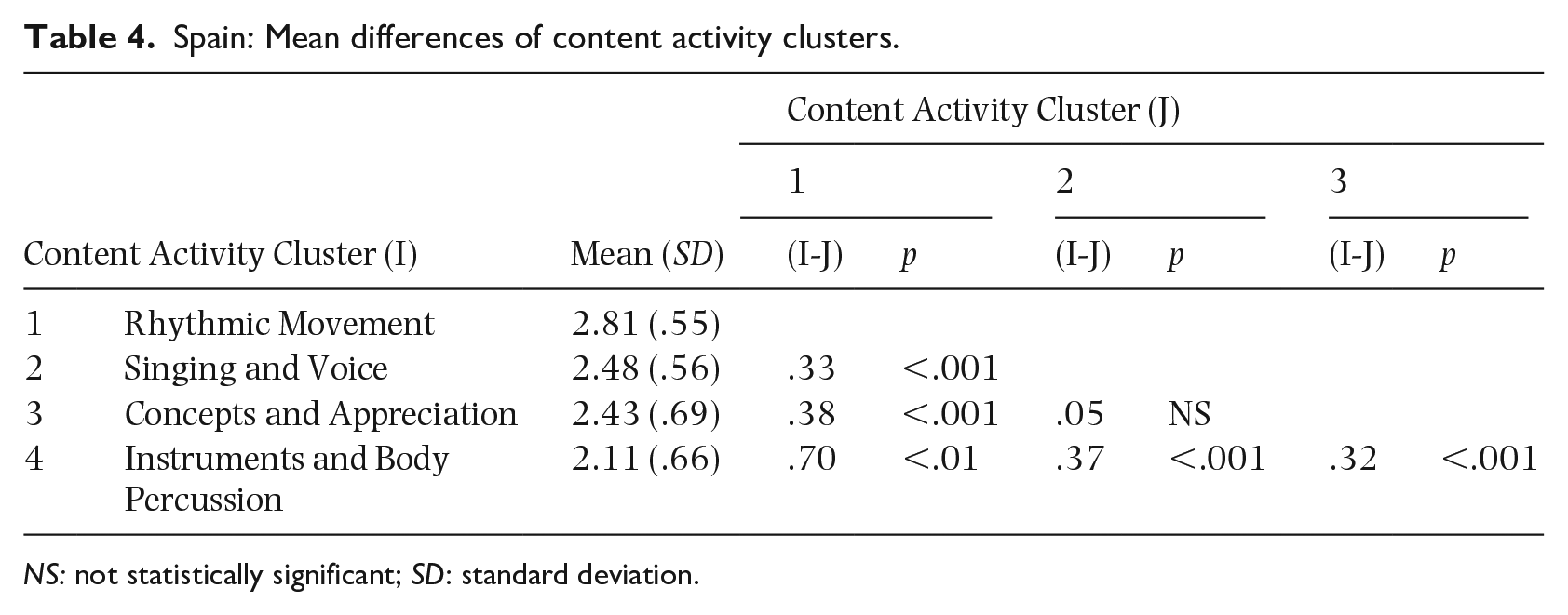
NS: not statistically significant; SD: standard deviation.
Table 5 presents the differences between the mean scores calculated from the ratings of Hong Kong participants for each cluster and their corresponding p levels. The mean score for Singing and Voice was significantly higher than those for both Instruments and Body Percussion and Concepts and Appreciation. The mean score for Rhythmic Movement was also significantly higher than those for Instruments and Body Percussion and Concepts and Appreciation. Generally, it is worth noting that differences between the mean scores obtained from Hong Kong participants were smaller than those obtained from Spanish participants.
Hong Kong: Mean differences of content activity clusters.
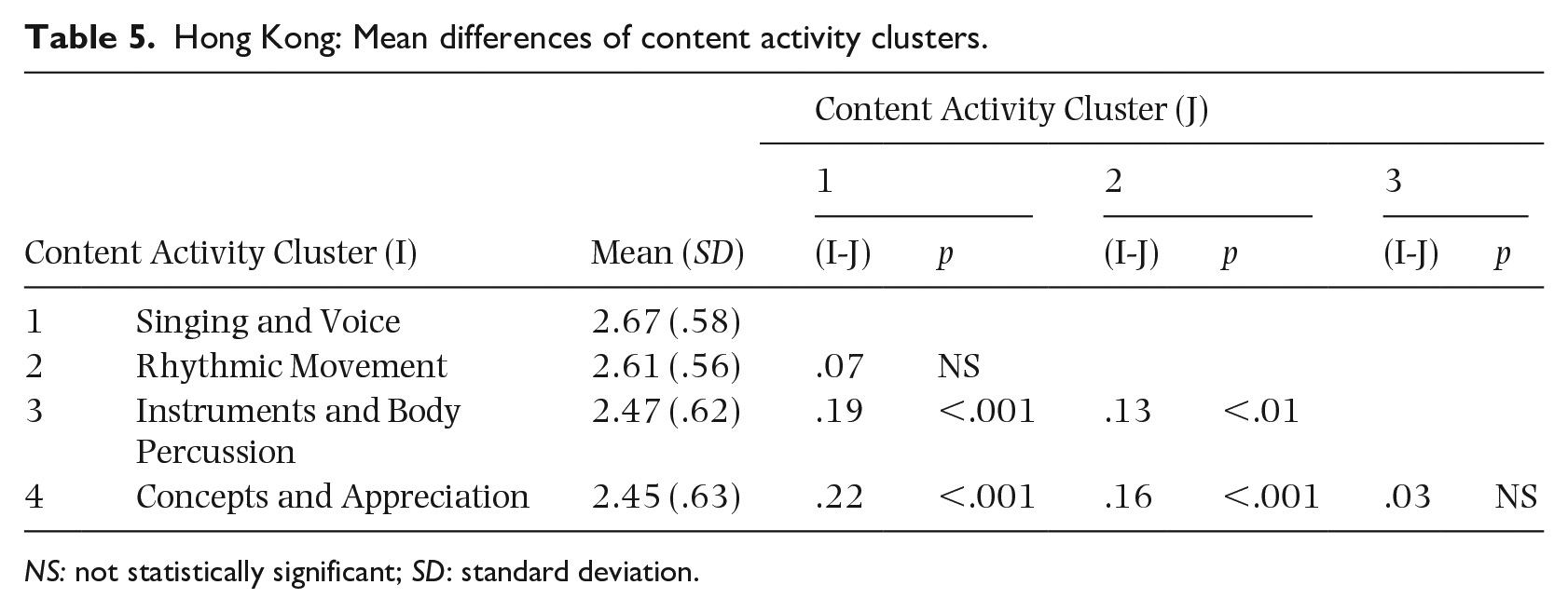
NS: not statistically significant; SD: standard deviation.
We assigned the activities to two nature clusters, Reproductive and Creative. As expected, mean scores for the Reproductive cluster were higher than those for the Creative cluster in both locations (Table 6). There was no significant difference between the mean scores for Reproductive activities obtained from participants in Hong Kong and Spain. However, an independent-samples t test revealed a significant difference between the mean scores for Creative activities. Those obtained from Hong Kong participants were higher than those obtained from Spanish participants, t(396) = –2.77, p < .05.
Nature clusters: Ranking, descriptive statistics, and t-test results by location.
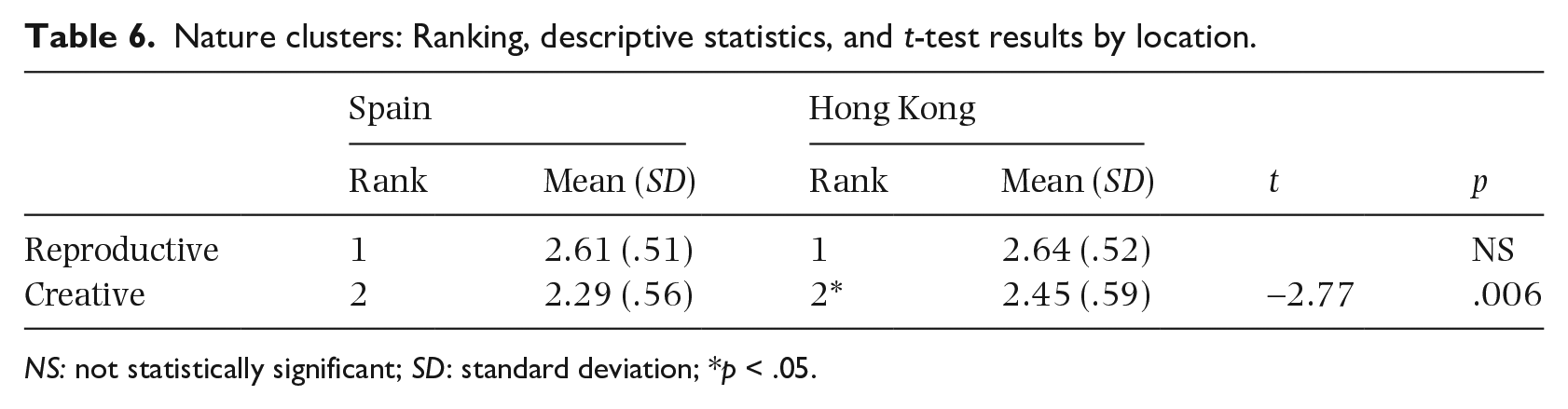
NS: not statistically significant; SD: standard deviation; *p < .05.
Discussion
We found that, despite the emphasis on the need to foster musical creativity in the official curricula for music education of Spain (MEC, 2007) and Hong Kong (CDC, 2017), participants who taught at preschools in both locations reported carrying out reproductive musical activities more frequently than creativity-fostering activities. Indeed, the musical activities that participants reported implementing every day or several times per week involved singing and movement, which correspond to the typical routine action songs teachers utilize for classroom management purposes and during transitions (Bautista et al., 2018). This indicates that music is often used with aims that are unrelated to music itself (Samuelsson et al., 2009). In contrast, participants in both locations reported carrying out generative musical activities fostering exploration, improvisation, and creation less frequently.
These findings suggest that preschool teachers may misunderstand the concept of musical creativity (Campbell & Scott-Kassner, 2019), perhaps—in part, at least—because the official curricula do not include operational definitions of the term. Teachers may make the mistake of believing that all music-related activities necessarily foster musical creativity, regardless of their content and nature (Besançon & Lubart, 2008). Their classroom practices suggest that the meaning of music education and how it is enacted varies across cultural contexts with different historical backgrounds and underlying educational values and philosophies (Tsubonou et al., 2019).
For example, participants in both locations were most likely to respond once a week or less to the question of how often they carried out particular activities. This finding is of concern because it reveals the limited frequency and lack of diversity of musical activities in preschools, which is consistent with the findings of previous studies conducted in Asian (Bautista & Ho, 2021; Bautista et al., 2018; Chen, 2009; Ho, 2010) and Western countries (Ersoy & Dere, 2012; Winton & Bussye, 2005). It is well documented that preschool teachers are often reluctant to try out musical activities that are not within their pedagogical comfort zone (Neokleous, 2013) and they tend to have poor self-efficacy beliefs as to their ability to teach music to young children (Burak, 2019). The limited provision of certain types of activity in Hong Kong and Spain might be due to teachers’ unwillingness to innovate and lack of confidence.
The mean frequencies with which the 19 activities were carried out were significantly higher for eight activities in Hong Kong and four in Spain. Participants in Hong Kong seemed to provide a better balance of music-related activities, insofar as they carried out the clusters of Singing and Voice, and Instruments and Body Percussion, more often than their Spanish counterparts. This is consistent with the findings of qualitative research by Lau and Grieshaber (2018), who documented the common and highly structured singing routines in Hong Kong local kindergartens and their emphasis on rote practice, accuracy, and technique. The ability to play musical instruments is also highly valued in Hong Kong, as it is believed to enhance students’ cultural competence (Kong, 2016). In fact, being able to play one or several instruments increases the likelihood that children will be admitted to certain schools. It is therefore not surprising that kindergartens spend time providing children with basic instrumental skills, perhaps in response to parental demands. The influence of societal factors on educational practice is evident in this finding (Rao et al., 2018).
Nevertheless, contrary to our expectations deriving from our review of the literature (Bautista et al., 2018; Cheung, 2017), participants in Hong Kong also carried out creativity-fostering activities significantly more often than Spanish participants. These included activities that involve engaging children in musical exploration (e.g., “Using music technology”), improvisation (e.g., “Ask children to invent new lyrics for songs”), and creation (e.g., “Invent songs or create pieces of music”). This unexpected finding could be attributable to the quality review process currently under way in Hong Kong kindergartens (Yeung et al., 2022). So as to promote the continuous improvement of the local kindergarten sector, officials from the Education Bureau regularly assess the quality of teachers’ classroom practices, based on a series of key performance indicators. These regular assessments have important financial implications for kindergartens, as the outcomes determine their eligibility for government subsidies (Ho & Bautista, 2022).
The need for teachers to demonstrate that they are fully enacting the official curriculum framework (CDC, 2017), including its emphasis on creativity, may explain why the participants in Hong Kong were more likely to carry out creativity-fostering musical activities than the participants in Spain, where preschool teachers’ classroom practices are not assessed externally. Another potential explanation relates to the phenomenon of social desirability (Li et al., 2011), which could have affected the responses of the Hong Kong participants in particular. While the preschool sector in Hong Kong is publicly subsidized, it is run by private operators. Teachers need to fulfill certain expectations if they are to keep their jobs or get new ones (Rao et al., 2018). The Hong Kong participants may therefore have responded in such a way as to give the impression that what they do in class is aligned with the requirements of the official curriculum, mirroring government expectations (CDC, 2017).
By contrast, the preschool sector in Spain is primarily public (MEC, 2007). Most teachers are employees of the national or provincial governments, and they are not subject to inspection or quality assessment. Teachers in Spanish preschools enjoy more pedagogical freedom than their Hong Kong counterparts, and could therefore have responded to our survey more independently and honestly, in the absence of the need to be seen to comply with official requirements. Specifically, they were more likely than Hong Kong participants to report focusing on Rhythmic Movement, for example, “Move to music freely (without teacher direction),” “Dance performance,” and “Activities exclusively centered on coordinated rhythmic movement.” This finding is consistent with those of studies conducted in other Western countries such as Turkey (Ersoy & Dere, 2012) and Slovenia (Denac, 2008), and is likely to relate to the influence of active musical pedagogies that originated in the 20th century such as Orff, Willems, and Dalcroze, in which rhythm and movement are considered the fundamental elements of musical experience (Campbell & Scott-Kassner, 2019; Young, 2008). These pedagogies have had a strong influence on preschool teacher education programs and, consequently, on the approaches to music education used in many classrooms (Pereira & del Pino, 2017). Sociocultural factors may also explain the predominance of physical movement and dance, as celebrations and social gatherings in Spain often involve dancing, whether free or choreographed. In fact, there are several periods during the school year in which teachers and young children prepare dance-based performances presented to families on special occasions, including Parents’ Day and festivals such as Christmas, Carnival, and Easter. The focus on moving to music may, however, limit the attention paid to other domains of music in Spanish preschools (Denac, 2008; Ersoy & Dere, 2012). Finally, Spanish participants’ extreme response patterns (i.e., with a high proportion of every day and never responses) are likely to be attributable to the high level of pedagogical freedom enjoyed by preschool teachers in Spain, which allows them to focus on certain types of activities at the expense of others, coupled with the lack of external assessments (Tiana et al., 2011).
Conclusion
We conclude that, despite the homogenization of curricular requirements for preschool music education, as the result of globalization (Spring, 2014), there are gaps between curriculum and practice in Spain and Hong Kong. These are evident in the mismatches we have identified between the curricula in the two locations and participants’ reports of what they actually do in their classrooms. While official guidelines emphasize that children’s creativity and self-expression should be fostered (CDC, 2017; MEC, 2007), it would seem that teachers are more likely to carry out reproductive and routine musical activities based on repetition and imitation, using music as a tool to support classroom management. This approach is clearly inconsistent with contemporary curriculum discourses (Webster, 2011). Teachers in both locations seem not to be fully aware of the intrinsic value of music and its great cultural significance (Young & Ilari, 2019), and as an art form enabling children to express themselves creatively (Campbell & Scott-Kassner, 2019). However, our finding that participants in Hong Kong reported engaging preschool children more frequently than did Spanish participants in open-ended musical activities involving musical creativity challenges the commonly held assumption that educational practices in Western contexts are superior to those in Asian contexts, at least in terms of creativity. In future research, it would be worth finding out if this should be seen as the valuable outcome of quality assurance processes in the privatized market of Hong Kong (Education Bureau, 2020) or a result of social desirability bias (Li et al., 2011).
Limitations and future research
The study has several limitations. While our methodological approach allowed us to recruit a large sample of participants in the two locations, explore the effect of location on their music-related practices in the preschool classroom, and identify the similarities and differences between them, the research relied on a unique source of data: self-reported survey responses. For a more in-depth comparison of the musical activities conducted in different locations, survey data obtained in future studies should be triangulated with observational data collected in preschool classrooms ideally over extended periods of time (Winton & Bussye, 2005). It would also be worth drawing on complementary sources of data such as one-to-one and focus group interviews to investigate related topics such as teachers’ beliefs about music education, the role of music in official curricula, the notion of musical creativity, and the values that underlie the teaching of music. Finally, the present study was limited to the comparison of practices in just two locations. In future, research should be conducted in a wider range of sociocultural contexts.
Implications
The findings of the study have important implications for preschool curriculum designers, teacher educators, and teachers. First, curriculum designers should provide operational definitions of musical creativity to be included in official curriculum frameworks (Cremin & Chappell, 2019). This would reduce the possibility of teachers misunderstanding or misinterpreting it, for example, by assuming that all musical activities foster musical creativity by default, regardless of their content and nature (Besançon & Lubart, 2008). Such definitions should convey the message that the exploration and discovery of sounds, experimentation/improvisation, and creation/composition are essential components of creative processes in music (Campbell & Scott-Kassner, 2019; Koutsoupidou, 2008). Second, teachers’ confidence and willingness to prepare are strongly determined by sociocultural factors (Kong, 2016). Teacher educators must reinforce these particularly in those domains of music in which teachers may feel they are struggling, including musical creativity (Yates & Twigg, 2017; Yim & Ebbeck, 2009).
We agree with Young and Ilari (2019) that the importance of music education for preschool children must be acknowledged and that it is vital to provide preschool teachers with the specialist teaching skills they need to deliver it effectively. Developing the expertise to deliver high-quality music teaching to young children requires years of study and practice, which generalist teacher education programs typically cannot provide (Bautista et al., 2022). It would be a sensible strategy to employ a specialist in each preschool to boost the quality of music teaching, although we are aware this would be financially impracticable in some settings. For this reason, generalist teachers should be aware of their own strengths and weaknesses when aiming to deliver the music curriculum (Song & Chung, 2015). This awareness could motivate them to seek formal, informal, and non-formal opportunities to learn music that will better prepare them to provide young children with a high-quality music education (Bautista et al., 2022).
Supplemental Material
sj-docx-1-msx-10.1177_10298649231173919 – Supplemental material for Musical activities in preschool education: A cross-cultural comparative study
Supplemental material, sj-docx-1-msx-10.1177_10298649231173919 for Musical activities in preschool education: A cross-cultural comparative study by Alfredo Bautista, María Elena Riaño, Joanne Wong and Adolf Murillo in Musicae Scientiae
Footnotes
Funding
The authors disclosed receipt of the following financial support for the research, authorship, and/or publication of this article: This study was supported by the General Research Fund (GRF) 2021/22, Research Grants Council (RGC) (Grant #18610121), and by Estancias de Movilidad en el Extranjero José Castillejo 2019 (No. CAS19/00135). The views expressed in this paper are the authors’ and do not necessarily represent the views of their institutions.

Supplemental material
Supplemental material for this article is available online.
References
Supplementary Material
Please find the following supplemental material available below.
For Open Access articles published under a Creative Commons License, all supplemental material carries the same license as the article it is associated with.
For non-Open Access articles published, all supplemental material carries a non-exclusive license, and permission requests for re-use of supplemental material or any part of supplemental material shall be sent directly to the copyright owner as specified in the copyright notice associated with the article.
