




Abstract
This article introduces the validation of a Musical Identity Measure (MIM), developed to support individuals’ self-conceptions in relation to their musical activities (e.g., performance, composition, music technology). Initial model validation was carried out using a principal axis factor analysis with a diverse and international sample of 336 musicians. The factor analysis revealed a four-factor measure: Musical Calling, Musical Self-Efficacy, Emotional Attachment, and Growth Mindset. Confirmatory factor analysis with the 25-item measure suggested that the model fit would be improved with the removal of three items, resulting in the same four-factor model with 22 items. Further validation with a different dataset confirmed MIM as a strong fit as a bifactor model. Measurement invariance tests confirmed that the bifactor structure was the same for male and female participants; individual measurement invariance in relation to age could not be fully examined due to variance in group sizes. Subsequent analysis of variance (ANOVA) calculations suggested gender differences in musical self-efficacy and highlighted possible changes in MIM factors across the lifespan. MIM has the potential to provide individuals with insights into their motivations to engage with musical activities, to help identify areas requiring additional support or guidance, and to support future-oriented decision making. The measure may also support educators and researchers wishing to understand and support the processes of musical development and skill acquisition.
Keywords
Growing interest in the link between music and identity during the past two decades has led to significant understanding of the ways in which music can play a role in our lives. Given that identity can be considered at different levels including individual, relational, and collective (Burke & Stets, 2009; Erikson, 1994; Goffman, 2009; Hogg, 2007; Sedikides & Brewer, 2001), it is unsurprising that its role in development, health and wellbeing, education, social integration, and musical participation, to name just a few, has been discussed in numerous journal articles and notable volumes (e.g., Creech et al., 2021; Lehmberg & Fung, 2010; MacDonald et al., 2002, 2017; Marsh, 2017; Saarikallio, 2017; Shoemark et al., 2018).
Regardless of the context/s in which it is considered, research highlights the complex, multidimensional, cognitive, and social nature of identity and shows that it is liable to change across the lifespan (Bennett & Hennekam, 2018; MacDonald et al., 2017; MacDonald & Saarikallio, this special issue). The insights garnered by this burgeoning research are being applied in a range of contexts: to support musical development and education (Haning, 2021; López-Íñiguez & Bennett, 2021; Panetta, 2021; Pitts, 2017); to inform and develop practice in therapeutic contexts (Amir, 2012; Daykin et al., 2007); to explore the role of music in the experiences of displaced communities (Lidskog, 2017); and to understand individual differences in different modes of musical participation (Dys et al., 2017). MacDonald et al.’s (2002) framing of music in identities and identities in music usefully distinguishes between the ways in which music helps us construct the self and the use of music to portray ourselves to others and connect with our sociocultural environments. These processes are interlinked and reciprocal, and subject to the influence of cognitive, social, and psychological factors.
Much of the research exploring musical identities has adopted qualitative or mixed-methods approaches, often from a social-constructionist perspective, and such explorations have offered rich and meaningful insights that enable personal stories to be explored while providing opportunities for generalized experiences within groups to be considered. For example, Faulkner’s (2013) detailed ethnographic study of male singers in Iceland highlights the importance of singing to the construction, maintenance, and management of personal and social identities. Given the unique and complex nature of our identities, such methods might be seen to be optimal as they afford understanding of the ways in which our personal ecosystems influence our identities and shed light on the ways in which our relationship with music is mobile, flexible, and prone to change over the lifespan.
Rich and focused contextualization of individuals’ experiences can, however, mean that descriptions and definitions of musical identity become quite diffuse and elusive, influenced by the focus of the research. This has been discussed in relation to the semantic history of the term identity more generally (Gleason, 1983) and in writing that has questioned whether the proliferation of the term threatens its “analytical purchase” (Brubaker & Cooper, 2000, p. 1). Given the potential of research into musical identities to understand the place of music in contemporary life, we argue that there is merit in developing quantitative measures or scales that enable musical identity to be studied as a variable across multiple types of musicians, extending previous work to create opportunities for multiple methodological approaches and additional layers of analytical rigor.
Measuring self and identity in relation to musical activities
Measures of identity in relation to musical contexts fall into three general areas: (1) music engagement/motivation; (2) identity/self-concept in relation to musical participation; and (3) music teacher identity.
Musical engagement and motivation are important for musical learning and development across the lifespan since they contribute to the way in which we apply ourselves to our learning, including the long hours of (isolated) practice, our responses to help, support and feedback from others, and our coping behaviors when facing setbacks or competition (Burland, 2005; Gross & Musgrave, 2020). Research exploring the role of self-perceptions and self-concept for children and young people studying in educational settings has involved measures relating to specific musical skills such as singing (Svengalis, 1978) or broader sub-domains of musical skills, including composing, dancing, and listening (Morin et al., 2015; Vispoel, 1994, 2003); others have characterized musical self-concept as relating to interest in music, perceptions of skills and abilities, and support from others (Austin, 1990; Schmitt, 1979). Such measures are important for understanding motivations to participate and persevere in musical learning and may indicate the need for additional support or intervention (Hash, 2017). Most measures, however, have focused almost exclusively on young people and college students, and those cited above originate from the United States.
Although adolescence and young adulthood are the time when identity development is a key priority (Erikson, 1994), lifespan development theories highlight continual change and development across the lifespan and that this development involves multiple adaptive processes (Baltes, 1997). Lifespan theories recognize the role of self-regulation in response to goal success or failure, or changes in environment and resources (see Baltes & Dickson, 2001). In precarious professions such as music, this is particularly complex. Bennett and Hennekam’s (2018) study of musicians across the career lifespan found that the selection, optimization, and compensation strategies adopted by musicians fluctuate over time and often demand a combination of strategies in line with multiple musician identities.
Alternative approaches include the Motivation and Engagement Scale–Music (MES-M; see Martin, 2008), which identifies 11 dimensions including self-efficacy, self-determination, valuing, need achievement, and self-regulation to be predictors of outcomes such as enjoyment of school, participation, aspirations, and grades among Australian high school and university students. While the measure was only validated with children and young adults studying within the formal education system, it is notable that it includes maladaptive items relating to anxiety and failure avoidance, which Martin suggests could be reframed by constructive feedback focusing on future success.
Musical engagement has also been explored by focusing on engagement styles (see the Music USE questionnaire [MUSE], Chin & Rickard, 2012) to understand the benefits of engaging with music. The four dimensions of MUSE highlight the importance of music for Cognitive and Emotional Regulation, Engaged Production (which relates to mastery of skills), Social Connection, and Dance and Physical Exercise purposes. MUSE enables a move away from the simplicity of using years of music training as an indicator of music engagement, suggesting that the quality of active engagement could account for the likelihood that individuals will engage with musical instrument playing (Chin & Rickard, 2012). Chin and Rickard’s study goes beyond the focus on young adults typical of other research, although a significant portion of the data was still gathered from those in young to mid-adulthood; the inclusion of experiences across the whole lifespan is still largely absent from such measures.
A third model considers the extent to which self-determination theory (SDT) can be used to explore motivation among university music students and music professionals in Australia and New Zealand. Evans and Bonneville-Roussy’s (2016) data suggest that needs fulfillment influences autonomous motivation, which, in turn, motivates adaptive domain-related behaviors such as quality and quantity of practice and positive attitudes to challenge and psychological wellbeing. Evans and Bonneville-Roussy suggest that the insights provided by their model can inform teaching approaches that encourage autonomy: for example, moving away from the traditional master-apprentice model toward a multi-teacher or student-centered models (Gaunt, 2011; Pozo et al., 2022), and they highlight the need for greater understanding of the relationship between deliberate practice and performance achievement.
Understandings of musical identity as complex and multidimensional (MacDonald et al., 2017) have led researchers to explore how individuals understand their relationship with music to inform their self-perceptions and self-understanding. Spychiger’s (2017) Musical Self Concept Inquiry (MUSCI) has 12 dimensions including technique and information, social, musical ability, emotional, physical, spiritual, ideal, and adaptive musical self-concept. Spychiger’s data reveal a new dimension relating to technique and information that has not previously been considered in relation to self-concept; this reflects individuals’ interest in the processes underpinning the creation of music and was particularly prevalent among the groups of professional/employed musicians and music listeners. Social factors were less prominent than expected, reflecting only the community associated with musical participation. Importantly, Spychiger suggests that the dimensions are relevant for almost everybody but will vary according to perceived importance. Furthermore, she observes that people do not always have a positive musical self-concept, believing that, for example, their skills are not sufficient or that they do not have enough determination to pursue musical learning.
A further model to include here explores the factors that influence the formation of a professional identity as an artist or educator, considering the dynamic interplay between internal factors of personality and environmental factors, including the role of other people (Gruhn et al., 2017). Gruhn et al.’s (2017) Musical Identity Scale (MIS) is an adaptation of Spychiger’s (2017) MUSCI model and includes musical, educational, social, and personal components and was created specifically for the researchers’ study. Additional data collected in the development of MIS used existing measures of cognitive advancement (Raven, 1990), musical aptitude (Gordon, 1989), and personality factors (Costa & McCrae, 1992). The data, gathered in Estonia, reveal interesting differences in the profiles of performer and educator groups and highlight the complex and developmental interaction between different factors. The four MIS factors—theoretical reflection, communicative interaction, interpersonal relation, and professional curiosity—load differently for each group of participants. Gruhn et al. suggest that the factors are core variables of a musical identity and call for more research to understand the complex interactions and their variation across the lifespan.
Gruhn et al.’s MIS reflects previous research on the transition from music student to music teacher—a relevant area given our ambition to develop a broad measure of musical identity. This body of research has used measures of teaching and musical self-efficacy and self-esteem, exploring the potential conflict between performer and teacher identities (Hargreaves & Marshall, 2003); professional identity as a music teacher, as measured by self-efficacy and commitment (Music Teacher Identity Scale [MTIS], see Wagoner, 2015); the role of social identity, perceived value of music education, and self-concept as a music educator (Undergraduate Music Education Major Identity Survey [UMEMIS], see McClellan, 2014); and the impact of a creative identity in music (CIM) on the teaching approaches of music education students (Randles & Ballantyne, 2016). Of note here is the presence of factors such as commitment, perceived value, and creativity, which are less prevalent in models that focus primarily on performance activities. The development of such measures has typically focused on students (except for Wagoner) and on populations from a single country (Randles and Ballantyne compare the United States with Australia). While such samples have been chosen to address specific research questions, there is still scope for us to develop a tool that may have applicability across the lifespan.
Based on this review of existing models of musical identity, there appears to be general agreement that some components of identity are generalizable to most individuals who engage with music, but that the strength of dimensions or components of identity vary according to individual priorities or activities. There is also a temporal dimension in that musical identity is neither fixed, nor singular, and that it changes throughout the lifespan as individuals interact with other internal (psychological) and external (social, environmental) forces. There is broad recognition that the insights of such models and measures are valuable, particularly for musical training, and while Spychiger (2017) suggests that musical self-concept is not always positive, this aspect is relatively underexplored in the literature. In one of few examples, Zubeldía et al. (2017) identify negative correlations of musical self-concept and the attribution of success to luck or to task difficulty by Spanish music students. The potential risks of strong identification with music are similarly underexplored.
A distinctive aspect of this article is the consideration of what a strong identification with music means for a life with music and how this might highlight potential risks and supports offered by educators, mentors, and influencers. Extant research has primarily considered emerging and established performers or teachers, and there has been little discussion of composers, studio musicians, conductors, or even music psychologists! This suggests that broadening the definition of music and musician may offer additional insight into the components of musical identity.
The social construction of identity within higher education is strongly correlated with efficacy beliefs and self-determination (Berntson & Marklund, 2007; Parker et al., 2010) and it is unsurprising that both student success and the ability of graduates to transition into a career are similarly influenced by students’ efficacy beliefs. In a vocational context, students’ perceived employability is also likely to demonstrate higher self-determination and to influence decision making. It follows that “understanding the student self-perception of graduate employability is essential, to highlight areas of agreement, or potential mismatch with perceptions of other stakeholders” (Donald et al., 2019, p. 611) and to understand students’ inner-value capital (Baruch & Peiperl, 2000).
Lent et al. (1994, p. 87) emphasize that efficacy appraisals are largely the result of cognitively mediating “the effects of learning experiences on future career behavior” (Lent et al., 1994, p. 87). In the case of music, this mediation extends to experiences—often over many years and since childhood—of social music making and individual study. In music, then, and unusually from a higher education perspective, so-called career calling results from many years of engagement prior to a formal career decision. This brings us back to the social construction of self and identity in relation to musical activities, which is the focus of this article.
Objectives
The three authors have researched musicians and their careers in different contexts using qualitative methods for several years. Based on our research and reading, we wondered whether there were elements of identity that were consistent across different types of musician. We were interested in whether these elements of identity could be measured and used in a way that might help to support musicians’ pre-professional and professional navigation of work and career. Our research objectives were as follows:
To explore whether there are dimensions/components of identity that are consistent across different types of musicians.
To consider whether exploring musical identity from the perspective of lifelong engagement (for work or leisure) might provide new or additional insights.
To understand how considering musical identity from this perspective might inform educational practice.
Method
Design and ethics
This cross-sectional research was approved by the University of Leeds Research Ethics Committee (LTMUSC-87) and Curtin University Human Research Ethics Committee (HREC) (HREC number HRE2017-0125-09).
Participants
Validation of the MIM involved three phases of modeling, outlined in the sections which follow. The first stage involved a total sample of 336 participants after screening the data for outliers and removing those indicated as extreme in variable histograms. In the second stage, we explored whether adding Musical Identity as a latent factor might yield additional insights. This involved collecting additional data (n = 41 after screening and removing incomplete responses) and extracting a random sample of half the original dataset. The final stage combined the complete original dataset and the validation sample (N = 377).
Participants were primarily from Europe although the questionnaire was also completed by people from Australia, Asia, Africa, and America. Participants were higher education students and/or were working as composers, performers, music researchers (musicology, music psychology, analysis), music therapists, community musicians, DJs, conductors, or music engineers. Demographic details including age, gender, and work/study status are presented in Table 1.
Characteristics of the sample by gender.
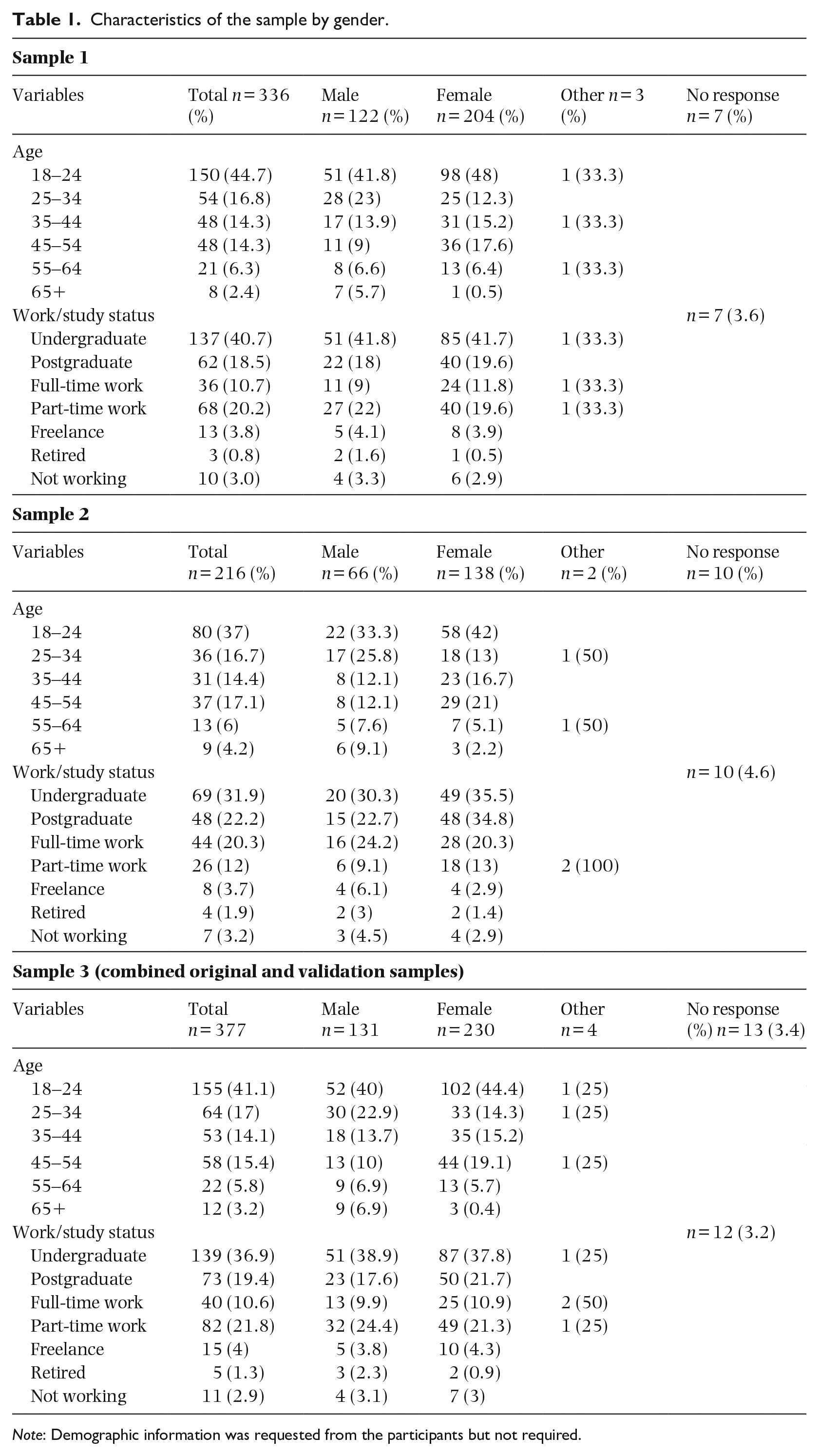
Note: Demographic information was requested from the participants but not required.
Measure development
The underlying premise of the measure was that it might be used by individuals hoping to pursue a working life involving music to identify areas of greater or lesser confidence; this would enable them to identify next steps, seek support or advice, and become more prepared for what lies ahead. Based on a review of literature and the insights of the authors through their musical practice and their research on the development, transitions, and identities of musicians (defined to include performance and other specialties such as composition, conducting, musicology, and music psychology), six broad areas that contribute to musical identity were identified:
Emotional attachment (e.g., Bailey & Davidson, 2005; Burland & Davidson, 2002; Woody & McPherson, 2010);
Resilience and adaptability (e.g., Burland & Davidson, 2002; Clarke & Lisboa, 2013; Holmes, 2017; MacNamara et al., 2006);
Approach to learning (e.g., Burland, 2005; Dweck, 1986; López-Íñiguez & Bennett, 2021; López-Íñiguez & Burnard, 2021; Müllensiefen et al., 2015);
Social factors (e.g., Gruhn et al., 2017; López-Íñiguez & Burnard, 2021);
Music and self (e.g., Burland & Davidson, 2002; Faulkner & Davidson, 2004; Oakland et al., 2012; Spychiger, 2017); and
Career calling (e.g., Dobrow & Tosti-Kharas, 2011; Weston, 2020).
More detailed discussion of these six areas is presented in López-Íñiguez et al. (2022, this issue).
Procedure
The initial list of items was transformed into a series of statements to be rated on a 7-point Likert-type scale (see López-Íñiguez et al., this issue, Table 1). We first consulted leading researchers in the field to refine and verify the items and their wording. Sixty-eight statements addressing the six main areas outlined above were used to create an online questionnaire, hosted in Qualtrics; items were randomized to reduce any order effects. The instrument was trialed with five participants (n = 5), whose responses were excluded from the final dataset; no concerns were raised. The survey was distributed via social media sites relevant to people who participate in musical activities with a student, amateur, or professional focus. The sample was, therefore, voluntary and relied on snowballing as participants subsequently shared the survey link with their networks. The original data were collected during 2017–2019. Verification data were gathered in 2021, avoiding the collection of data during the worst of the pandemic.
The online survey contained information about the study, including what was involved and how long it would take to complete. Participants were informed that completion would be acknowledged as their consent to participate. The survey requested but did not insist upon demographic information (gender, age, current work/study status). The inclusion of open questions enabled us to understand the focus of participants’ musical activities (e.g., composition, community music, performance) and musical histories without constraining them to standard responses.
On completion, participants were provided with their self-assessment scores for each area, and they were emailed a reflective resource (López-Íñiguez et al., this issue). The resource enabled participants to view their responses as a radar diagram and included reflective questions to enhance self-understanding. Data were analyzed using IBM SPSS Statistics v27.
Results
General reliability and factorial validity of the MIM measure
Principal axis factor (PAF) analysis was conducted on the 68 items with oblique rotation (promax) as this offered the clearest fit to the data and we expected there to be some correlation between the factors due to the nature of the construct we were measuring. This analysis was appropriate because we wanted to develop a measure that could be applied in contexts beyond this dataset. An initial analysis was run and the Kaiser–Meyers–Olkin (KMO) statistics for the overall sample as well as the individual variables were explored. KMO values below the minimum of .5 were removed (Field, 2013) and items with factor loadings >.4 were prioritized in accordance with guidelines based on sample size (Stevens, 2002). Some items below this value were retained where they did not cross-load highly on other factors and the factors had at least three other items with a loading >.4 (Samuels, 2016). Following this process, the analysis was run again. As a result of this process, 25 items were retained.
The KMO measure (.90) confirmed sampling adequacy for the procedure (considered highly satisfactory by Hutcheson & Sofroniou, 1999); all KMO values for individual items were >.85, well above the accepted limit of .5 (Field, 2013). The correlation matrix determinant was >.00001 and 15% of the nonredundant residuals had absolute values >.5 (<50% is indicative of a good fit). The correlation matrix can be seen in Table 2.
Correlation matrix of MIM.
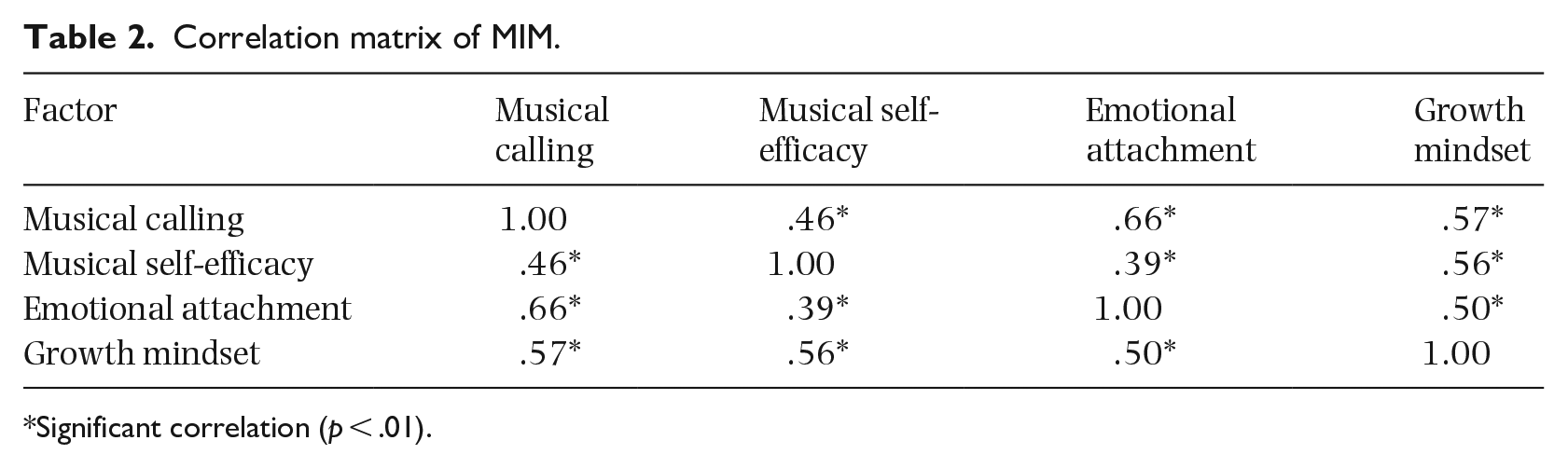
Significant correlation (p < .01).
Initial analysis was run to obtain eigenvalues for each factor. Six factors had eigenvalues over Kaiser’s criterion of 1 and in combination explained 60.6% of the variance. Scrutiny of the scree plot and items retained within each factor revealed that Factors 5 and 6 contained only two items each and were, therefore, unsuitable as independent factors (Costello & Osborne, 2005). The items within Factors 5 and 6 were conceptually related to items in factor 4, which related to valuing and enjoying the challenges offered by music. The items were, therefore, added to Factor 4 and the factor was renamed growth mindset, referring to the belief that abilities can be improved by seeking challenges, valuing effort and being resilient (Dweck, 1999). Table 3 shows the factor loadings after rotation. The items that cluster on the same factor suggest that Factor 1 represents musical calling, Factor 2 musical self-efficacy, Factor 3 emotional attachment, and Factor 4 growth mindset. The measure (MIM) indicated high internal consistency (Cronbach’s α = .90).
Factor loadings from the final component analysis of the MIM in the total sample.
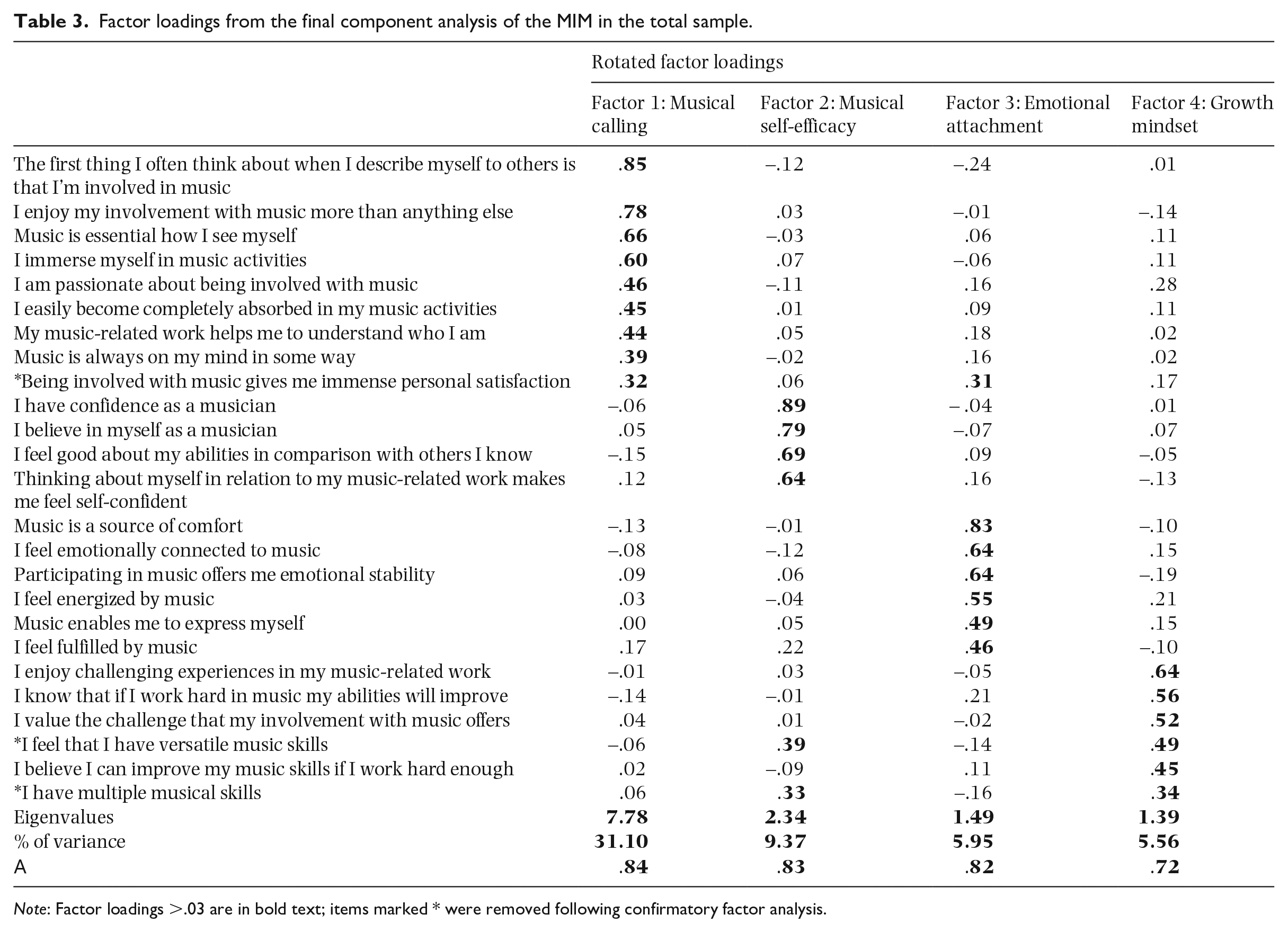
Note: Factor loadings >.03 are in bold text; items marked * were removed following confirmatory factor analysis.
PAF explained 31.1% of the variance for Factor 1 (musical calling), which obtained a Cronbach’s α of .839. PAF explained 9.37% of the variance for Factor 2 (musical self-efficacy), which obtained a Cronbach’s α of .83; 5.95% of the variance was accounted for by Factor 3 (emotional attachment), which obtained a Cronbach’s α of .82. Finally, PAF explained 5.56% of the variance for Factor 4 (growth mindset), which obtained a Cronbach’s α of .72.
To measure convergent and discriminant validity of the factors, we explored correlations between individual items relating to each factor. The analysis confirmed good convergent validity, with all items within each factor significantly correlated (p < .01). However, 22 items were significantly correlated with each other (p < .01), which means that the factors did not have good discriminant validity.
Confirmatory factor analysis of MIM
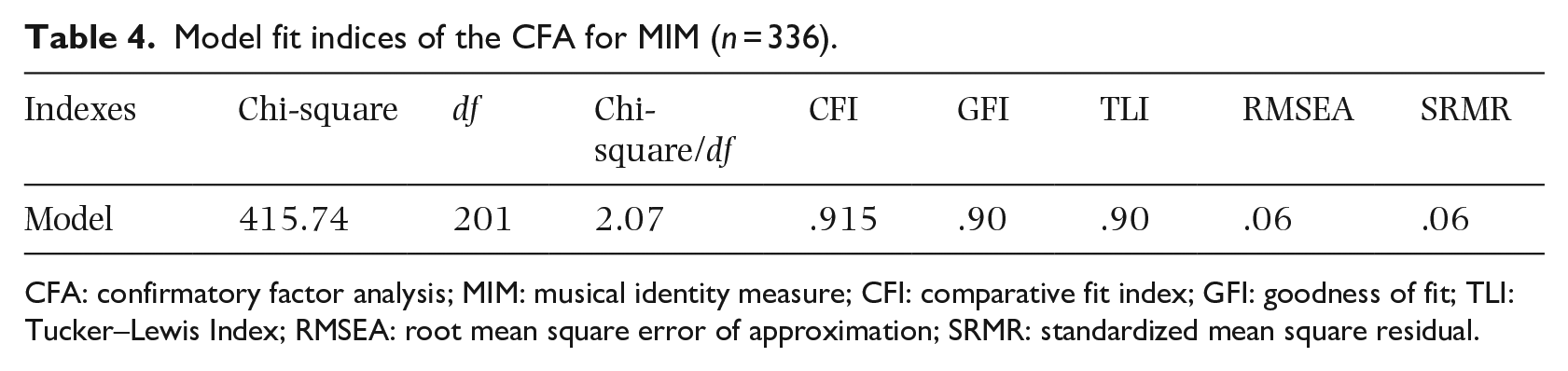
Confirmatory factor analysis (CFA) was conducted to confirm the extent to which the model fits the data. We created a correlated model since we had anticipated that MIM items (Figure 1) and factors would be related, and this was confirmed by the correlations discussed above. Excellent model fit was indicated by a comparative fit index (CFI) of ⩾.95, a root square mean error of approximation (RSMEA) ⩽.06, goodness of fit (GFI) ⩾.95, Tucker–Lewis Index (TLI) ⩾.95, and a standardized mean square residual (SRMR) ⩽.08. Adequate model fit was indicated by CFI ⩾.90, GFI ⩾.90, TLI ⩾.90, RSMEA ⩽.08, and SRMR ⩽.10 (Kline, 2005). CFA suggested that removing three items (see * in Table 3) would increase the model fit. Once these items were removed, CFA confirmed that the four-factor structure was a good fit to the data (see Table 4).
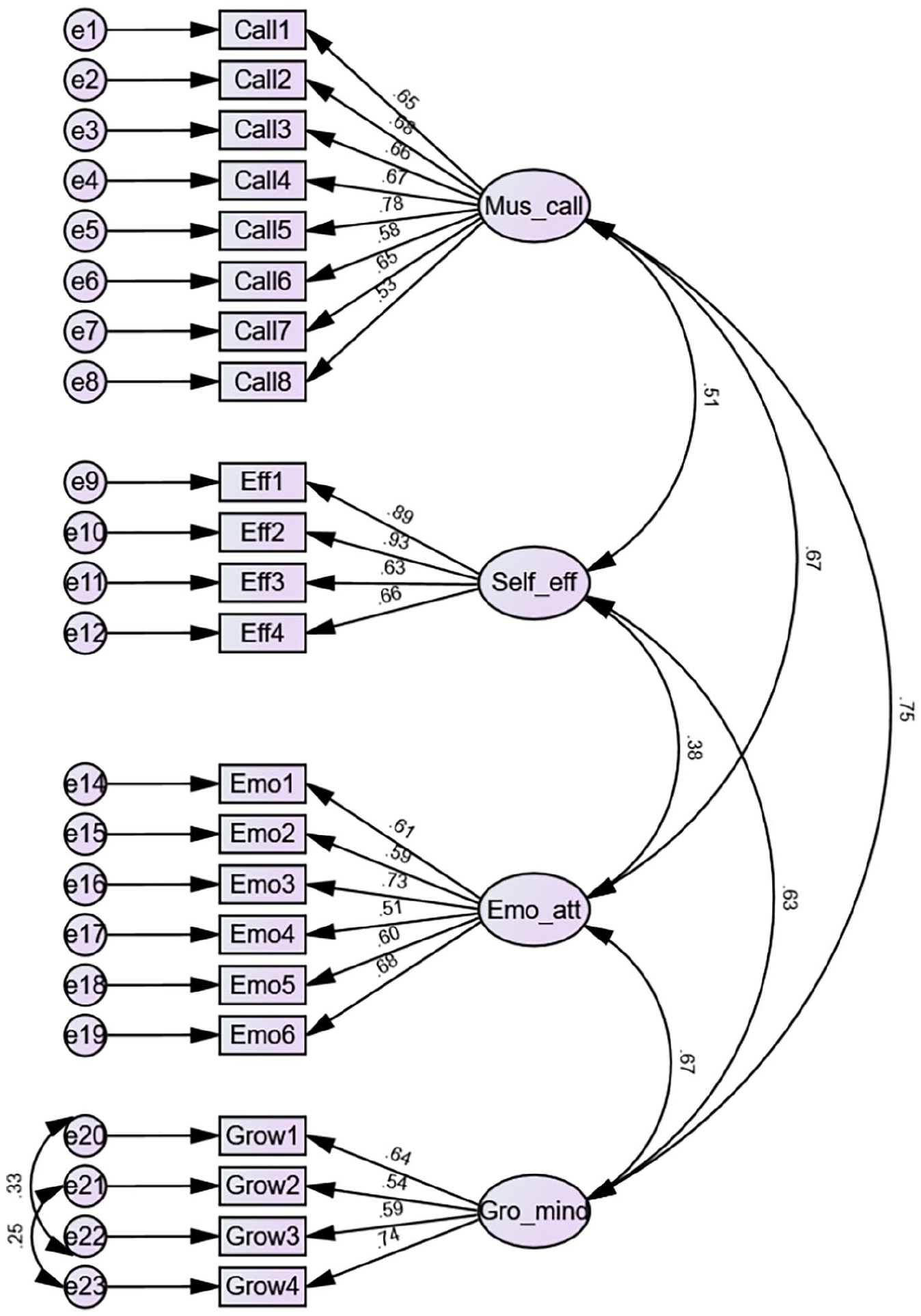
Correlated model of the musical identity measure (MIM).
Model fit indices of the CFA for MIM (n = 336).
CFA: confirmatory factor analysis; MIM: musical identity measure; CFI: comparative fit index; GFI: goodness of fit; TLI: Tucker–Lewis Index; RMSEA: root mean square error of approximation; SRMR: standardized mean square residual.
CFA requires the chi-square value to be nonsignificant; however, with a large sample size (over 200), this is almost impossible (Wheaton et al., 1977). An alternative approach is to divide the chi-square value by its degree of freedom. A value <5 is considered good (Hooper et al., 2008), and the value in our model is 2.07, demonstrating a good fit. The final model obtained through CFA was a good fit model and contained 22 items with acceptable factor loadings.
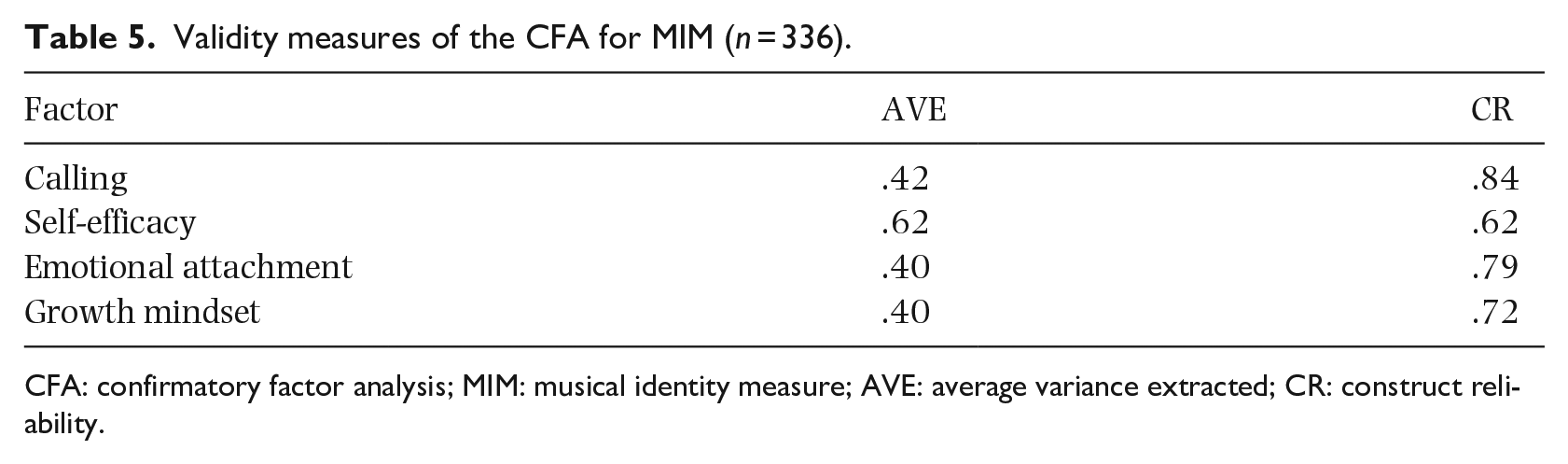
To measure the validity of the scale, average variance extracted (AVE) and construct reliability (CR) were calculated. Fornell and Larcker (1981) assert that AVE should be >.5; however, if CR is >.6, convergent validity may still be adequate if AVE <.5. As Table 5 indicates, there may be some validity in the individual subscale factors within this model, but they are weak in relation to growth mindset (which also had a weak Cronbach’s α score of .72).
Validity measures of the CFA for MIM (n = 336).
CFA: confirmatory factor analysis; MIM: musical identity measure; AVE: average variance extracted; CR: construct reliability.
Stage 2: Exploring musical identity as a latent factor
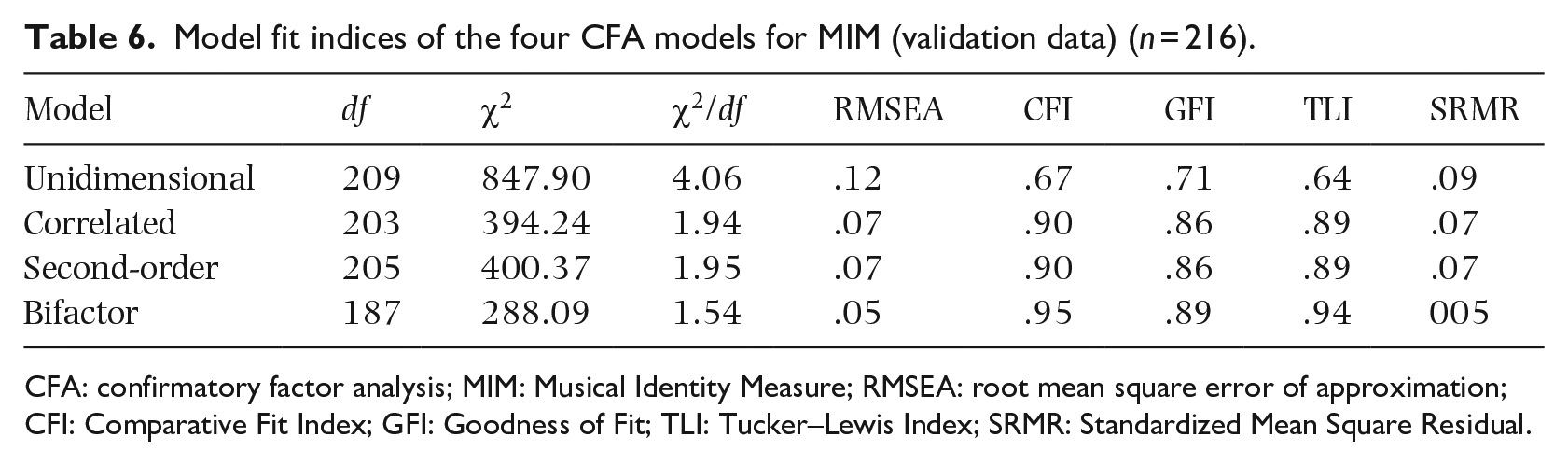
Given the model fit indices suggest a strong model fit despite weaker performance on the individual subscales, we explored whether adding musical identity as a latent factor might yield additional insights. To enable this analysis, we gathered new data (n = 41) and combined this with a random 50% sample from the original data (total n = 216). Four models were tested:
A single, unidimensional Musical Identity factor.
The correlated first-order four-factor model described above.
A hierarchical model consisting of a second-order Musical Identity factor with paths leading to each of the four factors and their corresponding items.
A bifactor model consisting of a common factor (Musical Identity) with direct paths to the 22 items and the four latent factors thought to underlie the structure of MIM.
As seen in Table 6, the correlated factors model provides a slightly better fit than the second-order model and the unidimensional model, but the bifactor model provides the best overall fit according to the measures described above.
Model fit indices of the four CFA models for MIM (validation data) (n = 216).
CFA: confirmatory factor analysis; MIM: Musical Identity Measure; RMSEA: root mean square error of approximation; CFI: Comparative Fit Index; GFI: Goodness of Fit; TLI: Tucker–Lewis Index; SRMR: Standardized Mean Square Residual.
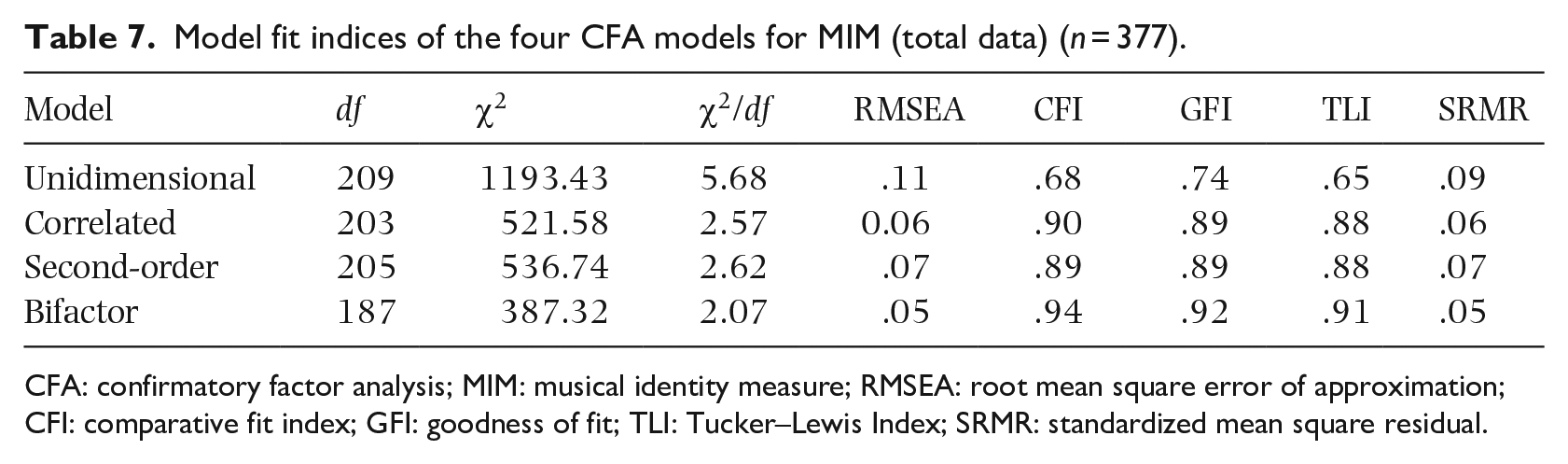
We ran the same comparisons with the full dataset (n = 377), and the overall pattern was the same, with the correlated model performing slightly better than the second-order model but the bifactor model providing the best overall fit (Table 7). The bifactor model is illustrated in Figure 2.
Model fit indices of the four CFA models for MIM (total data) (n = 377).
CFA: confirmatory factor analysis; MIM: musical identity measure; RMSEA: root mean square error of approximation; CFI: comparative fit index; GFI: goodness of fit; TLI: Tucker–Lewis Index; SRMR: standardized mean square residual.
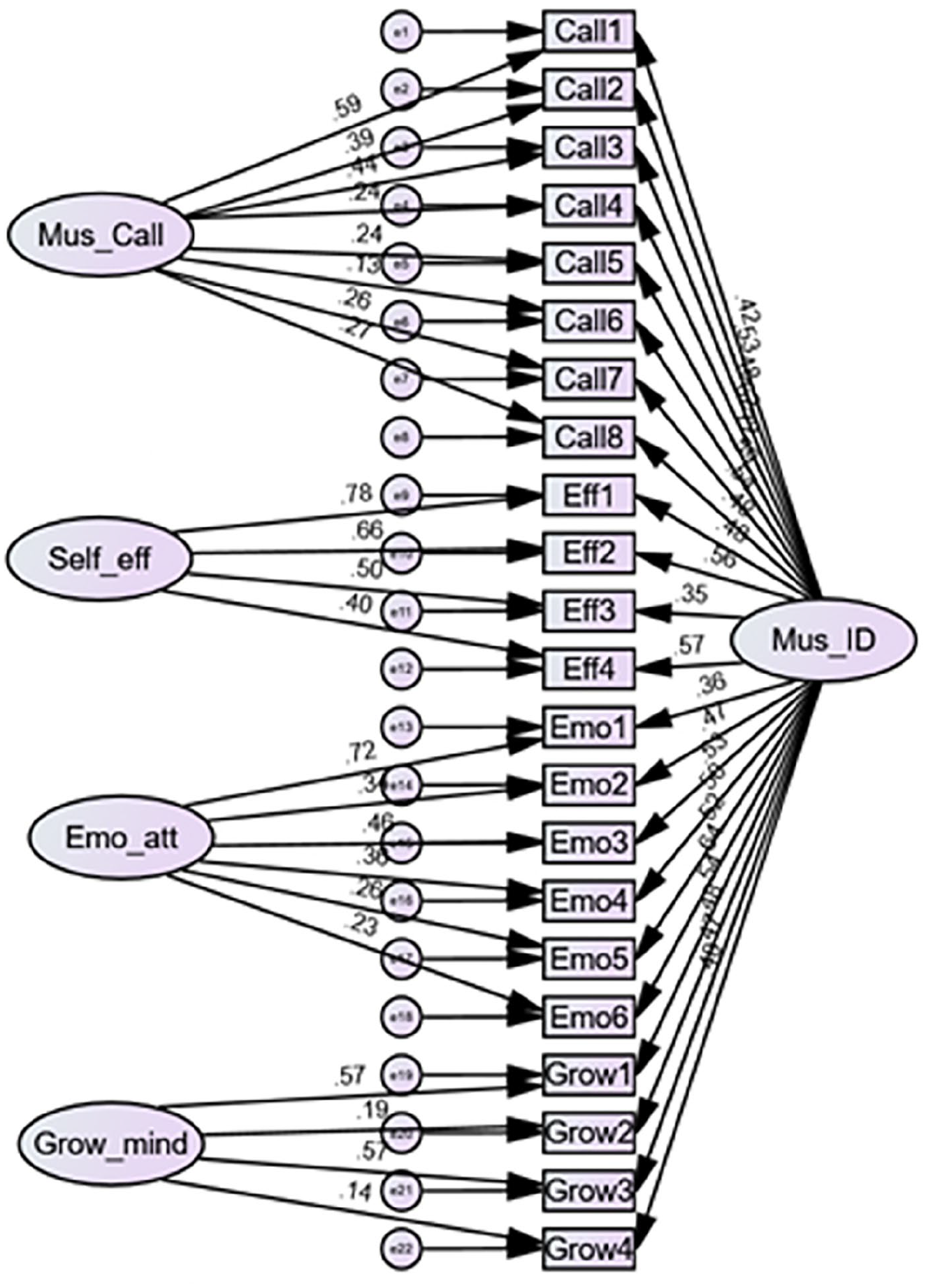
Bifactor model of the musical identity measure (MIM).
Ancillary bifactor measures
Having established that the bifactor model was the best fit for our data, it was appropriate to consider measures of dimensionality and validity by exploring ancillary bifactor measures; these would allow us to ascertain whether the model is best conceptualized as uni- or multidimensional. Dueber’s (2017) bifactor indices calculator was used to explore a range of scale metrics, calculated using the model loadings from the bifactor model and unidimensional models.
Explained common variance (ECV) refers to the proportion of common variance explained by that factor, and it can refer to the common factor, other group factors, or individual items (I-ECV); the closer the score is to 1.0, the stronger the factor (Reise, 2012). The recommended cut-off to indicate unidimensionality is 0.70 (Rodriguez et al., 2016). ECV in relation to the common factor indicates the common variance it explains; the remaining variance is spread across the group factors. For individual items, I-ECV can indicate the percentage of common variance attributed to a common factor, with >0.8 or 0.85 indicating items that can be selected to create a more unidimensional model (Stucky & Edelen, 2015). ECV needs to be considered within the context of the data to ensure that biasing effects (created by forcing a multidimensional model into a unidimensional structure) are minimized.
Percent uncontaminated correlations (PUC) calculates the extent to which item variance within each factor is contaminated because they also correlate with items from other groups, and thus reflect general variance only. As the value of PUC increases, the common factor of the bifactor model becomes more similar to a single trait measured in a unidimensional model, particularly when ECV is also high. It is recommended that PUC is >0.80 (Reise et al., 2013).
Item and factor loadings and bifactor ancillary measures are summarized in Table 8, for both the validation and total datasets. ECV and PUC values for the common factor in both datasets were 58% and 76%, respectively, and below the cut-offs for unidimensional scales, indicating that MIM contains nontrivial multidimensionality. The self-efficacy factor accounted for 15/14% of the common variance (validation/total datasets), with calling accounting for 12/9%, emotional attachment for 11%, and growth mindset for 5/7%.
Bifactor analyses of MIM for validation and total datasets.
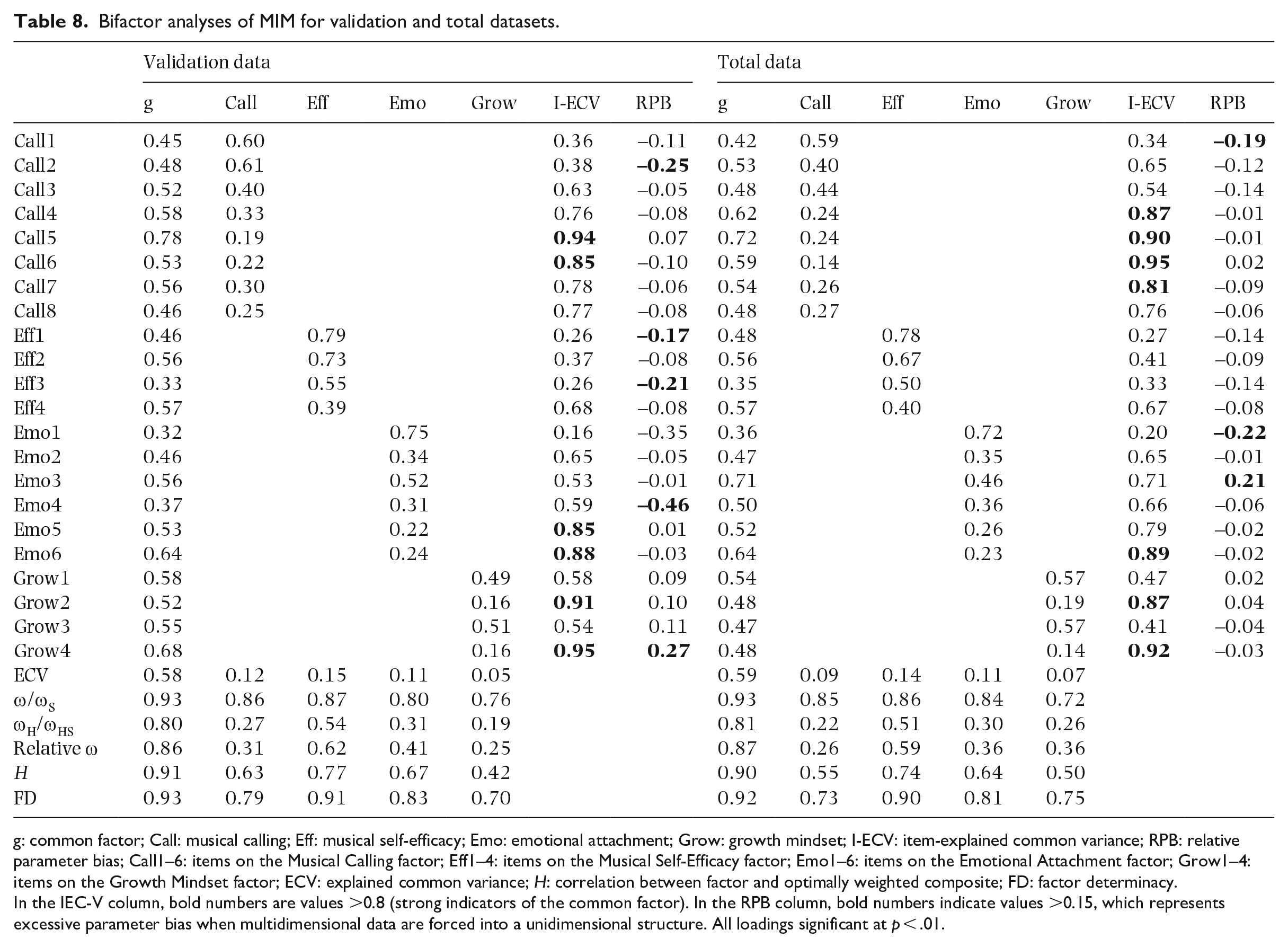
g: common factor; Call: musical calling; Eff: musical self-efficacy; Emo: emotional attachment; Grow: growth mindset; I-ECV: item-explained common variance; RPB: relative parameter bias; Call1–6: items on the Musical Calling factor; Eff1–4: items on the Musical Self-Efficacy factor; Emo1–6: items on the Emotional Attachment factor; Grow1–4: items on the Growth Mindset factor; ECV: explained common variance; H: correlation between factor and optimally weighted composite; FD: factor determinacy.
In the IEC-V column, bold numbers are values >0.8 (strong indicators of the common factor). In the RPB column, bold numbers indicate values >0.15, which represents excessive parameter bias when multidimensional data are forced into a unidimensional structure. All loadings significant at p < .01.
Omega (ω) estimates the internal consistency of a scale, representing the proportion of variance in scores explained by the combination of common and latent factors. The total score has excellent internal consistency (ω = 0.93), accounting for the combination of the common factor and the four group factors. Each individual group factor, as measured by Omega for subscales (ωs), demonstrated good reliability when considered as multidimensional composites of common factor plus group factor variance (ωS = 0.72–0.87). Omega hierarchical (ωH) measures the score variance attributable to each latent factor and in this study accounts for the proportion of the MIM total score attributable to the general factor (ωH = 0.80/0.81). For subscales, ωHS calculates the amount of variance in subscale totals that can be attributed to the specific factor. This metric is useful for assessing the reliability of a subscale if it were administered independently of the full questionnaire.
After accounting for variance due to the common factor, the reliability coefficients of the individual factors were too low for them to be administered independent of the full measure (ωHS = 0.20–0.54). Self-efficacy appeared to be the most valuable source of information independent of the common factor; 59/62% of its variance was independent of the common factor. Finally, the extent to which a latent variable can be considered well-defined was measured by Hancock and Mueller’s H construct reliability index and the factor determinacy (FD). H values >0.80 represent well-defined factors, and FD scores are considered reliable when they are >0.90 (Rodriguez et al., 2016). The H value and factor determinacy indicate that the self-efficacy factor is generally well-defined and sufficiently reliable.
We conclude that the total score for MIM and its contributory subscale scores show good-to-excellent internal consistency and reliability.
Measurement invariance of MIM
The results of the measurement invariance test and fits for the model in relation to gender differences are summarized in Table 9. χ2/df <5, CFI ⩽.90, RMSEA ⩽.08, SRMR ⩽.10, and TLI <.90 were used as acceptable model fit indices (Kline, 2005). The value of △CFI should be smaller than or equal to .01 (Cheung & Rensvold, 2002; Meade et al., 2008). The first stage involved testing the model fit for males and females, and the results demonstrate adequate fit of the bifactor model for males and females. The model test for configural invariance also achieved an acceptable fit, suggesting that both groups possessed the same bifactor structure for MIM.
Measurement invariance of MIM.
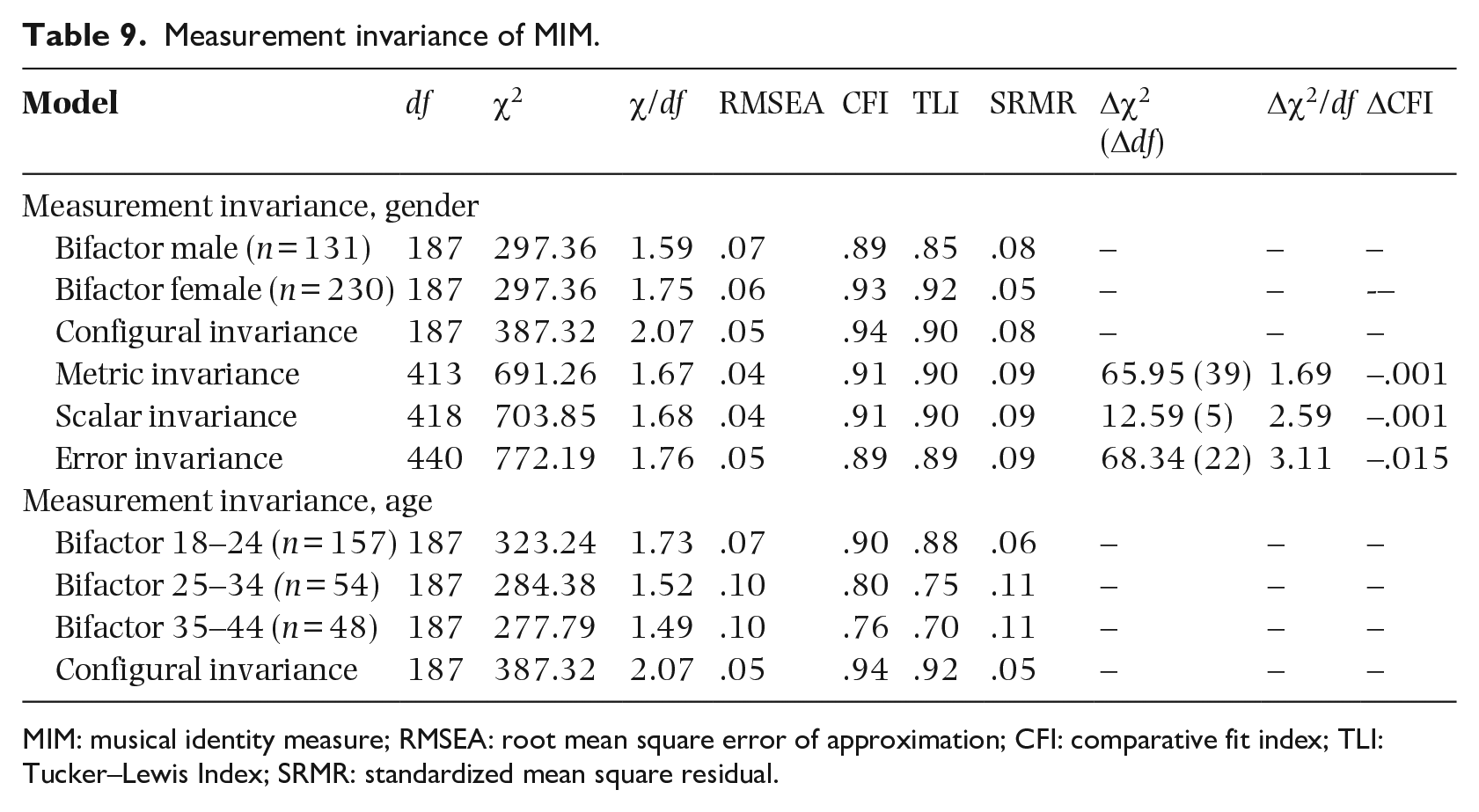
MIM: musical identity measure; RMSEA: root mean square error of approximation; CFI: comparative fit index; TLI: Tucker–Lewis Index; SRMR: standardized mean square residual.
All factor loadings were then constrained to be equal across genders. This led to a significant increase in χ2 (p = .004) but χ2/df was less than 5 and CFI decreased less than .01, suggesting metric invariance across males and females. The next model added further constraints and the χ2 was significant (p = .001) but the CFI was <5 and CFI decreased less than .01, supporting scalar invariance across males and females. One further layer of constraints, to error variances, resulted in significant χ2 (p = .001). The χ2/df was <5 but ΔCFI was .015, which is greater than the recommended .01 (Cheung and Rensvold, 2002; Meade et al., 2008).
While error invariance is required to verify full factorial invariance (Meredith, 1993), this step is often excluded as the item residuals are not part of the latent factor and therefore irrelevant for interpretations of mean differences between groups (Putnick & Bornstein, 2016). Individual measurement invariance in relation to age could not be fully examined due to the variance in group sizes (Kline, 2005); however, the 18–24 year group was the largest and demonstrated acceptable model fit. As sample size decreased, acceptable model fit was not reached. Indicative data for the first three age groups are presented in Table 9, but more data are required to validate this aspect of the model.
Finally, we explored differences in the factor scores according to age group and gender. Data were, perhaps unsurprisingly, skewed positively, particularly in relation to musical calling, though data were otherwise normally distributed. Therefore, we applied a bias-corrected accelerated (BCa) bootstrapping (with 1000 replicates) within a one-way analysis of variance (ANOVA). We had small numbers of responses in the 65–74 and 75+ age categories and so these became a single category of 65+. Significant differences were found in relation to age category and musical self-efficacy, F(5, 329) = 2.24, p = .05,
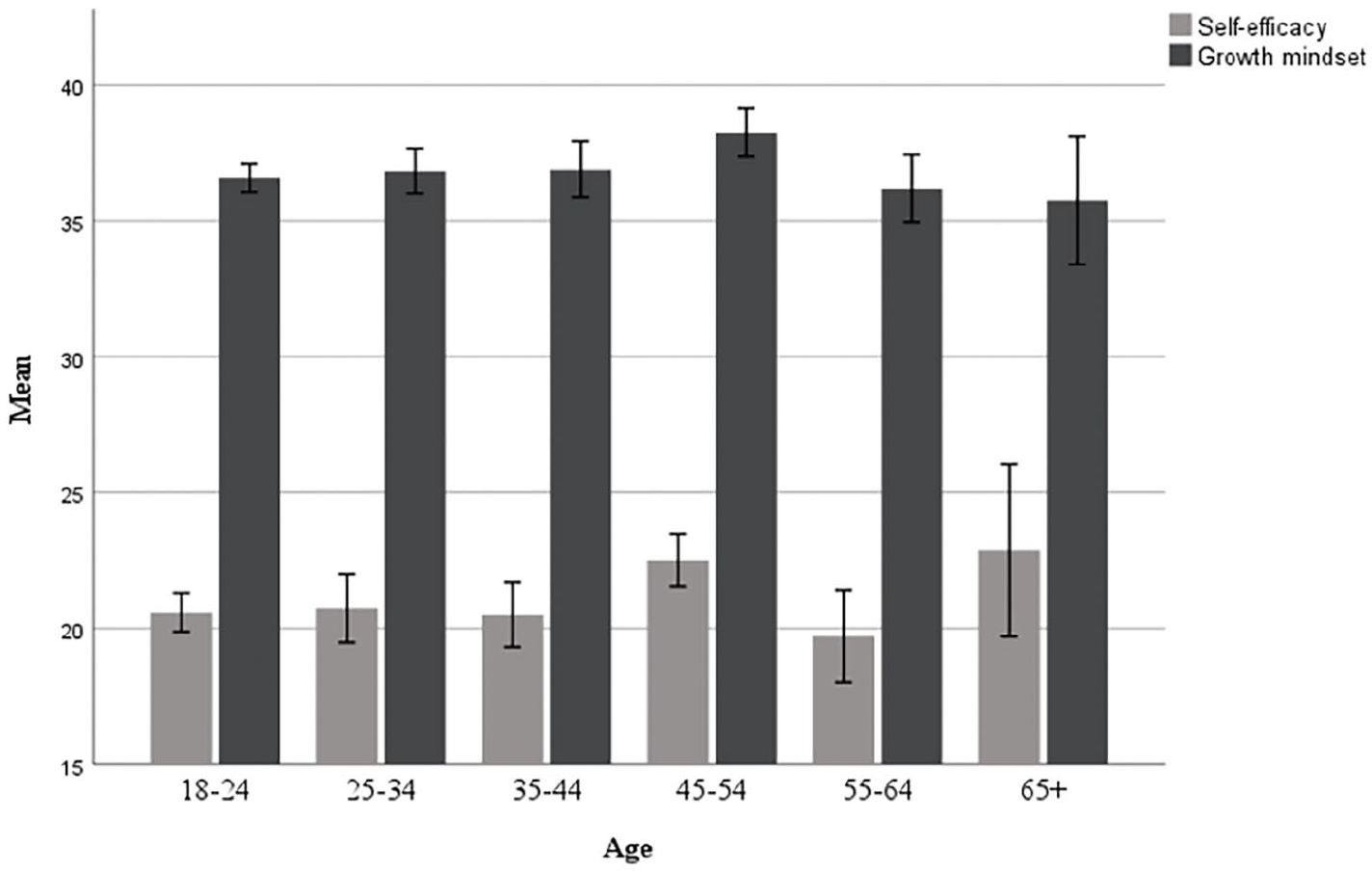
Mean of the self-efficacy and growth mindset scores by age group.
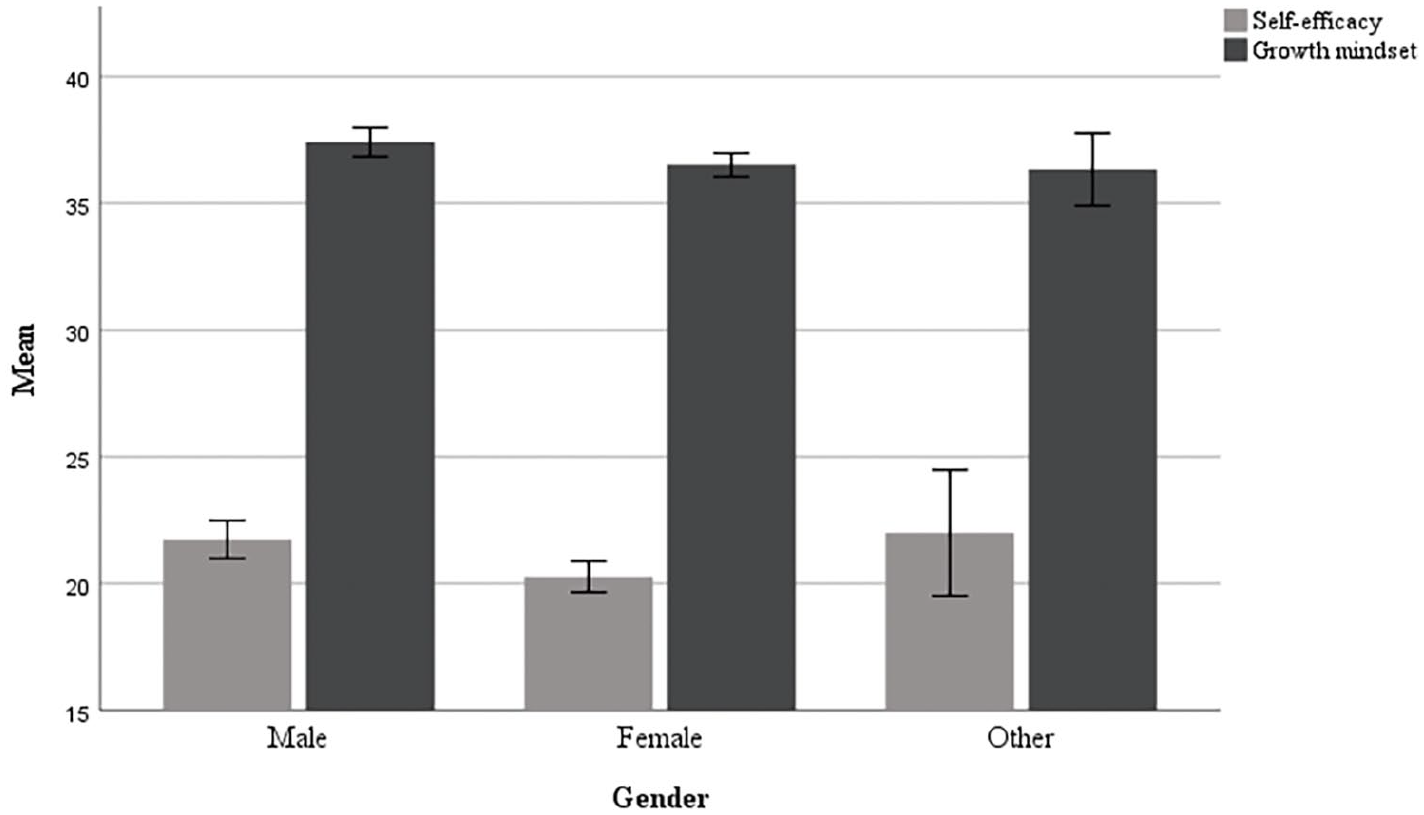
Mean of the self-efficacy and growth mindset scores by gender.
Discussion
The first aim of this research was to explore whether elements of identity are consistent across a variety of musician types. The results suggest that MIM and its four factors (musical calling, emotional attachment, growth mindset, and musical self-efficacy) perform reliably and consistently across the data. We note that this is the first measure in which these four factors have appeared together, and we acknowledge that this may be the result of our intention to develop a musical identity measure that is generalizable across diverse types of musicians such as performers, teachers, composers, and technologists. It may also relate to our focus on supporting individuals to navigate a life with music as a profession and the subsequent inclusion of items that relate to commitment to music.
The final MIM model demonstrates high internal consistency and differs from our original conceptualization (Table 1) in several ways. First, adapted items from Dobrow and Tosti-Kharas’ (2011) career calling measure are now described as musical calling and the factor now also incorporates items that were originally grouped in the music and self, and approach to learning factors. The items included in the final factor for musical calling still reflect the intent of Dobrow and Tosti-Kharas’ (2011) measure that was originally included, insofar as the individual items reflect a passion and commitment to music; differences may relate to our expanded definition of musician as well as the fact that our study represents responses across the lifespan, whereas theirs focused primarily on university students. The inclusion of learning is logical here given the precarity and nonlinearity of music careers and the subsequent need to engage in career-long learning (as evidenced by López-Íñiguez & Bennett, 2020, 2021; López-Íñiguez & Burnard, 2021). The alignment of learning and musical calling points also to the curiosity and creativity that is inherent in creative practice (Taylor & Littleton, 2016). Bennett (2012) observed a similar relationship between musicians’ curiosity and creativity and their self-esteem and self-concept even in the preprofessional phase.
Items relating to social factors were excluded from the model almost completely, highlighting MIM’s focus on individuals’ internally focused self-perceptions of their identities as musicians. This could also be observed in the data reported by López-Íñiguez et al. (this special issue) where scores for the social dimension were lower than for other more internally driven aspects. This might suggest that efficacy beliefs and musical calling are both at the core of musical engagement and intrinsically linked to the motivation to pursue a career in music; it may be, for example, that a strong sense of self-efficacy helps to counteract the potential impact of social comparisons with others (in line with Miksza et al., 2021). We suggest that social aspects might be considered part of an external ecosystem that can support goal achievement—particularly more so when social influencers are a crucial part of the (both negative and positive) learning and career pathways of musicians (López-Íñiguez & Burnard, 2021). This insight also aligns with the research of Spychiger (2017), who found that the social factors in her MUSCI measure were only relevant to the community aspects of musical participation.
A further consideration regarding social factors is that of skill acquisition. Social dimensions are prevalent in other measures (cf. Chin & Rickard, 2012; Gruhn et al., 2017) and previous research (see Moore et al., 2003; Sichivitsa, 2007) suggests that social factors are vital for the development of musical skill. A possible explanation is that musical identities are developed through the process of acquiring skills, developing confidence, and interacting with others. This is in line with social cognitive theories such as that posited by Lent et al. (1994), who emphasize the relationship between cognitive mediation and efficacy appraisals in relation to career learning. Musical identity plays a cognitive role in that it influences the ways in which musicians interact with other people and their environments, display musical behaviors, approach their learning, and cope with challenges. These aspects are perhaps more complex and difficult to capture within a single measure, although there is scope for research that focuses on a narrowly defined sample such as people interested in a specific type of musical engagement, as has typically characterized previous measures.
The emergence of factors relating to self-efficacy and growth mindset is unsurprising given the role of both self-efficacy and growth mindset in relation to motivation (Evans & Bonneville-Roussy, 2016; Hargreaves & Marshall, 2003; Miksza & McPherson, 2019; Spychiger, 2017) and identity formation during higher education (Berntson et al., 2006). Our data suggest that growth mindset and self-efficacy in particular are prone to fluctuation according to life stage and it would be interesting to explore this with further research. Growth mindset and self-efficacy are intricately linked to perceptions of wellbeing (Rose et al., 2021) as well as to resilience and perseverance (cf. Burland, 2005; Jaap & Patrick, 2011), and learning (López-Íñiguez & Bennett, 2021), which are particularly important for musicians preparing for, or working in, roles which demand increasing flexibility and adaptability in uncertain and unpredictable contexts.
The musical calling items resemble an aspect of Spychiger’s MUSCI model that explores nearness to self and perhaps echoes the factor of commitment that appear in Gruhn et al.’s (2017) variant of her model as well as in Wagoner’s Music Teacher Identity Scale (2015). Musical calling is the most important of our factors and is perhaps a key distinguishing feature of our measure compared with those published previously. The items that load onto the musical calling factor reflect a sense of personal passion, connection, and immersion in musical activities. Musical calling may drive us to work hard and to persist in the face of challenges (Bonneville-Roussy & Vallerand, 2020); it may also explain some of the benefits to wellbeing of musical participation generally (MacDonald et al., 2012).
Our second and third aims were to understand whether exploring musical identity from a lifespan perspective may provide new or additional insights, and how considerations of musical identity might inform educational practice. Insights into the strength and role of a musical identity may enable educators and other influencers to provide tailored learning activities that increase self-awareness and support career decision-making (see López-Íñiguez et al., this issue). This approach to career-related learning could provide students with greater self-knowledge, help them to learn how to learn, and encourage independence and initiative (Bennett, 2019; Zarza Alzugaray et al., 2020). High or low factor scores are an indication of an individual’s self-perceptions at that moment in time and are designed to prompt self-reflection. If, for example, emotional attachment is high, what are the associated risks of that in terms of potential future disappointments, ill-health or injury, and what tools might be developed to protect the self? If self-efficacy is low, what supports might the individual seek out to build greater confidence and resilience? Such insights may offer additional benefits such as a more informed view of self—as musician, learner, and individual.
The risks of identity achievement as a musician include emotional turmoil when that identity is challenged, for example by lack of work, injury, retirement, or enforced transition (cf. Oakland et al., 2012), or by stereotypes including gendered behavior (Hennekam & Bennett, 2017). Indeed, our research indicates that males displayed more confidence than females, which has been found in literature within the learning sciences in relation to the overall self-esteem gender gap of large samples of individuals across various cultures (e.g. Bleidorn et al., 2016). There is also the risk that individuals may have adopted a foreclosed identity and therefore may not consider other options. We note, therefore, the importance of encouraging identity commitment that is multifaceted and open to changing internal and external drivers; this is especially important as we emerge from a pandemic that has had a negative impact on all aspects of the industry and is likely to have as yet unknown, long-term consequences for people working, or intending to work, as musicians (Jaspal & Breakwell, this volume).
Future research might explore aspects of identity in connection to musicians’ adaptive strategies for career transition from a lifespan perspective, adding to the insights gained in the current study. More research examining the ways in which MIM can be used in practice to support musicians is now needed to further develop our work, and longitudinal insight into the impact of such interventions would also be valuable. It is unfortunate that the sample size was not sufficient for us to confirm MIM across the lifespan or in relation to different geographic regions or types of musical work; this will form an essential next step in our research. The IEC-V values suggest that a shorter version of MIM could be developed particularly for the purposes of exploring the relationship between musical identity, personality, and coping strategies. This may further extend the ways in which teachers and mentors can support musicians who seek to develop their skills, and perhaps be useful for a better understanding of the relationship between musical identity and the value of music for health and wellbeing.
Conclusion
The MIM model adds to a growing body of musical identity research ranging from different modes of musical participation through to engagement across the lifespan and the use of music for wellbeing and mood regulation. Our musical identities do not exist in a vacuum; neither are they divisible into the worlds of work and leisure. Influenced by social ecosystems that support, shape, disrupt, and enable our experiences and development, the four common elements of musical calling, emotional attachment, growth mindset, and musical self-efficacy hold promise for understanding, supporting, and developing musicians into the future.
