




Abstract
Internationalisation has gained prominence in debates on higher education and can be analysed from different perspectives, including cross-border higher education. Cross-border higher education entails relevant challenges, namely regarding its quality. This paper intends to discuss, based on a literature review, the link between cross-border higher education and quality assurance, namely the role quality assurance may have in contributing to a quality cross-border educational offer. 79 documents (indexed in Scopus or Web of Science) published between 1998 and 2019 were content analysed. The results show that both internal and external quality assurance are relevant topics when discussing cross-border higher education and a means to stimulate the overall quality of this educational offer. Moreover, to be effective, quality assurance must rely on cooperation and mutual trust between importing and exporting countries, including their quality assurance agencies.
Keywords
Introduction
Internationalisation gained prominence in debates on higher education (HE) and can be analysed from different perspectives. Institutions have been looking for ways of becoming international through the offer of educational provision outside their borders, which has been reflected in the progressive emergence of cross-border practises, such as the establishment of international campuses since the late 20th century (Farrugia & Lane, 2013). Some developing countries opted for the promotion of national attractive environments (higher education ‘hubs’) where international institutions could offer HE (e.g. Dubai, Malaysia). This practise can be beneficial as it allows expanding and massifying these countries’ HE systems, driving economic and social change.
Conceptually, cross-border higher education (CBHE) can be understood as a process in which a Higher Education Institution (HEI) offers and guarantees a study programme in other countries. According to the UNESCO/OCDE (2005), this can be promoted through activities in which the teacher, student, programme, institution (provider) or course materials cross national jurisdictional borders. Tilak (2011) highlight the existence of four models of international HE delivery: model 1, Cross-border supply, that is related with mobility of programme through distance or online learning and franchising; model 2, Consumption abroad, may be characterised by student mobility; model 3, Commercial presence, is related with the institutional mobility, through branch campus, joint ventures, and financial foreign investment; and model 4, Delivery abroad, is the temporary mobility of faculty and researchers to provide educational services.
Contemporary definitions of CBHE do not generally include international students and rather tend to emphasise programme and provider's mobility across national borders, including teachers and course materials. This can be explained by the significant increase in the last years of the number of universities offering education outside their borders. In fact, the presence of institutions in foreign countries through branch campus, franchising and distance learning are understood nowadays as the major types of CBHE delivery (Salmi & Tavares, 2016).
For Yelland (2010), CBHE brings opportunities and challenges related to issues of implementation, access, and quality assurance (QA). Amaral (2016) suggests that it is necessary to have precautions with ‘Rogue’ providers which appear to emerge whenever there is lack of regulation. Rogue providers use the foreign brand to provide poor educational services, which typically include problems in the standards used and in the administrative and academic processes (Amaral, 2016).
QA processes may be understood as responsibility mechanisms used both by the institutions and QA agencies to guarantee that the provision of CBHE education meets at least some quality standards, not defrauding the students who enrol in it. In the institutional sphere, QA processes make institutions more accountable for the service offered to society. In the sphere of public policies, changes in the internationalisation and commodification scenario require QA measures that promote more responsible HE systems.
This paper intends to identify, based on a systematic literature review, how literature addresses QA in the context of CBHE. Particularly, the paper intends to answer the following research questions:
What are the key topics addressed in the literature about CBHE and QA and how do they relate to each other? What is the role of QA in the context of CBHE?
The paper proceeds as follows. In the next section, an explanation is provided of the research design, followed by a brief bibliographic analysis of the 79 documents included in the literature review. Then the main findings are presented. The paper ends with a set of final remarks.
Research Design
According to Page (2008), a systematic review of literature is an important tool to promote the debate and academic discussion over a given topic. The corpus for the present analysis was obtained on Scopus and Web of Science (WoS) databases using the following research equation: (“Cross-border” OR “Transnational” OR “Overseas”) AND (“Higher Education” OR “University”) AND (“Quality Assurance” OR “Quality” OR “Quality Management”). Only the documents published in English were chosen and no filter was added on dates of publication or type of document. Based on the search method, 143 documents were selected from the Scopus and 85 from the WoS databases. After discarding duplicated documents, 93 and 60 documents, from each database, respectively, were selected. Reading the abstracts, 79 documents, from both databases, were identified for full reading and content analysis. The remaining ones referred to themes not in line with the main purpose of exploring how the literature links QA and CBHE and the role QA plays in assuring an adequate CBHE offer.
Bibliographic Analysis
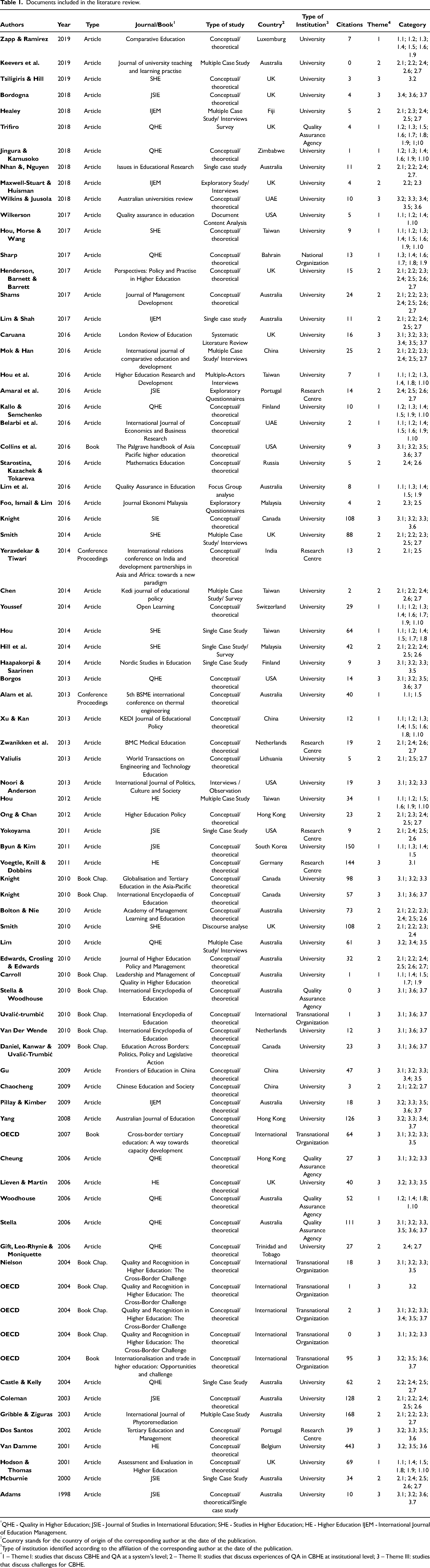
Table 1, in the annexe, synthetises relevant data for each of the 79 documents included in this review, namely its year of publication, authors, type of publication, country, type of institution or number of citations. As depicted in Figure 1, the first published document on the topic of QA and CBHE dates from 1998. The number of papers has increased since then, although not in a steady way; peaks of publication occurred in 2004, 2010 and 2016. This seems then to be an area where research is still limited and where there is room for more studies.
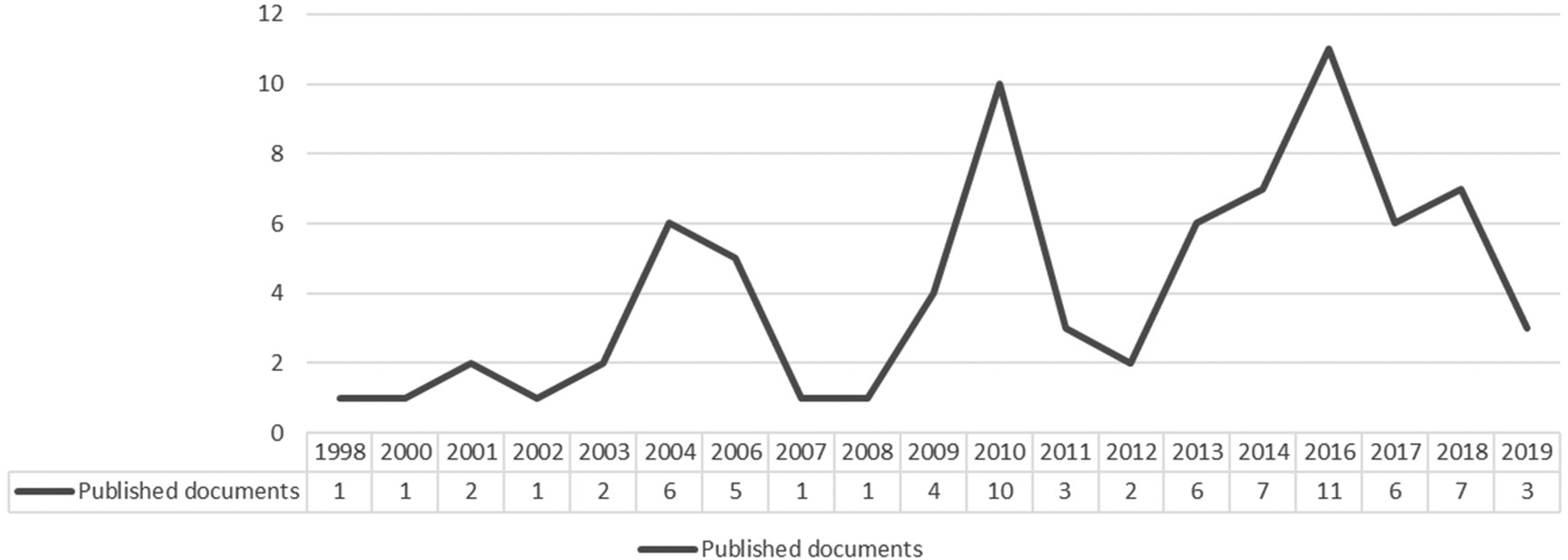
Evolution of the number of published documents on CBHE and QA.
Articles are the most published documents, accounting for 80% of the total number, followed by book chapters (14%), books (4%) and conference proceedings (2%). Further analysis shows that most articles were published in the last 10 years (72% of them), while a large number of books and book chapters were published in the first half of the reporting period (Figure 2). As most relevant journals, Quality in Higher Education (19%), the Journal of Studies in International Education (13%), Studies in Higher Education (9%), Higher Education (6%) and International Journal of Education Management (6%) stand out.
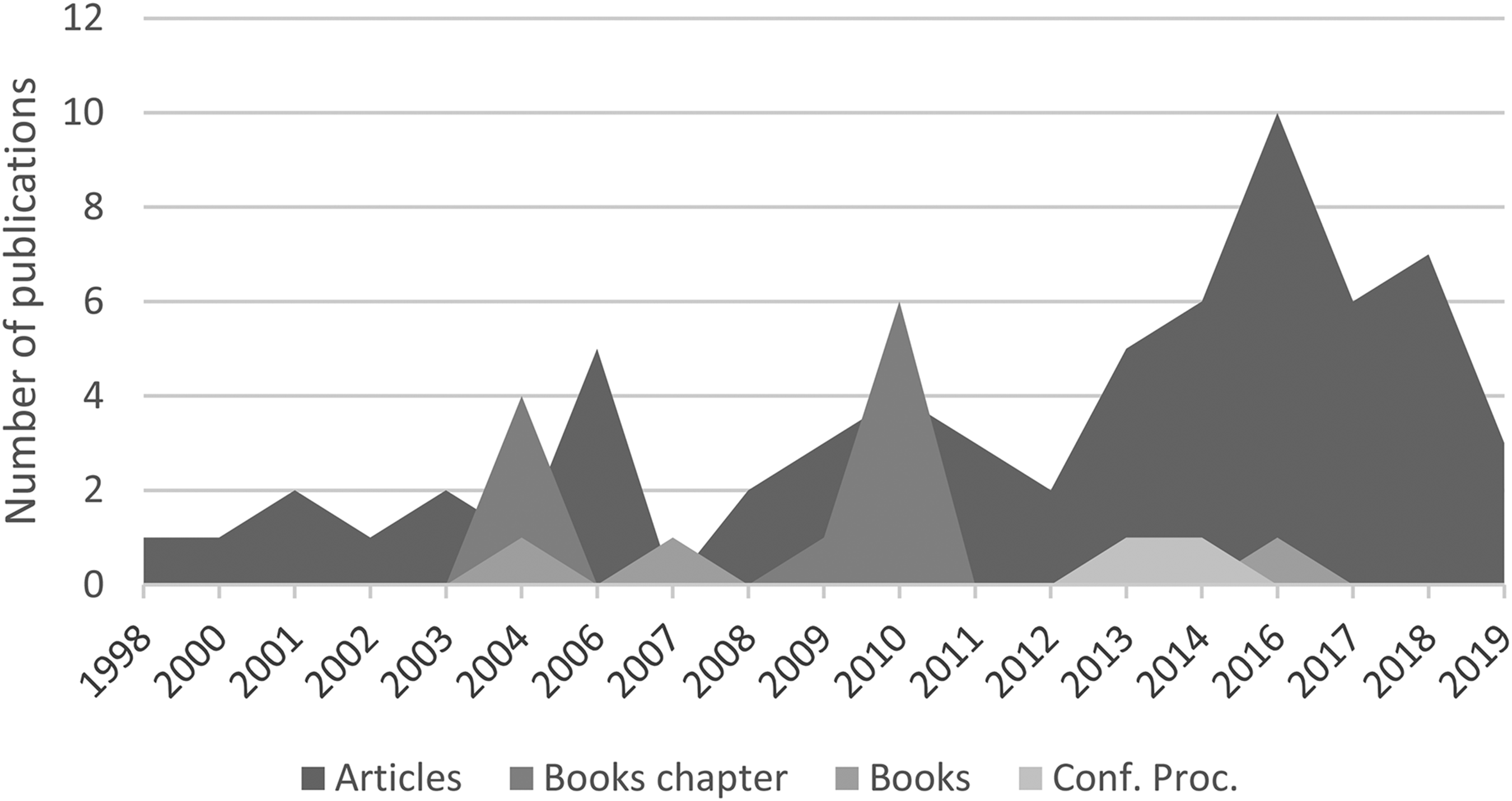
Evolution of the number of published documents on CBHE and QA, by type of publication.
The data permits to analyse the geographic dispersion of publications along the years. For this, the country of origin of the corresponding author at the date of publication were used. Australia was the country with more documents (19), followed by the United Kingdom (10) and Taiwan (5) (Figure 3). Taking the affiliation of the corresponding author as the source of data, it was found that the highest percentage of documents came from universities (76%), followed by transnational organisations, like UNESCO (United Nations Educational, Scientific and Cultural Organisation) and OECD (Organisation for Economic Co-operation and Development) (9%), and QA agencies (8%).
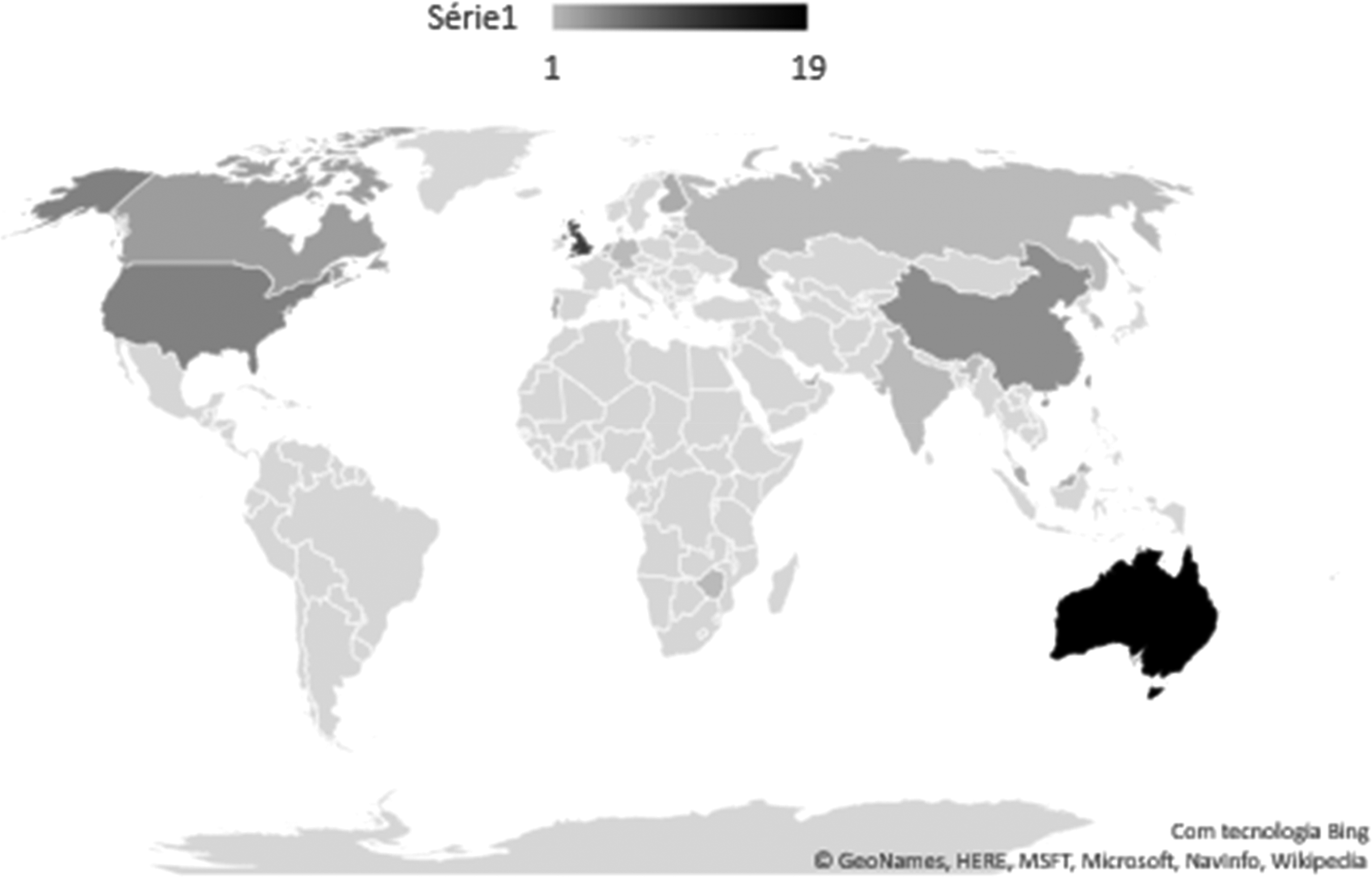
Geographic dispersion of publications on CBHE and QA.
Finally, the bibliographic analysis undertaken allowed to identify an evolution on the studies conducted over the years, from more theoretical and conceptual discussions related to the challenges and peculiarities of CBHE, to more technical issues and practises related to processes and results of QA experiences. The three types of studies most often identified were: conceptual/ theoretical analysis (52 documents), single case studies (9 documents), and multiple case studies (8 documents) (Annexe Table 1).
CBHE and QA – Main Findings
This section presents the main findings of the exploratory content analysis. Firstly, a cloud map was designed to uncover the most frequent words contained in the abstracts. For this, all abstracts were organised in sequence and all words with more than 3 characters were selected to compose the map (Figure 4). In the cloud map, and besides the obvious words of quality, education, higher or assurance, it is possible to observe terms such as national, institutions, agencies, students, challenges, recognition, or policies.

Cloud map of the most frequent words in the abstracts of the 79 documents.
Secondly, the documents were content analysed which allowed their grouping according to three major themes, based on the identification of common issues (Annexe Table 1): (i) studies that discuss CBHE and QA at system level (Theme I), including the cooperation between different actors; (ii) studies that discuss experiences of CBHE at institutional level, including QA approaches (Theme II); (iii) studies that discuss challenges for CBHE, with a focus on conceptual issues and on the social impact of this particular type of HE offer (Theme III). Within each main theme, different categories emerged from the content analysis, which are represented in Figure 5.
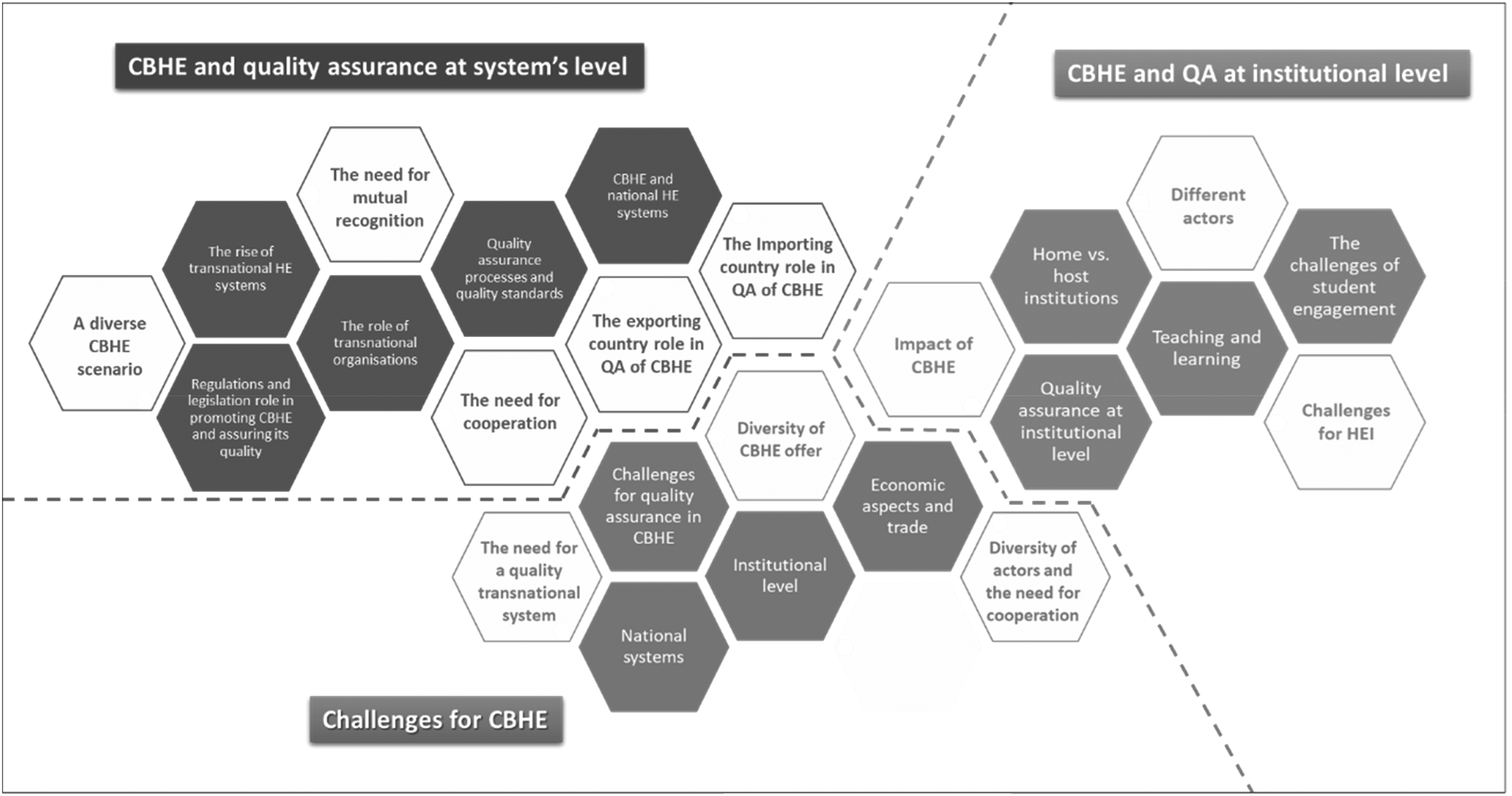
Map of the main themes and categories identified through the 79 documents’ content analysis.
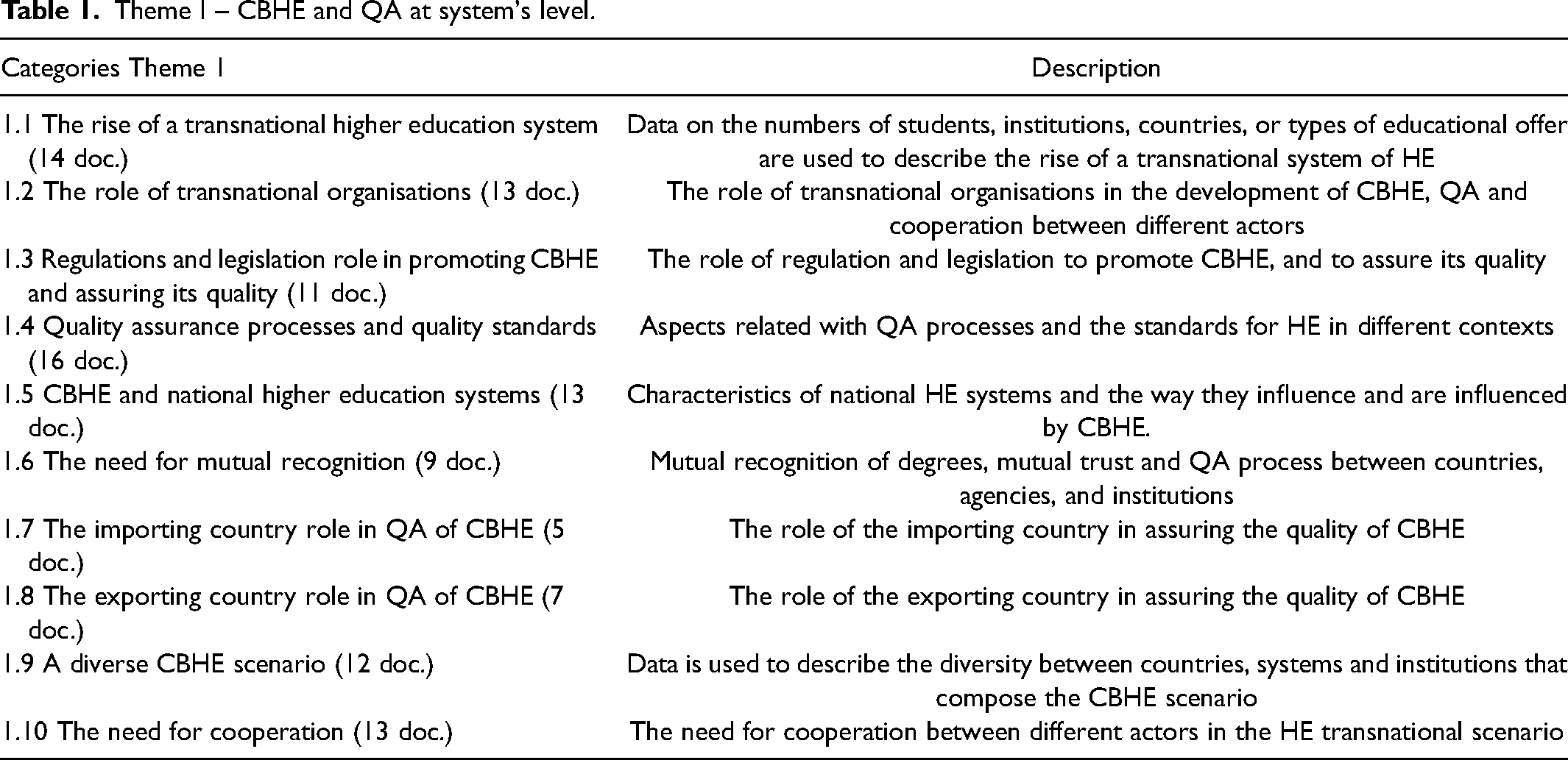
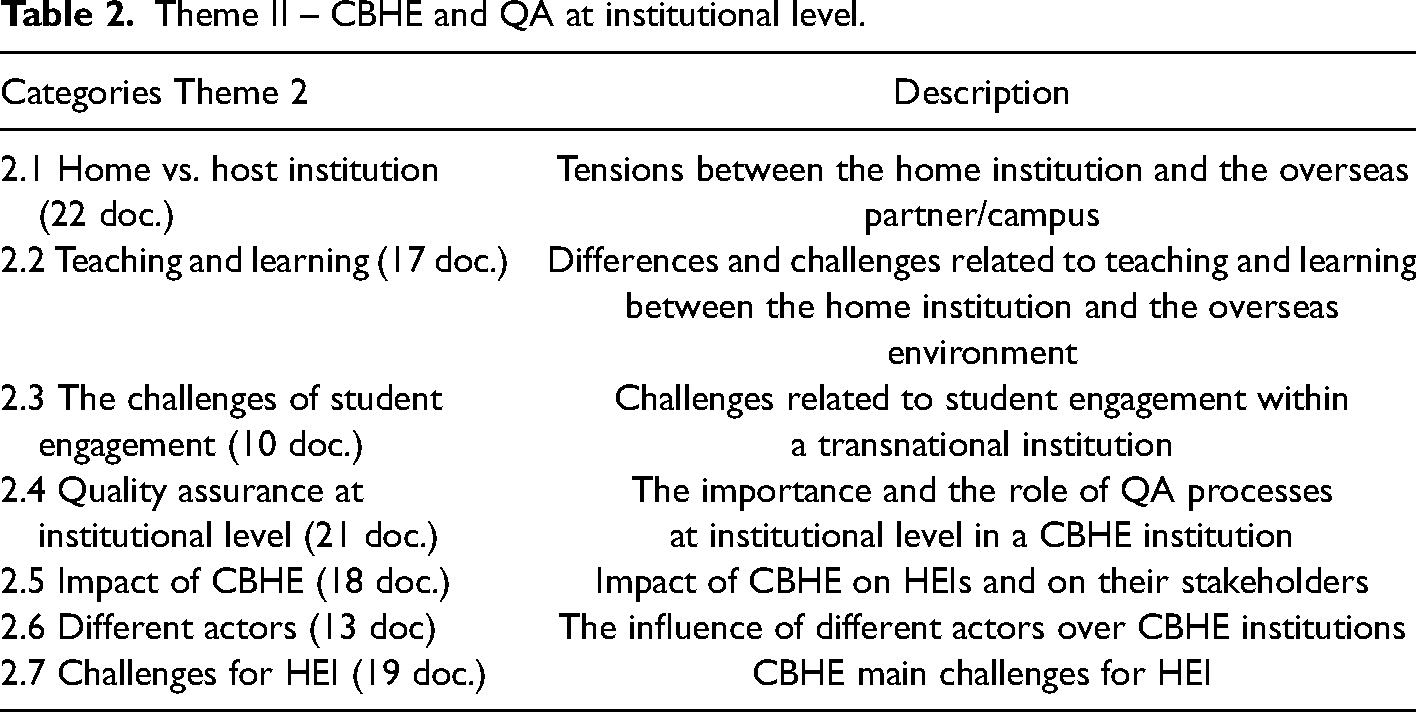
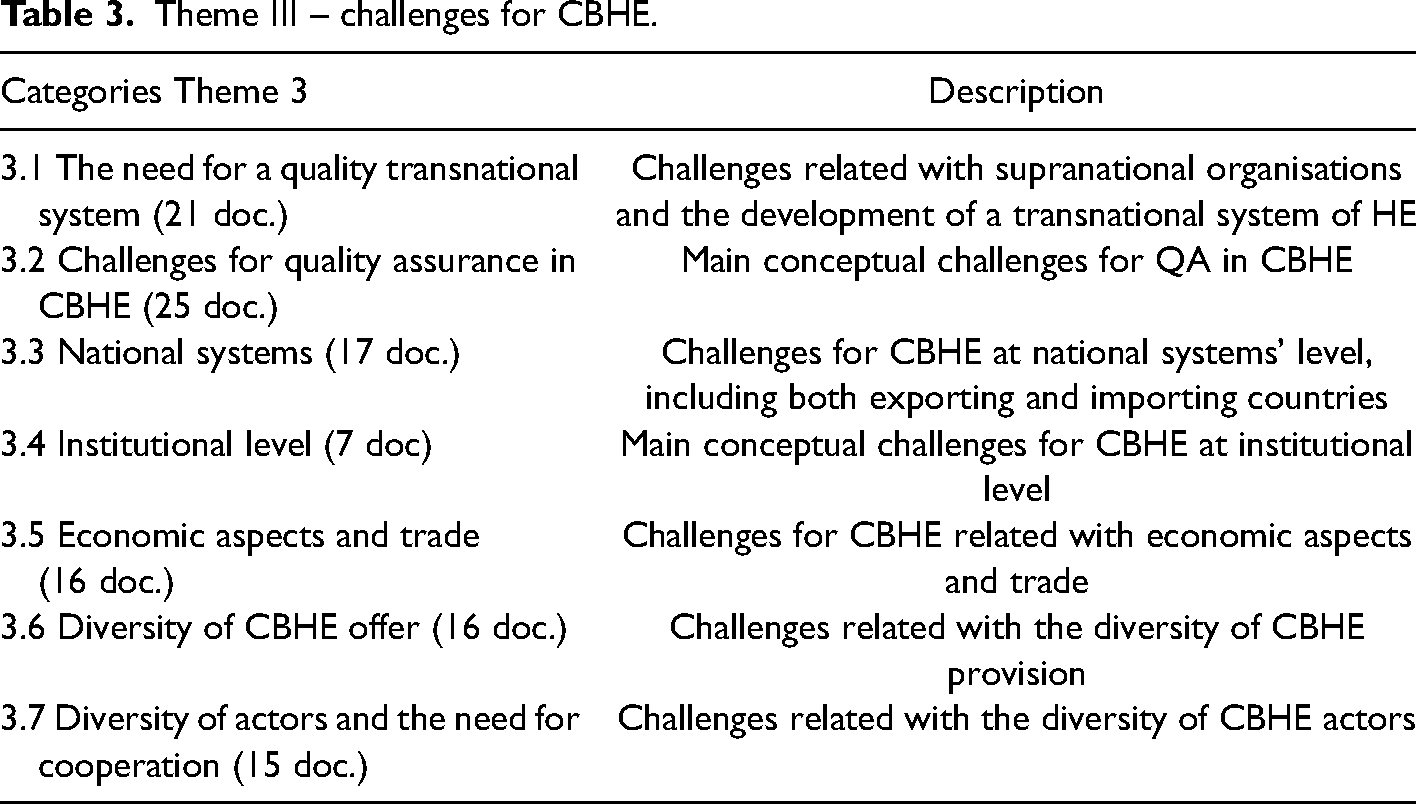
19 of the 79 documents analysed addressed issues related to Theme 1, which could be classified in 10 different categories, as described in Table 1. Theme II was approached in 28 out of the 79 documents, being possible to identify 7 categories within it, as described in Table 2. 32 out of the 79 documents address challenges for CBHE; their content analysis allowed the identification of 7 categories (Table 3).
Theme I – CBHE and QA at system's level.
Theme II – CBHE and QA at institutional level.
Theme III – challenges for CBHE.
QA in the Context of CBHE
In what follows different perspectives on QA in the context of CBHE are explored based on the content analysis of the nine categories explicitly addressing the link between QA and CBHE: regulations and legislation role in promoting CBHE and assuring its quality; QA processes and quality standards; the need for mutual recognition; the importing country role in the QA of CBHE; the exporting country role in the QA of CBHE; the need for cooperation; QA at institutional level; the need for a quality transnational system; challenges for QA in CBHE. It is interesting to note that the majority of these categories are included in Theme 1, maybe because this is a topic essentially discussed at national level.
The regulations and legislation role in promoting CBHE and assuring its quality are focussed on 11 documents and mainly refer to changes in the national legislation to attract foreign HEI. This growth in CBHE provision has increased the need to build systems capable of not only regulating this activity, including its quality, but also of stimulating and facilitating the development of joint programmes adapted to national requirements, allowing for mutual trust and recognition (Hou et al., 2017; Trifiro, 2018). However, the rise of regulations and legal frameworks to promote CBHE QA, quality standards, mutual trust, and mutual recognition also brought to the fore a ‘struggle’ between importing countries legal frameworks and exporting countries quality standards (Kallo & Semchenko, 2016; Sharp, 2017).
16 documents focus on QA processes and quality standards, highlighting the influence of the national requirements in their establishment. Different countries require different standards to achieve national goals and specificities (Belarbi et al., 2016; Woodhouse, 2006). Countries that want to attract CBHE have more flexible requirements for QA, as it is the case of Dubai that promoted free zones (regions with economic and regulatory incentives to target foreign investment) to attract foreign universities (Carroll, 2010).
One important aspect that emerged is the prominence of international accreditation, based on transnational guidelines and international QA agencies. This process brings some challenges related with the national context where CBHE operates, because international and regional accreditation sometimes use rather wide standards in order to attend high numbers of different institutions, not taking into account national specificities (Hou, 2014; Lim et al., 2016). National QA agencies are focussed and constrained by local requirements and needs and become less effective regarding international procedures. The papers analysed stress the importance of QA in CBHE (Hou et al., 2016; Kallo & Semchenko, 2016; Sharp, 2017).
9 documents approach the need for mutual recognition of degrees, including mutual trust and cooperation in QA processes between countries, agencies, and institutions. From their analysis it seems evident that one of the main objectives for CBHE QA processes is the mutual recognition of study programmes and institutions. But mutual recognition requires cooperation and results from the efforts of different QA agencies and governments. As such, the biggest challenges for it to be effective are the differences of QA systems, standards, policies, and processes between countries, as well as distinct legal frameworks and jurisdictions for HE (Belarbi et al., 2016; Hou, 2012; Hou et al., 2017; Zapp & Ramirez, 2019). Once mutual recognition of CBHE is achieved, the benefits are significant, including the growth of CBHE credibility as a quality educational offer, securing students and countries and eliminating rogue providers (Sharp, 2017; Trifiro, 2018; Xu & Kan, 2013)
The importing country role in the QA of CBHE is dealt with in 5 documents, namely in relation to the country's QA system and quality standards efficiency in protecting local students from low quality providers. The papers reveal that in some countries CBHE institutions must comply with the national QA system's requirements and standards, namely through the accreditation of programmes by local agencies. This leads to programmes that may be considerably changed, becoming significantly different versions of the ones offered in the exporting institutions.
In some countries, however, there is absence of national procedures to assure the quality of HE, which makes difficult avoiding rogue providers, and balancing differences in cultural aspects between importing and exporting countries (Sharp, 2017). To deal with these issues, importing countries must improve their national QA mechanisms (Youssef, 2014). One hypothesis lies in the collaboration with exporting countries, to set up QA mechanisms for CBHE that use data from the home country as part of the review process (Trifiro, 2018).
Seven documents deal with the role of the exporting country in assuring the quality of CBHE. UK and Australia have a very important role in CBHE QA processes as exporting countries, probably due to the concern these countries have with the reputation of their HE provision abroad (Hodson & Thomas, 2001). Another aspect concerns the challenges and problems that can occur when the exporting country leads the QA process. In particular, it can happen that the process ends up not being recognised by the local authorities or it runs the risk of not being aligned with the local context (Hou, 2014). This reflects the differences that frequently exist between exporting and importing countries QA requirements and standards. To deal with them it is of utmost importance that exporting and importing countries collaborate to set up suitable mechanisms to assure the quality of CBHE (Trifiro, 2018).
The need for cooperation between different actors in the transnational scenario of HE was identified in 13 documents. Cooperation at CBHE level usually works through the establishment of bilateral and multilateral agreements between importing and exporting countries. These agreements contribute to reduce the lack of information between countries, to overcome differences in regulatory processes, and to close the trust gap usually existent in the QA processes of CBHE (Trifiro, 2018).
The most highlighted form of cooperation relates to the assurance of the quality of CBHE. Several transnational and regional organisations, such as INQAAHE, EQAR, ENQA, ECA, RIACES, APQN and others have worked to promote close cooperation between QA agencies (Hou, 2012). Also relevant is the need for cooperation at state level, meaning that governmental support should underly the cooperation between QA agencies from the different countries involved in CBHE activities (Hou et al., 2016). This process may contribute to remove the barriers deriving from the differences between national regulatory systems (Youssef, 2014).
21 documents discuss the role of quality assurance at institutional level in CBHE institutions. According to Lim and Shah (2017) home institutions should have strong and robust quality control over their overseas activities, namely to ensure that the host partner follows the standards and the rules of the home campus (Edwards et al., 2010). In a CBHE environment each stakeholder has its own interests (Henderson et al., 2017), being essential for home institutions to guarantee that the host programmes will be equivalent to those at home (Castle & Kelly, 2004). The lack of external quality mechanisms for CBHE increases the need for solid internal QA processes (Shams, 2017). Students of overseas institutions have some expectations from the CBHE model, but sometimes the quality of the educational provision disappoints them (Chen, 2014).
In the provision of CBHE it is important that institutions use international standards for the development of internal and external QA systems (Starostina, Kazachek & Tokareva, 2016). However, CBHE guidelines tend to focus on characteristics, such as admissions, student engagement, transparency, and others, leaving aside the relationship between the home and host institutions, namely how are host partners selected, which is a crucial element for assuring CBHE's quality (Smith, 2010).
21 documents discuss challenges related to supranational organisations and their role in the promotion of quality transnational higher education systems. Organisations such as the WTO (World Trade Organisation), the World Bank, the OECD and UNESCO are particularly concerned with the development of a transnational environment that promotes mutual recognition through quality standards and cooperation between multiple actors (Caruana, 2016; Cheung, 2006; Knight, 2010; Knight, 2016; Nielson, 2004). Such environment can only be built if transnational policies and organisations are able to promote convergence of systems and procedures. The Bologna process (Voegtle et al., 2011) and the role of the European Union in the internationalisation of European universities (Haapakorpi & Saarinen, 2014) are examples of such environment development, despite the risk of leading to the standardisation of HE systems.
Different conceptual challenges for QA in the context of CBHE are focussed in 25 papers. The more relevant challenges relate to the risk that CBHE favours low-quality provision of education, including the emergence of rogue providers and degree mills (OECD, 2004a). To deal with this, CBHE stakeholders need to promote transparency in QA mechanisms and share information about overseas provision (Dos Santos, 2002; OECD, 2004b).
Another relevant challenge are the tensions between host and home quality standards (Knight, 2010), which must be addressed through cooperation among the different actors involved (Gu, 2009; Lim, 2010; Nielson, 2004). However, it is important to be aware that this process of cooperation may impact the autonomy of national systems and institutions (Noori & Anderson, 2013). Another challenge is the commodification of educational provision through CBHE and the rise of international rankings which may attract HEIs to CBHE in order to achieve an international scope (Caruana, 2016).
Concluding Remarks
The literature review undertaken in this paper shows that the number of studies covering both CBHE and QA is still limited, although there seems to be growing interest in the subject. This is reflected in an increasing number of publications over the years, namely papers published in recognised HE journals. Also evident is the geographical dispersion of publications, with emphasis on those coming from authors located in CBHE exporting countries. Furthermore, it was possible to find out that besides researchers affiliated with universities, there is an important presence of documents whose authors work in transnational organisations (e.g. OECD and UNESCO) or QA agencies, which may be a sign of the relevant role these organisations have in promoting CBHE and/or assure its quality.
Three main topics were addressed in the literature about CBHE and QA, which allowed for the grouping of the documents in three themes:
studies covering CBHE and QA at system level, highlighting the need for cooperation between different actors in the establishment of QA processes. This cooperation emerges as an important strategy to protect importing countries from low quality education provision; studies that discuss experiences and the impact of CBHE at institutional level, including the role for QA. These studies call the attention for the need of understanding the differences that exist between home and host institutions in terms of culture and educational systems, which need to be taken into account when institutions or study programmes cross borders; studies presenting more theoretical discussions related to the major challenges CBHE entails, which highlight that one of the biggest ones is guaranteeing its quality.
In addition, the documents content analysis revealed nine categories that explicitly refer to the relationship between QA and CBHE. These categories indicate that the discussions on CBHE and QA have evolved over time, with emphasis on the need for cooperation between different actors, at institutional, national, and transnational levels. To have a quality CBHE educational offer, responsibilities for QA need to be shared among institutions from both importing and exporting countries, including QA agencies. Furthermore, it is relevant that countries and institutions understand and be transparent about their HE systems’ differences, including cultural ones, to promote trust.
Across the documents analysed references were made to QA as a mechanism to avoid that CBHE will bring with it rogue providers and degree mills. Although this is a relevant concern, it must also be said that assuring the quality of CBHE should not be limited to impede the presence of low-quality educational offers. Rather, QA should be fundamentally seen as a process which main goal is to improve the quality of all aspects of CBHE, assuring that students have meaningful learning experiences when opting for such an educational offer.
Institutions involved in CBHE must be subject to QA processes that need to combine national specificities of both the host and the exporting countries. Only through this combination, and cooperation among different countries’ actors, will it be possible to strengthen the QA processes and promote institutions’ educational offer quality. This means that QA – both at institutional and system level - as a form of stimulating the quality of the CBHE offer, contributing to the social and economic development of the receiving countries.
Finally, and although this study provides an interesting account of how the literature has been discussing CBHE and QA over the last 20 years, it has some limitations. In particular, the use of the Socpus and WoS databases, as well the keywords chosen, may have restricted the number of documents and left aside other relevant work on this subject.
Footnotes
Annexe
Documents included in the literature review.
|
|
|
|
|
|
|
|
|
|
|
|---|---|---|---|---|---|---|---|---|---|
|
|
2019 | Article | Comparative Education | Conceptual/theoretical | Luxemburg | University | 7 | 1 | 1.1; 1.2; 1.3; 1.4; 1.5; 1.6; 1.9 |
|
|
2019 | Article | Journal of university teaching and learning practise | Multiple Case Study | Australia | University | 0 | 2 | 2.1; 2.2; 2.4; 2.6; 2.7 |
|
|
2019 | Article | SHE | Conceptual/theoretical | UK | University | 3 | 3 | 3.2 |
|
|
2018 | Article | JSIE | Conceptual/theoretical | UK | University | 4 | 3 | 3.4; 3.6; 3.7 |
|
|
2018 | Article | IJEM | Multiple Case Study/ Interviews | Fiji | University | 5 | 2 | 2.1; 2.3; 2.4; 2.5; 2.7 |
|
|
2018 | Article | QHE | Survey | UK | Quality Assurance Agency | 4 | 1 | 1.2; 1.3; 1.5; 1.6; 1.7; 1.8; 1:9; 1;10 |
|
|
2018 | Article | QHE | Conceptual/theoretical | Zimbabwe | University | 1 | 1 | 1.2; 1.3; 1.4; 1.6; 1.9; 1.10 |
|
|
2018 | Article | Issues in Educational Research | Single case study | Australia | University | 11 | 2 | 2.1; 2.2; 2.4; 2.7. |
|
|
2018 | Article | IJEM | Exploratory Study/ Interviews | UK | University | 4 | 2 | 2.2; 2.3 |
|
|
2018 | Article | Australian universities review | Conceptual/theoretical | UAE | University | 10 | 3 | 3.2; 3.3; 3.4; 3.5; 3.6 |
|
|
2017 | Article | Quality assurance in education | Document Content Analysis | USA | University | 5 | 1 | 1.1; 1.2; 1.4; 1.10 |
|
|
2017 | Article | SHE | Conceptual/theoretical | Taiwan | University | 9 | 1 | 1.1; 1.2; 1.3; 1.4; 1.5; 1.6; 1.9; 1.10 |
|
|
2017 | Article | QHE | Conceptual/theoretical | Bahrain | National Organization | 13 | 1 | 1.3; 1.4; 1.6; 1.7; 1.8; 1.9 |
|
|
2017 | Article | Perspectives: Policy and Practise in Higher Education | Conceptual/theoretical | UK | University | 15 | 2 | 2.1; 2.2; 2.3; 2.4; 2.5; 2.6; 2.7 |
|
|
2017 | Article | Journal of Management Development | Conceptual/theoretical | Australia | University | 24 | 2 | 2.1; 2.2; 2.3; 2.4; 2.5; 2.6; 2.7 |
|
|
2017 | Article | IJEM | Single case study | Australia | University | 11 | 2 | 2.1; 2.2; 2.4; 2.5; 2.7 |
|
|
2016 | Article | London Review of Education | Systematic Literature Review | UK | University | 16 | 3 | 3.1; 3.2; 3.3; 3.4; 3.5; 3.7 |
|
|
2016 | Article | International journal of comparative education and development | Multiple Case Study/ Interviews | China | University | 25 | 2 | 2.1; 2.2; 2.3; 2.4; 2.5; 2.7 |
|
|
2016 | Article | Higher Education Research and Development | Multiple-Actors Interviews | Taiwan | University | 7 | 1 | 1.1; 1.2; 1.3, 1.4, 1.8; 1.10 |
|
|
2016 | Article | JSIE | Exploratory Questionnaires | Portugal | Research Centre | 14 | 2 | 2.4; 2.5; 2.6; 2.7 |
|
|
2016 | Article | QHE | Conceptual/theoretical | Finland | University | 10 | 1 | 1.2; 1.3; 1.4; 1.5; 1.9; 1.10 |
|
|
2016 | Article | International Journal of Economics and Business Research | Conceptual/theoretical | UAE | University | 2 | 1 | 1.1; 1.2; 1.4; 1.5; 1.6; 1.9; 1.10 |
|
|
2016 | Book | The Palgrave handbook of Asia Pacific higher education | Conceptual/theoretical | USA | University | 9 | 3 | 3.1; 3.2; 3.5; 3.6; 3.7 |
|
|
2016 | Article | Mathematics Education | Conceptual/theoretical | Russia | University | 5 | 2 | 2.4; 2.6 |
|
|
2016 | Article | Quality Assurance in Education | Focus Group analyse | Australia | University | 8 | 1 | 1.1; 1.3; 1.4; 1.5; 1.9 |
|
|
2016 | Article | Journal Ekonomi Malaysia | Exploratory Questionnaires | Malaysia | University | 4 | 2 | 2.3; 2.5 |
|
|
2016 | Article | SIE | Conceptual/theoretical | Canada | University | 108 | 3 | 3.1; 3.2; 3.3; 3.6 |
|
|
2014 | Article | SHE | Multiple Case Study/ Interviews | UK | University | 88 | 2 | 2.1; 2.2; 2.3; 2.5; 2.7 |
|
|
2014 | Conference Proceedings | International relations conference on India and development partnerships in Asia and Africa: towards a new paradigm | Conceptual/theoretical | India | Research Centre | 13 | 2 | 2.1; 2.5 |
|
|
2014 | Article | Kedi journal of educational policy | Multiple Case Study/ Survey | Taiwan | University | 2 | 2 | 2.1; 2.2; 2.4; 2.6; 2.7 |
|
|
2014 | Article | Open Learning | Conceptual/theoretical | Switzerland | University | 29 | 1 | 1.1; 1.2; 1.3; 1.4; 1.6; 1.7; 1.9; 1.10 |
|
|
2014 | Article | SHE | Single Case Study | Taiwan | University | 64 | 1 | 1.1; 1.2; 1.4; 1.5; 1.7; 1.8 |
|
|
2014 | Article | SHE | Single Case Study/Survey | Malaysia | University | 42 | 2 | 2.1; 2.2; 2.4; 2.5; 2.6 |
|
|
2014 | Article | Nordic Studies in Education | Single Case Study | Finland | University | 9 | 3 | 3.1; 3.2; 3.3; 3.5 |
|
|
2013 | Article | QHE | Conceptual/theoretical | USA | University | 14 | 3 | 3.1; 3.2; 3.5; 3.6; 3.7 |
|
|
2013 | Conference Proceedings | 5th BSME international conference on thermal engineering | Conceptual/theoretical | Australia | University | 40 | 1 | 1.1; 1.5 |
|
|
2013 | Article | KEDI Journal of Educational Policy | Conceptual/theoretical | China | University | 12 | 1 | 1.1; 1.2; 1.3; 1.4; 1.5; 1.6; 1.8; 1.10 |
|
|
2013 | Article | BMC Medical Education | Conceptual/theoretical | Netherlands | Research Centre | 19 | 2 | 2.1; 2.4; 2.6; 2.7 |
|
|
2013 | Article | World Transactions on Engineering and Technology Education | Conceptual/theoretical | Lithuania | University | 5 | 2 | 2.1; 2.5; 2.7 |
|
|
2013 | Article | International Journal of Politics, Culture and Society | Interviews / Observation | USA | University | 19 | 3 | 3.1; 3.2; 3.3 |
|
|
2012 | Article | HE | Multiple Case Study | Taiwan | University | 34 | 1 | 1.1; 1.2; 1.5; 1.6; 1.9; 1.10 |
|
|
2012 | Article | Higher Education Policy | Conceptual/theoretical | Hong Kong | University | 23 | 2 | 2.1; 2.3; 2.4; 2.5; 2.7 |
|
|
2011 | Article | JSIE | Single Case Study | USA | Research Centre | 9 | 2 | 2.1; 2.4; 2.5; 2.6 |
|
|
2011 | Article | JSIE | Conceptual/theoretical | South Korea | University | 150 | 1 | 1.1; 1.3; 1.4; 1.5 |
|
|
2011 | Article | HE | Conceptual/theoretical | Germany | Research Centre | 144 | 3 | 3.1 |
|
|
2010 | Book Chap. | Globalisation and Tertiary Education in the Asia-Pacific | Conceptual/theoretical | Canada | University | 98 | 3 | 3.1; 3.2; 3.3 |
|
|
2010 | Book Chap. | International Encyclopaedia of Education | Conceptual/theoretical | Canada | University | 57 | 3 | 3.1; 3.6; 3.7 |
|
|
2010 | Article | Academy of Management Learning and Education | Conceptual/theoretical | Australia | University | 73 | 2 | 2.1; 2.2; 2.3; 2.4; 2.5; 2.6 |
|
|
2010 | Article | SHE | Discourse analyse | UK | University | 108 | 2 | 2.1; 2.2; 2.3; 2.4 |
|
|
2010 | Article | QHE | Multiple Case Study/ Interviews | Australia | University | 61 | 3 | 3.2; 3.4; 3.5 |
|
|
2010 | Article | Journal of Higher Education Policy and Management | Conceptual/theoretical | Australia | University | 32 | 2 | 2.1; 2.2; 2.4; 2.5; 2.6; 2.7; |
|
|
2010 | Book Chap. | Leadership and Management of Quality in Higher Education | Conceptual/theoretical | Australia | University | 1 | 1 | 1.1; 1.4; 1.5; 1.7; 1.9 |
|
|
2010 | Book Chap. | International Encyclopedia of Education | Conceptual/theoretical | Australia | Quality Assurance Agency | 0 | 3 | 3.1; 3.6; 3.7 |
|
|
2010 | Book Chap. | International Encyclopedia of Education | Conceptual/theoretical | International | Transnational Organization | 1 | 3 | 3.1; 3.6; 3.7 |
|
|
2010 | Book Chap. | International Encyclopedia of Education | Conceptual/theoretical | Netherlands | University | 12 | 3 | 3.1; 3.6; 3.7 |
|
|
2009 | Book Chap. | Education Across Borders: Politics, Policy and Legislative Action | Conceptual/theoretical | Canada | University | 23 | 3 | 3.1; 3.6; 3.7 |
|
|
2009 | Article | Frontiers of Education in China | Conceptual/theoretical | China | University | 47 | 3 | 3.1; 3.2; 3.3; 3.4; 3.5 |
|
|
2009 | Article | Chinese Education and Society | Conceptual/theoretical | China | University | 3 | 2 | 2.1; 2.2; 2.7 |
|
|
2009 | Article | IJEM | Conceptual/theoretical | Australia | University | 18 | 3 | 3.2; 3.3; 3.5; 3.6; 3.7 |
|
|
2008 | Article | Australian Journal of Education | Conceptual/theoretical | Hong Kong | University | 126 | 3 | 3.2; 3.3; 3.4; 3.7 |
|
|
2007 | Book | Cross-border tertiary education: A way towards capacity development | Conceptual/theoretical | International | Transnational Organization | 64 | 3 | 3.1; 3.2; 3.3; 3.5 |
|
|
2006 | Article | QHE | Conceptual/theoretical | Hong Kong | Quality Assurance Agency | 27 | 3 | 3.1; 3.2; 3.3 |
|
|
2006 | Article | HE | Conceptual/theoretical | UK | University | 40 | 3 | 3.2; 3.3; 3.5 |
|
|
2006 | Article | QHE | Conceptual/theoretical | Australia | Quality Assurance Agency | 52 | 1 | 1.2; 1.4; 1.8; 1.10 |
|
|
2006 | Article | QHE | Conceptual/theoretical | Australia | Quality Assurance Agency | 111 | 3 | 3.1; 3.2; 3.3, 3.5; 3.6; 3.7 |
|
|
2006 | Article | QHE | Conceptual/theoretical | Trinidad and Tobago | University | 27 | 2 | 2.4; 2.7 |
|
|
2004 | Book Chap. | Quality and Recognition in Higher Education: The Cross-Border Challenge | Conceptual/theoretical | International | Transnational Organization | 18 | 3 | 3.1; 3.2; 3.3; 3.5 |
|
|
2004 | Book Chap. | Quality and Recognition in Higher Education: The Cross-Border Challenge | Conceptual/theoretical | International | Transnational Organization | 1 | 3 | 3.2 |
|
|
2004 | Book Chap. | Quality and Recognition in Higher Education: The Cross-Border Challenge | Conceptual/theoretical | International | Transnational Organization | 2 | 3 | 3.1; 3.2; 3.3; 3.4; 3.5; 3.7 |
|
|
2004 | Book Chap. | Quality and Recognition in Higher Education: The Cross-Border Challenge | Conceptual/theoretical | International | Transnational Organization | 0 | 3 | 3.1; 3.2; 3.3 |
|
|
2004 | Book | Internationalisation and trade in higher education: Opportunities and challenge | Conceptual/theoretical | International | Transnational Organization | 95 | 3 | 3.2; 3.5; 3.6; 3.7 |
|
|
2004 | Article | QHE | Single Case Study | Australia | University | 62 | 2 | 2.2; 2.4; 2.5; 2.7 |
|
|
2003 | Article | JSIE | Conceptual/theoretical | Australia | University | 128 | 2 | 2.1; 2.2; 2.4; 2.5; 2.6 |
|
|
2003 | Article | International Journal of Phytoremediation | Multiple Case Study | Australia | University | 168 | 2 | 2.1; 2.2; 2.3; 2.7 |
|
|
2002 | Article | Tertiary Education and Management | Conceptual/theoretical | Portugal | Research Centre | 39 | 3 | 3.2; 3.3; 3.5; 3.6 |
|
|
2001 | Article | HE | Conceptual/theoretical | Belgium | University | 443 | 3 | 3.2; 3.5; 3.6 |
|
|
2001 | Article | Assessment and Evaluation in Higher Education | Conceptual/theoretical | UK | University | 69 | 1 | 1.1; 1.4; 1.5; 1.8; 1.9; 1.10 |
|
|
2000 | Article | JSIE | Single Case Study | Australia | University | 34 | 2 | 2.1; 2.4; 2.5; 2.6; 2.7 |
|
|
1998 | Article | JSIE | Conceptual/theoretical/Single case study | Australia | University | 10 | 3 | 3.1; 3.2; 3.6; 3.7 |
QHE - Quality in Higher Education; JSIE - Journal of Studies in International Education; SHE - Studies in Higher Education; HE - Higher Education IJEM - International Journal of Education Management.
Country stands for the country of origin of the corresponding author at the date of the publication.
Type of institution identified according to the affiliation of the corresponding author at the date of the publication.
1 – Theme I: studies that discuss CBHE and QA at a system's level; 2 – Theme II: studies that discuss experiences of QA in CBHE at institutional level; 3 – Theme III: studies that discuss challenges for CBHE.
Acknowledgements
Nathan Carvalho would like to acknowledge the support of the University of Aveiro through the PhD scholarship BD/REITORIA/9327/2020. This work was also supported by national funds through the FCT -Fundação para a Ciência e a Tecnologia, I.P., under the scope of the project UIDB/00757/2020.
Declaration of Conflicting Interests
The author(s) declared no potential conflicts of interest with respect to the research, authorship, and/or publication of this article.
Funding
The author(s) disclosed receipt of the following financial support for the research, authorship, and/or publication of this article: This work was supported by the Fundação para a Ciência e a Tecnologia (grant number UIDB/00757/2020) and University of Aveiro (BD/REITORIA/9327/2020).
