




Abstract
This study uses a quantitative approach drawing on data from the International Student Barometer (N = 5,242) to investigate the relationship between integration, nationality, and self-reported satisfaction among Chinese, Indian, and South Korean undergraduate international students studying in the United Kingdom, the United States, and Australia. Results indicate that nationalities vary significantly in satisfaction levels, with Indian students more satisfied than Chinese or South Korean students. Furthermore, integration is predictive of satisfaction, and academic integration has a greater impact on satisfaction than does social integration. Compellingly, academic and social integration help explain the association between nationality and satisfaction. This study demonstrates that academic and social integration partly accounts for differences in satisfaction among nationalities, opening avenues for future research with practical implications for universities.
Keywords
Introduction
There is no question that the number of international students worldwide is increasing: there are now 4.6 million globally mobile students (Organisation for Economic Co-operation and Development, 2017), more than double the number since 2000. An understanding of student satisfaction is critical to develop policies and practices that effectively support a diverse student population (Altbach & Knight, 2007) and provide global educational experiences (Arkoudis, Dollinger, Baik, & Patience, 2018). Universities have begun to pay close attention to the experience of international students as competition for these students spreads beyond the traditional destination countries to education hubs and major sending countries now emerging as receiving countries (de Wit, Ferencz, & Rumbley, 2012; de Wit, Hunter, & Coelen, 2015).
Ensuring international student satisfaction offers a competitive advantage, with links to increased student loyalty (Thomas, 2011), retention (Schreiner, 2009), and higher word-of-mouth recommendation (Garrett & Merola, 2018). There is evidence that international students differ from domestic students in their adjustment to the university experience (Aubrey, 1991; Hechanova-Alampay, Beehr, Christiansen, & Van Horn, 2002). Universities can facilitate interaction between domestic and international students through curriculum design and pedagogic interventions (Leask, 2009; Leask & Carroll, 2011). Going straight to the source, data gathered from students themselves can be a useful tool to create and carry out the policies, practices, and interventions that will influence their experience (Smith & Khawaja, 2011), including internationalization of the curriculum (Knight, 2004).
Scholarly research on the experience of international students extends close to a century; however, existing literature points to a key subquestion that merits further analysis: How do academic and social integration influence a student’s level of satisfaction? In this study, satisfaction is viewed as a short-term attitude that can be measured (Athiyaman, 1997) and defined as “a common evaluation based on the result of the product perceived” (Fornell, 1992)—this case, the “product” is the university experience.
Research indicates that student satisfaction and integration vary among nationalities (Arambewela & Hall, 2009; Archer, 2015; Garrett, 2014), and that both social and academic integration impacts student satisfaction levels (Korobova & Starobin, 2015; Zhang & Goodson, 2011). This study goes further down these avenues of research, exploring the role that integration plays in understanding differences in student satisfaction among nationalities. It focuses on degree-seeking undergraduate students from China, India, and South Korea studying in the United States, United Kingdom, and Australia—the top three sending and receiving countries for international students, respectively.
Literature and Theoretical Foundations
Studies about international student experience have repeatedly indicated that differences exist among nationalities (Ammigan & Jones, 2018; Arambewela & Hall, 2007; Garrett, 2014). For example, among international students studying in the United States, European and Indian students expressed the highest overall satisfaction rates (Roy, Lu, & Loo, 2016). There is evidence of a link between proficiency in English and international students’ academic outcomes, which may lend an advantage to international students from countries where English is spoken (Andrade, 2006; Poyrazli, Arbona, Bullington, & Pisecco, 2001; Poyrazli & Kavanaugh, 2006).
Both contextual and cultural factors contribute to differences in the student experience—for example, students from Saudi Arabia supported by the King Abdullah Scholarship Program (KASP) may be able to avoid some of the financial challenges associated with studying abroad and therefore may be less cost-sensitive than students without scholarship support in deciding where to study (Alhazmi, 2010). Graduate students from Asia studying in Australia tend to be more concerned with safety, which therefore plays a larger role than other factors in determining their satisfaction (Arambewela & Hall, 2007). Differences between nationalities raise the question of why they exist and whether indirect effects from other variables play a role. There is a gap in existing research exploring the role of integration in differences in satisfaction among nationalities.
Concerning integration, abundant research suggests that how a student relates to peers influences his or her integration (Furnham & Alibhai, 1985; Ward & Kennedy, 1993a). In particular, positive links have been found between interaction with other students and satisfaction (Kennedy, 1999; Perrucci & Hu, 1995), adaptation to life in a foreign country (Rohrlich & Martin, 1991; Zimmerman, 1995), and academic success (Pruitt, 1978). This may be in part because students entering higher education place high importance on relationships with peers and faculty (Palmer, O’Kane, & Owens, 2009).
A 2018 study by Arkoudis et al. identifies a lack of social integration and sense of belonging perceived by international students, despite reporting relatively high levels of satisfaction. Furthermore, differences exist between nationalities in integration (Han, Han, Luo, Jacobs, & Jean-Baptiste, 2013; Hechanova-Alampay et al., 2002; Liberman, 1994). A seminal study from Rienties, Beausaert, Grohnert, Niemantsverdriet, & Kommers (2012) found that international students studying in the Netherlands with non-Western backgrounds were less integrated compared with other international students, despite having a similar study performance. The body of research points to integration as a potential predictor of international student satisfaction, which this study will investigate.
Integration takes many forms; therefore, social and academic integration may be studied as separate constructs. Aspects of social integration, including size of social networks and quality and quantity of interaction with peers, have a large influence on adaption of international students (Severiens & Wolff, 2008; Tinto, 1975; Wilcox, Winn, & Fyvie-Gauld, 2005). Integration with local students has been linked to higher satisfaction (Rohrlich & Martin, 1991) and reduced psychological problems (Furnham & Li, 1993). Even social media can enhance the international student experience, depending on how it is used (Binsahl, Chang, & Bosua, 2015; Sleeman, Lang, & Lemon, 2016).
Likewise, academic integration merits separate examination. The learning experience of international students has been shown to have a greater impact on satisfaction than the arrival, living, or support services experiences (Ammigan & Jones, 2018). Furthermore, creating graduates with intercultural communication skills is considered by many academics as one of the strongest rationales for internationalizing the teaching and learning experience (Briguglio, 2006). Educators can make use of cultural diversity in the classroom to foster cross-cultural perspectives (Commons, Mabin, & Gao, 2012). Facilitating interaction between international and domestic students both inside and outside the classroom improves communication skills, cognitive skills, and cultural awareness (Arkoudis et al., 2013).
While there is a wealth of research on the role of integration in the international student experience, few studies have taken a large-scale (N > 1,000) quantitative approach to measuring these differences. In a comprehensive literature review, no large-scale quantitative studies specifically exploring the influence of integration on international student satisfaction were found.
Theories Related to Integration and Student Experience
Further backing the relevance of these research questions are seminal theories related to integration and student experience. Acculturation can be defined as “the dual process of cultural and psychological change that takes place as a result of contact between two or more cultural groups and their individual members” (Berry, 2005). Acculturation models developed by Berry (1997); Safdar, Lay, and Struthers (2003); and Ward, Bochner, and Furnham (2001) support the notion that international students likely experience numerous life changes as a result of being in a new culture. These life changes have the potential to become stressors depending on how they are dealt with (Berry, 1997, 2005; Ward et al., 2001). Smith and Khawaja (2011) cite the main sources of stress as linguistic, educational, sociocultural, discriminatory, and practical and note the need for further research to determine how the cultural backgrounds of international students play a role in dealing with stressors.
Astin’s (1999) Student Involvement Theory (SIT) provides a framework to define integration and understand its significance. SIT argues that students change and develop because of being involved and integrated in their higher education institution and that level of involvement is linked with student outcomes. It considers student demographic variables such as nationality and cultural context, as well as the student’s environment, including level of involvement and integration. All these elements support the use of nationality and integration as a lens to understand student satisfaction, as is done in this study.
An important model for understanding student satisfaction comes from Vincent Tinto (1975), whose Student Integration Model (SIM), updated in 2012, suggests that a students’ sense of belonging, defined as “the feeling of being a member of one or more communities at university and feeling support for being present at the university,” is a crucial element in their satisfaction level, academic success, and retention. Other studies back the notion that academic and social integration are distinct and impactful elements of the student experience (Rienties et al., 2012; Severiens & Wolff, 2008). Taken together, these models provide a foundation to examine social and academic integration, while seeking to understand their relationships with nationality and satisfaction.
Rationale and Research Questions
While research indicates that the student experience differs among nationalities, this study deepens the understanding of why these differences exist, investigating the explanatory value of integration in student satisfaction.
Research Questions
Based on the evidence above, this study poses the following research questions and associated hypotheses.
Differences in Integration and Satisfaction Among Nationalities 1
Integration and Student Satisfaction
Explanatory Value of Integration
Figure 1 depicts the relationships between variables that are being explored.
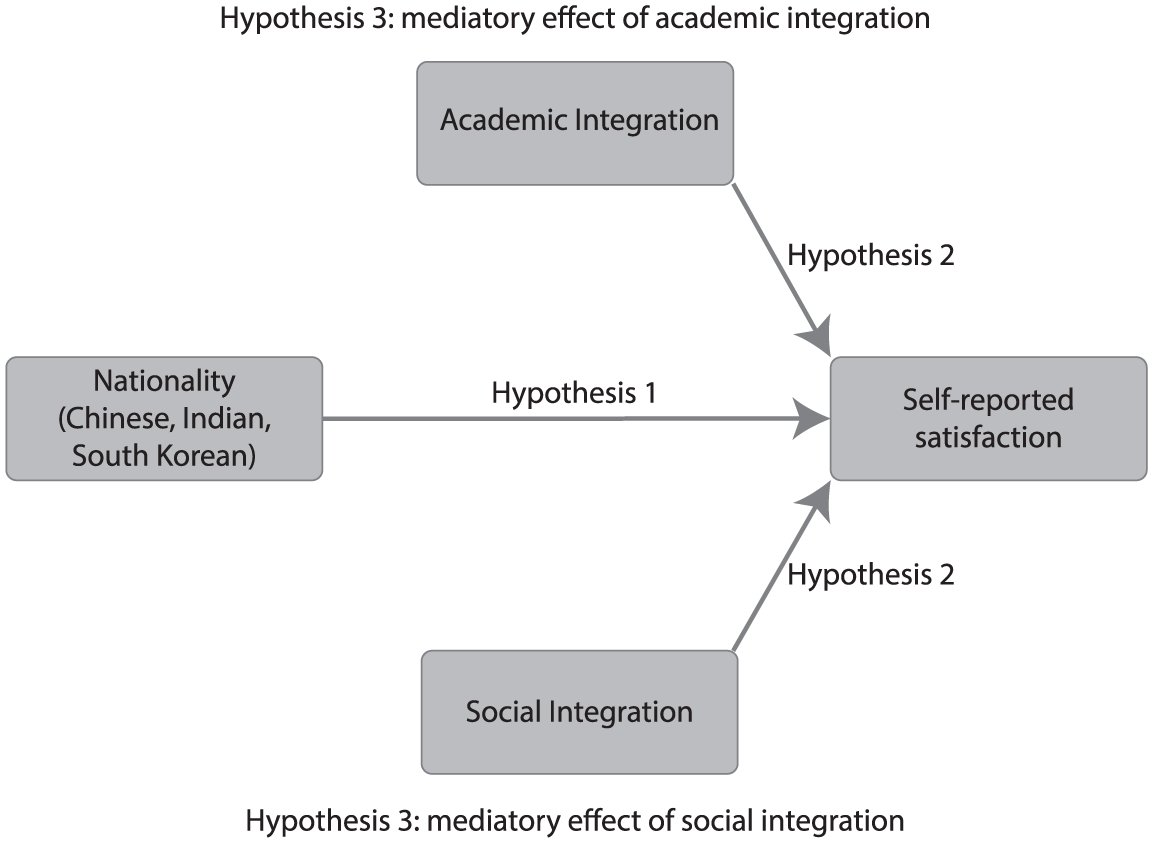
Relationships being explored.
Method
Design and Database
To explore these hypotheses, this study uses a quantitative approach, drawing on student responses from the International Study Barometer (ISB). The ISB is a survey launched in 2005 by the International Graduate Insight Group Ltd. (i-graduate) that encompasses nearly 3 million student responses across all student types, levels, and years of study including more than 30 countries and 200 institutions. This is the largest and most widespread dataset of student responses in existence.
The ISB tracks satisfaction levels of international students across specific areas of key importance to them, including the arrival experience, learning experience, living experience, and support services. Students are asked to indicate their satisfaction with a particular element on a Likert-type scale of 1 to 4 (1 = very dissatisfied, 4 = very satisfied). While there are many possible metrics that could be used to measure the experience of international students, self-reported satisfaction provides a direct, subjective measure of how the student rates their experience in a given area.
This study draws on the 2016 ISB dataset, filtered to contain only institutions based in the United States, United Kingdom, and Australia and only undergraduate, degree-seeking students from India, China, and South Korea. Of the total student responses received in 2016 (N = 66,272), selecting these parameters resulted in a subset of 5,242 responses.
Variables
The study was conducted in three parts. First, constructs were created to measure social and academic integration among nationalities using factor analysis in SPSS. These constructs were then used to test for and measure differences among nationalities in integration levels and satisfaction levels (Table 1). Having explored these links, the study used linear regression to examine the role of integration in determining satisfaction. Finally, a model was created to show to what extent integration explains the relationship between nationality and self-reported satisfaction.
Variables and Measures.
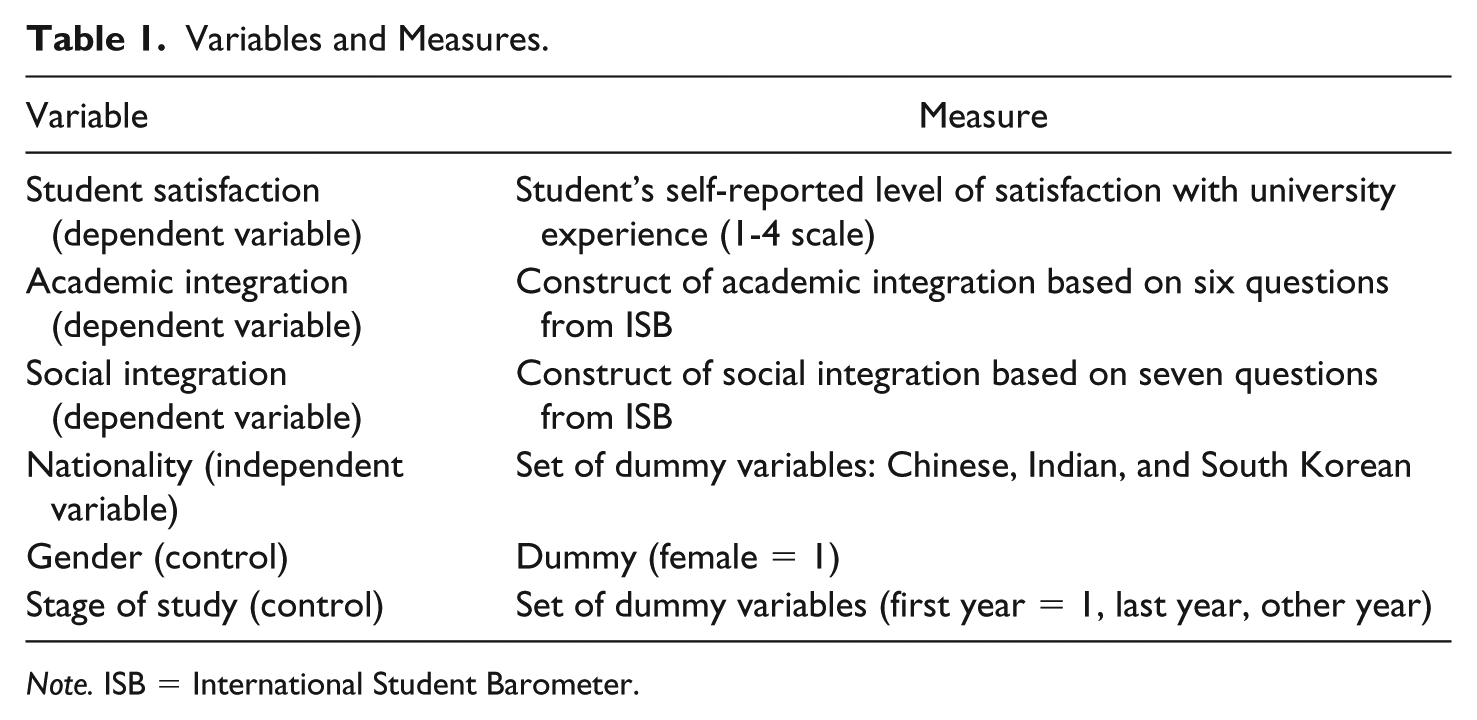
Note. ISB = International Student Barometer.
Analysis Strategy
To investigate the role integration plays in understanding differences in international student satisfaction, we sought to create constructs of social and academic integration. A factor analysis of 13 Likert-type scale questions from the ISB was conducted on a sample of 5,242 subjects who answered all 13 questions. An examination of the Kaiser–Meyer–Olkin (KMO) measure of sampling adequacy suggested that the sample was factorable (KMO = .912) and resulted in a sound model of two constructs of integration: social and academic (Table 2).
Factor Loadings and Communalities Based on a Principal Components Analysis for 13 items from the ISB Varimax with Kaiser Normalization (N = 5,242).
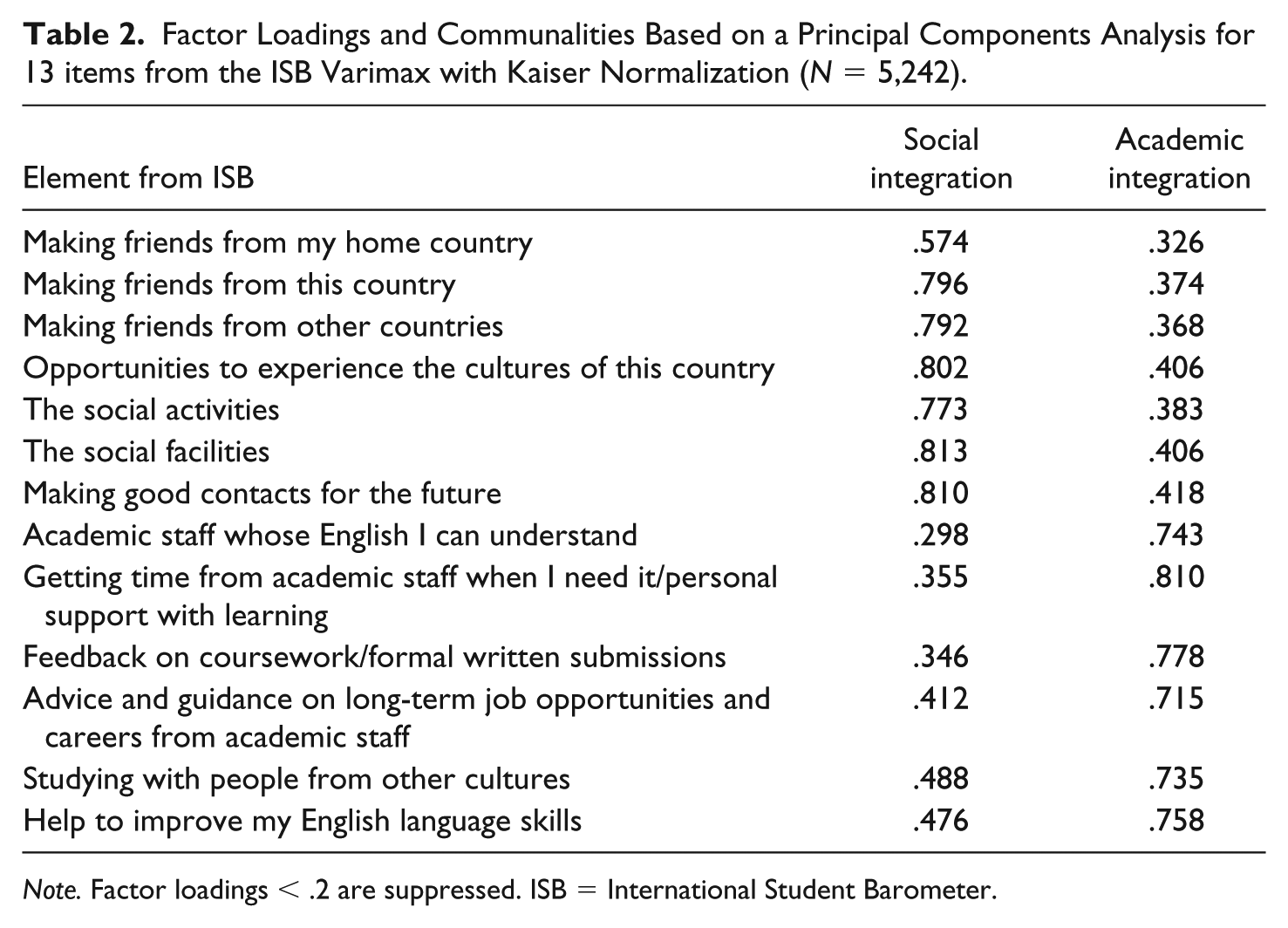
Note. Factor loadings < .2 are suppressed. ISB = International Student Barometer.
The first construct, “Social Integration,” comprised 7 items reported on a 4-point Likert-type scale that explained 44.8% of the variance with factor loadings from .574 to .813. The second construct, “Academic Integration,” comprised 6 items reported on a 4-point Likert-type scale that explained 14.0% of the variance with factor loadings from .715 to .810. Cumulatively, the two constructs explain 58.8% of total variance (Table 3).
Descriptive Statistics for the Two Integration Factors (N = 5,407).
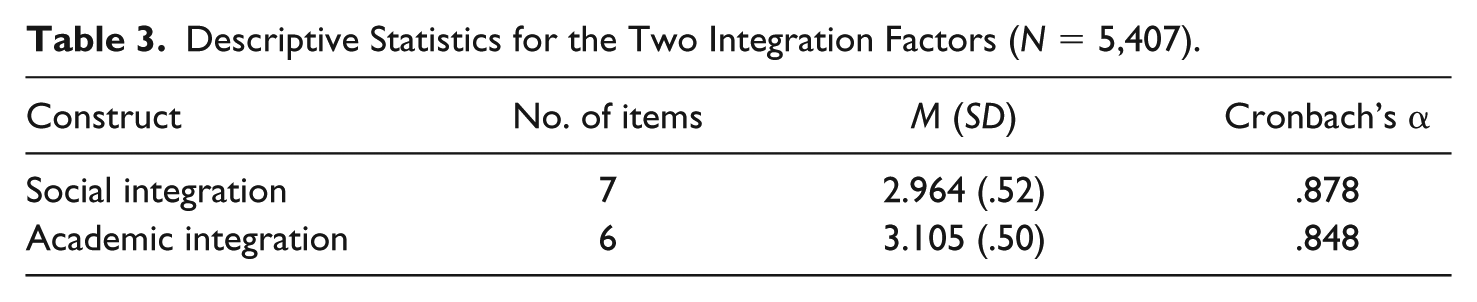
The constructs of academic and social integration emerged from a set of 13 independent variables selected from the ISB, which were evidenced to be valid proxies of integration. Cronbach’s alpha was obtained for each construct, and a chi-square goodness-of-fit test indicated a p value of <.000, suggesting that the distribution is not due to chance.
Analysis of variance (ANOVA) and linear regression were used to determine the relationships between nationality and integration, nationality and satisfaction, and integration and satisfaction. As a final step, a model was created to show how including academic and social integration explains the relationship between nationality and satisfaction.
Results
Results from the study found support for all three hypotheses, though with some limitations. First, there are significant differences among nationalities in satisfaction levels. Specifically, Indian students have higher mean satisfaction than Chinese and South Korean students. Second, both social and academic integration are predictive of self-reported satisfaction, particularly in the case of academic integration. Third, integration does play a role in explaining the relationship between nationality and satisfaction, though it does not explain the relationship fully.
Links Between Nationality, Integration, and Satisfaction
Research Question 1: How do students from different nationalities vary in their levels of satisfaction?
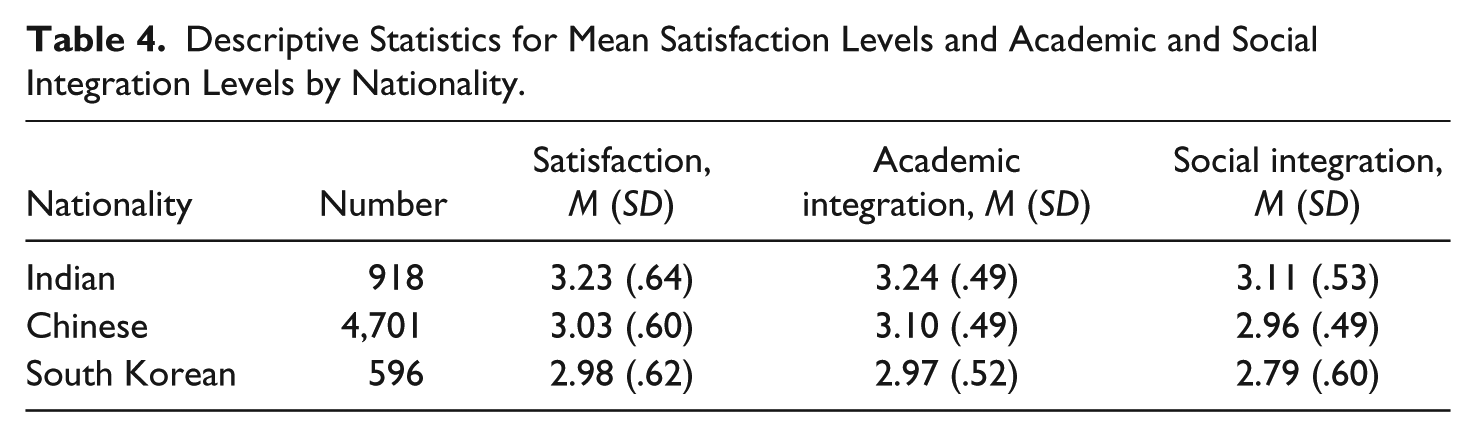
Results indicate differences among the mean satisfaction levels of Chinese, Indian, and South Korean students. A one-way ANOVA confirmed that the mean satisfaction of Indian students was significantly higher than the means of Chinese and South Korean students (Table 4).
Descriptive Statistics for Mean Satisfaction Levels and Academic and Social Integration Levels by Nationality.
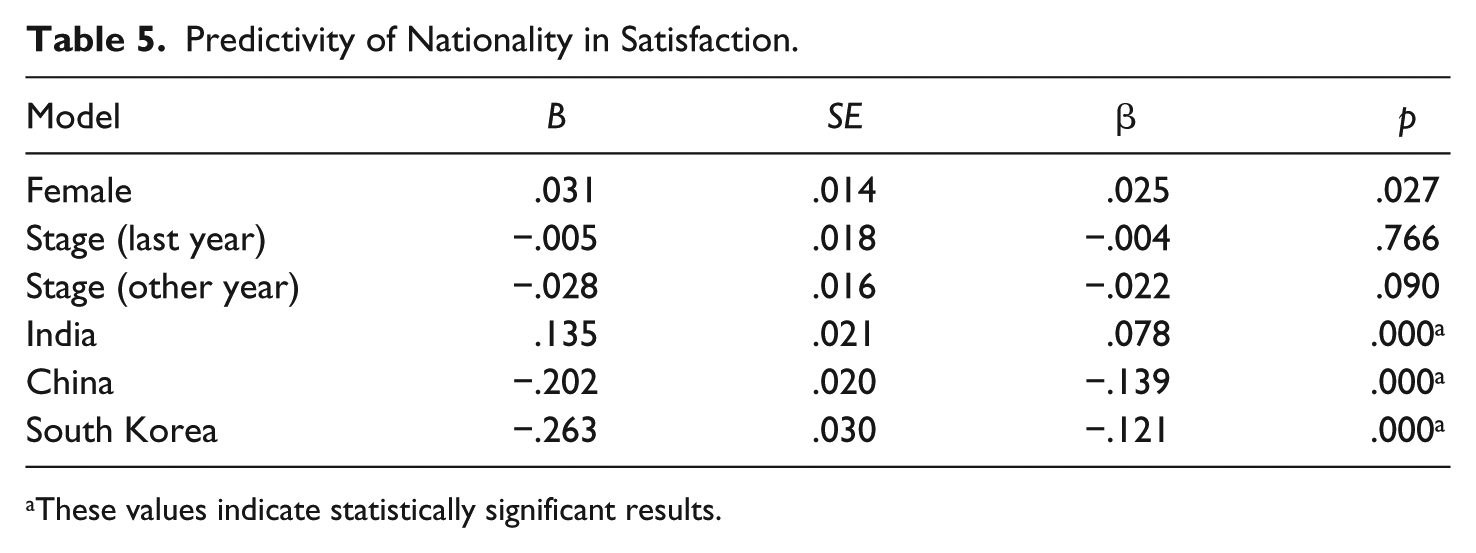
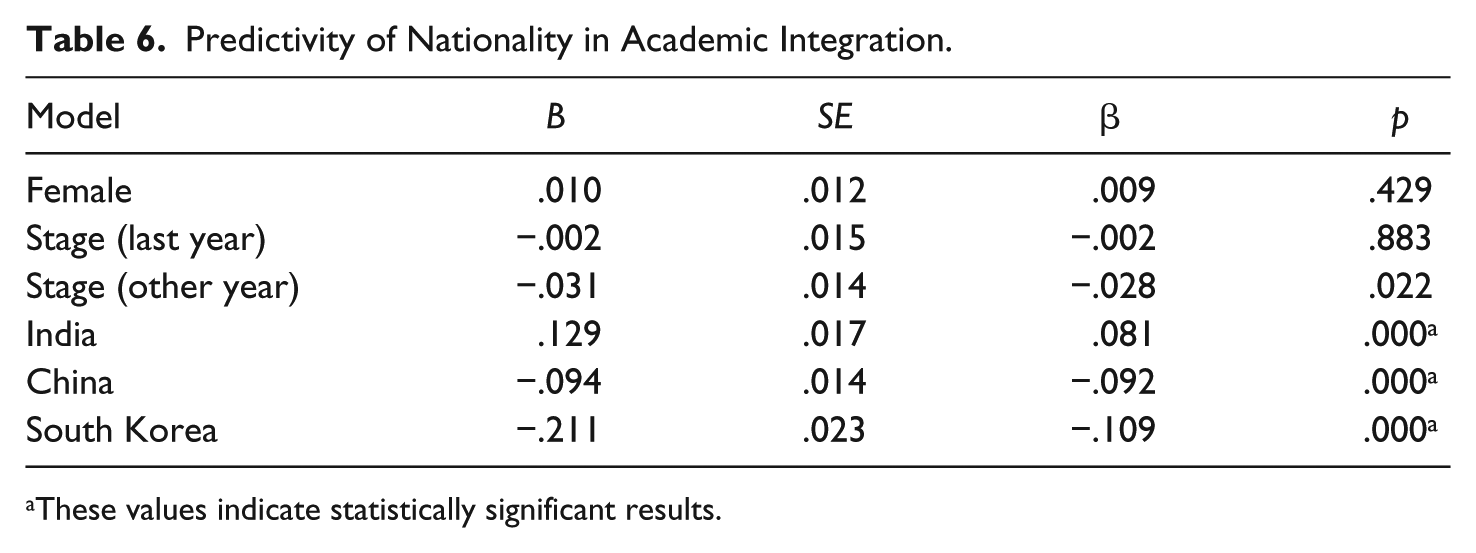
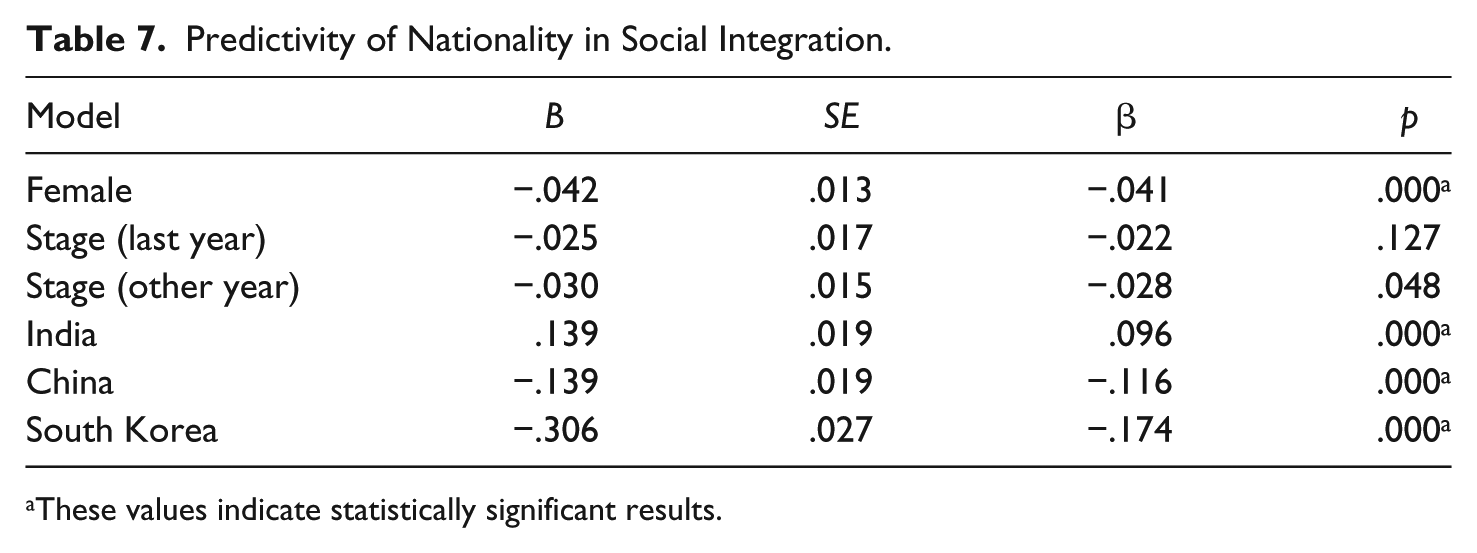
Linear regression confirmed that nationality is predictive of satisfaction levels. Specifically, Indian students demonstrate higher mean satisfaction, whereas South Koreans and Chinese students demonstrate lower mean satisfaction. Table 5 shows the unstandardized beta (B), the standard error for the unstandardized beta (SE), the standardized beta (β), and the probability value (p) for each nationality. Additionally, linear regression confirmed that nationality is predictive of integration levels, with Indian students demonstrating higher academic and social integration than South Korean and Chinese students. Table 6 and Table 7 show the unstandardized beta (B), the standard error for the unstandardized beta (SE), the standardized beta (β), and the probability value (p) for each nationality for Academic and Social Integration, respectively.
Predictivity of Nationality in Satisfaction.
These values indicate statistically significant results.
Predictivity of Nationality in Academic Integration.
These values indicate statistically significant results.
Predictivity of Nationality in Social Integration.
These values indicate statistically significant results.
Research Question 2: Links between integration and satisfaction.
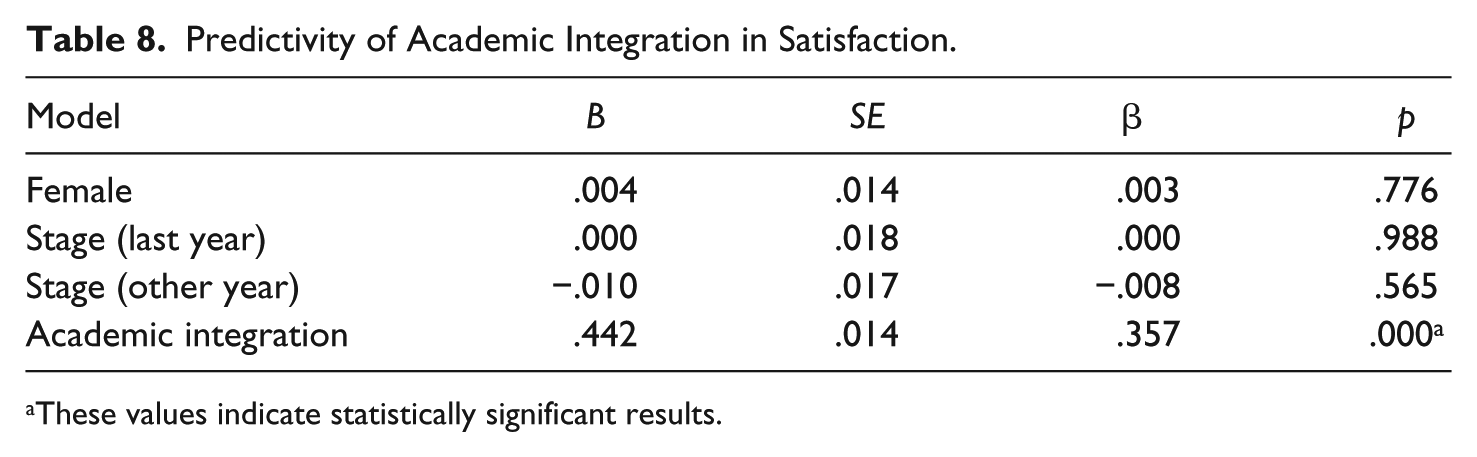
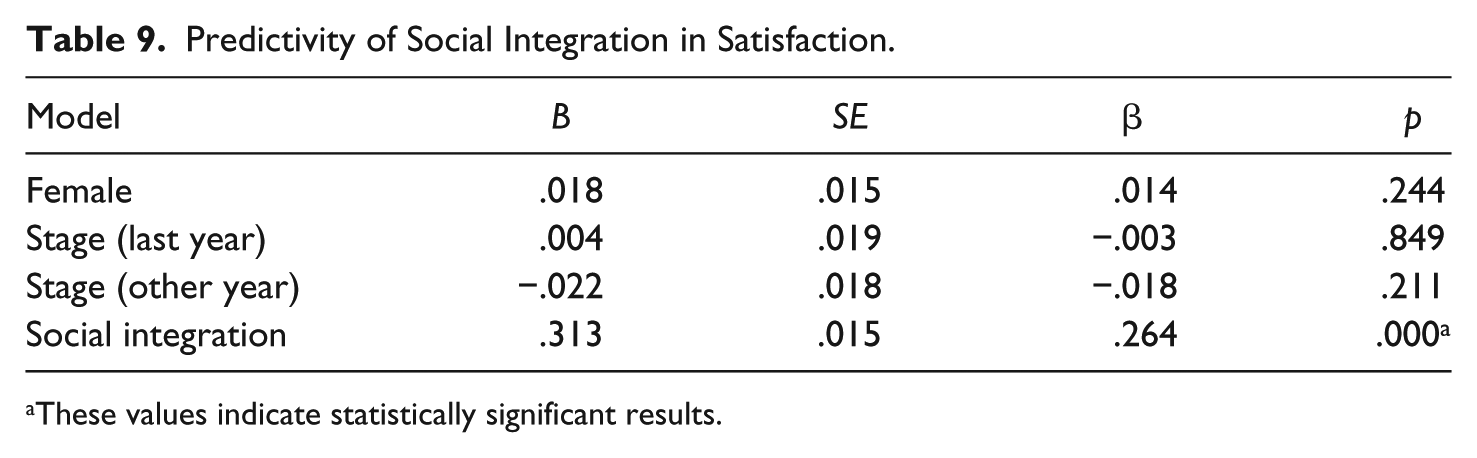
A linear regression revealed that both academic and social integration were significantly associated with satisfaction (p < .001). Specifically, students with higher levels of academic integration are more satisfied with their experience. Students who have higher levels of social integration are also more likely to report higher satisfaction with their experience, but to a lesser extent (Tables 8 and 9).
Predictivity of Academic Integration in Satisfaction.
These values indicate statistically significant results.
Predictivity of Social Integration in Satisfaction.
These values indicate statistically significant results.
Research Question 3: Roles of academic and social integration in the relationship between nationality and satisfaction.
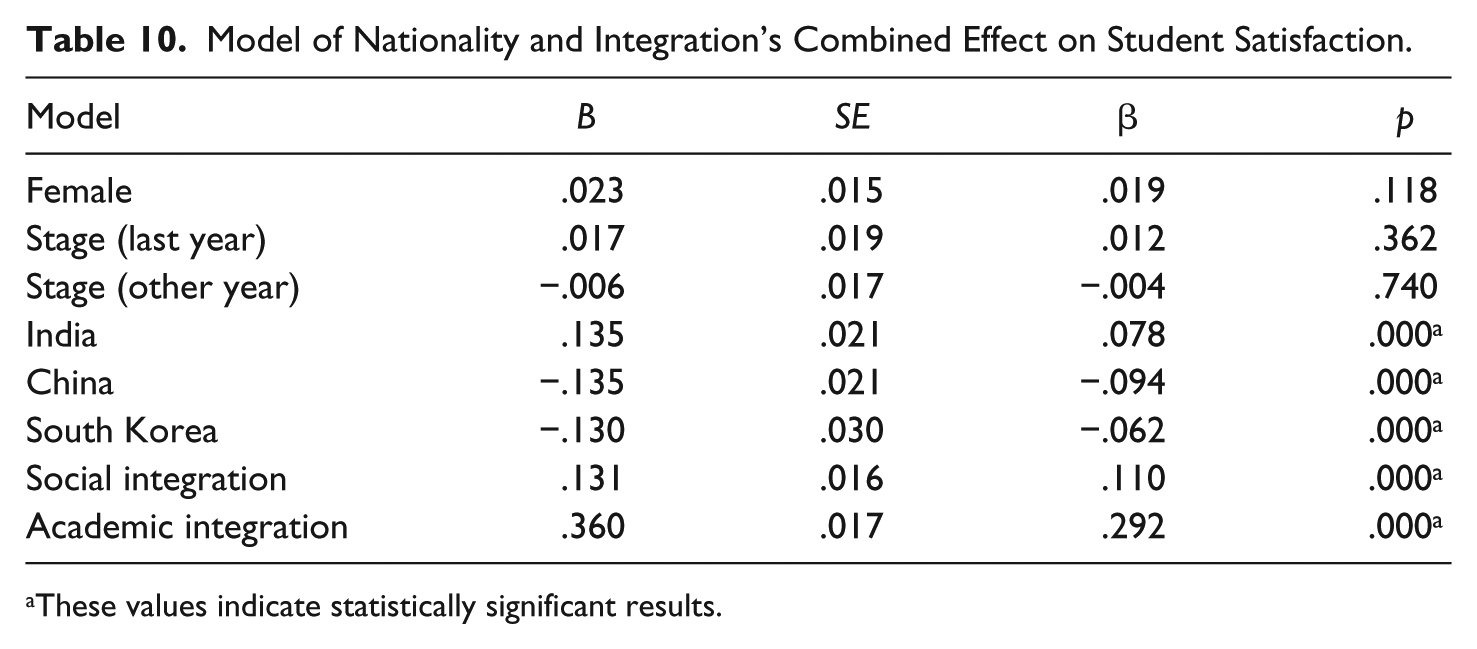
Linear regression revealed that nationality and integration together explain 14.2% of the variation in international student satisfaction, controlling for gender and stage of study (Figure 2). The combined effect of these variables is greater than the independent effects of each variable. Table 10 shows the unstandardized beta (B), the standard error for the unstandardized beta (SE), the standardized beta (β), and the probability value (p) for the combined effect on satisfaction.
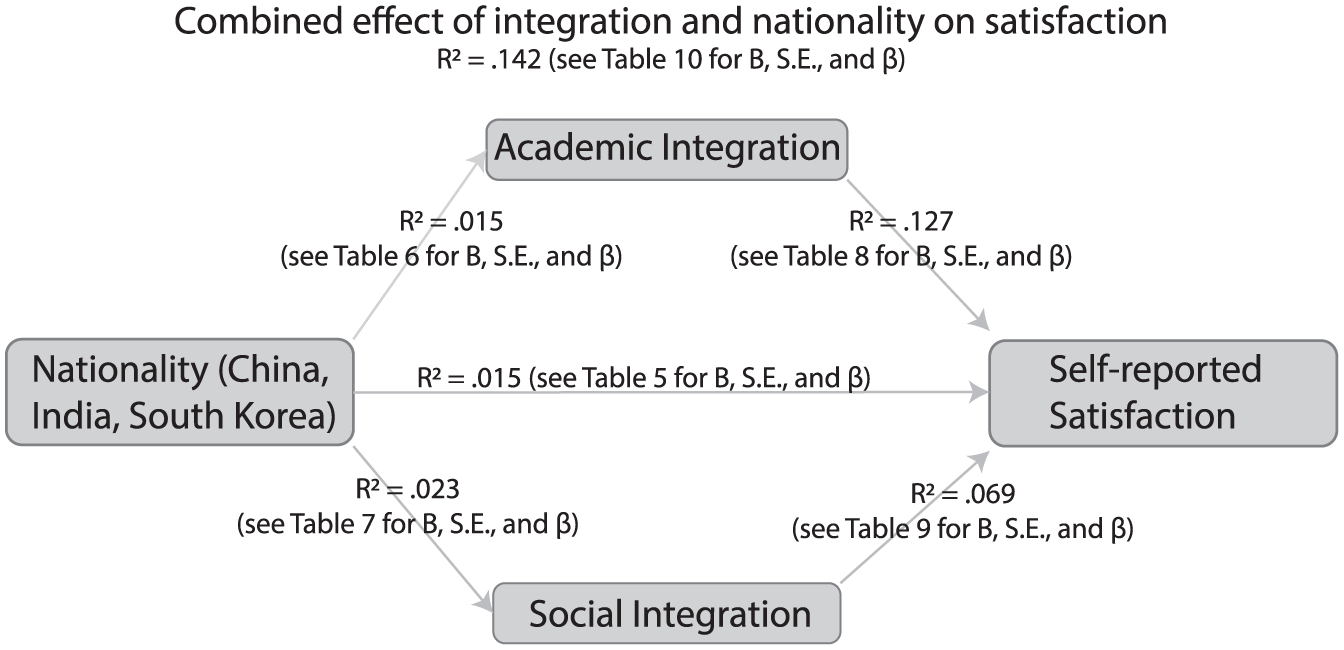
Relationship between all variables and self-reported satisfaction.
Model of Nationality and Integration’s Combined Effect on Student Satisfaction.
These values indicate statistically significant results.
Results show that there is partial mediation present; in other words, the relationship between nationality and satisfaction is strengthened when integration is included in the model. The higher satisfaction of international students from India may be explained by their higher levels of integration relative to other nationalities. Thus, Hypothesis 3 was supported. However, while the model is elucidatory, satisfaction is not completely, or even majorly, explained by nationality and integration, indicating that other factors must also play a role.
Discussion and Conclusion
Taken together, results add to the existing literature on the international student experience, setting the stage for continued research in this area and offering policy and practice implications. The finding that satisfaction and integration vary by nationality is not unexpected; it is therefore worth exploring why this is and what universities can do to address these differences. Previous research demonstrates that Indian international students in the United States have some of the highest satisfaction levels among international students (Roy et al., 2016) and that Asian international students sometimes report barriers to making friends in Western cultures (Han et al., 2013; Smith & Khawaja, 2011). Cultural similarity–dissimilarity may partly explain this finding, as it impacts the sociocultural adaptation of students (Ward & Kennedy, 1993a). Increases in interaction are associated with decreased social difficulties, increased communication skills, and better adaptation to life abroad (Ward & Kennedy, 1993b).
Likewise, contextual factors may also be at play: it is not known, for example, what the proportion of Indian, Chinese, and South Korean students is at each university, which could have an impact on opportunities to interact with domestic students. It is important to note, too, that international students cannot be stereotyped under one umbrella when it comes to their satisfaction and integration, as their social networks are complex and difficult to categorize (Gomes et al., 2015). Social networks and the digital environment are important parts of international students’ lives, and international students may have distinct social networks with little influence of nationality, for example, some Chinese students may have social networks composed mostly of other students from their country, whereas other Chinese students may have social networks mainly composed of local students and international students from other countries. This makes identifying predictors of the student experience, and integration, more complex than the measures of the ISB.
Compellingly, results indicate that integration partly explains the relationship between nationality and satisfaction, with other unknown factors also playing a role. While nationality alone explains only 1.5% of the variation in satisfaction, the model including integration explained more than 14% of the variation in satisfaction. This is a novel finding, as it suggests that a student’s level of integration is more predictive of satisfaction than his or her nationality. Further research, described in the following, is required to better understand what explains that remaining 86% of variation in student satisfaction.
Placed in the context of current research, students who are well-integrated academically and socially, regardless of from where they come, are more likely to have a positive experience (Astin, 1999; Tinto, 1975). This emphasizes the role of a student’s context and personality traits in determining their experience. A 2016 study by Brouwer, Jansen, Flache, & Hofman (2016) indicated that two categories of social capital—peer capital (help seeking, collaboration, and fellow students’ support) and faculty capital (mentor support)—contribute positively to study success among first year students. Self-efficacy, in particular, has been shown to be a predictor of academic success and may be a student characteristic through which the effects of social capital are mediated, as students enter university with beliefs about their ability to succeed (Bandura, 1977).
This strengthens the case for universities to focus on enhancing students’ social capital through strategies such as small-group teaching, which in turn fosters interaction and academic success (Webb, 1982; Wilcox et al., 2005). Interventions such as working in groups or assigned pairs and encouraging peer tutoring during class can enhance students’ social capital and academic integration (Baldwin, Bedell, & Johnson, 1997). Although benefits of collaborative and experiential learning have been documented (Clark, Baker, & Li, 2007; Skon, Johnson, & Johnson, 1981), universities must consider the cultural context of students. Results of this study and other studies suggest that students from Confucian heritage countries may have less familiarity with Western-style classroom environments (Phuong-Mai, Cees, & Pilot, 2006). Therefore, universities should consider how to best support students to reap the benefits of curriculum and teaching strategies designed to foster integration.
In addition, universities should pay attention to the social environments of their international students. Because integration is boosted by having friends from both home and host countries (Bochner, McLeod, & Lin, 1977; Furnham & Alibhai, 1985), student associations and institutions must work collaboratively to facilitate this (Pérez Encinas, 2015). This can be done through, for example, orientation events, buddy programs, and educating domestic students on the benefits of cross-cultural friendships. Likewise, there are social integration benefits to sharing accommodation with other students (Ward, Okura, Kennedy, & Kojima, 1998), presenting an opportunity for institutions to foster this through accommodation policies and practices. Organized social activities can help students develop social capital, establish friendships, and create a support network, which positively influence academic outcomes and integration (Russell, Rosenthal, & Thomson, 2010; Severiens & Wolff, 2008), and in turn increase satisfaction.
Curriculum can be used to leverage the diversity on campus to benefit both domestic and international students and encourage interaction. The power of curriculum is so strong, in fact, that if it does not include a component to promote understanding, students working in multicultural groups can have negative stereotypes reinforced rather than diminished (Briguglio, 2006). Leask and Carroll (2011) found evidence that strategic and informed interventions grounded in research and evaluated comprehensively can improve engagement and interaction. To be successful, however, both informal and formal curriculum must be aligned, and faculty and staff must be committed to the task.
Research suggests that experiential learning can help students acquire intercultural communication competence. One example is ExceLL, an experiential learning and leadership program that teaches cross-cultural communication and encourages international students to step outside their usual communication techniques (Mak, Westwood, Ishiyama, & Barker, 1999). Evaluations of ExceLL indicate that both domestic and international participants gained increased confidence, and international students report increased interaction with people from different cultures (Commons & Gao, 2011). Programs such as this demonstrate that curriculum and teaching strategies can play a role in facilitating integration and positively influencing the student experience.
It is also important to design teaching and support systems geared toward boosting language proficiency and supporting learning both inside and outside the classroom. Academics play a role in this, as they are the ones who will communicate expectations and oversee the feedback and grading/marking. Teaching staff and academic advisors may be the first to notice when a student is falling behind academically and therefore best placed to trigger an intervention. Support services play a role, too, in offering programs during orientation and throughout the university experience that help students anticipate academic expectations and providing links to resources and support for international students struggling academically.
This study has implications for both theory and practice in international higher education. It lifts fog from the factors that may be mitigating the link between nationality and satisfaction demonstrated in previous research. Although findings suggest that social and academic integration are important factors, they only partially explain the variation in student satisfaction. Qualitative analysis of the comments written in to the ISB by the international students would add insight to the findings. Analysis of the effectiveness of curriculum and teaching strategies in promoting integration, and thus satisfaction, would be elucidating to universities seeking to develop such interventions. However, further research down this line should consider that “integration” need not be the end-point or goal of interaction. Anderson (2006) asserts that interactions in higher education occur multi-directionally, not only between international and domestic students, and that practitioners must recognize students as unique, with “complex and unexpected” similarities and dissimilarities. Considered in this light, a qualitative approach focused on the experiences of individual students would allow a nuanced understanding of how culture, context, and personal characteristics interact to shape the student experience.
The International Student Barometer (ISB), which provided the dataset used for the study, has limitations. It does not measure university characteristics such as quality, size, or proportions of international students enrolled. Student academic outcomes are not gathered, and characteristics such as openness to new experiences, self-efficacy, and study habits are not measured to determine their role in satisfaction and integration. Because the ISB survey is based on self-report, students’ interpretation of questions may vary. Because it is a voluntary survey, results may be impacted by what types of students choose to respond. All of these factors potentially affect the validity of the ISB and must be acknowledged as limitations of the study.
Notwithstanding, these results contribute to the body of research in the area of international student experience, strengthening the notion that integration plays a key role in determining the satisfaction levels of students. Examining a wider scope of international students may reveal additional insights into what hinders or helps integration. More insight into the minds of international students is at the core of understanding their experiences, including why a student’s level of integration, despite his or her nationality, is predictive of satisfaction.
Footnotes
Authors’ Note
Robert J. Coelen is also affliated with Centre for Internationalisation of Education, University of Groningen.
Declaration of Conflicting Interests
The author(s) declared no potential conflicts of interest with respect to the research, authorship, and/or publication of this article.
Funding
The author(s) received no financial support for the research, authorship, and/or publication of this article.
