




Abstract
A 63-year-old man presented to the emergency department with headache, vertigo, and inability to walk. The computed tomography scan was reported as a normal study by the radiologist despite showing an early sign of infarction. Nevertheless, the magnetic resonance imaging confirmed an acute infarction of the basilar artery. Thus, the patient received thrombolytic therapy with good prognosis.
Case presentation
A 63-year-old man with a history of hypertension and diabetes presented to the emergency department with headache, vomiting, and vertigo for one hour. He had a normal glucose level, and his vital signs were within normal limits apart from elevated blood pressure. There was no neurological deficiency, but he was unable to walk due to unsteadiness. The pupils were reactive bilaterally, and horizontal nystagmus was observed. A brain computed tomography (CT) scan (Figure 1(a)) was done, which was reported as a normal study by the radiologist.
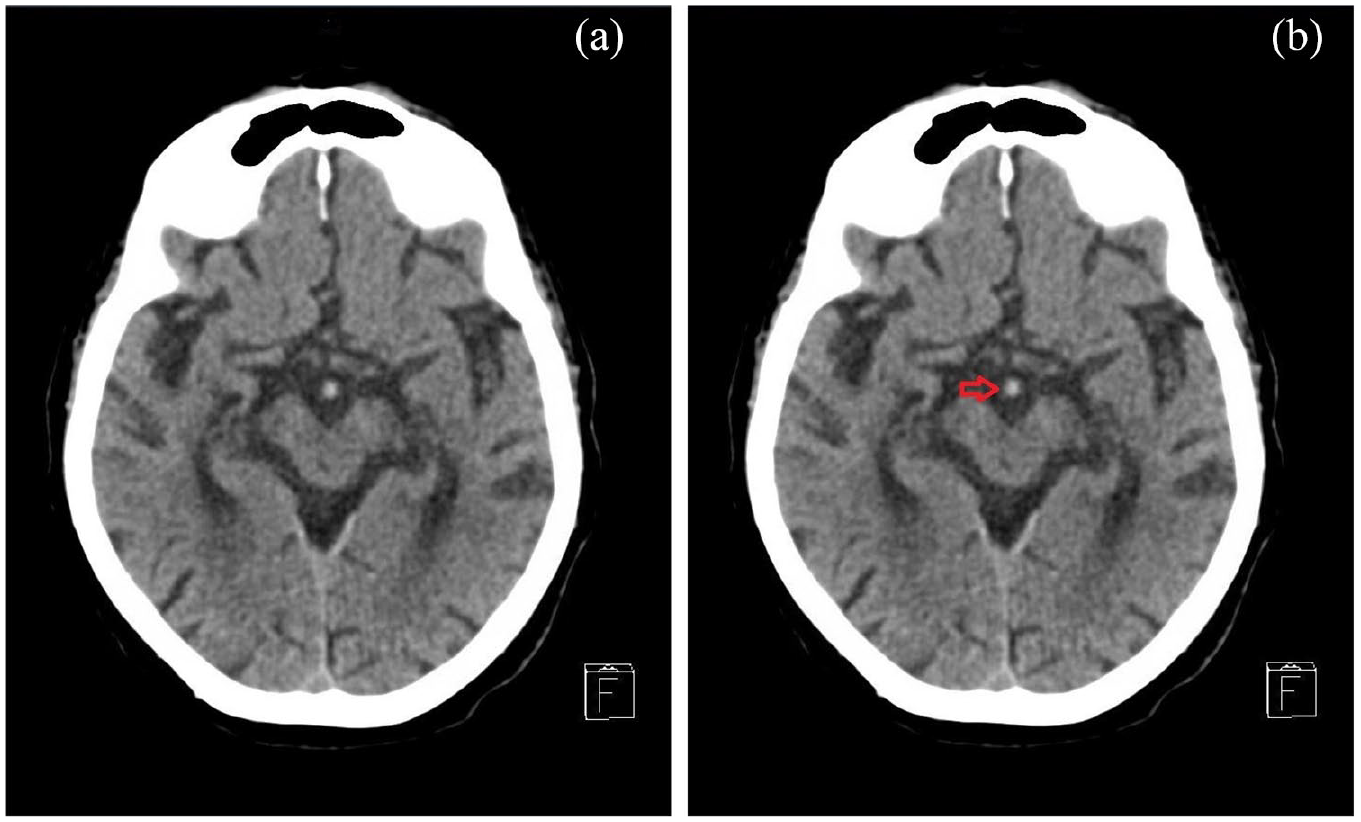
CT scan of the brain showed a dense basilar artery sign ((a) without arrow and (b) with arrow).
Questions
What is the sign that we see in the CT scan?
What does this sign indicate?
Answers
Hyperdense basilar artery sign (Figure 1(b)).
It indicates acute basilar artery thrombosis and thus acute infarction.
The CT showed a hyperdense basilar artery sign, and after discussions with the medical team and the neurologist, magnetic resonance imaging (MRI) (Figure 2) was agreed to be performed. The MRI confirmed a left parieto-occipital infarction. The patient received thrombolytic therapy and was admitted to the stroke unit.
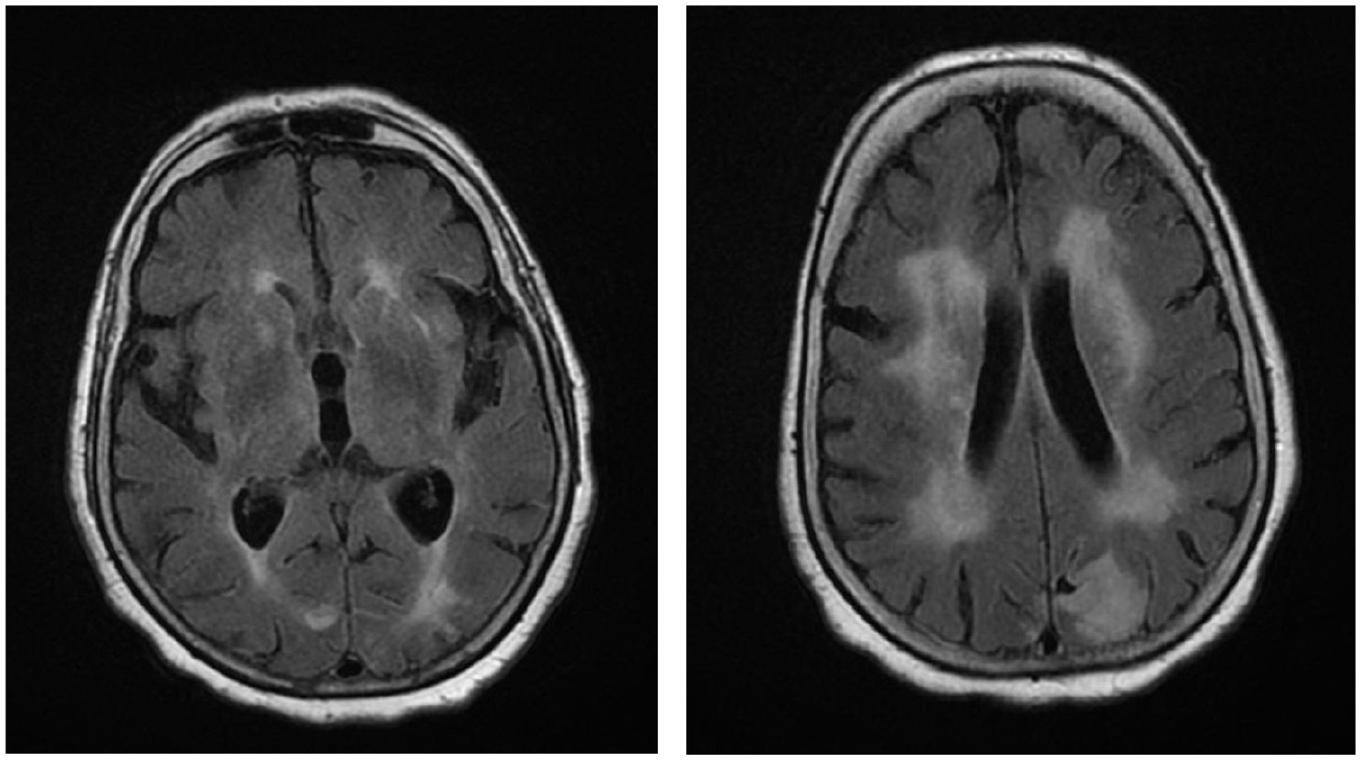
MRI of the brain showed bilateral chronic white matter ischemic changes with left parieto-occipital infarct.
Acute basilar artery thrombosis is generally linked with poor prognosis. Nevertheless, with the implantation of advanced imaging technology like an MRI, early detection and intervention improved the final outcome. 1 The presence of hyperdense basilar artery sign on CT scan is a foreteller of basilar artery thrombosis and therefore, posterior circulation infarction. 2 Vertigo continues to be one of the most common presenting symptoms although a large percentage of patients presented with a disturbing level of consciousness, motor deficient, or speech impairment. 3 The principal point of acute basilar artery thrombosis management is to recanalize the artery by thrombolytic therapy or surgical interventions that improve both the outcome and prognosis.4,5
Footnotes
Authorship
M.M.E. is the only author of this work with the sole contribution in all parts of this article.
Declaration of conflicting interests
The author(s) declared no potential conflicts of interest with respect to the research, authorship, and/or publication of this article.
Funding
The author(s) received no financial support for the research, authorship, and/or publication of this article.
Availability of data and materials
Not available due to patient confidential.
Informed consent
The patient’s consent to the publication has been taken.
