




Abstract
The layer chicken farming industry in Sri Lanka has faced significant challenges due to the COVID-19 pandemic and broader economic downturn. In response to risks such as critical input shortages, price escalations, retail regulations and reduced demand, some farmers exit while others persevere with risk management strategies. A study was conducted to evaluate farmers’ risk perception and risk attitude and identify risk management strategies they adopted and the determinants of the adoption. The study found that farmers identified institutional risks as the most significant, followed by marketing risks. However, the adoption of targeted risk management strategies for these concerns remains limited. The multivariate probit analysis showed that risk-averse farmers are more likely to leave the industry, while small-scale farmers tend to reduce household expenditure to survive the crisis. Ensuring the industry’s long-term sustainability requires targeted interventions supporting small and medium-scale farmers (SMEs), who play a crucial role in the industry’s resilience and longevity. One effective strategy is facilitating partnerships between SMEs and larger entrepreneurial farms willing to share risks for a defined period. Additionally, enhancing the resilience capacity of SMEs to navigate risks is crucial for industry resilience and longevity.
Introduction
Agriculture is known for its inherent challenges and unpredictability (Adnan et al., 2021; Harwood et al., 1999; Moschini & Hennessy, 2001). Risks in agriculture stem from many sources, including weather changes, pest and disease outbreaks, price volatility and more. These risks can be categorised into five primary types: production risks, institutional risks, market risks, personal/human risks and financial risks (Aimin, 2010; Harwood et al., 1999). If not effectively managed, these risks can lead to adverse outcomes, resulting in reduced farm returns (Komarek et al., 2020). Mismanagement of risks can also lead to suboptimal resource allocation and hinder business growth and industry development (Aimin, 2010; Moscardi & Janvry, 1977). Additionally, the consequences of risks in agriculture can extend to broader welfare implications, such as food security and farmers’ mental well-being (Mârza et al., 2015). In fact, in developing countries, excessive risk and the inability to cope with it have even resulted in severe outcomes, including farmer suicides (Den Besten et al., 2016; Mishra, 2006).
Like other agricultural sectors, the layer chicken industry faces various risks, including disease outbreaks, climate-related risks and price volatility. Among these risks, production risk has gained disproportionately greater attention from researchers due to the potential high impact of the risk and the cascading effects they have on other risks, such as marketing risks. However, as the risk landscape continues to evolve (Komarek et al., 2020), with marketing risks becoming increasingly prominent (Sattar et al., 2021), there is a need to delve into the nature of these risks and farmers’ preparedness for these specific risks that enable the development of strategies to manage these risks in the poultry industry effectively (Duong et al., 2019).
The interplay of COVID-19–induced disruptions in the supply chain, alongside the recent political and economic crises, has introduced a myriad of intricate challenges for poultry farmers in Sri Lanka. These multifaceted obstacles have unleashed an unprecedented wave of uncertainty and risk upon what was once the fastest-growing livestock subsector in the country. In 2021, this subsector contributed USD 4,013.7 million to the GDP, which is equal to 65% of the livestock share of the GDP (DAPH, 2022).
The layer chicken industry in Sri Lanka has recently faced a series of challenges, starting with the Easter bombing attack in 2019. The attack significantly impacted the country’s tourism industry, leading to a drop in demand for layer products. The COVID-19 pandemic followed this blow to the poultry industry in 2020. The pandemic exacerbated the decline in demand for layer products as travel restrictions and a decrease in people’s income resulted in reduced consumption. Additionally, the pandemic disrupted supply chains, leading to substantial post-harvest losses in the poultry industry.
Furthermore, the Sri Lankan economy started experiencing symptoms of an economic crisis in 2020, characterised by twin deficits (Bhowmick, 2022). Thus, the government banned maize imports in the same year to address foreign reserve shortages (Madies, 2020). This ban had unintended consequences, creating a scarcity of poultry feed in the local market. The situation worsened when the importation of chemical fertilisers was banned in 2021, negatively impacting local maize production, a key ingredient in poultry feed. The feed shortage subsequently increased animal feed prices, further burdening the poultry industry (DAPH, 2022).
To address the rising input costs, the government imposed a maximum retail price on eggs to prevent the transmission of input price hikes to the output market. However, this measure proved to be ineffective in mitigating the adverse effects. Against this background, this study assesses risk perception, risk attitude and risk management strategies adopted by layer chicken farmers in Sri Lanka and identifies the determinants of these strategies.
Literature Review
In response to anticipated or exposed risks, farmers adopt both ex-ante (precautionary) and ex-post (coping) risk management strategies to reduce risk to an acceptable level or mitigate its impact (Bishu et al., 2018). The interconnectedness between different types of risks and their outcomes often necessitates implementing multiple risk management strategies. These strategies include changes in business and farming practices, diversification of crops and animals, drawing from savings and reducing household consumption. In the poultry industry, common ex-ante risk management strategies include implementing biosecurity measures, diversifying crops and animals, monitoring and preventing pests and diseases, engaging in off-farm income activities, participating in contract farming, and obtaining insurance (Adnan et al., 2020). The less adopted strategies include collaboration with fellow farmers, utilising extension services, receiving training and education, embracing new technologies, and focusing on cost-effective production (Duong et al., 2019).
The risk-coping strategies (ex-post risk management strategies) employed by farmers occur in two stages: income-smoothing measures and consumption-smoothing strategies. Farmers commonly employ ex-post risk-coping strategies, including income-smoothing measures such as conservative production choices and economic diversification in response to income fluctuations arising from risks. When income-smoothing measures are inadequate to shield against potential income shock, farmers adopt consumption-smoothing measures involving reducing household consumption, dissaving, asset depletion, selling productive assets (destocking of animals) and adjusting labour supply. The aim is to protect households from adverse income shocks and minimise the volatility of consumption patterns (Morduch, 1995; Senapati, 2020).
The choice of risk management strategy is influenced by a combination of factors, including the socio-demographic characteristics of farmers, viz.: gender, education, age, farming experience, household size, farm characteristics, exposure to risk, and the cost-benefit analysis of different strategies (Adeyonu et al., 2021; Duong et al., 2019; Meuwissen et al., 2001). Farm size and ownership also affect risk management behaviour. When the business’s value increases, risk management strategies are more likely to be used to avoid the loss on a huge investment (Adeyonu et al., 2021). Research also revealed that farmers with personal ownership tend to consider extension and collaboration and strategies for disease management as risk-minimising strategies compared with other types of farm ownership (Rahman et al., 2021).
Risk perception, which refers to individuals’ subjective evaluation of risk, also significantly determines their response to risk. (Duong et al., 2019; Khan et al., 2020; Meuwissen et al., 2001; Ranasinghe et al., 2023). Farmers’ responses to risks are often based on their perception of the frequency and severity of the risk rather than the actual risk itself. Different individuals may interpret risks differently, leading to diverse risk perceptions (Van Winsen et al., 2016), which, in turn, contribute to various responses to risks (Gao et al., 2019).
Another influential determinant is risk attitude, which represents an individual’s inclination to take or avoid risks. Farmers are risk averse, particularly in developing farm settings (Binswanger, 1980; Senapati, 2020; Sulewski & Kłoczko-Gajewska, 2014). Risk-seekers are more likely to adopt ex-ante risk management strategies. In contrast, risk-averse farmers tend to focus on coping with the consequences and mitigating their effects through ex-post strategies. Risk-averse farmers may choose passive approaches, such as downsizing production and saving, rather than investing. Risk-seekers may adopt proactive measures like farm and income diversification and market optimisation for production and profit (Rahman et al., 2021).
Methodology
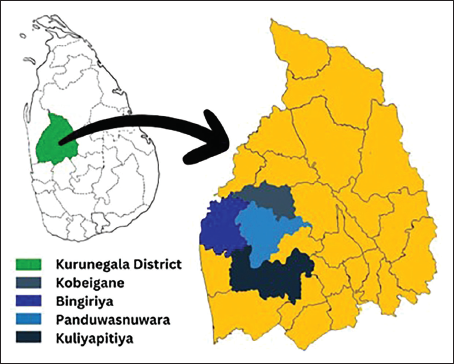
The study was conducted in four divisional secretariat divisions located in the Kurunegala district of Sri Lanka, namely Panduwasnuwara, Kuliyapitiya-East, Bingiriya and Kobeigane, during September 2022 and October 2022. The Kurunegala district boasts a robust agricultural economy. It has the highest recorded chicken population (Figure 1) in Sri Lanka, with a staggering count of 6,299,510 in 2022. The Department of Census and Statistics reported in 2022 that there are 727 medium and large-scale farms and 1,545 small-scale farms within the district.
Study Area.
Sample and Data Collection
The study population of interest is the small- and medium-scale layer farmers in the study area. There was no established sampling framework, so the Snowball sampling technique was utilised to recruit 68 farmers for the study. The study conducted face-to-face interviews with farmers using a pre-tested questionnaire. The questionnaire comprised six sections, covering various aspects of the farmers and their operations. These sections included:
Background and socio-economic characteristics of farmers: This section collected information about the farmers’ demographic characteristics, such as age, gender, education, household size and farming experience. It also included socio-economic factors such as income level and access to resources. Farm features: This section focused on gathering data about the farm’s features, including size, ownership, breed, marketing arrangements and feed management strategies by the farmer. Risks and risk perception: In this section, farmers were asked to identify and rank risks based on their perceived severity. The questionnaire aimed to understand the farmers’ perceptions of various risks, including production risks, institutional risks, marketing risks, personal/human risks and financial risks. Risk attitudes: This section assessed the farmers’ risk attitudes, specifically whether they were risk-averse or risk-seeking. Risk management strategies: This section explored the risk management strategies adopted by the farmers. It included questions about the specific strategies implemented by the farmers to mitigate and cope with risks. Perception of layer chicken farmers towards the future of the industry: This section aimed to gather insights into the farmers’ perceptions of the prospects of the layer chicken industry.
Face-to-face interviews were conducted with the layer chicken farmers to ensure accurate completion of the questionnaire. The following sections describe measurements and data analysing techniques used in the study.
Risk Perception
Farmers’ risk perception was assessed by asking them to indicate the severity of risks in five major categories: production, marketing, institutional, human and financial. The specific risks covered under each category are outlined below:
Production risks: Heavy rain/flood, drought, disease outbreak, post-harvest losses, animal damage, power outage, input shortage Market risks: Increased input prices, decreased output price, reduced demand for eggs, Easter bomb attack in Sri Lanka, transport difficulties due to shortage of gasoline, specifically in early 2022 Institutional risks: Maize import ban, fertiliser import ban, declaration of maximum retail price on egg Human risks: Theft, the inefficiency of workers, illness/death of farmer or family member, labour shortage Financial risks: Low access to credit facilities, high-interest rate of loans
To assess farmers’ agreement regarding the severity of these risks, Kendall’s coefficient of concordance (W) was calculated (Equation 1). Kendall’s W is a statistical measure that indicates respondents’ agreement level. A value of 1 indicates perfect agreement, while 0 reflects perfect disagreement.

where n is the number of respondents in the sample. m is the number of risks considered. Ri is the rank given to the ith risk.
Risk Attitude
To assess the risk attitude of farmers, the study employed six statements, which were adapted from previous research conducted by Bardhan et al. (2006) and Van Winsen et al. (2016). The statements used in the study are as follows:
I like to make risky decisions concerning my farm. I only postpone investments once they need to be done. I am not afraid to borrow money to make investments that enhance profitability. I have always been one of the first producers in my area to adopt new technology. I do not rely heavily on market information (for example, government reports and private market news services) in making my marketing decisions. I like to experiment with things, though they are risky.
Using a five-point Likert scale (1 = strongly disagree, 5 = strongly agree), each respondent was asked to rate their agreement or disagreement with the above statements. The respondent’s average risk attitude was then computed. Based on their average total score, they were categorised into three groups. Those who scored between 1 and 2.5 were classified as risk averse, those who scored above 2.5 and below 3.5 were classified as risk neutral, and those who scored between 3.5 and 5 were classified as risk-seeking.
Adaptation of Risk Management Strategies
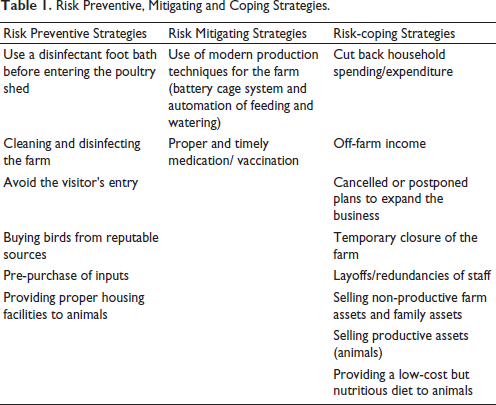
In identifying the risk management practices adopted by farmers, they were presented with a list of possible ex-ante and ex-post risk management approaches that can be adapted to the risk they face. The list was developed in consultation with experts and literature. This list included risk preventive, mitigating and coping strategies (Table 1). This strategy is also included if the farmers adopt a risk management strategy outside the list.
Risk Preventive, Mitigating and Coping Strategies.
Determinants of Risk Management Strategies
The study estimated a multivariate probit model to identify the determinants of three risk management strategies commonly adopted to navigate marketing risks. Three risk management strategies deliberately chosen for this study are seeking off-farm income, temporary farm closure and reducing household expenditure. While the study acknowledges the importance of biosecurity measures in the poultry industry, their widespread adoption among farmers minimises the value of identifying their determinants for intervention. Therefore, the focus was placed on examining the determinants of other strategies that may require further attention.
The multivariate probit model can simultaneously model the influence of exogenous factors on adopting multiple strategies while accounting for the correlation between the error terms of each strategy. This approach helps avoid biased estimates and accurately represents the relationships between the strategies and their determinants.
The model’s exogenous variables include the farmers’ socio-demographic characteristics, farm-specific variables, risk perception, risk attitudes, access to resources, institutional support and other relevant factors (Equation 2).

where x is a vector of the explanatory variables, and
The model includes years of experience, religion, training, extension contacts (1 = yes), full-time/part-time, number of birds before the crisis, marketing strategy, feed type, financial risk perception and risk attitude.
Results and Discussion
Socio-economic Characteristics of Respondents
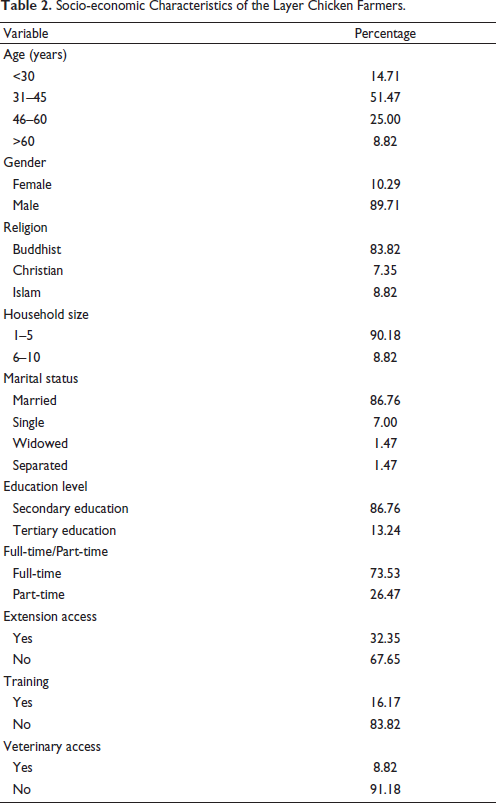
Respondents have varying socio-economic characteristics (Table 2). Most farmers were male (90%) and married (87%). Two-thirds of the sample respondents (66.18%) were under 45. Most farmers (89.7%) have less than six members in the family. All the farmers in the sample had access to school education but at different levels. More than 70% of farmers (73.53%) worked as full-time farmers. On average, farmers have 11 years of experience in the layer industry. The average share of layer farming to a household’s monthly income is 87%. About 84%, 68% and 9% of farmers had no training on poultry husbandry extension or veterinary access.
Socio-economic Characteristics of the Layer Chicken Farmers.
Characteristics of Farms
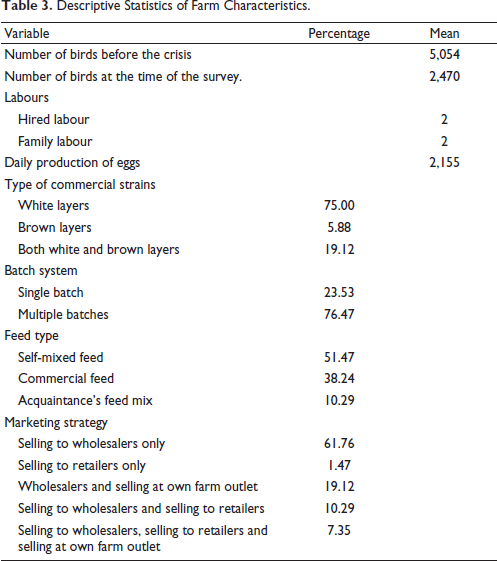
According to Table 3, the farms have specific characteristics. The layer farm has an average flock size of 2,470. Most farmers (75%) raise white-type commercial strain layer birds, the remaining 5.88% raise brown-type commercial strain layer birds and 19.12% raise a mix of both. Considering the feeding practice, 52% of the farms use self-mixed feeds, 38% use commercial feeds and 10% use acquaintance feed mix (purchasing mixed feed from nearby farmers). Farmers use various marketing channels to sell eggs, the most prominent being selling to wholesalers (62%). Additionally, 19.2% of farmers sell their products at their farm outlets and sell to wholesalers. Only a small percentage of farmers (1.47%) sell their products directly to retailers.
Descriptive Statistics of Farm Characteristics.
Risk Perception
Kendall’s coefficient of concordance (W) was found to be 0.77, which indicates a significant level of agreement over the severity of the risk sources (p < .001). Based on the rankings derived from the average severity scores, the study identified institutional risk as the most severe risk faced by the farmers. These institutional risks are highly correlated with marketing risks. It was followed by marketing, production, financial and human risks in descending order of severity. Following a similar pattern, the recent systematic review of farmers’ perception of agricultural risks also indicated that agricultural market risk is prominent (Duong et al., 2019).
Within the major risk categories, the study identified specific individual risks deemed most significant by the farmers. The top three risks in terms of importance were associated with institutional factors and policy changes. They are risks ‘feed shortage arising due to maize importation ban’, ‘imposition of retail price ceiling on eggs’, and ‘chemical fertilizer ban’ (Table 4). These institutional risks received a score above 4.5, indicating their higher potential to have a negative impact. The policy changes associated with these risks directly affect the egg industry’s production and marketing aspects. The feed shortage resulting from the maize importation ban significantly impacted the availability of essential inputs for layer chicken farming. The imposition of a retail price ceiling on eggs might affect farmers’ profitability and economic viability. At the same time, the ban on chemical fertilisers may have negative implications on crop yields and the overall availability of raw materials from plant-based feed that is locally produced.
Descriptive Statistics of Farmers’ Perception of Risks.
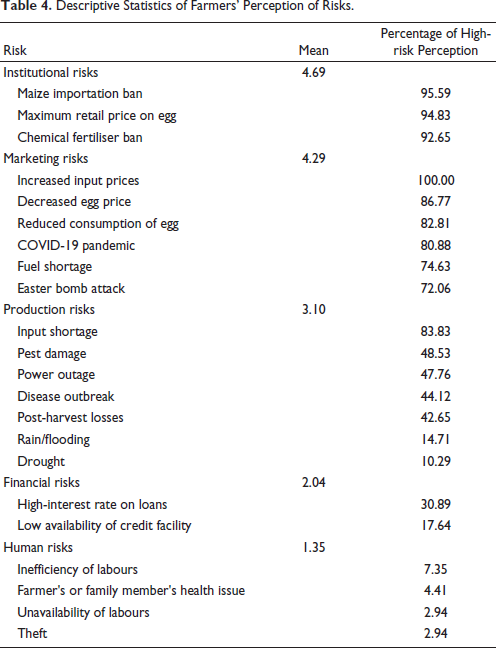
The study reveals that most farmers, surpassing 70% of participants, have expressed grave concerns about the country’s alarming decline in egg demand. This decline can be attributed to multiple factors, primarily the escalating prices of eggs and the overall inflation in the food market. Furthermore, the shortage of liquid petroleum gas (cooking fuel) has directly impacted the hotel and restaurant industry, leading to a further decrease in the demand for eggs. Additionally, the Easter bomb attack in 2019, which had a detrimental impact on the tourism industry, was identified as a significant risk that reduced demand for eggs.
Nearly 50% of the farmers surveyed have identified various production risks as significant concerns within the layer farming industry. These risks encompass a range of challenges, including post-harvest losses, pest damage, disease outbreaks and power outages, all of which can disrupt operations and impact profitability.
The respondents highlighted that post-harvest losses, a prominent risk factor, can be attributed to several underlying causes. Factors such as dietary calcium deficiencies, worker mishandling, cannibalism and high occurrence of damaged eggs from old flocks were identified as key contributors to these losses. Such losses significantly affect the overall profitability and sustainability of the business. Farmers also expressed concerns regarding predators, such as bandicoots, lynxes, snakes, dogs and palm civets, significantly threatening their farming operations. These predators have increasingly impacted the industry, mainly due to the planned daily power outages lasting 2–3 hours across Sri Lanka in 2022, specifically in the surveyed area of Kurunegala district. The power outages create vulnerabilities within the farming premises, providing opportunities for predators to infiltrate and further intensify the production risks associated with the business.
Interestingly, the farmers’ risk perception of the potential impact of extreme weather events, such as droughts and floods, was comparatively low. This could be attributed to the location of the study area in the Kurunegala district, which is situated in an intermediate climatic zone. The area experiences fewer extreme weather events than other regions, leading to a relatively lower risk perception among the farmers surveyed. Moreover, as the chicken is being reared in intensive poultry houses where environmental effects can be regulated, farmers may have a comparatively lower risk perception of extreme weather events.
Risk Attitude
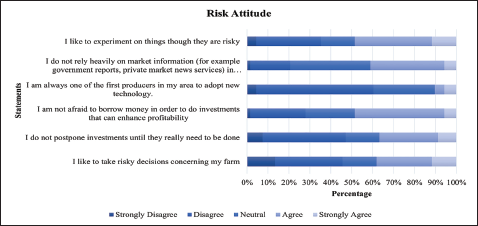
Figure 2 presents the study’s findings regarding farmers’ attitudes towards risk. One-third of the farmers in our sample were risk averse (35%), while 38% were risk neutral (38%). Only 27% of farmers were risk lovers. It can be observed that less than 50% of the farmers expressed a willingness to experiment with risky endeavours and, hence, make risky decisions concerning their farms. Additionally, only a tiny proportion, less than 10% of the farmers, indicated that they would be the first to adopt new technology in their farming practices. This conservative approach taken by a significant portion of farmers to embrace risk and adopt new technologies is potentially influenced by the financial and technical constraints they face.
Risk Attitudes of Farmers.
Risk Management Strategies Adapted by Farmers
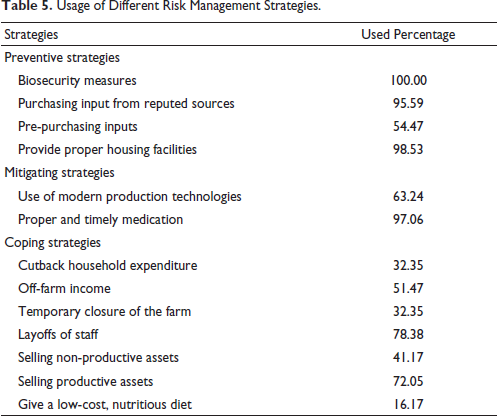
Farmers have employed various risk management strategies to mitigate their risks (Table 5). More than 90% of the farmers have implemented preventive measures, including biosecurity measures, timely medication for poultry diseases, sourcing birds from reputable suppliers, and providing appropriate housing facilities to reduce the risk of disease outbreaks (Figure 3). The high percentage of farmers adopting standard biosecurity measures reflects farmers’ awareness and proactive approach to managing risks associated with disease outbreaks.
Usage of Different Risk Management Strategies.
Risk Management Strategies Adopted by Farmers.
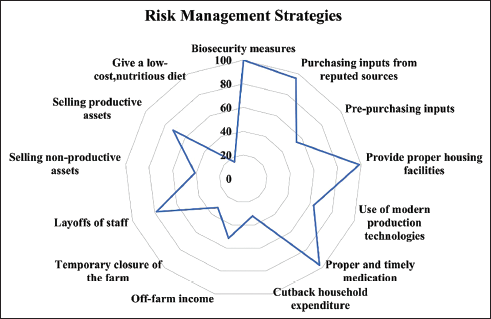
Despite price fluctuations being a common risk in the poultry layer business, they have yet to diversify their enterprise, engage in contract farming or take measures to reduce the cost of production, making them less resilient to these risks. The only risk management strategy that farmers use to protect them from input price fluctuation is the pre-purchase of inputs, with only 54% of the respondents adopting this approach. As a healthy risk-coping measure, 51% of the farmers have an off-farm income. This off-farm income enhances the farmers’ capacity to bear risks by providing additional financial security.
In response to recent risks faced by farmers, such as feed shortage, high feed prices and reduced demand for eggs, most farmers primarily relied on risk-coping strategies rather than risk management strategies. Closer to 17% of farmers shifted to low-cost but well-balanced diets in response to the unavailability and high cost of commercial feed in the wake of feed shortage. The low adaptation rate of these shifted diets can be attributed to poor knowledge of feed formulation, an unreliable supply of alternative maize and soybean meal feed ingredients, and inadequate storage facilities. Similarly, 83.83% postponed investment until the condition improved and hired labour (78.38%) was reduced to reduce the operational cost of the farm.
Apart from these, some farmers rely on income-smoothing risk-coping strategies, such as cutting down their household spending (32.35%) and selling non-productive assets (41.17%), such as household items and jewellery. Since the economic crisis has affected food and non-food prices, with the challenged livelihood of layer chicken farming, these farmers find it difficult to fulfil their basic needs, including food. Hence, they are looking for buyers for non-productive assets.
Alarmingly, one-third have sold their layer birds and temporarily closed poultry farms, while the rest (72.05%) have partially destocked the herd. They have started by selling older batches of birds (over 70 weeks), and as the situation worsens, they proceed to sell younger birds. It is worth mentioning that the birds from these farms are typically sold to the meat market, as the layer industry was no longer attractive to new investments. From the farmers’ perspective, temporary closure allows them to reduce the operational costs of their farms and mitigate losses. Since farmers have already invested in their businesses, they may prefer to resume operations once the situation improves. However, the uncertainty surrounding the crisis raises the possibility that some of these farms may be unable to resume operations even the situation is resolved.
Determinants of Risk Management Strategies
Table 6 reports the results of the multivariate probit regression estimated to identify the determinants of the adoption of three risk management/coping strategies: off-farm income, temporary closure of the farm and curtailing of household expenditure. As revealed by the analysis, the decision to adopt risk management/coping strategies is influenced by the farmer’s socio-economic characteristics, the farm’s features, the perception of risk and the attitude towards risk.
Determinants of Risk Management Strategies.
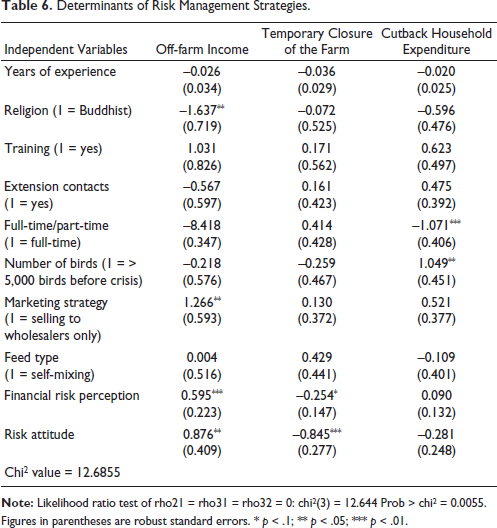
Note: Likelihood ratio test of rho21 = rho31 = rho32 = 0: chi2(3) = 12.644 Prob > chi2 = 0.0055.
Figures in parentheses are robust standard errors. * p < .1; ** p < .05; *** p < .01.
The decision of farmers to pursue an off-farm income as a risk management strategy is influenced by several factors, including their marketing strategy, financial risk perception, risk attitude and religion. Farmers who sell their products to wholesalers are more inclined to engage in off-farm activities than those using alternative marketing methods. This preference may stem from their time availability, as they avoid the responsibility of direct selling. Farmers who perceive higher financial risks are also more likely to seek off-farm opportunities to diversify their income. Additionally, risk attitude plays a role in their decision to diversify income sources. Risk-loving farmers tend to engage in off-farm activities and pursue multiple livelihood activities. Similar findings have been reported in previous studies conducted by Asravor (2018) and Rahman et al. (2021). However, Van Winsen et al. (2016) study suggests that risk-averse farmers passively manage risk by maintaining a financial buffer and ensuring off-farm income or expenditures during challenging times.
Similarly, the choice to destock the farm entirely is also affected by risk attitude, whereas risk-averse farmers exhibit a higher inclination to adopt this approach. On the other hand, farmers who perceive higher levels of financial risk are less likely to choose destocking as a risk-coping strategy. Interestingly, while the regression coefficient of herd size suggests a negative relationship between farm size and destocking, the relationship is not statistically significant, indicating that farm size does not play an important role in the decision to destock.
Two key variables that have been found to influence the decision to cut down household expenditures are farm size (scale of operation) and commitment (full-time/part-time). Farmers with more than 5,000 birds exhibit a higher tendency to cut back on their household expenses compared to those with less than 5,000 birds. This can be attributed to the fact that larger farms, which have made substantial investments in their operations, strive to sustain their business despite the risks they face. By reducing household expenditure, they can allocate additional funds to cover the costs associated with the farm. Large farms have more flexibility to adjust their household food consumption, as their current consumption level is above the subsistence level. Similarly, part-time layer chicken farmers included in the sample also cut back on household expenditure to allocate more resources to their business. This behaviour stems from their ability to adapt their household spending. The flexibility afforded by part-time farming allows them to prioritise and redirect funds towards supporting their agricultural endeavours.
Conclusion and Recommendation
The economic crisis in Sri Lanka has posed significant challenges for poultry farmers, threatening the survival of the farmers and, hence, the industry. A study assessed the risk perception, attitude and management strategies adopted by small-scale and medium-scale poultry farmers during this crisis. The study’s findings indicate that poultry farmers perceive policy changes, such as the ban on fertiliser and maize importation and government intervention in the retail market, as critical risks to their business. These risks originate from institutional factors, leading to new marketing and production risks. However, farmers and the industry have yet to develop effective risk management strategies to mitigate the negative impacts of these risks. The uncertainty regarding the industry’s future adds to the challenges farmers face. The study highlights the influence of risk attitude, perception and flock size on selecting risk management and coping strategies. It also reveals farmers’ limited access to training and extension services, indicating a need for institutional support during crises. Knowledge dissemination, access to credit facilities and improved storage facilities at the farm level are essential in reducing the impact of risks. Maintaining a two- to three-month inventory of inputs can help farmers protect themselves from adverse price fluctuations.
To safeguard small and medium-scale layer chicken farmers during the crisis, the study recommends fostering cooperation between these farmers and large-scale farmers. This collaboration can lead to economies of scale and support small-scale farmers during challenging times. Additionally, promoting unity among layer chicken farmers to advocate against ad hoc policy changes is crucial. Further research is needed to explore low-cost alternative feed ingredients to replace expensive conventional feed sources such as maize and soybean meal in poultry diets as a potential solution.
Footnotes
Declaration of Conflicting of Interests
The authors declared no potential conflicts of interest with respect to the research, authorship and/or publication of this article.
Funding
The authors received no financial support for the research, authorship and/or publication of this article.