




Abstract
Sexual harassment and abuse (SHA) are recognized problems in sport contexts, yet little is known about their occurrence in the equine sector. This study examined reported experiences of SHA among participants in the Swedish and Norwegian equine sector. An intersectional framework was applied to analyze the interplay of social characteristics and culturally informed inequalities associated with SHA. A retrospective, cross-sectional survey (N = 653) using the Interpersonal Violence Against Children in Sport Questionnaire (IVACS-Q) measured lifetime self-reported experiences of SHA in a self-selected sample, the majority of whom were women. Over half (54.9%) of respondents reported lifetime experiences of SHA in equine environments, including contact and noncontact forms. The vast majority of those reporting SHA were women, often in subordinate roles such as grooms or stable staff, who spent extensive time in equine environments. Reported perpetrators were most often older men in positions of authority linked to equine-centered power, such as riding instructors, stable owners, and horse owners. The findings highlight structural and organizational vulnerabilities in equine culture, where gender, age, and equine-centered power intersect to shape conditions associated with SHA. Therefore, preventing SHA in the equine sector requires context-sensitive, culturally and intersectionally informed safeguarding efforts.
Introduction
SHA is a global social problem that violates human rights and can seriously impact the health and lives of those affected (Krug et al., 2002). Globally, around 35% of women report lifetime sexual violence (Sardinha et al., 2022), and 13% report childhood sexual abuse (Stoltenborgh et al., 2011). There is growing awareness of the need to prevent harmful practices and promote safe sport environments, particularly in youth sports (e.g. Vertommen et al., 2024). This awareness stems in part from numerous widely publicized reports of harassment and abuse that have shaken the world of sport globally and locally in recent decades. These reports span various sports and forms of interpersonal violence against athletes. Sexual violence, one such form, is frequently reported as sexual harassment and abuse (SHA), as observed in this study. Given the overlap of sexual harassment and sexual abuse, we use these terms jointly in this study to refer to any contact or noncontact sexual conduct that is unwelcome, nonconsensual, or involves coercion or manipulation, or where consent cannot be given (see Mountjoy et al., 2016).
During the #MeToo movement, SHA, enabled by power imbalances and dependency in social and professional settings, gained widespread attention and sparked debate. Sport was among the affected domains. In Sweden, the equine sports community launched the campaign #visparkarbakut (“#wekickback”) during this time. Since then, multiple cases of SHA in the equine sector have been reported in both social and mass media. The severity of incidents and lack of support from leaders and organizations—particularly for girls and young women—have been highlighted in news articles (e.g. Nordström and Bränning, 2022), documentaries (e.g. SR, 2022; Uppdrag Granskning, 2023), books (e.g. Bohlin and Fåhraeus, 2021), and a television series (Nyberg, 2022). A few cases have resulted in criminal charges (e.g. rape in trotting and horse racing) or disciplinary actions (e.g. the 2022 suspension of a national team rider by the International Federation of Equestrian Sports for sexual harassment). In Norway, SHA in equine sports has also received growing attention. In 2025, several girls and young women in trotting reported SHA by high-status men. A representative from the Norwegian Trotting Association acknowledged that the #MeToo movement never impacted Norwegian equine sports, but it was about time it did (Frafjord, 2025). These accounts highlight persistent concerns in sport, where young individuals are subjected to SHA by those in positions of power and trust.
The problem of SHA in sport has also been widely recognized and reported in sport research as widespread (Bjørnseth and Szabo, 2018). According to public accounts from equine sports, young girls’ vulnerability appears pronounced, contrasting with the seemingly low risk for perpetrators, who often hold status and authority. Preventing SHA requires identifying enabling characteristics and contextual vulnerabilities—some possibly specific or unique to the equine environment. Understanding such characteristics can further prevention efforts within equine sports and inform broader sport environments.
This study aims to examine reported experiences of SHA among participants in the Swedish and Norwegian equine sector. Specifically, we investigate the following research questions:
RQ1. What are the reported SHA experiences within equine environments among a self-selected sample of equine-sector participants? RQ2. What are the reported characteristics of equine-sector participants reporting SHA in terms of age, gender, and their equine sector role and activity at the time of the SHA? RQ3. What are the reported characteristics of perpetrators, including age, gender, and equine sector role?
In addition, we use an intersectional framework to analyze our findings and discuss how participant and perpetrator characteristics (e.g. age and gender) intersect with socioculturally informed inequalities (e.g. based on equine sector roles) associated with SHA in equine environments.
Prevalence and characteristics of sexual harassment and abuse in sport
A growing body of research has examined SHA prevalence across sports in different regions of the world (e.g. Africa (Rintaugu et al., 2014), Asia (Ahmed et al., 2022), Australia (Pankowiak et al., 2023), Europe (Hartill et al., 2023; Vertommen et al., 2016); North America (Parent et al., 2015; Timon et al., 2022) and in review studies (e.g. Bjørnseth and Szabo, 2018; Gaedicke et al., 2021; Parent and Fortier, 2018; Wilinsky and McCabe, 2021). Research on SHA in sport more broadly has employed both quantitative and qualitative methods, for example, interview studies with athletes about their experiences of SHA (see Bjørnseth and Szabo, 2018; Gaedicke et al., 2021; Wilinsky and McCabe, 2021). Given the method and focus of our study, this review will mainly address prevalence studies and other quantitative findings on risk factors and characteristics of SHA in sport.
Reported prevalence rates from large samples include, for example, 14% for sexual violence (Vertommen et al., 2016), 29% for sexual harassment in a self-selected sample (Alexander et al., 2011), and 0.5–12% for sexual abuse across studies (Tuakli-Wosornu et al., 2024). In Sweden, a survey of a random sample of 477 athletes from across all sports and performance levels found that 5.5% had experienced SHA perpetrated by coaches, as measured by a five-item measure of SHA (Johansson and Lundqvist, 2017). Recent research in Norway examining experiences of SHA during the past year highlights that 25% of young male and female adults (18–30 years), in all types of organized sports, reported experiences of SHA (Fasting et al., 2024). Among adolescents, 14% of male and female elite athletes and 21% of recreational athletes in various sports reported experiences of SHA in a sport setting the previous year (Sølvberg et al., 2022). Strandbu et al. (2023), also examined experiences of SHA during the past year among male and female adolescents in organized sports in Norway, reporting that 10% had experienced sexual comments about themselves or one's bodies, 4% had been sexually touched against their will, and 3% had experienced sexual assault/abuse. Studies separating contact from noncontact SHA report higher rates of the latter, for example, 34.6% noncontact versus 20.0% contact (Hartill et al., 2023), and 25% verbal, 27% nonverbal, and 14% physical SHA (Sølvberg et al., 2022).
As shown in the literature reviewed above, SHA are global phenomena that can occur across sport disciplines, performance levels, genders, and age groups. That said, scholars have examined potential risk factors and vulnerabilities that may contribute to the occurrence of interpersonal violence, including SHA, in certain sport contexts (Tuakli-Wosornu et al., 2024; Vertommen et al., 2016, 2024). Reviewing organizational factors enabling interpersonal violence in sport, including SHA, Roberts et al. (2020) highlighted power imbalance, conformity to dominant values, and organizational tolerance of abusive behaviors as key factors. Groups identified as potentially vulnerable within sport contexts include children, LGBTQI+ athletes, and athletes with disabilities (Bjørnseth and Szabo, 2018; Mountjoy et al., 2016; Sølvberg et al., 2022; Tuakli-Wosornu et al., 2024; Wilinsky and McCabe, 2021). Moreover, young age is broadly associated with vulnerability, as age-of-consent legislation reflects the recognition of minors as particularly vulnerable. Risks for SHA in sport have also been found to increase with higher competition levels, elite sport culture, and related time investment (Bjørnseth and Szabo, 2018; Mountjoy et al., 2016; Tuakli-Wosornu et al., 2024; Vertommen et al., 2016; Wilinsky and McCabe, 2021). Girls and women typically report SHA more frequently, and most reported perpetrators are male (Bjørnseth and Szabo, 2018; Fasting et al., 2004; Tuakli-Wosornu et al., 2024; Vertommen et al., 2017; Willson et al., 2022). While many perpetrators hold positional power through their roles in sport (e.g. coaches), others can be peers, leaders, volunteers, staff, and parents (Mountjoy et al., 2016; Sølvberg et al., 2022; Strandbu et al., 2023). Peer-perpetrated SHA appears more common than that carried out by much older individuals (Alexander et al., 2011; Bjørnseth and Szabo, 2018; Sølvberg et al., 2022). SHA occurs online and offline (Sanderson and Weathers, 2020; Tuakli-Wosornu et al., 2024) in connection with training, competition, travel, social events, and private settings (Dodd et al., 2024; Johansson and Lundqvist, 2017).
The above results provide important insights. Yet, mapping potential risks and vulnerabilities remains a pressing yet complex challenge (Hartill et al., 2023; Tuakli-Wosornu et al., 2024; Vertommen et al., 2024). In review studies, researchers have highlighted a general lack of theoretical underpinning in studies on SHA in sport, as well as in sport-related prevention efforts (Forsdike and Giles, 2024; Forsdike and O'Sullivan, 2024; Kaufman et al., 2022). Moreover, sport-specific and contextual factors associated with SHA remain understudied, which may debilitate effective safeguarding (Hartill et al., 2023; Tuakli-Wosornu et al., 2024; Vertommen et al., 2024). For example, studies focusing specifically on SHA in equine sports are limited. The only identified previous study is a Swedish report on health in horse racing and trotting, which represents only a subset of the equine sector, in which 8% reported SHA within the last three months (Edlund, 2023). Most were young women, and common forms included unwelcome sexual attention, offensive remarks, and uncomfortable touching; some also reported the distribution of sexual content and coerced sex. This points to a need for more targeted research into the scope and context of SHA in the equine sector.
Theoretical framework
The study employs an intersectional framework to analyze the intersections between social characteristics and culturally informed inequalities associated with SHA in equine environments. Intersectionality emphasizes how power structures and social categories such as gender, class, age, ability, sexuality, ethnicity/race, and nationality are not separate but mutually constructing phenomena (Collins, 2015). Through these interrelations, intersecting systems of power can generate complex social formations and inequalities, producing new dimensions of power. As a theoretical, methodological, and analytical framework, intersectionality has been widely applied across disciplines and research areas (Bauer et al., 2021; Collins, 2015). When applied to SHA, an intersectional framework highlights how sexual violence can be both a cause and a consequence of intersecting inequalities, with power at the core (Armstrong et al., 2018).
Power inequalities permeate all levels of sport and society (Forsdike and Giles, 2024; Gaedicke et al., 2021). Inequalities are reinforced through the interplay of multiple sources of power across society at large, through sport in general, and within specific sports. Culture shapes behavior and conditions power through socialization across interpersonal, organizational, and structural levels (Solstad and Strandbu, 2019; Tuakli-Wosornu et al., 2024). These socioculturally embedded inequalities are mutually constructing and can generate additional dimensions of inequality that heighten vulnerability and dependency for certain groups, relationships, and individuals (Collins, 2015). While sport cultures and risk factors can share common features, context-specific power dimensions may also be shaped by characteristics that diverge across sports (Forsdike and Giles, 2024).
The intersectional framework used in this study encompasses societal, sport-related, and equine-specific characteristics, as well as the meanings ascribed to them in equine environments, in relation to SHA. Based on our literature review, we include characteristics such as gender, age, disability, and sexual orientation. Gender is central, as girls and women tend to report SHA more often, while men are more often identified as perpetrators. Age is also important, with young people particularly vulnerable and older perpetrators frequently highlighted. Sport characteristics reported to increase risks include higher competition levels, extended time spent in sport environments, and subordinate roles in relation to perpetrators.
In addition to the above characteristics, equine sport culture is shaped by its military legacy, marked by hierarchical and masculine structures, with norms that instill discipline and obedience (Plymoth, 2012; Thorell et al., 2018; Waerner, 2025). Today's equine sports, especially in countries such as Sweden and Norway, mainly attract women and girls who become highly invested in horses and stable life from an early age (Rosén et al., 2021; Waerner, 2025). At the same time, men continue to dominate positions of equine authority (Hedenborg and Hedenborg White, 2013; Plymoth, 2012; Thorell et al., 2018). These contextual sociocultural implications are important because positional and relational power asymmetries are well-recognized risk factors for SHA in sport (Gaedicke et al., 2021; Tuakli-Wosornu et al., 2024) and will be analyzed in relation to our findings.
A unique characteristic distinguishing equine sports from other sports is the horse's centrality and the prerequisite of access to horses for sport participation. Waerner (2025) described how equine-centered participation confers power and authority on decision-makers such as horse and stable owners, who control access to horses, opportunities to compete, and stable-related privileges. Girls and young women rarely hold such positions, leaving them subordinate and dependent on those with this type of equine-centered power. Waerner (2025) concluded that hierarchies and power structures are accepted and reproduced in order not to risk losing access to the horses. Hence, the risk of exploitation and abuse enabled by equine-centered power appears evident and may also be associated with SHA.
The equine sector in Sweden and Norway
The equine sector is broad and multifaceted, covering sports, leisure, education, professions, and public entertainment—all centered around the horse. Caring for horses is fundamental across the sector. In Sweden and Norway, equestrian and Icelandic horse sports are part of the national sport confederations. Women comprise 93% of Swedish and 90% of Norwegian equestrian federation members (Norwegian Sports Confederation, 2023; Swedish Equestrian Federation, 2023). Equestrian sports are major youth and leisure activities, primarily centered around stables—riding clubs, riding schools, or private facilities. Riding schools offer riding and horse-care education for all levels, thus increasing accessibility. Some stables are affiliated with national confederations; others are independent. Icelandic horse sports are well established in both countries, including competitive and leisure riding (Norwegian Icelandic Horse Federation, n.d.; Swedish Icelandic Horse Federation, n.d.). While some stables are dedicated to Icelandic horses, many house mixed breeds and operate outside formal sport structures.
Trotting 1 is another major equine sport, governed separately by national trotting associations. It involves harness racing and operates commercially, not under national sport confederations. Horse racing is smaller in scale and organized by Svensk Galopp in Sweden and Øvrevoll Galoppbane in Norway. Trotting and horse racing rely heavily on betting revenues, funding prize money, racetracks, and jobs across the industry.
Beyond these core sports, the equine sector includes various other activities and professions, such as farriery, veterinary work, horse therapy, and breeding. It also encompasses practices like natural horsemanship, western riding, trail riding, camps, and tourism. Equine educations span from short courses to high school and university programs.
Methods and materials
Designed as a retrospective cross-sectional questionnaire study, this research involved equine-sector participants in Sweden and Norway, encompassing all horse activities within the equine sector, including the main organized equine sports: trotting, horse racing, Icelandic horse sports, and equestrian sports. These sports organize disciplines such as dressage, show jumping, eventing, endurance riding, vaulting, carriage driving, mounted games, working equitation, para, gaited riding, pace disciplines, Thoroughbred racing, and pony racing.
Questionnaire
Developed using the online survey instrument SurveyXact, which is compliant with the General Data Protection Regulation, the questionnaire comprised an information letter and four sections. Section one included demographic variables (language, gender, year of birth, sexual orientation, disability, residence, economic possibilities during childhood, Table 1) and background information on the respondent's current equine sector role, average time spent in the stable/equine environment, competition level, and equine-related education (Table 2). Section two focused on the social environment and culture in the stable and within equine sports. The questions covered the respondents’ overall experience and, more specifically, how their reported experiences ranged from agreement to disagreement on 15 different statements about the equine environment. Section three addressed authority-subordinate sexual relationships, interpersonal boundaries, gray areas, and sexual consent. Section four focused on SHA in the equine sector. The Interpersonal Violence Against Children in Sport Questionnaire (IVACS-Q) was used to measure lifetime self-reported experiences of SHA (Hartill et al., 2021, 2023; Vertommen et al., in review). The instrument includes 15 items covering noncontact (items 1–9) and contact (items 10–15) forms of SHA (Table 3). The response options were “yes,” “no,” and “do not want to answer.” Respondents who answered yes to any item received follow-up questions about age of onset, equine-sport discipline, equine sector role, time spent in the equine environment, location of the incident, and the perpetrator's age, gender, and role. These follow-ups focused on what the respondent considered their most serious SHA experience (see Hartill et al., 2021, 2023). In response to the aim and research questions of this article, information from sections one and four was used.
The terms sexual harassment and sexual abuse were applied in line with their established usage in Swedish and Norwegian contexts as well as in equine sport policies (see Norwegian Equestrian Federation, n.d.; Swedish Trotting, 2015). In the questionnaire, SHA was explained to the respondents as:
Unwelcome, offensive sexual activities that have occurred against your will—without consent, with manipulated or coerced consent, or when you were too young to give valid consent. When responding, reflect on your past experiences in the equine environment, including any childhood, adolescent, and/or adulthood experiences.
Translations and pilot testing
Two versions of the questionnaire were developed (Swedish and Norwegian), with maximal verbal similarity. The IVACS-Q items were translated from English, and two independent bilingual individuals back-translated the Swedish and Norwegian versions into English. Both showed strong correspondence with the original; the project group discussed and revised any minor deviations. A final comparison of the Swedish and Norwegian versions revealed no significant discrepancies; given their close linguistic relation, the versions were essentially identical.
The questionnaire was piloted on a purposive sample (n = 46) of equine-sector participants, recruited with help from the project's two reference groups (comprising representatives from the equine industry and the academic community). The pilot respondents were current or former professionals in various equine fields, several also researchers. This allowed for feedback both from target users and an academic perspective. Pilot testing led to minor adjustments in wording and structure.
Sampling and respondent recruitment
The research was based on a self-selected group of current and former equine-sector participants above the age of 16. The questionnaire was published online on August 1, 2024, in Sweden and on September 9, 2024, in Norway and closed on January 13, 2025.
A bilingual website (Swedish and Norwegian) promoted the study, provided information, and recruited respondents (www.trygghest.com). It included study details, the research team's contact information, participation instructions, a regularly updated news section, and a direct link to the online survey. Recruitment also took place via social media (e.g. equine-related Facebook groups), our university websites (nih.no, gih.se), posters, and articles in equine media (e.g. Tidningen Ridsport, Hästsverige.se, Hest.no, Ice Horse, Travronden, Hovslagarmagasinet). Additionally, emails were sent to Swedish and Norwegian equine federations, organizations, and education centers, encouraging them to disseminate the project information.
Respondents
Of the 902 respondents who accessed the survey, 708 consented to participate. We omitted 54 who provided consent but answered no questions, and one who did not select a language used to identify country affiliation. This resulted in 653 respondents being included in the statistical analyses.
Statistical analysis
All data were analyzed using SPSS version 28 (IBM, NY, USA) and presented as mean with standard deviation or numbers and percentages. Differences between categorical variables were analyzed using Chi-square tests, whereas independent sample t-tests were applied to numerical variables. A binary logistic regression analysis with odds ratio (95% CI) was used to examine the relationship between a set of independent variables and reported exposure to SHA. Groups with fewer than ten participants were excluded. No multicollinearity was observed between the variables (tolerance levels > .1). p-value ≤ .05 was considered statistically significant.
Research ethics
The Swedish Ethical Review Authority (No. 024–02371-01), the Norwegian Agency for Shared Services in Education and Research (No. 746187), and the Ethical Review Board at the Norwegian School of Sport Sciences (No. 338-091124/190624) approved the study. The retrospective design enabled the exploration of lifetime experiences, from childhood to adulthood, without involving young children—a common approach in research on SHA during youth (e.g. Parent et al., 2015; Vertommen et al., 2016). The minimum participation age was 16. From this age in Norway (15 in Sweden), individuals may consent to participate in research without guardian approval (Norwegian Health Research Act §17).
Given the potentially sensitive nature of the topics and experiences, several ethical safeguards were implemented. The questionnaire's front page included detailed information about the project, procedures, and the survey. Respondents had to confirm they were at least 16 years old and provide electronic consent before accessing the questionnaire. Participation was anonymous and voluntary, as also emphasized by the use of a self-selected sampling method. While all questions needed to be answered to advance, sensitive items included a “Prefer not to answer” option. The questions about SHA were preceded by a note informing respondents of the sensitive content and reminding them of their right to withdraw at any time. This section and the end of the questionnaire included open-ended questions where respondents could elaborate on their experiences or share reflections. To address potentially distressing content, we brought in a licensed clinical psychologist for the project in each country. The psychologist's and the project leader's contact details were provided at the end of the questionnaire. In addition, contact information for low-threshold support services was listed.
Results
Demographic results
There was an equal distribution of respondents from Sweden (49%) and Norway (51%), with a mean age of 39.6 years. Most of the respondents were women (95.9%), about nine out of 10 identified as heterosexual (91.4%), and 8.5% reported a permanent disability. The majority of respondents lived in rural towns/countryside areas (40.9%) or small/medium-sized cities (35.8%). Approximately three out of five (62.8%) reported that their family “always or often” were financially able to afford things during their childhood. See Table 1 for more demographic details (Table 1).
Demographic information presented as number (percentage) if not otherwise specified.
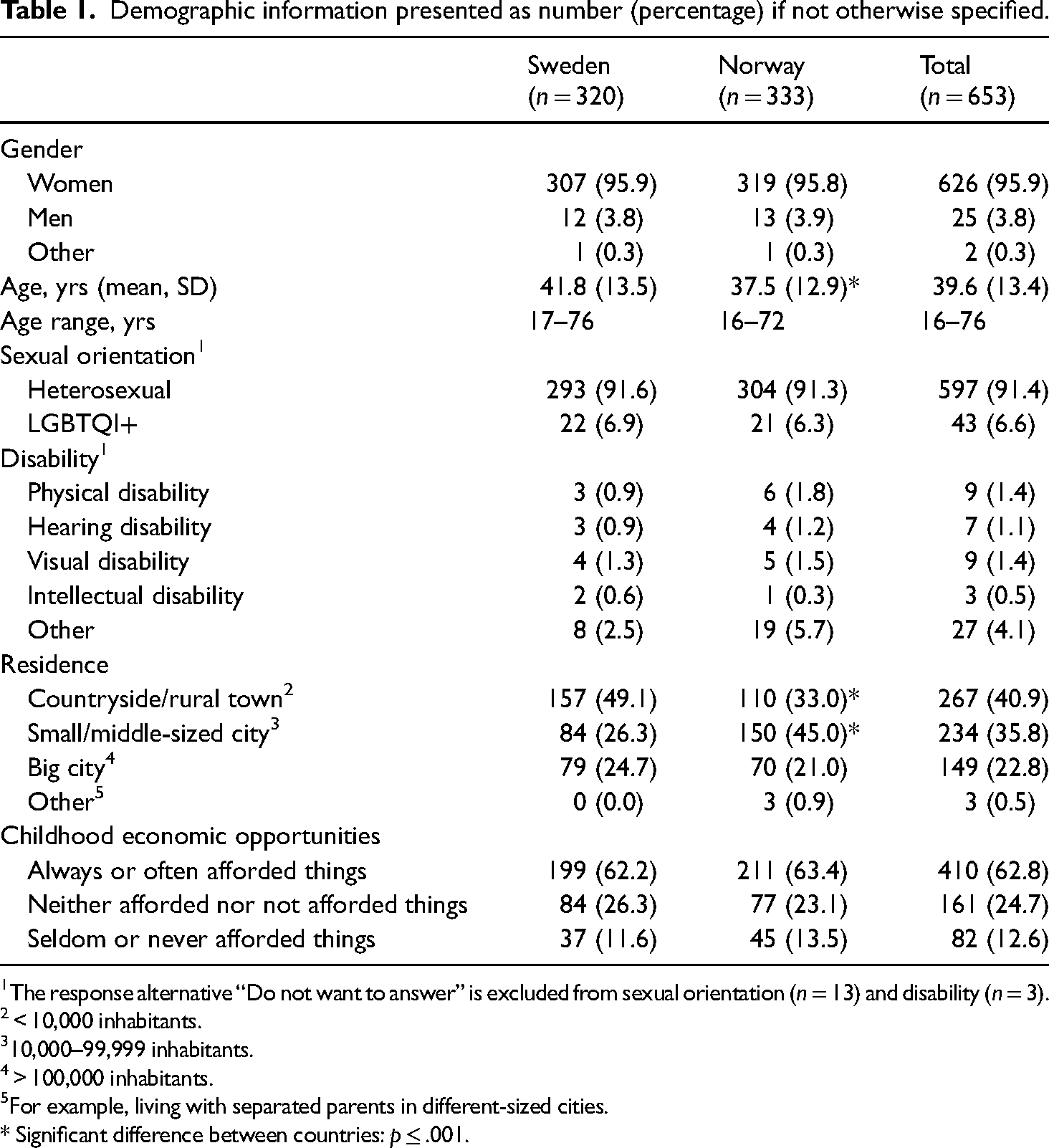
The response alternative “Do not want to answer” is excluded from sexual orientation (n = 13) and disability (n = 3).
< 10,000 inhabitants.
10,000–99,999 inhabitants.
> 100,000 inhabitants.
For example, living with separated parents in different-sized cities.
* Significant difference between countries: p ≤ .001.
Equine-related demographic results
The vast majority (87.0%) of the study sample was still active in equine sport at the time of the data collection, 8.7% was inactive, and 4.3% had quit. The respondents had been, on average, 27.5 years in the equine environment, currently spending a mean of 29.3 h per week in this environment (Table 2). Almost three out of four (74.4%) were active in equestrian sports (Table 2). The most frequently reported equine sector roles were “riding own horse for training, leisure/recreation, work, etc.” (60.7%), “competing on own horse” (33.1%), and “riding others’ horses for training, leisure/recreation, work, etc.” (23.3%) (see Supplemental Table S1) (Table 2).
Equine-related demographic results presented as number (percentage) if not otherwise specified.
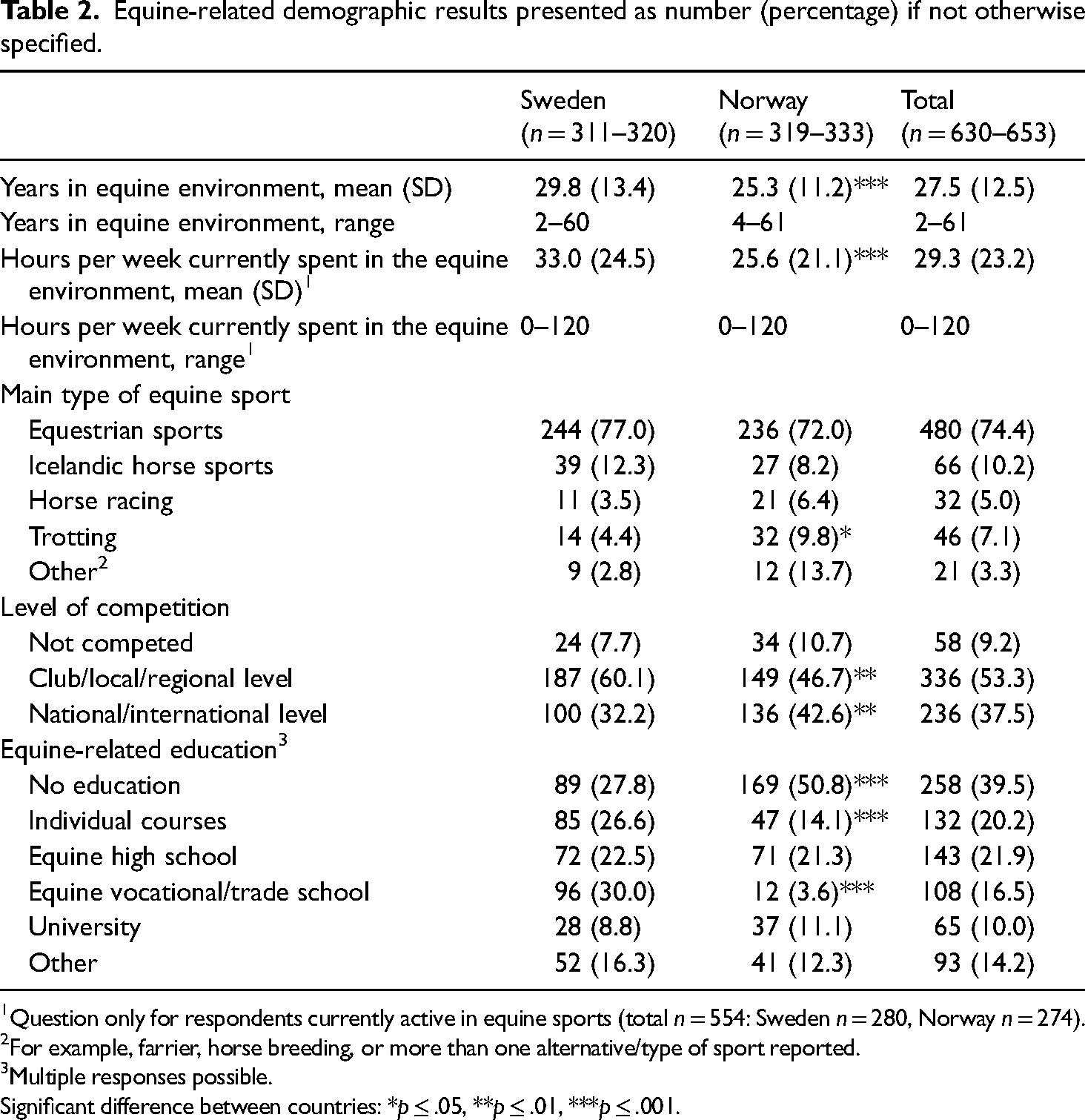
Question only for respondents currently active in equine sports (total n = 554: Sweden n = 280, Norway n = 274).
For example, farrier, horse breeding, or more than one alternative/type of sport reported.
Multiple responses possible.
Significant difference between countries: *p ≤ .05, **p ≤ .01, ***p ≤ .001.
Sexual harassment and abuse
In total, 54.9% (n = 300) of respondents reported one or more SHA experiences in the equine environment. No significant difference was found between Sweden (52.0%) and Norway (57.9%) in overall reporting of SHA (p = .197); therefore, further country-level results are not presented. More than half of the respondents (53.3%) reported noncontact forms of SHA, and 26.2% reported contact forms. The most frequently reported incidents of SHA were obscene or sexual comments (44.5%), inappropriate staring or leering (43.8%), and being caressed/touched sexually or forced to touch someone sexually (22.2%) (Table 3).
Frequency of reported SHA at item level.
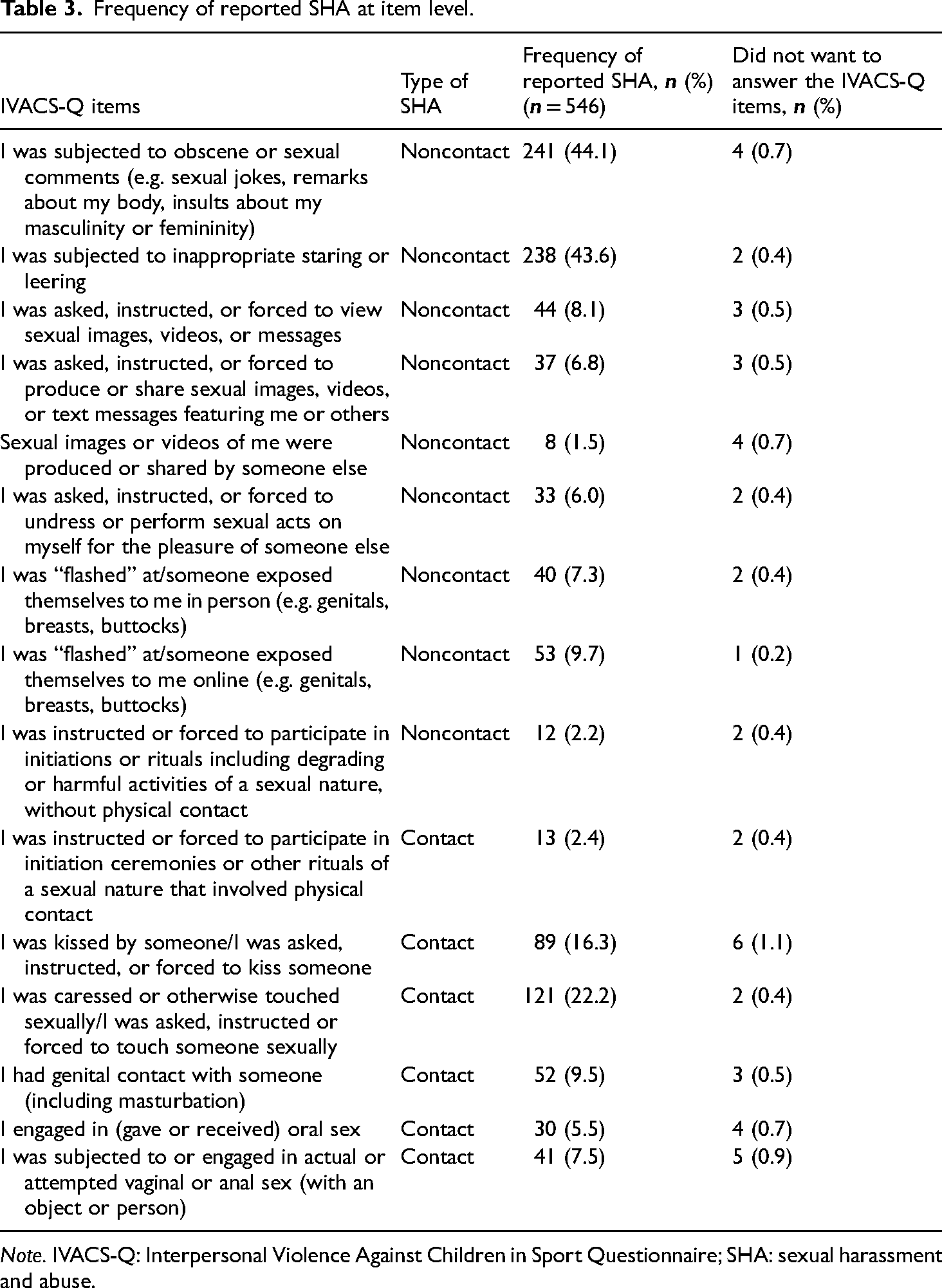
Note. IVACS-Q: Interpersonal Violence Against Children in Sport Questionnaire; SHA: sexual harassment and abuse.
A logistic regression including gender, sexual orientation, disability, economic opportunities, type of sport, role, and competition level was statistically significant overall (X2 (31, n = 535) = 73.21, p < .001). Three variables made a unique significant contribution, namely type of sport, role, and economic opportunities, controlling for the other variables in the model. Respondents currently active in horse racing (OR = 4.99, CI [1.59–15.69]) or trotting (OR = 4.57, CI [1.81–11.54]) sports had greater odds of reporting SHA compared to those in equestrian sports (see also next section for incident characteristics). Current riding school students had lower odds (OR = 0.16, CI [0.06–0.40]) of reporting SHA than nonstudents. Respondents from families with neither good nor poor childhood economic opportunities had higher odds (OR = 1.6, CI [1.03–2.55]) than those who could always or often afford things during their childhood (Table 3).
Regarding location, 65.1% of respondents reported that the incident happened in an equine-related facility, 29.0% in a social setting outside the stable arranged by the stable/club (e.g. dinner, party, celebrations), 25.4% in connection with travels/sleepovers, 20.2% through digital communication (e.g. email, SMS, chat, social media, phone call), 15.8% in a car/trailer, 14.0% in someone's home, and 1.8% in another location.
Characteristics of respondents reporting SHA
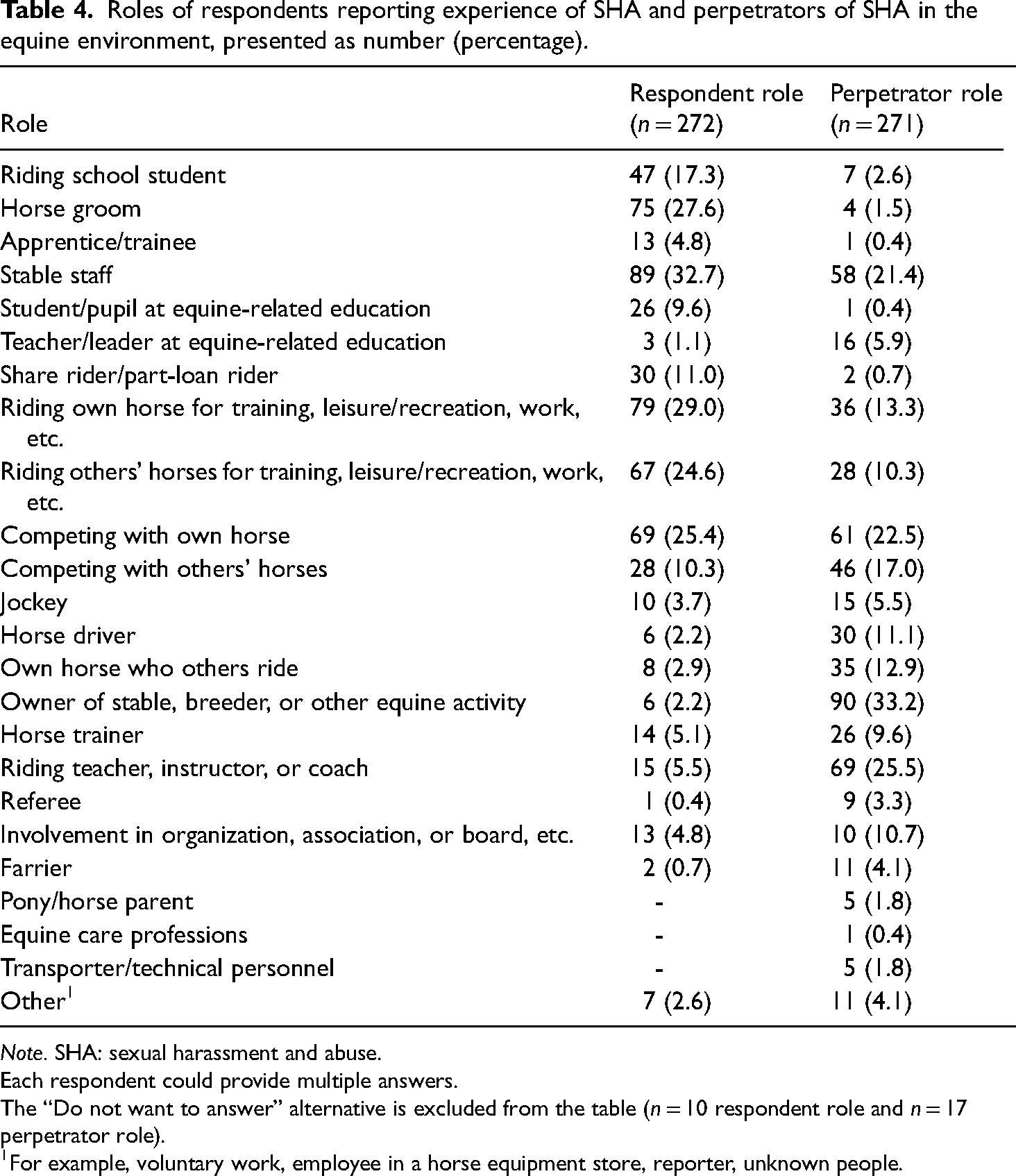
Among respondents reporting SHA, 96.3% (n = 289) identified as women, 3.3% (n = 10) as men, and one person reported another gender identity. For those who answered the follow-up questions regarding their most serious experience, the mean age at victimization was 18.7 years (SD = 6.4, range 10–50), with 33.8% (n = 72) aged 15 or younger. On average, respondents spent 38.2 h per week (SD = 29.2) in the equine environment during the victimization. At the time, 32.7% were stable staff, 29.0% rode their own horses, and 27.6% were horse grooms (Table 4). Nearly three out of five (58.1%) experienced their most serious SHA incident in riding/equestrian sports, of whom 93.2% remain active. Just under 15.0% (14.7%) had their most serious experience in trotting; 53.7% still do trotting, while 29.2% now do riding. Of the 9.6% who reported their most serious incident when horse racing, 80.8% still participate in this discipline, and 19.2% now do riding. Of the 5.5% who reported Icelandic horse sports, 87% remain in the same environment (Table 4).
Roles of respondents reporting experience of SHA and perpetrators of SHA in the equine environment, presented as number (percentage).
Note. SHA: sexual harassment and abuse.
Each respondent could provide multiple answers.
The “Do not want to answer” alternative is excluded from the table (n = 10 respondent role and n = 17 perpetrator role).
For example, voluntary work, employee in a horse equipment store, reporter, unknown people.
Perpetrator characteristics
The reported perpetrator was, in most cases, a man (92.6%), but 13 respondents reported that the perpetrator was a woman. More than half (55.7%) who experienced SHA reported that the perpetrator was more than 15 years older than they were. Approximately one-third (31.7%) reported that the perpetrator was about 5–15 years older, 6.6% reported a same-age perpetrator, while 0.4% reported a younger perpetrator. The majority (71.2%) also perceived the perpetrator to be in an authority position in relation to them at the time of victimization. The perpetrator's most frequent role was reported to be the stable owner/breeder/involved in another equine activity (33.2%), a riding teacher/instructor/coach (25.5%), a person competing on their own horse (22.5%), and a stable staff member (21.4%). For further details, see Table 4.
Dropout analyses
A higher percentage of respondents who completed the entire questionnaire had received an equine vocational/trade school education (p = .32), were riding their own horses (p < .001) or others’ horses (p < .001), compared to those who terminated the questionnaire before the SHA section (n = 107). No other differences were found in demographic variables (age, gender, sexual orientation, disability, residence, economic background) or equine-related variables (type of equine sport, current activity, competition level, equine education, years in the sector, weekly hours, or role) between completers and noncompleters.
Discussion
This study aimed to examine reported experiences of SHA among participants in the Swedish and Norwegian equine sector. Over half (54.9%) of respondents reported, based on IVACS-Q items (Hartill et al., 2023), one or more incidents of SHA in equine environments. Alexander et al. (2011) found that 29% of a self-selected sample had experienced sexual harassment. In Hartill et al. (2023), 34.6% reported contact and 20.0% noncontact forms, compared to 26.2% and 53.3% in our sample. While differences in materials, methods, and samples limit direct comparisons, these findings underscore the need for further research. Notably, all respondents who began the IVACS-Q completed all items, with no item-level dropouts—possibly indicating a readiness to disclose their SHA experiences. The most frequently reported SHA experiences included exposure to obscene or sexual comments, inappropriate staring or leering, and being caressed or touched sexually, or forced to touch someone sexually (see Table 3). These findings align with previous studies, which also identified the aforementioned situations as being most frequently reported (e.g. Edlund, 2023; Hartill et al., 2021, 2023; Willson et al., 2022).
The regression analysis showed that respondents currently active in horse racing and trotting reported significantly higher odds of SHA than those in equestrian sports, while riding school students reported lower odds. Meanwhile, most respondents reported that their most serious SHA experience occurred within equestrian sports. These findings call for deeper analysis and further research to better understand the occurrence of SHA in different equine sports and parts of the sector. The regression also indicated that respondents from families with average childhood economic conditions had higher odds of reporting SHA than those who could always or often afford what they needed. Socioeconomic status as a risk factor for SHA remains underexplored. However, Strandbu et al. (2023) found that reports of sexual harassment were least common among youth with high socioeconomic status and most common among those with low status. The demographic variables gender, sexual orientation, disability, and level of competition were not statistically significant. This is worth noting given that previous studies have reported a higher risk of SHA among women, nonheterosexual athletes, athletes with disabilities, and those competing at high performance levels (Tuakli-Wosornu et al., 2024; Vertommen et al., 2016). However, the skewed gender ratio, the low number of participants in the LGBTQI+ and disability groups, and the nonrepresentative self-selected nature of our sample limit the interpretation of these findings.
There was a clear gender pattern, with SHA mainly reported by women and perpetrated by men, a distribution consistent with many previous studies (e.g. Bjørnseth and Szabo, 2018; Fasting et al., 2004; Sølvberg et al., 2022; Vertommen et al., 2017). It is noteworthy, however, that most respondents were women, limiting the possibility of statistical analyses of gender differences. The age at onset ranged from 10 to 50 years, with a mean of 18.7. Some reported exposure over long periods and on multiple occasions. Today's equine sector lies at the intersection of a tradition shaped by male dominance and rule conformity and a participant base largely composed of committed girls and young women in subordinate positions (Hedenborg and Hedenborg White, 2013; Plymoth, 2012; Thorell et al., 2018; Waerner, 2025). Risk factors for SHA in sport are broadly linked to structural inequalities and relational power imbalances (Forsdike and Giles, 2024; Gaedicke et al., 2021; Roberts et al., 2020). In line with this, our findings indicate that inequalities shaped through the interplay of age and gender appear to be associated with reported SHA in equine environments. Our intersectional framework further highlights how these dynamics, situated within broader power hierarchies in sport and society, may exacerbate vulnerabilities in the equine sector.
In equine environments, power dynamics appear to extend beyond the traditional coach–athlete relationship. An equine-centered form of power, stemming from access to horses, can enable power and authority for some, while rendering others subordinated, dependent, and vulnerable. Our findings showed that 71.2% of those reporting SHA perceived the perpetrators as being in positions of authority. Perpetrators were often reported as considerably older men, likely with potential structural, organizational, and equine-centered power through their common roles as stable owners, riding teachers, or competitive horse owners. The age gap appeared greater in our findings than in prior studies, where peers and teammates were more commonly reported as perpetrators (e.g. Alexander et al., 2011; Hartill et al., 2021; Sølvberg et al., 2022). Respondents reporting SHA were most often stable staff or horse grooms (see Table 4). “Competing on own horse” was more evenly distributed between participants and perpetrators, perhaps reflecting a complex interplay between power and independence—including equine-centered power. These findings indicate that SHA in the equine sector is not only a safe sport concern but also an employee health and well-being concern. Our intersectional analysis shows how equine-specific contextual inequalities, such as equine-sector roles and equine-centered power, together with participant and perpetrator characteristics such as age and gender, intersect to shape the conditions associated with SHA occurrence.
Respondents reporting SHA spent an average of 38 h per week in equine environments, compared to 29 h among all respondents. Stable time, where human–horse interactions intertwine with interpersonal relationships, may reflect strong social and lifestyle-oriented commitment, which also aligns with our finding that those exposed were often stable staff or grooms. While deep involvement and sport as lifestyle is usually associated with elite sport (see Wilinsky and McCabe, 2021), it appears broadly common in equine environments. For example, a committed equine participant in a role as groom or stable staff, or a student may relocate to live near the stables, perhaps in housing provided by or shared with the horse owner or employer. Such situations, likely uncommon in other recreational sports, may create high-risk situations of dependency and isolation that may facilitate boundary transgressions and ultimately SHA. Isolation with the perpetrator has been identified as a common enabling factor for sexual abuse (Dodd et al., 2024; Roberts et al., 2020). In our findings, most SHA incidents reportedly occurred at equine-related facilities but also in associated settings, such as social events, travel, private homes, cars, or horse trailers, and through digital communication. We suggest that this intersection of situational and environmental conditions, shaped by practical and sociocultural aspects of the equine environment, can facilitate boundary transgressions and isolation.
In sum, our intersectional analysis suggests that social and contextual characteristics may combine in ways associated with SHA in equine environments. Age and gender intersect with subordinate participant roles and superior perpetrator roles, partly rooted in equine-centered power and embedded in organizational and structural hierarchies. These intersections can create constellations of dependency and inequality, for instance when young women in subordinate roles rely on older men for access to horses, training, or competition opportunities. Taken together, these layered dynamics indicate that intersecting inequalities in the equine sector can be associated with SHA.
The study's limitations and strengths
Self-reported data have limitations and potential biases, including the risk of both under- and overreporting SHA. Underreporting may stem from delayed disclosure, topic sensitivity, or SHA's hidden nature (e.g. grooming, normalization, or minimization of abuse). Conversely, heightened awareness of SHA and a desire to help others may encourage disclosure. Some individuals without SHA experiences may also self-exclude, believing they have nothing to contribute (see Johansson and Lundqvist, 2017). Statistical tests of gender differences were not conducted due to a skewed, female-dominated sample, although this appears to reflect the equine sector's gender distribution (Norwegian Sports Confederation, 2023; Swedish Equestrian Federation, 2023). The follow-up questions focused only on respondents’ most serious SHA experience, reducing time and emotional burden, albeit at the expense of data detail. Self-selected samples, as used in earlier research on interpersonal violence in sport (e.g. Alexander et al., 2011), may limit representativeness. Since no random sampling was used, generalizability is not claimed. Still, the approach yielded a large, information-rich sample, which is noteworthy given the risk of low response rates in surveys, including in studies addressing sensitive topics, such as SHA (Parent et al., 2015). A notable share of respondents lived in rural or small-town areas, possibly reflecting the sample's relatively high proportion of horse owners.
Self-selected sampling may also have certain strengths. It can enhance voluntariness and anonymity, particularly when personal targeting or identifiable data collection (e.g. through membership lists) is avoided (Alexander et al., 2011; Sharma, 2017). This approach also enabled us to include current and former equine-sector participants, which seemed important given that negative experiences such as SHA may contribute to dropout, and that distance from the sport can lead individuals to later reframe accepted behaviors as harmful (Willson et al., 2022). Furthermore, it facilitated the inclusion of participants from a variety of equine settings, including nonaffiliated private stables. We used an instrument previously utilized in international studies to assess SHA (Hartill et al., 2021, 2023), which was adapted to Swedish and Norwegian through back-translation and pilot testing. The sample included an even distribution of Swedish and Norwegian respondents.
Conclusion
We conclude that the high occurrence of SHA experiences among equine-sector participants reported in this study calls for increased attention from researchers, practitioners, and policymakers. Our findings suggest that characteristics such as gender, age, and equine sector roles, and their implications for power dynamics within equine sport culture, can be associated with SHA. These findings point to the need for context-sensitive, intersectional, and culturally informed safeguarding efforts to prevent SHA in equine environments. Equine-centered power appears to be a prevalent feature that (re)produces dependency, inequality, and vulnerability specific to equine sport contexts. The findings underscore the urgent need for further research into how participant, perpetrator, and contextual characteristics interact with sociocultural factors to facilitate SHA in the equine sector and interpersonal violence more broadly in sport and society.
Supplemental Material
sj-docx-1-irs-10.1177_10126902251384141 - Supplemental material for Sexual harassment and abuse in the equine sector
Supplemental material, sj-docx-1-irs-10.1177_10126902251384141 for Sexual harassment and abuse in the equine sector by Susanne Johansson, Nina Sølvberg, Åse Strandbu, Lovisa Broms and Susanna Hedenborg in International Review for the Sociology of Sport
Footnotes
Acknowledgments
We would like to express our heartfelt gratitude to all participants for sharing their experiences in the survey. We also extend our thanks to the members of our equine sector and academic reference groups for their valuable collaboration throughout the project.
Data availability statement
The data presented in this study are available on request from the corresponding author.
Declaration of conflicting interests
The authors declared no potential conflicts of interest with respect to the research, authorship, and/or publication of this article.
Ethical approval and informed consent statements
The study was approved by The Swedish Ethical Review Authority (Approval No. 024-02371-01), The Norwegian Agency for Shared Services in Education and Research, SIKT (Approval No. 746187), and The Ethical Review Board at NIH (Approval No. 338-091124/190624).
Funding
The authors disclosed receipt of the following financial support for the research, authorship, and/or publication of this article: The Horse Research Foundation (Grant No. H-23-47-774).

Supplemental material
Supplemental material for this article is available online.
Notes
References
Supplementary Material
Please find the following supplemental material available below.
For Open Access articles published under a Creative Commons License, all supplemental material carries the same license as the article it is associated with.
For non-Open Access articles published, all supplemental material carries a non-exclusive license, and permission requests for re-use of supplemental material or any part of supplemental material shall be sent directly to the copyright owner as specified in the copyright notice associated with the article.
