




Abstract
This study draws on Bernstein's theory and Frame Factor Theory to examine coaches’ perceived knowledge, awareness, value, and compliance with the United Nations Convention on the Rights of the Child (UNCRC) and the relationship between these factors. A questionnaire was created to measure these factors and was shown to provide a satisfactory model fit using Confirmatory Factor Analysis. A total of 1234 coaches completed the questionnaire. Descriptive statistics indicated that coaches often comply with the UNCRC, have moderate knowledge/awareness of it, and value it moderately. Multiple linear regression revealed that knowledge, awareness, and value positively affect compliance. No significant differences were found between coaches of children and youth. Coaches received limited UNCRC knowledge and support from coach education programs, sports clubs, and National Sports Organizations. The results reveal areas of coaching that require further development to improve the implementation of children's rights together with a need for more support and better education within the sports system. Finally, the study argues for more explanatory research on factors that benefit and hinder the UNCRC's implementation.
The United Nations Convention on the Rights of the Child (UNCRC; United Nations, 1989) is the world's most ratified children's rights convention. In Sweden, this study's context, the UNCRC was ratified in 1990 and incorporated into the national sports policy document “What Sport Wants” in 2009 (Swedish Sports Confederation [SSC], 2019). “What Sport Wants” refers directly to coaches, clarifying that sports for children and youth must comply with the UNCRC, providing specific examples of how to conduct sports according to the convention (SSC, 2019), and thus, creating expectations for coaches to comply with it.
Furthermore, since 2020, the UNCRC has been a national Swedish law (SFS, 2018:1197), creating obligations for all public and private actors to uphold children's rights as outlined by the UNCRC (European Commission, 2020). The SSC acting on behalf of the government has a mandate to oversee compliance and monitor potential violations of children's rights in sports (Government Offices of Sweden, 2021).
The SSC (SSC, 2022a) and UN (UNICEF, 2018, 2020) have developed guidelines to help coaches meet the expectations and obligations associated with UNCRC compliance. Additionally, UNICEF Sweden has produced a handbook giving coaches practical guidance on implementing the UNCRC in sports clubs (Hedenborg and Norberg, 2018).
In summary, the UNCRC has been ratified in Sweden and incorporated into sports policy (SSC, 2019) and national law (SFS, 2018:1197), with guidelines available to support coaches’ compliance (e.g., Hedenborg and Norberg, 2018; SSC, 2022a). Thus, according to Nilsson (1988), it serves as a constitutional frame (i.e., a centrally decided convention, law and part of sports policy), influencing daily sports practices (i.e., patterns of sports clubs). In this study, the term “daily practices” (patterns) refers to coaching behaviors relating to children's rights. Moreover, individuals working in sports have their own ideologies relating to the purposes and functions of sports, which can also influence daily sports practices (Nilsson, 1988). Thus, this study examines the influence of coaches’ knowledge and awareness of the constitutional frame (UNCRC) and their individual ideologies (particularly relating to the value placed upon the UNCRC) on their perceived level of compliance with it (patterns of sports practices). Coaches’ knowledge, awareness, and value of the UNCRC are influenced by the context in which they work in and the general “curriculum” of Swedish sports. Bernstein's (2000) concept of classification of knowledge will be used in this study to evaluate the prioritization of children's rights within Swedish sports as knowledge.
Although the UNCRC is well-established in Swedish sports, previous research in Swedish (e.g., Edlund and Winter, 2020; Eliasson, 2024; Lindgren et al., 2017; Redelius and Eliasson, 2022; Waerner et al., 2024) and international contexts (e.g., Donnelly, 2023; Mason et al., 2019; McPherson et al., 2017; Parent et al., 2016; Stafford et al., 2015; Turkeri-Bozkurt and Bulgy, 2020; Vertommen et al., 2016) indicates that sports practices do not always align with a children's rights perspective. For example, earlier studies have highlighted children's limited participation in decision-making processes (e.g., Lindgren et al., 2017; Redelius and Eliasson, 2022; Waerner et al., 2024), risks and incidents of economic exploitation, abuse, harassment (e.g., Edlund and Winter, 2020; Eliasson, 2024; Mason et al., 2019), and normalization of injury and over-training (Turkeri-Bozkurt and Bulgy, 2020). There is also evidence that implementing policies (e.g., against harassment) can be difficult and may therefore be avoided by sports clubs (Donnelly et al., 2016). Coaches often resist following “safe sport” policies by trying to balance guidelines with traditional ways of coaching (Tak et al., 2024). There is thus a need to determine why this discrepancy between policy and practice arises and to identify ways of improving the implementation of children's rights in sports, particularly in Scandinavian contexts (Agergaard et al., 2024).
Therefore, this study aims to provide new insights by investigating Swedish sports coaches’ perceived levels of knowledge, awareness, value, and compliance with the UNCRC. Moreover, it aims to examine whether knowledge, awareness, and value can impact compliance with the convention. Using Nilsson's (1988) terms, this study will investigate how coaches’ knowledge and awareness of the constitutional frame of UNCRC and their individual ideologies related to the convention can influence their daily practices. Additionally, the role of National Sports Organizations (NSOs), coach education, and sports clubs in UNCRC's implementation will be discussed using Bernstein's (2000) classification of knowledge, assessing how children's rights knowledge is integrated into Swedish sports.
Background regarding UNCRC and sports
The UNCRC comprises 54 articles (United Nations, 1989). Four articles are highlighted as guiding principles (UNICEF, 2019), namely Article 2: All children have the same rights and equal value; Article 3: The best interests of the child shall be taken into account in all decisions concerning children; Article 6: All children have the right to life and development; and Article 12: All children have the right to express their opinion and have it respected.
These articles aim to foster a new attitude toward children and give the convention an ethical and ideological dimension (UNICEF, 2019). Consequently, they are among the five articles examined in the study. The fifth UNCRC article included in the analysis is Article 19: Children shall be protected against all forms of physical or mental violence, injury or abuse, neglect or negligent treatment, and abuse or exploitation, including sexual abuse. Article 19 was included because of its relevance and significance for sports (e.g., Edlund and Winter, 2020; Eliasson, 2024; Mason et al., 2019; McDonald and Kawai, 2016; Parent et al., 2016; Turkeri-Bozkurt and Bulgy, 2020; Vertommen et al., 2016).
Regarding the implementation of the UNCRC in sports, the SSC (2022a) recommends that all NSOs and their members align their guidelines and practices with the UNCRC because a children's rights perspective must be adopted in the organization of sports for children and youths (SSC, 2019). UNICEF (2020) advocates for integrating the UNCRC into all sporting activities at all levels of sports clubs and has published two sets of guidelines on this issue: Children's Rights in Sports Principles (CRSP; UNICEF, 2018) and a guide for professional football clubs (UNICEF, 2020). The SSC has also published guidelines for children and youth (SSC, 2022a) along with the policy document “What Sport Wants” (SSC, 2019). These texts provide practical recommendations for implementing UNCRC, outlining expected coaching behaviors. Consequently, they are frequently referred to in items of the questionnaire used here to examine coaches’ compliance with the UNCRC (see Table 1).
All of the abovementioned guidelines agree that, according to Article 2, coaches must ensure that no child is discriminated against on the basis of, for example, gender, ethnicity, religion, disability, or economic status (SSC, 2019; UNICEF, 2018). To ensure adherence to Article 3, CRSP warns against a win-at-all-costs mindset, emphasizing children's best interests (UNICEF, 2018). The SSC (2022a) adds that competitions should focus on development rather than short-term results and encourage multisport participation, avoiding unhealthy training methods and early specialization (UNICEF, 2018).
Regarding Article 6, CRSP (UNICEF, 2018) and SSC (2022a) agree that coaches should promote children's physical, mental, and social development and protect them from illegal doping. Children’s Rights in Sports Principle (UNICEF, 2018) also emphasizes preventing sports-related accidents and ensuring safe conditions during sports travels. In line with Article 12, CRSP (UNICEF, 2018) states that participation in sports should be voluntary, and children should shape the activities they engage in SSC (2022a). Regarding Article 19, CRSP (UNICEF, 2018) and SSC (2022a) emphasize that coaches must provide a safe sports environment, free from excessive rules, punishment, injury, neglect, violence, harassment, abuse, and bullying.
Previous research
Previous research on children's rights in sports has highlighted various cases of abuse including win-at-all-costs mentalities, child labor, exploitation, injuries, talent identification, selection, doping, and decision-making (Pavlogiannis et al., 2024). Most of those studies have relied on qualitative methods, with relatively small samples and a focus on young athletes’ voices (Pavlogiannis et al., 2024). For example, researchers have drawn on the voices of youth athletes between 12 and 18 years old (e.g., Eliasson, 2017; Turkeri-Bozkurt and Bulgy, 2020) and young adults’ retrospective reflections on their youth experiences (e.g., McPherson et al., 2017; Stafford et al., 2015). However, much less attention has been paid to the topic of children's rights in sports for young children under 12 years of age (Pavlogiannis et al., 2024). The results of this study are therefore presented first for the full group of participating coaches and then separately for coaches of children (6–12 years old) and youth (12–18 years old) to better understand how the UNCRC is being implemented for young children. The results for coaches of children and youth are compared to identify and discuss possible differences.
Thus, this study will contribute by quantitatively examining compliance with UNCRC, among a relatively large sample of coaches. Coaches, who are the end-users of the UNCRC as policy and the ones responsible for implementing it, must be heard to understand possible challenges with UNCRC's implementations.
Some previous research has investigated coaches’ awareness, knowledge, and value of the UNCRC. For example, one study highlighted coaches’ lack of awareness that the UNCRC has been incorporated into Swedish sports policy and limited knowledge of how to work with the UNCRC, indicating insufficient support from their sports clubs (Eliasson, 2017). Although coaches acknowledged the importance of children's rights, they considered the convention nonmeaningful, unsystematic, and irrelevant to Swedish sports clubs (Eliasson, 2017). The low prioritization of children's rights within Swedish sports clubs was also highlighted by a study of project applications seeking funding for sports clubs’ development, in which only 2.4% of 2563 applications were related to children's rights (Eliasson et al., 2017).
Other studies focusing on Swedish coaches have found that coaches lacked knowledge and awareness that children's sports must be based on the UNCRC, and 70% could not explain how to adopt a children's rights perspective when coaching (Redelius, 2011; Redelius et al., 2016). Most coaches also lacked knowledge of the “What Sports Wants” guidelines, which include the UNCRC (Redelius et al., 2016). With respect to values, previous studies have shown that coaches primarily value winning and developing high-performance athletes, whereas children place greater value on factors such as friendship and enjoying sports (Eliasson, 2015).
Norwegian studies have shown that while coaches have limited knowledge of children's sports regulations, their values regarding children's sports align with children's rights policy (e.g., Ellingsen and Danielsen, 2017; Ingebrigtsen and Sæther, 2006). For example, Ellingsen and Danielsen (2017) interviewed Norwegian coaches and found that although none of them mentioned children's rights regulations, their values relating to sports talent and performance development aligned with the UNCRC. Finally, UNICEF (2020) identified a lack of knowledge about the UNCRC as a major challenge and a factor that may hinder its implementation.
In summary, previous studies have separately examined coaches’ knowledge, awareness, value and compliance with the UCNRC, but the relationships between them have not been studied. Additionally, there is a lack of explanatory and theoretical children's rights research on the UNCRC's implementation (Pavlogiannis et al., 2024). Thus, this study will contribute new knowledge to the field of children's rights in sports by investigating the influence of coaches’ knowledge, awareness, and value of the UNCRC as factors influencing their compliance with the convention. Further contributions stem from the quantitative methodology used in this work as well as its focus on coaches’ voices and the use of two different theories.
Aim and research question
This study aims to examine Swedish sports coaches’ perceived knowledge, awareness, value, and compliance with UNCRC. Additionally, it aims to explore the relationship between constitutional frames (coaches’ knowledge and awareness of UNCRC), individual ideologies (coaches’ value of UNCRC), and patterns of sports practices (coaches’ level of compliance with UNCRC). Finally, it aims to examine the classification of children's rights knowledge within the “curriculum” of the Swedish sports system. Based on the aims, the study seeks to answer the following research questions:
What is coaches’ perceived level of knowledge, awareness, value, and compliance with UNCRC and how does it differ between coaches of children and youth? How can coaches’ knowledge, awareness (constitutional frame), and value (individual ideologies) of UNCRC impact their level of compliance with it (patterns)? How is coaches’ translation and prioritization of the UNCRC influenced by the NSOs, coach education curricula and sports clubs?
Theories
This study is grounded in the premise that coaches’ knowledge and awareness of the UNCRC, as well as their ideologies regarding the policy's significance, can influence their level of compliance. This perspective draws from Frame Factor Theory (FFT; Dahllöf, 1971; Lundgren, 1979), which explains how various structural frames shape pedagogical practices. Nilsson (1988) adapted FFT to the sports context, highlighting how constitutional, organizational, and physical frames—along with individual ideologies (values and goals)—shape everyday sports practices.
This study focuses on how coaches translate and align with constitutional frames, that is, laws, regulations, and guidelines established at central levels. In Bernstein's theoretical model (1990; see Figure 1), constitutional frames originate in the production or policy-making field. The constitutional frame examined here is that of the UNCRC. The study investigates how coaches’ knowledge and awareness of the convention influence their coaching behaviors and practices concerning children's rights (cf. Nilsson, 1988). Coaching practices, referred to as patterns by Nilsson (1988), are situated within what Bernstein (1990) designates as the reproduction or policy implementation field, where policy is enacted in day-to-day contexts.
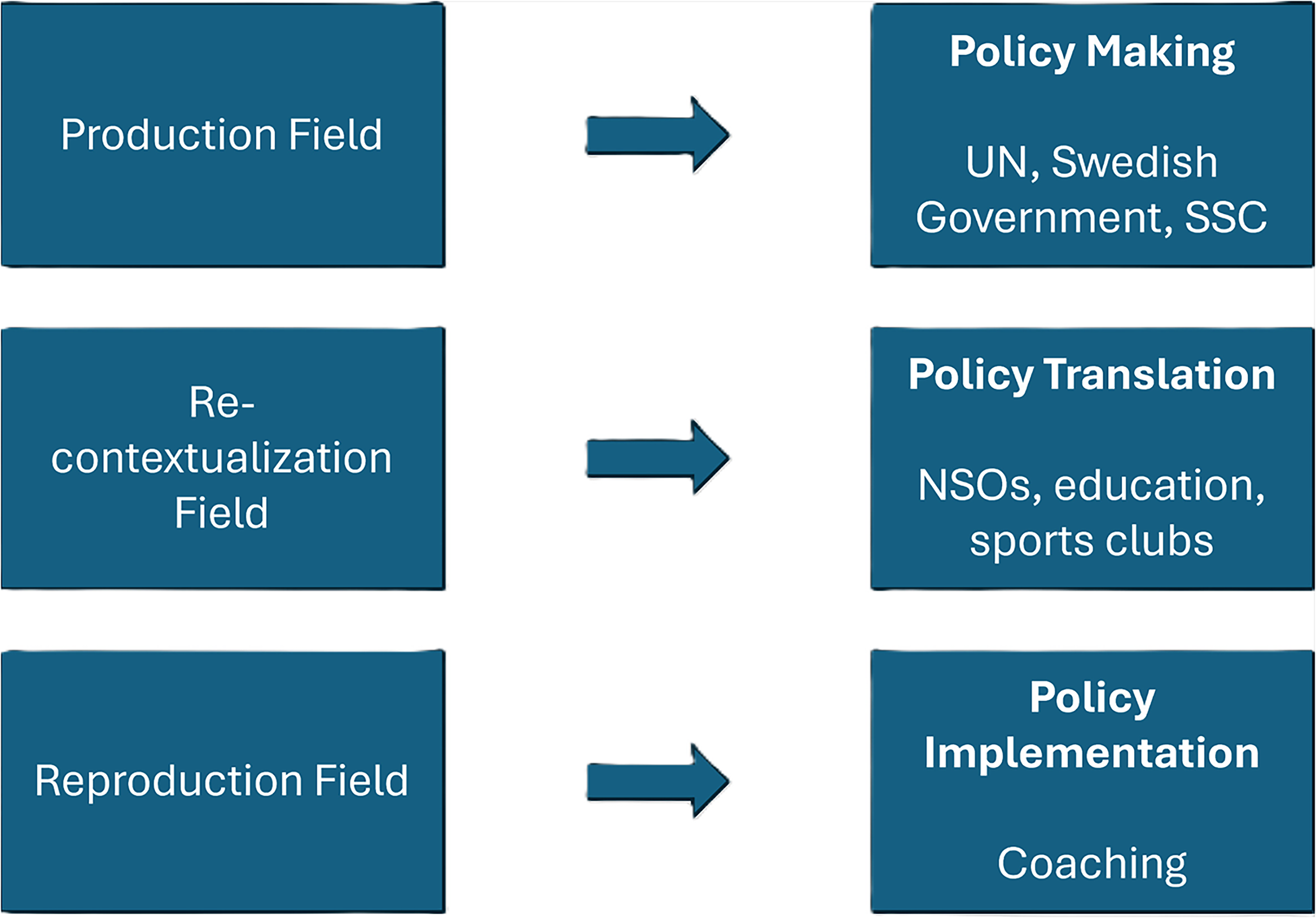
Bernstein's model of how policy travels from policy-making to policy implementation.
However, Nilsson (1988) emphasizes that constitutional frames do not exert influence in isolation. Coaches’ personal ideologies—such as the value they place on the UNCRC—also shape their coaching practices. Accordingly, this study investigates how coaches’ value of the UNCRC mediates the relationship between policy frameworks and daily sports practices.
Bernstein (1990) further asserts that constitutional frames are shaped and interpreted by recontextualization, that is, the process by which policy is transformed into practical, instructive knowledge. In the Swedish sporting context, this transformation is primarily implemented via guidelines and coach education programs provided by the SSC and NSOs. Understanding the transition from policy-making to policy implementation requires analyzing the role of actors in the recontextualization process. Bernstein (2000) highlights the importance of this intermediary stage as a bridge between policy design and practical enactment.
This study will clarify the recontextualization process by examining how the UNCRC is translated and prioritized within Swedish sports structures. It will assess the extent to which key actors in the recontextualization process, including NSOs, coach education programs, and sports clubs, emphasize and support the implementation of children's rights. This is done using Bernstein's (2000) concept of classification of knowledge, which refers to the degree to which certain knowledge is deemed valid, desirable, and prioritized within curricula. The study aims to determine whether children's rights and the UNCRC are classified as essential and legitimate knowledge within the Swedish sports system's educational framework.
Conclusively, this study first examines how the reproduction field/patterns look in relation to UNCRC's implementation. It then investigates how these patterns are shaped by constitutional frames (coaches’ knowledge and awareness of the UNCRC), the recontextualization field (the policy translation efforts of NSOs, coach education, and sports clubs), and individual ideologies (coaches’ value of the UNCRC).
Method
Participants
A sample of 1234 (Nmale = 868, Nfemale = 363) coaches aged 18–87 (M = 42.68, SD = 10.18) with a mean of 9.33 years of coaching experience (SD = 9.19) participated in this study. The coaches came from 10 different sports: football (N = 371, 30.1%), basketball (N = 155, 12.6%), handball (N = 128, 10.4%), ice-hockey (N = 125, 10.1%), floorball (N = 93, 7.5%), volleyball (N = 90, 7.3%), swimming (N = 76, 6.2%), ski (N = 71, 5.8%), tennis (N = 65, 5.3%), wrestling (N = 57, 4.6%), and other sports (N = 3, 0.3%). In the sample, there is a good geographical representation of the country: Stockholm (N = 265, 21.4%), South (N = 638, 51.7%), and North (N = 331, 26.8%). All the coaches worked with athletes up to 18 years old with an equal representation of coaches for children between 6 and 12 years old (N = 584, 47.3%) and youth between 13 and 18 years old (N = 654, 52.9%).
Procedures
The author contacted 20 Swedish NSOs to distribute an online questionnaire. The 20 NSOs were randomly selected among the 30 NSOs with the most members in Sweden (Idrottsstatistik, 2024). Ten NSOs agreed to participate (see Participants) and NSOs’ representatives directly sent the online questionnaire to coaches in nine out of 10 cases. Only the football NSO shared a secure link to email addresses for direct contact. Two reminders were sent, resulting in 1234 responses from 8474 coaches who received the questionnaire via email.
Measures
The questionnaire consisted of four parts:
Background questions: 20 questions about the coach (e.g., gender, age, education, sports background, coaching experience), the athletes (age, gender), and the club/coaching environment (e.g., type of sport, size, frequency of practices). Questions about coaches’ perceived compliance with UNCRC: 31 questions, six about UNCRC's Article 2, six about Article 3, six about Article 6, six about Article 12 and seven about Article 19. A 5-point Likert scale was used: Never—Rarely—Sometimes—Often—Always (see Table 1). Questions about coaches’ perceived knowledge and awareness of UNCRC: nine questions, four about UNCRC awareness and five about UNCRC knowledge. A 4-point Likert scale was used: Not aware of—Somewhat aware of—Aware of—Very aware of and Have no knowledge of—Have somewhat knowledge of—Have knowledge of—Have good knowledge of (see Table 2). One question regarding how much knowledge they gained from: coach education, general education, NSOs, sports clubs, and TV/internet. A 5-point Likert scale was used: Not at all—Somewhat—Moderate—Much—Very much. Questions about coaches’ perceived value of UNCRC: eight questions. A 5-point Likert scale was used: Not at all—Somewhat—Moderately—Much—Very much (see Table 3). Questions about sports clubs’ support toward coaches (see Table 1), inspired by the General Training Climate Scale (Tracey and Tews, 2005). A 5-point Likert scale was used (see Table 4).
The scales measuring coaches’ knowledge/awareness, value, and compliance with UNCRC were designed by the author specifically for this data collection. To the best of the author's knowledge, no existing questionnaire measures coaches’ awareness, knowledge, value, and compliance with the UNCRC in a sports context, using sports-specific terminology and covering the convention's five main articles. The development of this questionnaire is a potential contribution of this study to the field.
The scale items (see Tables 2, 3, and 4) were developed based on a literature review of children's rights in sports research (Pavlogiannis et al., 2024) and guidelines for coaches from both Swedish (SSC, 2019, 2022a) and international sources (UNICEF, 2018, 2020). This process ensured the content validity of the questionnaire, incorporating items suggested by research and guidelines. Additionally, nonexperts reviewed the questionnaire for feasibility, readability, style consistency, and language clarity, contributing to its face validity. Finally, the questionnaire was reviewed by lecturers, associate professors, and professors with competence in quantitative methodologies and experience in research on children's rights and coaching.
Confirmatory Factor Analysis (CFA) was performed with the JASP 0.18.3.0 software package to assess the questionnaire's construct validity, that is, how accurately it measures what it was intended to measure.
The sample was randomly split in half and a CFA was performed on one half to test the model fit and select items. The model included three factors: coaches’ knowledge/awareness of, value of, and compliance with the UNCRC (see Tables 2, 3, and 4). Besides the chi-square test, goodness-of-fit indices were used with conventional cutoff criteria (CFI > .90, SRMR and RMSEA < .08). Items with nonsignificant factor loadings, substantial cross-loadings, or residual correlations were removed (see Tables 1, 2, and 3 for final scales). The model showed satisfactory fit: χ2 (374) = 804.14, p < .001, CFI = .91, SRMR = .05, RMSEA = .05, 90% CI [.04, .05]. Reliability, assessed using the omega coefficient (ω), showed satisfactory internal consistency: .74 for compliance, .86 for value, .91 for knowledge/awareness, and .82 for the overall model.
Finally, the model was cross-validated using a CFA on the second half of the sample, again revealing a satisfactory fit: χ2 (374) = 792.54, p < .001, CFI = .91, SRMR = .06, RMSEA = .05, 90% CI [.04, .05]. Internal consistency remained satisfactory: .75 for coaches’ compliance with UNCRC, .85 for coaches’ value of UNCRC, .92 for coaches’ knowledge/awareness of UNCRC, and .82 for the overall model.
Statistical analyses
JASP 0.18.3.0 was used to perform CFA and calculate the omega coefficient (ω). All other statistical analyses presented in the following sections (descriptive statistics, independent samples t test, and linear multiple regression) were performed using IBM SPSS Statistics 28.0.1.0 software. The significance threshold was set at the conventional level of p < .05.
A linear multiple regression was conducted to determine if coaches’ knowledge/awareness and value of UNCRC could predict their compliance with UNCRC. Basic assumptions were checked: Bivariate correlations showed no multicollinearity, with moderate correlation between the predictors, r(1221) = .30, p < .001. Collinearity statistics confirmed this (Tolerance = .91, VIF = 1.09 for both predictors). Outliers were identified via boxplots and analysis of standard residuals and removed, leaving no further outliers (Std. Residual Min = −2.88, Max = 2.94). The data met the assumptions of independent errors (Durbin–Watson = 1.77) and nonzero variances (UNCRC Compliance: Variance = .15; Knowledge/awareness: Variance = .46; Value: Variance = .74).
The histogram of standardized residuals (Figure 2) indicated that the data contained approximately normally distributed errors, as did the normal P-P plot of standardized residuals (Figure 3), which showed points that were not entirely on the line but close.
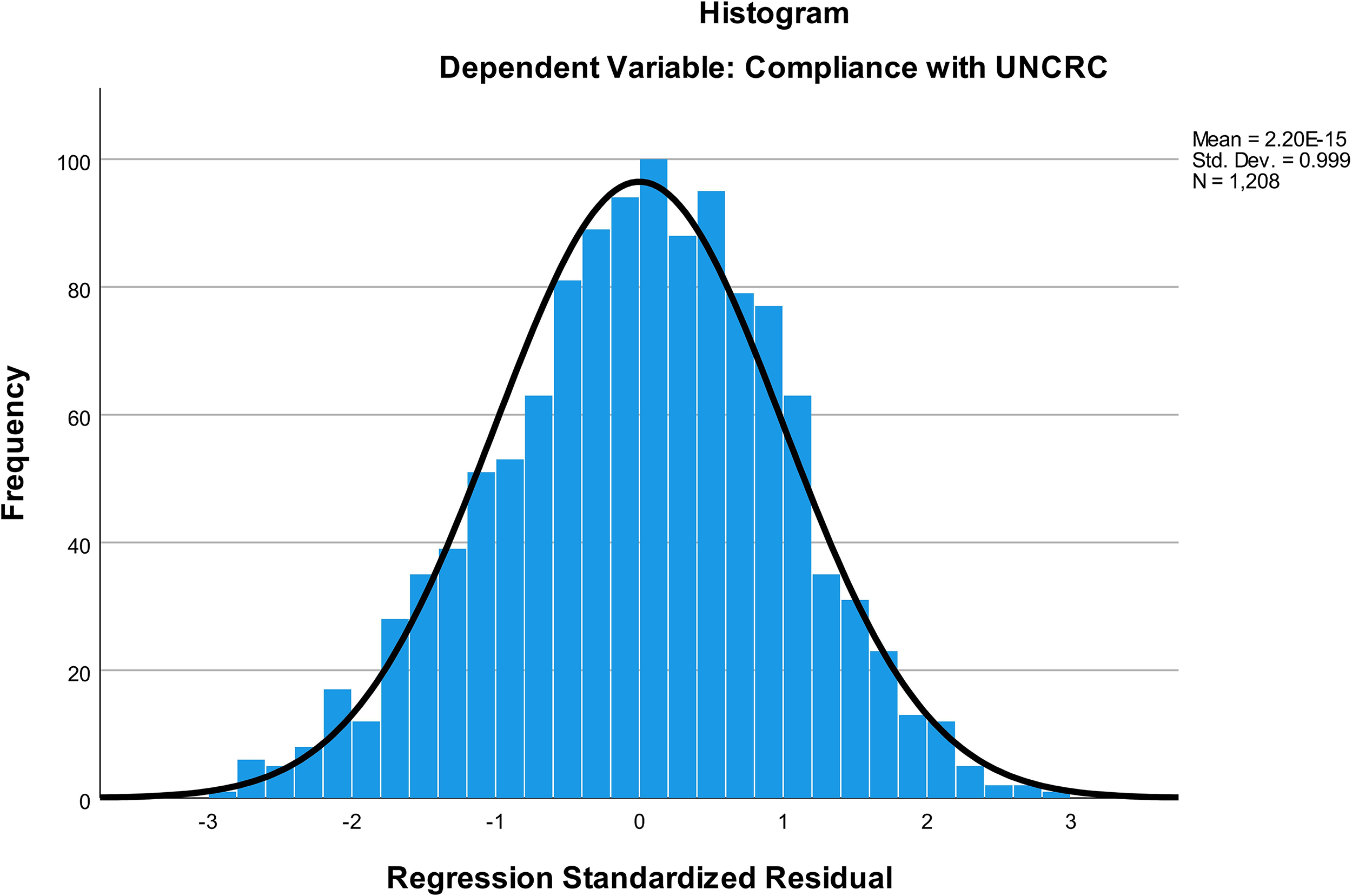
Histogram of standardized residuals.
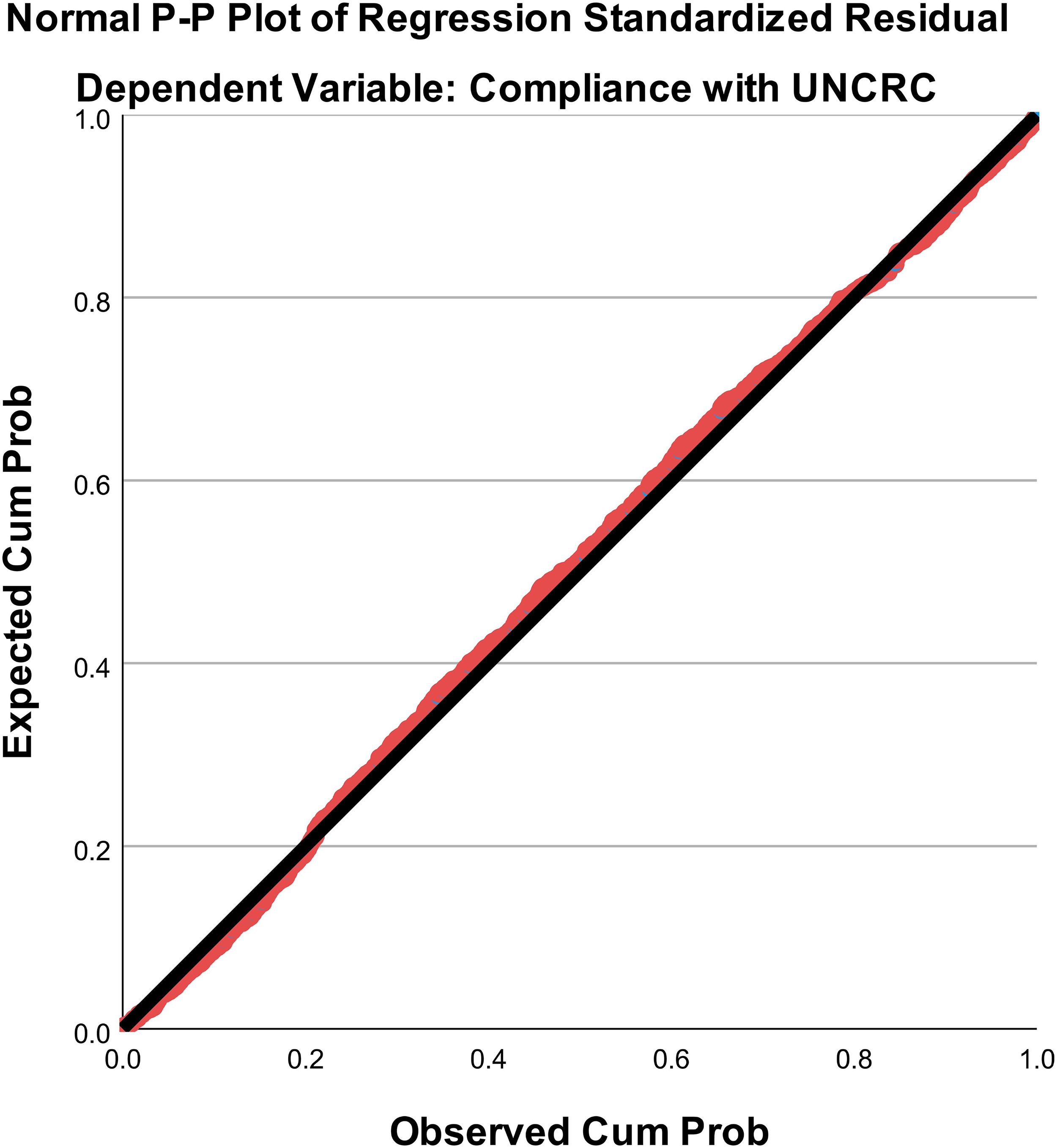
Normal P-P plot of standardized residuals.
Finally, the scatterplot of standardized residuals (Figure 4) showed that the data met the assumptions of homogeneity of variance and linearity.
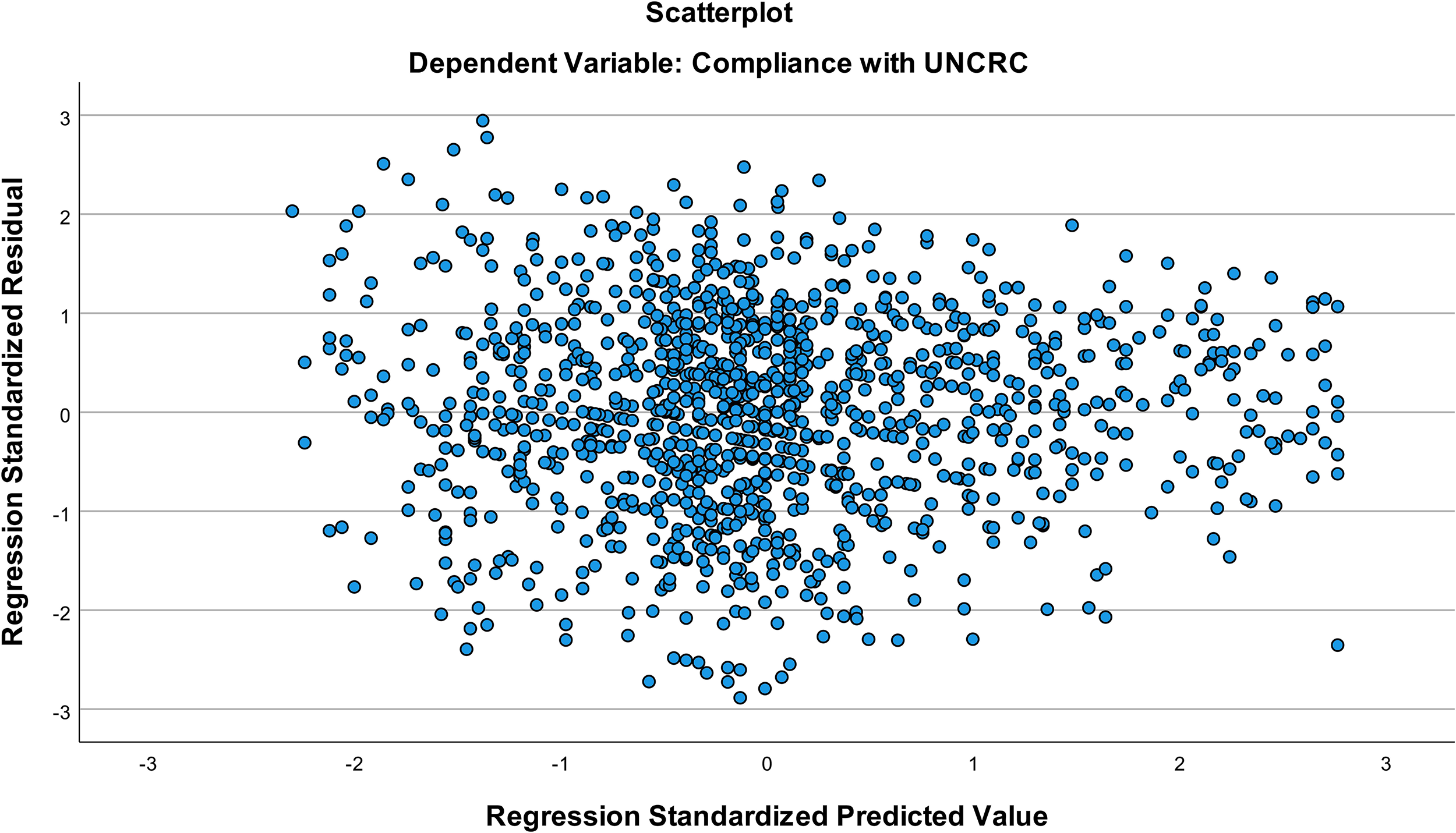
Scatterplot of standardized residuals.
Results
Coaches’ compliance with UNCRC
The coaches self-reported that they often comply with the UNCRC (M = 4.11, SD = .39). However, there are lower scores on individual items related to specific articles, such as measures against overtraining (M = 3.38, SD = 1.18), informing athletes about doping (M = 2.65, SD = 1.50), seeking athletes’ opinion on tactics (M = 3.16, SD = 1), and allowing athletes to set their own goals (M = 3.45, SD = 1.23). The lowest scores were related to Article 12 (see Table 1), which concerns children's right to express their opinions and participate in decision-making. Moreover, coaches often answered “It doesn’t apply to me” in questions about specific articles such as Articles 3, 6 and 12 (e.g., see Figures 5 and 6).
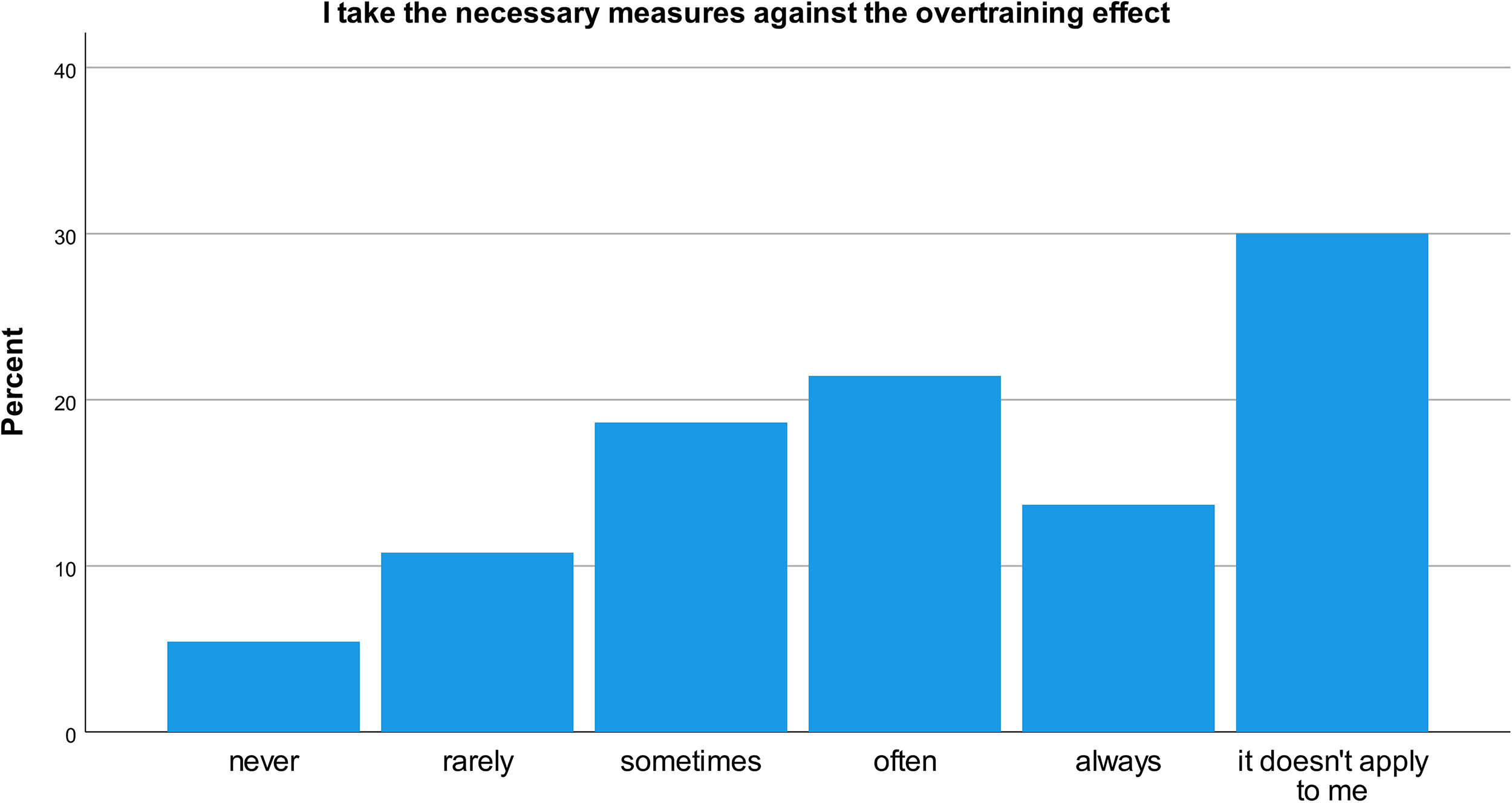
Frequencies of coaches’ answers for the item below related to Article 3.
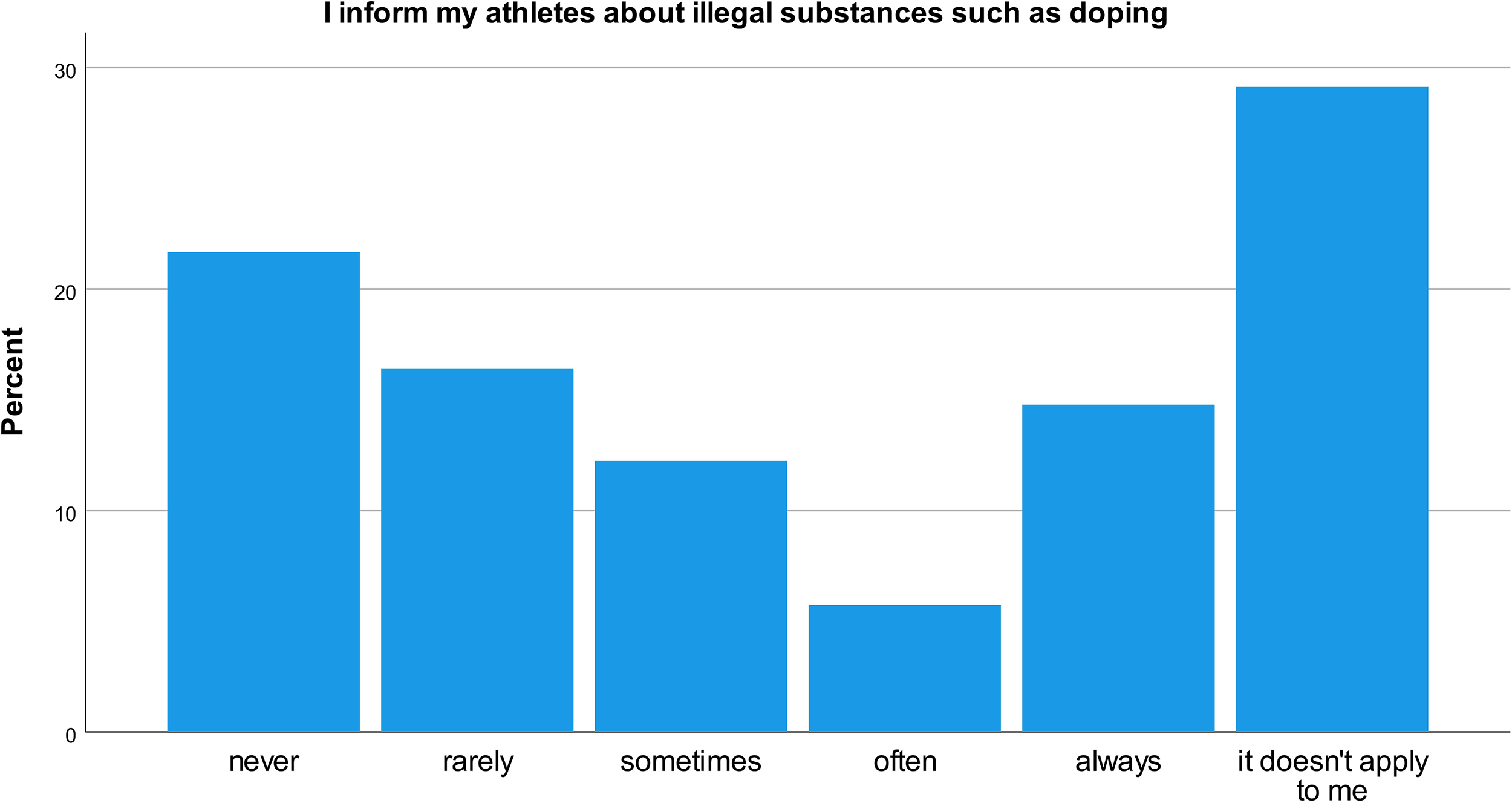
Frequencies of coaches’ answers for the item below related to Article 6.
On the other side, coaches self-reported high scores on items related to Article 19, which aims to protect children against abusive behaviors (see Table 1). For example, coaches self-reported that they almost never use punishment in their coaching. However, even about Article 19, there are coaches in the sample who never, rarely, or sometimes take measures against all forms of abuse (see Figure 7).
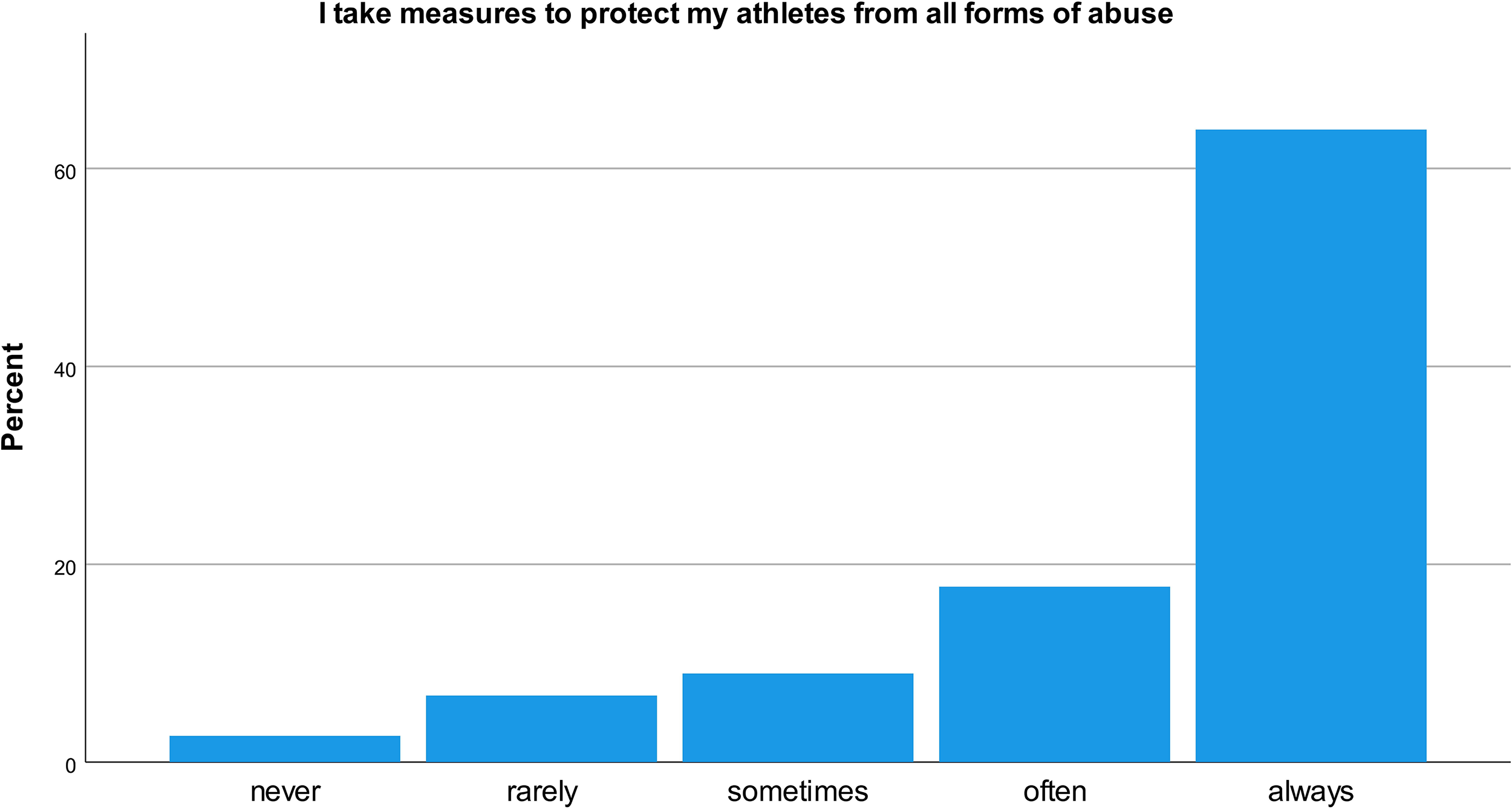
Frequencies of coaches’ answers for the item below related to Article 19.
No significant difference was found between coaches of children (M = 4.12, SD = .39) and youth (M = 4.10, SD = .37), t(1217) = 1.12, p = .259.
Descriptive statistics of individual items within the coaches’ compliance with UNCRC scale.
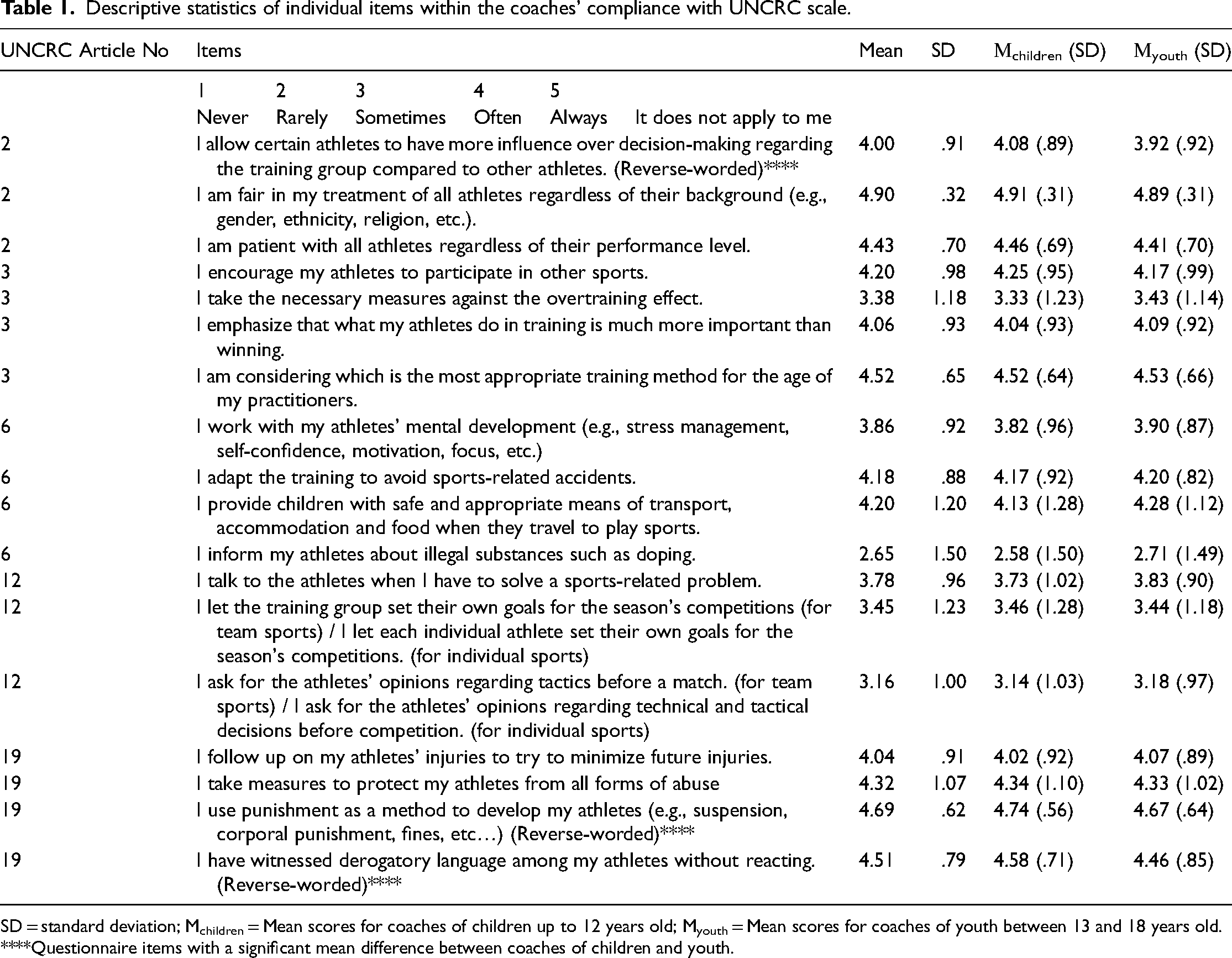
SD = standard deviation; Mchildren = Mean scores for coaches of children up to 12 years old; Myouth = Mean scores for coaches of youth between 13 and 18 years old. ****Questionnaire items with a significant mean difference between coaches of children and youth.
Descriptive statistics of individual items within the coaches’ knowledge/awareness scale.
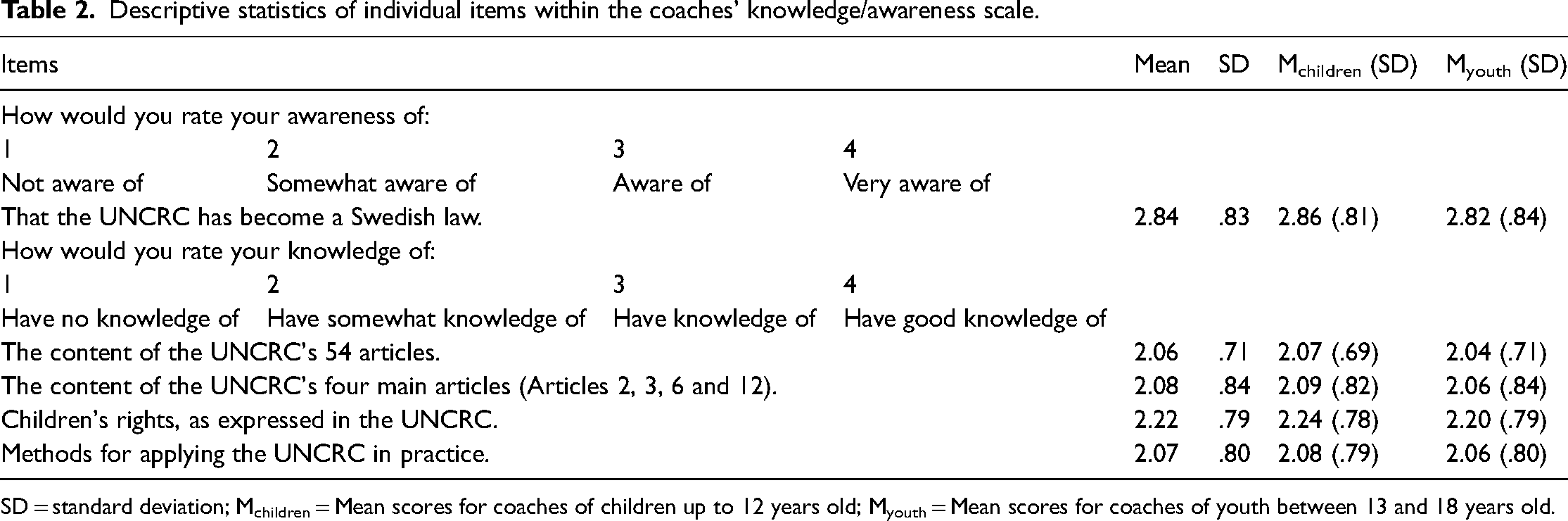
SD = standard deviation; Mchildren = Mean scores for coaches of children up to 12 years old; Myouth = Mean scores for coaches of youth between 13 and 18 years old.
Descriptive statistics of individual items within the coaches’ value scale.
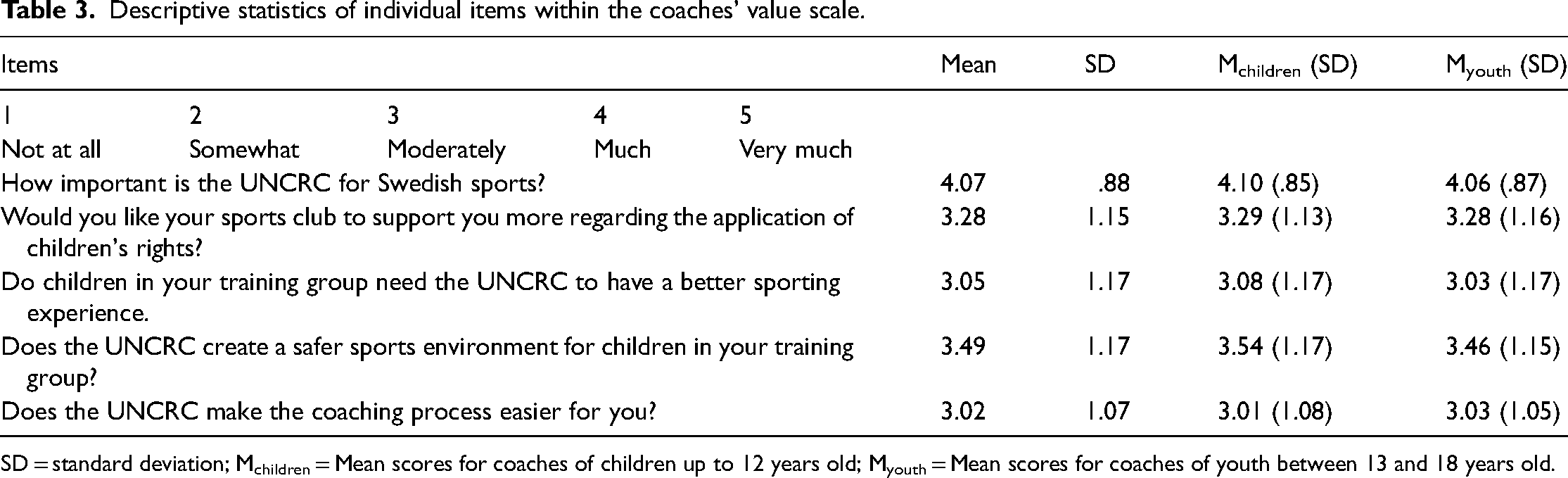
SD = standard deviation; Mchildren = Mean scores for coaches of children up to 12 years old; Myouth = Mean scores for coaches of youth between 13 and 18 years old.
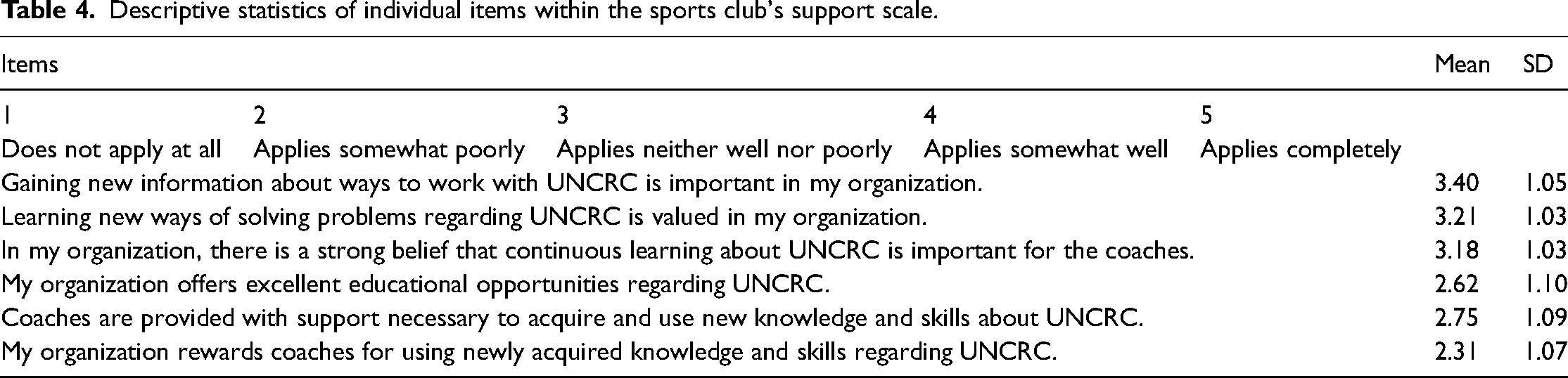
Descriptive statistics of individual items within the sports club's support scale.
Coaches’ knowledge/awareness of UNCRC
Coaches self-reported a moderate knowledge/awareness of UNCRC (M = 2.25, SD = .69). They had relatively high awareness of the convention's incorporation into Swedish law but lower knowledge of its content, main articles, and methods of applying it in practice (see Table 2). No significant differences were found between coaches of children (M = 2.26, SD = .67) and youth (M = 2.23, SD = .69), t(1214) = .83, p = .402.
Coaches reported having acquired little to moderate knowledge about the UNCRC from coach education (M = 2.48, SD = 1.17), NSOs (M = 2.34, SD = 1.14), and sports clubs (M = 2.32, SD = 1.12) (see Figures 8, 9, and 10).
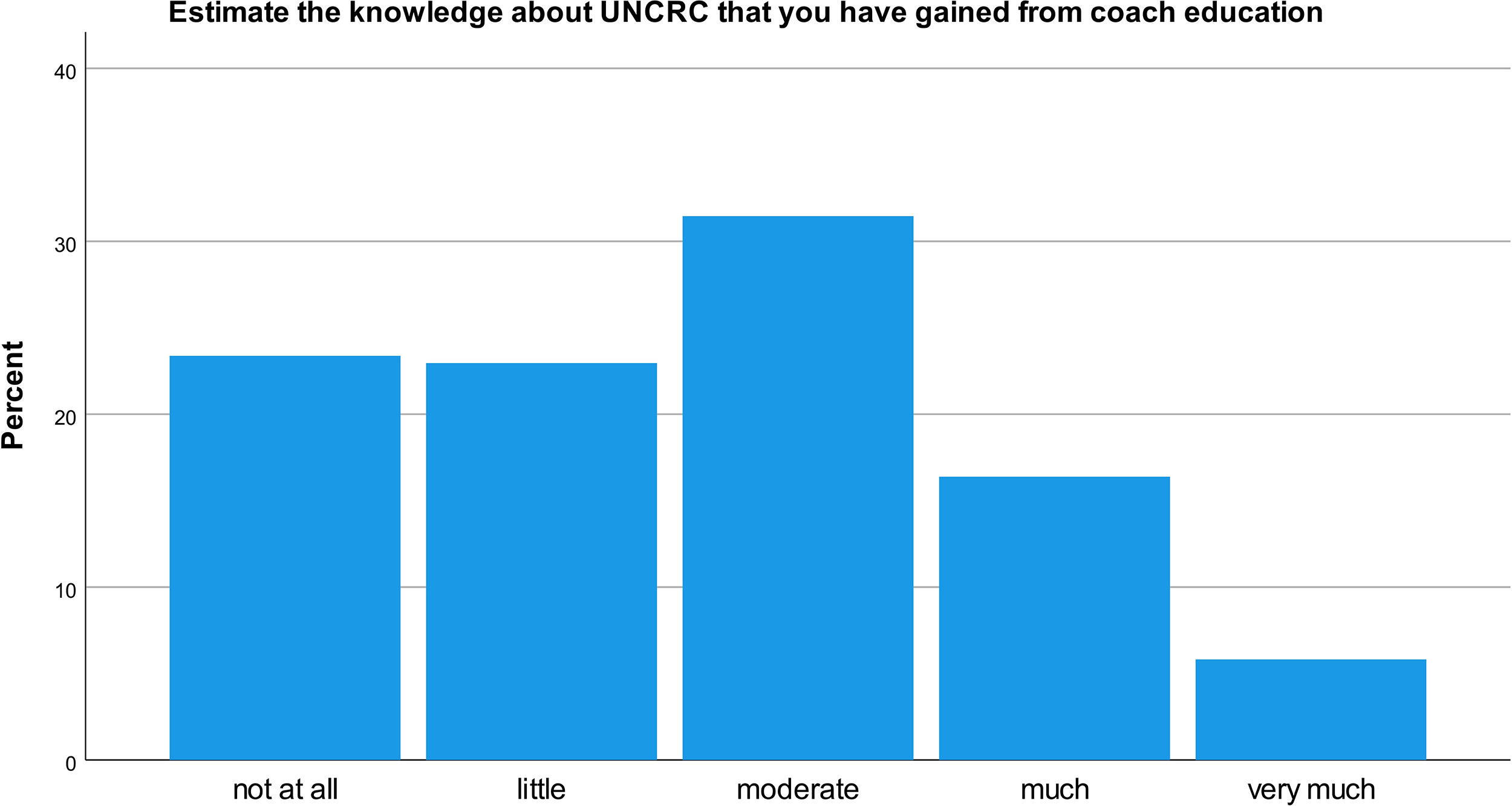
Frequencies of coaches’ answers for received UNCRC knowledge from coach education.
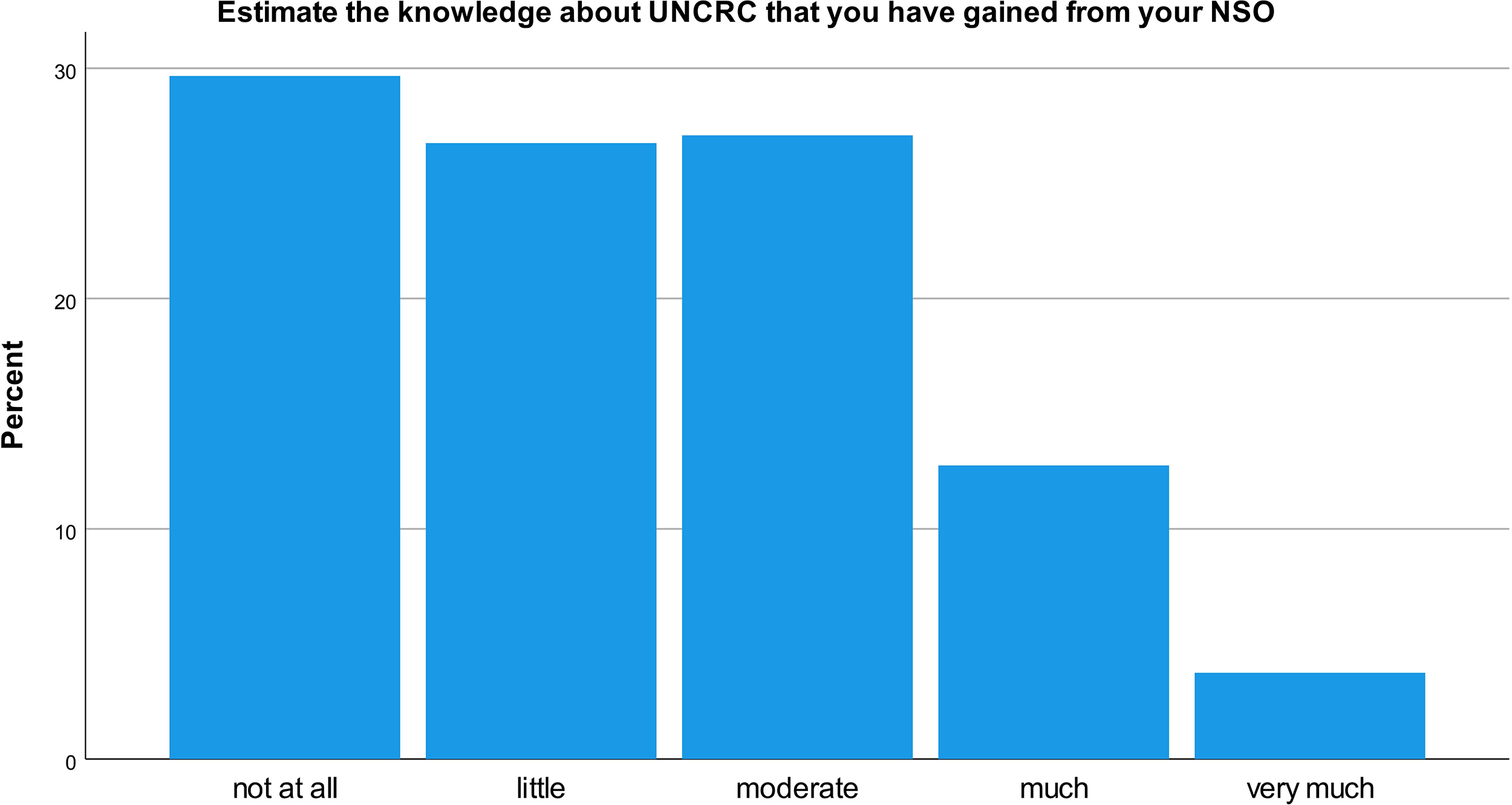
Frequencies of coaches’ answers for received UNCRC knowledge from National Sports Organization (NSO).
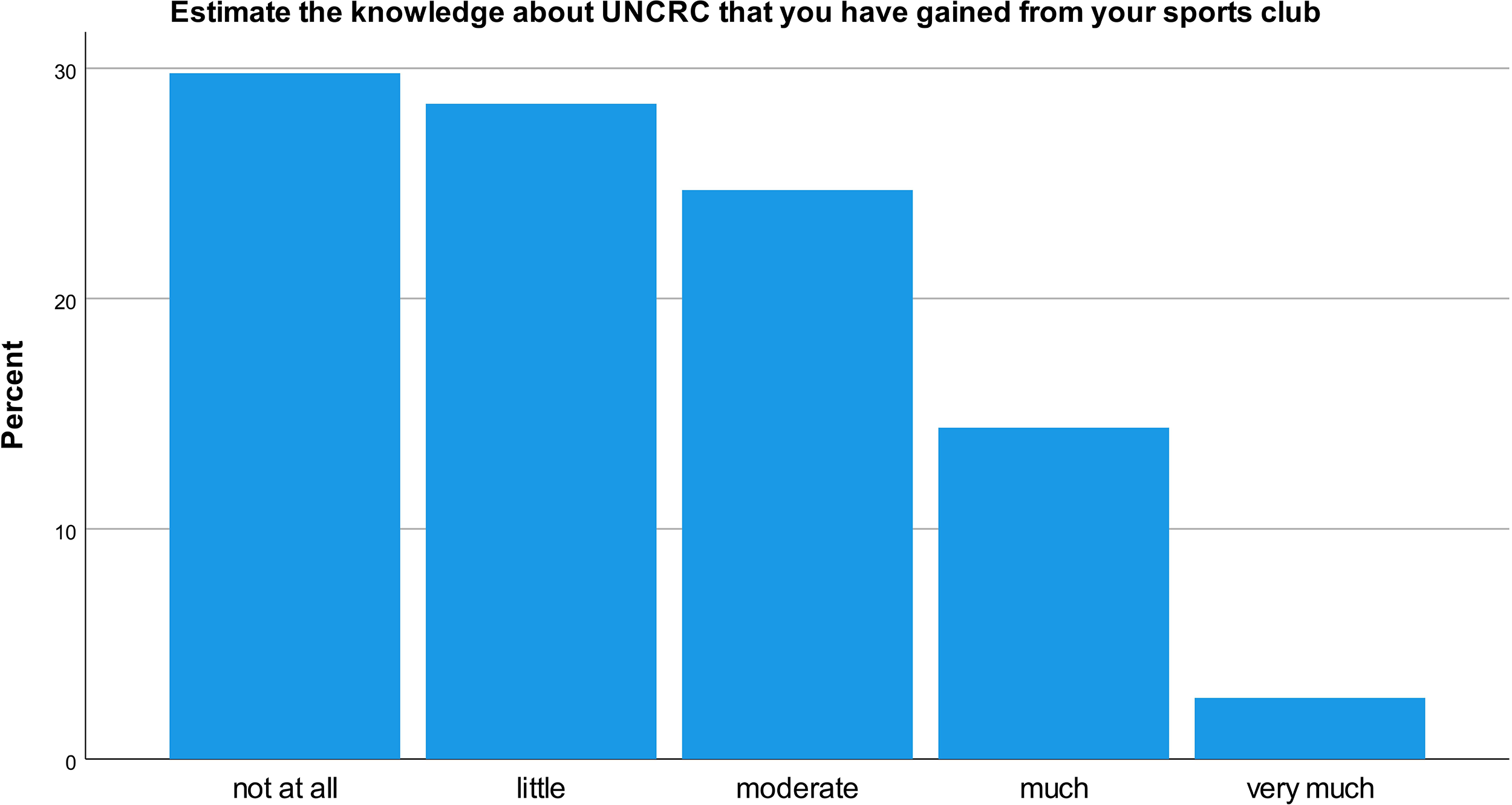
Frequencies of coaches’ answers received UNCRC knowledge from their sports club.
Additionally, coaches indicated that their sports clubs rarely provide good education on children's rights, support in using new knowledge and skills related to children's rights, or rewards for such efforts (see Table 4).
Coaches' value of UNCRC
Coaches self-reported a moderate level of value for UNCRC (M = 3.38, SD = .86). While they recognize the convention's significance for Swedish sports, they feel it is less relevant as a tool for enhancing athletes’ sporting experiences in their own clubs and coaching groups. Furthermore, they feel that it does not significantly ease the coaching process (see Table 3). No significant difference was found between coaches of children (M = 3.40, SD = .85) and youth (M = 3.37, SD = .86), t(1206) = .76, p = .480.
Role of coaches’ knowledge/awareness and value of UNCRC on their compliance with it
The multiple linear regression indicated that the independent variables (knowledge/awareness and value) significantly predict and impact coaches’ compliance with UNCRC (F[2, 1220] = 91.07, p ≤ .001). Moreover, the R2 was .13, indicating that coaches’ knowledge/awareness and value of the UNCRC explained approximately 13% of the variance in their compliance with the UNCRC.
Additionally, the regression coefficients showed that coaches’ knowledge/awareness of the UNCRC (B = .182, t = 11.360, p < .001) and value of the UNCRC (B = .044, t = 3.480, p < .001) both had a significant and positive impact on UNCRC compliance. These results mean that for each unit of increase in knowledge/awareness, compliance increases by .182 units, and for each unit of increase in the perceived value of the UNCRC, compliance increases by .044 units. These findings remain significant when considering coaches of children (F[2, 583] = 43.74, p < .001, R² = .13) and youth (F[2, 638] = 46.53, p < .001, R² = .12) separately.
Discussion
This study was conducted within the context of Swedish sports, where the UNCRC holds the status of a recognized convention, national law, and an integral part of sports policy, thereby establishing expectations and obligations for coaches to comply with it.
A questionnaire was developed to measure coaches’ perceived knowledge, awareness, value, and compliance with the UNCRC. The questionnaire was shown to have good validity and reliability, and this constitutes a significant contribution to research on children's rights in sports. It also examines, for the first time, the relationship between coaches’ knowledge, awareness, value, and compliance with the UNCRC, demonstrating that first three factors influence compliance. As one of the few studies from the coaches’ perspective, it reveals that coaches have moderate knowledge, awareness, and value of the UNCRC and often comply with it, with no significant differences between coaches of children and youth. The study further highlights the lack of prioritization of children's rights knowledge in Swedish sports and insufficient support for UNCRC implementation from coach education, NSOs, and sports clubs.
Compliance with the UNCRC
The results provide an overview of policy implementation and coaching patterns relating to children's rights, suggesting that coaches often comply with the UNCRC. However, compliance was relatively low in some areas, particularly in relation to informing children about doping, protecting them from overtraining, and upholding Article 12 of the convention (children's right to express their opinions and have them respected). This highlights a need for further efforts to empower athletes’ voices and agency, in accordance with previous studies (e.g., Lindgren et al., 2017; Redelius and Eliasson, 2022).
The high compliance scores related to Article 19 suggest that safeguarding children from abuse is prioritized within Swedish sports, potentially reflecting the constitutional frame of the UNCRC. However, this may also be influenced by culturally embedded ideologies (Nilsson, 1988), as Swedish coaches operate in a society where respect for children's rights is deeply ingrained. Previous studies from other countries that have ratified the UNCRC showed that constitutional frames by themselves do not guarantee an impact on patterns of coaching. For example, McDonald and Kawai (2016) found that corporal punishment from coaches toward children is normalized, and Tak et al. (2024) found that coaches negotiate between traditional ways of coaching and new coaching ethics derived from “safe sport” policies.
The SSC, NSOs, and sports clubs’ emphasis on safe sports, through reports on abuse and reporting mechanisms (SSC, 2022b), illustrates Bernstein's (2000) concept of the recontextualization field at work. Safeguarding children (UNCRC's Article 19) has been translated into instructive knowledge and classified as essential, reinforcing its legitimacy within coach education and everyday practices. The lower compliance related to other children's rights (e.g., Article 12) highlights a weaker recontextualization process for these aspects. Unlike the safeguarding policies linked to Article 19, there has been no robust translation of participation rights into instructive knowledge through coach education or guidelines. This suggests a need to reinforce the importance of Article 12 and other underrepresented aspects of children's rights in the curriculum and daily sports practices.
The high self-reported scores regarding Article 19 do not indicate that the problem of abusive coaching behaviors is solved in Sweden. There are still several coaches who never, rarely, or sometimes take measures to protect their athletes from all forms of abuse (see Figure 7). Previous studies have also highlighted abusive behaviors in Sweden (e.g., Edlund and Winter, 2020; Eliasson, 2024) and internationally (e.g., Parent et al., 2016; Vertommen et al., 2016) and it is essential to underscore that there are “grey areas” in coaching, where what is acceptable is interpreted differently even among athletes (Strandbu et al., 2022).
Conclusively, coaches self-reported a relatively high level of compliance with the UNCRC despite moderate levels of knowledge, awareness and value of it. However, it should be noted that providing a safe and developing sporting environment for children is more important than detailed knowledge of a policy. Although the results of this study suggest that increased knowledge, awareness, and value of the UNCRC enhance compliance, they also indicate that Sweden's mainstream culture regarding children can encourage coaches to respect and promote children's rights without knowing the relevant policy. As one of the first countries to ratify the UNCRC, incorporate it into national law, prohibit corporal punishment, and monitor implementation via government agencies and organizations, Sweden fosters a cultural norm of respecting children's rights (Sweden, 2024). As Swedish citizens, the participating coaches may thus align with these norms even without direct knowledge of the UNCRC. Sweden's cultural norm of respecting children's rights reflects the influence of contextual ideologies that intersect with constitutional frames. Even when formal policy knowledge is lacking, societal values may indirectly shape patterns of coaching. This underscores Nilsson's (1988) assertion that individual ideologies can mediate the impact of constitutional frames on pedagogical practices.
Knowledge and awareness of the UNCRC
Coaches’ moderate knowledge of UNCRC aligns with previous research (e.g., Eliasson, 2017; Redelius, 2011; Redelius et al., 2016). This highlights the need for formal and informal coach education to further prioritize the UNCRC. Coaches’ perceptions of receiving little to moderate knowledge about UNCRC from NSOs, sports clubs, and coach education suggest that children's rights are not classified as valid, prioritized knowledge, and valuable for quality coaching (cf. Bernstein, 2000). By incorporating the UNCRC more explicitly into coach education curricula, clearer lines of responsibility could be established, particularly in areas such as overtraining and doping. The results suggest that these aspects of children's rights are either poorly translated or overlooked during the recontextualization process (cf. Bernstein, 2000).
This study's findings also suggest that the classification of children's rights knowledge within the Swedish sport “curriculum” directly influences the degree to which the UNCRC is implemented in daily coaching practices. The Swedish sports system has a highly centralized structure in which sports clubs serve as intermediaries between individual coaches and broader governing bodies such as the SSC or formal coach education programs. This gives clubs a key position in the recontextualization process, with the potential to either reinforce or weaken the translation of constitutional frames (e.g., UNCRC) into everyday practice. Coaches in this study indicated insufficient support and education from their sports clubs in relation to the UNCRC. Previous research has also highlighted children's rights’ lack of prioritization within sports clubs (Eliasson et al., 2017). This signals that, while constitutional frames may exist, inadequate recontextualization efforts at the club level can hinder the effective reproduction of these frames in daily practice (cf. Bernstein, 2000).
Coaches' value of the UNCRC
Coaches reported a moderate value of the UNCRC. Although they acknowledge its importance for Swedish sports, they do not consider it essential for improving athletes’ experiences or ensuring safety in their practice groups. Similarly, Eliasson (2017) found that coaches recognize the UNCRC's significance but feel it is unnecessary in the Swedish sports context.
Interestingly, coaches reported that the UNCRC does not simplify the coaching process, likely due to their limited knowledge of how to implement it in practice. This indicates coaches’ confusion regarding what is expected from them concerning children's rights implementation compounded by inadequate support for applying the UNCRC. Bernstein (2000) posits that for policy to be effectively implemented, it must undergo a process of translation and adaptation to the context it will be applied. When policies (e.g., UNCRC) remain generic or abstract, they risk being misinterpreted or overlooked, leading to inconsistent implementation. The results of this study suggest that the UNCRC, while recognized at a theoretical level, lacks the elaboration necessary for integration into the competitive context of sports.
Role of coaches’ knowledge/awareness and value of UNCRC on their compliance with it
The coaches’ knowledge, awareness, and value of the UNCRC positively impact their compliance, meaning that higher levels of these factors lead to better compliance. Conversely, a lack of knowledge, awareness, and value can hinder the implementation of the UNCRC in sports. This aligns with FFT, claiming that constitutional frames and individual ideologies influence the patterns of sports clubs (Nilsson, 1988). However, this study does not claim causality, nor does it adopt a deterministic perspective. For instance, it is plausible that coaches who are already compliant and motivated to align with the UNCRC seek out and accumulate greater knowledge about the convention, rather than increased knowledge necessarily driving compliance.
Connecting the results of this study with the broader trend of increasing safeguarding policies in sports, this study indicates that if a policy increases end-users knowledge of its topic, higher levels of compliance with it can be expected. Thus, this study suggests that finding ways to increase knowledge, awareness, and value of the UNCRC can benefit its implementation in sports. Such efforts could be made on multiple levels by actors including policymakers, NSOs, coach education programs, and sports clubs.
Finally, it should be noted that knowledge, awareness, and value will not be the only factors influencing such a complex issue as coaches’ compliance with UNCRC. For example, coaches’ sociocultural and sporting backgrounds could influence their coaching behaviors concerning children's rights. Moreover, both theories applied in this study point to factors that may influence sports practices but were not examined here (e.g., organizational and physical frames). There is thus a need for further research on the UNCRC's implementation in sports with explanatory ambitions aiming to uncover new factors that can benefit or hinder the process.
Conclusion
The study relied on self-reported questionnaires, which pose certain limitations, such as restricted response options, preventing participants from expressing nuanced opinions. Additionally, respondents may be influenced by social desirability bias, where individuals consciously or unconsciously present themselves in a favorable light. Moreover, the coaches choosing to participate in the study might be the ones with the most positive attitudes toward the UNCRC.
This study assessed the Swedish coaches’ knowledge, awareness, value, and compliance with the UNCRC. Coaches reported often complying with the UNCRC, but had low scores on specific items, indicating a need for further work on implementing specific articles of the convention. Coaches’ knowledge, awareness, and value of the UNCRC were found to be moderate, highlighting the need for NSOs, coach education, and sports clubs to better inform, educate, and support coaches on children's rights in sports.
Finally, this study showed that coaches’ knowledge, awareness, and value of the UNCRC can influence their compliance with it. More explanatory studies are needed to determine which factors benefit or hinder the UNCRC's implementation in sports and thus how we can better promote a safer and more developing sporting environment for children and youth.
Footnotes
Consent to participate consent for publication
All the participants have given written informed consent, which was mandatory to access the online questionnaire. The participants were informed about the background and aim of the study, the research process, the way that their collected data will be treated, the fact that the results of this study will be published in scientific journals and presented in conferences and the fact that their participation is voluntary, and they can quit at any time. Then, the participants were asked to give their written consent to participate in the study and have their data treated in the way described. All the participants’ informed consents are saved.
Data availability
The data are part of a PhD project, and they will be part of future analyses and publications thus, they cannot be shared at the moment.
Declaration of conflicting interests
The author declared no potential conflicts of interest with respect to the research, authorship, and/or publication of this article.
Ethical considerations
The study has not received ethical approval, since it does not fall under sections 3–4 of the Swedish Ethics Review Act (2003:460). Risk analysis has been conducted by the Ethical Review Board of Department of Education in Umeå University, and the study has been categorized as “low risk” since it does not collect any personal data or sensitive data. Moreover, parts of the PhD project have been reviewed by the Swedish Ethical Review Authority, which decided that the project should not be assessed for ethical approval according to the following reasoning: “There will be no intervention on a research person or any other intervention in the manner specified in Section 4 of the Ethics Review Act. There will be no processing of personal data in the manner specified in Section 3 of the Ethics Review Act. Based on that, the study does not fall under the provisions of §§ 3–4 of the Ethics Review Act and must therefore not be ethically reviewed.” The number of the decision is Dnr 2024-02158-01.
Funding
The author received no financial support for the research, authorship, and/or publication of this article.
