




Abstract
Despite the growing interest in social justice activities, there is a lack of empirical evidence regarding their impact on various stakeholders, particularly social media users. We gathered longitudinal data from the NFL's @inspirechange X (former Twitter) account, a designated social justice communication handle, between August 2019 and March 2023. During this timeframe, the account garnered 20,967 comments (including original tweets and retweets) from 11,481 distinct users, but our analysis focused on 5851 comments deemed usable from 3632 unique users. Drawing on the social exchange theory, sentiment analysis, and thematic analysis, this study examines social media users’ sentiments toward the NFL's social justice efforts and the types of social justice influence that lead to positive and negative responses. Our findings show increased positive sentiment towards equitable social justice efforts, but racial issues, law enforcement, and transparency concerns led to notable negative sentiments, sparking polarized responses. Understanding specific social justice actions that evoke positive and negative emotions helps sport organizations effectively monitor and improve their social justice programs, enabling data-driven decisions. This study employs social media to comprehend diffuse stakeholder voices and extends the application of positive and negative reciprocity to the context of social media users and their perception of social justice.
Scholars and practitioners in sport emphasize the significance of social justice in creating positive outcomes for multiple stakeholders (Cunningham et al., 2021; Delia et al., 2022). Toporek and Williams (2006) define social justice as the effort to promote and advocate for fairness and equity for all people, regardless of their race, gender, sexual orientation, disability, social class, or religious beliefs. Nowadays, sport organizations utilize various platforms, including social media, to disseminate information regarding social justice matters with stakeholders (Brown et al., 2022; Watanabe et al., 2024). For example, the National Football League (NFL) has continuously pursued the goal of combating social injustice, recognizing the pivotal role it can play in shaping and contributing to a more equitable future. In general, the central focus of sport organization social justice programs is to produce positive outcomes for diffused stakeholders. In this paper, the terms “diffused stakeholders,” “society at large,” “public,” “individual members of society,” and “citizens” will be used interchangeably (Mamo and Anagnostopoulos, 2023; Saxton et al., 2019).
While a growing body of research explores athlete activism, particularly related to racial injustices and its impact on consumer and market responses (Jepsen and Jepsen, 2023; Park and Kwak, 2023; Watanabe et al., 2024), a gap remains in understanding how social media users respond to social justice activities undertaken by sport organizations. These organizations often develop comprehensive social justice programs with external goals, encompassing various activities to alleviate societal inequalities. In light of this focus, empirical evidence regarding social media users’ response is crucial to advance our understanding. In recent years, a growing trend has been witnessed in assessing the impact via social media by analyzing heterogeneous responses, particularly text-based interactions (Berger and Packard, 2022; Etter et al., 2018). The popularity of social media has surged as it provides diverse individuals with a platform to express their opinions. Further, tools like sentiment analysis are used to assess whether the organization's actions impact the targeted group (Berger et al., 2020; Humphreys and Wang, 2018).
Drawing on the social exchange theory (Blau, 1964), sentiment analysis (Hutto and Gilbert, 2014), and thematic analysis (Braun and Clarke, 2006), the purpose of this study is to examine social media users’ sentiments of NFL's social justice efforts and the underlying factors that influence their positive or negative perceptions. Furthermore, we examine whether social media users’ perceptions have changed over time. Filling these gaps is vital as sport organizations can effectively monitor and enhance the effectiveness of their social justice programs while adopting a timely, evidence-based approach to decision-making. Moreover, by incorporating social media users’ opinions on social justice, sport organizations can address the growing demand for enhanced transparency, which, in turn, bolsters the trustworthiness of these programs and fosters stronger relationships for future interactions (Crane, 2020). For the sampling frame, we retrieved data from historical tweets downloaded between August 2019 and March 2023 from the NFL's @inspirechanges X (former Twitter) account.
The remainder of this paper is organized as follows. The next section briefly reviews social justice literature in sport management. Subsequently, we briefly discuss individuals’ perceptions of social media and explore the development of research questions. We then describe the research method, sample, results, and analysis. Finally, we discuss the results and conclude the study with theoretical and practical implications.
Theoretical background and literature review
Social justice in sport
As Lawrence et al. (2024) note, social justice is no longer just a debate occurring on the left of the political spectrum but has become the defining cultural debate of the immediate post-COVID-19 period. As a term generally used to describe a method of dealing with socioeconomic inequality, social justice is essentially an interventionist approach, which entails economic redistribution, cultural recognition, and political representation (Fraser, 1999), which advocates hope to facilitate more equitable social conditions (Lawrence et al., 2024). Research on social justice in sport is expanding and is now situated at the core of sport organizations’ agenda (Cunningham et al., 2019; Park and Kwak, 2023; Watanabe et al., 2024). Social justice programs seek to explore ways to address forms of institutionalized discrimination, such as, but not limited to, racism, sexism, and ableism (Adamson et al., 2022). According to Adamson et al. (2022), the purpose of social justice programs is to seek ways to address institutionalized discrimination within and throughout society. To do so, social justice programs call attention to societal inequalities and help spread advantages in society fairly and equitably to all people regardless of race, ethnicity, gender, sexual orientation, social class, religious belief, or disability (Lee and Cunningham, 2019). Social justice efforts have unique drivers and expected outcomes compared to other types of social responsibility activities (López-Carril and Anagnostopoulos, 2020). At least two major distinctions differentiate other types of corporate social responsibility (CSR) and social justice efforts: focus and outcomes.
Regarding focus, social justice programs are designed to address long-standing societal inequalities, engage diverse stakeholders, and promote a more inclusive society. Moreover, social justice programs address systemic and institutionalized issues affecting marginalized groups. Cunningham (2019) argued that in sport, “people who differ from the typical majority members, including women, the poor, racial minorities, people with disabilities, and sexual minorities, among others, are treated poorly” (p. 3). Typically, dominant hegemonies of oppression and inequality, as well as constructions of the ideal body, are reflected and reinforced through sporting discourses (Adamson et al., 2022; Lee and Cunningham, 2019). According to Lee and Cunningham (2019), “these inequalities and prejudices are quite harmful to sport and generate many negative effects on various aspects of sports” (p. 247). Unsurprisingly, sport organizations have faced criticism for perpetuating and legitimizing various forms of oppression and inequality prevalent in our society, including biases related to race, gender, sexual orientation, disability, and social status (Sage and Eitzen, 2016).
A key theoretical feature of social justice involves an allocation system for societal goods, a process to protect rights, and a concern for human well-being on all levels. In other words, social justice initiatives not only target primary stakeholders but also encompass the larger society, including stakeholders that were not a priority for sport organizations. Accordingly, social justice programs may not have a clearly defined focus of what to achieve, unlike other social responsibility activities, which tend to have clear objectives that can be measured by organization performance (Jepsen and Jepsen, 2023), such as increasing minority representation, creating an inclusive environment, and training staff. Instead, social justice objectives may be seen as an ongoing process, with targets constantly shifting due to the complexity of societal inequality issues.
Regarding outcomes, social justice efforts focus mainly on promoting positive socio-cultural and emotional outcomes for marginalized groups, leveraging the broad reach of sport platforms to engage with wider audiences (Mamo and Anagnostopoulos, 2023). Further, social justice issues are highly complex and political; as a result, when sport organizations engage, there is the potential to face pushback from some social groups and the risk of losing some primary stakeholders. Thus, taking a stand on social justice can result in backlash from individuals or groups with opposing political views. This type of backlash has been seen toward individual athletes, as evidenced by the public (as well as sports writers) condemning the protests of Tommie Smith and John Carlos during the 1968 Olympics (Agyemang et al., 2018; Coombs et al., 2019), but less so toward sport organizations in general. More recently, backlash in the form of attacks from Former US President Trump, whether in the form of lambasting NFL players or “withdrawing” White House visit invitations, was highly visible and impacted public conversation in digital spaces (McGannon and Butryn, 2020). These attacks are generally considered to be rooted in White nationalism, with the purpose of dipping into and cultivating anger and moral indignation toward the NFAL and their players (Chaplin and Montez de Oca, 2019). Unsurprisingly, anecdotal evidence suggests that some stakeholders, including fans and those who refute players’ right to protest or the existence of inequality (Chaplin and Montez de Oca, 2019), have withdrawn their support due to teams’ stances on social justice and political alignment with those attacking social justice initiatives. According to this view, there is less of a “business case” for social justice than other CSR activities.
Social exchange theory
Social exchange theory was originally developed to understand human behavior (Homans, 1958) and has since been used to study organizational and individual behavior across various disciplines. Homans (1958) asserted that any social exchange involves what activities are undertaken, how often interaction occurs between or among given individuals, and what sentiments develop among those that interact frequently. Blau (1964) proposed that social exchanges involve voluntary actions motivated by expected returns from others. Social exchange is characterized by unspecified obligations, which are crucial for these exchanges to take place. The theory symbolizes an interdependent relationship between two actors grounded on rules and norms exchange and resource exchange and a relationship that emerged (Cropanzano and Mitchell, 2005). Reciprocity has also been considered a cultural mandate and norm in which those who follow these norms are obligated to behave reciprocally (Cropanzano and Mitchell, 2005). Lawler and Thye (2006) asserted that reciprocity is probably the best-known exchange rule, and social exchange is fundamentally an outcome-oriented theory. Reciprocity encompasses two contrasting facets: positive reciprocity involves rewarding a positive action with another positive action or responding to a negative action with a punishment (Caliendo et al., 2012).
Social exchange literature highlighted two types of exchange: economic and socioemotional outcomes (Cropanzano and Mitchell, 2005). Cropanzano and Mitchell (2005) argued that when actors engage in reciprocity, the quality of the relationship improves, leading to increased socioemotional exchanges. Given that sport leagues and managers often support social justice beyond instrumental benefits to foster the development of large-scale social cohesion, this paper will primarily focus on the socioemotional outcomes of these initiatives. When sport organizations engage in social justice actions that meet social media users’ expectations and conform to societal norms by addressing inequalities, they respond positively. Indeed, Social media uniquely influences social exchange by amplifying visibility and allowing actors to quickly gather social capital through likes, shares, and comments. Scholars argue that if individuals perceive that exchange generates favorable feelings, this sentiment should result in stronger attachments to collective solidarity (Markovsky and Lawler, 1994) and relational cohesion (Lawler and Yoon, 1996). On the other hand, individuals who do not share similar expectations and believe that social justice efforts aim to maximize the benefits of sport organizations by building their image and status may express negative sentiments. As a result, the individual expressing negative sentiments may disengage from the interaction as their values are not aligned negative sentiments may disengage from the interaction as their values do not align with the social justice efforts, leading to withdrawal.
Against all this, it is vital to note that social media interactions, particularly concerning social justice issues, are multifaceted and deeply nuanced, owing to the principles of social exchange theory. On social media platforms, users discuss social justice by assessing the perceived rewards, such as support from like-minded individuals and the personal fulfillment derived from advocacy, against potential costs, including backlash or opposing viewpoints (Cho et al., 2023). However, the dynamics extend beyond simple reward-risk calculus (Pastor et al., 2024). The public and often performative nature of social media adds layers of complexity; what might be intended as genuine support could be perceived as performative or virtue signaling by others (Surma, 2016).
Social media and sentiment analysis
Studies in public relations, management, and social psychology have indicated that the rise of social media has empowered “citizens at large” to engage in dialogues and assess an organization's actions (Colleoni, 2013). This is attributed to social media's ability to facilitate dialogue with organizations, including idea generation and action evaluation (Etter et al., 2018; Glozer et al., 2019). Research has demonstrated that social media enables the public to influence organizational activities collectively (Berger et al., 2020; Illia et al., 2022; Whelan et al., 2013). Social media enables diffused stakeholders to express their sentiments through various forms such as language, images, videos, and voice. Berger and Packard (2022) argued that language reflects things about a person or people and impacts the audiences that consume it.
It has become a powerful tool for sport organizations to disseminate their social justice efforts, given their substantial following on these platforms (Mamo and Anagnostopoulos, 2023). Social media has become an indispensable channel for sport organizations to communicate their social justice efforts to stakeholders and reach diverse audiences regardless of geographical location and time zone. The interactions between sport organizations’ social justice initiatives and the public on social media can evoke specific sentiments that can be expressed in language. Notably, social media's built-in features, such as likes, shares, and comments, can exhibit public reactions (Saxton et al., 2019).
While numerous social media studies have delved into the perceived benefits for fans and consumers (Park and Kwak, 2023; Romero-Jara et al., 2024; Watanabe et al., 2023; Yan et al., 2018), there is a noticeable gap in research concerning social media users’ sentiment toward social justice initiatives, particularly beyond athlete activism and racial inequalities. This gap exists despite the considerable efforts made by sport organizations in social justice, which are argued to have socioemotional benefits. Given the natural synergy between social media and the sport domain, which empowers users to articulate their opinions without gatekeepers, extracting their sentiment from social media through careful sampling and rigorous analysis is feasible. In light of this discussion, we present the following research questions to guide our investigation.
Method
Context and data collection
The @inspirechage X account of the NFL was selected as the focal point of this study for two reasons: sampling techniques and appropriate platform. Firstly, the @inspirechange X handle is exclusively dedicated to social justice initiatives, such as criminal justice reform, economic advancement, police-community relations, and education. This communication channel differs from the main @nfl handle, which focuses on players, games, and entertainment-related content, with a stronger emphasis on promoting entertainment (Wang, 2023). In terms of engagement, @inspirechange has significantly fewer followers compared to the 34.6 million followers of @nfl at the time of data collection. This difference may be attributed to the newer launch date of @inspirechange and its specific focus on social responsibility. However, in recent years, the use of social media for CSR purposes in sport organizations has become increasingly common, with many professional sport organizations dedicating social media handles to promoting and communicating social issues (Mamo et al., 2024).
According to Humphreys and Wang's (2018) recommendation, definable sample sizes are critical for text analysis. To ensure the collection of rich data, we began gathering information from August 2019 to March 2023. However, the X platform suspended access to its full archival data for research following a change in ownership. We used specific keywords related to the research purpose and accessed longitudinal data. We wrote R code to access terms get_all_tweets (query ="@inspirechange,” start_tweets = “2019-07-30T00:00:00Z,” end_tweets = “2023-03-31T00:00:00Z,” lang = “en”, n = all). Social media users would use the @inspirechange handle to connect directly with the NFL's social justice initiative to express their views.
Data preprocessing
Twitter data underwent preprocessing, manipulation, cleaning, formatting, and filtering to eliminate irrelevant content from the study. First, non-English language tweets were filtered out. One primary concern with X data was the potential influence of bot users, who may post the same tweet in high volumes. Next, excessive duplicate tweets from individual users were eliminated, and manual verification was conducted to identify bots based on account usage, sentiment, and social network characteristics (Rodríguez-Ruiz et al., 2020). The dataset was, therefore, cleansed by excluding tweets with URLs and symbols. In addition, retweets (RTs), and identical tweets shared by other users were removed. Then, stop words, which are common words like “the,” “a,” and “to,” were eliminated. Following this, the tweets were annotated with tokenization and parts of speech.
Data analysis
Since August 2019, the @inspirechange X (at that time still Twitter) account has posted 1160 tweets over 44 months, with 2092 followers. The account has received 20,967 comments (original tweets and retweets) from 11,481 unique users. On average, the account received 15.69 daily mentions, with a median of three, indicating that half of the dates had three or fewer mentions. After applying the data preprocessing, we found that 5851 were usable with 3632 unique users. As shown in Figure 1, in 2019, the recorded number of tweets was 274. However, in 2020, there was a remarkable upsurge, with 2672 tweets, signifying a substantial increase in X engagement. This high activity level continued into 2021, with 1537 tweets, demonstrating a robust online presence. In the subsequent year, 2022, there were 1245 tweets, indicating a consistent level of X activity. As of the current year, 2023, 123 tweets have been recorded, but it should be noted that the data collection is only for the first three months of 2023.
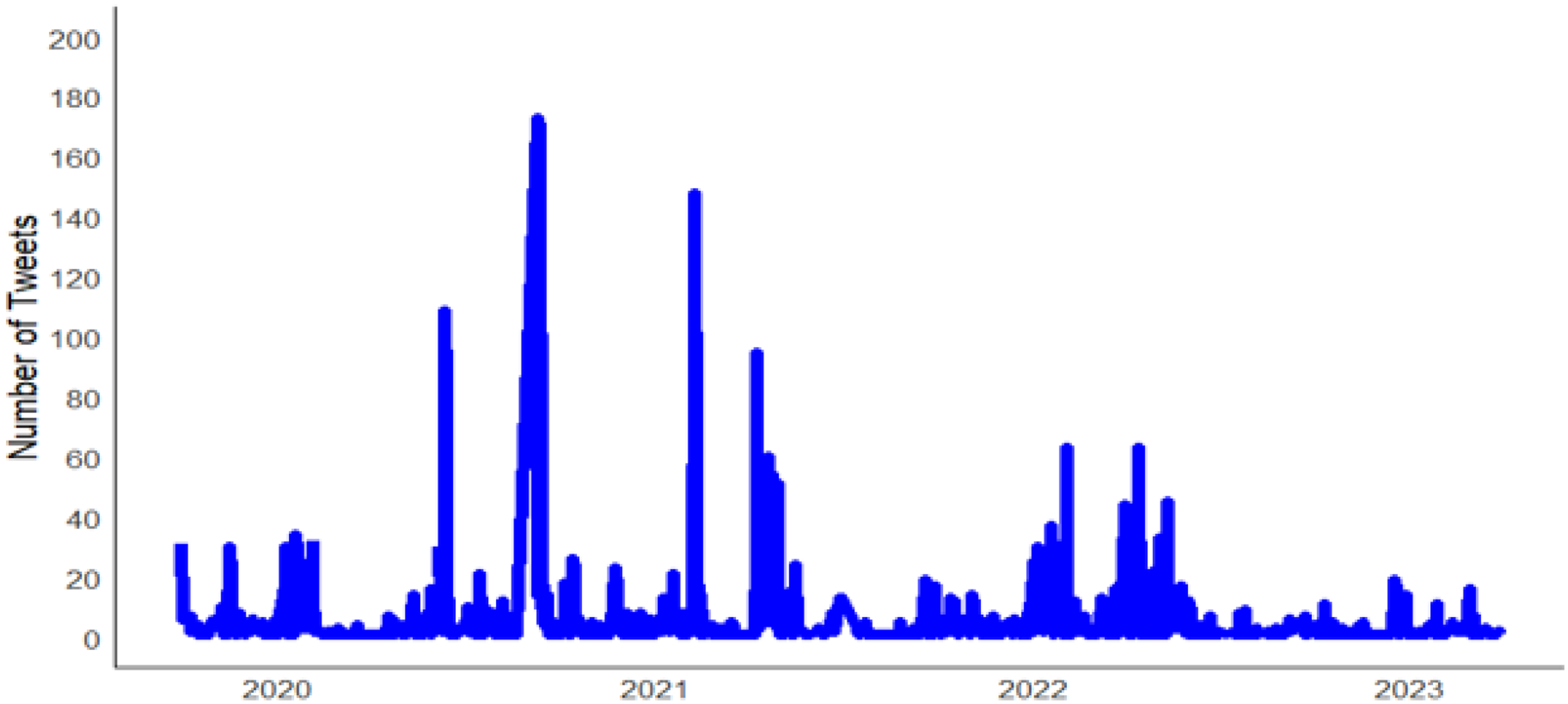
Frequency of tweet counts aggregated by day from August 2019 to March 2023.
In 2020, June had the highest frequency of 1072 data points. This was followed by the year 2021, where in April, there were 604 data points. The year 2020, in September, had 490 data points. The account's highest number of mentions occurred on 03 February 2020, with 2295 tweets, but there were also days with no mentions. Notably, 03 February 2020, was the date of Super Bowl LIV, in which the Chiefs defeated the 49ers for their first title.
Sentiment analysis
Sentiment analysis is a subfield in natural language processing (NLP) that analyzes the opinions of a given text, which generally comes in a digital format (Liu and Zhang, 2012). Sentiment analysis is a new field of research born in NLP, aiming to detect subjectivity in text and/or extract and classify sentiments and emotions (Liu and Zhang, 2012). Sentiment analysis studies people's opinions and emotions towards services, product organizations, issues, and experiences. Sentiment analysis techniques have begun to emerge in sport management research (Gong et al., 2021; Mamo and Anagnostopoulos, 2023).
While there are many types of sentiment analysis techniques, we have chosen to employ a dictionary-based approach. Firstly, the study attempts to infer sentiment tone categories embedded in the rhetoric of tweets, thereby making a dictionary-based approach suitable (Humphreys and Wang, 2018). Humphreys and Wang (2018) argued that when the intended construct, such as positive and negative affect, is relatively well-defined, a lexicon-based technique is a suitable analysis method. Furthermore, when combined with the principles of linguistics, they enable an intuitive operationalization of constructs and theories originating from sociology or psychology. Additionally, dictionary-based sentiment analysis is validated in various settings and provides more transparent and easily interpretable results. For instance, the Valence Aware Dictionary for Sentiment Reasoning (VADER) dictionary has been validated across different types of textual content, such as movie reviews, newspaper articles, X, and Amazon product reviews. It is a gold standard for lexicon-based sentiment analysis in short texts like X (Al-Natour and Turetken, 2020; Hutto and Gilbert, 2014).
VADER offers metric ratings for negative, neutral, positive, and compound sentiments based on the feeling of a word or sentence. The compound score is the polarity number that is most helpful for assessing the sentiment of a sentence. According to Oliveira et al. (2022), the compound score goes from −1, representing the highest level of overall negativity, to 1, representing the highest overall positive. The standard cutoff points for categorizing two sentiments are as follows: Neutral: −0.05 to 0.05; Positive: 0.05 to 1; and Negative: −0.05 to −1.
However, scholars argue that sentiment analysis tools are highly context-sensitive (Ribeiro et al., 2016). Grimmer and Stewart (2013) emphasized that any quantitative language model requires evaluation and may not necessarily be the best universal method. We randomly selected 10% of the data to address these concerns and set cutoff points for positive, neutral, and negative sentiment analysis. After reviewing the distribution of the compound scores (see Figure 2), we slightly modified the cutoff points for Neutral: −0.1 to 0.1; Positive: 0.1 to 1; and Negative: −0.1 to −1. The gold standard for categorization validity is assumed to involve human validation, and researchers often manually verify these claims.
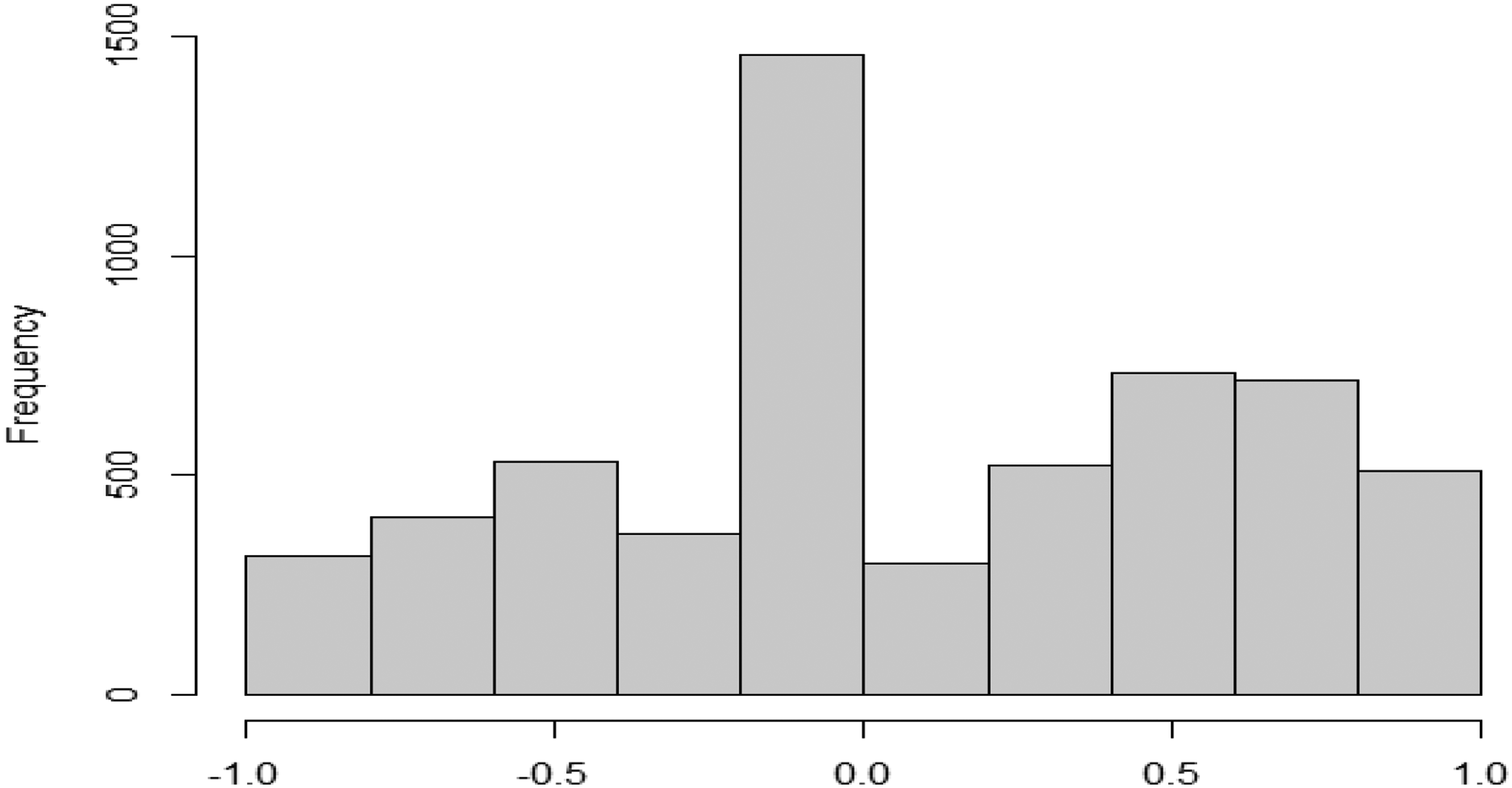
Compound sentiment score distribution for the data set.
Thematic analysis
Before employing thematic analysis (Braun and Clarke, 2006) to examine the underlying factors influencing users’ sentiments, both positive and negative, we followed the methodology of Oliveira et al. (2022), which suggests using compound scores of 0.7 or higher for the positive category and −0.7 or lower for the negative category in our analysis. This ensured that the selected tweets contained unambiguous and explicit content displaying clear positivity or negativity. Such higher score cut-off points align with established practices and significantly reduce the chances of erroneously classifying messages lacking sufficient emotional language. This shows the clarity of the sentiment by avoiding the middling valence (Oliveira et al., 2022).
Consequently, we conducted a thematic analysis following a six-phase process (Braun and Clarke, 2006). Braun and Clarke's extensive work on the methodology provides a solid foundation for ensuring this technique is a rigorous and reflective application. Indeed, in their 2024 critical review, they highlight the importance of reflexivity in reporting practices, emphasizing that robust thematic analysis goes beyond mechanical coding to involve critical reflexive engagement (Braun and Clarke, 2024). Together, these works offer comprehensive guidance for researchers aiming to employ this analytical technique with integrity and depth. Thematic analysis discerns data patterns, themes, and topics (Braun and Clarke, 2006). It is recognized as a rigorous methodological approach to inductively or deductively analyzing qualitative data and giving meaning to important patterns or sequences within the data. However, the authors kept in mind that beyond any prescription behind this analytical technique, researchers should remain open and adaptable to new insights (Braun et al., 2022), as there is no one-size-fits-all approach when it comes to thematic analysis (Braun and Clarke, 2021). With all this in mind, the initial phase involved becoming acquainted with the data, creating initial codes, exploring themes, reviewing themes, defining themes, and generating the report quality (Braun and Clarke, 2023). The first author and a trained research assistant conducted the data coding and theme generation. Subsequently, the two authors discussed the codebook, revised it, and addressed any disagreements through discussion. We used a consensus-based process to identify, discuss, and settle disagreements as a team. In the last stage, we polished the thematic map and created a comprehensive written report of the findings (see Tables 2 and 3). Finally, intercoder reliability testing using Cohen's kappa was performed, resulting in a score of 0.92, which indicates an acceptable level of agreement (Landis and Koch, 1977).
Results and discussion
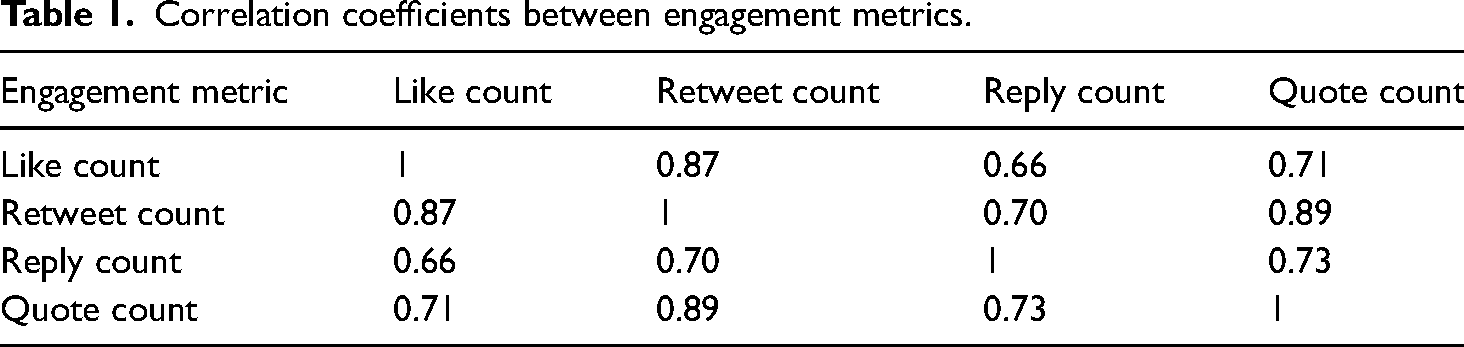
Regarding engagement metrics (e.g. like, retweet, quote, and reply), we found that the mean count for likes is around 6.17 and retweets are approximately 1.02, respectively. In the dataset, the mean reply count is approximately 0.55. Lastly, the mean count for quotes is approximately 0.14. These metrics collectively provide an overview of the engagement levels in retweets, likes, replies, and quotes within the dataset. For the correlation coefficient among the engagement metrics, see Table 1. The word character lengths in the dataset exhibit a central tendency, with a median length of 83 characters and a mean length of approximately 105.9 characters.
Correlation coefficients between engagement metrics.
Research question 1
Research question 1 focuses on the sentiment expressed by social media users on X regarding the NFL's social justice actions. Data analysis revealed that 45% of the sentiments expressed were positive, 26% were neutral, and the remaining 30% were negative. To ensure the reliability and validity of our sentiment analysis, we compared the sentiment scores of unique users (3632), single-post users (2983), and the total corpus (5851). The results show that the sentiment scores are consistent across all groups, with positive sentiment at 45%, neutral sentiment ranging from 26% to 28%, and negative sentiment between 27% and 30%. These findings are illustrated in Figure 3, demonstrating the overall sentiment analysis.
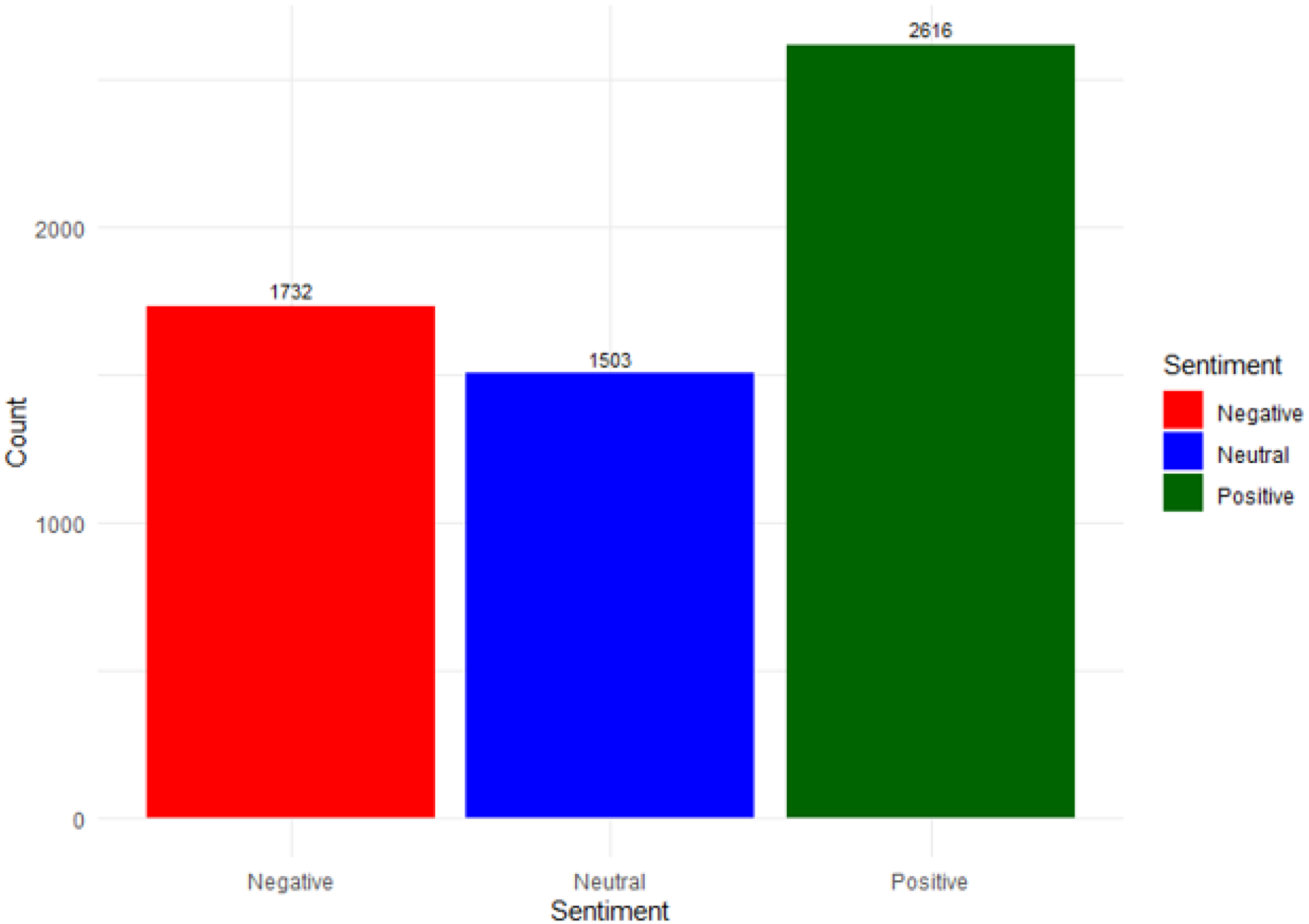
Percentage of negative, neutral, and positive sentiments.
We conducted additional analyses to examine potential differences in engagement metrics among the positive, neutral, and negative sentiment categories using ANOVA. Results showed that mean like counts between the groups were statistically significant (F (2, 5848) = 7.8493, p = .001), as were mean retweet counts (F (2, 5848) = 7.3362, p = .001) and quote counts (F (2, 5848) = 4.747, p = .01). However, there were no significant differences in mean reply count among the three categories.
The sentiment analysis results indicated that nearly 45% of the sentiments expressed were positive, suggesting an overall optimistic tone regarding the NFL's social justice initiatives. This positivity in users’ perception of the NFL's efforts can be attributed to reciprocity. Studies have shown that reciprocity exists in online environments (Pelaprat and Brown, 2012), where individual interactions play a crucial role in interpreting both pro and anti-social interactions on social media (Lewis, 2015). Our findings suggest that social media users express positive words and messages to appreciate and support the social justice efforts of sports organizations. This suggests the sport organization's social justice efforts align with their expectations, eliciting a positive reciprocity response.
Our findings also indicated positive and neutral messages drive more engagement than negative ones. Social media users demonstrate their general approval of the content and their desire to disseminate it to a broader audience (Saxton et al., 2019). In other words, the level of engagement with a positive social justice message reflects how strongly the message resonates with them, as they willingly share it within their networks. For example, among the top 100 liked tweets, approximately 89% exhibit either a strong positive or neutral sentiment, while the remaining 11% are negative. Similarly, about 85% of the top 100 retweeted content is either positive or neutral, with the majority being positive messages. Finally, social media users expressing positive sentiments will likely have their personal beliefs and values aligned, their expectations fulfilled, gain knowledge and information about social justice, or have limited alternatives to voice their position on social justice.
Research question 1a
This research question examined the changes in sentiments regarding sport organizations’ social justice initiatives over time. The data analysis looked at the changes in positive and negative sentiments over time from August 2019 to March 30, 2023. As shown in Figure 3, the sentiment scores from 2023 to 2019 exhibit a noteworthy contrast in their values. In 2023, the sentiment score reached a substantial 0.3727, indicating a highly positive sentiment. This represents a significant increase from 2022 when the score was 0.1834, which was significantly higher than the score of 0.0661 recorded in 2020. However, the lowest sentiment score was recorded in 2021, with a value of 0.0343, reflecting a notably negative sentiment. Caution should be exercised when interpreting the data for 2023 and 2019, as the former includes only three months and the latter covers just eight months, so neither represents a full year (Figure 4).
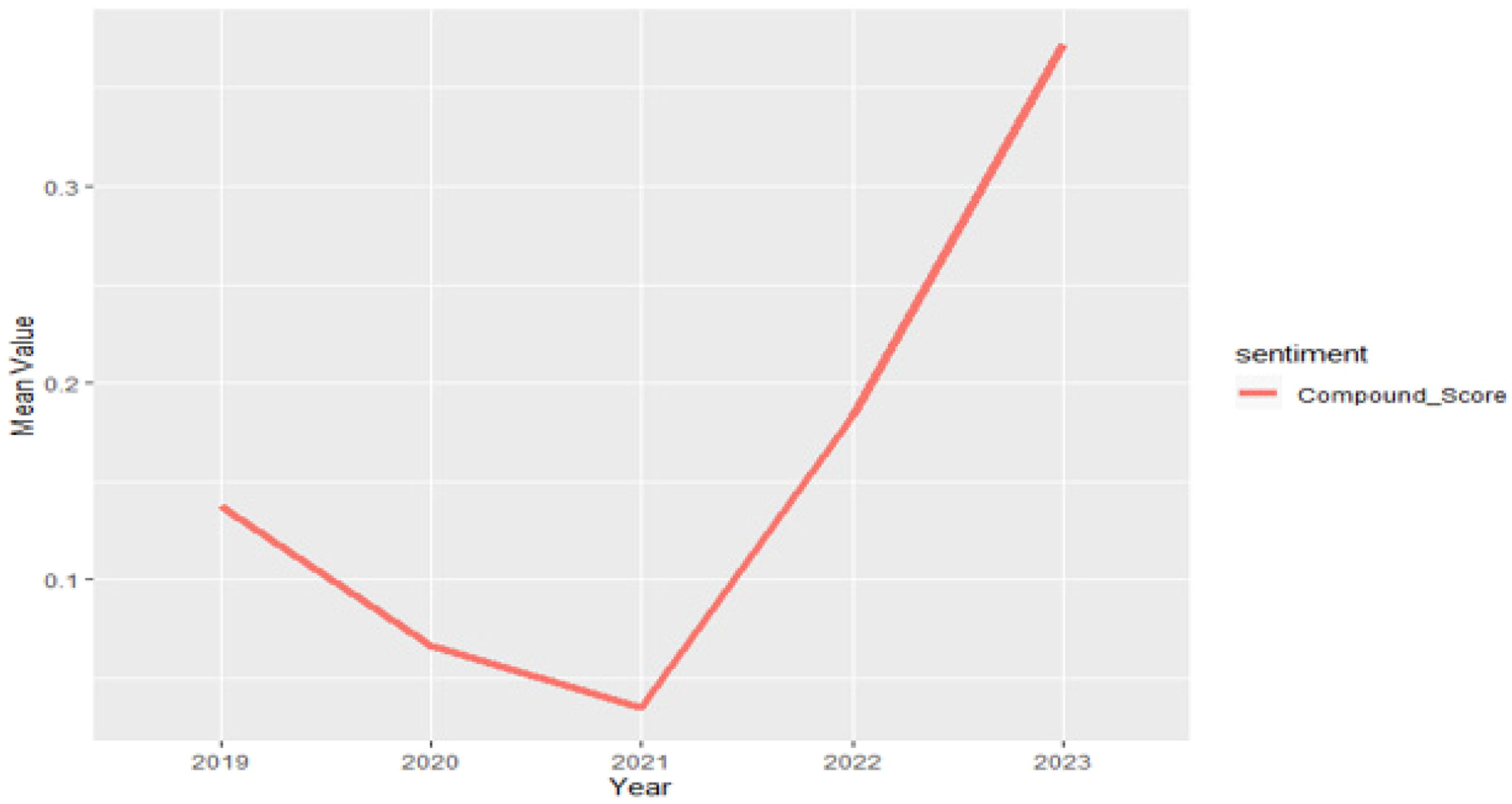
Sentiment changes between August 2019 to 30 March 2023.
Findings showed that the strength of the positive sentiment scores was lower in 2019 and 2020, corresponding to the introduction of social justice and equity initiatives that generated intense debates during their early stages. The consistently low scores in 2020 and 2021 suggest that social media users were not particularly positive or supportive of these efforts during that time. The decline in positive sentiment towards the NFL's social justice program may reflect incidents that have highlighted deeply ingrained racial tensions in the US. In February 2020, Ahmaud Arbery, an unarmed Black man, was fatally shot by two individuals who claimed they were making a “citizen's arrest”. Three months later, the deaths of Breonna Taylor and George Floyd at the hands of police officers caused widespread shock and outrage (Oppel et al., 2020). This period peaked with the January 6th attack on the US capitol in 2021, shortly before the end of Donald Trump's presidency (January 20th), where White nationalists rampaged the halls of Congress, which has been seen as an act of hate, racism, and xenophobia (Piazza and van Doren, 2022). As a result, protests and social media campaigns emerged, demanding accountability and raising awareness of the systemic racism that Black Americans face and its devastating effects.
However, the sentiment score for 2021 was marginally higher, indicating that a slightly more positive perception tended to emerge as the users became more aware and trusting of the NFL's social justice efforts. One potential reason for this might be attributed to the display of social justice messaging, such as ‘end racism’ and ‘it takes all of us’ on the playing fields during the 2020/2021 season. This practice was intended to help publicly acknowledge systemic injustices and confront racism, which was done in collaboration with their players, clubs, and fans. Since 2021 the NFL has utilized their status and platforms to allocate funds and goods for various equality programs. Such actions can be perceived as a just deed, a notion within a system of justice that focuses on repairing damaged relationships (Zehr and Gohar, 2002). This may demonstrate the NFL's willingness to acknowledge the existence of racism against Black people in society, which the league failed to do when Colin Kaepernick raised the issue.
We argue that social media users probably feel a sense of reciprocity towards the NFL's social justice, viewing the NFL's willingness to share their status to advocate for racial justice. Results suggest that organizations that engage in social justice initiatives may feel a sense of duty to reciprocate, which could foster a positive sentiment toward the actions. We should note, though, that social justice initiatives by the NFL since 2021 that are highly popularized and advertised appear to focus specifically on systemic racism, and may ignore other forms or institutionalized injustices, such as sexism, homophobia, transphobia, or ableism. This may be logical, given the racial composition of the NFL, where nearly 75% of NFL players between 2014 and 2020 identified as Black (Marquez-Velarde et al., 2023) and the dire need for conversations about racial injustice surrounding recent political and social events in the USA, but future work highlighting other forms of injustice is needed to fulfill promises of social justice initiatives and counteract dominant hegemonies of oppression and inequality that are reflected and reinforced through sport (Adamson et al., 2022; Sage and Eitzen, 2016).
In 2022, social media users’ sentiment has improved, suggesting that the social justice initiatives undertaken by the NFL are gaining more support and recognition. Through an analysis of the sentiment towards social justice initiatives undertaken by sport organizations over the years, it seems their contributions will perpetuate an exchange cycle that grows stronger with time (Cropanzano and Mitchell, 2005). Reciprocity norms expect individuals to reciprocate positive actions, creating a sense of obligation to contribute to resolving social issues. Given the prominent status of the NFL in American culture, their involvement in promoting and supporting key policies and programs could foster social cohesion and a sense of belonging, (i.e. inclusion).
Research question 2
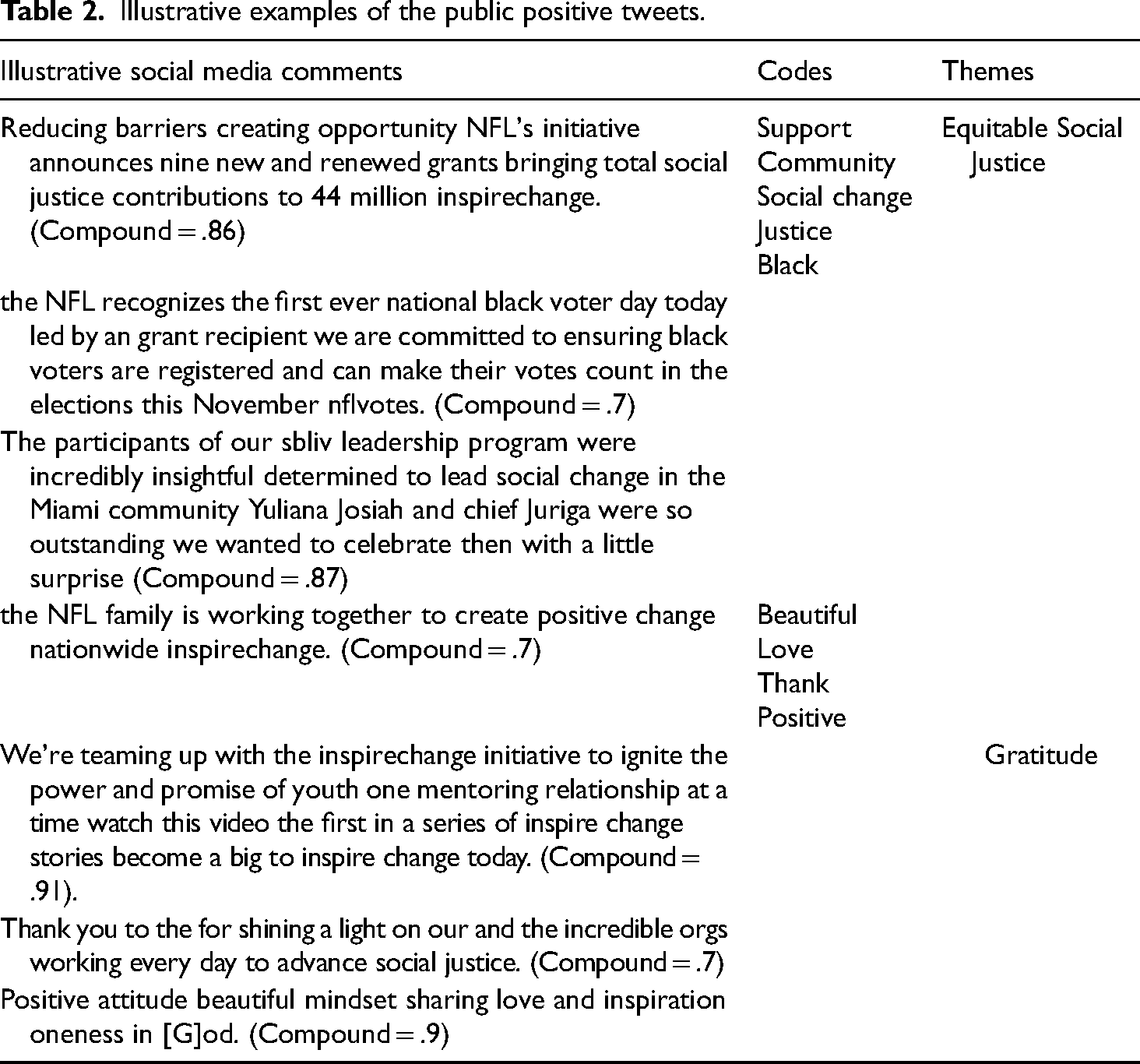
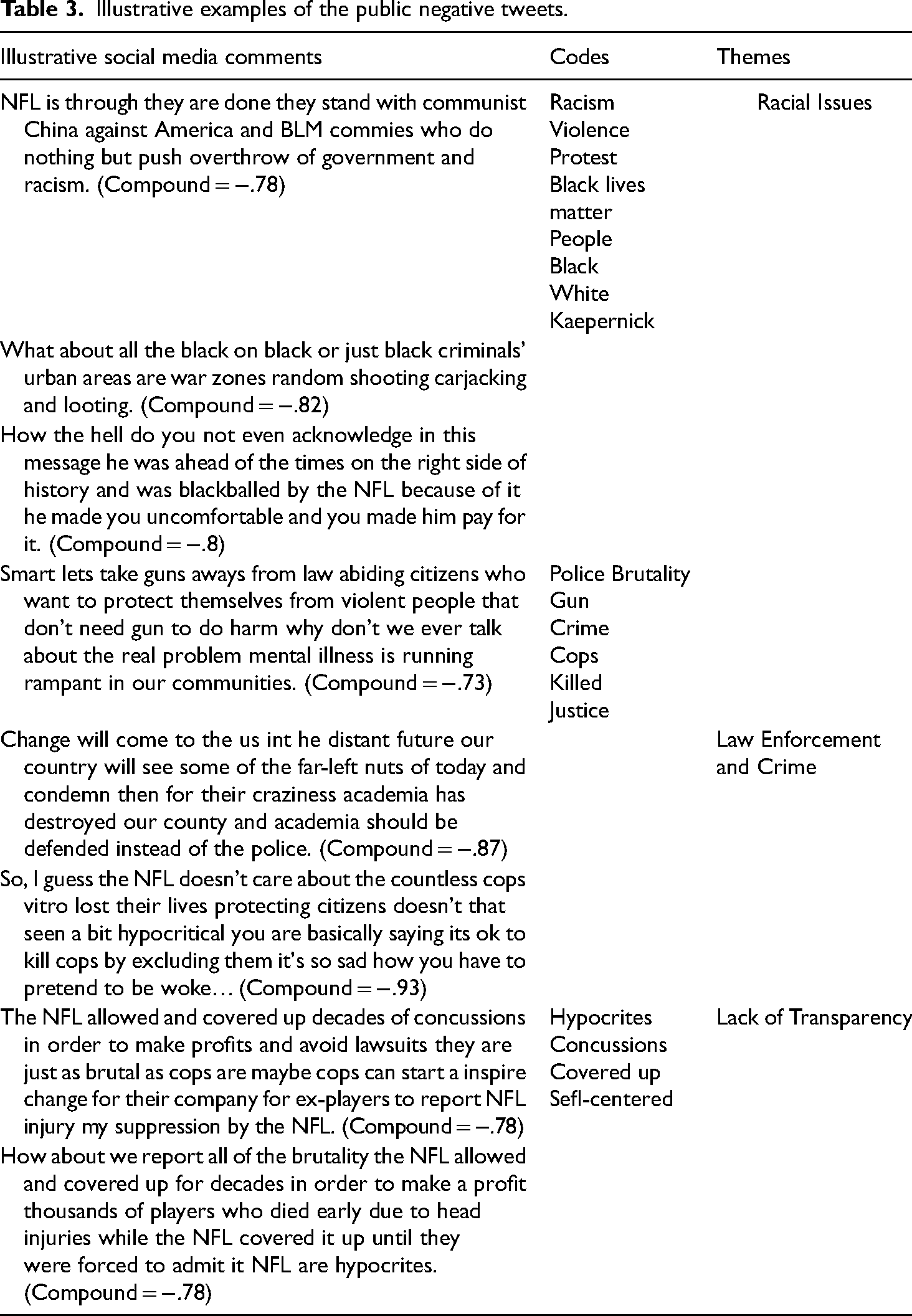
To address Research Question 2, we filtered highly positive and negative messages based on sentiment scores greater than 0.7 for the positive category and less than −0.7 for the negative category. This filtering resulted in 819 higher positive and 485 negative messages, with illustrative examples provided in Table 2 for the positive messages and Table 3 for the negative ones. Then, we employed thematic analysis to identify the factors contributing to higher positive and negative sentiments on Twitter regarding sport organizations social justice efforts.
Illustrative examples of the public positive tweets.
Illustrative examples of the public negative tweets.
Positive factors
Our results reveal that social justice efforts, particularly those focused on equitable support and community-oriented activities, and gratitude serve as antecedents to generating positive sentiment. For example, the NFL's commitment to assisting social justice issues related to supporting at-risk youth in finding a path outside juvenile detention through tutoring (with 1119 likes and 231 retweets), job preparation, and mentoring were among the highest engaged tweets in the dataset. In addition, messages highlighting the NFL's goal to raise $237 million in five years and allocate funding to nonprofits and grassroots organizations nationwide as part of the “Inspire Change” and “Art of Justice” juvenile justice programs garnered 784 likes and 67 retweets. Social media users’ endorsement of the NFL's social justice initiatives via likes and retweets demonstrates how they perceive the socioemotional benefits provided by the NFL. As a result, they express positive emotions in response to the perceived social justice efforts, resembling a form of reciprocity. Furthermore, users perceived it as a positive factor in renewing their support for several national grant partners who work diligently to provide essential resources for creating real change in their communities. Such positive experiences would have an even stronger effect on cohesion and group commitment (Lawler and Thye, 2006), the ultimate goals of the NFL's social justice initiatives.
Our findings indicated that social media users have expressed gratitude regarding the NFL's social justice initiatives, supporting their efforts to raise awareness about social inequalities and reduce injustices. Gratitude is associated with a benefit received from another or recognizing the value of a general benefit in one's life (Lambert and Bell, 2013). For example, when social media users actively share and like comments related to community safety, mentoring, and providing care and support to homeless veterans, single mothers, and urban youth, it demonstrates users’ recognition of the positive outcomes achieved through the NFL's efforts. Such actions are typically associated with what is usually seen as a state—an emotion experienced in the moment (i.e. feeling grateful). Gabana et al. (2019) found that gratitude is one of the antecedents for positive emotions and predicts psychological well-being and life satisfaction, especially from student-athlete’s perspective. Indicated that feelings of gratitude are significantly associated with sponsors’ perceived investment in the participant sports context.
Negative factors
Our results reveal that racial issues, law enforcement and crime, and lack of transparency led to a notable proportion of negative sentiment being expressed, suggesting a level of dissatisfaction with the NFL's social justice efforts. The negative response can be explained by the notion of one party attempting to achieve self-interest at the expense of the other party's interest (Blau, 1964; Gouldner, 1960). For example, one of the potential reasons for the negative sentiment observed in the dataset is attributed to Colin Kaepernick's protest of racial injustice and police brutality. The Twitter account @Kaepernick7 was mentioned 335 (which is the third highest mentioned account in the data set next to @NFL and @YWCACleveland) times on the @inspirechange account, and “apologize” and “Black” are among the most associated terms. Many of the messages state that the Inspire Change campaign cannot be taken seriously until the NFL takes responsibility for its actions toward Kaepernick. For example, the top two most engaged tweets related to @Kaepernick7 received 362 and 171 likes, respectively. The results showed that the users displayed negative reciprocity related to the NFL's weak handling of racial issues when Colin Kaepernick raised the issue back in 2016, but concrete actions did not start until 2020. This is likely because social media users displayed negative perceptions. Without spotlighting inequalities, organizational action can appear misguided or without a specific target, opening efforts up to criticism.
A critical feature of social justice is to first acknowledge and call attention to social inequalities and institutionalized discrimination (Adamson et al., 2022; Lee and Cunningham, 2019), before then engaging in action to help to reduce these disparities. Gardner et al. (2022) found that the NFL's diversity equity and inclusion policies and procedures documents are micro-centered, and perhaps social media users may perceive that the inspire change initiatives lack cultural and institutional factors that explicitly address structural issues in meaningful ways. While it appears that the NFL's social justice initiatives are being positively received by many, some appear to be skeptical because of an action-first mentality that does not first identify and openly discuss critical issues associated with institutionalized discrimination within the USA. This finding is quite important and suggests that social media users were concerned that the NFL has not done enough to support efforts to reduce racial injustice specifically, and support social justice more generally, as well as to combat the ways in which White identity politics influence sport, sport media, and American society in general (Boykoff and Carrington, 2020).
Regarding lack of transparency, there are widespread external perceptions that suggest that stakeholders become suspicious if an organization has carried out social actions without implementing an authentic approach that aligns with the organization's core values (Alhouti et al., 2016; Mamo et al., 2021). For example, the @inspirechange account has 2100 followers, while the @NFL Twitter account attracts more than 32 million, only 0.00006% of the NFL followers. This may communicate that the NFL is only paying “lip service” to social justice and social change, again aligned with ideals voiced by current and former NFL players who have grown frustrated with the NFL's efforts (Boykoff and Carrington, 2020). This supports assertions by Rugg (2020), who suggested that the “Inspire Change” campaign may do more to reestablish league control over the voice of their rebellious Black players by subsuming their social justice efforts under an ambiguous, superficial, and market-friendly campaign. Expanding on these assertions, McGannon and Butryn (2020) argued that, despite public support for racial justice, NFL team owners—after responding to comments from former US President Trump—were seen as perpetuating ideologies of color-blind racism and meritocracy. Additionally, they were viewed as silencing the significance of race-related protests by NFL players, thereby upholding the White racial status quo. As consumers, we should be wary of how the NFL and its partners (e.g. Nike) might be capitalizing on social justice conversations and leveraging Black pain for material, social, and financial gain (Montez de Oca, 2021; Montez de Oca and Suh, 2020). For instance, Montez de Oca et al. (2022) recently demonstrated that Nike's marketing campaigns, such as those featuring Colin Kaepernick, may attempt to appear ‘woke’ merely to exploit those interested in social justice for profit. Given these types of capitalistic behavior by companies associated with the NFL, it is perhaps unsurprising that savvy consumers are distrustful of initiatives like “Inspire Change,” viewing them as mechanisms to reassert control rather than genuinely support social justice. Despite the expectation of cultural mandates, such as fighting against racism, to be universal, cultural and individual differences influence the extent to which individuals endorse reciprocity.
Theoretical implications
This study highlights the importance of social media for better understanding diffused stakeholders’ voices, a legitimate stakeholder group within sport organizations. Previous research suggests that measuring group interaction in a laboratory setting can be challenging (Jurafsky et al., 2009). This is particularly relevant when considering social justice initiatives that aim to benefit broader audiences. Prior research has often focused on the advantages of sport organizations’ CSR activities for fans or consumers (Mamo et al., 2023), while paying less attention to society at large. Although an expanding body of sport management literature has stressed the importance of integrating public sentiment regarding sport organizations’ social responsibility efforts (Mamo and Anagnostopoulos, 2023), previous studies have examined various types of CSR such as philanthropy, community relations, and diversity and equity. However, in this study, we focus on one domain of CSR: social justice. This domain differs from traditional CSR in its focus and outcomes.
Building upon social exchange theory, we extend the application of positive and negative reciprocity to the context of social media and social justice. This is achieved by incorporating social media users’ sentiment analysis alongside their likes and retweets. By examining this combined data, we can measure how users resonate with or are dissatisfied with sports organizations’ efforts. In doing so, we identify the underlying factors that influence social media users to reciprocate positively and gain socioemotional benefits, as well as the negative factors that influence anti-social behavior. For example, positive sentiment tweets have more likes in sport social justice contexts. However, based on the findings of this study, it is important to recognize that these interactions are not static; they evolve as users navigate subjective interpretations and cultural cues, often influenced by trending topics and algorithms. Consequently, social exchange in the context of social media and social justice issues transcends straightforward transactions, involving an intricate web of perceived intentions, emotional responses, and a collective social consciousness that can shift rapidly and unpredictably (Surma, 2016). This dynamic, especially concerning social justice, has the potential to shape broader discourse, influencing how movements are perceived and engaged with on a global scale.
Future studies and limitations
There are limitations to this paper, which could be addressed in future research. In the current study, we did not include a retweets dataset. However, future researchers should include the relationship between the contents of retweets and their engagement, because some people may not have the language skills to write and post their own content. Instead, they may share and retweet someone else's message to express their feelings. For example, if retweet data were included in this analysis, there would be 11,481 unique users, which means an additional 7830 people's voices would have their sentiments incorporated. Future research can explore how demographic, sociopolitical, and psychographic characteristics influence the level of support for social justice and perception of social justice. Understanding these factors will provide a better understanding of individual and group-level analysis within society.
Second, we recommend that future work on social justice in sport should not be limited to race and ethnicity-related components of social justice but should also work to dismantle other forms of systemic discrimination, such as sexism, transphobia, and ableism. While some initiatives from the NFL have focused on these other forms of discrimination, it appears that most focus from the league, as well as most of the focus of public reaction, has been with regard to race and racism. Future researchers can examine the WNBA, where organizations have multiple social justice initiatives. Additionally, we acknowledge that the timeline we analyzed coincided with the COVID-19 pandemic, a significant cultural factor influencing global emotional states and conversations about whether sports should be played, racial injustice, and the rise of extremist views in the USA (Clarke et al., 2023). As a result, the views expressed in the posts we analyzed were likely influenced by emerging ideals related to COVID-19, as well as various other social justice initiatives. However, it is not feasible for us to disentangle the influences that might have shaped these opinions. Therefore, we suggest that those interested in understanding how COVID-19 impacted society and sports should consult research in that area (e.g. López-Carril and Anagnostopoulos, 2020), and future studies should explore similar topics once COVID-19 has been mitigated.
Regarding the methodology, future studies could employ machine learning techniques and use other lexicon sentiment analysis dictionaries (e.g. Syuzhet, Bing, AFFIN), as well as commercial NLP APIs like Google, to provide a more comprehensive understanding of the most efficient and appropriate tools for analyzing sport social media texts. More specifically, we recommend that future researchers conduct in-depth qualitative and quantitative research designs to understand better the psychological and social mechanisms underlying these sentiments. Finally, we acknowledge that the attitudes expressed by users in social media posts are clearly influenced by external social issues. Although the social justice initiatives we discuss merely reflect the NFL's stance on these issues, it remains unknown—and unknowable—how and to what extent other factors influence users’ opinions.
Conclusion
Social justice is a pertinent and persistent issue in both sport and society. Despite the well-known involvement of sport organizations in social justice initiatives, the implementation of social justice initiatives has recently garnered significant attention, particularly following the death of George Floyd and the rise in social power of the Black Lives Matter movement. In this research paper, we seek to incorporate social media users’ opinions to provide initial findings suggesting an overall positive sentiment towards sport organizations’ social justice efforts, with a growing positive trend observed over the last three years. Therefore, we have addressed longstanding calls from scholars by empirically examining the outcomes of sport organization social initiatives from the perspective of external audiences. We employ multilevel methods and data visualization techniques to examine public sentiment towards sport organizations’ social justice efforts in an aggregate fashion. Using these multiple methods highlights the potential for studying unstructured data in sport management to extract text data and systematically answer communication, sociology, and psychology-related research questions.
Footnotes
Declaration of conflicting interests
The authors declared no potential conflicts of interest with respect to the research, authorship, and/or publication of this article.
Funding
The authors received no financial support for the research, authorship, and/or publication of this article. They wish, however, to acknowledge the non-financial support of the UNESCO Chair on Governance and Social Responsibility in Sport.
