




Abstract
The naturalization of athletes for the purpose of participating in the Olympics is a noticeable feature of today's superdiverse sporting contexts. Focusing on the 2018 PyeongChang Winter Olympic Games, in this paper, I explore how North American-born male ice hockey players who have become naturalized into South Korea are reproduced in media coverage of Canada and South Korea. Applying insights from critical discourse studies, transnationalism, and critical multiculturalism, I specifically examine how each country re/forms its own imagined community through these transnational sporting migrants and the ways that concepts of immigration, citizenship, whiteness, masculinity, and multiculturalism are linked, fused, and/or conflicted within it. Analysis suggests that in both countries, the hockey migrants have been illuminated as new national symbols enhancing the multicultural national brand of each country, whether as immigrants or emigrants, solidifying in the process the hegemonic position of whiteness as a global phenomenon beyond the West.
It is no longer unusual to see sportspersons who change citizenship or acquire another citizenship to represent a new country in an international sports competition such as the Olympics. This global landscape does not occur exclusively among certain countries or a few sports. Yet it is also true that the phenomenon is more salient in Olympic sports (Spiro, 2014), including ice hockey. When a country without a strong ice hockey program becomes an Olympic host, new talents are often recruited from a North American country, an ice hockey powerhouse (e.g. Nagano 1998 Winter Olympics and Turin 2006 Winter Olympics). The players usually obtain the new nation's passport through naturalization and are allowed to represent the new national team at the Olympics after playing for two years in their local club (IIHF, 2021). Given that ice hockey is commonly considered the centerpiece of the Winter Olympics, host countries issuing (often expedited) citizenship to foreign hockey players is understood as necessary to ensure Olympic successes or at least not to be disgraced at its home Games. At the 2018 Winter Olympics, held in PyeongChang, South Korea, the men's ice hockey team of the host country included seven naturalized players originally from North America, mostly Canada. The migrants drew substantial attention from the media at home and abroad, reflecting public interest in the sport, and in the Olympics, the long-standing festival of the “global village.” 1
In this paper, considering that sport plays a central role in the social re/construction of national identity (Bairner, 2001; Bruce and Wheaton, 2009; Carrington, 2010; Wong and Trumper, 2002), I explore how naturalized ice hockey players in Korea are reproduced in the media coverage. Given that these sporting migrants are transnational subjects who are inevitably immigrants and emigrants at the same time, I focus on the public discourse in both the home and host countries, Canada and South Korea. Specifically, I pay attention to how each nation re/forms its own imagined community through these transnational sporting subjects and the ways that concepts of immigration, citizenship, race, masculinity, and multiculturalism are linked, fused, and/or conflicted within it. I argue that, in both countries, the hockey players were illuminated to enhance each of the national brands.
This study exploring sporting naturalization is significant as it is useful to understand the dynamics and varieties of today's superdiverse sporting contexts (Vertovec, 2007). First, this case focuses on sporting migration from North America to Asia. With their economic power and developed sport industries, North America and Europe have enticed many skilled players (Maguire, 2011); this pattern has been dominant in ice hockey as well. The past few decades have witnessed a transnational migration of hockey players from North America to Europe and vice versa, as well as within the continent, and it has understandably been addressed in a considerable body of research (e.g. Arbena, 1994; Chen and Mason, 2018; Elliott and Maguire, 2011; Genest, 1994; Jackson, 2001; Maguire, 1996; Wong and Trumper, 2002). However, as this study exemplifies, it should be noted that the mobility is not confined to the West because the sport flourishes in parts of Asia where an opportunity to be an Olympian also exists. Second, the subject of the study is the Korean ice hockey team, which includes a sizable number of North American-born (white) players without Korean lineage; among them is Brock Radunske from Canada, the first nonethnic Korean player representing the country. At the 1998 Winter Olympics, Japan also recruited several players from Canada and the United States, whom Chiba et al. (2001) have referred to as “borderless athletes,” to strengthen its national hockey team, but all of them were of Japanese ancestry. Given that Korea and Japan are both Asian societies that value the lineage and roots of their national members and, thus, their immigration policies also embrace such sentiments (Chiba, 2014; Chiba et al., 2001; Shin, 2012), Korea's decision was rare and new, serving as a unique example to study sporting naturalization and national identities. Indeed, by approaching whiteness and its encounter with a concept of citizenship in a context outside the West, global white privilege is illuminated in this study. Third, as previously mentioned, this study examines media reports in both home and host countries. Considering Vertovec's (2001: 573) claim that “the identities of numerous individuals and groups of people are negotiated within social worlds that span more than one place,” I believe this study regarding both sides could contribute to a true understanding of the cultural reproduction of transnational sporting migrants—especially naturalized athletes—in the current era of the globalized world. All told, contributing to crucial and ongoing debates in the scholarly research in global sport migration, gender, race, and media studies, this paper demonstrates how naturalized athletes are differentially and relationally constituted as trans/national bodies in the two cultures and also how global hegemony, including universal white privilege, is reinforced and reaffirmed through the media's focus on male migrant hockey players.
In what follows, I describe the background and context of the athletes’ migration and naturalization process in relation to the Olympics in Korea, including a brief overview of the meaning of ice hockey in the two countries and the legal and political backgrounds that enabled players to have multiple citizenship. After outlining the research methodology, I examine how these naturalized players are represented in the media, focusing on Korea first and then Canada, followed by a discussion of forming national subjects in a cultural matrix woven by immigration, whiteness, masculinity, globalization, and multiculturalism.
The lure of the Olympics: migratory Canadian ice hockey players for the PyeongChang games
In 2011, PyeongChang, a small rural region in South Korea, won its bid to host the 2018 Winter Olympics after two previously unsuccessful bids. For the host country, one aspect of successfully hosting the Games is the excellent performance of its players culminating in the winning of more medals, so Korea endeavored to improve its national team's performance. One of the most direct and effective ways to achieve this goal was to recruit competent personnel through the country's naturalization policy. Certain sports, such as ice hockey, were more desperate for such recruitment than others. South Korea is a so-called hockey-weak nation. With scant national interest in and public popularity of men's (and women's) ice hockey, only three professional teams play in the Asian league, and the total number of registered adult players is fewer than 200. This scale is clearly nominal compared to a hockey powerhouse like Canada, whose players number more than 600,000, and even compared to neighboring countries such as Japan and China (Park, 2018). Not surprisingly, no bona fide superstar exists in Korean hockey who can develop and expand the sport's fandom. Due to the weak base and the consequential poor performance of Korean men's ice hockey, the team had never qualified for the Olympics. In 2010, among 49 countries, the Korean men's team ranked 33rd (Shin, 2017). However, Korea was eager to field its hockey team and avoid an embarrassing drubbing in arguably one of the marquee sports of the Winter Games. As a result of the negotiations and agreements among the International Ice Hockey Federation (IIHF), the International Olympic Committee (IOC), and the Korean Sport and Olympic Committee (KSOC), Korea was able to be qualified and join the tournaments as the host nation, overturning the policy to give an automatic berth to the host, which was abolished after the 2006 Olympics. According to media reports, Rene Fasel, the head of the IIHF, offered the Korean team several conditions, including the recruitment of foreign talents (especially a foreign goalie) and coaches and finally advancing to the top division. Yang, Seung-jun, head of the PyeongChang Olympics preparatory and planning team, said, “We bowed to repeated recommendations from the International Ice Hockey Federation to recruit athletes from overseas because there are just 200 adult hockey players in the country” (cited in Kim, 2017). To recruit players, Korea began a search for talent, with particular attention given to Canada, as it has been traditionally strong in ice hockey and producing many skilled hockey players.
Ice hockey is not only one of the popular and symbolic sports in Canada but has also been the country's official winter sport since 1994 (Wong and Trumper, 2002). Gruneau and Whitson (1993: 3) have provided the following picture of what hockey means to Canadians: Millions of Canadians play hockey in one form or another—young and old, boys and girls, urban and rural, French and English, East and West, able and disabled. Millions more follow the game passionately, and even people who dislike hockey have difficulty escaping its reach, its omnipresence in the media and in the everyday conversations that occur at the office, the playground, and the school.
Despite a recent increase in the popularity of other sports such as soccer and basketball and ice hockey's entrenched racism naturalizing white androcentrism (see Bains and Szto, 2020; Kalman-Lamb, 2018; Szto, 2016, 2020), ice hockey has long been celebrated as a special cultural artifact strongly attached to Canadian identity among all the sports, and there is still a prevalent belief (even if mythical) that ice hockey is a defining feature of Canadian culture (Bairner, 2001; Mason, 2002; Szto, 2020; Wong and Dennie, 2021). In terms of performance, as the leading national ice hockey team, Canada is “the most successful country in Olympic ice hockey,” winning 22 medals since the debut of the sport at the 1920 Olympics (Canadian Olympic Committee, 2021). Not surprisingly, therefore, Korea targeted Canada, “the core locale for ice hockey labor production” (Elliott and Maguire, 2011: 105). As previously mentioned, Canadian Brock Radunske became the first naturalized Korean hockey player in March 2013. After that, six additional players—Michael Swift, Bryan Young, Matt Dalton, Eric Regan, and Alex Plante from Canada and Mike Testwuide from the United States—accepted Korea's offer to play on a Korean professional team and compete at the Olympics representing Korea. All of them were able to join the Korean national team without renouncing their original citizenship because they were naturalized to Korea through Special Naturalization for Outstanding Talents, a revised immigration law that allows dual citizenship in Korea (Ministry of Justice, Republic of Korea, 2021). In general, Korea's nationality law is based on Jus Sanguinis (right of blood); with only a few exceptions, multiple citizenship is not recognized in Korea. Thus, those who acquired Korean citizenship through the revised law were already privileged to some extent. 2 In contrast, adopting Jus Soli (right of soil), Canada is a country that allows multiple citizenship. Under Canadian law, a Canadian can be both a Canadian citizen and a citizen of another country (Government of Canada, 2021). Therefore, it was possible for the players to carry two passports.
Meanwhile, transnational migration in sport mainly involves athletes, but also includes other sport persons, such as coaches. In this case, another important person in the Korean team's transition to prepare for the Olympic stage was the team's head coach, Jim Paek. As the first Korean-born player in the NHL (1990–2003), he accepted a position to coach the men's national team in 2014. He participated in the PyeongChang Games as a Canadian national, but afterward earned Korean citizenship through the same special naturalization procedure as the North American-born players. Eventually, all the changes brought about some visible, unprecedented results: The Korean team finished second in the 2017 IIHF Ice Hockey World Championship Division I Group; jumped 12 spots to No. 21—an all-time high for the country—in the IIHF rankings; and ultimately stepped out on the ice as Olympians in 2018. However, at the Games, the new Korean team struggled. They lost all their matches against the Czech Republic, Switzerland, Canada, and Finland, which McGran (2014) has called “insurmountable odds.” The Korean men's hockey team's Olympic debut came to an end in this way. Nevertheless, the seven Canadian hockey players who became Korean naturalized citizens received much attention from both countries’ press throughout the Olympics.
Methodology
To explore how naturalized ice hockey players are represented in the media, I essentially situate my analysis in critical discourse studies (CDS). According to CDS scholars, discourse not only includes bodies of speech and writing, but also plays a crucial role in exerting power and domination in society; at the same time, discourse is a consequence of these both and, thus, it is understood that “discourse is Janus-headed” (Wodak and Meyer, 2016: 9). Informed by the conceptual and theoretical approaches, I interrogate media discourse about naturalized players who navigate multiple identities to understand how language—namely, “the privileged medium” (Hall, 1997)—surrounding the migrants creates and strengthens social hierarchies and inequality relationships among nation-states, race, gender, and cultural majorities and minorities. Furthermore, for this study, I employ transnationalism as “an ideal theoretical construct for analyzing people's mobilities and identities” (Carter, 2013: 68). Widely referred to as “multiple ties and interactions linking people or institutions across the borders of nation-states” (Vertovec, 1999: 447), transnationalism and the scholarship building on it not only illuminate that many people dwell in two or more nation-states, revealing that social, political, and symbolic ties—which are often unbalanced—exist between the states, but also present possibilities of unfixing identities and arriving at new perspectives on culture and belonging (de Jong and Dannecker, 2018; Vertovec, 2001). In addition, this study is informed by the framework of critical multiculturalism. Contrary to the existing (liberal) multicultural approach, which fails to see the power relations and inequalities in the construction and representation of identity and culture as a research method, critical multiculturalism sheds light on the complexity and intersectionality between culture and identity (Marom, 2017; May and Sleeter, 2010). Relying on the lens of critical multiculturalism, I explore how power relations contribute to producing culture and identity, which are multilayered, fluid, and complex, in my analysis of the mediated naturalized players. Specifically, the perspective grounded on critical multiculturalism is useful for examining normalized whiteness and the process of racialization in both countries where national fantasies of multiculturalism are encompassed (May and Sleeter, 2010; Sharma, 2010). Altogether, my analysis draws upon the insights from these various critical theoretical threads.
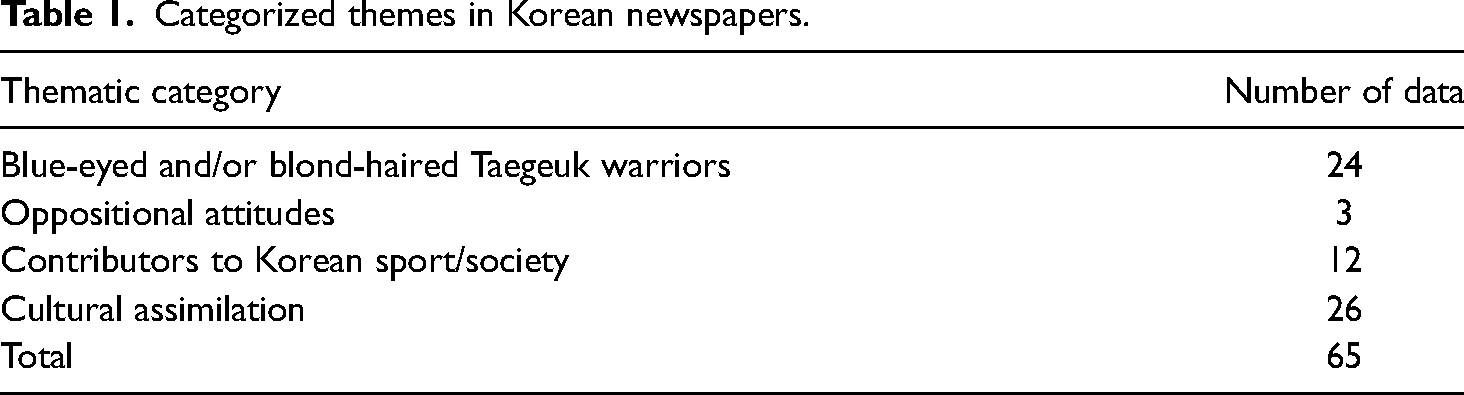
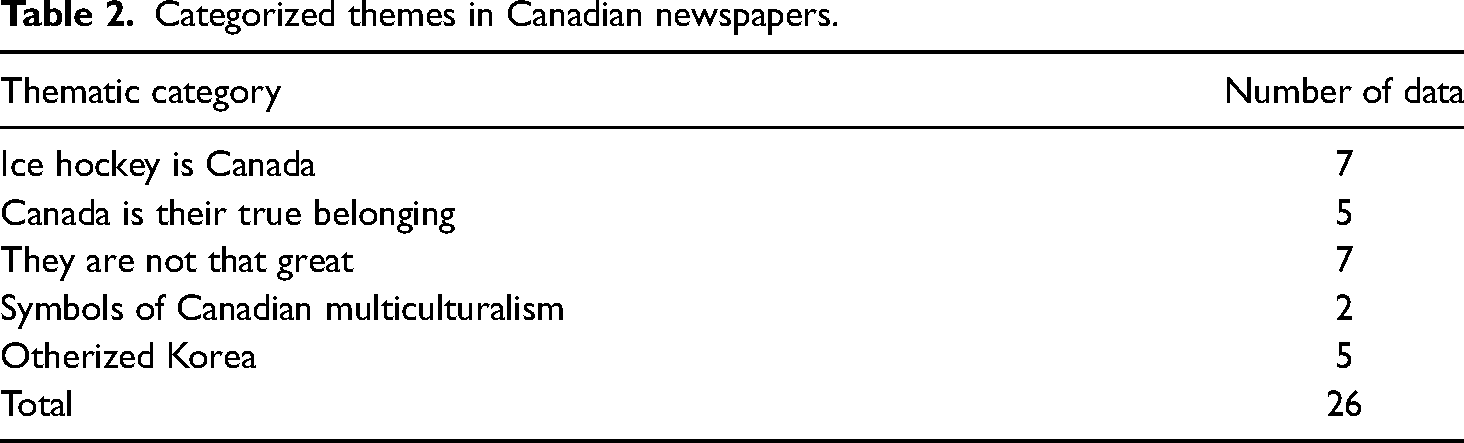
This study builds on data collected from both Canada and South Korea—specifically, the top seven Canadian newspapers by circulation, including Canada's national and local Canadian newspapers such as the Calgary Herald, the Globe and Mail, the London Free Press, the National Post, the Ottawa Citizen, the Toronto Star, and the Vancouver Sun, as well as 11 national daily Korean newspapers, including the Chosun Ilbo, the Dong-A Ilbo, the Hankook Ilbo, the Hankyoreh, the JoongAng Ilbo, the Kukmin Ilbo, the Kyunghyang Shinmun, the Munhwa Ilbo, the Naeil Shinmun, the Segye Ilbo, and the Seoul Shinmun. The articles collected appeared between February 20, 2013 (the date when Brock Radunske's application for naturalization into Korea was finally approved by the Justice Ministry) and February 25, 2018 (the closing day of the PyeongChang Games). More than 130 articles were identified, but a total number of 69—18 from the Canadian press and 51 from the Korean press—were used in the analysis except for articles simply dealing with game statistics. Given that the Olympics was held in Korea and that naturalized players are not high-profile players who have been in the Canadian media spotlight, the difference in the sheer number of articles between the two countries is perhaps explained. For this study that aims to understand the construction of naturalized hockey players in the media, I closely read all the sources and identified key thematic codes. 3 It is worth noting here that the total number of articles identified within the categories (see Tables 1 and 2) outnumbers the selected 69 because numerous articles fell into more than one code in each national context.
Categorized themes in Korean newspapers.
Categorized themes in Canadian newspapers.
The “bibimbap” national squad and global Korea
In the Korean media, “blue-eyed” and/or “blond-haired” Taegeuk warriors 4 were almost a synonym for the naturalized hockey players. The racialized, ontological tropes that imply the players’ whiteness were frequently and popularly used, thereby distinguishing the new Koreans from ethnic Korean players, who are often rhetorically represented as black-haired and black-eyed. 5 In a country where the racial purity and ethnic homogeneity of Koreans are traditionally foregrounded and, thus, the country is “widely regarded as being among the most ethnically and linguistically homogeneous countries in the world” (Shin, 2012: 369), people who are considered to be of “different races” have not been welcomed, and their corporeal differences (e.g. skin color) are often reiterated in public discourse as differentiating them from “real” Koreans. Such a division between people is an act of discrimination in itself, yet importantly, it should be recognized that there is stratification by race. Unlike a number of Koreans’ racialized negative views of blacks, other Asians, and people of black or Southeast Asian descent, whites are admired as “an ideal globalized group” with economic and cultural capital (Lee, 2002; Park, 2003), and in turn, whiteness is normalized, safeguarded, and privileged in Korea (Choi, 2020a). Hence, the fusion of “blue-eyed” and the Korean nationalist term “Taegeuk warriors” not only distinguishes the white immigrants from indigenous Koreans, but also serves to reproduce the players as those who deserve chanting and cheering from the whole nation by blurring their racial heterogeneity. Considering the symbolic power of whites that dominates many parts of the globe, at the same time, through the epithet, Korea is reconstituted as a global Korea represented by these white nationals, the new national resource. In addition, the name was often applied to all naturalized players and the entire national squad, which included non-white players. In other words, the white-centered racialization not only forcibly naturalized the linkage between the new immigrants and whiteness, but also made non-white players invisible or marginal in Korean society (Choi, 2020b).
Although white hockey players tended to be widely supported and embraced in the Korean media as those who could contribute to Korea's national interests by elevating its global standing, some negative voices emerged surrounding sporting immigrants, regardless of their potential contribution to Korea's sport and national reputation. For example, rhetoric such as “buying players with money violates the true spirit of sport” (Hankook, May 17, 2017), “Koreans will not be identified with naturalized Koreans” (Hankook, Jun. 16, 2016), or “indigenous Korean athletes will be marginalized” (Kukmin, Dec. 2, 2016) has presented in support of the argument. As properly acknowledged in previous studies, such oppositions reflect the notions of ethnic homogeneity and an exclusionary national identity dominant in Korea (Shin, 2006, 2012). According to Kim (2013), specifically, there is a specific cultural notion of hegemony in Korean society that tends to recognize people who are born in Korea, are proficient in Korean, and also have Korean parents as “real Koreans.” Thus, voices of opposition to naturalized players, especially naturalized players in Team Korea, can be understood as a mirror of such a social tendency by which Koreanness is exclusively defined. Integrated with Korean racism's internalized white supremacy, which Ha (2012) has called “yellow supremacy in a white mask” (534), it is also important to note that such negativity is more salient in reporting naturalized black athletes in the Korean media. Drawing upon Frantz Fanon's theorization of the colonized constructions of blackness in his influential book Black Skin, White Masks (1967), Ha discussed the politics of race in Korean society, in which racism intermingled with white supremacy is expanding among Koreans with “yellow skins” by pointing out that Koreans’ unconditional faith in or desire for white mythology has been the result of their inclusion in knowledge constructed by Western-centered modernity. The granting of citizenship is not immune from the influence of such racial prejudice (see also Choi, 2020a).
6
However, again, many Korean journalists, if not all, covered the white hockey players naturalized into Korea for its global event in 2018 in a generally positive light. The Olympics is a field for individual competition, and the venue is given to a city, not a country. Yet as most researchers working in the area of sport and nationalism have argued, the Olympics is commonly understood as a competition among countries, and victory at the Games is celebrated for the country's honor (Angelini et al., 2017). The fact that numerous countries publish their Olympic medal tallies through the media is consistent with this. As such, the media represented the athletes as promising human resources that may enhance the nation's status by giving South Korea one more medal in the symbolic war among countries and, as a result, these hockey players became “white guardians” helping Korea's national project while Canadian hockey remains privileged. For example, the naturalized ice hockey players were characterized as “the hope of the PyeongChang Olympics (for Korea)” (Kukmin, Feb. 20, 2016) or “veterans” who made a miracle of promoting the Korean men's ice hockey team, which had been struggling even on the Asian stage, to the 2018 IIHF World Championship Top Division tournament for the first time (JoongAng, Jan. 30, 2018). Similarly, one reporter embraced the white migrants-centered hockey team by highlighting their contribution to Korean society as follows: The atmosphere surrounding the men's [ice hockey] team is ‘pretty clear’. Some critics say the team is trying to ‘buy a result with money’, but the view on naturalized players is more positive than in the past Korea is moving toward a multicultural society with more than 150,000 naturalized people, and since 2011, naturalized athletes have been coming from various sports by introducing a ‘Special Naturalization for Outstanding Talents’. Through this, at the same time, “expanding the base of underdeveloped sports” can also be expected. […] The men's national team, which has already been called the ‘bibimbap national team’, has been imprinted as a special team for many. (Kukmin, Jan. 25, 2018)
Along with the emphasis on the players’ contribution to the growth of Korean sport, the preceding passage referred to the men's hockey team as the bibimbap national team. Bibimbap, a Korean dish of rice mixed with meat, assorted vegetables, and chili pepper paste in a bowl also simply translated into “mixed (Bibim) rice (Bap),” is a metaphor for Korea's multicultural ideal of pursuing coexistence among people from diverse backgrounds, similar to the concept of the salad bowl or cultural mosaic (Shen, 2017). The idea of the bibimbap national team not only indicates that the team is multiethnic, but also enables readers to imagine that Korea is a multicultural country where immigrants can harmoniously coexist and mingle with those who are born and raised in Korea, just like bibimbap. Such a tone that seems to support and espouse ethnic and cultural heterogeneity is more explicit in the following article titled “Breaking Pureblood in Sport”: The ‘multiethnic Taegeuk warriors’ will appear at the 2018 PyeongChang Winter Olympics. The PyeongChang Games are expected to remain an event where mixed-race or naturalized players in the national team will stand out amid the trend that pureblood ideology is being overcome in Korea. (Munhwa, Oct. 29, 2015)
Ironically, however, in order to justify the supportive view toward the sporting immigrant population and multicultural Korea, an outstanding rhetoric strategy observed in the media was to highlight the players’ degree of assimilation into the Korean culture or their willingness to integrate into it (Choi, 2020a). As a powerful symbol and metaphor for being Korean, among various forms of cultural assimilation, food was frequently cited to measure Koreanization. The kinds of Korean food the players like were enumerated, and their preference for enjoying Korean food was presented as evidence of their integration into Korean society. For example, Testwuide likes spicy foods, such as stir-fried small octopus and kimchi spicy pork. Testwuide, who says he desperately thinks of kimchi when he is in the US after the season, is none other than Korean. (Segye, Aug. 19, 2017)
In the same news article, the team's captain, Park, Woo-sang's remark that “I see the naturalized players are all Koreans now as they are eating spicy food such as ox-blood hangover soup” was also introduced. As Gardaphe and Xu (2007: 10) have indicated, food is “a cultural sign that participates in the representations of race, ethnicity, gender, class, nationality, and exile.” Indeed, in media accounts, food was a significant site where the immigrants’ Korean identity negotiation took place. By emphasizing such Korean-like behavior of the athletes focusing on food, the media not only narcissistically accoladed the excellence of Korean culture but also generated a message that the “unlikeness” of the immigrants—which may cause anxiety and dissonance in Korean society—could be diluted or absorbed into their new home's generality (Chiba et al., 2001).
In addition, the Korean national anthem was another recurring subject in the context of demonstrating how genuinely the immigrants had become Koreans. As a strong national symbol, a particular performance of decorum around the national anthem and flag is often synonymous with patriotism and belonging (McDonald, 2020; Yuval-Davis, 2006). Reflective of this, Korean media tended to focus on the naturalized players’ performance when singing “Aegukga,” the national anthem of South Korea: Radunske and Testwuide have a great sense of pride as ‘Koreans’. Radunske said in Korean, ‘Hello, I’m Radunske’, and Testwuide fluently sang Aegukga, ‘Until the day when the East Sea and Mt. Baekdu are dry and worn away…’ Although their Korean language is still not perfect, both are trying to display their Korean-like attitudes. (JoongAng, Oct. 18, 2015)
As the national anthem worked to qualify the players as culturally accepted nationals, naming was likewise used as another assimilation strategy to symbolically grant Koreanness to the players. Their Korean names, which had been created by their Korean fans, often appeared in the newspapers. Although all the naturalized players have their original English names officially, Korean reporters tended to favor the newcomers’ Korean names. For example, Matt Dalton was introduced as “Korean ice hockey's goalie, Han, La-sung [a strong fortress]” (JoongAng, Feb. 10, 2016), and Mike Testwuide's original name was juxtaposed with his Korean name, “Kang Tae-san [strong big mountain]” (Seoul, Feb. 20, 2016). A gender stereotype prevalent in Korea underlay those names: Han, La-sung and Kang, Tae-san are commonly conceived as archetypal names for men, not for women, implying men's physical power and dominance both in and out of sport, which is often taken for granted (Connell, 2005; Trujillo, 1991). By repeating the players’ Korean names, the Korean press not only stressed Korean normality but conferred a gendered national identity on immigrants with an expectation for them to resemble real Korean “men.” As Anthias (2006: 22) has clearly stated, “belonging is a gendered process,” and naming here functioned as a cultural apparatus that contributed to reproducing gendered citizens. Overall, it was observed that the Korean media was obsessed with positioning the immigrant athletes as culturally integrated or, at least, potentially assimilable beings in favor of reproducing sporting multiculturalism in Korea. Although Koreans have been exposed to the idea of multiculturalism that pursues the harmonious coexistence of various cultures over the years, and their understanding of the value has also increased (Shen, 2017), specifically Korean multiculturalism as reproduced in contemporary media accounts through sporting migrants is still tantamount to an alter ego of ethnic nationalism that strengthens exclusive notions of “us” and “them” grounded in the belief of shared Korean blood. In addition, as demonstrated above, Korean multiculturalism in the media is closely involved with white-centered racialization. Presenting conflicting representations of athletes that accentuate both players’ whiteness (as a source of global capital) and their cultural assimilation into Korea (seeing whiteness as alienness), the media's accordingly optimistic envisioning of Korea as a multicultural nation paradoxically further solidifies it as a monocultural Korea with a denial of cultural diversity.
Canadian multicultural nationalism and the departees
In reporting on naturalized hockey players from North America, Canadian newspapers were basically interested in the large scale of “imported” players—Canadians, especially—to the Korean national ice hockey team. Echoing Canada's dominant status in ice hockey and its reputation as “a major export country of hockey players who migrate overseas” (Chen and Mason, 2018: 988), it was particularly noted that the Korean men's team achieved growth in a fairly short period of time by availing themselves of “Canada's inexhaustible depth at every position on the ice” (National Post, Feb. 13, 2018). Although this approach by the Canadian press highlighting “the Canadian quotient” (Toronto Star, Feb. 18, 2018) could be obvious and innocent to some who believe it is just a “fact,” these representations about the naturalized hockey players perform a cultural function to perpetuate and strengthen the belief that the game is “quintessentially Canadian” (Gruneau and Whitson, 1993: 3) and “the myth of the centrality of ice hockey in Canada” (Jackson, 2001: 175). Meanwhile, unlike the Korean media, which repeated a racialization of the hockey players through tropes and narratives accentuating their whiteness, the Canadian media did not give particular attention to the players’ race or racial characteristics. As previously mentioned, including ice hockey, most winter sports have long been regarded as the physical culture of, and for, (often affluent) white people. The unproblematically silenced whiteness captured in the media similarly reiterated such a stereotypical idea and naturalized the connection between white men and hockey, Canada's national sport, in turn, located white men as the embodiment of national identity in Canada (Douglas, 2014). Through such a “color-blind representation,” to borrow Bonilla-Silva's (2003) term, white racial hegemony is perpetuated, and consequentially white Canada is imagined. As Carrington (2010: 66) has argued, sport as a “particular racial project” contributes to reproducing racial discourse and reshapes wider social structures. In addition, Canadian newspapers were explicitly attentive to the players’ feelings about representing a different country, often depicting them as members of Canada who still feel like Canadians with their “diasporic loyalty” to the nation of origin (Bruce and Wheaton, 2009: 601). Therein lies the strange part. At the Channel One Cup in Moscow on Dec. 13, the kid from Seaforth was playing against Canada—for the national team of the country he now calls home. ‘That's a team I cheered for my whole life. It's definitely a weird feeling, sitting there listening to O Canada and things like that’, Dalton said. (National Post, Feb. 13, 2018)
The “strangeness” noted in an interview with Matt Dalton suggested the continuous and stubborn emotional ties and sense of belonging of “the quasi-Koreans” to Canada (Toronto Star, Feb. 18, 2018). The view of defining and approaching naturalized athletes as Canadians was more distinctly revealed in an article citing Alex Plante's interview: “It's not like I’m renouncing my Canadian citizenship or anything like that” (National Post, Feb. 3, 2018). Indeed, in the interview with Plante, his Korean naturalization and participation in the Olympics representing Korea were understood as a kind of vocational choice or transfer to one of several other teams: ‘One of our teammates, who also is a naturalized player, put it best—it's a job, and once you put that jersey on, it's just like you get drafted to the Oilers … that's your team’, Plante said. (National Post, Feb. 3, 2018)
In these accounts, the nation-state was reduced to the level of a professional team, and the meaning of naturalized players was limited to none other than hired mercenaries. Indeed, referring to the players as “athletic mercenaries,” one Canadian reporter highlighted the financial benefits they received (The Globe and Mail, May 16, 2016). Another article justified such wording by citing Plante's interview: “When I put the Korean jersey on, this is the team that invested in me, in my family, and provided me with a career and good housing and a good life over here” (National Post, Feb. 13, 2018). Emphasizing that money was an important factor in choosing to represent Korea or that the hockey players were drawn by the financial rewards made it difficult for the public to imagine that the naturalized athletes could have a sincere bond or sense of national belonging to their new country. Consequently, given the context, the meaning of their newly acquired Korean citizenship and their concomitant identity as a Korean national becomes diluted and devitalized while their Canadian identity remains intact and Canada is solidified as a “true belonging.” It is also significant to note that the media often stressed that the players’ skills did not qualify them to become members of the Canadian national team and compete in the Olympics for Canada: “They were all castoffs of various ability, and none would be considered for the Canadian or American Olympic teams” (The Globe and Mail, May 16, 2016), and “none of Korea's seven North Americans […] would ever have become an Olympian in their home country, even with NHLers excluded from the mix” (National Post, Feb. 13, 2018). These reports reinforced Canadian nationalism in a way that suggested the players’ choice to become Koreans was not Canada's “brawn drain,” which could be recognized as a national loss or an erosion of national identity (Shachar, 2011); indeed, Canada's hockey remained as strong and robust as always. Meanwhile, the Korean team's ambition to grow their hockey program and prepare for the Olympics “with the extra injection of foreign talent” (Windsor Star, Sep. 16, 2017) was depreciated. As Jason Kay, editor-in-chief of the Hockey News, stated, “They [Korea] know they’re going to get their butts kicked. […] Having journeymen like Dalton on the world's No. 21 team just makes that butt-kicking less painful” (The London Free Press, Feb. 10, 2018).
In some articles, Canadian coaches and players representing other countries at the PyeongChang Olympics, including naturalized hockey players on Team Korea, were treated as important symbols promoting Canadian multiculturalism. The article entitled “Olympic athletes with Canadian ties make a global impact in Pyeongchang” (The Globe and Mail, Feb. 11, 2018) suggested that the departees were emblematic of proud global Canadians who could enhance Canada's national value as a flourishing multicultural society with tolerance, not as national traitors or renegades out of self-interest, which was contrary to the expected public's negative reaction to those who switched countries (Spiro, 2008). The article continued, Canada's delegation to the Pyeongchang Olympics is the biggest ever, with 225 athletes. But the Canadian footprint in the Games extends much further. Canadians are playing on South Korean hockey teams, skiing for Morocco and Mexico and coaching Chinese curlers, Italian speed skaters and South Korean bobsledders. Of 11 athletes representing African nations, two were born in Canada. A third now trains in Canada. ‘It basically shows that Canada is such a great multicultural country’, said Helmut Spiegl, a former Canadian men's national team coach who is himself an immigrant from Austria. He is currently in Pyeongchang with Abeda. ‘I think it's a tribute to our country’, he said. (emphasis added; The Globe and Mail, Feb. 11, 2018)
In a related vein, another article about naturalized athletes underscored that a Canadian could become a citizen of any other country if they wished while juxtaposing it with Korea as “a closed society” (Toronto Star, Apr. 7, 2013) or “a country that has always been ultra-protective of its passports” (The Globe and Mail, May 16, 2018). In sum, in these texts, Canadian multiculturalism, which was emphasized through “emigrants” from Canada to other countries, not “immigrants” to Canada, is paradoxically and inextricably linked with a discourse of nationalism in Canada. By focusing on sport persons who have left Canada, Canada is depicted as an open country where the ideals and visions of multiculturalism are truly realized as it gives people the freedom of choice not only to enter and stay but also to leave. Furthermore, the emigrants who represent other countries with outstanding sport prowess are portrayed as those who demonstrate the superiority of Canadians and the society based on their “Canadian roots.” This multicultural nationalism, as Kernerman (2005: 5) called it, could be perceived as counterintuitive, contradictory, and polarized given the general understanding that multiculturalism is “an embrace of diversity” while nationalism is “a quest for unity and identity.” However, as Amrasingam et al. (2016) have argued, the embraced diversity by multiculturalism gives Canadians a sense of unity, identity, and belonging. As such, in the context of globalization, specifically sporting ethnography (Appadurai, 1990), Canadian multiculturalism illuminated by emigrants becomes a significant constituting element of Canadian nationalism and identity (Amrasingam et al., 2016: 123). Moreover, the endorsed liberal multiculturalism in the media discourse conceals not only racial exclusion and violence in Canada, but also identity conflict and the complicated identity negotiation processes experienced by immigrants within it (Douglas, 2014; May and Sleeter, 2010). As Szto (2016: 215) has likewise argued, “what the discourse of multiculturalism enables is the possibility for such cultural violence to be overlooked.”
Meanwhile, similar to the Korean media, the Canadian newspapers also attached particular attention to the Korean national anthem, but in a different tone. Naturalized players who “must” recite Aegukga to be a Korean provide one example of “how difference is represented as Other” in the West (Hall, 1997: 8). To earn a place on South Korea's team for next year's Olympics, you may need to brush up on your singing. Performing the national anthem in front of immigration officials is a daunting but necessary hurdle faced by the many foreign-born athletes seeking to represent the home team at the PyeongChang Games. (National Post, Mar. 22, 2017)
So the goalie, who grew up in little Clinton, Ont., began to sing Aegukga, carefully enunciating the foreign words he had memorized with the help of teammates in front of a panel of steely eyed officials. If he wanted to stop pucks at the Winter Olympics, this was the only way. He had to become South Korean. And to do that, he had to sing. ‘Daehan saram, daehan euro giri bojeonhase’, Dalton intoned. (The Globe and Mail, May 16, 2016)
On the surface, singing the national anthem could be readily accepted as the journalists’ intention to introduce the procedure for foreigners to become a citizen of South Korea as “just one of many steps” (Calgary Herald, Feb. 3, 2018). However, these narratives in fact served to outline the Korean legal system and its culture as a strange, unusual, and exotic spectacle. Similarly, the following remarks about Korean names are another example: “I wonder how he [Chris Cuthbert, Canadian sportscaster] can negotiate the play-by-play when four of the Koreans share the surname Kim. Also, three Parks and two Lees” (Toronto Star, Feb. 18, 2018). More overtly, the Korean language was sometimes called “a mystery” (Windsor Star, Sep. 16, 2017). Reflective of Said's (1978) orientalism, which explains the otherized East centering on the West, Korea here was otherized as something special while Canada acquired a status of universality. In other words, Korea becomes the opposite of the universal and rational West (Canada). This is one way of constructing and establishing Canadian national identity through a representation of differentness in the media. As Ahmed (2000) has claimed, national identity is produced by differentiating between the familiar and the strange. Therefore, the media's portrayal of Aegukga and the hockey players singing it couples the Korean culture with otherness and difference; consequently, Canadianness becomes clarified (such as the West), and further, the nation-state is privileged as a standard and normalized community (Lee, 2002).
Concluding remarks
In this paper, I examined media accounts of the transnational hockey migrants from Canada to South Korea to understand how each nation envisions its nationhood and national identities through the athletes. As this study demonstrated, the media in both the home and host countries of migrants tended to understand that the emergence of naturalized athletes and their new, plural affiliation are a natural and acceptable phenomenon in an age of migration and globalization (Spiro, 2017). Furthermore, in media in both countries, the hockey migrants were held up as new national symbols who could enhance the multicultural national brand of each country, whether as immigrants or as emigrants. In Korea, the envisioned multicultural Korea, despite its aim to strengthen intercultural understanding, unveiled Korea's exclusive ethnic nationalism and its monolithic culture, enforcing the cultural integration of immigrants. Although both countries espoused multiculturism by romanticizing it, it was observed that the Korean media reinforced an assimilationist nationalism while the Canadian media emphasized a liberal multicultural nationalism in their attempt to explain the migrant hockey players. By being attentive to the emigrants who have come to represent a non-Canadian country, Canada tended to be reaffirmed as a truly multicultural country that approved the unrestrained changes in citizenship of its nationals, buttressing a popular discourse that “the ideology of multiculturalism has become part and parcel of Canadian identity” (Wayland, 1997: 33). At the same time, the narratives that Canada is still the emigrants’ place of true belonging and that their vacancy is not an erosion of Canadian identity more directly duplicate Canadian nationalism. In addition, media accounts that otherized Korea using the example of the Korean national anthem created asymmetric power relationships between the two cultures, thereby serving to normalize and privilege Canada as the hegemonic West
Furthermore, the media's treatment of hockey players is indicative of continued white male supremacy in ice hockey and societies at large, responding to the question of who is included in the “we” of each nation. In Korea, its global and multicultural image was mainly attached to white males among the immigrants, reflecting the society's white preference and continued racism against people of color, whereas, in Canada, white Canada was reconstituted by naturalizing the connections of white men, hockey, and national identity. The whiteness of the players was differently approached in each nation: Korean coverage overtly displayed the players’ white racial identity, but in the Canadian press, it was rather silenced and covered. While demonstrating that sport, especially mediated sport, works to reshape race, this analysis concurrently denoted that “race is both ever present and absent in the media” (Carrington, 2010: 159). Perhaps more significantly, through such articulation on transnationally mobile athletes, the hegemonic position of whiteness becomes solidified as a global phenomenon beyond the West (Lundstrom, 2014).
Finally, this study reaffirmed that belonging is always a dynamic process and identity is not a reified fixity (Yuval-Davis, 2006). The identities of naturalized players who have multiple citizenship, as the name of multiple citizenship itself implies, are reconstructed in the plural, multilayered, and complex ways intermingling with the dominant ideologies of both home and host nations that constitute their belonging(s) (Hall, 1990). Thus, such transnational sport figures are understood as neither necessarily post-national nor overwhelmingly influenced by only one of the two nations (Bruce and Wheaton, 2009). Instead, the athletes’ identities are dialectically constituted and negotiated with each national context that frames their migration and belonging; in this way, they become national subjects in and for both Canada and Korea.
Footnotes
Declaration of Conflicting Interests
The author(s) declared no potential conflicts of interest with respect to the research, authorship, and/or publication of this article.
Funding
The author(s) disclosed receipt of the following financial support for the research, authorship, and/or publication of this article: This work was supported by the Ministry of Education of the Republic of Korea and the National Research Foundation of Korea (NRF-2019S1A5B5A07093951).
