




Abstract
Breast cancer is considered as the most prevalent malignancy in women worldwide. Despite emergence of several prognosticators for better management of patients, there are still limitations for their clinical application due to the complexity of breast tumors, and therefore, new biomarkers for better prognosis of clinical outcomes would be of the great essence. MicroRNAs are highly conserved small non-coding regulatory RNAs involved in post-transcriptional regulating of gene expression during different cellular mechanisms. Accumulating studies suggest that miR-218 plays a multifunctional role in various cancer types and different stages. Here, to address prognostic significance of miR-218 in breast cancer, we investigate the expression profile of miR-218 and B-cell-specific Moloney murine leukemia virus integration site 1 (BMI1) gene, as one of the putative targets of miR-218, in 33 paired breast tumors and their adjacent normal tissues with respect to the clinicopathological features of patients using quantitative real-time polymerase chain reaction. The correlation of both miR-218 and BMI1 gene expression with overall survival of breast cancer patients was also examined recruiting OncoLNC data portal. Finally, to better understand biological function of miR-218 in breast cancer, we performed in silico Gene Ontology and signaling pathway enrichment analysis on miR-218 targetome. According to our data, significant elevation of the expression of miR-218 and downregulation of BMI1 were observed in clinical breast cancer specimens compared with normal tissues (p < 0.0001). The lower expression of miR-218 was associated with lymph node metastases, higher grades, and poorer prognosis (logrank p = 0.00988), whereas no significant difference in overall survival was observed between patients with higher and lower expression of BMI1 (logrank p = 0.254). These findings suggest that miR-218 expression profiling might be clinically applicable as a prognostic biomarker in breast cancer. In addition, our in silico enrichment analyses revealed that the association of miR-218 expression with breast cancer prognosis might be through its involvement in endocytosis and gap junction biological pathways.
Introduction
Cancer of breast is one of the most common diagnosed malignancies in women worldwide, accounting for 23% (1.38 million) of the total new cancer cases and 14% (458,400) of the total cancer deaths in 2008. 1 More than 1.3 million individuals are diagnosed with breast cancer (BC) every year and about 500,000 women still die from this cancer in spite of the treatment improvements. 2 Although several prognosticators including histological grade, lymph node status, hormone receptor status, and human epidermal growth factor type 2 (HER2) status have been emerged for diagnosis and prognosis of patients and better therapeutic decisions, BC heterogeneous nature still limits the clinical use of these indicators and optimizing targeted therapies. 3 Furthermore, the metastatic process of BC is poorly understood, and obviously, spreading of tumor cells to distant organs like liver, bone, lung, and brain poses a serious challenge to the treatment of patients with BC. 4 Therefore, new accurate prognosis methods are required to help better prediction of clinical outcomes and to propose the most individually appropriate treatment. To address this challenge, accumulating studies have proposed microRNAs (miRNAs) as promising diagnosis and prognosis biomarkers of BC due to their ease of detection in tumor biopsies (non-circulating miRNAs) 5 and in body fluids, for the most part in blood, plasma, serum, and saliva.6,7
MiRNAs regulate a lot of protein coding genes by post-transcriptional mechanisms in different cells. 8 The important role of miRNAs in regulating development timing, proliferation, morphogenesis, and apoptosis has been studied in model organisms. 9 According to accumulating lines of evidence, the carcinogenesis and pathological conditions are also directly linked to deregulation of different classes of microRNAs.10–12 These reports suggest that miRNAs could function as classical tumor suppressors and/or oncogenes. In particular, miR-218 was first identified as a reducing factor for Lin-8 expression level in mouse P19 cell line during neural differentiation. 13 Moreover, it was reported that there is a conserved binding site for miR-218 in mammalian Lin-8 3′-UTR messenger RNAs (mRNAs). 13 MiR-218 could provide new insights into the etiology of human disease and it is nearly connected with different malignancies. The correlation between miR-218 expression levels and different clinicopathological features of different cancer samples was reported by a wide spectrum of studies.14–16 Furthermore, the analysis of circulating levels of miR-218 suggested it as a potential biomarker for early diagnosis and prognosis of kidney cancer, esophageal squamous cell carcinoma, esophageal cancer, glioma, and hepatocellular carcinoma.17–21
B-cell-specific Moloney murine leukemia virus integration site 1 (BMI1) is a transcriptional repressor of the polycomb gene family which is located at chromosome 10p11.23 and regulates several key developmental processes by affecting the expression of homeobox and cell cycle genes.4 Several recent studies have reported translational suppression of BMI1 by means of miR-218 in various cancer types, namely, colon, 22 glioma, 23 and melanoma. 24
In order to address prognostic significance of miR-218 in BC, this study aims to investigate the expression profile of miR-218 in 33 paired breast tumors and their adjacent normal tissues with respect to the clinicopathological features of patients. In addition, we assessed the expression of B-cell-specific Moloney murine leukemia virus integration site 1 (BMI1) gene, as one of the putative targets of miR-218 in our study group. Furthermore, correlation of both miR-218 and BMI1 gene expression with overall survival of BC patients was examined recruiting OncoLNC web tool which links The Cancer Genome Atlas (TCGA) survival data to mRNA and miRNA expression levels. 25 Finally, to better understand underlying molecular function of miR-218 in BC, its predicted targetome was employed to perform in silico Gene Ontology (GO) and signaling pathway enrichment analysis.
Materials and methods
Patients and specimens
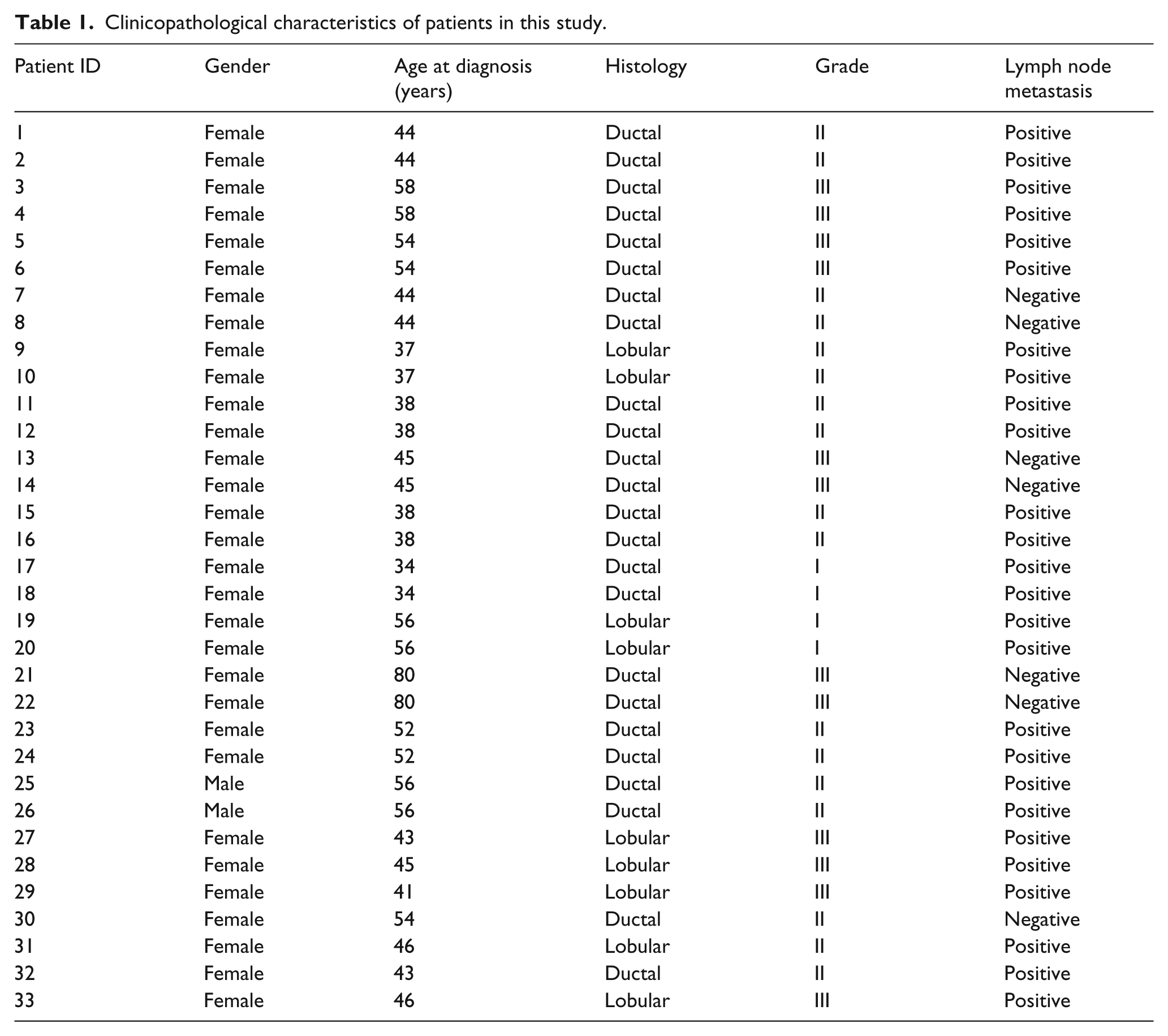
A total of 33 BC samples and matched normal adjacent tissues were collected from patients who underwent mastectomy operation at the Ayatollah Kashani Hospital (Shahrekord) from 2013 to 2014 using American Joint Committee on Cancer (AJCC) guideline. 26 Clinicopathological information of patients including gender, age, histological type, grade, and lymph node metastasis status of tumors is represented in Table 1. Samples included 72.7% invasive ductal carcinoma and 27.3% invasive lobular carcinoma. In all, 78.8% of samples categorized in lymph node metastasis group and the mean age of participants was 48.2 years. The approval of ethical committee for this study was obtained from University of Medical Sciences (Shahrekord) and the Ayatollah Kashani Hospital. The breast tumor tissues and their paired normal specimens were snap-frozen and stored in −80°C until further use.
Clinicopathological characteristics of patients in this study.
RNA extraction
Total RNA extraction from samples was accomplished using the TRIzol protocol (Invitrogen, USA). Quality of extracted total RNA was determined according to 260/280 absorbance ratio, measured by NanoDrop spectrometer (Thermo Fisher Scientific, USA). Finally, RNA-free DNase treatment protocol was applied to total RNA in order to eliminate any potential contamination with unwanted DNA (TaKaRa, Japan).
Complementary DNA synthesis and real-time polymerase chain reaction
Total RNA was reverse transcribed using a reverse transcription kit for BMI1 mRNA (Fermentas, USA). Reverse transcription of the miR-218 and U6 small nuclear RNA (snRNA; as endogenous control of miRNA) was performed on total RNA using the “Universal cDNA Synthesis Kit” (Exiqon, Denmark) in poly A tailing protocol according to manufacturer protocol. Real-time quantitative polymerase chain reactions (PCR) were carried out as duplicate using standard protocols using the Rotor-Gene 6000 Instrument (Corbett Life Science, Australia). Briefly, in total volume of 10 µL, 20 ng/µL of miRNA complementary DNA (cDNA) products was added to a master mix comprising 10 pmol/µL of each miR-218 or U6 snRNA DNA primers (Exiqon) and 2 U of SYBR Premix ExTaq II (TaKaRa, Japan). The run method program was set as 95°C for 5 min followed by 40 cycles of 95°C for 15 s, 62°C for 20 s, and 72°C for 25 s. Real-time program for BMI1 and GAPDH (as endogenous control of mRNA) cDNA was set as 95°C for 10 min followed by 45 cycles of 95°C for 15 s, 59°C for 20 s, and 72°C for 25 s. Primer sequences of BMI1 and GAPDH are presented in Supplementary Table 1.
GO and signaling pathway enrichment analysis
Predicted and validated mRNA targets of miR-218 were investigated by employing miRWalk and miRTarBase in silico online databases. MiRWalk combines prediction results of 10 prediction databases with different prediction algorithms. Then, the expression of target mRNAs was verified in mammary gland cells by using UniGene database to investigate which of them is expressed in mammary gland or BC cells. Finally, to perform GO and signaling pathway enrichment analysis, miR-218 targetome expressed in mammary gland was inputted in the Database for Annotation, Visualization and Integrated Discovery (DAVID) online database, version 6.7. 27 This database automatically outputs the results from Kyoto Encyclopedia of Genes and Genomes (KEGG) pathway analysis 28 to identify the most statistically relevant biological terms, signaling pathways, and molecular networks with miR-218 targetome.
Statistical analysis
Real-time PCR data analysis was performed using the ΔΔCT method in Microsoft Office Excel 2007 software, and final data were normalized by U6 snRNA expression level as an endogenous control. All experiments were performed in triplicate, and data are exhibited as means ± standard error of mean (SEM). All statistical tests were implemented by GraphPad Prism statistical software, version 5.01 (GraphPad, USA). The difference between paired tumor and normal sample’s expression values obtained by real-time reverse transcription polymerase chain reaction (qRT-PCR) was analyzed using paired sample t-test, and for investigating statistical difference between expression values of various groups stratified by clinicopathological features, the Mann–Whitney U test was applied. Finally, for assessment of statistical association between expression values and overall survival in patients with cancer, the Kaplan–Meier and Cox regression analyses were employed. In all tests, p value < 0.05 indicates a significant difference.
Results
MiR-218 is upregulated in tumoral tissues compared with their paired normal adjacent tissues
The expression level of miR-218 was measured by real-time PCR in two groups including 33 breast tumor specimens and their paired non-cancerous samples. Expression values of intended miRNAs were normalized with a corresponding mean value of endogenous gene U6 snRNA, which was previously confirmed as an appropriate reference gene in similar conditions. 26 As it is shown in Figure 1(a), miR-218 expression was significantly elevated in clinical BC specimens compared with normal tissues (4.529 ± 0.6714 vs 1.511 ± 0.2965, respectively, p < 0.0001; Figure 1(a)).

The expression of miR-218 is significantly upregulated in (a) breast tumors compared with normal adjacent specimens, while its lower expression is significantly associated with (b) lymph node metastasis (LNM) and (c) higher grades in cancerous tissues. (d) Kaplan–Meier curve for overall survival of TCGA cohort patients with breast cancer categorized according to miR-218 expression shows significant association of its lower expression with poorer survival. (e) BMI1 is significantly upregulated in breast cancer samples compared with their normal adjacent tissues, though according to Pearson correlation test, it does not show significant correlation with miR-218 expression in the corresponding (f) tumor–normal samples (*p < 0.05, **p < 0.01, and ***p < 0.001).
Lower expression of miR-218 associates with lymph node metastases, higher grades, and poorer prognosis
To investigate prognostic significance of miR-218 in BC patients, we explored the association of its mean expression with available clinicopathological features of our patients including sex, age, lymph node metastasis, tumor grade, and tumor type (Table 2). Interestingly, we observed that lower expression of miR-218 is significantly associated with lymph node metastasis of breast tumors with mean expression of 3.676 ± 0.5119 in lymph node positive group versus 8.656 ± 2.094 in lymph node negative group (p = 0.0104; Figure 1(b)). Furthermore, as it is represented in Figure 1(c), significant relationship was also detected between lower expression of miR-218 and higher tumor grades as it shows mean expression of 4.411 ± 0.7434 in the group of high tumor grade against 7.062 ± 1.215 in low tumor grade cluster (p = 0.0365; Figure 1(c)). However, no signification association was observed in the context of sex, age, and tumor type (Table 2). Finally, to better understand prognostic impact of miR-218 expression on overall survival of BC patients, we used TCGA data through OncoLnc data portal. Interestingly and in consistent with our data, Kaplan–Meier plot of overall survival in BC patients, stratified based on miR-218 expression level, showed that lower expression of miR-218 is significantly correlated with poorer survival in BC patients (logrank p = 0.00988; Figure 1(d)).
Association of miR-218 expression levels (2 − ΔCt*) and clinicopathological characteristics of cancerous breast samples.

SEM: standard error of mean. For all tests a p value < 0.05 was considered statistically significant.
p < 0.05, **p < 0.01, and ***p < 0.005.
Downregulation of BMI1, as a putative target of miR-218, in tumor samples compared with normal specimens
Several recent studies have shown that miR-218 functions through translational suppression of BMI1 in different cancer types such as colon, 22 glioma, 23 and melanoma. 24 In order to inquire whether this miRNA–mRNA interaction plays any role in BC, we examined expression pattern of BMI1 in the same tumor samples and their paired normal biopsies. Although we observed significant downregulation of BMI1 in tumors compared with normal samples (0.09913 ± 0.01871 vs 0.1349 ± 0.02063, respectively, p < 0.0001; Figure 1(e)), Pearson correlation analysis revealed no significant reverse correlation between miR-218 and BMI1 expression in breast tissues (Figure 1(f)). In addition, no significant association was observed between BMI1 expression and clinicopathological characteristics of patients (Table 3). Finally, having investigated the overall survival Kaplan–Meier plot of patients with BC in the context of BMI1 expression level in OncoLnc data portal, we found that in accordance with our data, it could not serve as a prognostic biomarker in BC, as no significant difference in overall survival was observed between patients with higher and lower expression of BMI1 (logrank p = 0.254; data not shown).
Association of BMI1 expression levels (2 − ΔC t *) and clinicopathological characteristics of cancerous breast samples.

SEM: standard error of mean.
GO and signaling pathway enrichment analysis of miR-218 targetome
We performed GO and molecular signaling pathway enrichment analysis to investigate possible roles of miR-218 in BC’s tumorigenesis and progression. According to miRTarBase and miRWalk databases, 30 and 764 mRNAs were specified as validated and predicted targets of miR-218, respectively. All predicted targets resulted by integrative prediction analysis in the miRWalk database were confirmed by at least six prediction databases. Moreover, all validated targets recovered from the miRTarBase database were approved by convincible experimental evidence such as reporter assay, western blot, and quantitative real-time PCR (Supplementary Table 2, S2). Of note, 18 out of the 30 validated mRNAs (60%) also existed in the list of predicted mRNAs which were confirmed by at least six prediction databases, indicating that the threshold of six databases is reliable for selecting predicted targets of miR-218. Having examined the expression profile of collected targets in UniGene database, only 21 of the validated and 455 of the predicted mRNA targets were reported to be expressed in mammary gland cells, and these targets were selected as miR-218 targetome for further molecular enrichment analysis (Supplementary Table 3, S3). Selected miR-218 targetome Entrez IDs were inputted into functional annotation tool of DAVID to determine statistically significant association of inputted genes with biological terms and signaling pathways (Table 4). In Table 4, top 10 biological terms and signaling pathways which were sorted according to fold enrichment and were also significantly associated with miR-218 targetome are tabulated. These analyses show that miR-218 may most possibly participate in two important biological processes including endocytosis and cellular interactions as its target genes were significantly enriched in these biological terms in different categories (terms given in boldface in Table 4). For instance, the gap junction and endocytosis signaling pathways are shown in Figures 2 and 3, respectively, in which targets of miR-218 are specified in red boxes. As can be seen in Figures 2 and 3, miR-218 plays a significant role in regulation of these signaling pathways through targeting their main regulators. Therefore, it can be conceived that the observed association of miR-218 with clinicopathological features of BC tumors might be due to its deregulation in these biological routes.
Top 10 statistically meaningful biological terms associated with miR-218 targetome after sorting by fold enrichment.
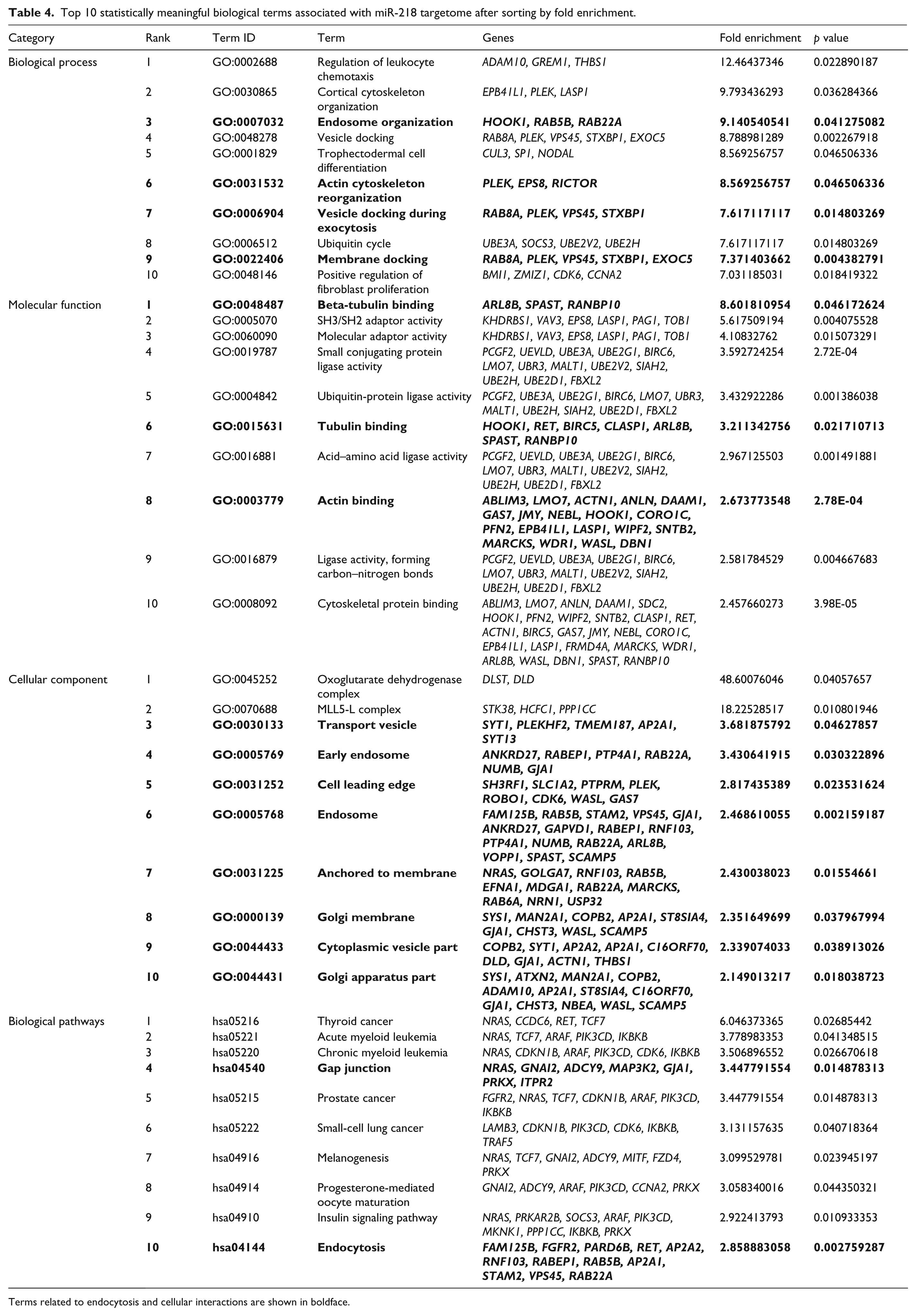
Terms related to endocytosis and cellular interactions are shown in boldface.

Predicted regulatory function of miR-218 in endocytosis signaling pathway. As can be seen, miR-218 could have a remarkable regulatory effect over endocytosis as it targets several main regulators of this process (miR-218 targets are shown in red).

Predicted regulatory function of miR-218 in gap junction interaction. Accordingly, miR-218 might be able to suppress the metastasis of breast cancer cells through suppression of gap junction interactions (miR-218 targets are shown in red).
Discussion and conclusion
The aim of this study is to evaluate the expression profile of miR-218 in paired BC tissues and their adjacent normal tissues. We also investigated the association of miR-218 expression pattern with clinicopathological characteristics of patients to see whether it can be used as a prognostic biomarker in BC. Finally, to assess possible biological function of miR-218 in tumorigenesis and invasiveness of BC, first we examined the expression profile of BMI1, as one of the previously known targets of miR-218, in the same tissues, and second, we conducted an in silico GO and signaling pathway enrichment analysis upon miR-218 targetome. We showed that miR-218 significantly upregulates in BC tissues compared with their paired normal adjacent specimens. However, after stratifying of patients according to their clinicopathological features, we found that lower expression of miR-218 is associated with lymph node metastasis, higher grade, and poorer survival outcomes of patients. These observations were in consistent with our recently published review article about the function of miR-218 in different solid tumors. 29 In the later study, by an intensive literature mining of previously published articles aiming to evaluate expression profile of miR-218 in various solid tumors, we concluded that miR-218 may act as a multifunctional miRNA subjected to mRNA context of cancer cells. 29 In fact, depending on the mRNA context of cancer cells, it may contribute to different cellular processes such as “regulation of cisplatin chemosensitivity,” “inhibition of cell proliferation and migration,” “induction of cancer cell proliferation,” and “promoting osteomimetic properties of metastatic cells” in various tumor types or even in different stages or grades of tumors. 29 This may explain heterogeneous and controversial observations regarding expression profile of miR-218 in different solid tumors. For instance, in a study conducted by Liu et al., 30 the expression of miR-218 was significantly downregulated in glioma tissues comparing to normal brain samples (p = 0.009), and this reduction was significantly greater in higher tumor grades (grades III and IV) in comparison with lower grades (grade I/II vs III or IV, p = 0.021 and 0.001). In another report, it was demonstrated that miR-218 is overexpressed in all high-grade prostate cancer (PC) samples compared with benign prostate tissue (p < 0.001). Additionally, miR-218 illustrated a shift in expression between high-grade PC tumors and localized invasive adenocarcinoma where there was a significant loss of miR-218 during transition from localized to metastatic adenocarcinomas. 31 Moreover, comparison of miR-218 expression level among tumor tissues with different grades and metastatic stages showed that expression of miR-218 is elevated in first and middle grades compared with higher grades where cancerous cells acquire metastatic and invasive characteristics.31,32 Finally, in the context of BC, only one study has reported differential expression profile of miR-281 in BC tissues according to deep sequencing data. 33 Interestingly and in consistent with our results, authors found that miR-218 is downregulated in invasive ductal carcinoma samples compared with ductal carcinoma in situ specimens, indicating association of lower miR-218 expression with worse outcomes of patients. 33 Taken together, it can be concluded that miR-218 deregulation is crucial to BC tumorigenesis and its expression profile may perform as a possible prognostic biomarker in BC.
To delve further in understanding molecular function of miR-218, we examined expression profile of BMI1, which has been reported as one of the miR-218 targets in other cancer types such as colon, 22 glioma, 23 and melanoma. 24 Our data revealed that BMI1 is significantly downregulated in breast tumors compared with adjacent normal specimens, nominating it as one of targets of miR-218. However, we did not observe a significant reverse correlation between miR-218 and BMI1 expression in breast tissues. These observations indicate that miR-218 may indirectly regulate expression of BMI1 in BC tissues.
Finally, our in silico enrichment analysis unraveled possible molecular functions of miR-218 in tumorigenesis of BC. We observed that miR-218 targetome is significantly correlated with biological terms related to endocytosis and gap junctions. Interestingly, it has been well documented that altered endocytosis recycling can offer drug-resistance phenotype to cancerous cells. 34 However, several recent studies have attributed cisplatin-resistance phenotype of BC cells to miR-218 deregulation.35,36 Consistently, our in silico analysis showed that miR-218 regulates the endocytosis processes, and therefore, its deregulation in cancer cells might be associated with altered endocytosis recycling and ensuing drug-resistance phenotype.
Furthermore, miR-218 can also regulate gap junction interactions and thereby play a significant role in BC invasiveness. Gap junctions are specific cell-to-cell channels made up of connexin proteins that play fundamental role in tissue homeostasis, cell growth, differentiation, and carcinogenesis. In a study conducted by Zibara et al., 37 it has been reported that gap junction inhibition reduces BC cell invasion and metastasis in vitro and in vivo. According to their data, targeting gap junctions can attenuate intercellular communication, migration, invasion, and metastatic dissemination. 37 However, in another study, it has been shown that suppression of connexin interactions by retroviral small interfering RNA leads to promotion of an aggressive BC cell phenotype. 38 According to our in silico analysis, miR-218 targets 3′-UTR of GJD2 and GJA1 or connexin36 and connexin46 transcribes, leading to inhibition of gap junction interactions. All together, these data may explain how downregulation of miR-218 in higher grades of tumor cells can assist them to develop metastatic features.
In conclusion, to the best of our knowledge, here we represented expression pattern of miR-218 in BC tissues compared with their paired adjacent normal tissues. We found that although miR-218 upregulates in cancerous samples, its lower expression is significantly associated with lymph node metastasis, higher grades, and poorer survival of patients. These findings demonstrate prognostic significance of miR-218 in BC patients and nominate it as a possible prognostic predicator for patient suffering from this kind of malignancy. Furthermore, we investigated possible biological function of miR-218 by recruiting an in silico GO and signaling pathway enrichment analysis. Accordingly, we proposed that miR-218 might be associated with BC through its regulation over endocytosis and gap junction biological pathways, and thereby, it may induce drug-resistance and metastasis phenotype in cancerous cells, respectively. However, these bioinformatics findings await in vitro and in vivo experimental verification.
Footnotes
Declaration of conflicting interests
The author(s) declared no potential conflicts of interest with respect to the research, authorship, and/or publication of this article.
Funding
This study was funded a grant of research from Sahrekord University of Medical Sciences to Hossein Teimori in support of Fereshteh Ahmadinejad for obtaining her M.Sc. degree from Sahrekord University of Medical Science.
References
Supplementary Material
Please find the following supplemental material available below.
For Open Access articles published under a Creative Commons License, all supplemental material carries the same license as the article it is associated with.
For non-Open Access articles published, all supplemental material carries a non-exclusive license, and permission requests for re-use of supplemental material or any part of supplemental material shall be sent directly to the copyright owner as specified in the copyright notice associated with the article.
