



Abstract
Background
Down syndrome (DS), caused by trisomy 21, is characterized by chronic oxidative stress resulting from overexpression of the superoxide dismutase 1 (SOD1) gene without a proportional increase in downstream antioxidant enzymes such as glutathione peroxidase (GPx). This imbalance leads to hydrogen peroxide accumulation, contributing to neurodegeneration and systemic complications. Plant-derived phytochemicals with antioxidant properties may offer a multi-target strategy to restore redox homeostasis in DS.
Purpose
The present study aimed to evaluate phytochemicals derived from Platanus orientalis for their potential to modulate oxidative stress in Down syndrome by targeting the SOD1–GPx redox axis using in-silico molecular docking and pharmacokinetic analysis.
Materials and Methods
Seven phytochemicals were selected from the IMPPAT database based on reported antioxidant activity. The three-dimensional structures of SOD1 (PDB ID: 2C9V) and GPx (PDB ID: 2R37) were retrieved from the Protein Data Bank and prepared for docking. Molecular docking was performed to assess binding affinities and interaction profiles. Drug-likeness, pharmacokinetic parameters, and blood–brain barrier permeability were evaluated using in-silico ADMET prediction tools.
Results
All selected phytochemicals exhibited favorable binding interactions with both SOD1 and GPx, with binding energies ranging from −5.0 to −7.5 kcal/mol for SOD1 and −4.8 to −6.7 kcal/mol for GPx. Tiliroside demonstrated the strongest affinity towards SOD1, while kaempferol and betulinic acid showed stable and consistent interactions with both targets. Five compounds—platanin, kaempferol, caffeic acid, allantoin, and betulinic acid—displayed acceptable drug-likeness profiles, although none were predicted to cross the blood–brain barrier.
Conclusion
Platanus orientalis–derived phytochemicals demonstrate promising dual-target interactions with SOD1 and GPx, supporting their potential role in modulating oxidative stress in Down syndrome. These findings warrant further experimental validation to explore their therapeutic relevance and translational potential.
Introduction
Down syndrome (DS), a genetic condition resulting from the presence of an extra copy of chromosome 21, is characterized not only by cognitive impairment and distinctive physical features but also by increased susceptibility to oxidative stress.1, 2 One of the critical genetic contributors to this oxidative imbalance is the overexpression of the superoxide dismutase 1 (SOD1) gene, which encodes SOD1.3, 4 While this enzyme is essential for detoxifying superoxide radicals by converting them into hydrogen peroxide (H2O2), its unbalanced expression without a corresponding increase in downstream enzymes like catalase and glutathione peroxidase (GPx) leads to excessive accumulation of H2O2. This, in turn, initiates a cascade of oxidative damage, contributing to the neurodegenerative and systemic complications observed in individuals with DS. 5
SOD1 and GPx play pivotal roles in maintaining cellular redox homeostasis. Under normal physiological conditions, SOD1 ensures the conversion of superoxide radicals into H2O2, which is then safely broken down into water by enzymes such as GPx. 6 However, in DS, the gene dosage effect caused by trisomy 21 results in disproportionate antioxidant enzyme levels. The overproduction of H2O2 without adequate removal mechanisms leads to increased lipid peroxidation, protein oxidation, and DNA damage, ultimately affecting cellular integrity and function. This biochemical imbalance is implicated in the early onset of aging, immune dysregulation, and increased incidence of Alzheimer-like pathology in DS.7, 8
In light of these findings, there is growing interest in therapeutic interventions that can restore oxidative balance. Phytochemicals derived from medicinal plants have garnered attention for their natural antioxidant properties and ability to modulate key redox enzymes. These bioactive compounds, including flavonoids, terpenoids, and phenolic acids, possess the capability to neutralize reactive oxygen species (ROS) and upregulate endogenous antioxidant pathways. Unlike synthetic antioxidants, they tend to exhibit multifaceted mechanisms with lower toxicity profiles, making them attractive candidates for long-term use in conditions like DS. 9
Platanus orientalis, commonly known as the Oriental plane tree, is a traditional medicinal plant with documented anti-inflammatory, anti-microbial, and antioxidant activities. The leaves and bark of this plant are rich in polyphenolic compounds, including quercetin, apigenin, ferulic acid, and gallic acid, which have demonstrated significant free radical scavenging capacity. Emerging evidence suggests that these phytochemicals not only reduce oxidative markers but also influence the activity of antioxidant enzymes, thereby offering protective effects in oxidative stress-mediated diseases.10, 11
To evaluate the therapeutic potential of P. orientalis-derived compounds, molecular docking studies offer a powerful approach. These computational techniques allow researchers to predict the binding interactions between phytochemicals and target proteins, such as SOD1 and GPx. By analyzing binding affinities and interaction patterns, docking studies can identify lead molecules with the potential to regulate oxidative enzymes effectively. This method serves as an essential preliminary step in the drug discovery process, facilitating the prioritization of compounds for experimental validation.
The current study is focused on assessing the docking potential of selected phytochemicals from P. orientalis against SOD1 and GPx, with the aim of identifying molecules that may attenuate oxidative stress in DS. By targeting the imbalance created by SOD1 overexpression, this approach seeks to uncover novel plant-based candidates that could contribute to antioxidant therapy in DS. Such findings may lay the groundwork for future translational research and integrative treatment strategies for managing oxidative stress-related complications in genetic disorders.
Methodology
Selection of Phytochemicals
Seven phytochemicals from P. orientalis were selected for evaluation in this study. These compounds were obtained from the Indian Medicinal Plants, Phytochemistry And Therapeutics (IMPPAT) database, a curated source of phytochemicals associated with traditional and modern therapeutic uses. The selected compounds were chosen based on their reported bioactivity and relevance to oxidative stress modulation.
Target Protein Identification
The study focused on two key oxidative stress regulatory proteins: SOD1 and GPx. These enzymes are essential for maintaining redox homeostasis and are particularly implicated in the pathological oxidative imbalance observed in DS. The three-dimensional structures of these proteins were retrieved from the Protein Data Bank (PDB) using the following PDB identifiers: 2C9V for SOD1 and 2R37 for GPx.
Target Validation
To confirm the relevance of SOD1 and GPx in oxidative stress pathways, a target validation process was conducted using the GeneMANIA database. This platform allowed for the analysis of gene function and interactions, confirming the involvement of the selected proteins in redox regulation and reinforcing their significance as therapeutic targets for oxidative stress-associated damage in DS.
Protein Structure Preparation
The crystallographic structures of SOD1 and GPx were prepared for molecular docking. Preparation steps included the removal of water molecules, correction of bond orders, and addition of missing hydrogen atoms. Energy minimization was performed to optimize the protein conformations and ensure a suitable receptor environment for ligand binding. The grid coordinates for docking simulations were defined based on active-site localization: (X = 17.441096, Y = −20.538923, Z = 16.659115) for SOD1 and (X = 11.902173, Y = −23.814231, Z = −5.583519) for GPx.
Molecular Docking
Molecular docking studies were conducted to predict the interaction affinities between the selected phytochemicals and the target proteins. Docking simulations were performed using a suitable docking algorithm, and the results were evaluated based on binding affinity values expressed in kcal/mol. The phytochemicals exhibited binding energies ranging from −5.0 to −7.5 kcal/mol for SOD1 and from −4.8 to −6.7 kcal/mol for GPx, indicating favorable interactions. Docked complexes were further analyzed for interaction types, including hydrogen bonding and hydrophobic interactions, to assess the stability and strength of binding.
Bioavailability and Drug-likeness Assessment
Pharmacokinetic profiling and drug-likeness evaluations were performed for all docked compounds. Lipinski’s rule of five was applied to assess oral bioavailability, where two of the compounds were found to violate the rule, indicating potential issues with absorption or distribution. Blood–brain barrier (BBB) permeability was also assessed, revealing that none of the compounds were predicted to cross the BBB. These evaluations provided insights into the potential clinical relevance and systemic behavior of the phytochemicals.
Lead Compound Identification
Based on the outcomes of docking simulations and pharmacokinetic assessments, five phytochemicals were identified as promising lead candidates for further investigation. These included platanin, kaempferol, caffeic acid, allantoin, and betulinic acid. Each of these compounds demonstrated strong binding affinities for SOD1 and GPx, along with acceptable drug-likeness profiles, suggesting their potential utility in modulating oxidative stress mechanisms in DS.
This study involved only computational molecular docking and did not include human participants, biological samples, or animal experimentation. Therefore, ethical approval and informed consent were not required as per institutional guidelines.
Statistical Analysis
Docking scores and interaction profiles were analyzed descriptively. Binding energies (kcal/mol) were compared across phytochemicals to identify top candidates. As this is an in silico computational study, no inferential statistical tests were applicable.
Results
Phytochemical Selection and Database Retrieval
Seven phytochemicals derived from P. orientalis were successfully identified through the IMPPAT database, chosen for their previously reported antioxidant, anti-inflammatory, and neuroprotective activities. These compounds represented structurally diverse chemical scaffolds, offering a broad spectrum of potential interactions with oxidative stress-related enzymes. Their selection provided a suitable foundation for virtual screening against antioxidant targets implicated in DS.
Target Identification and Structural Characterization
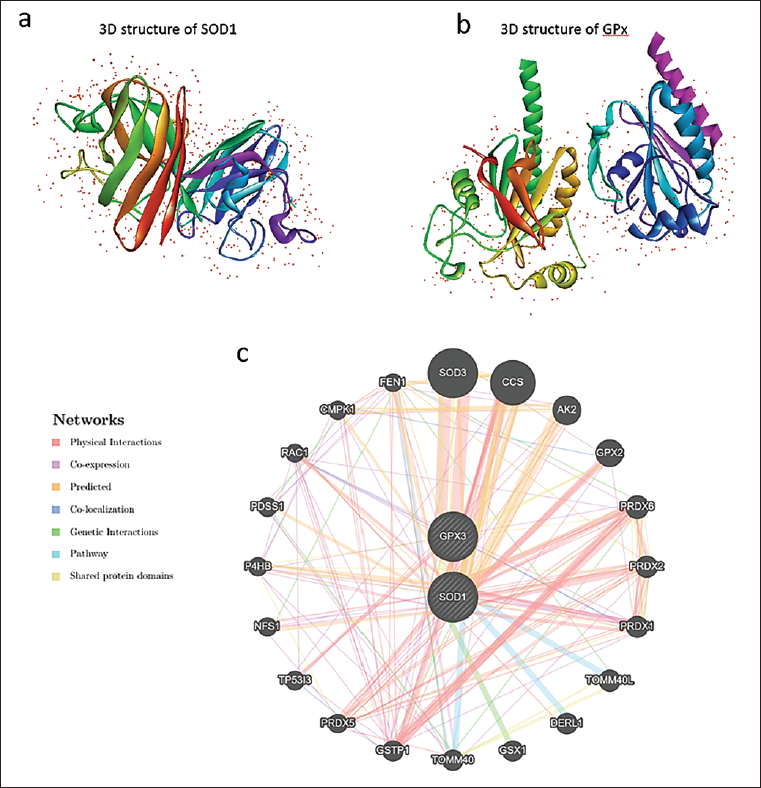
SOD1 and GPx were selected as molecular targets due to their essential roles in mitigating oxidative damage. The crystal structures of SOD1 (PDB ID: 2C9V) and GPx (PDB ID: 2R37) were retrieved from the PDB. Structural evaluation confirmed the availability of well-defined active sites and an appropriate resolution for use in molecular docking procedures. These enzymes are well-documented in redox biology, particularly in neurological conditions characterized by oxidative imbalance such as DS (Figure 1a and 1b).
Functional Validation of Target Proteins
GeneMANIA-based gene network analysis confirmed the involvement of SOD1 and GPx in core oxidative stress pathways. Both targets exhibited extensive interactions with genes responsible for the detoxification of ROS and regulation of redox homeostasis. This functional validation reinforced their selection as relevant biological targets, particularly in the context of therapeutic intervention in oxidative stress-induced neural degeneration (Figure 1c).
Preparation of Receptor Structures for Docking
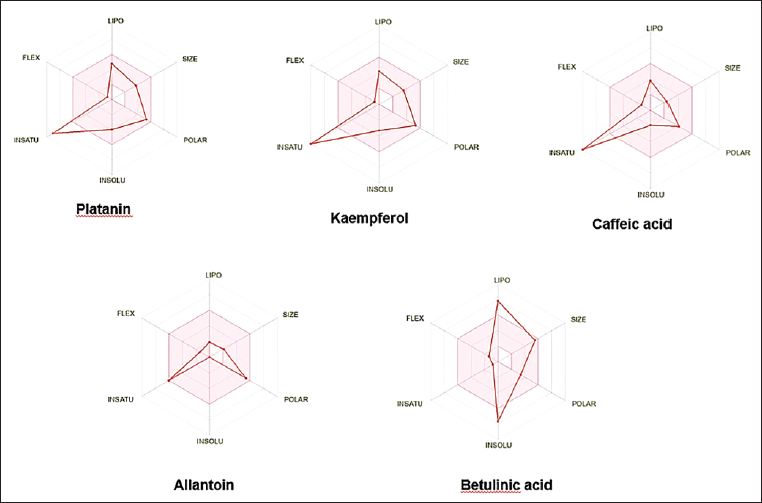
The protein structures were cleaned and optimized for molecular docking. This involved the removal of crystallographic water molecules, the addition of missing hydrogen atoms, and energy minimization of the protein conformations. Grid coordinates were defined based on the enzyme active sites: (17.441096, −20.538923, and 16.659115) for SOD1 and (11.902173, −23.814231, and −5.583519) for GPx. These prepared structures were used consistently across all docking simulations to ensure standardization (Figure 2).
Radar Plot Showing the Various Phytochemicals and Their Bonding.
Docking Analysis and Binding Affinity Assessment
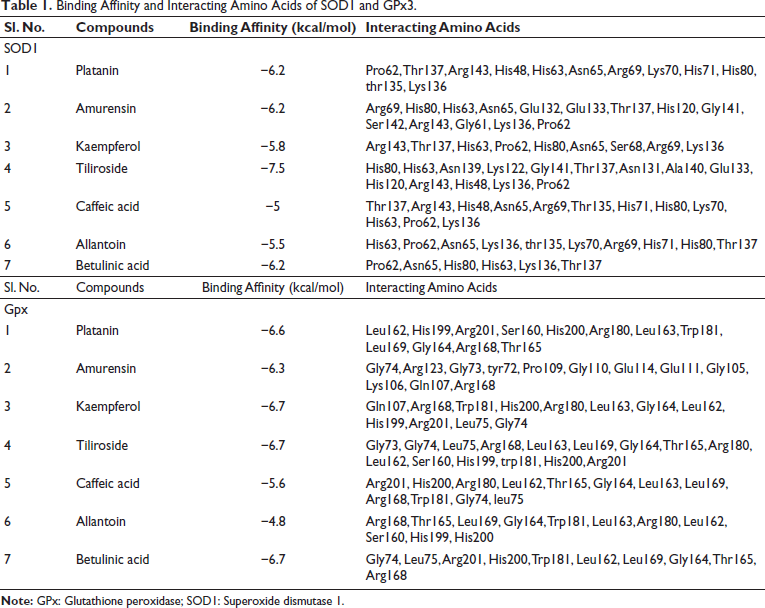
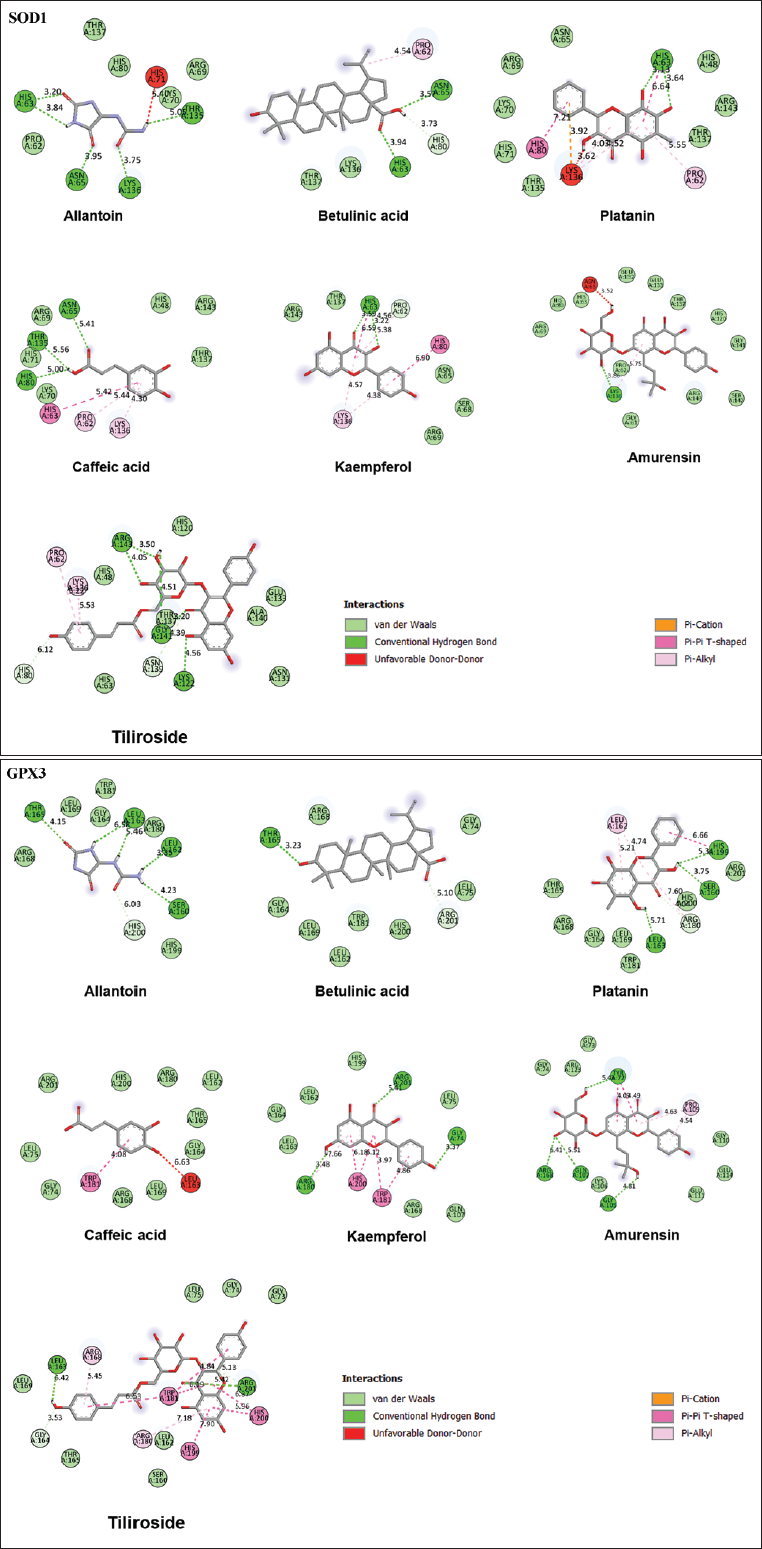
Molecular docking simulations demonstrated that all seven phytochemicals interacted favorably with both SOD1 and GPx. The binding energies ranged from −5.0 to −7.5 kcal/mol for SOD1 and from −4.8 to −6.7 kcal/mol for GPx. The strongest binding affinities were observed with kaempferol and betulinic acid, which formed stable interactions with multiple active-site residues, including hydrogen bonds and hydrophobic contacts. These interactions suggest a potential mechanism for inhibition or modulation of enzymatic activity, providing molecular-level insight into their antioxidant potential (Table 1).
Binding Affinity and Interacting Amino Acids of SOD1 and GPx3.
Pharmacokinetic Profiling and Drug-likeness Evaluation
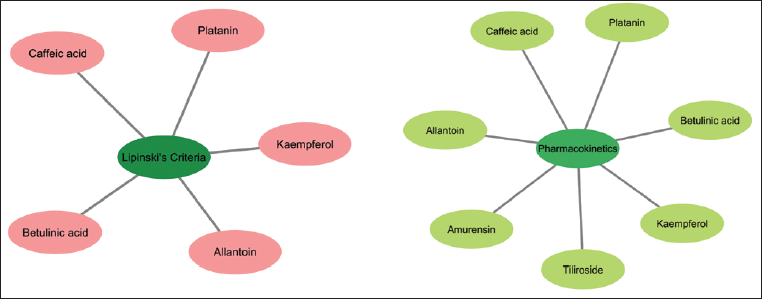
Drug-likeness properties were evaluated using Lipinski’s rule of five. Five out of seven compounds adhered to the rule, indicating favorable oral bioavailability. Two compounds violated one or more parameters, raising concerns about permeability or absorption. Furthermore, none of the phytochemicals demonstrated BBB permeability in predictive models, suggesting limited direct access to the central nervous system (CNS). However, other absorption, distribution, metabolism, elimination, and toxicity (ADMET) parameters, such as solubility, gastrointestinal absorption, and predicted toxicity, were within acceptable ranges for most compounds (Figure 3).
Pharmacokinetics and Lipinski Criteria.
Identification of Promising Lead Compounds
Based on docking scores and pharmacokinetic characteristics, five phytochemicals—platanin, kaempferol, caffeic acid, allantoin, and betulinic acid—were shortlisted as promising lead candidates. These compounds displayed consistent and favorable binding to both SOD1 and GPx, as well as drug-like properties suitable for further development. Their interaction profiles suggest potential for therapeutic application in oxidative stress-related conditions, such as DS, warranting further experimental validation through in vitro and in vivo studies (Figure 4).
Discussion
The present study highlights the potential of phytochemicals derived from P. orientalis to modulate oxidative stress regulators—SOD1 and GPx—through molecular docking. The imbalance caused by SOD1 overexpression in DS, leading to increased H2O2 levels and downstream oxidative damage, represents a compelling therapeutic target. Existing literature supports this strategy. For instance, El-Sayed et al. demonstrated that oxidative stress contributes significantly to neuronal dysfunction in DS, and that this stress is exacerbated by disproportionate antioxidant enzyme expression, particularly SOD1 overexpression without adequate GPx compensation. 12 The ability of certain phytochemicals to bind with high affinity to both SOD1 and GPx suggests they may help rebalance redox homeostasis, particularly by modulating the overactive SOD1 and potentially enhancing GPx activity.
Several of the identified compounds, such as kaempferol and betulinic acid, have been extensively documented for their antioxidant capabilities. Kaempferol, a flavonol found in many plant species, has demonstrated the ability to scavenge ROS and modulate antioxidant enzyme expression, including increasing GPx activity in oxidative stress models. 13 Similarly, betulinic acid, a pentacyclic triterpenoid, is noted for its neuroprotective and antioxidant effects, particularly in neurodegenerative models involving mitochondrial dysfunction and oxidative imbalance. The docking results support these biological effects, with both compounds showing stable interactions with key amino acid residues within SOD1 and GPx active sites, potentially stabilizing or modulating their activity.
However, some studies question the clinical relevance of molecular docking outcomes without functional validation. While computational models provide initial insights into binding potential, they do not account for metabolic stability, bioavailability, or actual modulatory effects on enzymatic activity in biological systems. For instance, reviews by Lionta et al. emphasized that docking alone, while useful for lead discovery, often fails to predict in vivo efficacy due to a lack of pharmacodynamic context. 14 In the current study, although pharmacokinetic profiling was conducted and five compounds passed Lipinski’s criteria, none demonstrated predicted BBB permeability. This limitation may be critical for treating DS-related neurodegeneration, as CNS penetration is often essential for therapeutic efficacy in such contexts.
Furthermore, the role of SOD1 in DS is complex. While its overexpression contributes to oxidative damage, some evidence suggests that complete inhibition may be detrimental. SOD1 also plays essential roles in cellular defense against superoxide radicals, and its loss has been associated with increased vulnerability to oxidative insults in various models. 15 Thus, rather than outright inhibition, fine-tuned modulation of SOD1 and support for downstream detoxifying enzymes like GPx may offer a more balanced therapeutic approach—one potentially achievable with multifunctional phytochemicals.
Another dimension to consider is the therapeutic potential of enhancing GPx activity. GPx serves as a critical scavenger of H2O2, and its upregulation has shown protective effects in DS models. For instance, studies by Power et al. have demonstrated that increasing GPx expression in mouse models reduces oxidative damage and improves cognitive outcomes. 16 If compounds like kaempferol or platanin can selectively enhance GPx activity, they may serve a dual function: modulating the excessive SOD1-derived H2O2 while directly promoting its clearance.
On the other hand, there is an opposing viewpoint regarding the systemic administration of plant-derived antioxidants in DS. A study by Murphy and Hartley notes that systemic antioxidants often fail to localize effectively in the brain and may disrupt redox-sensitive signaling pathways critical for neurodevelopment. 17 This raises concerns about potential off-target effects or interference with adaptive redox mechanisms. Without CNS permeability, the selected phytochemicals may offer limited benefit in addressing the central oxidative burden in DS, especially in its neurodevelopmental and neurodegenerative manifestations.
Despite these concerns, the general therapeutic rationale of using multi-target phytochemicals remains promising. As emphasized by Atanasov et al., the pleiotropic nature of plant-derived compounds allows them to interact with multiple pathways, offering a systems-level therapeutic potential that aligns well with multifactorial conditions like DS.3, 18 The current findings, particularly with compounds such as kaempferol and betulinic acid, reinforce the feasibility of leveraging plant-based compounds for redox modulation, though further preclinical studies are essential.19, 20
Thus, the docking analysis presented in this study provides a foundational step toward identifying and optimizing phytochemicals from P. orientalis for oxidative stress modulation in DS. While promising interactions were observed, particularly with SOD1 and GPx, translation to clinical application will require detailed functional assays, pharmacokinetics validation, and CNS bioavailability assessments. Integrating in silico data with experimental research remains critical to fully realize the therapeutic potential of these phytochemicals in addressing the oxidative dysregulation characteristic of DS.
Conclusion and Future Perspective
This study demonstrates the promising potential of phytochemicals derived from P. orientalis in targeting oxidative stress regulators SOD1 and GPx, which are central to the redox imbalance observed in DS. Molecular docking revealed favorable binding affinities for several compounds—particularly platanin, kaempferol, betulinic acid, allantoin, and caffeic acid—toward the active sites of both enzymes. These interactions suggest that the phytochemicals could modulate enzymatic function, either by attenuating excessive SOD1 activity or enhancing GPx-mediated detoxification of H2O2. The combination of docking analysis with pharmacokinetic and drug-likeness profiling reinforces the therapeutic relevance of these natural compounds as multi-target agents capable of addressing the oxidative stress cascade in DS.
However, the findings are limited by the in silico nature of the study. While docking studies provide crucial insights into potential molecular interactions, they must be complemented by experimental validation to confirm biological activity, safety, and therapeutic efficacy. Additionally, the inability of these compounds to cross the BBB—based on predictive models—may limit their direct neuroprotective impact, a critical consideration for managing DS-related cognitive decline. Nonetheless, systemic oxidative stress modulation can still offer peripheral benefits and may contribute indirectly to improved neuronal health via reduction of overall oxidative burden.
Future research should prioritize in vitro and in vivo validation of the shortlisted phytochemicals, particularly in DS-relevant models. Investigating their effects on SOD1 and GPx expression, activity, and oxidative stress biomarkers will provide functional clarity. Moreover, structural optimization or nanoparticle-based delivery systems could be explored to improve brain bioavailability. High-throughput screening and omics-based profiling could further elucidate off-target effects and identify synergistic compound combinations. In the long term, integrating plant-based antioxidants into multimodal therapeutic strategies—possibly in combination with conventional agents—could represent a viable path toward managing oxidative damage and slowing neurodegenerative progression in individuals with DS.
Footnotes
Abbreviations
Authors’ Contributions
H.J. participated in target validation and manuscript writing; N.K. participated in conceptualization, supervision, and overall manuscript writing; S.S. participated in the interpretation of results and scientific editing; R.R. participated in reviewing and editing; and S.P.S. participated in literature search and preparation of tables. All authors reviewed and approved the final manuscript.
Declaration of Conflicting Interests
The authors declared
Ethical Approval
NA.
Funding
The authors received no financial support for the research, authorship, and/or publication of this article.
Informed consent
Not applicable.
